

 English
 Deutsch
 Español
 Français

How Black Vinyl Butterfly Canopies Improve Outdoor Comfort, Durability, and Weather Protection
Content
- 1 Product Overview and Intended Use
- 2 Why the Black Vinyl Coating Matters
- 3 210D High-Density Oxford Cloth
- 4 Steel Frame Design and Structural Stability
- 5 Butterfly Geometry and Shade Coverage
- 6 Advantages Compared with Basic Competing Canopies
- 7 Manufacturing and Product Development Strengths
- 8 Quality Control Considerations
- 9 Commercial Value for Retailers and OEM Buyers
- 10 Recommended Use and Care
- 11 Q&A
- 11.1 What is the main purpose of this black vinyl canopy?
- 11.2 Why is black vinyl used instead of ordinary polyester fabric?
- 11.3 Is the canopy suitable for backpacking?
- 11.4 What does 210D Oxford cloth contribute?
- 11.5 Does the butterfly shape improve rain performance?
- 11.6 Does a thicker steel frame make the product windproof?
- 11.7 How should the canopy be anchored on sand?
- 11.8 How does the product compare with a lightweight pop-up shade?
- 11.9 What manufacturing strengths support the product?
- 11.10 Can retailers request OEM or private-label support?
- 11.11 How should the product be stored?
- 11.12 Is the canopy waterproof?
- 12 Conclusion
- 13 References
- 14 Product: Outdoor picnic camping black vinyl tent, rainproof and sunshade canopy, picnic butterfly curtain canopy
Outdoor shelters are expected to do much more than provide temporary shade. A useful canopy must reduce solar exposure, remain dependable when the weather changes, offer enough room for people and equipment, and withstand repeated setup and packing. For family picnics, beach trips, recreational events, camping areas, and outdoor retail programs, the choice of fabric, frame, roof geometry, and manufacturing quality directly affects the user experience.
The outdoor picnic camping black vinyl tent presented by CragHaven Outdoor is designed around these practical requirements. It combines a black vinyl sun-protection coating, 210D high-density Oxford cloth, a taller and thicker steel frame, and a butterfly-shaped canopy profile. Together, these features create a shelter intended for stationary or semi-stationary outdoor use, where shade coverage, rain resistance, headroom, and repeat-use durability are more important than achieving the lowest possible packed weight.
Unlike lightweight backpacking shelters, this canopy is positioned for family picnics, beach relaxation, parks, outdoor gatherings, and other situations where users can transport the product by vehicle or carry it a short distance. Its construction reflects a deliberate balance: stronger and more protective than a basic fabric sunshade, yet practical enough for regular recreational use.
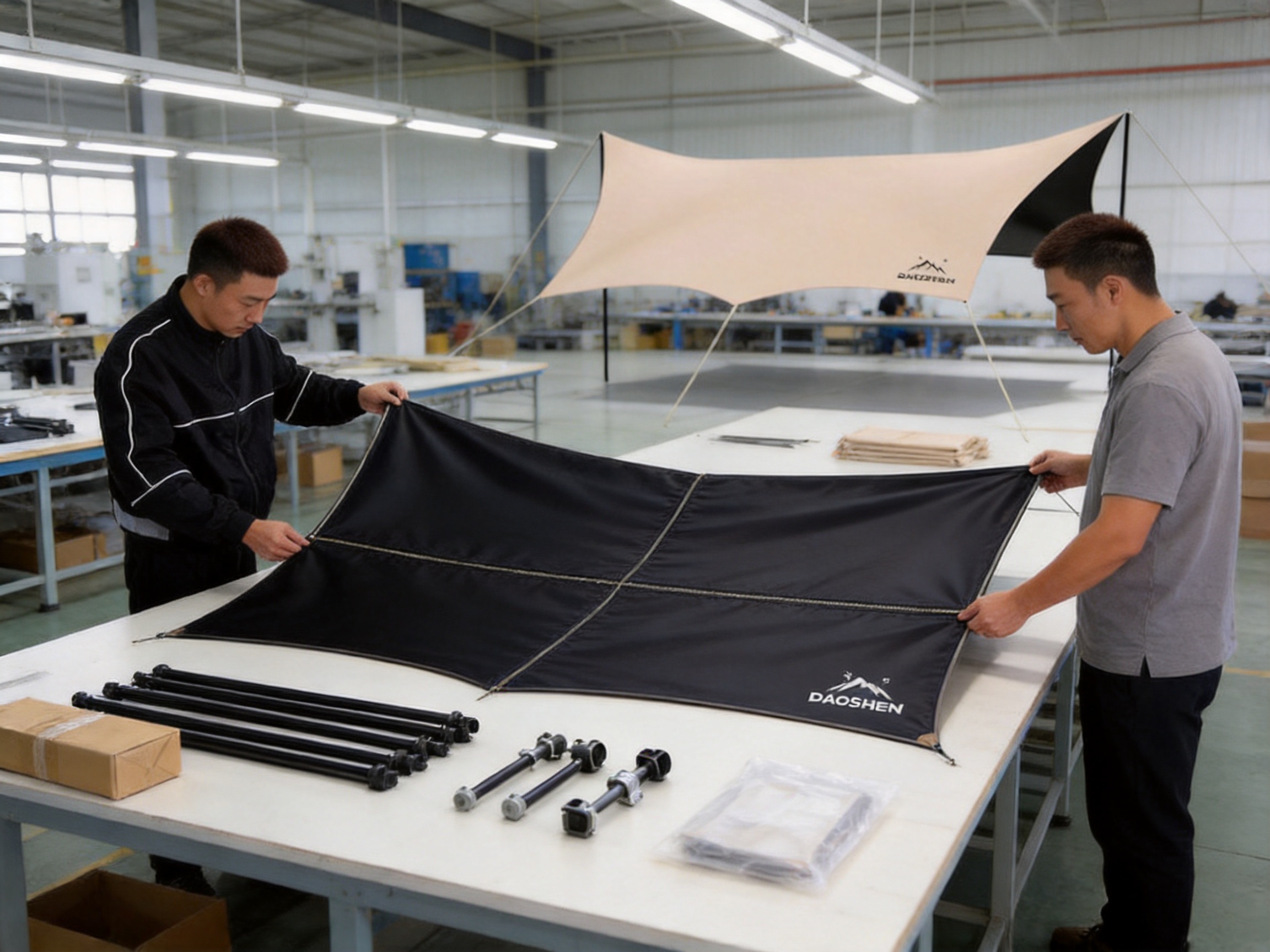
The product is also supported by CragHaven Outdoor’s broader approach to product development. The company works as an outdoor brand and cross-border manufacturing partner based in Hangzhou, China, serving global retailers and OEM customers. Its stated design philosophy is based on weather, terrain, time, material reliability, sampling, testing, and optimization rather than on specifications alone. That approach is particularly valuable for canopies because real performance depends on how fabric, frame, joints, anchoring, and roof geometry work together.
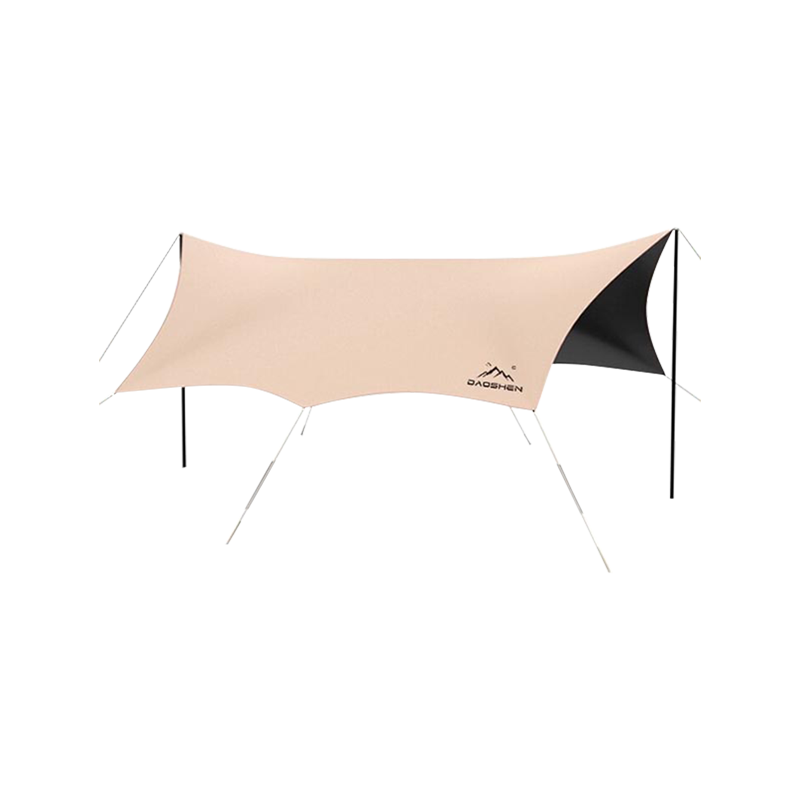
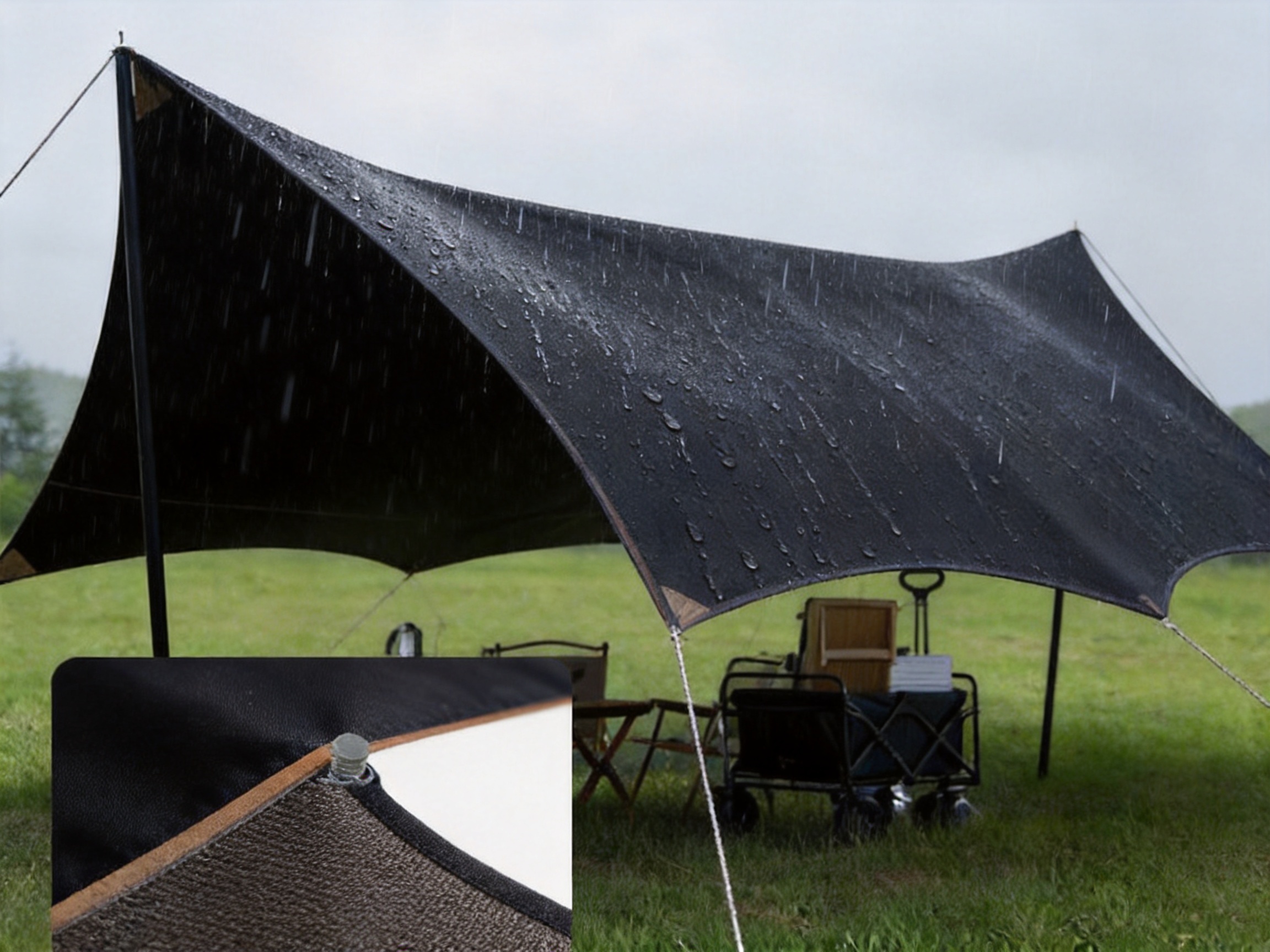
Outdoor picnic camping black vinyl tent, rainproof and sunshade canopy, picnic butterfly curtain canopy
Product Overview and Intended Use
This black vinyl canopy is a large outdoor shelter designed to provide shade and basic weather protection during recreational activities. The black vinyl coating helps limit solar transmission, while the 210D Oxford cloth offers a durable textile foundation. A steel support structure creates the frame, and the butterfly-style roof provides a broad, peaked shade area.
The product is suitable for family picnics, beach outings, camping areas, garden gatherings, outdoor markets, recreational events, and other locations where users need a dependable overhead shelter. It is especially appropriate for buyers who value comfort and coverage over ultralight portability.
The canopy is not positioned as a specialized mountaineering tent or a storm shelter. Its main purpose is to create a comfortable shaded area in normal outdoor conditions and to provide useful protection from sun and light rain. As with any large canopy, safe use depends on correct assembly, suitable ground anchoring, and responsible judgment when wind or severe weather develops.
The product specification can be summarized as follows:
| Feature | Product Attribute | Practical Benefit |
|---|---|---|
| Primary category | Outdoor canopy tent | Suitable for picnics, camping areas, beaches, and recreational events |
| Fabric construction | Black vinyl coating with 210D high-density Oxford cloth | Improves sun protection, water resistance, and everyday durability |
| Frame | Taller and thicker steel structure | Provides increased headroom and a more substantial support system |
| Roof profile | Butterfly-shaped, dual-slope canopy | Expands shade coverage and encourages rain runoff |
| Design priority | Stationary and semi-stationary outdoor use | Balances protection and durability rather than minimizing pack weight |
| Commercial application | Retail, OEM, and private-label supply | Supports global outdoor product programs and seasonal collections |
This combination distinguishes the product from basic polyester pop-up shades that may be lighter but often provide less substantial solar blocking, lower material density, or reduced long-term resistance to repeated use.
Why the Black Vinyl Coating Matters
Sun protection is one of the most important reasons people purchase a canopy. A shelter that allows excessive light and ultraviolet radiation to pass through may still create visible shade, but it may not provide the level of comfort users expect during long hours outdoors. The black vinyl coating is intended to improve this aspect of performance by forming a denser protective layer over the underlying fabric.
Solar radiation includes visible light, infrared energy, and ultraviolet radiation. Fabric color, weave density, thickness, and coating construction all influence how much energy reaches the underside of a canopy. A light-colored fabric can reflect a large amount of visible light, but reflection alone does not necessarily prevent ultraviolet transmission. A dense dark coating can absorb and restrict more incoming radiation at the surface layer.
For this reason, a black-coated canopy may feel noticeably cooler and darker beneath direct sunlight than an uncoated or lightly coated fabric of similar basic thickness. The improvement is particularly meaningful at beaches, open parks, sports fields, and exposed picnic areas where natural shade is limited.
The vinyl coating also contributes to water resistance. When properly applied and finished, the coating creates a more continuous barrier than a basic woven fabric alone. This helps the canopy shed light rain and maintain its protective function during changing outdoor conditions. The sloped butterfly roof further supports this function by directing water away from the raised center and reducing the likelihood of water pooling on a flat surface.
Another advantage is resistance to degradation during repeated seasonal exposure. Polyurethane-coated fabrics can be useful for lightweight products, but prolonged direct sunlight may gradually affect certain PU coating systems. Vinyl is generally selected for applications where strong surface protection and repeated sun exposure are more important than minimum weight. It is therefore a logical choice for a family canopy that may remain set up for much of a day at a park, beach, or outdoor event.
There is a clear tradeoff. Vinyl-coated fabric is usually heavier and less flexible than a very light PU-coated textile. That additional weight is not a defect; it reflects the product’s intended use. A shelter transported in a car and used by a family group can benefit from stronger sun and weather protection even if it is not ideal for long-distance backpacking.
Users should still follow normal care practices. The canopy should be dried before long-term storage, folded without unnecessary abrasion, and kept away from sharp objects that could cut or puncture the coating. Good care helps preserve water resistance and extends the useful life of the fabric.
210D High-Density Oxford Cloth
The underlying 210D Oxford cloth supports the canopy’s balance of strength, weight, and handling. Denier, represented by the letter D, describes the linear density of the fibers used in a textile. It is not a complete measure of fabric quality, but it provides useful context when combined with weave type, coating, thread quality, seam construction, and finishing.
A 210D material occupies a practical middle range for a recreational canopy. Fabrics below approximately 150D can be more vulnerable to tearing, punctures, and damage caused by repeated setup on rough surfaces. Heavier fabrics above 300D may increase durability, but they can also add substantial weight and bulk without delivering an equivalent benefit for every canopy application.
Oxford cloth uses a basket-style weave that distributes tension across intersecting groups of threads. When a small puncture or cut occurs, the weave can help reduce the tendency of damage to travel rapidly along one straight line. This is useful during repeated setup, transport, and contact with grass, sand, outdoor furniture, or other common surfaces.
High-density construction also contributes to a more stable fabric surface. When combined with the black vinyl coating, it gives the canopy a substantial hand feel and a more protective barrier than a thin, uncoated textile. The material is intended to resist everyday wear rather than to eliminate all possible damage. Sharp branches, rough metal edges, and careless dragging can still harm any coated fabric.
Fabric finishing is another important consideration. A smooth or coated surface can reduce friction when the canopy is handled, folded, or placed on the ground. This does not replace careful use, but it can help limit surface wear over repeated cycles. For commercial buyers, the combination of denier, weave, coating, and finishing is more informative than relying on a single material number.
Compared with a basic low-cost polyester shade, the 210D Oxford construction offers a more substantial foundation for long-term recreational use. It is especially relevant for customers who expect to assemble the canopy many times during a season rather than use it once or twice.
Steel Frame Design and Structural Stability
The frame is responsible for maintaining the canopy’s shape and transferring roof loads to the ground. This product uses a taller and thicker steel frame to provide increased headroom and a stronger overall support system. A taller structure is more comfortable for adults because it reduces the need to bend or move around a low roofline.
Height alone, however, does not guarantee stability. A taller canopy can experience greater leverage during gusts because wind forces act over a larger vertical area. The frame must therefore be designed as a coordinated system in which tube thickness, connection points, roof shape, and ground anchoring work together.
Steel is often selected for this type of canopy because it offers useful resistance to bending and provides a solid feel during assembly. Compared with very thin aluminum or lightweight composite components, a properly engineered steel frame can deliver a more substantial support structure for a large family-oriented shelter. The tradeoff is increased weight, which again confirms that the product is intended for car camping, beach access, parks, and similar locations rather than extended backpacking.
Frame joints deserve particular attention. In many temporary outdoor structures, the connection points experience concentrated stress when the canopy is lifted, folded, moved, or exposed to wind. Reinforced or carefully constructed joints can distribute loads more effectively than simple low-strength connections. The manufacturing approach should therefore evaluate not only the straight tubing but also the quality of joint alignment, welds, sleeves, hinges, and connection hardware.
CragHaven Outdoor’s product development principles emphasize sampling, testing, and optimization. Applied to this canopy, that means the frame should be assessed as a complete system rather than as a collection of isolated specifications. The relationship between the steel tubes, joints, fabric tension, roof peak, and anchoring points is more important than any single component in isolation.
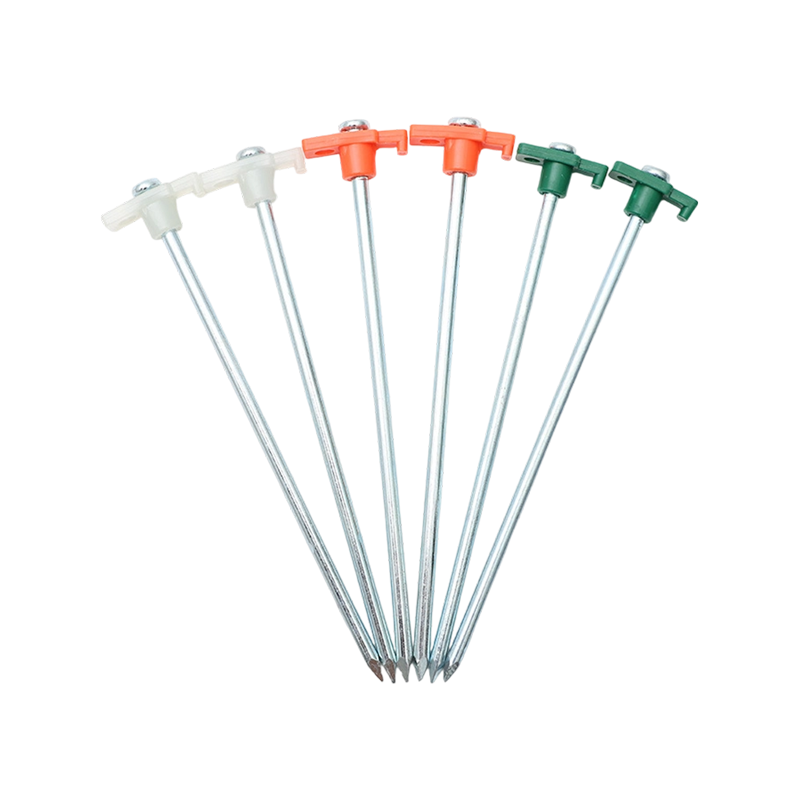
Users should anchor the canopy according to the ground conditions. Stakes may be suitable for firm soil, while sandbags or other weighting methods may be more appropriate for beaches, paved areas, or hard ground. Anchoring does not transform a recreational canopy into a severe-weather shelter, but it significantly improves resistance to movement during ordinary breezes and mild-to-moderate wind conditions.
The canopy should be lowered and stored when strong winds, thunderstorms, or severe weather are expected. Large fabric structures naturally present a broad surface to wind. Responsible operation protects the user, the product, nearby property, and other people in the area.
Butterfly Geometry and Shade Coverage
The butterfly-shaped roof is one of the product’s most visible design features. Instead of using a simple flat plane, the canopy forms a raised center with two sloping sides. This dual-slope geometry increases usable shade coverage and gives the roof a more dynamic profile.
A raised center can improve overhead clearance and encourage rain to move toward the sides. It also reduces the risk of water collecting in a low central area. Water pooling can become a serious problem because the weight of standing water places additional stress on fabric, seams, frame connections, and support points.
Shade conditions change as the sun moves. A canopy that provides good protection in the morning may allow more sunlight to reach one side in the afternoon. The broad butterfly profile helps maintain useful shade across changing solar angles because it presents a wider covered area than a narrow shelter with a similar central height.
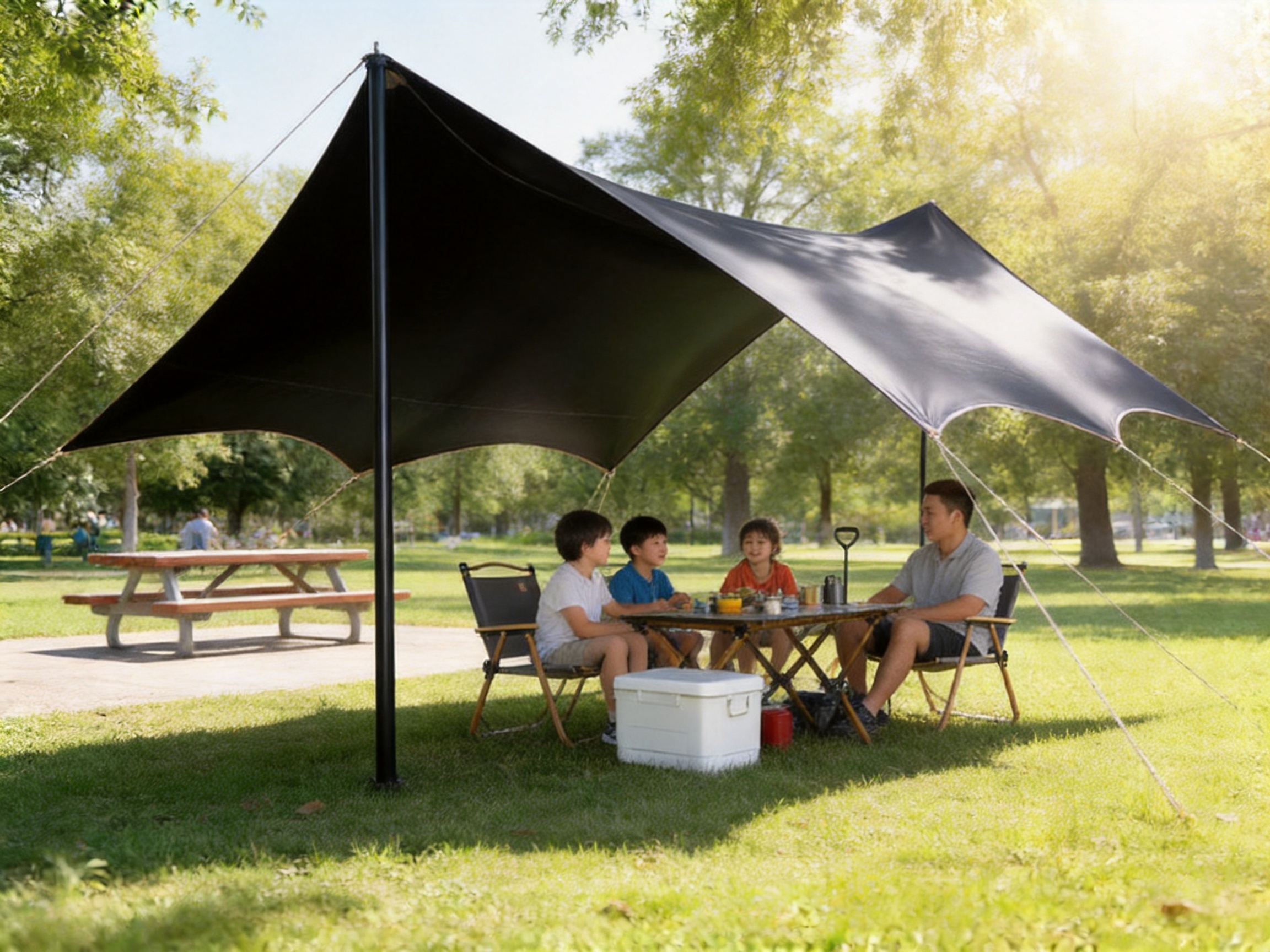
This characteristic is valuable for families who sit beneath a canopy for several hours. Children’s play areas, picnic tables, beach chairs, coolers, and personal equipment can be arranged within the covered footprint. The design also provides a more comfortable visual environment by reducing direct glare beneath the canopy.
The sloped surfaces can also help deflect some wind compared with a completely flat roof. Wind may move over an angled surface more smoothly than it passes over a flat, tightly exposed plane. This does not eliminate the need for anchoring, and it does not make the canopy suitable for extreme conditions, but it is a practical advantage in normal outdoor use.
From a product-development perspective, the butterfly shape is not merely decorative. It integrates three objectives: broad shade coverage, improved drainage, and a more efficient response to ordinary airflow. That combination helps the canopy compete with simpler flat-top products that may have fewer structural and drainage advantages.
Advantages Compared with Basic Competing Canopies
Outdoor canopies vary widely in quality. At the lower end of the market, some products prioritize the lowest possible retail price and minimum shipping weight. They may use thin fabric, light coatings, narrow poles, or simplified joints. These products can be suitable for occasional short-term use, but they may be less comfortable and less durable when used frequently or exposed to strong sun.
The black vinyl butterfly canopy has several differentiating features:
More substantial sun protection
The black vinyl coating is designed to restrict solar transmission more effectively than an ordinary uncoated fabric. This can create a darker and more comfortable shaded area during extended outdoor use. It is an important advantage for beach and park users who may remain beneath the canopy throughout the day.
A stronger fabric platform
High-density 210D Oxford cloth provides a more durable base than very light canopy textiles. The weave is suited to repeated handling, while the coating adds another protective layer. Buyers seeking a product for regular seasonal use may prefer this construction over a thin fabric designed mainly for occasional convenience.
Improved comfort through greater height
A taller frame gives adults more usable interior space. People can sit, stand, arrange food, or move between chairs with less interference from a low roof. Increased headroom also improves the perceived quality of the shelter, particularly for family groups and commercial event users.
Broader and more consistent shade
The butterfly profile creates a wide roof footprint and supports more consistent coverage as the sun angle changes. This can be more useful than a compact shade that provides strong protection only at one time of day or from one direction.
Practical weather management
The vinyl coating supports resistance to light rain, while the sloped roof encourages runoff. Together, these features make the canopy more versatile than a basic sun-only shade. Users should still distinguish light-weather protection from severe-weather performance and take the canopy down when conditions become unsafe.
Better alignment with repeat-use applications
The product is designed for users who expect to assemble and store it repeatedly. Its heavier materials and steel frame may be less attractive to ultralight travelers, but they are beneficial for car campers, families, beach users, outdoor retailers, and event organizers who value substantial construction.
Manufacturing and Product Development Strengths
A good canopy is not created by selecting impressive-sounding materials alone. Quality depends on how the design is translated into stable production. CragHaven Outdoor presents itself as both an outdoor brand and a cross-border manufacturing partner, combining product development with manufacturing coordination for global markets.
The company’s approach begins with actual usage scenarios. Rather than designing only for a catalog photograph, product decisions are connected to weather, terrain, setup frequency, storage, and the passage of time. This scenario-based method is appropriate for outdoor shelters because a canopy must function in changing environments rather than in a controlled indoor setting.
Material selection is another stated priority. The company emphasizes durability, reliability, and long-term value instead of focusing exclusively on short-term trends. For this canopy, the use of black vinyl coating, 210D Oxford cloth, and a thicker steel structure reflects that philosophy. Each material addresses a specific practical challenge: solar exposure, fabric wear, structural stability, or user comfort.
Sampling is a central part of responsible manufacturing. Before a product reaches regular production, samples can reveal issues involving fabric tension, frame alignment, coating appearance, seam placement, folding behavior, package size, and assembly instructions. Iterative sampling allows design teams to correct problems before they affect a larger production run.
Testing and optimization are equally important. A canopy may look correct when fully assembled but reveal weaknesses during repeated opening and closing, simulated wind loading, water exposure, or transport vibration. Testing should therefore consider the product’s complete life cycle. It should examine fabric, coating, seams, frame tubes, joints, hardware, packaging, and user assembly.
For an OEM or private-label buyer, this development discipline can reduce uncertainty. A supplier that participates in design and manufacturing can respond more effectively to changes in fabric color, packaging, logo placement, component selection, or market requirements. It can also help buyers understand the tradeoffs between cost, weight, protection, and durability.
CragHaven Outdoor’s location in Hangzhou connects the company with China’s mature outdoor manufacturing and supply networks. A developed manufacturing ecosystem can support coordinated sourcing of coated fabrics, steel components, sewn assemblies, packaging materials, and inspection services. The value of that ecosystem is greatest when supported by clear specifications, consistent quality control, and reliable communication.
Manufacturing strength should also be evaluated by repeatability. A product is commercially successful only when multiple production batches maintain comparable material quality, dimensions, frame fit, coating appearance, stitching, and packaging. For international retailers, stable repeatability is often as important as the performance of the initial sample.
Quality Control Considerations
Quality control for a canopy should address both visible appearance and functional performance. The fabric should be checked for coating consistency, color uniformity, pinholes, cuts, contamination, and edge finishing. The Oxford cloth should be inspected for weave defects and irregular tension. Seams should be examined for secure stitching and appropriate reinforcement at stress points.
The steel frame should be reviewed for tube straightness, surface finish, corrosion protection, joint alignment, and smooth operation of moving components. Hinges, connectors, sleeves, and other hardware should be tested through repeated movement where appropriate. A frame that assembles easily and locks securely reduces user frustration and improves product reliability.
Dimensional inspection is also important. If fabric panels, frame sections, and attachment points are not produced within suitable tolerances, the canopy may assemble unevenly or place excessive tension on specific seams. Consistent dimensions support both appearance and performance.
Water resistance evaluations can help identify coating or seam problems. Although no temporary canopy should be treated as permanently waterproof without precise testing and suitable maintenance, controlled water checks are useful for detecting obvious defects. Similarly, stability evaluations can help verify that the frame and anchoring points behave as intended under representative loads.
Packaging deserves attention because the product may travel through several stages before reaching the customer. Folding methods should limit unnecessary creasing or abrasion, while protective packaging should reduce impact damage to steel components and fabric surfaces. Clear assembly instructions, component identification, and suitable storage guidance improve the final user experience.
For global buyers, documentation can include material specifications, inspection checklists, carton details, care instructions, and production records. These documents support communication among the manufacturer, importer, warehouse, retailer, and end customer.
Commercial Value for Retailers and OEM Buyers
The product has clear potential for outdoor retailers seeking a canopy with visible points of differentiation. Black vinyl, 210D Oxford cloth, steel framing, and butterfly geometry are easy for customers to understand when presented accurately. These features can support a product position above basic low-cost shade tents while remaining accessible to family and recreational users.
The canopy may also fit seasonal retail programs. Demand for picnic and beach shelters often increases during spring and summer, while camping and outdoor event applications can extend the selling period. A durable design can support multiple sales channels, including sporting-goods stores, outdoor specialty retailers, online marketplaces, resort suppliers, event companies, and private-label programs.
For OEM customers, the product platform may provide opportunities for customization. Potential areas can include exterior color combinations, printed branding, packaging design, instruction materials, accessory selection, and market-specific labeling. Any customization should preserve the structural and material principles that make the product effective.
CragHaven Outdoor’s stated focus on professional communication and long-term partnerships is relevant to these programs. International buyers typically need more than a factory quotation. They need support with product interpretation, sampling, revisions, quality expectations, production timing, packaging, and after-sales considerations.
A reliable manufacturing partner can help a retailer avoid common sourcing problems, such as selecting a fabric that is too light for the target market, specifying a frame that is insufficient for the canopy area, overlooking anchoring requirements, or choosing packaging that causes damage during transport. Practical product knowledge helps reduce these risks.
Recommended Use and Care
Before assembly, users should select a level area free from sharp branches, rocks, broken glass, and other objects that could damage the fabric or create a tripping hazard. All frame components should be checked before use, and the canopy should be assembled according to the instructions.
The structure should be anchored at each appropriate ground point. Soil, sand, grass, and hard surfaces require different anchoring approaches. On a beach, sandbags or specialized sand anchors may provide better support than ordinary stakes. On firm soil, suitable stakes should be inserted securely and checked after setup.
Users should avoid dragging the assembled canopy across rough ground. Lifting it with adequate assistance can reduce stress on joints and fabric. The roof should not be overloaded with hanging objects unless the product instructions specifically allow them.
After exposure to rain or damp conditions, the canopy should be opened and dried thoroughly before storage. Storing coated fabric while wet can encourage odor, mildew, and surface deterioration. It is also advisable to keep the packed product in a cool, dry location away from direct sunlight and excessive heat.
Cleaning should be gentle. Loose dirt can often be removed with a soft brush or cloth, followed by mild soap and water where appropriate. Strong solvents, abrasive cleaners, and sharp tools may damage the vinyl coating or alter the fabric surface.
Wind conditions should be monitored continuously. If gusts increase, the canopy should be secured more carefully or taken down. The safest use of a recreational canopy is proactive: users should not wait until the frame begins to move or the fabric starts to pull heavily against the structure.
Q&A
What is the main purpose of this black vinyl canopy?
It is designed to provide broad shade and light-weather protection for outdoor activities such as family picnics, camping areas, beach visits, parks, and recreational gatherings. Its design emphasizes comfort, coverage, and repeated use rather than ultralight backpacking.
Why is black vinyl used instead of ordinary polyester fabric?
The black vinyl coating creates a denser protective surface that helps reduce solar and ultraviolet transmission. It also supports water resistance and durability during repeated exposure. The tradeoff is additional weight compared with some lightweight PU-coated fabrics.
Is the canopy suitable for backpacking?
It is better suited to car camping, beach trips, parks, family outings, and stationary outdoor use. The vinyl-coated fabric and steel frame provide substantial protection but are heavier and less packable than specialized ultralight backpacking shelters.
What does 210D Oxford cloth contribute?
It provides a balance between fabric durability and manageable weight. The Oxford weave distributes stress across multiple threads and is appropriate for a canopy that will be assembled, folded, transported, and used repeatedly.
Does the butterfly shape improve rain performance?
The raised center and sloped roof encourage water to move toward the sides and reduce the chance of central pooling compared with a flat roof. The canopy is intended for light rain protection, but it should not be left in severe weather.
Does a thicker steel frame make the product windproof?
No temporary recreational canopy should be described as completely windproof. A thicker steel frame can improve structural support, but overall stability also depends on joint quality, roof geometry, anchoring, ground conditions, and wind speed. The canopy should be taken down before severe weather.
How should the canopy be anchored on sand?
Sandbags, sand anchors, or other suitable weighting systems are generally more appropriate than ordinary soil stakes on loose beach sand. The anchoring method should match the ground and the expected conditions.
How does the product compare with a lightweight pop-up shade?
This canopy prioritizes stronger fabric, enhanced solar protection, taller headroom, and a substantial steel frame. A lightweight pop-up shade may be easier to carry, but it may not provide the same level of material density, darkness beneath the roof, or long-term repeat-use positioning.
What manufacturing strengths support the product?
CragHaven Outdoor emphasizes scenario-based design, durable material selection, sampling, testing, optimization, and professional communication with global buyers. These practices help connect the product’s specifications with actual outdoor use and repeatable production.
Can retailers request OEM or private-label support?
The company operates as an outdoor brand and cross-border manufacturing partner and specializes in supplying outdoor products to global markets. Retailers can discuss product customization, packaging, branding, sampling, and production requirements directly with the company.
How should the product be stored?
It should be completely dry before folding and storage. The packed canopy should be kept in a cool, dry place away from direct sunlight, excessive heat, sharp objects, and prolonged moisture.
Is the canopy waterproof?
The black vinyl coating and coated Oxford fabric are intended to provide water resistance and protection from light rain. Performance depends on seams, setup, maintenance, and weather conditions. The canopy should not be considered a substitute for a storm shelter or permanent waterproof structure.
Conclusion
The outdoor picnic camping black vinyl tent is a practical canopy for users who want more than minimal shade. Its black vinyl coating is selected to improve solar protection and support water resistance. Its 210D high-density Oxford cloth provides a durable textile foundation, while the taller and thicker steel frame contributes to headroom and structural support. The butterfly-shaped roof expands the shaded footprint, improves runoff, and provides a distinctive alternative to basic flat-top designs.
These features give the product a clear position between lightweight occasional-use shades and highly specialized shelters. It is especially well suited to families, beach users, recreational campers, outdoor event participants, and retailers seeking a durable canopy for repeated seasonal use.
The product’s value also comes from the manufacturing philosophy behind it. CragHaven Outdoor emphasizes real-world scenarios, material reliability, sampling, testing, optimization, and long-term supply relationships. By treating fabric, frame, geometry, anchoring, packaging, and production consistency as connected elements, the company can offer a more complete approach to outdoor product development.
For buyers comparing canopy products, the most important question is not simply which shelter has the longest specification list. It is whether the materials, structure, design, and manufacturing process address the actual demands of outdoor use. In that respect, this black vinyl butterfly canopy offers a well-considered combination of shade, durability, comfort, weather awareness, and commercial adaptability.
References
1. International Organization for Standardization. Textiles — Man-Made Fibres — Generic Names. Reference material concerning textile fiber terminology and classification.
2. International Organization for Standardization. Textiles — Determination of Water Resistance — Hydrostatic Pressure Test. Reference material concerning textile water-resistance evaluation.
3. American Society for Testing and Materials. Standard Guide for Selection of Chemical-Resistant Protective Coatings. General reference concerning coating performance and material selection.
4. American Society for Testing and Materials. Standard Test Methods for Fabrics Used in Outdoor Applications. General reference concerning textile durability, tear resistance, and performance assessment.
5. World Health Organization. Ultraviolet Radiation and Personal Protection. General reference concerning ultraviolet exposure and protective practices.
6. CragHaven Outdoor. Product Development and Manufacturing Information for Outdoor Camping Gear. Company-supplied information concerning design principles, material selection, sampling, testing, and manufacturing cooperation.
Product: Outdoor picnic camping black vinyl tent, rainproof and sunshade canopy, picnic butterfly curtain canopy


- Phone: +86-15968800379
- E-mail: [email protected]
- Address: Room 1002, Huishang Building, Gongshu District, Hangzhou City, Zhejiang Province.
Copyright © CragHaven Outdoor All Rights Reserved. Outdoor Gear Manufacturers Wholesale Mountaineering Camping Gear Suppliers
