

 English
 Deutsch
 Español
 Français


How to Choose a Portable Folding Camping Chair for Coastal Adventures and Everyday Outdoor Use
Content
- 1 1. Why the Right Camping Chair Matters
- 2 2. Product Overview and Main Functional Advantages
- 3 3. Frame Material Selection for Outdoor and Marine Environments
- 4 4. Why This Chair Is Competitive in the Outdoor Market
- 5 5. Manufacturing Process and Quality Control
- 6 6. Corrosion Resistance and Maintenance in Coastal Use
- 7 7. Product Positioning for Retailers and Distributors
- 8 8. Sustainability and Supply-Chain Reliability
- 9 9. Customization and Product Development Options
- 10 10. Frequently Asked Questions
- 10.1 Q1: Is this folding chair suitable for beach camping?
- 10.2 Q2: Why use aluminum instead of steel?
- 10.3 Q3: Is 7075 aluminum always better than 6061 aluminum?
- 10.4 Q4: Can the chair be customized with our company logo?
- 10.5 Q5: How should the chair be cleaned after beach use?
- 10.6 Q6: Does the mesh back support long periods of sitting?
- 10.7 Q7: What makes the chair different from a simple folding stool?
- 10.8 Q8: Is the product suitable for OEM and wholesale orders?
- 10.9 Q9: What testing should buyers request?
- 10.10 Q10: What is the most important feature for a portable camping chair?
- 11 11. Conclusion
- 12 References
- 13 Product: Outdoor folding chair, portable multi-functional camping chair
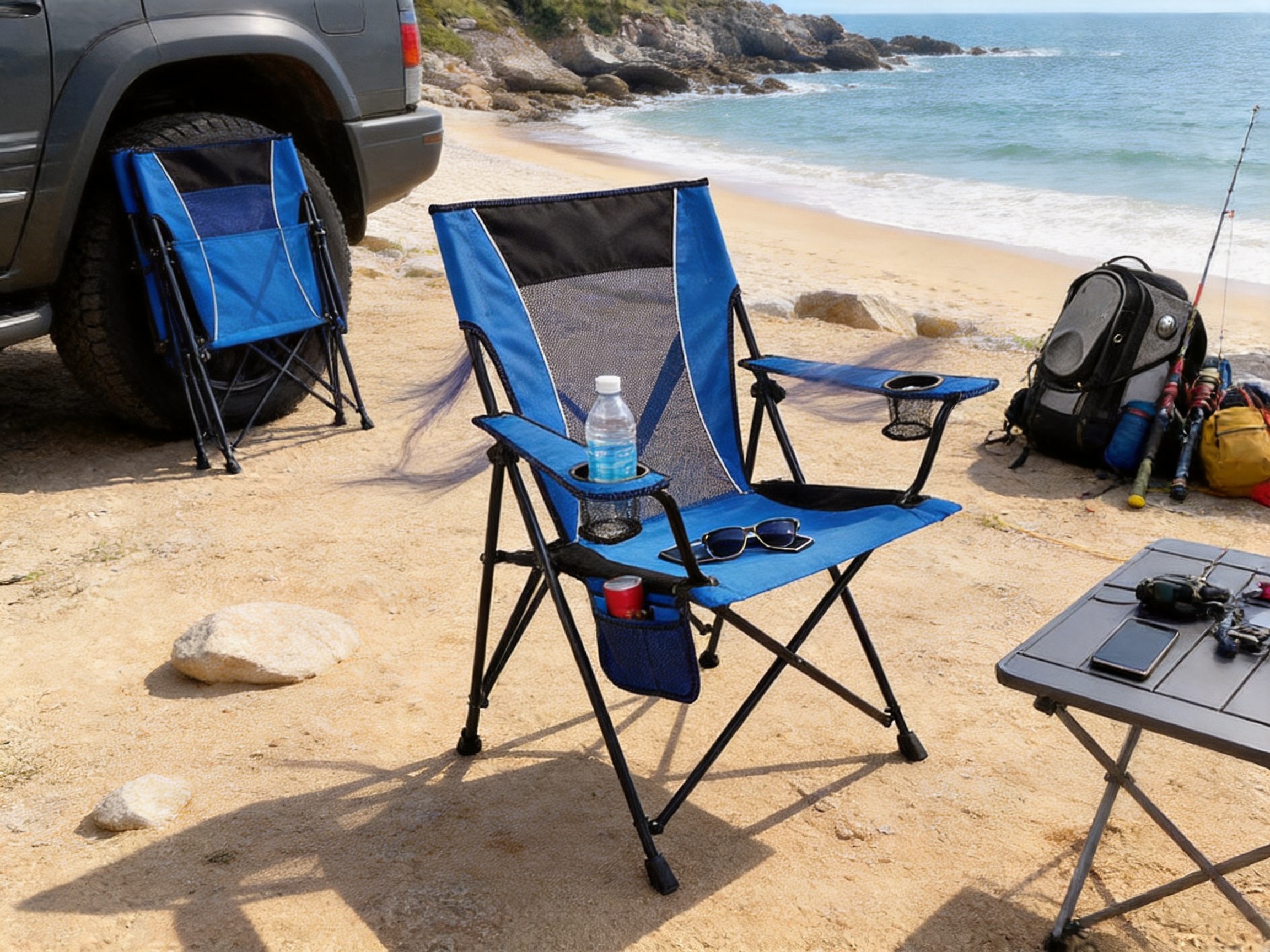
A portable chair is one of the most frequently used pieces of equipment at a campsite. It supports the body during meals, breaks, fishing, social gatherings, equipment preparation, and recovery after a long hike. However, not every folding chair delivers the same level of comfort, portability, structural reliability, or weather resistance. The differences are often found in details that are easy to overlook: frame alloy, tube geometry, fabric tension, hinge construction, surface treatment, storage design, and quality-control procedures.
The outdoor folding chair described in this article is designed as a lightweight, portable, and multifunctional seating solution for camping, hiking, mountaineering basecamps, beach trips, fishing, outdoor events, and general travel. It combines an aviation-grade aluminum alloy frame with a durable Oxford cloth seat, a breathable mesh back panel, side storage pockets, integrated cup holders, and a quick-folding structure. The result is a practical chair intended to provide dependable support without creating unnecessary bulk in a vehicle, backpack, or equipment storage area.
For retailers and distributors, the product also represents a flexible platform for private-label development and OEM/ODM customization. Its construction can be adapted to different markets, including ultralight outdoor recreation, family camping, coastal use, event seating, fishing, and institutional applications. CragHaven Outdoor supports this process through product development, sampling, material selection, testing, and scalable manufacturing in Hangzhou, China.
1. Why the Right Camping Chair Matters
Outdoor seating is sometimes treated as a secondary accessory, but the quality of a chair has a direct effect on the overall outdoor experience. A chair that is too heavy becomes inconvenient to transport. A chair with a narrow or poorly tensioned seat becomes uncomfortable after a short period. A frame with weak joints can become unstable, while unsuitable materials may deteriorate quickly in humid, coastal, or rainy environments.
A well-designed portable chair must balance several performance requirements at the same time:
- Low enough weight for convenient carrying and loading.
- Sufficient structural strength for repeated daily use.
- Comfortable seating for extended periods.
- Compact folding for transport and storage.
- Resistance to moisture, salt, ultraviolet exposure, and dirt.
- Reliable hinges, connectors, and load-bearing joints.
- Simple operation without complicated assembly.
- Practical storage for bottles, phones, tools, snacks, or small accessories.
These requirements are particularly important for mountain and camping products because outdoor users often move through uneven terrain and changing weather. A chair may be used on grass, gravel, sand, wood platforms, rocks, or compact soil. It may also be exposed to condensation, rain, spilled drinks, mud, sunscreen, salt spray, and rapid changes between hot and cold conditions.
The product’s folding design addresses the transport challenge, while its aluminum frame reduces the burden compared with traditional steel seating. The Oxford cloth seat provides a stable seating platform, and the breathable mesh back panel improves air circulation when users remain seated for longer periods. Side pockets and cup holders add everyday convenience without requiring an additional accessory organizer.
2. Product Overview and Main Functional Advantages
This folding camping chair is developed as a multifunctional outdoor seat rather than a basic temporary stool. Its design combines portability, comfort, storage, and structural practicality in one product. The principal components include an aviation-grade aluminum alloy frame, Oxford cloth seating material, a mesh backrest, side storage pockets, cup holders, and a fast folding mechanism.
2.1 Aviation-Grade Aluminum Alloy Frame
The frame is the central load-bearing element of a folding chair. It determines the chair’s stability, weight, folding behavior, and long-term durability. Aluminum alloys are widely used in outdoor equipment because they offer a favorable combination of low density, strength, and corrosion resistance.
Compared with conventional steel frames, an aluminum frame can substantially reduce carrying weight. This is valuable for hikers, campers, event organizers, and families who must transport multiple pieces of equipment. A lighter chair is easier to lift from a vehicle, move between campsites, carry across a beach, or store in a tent or recreational vehicle.
The product’s frame is designed to support regular outdoor use while maintaining a practical portable form. The use of aluminum also helps reduce the risk of red rust associated with unprotected steel. This does not mean that aluminum is maintenance-free or immune to all forms of corrosion. Salt deposits, scratches, trapped moisture, and contact with dissimilar metals can still affect an aluminum product. For this reason, alloy selection, finishing, joint design, and inspection must be considered together.
2.2 Oxford Cloth Seat
The seat uses Oxford cloth, a material commonly selected for outdoor furniture because it combines abrasion resistance, flexibility, and ease of cleaning. Compared with delicate indoor textiles, Oxford cloth is better suited to repeated folding and exposure to ordinary outdoor dirt. It can support a firm seating surface while allowing the chair to fold into a compact shape.
The textile’s performance depends on yarn construction, fabric density, coating, stitching, edge reinforcement, and how the material is attached to the frame. A good seat should distribute pressure across the user’s body rather than concentrating force at one small area. Reinforced seams are especially important around corners, attachment points, and areas that experience repeated tension during folding.
For retailers, Oxford cloth also provides an attractive surface for color development and private-label design. Different fabric colors, logo treatments, binding materials, and stitching details can be coordinated with a brand’s wider camping collection.
2.3 Breathable Mesh Back Panel
Long periods of sitting can create heat and moisture between the user’s back and the chair. A solid fabric back may retain warmth, especially in summer conditions or during outdoor events. The breathable mesh back panel helps improve airflow and reduce stuffiness.
This feature is particularly useful for beach camping, fishing, festivals, sports viewing, and campfire gatherings, where users may remain seated for an extended period. The mesh also complements the open, lightweight character of the chair. It can reduce visual bulk while maintaining back support and ventilation.
Mesh performance is influenced by fiber selection, weave structure, tensile strength, edge binding, and resistance to ultraviolet exposure. CragHaven Outdoor evaluates the overall seating system rather than treating the mesh as an isolated component. The back panel must remain securely attached when users lean backward, and its tension must remain consistent after repeated folding and unfolding.
2.4 Side Pockets and Cup Holders
Small storage features can significantly improve user convenience. The integrated side pockets provide accessible space for phones, keys, sunglasses, snacks, fishing tools, cards, or other small items that users do not want to place on the ground. The cup holders help keep beverages stable and within reach.
These features give the chair an advantage over simple folding stools and minimalist camp seats that offer no organization. They also reduce the need for a separate side table in situations where users only need to hold a few personal items. For camping retailers, multifunctionality can make the product more attractive to consumers who want to reduce the number of accessories they carry.
Storage components must be properly reinforced because pockets and cup holders are exposed to repeated pulling, loading, and movement. Stitching, attachment points, and fabric transitions are checked during product development to ensure that convenience features do not compromise the chair’s overall durability.
2.5 Quick-Folding Construction
A portable chair should not require a complicated setup procedure. The quick-folding structure enables users to open the chair when needed and collapse it for transportation or storage. This makes it appropriate for spontaneous outdoor use, vehicle-based camping, family trips, rental operations, and commercial events.
Fast folding also improves storage efficiency for retailers, warehouses, and end users. Multiple chairs can be packed into a smaller area than rigid outdoor furniture. When folded, the chair can be placed in a vehicle trunk, equipment cabinet, garage, tent vestibule, or storage room without occupying unnecessary space.
Hinges, pivot points, locking areas, and tube interfaces require careful design because these parts experience repeated movement. A chair may be opened and closed hundreds or thousands of times throughout its service life. Manufacturing quality is therefore directly related to the reliability of the folding action.
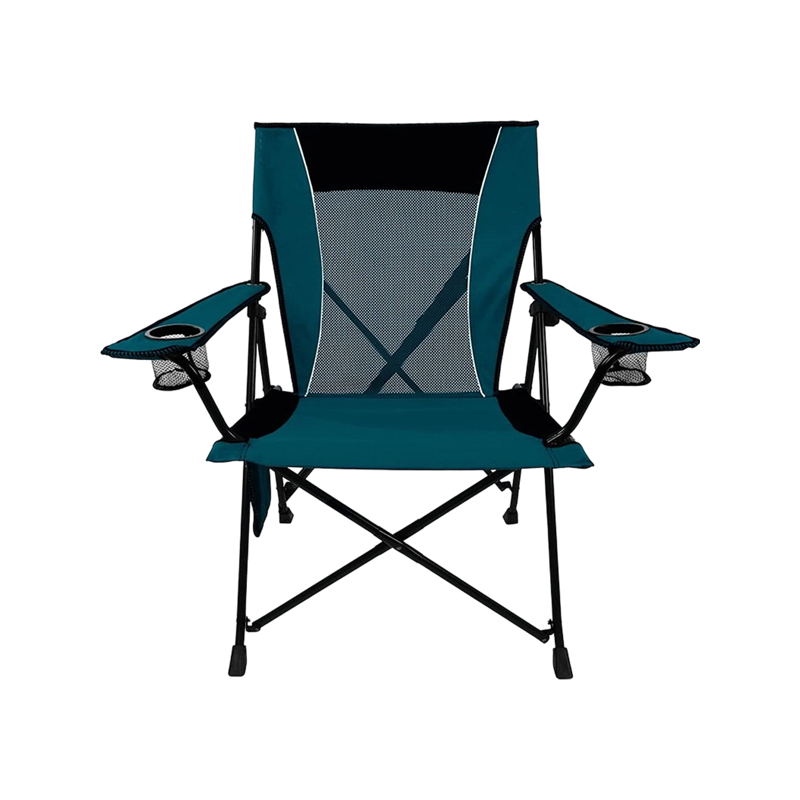
Outdoor folding chair, portable multi-functional camping chair
3. Frame Material Selection for Outdoor and Marine Environments
Material selection is one of the most important decisions in the development of a portable outdoor chair. The ideal material depends on the intended load, target weight, exposure conditions, manufacturing process, price range, and expected service life. Three commonly considered choices are 7075 aluminum, 6061 aluminum, and high-tensile steel.
3.1 7075 Aluminum
7075 aluminum is a zinc-magnesium-copper alloy known for high strength. In T6 temper, its typical yield strength is approximately 503 MPa, with an ultimate tensile strength of about 572 MPa. Its density is approximately 2.81 g/cm³, making it far lighter than steel.
The main benefit of 7075 aluminum is its high specific strength. It can be used where designers want to reduce weight while maintaining a high load-bearing capability. This makes it attractive for premium ultralight chairs and equipment intended for users who prioritize portability above all other factors.
However, 7075 aluminum is not automatically the best choice for frequent coastal use. Compared with 6061 aluminum, it is more susceptible to pitting and stress-corrosion cracking in chloride-rich environments. Surface protection, careful joint design, crack inspection, and maintenance become more important when this alloy is used near saltwater.
3.2 6061 Aluminum
6061 aluminum is a versatile magnesium-silicon alloy with good corrosion resistance, weldability, formability, and general availability. Typical 6061-T6 yield strength is approximately 276 MPa, with an ultimate tensile strength of about 310 MPa. Its density is approximately 2.70 g/cm³.
Although 6061 has lower strength than 7075, it provides a balanced combination of performance and manufacturability. It is especially suitable for all-purpose outdoor chairs, coastal camping products, and furniture that must tolerate regular exposure to humidity, rain, and salt deposits.
For many consumer outdoor products, corrosion resistance and reliable production are more important than achieving the absolute lowest possible frame weight. In these applications, 6061 aluminum is often the more practical selection. It can support complex frame geometries, is easier to process, and generally provides a lower corrosion risk than 7075 aluminum.
3.3 High-Tensile Steel
High-tensile steel remains popular because it offers impact toughness, familiar processing characteristics, and competitive raw-material cost. Depending on the grade and heat treatment, its yield strength may range from approximately 350 to 700 MPa, and its ultimate tensile strength can exceed 800 MPa.
The major disadvantage is density. Steel has a density of approximately 7.85 g/cm³, nearly three times that of aluminum. A steel chair can therefore be strong and durable but substantially heavier. This weight penalty is especially noticeable when several chairs are carried together or when equipment must be transported over long distances.
Steel is also highly vulnerable to rust without effective protection. Powder coating, primer systems, pretreatment, sealed joints, and regular inspection are necessary for marine or humid environments. A scratch or chip that exposes bare steel can initiate localized corrosion beneath a coating.
3.4 Comparative Frame Data
The following table summarizes representative material characteristics relevant to portable outdoor chair design. Actual performance depends on tube dimensions, temper, geometry, connection design, surface treatment, manufacturing quality, and testing conditions.
| Property | 7075 Aluminum T6 | 6061 Aluminum T6 | High-Tensile Steel |
|---|---|---|---|
| Typical yield strength | Approximately 503 MPa | Approximately 276 MPa | Approximately 350–700 MPa |
| Typical ultimate tensile strength | Approximately 572 MPa | Approximately 310 MPa | Approximately 650–800 MPa |
| Density | Approximately 2.81 g/cm³ | Approximately 2.70 g/cm³ | Approximately 7.85 g/cm³ |
| Specific strength | Approximately 179 kN·m/kg | Approximately 102 kN·m/kg | Approximately 57 kN·m/kg |
| Relative weight | Very low | Low | High |
| Marine corrosion resistance | Moderate with appropriate treatment | High, particularly with sealed finishing | Low without comprehensive coating |
| Impact toughness | Moderate | Moderate | High |
| Typical application | Premium ultralight products | All-purpose and coastal products | Heavy-duty or budget-oriented products |
For a multifunctional chair intended for broad outdoor use, 6061 aluminum provides a particularly strong balance. It supports a lightweight product while reducing the corrosion concerns associated with 7075 aluminum and the weight penalty associated with steel.
4. Why This Chair Is Competitive in the Outdoor Market
The portable camping chair market includes basic stools, compact backpacking chairs, reclining chairs, director-style chairs, and heavy-duty basecamp furniture. This product is positioned between minimalist seating and oversized comfort furniture. It offers more convenience than a simple stool while remaining easier to transport than large steel-framed chairs.
4.1 Balanced Portability Rather Than Extreme Minimalism
Some ultralight chairs remove nearly every feature to achieve the lowest possible weight. Although this approach can appeal to specialized backpackers, it may sacrifice storage, back support, or everyday comfort. The product described here takes a more balanced approach. It remains portable while including a supportive back, breathable mesh, pockets, and cup holders.
This balance expands the potential customer base. It can serve hikers who want a practical rest seat, families who need convenient camp furniture, anglers who require organized storage, and event users who expect more comfort than a basic folding stool can provide.
4.2 Better Ventilation for Extended Sitting
A breathable mesh back is a valuable advantage in warm climates. Users at coastal campsites, outdoor concerts, sports events, and summer festivals often remain seated for long periods. Improved airflow can reduce heat accumulation and make the chair more comfortable than a fully closed-back alternative.
Ventilation also supports the product’s visual and functional lightweight character. The open mesh structure can reduce the sense of bulk while preserving useful back support.
4.3 Integrated Organization
Side pockets and cup holders distinguish the chair from many low-cost folding models. These features are simple but meaningful because they keep frequently used items accessible. A user can place a phone, bottle, snack, flashlight, or small outdoor tool beside the seat rather than searching through a larger backpack.
For retailers, integrated organization provides a clear selling point that can be communicated easily in product listings, packaging, displays, and demonstrations. It also helps the product compete against chairs that may have similar frame sizes but fewer practical functions.
4.4 Suitable for Multiple Outdoor Scenarios
The chair is not limited to one activity. It can be used for mountain camping, car camping, beach trips, fishing, hiking breaks, backyard gatherings, temporary outdoor work, festivals, sporting events, and basecamp seating.
This versatility is commercially useful because retailers can present the same product to several customer groups. It is also valuable for consumers who prefer equipment that can serve different purposes rather than purchasing a separate chair for every activity.
4.5 Practical OEM and ODM Potential
The product platform can be developed for different market positions. A retailer may request a specific fabric color, logo placement, packaging format, frame finish, storage configuration, or accessory combination. A distributor may require a private-label product designed to match an existing outdoor collection.
OEM and ODM flexibility can include:
- Frame color and surface finish.
- Oxford cloth color, weave, and branding.
- Mesh color and visual pattern.
- Logo printing, woven labels, or embroidered marks.
- Custom packaging and instruction materials.
- Retail carton dimensions and pallet configuration.
- Reinforced components for specialized markets.
- Modified pocket dimensions and cup-holder arrangements.
- Product bundles for camping, fishing, events, or promotional programs.
Customization should be managed through controlled sampling and approval procedures. Changes to fabric, frame tubes, stitching, or hardware can affect performance, so every significant modification should be evaluated before mass production.
5. Manufacturing Process and Quality Control
A reliable outdoor chair is the result of coordinated manufacturing processes rather than a single material choice. CragHaven Outdoor approaches product development as a combination of design interpretation, component selection, prototype sampling, testing, production control, and final inspection.
5.1 Usage-Based Product Development
The development process begins with actual usage scenarios. Designers consider where the chair will be used, how it will be carried, how often it will be folded, what weather it may encounter, and which parts users are most likely to stress or damage.
This approach helps avoid a common problem in outdoor product development: selecting specifications for a catalog without considering real behavior. A chair used at a coastal campsite experiences different risks from one used indoors or on a dry mountain trail. Salt deposits may collect in joints, sand may enter folding areas, and wet fabric may remain packed if users do not dry it properly.
Scenario-based development influences tube design, protective finishing, fabric selection, drainage, seam placement, and maintenance instructions.
5.2 Frame Tube Processing
Aluminum tubing must be cut to controlled lengths before bending, drilling, forming, or assembly. Dimensional consistency is essential because even small variations can affect folding alignment and chair stability.
During bending, the process must control deformation, surface marks, ovalization, and cracking. Poorly controlled bending can weaken the tube or cause visual irregularities. Fixtures and process parameters are used to maintain consistent angles and repeatable geometry between production batches.
Drilled holes and attachment points require particular attention. Burrs or sharp edges can damage fabric, create stress concentrations, or interfere with hinge movement. Edges are therefore deburred and checked before assembly.
5.3 Joint and Hinge Assembly
Folding joints are among the most highly cycled components in a portable chair. They must allow smooth movement while limiting unwanted looseness. Hardware selection, washers, bushings, rivets, bolts, and clearances all affect the user’s perception of quality.
Assembly workers inspect joint alignment and movement during production. A hinge that is too tight may make the chair difficult to open, while excessive clearance can create instability or premature wear. Locking and stopping features must be checked to ensure that the frame reaches the intended open position.
Where aluminum interfaces with other metals, designers must consider galvanic corrosion. Protective finishes, suitable hardware, separators, and drainage paths can help reduce the risk of corrosion caused by dissimilar-metal contact in a wet or salty environment.
5.4 Textile Cutting and Sewing
The Oxford cloth seat and mesh back are cut according to controlled patterns. Accurate cutting helps maintain symmetry and ensures that tension is distributed evenly when the fabric is installed on the frame.
Sewing quality is evaluated at load-bearing seams, corners, handles, pocket openings, and areas where fabric connects to the frame. Reinforcement patches or additional stitching may be used where repeated pulling occurs. Thread selection should be compatible with outdoor exposure, moisture, abrasion, and ultraviolet conditions.
The seat must be tensioned correctly. Excessive tension can increase stress on seams and frame attachment points, while insufficient tension can produce a loose or uncomfortable seating surface. Sampling allows the manufacturer to evaluate the relationship between fabric behavior and frame geometry before finalizing production specifications.
5.5 Surface Treatment
Surface treatment protects the frame, improves appearance, and contributes to long-term customer satisfaction. For 6061 aluminum, sealed anodizing can provide a durable oxide layer and improve resistance to ordinary outdoor corrosion. Powder coating may also be used to achieve specific colors and additional surface protection.
For 7075 aluminum, more robust treatment may be appropriate in applications where chloride exposure is expected. Hard anodizing and additional protective coatings can reduce risk, although designers must consider the possible effects on surface hardness, ductility, and repeated bending.
Steel frames require a more comprehensive corrosion-control system. Phosphate pretreatment, epoxy primer, zinc-rich protection, and polyester topcoats may be combined to reduce rust risk. Coating coverage around edges, joints, holes, and tube ends is especially important.
5.6 Inspection and Testing
Quality control may include incoming material checks, dimensional inspection, fabric evaluation, coating inspection, folding-cycle testing, static load testing, joint assessment, and appearance checks. The exact test plan depends on the customer’s requirements and the intended market.
For marine-oriented products, salt-spray testing can provide comparative information about surface treatment and corrosion behavior. ASTM B117 testing exposes specimens to a controlled salt fog, while cyclic corrosion testing introduces wet and dry phases that may more closely represent outdoor conditions.
Laboratory testing should not be treated as a complete substitute for field use. Real outdoor environments include sand, ultraviolet radiation, impact, contamination, drying, temperature changes, and crevice conditions that may not be reproduced by a single test. For this reason, prototype field exposure and periodic inspection provide valuable additional information.
6. Corrosion Resistance and Maintenance in Coastal Use
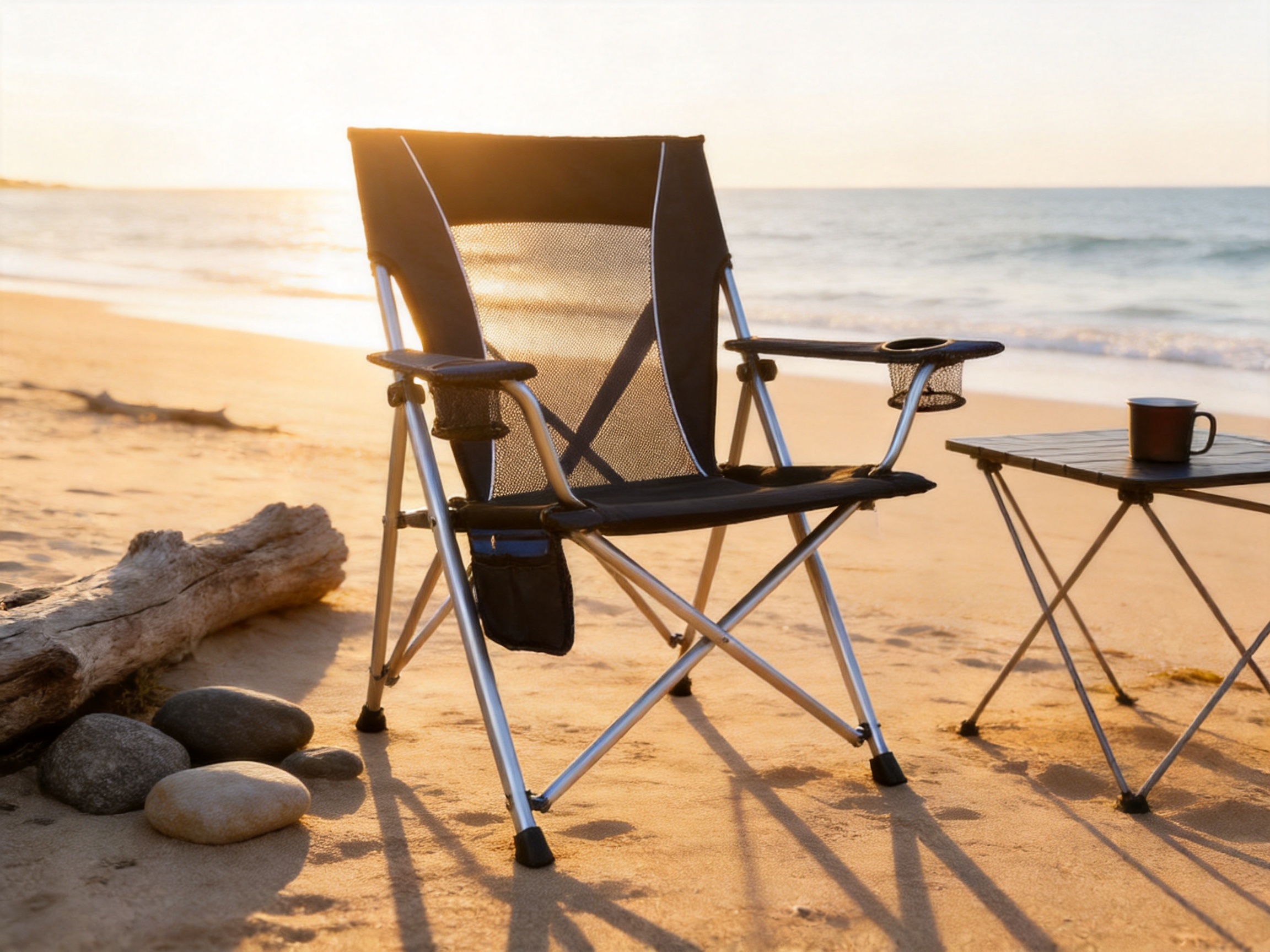
Coastal environments are demanding because saltwater and salt spray contain chloride ions that can accelerate corrosion. A chair used near the sea may receive salt deposits even when it is not directly immersed in water. Humidity, condensation, sand, and trapped moisture can increase the effect.
6061 aluminum is generally a strong choice for coastal and all-purpose chairs because of its favorable corrosion resistance. Anodizing or powder coating can further improve surface durability. Nevertheless, users should rinse salt and sand from the chair with fresh water after beach use and allow the product to dry fully before folding it for storage.
Special attention should be paid to joints, tube ends, fasteners, and areas where fabric or hardware can hold moisture. Sealed tube ends, drainage provisions, protective gaskets, and suitable hardware can reduce the risk of crevice corrosion. These details are particularly important because a chair may appear clean on the outside while retaining saltwater inside a joint.
6.1 Recommended User Care
- Remove sand and loose dirt before folding the chair.
- Rinse the frame with fresh water after exposure to seawater or heavy salt spray.
- Wipe the chair dry before placing it in a storage bag or vehicle.
- Inspect hinges, fasteners, and frame intersections periodically.
- Do not use the chair if a major tube is bent, cracked, or permanently deformed.
- Keep sharp objects away from the Oxford cloth and mesh panels.
- Store the chair in a dry, ventilated location away from direct sunlight when not in use.
- Repair coating damage promptly when the chair is used in humid or coastal areas.
These practices are simple, but they can extend service life and preserve the chair’s appearance. Retailers may include care instructions in packaging or product documentation to help customers obtain better long-term performance.
7. Product Positioning for Retailers and Distributors
This folding camping chair can be positioned as a versatile mid-to-premium outdoor accessory, depending on material finish, fabric specification, packaging, and customization. Its combination of portability and integrated features makes it suitable for a wide range of retail channels.
7.1 Outdoor Specialty Stores
Outdoor specialty retailers can present the chair as practical furniture for camping, hiking breaks, basecamps, and vehicle-supported adventures. The aluminum frame and breathable back appeal to consumers who want comfort without carrying a heavy steel chair.
7.2 Camping and Lifestyle Retailers
General camping and lifestyle retailers can emphasize quick folding, side storage, cup holders, and compact storage. These features are easily understood by family campers and casual outdoor users who may not need an ultralight technical chair but still value portability.
7.3 Fishing and Beach Equipment Channels
Anglers and beach users benefit from accessible storage and comfortable seating. A suitable surface treatment and user-care program can support positioning for occasional coastal use, while the mesh back helps maintain comfort in warm conditions.
7.4 Events, Clubs, and Institutional Buyers
Outdoor organizations, clubs, event operators, promotional distributors, and rental businesses may require multiple matching chairs. Consistent production, private labeling, packaging control, and scalable supply are important in these channels. Customized logos and colors can help organizations create a unified visual identity.
8. Sustainability and Supply-Chain Reliability
Longer product life is one of the most practical forms of sustainability. A chair that remains structurally sound, comfortable, and visually acceptable for many seasons reduces the need for frequent replacement. Material durability, repairability, surface protection, and responsible care all contribute to this outcome.
Aluminum can also be attractive from a lifecycle perspective because it is widely recyclable. However, sustainability should not be reduced to one material attribute. Production efficiency, packaging design, shipping density, product lifespan, defect rates, and after-sales support also influence the overall environmental impact.
CragHaven Outdoor’s manufacturing approach focuses on converting design intent into stable, repeatable production. Sampling and testing before mass production help reduce avoidable defects. Clear specifications and controlled approval procedures reduce uncertainty for overseas buyers and help maintain consistency between initial samples and later production runs.
For global retailers, supply-chain reliability includes more than factory capacity. It also involves professional communication, realistic lead-time planning, documentation, quality feedback, packaging coordination, and the ability to make controlled product adjustments. A manufacturing partner that understands outdoor usage can help identify potential problems before they become customer complaints.
9. Customization and Product Development Options
The chair can serve as a starting point for customized product programs. Buyers may select a standard configuration for faster market introduction or develop a modified version for a particular customer group.
9.1 Appearance Customization
Appearance options may include frame colors, textile colors, mesh colors, contrast stitching, woven labels, printed logos, and packaging graphics. Color selection should consider outdoor fading, coating compatibility, and consistency across production batches.
9.2 Functional Customization
Functional changes may include larger pockets, additional attachment loops, modified cup holders, reinforced seat panels, alternative backrest dimensions, protective sleeves, or bundled accessories. Each change should be reviewed for its effect on weight, folding size, balance, production complexity, and durability.
9.3 Market-Specific Packaging
Retailers may require individual cartons, color boxes, hang tags, barcode labels, multilingual instructions, or e-commerce-ready packaging. Packaging should protect the frame and fabric while avoiding unnecessary volume. Efficient packing is especially important when products are shipped internationally because carton dimensions influence freight cost and warehouse capacity.
9.4 Sampling and Approval
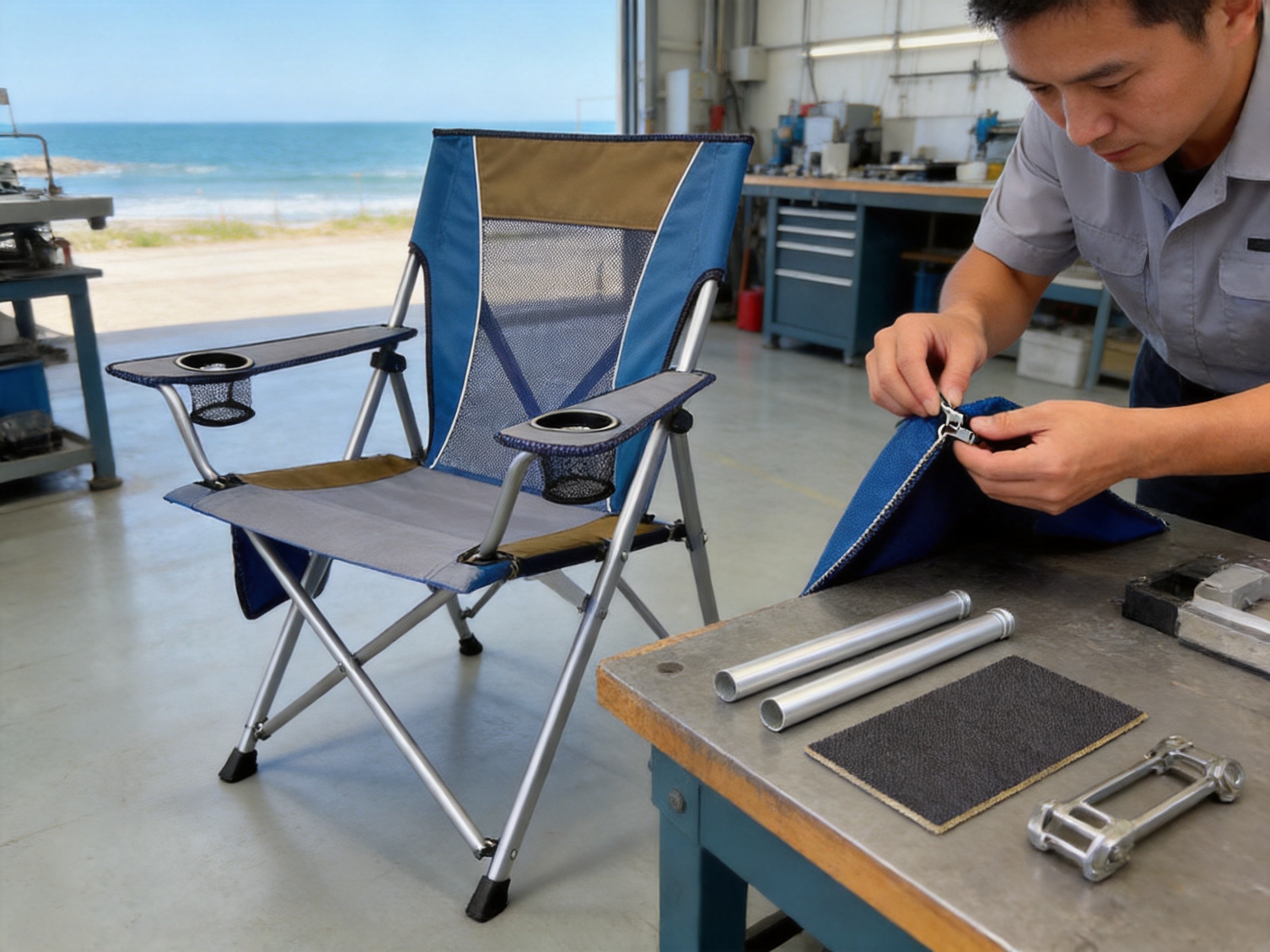
A professional development process normally includes concept confirmation, material confirmation, prototype sampling, functional review, revised sampling, pre-production approval, and final inspection. Maintaining a clear record of approved materials and specifications helps prevent unauthorized substitutions during production.
10. Frequently Asked Questions
Q1: Is this folding chair suitable for beach camping?
Yes, it is suitable for occasional and regular beach use when properly maintained. The aluminum frame is lighter than a comparable steel frame, and the product can be rinsed and dried after exposure to sand and saltwater. For frequent coastal use, 6061 aluminum with an appropriate anodized or powder-coated finish is generally preferred because it offers a favorable balance of strength, manufacturability, and corrosion resistance.
Q2: Why use aluminum instead of steel?
Aluminum offers a significantly lower density than steel, which reduces carrying weight. This makes the chair easier to transport and more convenient for camping, hiking, travel, and event use. Steel may offer greater impact toughness and a lower raw-material cost, but it requires more extensive corrosion protection and creates a heavier product.
Q3: Is 7075 aluminum always better than 6061 aluminum?
No. 7075 aluminum has higher strength and can be useful for premium ultralight applications, but 6061 aluminum generally offers better corrosion resistance, formability, weldability, and production practicality. For coastal and all-purpose outdoor chairs, 6061 is often the more balanced choice.
Q4: Can the chair be customized with our company logo?
OEM and ODM programs can typically include logo printing, woven labels, embroidery, packaging graphics, and other branding options. The available method depends on the fabric, order quantity, artwork, color requirements, and packaging plan. A sample should be approved before mass production.
Q5: How should the chair be cleaned after beach use?
Shake or brush off loose sand, rinse the frame and exposed components with fresh water, wipe away salt deposits, and allow the chair to dry completely before folding it. Avoid storing the chair while wet because trapped moisture can affect fabric, fasteners, hinges, and frame joints.
Q6: Does the mesh back support long periods of sitting?
The breathable mesh back is intended to provide support while improving airflow. Comfort also depends on the seat dimensions, fabric tension, user posture, and the duration of use. During development, mesh tension and attachment points should be evaluated together with the complete frame structure.
Q7: What makes the chair different from a simple folding stool?
The chair provides a back panel, improved ventilation, side storage pockets, cup holders, and a more complete seating experience. A folding stool may be lighter or smaller, but it generally does not provide the same back support, organization, or extended-sitting comfort.
Q8: Is the product suitable for OEM and wholesale orders?
Yes. The product is suitable for wholesale distribution and can be adapted for retailers, outdoor brands, promotional programs, clubs, event operators, and other buyers. Product development may include customized materials, colors, branding, packaging, and selected functional modifications.
Q9: What testing should buyers request?
Buyers should consider dimensional inspection, static load testing, folding-cycle testing, fabric seam evaluation, coating inspection, corrosion testing, and packaging checks. For coastal products, salt-spray or cyclic corrosion testing can provide useful comparative data. The appropriate test plan depends on the target market and expected use.
Q10: What is the most important feature for a portable camping chair?
There is no single feature that is most important for every user. A successful design balances frame strength, weight, comfort, folding size, corrosion resistance, storage convenience, and manufacturing consistency. For a broad outdoor market, balanced performance is generally more valuable than optimizing only one specification.
11. Conclusion
The outdoor folding chair combines several features that modern campers and retailers expect from practical portable furniture: a lightweight aluminum frame, durable Oxford cloth seating, a breathable mesh back, integrated storage, cup holders, and quick folding. These features allow it to compete with both basic stools and heavier traditional camp chairs by offering a useful balance of portability, comfort, and everyday functionality.
Material choice remains central to the product’s performance. 7075 aluminum can serve premium ultralight applications, high-tensile steel can provide impact toughness for heavy-duty products, and 6061 aluminum offers a particularly balanced solution for all-purpose and coastal outdoor use. Surface treatment, joint design, textile construction, and maintenance must be considered alongside alloy selection.
For global buyers, product value also depends on manufacturing discipline. Controlled tube processing, reliable hinge assembly, reinforced sewing, appropriate surface finishing, prototype testing, field evaluation, and final inspection help ensure that the chair performs consistently beyond the showroom. CragHaven Outdoor combines product development experience with China’s established manufacturing capabilities to support stable OEM and ODM supply for outdoor retailers and brands.
Whether positioned for mountain camping, family travel, beach recreation, fishing, events, or general outdoor living, this folding chair provides a flexible platform for dependable seating. Its combination of practical features and customizable manufacturing makes it suitable for businesses seeking a portable outdoor chair that is functional, marketable, and adaptable to different customer requirements.
References
1. ASTM International. ASTM B117, Standard Practice for Operating Salt Spray Fog Apparatus.
2. ASTM International. ASTM G85, Standard Practice for Modified Salt Spray Testing.
3. Aluminum Association. Aluminum Standards and Data, alloy designation and material property references.
4. ASM International. Properties and Selection: Nonferrous Alloys and Special-Purpose Materials.
5. International Organization for Standardization. ISO 9227, Corrosion Tests in Artificial Atmospheres—Salt Spray Tests.
6. Internal material comparison data and prototype evaluation records supplied for portable outdoor chair development.
Product: Outdoor folding chair, portable multi-functional camping chair


- Phone: +86-15968800379
- E-mail: [email protected]
- Address: Room 1002, Huishang Building, Gongshu District, Hangzhou City, Zhejiang Province.
Copyright © CragHaven Outdoor All Rights Reserved. Outdoor Gear Manufacturers Wholesale Mountaineering Camping Gear Suppliers
