

 English
 Deutsch
 Español
 Français


Large Capacity Double-Layer Insulated Picnic Bag: Design, Performance, and Manufacturing Advantages
Content
- 1 1. Why a Double-Layer Structure Matters
- 2 2. Three-Layer Material Construction
- 3 3. Large Capacity for Daily and Outdoor Scenarios
- 4 4. Carrying Comfort and Practical Portability
- 5 5. Advantages Over Competing Product Formats
- 6 6. Manufacturing and Product Development Strengths
- 7 7. Quality-Oriented Engineering Process
- 8 8. Recommended Packing Methods
- 9 9. Retail and Wholesale Applications
- 10 10. Sustainability Through Repeated Use
- 11 11. Selection Guide for Buyers
- 12 12. Frequently Asked Questions
- 12.1 Q1: What is the main advantage of a double-layer picnic bag?
- 12.2 Q2: Is the bag suitable for camping and hiking?
- 12.3 Q3: Can the bag keep food cold without an ice pack?
- 12.4 Q4: Is the interior easy to clean?
- 12.5 Q5: Can wet and dry products be stored separately?
- 12.6 Q6: Is the product suitable for family picnics?
- 12.7 Q7: How can the bag be carried?
- 12.8 Q8: What makes Oxford cloth useful for this product?
- 12.9 Q9: What manufacturing support is available for OEM customers?
- 12.10 Q10: How does ODM development differ from standard purchasing?
- 12.11 Q11: What should buyers test before placing a large order?
- 12.12 Q12: Who is the product best suited for?
- 13 13. Conclusion
- 14 References
- 15 Product: Large capacity double-layer lunch bag, Oxford cloth insulated bag, picnic bag, handheld ice pack
Food transportation becomes more demanding when people move between the office, school, campsite, hiking trail, picnic area, and family gathering. A basic fabric tote may carry food from one location to another, but it often provides limited organization, weak temperature protection, and little resistance to moisture. A single open compartment can also allow drinks, prepared meals, fruit, snacks, and tableware to shift together, creating pressure, spills, odor transfer, and unnecessary cleaning work.
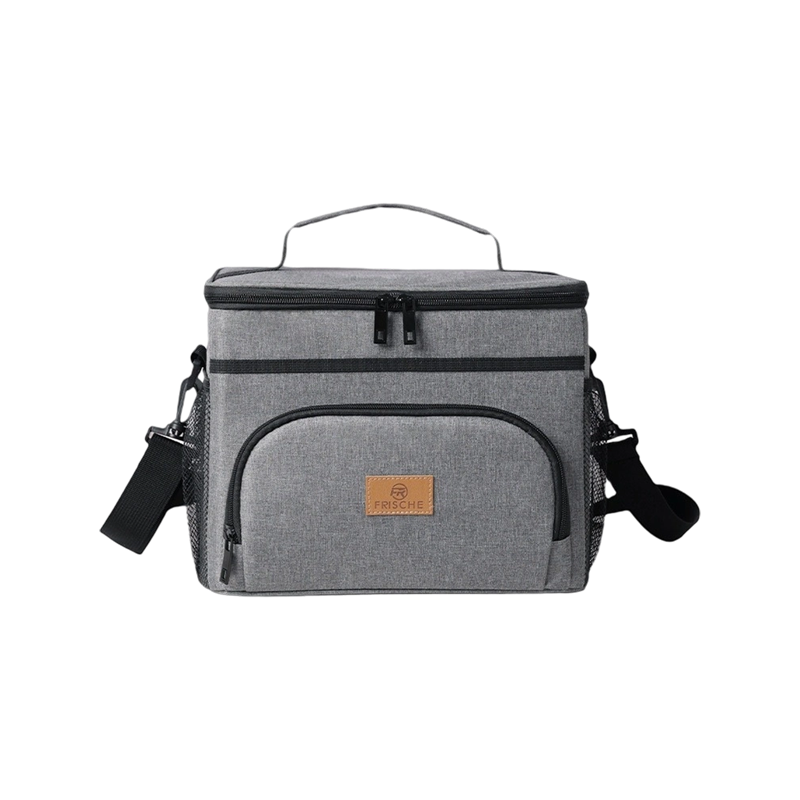
The large capacity double-layer lunch bag addresses these practical problems through a more deliberate structure. It combines two independent storage areas with a three-layer protective construction made from Oxford cloth, pearl cotton insulation, and a waterproof PEVA membrane. The result is a portable food-storage solution designed for commuting, camping, hiking, family picnics, short-distance travel, and other outdoor activities.
Unlike many basic lunch carriers that focus only on appearance or minimum storage, this product is developed around actual use conditions. Users need to organize different types of food, protect meals from external moisture, maintain temperature for a reasonable period, carry the bag comfortably, and clean it easily after use. The double-layer design responds to these requirements in one integrated product rather than treating capacity, insulation, durability, and portability as separate features.
CragHaven Outdoor develops this type of product through scenario-based design, material evaluation, repeated sampling, structural optimization, and manufacturing control. Its approach is intended for outdoor brands, distributors, wholesalers, and retailers that require consistent products rather than short-term catalog items. The company combines product engineering with manufacturing coordination, enabling customers to develop practical private-label or customized picnic bags for different markets.
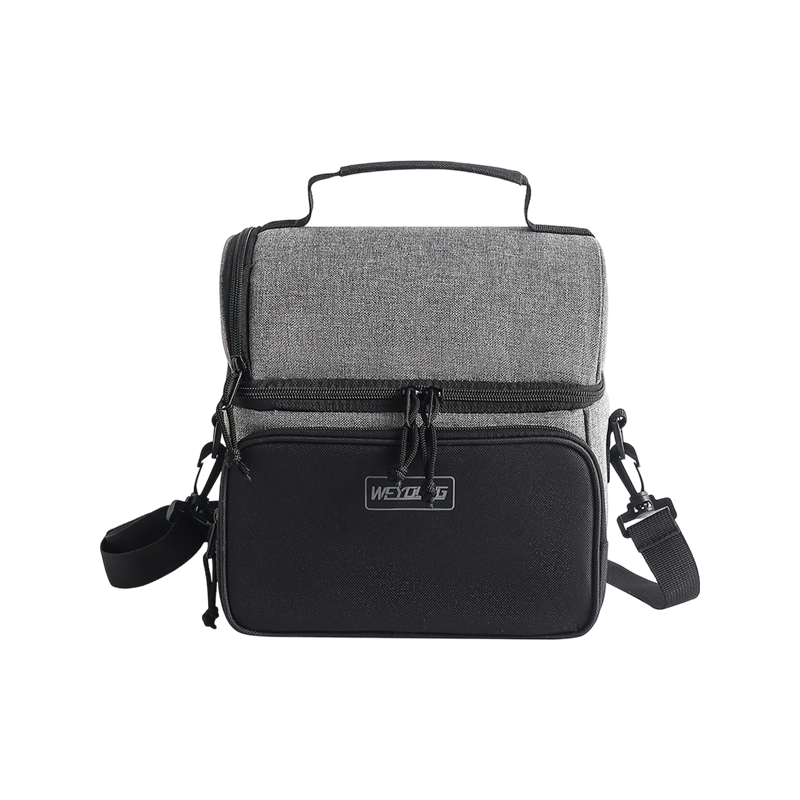
Large capacity double-layer lunch bag, Oxford cloth insulated bag, picnic bag, handheld ice pack
1. Why a Double-Layer Structure Matters
The most important difference between this product and a conventional single-layer lunch bag is the independent compartment arrangement. In a single-layer bag, all contents occupy one shared space. A cold beverage may rest against a warm meal, wet packaging may touch dry bread, and heavier containers may press against fruit or other delicate foods. Even when the bag is large enough, the interior may remain difficult to organize.
A double-layer structure creates a more logical separation between food categories. Users can place prepared meals in one section and drinks or chilled items in another. Alternatively, the upper compartment may be used for snacks and fruit while the lower section holds meal containers. The arrangement can also separate dry supplies from wet products, helping reduce moisture transfer and odor mixing.
This separation is especially valuable during longer commutes or outdoor activities. A lunch bag may be opened several times during a day, and repeated handling can cause containers to shift. Independent sections limit movement and make it easier to retrieve a specific item without removing everything else. The user spends less time searching through the bag and has greater control over how food is arranged.
The dual-compartment format also improves the use of internal volume. A large single compartment is not always efficient because empty spaces may form around irregularly shaped containers. Two defined areas encourage users to organize food by size, purpose, or serving time. The structure can therefore provide practical capacity rather than simply offering a large external measurement.
1.1 Separation of Wet and Dry Contents
Wet and dry products have different storage requirements. Drinks, fruit, sauces, and chilled foods may produce condensation or experience minor leakage. Bread, crackers, napkins, packaged snacks, and other dry items can lose quality when exposed to moisture. By placing these categories in different sections, users can reduce the chance that one item will affect another.
The compartments do not replace careful packing or sealed containers, but they add an important secondary layer of protection. If a beverage package becomes damp on the outside, the moisture is less likely to spread across every item in the bag. Similarly, dry foods can remain separate from chilled products during transport.
1.2 Reduction of Odor Transfer
Food odors can become concentrated inside a closed lunch bag. Strongly flavored meals, fruit, dairy products, and prepared dishes may all be carried together during a workday or outdoor trip. When every item shares one space, odors can transfer more easily between packaging surfaces. The double-layer arrangement creates distance between contents and helps make the overall storage environment more manageable.
This benefit is relevant not only to individual commuters but also to families. A family picnic may require drinks, cooked food, snacks, desserts, and fresh produce. Dividing these items into separate sections makes packing more hygienic and gives users better control over food presentation when the bag is opened at the destination.
1.3 Better Protection for Delicate Items
A single heavy container can press against soft foods in a crowded bag. Apples, pastries, sandwiches, and packaged desserts may become damaged when the bag is carried on public transportation or placed on uneven outdoor surfaces. The two-level structure helps distribute contents so that food does not need to be compressed into one dense mass.
Separate compartments also support more stable weight distribution. Heavier containers can be placed in the lower section, while lighter products are stored above. This arrangement can make the bag easier to carry and can reduce pressure on delicate contents. The actual result depends on how the user packs the bag, but the structure provides a better foundation for organized loading.
2. Three-Layer Material Construction
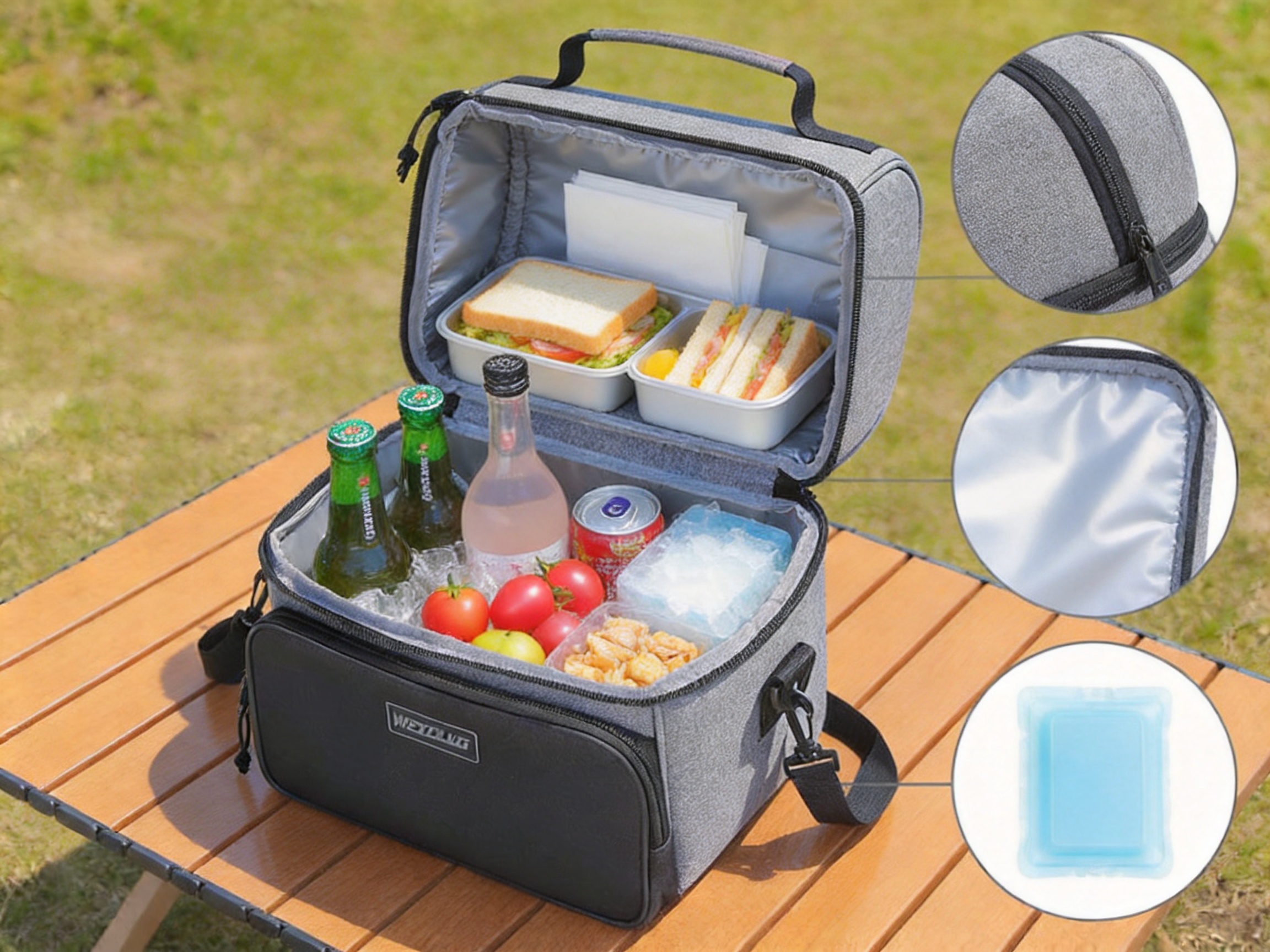
The product uses three principal material layers: an outer Oxford cloth shell, a middle pearl cotton insulation layer, and an inner PEVA waterproof membrane. Each layer has a distinct function. Together, they create a balanced construction intended to protect the contents from abrasion, temperature change, and moisture.
2.1 Oxford Cloth Exterior
Oxford cloth is widely used in bags and outdoor equipment because it offers a useful combination of flexibility, abrasion resistance, and structural stability. A lunch bag is frequently placed on floors, benches, vehicle seats, campsite surfaces, and picnic tables. The external fabric must tolerate repeated contact without becoming excessively stiff or difficult to carry.
The Oxford exterior helps the bag maintain a more stable shape when loaded. This is important for a large-capacity product because a soft, poorly supported body may collapse inward, making the internal space harder to use. A stable outer layer also improves the appearance of the product after repeated packing and transportation.
Compared with very thin fabric alternatives, Oxford cloth is better suited to repeated outdoor handling. It can support commuting, weekend travel, camping, hiking, and family gatherings without requiring the user to treat the bag as a disposable accessory. Its durability makes it appropriate for retailers and brands seeking a reusable product with a longer service life.
2.2 Pearl Cotton Insulation
The middle layer uses pearl cotton as an insulating material. Its primary function is to reduce the speed of temperature transfer between the interior and the outside environment. It does not create cold or heat by itself, and performance depends on the starting temperature of the contents, ambient conditions, packing method, exposure time, and whether ice packs are used. Nevertheless, the insulating layer provides a practical barrier that is more effective than an unlined fabric bag.
The pearl cotton layer also contributes to cushioning. Food containers and drink bottles may experience movement during transportation, especially when the bag is carried over the shoulder or placed in a vehicle. The insulating material provides a degree of padding between the interior contents and the exterior shell.
For daily commuting, this construction can help meals remain closer to their original temperature during the period between preparation and consumption. For outdoor use, it can help protect chilled drinks, snacks, and prepared foods from rapid temperature change. The bag is therefore suitable for short and moderate-duration transport when used according to realistic expectations.
2.3 PEVA Waterproof Interior
The interior PEVA membrane creates a water-resistant storage surface that is easier to wipe and maintain than ordinary fabric. This feature is particularly important for lunch bags because food residue, condensation, and minor spills are common during regular use.
A waterproof inner surface helps prevent small amounts of liquid from immediately reaching the outer fabric. It also reduces the time required for routine cleaning. After use, the user can remove loose items, wipe the interior, and allow the bag to dry. A cleanable interior supports better hygiene and makes the product more suitable for repeated use.
The PEVA lining should not be interpreted as permission to carry unsealed liquids without care. Users should still close food containers securely and handle the bag appropriately. However, the waterproof membrane provides an important protective layer when condensation or accidental minor leakage occurs.
2.4 How the Layers Work Together
The value of the construction lies in the cooperation between the layers. Oxford cloth protects the outside and supports long-term handling. Pearl cotton helps slow temperature exchange and adds cushioning. PEVA protects the inside from moisture and simplifies cleaning. A single material cannot perform all of these functions equally well, so the layered approach is more practical than relying on a thin, single-material body.
This layered construction also enables the product to remain relatively lightweight compared with rigid coolers or hard food boxes. Users receive a degree of insulation and protection without carrying a bulky container. That balance is important for commuters and outdoor users who must transport the bag together with clothing, equipment, water, or other personal supplies.
| Product Type | Organization | Insulation | Moisture Protection | Typical Use |
|---|---|---|---|---|
| Basic fabric tote | Single open space | Limited | Usually limited | Short-distance dry-food transport |
| Single-layer lunch bag | One main compartment | Basic | May vary | Individual daily meals |
| Rigid cooler | Large shared space | Strong potential | Generally high | Extended cooling and group transport |
| Double-layer insulated picnic bag | Two independent sections | Multi-layer insulation | PEVA waterproof interior | Commuting, camping, hiking, and family picnics |
3. Large Capacity for Daily and Outdoor Scenarios
Capacity should be evaluated by usefulness rather than external size alone. A large bag is valuable when its interior can accommodate multiple items without becoming disorganized or difficult to carry. The double-layer design allows users to make better use of available space by assigning different categories of food to separate areas.
3.1 Daily Commuting
Office workers may need to carry breakfast, lunch, snacks, fruit, and beverages in one trip. Students may carry prepared meals, water bottles, and supplementary food for a long school day. In both cases, a single compartment can become crowded and inconvenient.
The upper and lower sections allow the user to divide food according to time of consumption or temperature requirements. Breakfast may be placed separately from lunch, while drinks can be positioned away from containers that should remain dry. This arrangement can make the bag more useful for people who spend many hours away from home.
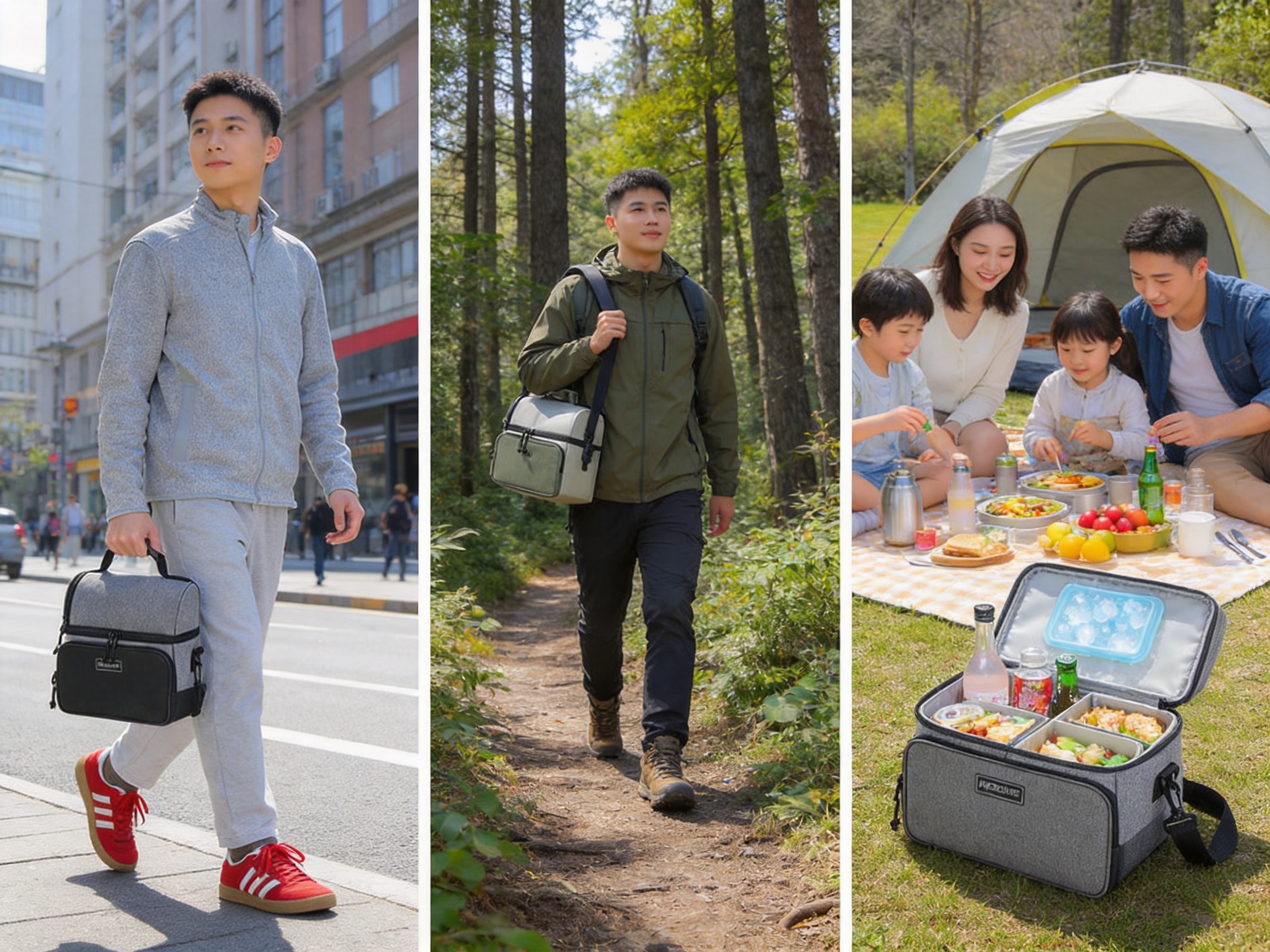
The ability to carry the product by hand or over the shoulder further supports commuting. A hand handle is convenient when moving between a vehicle, office, classroom, or dining area. A shoulder strap can distribute the load when the user is carrying additional equipment or needs both hands free.
3.2 Camping and Hiking
Outdoor environments place greater demands on a picnic bag. The product may be placed on rough ground, moved between a vehicle and a campsite, exposed to dust, or carried together with camping equipment. The Oxford exterior and reinforced layered structure are suited to this type of repeated handling.
For a day hike or short camping trip, the bag can hold prepared meals, snacks, fruit, drinks, and small food accessories. Its insulation helps slow temperature change, while the PEVA interior provides a surface that can be cleaned after use. The double compartments also help users separate ready-to-eat items from products that may create moisture or odor.
The product is not intended to replace specialized expedition coolers for extended remote travel. Instead, its advantage is versatility. It provides more organization and protection than a casual tote while remaining easier to carry than a large rigid container. This middle position makes it suitable for common outdoor recreation scenarios.
3.3 Family Picnics and Group Activities
Family activities usually involve a broader range of food and a greater total volume. Parents may need to carry drinks, prepared dishes, desserts, fruit, snacks, and food for children. A large-capacity double-layer design allows these items to be divided into manageable sections.
The separation of upper and lower storage areas also makes serving more convenient. Frequently accessed drinks or snacks can be placed in the easier-to-reach section, while heavier meal containers remain in the lower compartment. This can reduce repeated unpacking and help keep the picnic area organized.
When an ice pack is used, the bag can support a chilled-food arrangement while keeping other products separated. The term “ice pack picnic bag” refers to this practical application rather than an independent cooling mechanism. The bag provides insulated storage, while the user supplies the ice pack or other cooling element according to the duration and conditions of the activity.
4. Carrying Comfort and Practical Portability
Portability is a major part of product performance. Even a well-insulated bag may be unsuitable if it is awkward to move when fully loaded. This product supports both handheld and shoulder carrying, giving users flexibility according to distance, weight, and environment.
4.1 Handheld Use
The hand-carry option is suitable for short distances and formal daily situations. Users can carry the bag from home to a vehicle, from a parking area to a picnic table, or from an office entrance to a meeting room. Handheld transport also makes it easy to place the bag on a table or seat without removing a strap.
4.2 Shoulder-Carry Use
The shoulder strap becomes useful when the user needs both hands available or must walk farther. It can support movement through public transportation stations, campsites, parks, and outdoor paths. Shoulder carrying also allows the product to be used alongside backpacks, equipment cases, or other travel bags.
Carrying comfort depends on total load, strap adjustment, body size, and how the contents are distributed. The double-layer construction helps users arrange heavy and light items more deliberately, which can contribute to a more balanced carrying experience.
4.3 Portable Without Excessive Bulk
Rigid coolers can provide excellent protection but may be inconvenient for users who need flexible storage. A soft insulated bag can adapt more easily to vehicle seats, storage compartments, office spaces, and picnic environments. This product is designed to provide meaningful insulation and organization while remaining practical for everyday transport.
5. Advantages Over Competing Product Formats
Competition in the lunch bag and picnic bag market includes basic totes, low-cost single-layer carriers, small personal lunch boxes, rigid coolers, and highly specialized outdoor containers. The double-layer Oxford cloth picnic bag occupies a balanced position between these options.
5.1 Compared with Basic Fabric Totes
A basic tote may be inexpensive and lightweight, but it generally lacks insulation, internal structure, and moisture protection. Food is carried in one open space, and the exterior may absorb spills. The double-layer product offers a more complete solution for users who regularly transport prepared meals or chilled products.
The Oxford exterior also provides greater resistance to routine abrasion. This can be important for outdoor brands and retailers because customers increasingly expect reusable products to withstand repeated use rather than serve as temporary packaging.
5.2 Compared with Single-Layer Lunch Bags
A single-layer insulated lunch bag may provide basic temperature protection, but it normally offers less separation. The double-layer version improves organization and allows different food categories to be managed independently. This distinction is particularly useful for families, workers carrying multiple meals, and outdoor users transporting wet and dry products together.
The independent compartments can also make the bag feel more orderly when fully loaded. Instead of placing every item into one deep pocket, users can assign food according to size, temperature, or consumption time.
5.3 Compared with Small Personal Lunch Boxes
Small lunch boxes are convenient for one compact meal but may not provide enough room for drinks, snacks, fruit, or food for more than one person. The large-capacity format supports broader use without requiring a separate carrier for each item.
This does not mean the product is always preferable to a small lunch box. Individual users who carry only one meal may prefer a smaller format. However, for commuting households, family outings, and outdoor recreation, the larger dual-compartment structure delivers greater flexibility.
5.4 Compared with Rigid Coolers
Rigid coolers typically offer stronger structural protection and may be suitable for longer cooling periods or larger quantities. Their disadvantages can include greater weight, fixed shape, and limited portability in crowded environments. The soft double-layer bag is easier to carry over the shoulder and more convenient for daily use.
The product is therefore positioned as a practical hybrid. It provides insulation, organization, and water-resistant protection without the bulk associated with many hard-sided containers. For short trips and regular daily use, this balance may be more valuable than maximum cooling capacity.
5.5 Compared with Low-Cost Promotional Bags
Promotional bags often prioritize low purchase price over material durability, structural design, and long-term usability. They may be produced with thin fabrics, limited insulation, and weak internal finishing. While such products can serve basic marketing purposes, they may not meet the expectations of outdoor consumers or established retailers.
The use of Oxford cloth, pearl cotton, PEVA, and a double-compartment structure gives this product a stronger functional identity. It can be positioned as a reusable piece of outdoor equipment rather than as a disposable promotional accessory.
6. Manufacturing and Product Development Strengths
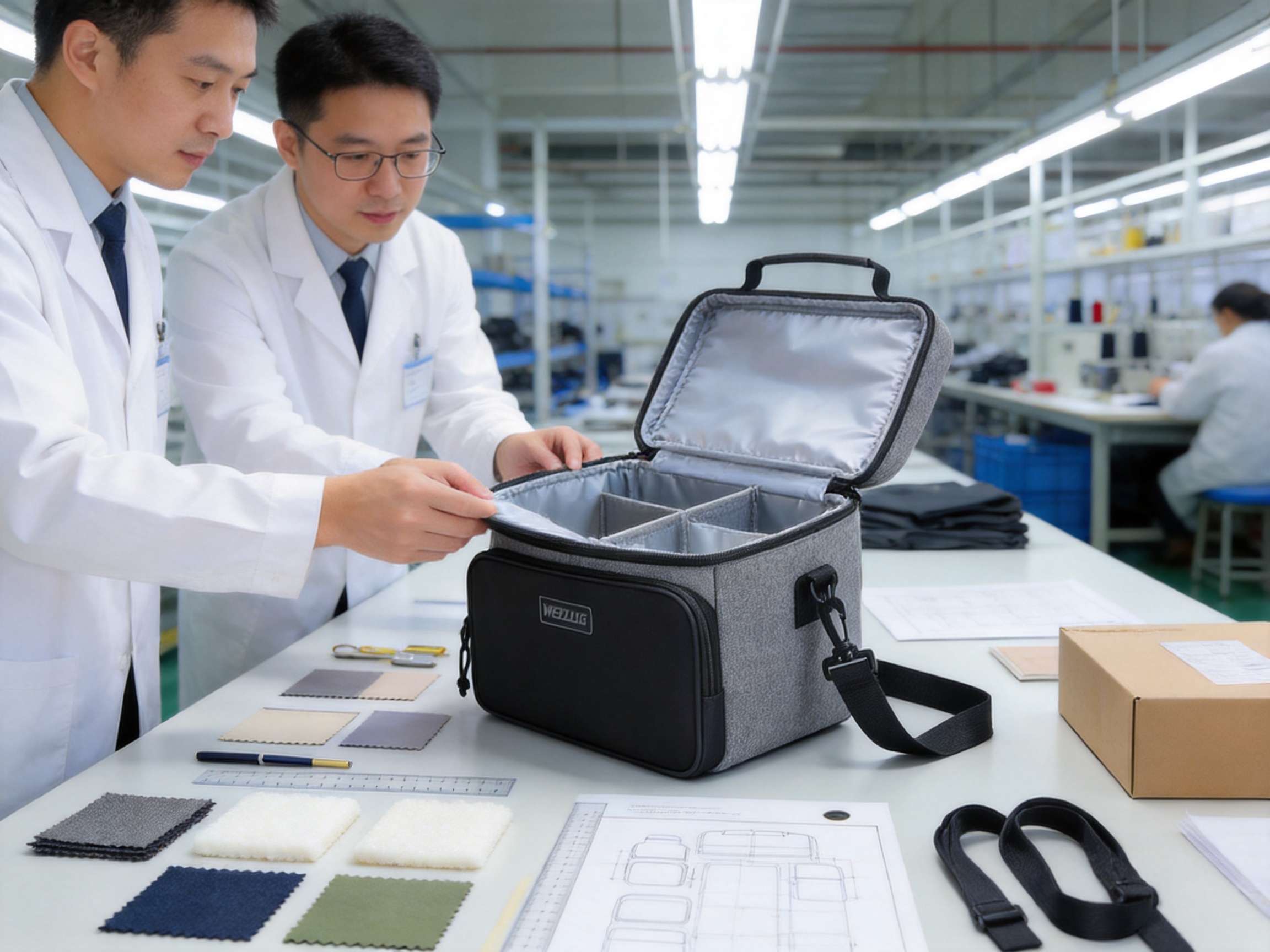
Product quality begins before mass production. A reliable picnic bag requires decisions about dimensions, compartment structure, fabric weight, insulation thickness, lining behavior, handle placement, strap attachment, stitching, edge finishing, and packaging. CragHaven Outdoor approaches these decisions through a development process based on real use scenarios.
6.1 Scenario-Based Product Definition
The first stage is to identify how the product will be used. A bag intended for office commuting may require a different balance of appearance, capacity, and carrying comfort than one designed for family camping. A distributor serving outdoor retailers may need stronger abrasion resistance, while a private-label customer may prioritize a specific color system or packaging format.
By beginning with usage conditions, the design process can avoid unnecessary features. The focus remains on problems that customers actually encounter: limited organization, odor transfer, moisture exposure, temperature loss, uncomfortable carrying, and difficult cleaning.
6.2 Material Selection and Evaluation
Material selection is treated as a functional decision rather than a purely visual one. Oxford cloth must provide an appropriate balance of durability, flexibility, and appearance. Pearl cotton must support the intended insulation structure without making the bag unnecessarily bulky. PEVA must create a practical waterproof interior that is compatible with production requirements and routine cleaning.
These materials must also work together during sewing and assembly. A material may appear suitable independently but create problems when layered, folded, stitched, or turned during production. The development process therefore considers the behavior of the complete assembly rather than evaluating each component in isolation.
6.3 Repeated Sampling
Sampling is necessary because the first prototype rarely represents the final production solution. Repeated samples help identify issues such as compartment dimensions, opening access, seam placement, strap balance, insulation distribution, and the interaction between the outer shell and inner lining.
During this stage, the product can be loaded with representative food containers, bottles, snack packages, and ice packs. Practical testing reveals whether the advertised capacity is genuinely usable. It also helps determine whether the bag remains stable when full and whether the two compartments are easy to access.
6.4 Structural Optimization
Structural optimization may involve modifying the height of a compartment, adjusting the opening, refining the position of the handle, changing the shoulder strap attachment, or reinforcing high-stress areas. Small changes can significantly affect daily convenience.
For example, an opening that is too narrow may reduce the value of a large interior. A strap placed too close to one side may create imbalance. A lining that is not properly fitted may wrinkle and reduce cleaning convenience. These details are addressed through practical review rather than relying only on drawings or specifications.
6.5 Manufacturing Consistency
Once the design is approved, consistent manufacturing becomes essential. A product may perform well as a prototype but fail to meet expectations if material placement, seam quality, or compartment alignment varies significantly between production batches.
CragHaven Outdoor emphasizes repeatable processes, production communication, and inspection during manufacturing coordination. The objective is to translate the approved design into a product that can be produced consistently for international customers. This is particularly important for wholesale orders, retail programs, and long-term private-label partnerships.
6.6 OEM and ODM Support
Customers may require more than a standard product. OEM projects can involve brand identity integration, color changes, packaging development, labeling, and selected material adjustments. ODM projects may require deeper cooperation on dimensions, compartment configuration, accessories, and structural details.
CragHaven Outdoor supports these projects by participating in design and manufacturing rather than acting only as a sourcing intermediary. Its role can include product interpretation, technical communication, sample review, material recommendations, and coordination of production requirements.
This integrated approach can reduce uncertainty for customers that sell to Western outdoor, travel, lifestyle, and food-storage markets. Clear communication is particularly valuable when a product must satisfy different requirements for branding, packaging, retail presentation, shipping, and end-user expectations.
7. Quality-Oriented Engineering Process
A practical product requires more than attractive photographs. It must perform consistently under ordinary use. For an insulated picnic bag, quality-oriented engineering should consider the exterior fabric, insulation, lining, seams, handles, straps, compartment shape, and packaging.
7.1 Prototype Review
Prototype review should examine both the empty and loaded product. When empty, the team can evaluate shape, folding behavior, and visual appearance. When loaded, the team can assess balance, access, storage efficiency, and stress on the carrying points.
Representative contents may include meal boxes, drink bottles, fruit containers, snack packages, napkins, and reusable ice packs. Testing with realistic items is more informative than measuring an empty compartment alone.
7.2 Insulation Considerations
Insulation performance depends on several variables. The initial temperature of the food, the use of ice packs, ambient temperature, duration, frequency of opening, and amount of empty air space all influence results. A responsible product description should therefore present the bag as an insulated carrier that slows temperature change, not as a self-powered refrigeration device.
The pearl cotton layer provides the thermal barrier, while the dual compartments allow users to organize chilled items more effectively. The PEVA interior helps contain condensation and simplifies cleaning after cooling elements are used.
7.3 Moisture and Cleaning Considerations
The waterproof lining is valuable because outdoor use often produces condensation, damp packaging, and accidental spills. A wipe-clean interior reduces maintenance time and helps the bag remain suitable for repeated use.
Users should empty the bag after each activity, wipe away residue, and allow it to dry before storage. Proper maintenance protects the interior surface and reduces the development of persistent odors. The product design supports this routine by providing a smooth, water-resistant lining rather than an absorbent fabric interior.
7.4 Load and Carry Testing
When a bag is fully loaded, pressure is transferred to the base, side panels, handles, strap points, and seams. These areas deserve attention during prototype assessment and production inspection. Testing should verify that the bag can be carried in normal conditions without excessive deformation or discomfort.
The double-layer structure also affects the center of gravity. Different loading arrangements may change the balance of the bag, so the design should support both upper and lower compartment use. Clear packing guidance can further help customers distribute heavy and light items appropriately.
8. Recommended Packing Methods
The product performs best when users take advantage of its independent sections. The lower compartment can be used for heavier meal containers, sealed drinks, or ice packs, while the upper section can hold lighter snacks, fruit, bread, napkins, and utensils. This is only one possible arrangement, but it demonstrates how the structure can improve organization.
For wet and dry separation, users can place sealed or chilled products in one section and dry foods in the other. If a food container is likely to release liquid, it should still be secured before being placed inside the bag. The compartments provide separation but should not be treated as a replacement for leak-proof packaging.
For family outings, frequently accessed items can be placed in the upper compartment. This may include drinks, snacks, fruit, or small serving accessories. Larger dishes and heavier containers can be stored below. This arrangement can make the bag easier to use at a picnic site.
For commuting, meals may be divided by consumption time. Breakfast can be stored separately from lunch, while snacks and beverages remain accessible without disturbing the main meal. Users who carry only one meal can use the second compartment for personal items that are appropriate for the food-storage environment, such as napkins or packaged utensils.
9. Retail and Wholesale Applications
The product has broad potential for outdoor, travel, lifestyle, kitchen, and family-oriented retail channels. Its use cases are easy to communicate because consumers immediately understand the value of carrying organized food in an insulated, water-resistant bag.
9.1 Outdoor Retailers
Outdoor retailers can position the product as a practical accessory for camping, hiking, day trips, and family recreation. The Oxford exterior connects visually and functionally with other outdoor equipment, while the soft construction keeps it suitable for customers who do not want a rigid cooler.
9.2 Travel and Lifestyle Retailers
Travel-oriented customers may use the bag for road trips, train journeys, park visits, and short excursions. Its shoulder-carry option and dual compartments make it relevant to consumers who value convenience and organization during travel.
9.3 Corporate and Institutional Programs
Because the bag can support branding and packaging customization, it may also be suitable for corporate wellness programs, employee gifts, family events, outdoor campaigns, and institutional food-storage initiatives. Customization should be evaluated according to order volume, material requirements, production scheduling, and packaging needs.
9.4 Private-Label Product Lines
Retail brands can integrate the product into a broader line of outdoor accessories. A private-label version may use coordinated colors, logo placement, custom labels, and packaging that matches the brand’s visual identity. The underlying construction can remain focused on the same practical values: capacity, separation, insulation, durability, and portability.
10. Sustainability Through Repeated Use
Reusable products can provide value when they are durable enough to replace repeated disposable packaging. A lunch bag made from a stable outer fabric and cleanable inner lining is more suitable for repeated daily or weekly use than a thin carrier intended for short-term convenience.
The Oxford exterior supports continued handling, while the PEVA lining allows the product to be maintained after spills or condensation. The double-layer organization also encourages users to carry prepared food from home rather than relying on single-use packaging during every commute or outdoor activity.
Sustainability should be considered realistically. The environmental effect of a reusable product depends on how long it is used, how it is cleaned, how it is transported, and how its materials are handled at the end of its service life. A durable and useful design provides a stronger basis for responsible consumption than a product that is quickly discarded because it lacks structure or protection.
11. Selection Guide for Buyers
Buyers should begin by identifying the primary use scenario. A commuter may prioritize organization and carrying comfort. A family may need maximum storage volume. A camping customer may place greater importance on Oxford cloth durability and insulation. Understanding the main application helps determine whether this format is appropriate.
The next consideration is capacity. Buyers should estimate the number and size of meal containers, bottles, snacks, and accessories that will normally be carried. A large bag is most useful when its compartments match the customer’s actual storage habits.
Compartment configuration should then be evaluated. Users who regularly carry wet and dry items, hot and cold food, or meals for different times of the day are likely to benefit most from the double-layer format.
Material construction is also important. Oxford cloth supports exterior durability, pearl cotton provides insulation and cushioning, and PEVA creates a wipe-clean waterproof interior. These materials work together to offer a stronger overall solution than a single thin fabric.
Finally, buyers should consider carrying methods, packaging, branding, minimum order requirements, and customization options. For wholesale and OEM customers, communication about dimensions, materials, color, logo application, labels, and packaging should be completed before production approval.
12. Frequently Asked Questions
Q1: What is the main advantage of a double-layer picnic bag?
The main advantage is improved organization. Two separate compartments allow users to divide wet and dry foods, hot and cold items, heavy and delicate products, or meals intended for different times of the day. This can reduce odor transfer, moisture contact, compression, and unnecessary unpacking.
Q2: Is the bag suitable for camping and hiking?
Yes. The Oxford cloth exterior, pearl cotton insulation, PEVA waterproof interior, and flexible carrying options make it suitable for day hikes, camping, weekend outings, and family picnics. It is best used for realistic short- and moderate-duration food transportation rather than as a replacement for an expedition-grade cooler.
Q3: Can the bag keep food cold without an ice pack?
The insulating layer slows temperature change but does not actively cool food. For chilled products, users should begin with properly cooled contents and add a suitable ice pack when the activity duration or ambient temperature requires additional cooling.
Q4: Is the interior easy to clean?
The PEVA waterproof membrane provides a smooth, water-resistant surface that can be wiped after use. Users should remove food residue promptly, clean the interior with an appropriate method, and allow the bag to dry before storing it.
Q5: Can wet and dry products be stored separately?
Yes. The independent compartments are designed to help separate different categories of contents. However, foods and drinks should still be packed in secure containers because compartment separation does not eliminate the possibility of leakage from an unsealed product.
Q6: Is the product suitable for family picnics?
Yes. Its large capacity and two-level arrangement can accommodate prepared meals, drinks, fruit, snacks, and other picnic supplies. Heavier containers can be placed in the lower section, while frequently accessed items can be stored above.
Q7: How can the bag be carried?
The product supports handheld and shoulder transportation. Hand carrying is convenient for short distances, while the shoulder strap can be useful when walking farther or keeping both hands available.
Q8: What makes Oxford cloth useful for this product?
Oxford cloth offers a practical combination of abrasion resistance, flexibility, and structural stability. It helps the bag maintain its form during repeated loading and outdoor handling while remaining softer and more portable than a rigid container.
Q9: What manufacturing support is available for OEM customers?
OEM customers can discuss dimensions, color, logo integration, labels, packaging, materials, accessories, and other product requirements. CragHaven Outdoor supports sample development, structural review, material recommendations, and production coordination.
Q10: How does ODM development differ from standard purchasing?
ODM development involves deeper participation in product definition and structure. It may include new compartment layouts, modified dimensions, changes to carrying systems, packaging development, and additional sample testing before production. The exact process depends on the customer’s market and technical requirements.
Q11: What should buyers test before placing a large order?
Buyers should review the loaded capacity, compartment access, insulation construction, lining quality, strap balance, handle strength, stitching, dimensions, color, packaging, and overall finish. Testing with representative food containers and ice packs can provide more useful feedback than evaluating the empty bag alone.
Q12: Who is the product best suited for?
The product is suited to commuters, office workers, students, families, campers, hikers, travelers, outdoor retailers, wholesalers, distributors, and brands seeking a reusable insulated food carrier with differentiated organization and practical carrying options.
13. Conclusion
The large capacity double-layer insulated picnic bag is designed to solve several common problems at the same time. Its two independent compartments improve food organization and help separate wet and dry items. The Oxford cloth exterior supports durability, the pearl cotton middle layer helps slow temperature change, and the PEVA inner membrane improves moisture protection and cleaning convenience.
Its value becomes especially clear when compared with basic totes and single-layer lunch bags. Rather than offering only a place to carry food, it provides a considered system for arranging meals, drinks, snacks, and picnic supplies. Handheld and shoulder carrying expand its usefulness across commuting, camping, hiking, travel, and family activities.
For commercial customers, the product also represents a manufacturing and development opportunity. CragHaven Outdoor combines scenario-based design, material selection, repeated sampling, structural optimization, and production coordination to support stable product development. OEM and ODM customers can work with the company on dimensions, materials, branding, accessories, and packaging according to market requirements.
A successful outdoor product should not be defined by specifications alone. It should address actual conditions, remain useful after repeated handling, and provide dependable value to the person who carries it. By combining practical capacity, layered insulation, waterproof protection, flexible transport, and a quality-oriented manufacturing process, this double-layer picnic bag offers a balanced solution for modern food storage on the move.
References
1. Outdoor Equipment Product Development Principles. Internal product engineering and scenario-based design reference.
2. Textile Bag Construction and Material Selection Guidelines. Reference material for Oxford fabric, insulation layers, lining systems, and stitched assemblies.
3. Food Transport and Portable Storage Practices. General reference for meal organization, moisture control, temperature retention, and reusable carrying products.
4. Outdoor Recreation Usage Analysis. Reference covering commuting, hiking, camping, family picnics, and short-distance travel scenarios.
5. Quality Control Procedures for Soft Goods Manufacturing. General reference for sampling, structural review, production consistency, stitching inspection, and packaging coordination.
Product: Large capacity double-layer lunch bag, Oxford cloth insulated bag, picnic bag, handheld ice pack


- Phone: +86-15968800379
- E-mail: [email protected]
- Address: Room 1002, Huishang Building, Gongshu District, Hangzhou City, Zhejiang Province.
Copyright © CragHaven Outdoor All Rights Reserved. Outdoor Gear Manufacturers Wholesale Mountaineering Camping Gear Suppliers
