

 English
 Deutsch
 Español
 Français


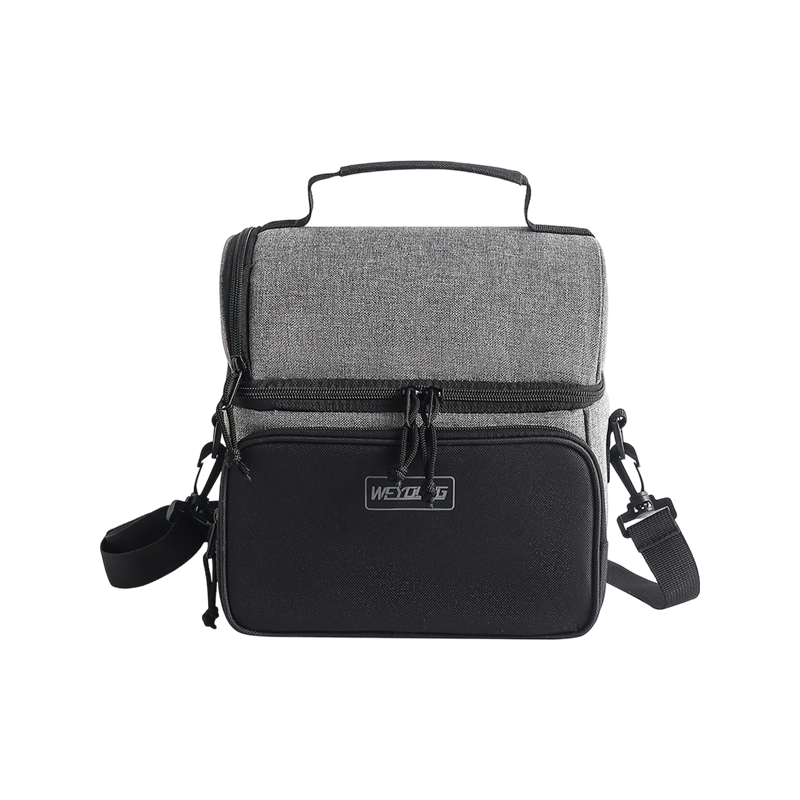
Large Capacity Outdoor Picnic Bag: Leak-Proof PEVA Insulation for Hiking, Camping, and Family Outings
Content
- 1 Product Overview and Core Design Concept
- 2 Large Capacity for Family and Group Use
- 3 Food-Grade PEVA Lining and Leak-Resistant Performance
- 4 Triple-Layer Insulation for Hot and Cold Food
- 5 Single-Shoulder Portability for Outdoor Activities
- 6 Durable Exterior for Camping, Hiking, and Travel
- 7 Manufacturing Approach and Quality Development
- 8 Quality Control Considerations
- 9 Responsible Product Use and Care
- 10 Commercial Value for Retailers and Distributors
- 11 Why Manufacturing Partnership Matters
- 12 Frequently Asked Questions
- 12.1 Q1: What is the main purpose of this large capacity outdoor picnic bag?
- 12.2 Q2: How does the triple-layer insulation work?
- 12.3 Q3: Is the PEVA lining waterproof?
- 12.4 Q4: Can the bag be machine washed?
- 12.5 Q5: How should unpleasant odors be removed?
- 12.6 Q6: Can the bag carry hot food?
- 12.7 Q7: How should cold food be packed?
- 12.8 Q8: What makes the product different from a basic fabric tote?
- 12.9 Q9: Is the product suitable for long hiking trips?
- 12.10 Q10: Can the product be customized for wholesale orders?
- 12.11 Q11: What OEM and ODM services are available?
- 12.12 Q12: What should buyers review during the sample stage?
- 12.13 Q13: How can the bag’s service life be extended?
- 12.14 Q14: Is the bag a replacement for a refrigerator?
- 13 Conclusion
- 14 References
- 15 Product: Large capacity outdoor picnic bag, PEVA leak-proof, water-proof, insulated and heat-resistant bag
Outdoor meals are easier to organize when food, drinks, and snacks can be transported in one dependable insulated bag. The large capacity outdoor picnic bag described in this article is designed for family picnics, camping trips, hiking breaks, road travel, workplace lunches, and other activities that require convenient food transportation. Its combination of a single-shoulder carrying system, triple-layer insulation, food-grade PEVA lining, water-resistant construction, and durable outer fabric addresses the most common problems found in ordinary lunch bags and soft coolers.
Food transportation in outdoor environments involves more than simply carrying containers from one place to another. The bag must help protect meals from temperature changes, accidental spills, moisture, rough handling, and the repeated cleaning associated with daily use. It should also provide enough room for several containers without becoming difficult to carry. These requirements are particularly important for families and outdoor users who need to pack complete meals, beverages, fruit, snacks, and serving accessories at the same time.
This product is developed for practical outdoor use rather than short-term visual appeal. Its structure combines multiple functional layers, each serving a specific purpose. The PEVA interior helps contain spills and simplifies cleaning. The insulation layer slows heat transfer. The external fabric helps resist scratches and routine wear. The spacious interior supports more efficient packing, while the shoulder-carry design leaves both hands available for walking, climbing, setting up camp, or carrying other equipment.
For retailers, distributors, and outdoor brands, the product also represents a reliable category opportunity. A well-designed picnic bag can serve several markets at once, including camping, hiking, family recreation, travel, meal preparation, and everyday food delivery. With appropriate specification adjustments, packaging, and branding, the same basic platform can be adapted to different sales channels and regional requirements.
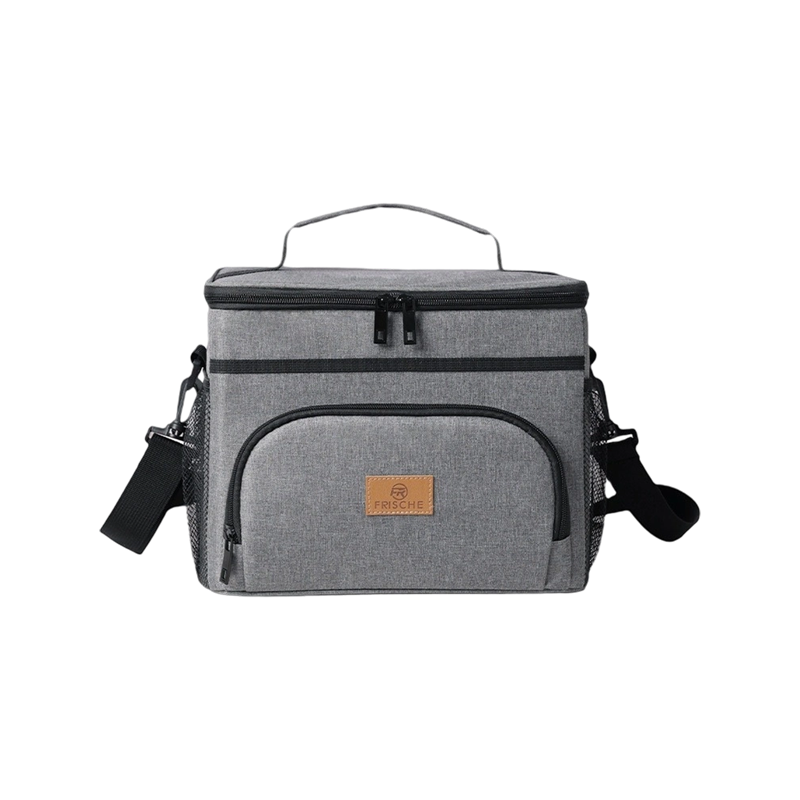
Large capacity outdoor picnic bag, PEVA leak-proof, water-proof, insulated and heat-resistant bag
Product Overview and Core Design Concept
The large capacity outdoor picnic bag is a soft insulated food carrier developed for users who need more space than a conventional lunch bag can provide. Its intended applications include family outings, weekend picnics, camping, hiking, road trips, outdoor sports, workplace meals, and school-day food transportation. Instead of limiting the user to one meal container, its larger internal volume allows several food boxes, bottles, fruit portions, snacks, and cold packs to be arranged in one portable compartment.
The product uses a single-shoulder design. This carrying method is especially useful outdoors because it keeps the hands free for climbing, walking over uneven ground, holding a child’s hand, carrying a backpack, or managing other equipment. A shoulder strap can also distribute the load more naturally than a small hand-held handle when the bag contains several meals or beverages.
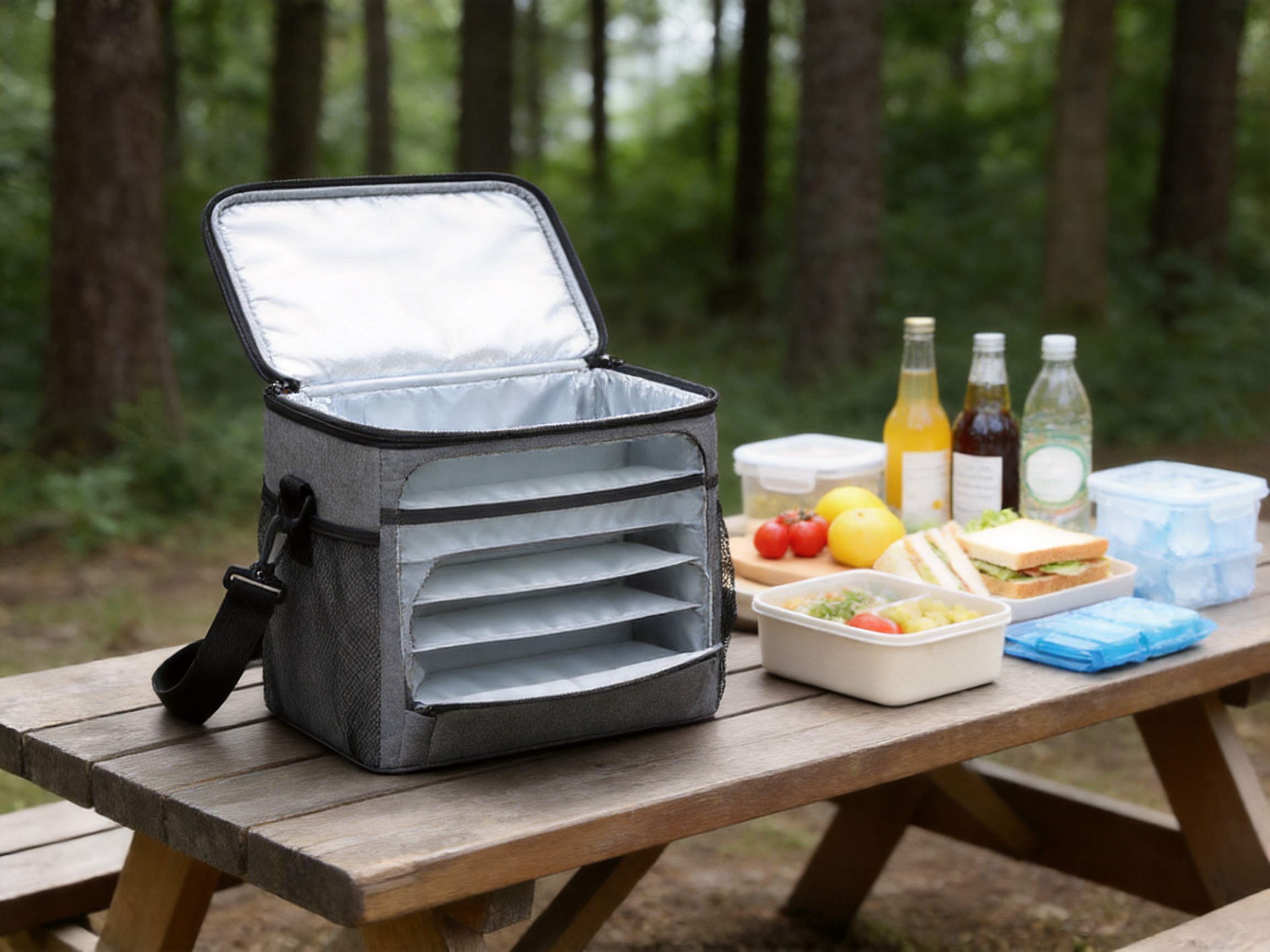
Inside the bag, a food-grade PEVA lining creates a smooth and waterproof contact surface. PEVA is useful in food transportation because it does not absorb liquid in the same way as porous textile materials. If a beverage leaks or a sauce spills, the liquid can generally be wiped from the interior before it reaches the deeper structural layers. This makes the bag easier to maintain and helps reduce the accumulation of food residue and moisture.
The triple-layer insulation structure is designed to slow the movement of heat between the contents and the outside environment. It supports the transportation of both hot and cold food. The bag is not intended to replace commercial refrigeration or heating equipment, and temperature retention depends on the starting temperature of the food, the ambient conditions, the number of times the bag is opened, and the use of ice packs or other thermal accessories. Nevertheless, the multi-layer structure provides a meaningful advantage over ordinary uninsulated fabric carriers.
The outer material is selected for everyday outdoor handling. A scratch-resistant and wear-resistant exterior helps the product remain presentable when placed on grass, picnic tables, vehicle floors, camping surfaces, or other ordinary outdoor locations. The exterior also contributes to the overall structure of the bag, helping it maintain its shape while being loaded and carried.
Functional Advantages at a Glance
The product’s main advantages can be summarized through five connected features. First, the large capacity supports family-sized packing. Second, triple-layer insulation helps preserve hot or cold conditions for longer than a simple fabric tote. Third, the PEVA lining offers leak resistance and easy wiping. Fourth, the shoulder-carry format improves mobility. Fifth, the durable outer layer is suitable for repeated outdoor use.
These features are not independent additions. They work together as a practical system. A larger bag is only useful if its internal structure can protect the food. Insulation is only effective if the lining and closure help reduce exposure to outside conditions. A waterproof interior is more valuable when cleaning does not damage the insulation. A shoulder strap is more useful when the bag remains stable and comfortable under a realistic load.
Large Capacity for Family and Group Use
Small lunch bags are convenient for individual meals, but they become restrictive when users need to prepare food for several people. A family picnic may require sandwiches, cooked meals, fruit, drinks, desserts, sauces, utensils, and snacks. Packing these items into multiple small bags can make transportation inconvenient and may result in poor temperature management. The larger internal volume of this picnic bag allows users to consolidate more items into one insulated carrier.
Large capacity does not mean that the bag should be filled without organization. Efficient packing helps prevent containers from shifting and reduces the likelihood of crushed food. Flat containers can be placed at the bottom, bottles can be arranged along the sides, and smaller snacks can fill the remaining spaces. Cold packs can be positioned close to the food that requires additional cooling. Users should avoid overloading the zipper or forcing containers into the bag, because excessive pressure can affect closure performance and shorten the service life of the structure.
The spacious format is also useful for longer outdoor activities. During camping or hiking, access to a vehicle or kitchen may be limited. Carrying enough food for several people can reduce the need for repeated trips and make meal planning more efficient. For road travel, the bag can serve as a dedicated food compartment that keeps meals separated from clothing, tools, and other equipment.
For retailers, the large-capacity format offers broad positioning opportunities. The product can be promoted as a family picnic bag, an insulated camping food carrier, a travel meal bag, or a reusable outdoor cooler. This wider application range may help distributors reach consumers with different lifestyles without requiring several completely different product platforms.
Loading and Organization Recommendations
Users should cool or heat food before placing it inside the bag whenever possible. Food that enters the bag at its intended serving temperature gives the insulation a better starting point. Containers should be closed securely, and liquids should be carried in leak-resistant bottles or boxes in addition to relying on the bag’s PEVA lining.
When packing cold food, ice packs or reusable cooling blocks can be placed around the containers that require the greatest temperature protection. When carrying hot food, heat-resistant containers with secure lids are recommended. Hot items should not be placed directly against sensitive exterior materials, and the bag should not be used as a substitute for a heatproof cooking vessel.
Heavy items should be distributed as evenly as practical. Balanced loading can improve carrying comfort and reduce stress on the seams, zipper, shoulder strap, and attachment points. It can also help maintain the bag’s shape and make it easier to place on a picnic table or vehicle seat.
Food-Grade PEVA Lining and Leak-Resistant Performance
The inner lining is one of the most important components of an insulated food bag. Food residue, moisture, and spilled liquids can create hygiene and odor problems when they penetrate porous materials. The smooth PEVA lining used in this product is designed to create a protective barrier between the food compartment and the insulation beneath it.
PEVA, or polyethylene vinyl acetate, is commonly used in products that require a flexible, smooth, and water-resistant surface. In this application, the material provides several practical benefits. It helps liquids remain on the surface instead of immediately soaking into the bag. It can be wiped with a damp cloth. It resists many everyday stains from beverages, fruit, sauces, and prepared meals. It also supports faster drying after cleaning than a heavily absorbent textile interior.
Leak resistance is influenced by more than the lining material alone. The quality of seams, zipper placement, stitching, edge binding, and component assembly also matters. The lining must be fitted correctly so that it does not create excessive folds or weak points. The closure should be aligned and operated without forcing. A well-constructed bag reduces the risk that a small spill will migrate into the insulation or outer fabric.
It is important to understand the difference between a leak-resistant food compartment and a fully sealed waterproof container. The bag is intended to help contain ordinary spills and protect food during outdoor transport. It should not be submerged, filled with loose liquid, or treated as a watertight storage vessel. Containers should remain closed, and any substantial spill should be cleaned promptly.
Easy Cleaning for Repeated Use
The smooth PEVA liner makes routine cleaning simple. After each use, users should remove all food containers, wrappers, crumbs, and loose debris. The interior can then be wiped with warm water and a small amount of mild detergent. Corners, folds, and areas near the zipper should receive particular attention because food particles often collect in these locations.
After washing, the liner should be wiped with a clean damp cloth to remove soap residue. The bag should remain open until the interior and exterior are completely dry. Closing a damp bag can trap moisture and create an environment that encourages unpleasant odors. The insulation should not be saturated with water, and the complete bag should not generally be placed in a washing machine unless a specific care label permits it.
For persistent odors, thorough cleaning followed by ventilation is usually the safest first step. The open bag can be placed in a clean, shaded, and well-ventilated area. A small breathable pouch containing baking soda may help absorb residual odor. Strong bleach, solvent-based cleaners, abrasive powders, and stiff brushes should be avoided because they may damage the PEVA surface, coatings, stitching, or exterior fabric.
Recommended Cleaning Procedure
1. Remove every food container, bottle, wrapper, cooling pack, and loose particle from the bag.
2. Wipe the PEVA liner with warm water and a mild soap solution.
3. Use a soft cloth to reach corners, seams, folds, and zipper areas.
4. Remove soap residue with a clean damp cloth rather than soaking the full bag.
5. Wipe the outer fabric if necessary, paying attention to visible dirt and damp areas.
6. Leave the zipper open and allow the bag to air dry completely before storage.
This maintenance routine is more convenient than cleaning a porous fabric carrier that has absorbed food liquid. It also helps preserve the appearance and performance of the product over repeated cycles of use.
Triple-Layer Insulation for Hot and Cold Food
Temperature management is central to the performance of an outdoor picnic bag. The triple-layer insulation system is designed to slow heat transfer between the interior compartment and the external environment. It supports the transportation of chilled beverages, fruit, salads, sandwiches, prepared meals, and warm food during travel or outdoor activities.
Insulation does not create cold or heat by itself. Instead, it reduces the speed at which the contents approach the surrounding temperature. The actual retention period depends on several factors, including the temperature of the food when packed, the amount of food inside the bag, the surrounding temperature, exposure to direct sunlight, the frequency of opening, and the type of containers used.
A well-filled bag may retain temperature more effectively than a nearly empty bag because the contents create less empty air space. However, the bag should never be overloaded to the point that the zipper cannot close normally. A secure closure helps reduce the exchange of warm and cool air and contributes to more stable internal conditions.
For cold food, pre-chilled containers and reusable ice packs can improve performance. For hot food, insulated meal containers with secure lids can help preserve warmth and reduce the risk of spills. Users should allow very hot food to be packed safely and should avoid placing uncovered cookware or sharp objects inside the bag.
Advantages over Basic Fabric Totes
A basic fabric tote may carry food, but it generally provides limited protection against temperature changes. It may also absorb liquid and develop stains more easily. The combination of multi-layer insulation and a PEVA lining gives this picnic bag a more specialized structure than an ordinary reusable shopping bag.
Compared with a thin single-layer lunch bag, the product provides more room and a stronger thermal barrier. Compared with a rigid cooler, it is softer, lighter to store, and easier to carry when empty. Compared with several small individual lunch bags, it can consolidate group meals and simplify transportation. These differences make the product suitable for consumers who want a balance between capacity, portability, and thermal support.
The product is also adaptable to different packing habits. Some users may carry several individual lunch boxes, while others may pack a family meal in larger containers. The interior volume allows both approaches, provided the contents are arranged securely and the bag is not overloaded.
Single-Shoulder Portability for Outdoor Activities
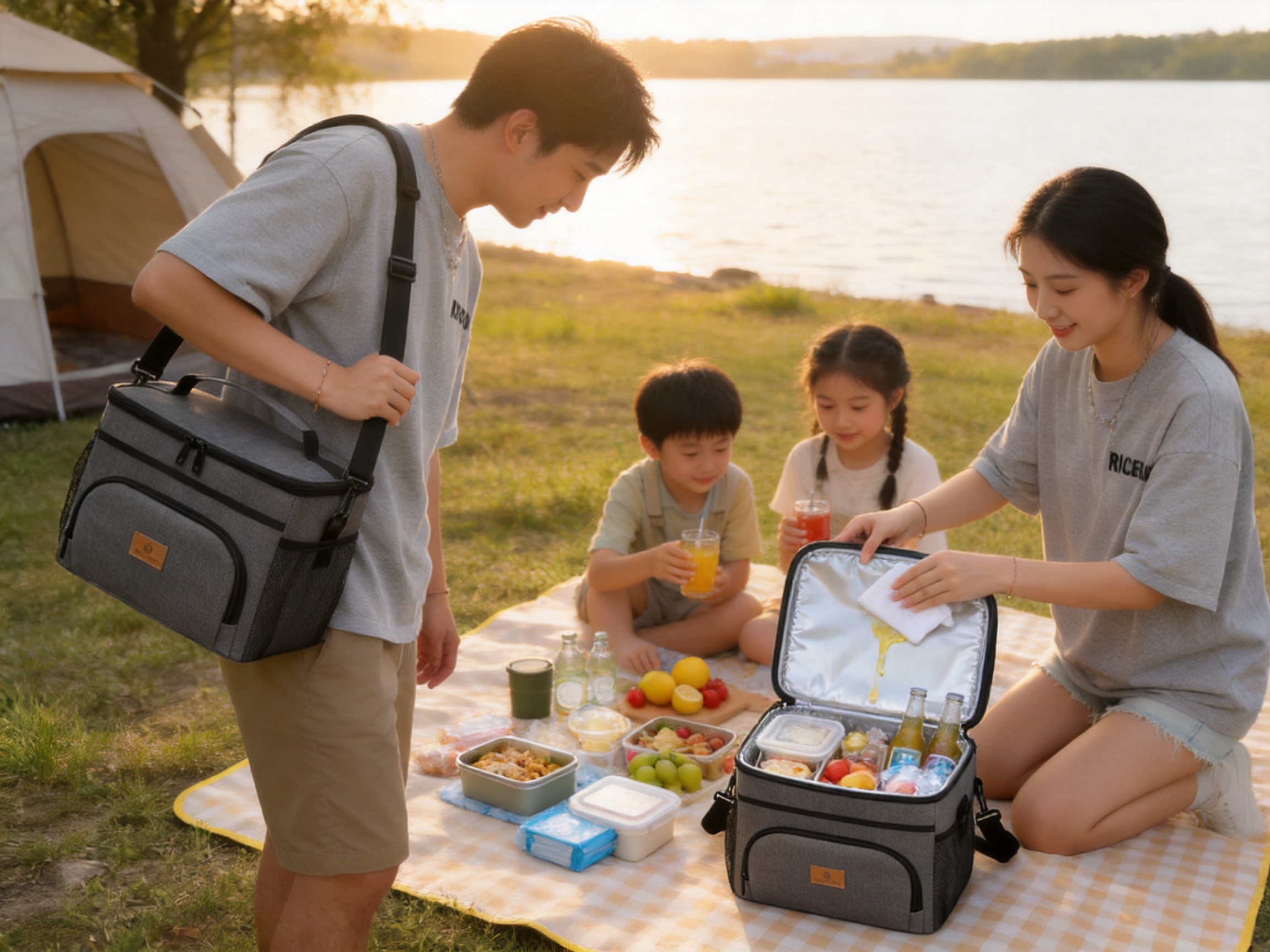
Outdoor users often need both hands available. A climber may need to hold a walking pole or stabilize themselves on uneven terrain. A parent may need to assist a child. A camper may carry a chair, blanket, or cooking accessory. The single-shoulder design responds to these practical situations by allowing the bag to be carried across the body or at the side.
Shoulder carrying can also make short-distance movement more convenient. The user can move food from a vehicle to a picnic area, from a campsite to a cooking station, or from a home kitchen to an office without repeatedly switching between hands. The flexible form of the bag allows it to be stored in a vehicle trunk or closet when not in use.
Carrying comfort depends on total load, strap adjustment, body position, and walking distance. A heavy load should be distributed carefully, and users should avoid placing excessively dense objects into one small area. The shoulder strap and its attachment points should be inspected periodically for signs of damage, particularly when the bag is frequently used outdoors.
The soft construction also provides a storage advantage over rigid containers. When empty, the bag can occupy less space and can often be placed inside larger luggage or stored with other camping equipment. This makes it suitable for users who value equipment that performs a specific function without creating unnecessary storage demands.
Durable Exterior for Camping, Hiking, and Travel
Outdoor products are exposed to conditions that are less predictable than indoor products. A picnic bag may be placed on rough ground, carried against other equipment, exposed to light moisture, or moved in and out of a vehicle several times during one trip. The wear-resistant and scratch-resistant exterior is intended to withstand this type of routine handling.
The outer layer also contributes to the product’s visual durability. A fabric that resists surface abrasion can remain presentable through repeated use, which is important for both individual consumers and commercial buyers. Retailers benefit when a product maintains a consistent appearance after customers use it for camping, travel, or family recreation.
Water-resistant performance is supported by the combination of the exterior, inner lining, construction, and closure. The PEVA liner helps protect the food compartment from internal spills, while the outer structure helps reduce the effect of damp grass, light rain, and accidental surface moisture. The product should nevertheless be protected from prolonged soaking and should be dried promptly if it becomes wet.
Outdoor durability should not be confused with unlimited resistance to abuse. Sharp tools, open flames, heavy impact, excessive weight, and long-term exposure to harsh chemicals can damage any soft bag. Proper use and maintenance remain essential to achieving the expected service life.
Applications Across Multiple Outdoor Scenarios
For family picnics, the large capacity allows parents to pack complete meals and refreshments in one organized carrier. The shoulder strap makes it easier to move from a parking area to a picnic site, while the PEVA lining helps simplify cleanup after children spill drinks or food.
For camping, the bag can transport prepared meals, beverages, fruit, and snacks between the vehicle, campsite, and cooking area. The insulation supports temperature management, while the washable lining helps maintain hygiene when access to a full kitchen is limited.
For hiking and day trips, the product can carry compact food containers and drinks without requiring a rigid cooler. Users should consider the total load before beginning a long hike, but the shoulder format provides a practical carrying option for shorter trails and outdoor breaks.
For road travel, the bag can function as a dedicated food carrier that keeps refreshments together and reduces dependence on roadside purchases. Its soft shape makes it easier to place on a vehicle seat or in a trunk alongside luggage.
For workplace or school use, the large size may be suitable for users who need more than one meal or who carry food for several people. The easy-clean liner is particularly valuable when the bag is used frequently and needs to be wiped at the end of each day.
Manufacturing Approach and Quality Development
Product performance depends on manufacturing discipline as much as on the written specification. A picnic bag may list insulation, PEVA, capacity, and water resistance, but those features only create value when the materials are correctly selected, accurately cut, consistently assembled, and properly inspected.
CragHaven Outdoor approaches product development from the perspective of real outdoor use. The company focuses on how products perform in weather, terrain, transportation, storage, and repeated handling. This approach helps connect design decisions with actual customer needs instead of treating the product as a collection of attractive catalog terms.
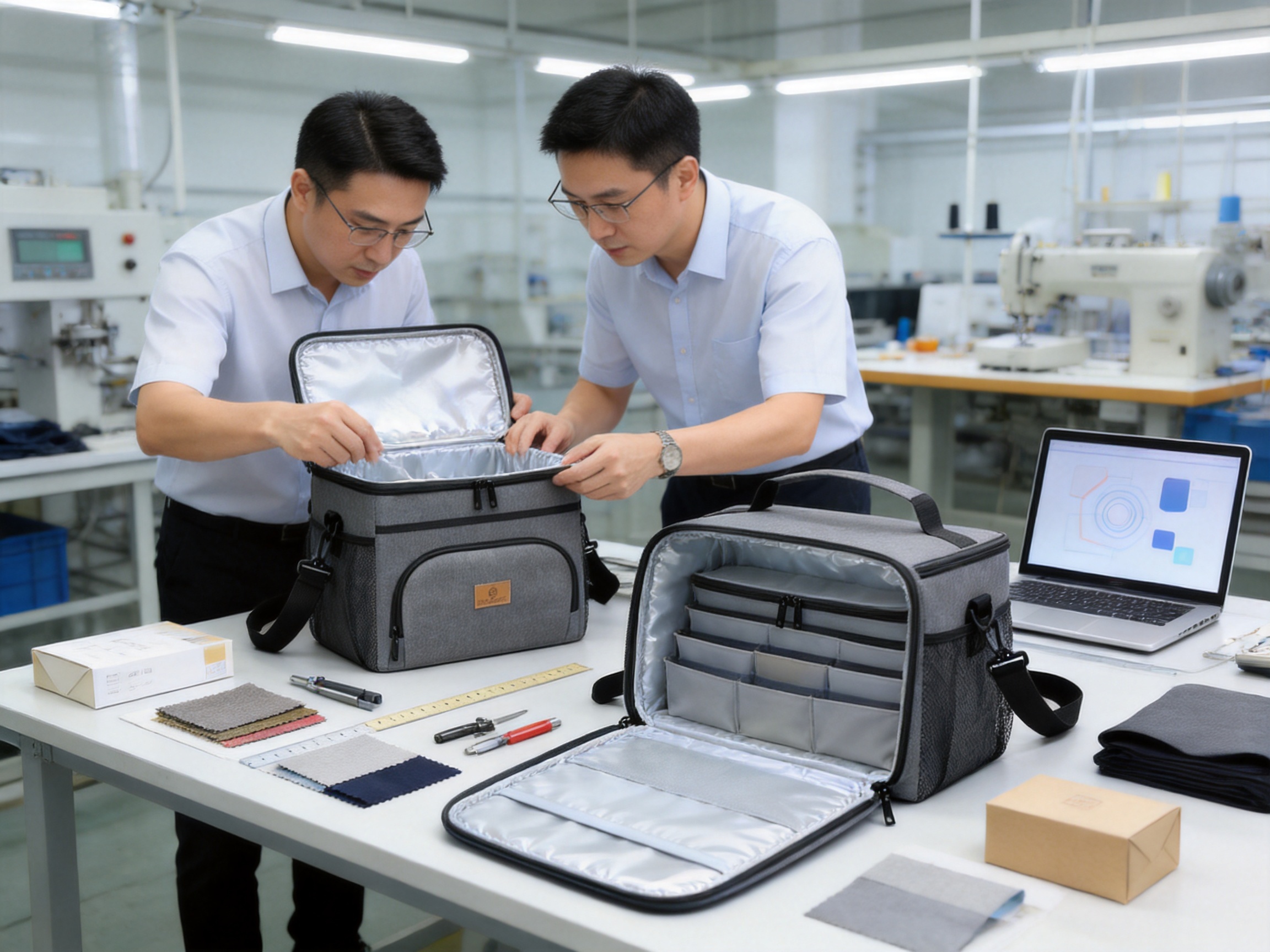
The development process begins with the intended use scenario. Designers and engineers consider how the bag will be packed, carried, opened, cleaned, stored, and transported. The relationship between the lining, insulation, outer fabric, zipper, strap, seams, and reinforcement points is reviewed as a complete system.
Material evaluation is another important stage. The food-contact lining must provide a smooth surface and suitable flexibility. The insulation must fit the intended structure without creating excessive bulk. The outer fabric must balance durability, appearance, weight, and manufacturability. Thread, binding, zipper components, strap materials, and reinforcement pieces must be compatible with the expected load and usage frequency.
Sampling allows the team to identify problems before large-scale production. A sample may reveal that a corner is difficult to clean, a zipper is under excessive tension, a strap attachment needs reinforcement, or the insulation creates an unwanted fold. These observations can lead to structural adjustments that improve the final product.
From Concept to Scalable Production
CragHaven Outdoor supports a development path that moves from concept definition to material selection, prototype sampling, testing, revision, and scalable production. This sequence helps reduce uncertainty for buyers who need stable products rather than one-time samples that cannot be reproduced consistently.
During prototype evaluation, attention can be given to dimensions, loading capacity, carrying balance, interior accessibility, closure operation, insulation placement, seam quality, and cleaning convenience. The purpose is not only to confirm whether the bag looks correct, but also to determine whether it performs reliably in the situations for which it was designed.
Production optimization focuses on repeatability. Cutting accuracy, sewing alignment, lining installation, insulation placement, edge finishing, and final inspection all affect product consistency. A stable process helps ensure that different production batches maintain comparable dimensions, appearance, and functional performance.
For commercial buyers, repeatability is particularly important. Retailers and distributors need products that match approved samples and packaging requirements. Inconsistent dimensions or materials can create inventory problems, customer complaints, and unnecessary inspection costs. A disciplined manufacturing system helps reduce these risks.
OEM and ODM Support
The product platform can support both standard wholesale supply and customized OEM or ODM cooperation. Depending on the project, buyers may request adjustments to size, materials, colors, strap configuration, packaging, labeling, logo placement, or internal organization.
Structural optimization may be appropriate when a buyer targets a particular market. A camping retailer may prioritize a more rugged exterior, while a workplace meal brand may focus on appearance and compact organization. A family-oriented distributor may prefer maximum internal volume, while a travel brand may require dimensions that fit a specific vehicle or luggage system.
Customization should be controlled through a clear development process. Specifications, material requirements, artwork, packaging details, tolerances, and inspection expectations should be agreed upon before production. Samples should be reviewed carefully so that the final manufacturing instructions reflect the approved version.
CragHaven Outdoor’s role extends beyond simple factory sourcing. The company positions itself as a development and manufacturing partner that can contribute to material recommendations, structural decisions, sampling, packaging integration, and production optimization. This collaborative model is useful for brands that want to build a dependable product range without managing every technical stage independently.
| Product type | Typical structure | Suitable application | Main limitation | Advantage of the featured bag |
|---|---|---|---|---|
| Basic fabric tote | Single-layer textile body | Short-distance carrying | Limited insulation and spill protection | Triple-layer insulation and PEVA lining provide greater functional protection |
| Compact individual lunch bag | Small insulated compartment | One-person daily meals | Restricted capacity | Larger interior supports family meals and group outings |
| Rigid cooler | Hard external shell with thick insulation | Extended stationary cooling | Bulky storage and less flexible carrying | Soft construction is easier to carry, fold, and store |
| Unlined reusable bag | Flexible textile without waterproof liner | Light grocery transport | Absorbs spills and offers minimal temperature control | Food-grade PEVA surface is easier to wipe and maintain |
| Large insulated picnic bag | PEVA lining, multi-layer insulation, durable exterior | Camping, travel, family picnics, and daily meals | Requires proper cleaning and should not be submerged | Balanced capacity, portability, insulation, and maintenance convenience |
Quality Control Considerations
Quality control for an insulated picnic bag should cover both materials and finished-product performance. Incoming materials can be checked for color, thickness, surface condition, flexibility, odor, and conformity with approved specifications. The lining should be inspected for visible defects, while insulation materials should be evaluated for uniformity and correct dimensions.
During assembly, inspectors can review stitch density, seam alignment, edge finishing, zipper installation, strap attachment, and the connection between the lining and outer shell. Uneven seams may affect appearance and durability. Poorly positioned components may create stress during loading or carrying. Careful assembly helps prevent small manufacturing issues from becoming functional problems.
Finished products should be checked for dimensions, weight, closure operation, carrying balance, internal cleanliness, and overall appearance. Where required by the project, buyers may establish additional testing procedures related to water resistance, seam strength, thermal performance, material safety, packaging durability, and transport conditions.
Inspection standards should be documented in a way that can be applied consistently. Clear acceptance criteria help align the factory, buyer, inspection team, and logistics partners. This is especially important for customized products, where small changes in materials or dimensions may affect production methods.
Responsible Product Use and Care
To achieve the best service life, users should treat the bag as an insulated soft carrier rather than a waterproof container or a hard protective case. Food should be placed in closed containers, sharp objects should be kept away from the lining, and the bag should not be dragged across rough surfaces.
After use, all food residue should be removed promptly. Delayed cleaning can allow sauces, dairy products, fruit juice, or other materials to develop odors. If a spill occurs during transport, the liner should be wiped as soon as practical. The zipper should be opened fully during cleaning so that hidden areas can be reached.
The bag should be stored in a dry, ventilated location. Long-term storage while folded and damp may lead to odor or mildew-like problems. It should also be kept away from direct flames, hot cooking surfaces, sharp tools, and excessive heat. Although the bag supports hot food transportation, it is not designed to hold open flames, boiling cookware, or uncovered heating devices.
When the bag is used for chilled food, reusable cold packs can be cleaned and dried separately. When the bag is used for warm food, containers should be securely closed to prevent condensation and leakage. Proper packing and care protect both the contents and the product.
Commercial Value for Retailers and Distributors
The outdoor picnic bag belongs to a versatile product category with strong relevance to several consumer lifestyles. Outdoor recreation, family travel, meal preparation, and reusable food transport all create potential demand. The product can be positioned at different price and feature levels depending on materials, dimensions, colors, packaging, and branding.
Its multi-scenario application is a commercial advantage. A product designed only for office lunches may have limited seasonal appeal, while a picnic bag that also serves camping, road travel, hiking, and family recreation can remain relevant across the year. Retailers may present it as part of an outdoor meal system alongside water bottles, food containers, camping cookware, picnic blankets, and portable seating.
The product also supports content-based marketing. Demonstrations can show how to pack a family meal, how to clean the PEVA liner, how to use cooling packs, and how the shoulder strap supports hands-free movement. Practical educational content helps customers understand the value of the materials and may reduce incorrect usage.
For wholesale buyers, packaging should communicate the product’s most important functions clearly. Recommended points include large capacity, triple-layer insulation, food-grade PEVA lining, leak-resistant interior, easy cleaning, shoulder portability, and suitability for camping or family picnics. Care instructions should also be included so that end users understand how to protect the insulation and liner.
CragHaven Outdoor can support buyers with specification adjustment, packaging integration, customized branding, and production coordination. This is particularly useful for companies that want to create a private-label outdoor food carrier while maintaining control over product positioning and customer experience.
Why Manufacturing Partnership Matters
A finished product is only one part of a successful supply relationship. Buyers also need dependable communication, realistic lead-time planning, specification control, quality consistency, and the ability to solve problems when market requirements change. A manufacturing partner that participates early in product development can identify technical risks before they become expensive production problems.
CragHaven Outdoor is based in Hangzhou, China, and focuses on outdoor products for mountaineering, hiking, camping, and related activities. The company’s stated development philosophy emphasizes real usage conditions, durable materials, repeated sampling, testing, and long-term cooperation. These principles are relevant to the picnic bag because its value depends on practical details that may not be visible in a simple product photograph.
The company combines product development with China’s mature manufacturing resources. This combination can help transform a design concept into a repeatable item suitable for global retail markets. Instead of selecting materials only for appearance or initial cost, the development process considers durability, manufacturing stability, user expectations, and supply-chain reliability.
For European and North American buyers, professional communication is also important. Product specifications, packaging requirements, inspection expectations, and compliance documentation should be discussed clearly. A Western-market-oriented approach can help reduce misunderstandings during sampling and production, particularly when the buyer is developing a product for a regulated or quality-sensitive retail channel.
Long-term cooperation provides advantages over one-time purchasing. As the factory and buyer gain experience with the product, they can improve material planning, reduce avoidable production variation, refine packaging, and respond more quickly to customer feedback. This creates a foundation for expanding from one picnic bag into a broader range of outdoor food transport products.
Frequently Asked Questions
Q1: What is the main purpose of this large capacity outdoor picnic bag?
The bag is designed to carry meals, drinks, fruit, snacks, and other food items for family picnics, camping, hiking, road trips, workplace meals, school use, and outdoor recreation. Its larger interior is suitable for users who need more space than a compact individual lunch bag can provide.
Q2: How does the triple-layer insulation work?
The insulation slows the transfer of heat between the contents and the surrounding environment. It helps keep cold food cool and warm food warm for longer than an uninsulated bag. Performance depends on starting food temperature, ambient conditions, packing density, cooling packs, and how often the bag is opened.
Q3: Is the PEVA lining waterproof?
The food-grade PEVA lining provides a smooth, water-resistant, leak-resistant surface that helps contain ordinary spills and makes cleaning easier. However, the bag should not be submerged, filled with loose liquid, or treated as a completely sealed waterproof container.
Q4: Can the bag be machine washed?
Machine washing is generally not recommended because excessive water, agitation, and twisting may affect the insulation, lining, seams, zipper, and structural components. Gentle hand cleaning with warm water, mild detergent, and a soft cloth is the preferred method unless a specific care label states otherwise.
Q5: How should unpleasant odors be removed?
Remove all food residue, wipe the PEVA liner with mild detergent, rinse with a clean damp cloth, and allow the bag to dry completely with the zipper open. Ventilation is important. A small breathable pouch of baking soda may help absorb remaining odors. Strong chemicals and abrasive brushes should be avoided.
Q6: Can the bag carry hot food?
Yes, the insulated construction is suitable for transporting warm food when it is packed in secure, heat-resistant containers. The bag should not hold open cookware, exposed flames, or extremely hot objects that could damage the lining or outer materials.
Q7: How should cold food be packed?
Food should be chilled before packing whenever possible. Reusable ice packs can be placed around the containers that require additional cooling. Containers should be closed securely, and the bag should remain closed as much as practical to reduce temperature exchange.
Q8: What makes the product different from a basic fabric tote?
A basic fabric tote usually provides carrying space but little insulation or spill protection. This product combines a large-capacity compartment, triple-layer insulation, a food-grade PEVA lining, a durable exterior, and a shoulder-carry format. These features provide greater suitability for temperature-sensitive food and repeated outdoor use.
Q9: Is the product suitable for long hiking trips?
It can be suitable for day hikes, short trails, and outdoor breaks, but users should consider the total load and carrying distance. The bag is most effective when packed with a balanced load and used as part of a practical outdoor food system. Very heavy contents may be more appropriate for vehicle-supported camping or short-distance transport.
Q10: Can the product be customized for wholesale orders?
Customization may include dimensions, materials, colors, strap configurations, packaging, labeling, logo placement, and structural details. Exact options depend on project requirements, order quantities, sampling, and production feasibility.
Q11: What OEM and ODM services are available?
CragHaven Outdoor can support specification adjustment, structural optimization, material recommendations, prototype sampling, packaging integration, customized branding, and production coordination. The specific development process should be confirmed according to the buyer’s technical and commercial requirements.
Q12: What should buyers review during the sample stage?
Buyers should review dimensions, capacity, insulation arrangement, lining quality, zipper operation, strap attachment, seam finishing, carrying balance, cleaning access, packaging, and the accuracy of branding or labels. It is also useful to assess whether the sample reflects the intended real-world use scenario.
Q13: How can the bag’s service life be extended?
Clean the liner after use, remove food residue promptly, dry the bag completely, avoid overloading, protect it from sharp objects and open flames, and store it in a dry ventilated place. Regularly inspect the strap, zipper, seams, and exterior for signs of wear.
Q14: Is the bag a replacement for a refrigerator?
No. It is an insulated transport bag that slows temperature change. It does not actively refrigerate or heat food. For food safety, users should follow appropriate storage practices and avoid leaving perishable food in unsuitable conditions for extended periods.
Conclusion
The large capacity outdoor picnic bag combines practical storage, thermal support, leak-resistant protection, easy maintenance, and hands-free portability in one versatile product. Its triple-layer insulation helps transport hot and cold food, while the food-grade PEVA liner creates a smooth surface that is easier to wipe and less likely to retain ordinary spills. The durable exterior supports repeated use in camping, hiking, travel, family picnics, and daily meal transportation.
Its greatest advantage is the balance between capacity and convenience. The bag offers more room than a compact lunch carrier without the bulk and rigid structure of a traditional cooler. The single-shoulder format supports outdoor mobility, and the soft construction simplifies storage when the bag is empty.
For commercial buyers, the product also benefits from a flexible application range and customization potential. CragHaven Outdoor combines outdoor product knowledge with material evaluation, prototype development, structural optimization, production control, and OEM or ODM support. This approach helps transform a functional concept into a consistent product suitable for global retail and distribution.
When design, materials, manufacturing, and maintenance are considered together, the result is more than a simple food bag. It becomes a dependable part of an outdoor equipment system—one that helps users carry meals more efficiently, protect food during transport, simplify cleanup, and enjoy greater convenience during time spent outside.
References
1. U.S. Food and Drug Administration. Food Contact Materials and Food Safety Guidance.
2. ASTM International. Standard Practices for Evaluating Textiles, Seam Performance, and Material Durability.
3. International Organization for Standardization. Quality Management Principles for Consistent Manufacturing.
4. International Organization for Standardization. General Guidance on Packaging, Transport, and Product Handling.
5. U.S. Department of Agriculture. Food Safety Recommendations for Transporting Perishable Foods.
6. Textile Exchange. General Principles for Textile Material Selection and Product Responsibility.
7. Outdoor Industry Association. Consumer and Market Trends in Outdoor Recreation Equipment.
8. Manufacturer-provided product specifications and development information for insulated PEVA picnic bags.
Product: Large capacity outdoor picnic bag, PEVA leak-proof, water-proof, insulated and heat-resistant bag


- Phone: +86-15968800379
- E-mail: [email protected]
- Address: Room 1002, Huishang Building, Gongshu District, Hangzhou City, Zhejiang Province.
Copyright © CragHaven Outdoor All Rights Reserved. Outdoor Gear Manufacturers Wholesale Mountaineering Camping Gear Suppliers
