

 English
 Deutsch
 Español
 Français

Retractable External-Lock Trekking Poles for Reliable Mountain Travel
Content
- 1 Product Overview: A Three-Section Trekking Pole Built for Practical Terrain
- 2 Why External Locking Matters in Mountain and Camping Use
- 3 Aerospace-Grade Aluminum Alloy: Strength Without Unnecessary Weight
- 4 EVA Foam Handle: Comfort, Grip, and Long-Distance Usability
- 5 Three-Section Telescopic Design for Easy Transport and Flexible Adjustment
- 6 Competitive Advantages Over Common Trekking Pole Alternatives
- 7 Feature and Benefit Comparison
- 8 Manufacturing Philosophy: Designed for Weather, Terrain, and Time
- 9 Advanced Manufacturing Processes Behind a Reliable Trekking Pole
- 10 Quality Control: From Sampling to Batch Consistency
- 11 Comfort and Stability During Real Hiking Scenarios
- 12 Supply-Chain Strength for Global Outdoor Buyers
- 13 Market Positioning and Buyer Benefits
- 14 Sustainability Through Durability and Long-Term Use
- 15 Practical Use and Care Recommendations
- 16 Q&A Section
- 16.1 Q1: What is the main advantage of the 3LS external lock mechanism?
- 16.2 Q2: Why use aerospace-grade aluminum alloy instead of carbon fiber?
- 16.3 Q3: Is the EVA foam handle suitable for long hikes?
- 16.4 Q4: Why is a three-section telescopic design useful?
- 16.5 Q5: How does the adjustable wrist strap improve performance?
- 16.6 Q6: What types of users are best suited for this trekking pole?
- 16.7 Q7: What makes this product competitive in international markets?
- 16.8 Q8: How does the manufacturer support long-term buyer cooperation?
- 17 Conclusion: A Field-Ready Trekking Pole for Stable Outdoor Movement
- 18 References
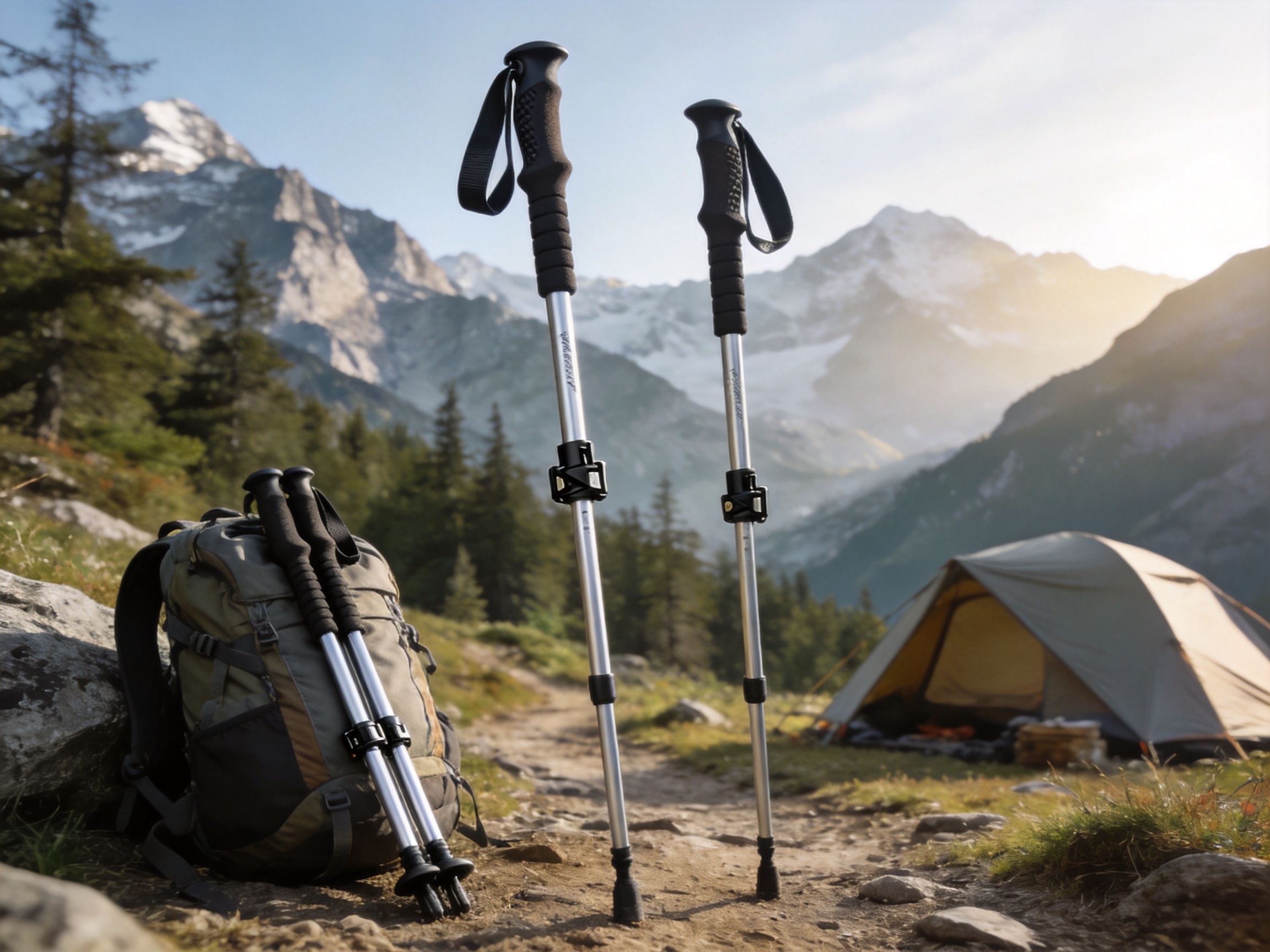
Modern trekking poles are no longer simple walking sticks. For mountain hikers, camping travelers, backpackers, and expedition buyers, they are stability tools, load-management tools, terrain-reading tools, and confidence-building equipment. The retractable external-lock trekking poles introduced here are designed for real outdoor movement rather than catalog appearance. Built with an aerospace-grade aluminum alloy shaft, a professional 3LS external locking system, an EVA foam handle, an adjustable wrist strap, and a three-section telescopic structure, this product responds to the practical needs of hikers who move across steep trails, loose gravel, wet ground, forest paths, campsites, and long-distance routes.
Product code WFDS262003 represents a trekking pole concept centered on dependable locking strength, manageable weight, hand comfort, and compact portability. The pole is especially suitable for mountain-climbing and camping gear markets where retailers, distributors, and outdoor brands need products that can withstand repeated use, changing weather, and varied user profiles. While many low-cost trekking poles focus only on appearance or basic adjustability, this model is built around the daily realities of outdoor use: a pole must lock securely, adjust smoothly, resist bending, feel comfortable during long movement, and pack down easily when the terrain no longer requires it.
CragHaven Outdoor, based in Hangzhou, China, positions this type of product within a broader philosophy: outdoor gear should be designed for weather, terrain, and time. That means each feature should solve a field problem. The locking system should reduce slippage. The shaft should balance strength and weight. The handle should remain comfortable when hands sweat. The strap should adapt to different hand sizes. The telescopic structure should make storage practical. This article explores the product’s functional advantages, manufacturing logic, competitive strengths, quality-control priorities, and suitability for international outdoor markets.
Product Overview: A Three-Section Trekking Pole Built for Practical Terrain
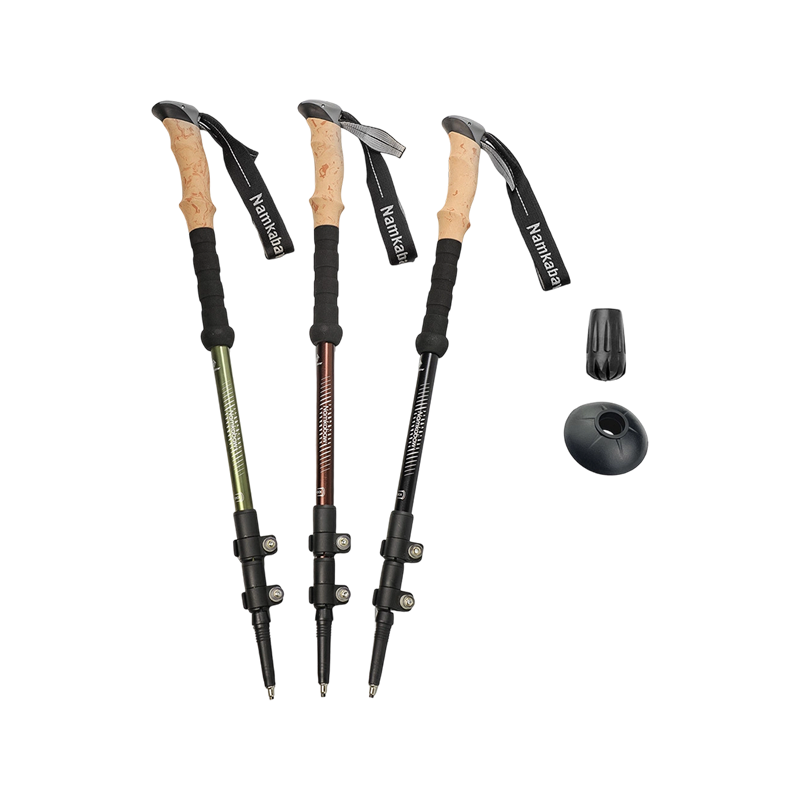
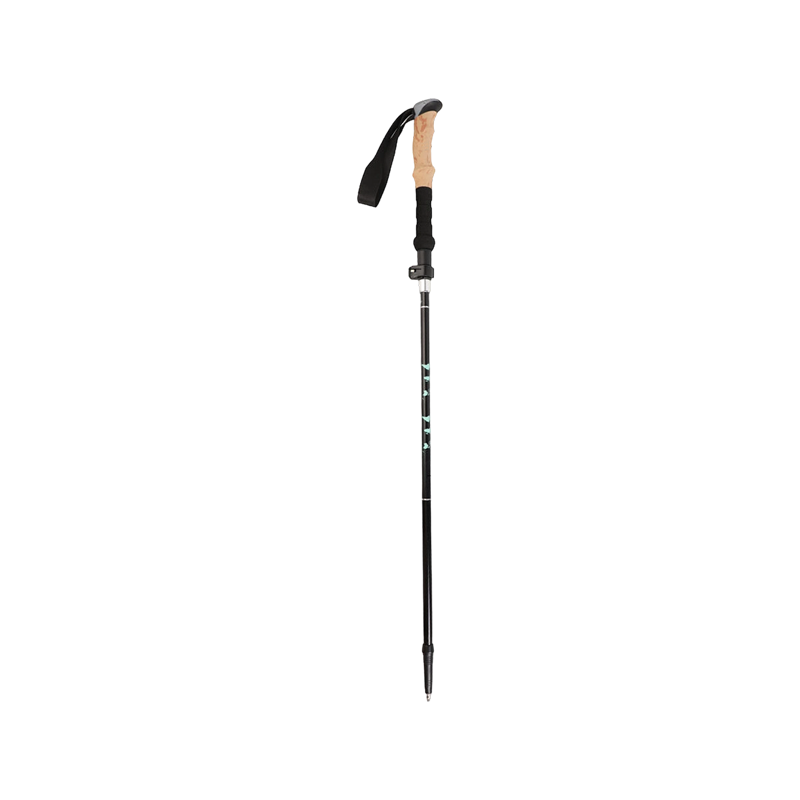
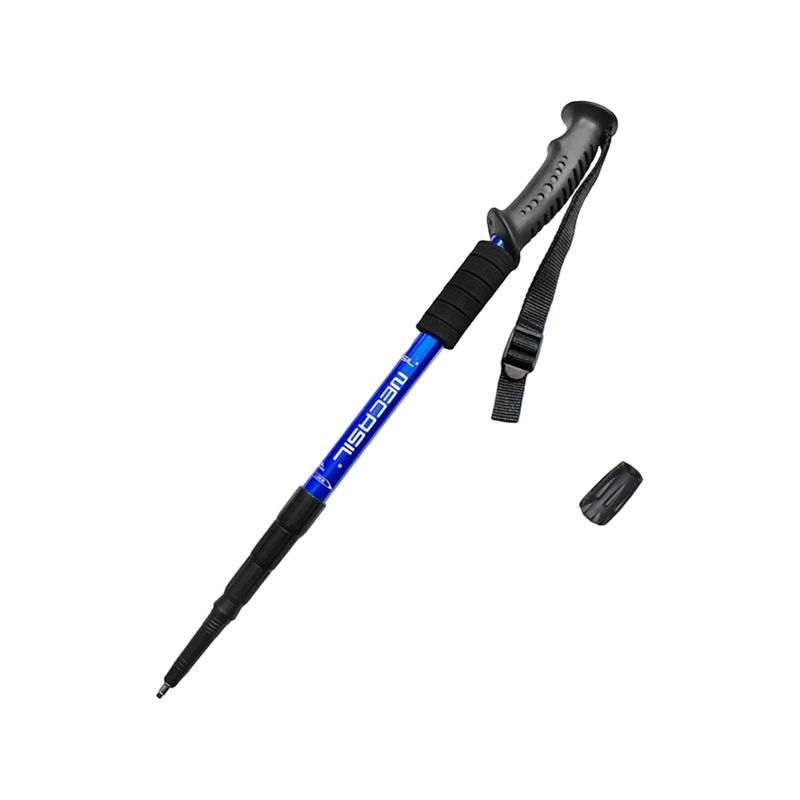
The retractable external-lock hiking pole is a three-section telescopic trekking pole designed for users who need both compact carrying and stable support. The three-section layout allows the pole to collapse into a shorter size for transport, storage, and attachment to a backpack. When extended, the pole provides the length adjustment needed for uphill climbing, downhill walking, flat-ground hiking, and users of different heights. This adjustability is important because trekking poles are not used in one fixed position throughout a journey. Mountain terrain changes constantly, and the pole must adapt quickly.
The central structural material is aerospace-grade aluminum alloy. In outdoor equipment, aluminum alloy remains one of the most trusted shaft materials because it offers a strong balance between impact resistance, durability, and cost efficiency. Carbon fiber can be lighter, but it is often more vulnerable to sudden fracture under side impact. Basic low-grade aluminum can be inexpensive, but it may bend too easily or feel heavy. The selected aluminum alloy used in this pole provides a practical middle ground: it is tough enough for demanding trekking use while remaining light enough for long-distance carrying.
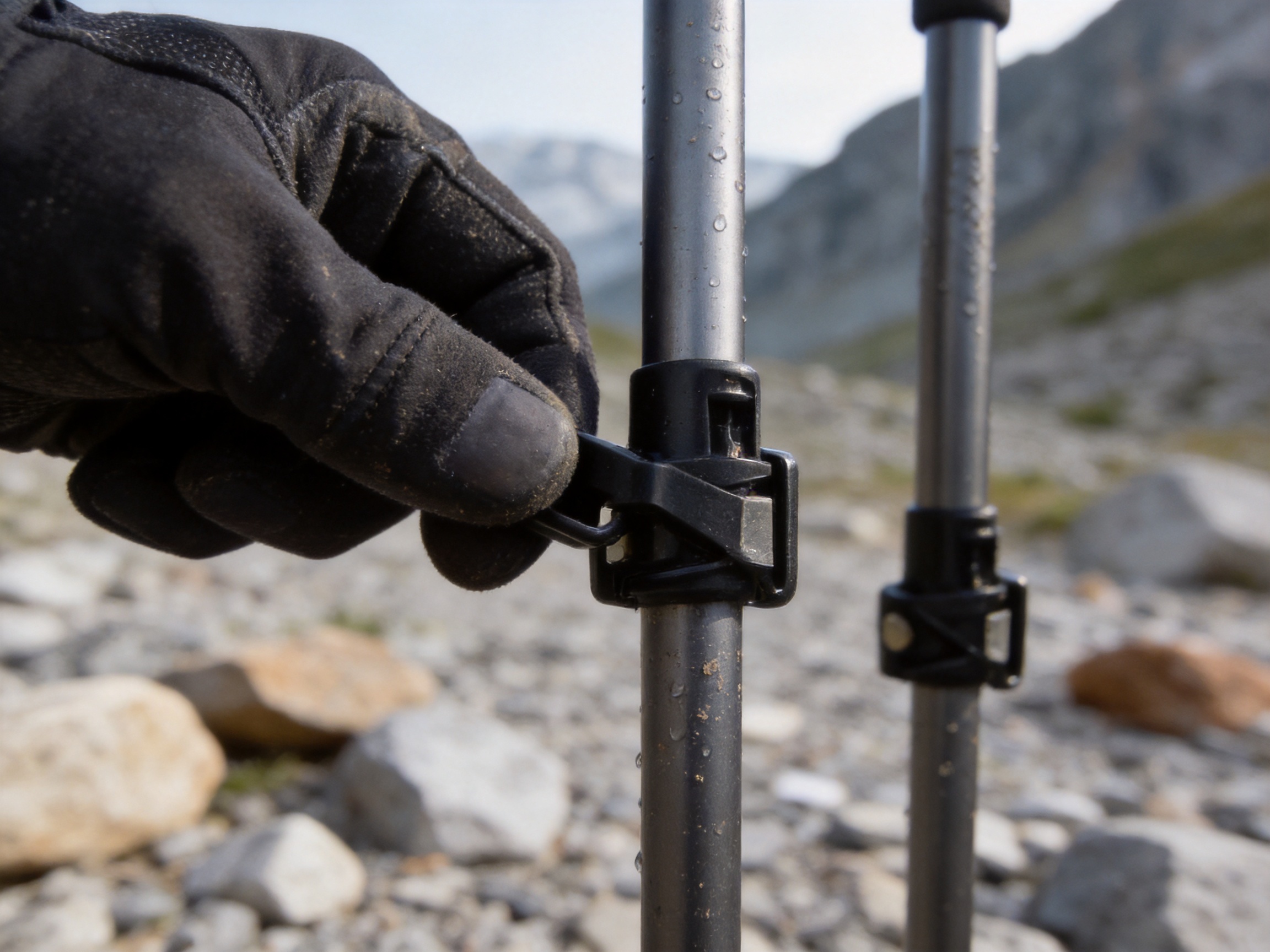
The pole is equipped with a 3LS professional external lock mechanism. External locking systems are widely valued because they are easy to inspect, easy to operate, and more intuitive than many internal twist-lock structures. When a hiker is wearing gloves, dealing with cold air, or adjusting pole length on a steep slope, a visible external lever is easier to use than a hidden internal system. The 3LS design is intended to deliver a strong, slip-resistant lock, helping prevent unexpected pole collapse during downward pressure.
The EVA foam handle adds another key layer of field comfort. EVA foam is lightweight, soft to the touch, sweat-absorbent, and non-slip. It remains comfortable through long use and helps reduce hand fatigue compared with harder plastic handles. The adjustable wrist strap supports different hand shapes and gives users better control over the pole without gripping too tightly. Together, these elements form a trekking pole that is simple, durable, and practical for outdoor travel.
Why External Locking Matters in Mountain and Camping Use
The locking mechanism is one of the most important parts of a trekking pole. A pole can have an attractive handle and a light shaft, but if the locking system slips under load, the user loses trust in the product. In mountain travel, a slipping pole can create more than inconvenience. It can cause instability during downhill steps, river crossings, rocky transitions, and fatigue-heavy sections of a trail. This is why the 3LS external lock system is central to the product’s value.
External locking systems provide clear advantages over many traditional twist-lock designs. Twist locks rely on internal expansion parts that may wear, become contaminated with dust, or become difficult to tighten evenly. Users may also over-tighten or under-tighten them without immediate visual confirmation. External locks, by contrast, provide a visible clamping action. The user can see whether the lock is closed, adjust it more easily, and operate it quickly with less guesswork. This is especially helpful in cold, wet, or muddy environments where fine hand movements may be limited.
The 3LS professional external lock mechanism is designed to create strong clamping force around the pole sections. A strong lock helps maintain the selected pole length when the user applies body weight through the shaft. This matters during descents, where each pole strike may carry significant downward force. It also matters when a hiker uses poles to push forward on steep climbs or to stabilize a loaded backpack while stepping across uneven ground.
Compared with entry-level trekking poles that may use weak plastic clamps or inconsistent locking tolerances, this external-lock structure is intended for repeatable performance. It supports efficient adjustment while giving the user confidence that the pole will remain stable. For retailers and buyers, this is a major selling point because lock reliability strongly affects customer satisfaction, return rates, and brand reputation. A trekking pole is often judged after months of field use, not just at the moment of purchase, and the locking system is one of the first components users notice when quality is poor.
Aerospace-Grade Aluminum Alloy: Strength Without Unnecessary Weight
The shaft material determines how a trekking pole feels, performs, and survives impact. Aerospace-grade aluminum alloy is used here because it offers a strong combination of structural reliability and weight control. For trekking poles, the ideal material is not simply the lightest possible material. It must also handle repeated compression, accidental knocks against rocks, side pressure from uneven placement, and the stress of being packed, transported, and used in changing weather.
Aluminum alloy has long been trusted in outdoor and sports equipment because it bends before it catastrophically fails in many situations. This characteristic can be valuable in mountain environments. A pole that deforms slightly after severe abuse may still provide partial support until the user returns safely, while a brittle failure can be more dangerous. High-quality aluminum alloy also allows manufacturers to control wall thickness, tube diameter, and surface treatment to achieve a reliable strength-to-weight balance.
Compared with low-cost steel or inferior aluminum shafts, aerospace-grade aluminum alloy reduces unnecessary carrying weight. This is important because trekking poles are moved thousands of times during a long hike. Every swing of the arm and every planted step contributes to fatigue. A lighter shaft improves comfort, especially over long distances. At the same time, the material avoids the fragility concerns that some users associate with ultralight carbon poles in rough terrain.
The material also supports scalable manufacturing. Aluminum alloy tubes can be formed with consistent dimensions, treated for corrosion resistance, and assembled into telescopic sections with controlled tolerances. For professional buyers, this consistency matters as much as the material name itself. A pole must perform reliably across batches, not only in a single sample. When tube quality, surface finish, and section fit are controlled, the final pole feels smoother to adjust, locks more securely, and presents a more professional appearance to the end user.
EVA Foam Handle: Comfort, Grip, and Long-Distance Usability
The handle is the user’s most direct point of contact with the trekking pole. Over a short walk, almost any grip can feel acceptable. Over hours of hiking, poor handle design can lead to hand fatigue, rubbing, sweating, hot spots, and unnecessary tension in the wrist and forearm. The EVA foam handle used in this product is chosen to improve comfort in long-duration outdoor movement.
EVA foam is valued because it is soft, light, and pleasant to hold. It provides a warmer feel than metal or hard plastic in cold weather and a more forgiving surface during continuous gripping. Its sweat-absorbent and non-slip qualities are especially useful in mountain and camping scenarios, where users may encounter heat, rain, humidity, or rapid changes in exertion. When a user climbs uphill, hands often sweat quickly. A slippery grip can cause over-gripping, which increases fatigue. EVA foam helps maintain contact without requiring excessive hand pressure.
Compared with cork handles, EVA foam can offer a more consistent feel across different production batches and can be easier to shape for ergonomic support. Cork remains popular in certain premium trekking categories, but it may vary in density and can be less suitable for buyers seeking stable large-scale supply. Compared with hard rubber or plastic, EVA is generally lighter and more comfortable for long use. The handle on this pole is therefore positioned for practical field value rather than decorative styling.
The handle works together with the adjustable wrist strap. A well-used trekking pole should not be controlled by grip strength alone. The strap transfers part of the load to the wrist and helps the hand guide the pole naturally. When adjusted correctly, the user can relax the fingers slightly, reducing hand strain on long trails. This combination of EVA handle and adaptable strap makes the pole more inclusive for different hand sizes and hiking styles.
Three-Section Telescopic Design for Easy Transport and Flexible Adjustment
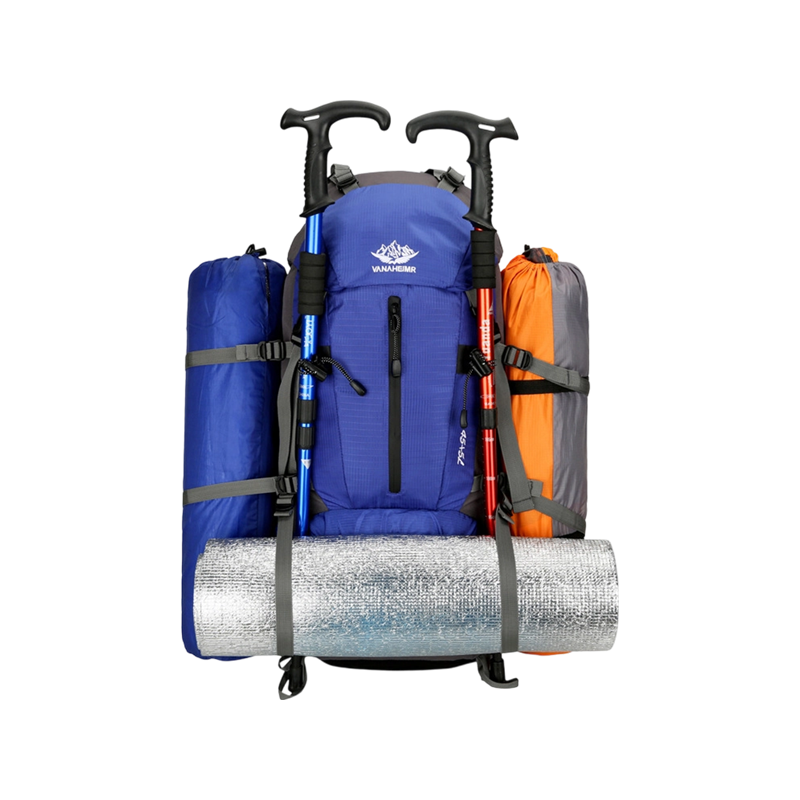
A trekking pole must be strong when extended and compact when stored. The three-section telescopic design answers both needs. By dividing the shaft into three adjustable sections, the pole can collapse to a more convenient length for packing in luggage, attaching to a backpack, storing in a vehicle, or carrying when poles are not required. This is especially valuable for travelers who combine hiking with camping, public transportation, air travel, or multi-activity trips.
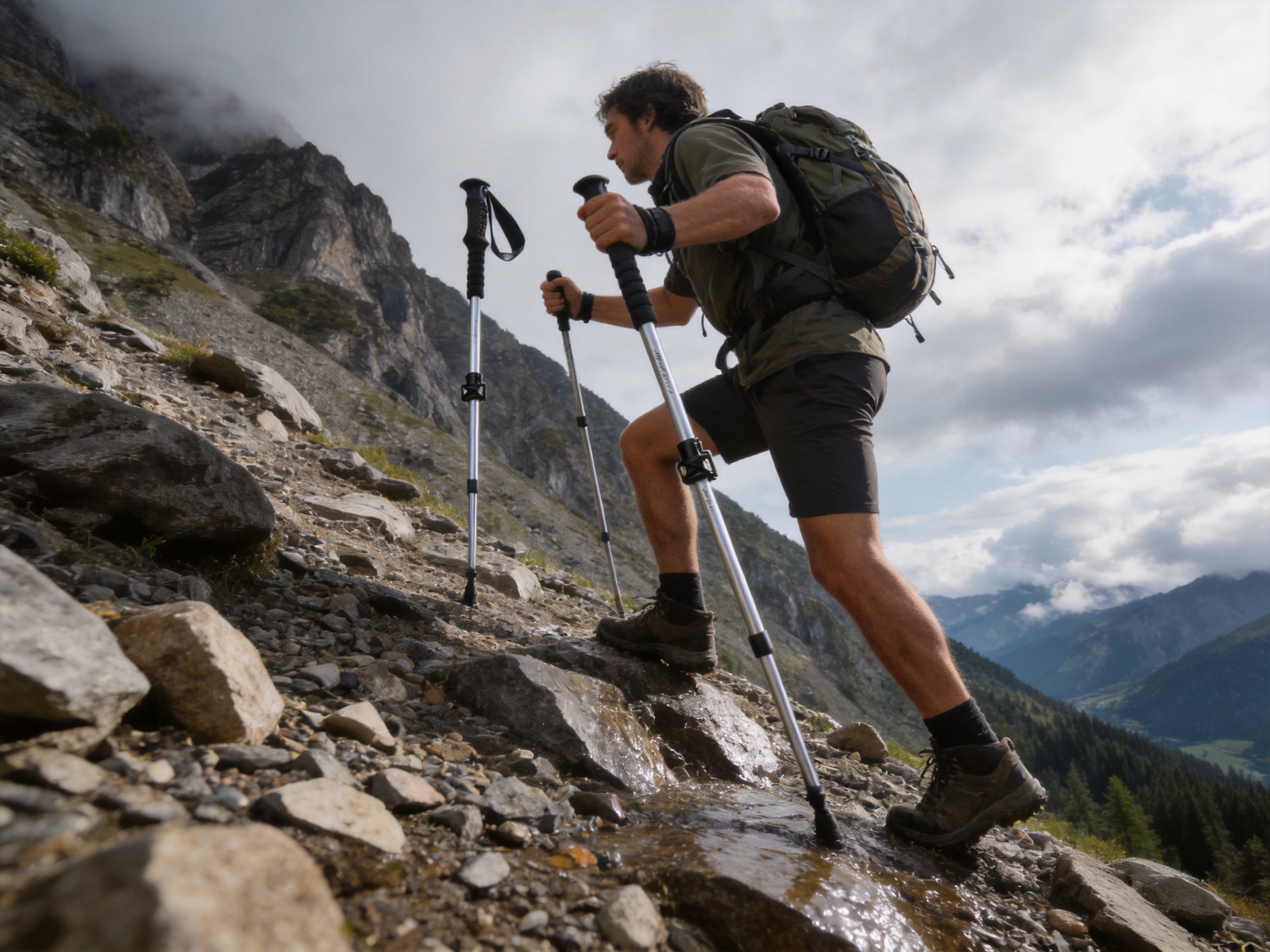
The telescopic structure also supports multiple use scenarios. On flat trails, users typically set trekking poles near a standard elbow-angle position. On uphill climbs, shorter pole length often improves leverage and reduces awkward arm extension. On downhill sections, a longer setting can help the user reach lower terrain and reduce knee strain by transferring some load to the upper body. In snow, scree, forest paths, or river crossings, users may adjust pole length again according to ground conditions. A fixed-length pole cannot offer this flexibility.
The three-section design must be engineered carefully because every joint introduces a possible source of movement. This is where locking quality, tube tolerance, and assembly precision become essential. A poorly made telescopic pole may rattle, slip, or feel unstable. A well-made one should extend smoothly, lock confidently, and feel integrated during use. The 3LS external lock mechanism helps address this requirement by providing reliable clamping at the adjustment points.
For outdoor retailers and private-label brands, the three-section format is a strong commercial choice. It appeals to beginners because it is easy to carry and adjust. It appeals to experienced users because it can be adapted to varied terrain. It also suits e-commerce packaging and cross-border logistics because compact dimensions reduce handling inconvenience. In a market where consumers often compare storage length, weight, comfort, and locking reliability, the three-section design provides a balanced and easily understood advantage.
Competitive Advantages Over Common Trekking Pole Alternatives
The trekking pole market includes a wide range of competing designs: entry-level twist-lock poles, ultralight carbon poles, fixed-length poles, folding Z-poles, and decorative low-cost poles intended mainly for casual walking. The retractable external-lock aluminum alloy pole competes by offering a practical balance of reliability, durability, adjustability, and accessible performance.
Compared with basic twist-lock poles, the external-lock design is easier to operate and inspect. Many hikers have experienced twist locks that gradually slip, become difficult to tighten, or fail because internal parts wear or collect debris. An external lock is more visible and more user-friendly. It also communicates quality more clearly at the point of sale because buyers can feel the clamp action immediately.
Compared with ultralight carbon fiber poles, the aerospace-grade aluminum alloy shaft offers strong impact tolerance and dependable value. Carbon poles can be excellent for fast hiking and racing, but they may not be ideal for all users or all terrain. In rocky mountain environments, camping trips with heavy gear, and general consumer use, aluminum alloy often provides a safer durability profile and better cost-performance ratio. Many mainstream hikers prefer equipment that can tolerate rough handling rather than equipment optimized only for minimal weight.
Compared with fixed-length poles, this telescopic model offers far greater versatility. Fixed-length poles can be strong and simple, but they are inconvenient for travel and less adaptable to terrain changes. The three-section retractable design supports different users, different slopes, and different packing needs. Compared with some folding Z-poles, telescopic poles may provide more intuitive length adjustability and a more familiar structure for general outdoor consumers.
The EVA foam handle also improves competitiveness against low-cost hard-grip products. Comfort is a powerful differentiator in real use. A customer may not fully understand alloy grade or locking geometry, but they quickly notice whether the grip feels secure and comfortable. The adjustable wrist strap further broadens the user base by accommodating different hand shapes. Together, these features create a product that can be marketed as durable, comfortable, field-ready, and suitable for real hiking rather than occasional sidewalk walking.
Feature and Benefit Comparison
| Product Feature | Practical User Benefit | Advantage Over Basic Alternatives |
|---|---|---|
| 3LS professional external lock mechanism | Strong, slip-resistant length control during hiking, climbing, and descending | Easier to inspect and operate than many internal twist-lock systems |
| Aerospace-grade aluminum alloy shaft | Reliable strength with manageable weight for long-distance use | More impact-tolerant than many ultralight fragile options and lighter than low-grade heavy materials |
| EVA foam handle | Sweat-absorbent, non-slip, and comfortable during extended gripping | More comfortable than hard plastic grips and consistent for scalable production |
| Adjustable wrist strap | Adapts to different hand shapes and reduces the need for excessive gripping | Improves control and comfort compared with fixed or poorly shaped straps |
| Three-section telescopic structure | Easy to carry, store, and adjust for different terrain and user heights | More portable than fixed-length poles and more adjustable than many folding designs |
| Field-oriented manufacturing philosophy | Features are selected for real weather, terrain, and long-term use | Stronger value than catalog-driven products focused only on appearance |
Manufacturing Philosophy: Designed for Weather, Terrain, and Time
Outdoor equipment succeeds only when it performs outside the showroom. CragHaven Outdoor’s manufacturing philosophy is based on three practical principles: products are designed for weather, terrain, and time; every feature must solve a real usage problem; and materials are selected for durability, reliability, and long-term value rather than temporary trends. These principles are especially relevant for trekking poles because the product is repeatedly loaded, adjusted, carried, dropped, exposed to moisture, and used on unpredictable ground.
Designing for weather means considering how materials and parts behave in heat, cold, humidity, rain, and dust. The EVA foam handle must remain comfortable when the user sweats. The external lock must remain operable when hands are cold or when gloves are used. The aluminum alloy shaft must resist the ordinary environmental challenges of outdoor travel. Even packaging and storage considerations matter because cross-border products may experience different climates before reaching the end user.
Designing for terrain means recognizing that a trekking pole is not used only on smooth paths. It may be planted between stones, pressed into mud, dragged against rock, used to test ground firmness, or loaded unevenly when a hiker loses balance. A field-oriented pole needs stable locking, adequate shaft strength, and a grip system that supports control. The product must help users manage uncertainty rather than create new uncertainty.
Designing for time means planning beyond the first impression. Outdoor buyers increasingly recognize that reliable gear should survive many trips. A trekking pole should maintain lock function, grip comfort, and shaft integrity through repeated adjustment and use. Sampling, testing, and optimization are therefore not optional steps. They are part of the path from design intent to stable production. This long-term view supports both end-user satisfaction and stronger supply-chain relationships for global buyers.
Advanced Manufacturing Processes Behind a Reliable Trekking Pole
A trekking pole may look simple, but producing a dependable telescopic model requires coordination across material selection, tube forming, surface treatment, component molding, assembly, inspection, and packaging. Advanced manufacturing is not defined only by expensive machines. It is defined by process control, repeatability, and the ability to translate product design into stable batch production.
The aluminum alloy shaft begins with material selection and tube preparation. Tube diameter, wall thickness, straightness, and surface finish all influence final performance. If tolerances are poor, pole sections may wobble, lock unevenly, or feel rough during adjustment. Controlled tube forming and sizing help ensure that the three sections fit together smoothly while maintaining enough structural strength for outdoor use. Surface treatment can improve corrosion resistance, appearance, and handling durability.
The external lock components require careful molding and assembly. A lock must close firmly without feeling brittle or difficult to operate. The clamping geometry must match the shaft dimensions so that pressure is distributed effectively. Too little clamping force may cause slipping, while too much force may make adjustment inconvenient or damage components. The 3LS mechanism is therefore not merely an accessory; it is a precision-related performance component.
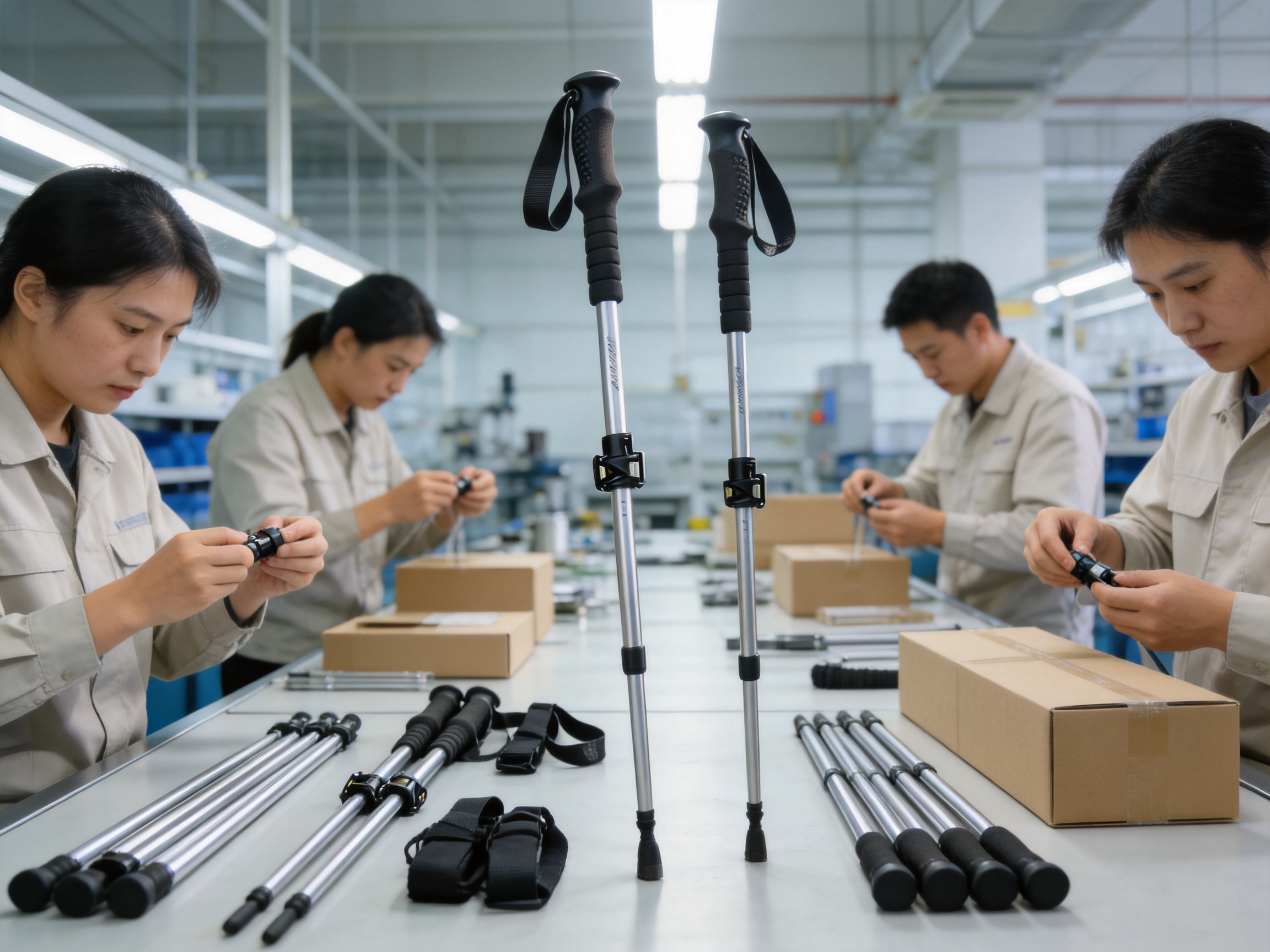
The EVA foam handle must also be produced with attention to density, shape, bonding, and finish. A grip that is too soft may wear quickly, while one that is too hard may reduce comfort. The wrist strap must be securely attached and adjustable, with stitching or fastening methods that support repeated use. Final assembly requires workers and inspection teams to check extension smoothness, lock engagement, grip alignment, strap function, and appearance consistency.
For cross-border outdoor markets, packaging and documentation also form part of manufacturing strength. Poles must be protected during transport, presented clearly to retailers or consumers, and delivered with consistent specifications. A strong manufacturing partner reduces uncertainty by managing these details from sampling through production.
Quality Control: From Sampling to Batch Consistency
Quality control is essential for trekking poles because small defects can become serious field problems. A slightly inconsistent tube dimension may create lock slippage. A poorly attached handle may rotate under pressure. A weak strap connection may fail when the user needs support. A rough telescopic surface may frustrate customers and make the product feel cheap. Therefore, dependable production requires inspection at multiple stages rather than only at the end.
Sampling is the first stage. Before mass production, samples should confirm that the design concept works in real handling. The pole should extend and retract smoothly. The 3LS external lock should clamp securely. The handle should feel comfortable in dry and sweaty conditions. The strap should be easy to adjust. The collapsed length and extended length should match product requirements. Sampling also allows improvements before tooling, procurement, and production schedules are fully locked.
Material inspection is another important stage. Aluminum alloy tubes should be checked for straightness, dimensions, surface defects, and consistency. Lock parts should be checked for fit and mechanical function. EVA grips should be checked for density, shape, and surface quality. Straps should be inspected for stitching, adjustability, and attachment strength. When components are controlled before assembly, final product quality becomes more predictable.
During assembly, workers should confirm that every section fits correctly and every lock functions as intended. Finished poles should be tested for adjustment smoothness, lock security, visual appearance, grip alignment, and packing accuracy. Random load checks and repeated lock operation tests can help identify issues that might not appear during a quick visual inspection. For global buyers, this process reduces after-sales risk and helps protect brand reputation.
CragHaven Outdoor emphasizes sampling, testing, and optimization as standard processes that cannot be omitted. This approach is especially important in outdoor gear because real users test products with their full body weight, in changing weather, and often far from immediate assistance. A consistent quality-control system is therefore a direct contributor to user safety, product value, and long-term customer trust.
Comfort and Stability During Real Hiking Scenarios
The true value of trekking poles appears on the trail. On uphill sections, poles help distribute effort between the legs and upper body. A hiker can push through the poles to maintain rhythm, especially while carrying a backpack. The adjustable length allows the poles to be shortened for a natural climbing position. The EVA handle supports grip comfort during high-exertion movement, while the wrist strap allows the user to apply force without squeezing too hard.
On downhill terrain, trekking poles can reduce impact on the knees by helping transfer some load through the arms and shoulders. This is where lock reliability becomes especially important. The pole may receive strong downward pressure with each step. A slipping lock can disrupt balance and confidence. The 3LS external lock system is designed to resist this problem by maintaining length under load. The aluminum alloy shaft contributes the strength needed for repeated compression and occasional side contact.
On uneven ground, poles serve as additional points of contact. They help the user test surfaces, cross shallow streams, move over roots, or stabilize during rocky transitions. The three-section telescopic design allows users to adjust one or both poles when traversing slopes or dealing with irregular ground. The external lock makes these adjustments efficient and visible.
At camp, trekking poles can also serve secondary roles. They may support lightweight shelter configurations, help users walk around uneven campsites after fatigue sets in, or assist with balance when carrying water, food, or equipment. Portability becomes important when poles are not in active use. The retractable design allows them to be stowed neatly instead of becoming awkward long objects around the campsite.
For beginner hikers, the pole provides confidence. For experienced trekkers, it provides efficiency. For older users or those carrying heavier loads, it can provide meaningful support. This broad usability is one reason the product is well suited for international outdoor markets.
Supply-Chain Strength for Global Outdoor Buyers
Product performance is only one part of value. For distributors, retailers, private-label brands, and cross-border sellers, supply-chain dependability is equally important. A trekking pole program must support stable quality, repeatable production, clear communication, and reliable delivery. CragHaven Outdoor aims to reduce uncertainty in the supply chain by combining outdoor product understanding with manufacturing participation, rather than acting only as a sourcing intermediary.
This distinction matters. A supplier that understands real outdoor use can identify problems before they become market complaints. For example, a catalog-focused supplier may emphasize color, price, and packaging while overlooking lock strength, grip comfort, or shaft tolerance. A field-oriented manufacturing partner pays attention to how the pole will actually be loaded, adjusted, and carried. This helps buyers develop products with stronger market fit.
Hangzhou, Zhejiang Province, provides access to China’s mature and efficient manufacturing system. This environment supports material sourcing, component production, assembly coordination, and export operations. When combined with product development experience, it allows design intent to become stable, replicable, and scalable production. Scalability is important for buyers who need consistent quality across repeat orders or seasonal demand cycles.
Professional, Western-market-oriented communication is another advantage. Outdoor buyers in Europe, North America, and other international markets often require clear specifications, realistic production planning, and product positioning that matches consumer expectations. Communication gaps can lead to wrong materials, weak packaging, unclear instructions, or inconsistent branding. A partner familiar with Western outdoor market language can help reduce these risks.
Long-term cooperation also improves product quality. When buyers and manufacturers work together over multiple orders, feedback can be used to refine details such as lock tension, grip shape, strap length, packaging configuration, and accessory options. CragHaven Outdoor’s emphasis on stable and sustainable partnerships supports this improvement cycle.
Market Positioning and Buyer Benefits
The retractable external-lock aluminum alloy trekking pole is positioned as a practical, dependable, mid-to-high-value product for hiking, mountain-climbing, and camping gear assortments. It is not limited to extreme mountaineers, nor is it a basic casual walking accessory. Its ideal market position is for users who want real outdoor functionality without unnecessary complexity or excessive cost.
Retailers can present the pole around clear selling points: professional external locking, aluminum alloy strength, EVA comfort grip, adjustable wrist strap, and compact three-section portability. These benefits are easy for consumers to understand. The pole does not require technical explanation to demonstrate value. A customer can open the lock, adjust the section, hold the grip, feel the strap, and immediately understand the main advantages.
For e-commerce sellers, the product supports strong content creation. Images can highlight the external lock, telescopic structure, handle texture, strap adjustability, and compact packed form. Product descriptions can focus on trail stability, downhill support, long-distance comfort, and travel convenience. Because the features solve real user problems, marketing can remain honest and practical rather than relying on exaggerated claims.
For private-label outdoor brands, the product provides a strong foundation for customization. Color, packaging, accessories, and branding can potentially be adapted according to market needs, while the core performance structure remains stable. A consistent base product helps brands reduce development risk and speed up market entry. Buyers can build a line around reliable function rather than starting from uncertain untested designs.
The product is also suitable for camping retailers that want cross-category value. Campers often hike around campsites, access remote locations, or carry gear across uneven terrain. Trekking poles complement tents, backpacks, footwear, sleeping bags, and outdoor apparel. As part of a complete mountain and camping gear offering, they increase basket value while meeting a genuine user need.
Sustainability Through Durability and Long-Term Use
Sustainability in outdoor gear is often discussed through materials, packaging, and manufacturing energy, but durability is one of the most practical sustainability factors. A product that lasts longer reduces replacement frequency, waste, and customer dissatisfaction. The design philosophy behind this trekking pole supports long-term value by prioritizing reliable materials and functional features over short-lived trends.
The aerospace-grade aluminum alloy shaft contributes to durability. A strong shaft is less likely to fail under normal outdoor use, and aluminum alloy’s practical toughness supports long service life. The external lock system supports maintainable usability because its function is visible and easy for users to understand. When users can operate equipment correctly, they are less likely to damage it through misuse. The EVA handle and adjustable strap add comfort that encourages continued use rather than abandonment after a few uncomfortable trips.
Long-term use also depends on consistent manufacturing. A product may be durable in concept but fail if production quality is inconsistent. That is why sampling, testing, and optimization are important. Stable production ensures that the durability designed into the product actually reaches the customer. For global buyers, this reduces waste caused by returns, replacements, and unsellable inventory.
Durability also supports brand loyalty. Outdoor consumers remember equipment that performs reliably during difficult travel. A trekking pole that holds its lock on a steep descent or remains comfortable during a long approach becomes part of a positive outdoor experience. This emotional trust can be more valuable than a short-term price advantage. Buyers who select durable products build stronger customer relationships over time.
Practical Use and Care Recommendations
To get the best performance from the trekking poles, users should adjust pole length according to terrain. On flat ground, the elbow should generally form a comfortable angle when the pole tip contacts the surface. On uphill climbs, shortening the pole can improve pushing efficiency. On downhill trails, lengthening the pole can improve reach and stability. Users should always close the external lock fully before applying body weight.
The wrist strap should be adjusted so the hand can guide the pole without excessive gripping. A properly fitted strap supports the wrist and helps transfer force efficiently. Users should avoid relying only on finger strength, especially during long hikes. The EVA foam handle should be held naturally, with relaxed pressure whenever possible.
After hiking in rain, mud, sand, or dusty conditions, users should wipe the pole sections before collapsing them for long-term storage. Keeping the telescopic sections clean helps preserve smooth adjustment. If the poles are exposed to saltwater or heavy mud, they should be cleaned and dried carefully. Storage in a dry place helps maintain material condition and prevents unnecessary wear.
Users should inspect the locks periodically. If a lock feels loose, it should be adjusted according to the product’s structure or checked before continued use. Pole tips and baskets, if included in a final accessory configuration, should also be inspected because they contact the ground directly and experience wear. Proper care extends product life and maintains performance.
These recommendations are simple, but they reflect an important truth: reliable outdoor equipment works best when design quality and user care meet. A well-manufactured pole gives the user a strong foundation, and basic maintenance protects that value over time.
Q&A Section
Q1: What is the main advantage of the 3LS external lock mechanism?
The main advantage is secure, visible, and user-friendly length control. The 3LS external lock is designed to create a strong, slip-resistant hold on the telescopic sections. Compared with many internal twist-lock systems, it is easier to inspect, easier to operate, and more convenient when users need quick adjustments on changing terrain.
Q2: Why use aerospace-grade aluminum alloy instead of carbon fiber?
Aerospace-grade aluminum alloy provides a strong balance of durability, impact resistance, manageable weight, and cost-performance value. Carbon fiber can be lighter, but it may be more vulnerable to sudden fracture under sharp side impact. For general mountain hiking, camping, and broad consumer use, aluminum alloy offers dependable toughness and long-term practicality.
Q3: Is the EVA foam handle suitable for long hikes?
Yes. EVA foam is lightweight, sweat-absorbent, and non-slip, making it suitable for extended use. It feels softer and more comfortable than hard plastic, especially when users hike for many hours or when their hands sweat during uphill movement.
Q4: Why is a three-section telescopic design useful?
The three-section telescopic design allows the pole to collapse into a compact size for carrying and storage while still offering adjustable length during use. This helps users adapt to uphill, downhill, flat, and uneven terrain. It also makes the pole easier to pack for camping trips, travel, and cross-border retail shipping.
Q5: How does the adjustable wrist strap improve performance?
The adjustable wrist strap helps transfer force from the hand and wrist to the pole, reducing the need for constant tight gripping. It also adapts to different hand shapes and sizes. When adjusted correctly, it improves control, comfort, and efficiency during long-distance trekking.
Q6: What types of users are best suited for this trekking pole?
The pole is suitable for hikers, mountain travelers, campers, backpackers, outdoor beginners, experienced trekkers, and users who want dependable support on varied terrain. It is also appropriate for retailers and private-label brands seeking a practical trekking pole with clear consumer benefits.
Q7: What makes this product competitive in international markets?
Its competitiveness comes from the combination of a professional external lock, aluminum alloy strength, EVA grip comfort, adjustable wrist support, and compact telescopic portability. These are easy-to-understand benefits that solve real outdoor problems. The product is also supported by a manufacturing philosophy focused on durability, testing, and stable supply.
Q8: How does the manufacturer support long-term buyer cooperation?
CragHaven Outdoor supports buyers by combining product development understanding, manufacturing participation, sampling, testing, optimization, and professional communication. This helps reduce uncertainty in sourcing and supports stable, repeatable production for global markets.
Conclusion: A Field-Ready Trekking Pole for Stable Outdoor Movement
The retractable external-lock aluminum alloy trekking pole is a practical product built around the core needs of mountain and camping users: stability, strength, comfort, adjustability, and portability. Its 3LS professional external lock mechanism addresses one of the most important performance concerns in trekking poles: secure length control. Its aerospace-grade aluminum alloy shaft offers dependable durability without unnecessary weight. Its EVA foam handle and adjustable wrist strap improve long-distance comfort and control. Its three-section telescopic structure makes it convenient for transport, storage, and changing terrain.
In a competitive market, this product stands out because its features are not decorative. Each one solves a real outdoor problem. The lock helps prevent slipping. The alloy shaft supports strength and impact tolerance. The foam grip manages sweat and hand comfort. The strap adapts to different users. The telescopic design improves packability and field flexibility. These advantages make the pole suitable for serious hiking assortments, camping gear lines, private-label programs, and cross-border outdoor retail.
Equally important is the manufacturing approach behind the product. CragHaven Outdoor’s emphasis on weather, terrain, time, material reliability, sampling, testing, and optimization reflects a long-term view of outdoor equipment. The company’s role as a design-aware and manufacturing-oriented partner helps buyers reduce uncertainty and develop products that match real user expectations. In global outdoor markets, where customer trust depends on field performance, this kind of disciplined approach is a meaningful advantage.
For buyers seeking a trekking pole that balances function, durability, comfort, and scalable production value, product WFDS262003 provides a strong foundation. It is designed not merely to look like outdoor equipment, but to perform as outdoor equipment when the trail becomes steep, the weather changes, the backpack feels heavy, and the user needs reliable support with every step.
References
British Mountaineering Council. Hill Walking and Trekking Equipment Guidance.
International Mountaineering and Climbing Federation. Recommendations for Mountain Walking Safety and Equipment Use.
Outdoor Industry Association. Outdoor Participation and Consumer Gear Trends Reports.
Mountaineers Books. Freedom of the Hills: Mountaineering and Outdoor Travel Principles.
Materials Science and Engineering Handbook. Aluminum Alloy Properties and Applications in Lightweight Structures.
Ergonomics in Product Design. Human Grip Comfort, Load Transfer, and Repetitive Use Considerations.


- Phone: +86-15968800379
- E-mail: [email protected]
- Address: Room 1002, Huishang Building, Gongshu District, Hangzhou City, Zhejiang Province.
Copyright © CragHaven Outdoor All Rights Reserved. Outdoor Gear Manufacturers Wholesale Mountaineering Camping Gear Suppliers
