

 English
 Deutsch
 Español
 Français

Retractable External Locking Trekking Poles for Reliable Mountain Travel
Content
- 1 Why Trekking Pole Reliability Matters in Mountain and Camping Use
- 2 Core Product Overview
- 3 Key Feature Analysis
- 4 Competitive Advantages Over Common Trekking Poles
- 5 Design Philosophy: Built for Weather, Terrain, and Time
- 6 Manufacturing Strengths and Process Control
- 7 From Sampling to Scalable Production
- 8 Performance in Real Outdoor Scenarios
- 9 Buyer Benefits for Retailers, Importers, and Private-Label Programs
- 10 Quality Assurance Considerations
- 11 Maintenance and User Guidance
- 12 Sustainability Through Durability
- 13 Company Capability and Partnership Value
- 14 Why This Trekking Pole Is a Strong Market Choice
- 15 Frequently Asked Questions
- 15.1 What type of user is this trekking pole designed for?
- 15.2 What is the main advantage of the 3LS external lock?
- 15.3 Why use aerospace-grade aluminum alloy instead of carbon fiber?
- 15.4 Is the EVA foam handle suitable for long hikes?
- 15.5 What is the purpose of the adjustable wrist strap?
- 15.6 Why is the three-section telescopic design useful?
- 15.7 How does this product compare with cheaper trekking poles?
- 15.8 How does this product compare with premium ultralight poles?
- 15.9 What manufacturing strengths support product consistency?
- 15.10 Can this trekking pole be considered for private-label or retail programs?
- 16 Conclusion
- 17 References
- 18 Product: Retractable external locking hiking poles, trekking poles, aluminum alloy hiking sticks
In demanding mountain, hiking, and camping environments, trekking poles are not accessories; they are load-bearing support tools that influence balance, endurance, joint protection, and confidence across changing terrain.
The retractable external locking hiking poles described here are designed for users who need dependable adjustment, stable locking, practical comfort, and long service life in real outdoor conditions.
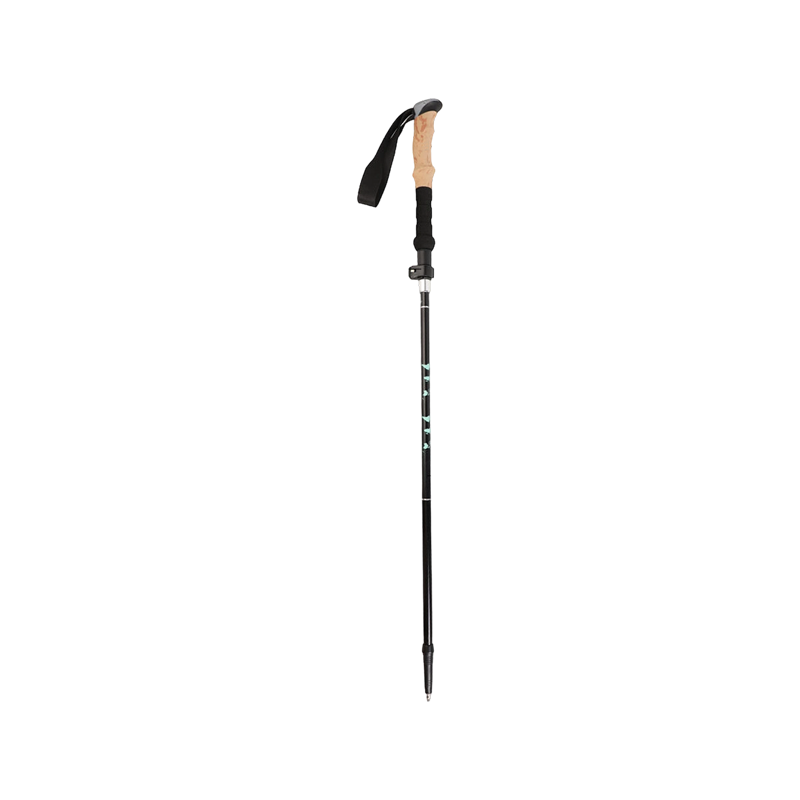
Built with an aerospace-grade aluminum alloy shaft, a professional 3LS external lock mechanism, an EVA foam handle, an adjustable wrist strap, and a three-section telescopic structure, this trekking pole system is positioned for hikers, mountaineers, campers, outdoor retailers, distributors, and private-label buyers who value field reliability over superficial specifications.
The product belongs to the trekking poles category and is identified by the model code WFDS262003.
Its design reflects a clear outdoor logic: the pole must lock firmly, resist slipping under pressure, feel secure in wet or sweaty hands, pack down efficiently, and remain easy to adjust when the user is tired, cold, or wearing gloves.
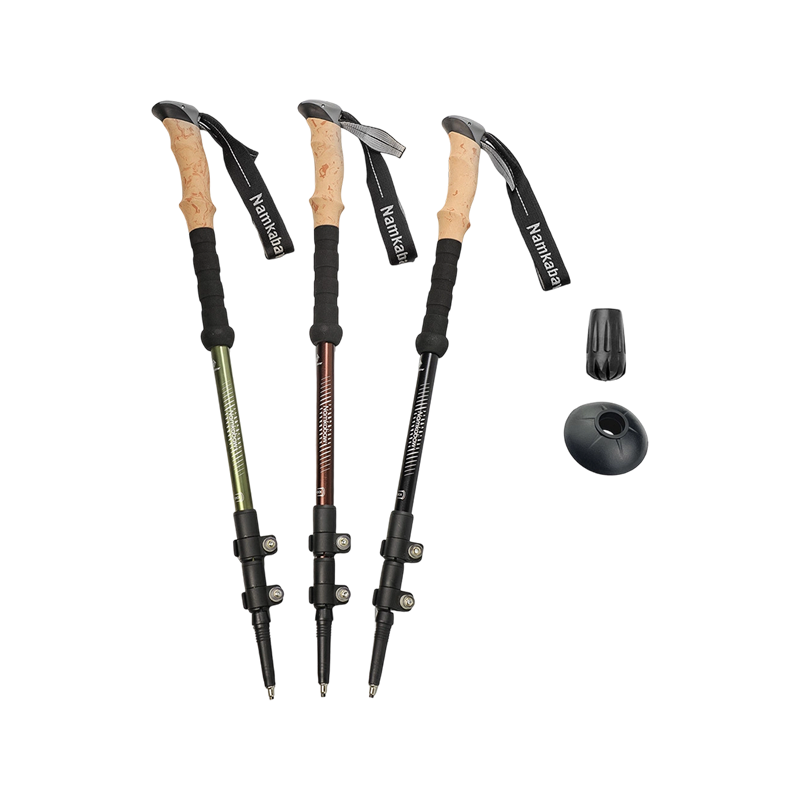
Retractable external locking hiking poles, trekking poles, aluminum alloy hiking sticks
Why Trekking Pole Reliability Matters in Mountain and Camping Use
A trekking pole is repeatedly exposed to compression, impact, vibration, moisture, grit, temperature changes, and user-generated torque.
During a long climb, the pole helps transfer part of the load from the knees and ankles to the upper body.
During descent, it provides braking support and improves balance on loose gravel, muddy tracks, roots, snow patches, and uneven stone steps.
At camp, poles can also assist with shelter setup, stream crossing, pack support, or moving safely around rough ground after dark.
For these reasons, the most important quality of a trekking pole is not visual styling but repeatable mechanical trust.
If a pole collapses unexpectedly, slips inside its adjustment section, or twists loose during a descent, the user may lose balance at the exact moment support is most needed.
That is why the external locking system, shaft material, grip ergonomics, and adjustment structure must be treated as an integrated engineering system rather than separate marketing features.
The retractable external locking hiking poles emphasize that integration.
The 3LS external lock mechanism is designed to create a strong and slip-resistant clamp on the telescopic shaft sections.
The aluminum alloy shaft provides a balance of strength, resilience, and weight control.
The EVA foam handle improves comfort during long use and remains practical in humid or sweaty conditions.
The adjustable wrist strap supports different hand shapes and helps users maintain control without overgripping.
The three-section telescopic body improves packability, making the poles suitable for hiking backpacks, travel bags, retail shipping, and multi-scenario outdoor use.
Core Product Overview
This trekking pole system is engineered around a retractable three-section structure with external locking adjustment.
The three-section layout allows the product to collapse to a convenient carrying length while still extending to a practical working length for different user heights and terrain requirements.
For uphill routes, users may shorten the poles for a more natural elbow angle and better uphill cadence.
For downhill routes, users may lengthen the poles to gain additional reach and stability.
On side slopes, one pole can be adjusted longer and the other shorter to maintain balance and reduce awkward posture.
For outdoor users who move through varied ground within a single day, fast and secure adjustability is a functional advantage.
The external locking system is central to that advantage.
Compared with traditional internal twist-lock designs, an external lock is easier to inspect visually, easier to operate with gloves, and less dependent on internal friction components that may become difficult to manage after exposure to dust, moisture, or repeated use.
A well-designed external lock also allows more direct user feedback: the hiker can see the lever, feel the clamp action, and quickly confirm whether the section is secured.
The shaft uses aerospace-grade aluminum alloy, a material choice valued in outdoor equipment because it offers toughness and resistance to sudden brittle failure.
While ultralight carbon fiber poles may appeal to users focused only on minimal weight, aluminum alloy often provides a better balance for mainstream hiking, mountaineering, camping, and rental or retail markets because it can tolerate knocks, bending forces, and rough handling more predictably.
The EVA foam grip is another practical choice.
EVA foam is lightweight, comfortable, and sweat-absorbent, and it gives a warm feel compared with harder plastic or rubber in cooler conditions.
It helps reduce hand fatigue during long ascents and provides better control when palms are damp.
The adjustable wrist strap complements the grip by allowing users to distribute pressure and maintain pole control without squeezing excessively.
Key Feature Analysis
3LS Professional External Lock Mechanism
The 3LS professional external lock is designed to provide a firm, slip-resistant hold on the telescoping pole sections.
In the field, locking confidence is one of the main differences between a useful trekking pole and a frustrating one.
Cheap locks may appear similar at first glance but can loosen after repeated compression, temperature change, vibration, or exposure to fine dust.
A dependable external lock must combine appropriate lever geometry, stable clamping pressure, durable lock material, accurate shaft tolerances, and controlled assembly.
The advantage of the external lock design is that the user can operate it quickly and verify its status immediately.
When adjusting pole length on a cold ridge, during rainfall, or while wearing gloves, a visible lever is easier to manage than a hidden internal twist mechanism.
The external lock also supports faster maintenance.
If dirt accumulates, the mechanism can be wiped and inspected without disassembling the entire pole.
For commercial buyers, this improves customer satisfaction because fewer users will struggle with adjustment, and fewer returns are caused by misunderstood locking methods.
Aerospace-Grade Aluminum Alloy Shaft
The shaft is the structural backbone of a trekking pole.
It must withstand vertical compression, angled loading, side impacts, and repeated vibration while remaining light enough for all-day use.
The use of aerospace-grade aluminum alloy signals an emphasis on balanced performance rather than extreme weight reduction at the cost of durability.
Aluminum alloy performs well in rough mountain environments because it can absorb impacts and often bends before catastrophic failure.
This behavior is valuable for hikers who may jam a pole between rocks, strike hard ground, or load the pole unexpectedly while stumbling.
For outdoor retailers and distributors, aluminum alloy is also suitable for broad consumer groups because it offers dependable everyday performance and a strong value proposition.
Compared with low-grade aluminum or thin-walled budget shafts, a properly specified aluminum alloy shaft provides better stiffness, better fatigue resistance, and better long-term reliability.
The material supports users who care about stability but still need a pole light enough to carry over long distances.
EVA Foam Handle
The grip is the user’s main contact point with the pole, so comfort and control are essential.
The EVA foam handle is sweat-absorbent and non-slip, making it practical for warm-weather hiking, extended climbs, and high-effort approaches.
Unlike hard plastic grips, EVA foam reduces pressure points and feels more forgiving during repeated hand movement.
Unlike some dense rubber grips, it is lighter and can feel more comfortable over long distances.
For many users, a foam handle also performs well across seasons because it does not feel excessively cold when temperatures drop.
Good grip design reduces overgripping.
When a hiker does not need to squeeze tightly to maintain control, forearm fatigue is reduced and walking rhythm becomes more natural.
This is especially valuable on long routes where small comfort advantages accumulate hour after hour.
Adjustable Wrist Strap
The adjustable wrist strap is not merely a retention loop.
When used correctly, it helps transfer load from the hand to the wrist and supports efficient pole planting.
Different users have different hand sizes, glove thicknesses, and preferred grip styles, so adjustability is essential.
A well-positioned strap allows the user to relax the fingers slightly during the push phase, reducing hand fatigue and improving endurance.
For hiking schools, guided groups, rental programs, and retail customers, strap adjustability makes the product more adaptable to a wide range of users.
It also improves safety because a pole that remains controlled at the wrist is less likely to be dropped during a stream crossing, steep descent, or rocky step.
Three-Section Telescopic Design
The three-section telescopic design improves portability and storage efficiency.
A compact collapsed length makes the poles easier to attach to a backpack, place inside luggage, store in a vehicle, or ship in retail packaging.
Compared with fixed-length poles, telescopic poles offer far greater versatility.
Compared with some folding designs, a three-section telescopic system can offer a strong and familiar adjustment structure, especially when paired with reliable external locks.
For outdoor distributors and brand owners, the three-section format is easy for customers to understand and widely accepted in global markets.
It supports multiple user heights and multiple terrains without requiring many size variations in inventory.
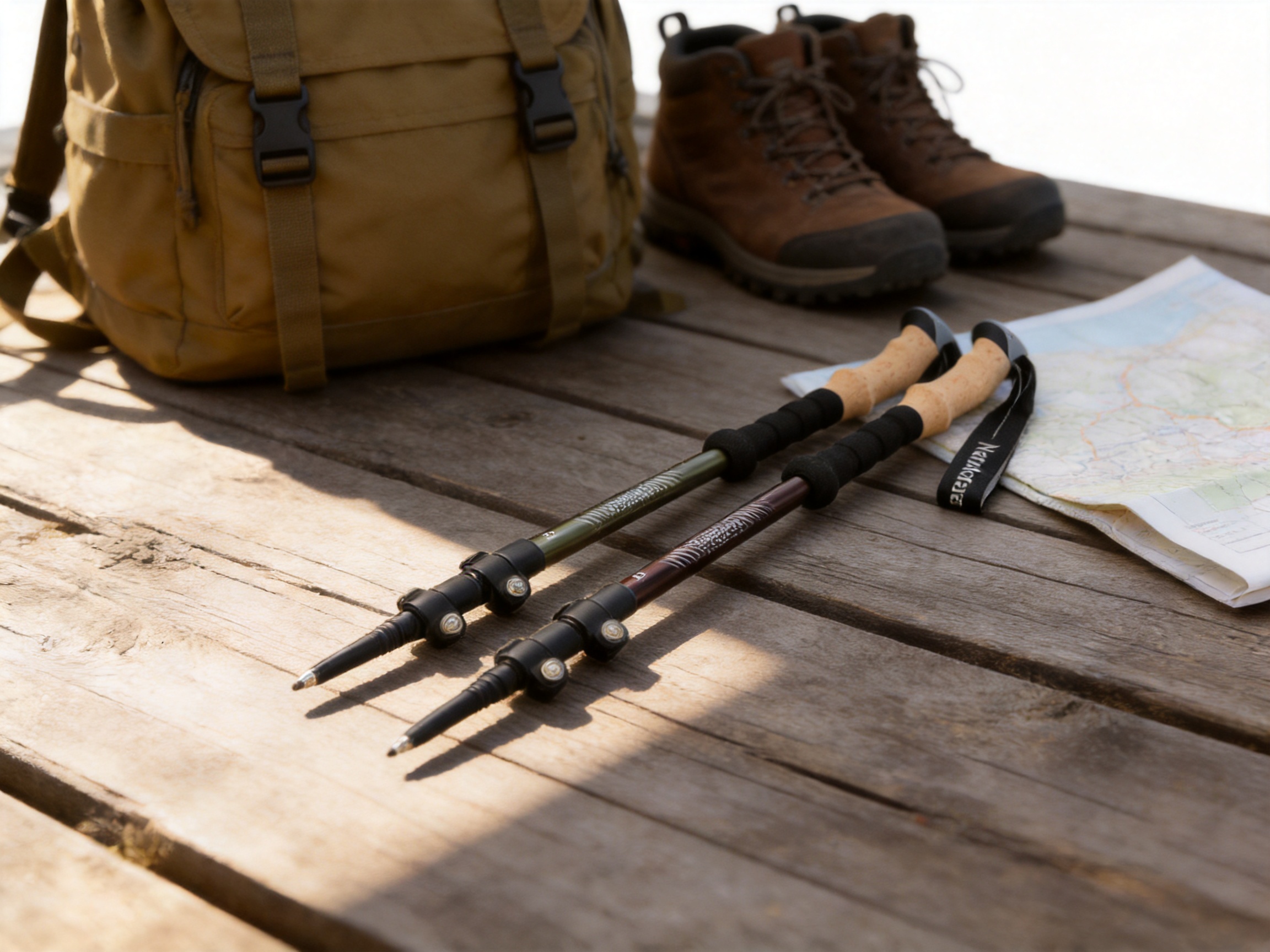
Competitive Advantages Over Common Trekking Poles
The trekking pole market contains a wide range of products, from entry-level casual walking sticks to expensive ultralight technical models.
The retractable external locking aluminum alloy hiking poles are designed to occupy a strong practical position between low-cost unreliable poles and highly specialized premium poles that may sacrifice durability or affordability.
The first advantage is locking confidence.
Many inexpensive trekking poles use basic twist locks that may be difficult to tighten consistently, especially after dust or moisture enters the internal mechanism.
Users may not know whether the lock is fully engaged until the pole slips under load.
The 3LS external lock provides a more visible and intuitive method of adjustment.
This makes the product more suitable for users who value straightforward field operation.
The second advantage is material balance.
Carbon fiber poles can be light, but they may be vulnerable to sharp impacts, crushing forces, and sudden fracture if damaged.
Low-grade aluminum poles may be inexpensive but can feel unstable, dent easily, or lose straightness after rough use.
Aerospace-grade aluminum alloy provides a better balance of strength, weight, resilience, and cost efficiency for mainstream outdoor markets.
The third advantage is comfort for long-duration use.
The EVA foam handle helps manage sweat and reduces hand fatigue.
This matters for hikers who walk for several hours or multiple days.
A pole that feels acceptable in a showroom may become uncomfortable after thousands of pole plants on a hot trail.
Grip material, shape, strap compatibility, and vibration feel all influence long-term satisfaction.
The fourth advantage is practical packability.
The three-section telescopic body collapses efficiently, making it useful for day hiking, backpacking, camping, travel, and retail display.
The fifth advantage is supply-chain suitability.
Because the design uses proven materials and a mature mechanical structure, it is suitable for scalable manufacturing, stable quality control, customization, and repeat orders.
For importers and brand owners, this can matter as much as the product itself.
A trekking pole must not only perform well in a sample review; it must remain consistent across batches.
| Evaluation Area | Retractable External Locking Aluminum Poles | Typical Low-Cost Twist-Lock Poles | Ultralight Carbon-Focused Poles |
|---|---|---|---|
| Locking Operation | Visible 3LS external lock, fast field adjustment, easy inspection | Hidden internal mechanism, may be harder to confirm or maintain | Often secure, but may vary by design and price segment |
| Material Balance | Aerospace-grade aluminum alloy for strength, resilience, and value | Basic aluminum or mixed materials with inconsistent durability | Very light but potentially less tolerant of sharp impact |
| User Comfort | EVA foam handle with sweat-absorbent, non-slip feel | Often hard plastic or basic rubber grips | Comfort depends on model, often premium but costlier |
| Portability | Three-section telescopic design for compact carrying | Usually compact, but lock quality may limit confidence | Often compact, sometimes folding or telescopic |
| Market Suitability | Strong option for hiking, camping, retail, and private-label programs | Suitable mainly for occasional light use | Suitable for weight-focused users with higher budgets |
| Long-Term Value | Designed for stable performance, practical maintenance, and repeatable production | Lower purchase cost but greater risk of returns and dissatisfaction | High performance but higher replacement cost if damaged |
Design Philosophy: Built for Weather, Terrain, and Time
Outdoor equipment is often described through specifications, but real product value appears only when those specifications survive weather, terrain, and repeated use.
The philosophy behind this trekking pole design is that every feature should solve an actual field problem.
The external lock solves the problem of uncertain adjustment.
The aluminum alloy shaft solves the problem of maintaining strength while controlling weight and cost.
The EVA foam handle solves the problem of sweat, grip comfort, and long-term hand fatigue.
The adjustable wrist strap solves the problem of adapting to different hands, gloves, and walking styles.
The three-section design solves the problem of carrying and storing the pole without sacrificing practical adjustability.
This approach avoids the common mistake of designing only for catalog appeal.
A trekking pole that looks attractive in photographs but slips on descents, feels uncomfortable after two hours, or becomes difficult to adjust in cold weather does not meet real outdoor needs.
The product must be evaluated through realistic use scenarios, including sustained uphill walking, long descents, wet paths, rocky ground, packed trails, and camp tasks.
The strongest outdoor products are not those with the most dramatic claims but those that reduce uncertainty.
For users, reduced uncertainty means safer movement and more confidence.
For distributors, reduced uncertainty means fewer complaints, more repeat purchases, and better long-term brand reputation.
Manufacturing Strengths and Process Control
CragHaven Outdoor operates as an outdoor brand and cross-border manufacturing partner based in Hangzhou, China, focusing on mountaineering, hiking, and camping scenarios.
The company’s strength lies in connecting real outdoor product understanding with China’s mature and efficient manufacturing system.
This is important because trekking poles require both design judgment and manufacturing discipline.
A product can fail if the design is weak, but it can also fail if the design is good and manufacturing control is inconsistent.
Advanced manufacturing for trekking poles begins with material selection.
The aluminum alloy shaft material must meet requirements for strength, wall consistency, surface quality, and processing stability.
Incoming material inspection helps verify that raw tubes or alloy stock conform to expected specifications before production begins.
Dimensional checks reduce the risk of loose telescopic fit, excessive friction, or inconsistent lock performance.
The shaft sections must be formed, cut, and finished with controlled tolerances.
Telescopic poles depend on the relationship between outer and inner tube diameters.
If the fit is too loose, the pole may rattle or require excessive clamp pressure.
If the fit is too tight, adjustment becomes difficult and surface wear increases.
Maintaining proper tolerance across three sections is a key manufacturing capability.
Surface treatment is also important.
Outdoor poles are exposed to moisture, mud, sweat, and abrasion.
Appropriate finishing can improve corrosion resistance, appearance retention, and tactile quality.
Clean surface processing also improves the perceived value of the product in retail environments.
The external lock components require separate process control.
The lever, clamp structure, pivot point, screw adjustment, and contact surfaces all influence locking strength.
Assembly workers must set the lock so that it provides sufficient clamping force without making the lever excessively hard to close.
A poorly adjusted lock can create customer dissatisfaction even if the component itself is well made.
Therefore, assembly procedures and inspection standards are essential.
Grip installation and strap assembly also require attention.
The EVA foam handle should be aligned, secure, and cleanly finished.
The strap should move and adjust smoothly while remaining firmly attached.
Small details such as adhesive consistency, strap stitching, plug fit, and handle finish can influence user perception and long-term durability.
Quality control should include functional length adjustment, lock-hold testing, visual inspection, grip security checks, strap adjustment checks, and packaging inspection.
For export-oriented manufacturing, batch consistency is particularly important.
Retailers and importers need assurance that the product received in bulk matches the approved sample.
CragHaven Outdoor’s role as a manufacturing partner includes reducing this uncertainty through sampling, testing, optimization, and professional communication for Western-market requirements.
From Sampling to Scalable Production
Reliable outdoor gear usually begins with careful sampling rather than rushed mass production.
In trekking pole development, sampling verifies whether the shaft sections slide smoothly, whether the lock holds under realistic load, whether the grip feels comfortable, and whether the collapsed size meets market expectations.
Sampling also reveals small problems that may not appear in drawings, such as lever stiffness, edge finishing, strap friction, tube sound, or surface marks after repeated adjustment.
After sample review, optimization can refine the product before larger production begins.
This may involve adjusting tube tolerance, changing lock tension settings, improving grip attachment, modifying strap material, or enhancing packaging protection.
A mature manufacturing partner understands that these steps are not delays; they are risk-control measures.
Skipping sampling and testing may reduce short-term lead time but often increases long-term cost through returns, complaints, rejected shipments, or brand damage.
Once the approved standard is defined, scalable production requires clear documentation.
Specifications for material, dimensions, surface finish, lock performance, handle attachment, strap structure, accessories, labeling, packaging, and inspection criteria should be controlled.
Production workers need repeatable instructions, and quality inspectors need measurable standards.
This is how a trekking pole moves from a promising sample to a stable commercial product.
CragHaven Outdoor’s manufacturing approach emphasizes durable material choices, practical product design, repeated sampling, testing, and optimization.
The company does not treat outdoor products as generic factory items.
It participates in design and manufacturing decisions, which helps ensure that production choices support real usage rather than only cost reduction.
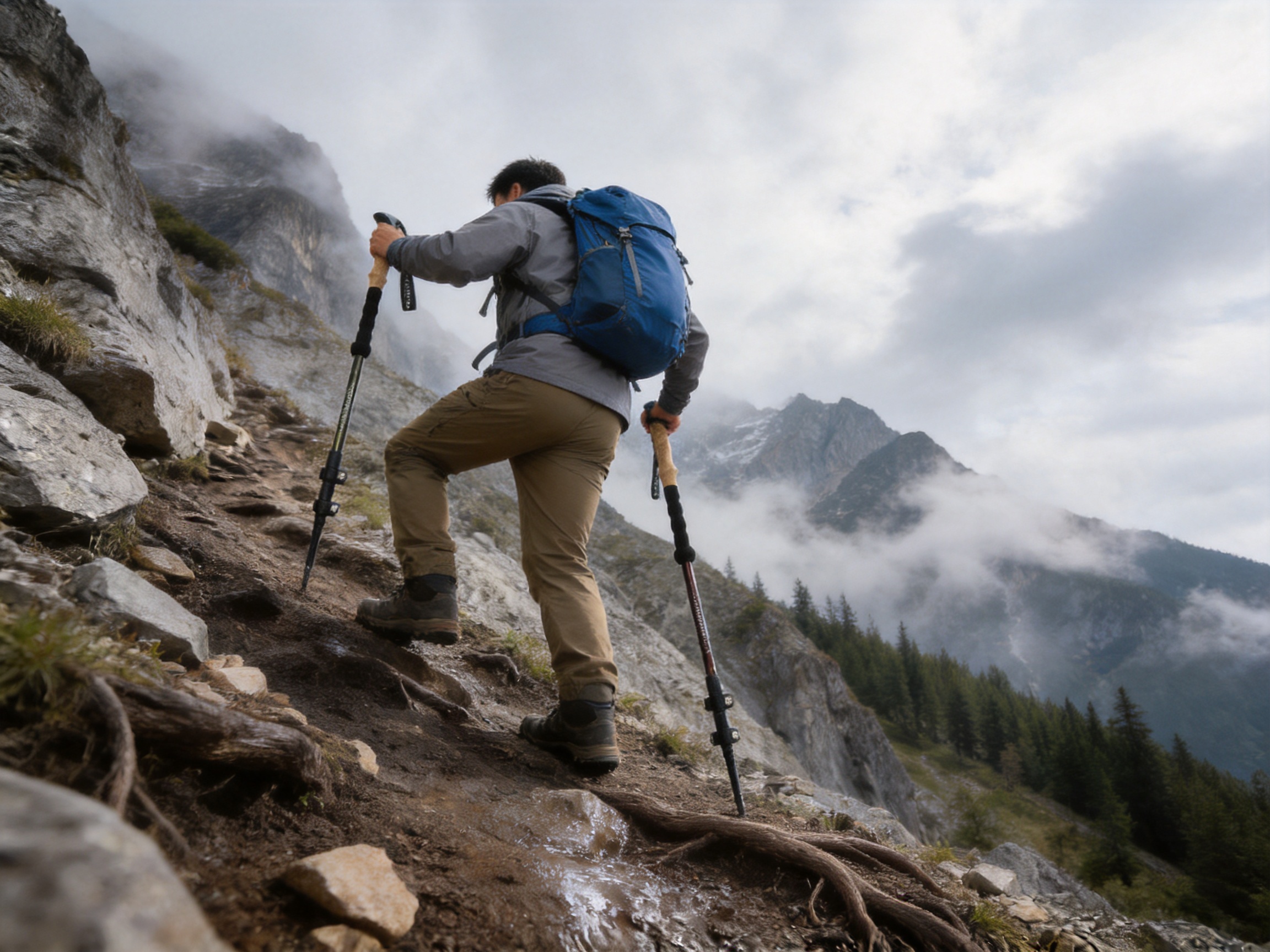
Performance in Real Outdoor Scenarios
Mountain Ascents
During climbs, trekking poles help users establish rhythm and distribute effort.
The three-section telescopic design allows hikers to shorten the pole for steep ascents, improving arm position and reducing shoulder strain.
The EVA handle supports a secure grip when exertion increases and palms become sweaty.
The external lock makes adjustment fast before the climb begins or during route changes.
Compared with poles that require twisting and repeated tightening, this system saves time and reduces frustration.
Technical Descents
Descending places high stress on trekking poles because users often load them heavily to protect knees and maintain balance.
A slip-resistant external lock is especially valuable in this situation.
If the pole shortens unexpectedly during a descent, the user can stumble forward.
The 3LS external lock helps reduce this risk by providing firm clamping performance and easy visual confirmation.
The aluminum alloy shaft contributes impact tolerance when the pole tip strikes rock or compacted soil.
Wet Trails and Muddy Conditions
Wet environments test both grip and lock usability.
Sweaty hands, rain, mud, and cold fingers can make some pole systems difficult to control.
The EVA foam handle offers a non-slip feel and helps absorb moisture from the hand.
The external lever is easier to locate and operate than an internal twist system when gloves or wet hands are involved.
After use, the visible lock area can be inspected and cleaned more easily, supporting long-term maintenance.
Long-Distance Hiking
On multi-hour or multi-day hikes, comfort becomes a performance feature.
Small irritation from hard grips or poorly adjusted straps can become significant fatigue over time.
The foam handle and adjustable strap help accommodate different users and reduce repetitive strain.
The aluminum alloy construction provides dependable support without moving into an excessively fragile ultralight category.
For long-distance hikers who prioritize practical reliability, this balance is meaningful.
Camping and Travel
When trekking poles are used for camping and travel, compact storage is important.
The three-section telescopic body packs efficiently with camping gear and can be carried on or attached to a backpack.
Campers may also use poles around campsites, for tarps, or for walking on uneven ground after setting down heavy packs.
A strong lock and durable shaft allow the poles to support these secondary uses with confidence.
Buyer Benefits for Retailers, Importers, and Private-Label Programs
For commercial buyers, the value of a trekking pole is measured not only by user experience but also by sourcing stability, customization potential, quality consistency, and market positioning.
This product offers a strong combination of practical features that are easy to explain to customers.
The 3LS external lock can be marketed as a secure and field-friendly adjustment system.
The aerospace-grade aluminum alloy shaft supports claims of durability and balanced weight.
The EVA foam handle gives a clear comfort advantage.
The adjustable wrist strap and telescopic structure increase user adaptability.
These features make the product suitable for outdoor specialty retailers, e-commerce brands, camping gear sellers, hiking equipment distributors, promotional outdoor programs, and private-label collections.
Another benefit is broad user appeal.
Some trekking poles are too specialized for mainstream consumers, while others are too basic for serious outdoor users.
This model sits in a practical middle ground.
It can serve beginner hikers who want dependable support, experienced campers who need sturdy poles, and regular trail users who want better adjustment than low-cost twist-lock products.
Because the design is based on proven structures and materials, it is also suitable for consistent production and repeat orders.
For private-label buyers, the product may support customization in areas such as color, markings, packaging, instruction materials, and accessory configuration, depending on project requirements and production planning.
Professional communication is another important strength.
CragHaven Outdoor understands Western-market expectations, including clear product positioning, reliable documentation, consistent sample approval, and long-term partnership orientation.
This reduces friction in cross-border sourcing and helps buyers avoid the common problem of selecting factories that can produce a product but cannot support the full commercial process.
Quality Assurance Considerations
Quality assurance for trekking poles should address both safety-related performance and user-experience details.
Locking strength is one of the most important checks.
Each pole should be able to hold its adjusted length under normal outdoor loading without slipping.
Testing may include static compression, repeated adjustment cycling, and inspection of lock tension.
Shaft straightness and dimensional accuracy should also be checked.
A pole that is slightly out of tolerance may still assemble but feel rough, unstable, or noisy.
Surface inspection helps ensure that visible marks, scratches, dents, or coating defects are controlled before packaging.
Grip and strap inspections confirm that the user contact points are secure and comfortable.
Packaging inspection protects the product during international transportation.
Telescopic poles include multiple sections and components, so proper packaging prevents surface damage, deformation, and missing accessories.
For bulk export, carton strength, labeling accuracy, and item consistency are important operational details.
CragHaven Outdoor’s emphasis on sampling, testing, and optimization helps support this quality assurance framework.
The goal is not simply to pass inspection once but to build repeatable reliability into the product and manufacturing process.
Maintenance and User Guidance
Proper maintenance extends the service life of trekking poles and improves user satisfaction.
After hiking in rain, mud, sand, or salt-influenced environments, users should wipe the shaft sections and lock areas before storage.
The poles should be dried before being packed away for long periods.
Users should avoid forcing the telescopic sections beyond marked extension limits, because overextension can reduce stability and increase stress on the locking system.
Before each hike, the external locks should be checked for secure closure and appropriate tension.
If a lever closes too easily, it may require adjustment according to the product instructions.
If it is too difficult to close, excessive tension may place unnecessary stress on the mechanism.
The EVA foam handle should be kept clean and allowed to dry naturally after heavy sweat exposure.
The wrist strap should be adjusted so the user can maintain control without restricting circulation or movement.
Educating customers on these simple practices can reduce misuse-related complaints and improve long-term product reputation.
For retailers, including clear care instructions is a low-cost way to improve after-sales satisfaction.
Sustainability Through Durability
Sustainability in outdoor gear is often discussed through materials, but durability is also a major sustainability factor.
A product that lasts longer, performs consistently, and avoids premature replacement reduces waste and improves lifetime value.
The use of aluminum alloy, secure external locking, and practical user-contact materials supports long-term use.
Durable products also support a more responsible commercial model.
Retailers and brands benefit from fewer returns and better customer trust, while users benefit from equipment that remains dependable over time.
CragHaven Outdoor’s philosophy emphasizes long-term value rather than short-term trends.
This is especially relevant in outdoor categories, where equipment is tested by real terrain and weather rather than controlled indoor conditions.
By focusing on materials, testing, and stable manufacturing, the company supports a durability-centered approach to product development.
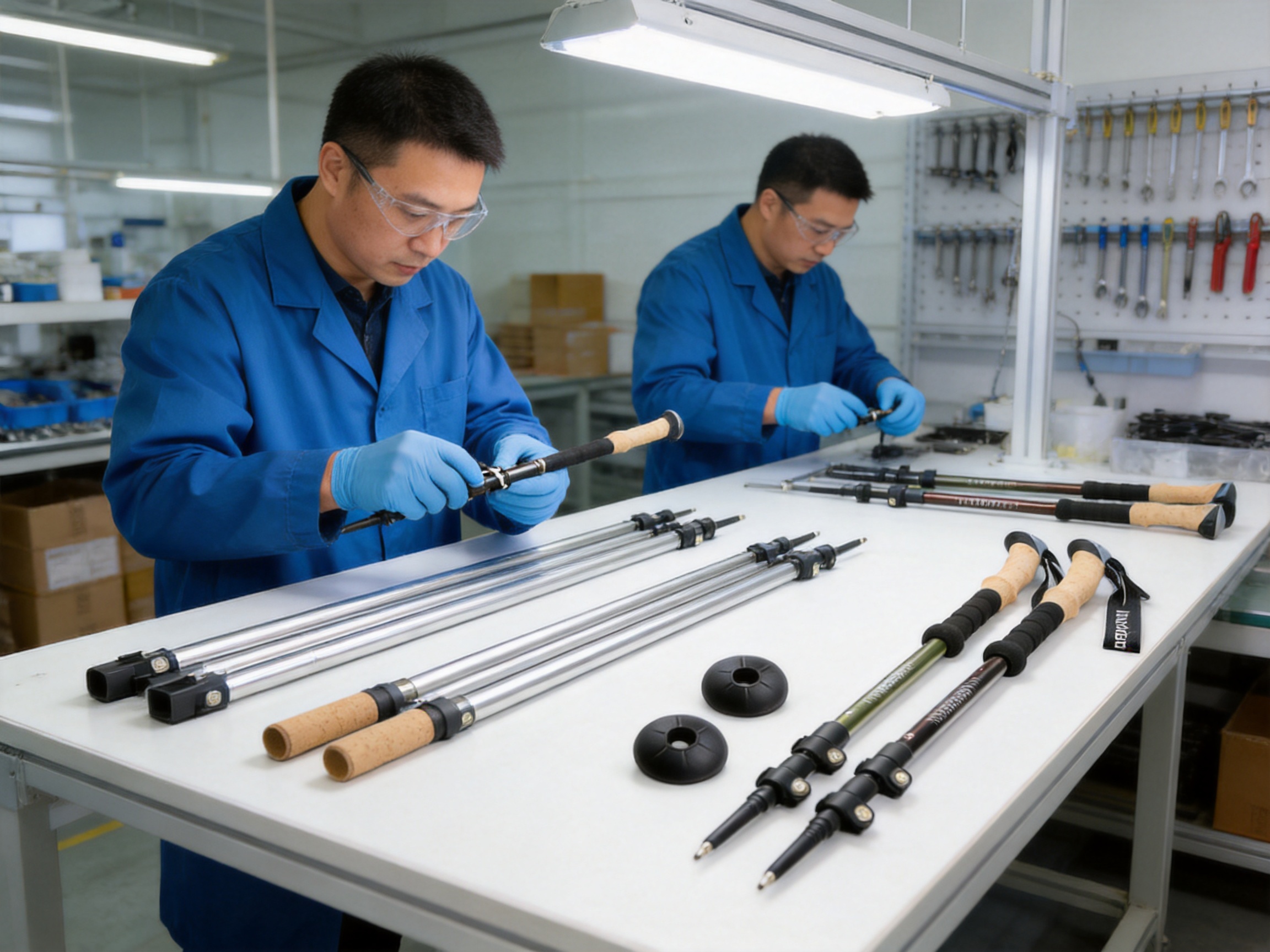
Company Capability and Partnership Value
CragHaven Outdoor is based in Hangzhou, China, and serves as an outdoor brand and cross-border manufacturing partner for global markets.
The company focuses on mountaineering, hiking, and camping scenarios, which gives it a practical understanding of how products are used outside controlled showroom environments.
This scenario-based knowledge is important for trekking poles because the product must satisfy both mechanical and ergonomic requirements.
The company’s name reflects balance and stability in nature, and that design philosophy is visible in this trekking pole’s emphasis on secure locking, durable shaft material, comfortable grip design, and portable structure.
CragHaven Outdoor aims to reduce uncertainty in the supply chain.
It does this by participating in both design and manufacturing decisions, rather than acting only as a factory sourcing contact.
This creates value for buyers who need consistent outdoor products but may not have the time or technical resources to supervise every manufacturing detail themselves.
The company prioritizes long-term, stable, and sustainable partnerships.
For importers and brand owners, this partnership orientation is important because outdoor product programs often require repeat production, seasonal updates, packaging revisions, and continuous quality improvement.
Professional communication with Western-market awareness further improves cooperation.
Buyers can discuss positioning, quality expectations, sample feedback, and manufacturing constraints in a clearer and more commercially useful way.
The result is a product development process that respects both outdoor functionality and market requirements.
Why This Trekking Pole Is a Strong Market Choice
This retractable external locking trekking pole is strong because it focuses on the features that genuinely matter.
It does not depend on exaggerated claims or unnecessary complexity.
Instead, it combines a professional external lock, aluminum alloy structure, comfortable foam handle, adjustable strap, and telescopic packability into a practical hiking and camping tool.
For end users, the main benefits are stability, confidence, comfort, and convenience.
For commercial buyers, the main benefits are market clarity, scalable production, broad user appeal, and reduced sourcing uncertainty.
Against low-cost competitors, the product offers better locking confidence, stronger material positioning, and improved comfort.
Against expensive ultralight competitors, it offers a more durable and value-oriented solution for mainstream mountain, hiking, and camping markets.
Against generic poles with similar appearance, its advantage lies in the manufacturing approach behind it: material selection, tolerance control, sample optimization, inspection, and a company philosophy based on real outdoor use.
In an industry where many products look similar online, these deeper advantages matter.
A trekking pole must prove itself not only in product photos but also on wet paths, loose descents, long climbs, and repeated use across seasons.
This product is built for that standard.
Frequently Asked Questions
What type of user is this trekking pole designed for?
It is designed for hikers, campers, mountaineering users, outdoor travelers, and general trail users who need stable support, easy adjustment, and durable construction.
It is also suitable for retailers, distributors, and private-label buyers looking for a practical trekking pole with broad market appeal.
What is the main advantage of the 3LS external lock?
The 3LS external lock provides a strong, slip-resistant locking method that is easy to operate and inspect in the field.
Compared with many internal twist-lock systems, it is more visible, more intuitive, and easier to adjust with gloves or wet hands.
Why use aerospace-grade aluminum alloy instead of carbon fiber?
Carbon fiber can be very light, but aluminum alloy offers a strong balance of durability, resilience, impact tolerance, and cost efficiency.
For mainstream hiking, camping, and mountain use, aluminum alloy is often a dependable choice because it tolerates rough handling well.
Is the EVA foam handle suitable for long hikes?
Yes.
The EVA foam handle is designed to be sweat-absorbent, non-slip, and comfortable over extended use.
It helps reduce hand fatigue and provides a more pleasant grip than hard plastic during long walking sessions.
What is the purpose of the adjustable wrist strap?
The wrist strap helps users maintain pole control and distribute pressure more efficiently.
It can be adjusted for different hand sizes, glove thicknesses, and personal preferences, improving comfort and reducing the need to grip too tightly.
Why is the three-section telescopic design useful?
The three-section structure allows the pole to collapse to a compact size for storage and transport while still extending for practical hiking use.
It also allows users to adjust length for uphill, downhill, and uneven terrain.
How does this product compare with cheaper trekking poles?
Cheaper poles may look similar but often use less reliable locks, lower-grade materials, less comfortable grips, or inconsistent manufacturing tolerances.
This model focuses on secure external locking, aluminum alloy strength, EVA comfort, and controlled production quality.
Premium ultralight poles may save weight, but they can be more expensive and sometimes less tolerant of sharp impacts.
This aluminum alloy model offers a practical balance of strength, comfort, durability, and value for a wide range of users.
What manufacturing strengths support product consistency?
Consistency is supported through material selection, dimensional control, lock assembly standards, grip and strap inspection, sample testing, optimization, and batch quality checks.
CragHaven Outdoor combines outdoor product understanding with manufacturing process management to support repeatable quality.
Can this trekking pole be considered for private-label or retail programs?
Yes.
Its feature set is easy to communicate to customers, and its practical design suits broad outdoor markets.
Depending on project requirements, buyers may discuss customization options such as color, branding, packaging, and accessory configuration.
Conclusion
The retractable external locking aluminum alloy trekking pole is a practical, field-oriented product built around the real demands of hiking, mountain travel, and camping.
Its 3LS professional external lock supports secure and intuitive adjustment.
Its aerospace-grade aluminum alloy shaft balances strength, weight, and durability.
Its EVA foam handle improves comfort and control during long use.
Its adjustable wrist strap accommodates different users and helps reduce hand fatigue.
Its three-section telescopic structure makes the pole convenient to pack, carry, store, and sell.
The product’s advantages are not limited to individual components.
They are strengthened by a manufacturing philosophy focused on real-world use, careful material selection, sampling, testing, optimization, and scalable production consistency.
For outdoor users, this means greater confidence on the trail.
For retailers, importers, and private-label buyers, it means a product with clear market value and a manufacturing partner capable of supporting long-term cooperation.
In mountain and camping gear, dependable equipment reduces uncertainty.
This trekking pole is designed to do exactly that.
References
1. Mountaineering: The Freedom of the Hills. The Mountaineers Books.
2. Outdoor Gear Design and Materials: Principles for Durability and Field Performance. Technical Outdoor Equipment Review Series.
3. Human Factors in Hiking Equipment: Grip Comfort, Load Transfer, and Walking Efficiency. Applied Ergonomics Outdoor Use Collection.
4. Aluminum Alloys in Lightweight Structural Applications. Materials Engineering Handbook.
5. Trekking Pole Use in Hiking and Load Carriage: Biomechanical and Practical Considerations. Journal of Outdoor Recreation and Movement Studies.
Product: Retractable external locking hiking poles, trekking poles, aluminum alloy hiking sticks


- Phone: +86-15968800379
- E-mail: [email protected]
- Address: Room 1002, Huishang Building, Gongshu District, Hangzhou City, Zhejiang Province.
Copyright © CragHaven Outdoor All Rights Reserved. Outdoor Gear Manufacturers Wholesale Mountaineering Camping Gear Suppliers
