

 English
 Deutsch
 Español
 Français

Portable Adjustable Folding Stools for Outdoor Mobility and Practical Field Comfort
Content
- 1 Why a Compact Outdoor Stool Matters
- 2 Product Overview
- 3 Core Feature Analysis
- 4 Competitive Advantages Over Traditional Outdoor Seating
- 5 Usage Scenarios in Outdoor and Daily Life
- 6 Design Philosophy: Built for Real Conditions
- 7 Manufacturing Strengths Behind the Product
- 8 Why Thickened PP Is a Practical Choice
- 9 Portability as a Product Strategy
- 10 Ergonomic Considerations
- 11 Product Value for Retailers and Distributors
- 12 Advanced Manufacturing and Supply Chain Advantages
- 13 Packaging, Storage, and Logistics Considerations
- 14 Long-Term Value and Sustainability of Use
- 15 Practical Buying Considerations
- 16 Maintenance and Care
- 17 Q&A Section
- 17.1 Q1: What is the main purpose of this portable adjustable folding stool?
- 17.2 Q2: How compact is the stool when folded?
- 17.3 Q3: What material is used?
- 17.4 Q4: Why is height adjustment important?
- 17.5 Q5: How does this stool compare with a traditional camping chair?
- 17.6 Q6: Is it suitable for fishing?
- 17.7 Q7: What makes the product different from low-cost plastic stools?
- 17.8 Q8: Why is manufacturing quality important for this type of product?
- 17.9 Q9: Can this stool be used outside of outdoor recreation?
- 17.10 Q10: What kind of company support is behind the product?
- 18 Conclusion
- 19 References
- 20 Product: Portable outdoor storage folding extendable stool, adjustable hiking stool
In outdoor travel, comfort is often determined by the smallest pieces of equipment. A tent protects the body from wind and rain, a backpack carries essentials, and footwear supports movement across uneven ground. Yet during hiking rests, fishing sessions, campsite cooking, long queues, photography stops, or trail breaks, one simple need appears repeatedly: a stable place to sit. The portable outdoor storage folding extendable stool, product code WFDS263001, is designed to answer that need with a compact, adjustable, and durable structure suitable for mountain-climbing support, camping use, and general outdoor mobility.
This product belongs to the mountaineering accessories category, but its application is broader than a narrow climbing definition. It is useful wherever users must balance portability, comfort, and quick deployment. Unlike traditional camping chairs that require more packing space, or low-cost stools that sacrifice stability and material strength, this adjustable hiking stool focuses on practical field use. Its innovative folding structure allows users to unfold and use it immediately, then fold it down and move on with minimal delay. When folded, it is approximately the size of a water bottle, making it easy to store inside or outside a backpack.
The stool is made from thickened PP material, selected for its balance of strength, lightweight handling, resistance to moisture, and everyday durability. Its height-adjustable design helps users adapt to different terrains, seating preferences, and use scenarios. Whether placed near a campfire, beside a fishing spot, on a trail rest area, or in a crowded waiting environment, it provides a practical alternative to sitting on wet ground, unstable rocks, or bulky chairs.
Beyond the product itself, the value of this stool is also connected to the manufacturing capability behind it. CragHaven Outdoor, based in Hangzhou, China, develops and supports outdoor gear with an emphasis on real usage conditions rather than catalog-only design. The company focuses on mountaineering, hiking, and camping scenarios and aims to create reliable products through material selection, sampling, testing, and optimization. This article explores the product’s features, its advantages compared with competing solutions, its practical field value, and the manufacturing strengths that support consistent quality for global markets.
Portable outdoor storage folding extendable stool, adjustable hiking stool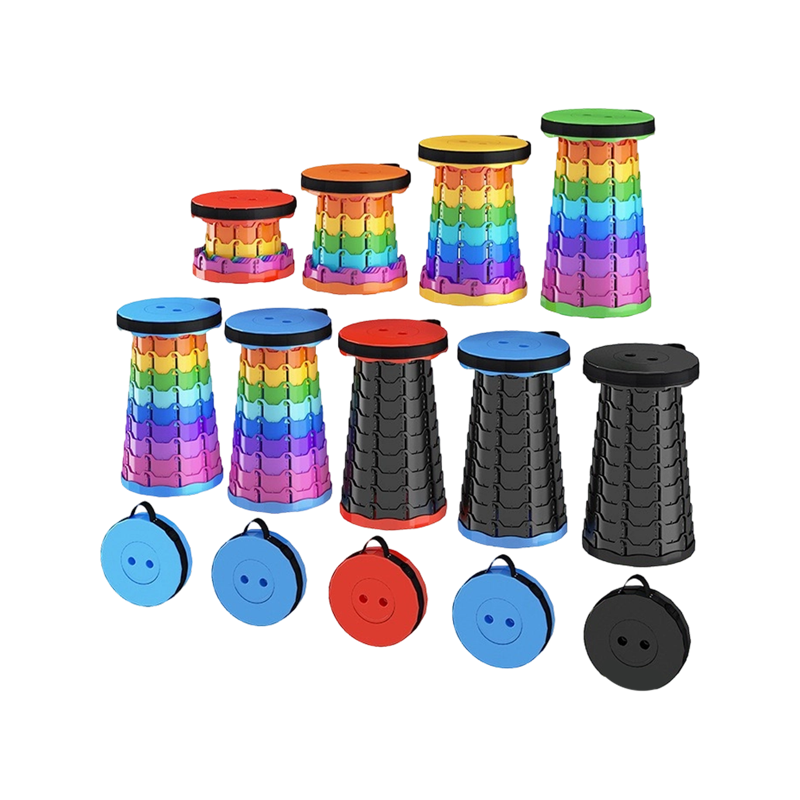
Why a Compact Outdoor Stool Matters
Outdoor users often carry equipment according to priority. Shelter, water, food, navigation, clothing, and safety tools usually come first. Seating is frequently considered optional because traditional chairs can be heavy, awkward, or difficult to attach to a compact pack. However, a lack of seating can reduce comfort, increase fatigue, and affect the overall outdoor experience. A small, foldable stool solves this problem by providing a seated rest without adding the bulk of a full chair.
For hikers, short rest periods are essential. Sitting on the ground can expose the user to cold, dampness, insects, mud, or sharp stones. Sitting on uneven logs or rocks may create poor posture or instability. A portable adjustable stool offers a controlled sitting surface that can be deployed quickly, even during brief stops. This helps users conserve energy and recover more comfortably before continuing along the route.
For campers, seating flexibility is equally important. Campsites are rarely perfectly arranged. People may need a seat near the tent entrance, beside a cooking area, at a water source, or around a small table. A compact stool can move easily from one area to another. It also supports backup seating when guests arrive or when larger chairs are already occupied.
For fishing, outdoor events, queues, photography, roadside breaks, and travel waiting situations, compactness is a major advantage. The folded size of the stool makes it suitable for people who cannot carry a full-sized chair but still need periodic rest. Its water-bottle-like folded form allows it to fit into backpack side pockets, storage compartments, car trunks, or travel kits.
The value of such a stool is therefore not limited to one activity. It is a multi-scenario support tool that increases comfort while preserving mobility. This combination is what makes the product relevant in modern outdoor equipment planning.
Product Overview
The portable outdoor storage folding extendable stool is designed around four key concepts: compact storage, quick use, adjustable height, and dependable material strength. The product is built for users who want simple operation without complicated assembly. It can be unfolded rapidly and folded again when the user is ready to move. The structure is intended to reduce friction between rest and travel, allowing the stool to become part of a smooth outdoor routine.
Its folding and extendable mechanism is one of the main features. Instead of using wide legs, fabric panels, or multi-piece frames, the stool relies on a compact collapsible design. This helps reduce volume and simplifies handling. The user does not need to assemble separate parts or search for poles, clips, or connectors. The stool remains integrated as a single portable item.
The height-adjustable function adds another layer of usability. Outdoor terrain changes constantly. Sometimes the user wants to sit low while cooking or organizing gear. In other situations, a higher seated position may be more comfortable for resting, watching scenery, or waiting in line. Adjustable height allows the product to fit more people and more scenarios than fixed-height stools.
The product uses thickened PP material, which is important for both performance and user confidence. Polypropylene is widely used in outdoor and consumer products because it can offer good impact resistance, moderate flexibility, low weight, and resistance to moisture. Thickened material improves load-bearing potential and structural confidence compared with thin, fragile plastic seating products.
The product description emphasizes high seat load-bearing capacity, minimal backpack space occupation, and immediate use after unfolding. These features place the stool in a category between ultralight accessories and everyday practical seating. It is not trying to replace a luxury camping chair with armrests and a backrest. Instead, it offers a more compact and efficient solution for users who prioritize portability and practical rest.
Core Feature Analysis
Innovative Folding Structure
The folding structure is central to the user experience. A good outdoor stool should not require instructions every time it is used. In real outdoor settings, users may be tired, wearing gloves, carrying other gear, or facing wind and rain. A stool that unfolds easily has a real practical advantage. The immediate-use structure helps reduce setup time and makes the stool more likely to be used frequently rather than left in the backpack.
Many competing portable stools use three-legged metal frames, fabric seats, or collapsible telescoping systems with weak locking points. Some require unfolding several legs and stretching fabric over a frame. Others are compact but unstable because the seat area is too small or the base does not distribute weight well. The WFDS263001 stool is positioned as a practical alternative: simple, integrated, and quick to deploy.
Fast folding also matters when leaving a location. Outdoor users often need to pack quickly because of weather changes, group movement, transportation schedules, or trail timing. A stool that folds down efficiently reduces packing friction. This is especially valuable for campers, hikers, and fishing users who move repeatedly during a day.
Adjustable Height for Different Terrains
Height adjustment is not merely a comfort feature; it is a field adaptation feature. Uneven terrain can make a fixed-height stool uncomfortable. If the ground slopes, the user may need to choose a lower or higher position to improve balance. If the stool is used with a low camp table, lower positioning may be preferred. If used while waiting in a queue or resting during a hike, a higher position may reduce knee strain for some users.
The adjustable design also expands user compatibility. Outdoor groups often include people of different heights, ages, and physical preferences. A fixed low stool may be uncomfortable for taller users, while a fixed high stool may be less stable or harder to use for others. A stool with variable height offers more flexibility and better market acceptance.
Compared with many competitor stools that have only one seating height, this product offers functional versatility. For retailers and distributors, adjustable height can also reduce the need to stock multiple stool sizes. One product can serve multiple customer groups, simplifying product planning and inventory decisions.
Thickened PP Material
Material selection is one of the most important differences between a reliable outdoor accessory and a disposable one. Thickened PP material provides a strong foundation for repeated use. Polypropylene is valued for being relatively lightweight, moisture-resistant, and capable of handling daily wear. For outdoor seating, these characteristics are highly relevant.
Outdoor gear is exposed to humidity, soil, sweat, sunlight, and mechanical stress. Although no material is indestructible, PP is a practical choice for portable stool construction because it can resist many ordinary environmental factors better than untreated wood or low-quality brittle plastics. Thickening the material helps improve perceived strength and structural stability.
Some competing stools use thin plastic panels to reduce cost and weight. This can make the product feel flimsy and reduce user confidence. Others use metal frames, which may provide strength but increase weight, corrosion concerns, and packing complexity. The use of thickened PP gives this stool a balanced position: strong enough for practical seating needs while remaining compact and portable.
Folded Size Similar to a Water Bottle
The folded size is one of the most attractive features for outdoor users. A product that folds down to approximately the size of a water bottle can be carried in ways that larger chairs cannot. It can fit into backpack compartments, side pockets, vehicle storage areas, fishing bags, or campsite gear boxes. This portability changes the stool from a planned item into an everyday companion.
When an outdoor product is too large, users must decide whether it is worth carrying. When it is compact, it becomes easier to bring “just in case.” The water-bottle-like storage size increases the chance that users will actually carry the stool on hikes, camping trips, and travel days. This directly improves real-world usefulness.
Compact storage also benefits retail and logistics. Smaller products are easier to pack, ship, display, and store. For cross-border commerce, reduced volume can support more efficient warehousing and transportation planning. A product that combines user convenience with shipping efficiency has strong commercial advantages.
Competitive Advantages Over Traditional Outdoor Seating
Outdoor seating products can be divided into several common categories: full-sized camping chairs, folding tripod stools, foam sitting pads, inflatable seats, and compact telescoping stools. Each category has benefits, but also limitations. The portable adjustable folding stool offers a balanced solution by combining seating height, compactness, and simple operation.
Full-sized camping chairs provide back support and comfort, but they are often too bulky for hiking or fast travel. They usually require carrying bags and take up significant space. For car camping, they are useful, but for mountain trails or crowded travel settings, they can be inconvenient.
Tripod stools are lighter and smaller than full chairs, but many still use metal frames and fabric seats that may require folding and alignment. Some models have narrow seating surfaces or unstable leg geometry on soft ground. They may also create pressure points during longer sitting periods.
Foam pads are extremely light, but they do not lift the user off the ground. They protect against cold or wet surfaces to some extent, but users still sit at ground level. This may be uncomfortable for people with knee, hip, or mobility concerns. Foam pads also provide no height adjustment.
Inflatable seats can be compact, but they require inflation and are vulnerable to puncture. In rough outdoor environments, this can limit confidence. They may also be less stable on uneven ground.
Compact adjustable stools offer a middle ground. They raise the user off the ground, fold into a small package, and do not require inflation or separate assembly. The WFDS263001 stool strengthens this category through thickened PP material, quick folding, and adjustable height.
| Seating Option | Main Advantage | Main Limitation | How the Adjustable Folding Stool Compares |
|---|---|---|---|
| Full-sized camping chair | High comfort and back support | Bulky and less suitable for hiking | Much more compact and easier to carry for mobile use |
| Tripod folding stool | Lightweight and simple | May be unstable or less compact | Integrated folding structure and adjustable height improve versatility |
| Foam sitting pad | Very light and inexpensive | No elevation from ground | Provides actual seating height and better rest posture |
| Inflatable seat | Soft and packable | Requires inflation and can puncture | No inflation required and better structural dependability |
| Low-cost plastic stool | Affordable | Often bulky or fragile | Thickened PP and folding storage improve outdoor practicality |
This comparison shows why the product can appeal to users who want practical field seating without the burden of large equipment. It is not designed to win by one feature alone. Its strength comes from the combination of compact size, quick deployment, adjustable height, and material reliability.
Usage Scenarios in Outdoor and Daily Life
Hiking and Trail Rest
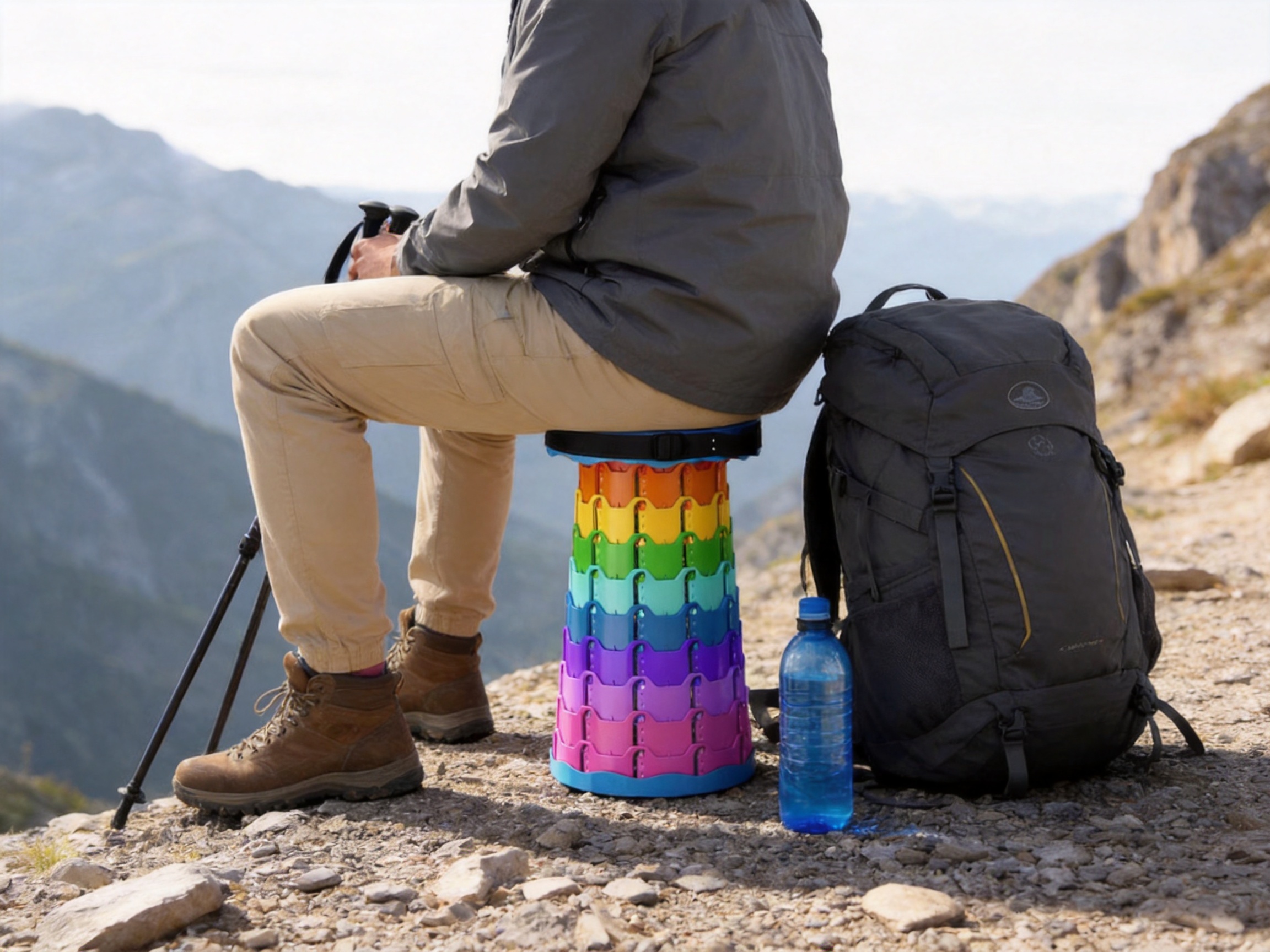
During hiking, rest quality matters. A quick seated break can help reduce fatigue, adjust footwear, check maps, drink water, or eat snacks. However, trail surfaces are often dusty, wet, rocky, or covered with vegetation. Carrying a compact stool provides a cleaner and more controlled sitting option.
The adjustable height function can support different rest styles. A lower setting may help when the user wants stability on uneven ground, while a higher setting may be more comfortable during short breaks. Because the stool folds compactly, hikers can carry it without dedicating large backpack space.
Camping and Campsite Organization
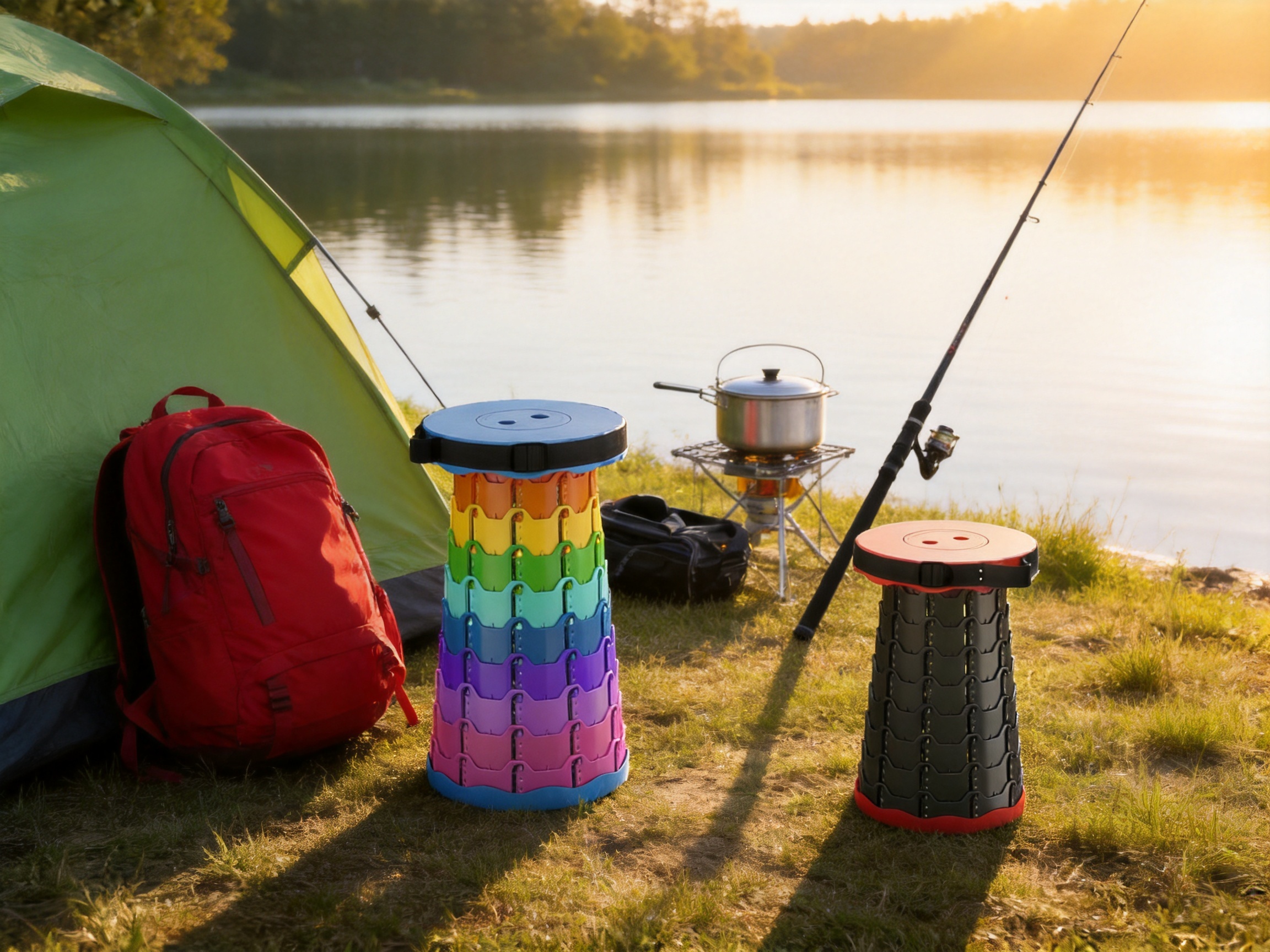
At camp, a small stool can serve many purposes. It can be used for sitting near the tent, cooking area, gear sorting zone, or camp table. It can also act as temporary support while changing shoes, packing bags, or organizing equipment. Its portability allows campers to move it around the campsite as needed.
Large chairs are comfortable but less flexible. A compact stool can complement larger camp furniture by providing backup seating or quick-use support. For minimalist campers, it may be the primary seating solution.
Fishing
Fishing often involves long periods of waiting. A seat must be portable enough to carry to the fishing location and stable enough for repeated sitting. The stool’s quick-folding design makes it suitable for anglers who move along riverbanks, lakesides, or coastal areas. PP material is also practical in damp environments because it does not absorb water like fabric or untreated wood.
Queuing and Travel Waiting
The product description specifically mentions queuing, which is an important modern use case. Travelers, event attendees, delivery workers, photographers, and outdoor spectators may need to wait for long periods. A stool that folds to a compact size can be carried discreetly and used when standing becomes tiring.
In these situations, the stool’s small folded volume is especially valuable. A full camping chair would be inappropriate or inconvenient, while a compact stool provides enough support without becoming a burden.
Photography, Birdwatching, and Field Observation
Photographers and birdwatchers often remain still for extended periods. They may need a low-profile seat that does not dominate their gear load. A compact adjustable stool can provide rest while keeping the user mobile. The ability to adjust height can help align with camera tripods, observation angles, or terrain limitations.
Emergency and Backup Seating
Compact stools are useful beyond recreation. They can be stored in vehicles, emergency kits, work vans, or outdoor service bags. In unexpected delays, roadside stops, or temporary field tasks, the stool provides practical seating without taking much storage space.
Design Philosophy: Built for Real Conditions
A successful outdoor product must be designed around real conditions rather than ideal studio environments. Outdoor users do not operate products on perfectly flat floors under controlled lighting. They use them on soil, gravel, grass, wet ground, and crowded spaces. They use them while tired, cold, or distracted. The design of a portable stool must therefore emphasize simplicity, reliability, and repeatable performance.
CragHaven Outdoor’s development philosophy is based on the idea that products should be designed for weather, terrain, and time. This approach is particularly relevant for a folding stool. Weather affects material exposure. Terrain affects stability and height preference. Time affects durability, user trust, and long-term value.
Designing for weather means considering moisture, temperature variation, and dirt. A stool used outdoors should not be overly delicate or dependent on clean conditions. PP material supports this requirement because it is suitable for daily outdoor contact and easy to wipe clean.
Designing for terrain means recognizing that flat surfaces are not guaranteed. Adjustable height gives users more control. Compactness allows the stool to be positioned and repositioned easily. A quick-folding structure helps users respond to changing ground conditions without complicated adjustments.
Designing for time means avoiding products that feel useful only during the first few uses. Repeated folding, carrying, and seating create mechanical stress. Thickened material and careful structural planning are important for maintaining performance over the product’s life cycle.
This philosophy separates practical outdoor design from purely appearance-driven product development. A stool can look compact in photos but fail if the locking structure is weak, the material is too thin, or the user experience is inconvenient. The WFDS263001 stool is presented as a field-oriented accessory that prioritizes actual use.
Manufacturing Strengths Behind the Product
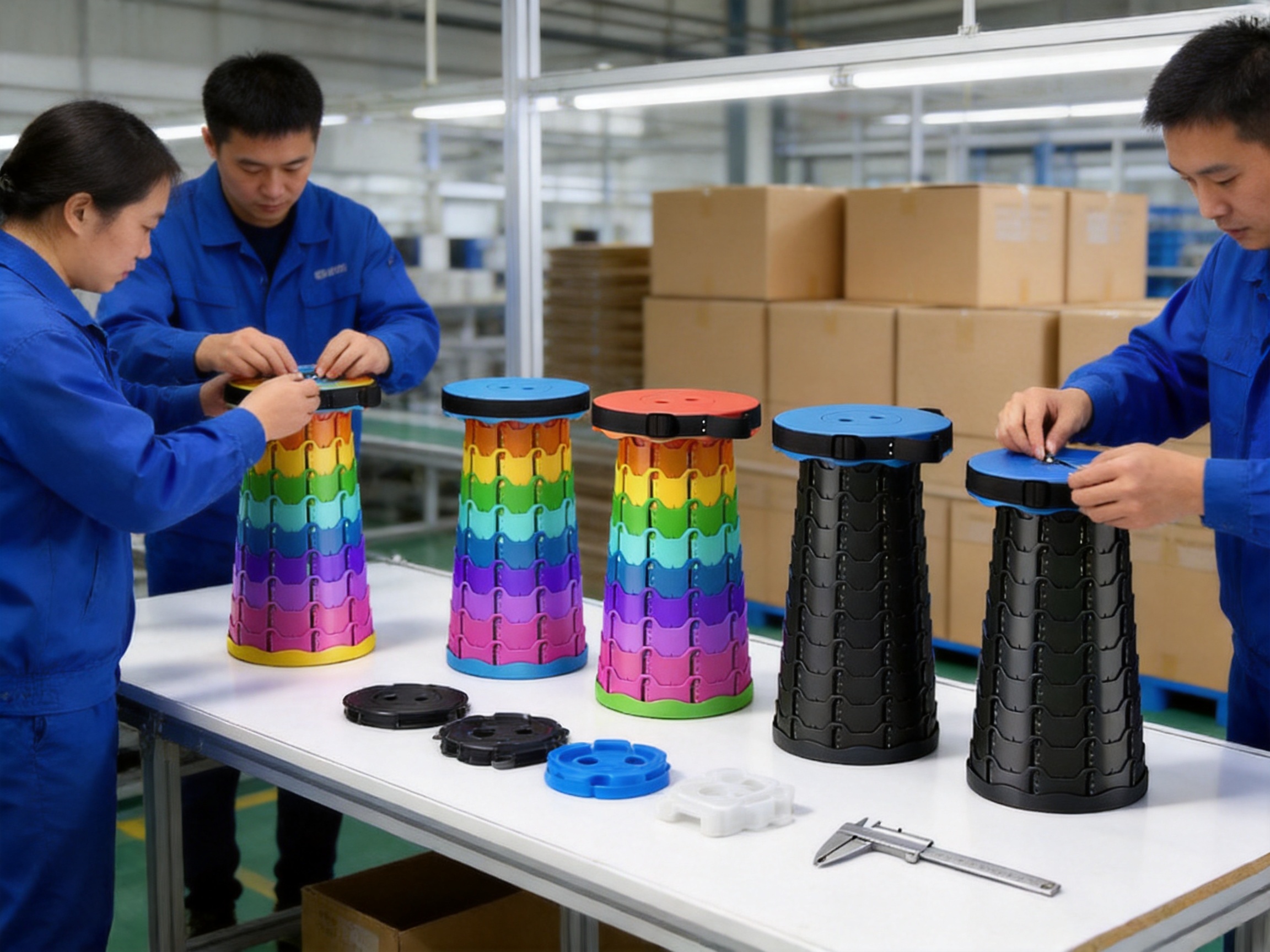
Product performance depends not only on design but also on manufacturing execution. A folding adjustable stool requires consistency in material, dimensions, structural fit, and assembly quality. If tolerances are poor, the stool may wobble, jam, fold improperly, or feel unstable. Advanced manufacturing processes help reduce these risks.
CragHaven Outdoor operates as an outdoor brand and cross-border manufacturing partner based in Hangzhou, China. The company’s strength lies in combining outdoor product understanding with China’s mature manufacturing system. This is important because outdoor buyers need more than a factory listing. They need design participation, sampling support, quality control, and communication that aligns with international market expectations.
Material Selection and Verification
The use of thickened PP material is not simply a specification. Material selection involves evaluating strength, molding behavior, surface finish, weight, and long-term usability. A reliable manufacturing partner must consider whether the material performs consistently in production, not only in a prototype.
Material verification can include checking resin consistency, observing injection molding results, testing component rigidity, and confirming that finished parts meet appearance and performance expectations. For outdoor products, the chosen material must also support repeated handling and environmental exposure.
Design for Manufacturability
Design for manufacturability means adapting a product concept so it can be produced consistently at scale. For a folding stool, this includes wall thickness planning, structural reinforcement, part alignment, connection points, locking features, and folding movement. If a design is too complex or poorly balanced, production defects may increase.
By considering manufacturing early, the product can maintain its intended function while reducing unnecessary production risk. This is especially important for cross-border customers who require stable repeat orders. A product must be replicable, not merely impressive in a sample room.
Injection Molding Control
For PP components, injection molding quality is essential. Molding parameters influence strength, dimensional stability, surface finish, and part consistency. Controlled molding processes help prevent issues such as warping, sink marks, weak points, or inconsistent fitting between components.
A stool with folding and extendable functions needs parts that interact smoothly. If molded parts vary too much, the user may experience stiffness, looseness, or uneven movement. Manufacturing control helps ensure that each unit delivers a similar user experience.
Assembly and Fit Optimization
Folding outdoor products require careful assembly. The relationship between moving parts determines whether the stool opens smoothly, locks securely, and folds compactly. Assembly workers need clear standards, and inspection teams need defined checkpoints.
Fit optimization can include checking folding smoothness, height adjustment operation, seat alignment, and overall stability. These details may seem small, but they determine customer satisfaction. A compact stool is handled frequently, so every interaction matters.
Sampling, Testing, and Iteration
CragHaven Outdoor emphasizes sampling, testing, and optimization as standard processes. This is a major advantage for outdoor product development. A first sample often reveals opportunities for improvement. The folding feel may need adjustment, material thickness may need refinement, or packaging may need redesign for export markets.
Testing should simulate real use as much as possible. For a stool, relevant checks may include repeated folding cycles, seated load evaluation, surface inspection, transport handling, and practical usability review. Iteration allows the product to move from concept toward stable market readiness.
Quality Control for Cross-Border Markets
Global customers need consistent quality because return costs, negative reviews, and supply delays can damage sales channels. Cross-border outdoor products must be prepared not only for user performance but also for packaging, labeling, logistics, and market expectations.
Quality control may include incoming material inspection, in-process checks, finished product inspection, packaging review, and batch consistency evaluation. For a compact stool, inspectors can verify folding size, height adjustment function, surface condition, structural integrity, and overall appearance.
The company’s Western-market-oriented communication is also significant. Many outdoor buyers require clear specifications, realistic timelines, professional feedback, and problem-solving support. Manufacturing strength is not only about machines; it also includes communication, documentation, and accountability.
Why Thickened PP Is a Practical Choice
Outdoor products must balance strength and weight. Metal can be strong but may add weight and create corrosion or temperature-touch concerns. Fabric can be comfortable but may absorb moisture, stretch, tear, or require stitching. Wood can be attractive but is usually less practical for compact folding accessories. PP offers a useful combination of properties for a compact outdoor stool.
Polypropylene is commonly used in products that require light weight, chemical resistance, and moldability. Its moldability allows complex shapes and integrated structural features, which is important for folding mechanisms. Because it can be molded into reinforced forms, it supports efficient production and consistent part geometry.
Thickened PP improves confidence in load-bearing applications. A stool is a structural product, so users judge it immediately by feel. If the seat flexes excessively or the body feels thin, trust decreases. A thicker structure can provide a more solid sitting experience, assuming the overall design is properly engineered.
PP also supports easy cleaning. Outdoor users may place the stool on dirt, wet grass, sand, or muddy ground. A wipeable plastic surface is convenient. Unlike fabric seating, it does not require drying time after light moisture exposure. This makes it suitable for camping, fishing, and travel use.
From a manufacturing perspective, PP is compatible with high-volume production. This supports stable supply for distributors, retailers, and private-label buyers. When combined with proper mold design and process control, PP parts can be produced with repeatable dimensions and appearance.
Portability as a Product Strategy
Portability is often discussed as a single feature, but it is actually a complete product strategy. A portable item must be small enough to carry, light enough to justify inclusion, durable enough to survive transport, and simple enough to use repeatedly. The adjustable folding stool applies this strategy effectively.
First, the folded size supports frequent carrying. A stool that folds to the approximate size of a water bottle can be integrated into everyday outdoor packing habits. Users already understand how to carry a water bottle, so the product’s storage form feels familiar.
Second, quick deployment encourages actual use. If a product is compact but difficult to open, users may avoid it. The stool’s immediate-use folding structure reduces this barrier. The easier it is to use, the more value it delivers.
Third, the stool is versatile. Products carried outdoors should ideally serve multiple scenarios. This stool can support hiking, camping, fishing, waiting, photography, and temporary work breaks. Multi-scenario usefulness increases the perceived value of the item.
Fourth, compactness supports commercial efficiency. Smaller products are easier to ship and store. For businesses, this can improve carton utilization and reduce storage pressure. For online sellers, compact products are often easier to handle in fulfillment systems.
Ergonomic Considerations
A compact stool cannot provide the same full-body support as a large chair, but it can still improve outdoor ergonomics compared with sitting on the ground. Elevating the body reduces the need for deep squatting or ground-level sitting. This can be especially helpful when putting on shoes, preparing food, fishing, or resting during a hike.
Height adjustment contributes to ergonomic flexibility. Different users have different knee angles and preferred sitting heights. A low position may be suitable for compact tasks, while a higher position may reduce bending. The ability to choose height gives the user control rather than forcing one posture.
Seat stability also affects comfort. Users must feel secure when sitting down and standing up. A well-designed folding stool should avoid unnecessary wobble and provide predictable support. Material thickness, locking structure, and base design all contribute to this experience.
The product’s portability also has ergonomic value during transport. Carrying a large chair can strain shoulders or interfere with backpack balance. A compact stool reduces this carrying burden and helps users maintain efficient movement.
Product Value for Retailers and Distributors
For retailers, outdoor products must be easy to explain, easy to display, and easy for customers to understand. This stool has a clear value proposition: compact seating that unfolds quickly and adjusts in height. Customers can immediately imagine using it while camping, hiking, fishing, or waiting.
The product’s folded size is especially marketable. Demonstrating that it occupies minimal backpack space can create strong purchase interest. Many customers hesitate to buy bulky outdoor furniture, but a bottle-sized stool feels manageable and practical.
For distributors, the product fits multiple sales channels. It can be sold as camping gear, hiking equipment, fishing support, travel seating, queue seating, picnic equipment, or emergency car storage. This wide category compatibility increases sales potential and reduces dependence on one narrow seasonal market.
For private-label buyers, the stool offers room for color selection, packaging strategy, bundle planning, and market positioning. It can be sold as a standalone product or combined with camping kits, fishing sets, hiking accessories, or outdoor event supplies.
CragHaven Outdoor’s role as a manufacturing partner adds value for buyers who need stable production support. The company’s emphasis on design understanding, manufacturing participation, and long-term partnerships can help reduce supply chain uncertainty.
Advanced Manufacturing and Supply Chain Advantages
A product’s competitiveness in international markets depends on both visible and invisible factors. Visible factors include design, material, size, and function. Invisible factors include production consistency, supplier communication, quality systems, sampling discipline, and logistics readiness. CragHaven Outdoor emphasizes these invisible strengths as part of its business identity.
Located in Hangzhou, Zhejiang Province, the company benefits from proximity to mature manufacturing resources and export-oriented supply chains. China’s outdoor product manufacturing ecosystem includes material suppliers, mold makers, molding facilities, packaging suppliers, inspection services, and logistics networks. A capable partner can coordinate these resources to transform product intent into stable production.
The company’s approach is not limited to factory sourcing. It participates in design and manufacturing decisions. This is important because sourcing alone may identify a product, but it may not solve problems related to durability, user experience, or market adaptation. A partner that understands outdoor usage can evaluate whether a product makes sense in real conditions.
For the adjustable folding stool, manufacturing strength may influence multiple outcomes: smoother folding, stronger seating feel, better part consistency, more reliable height adjustment, cleaner surface finish, and export-ready packaging. Each improvement supports customer trust.
Supply chain uncertainty is a major concern for global buyers. Delays, inconsistent batches, poor communication, and unclear specifications can harm business. CragHaven Outdoor aims to reduce such uncertainty through professional communication and long-term cooperation. This is especially valuable for outdoor products, where safety perception and reliability are important to end users.
Packaging, Storage, and Logistics Considerations
Compact products offer advantages throughout the supply chain. Because the stool folds into a small form, packaging can be designed efficiently. Smaller unit packaging may reduce carton size, improve warehouse density, and make retail display more flexible.
Good packaging should protect the stool during transport while communicating key selling points. For online channels, packaging must withstand handling and shipping. For retail channels, packaging should quickly explain the product’s compactness, adjustable height, and outdoor applications.
Storage efficiency benefits both sellers and users. Retailers can hold more inventory in limited space. Consumers can keep the stool in a backpack, vehicle, closet, garage, fishing box, or camping container. A product that stores easily is more likely to remain accessible and be used often.
Long-Term Value and Sustainability of Use
Sustainability in outdoor products is not only about material identity; it is also about product lifespan and practical usefulness. A product that breaks quickly or is rarely used creates waste. A durable, frequently used product delivers better long-term value.
The stool’s thickened PP construction, compact form, and multi-scenario use support long-term value. Because it is useful in many settings, it is less likely to be forgotten after one trip. Because it stores easily, users can keep it ready for repeated outings. Because it is designed for practical seating, it can replace less durable or more disposable alternatives.
CragHaven Outdoor’s stated preference for durability, reliability, and long-term use rather than short-term trends aligns with this value. Outdoor equipment should not be built only for appearance or viral appeal. It should remain useful through repeated contact with real environments.
Practical Buying Considerations
Customers evaluating a portable stool should consider several factors. The first is intended use. If the primary need is luxurious campsite lounging, a full chair may be better. If the need is compact, mobile seating, an adjustable folding stool is more appropriate.
The second factor is packed size. The smaller the packed size, the easier it is to carry. A stool that folds to a water-bottle-like size offers strong portability for hiking and travel.
The third factor is material. Thickened PP provides a practical balance of weight, strength, and moisture resistance. Buyers should avoid stools that feel thin, brittle, or poorly molded.
The fourth factor is adjustability. Height adjustment expands usability and improves comfort for different people and different tasks.
The fifth factor is manufacturing consistency. For individual users, this means choosing a product that feels stable and well finished. For business buyers, it means working with a supplier capable of repeatable quality and clear communication.
Maintenance and Care
The stool is designed for practical outdoor use, but reasonable care can extend its service life. After use on muddy or sandy ground, users should wipe away dirt before folding and storing it. This helps prevent grit from affecting moving parts. If the stool becomes wet, it should be dried before long-term storage.
Users should avoid exposing any plastic outdoor product to unnecessary extreme heat for long periods, such as leaving it under intense sun inside a closed vehicle. Although PP is practical and durable, responsible storage helps preserve product condition.
The stool should be used on reasonably stable ground whenever possible. Height adjustment should be completed properly before sitting. Users should sit in a controlled manner rather than dropping forcefully onto the seat. These habits help maintain the structure and improve safety.
Q&A Section
Q1: What is the main purpose of this portable adjustable folding stool?
Its main purpose is to provide compact, quick-deploy seating for outdoor and mobile situations. It is suitable for hiking rests, camping, fishing, queuing, travel waiting, photography, and other scenarios where users need a stable place to sit without carrying a bulky chair.
Q2: How compact is the stool when folded?
When folded, it is approximately the size of a water bottle. This makes it easy to place in a backpack, vehicle storage area, fishing bag, or camping gear box.
Q3: What material is used?
The stool uses thickened PP material. PP, or polypropylene, is commonly used for durable lightweight products and is suitable for outdoor accessories because it offers practical resistance to moisture and daily wear.
Q4: Why is height adjustment important?
Height adjustment allows the stool to adapt to different users, tasks, and terrain conditions. It can be set lower for cooking or low camp setups and higher for resting, waiting, or general seating comfort.
Q5: How does this stool compare with a traditional camping chair?
A traditional camping chair usually provides more back support, but it is much bulkier. This folding stool is designed for portability and quick use. It is better suited for hikers, travelers, anglers, and campers who need compact seating rather than full lounge comfort.
Q6: Is it suitable for fishing?
Yes. The compact folded size, easy setup, and moisture-resistant PP material make it practical for fishing environments where users may need to move between spots or sit near water.
Q7: What makes the product different from low-cost plastic stools?
Many low-cost plastic stools are bulky, fixed in height, or made from thin material. This product combines folding storage, adjustable height, thickened PP construction, and outdoor-oriented portability.
Q8: Why is manufacturing quality important for this type of product?
A folding adjustable stool depends on accurate part fit, smooth movement, and structural consistency. Poor manufacturing can cause wobbling, weak locking, rough folding, or inconsistent quality. Controlled material selection, molding, assembly, and inspection help ensure reliable performance.
Q9: Can this stool be used outside of outdoor recreation?
Yes. It is also useful for queues, travel waiting, temporary work breaks, roadside rest, emergency vehicle storage, outdoor markets, and event attendance.
Q10: What kind of company support is behind the product?
CragHaven Outdoor supports the product through outdoor-focused design understanding, material selection, sampling, testing, optimization, and manufacturing coordination. The company aims to provide reliable gear and stable cross-border supply support for global markets.
Conclusion
The portable outdoor storage folding extendable stool, product code WFDS263001, demonstrates how a small accessory can create meaningful comfort in outdoor and travel settings. Its value comes from a practical combination of features: innovative folding structure, immediate usability, thickened PP material, adjustable height, and compact storage approximately the size of a water bottle.
Compared with full-sized camping chairs, tripod stools, foam pads, inflatable seats, and ordinary plastic stools, this product offers a balanced solution for users who need real seating without bulk. It is especially suitable for hikers, campers, anglers, travelers, and anyone who needs portable rest in changing environments.
The product is also strengthened by the manufacturing philosophy and supply chain capability behind it. CragHaven Outdoor focuses on outdoor scenarios, practical design, material reliability, sampling, testing, and optimization. Its position as a Hangzhou-based outdoor brand and cross-border manufacturing partner allows it to connect real product understanding with efficient production resources.
In a market where many outdoor accessories compete through appearance or low price alone, this adjustable folding stool stands out through practical function. It is designed not merely to look convenient, but to be carried, unfolded, used, folded again, and trusted repeatedly. For outdoor users, that reliability matters. For business buyers, it offers a product with clear selling points, broad application, and manufacturing support aligned with long-term cooperation.
References
1. Ashby, M. F. Materials Selection in Mechanical Design. Butterworth-Heinemann.
2. Rosato, D. V., Rosato, M. G., and Rosato, D. V. Injection Molding Handbook. Springer.
3. Horvath, J. The Backpacker’s Field Manual. Falcon Guides.
4. Lidwell, W., Holden, K., and Butler, J. Universal Principles of Design. Rockport Publishers.
5. Outdoor Industry Association. Outdoor Participation and Consumer Behavior Reports.
6. Norman, D. A. The Design of Everyday Things. Basic Books.
Product: Portable outdoor storage folding extendable stool, adjustable hiking stool



- Phone: +86-15968800379
- E-mail: [email protected]
- Address: Room 1002, Huishang Building, Gongshu District, Hangzhou City, Zhejiang Province.
Copyright © CragHaven Outdoor All Rights Reserved. Outdoor Gear Manufacturers Wholesale Mountaineering Camping Gear Suppliers
