

 English
 Deutsch
 Español
 Français

Ultralight Folding Hiking Backpack for Fast, Practical Outdoor Travel
Content
- 1 Product Overview
- 2 Key Specifications and Functional Summary
- 3 Why Foldability Matters in Real Outdoor Use
- 4 Material Advantage: High-Density Ultra-Lightweight Polyester
- 5 DWR Water-Repellent Protection for Light Rain
- 6 Large Capacity Without Unnecessary Bulk
- 7 Comfort and Practical Load Behavior
- 8 Competitive Advantages Over Common Alternatives
- 9 Designed for Lightweight Hiking
- 10 Useful for Camping and Short Trips
- 11 Manufacturing Philosophy Behind the Product
- 12 Advanced Material Selection and Validation
- 13 Pattern Engineering and Foldability Control
- 14 Cutting, Stitching, and Seam Reliability
- 15 DWR Application and Quality Control
- 16 Sampling, Testing, and Optimization
- 17 Supply Chain Stability and Cross-Border Manufacturing Strength
- 18 Real-World User Scenarios
- 19 Responsible Use and Care Guidance
- 20 Why This Backpack Creates Value for Buyers
- 21 Q&A Section
- 21.1 What is the main purpose of this ultralight folding backpack?
- 21.2 Is the backpack waterproof?
- 21.3 What material is used in the backpack?
- 21.4 How is this backpack different from cheaper foldable bags?
- 21.5 Can it replace a full expedition backpack?
- 21.6 Why is foldability important?
- 21.7 What makes the product suitable for global buyers?
- 21.8 How should users care for the backpack?
- 22 Conclusion
- 23 References
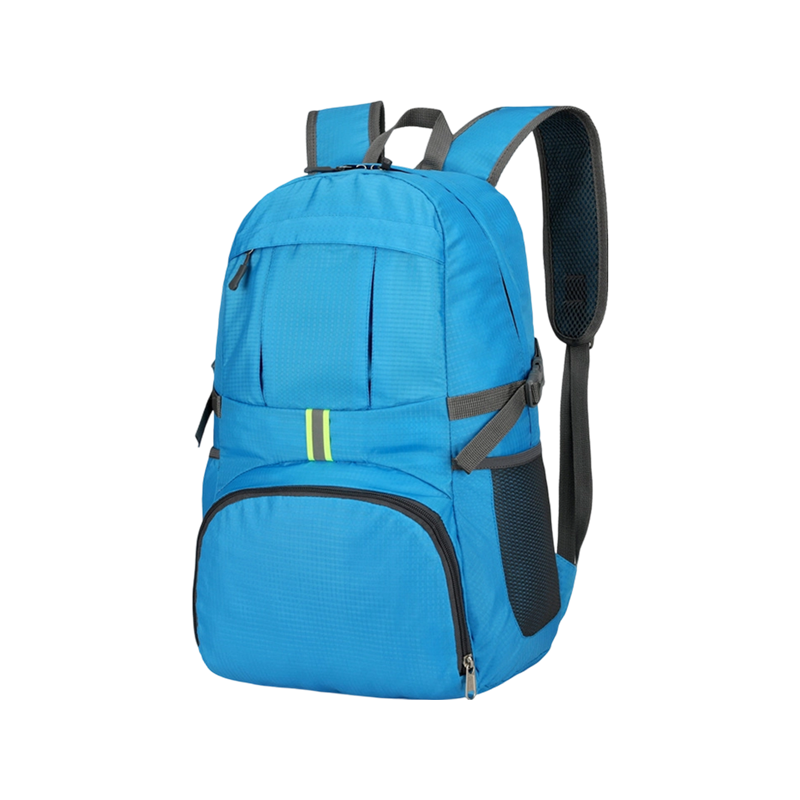
Modern hiking is changing. More outdoor users are choosing shorter trips, mixed transportation, lightweight packing systems, and gear that can move easily between city, trail, campsite, and travel bag. In this environment, a backpack must do more than hold items. It must reduce unnecessary weight, pack down when not in use, resist daily abrasion, handle changing weather, and remain simple enough to be useful in real outdoor situations. The ultralight folding outdoor hiking backpack, large capacity backpack, model WFDS261001, is designed for precisely this kind of practical outdoor use.
This mountaineering backpack is made with high-density, ultra-lightweight polyester fabric. The fabric is selected for abrasion resistance, tear resistance, and packability. Its surface is treated with a DWR water-repellent coating, helping light rain bead and roll away rather than immediately soaking into the material. The backpack can be folded quickly and stored inside a larger backpack, suitcase, vehicle compartment, or travel kit. These characteristics make it especially suitable for lightweight hiking, short outdoor trips, camping support, travel backup use, and daily carry in unpredictable weather.
Many lightweight backpacks on the market focus only on low weight. Others provide capacity but become bulky, stiff, or inconvenient when they are not actively being used. This product is positioned between those extremes. It offers a large-capacity carrying solution while preserving the convenience of a foldable structure. For outdoor users, retailers, distributors, and sourcing teams, this balance creates clear value: less storage space, lower carry burden, practical protection against light rain, and a design that fits real user behavior rather than showroom assumptions.
CragHaven Outdoor, based in Hangzhou, China, develops outdoor gear for mountaineering, hiking, and camping scenarios. The company’s approach is grounded in practical field use: products are not designed merely for catalog presentation, but for weather, terrain, movement, packing habits, and repeated use over time. This philosophy is especially relevant for folding backpacks, because a compact bag is only valuable if it remains reliable after being opened, loaded, folded, carried, stored, and reused many times.
Product Overview
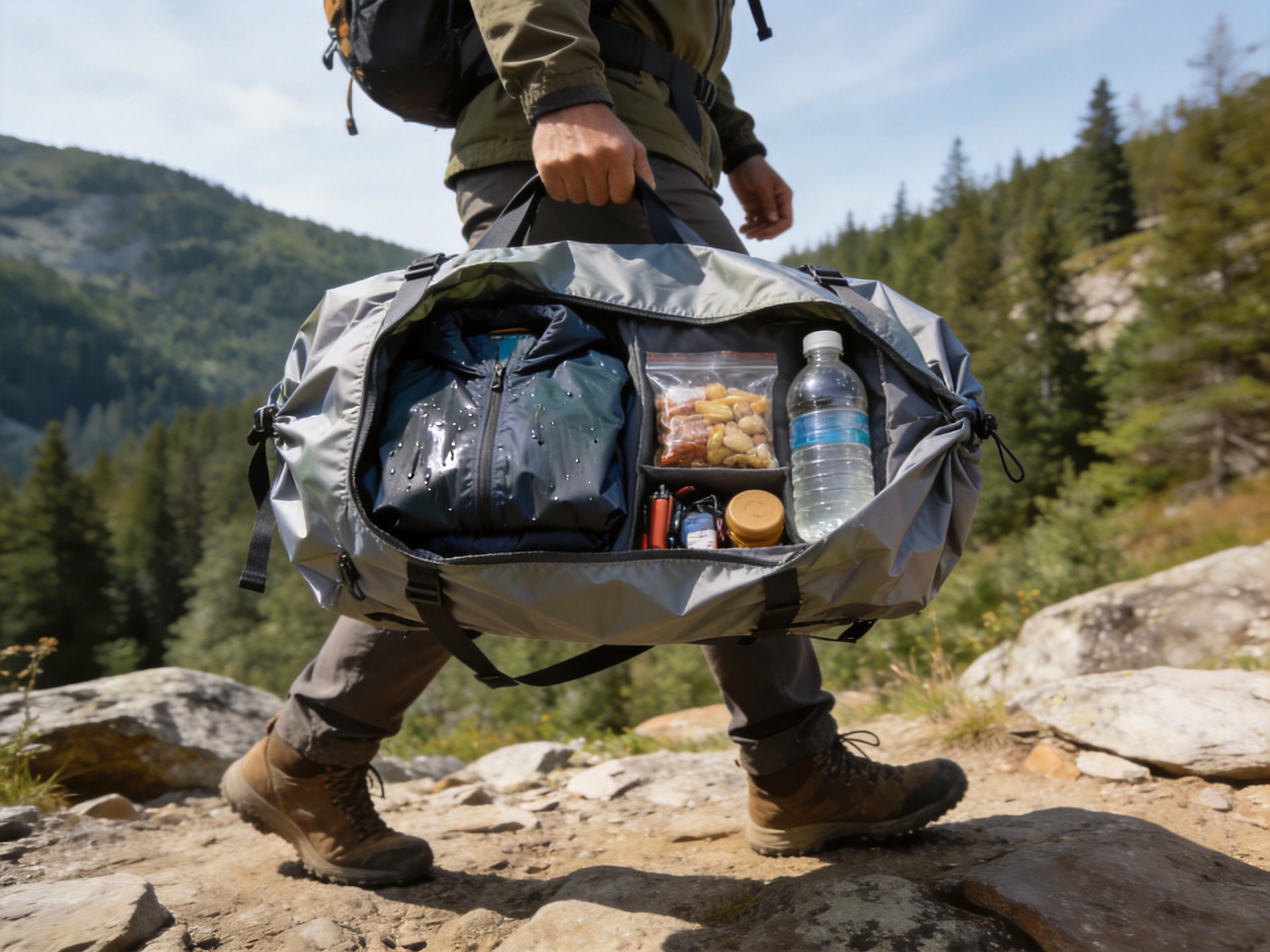
The ultralight folding outdoor hiking backpack is a large-capacity mountaineering backpack built for users who need mobility and storage efficiency. Its core purpose is simple: provide a dependable outdoor carrying option without adding unnecessary bulk. It can be packed into another bag during travel, unfolded when extra capacity is needed, and used for hiking, camping, day trips, sightseeing, short routes, grocery runs during travel, or emergency carry situations.
The product’s key material is high-density polyester fabric. Polyester is widely used in outdoor gear because it offers a favorable balance of strength, weight, drying speed, dimensional stability, and cost efficiency. In this design, the material is described as ultra-lightweight while still retaining resistance to abrasion and tearing. This matters because foldable backpacks are often exposed to friction against rocks, tree branches, vehicle interiors, luggage surfaces, and rough campsite objects. A very thin or poorly selected fabric may save grams but fail quickly. A heavier fabric may last longer but undermine the benefit of a folding backpack. The selected fabric aims to balance both needs.
The backpack’s DWR finish is another important feature. DWR stands for durable water repellent, a surface treatment that helps water bead on the fabric instead of spreading and soaking in immediately. This does not make the backpack a fully waterproof dry bag, and responsible product communication should avoid that exaggeration. However, it does provide valuable protection against light rain, mist, splashes, damp vegetation, and brief exposure during changing weather. For lightweight hikers and short-trip users, this level of water resistance often matches the real conditions they face.
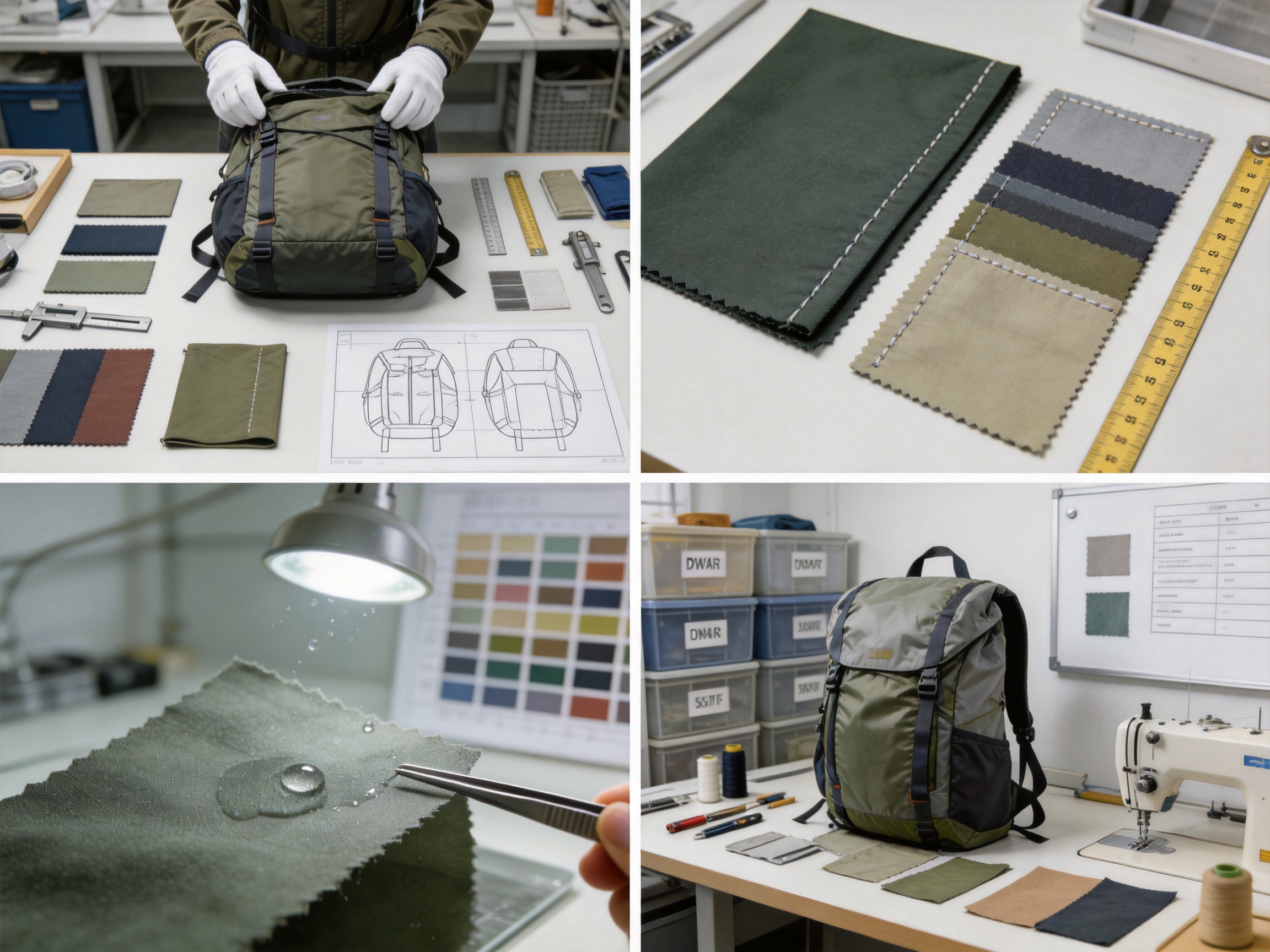
Its folding structure improves storage and transport efficiency. When not in use, the backpack can be folded and placed into a suitcase, larger trekking pack, camping box, car trunk, or gear organizer. This makes it useful as a secondary bag on travel days, a summit or side-trip bag after reaching camp, or a backup backpack for unexpected purchases or extra layers. Compared with rigid daypacks, the foldable design significantly reduces storage friction.
Key Specifications and Functional Summary
| Feature Area | Product Detail | User Benefit |
|---|---|---|
| Product Type | Ultralight folding outdoor hiking backpack | Easy to carry as a primary or backup bag for short outdoor routes and travel |
| Category | Mountaineering backpack | Suitable for hiking, camping support, mountain travel, and outdoor daily use |
| Model Reference | WFDS261001 | Clear identification for sourcing, sampling, and order communication |
| Main Fabric | High-density ultra-lightweight polyester | Balances low weight with abrasion and tear resistance |
| Surface Treatment | DWR water-repellent coating | Helps resist light rain and moisture exposure |
| Storage Method | Quick folding and compact packing | Fits easily into a backpack, suitcase, or vehicle storage area |
| Capacity Positioning | Large-capacity structure | Accommodates layers, snacks, travel essentials, and outdoor accessories |
| Usage Scenario | Lightweight hiking and short trips | Practical for users who need mobility without heavy gear burden |
Why Foldability Matters in Real Outdoor Use
Foldability is often treated as a convenience feature, but in outdoor gear it can be a strategic advantage. A folding backpack supports flexible trip planning. A traveler may board a train or plane with one main suitcase, then unfold the backpack for a mountain walk, a campground supply run, or a city exploration day. A camper may keep the folded pack inside a larger duffel and use it for collecting water bottles, carrying a rain shell, or transporting small cooking items. A hiker may carry it as a backup for an unexpected gear split between group members.
Traditional daypacks often maintain their shape even when empty. That structure can be beneficial for heavy loads, but it is less efficient for travel and storage. A rigid pack occupies closet space, suitcase volume, vehicle room, and warehouse capacity. A foldable backpack solves this problem by becoming small when its full structure is not needed. For retailers and distributors, foldability can also reduce packaging volume and improve product handling efficiency.
Some competing foldable backpacks sacrifice usability by becoming too flimsy. They may pack small, but when loaded, they sag, pull uncomfortably, or place stress on weak seams. The advantage of this product is that it is not presented only as a novelty travel pouch. It is positioned as a practical outdoor backpack made from high-density fabric and developed around repeated hiking and short-trip use. The emphasis on abrasion resistance, tear resistance, and water repellency gives the backpack a more credible outdoor identity.
For end users, the ideal foldable backpack is one they do not notice until they need it, and then can trust once they load it. It should not occupy much space inside luggage. It should unfold quickly. It should carry essentials without immediate fabric strain. It should resist light rain long enough to protect basic contents during a short exposure. It should be easy to dry and store. This product is built around that pattern of use.
Material Advantage: High-Density Ultra-Lightweight Polyester
Fabric selection determines the personality of a backpack. High-density polyester is a logical choice for an ultralight folding pack because it provides practical durability while remaining flexible enough to fold. Density matters because a more tightly structured fabric can better resist surface wear and accidental tearing than loosely constructed lightweight materials. In outdoor scenarios, a backpack may rub against rock, bark, gravel, tent poles, zippers, and packed equipment. Abrasion resistance is not an abstract laboratory value; it directly influences product life.
Polyester also has good dimensional stability. Compared with some fibers that absorb more moisture and stretch significantly, polyester tends to maintain shape and dry relatively quickly. For a backpack that may be folded after use, moisture management is important. A fabric that stays wet for a long time can create odor, discomfort, and storage issues. While users should always dry gear before long-term storage, a water-repellent polyester fabric improves practical handling in damp conditions.
The ultra-lightweight nature of the fabric supports the backpack’s central promise. Outdoor users increasingly count not only the weight of major gear but also the cumulative burden of accessories. A backpack that adds unnecessary weight undermines the comfort of short trips. When a foldable bag is carried inside another pack, its own weight must remain low enough to justify bringing it. This product’s fabric choice supports that requirement.
Compared with inexpensive low-density fabrics used in some promotional bags, high-density polyester offers a more convincing balance of strength and portability. Promotional drawstring bags or thin shopping-style foldable packs may work for casual indoor use, but outdoor travel exposes gear to greater stress. By using a fabric selected for abrasion and tear resistance, this backpack provides a more suitable solution for hiking and camping-related use.
DWR Water-Repellent Protection for Light Rain
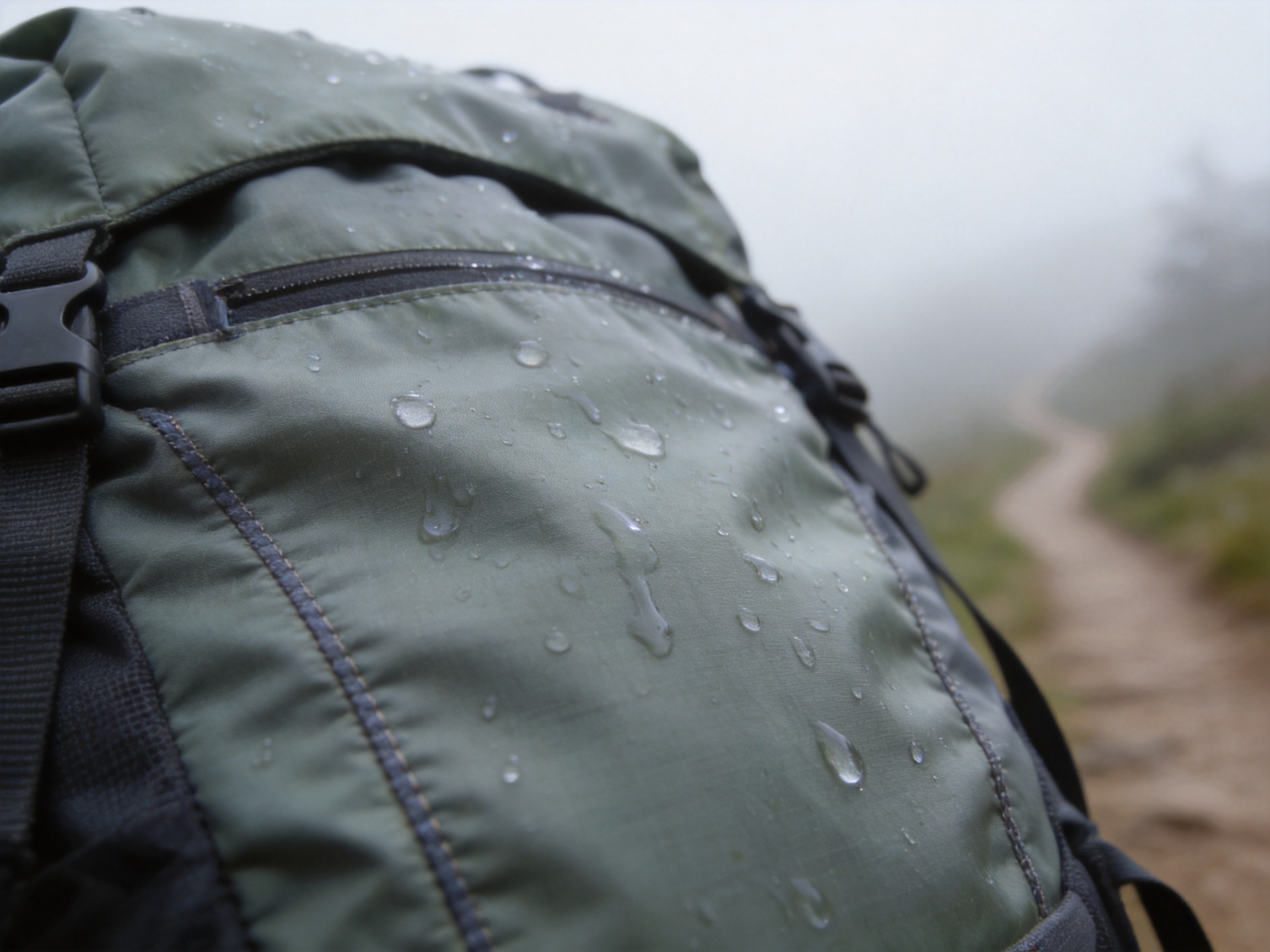
Weather changes quickly in outdoor environments. A sunny trailhead can become misty, windy, or rainy within an hour. Short-trip hikers often prefer not to carry a heavy rain cover or fully waterproof expedition pack, but they still need basic protection for clothing layers, snacks, maps, small electronics, or personal items. The DWR finish on this backpack addresses that practical need.
A DWR coating works by reducing the surface energy of the fabric so that water forms beads rather than immediately spreading across the material. When water beads, it is more likely to roll away or be shaken off. This helps delay wet-out during light rain or brief contact with moisture. For many users, this is enough protection during quick exposure, especially when combined with sensible packing practices such as placing sensitive electronics in inner pouches or waterproof sleeves.
The distinction between water-repellent and waterproof is important. Waterproof backpacks typically require coated fabrics, sealed seams, roll-top closures, or specialized construction. Those features may add weight, stiffness, cost, and reduced breathability. This ultralight folding backpack instead chooses a water-repellent approach that fits lightweight hiking and short-trip use. It improves weather confidence without turning the product into a heavy waterproof system.
Competitor products sometimes overstate rain protection, creating unrealistic expectations. A more professional approach is to describe performance honestly. This backpack is ideal for light rain and moisture exposure, not prolonged immersion or heavy storms. That honest positioning helps retailers reduce customer dissatisfaction and helps users select the right gear for the right conditions.
Large Capacity Without Unnecessary Bulk
Capacity is one of the most visible characteristics of a backpack, but capacity must be evaluated alongside packability. A large backpack that cannot be stored easily may be inconvenient for travel. A tiny folding backpack may be compact but not useful for real outdoor items. This product is described as a large-capacity backpack while remaining foldable, making it suitable for users who need both space and storage efficiency.
In a short hiking scenario, a user may need to carry a windbreaker, light rain shell, water bottle, trail snacks, compact first-aid kit, power bank, camera, gloves, hat, and personal items. During travel, the same backpack may hold documents, a light jacket, souvenirs, food, or daily essentials. At a campsite, it can support short walks away from the tent, supply organization, or shared group tasks. Large capacity allows the backpack to serve these varied roles.
The advantage over many minimal packable bags is versatility. Extremely small foldable packs often lack the volume needed for layers or outdoor essentials. They become useful only for very light errands. On the other hand, standard daypacks may provide volume but remain too bulky to keep as a backup. This backpack occupies a practical middle ground: large enough for meaningful use, light and foldable enough to carry when not needed.
For wholesale buyers, this balance also increases market reach. The same product can appeal to hikers, campers, travelers, students, day-tour participants, outdoor event organizers, and casual urban users. Products that function across multiple scenarios often perform better in retail because consumers can justify the purchase more easily.
Comfort and Practical Load Behavior
Although the provided product details emphasize material, folding, capacity, and water repellency, comfort remains a key factor in any backpack evaluation. In a folding backpack, comfort depends on how well the fabric structure distributes load, how stable the bag feels when walking, and how the construction resists deformation. A lightweight pack cannot be expected to carry the same load as a framed expedition backpack, but it should remain practical for short-trip essentials.
A well-designed foldable hiking backpack should avoid excessive sagging. When a bag sags too much, weight shifts downward and backward, creating shoulder strain and unstable movement. Pattern engineering, seam placement, and material selection all influence this behavior. High-density polyester helps by providing a stronger fabric body than many ultra-thin alternatives. Manufacturing quality also matters because weak stitching can cause deformation even when fabric quality is acceptable.
For users, comfort is also connected to simplicity. A folding backpack should be easy to open, load, close, and carry. Complex structures can add weight and failure points. The best lightweight outdoor products often avoid unnecessary details and instead focus on dependable essentials. This product’s value lies in its direct response to common needs: low weight, storage convenience, practical capacity, and resistance to basic environmental stress.
Competitive Advantages Over Common Alternatives
The market for compact outdoor backpacks includes promotional foldable bags, travel daypacks, entry-level hiking packs, waterproof dry-style packs, and fashion-oriented casual backpacks. Each type has strengths, but many also have limitations. This ultralight folding outdoor hiking backpack competes by combining practical advantages that are often separated across different product categories.
Compared with promotional foldable bags, it offers a more outdoor-oriented material approach. Promotional bags are often designed mainly for low cost and branding visibility. They may use thin fabrics, basic seams, and minimal treatment. This product uses high-density polyester with abrasion and tear resistance, making it more suitable for trail and travel conditions.
Compared with standard daypacks, it offers superior packability. A normal daypack may be comfortable and structured, but it occupies space even when empty. For users who need a secondary bag or travel-friendly option, that bulk becomes inconvenient. The folding design allows this backpack to be stored quickly in a larger bag or suitcase.
Compared with heavy waterproof packs, it offers lighter everyday usability. Fully waterproof packs are excellent for paddling, severe rain, or wet expeditions, but they may be overbuilt for short hikes and travel. They can be stiffer, heavier, and less convenient for casual packing. The DWR-treated fabric provides light rain protection while preserving the product’s ultralight and foldable character.
Compared with fashion backpacks, it is more function-driven. Fashion bags may look attractive but often lack outdoor fabric performance, quick-drying behavior, and compact storage capability. This product is developed for actual outdoor movement and changing conditions, not just appearance.
Compared with ultra-minimalist niche packs, it offers broader accessibility. Some ultralight specialist gear is expensive, delicate, or designed for expert users who carefully manage every gram. This backpack provides lightweight convenience in a more practical form for general outdoor users, retailers, and travel markets.
Designed for Lightweight Hiking
Lightweight hiking is not simply about carrying less. It is about carrying what is necessary in the most efficient way. A lightweight backpack must support essential items while avoiding excessive structure and weight. This product fits hiking routes where users do not need overnight expedition capacity but still require a reliable bag for food, water, clothing layers, and small safety items.
For short mountain routes, users often encounter changes in temperature and wind. A backpack must hold layers that are removed during climbs and added during rest stops. It must manage snacks and hydration. It may need to carry trekking accessories, a compact emergency blanket, sunscreen, insect repellent, and personal items. A foldable large-capacity backpack is useful because it can expand the user’s carrying flexibility without imposing a heavy starting burden.
Because the backpack is easy to store, it can also support group hiking. One member may bring it as an extra bag in case the group needs to redistribute items. Families can use it when children become tired of carrying their own small bags. Travel guides can keep several folded packs available for clients. Outdoor instructors can use such bags for organizing small equipment during field activities.
Useful for Camping and Short Trips
Camping creates many small transport tasks. Campers move items between vehicle and tent, tent and cooking area, campsite and water source, or campsite and trail. A large expedition backpack is not always necessary for these movements. A foldable backpack is often more convenient because it is light, quick to deploy, and easy to store when the task is complete.
During short trips, the backpack can carry a fleece, rain shell, portable lamp, snacks, camera, small tools, and personal items. It can serve as a day bag after the main camp is established. It can also be used for travel transitions, such as carrying essentials while the main luggage remains at accommodation. The product’s light rain resistance is useful in camp environments where dew, mist, and brief showers are common.
Compared with tote bags or plastic storage bags, a backpack frees the hands and improves mobility. This matters when walking over uneven ground, carrying trekking poles, holding a child’s hand, or moving around camp after dark. The backpack format is naturally suited to outdoor movement.
Manufacturing Philosophy Behind the Product
CragHaven Outdoor approaches outdoor product development through real usage scenarios rather than purely decorative design. The company states a clear principle: products should be designed for weather, terrain, and time, not merely for catalogs. This mindset is particularly important in the folding backpack category because the product must endure repeated transformation. Folding, unfolding, packing, loading, and carrying create stress patterns that differ from those in rigid backpacks.
The company’s design and manufacturing process emphasizes durability, reliability, and long-term use rather than short-term visual trends. Material selection is not treated as a cosmetic decision. For a backpack, fabric, coating, thread, seams, reinforcement points, and folding behavior all determine whether the final product will satisfy users after repeated use. A product that looks good in a photograph but fails during a rainy walk or tears after rubbing against rough surfaces does not meet professional outdoor expectations.
CragHaven Outdoor also positions itself as a manufacturing partner rather than only a factory-sourcing intermediary. This distinction matters for global buyers. A sourcing-only approach may identify a supplier and quote a price, but it may not fully manage product intent, testing, optimization, and market communication. A development-oriented manufacturing partner can help transform a product concept into a stable, replicable item suitable for long-term supply.
Advanced Material Selection and Validation
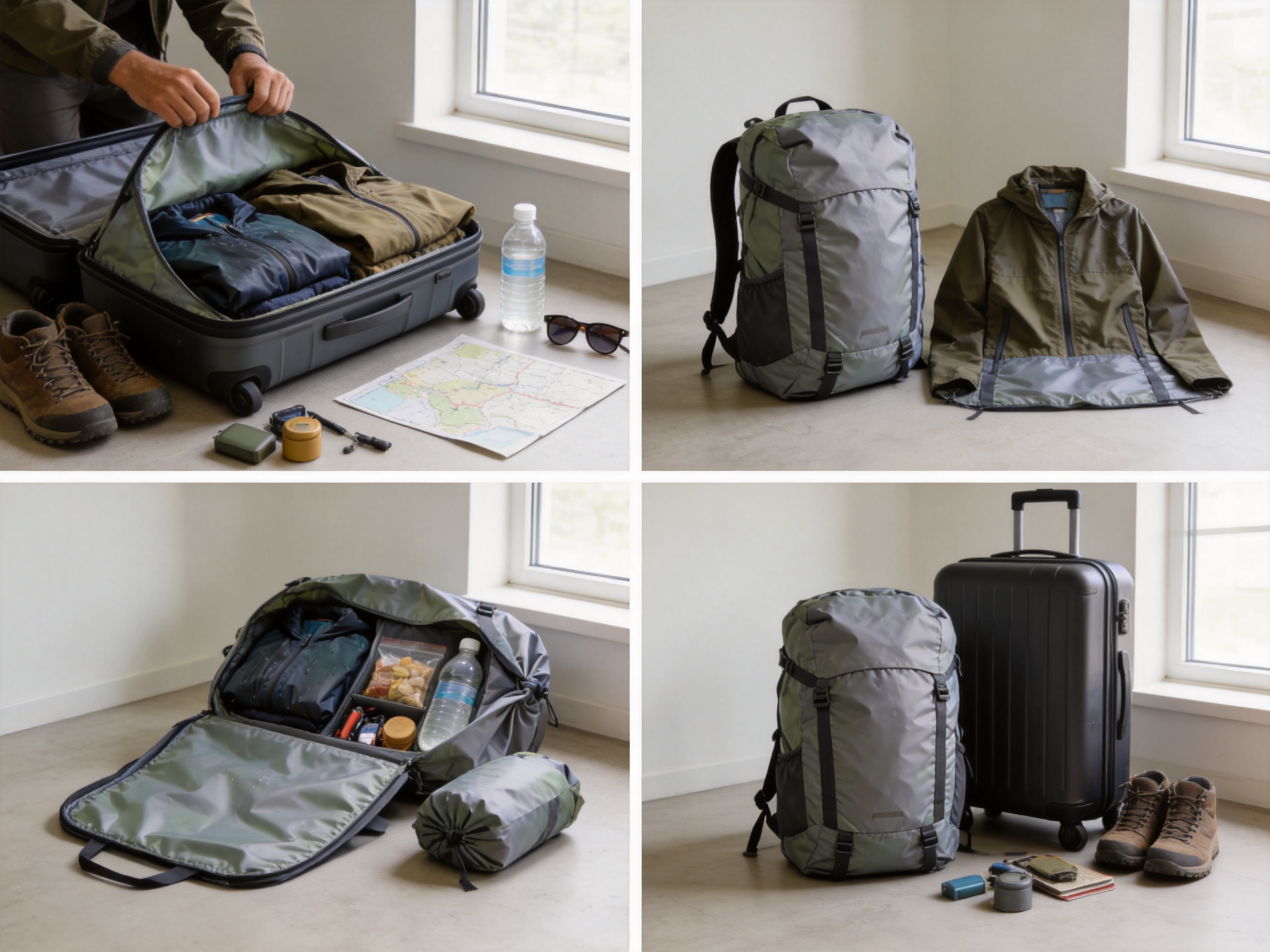
The first stage of reliable backpack manufacturing is material selection. High-density polyester must be evaluated not only for appearance and hand feel but also for weight, tensile strength, tear resistance, abrasion behavior, coating compatibility, color stability, and folding performance. A fabric that performs well when flat may crease poorly after repeated folding. A coating that repels water initially may lose effectiveness if applied inconsistently. A material that looks lightweight may not withstand trail abrasion.
Advanced manufacturing teams evaluate these variables before production. Fabric rolls can be checked for consistency, defects, coating uniformity, color variance, and surface finish. For water-repellent products, DWR performance should be assessed through controlled spray or beading observations. For outdoor bags, abrasion and tear resistance are key considerations because fabric failure is one of the most visible and frustrating product problems.
CragHaven Outdoor’s stated commitment to sampling, testing, and optimization supports this process. Sampling allows the team to confirm whether selected materials behave correctly after being cut, stitched, folded, and loaded. Testing identifies weaknesses before mass production. Optimization adjusts design, fabric, seam location, reinforcement, or packing method to improve final reliability.
Pattern Engineering and Foldability Control
A foldable backpack is not just a standard backpack made with soft material. It requires careful pattern engineering. The panels must create enough usable volume when opened while collapsing efficiently when folded. Seam placement must support both load behavior and compact storage. If panels are shaped poorly, the backpack may become awkward to pack, uncomfortable to carry, or difficult to fold neatly.
Pattern engineering also affects fabric stress. Corners, openings, strap attachment points, and high-load seams experience repeated tension. A manufacturing team must understand where stress concentrates and how to reduce the risk of tearing. This may involve seam allowance control, reinforcement, bartacking, binding, or adjusted panel geometry. Even when the final product appears simple, the underlying pattern decisions can determine performance.
Foldability control is especially relevant for user satisfaction. A packable backpack should not require complicated instructions each time it is stored. The folding process should be intuitive and quick. Fabric thickness, coating feel, seam bulk, and shape all influence this experience. Too much structure makes folding difficult; too little structure makes carrying unstable. The product’s balance of high-density lightweight fabric and flexible construction supports practical foldability.
Cutting, Stitching, and Seam Reliability
Manufacturing quality is often most visible in seams. Outdoor users may not know the technical name of a stitch type, but they immediately notice loose threads, uneven sewing, weak attachment points, and seams that distort under load. A reliable folding backpack requires controlled cutting and consistent stitching because small errors can affect both appearance and function.
Precise cutting ensures that panels match correctly and that the finished backpack keeps its intended shape. Inconsistent cutting may create twisting, uneven folding, or misaligned seams. For lightweight fabrics, cutting accuracy is particularly important because there is less material stiffness to hide mistakes. Clean panel preparation also improves production efficiency and reduces defects.
Stitching must be selected according to load requirements. Areas that experience greater force, such as shoulder strap connections and structural seams, require stronger sewing control than purely decorative seams. Reinforcement techniques such as bartacks can help distribute stress at critical points. Thread quality and tension control also matter. If thread tension is too tight, fabric may pucker or weaken. If it is too loose, seams may open under stress.
CragHaven Outdoor’s focus on reliability and long-term value supports attention to these details. For global buyers, seam consistency is not only a technical issue but also a brand trust issue. Returns, complaints, and negative reviews often arise from preventable construction weaknesses. Strong manufacturing control reduces these risks.
DWR Application and Quality Control
The DWR treatment is a core feature of the backpack, so its application must be consistent. A water-repellent finish that varies across fabric sections can create uneven performance. Some areas may bead water effectively while others wet out quickly. Proper quality control helps ensure that the finished backpack provides the expected light rain protection.
DWR performance also depends on fabric preparation and finishing conditions. Manufacturing teams must consider coating compatibility, curing or finishing parameters, handling after treatment, and storage conditions. If fabric is contaminated or treated unevenly, the water-repellent effect can decline. If the product is compressed or stored improperly before shipment, appearance and surface performance may be affected.
For buyers, the key advantage is predictable performance. A single sample that performs well is not enough; bulk production must match the approved sample. This requires material traceability, incoming inspection, process control, and final checks. CragHaven Outdoor’s emphasis on stable, replicable, and scalable products aligns with these requirements.
Sampling, Testing, and Optimization
Sampling is one of the most important stages in outdoor gear development. A design sketch or digital specification cannot fully reveal how a backpack feels when loaded, folded, exposed to moisture, or used repeatedly. A physical sample allows teams to test assumptions and make improvements before production investment increases.
Testing can include practical load checks, folding trials, seam observation, surface water-repellency checks, abrasion review, packing trials, and user handling feedback. Even simple field-simulation tests can reveal valuable information. Does the pack fold easily after being filled? Do seams remain stable after repeated loading? Does the fabric resist scuffing? Does light rain bead on the surface? Is the capacity useful for typical short-trip items?
Optimization follows testing. A seam may need reinforcement. A panel may need reshaping. A fabric weight may need adjustment. A folding method may need simplification. This iterative process helps transform a product from a general idea into a dependable commercial item. CragHaven Outdoor’s statement that sampling, testing, and optimization cannot be omitted is an important strength for international buyers seeking reliable supply.
Supply Chain Stability and Cross-Border Manufacturing Strength
Outdoor product buyers often face uncertainty: inconsistent quality, unclear communication, changing material availability, delayed sampling, weak technical support, and products that do not match market expectations. CragHaven Outdoor aims to reduce this uncertainty through its role as both an outdoor brand and cross-border manufacturing partner based in Hangzhou, China.
Hangzhou benefits from access to China’s mature and efficient manufacturing ecosystem. This includes textile suppliers, accessory providers, sewing factories, coating and finishing resources, packaging suppliers, logistics networks, and experienced production teams. For a backpack product, this ecosystem supports material sourcing, sampling speed, production scalability, and cost control.
The company also emphasizes Western-market-oriented communication. This is important because outdoor gear buyers in global markets often require accurate specification language, realistic performance claims, clear sample feedback, and reliable order coordination. Miscommunication can lead to incorrect materials, unrealistic product descriptions, or mismatched expectations. A partner that understands both manufacturing realities and market communication can help bridge this gap.
Long-term partnerships are another stated priority. For buyers, stable cooperation can reduce repeated supplier searches, improve product consistency, and support future product development. A backpack like WFDS261001 may serve as a base product for seasonal assortments, private-label programs, travel collections, promotional outdoor campaigns, or retail outdoor accessories. Stable manufacturing support makes these programs easier to manage.
Real-World User Scenarios
Scenario one is the weekend hiker. This user drives or takes public transportation to a trail, walks for several hours, and needs a lightweight bag for essentials. The backpack’s low weight, large capacity, and DWR treatment match this use well. It can carry a jacket, snacks, water, basic safety items, and personal belongings without the weight of a larger technical pack.
Scenario two is the traveler who wants a backup daypack. A suitcase may hold clothing and main gear, but a daypack is needed for sightseeing, local walks, and short outdoor routes. Because the backpack folds quickly, it can stay inside luggage until needed. This makes travel packing more efficient.
Scenario three is the camper. At camp, the backpack can carry small items between areas, support short walks, or serve as a personal organizer. Its light rain resistance is useful during damp mornings or brief showers.
Scenario four is the outdoor retailer or distributor. The backpack offers a practical product story: high-density lightweight polyester, abrasion and tear resistance, DWR water repellency, large capacity, and compact folding. These features are easy to explain to consumers and relevant across multiple market segments.
Scenario five is the group organizer. Schools, clubs, travel groups, outdoor training providers, and event organizers may need lightweight packs that are easy to distribute, store, and transport. Foldability simplifies bulk handling, while outdoor-oriented fabric improves practical durability compared with low-grade promotional alternatives.
Responsible Use and Care Guidance
To extend the life of the backpack, users should avoid overloading it beyond reasonable short-trip needs. Although the fabric is abrasion and tear resistant, ultralight foldable backpacks are not intended to replace heavy expedition packs for sharp, dense, or excessive loads. Proper use helps maintain seam integrity and carrying comfort.
Users should also be realistic about weather protection. The DWR surface treatment is designed for light rain and moisture resistance. In heavy rain, prolonged exposure, or situations involving sensitive electronics, contents should be protected with inner waterproof pouches or dry bags. This layered approach is common in outdoor packing and helps prevent unnecessary damage.
After wet use, the backpack should be dried before long-term storage. Dirt and mud should be gently removed according to appropriate fabric care practices. Harsh detergents, high heat, or aggressive scrubbing may reduce water-repellent performance. Over time, like most DWR-treated gear, the surface repellency may require maintenance depending on frequency of use and cleaning methods.
Why This Backpack Creates Value for Buyers
For retailers, the backpack’s value lies in its clear and practical feature set. Customers can understand it quickly: it is lightweight, foldable, spacious, resistant to abrasion and tearing, and treated to resist light rain. These are concrete benefits, not vague lifestyle claims. The product can be positioned for hiking, camping, travel, emergency backup, and daily outdoor use.
For distributors, the product offers broad market compatibility. It does not depend on a narrow technical niche. It can fit outdoor stores, travel accessory channels, camping assortments, online marketplaces, gift programs, and seasonal promotional collections. Its compact nature may also simplify storage and shipping compared with more rigid bags.
For private-label buyers, CragHaven Outdoor’s manufacturing approach can support customization discussions, sampling, and quality expectations. The company’s experience in design and production allows it to participate in product development rather than merely execute an order without context. This reduces the risk of a product that meets a price target but fails in user experience.
For end consumers, the value is everyday confidence. The backpack is not overcomplicated. It solves common problems: needing more carrying space, wanting less luggage bulk, facing light rain, and avoiding fragile disposable bags. Good outdoor gear often succeeds because it becomes useful again and again in small but important moments.
Q&A Section
What is the main purpose of this ultralight folding backpack?
The backpack is designed for lightweight hiking, short outdoor trips, camping support, travel backup use, and practical daily carry. It provides large-capacity storage while folding compactly when not in use.
Is the backpack waterproof?
The backpack is water-repellent, not fully waterproof. Its DWR-treated surface helps protect against light rain, mist, and brief moisture exposure. For heavy rain or sensitive items, users should add inner waterproof protection.
What material is used in the backpack?
It is made with high-density ultra-lightweight polyester fabric. This material is selected to balance low weight, abrasion resistance, tear resistance, and foldability.
How is this backpack different from cheaper foldable bags?
Many low-cost foldable bags use thin fabrics and basic construction intended mainly for casual carrying. This backpack is developed for outdoor scenarios, using abrasion-resistant and tear-resistant polyester with DWR water-repellent treatment.
Can it replace a full expedition backpack?
No. It is best suited for lightweight hiking, short trips, travel, and camping support. Heavy expedition loads require a more structured backpack with specialized suspension and load-bearing features.
Why is foldability important?
Foldability allows the backpack to be stored inside a suitcase, larger backpack, car, or camping kit. It becomes available when extra carrying capacity is needed without occupying much space beforehand.
What makes the product suitable for global buyers?
The backpack has a clear feature set, broad use scenarios, practical material advantages, and support from CragHaven Outdoor’s manufacturing and development process, including sampling, testing, material selection, and production optimization.
How should users care for the backpack?
Users should avoid excessive loads, dry the backpack before long-term storage, clean dirt gently, and protect sensitive contents separately during heavy rain. Proper care helps preserve fabric condition and DWR performance.
Conclusion
The ultralight folding outdoor hiking backpack, model WFDS261001, represents a practical direction in modern outdoor gear: lighter, more flexible, easier to store, and still strong enough for real-world use. Its high-density ultra-lightweight polyester fabric provides abrasion and tear resistance, while the DWR water-repellent finish offers useful protection against light rain. The large-capacity structure makes it more versatile than tiny packable bags, and the quick-folding design makes it more convenient than conventional rigid daypacks.
Its competitive advantage comes from balance. It does not attempt to be a heavy expedition pack, a fully waterproof dry bag, or a purely fashion accessory. Instead, it focuses on the needs of lightweight hikers, short-trip travelers, campers, and users who want dependable extra capacity without extra bulk. This realistic positioning makes the backpack easy to understand and easy to recommend.
Behind the product, CragHaven Outdoor contributes manufacturing strength through material understanding, design participation, sampling, testing, optimization, and access to China’s mature production ecosystem. The company’s philosophy of designing for weather, terrain, and time gives the backpack a stronger foundation than products created only for catalog appearance. For buyers seeking a reliable foldable outdoor backpack with practical features and scalable manufacturing support, this product offers a compelling solution.
References
American Association of Textile Chemists and Colorists. Technical Manual: Water Repellency and Textile Performance Testing.
Booth, J. E. Principles of Textile Testing: An Introduction to Physical Methods of Testing Textile Fibres, Yarns, and Fabrics.
Horrocks, A. R., and Anand, S. C. Handbook of Technical Textiles.
Kadolph, S. J. Textiles: Basics.
Outdoor Industry Association. Outdoor Participation and Consumer Gear Trends Reports.
Shishoo, R. Textiles in Sport.
Watkins, S. M., and Dunne, L. E. Functional Clothing Design: From Sportswear to Spacesuits.



- Phone: +86-15968800379
- E-mail: [email protected]
- Address: Room 1002, Huishang Building, Gongshu District, Hangzhou City, Zhejiang Province.
Copyright © CragHaven Outdoor All Rights Reserved. Outdoor Gear Manufacturers Wholesale Mountaineering Camping Gear Suppliers
