

 English
 Deutsch
 Español
 Français

Portable Adjustable Folding Stool for Hiking, Camping, Queuing, and Fishing
Content
- 1 Product Overview and Core Positioning
- 2 Why Compact Seating Matters in Outdoor Gear
- 3 Key Product Advantages at a Glance
- 4 Structural Design: Simple Operation, Strong Function
- 5 Material Strength: The Role of Thickened PP
- 6 Height Adjustability and Terrain Adaptation
- 7 Portability: Folded to the Size of a Water Bottle
- 8 High Load-Bearing Capacity and User Confidence
- 9 Use Case: Hiking and Mountain Approaches
- 10 Use Case: Camping and Camp Life
- 11 Use Case: Fishing, Queuing, and Daily Outdoor Waiting
- 12 Competitive Comparison: Where This Stool Stands Out
- 13 Manufacturing Philosophy Behind the Product
- 14 Advanced Manufacturing Processes and Quality Control
- 15 Why Supply Chain Reliability Matters
- 16 Design for Real Outdoor Problems, Not Catalog Decoration
- 17 User Experience: From Backpack to Seat in Seconds
- 18 Retail and Wholesale Market Potential
- 19 Safety and Proper Use Considerations
- 20 Environmental and Long-Term Value Perspective
- 21 Company Strengths Supporting Product Success
- 22 How This Stool Supports Brand Differentiation
- 23 Packaging, Instructions, and Customer Education
- 24 Q&A Section
- 24.1 Q1: What is the main purpose of this portable folding extendable stool?
- 24.2 Q2: What makes it different from ordinary camping stools?
- 24.3 Q3: Why is thickened PP material useful for this product?
- 24.4 Q4: Is the stool only for mountaineering?
- 24.5 Q5: How does the adjustable height improve comfort?
- 24.6 Q6: Why is folded size important?
- 24.7 Q7: What types of buyers can benefit from this product?
- 24.8 Q8: How does CragHaven Outdoor support product reliability?
- 24.9 Q9: What should users remember before sitting on the stool?
- 24.10 Q10: Why is this stool suitable for global markets?
- 25 Conclusion
- 26 References
Outdoor comfort is often defined by small pieces of equipment that solve repeated, practical problems. A portable outdoor storage folding extendable stool may appear simple at first glance, yet in real hiking, camping, mountaineering support, fishing, queuing, and travel scenarios, it becomes a compact answer to fatigue, uneven terrain, limited pack space, and the need for fast rest. This adjustable hiking stool is designed around a straightforward promise: unfold it quickly, sit securely, adjust the height when needed, and fold it back into a compact form that occupies very little room in a backpack or vehicle.
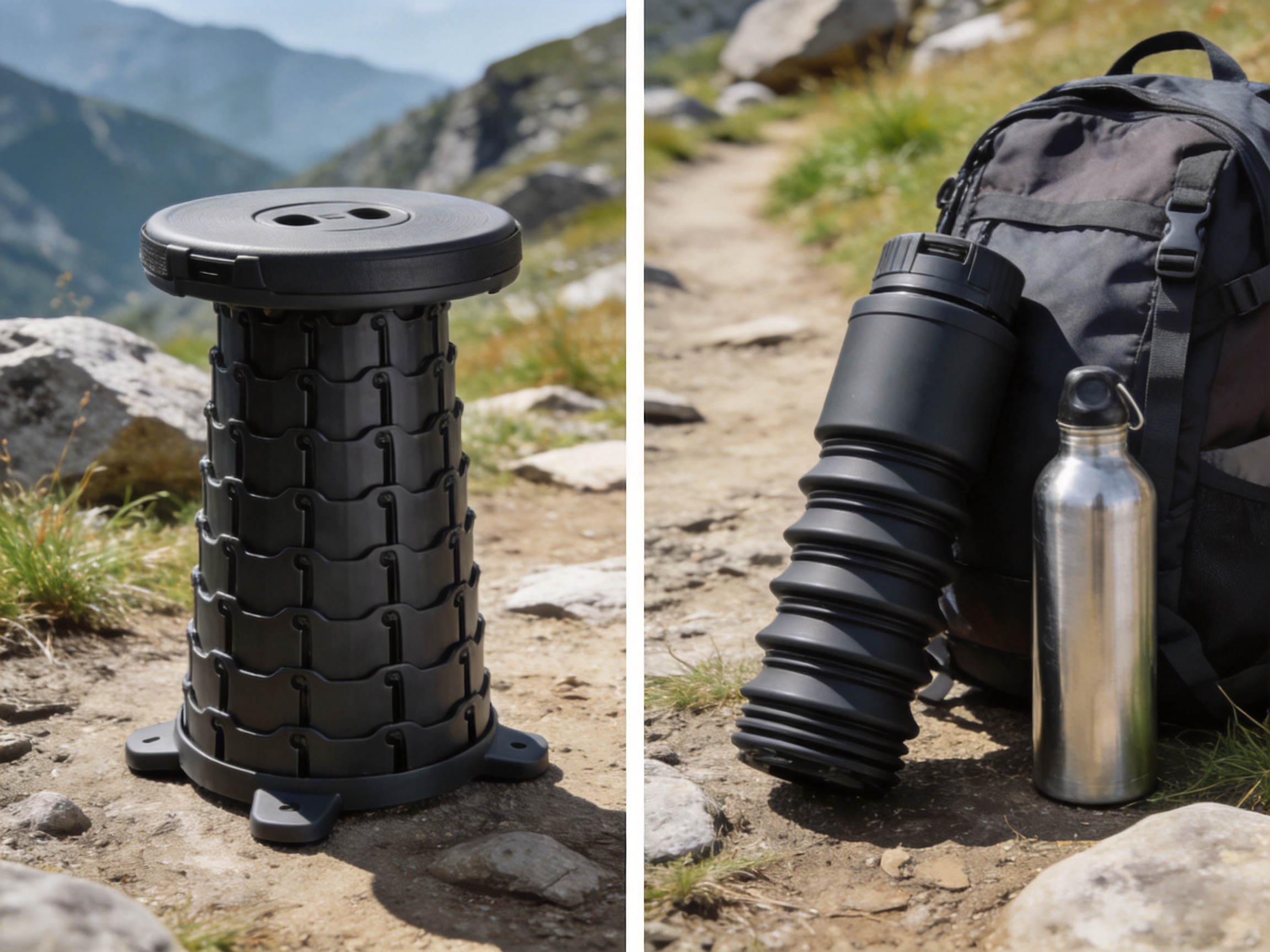
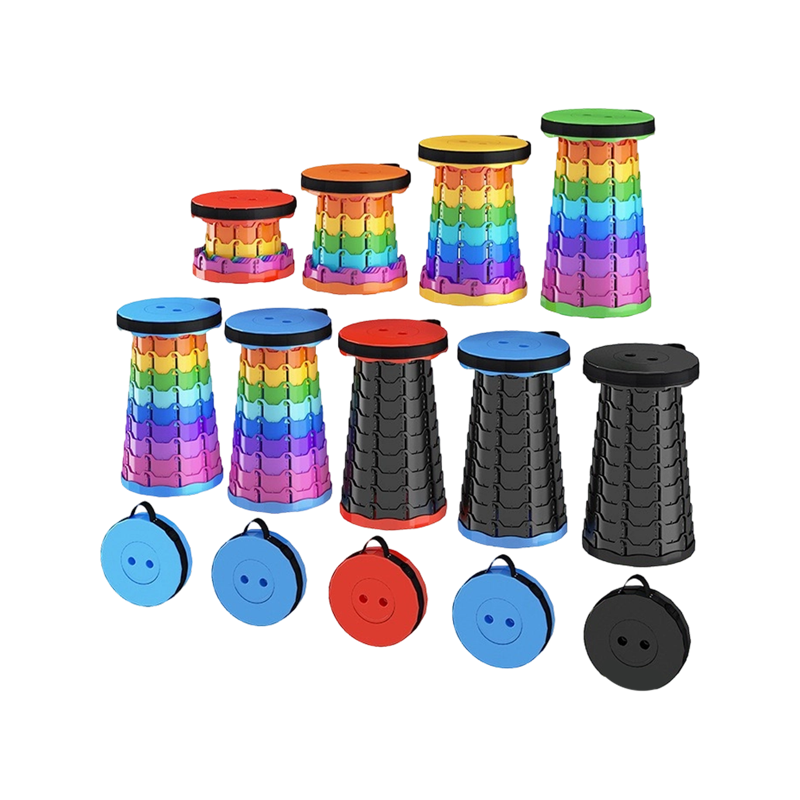
The product described here is a foldable, extendable outdoor stool made with thickened PP material and an innovative folding structure. When deployed, it provides a stable sitting platform with high seat load-bearing capacity. When collapsed, it becomes similar in size to a water bottle, making it easy to carry for camping trips, mountain approaches, fishing sessions, outdoor events, travel lines, roadside breaks, and temporary rest during long walks. Its most important value is not only portability, but also the balance between portability, strength, height adjustability, and outdoor practicality.
In the competitive camping and mountaineering accessories market, many compact stools sacrifice either stability, comfort, durability, or usability. Some are too low for adults to use comfortably for longer periods. Others are too bulky to fit into a daypack. Some folding stools rely on thin fabric or weak metal frames that can deform, rust, or wobble under repeated use. This extendable stool takes a different approach by using a structural telescoping concept, thickened PP material, and a compact cylindrical folded profile. The result is a practical companion that emphasizes fast deployment, easy carrying, adaptable height, and dependable everyday outdoor use.
Product Overview and Core Positioning
This portable folding extendable stool belongs to the mountaineering accessories and camping gear category, but its range of use is much wider than mountain climbing alone. It is suitable for hikers who need quick rest stops on trails, campers who want extra seating around the campsite, anglers who need a small and movable seat near water, travelers who must wait in long queues, and outdoor workers who require a compact temporary stool. Its folded shape allows users to treat it like a bottle-sized object rather than a bulky chair, which is a major advantage when pack volume matters.
The stool features an innovative folding structure that allows it to unfold and become usable almost immediately. The user does not need to assemble separate legs, attach fabric, tighten screws, or carry a tool kit. This is particularly important outdoors, where cold weather, gloves, muddy ground, limited daylight, and fatigue can make complicated gear frustrating. With a simple expansion and locking action, the stool converts from compact storage mode to seating mode. After use, it folds back down quickly, allowing the user to keep moving without wasting time.
The height can be adjusted freely within its intended range, helping the stool adapt to different terrain and user needs. On a flat campsite, a higher setting may be comfortable for eating or resting. On uneven ground, a lower profile may feel more stable. During fishing, the user may prefer a moderate height to reduce strain on the knees. During queuing or temporary waiting, the stool can be adjusted to a practical sitting position without occupying much space. This flexibility makes the stool more versatile than fixed-height mini stools.
Its thickened PP construction supports strength, durability, and reliable use. Polypropylene is widely valued in outdoor and consumer products because it can provide a favorable combination of toughness, impact resistance, light weight, and processability. When properly designed and manufactured, PP components can form strong interlocking structures and resist many everyday outdoor conditions. The thickened material design helps improve load-bearing capacity and reduces the feeling of fragility that users often experience with cheaper compact stools.
Why Compact Seating Matters in Outdoor Gear
Outdoor equipment is often judged by large features: shelter waterproofing, backpack capacity, boot grip, stove efficiency, or sleeping bag warmth. Yet the ability to sit comfortably at the right moment can change the entire experience of a trip. During a mountain approach, sitting on wet rocks or cold ground can drain warmth and energy. Around a campsite, standing all evening is inconvenient. While fishing, remaining crouched or standing for hours becomes uncomfortable. In travel queues, elderly users, children, and tired adults may need immediate rest. A compact stool offers a simple but meaningful improvement.
The challenge is that seating usually creates a conflict between comfort and portability. Full-size camping chairs offer comfort but take up considerable space. Ultralight tripods can be portable but may feel unstable or uncomfortable. Fabric folding chairs may have protruding frames that are awkward to pack. Inflatable seats require inflation and can puncture. A telescoping folding stool solves the problem from another direction: it creates a structured seat that collapses vertically into a small cylinder. This shape is efficient for storage and easy to place in the side pocket of a backpack, inside a vehicle compartment, or alongside other camping gear.
For mountaineering and hiking users, every item must justify its volume and weight. Although a stool is not always considered essential for technical climbing, it becomes extremely useful in base camp, trailhead preparation, rest breaks, photography waiting points, outdoor cooking areas, and group support activities. It can also be helpful for guides, event staff, outdoor educators, and rescue support teams who need portable seating during long periods of standby. A stool that folds to the size of a water bottle is far easier to justify than a conventional chair.
Key Product Advantages at a Glance
| Feature | Practical Benefit | Competitive Advantage |
|---|---|---|
| Folding extendable structure | Fast setup and quick storage | No complex assembly compared with many frame-style stools |
| Adjustable height | Adapts to different users, activities, and terrains | More flexible than fixed-height compact stools |
| Thickened PP material | Improved strength, impact resistance, and stable support | More durable than thin plastic or weak fabric constructions |
| Water-bottle-sized folded form | Easy to store in backpack, car, boat, or gear bin | More portable than traditional camping chairs |
| High seat load-bearing capacity | Reliable sitting support for everyday outdoor use | Greater confidence than ultra-cheap lightweight stools |
| Multi-scenario usability | Suitable for camping, hiking, fishing, queuing, and travel | Broader application value than activity-specific seats |
Structural Design: Simple Operation, Strong Function
The defining feature of this stool is its folding extendable structure. Instead of relying on separate legs and fabric, it uses a compact stacked structure that extends vertically and locks into position. This kind of structure requires careful balance. It must be easy enough for users to operate without instruction, yet secure enough to remain stable when seated. It must collapse smoothly, yet not collapse accidentally under load. It must be compact when folded, yet wide and supportive enough when opened. Achieving this balance depends on both product design and manufacturing control.
In practical use, fast deployment matters. At a mountain rest point, users often want to stop briefly, drink water, adjust gear, check a map, or eat a snack. If a stool requires multiple steps or separate pieces, it may remain unused. The advantage of an immediate-use folding stool is that it reduces the barrier between carrying the product and benefiting from it. The user can remove it from a pack, open it, adjust the height, sit, and then store it again with minimal interruption.
Compared with many competing stools, this product avoids the common weakness of flexible fabric sagging. Fabric-based stools can be lightweight, but their seating surface may stretch, absorb moisture, retain odors, or wear at stitching points. Metal-framed stools can offer strength, but hinges and rivets may loosen, and metal parts may corrode or become uncomfortable in cold weather. A well-designed PP telescoping stool provides a more integrated structural solution, with fewer loose external components and a cleaner folded shape.
The stool’s cylindrical folded profile also contributes to user convenience. Cylindrical objects are easier to slide into side pockets, bottle holders, vehicle storage areas, and gear bags. Rectangular folding stools may fit poorly among soft goods, cookware, and clothing. The water-bottle-sized storage format means the stool can be treated as a frequent-carry item rather than a special bulky accessory reserved only for car camping.
Material Strength: The Role of Thickened PP
Material selection is critical in outdoor accessories. A stool experiences direct compression, bending, torsion, repeated opening and closing, ground contact, and occasional impact during transport. The use of thickened PP material supports the product’s goal of high seat load-bearing capacity and repeated practical use. Polypropylene has a favorable strength-to-weight relationship and is commonly used where toughness, moldability, and resistance to everyday wear are required.
Thickened material does not simply mean adding mass. In a good design, thickness is used strategically in high-stress areas, locking interfaces, rim structures, and load-transfer pathways. The stool must distribute the user’s weight through the seat surface and down through the extended structure. If the material is too thin, the stool may feel unstable or may deform over time. If the material is too heavy, portability is reduced. The product’s value lies in finding the correct balance between structural reinforcement and carry-friendly dimensions.
Outdoor users are highly sensitive to perceived reliability. A stool that creaks, flexes excessively, or feels uncertain will not inspire confidence, even if it is technically light. Thickened PP helps create a more solid sitting experience. It can also improve resistance to small impacts, such as being dropped on hard ground, bumped against rocks, or packed tightly with cookware and tools. For camping and hiking accessories, these everyday abuses are often more important than laboratory specifications alone.
Another advantage of PP is its compatibility with mature injection molding and controlled production. This allows consistent component geometry, repeatable locking structures, and scalable manufacturing. For global buyers, repeatability matters because a single good sample is not enough. A product must be produced batch after batch with stable quality, consistent feel, and reliable performance. This is where advanced manufacturing processes and supplier discipline become essential.
Height Adjustability and Terrain Adaptation
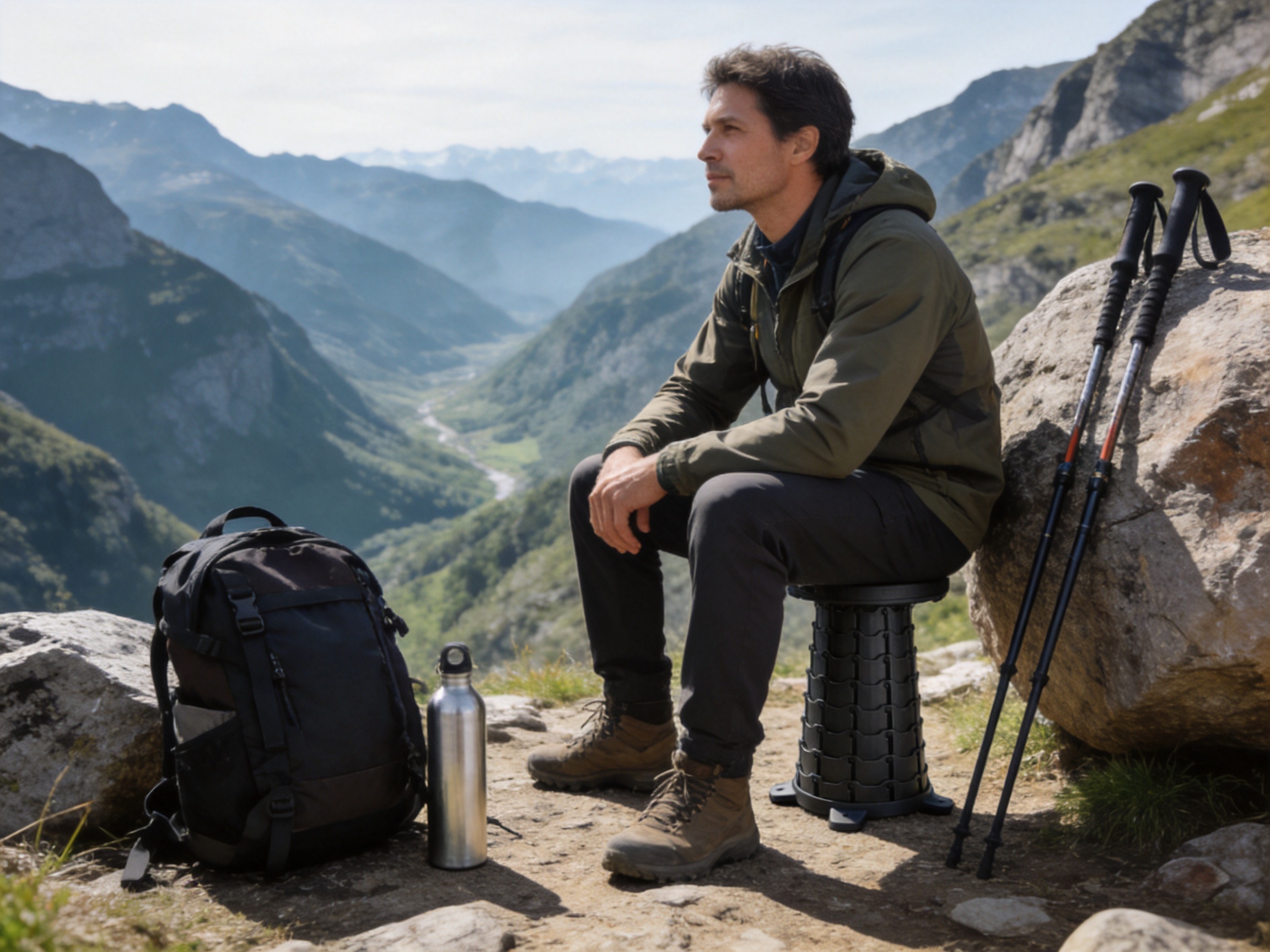
One of the product’s most practical advantages is adjustable height. Outdoor environments rarely provide ideal seating conditions. Ground may be sloped, rocky, damp, sandy, grassy, or uneven. Users also vary in body size, mobility, and preferred sitting posture. A fixed-height stool forces all users and all environments into one geometry. An adjustable stool gives the user more control and improves comfort across different situations.
In hiking, a lower height can be useful during short rest breaks, especially when the user wants stability and quick access to a backpack placed nearby. In camping, a higher setting may be preferable when eating at a low table or preparing food. For fishing, height can be adjusted depending on the water edge, rod position, and duration of sitting. For queuing, the stool can be extended enough to reduce pressure on knees and hips while remaining compact in crowded spaces.
Adjustability also improves inclusiveness. Outdoor gear is increasingly used by families, older adults, casual campers, and urban travelers, not only by elite climbers or minimalist hikers. A stool that can accommodate different sitting preferences is more valuable in retail and wholesale markets because it serves a broader customer base. One product can satisfy multiple user groups, reducing inventory complexity for distributors and outdoor retailers.
From an engineering point of view, height adjustability requires reliable engagement between extension sections. Each height position must remain secure during normal use. The locking relationship must resist accidental slippage while remaining easy to release when folding. Poorly manufactured adjustable stools may jam, misalign, or lose locking strength after repeated cycles. A professionally produced stool must maintain smooth operation and stable support throughout its expected life.
Portability: Folded to the Size of a Water Bottle
The folded size of this stool is one of its strongest selling points. In outdoor gear, packability often determines whether a product is used regularly or left at home. A full-size chair may be comfortable but is not suitable for many hiking routes. A compact stool that folds to a water-bottle-like size can travel in places where conventional seating cannot. It can fit in a backpack side pocket, camping storage box, car trunk, fishing bag, bicycle basket, or travel luggage.
This compactness is especially valuable for users who combine activities. A person may hike to a fishing location, camp overnight, attend an outdoor festival, or wait at a viewpoint for photography. Carrying a large chair would be inconvenient, but carrying a compact stool is reasonable. The stool becomes part of a flexible outdoor kit rather than a burden.
Portability also improves safety and energy management. Fatigue can affect decision-making on trails and during travel. Having a clean, dry, stable seat available allows users to rest without searching for a suitable rock, log, curb, or patch of ground. In cold or wet conditions, sitting directly on the ground can reduce body warmth and comfort. A raised stool provides a simple barrier between the user and the environment.
For retailers and importers, compact folded size also supports logistics. Products that occupy less space can be shipped, stored, displayed, and bundled more efficiently. A water-bottle-sized stool is easier to package attractively and easier for consumers to understand at a glance. The compact shape can also support multi-unit carton packing and reduce wasted storage volume compared with irregular chair frames.
High Load-Bearing Capacity and User Confidence
Load-bearing capacity is one of the most important performance expectations for any stool. Users must feel safe when sitting down, shifting weight, and standing up. The thickened PP material and structural design aim to provide high seat load-bearing capacity while preserving portability. This is a crucial advantage over low-cost competitors that may look similar but feel weak or unstable in use.
Load support depends on multiple factors, including material thickness, geometry, locking engagement, seat diameter, base contact, and production consistency. A stool can fail if any one of these areas is neglected. For example, a strong seat surface is not enough if the locking structure is weak. A thick body is not enough if the base is unstable. A good design must create a continuous load path from the seated user through the structure to the ground.
User confidence is also psychological. When users sit outdoors, they often sit quickly, sometimes while wearing a backpack or holding gear. They may not lower themselves gently every time. A stool intended for outdoor use must tolerate realistic behavior rather than ideal laboratory handling. A robust, thickened design helps reduce the risk of wobble, flex, and premature wear, which improves user satisfaction and lowers return rates.
Compared with fabric stools, the solid PP seat can feel more direct and supportive. Compared with thin plastic mini stools, the thickened construction can provide more reassuring strength. Compared with metal stools, it avoids the same level of cold-touch discomfort and corrosion concerns. Each seating technology has advantages, but for compact everyday outdoor use, this product offers an appealing balance of durability, convenience, and cost effectiveness.
Use Case: Hiking and Mountain Approaches
During hiking and mountain approaches, rest breaks are essential. Even experienced hikers benefit from short pauses to hydrate, adjust socks, check route information, eat, or reduce muscle fatigue. Many trails do not provide benches, and natural sitting surfaces may be wet, dirty, sharp, or unstable. A compact adjustable stool gives hikers a controlled sitting option without requiring them to unload heavily or search for an ideal location.
The stool’s small folded size makes it suitable for day hikes where pack space is limited. Unlike a full camping chair, it does not dominate the backpack. It can be carried in a side pocket, attached externally, or placed near frequently used items. Since it unfolds quickly, the user is more likely to use it during short stops rather than saving it only for camp.
Height adjustment is helpful on sloped trails, rocky rest areas, and forest floors. A hiker may select a lower position for stability or a higher position for easier standing. The product is especially useful for people who prefer not to sit on the ground due to knee issues, cold weather, insects, damp soil, or hygiene concerns. It can also be helpful for outdoor photographers waiting for light conditions, birdwatchers staying quietly in one position, or guides managing a group during pauses.
For mountaineering accessory markets, the stool is not positioned as a technical climbing device but as a practical support product. It belongs in the broader ecosystem of comfort, organization, and endurance equipment that helps outdoor users maintain energy and convenience before, during, and after demanding activities.
Use Case: Camping and Camp Life
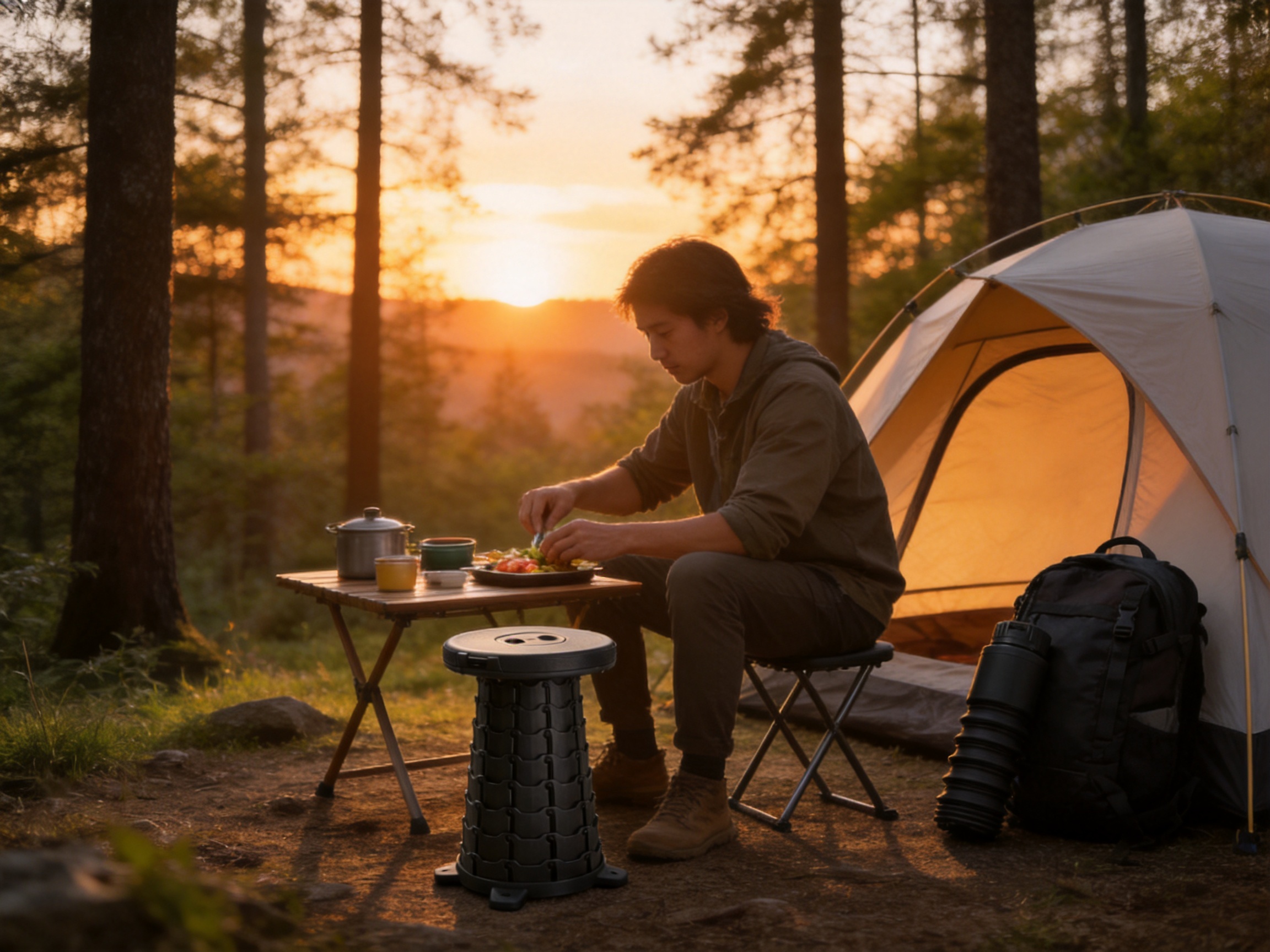
Camping creates many moments when extra seating is needed. Around a tent, near a stove, beside a table, or at a scenic rest point, people need places to sit. Full-size chairs are comfortable for car camping but may be excessive for lightweight trips. The adjustable folding stool offers a compact alternative that can be carried in greater numbers and stored easily when not in use.
At camp, the stool can be used for cooking preparation, eating, resting, changing shoes, organizing gear, or sitting near a fire area where appropriate and safe. Its fast folding design means it can be moved around the campsite as tasks change. Unlike larger chairs, it does not require a wide footprint or complex arrangement. This is useful in small campsites, crowded festival areas, or narrow tent platforms.
The thickened PP construction also supports easy cleaning. Camping equipment often gets dirty from soil, sand, food residue, and moisture. A solid plastic surface can generally be wiped clean more easily than fabric seating. This is a practical advantage for family users and group operators who need gear that can be cleaned quickly between uses.
For retailers, the camping market values products that are understandable, demonstrable, and giftable. A stool that opens quickly, adjusts height, and folds compactly has strong in-store demonstration appeal. Customers can immediately understand the benefit, which can support conversion in both online and offline sales channels.
Use Case: Fishing, Queuing, and Daily Outdoor Waiting
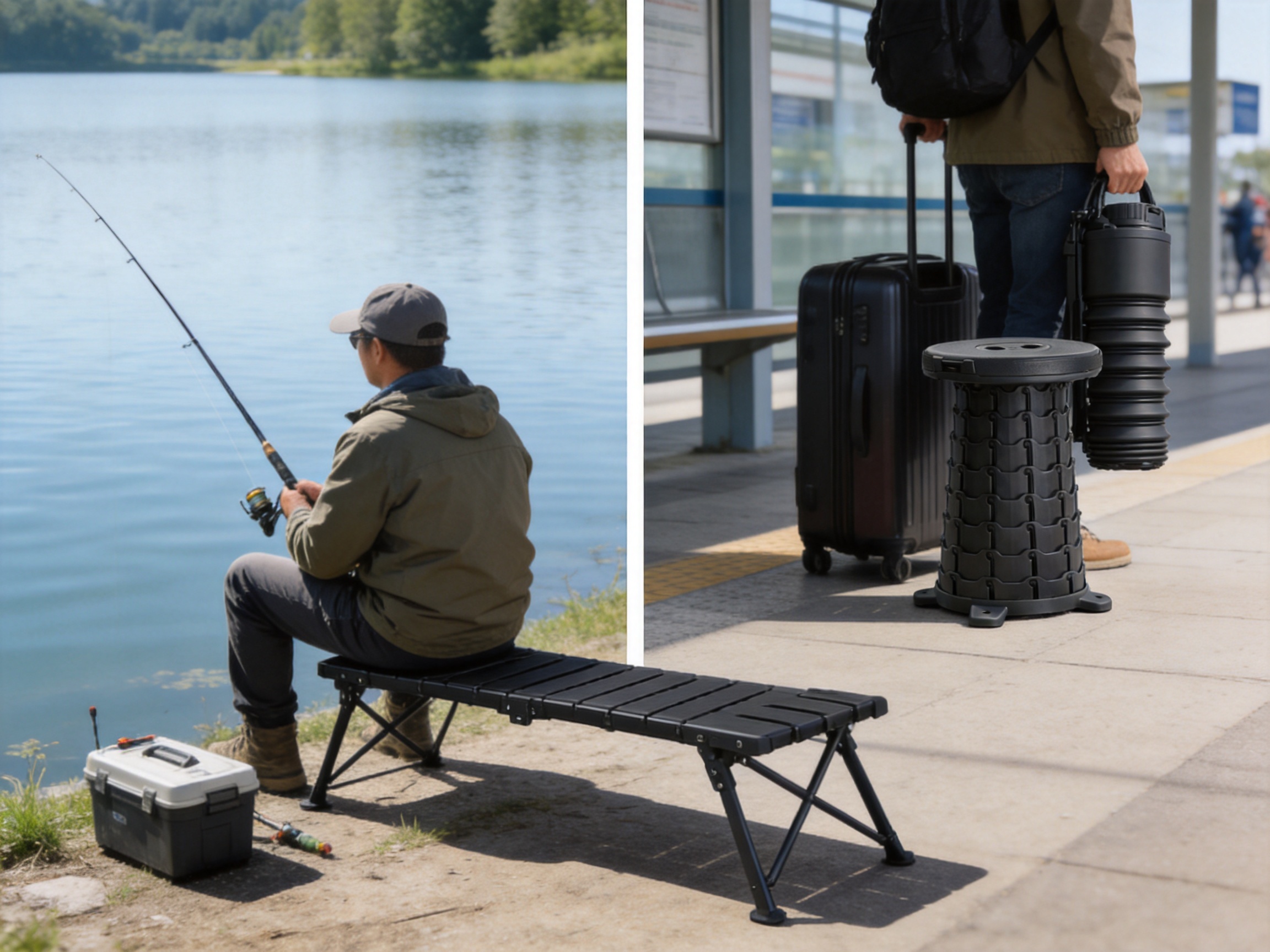
Fishing is one of the most suitable applications for this type of stool. Anglers often move between spots, wait for long periods, and carry many small items. A heavy chair may be inconvenient, especially when walking along banks, piers, reservoirs, or coastal areas. A compact folding stool provides portable seating without adding excessive volume to fishing gear. The adjustable height allows the angler to choose a comfortable posture based on rod position and ground condition.
Queuing is another important use case. In urban and travel settings, people may wait outside stores, stations, event venues, tourist attractions, hospitals, or public offices. Standing for long periods can be tiring, especially for older adults or anyone with reduced stamina. A water-bottle-sized folding stool can be carried discreetly and deployed when waiting becomes uncomfortable. It occupies less space than a chair and is easier to move as the line progresses.
The stool can also support outdoor workers, vendors, photographers, event staff, and parents supervising children at parks or sports fields. Because it is not limited to one sport, it has strong cross-category sales potential. It can be marketed as camping gear, hiking support equipment, fishing seating, travel waiting gear, and general portable seating. This multi-scenario value makes it more attractive than products designed for only one narrow application.
Competitive Comparison: Where This Stool Stands Out
The outdoor stool market includes several common types: fabric tripod stools, aluminum frame folding stools, fixed plastic stools, inflatable cushions, and telescoping plastic stools. Each product type has strengths, but many have limitations. The portable outdoor storage folding extendable stool stands out by combining compact storage, adjustable height, quick operation, and strong PP construction into one practical form.
Fabric tripod stools can be very light, but they often have small seating surfaces and may feel unstable on soft or uneven ground. The fabric can sag or tear, and the frame points may sink into soil. Aluminum frame stools are more rigid, but hinges, rivets, and fabric joints may wear over time. They also tend to fold into longer shapes that are less convenient to pack. Fixed plastic stools can be strong and inexpensive, but they are bulky and lack height adjustment. Inflatable cushions are compact but do not provide the same raised sitting posture and can be vulnerable to puncture.
This adjustable folding stool addresses many of these weaknesses. Its folded cylinder is easier to carry than many frame stools. Its adjustable height is more versatile than fixed stools. Its thickened PP structure offers a more solid seating platform than fabric-only designs. Its immediate-use folding mechanism is faster and simpler than products requiring assembly. For users who want a practical balance rather than an extreme specialization, it offers a compelling solution.
Another competitive advantage is the product’s suitability for scalable manufacturing. Some outdoor seating products require complex sewing, metal forming, coating, assembly, and hardware inspection. Those processes can create quality variation if not tightly controlled. A PP structural stool produced with precise molds and controlled assembly can achieve consistent dimensions and repeatable mechanical performance. This supports large-volume export, private label programs, and stable long-term supply.
Manufacturing Philosophy Behind the Product
CragHaven Outdoor, based in Hangzhou, China, approaches outdoor product development through real use scenarios rather than catalog decoration. The company focuses on mountaineering, hiking, and camping environments, emphasizing functional, reliable, and long-term value products for global markets. This approach is particularly relevant for a folding adjustable stool because the product must succeed in repeated ordinary use, not only in a showroom or product photo.
The company’s philosophy is based on three practical principles: products should be designed for weather, terrain, and time; every feature should solve a real-world usage problem; and materials should be chosen for durability and reliability rather than short-lived trends. For this stool, those principles appear in the compact folded size, fast deployment, adjustable height, thickened PP material, and focus on high load-bearing capacity.
Designing for weather means considering moisture, dirt, temperature variation, and cleaning. Designing for terrain means thinking about uneven ground, campsite conditions, trail rest areas, and compact stability. Designing for time means considering repeated opening and folding, long-term consumer satisfaction, and consistent production quality. A stool that works only during a first demonstration is not enough. It must remain useful after many trips, many folds, and many storage cycles.
The company also emphasizes sampling, testing, and optimization as standard processes that cannot be omitted. This matters because folding structures are sensitive to small design variations. Locking engagement, extension smoothness, seat rigidity, and folded compactness all require iterative adjustment. By testing samples and optimizing details, the manufacturer can reduce uncertainty before mass production and improve reliability for distributors, brands, and end users.
Advanced Manufacturing Processes and Quality Control
Producing a reliable folding extendable stool requires more than simply molding plastic parts. It involves material control, mold precision, structural design, assembly accuracy, functional testing, and packaging consistency. The thickened PP components must be formed with stable dimensions so that the folding and locking mechanism operates smoothly. If parts are too loose, the stool may wobble. If parts are too tight, users may struggle to open or close it. Precision and repeatability are essential.
Advanced manufacturing begins with material selection and incoming inspection. PP material should meet the required performance expectations for toughness, consistency, and process stability. Batch variation can affect color, flexibility, impact resistance, and dimensional shrinkage. A serious manufacturing partner controls material sourcing and checks whether the material is suitable for the intended structural use.
Injection molding quality is another key factor. Mold temperature, injection pressure, cooling time, and part ejection can influence dimensional accuracy and surface quality. For an extendable stool, the geometry of interlocking sections must remain consistent. Warping, sink marks in critical areas, flash on locking edges, or inconsistent wall thickness can reduce function. Process control helps ensure that each unit opens, locks, supports weight, and folds as intended.
After molding, assembly and functional inspection become critical. Each stool should be checked for smooth extension, secure locking, stable standing, seat surface integrity, and proper folding. Load-related testing may be used to verify structural performance. Cycle testing can help evaluate repeated opening and closing. Packaging checks ensure the product arrives in marketable condition after international shipping. For global buyers, these steps reduce returns, complaints, and reputation risk.
Why Supply Chain Reliability Matters
Outdoor brands and retailers need more than a good product concept. They need reliable supply. A compact stool may be sold in seasonal campaigns, camping promotions, fishing categories, travel accessories, or private label programs. If production is inconsistent, delivery is late, or quality varies across batches, the buyer faces lost sales and customer complaints. CragHaven Outdoor aims to reduce uncertainty in the supply chain by participating in both design and manufacturing rather than acting only as a factory sourcing intermediary.
This integrated involvement is important because product success depends on communication between concept, engineering, sampling, production, inspection, and market feedback. When design intent is separated from manufacturing reality, details may be lost. For example, a buyer may request stronger load capacity, smoother folding, specific packaging, or adjusted color. A partner that understands both usage scenarios and production constraints can respond more effectively.
The company’s location in Hangzhou, Zhejiang Province, places it within China’s mature and efficient manufacturing ecosystem. This supports access to material suppliers, tooling resources, production capacity, logistics networks, and export experience. However, manufacturing ecosystem alone is not enough. The value comes from combining that ecosystem with outdoor product understanding, sampling discipline, and Western-market-oriented communication.
For importers, distributors, and brands, professional communication reduces friction. Clear specifications, realistic lead times, sample confirmation, quality standards, packaging requirements, and after-sales feedback processes are all essential. A manufacturing partner that understands global market expectations can help buyers avoid misunderstandings and build long-term, stable product programs.
Design for Real Outdoor Problems, Not Catalog Decoration
A common weakness in consumer outdoor accessories is overemphasis on appearance or exaggerated specifications while ignoring actual field use. A stool can be brightly colored, heavily advertised, or described with impressive claims, but if it is difficult to open, uncomfortable to carry, unstable on common ground, or weak after repeated use, it will disappoint users. The strongest outdoor products are those that solve simple problems reliably.
This adjustable folding stool solves several real problems. It provides a clean place to sit when the ground is wet or dirty. It reduces fatigue during waiting. It packs small enough to be carried frequently. It adjusts to different heights rather than forcing one posture. It opens quickly when the user is tired. It uses thickened PP material to improve confidence and durability. These are not decorative features; they are functional responses to common outdoor and travel situations.
For product managers, this makes the stool easy to position. It does not need to be explained with complex technical language. The benefit is visible: small when folded, useful when opened, adjustable when needed, and strong enough for practical use. This clarity is valuable in online listings, retail displays, wholesale catalogs, and cross-border e-commerce platforms.
User Experience: From Backpack to Seat in Seconds
The best compact gear becomes part of a user’s routine. A hiker reaches for a bottle, map, snack, or jacket without hesitation because the item is accessible and easy to use. This stool aims for the same kind of routine value. When folded, it is small enough to be carried near the top of a pack or in an external pocket. When needed, it can be removed and opened quickly. After a rest, it folds back into a compact shape and returns to storage.
This convenience increases actual usage frequency. Many outdoor products fail not because they are useless, but because they are inconvenient. A chair that takes too long to set up may remain in the car. A stool that is awkward to pack may be left at home. A seat that is too low may be used once and forgotten. By focusing on rapid setup, height adjustment, and compact storage, this product increases the chance that users will carry and use it often.
The user experience also benefits from easy cleaning and simple handling. Outdoor gear is exposed to mud, grass, sand, water, and food. A smooth PP structure can generally be wiped down more conveniently than fabric-and-frame seating. Since there are no separate poles or fabric sleeves to manage, the product is straightforward for users of different ages and experience levels.
Retail and Wholesale Market Potential
This stool has strong potential across several sales channels. In outdoor retail, it can be displayed with camping chairs, hiking accessories, picnic gear, fishing equipment, and travel products. In cross-border e-commerce, it can appeal to consumers searching for portable seating, folding stools, adjustable camping stools, hiking stools, fishing stools, and queue stools. In wholesale programs, it can serve as a practical, high-volume accessory with broad consumer appeal.
Its compact size supports attractive packaging and efficient shipping. Retailers can stock multiple units without dedicating the same shelf space required by full-size chairs. The product is also suitable for bundle offers, such as camping kits, fishing starter sets, festival packs, emergency travel kits, and family outdoor packages. Because it is practical and easy to demonstrate, it may also perform well in promotional channels.
For private label buyers, the product offers opportunities for color customization, packaging design, instruction card development, barcode integration, and market-specific positioning. The core product concept is universal, but messaging can be adapted. In some markets, the focus may be camping comfort. In others, it may be travel queuing, fishing convenience, or compact emergency seating.
Safety and Proper Use Considerations
Like all portable seating products, the stool should be used responsibly. Users should place it on stable ground, ensure it is fully opened and locked before sitting, avoid sudden side loading, and use it within the intended load range. It should not be used as a ladder, step platform, climbing aid, or support for jumping. Outdoor gear performs best when used according to its design purpose.
On uneven terrain, users should choose the most stable available surface and adjust height appropriately. Lower settings may provide a more secure feeling in some environments. On soft soil, sand, or mud, users should check whether the base remains level and supported. In wet or icy conditions, extra caution is necessary, as with any stool or chair. These practical guidelines help maximize product life and user safety.
Maintenance is simple. Users should remove dirt after outdoor use, wipe the stool dry before long storage, and avoid prolonged exposure to unnecessary extreme conditions when not in use. Periodic inspection of the locking structure and seat surface is recommended, especially after heavy use or accidental impact. Proper care supports reliable long-term performance.
Environmental and Long-Term Value Perspective
Outdoor products should be evaluated not only by purchase price but also by durability, usability, and replacement frequency. A very cheap stool that breaks quickly creates waste, inconvenience, and customer dissatisfaction. A better-designed stool made with appropriate material thickness and controlled manufacturing can provide longer service life and better value. Long-term use is one of the most practical forms of sustainability in outdoor accessories.
CragHaven Outdoor’s stated emphasis on durability, reliability, and long-term use aligns with this perspective. Rather than chasing short-term trends, the company focuses on products that remain useful across seasons and activities. A compact adjustable stool is an example of a product with continuing value because the need for portable seating does not disappear. Camping, hiking, fishing, and travel all involve waiting, resting, and adapting to limited comfort.
By designing products for real environments and optimizing them through sampling and testing, manufacturers can reduce premature failure and unnecessary returns. For global buyers, this contributes to better brand reputation and lower after-sales costs. For consumers, it means greater trust and more satisfying outdoor experiences.
Company Strengths Supporting Product Success
CragHaven Outdoor is an outdoor brand and cross-border manufacturing partner based in Hangzhou, China. The company focuses on mountaineering, hiking, and camping scenarios, delivering functional and reliable outdoor gear for global markets. Its name reflects balance and stability in nature, and that philosophy guides design, material selection, and manufacturing decisions. For a product such as an adjustable folding stool, balance and stability are not abstract ideas; they are core performance requirements.
The company’s strength lies in connecting real outdoor usage understanding with China’s mature manufacturing system. This combination supports products that are not only attractive in concept but also stable, replicable, and scalable in production. The company does not treat manufacturing as a detached final step. Instead, design concepts are transformed through sampling, testing, adjustment, and production control.
Another advantage is Western-market-oriented communication. Outdoor buyers in North America, Europe, and other global markets often require clear product positioning, quality standards, packaging expectations, compliance awareness, and responsive communication. A supplier that can communicate professionally and understand these expectations reduces project risk. This is especially important for cross-border buyers who may not be able to inspect every detail in person.
The company aims to prioritize long-term, stable, and sustainable partnerships. In practical terms, this means focusing on consistent product quality, realistic production planning, and continuous improvement. For buyers sourcing a portable folding stool, such partnership values can be as important as the product itself. A good manufacturing partner helps protect the buyer’s brand and supports repeat business.
How This Stool Supports Brand Differentiation
For outdoor brands and retailers, differentiation is essential. Many camping accessories look similar online, and consumers often compare price, images, and basic specifications quickly. A product must communicate clear reasons to choose it. This stool offers several differentiation points: compact water-bottle-sized folding, height adjustability, thickened PP construction, quick deployment, high load-bearing design, and multi-scenario usability.
These features can be translated into clear marketing messages. For hikers, the message is portable rest without pack burden. For campers, it is extra seating without bulky storage. For anglers, it is movable comfort beside the water. For travelers, it is a discreet seat for long waits. For families, it is a simple, easy-to-clean outdoor stool. This flexibility allows brands to target multiple consumer groups with one product platform.
Manufacturing consistency further supports differentiation. If a brand can offer a stool that feels more solid, opens more smoothly, and lasts longer than low-cost competitors, customer reviews and repeat purchases improve. In online marketplaces, reliability often becomes visible through ratings. A better-manufactured product can create long-term advantage beyond initial price competition.
Packaging, Instructions, and Customer Education
Because the stool is simple to use, packaging and instructions do not need to be complicated. However, clear customer education still adds value. Packaging can highlight folded size, adjustable height, quick folding, thickened PP material, and multi-scenario use. Simple diagrams can show opening, locking, height adjustment, folding, and safe-use reminders. Good instructions reduce misuse and improve satisfaction.
For retail displays, showing the stool in both folded and opened states is especially effective. Consumers immediately understand the transformation from compact storage to usable seating. For online listings, images and short videos can demonstrate the same process. The product’s visual transformation is one of its strongest sales tools.
Wholesale buyers may also benefit from packaging that fits regional expectations. Some markets prefer minimalist recyclable packaging; others value colorful retail boxes. Some channels require multilingual instructions, barcode placement, warning labels, or carton marking. A capable manufacturing partner can support these details and help prepare the product for smooth market entry.
Q&A Section
Q1: What is the main purpose of this portable folding extendable stool?
The main purpose is to provide compact, adjustable, and reliable seating for outdoor and everyday waiting situations. It is suitable for hiking, camping, fishing, queuing, travel, outdoor events, and temporary rest breaks. It gives users a clean and stable place to sit without carrying a bulky chair.
Q2: What makes it different from ordinary camping stools?
Its major differences are the folding extendable structure, adjustable height, thickened PP material, and water-bottle-sized folded form. Many ordinary camping stools are fixed-height, bulky, fabric-based, or frame-based. This stool combines portability with practical support and fast deployment.
Q3: Why is thickened PP material useful for this product?
Thickened PP material improves structural confidence, impact resistance, and load-bearing performance while keeping the stool relatively lightweight and easy to manufacture consistently. It also supports easy cleaning after outdoor use.
Q4: Is the stool only for mountaineering?
No. Although it belongs to the mountaineering accessories category, it is suitable for many scenarios beyond mountaineering. It can be used for camping, hiking, fishing, queuing, travel, outdoor work, photography waiting, family picnics, and event seating.
Q5: How does the adjustable height improve comfort?
Adjustable height allows users to choose a seating position based on body size, activity, and terrain. A lower setting may feel more stable on uneven ground, while a higher setting may be more comfortable for eating, waiting, or standing up easily.
Q6: Why is folded size important?
Folded size determines whether users are willing to carry the product. Since this stool folds to approximately the size of a water bottle, it can fit into backpacks, vehicles, fishing bags, and storage bins more easily than traditional camping chairs.
Q7: What types of buyers can benefit from this product?
Outdoor retailers, camping brands, fishing gear distributors, travel accessory sellers, cross-border e-commerce operators, promotional product buyers, and private label brands can all benefit from this product because it has broad consumer appeal and multi-scenario usability.
Q8: How does CragHaven Outdoor support product reliability?
CragHaven Outdoor supports reliability through real-use product development, material selection, sampling, testing, optimization, manufacturing process control, and professional cross-border communication. The company focuses on long-term value rather than short-term catalog trends.
Q9: What should users remember before sitting on the stool?
Users should ensure the stool is fully opened and locked, place it on stable ground, avoid excessive side loading, and use it only as seating rather than as a ladder or step platform. Proper use improves safety and extends product life.
Q10: Why is this stool suitable for global markets?
It solves universal problems: fatigue, lack of seating, limited storage space, and the need for portable comfort. Its simple operation, compact size, and practical material design make it easy to understand and market across different regions.
Conclusion
The portable outdoor storage folding extendable stool is a compact solution to a common outdoor problem: people need to sit, rest, wait, and recover, but they do not always have space for a full-size chair. By combining an innovative folding structure, thickened PP material, adjustable height, high seat load-bearing capacity, and water-bottle-sized folded storage, the product delivers strong practical value for hiking, camping, fishing, queuing, and travel.
Its advantages over many competing stools are clear. It is more compact than traditional camping chairs, more adjustable than fixed stools, more structurally supportive than many fabric mini stools, and easier to deploy than products requiring assembly. Its design reflects real user needs rather than decorative complexity. For consumers, it offers convenience and comfort. For retailers and brands, it offers broad market positioning and efficient logistics. For wholesale buyers, it offers a product platform suitable for private label development and repeat sales.
Behind the product, CragHaven Outdoor provides manufacturing and development strengths rooted in outdoor usage understanding, material discipline, sampling, testing, optimization, and scalable production. Based in Hangzhou and connected to China’s mature manufacturing ecosystem, the company aims to reduce supply chain uncertainty and support long-term global partnerships. This combination of practical design and manufacturing reliability makes the adjustable folding stool a strong choice in the modern outdoor accessories market.
References
1. Ashby, Michael F. Materials Selection in Mechanical Design. Butterworth-Heinemann.
2. Crawford, R. J. Plastics Engineering. Butterworth-Heinemann.
3. McLellan, Todd. Things Come Apart: A Teardown Manual for Modern Living. Thames and Hudson.
4. Norman, Donald A. The Design of Everyday Things. Basic Books.
5. Petroski, Henry. Small Things Considered: Why There Is No Perfect Design. Vintage Books.
6. International Organization for Standardization. General Principles for Product Quality Management and Testing Practices.
7. Outdoor Industry Association. Outdoor Participation and Consumer Behavior Reports.
8. Ulrich, Karl T., and Eppinger, Steven D. Product Design and Development. McGraw-Hill Education.


- Phone: +86-15968800379
- E-mail: [email protected]
- Address: Room 1002, Huishang Building, Gongshu District, Hangzhou City, Zhejiang Province.
Copyright © CragHaven Outdoor All Rights Reserved. Outdoor Gear Manufacturers Wholesale Mountaineering Camping Gear Suppliers
