

 English
 Deutsch
 Español
 Français
Why a Black Vinyl Butterfly Canopy Is Built for Comfortable Outdoor Gatherings
Content
- 1 Designed Around Real Outdoor Conditions
- 2 Black Vinyl Coating and Solar Protection
- 3 210D High-Density Oxford Cloth
- 4 Steel Frame Stability and Structural Balance
- 5 Butterfly-Shaped Roof Geometry
- 6 Rainproof and Sunshade Use
- 7 Product Comparison Table
- 8 Manufacturing Philosophy and Product Development
- 9 Benefits for Retailers and Distributors
- 10 Practical Setup and Use Guidance
- 11 Maintenance and Long-Term Value
- 12 Q&A
- 12.1 What is the main purpose of this black vinyl butterfly canopy?
- 12.2 Why is black vinyl used instead of ordinary polyester fabric?
- 12.3 Is the canopy suitable for backpacking?
- 12.4 What does 210D Oxford cloth contribute?
- 12.5 Does the butterfly shape improve rain performance?
- 12.6 Why is a thicker steel frame important?
- 12.7 Can the canopy be used at the beach?
- 12.8 How should the canopy be stored?
- 12.9 What manufacturing support can CragHaven Outdoor provide?
- 12.10 How does this product compare with a low-cost generic canopy?
- 13 Why Choose CragHaven Outdoor as a Manufacturing Partner?
- 14 Conclusion
- 15 References
- 16 Product: Outdoor picnic camping black vinyl tent, rainproof and sunshade canopy, picnic butterfly curtain canopy
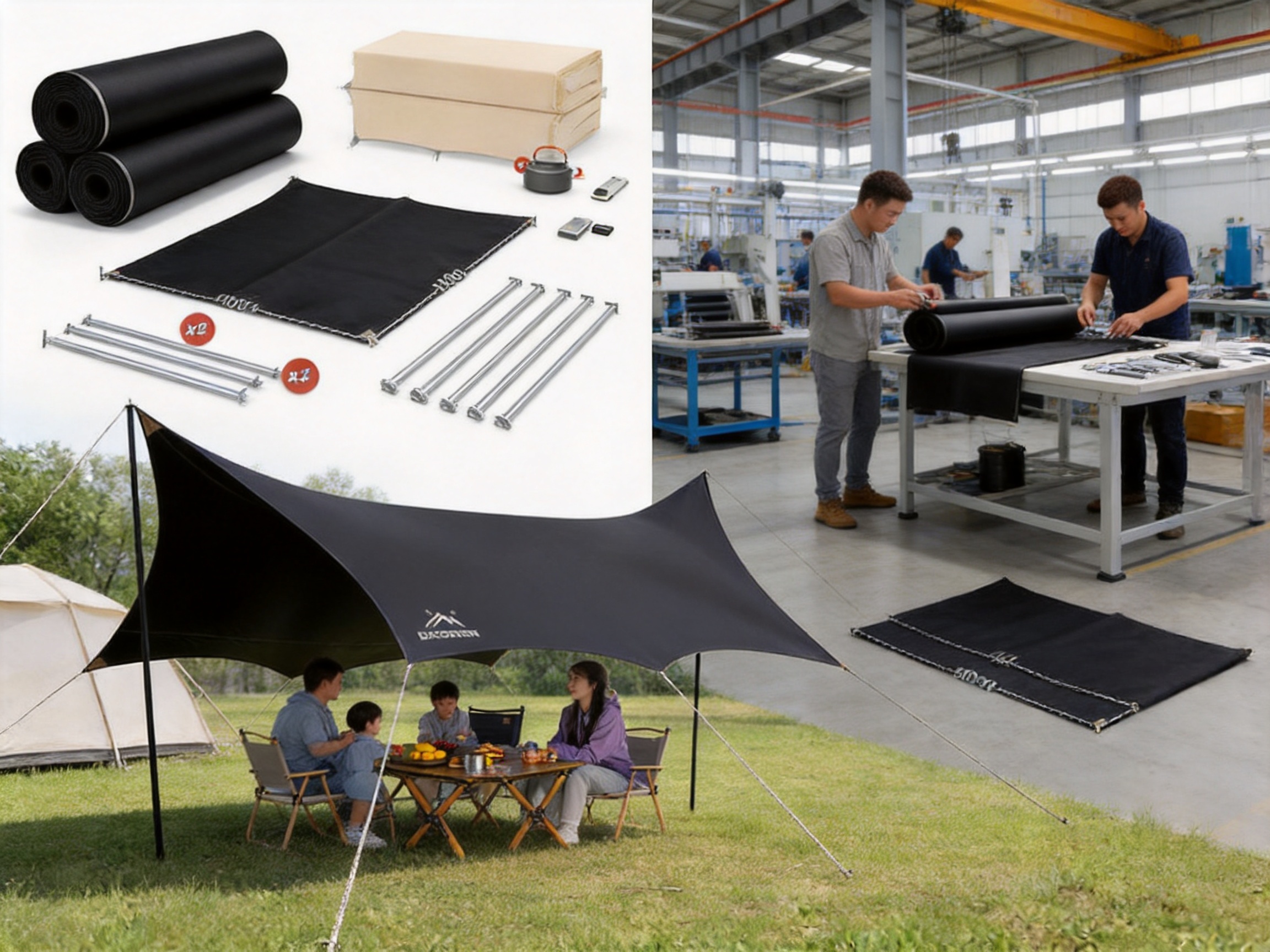
Outdoor shelter is often treated as a simple purchase: choose a canopy, unfold it, and enjoy a few hours outside. In practice, however, the quality of a canopy determines how comfortable, dependable, and useful an outdoor gathering will be. Sun intensity, changing weather, wind exposure, repeated setup, uneven ground, and limited shade can all expose weaknesses in an ordinary shelter. A product that looks adequate in a product photograph may provide insufficient protection when used at a beach, family picnic, campsite, park, or outdoor event.
The outdoor picnic camping black vinyl tent described in this article is designed to address these practical concerns through a combination of black vinyl coating, 210D high-density Oxford cloth, a reinforced steel frame, and a butterfly-shaped roof profile. Rather than relying on a single feature, the canopy brings together material selection, structural design, shade geometry, and intended-use awareness. The result is a stationary or semi-stationary outdoor shelter intended for people who value shade coverage, weather resistance, stability, and long-term usability more than the minimum possible packed weight.
This type of canopy occupies an important position between lightweight backpacking shelter and heavy-duty event structure. It is suitable for family picnics, beach relaxation, camping bases, outdoor dining, recreational gatherings, and other situations in which several people need reliable overhead protection. Its black vinyl surface helps reduce solar exposure, while the Oxford fabric substrate contributes to tear and wear resistance. The steel frame provides a stable foundation, and the butterfly design improves both shade distribution and rain runoff.
The product is developed by CragHaven Outdoor, a Hangzhou-based outdoor brand and cross-border manufacturing partner focused on mountaineering, hiking, and camping equipment. The company’s approach is based on designing for real weather, terrain, repeated use, and supply-chain reliability rather than simply assembling attractive catalog products. This practical orientation is especially relevant for retailers and distributors looking for outdoor gear that can be adapted to Western-market expectations and supplied consistently.
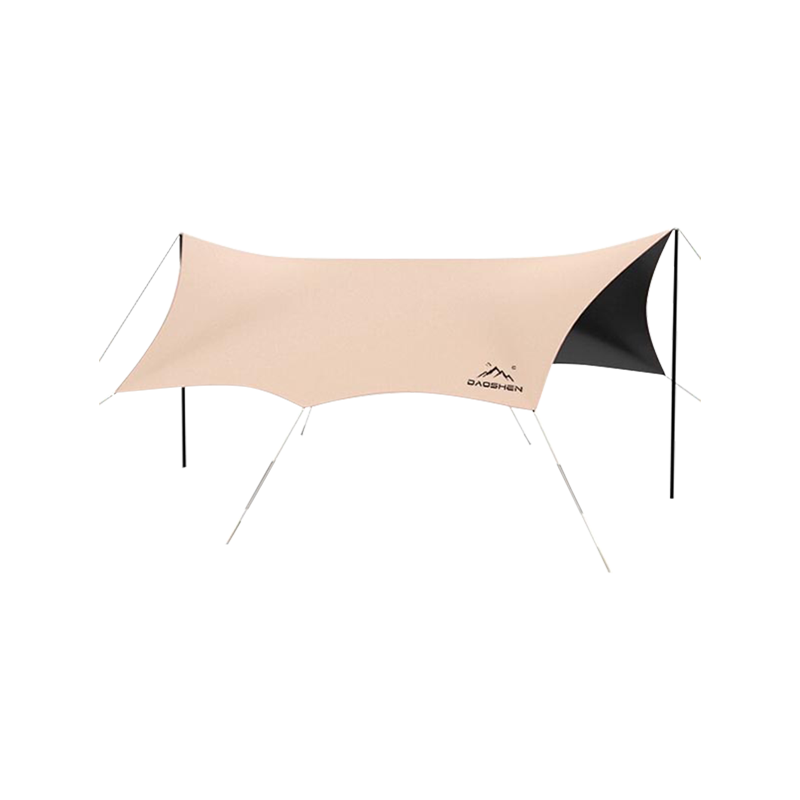
Outdoor picnic camping black vinyl tent, rainproof and sunshade canopy, picnic butterfly curtain canopy
Designed Around Real Outdoor Conditions
A canopy is exposed to a broader range of conditions than many buyers initially expect. During a summer picnic, the fabric may face hours of direct sunlight. At a beach, the structure may encounter wind, sand, salt-laden air, and unstable ground. At a campsite, the canopy may be set up and packed away repeatedly, sometimes on grass, gravel, compacted soil, or damp ground. A family gathering may also require enough headroom and shade to accommodate chairs, tables, coolers, children, and food preparation areas.
These conditions create several performance requirements. The fabric should reduce sunlight and withstand normal handling. The frame should maintain its shape under ordinary wind loads when properly anchored. The roof should encourage rainwater to run off rather than collect in a low central pocket. The setup should provide practical headroom without becoming unnecessarily complicated. Finally, the entire product should be durable enough for repeated seasonal use instead of being treated as a disposable, one-time shelter.
The black vinyl butterfly canopy responds to these requirements through an integrated design. Its coating addresses solar exposure and water resistance. The 210D Oxford cloth supports resistance to tearing and abrasion. The steel structure provides a more substantial base than many lightweight aluminum or thin-tube alternatives. The peaked butterfly profile creates a broader and more consistent shaded area while helping water move away from the roof.
This integrated approach is one of the product’s primary advantages over basic flat-top canopies. A low-cost canopy may offer acceptable shade in calm conditions, but its fabric, frame, roof shape, and anchoring system may not have been developed as a coordinated structure. A stronger product begins with the understanding that fabric and frame must work together. Wind pressure transfers from the roof to the frame and then into the ground. Sun exposure affects both comfort and material life. Rainwater management influences the load placed on the roof and joints.
For retailers, this practical design story creates a clearer product position. The canopy is not marketed only as a low-cost shade accessory. It can be presented as a more considered outdoor shelter for customers who want improved solar protection, a durable textile platform, useful family-sized coverage, and a stronger frame for regular outdoor use.
Black Vinyl Coating and Solar Protection
The black vinyl coating is one of the most visible differences between this canopy and standard uncoated or lightly coated fabric shelters. Solar radiation includes visible light, infrared energy, and ultraviolet radiation. While visible light affects brightness and perceived glare, ultraviolet radiation is particularly important for outdoor comfort and material aging. A suitable canopy fabric should limit the amount of unwanted solar energy reaching the occupied area beneath it.
Black vinyl coating works by creating a dense surface layer that absorbs and blocks a significant portion of incoming radiation. It reduces the amount of ultraviolet energy passing through the canopy compared with many basic fabrics of similar thickness. This can make the space underneath feel more enclosed and comfortable during bright conditions. The darker inner surface may also reduce the scattered light that often appears beneath lighter, loosely woven fabrics.
This performance differs from the way many light-colored fabrics are perceived. White, beige, and other pale surfaces may reflect more visible light and appear cooler to the eye, but color alone does not determine ultraviolet transmission. If the fabric weave allows radiation to pass between fibers, the underside may still receive substantial UV exposure. A black coated layer provides a more consistent barrier because the coating closes much of the open structure and adds a dedicated protective surface.
For beach use and long family picnics, this distinction is meaningful. Users often remain under a canopy for several hours rather than moving continuously between shaded areas. A canopy that limits direct sunlight more effectively can improve comfort, protect food and personal belongings from intense exposure, and create a more usable gathering space. It is also helpful for customers who prioritize shade quality rather than simply measuring the shelter by its footprint.
Vinyl coating also offers a durability advantage under repeated sun exposure. Polyurethane-coated fabric can be lightweight and convenient, but certain PU coatings may degrade more quickly when exposed to prolonged sunlight and repeated weather cycles. As the coating ages, waterproof performance may decline, and the surface may become less resilient. Vinyl is generally heavier, but it is selected for applications in which sun resistance and long-term surface integrity are more important than ultralight portability.
This is an important point of comparison with backpacking-oriented canopies. A backpacking shelter must minimize every gram because the user carries it over long distances. A picnic or beach canopy is normally transported by vehicle or moved short distances. In that context, accepting additional fabric weight can be a reasonable tradeoff for improved shade performance, a more substantial feel, and greater resistance to the effects of repeated outdoor exposure.
The product’s black vinyl surface should still be treated as one part of a complete maintenance routine. Users should allow the canopy to dry before storage, avoid packing it while wet for long periods, and remove sand or dirt before folding whenever practical. Proper care helps preserve the coating and reduces the risk of mildew, staining, or unnecessary abrasion.
Advantages Compared with Standard Fabric Canopies
Compared with a basic polyester canopy, a black vinyl shelter can offer more consistent solar blocking and a stronger surface barrier against moisture. Compared with a light-colored uncoated canopy, it can provide a deeper shaded environment and reduce the amount of light passing through the roof. Compared with very thin PU-coated materials, it offers a heavier-duty option for stationary use and repeated seasonal setup.
These advantages do not mean that vinyl is ideal for every outdoor activity. It is not the first choice for long-distance hiking, alpine climbing, or situations where all equipment must fit inside a small backpack. Its strength lies in a different use case: parks, beaches, campsites, gardens, family events, and vehicle-supported outdoor recreation. Clear positioning helps customers understand why the product is valuable and prevents it from being compared unfairly with ultralight shelters designed for another purpose.
210D High-Density Oxford Cloth
The fabric platform combines a black vinyl coating with 210D high-density Oxford cloth. The “210D” designation refers to denier, a measurement associated with the linear density of textile fibers. It does not, by itself, determine total fabric quality, because weave construction, coating, finishing, stitching, and seam treatment also influence performance. Nevertheless, 210D is a practical middle-range selection for a canopy that needs to balance durability and manageable weight.
Very lightweight fabrics below approximately 150D may be easier to pack, but they can be more vulnerable to punctures, abrasion, and tearing during repeated setup or use on rough ground. Heavier fabrics above 300D can deliver additional toughness, but the extra material may increase transport weight and bulk without providing a proportional benefit for ordinary canopy applications. A 210D construction provides a useful compromise for a family shelter that will usually be transported by car and used on a variety of outdoor surfaces.
Oxford cloth is recognized for its basket-style weave. Instead of relying on a simple plain weave in which stress may travel along a narrow thread line, an Oxford construction distributes tension across a broader interlacing pattern. If a small puncture or cut occurs, the structure can be less likely to allow the damage to spread rapidly through the surrounding fabric. This is valuable when the canopy is placed near branches, picnic equipment, tent poles, folding chairs, or other objects that may create localized contact.
Fabric density also contributes to the canopy’s overall feel. A dense textile can resist deformation more effectively than a very open weave, especially when combined with a surface coating. During setup, folding, and packing, the fabric is exposed to pulling and bending forces. During use, it must respond to wind pressure without allowing the roof to flutter excessively. The combination of Oxford construction and vinyl coating supports a more substantial product experience than a thin, loosely woven shade sheet.
Surface finishing further affects real-world fabric life. A smooth, calendared, or coated surface can reduce friction when the material contacts sand, grass, branches, or storage bags. This does not make the canopy immune to punctures or abrasion, but it can reduce the rate at which ordinary contact wears down the outer layer. For retailers, this distinction is useful because customers often judge durability based on everyday handling rather than laboratory specifications alone.
The fabric should be folded without forcing sharp creases against dirty or gritty surfaces. Sand particles can act as abrasives when trapped between layers, and wet storage can create avoidable problems. A care guide supplied with the product can explain drying, cleaning, folding, and storage practices so that end users obtain the full benefit of the material selection.
Fabric Performance in Different Environments
At a beach, the Oxford cloth and vinyl coating help the canopy perform as a shade and relaxation shelter, while the user should pay particular attention to sand anchoring and wind direction. In a park, the product can provide a stable base for chairs, picnic tables, and family activities. At a campsite, it can function as an outdoor living area separate from the sleeping tent, giving users a place for cooking preparation, meals, and socializing.
On rocky or uneven ground, the fabric should be kept clear of sharp protrusions whenever possible. On grass, proper stakes and correct tension help the structure remain stable. In all environments, the canopy should be taken down when severe weather is expected. No portable canopy should be considered a substitute for a permanent engineered structure or a guarantee against extreme wind, heavy storms, lightning, or severe snowfall.
Steel Frame Stability and Structural Balance
The frame is a critical part of any canopy because it carries the roof fabric, transfers wind forces, and determines the usable height beneath the shelter. This product uses a taller and thicker steel frame to provide a more stable structure with improved headroom. The additional height allows adults to stand and move underneath the canopy more comfortably, while the thicker construction helps resist bending compared with a very light frame.
Height and thickness must be considered together. A taller structure creates more usable interior volume, but it can also experience greater leverage at the base during gusts. If the frame is made taller without an appropriate increase in structural strength, the additional height may reduce stability. A properly considered design balances tube dimensions, joint construction, roof geometry, anchoring, and fabric tension rather than treating height as an isolated selling point.
Steel offers a substantial and familiar structural solution for vehicle-supported outdoor shelters. It generally provides a firm feel and can withstand the repeated opening, closing, and handling associated with seasonal use. Its weight is higher than that of some aluminum alternatives, but the added mass can contribute to a more grounded product when the canopy is used for picnics, beach outings, and campsite bases.
Frame joints deserve particular attention because joints often experience concentrated forces. A tube may remain straight while a weak connection bends, loosens, or twists. Reinforced or welded connections can distribute loads over a wider area than simple friction-fit arrangements. During product development and sampling, these connection points should be evaluated through repeated opening and closing, moderate loading, and simulated wind stress.
The canopy’s frame should always be used with appropriate anchoring. Stakes, guy lines, sandbags, or other weighting methods are not optional accessories when wind is present. Anchoring transfers horizontal forces into the ground and reduces the risk of movement or lifting. A strong frame without proper anchoring can still become unstable, while a well-anchored but poorly constructed frame may suffer bending. The best results come from treating the frame and anchoring hardware as a single system.
Butterfly-Shaped Roof Geometry
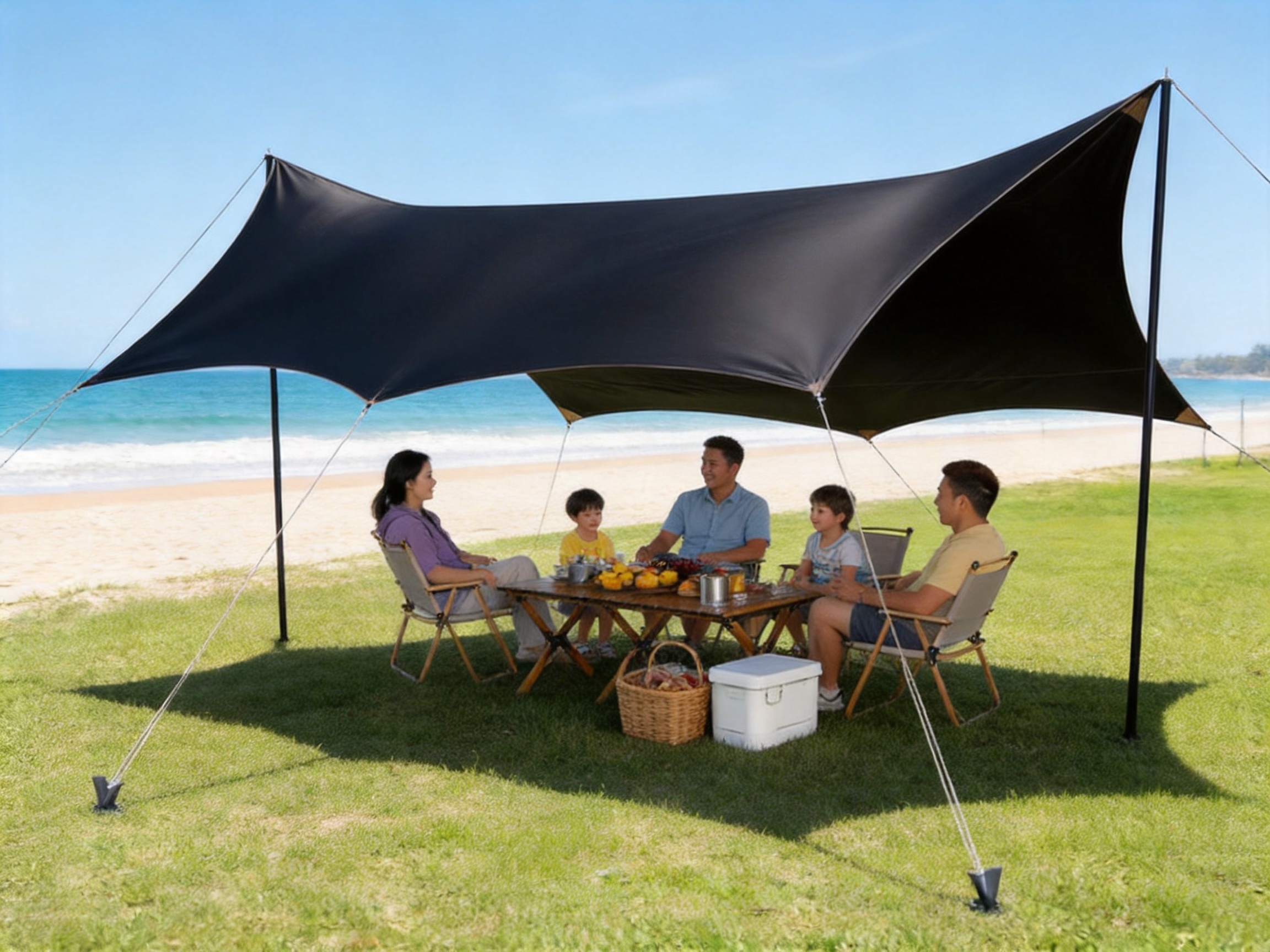
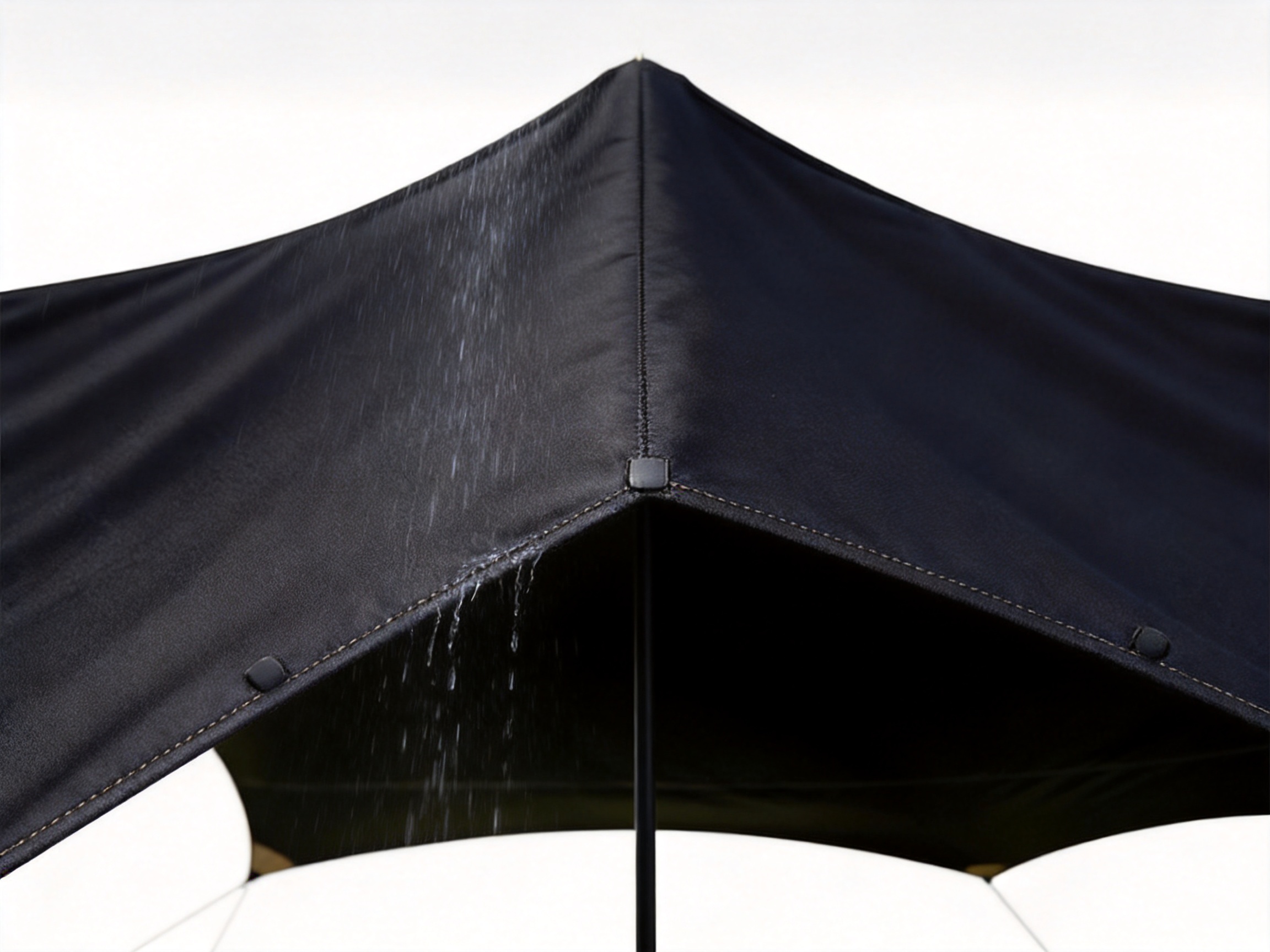
The butterfly canopy profile gives the product a distinctive appearance, but its value is not merely visual. The dual-slope roof creates a raised center and broad side coverage. Compared with a simple flat-top design, the peaked shape can improve drainage by encouraging rainwater to move down the sloped surfaces rather than remain concentrated in a shallow depression.
Water pooling is a common problem in flat or poorly tensioned canopies. When water remains on the roof, its weight increases rapidly and places additional stress on fabric seams, attachment points, and frame joints. A sloped roof reduces the opportunity for standing water to accumulate, although users should still maintain proper fabric tension and inspect the shelter during prolonged rain.
The butterfly profile also influences shade throughout the day. The sun changes position, and the direction of shadows moves accordingly. A broad dual-slope design can maintain useful shade across a wider area than a narrow canopy with a single flat plane. This is especially useful for families who remain seated in one arrangement for several hours. Chairs, tables, coolers, and children’s play areas can be positioned under a more consistent zone of protection.
Roof geometry also affects airflow and wind behavior. A flat surface can catch moving air more directly, behaving like a sail when exposed to gusts. Sloped surfaces may allow some air to deflect over the structure rather than striking one broad vertical plane. This can support better performance in mild-to-moderate wind conditions when the canopy is correctly assembled and anchored.
The butterfly design is therefore a functional choice that connects shade coverage, rain runoff, headroom, and wind response. It distinguishes the product from low-profile rectangular shade sheets and gives retailers a clear design feature to communicate to customers. Nevertheless, geometry cannot eliminate the need for safe use. When forecasts indicate severe weather, the canopy should be dismantled and stored.
Rainproof and Sunshade Use
The product is positioned as a rainproof and sunshade canopy for normal outdoor recreation. Its coated fabric and sloped roof are intended to help keep the area below more comfortable during light to moderate rain while also reducing direct solar exposure. The word “rainproof” should be understood within the context of a portable canopy: performance depends on correct setup, fabric tension, seam construction, weather intensity, and the duration of exposure.
Users should install the canopy on suitable ground, ensure that the fabric is fully extended, and check that the roof does not contain sagging pockets. If water begins to collect, it should be removed safely rather than allowed to build up. Proper setup keeps the roof working as designed and reduces unnecessary stress on the frame.
The canopy can be especially practical when weather conditions are changeable. A family may begin a picnic under strong sun and later encounter a brief shower. A campsite may need a covered cooking or dining area even when the sleeping tent remains closed. At a beach, shade can make it easier to stay outside for longer periods while protecting food, chairs, and personal items from direct exposure.
Users should avoid placing cooking equipment too close to the canopy fabric and should never use open flames beneath a shelter unless the product instructions specifically permit it. Vinyl-coated materials may resist water and sunlight, but they should still be kept away from sparks, hot surfaces, and uncontrolled flames.
Product Comparison Table
| Product Factor | Black Vinyl Butterfly Canopy | Basic Uncoated Polyester Canopy | Ultralight PU-Coated Shelter |
|---|---|---|---|
| Primary use | Picnics, beaches, campsites, family gatherings, vehicle-supported recreation | Short-duration shade in mild conditions | Backpacking and weight-sensitive travel |
| Solar protection approach | Black vinyl coating helps absorb and block a large share of incoming UV radiation | Depends heavily on fabric color, weave, and density | Usually prioritizes low weight over maximum shade depth |
| Fabric platform | 210D high-density Oxford cloth with vinyl coating | Often lighter polyester with basic finishing | Lightweight coated textile |
| Frame character | Taller, thicker steel frame designed for stability and headroom | May use lighter tubing with less structural margin | Often designed around minimum pack weight |
| Roof shape | Butterfly-shaped, dual-slope profile | Commonly flat or simple rectangular profile | Varies according to backpacking design |
| Rain management | Sloped roof encourages runoff and reduces pooling | Flat sections may collect water if tension is poor | Often effective but with less interior space |
| Portability | Best for vehicle-supported transport and short-distance carrying | Generally convenient for casual transport | Best for carrying over longer distances |
| Key tradeoff | More weight in exchange for shade, durability, and structural substance | Lower initial cost may come with reduced long-term performance | Lower weight may mean less room and reduced resistance to repeated handling |
This comparison shows why the product should be evaluated according to its intended environment. An ultralight shelter may be the better choice for a mountaineer carrying equipment through difficult terrain, while the black vinyl butterfly canopy may be the better choice for a family driving to a beach or campground. The product’s competitive advantage is not that it replaces every type of shelter. Its advantage is that it offers a more durable, shade-focused, and stable solution for stationary or vehicle-supported outdoor use.
Manufacturing Philosophy and Product Development
CragHaven Outdoor approaches outdoor equipment as a combination of environmental understanding, material selection, sampling, testing, and repeatable production. This process begins with the use case rather than the catalog page. Designers consider how a product will be transported, assembled, exposed to sun and rain, handled by consumers, and stored between uses.
For a canopy, that process includes more than selecting an attractive fabric. The coating, textile density, seams, frame tubing, joints, roof geometry, anchoring points, and packaging must all work together. A change to one component can affect the others. For example, a heavier fabric may require stronger frame support. A taller frame may require greater attention to joint strength and anchoring. A darker coating may improve shade but increase the importance of heat management and ventilation considerations.
Sampling is an important stage in this type of development. Early samples allow the manufacturer to assess the relationship between fabric dimensions and frame dimensions, inspect how the roof tension behaves, and identify areas where seams or attachment points need improvement. Repeated sampling can refine folding methods, component compatibility, and the user experience during setup.
Testing should reflect ordinary outdoor use rather than relying only on isolated material claims. Fabric can be inspected for coating consistency, stitching quality, edge finishing, and resistance to handling. Frames can be checked for opening and closing cycles, joint alignment, tube deformation, and stability when assembled. Roof structures can be observed under simulated rain and moderate wind conditions, always recognizing that field safety depends on correct anchoring and weather judgment.
Production consistency is equally important for global retailers. A strong prototype is not enough if later batches vary in dimensions, coating application, frame fit, packaging, or accessory completeness. Manufacturing systems should therefore include incoming material checks, in-process inspections, assembly verification, and final product review. These practices help reduce the uncertainty that buyers may experience when sourcing outdoor gear across international supply chains.
CragHaven Outdoor’s location in Hangzhou provides access to China’s mature textile, metalworking, assembly, and export manufacturing network. The company combines local manufacturing capability with product-oriented communication for global markets. Its role extends beyond simply connecting a buyer with a factory. The company participates in product development, material decisions, sampling, optimization, and scalable production planning.
Material and Component Coordination
The manufacturing strength of this canopy depends on coordinating several component groups. The fabric team must produce a consistent 210D Oxford textile and apply the vinyl coating evenly. The sewing process must maintain accurate dimensions while creating durable seams and attachment points. The frame team must form and connect steel components with suitable alignment. Assembly personnel must ensure that the fabric and structure fit together without excessive stress or slack.
Quality control is most effective when it is performed at each stage rather than only at the end. Fabric rolls can be checked before cutting. Cut panels can be compared against approved patterns. Coated surfaces can be examined for visible defects. Sewn panels can be inspected for skipped stitches, loose threads, uneven tension, and edge quality. Steel parts can be reviewed for surface finish, shape, and joint integrity. Final units can be opened, closed, and visually checked before packing.
Packaging is also part of manufacturing quality. A canopy can be damaged after passing factory inspection if the folded fabric is compressed against sharp frame edges or packed while damp. A thoughtful packaging plan should protect coated surfaces, separate vulnerable components, and provide clear instructions for setup and storage. For retailers, reliable packaging reduces transit damage, customer complaints, and unnecessary replacement costs.
Support for OEM and Retail Programs
As an outdoor brand and manufacturing partner, CragHaven Outdoor can support buyers who need more than a standard product listing. OEM cooperation may involve adjustments to colors, labels, packaging, instruction materials, accessory combinations, or market-specific presentation. Any modification should be evaluated for its effect on structural performance, production repeatability, cost, and lead-time requirements.
The company’s stated development principles emphasize durability, reliability, long-term value, and actual usage scenarios. These principles are relevant to retailers serving customers who expect outdoor gear to perform consistently rather than merely look attractive online. A manufacturer that understands the connection between design and field use can help buyers avoid unsuitable specifications and reduce the risk of overpromising product performance.
Professional communication is another supply-chain advantage. International buyers need clear information about materials, product positioning, packing methods, sampling stages, production schedules, inspection procedures, and customization limitations. A Western-market-oriented approach can make it easier to turn a product concept into a practical purchase order while preserving realistic expectations about use and performance.
Benefits for Retailers and Distributors
The black vinyl butterfly canopy offers several commercial advantages. First, it has a clear use-case identity. It is not simply another generic outdoor shelter; it is a shade-focused, family-oriented canopy for picnics, beaches, camping bases, and outdoor relaxation. This gives retailers a stronger basis for product descriptions, category placement, and customer education.
Second, the product has visible and understandable differentiators. Black vinyl coating, 210D Oxford cloth, a thicker steel frame, and a butterfly roof can all be explained in straightforward language. Customers do not need advanced technical knowledge to understand the practical benefits: deeper shade, a more durable fabric platform, improved headroom, a stable structure, and better runoff than a flat canopy.
Third, the product supports multiple outdoor seasons and activities. It can be sold for summer beach use, spring and autumn picnics, campsite dining, backyard gatherings, outdoor markets, and family travel. This broader application range can help retailers reach customers beyond traditional camping equipment buyers.
Fourth, the product complements other outdoor categories. Retailers can merchandise it with folding chairs, picnic tables, coolers, camping kitchens, beach accessories, portable lighting, ground anchors, and storage solutions. Because the canopy creates a shared outdoor living space, it can encourage customers to purchase related equipment for longer and more comfortable outdoor stays.
For distributors, product consistency and manufacturing support are particularly important. A shelter that requires accurate frame and fabric coordination should be sourced from a partner capable of handling development and production together. CragHaven Outdoor’s focus on sampling, testing, optimization, and scalable manufacturing provides a foundation for stable supply programs.
Practical Setup and Use Guidance
Before opening the canopy, users should choose a level location free of sharp stones, dead branches, unstable slopes, and overhead hazards. The area should be large enough to accommodate the full roof footprint and the anchoring system. At a beach, users should consider the prevailing wind direction and use suitable sand anchors or weighted bases. On grass or soil, stakes and guy lines should be installed according to the product instructions.
The frame should be extended gradually rather than forced into position. Users should confirm that joints are fully engaged and that the fabric is not trapped between moving components. Once the canopy is upright, the roof should be tensioned evenly so that the butterfly profile is properly formed. Uneven tension can create unnecessary stress and may allow water to collect in low areas.
During use, the canopy should be checked periodically if wind increases or rain begins. Anchoring points should remain secure, and the roof should not be allowed to sag under accumulated water. Severe weather conditions require immediate action. Users should leave the shelter and dismantle it when there is a risk of lightning, extreme wind, heavy storms, or other dangerous weather.
After use, dirt and sand should be removed before folding. If the fabric is damp, it should be dried completely in a ventilated location. The canopy should then be folded according to the recommended method and stored in a dry area away from direct sunlight, sharp objects, excessive heat, and chemical contaminants. These steps are simple, but they have a meaningful effect on the service life of coated outdoor fabrics.
Maintenance and Long-Term Value
Regular inspection helps identify small problems before they become serious. Users should look for loose stitching, cuts, coating damage, bent frame tubes, loose joints, missing hardware, and worn anchoring points. Small issues may be repairable depending on their location and severity. A damaged structural component should not be used if it compromises stability.
Cleaning should be gentle. A soft cloth, mild soap, and clean water are generally more appropriate than abrasive brushes, aggressive solvents, or harsh chemicals. Strong cleaning agents may affect the vinyl surface or weaken textile components. After cleaning, the canopy should be thoroughly dried before storage.
Long-term value comes from the combined effect of material selection, structural design, manufacturing consistency, and correct care. A canopy with a durable coating and strong frame can still have a short service life if it is repeatedly stored wet or exposed to severe weather. Conversely, a well-maintained shelter can provide dependable seasonal service and remain useful for many outdoor activities.
This is where the product’s design philosophy becomes commercially important. CragHaven Outdoor does not position outdoor equipment as a collection of isolated specifications. The company focuses on how products respond to weather, terrain, time, and usage patterns. For buyers, this approach can translate into products with clearer applications and more realistic performance expectations.
Q&A
What is the main purpose of this black vinyl butterfly canopy?
It is designed to provide broad shade and practical weather protection for family picnics, beach outings, campsites, outdoor dining, and similar vehicle-supported activities. It is best suited to stationary or semi-stationary use rather than long-distance backpacking.
Why is black vinyl used instead of ordinary polyester fabric?
Black vinyl creates a dense coating that helps absorb and block a significant amount of incoming ultraviolet radiation. It can provide deeper shade than many uncoated fabrics and can retain surface water resistance more effectively during repeated sun exposure than some lightweight PU-coated alternatives. The tradeoff is additional weight and reduced packability.
Is the canopy suitable for backpacking?
It is not primarily designed for extended backpacking. The vinyl coating and steel frame provide durability and stability but add weight compared with ultralight shelters. The product is more appropriate for beaches, parks, campsites, family travel, and other settings where transport by vehicle is available.
What does 210D Oxford cloth contribute?
210D Oxford cloth provides a balance between weight and resistance to tearing and wear. Its basket-style weave distributes stress across multiple fibers, while the coating and finishing contribute additional surface protection. Fabric performance also depends on sewing, seams, handling, and maintenance.
Does the butterfly shape improve rain performance?
The dual-slope roof encourages rainwater to move away from the raised center and reduces the likelihood of pooling compared with a flat roof. Correct setup and fabric tension remain essential. The canopy should not be left unattended during severe storms or extreme weather.
Why is a thicker steel frame important?
A thicker frame can provide greater resistance to bending and create a more substantial structure. The taller frame also increases headroom. However, stability depends on the complete system, including joints, fabric tension, roof geometry, and ground anchoring.
Can the canopy be used at the beach?
Yes. Its broad shade profile and black vinyl coating are well suited to beach relaxation. Users should use appropriate sand anchors or weighted bases, monitor wind conditions, and dismantle the canopy when weather becomes unsafe.
How should the canopy be stored?
Remove dirt and sand, dry the fabric completely, fold it carefully, and store it in a dry, ventilated place. Avoid prolonged storage while damp, exposure to direct sunlight, contact with sharp objects, and excessive heat.
What manufacturing support can CragHaven Outdoor provide?
CragHaven Outdoor supports product development, material selection, sampling, testing, optimization, assembly, and scalable production. As a cross-border manufacturing partner, it can also communicate with global buyers about product specifications, packaging, customization, and supply-chain requirements.
How does this product compare with a low-cost generic canopy?
Its key advantages are the black vinyl coating, 210D high-density Oxford fabric, taller and thicker steel frame, and butterfly roof geometry. These features are intended to improve shade quality, durability, headroom, water runoff, and structural substance. The product may be heavier than a generic lightweight canopy, but that weight reflects its intended use and construction priorities.
Why Choose CragHaven Outdoor as a Manufacturing Partner?
CragHaven Outdoor is based in Hangzhou, China, and serves both as an outdoor brand and as a manufacturing partner for global markets. Its focus includes mountaineering gear, hiking equipment, camping gear, and products designed for practical outdoor scenarios. The company’s name represents balance and stability in nature, ideas that are reflected in its emphasis on dependable design and long-term use.
The company’s development process begins with real conditions. Instead of designing products only for catalogs, CragHaven considers weather, terrain, frequency of use, transportation, and the passage of time. This helps create products that are easier to position accurately and more relevant to customers who expect outdoor equipment to solve practical problems.
Material choices are made with durability and reliability in mind. For this canopy, that means selecting a coated textile that supports solar protection, a 210D Oxford substrate that balances strength and weight, and a steel frame that provides usable headroom and structural support. Sampling, testing, and optimization are treated as necessary parts of development rather than optional steps.
The company also aims to reduce uncertainty for buyers. Outdoor equipment supply chains can involve multiple parties, unclear specifications, inconsistent samples, and communication gaps. A partner involved in both design and manufacturing can help identify conflicts before mass production and improve the likelihood that production units match the approved product concept.
For international retailers, this integrated approach can support longer-term cooperation. Product lines can be refined according to customer feedback, seasonal demand, and market positioning. Packaging and communication materials can be adapted for target channels, while engineering decisions remain connected to actual product performance.
Conclusion
The outdoor picnic camping black vinyl tent is a purpose-built canopy for people who want more than minimal overhead coverage. Its black vinyl coating is designed to provide stronger solar blocking than many standard fabrics. Its 210D high-density Oxford cloth balances durability and manageable weight. Its taller, thicker steel frame offers headroom and a more substantial structural foundation. Its butterfly-shaped roof improves shade distribution, encourages rain runoff, and supports a distinctive outdoor living space.
The product’s competitive advantage comes from the way these features work together. It is not intended to replace ultralight backpacking shelters or permanent event structures. Instead, it serves the large and practical middle ground of family picnics, beaches, campsites, parks, and vehicle-supported outdoor recreation. For these applications, a heavier but more durable and shade-focused canopy can provide better overall value than a thin, basic alternative.
Behind the product is a manufacturing approach centered on real-world use, material coordination, repeated sampling, testing, optimization, and scalable production. CragHaven Outdoor combines outdoor product understanding with China’s established manufacturing capabilities to support retailers, distributors, and OEM buyers seeking dependable camping and outdoor gear.
For customers, the result is a more comfortable and capable outdoor shelter. For business buyers, it is a product with clear differentiation, broad seasonal applications, and a manufacturing partner focused on reducing uncertainty from product concept through delivery.
References
1. Product specifications and product description supplied for the outdoor picnic camping black vinyl butterfly canopy.
2. Textile denier and fabric construction principles used in the evaluation of 210D Oxford cloth.
3. General outdoor shelter design principles concerning solar radiation, coated fabrics, roof drainage, frame stability, and ground anchoring.
4. Manufacturer information supplied by CragHaven Outdoor regarding product development, sampling, testing, manufacturing, and OEM cooperation.
5. General maintenance guidance for coated outdoor textiles, steel frames, portable canopies, and seasonal camping equipment.
6. General safety practices for the setup and use of temporary outdoor shelters in sun, rain, and moderate wind conditions.
Product: Outdoor picnic camping black vinyl tent, rainproof and sunshade canopy, picnic butterfly curtain canopy


- Phone: +86-15968800379
- E-mail: [email protected]
- Address: Room 1002, Huishang Building, Gongshu District, Hangzhou City, Zhejiang Province.
Copyright © CragHaven Outdoor All Rights Reserved. Outdoor Gear Manufacturers Wholesale Mountaineering Camping Gear Suppliers
