

 English
 Deutsch
 Español
 Français

25 cm High-Carbon Steel Tent Stakes for Stable Camping in Sand, Grass, and Wind
Content
- 1 Why Tent Stakes Matter More Than Their Size Suggests
- 2 Product Overview
- 3 High-Carbon Steel for a Stronger Ground Connection
- 4 Hardening and Bending Resistance
- 5 Galvanization for Outdoor Exposure
- 6 Glow-in-the-Dark Head for Nighttime Visibility
- 7 Universal Hooks and Knot Compatibility
- 8 Performance on Grass and Ordinary Soil
- 9 Use in Sandy and Beach Environments
- 10 Comparison with Common Alternative Stakes
- 11 Manufacturing Approach and Quality Control
- 12 CragHaven Outdoor as a Manufacturing and Product Development Partner
- 13 OEM and Customization Possibilities
- 14 Advantages for Outdoor Retailers and Distributors
- 15 Advantages for Camping Brands
- 16 Installation and Field-Use Recommendations
- 17 Choosing the Correct Stake for Different Users
- 18 Environmental and Service-Life Considerations
- 19 Q&A
- 19.1 What is the primary purpose of a 25 cm steel tent stake?
- 19.2 Why is high-carbon steel used for this product?
- 19.3 What does hardening do to the stake?
- 19.4 Does the galvanized finish make the stake rustproof?
- 19.5 Is the product suitable for beach camping?
- 19.6 Can the stakes be used with tarpaulins?
- 19.7 What is the purpose of the glow-in-the-dark head?
- 19.8 Are steel stakes heavier than aluminum or plastic stakes?
- 19.9 Can these stakes be used in rocky ground?
- 19.10 How should the stakes be maintained?
- 19.11 Can CragHaven Outdoor provide customized versions?
- 19.12 What should bulk buyers evaluate before placing an order?
- 20 Conclusion
- 21 References
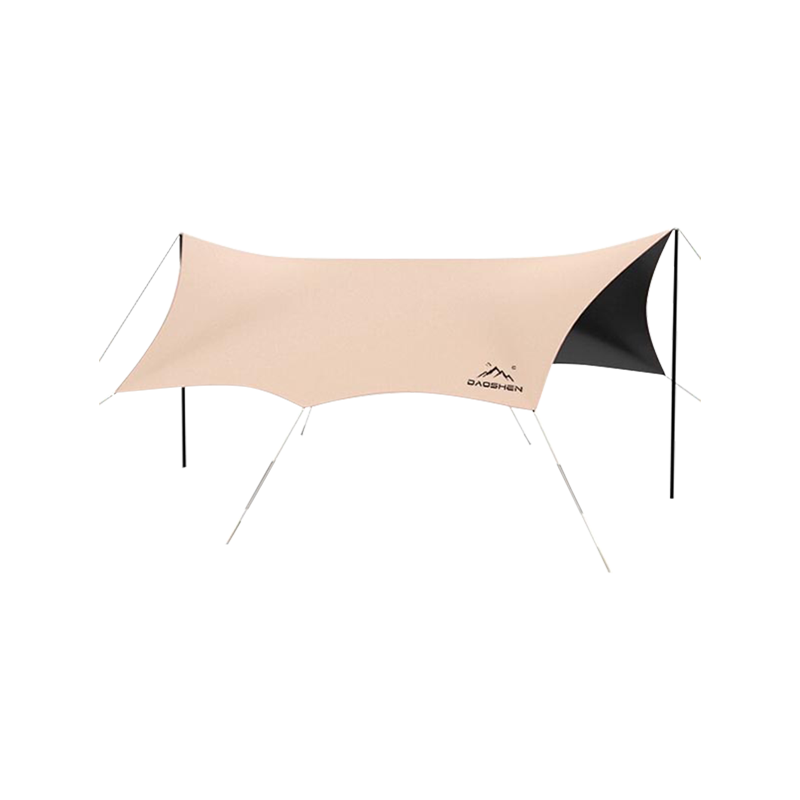
- 22 Product: Outdoor camping tent with 25cm ground stakes, beach tarpaulin, and windproof steel studs
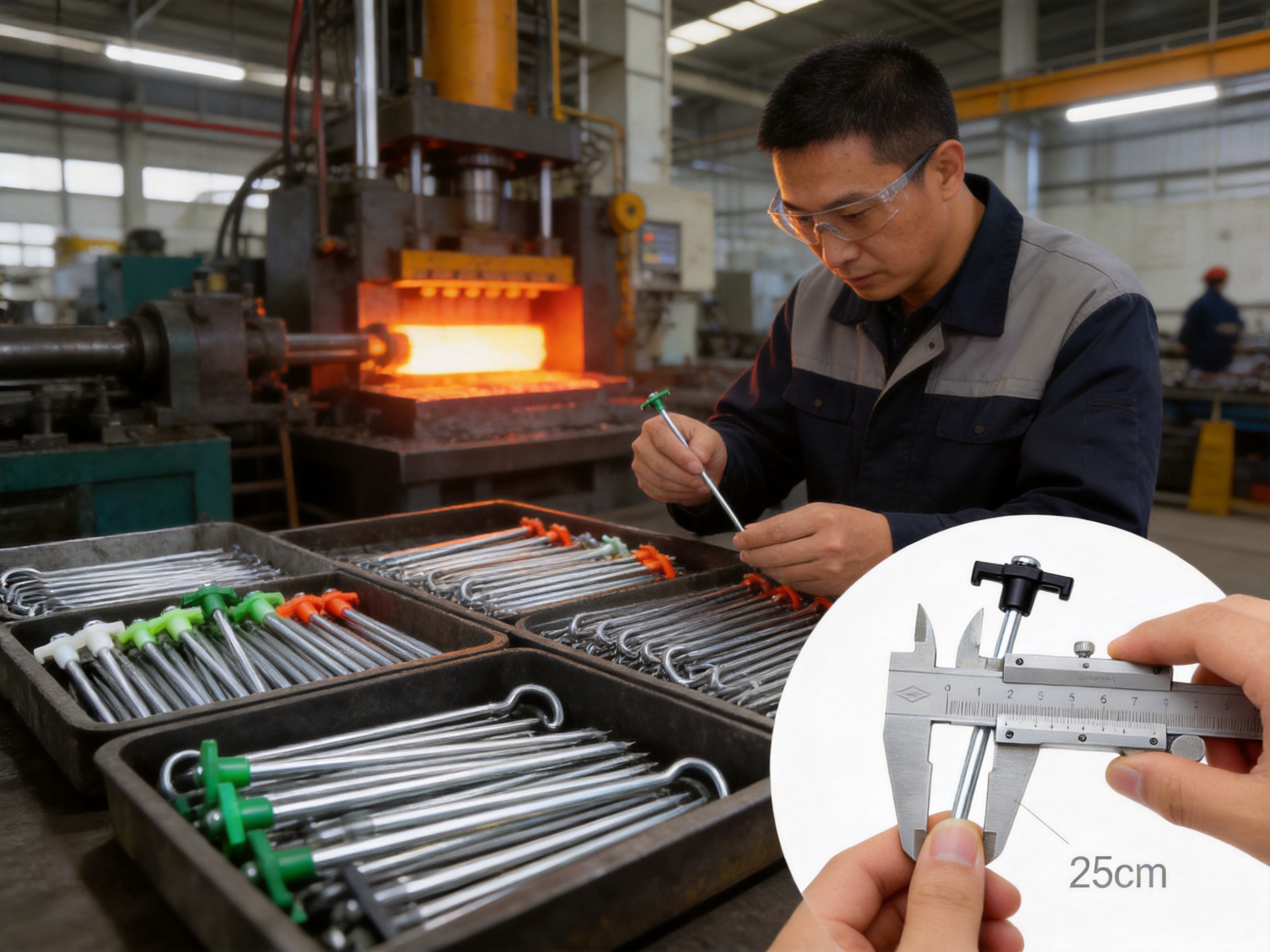
Reliable ground anchoring is one of the most important yet frequently overlooked parts of a camping shelter. A tent may use strong fabric, waterproof seams, reinforced poles, and carefully designed guy lines, but these features cannot perform properly if the shelter is not firmly connected to the ground. Tent stakes provide that connection. They transfer tension from the tent and guy lines into the soil, help maintain the intended structure, and reduce movement caused by wind, uneven terrain, and changing ground conditions.
The 25 cm Outdoor Camping Tent Steel Stud is designed for campers, outdoor retailers, camping brands, distributors, and equipment buyers who require a practical balance of strength, grip, durability, and portability. Made from high-carbon steel, the stake is hardened for improved resistance to bending and finished with galvanization to help protect against corrosion. Its 25 cm length provides useful penetration in common camping environments, while the hook and knot design supports convenient attachment of tent loops, tarpaulins, and guy lines.
A glow-in-the-dark head improves visibility after sunset. This small but practical feature helps users locate the stakes around a campsite and reduces the chance of stepping on or losing them in low-light conditions. The product is suitable for grass, ordinary soil, sandy areas, beach camping, recreational camping, hiking, mountaineering support use, and other outdoor applications where a dependable anchoring accessory is required.
For global customers, the product is supported by CragHaven Outdoor, an outdoor brand and cross-border manufacturing partner based in Hangzhou, China. The company focuses on mountaineering, hiking, and camping applications and combines product development, sampling, manufacturing coordination, and quality management. Its approach is based on designing equipment for actual weather, terrain, and repeated use rather than producing products only for catalog presentation.
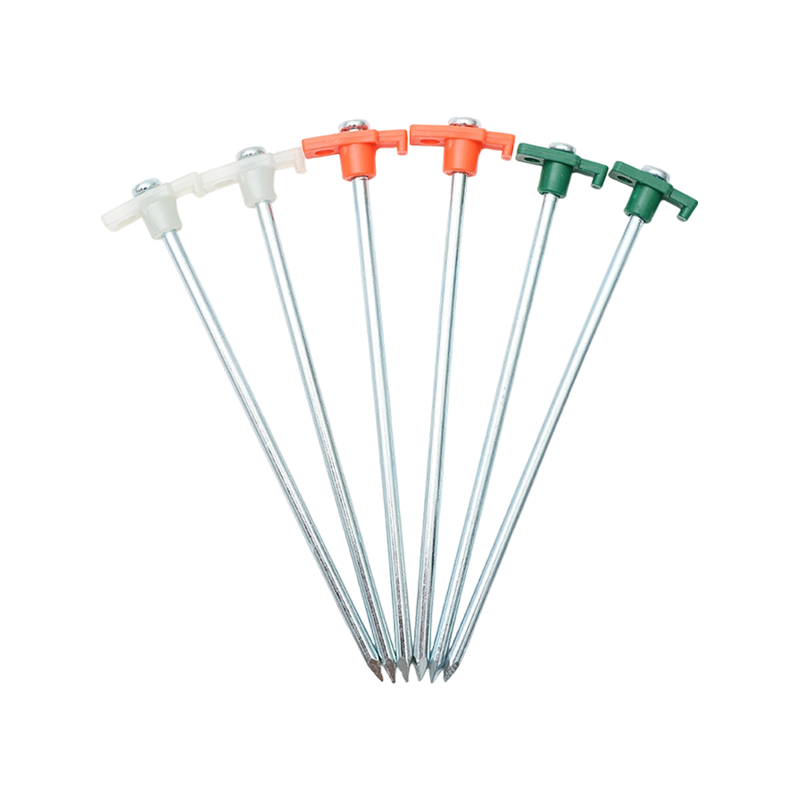
Outdoor camping tent with 25cm ground stakes, beach tarpaulin, and windproof steel studs
Why Tent Stakes Matter More Than Their Size Suggests
A tent stake is a small component, but its function is structural. When wind pushes against a tent wall or rain softens the ground, the stake is responsible for maintaining the position of the guy line and transferring pulling force into the earth. If the stake slips, rotates, bends, or breaks, the entire anchoring system may lose effectiveness.
Many users concentrate on tent size, waterproof ratings, pole materials, and ventilation when selecting camping equipment. Those factors are important, but shelter stability also depends on the quality and suitability of the accessories used during setup. Tent stakes, guy lines, loops, hooks, and carrying systems work together as one system. Weakness in one part can limit the performance of the other components.
Plastic stakes can be useful for light recreational applications, but they may crack in cold conditions, deform under impact, or become unreliable when used in hard soil and windy areas. Low-quality soft metal stakes can also bend during installation or extraction. A high-carbon steel stake offers a stronger alternative for users who expect repeated use and need dependable performance across changing environments.
The 25 cm length is particularly practical for general-purpose camping. It is long enough to achieve meaningful penetration in grass and ordinary soil while remaining compact enough for storage in a tent accessory bag. For beach camping, the length provides additional anchoring depth compared with very short pegs. Users should still select the number, placement, and configuration of stakes according to wind conditions, shelter size, and soil characteristics.
Product Overview
The Outdoor Camping Tent Steel Stud is intended to secure tents, tarpaulins, canopies, guy lines, and related outdoor structures. The product combines a high-carbon steel body, hardened treatment, galvanized surface protection, and a functional top section designed to support different attachment methods.
| Product Feature | Function | User Benefit |
|---|---|---|
| 25 cm stake length | Provides useful penetration depth | Improves grip in grass, soil, and many sandy camping areas |
| High-carbon steel construction | Provides a strong structural base | Supports repeated use and better resistance to deformation |
| Hardened steel body | Improves hardness and bending resistance | Helps the stake withstand installation and tension forces |
| Galvanized finish | Creates a protective surface layer | Helps reduce corrosion from moisture and outdoor exposure |
| Glow-in-the-dark head | Improves nighttime visibility | Makes the stake easier to find and helps reduce trip hazards |
| Universal hooks and knots | Supports different tie-down methods | Allows use with tent loops, guy lines, and tarpaulins |
| Compact outdoor accessory format | Fits common camping storage systems | Convenient for transport, retail packaging, and equipment kits |
The design is not limited to one type of tent. It can be used with hiking shelters, family tents, beach tarpaulins, camping canopies, temporary shade structures, and other fabric systems that require ground anchoring. Its universal attachment concept makes it suitable for users who prefer to carry one practical stake type for several outdoor activities.
High-Carbon Steel for a Stronger Ground Connection
Material selection is central to the performance of a tent stake. High-carbon steel is used because its composition and heat-treatment potential allow manufacturers to develop a harder and stronger product than many basic low-strength alternatives. A properly processed high-carbon steel body can resist deformation when subjected to impact, tension, and repeated handling.
During installation, users may press or hammer a stake into soil. The force is not always applied perfectly along the stake axis. Uneven ground, stones, roots, and compacted soil can create side loads that cause a weak peg to bend. A hardened high-carbon steel stake is better suited to these demanding conditions than a soft plastic peg or a thin, untreated metal alternative.
Strength does not mean that a stake can be used carelessly in every terrain. Rocky ground should be approached with caution, and users should avoid striking the product against immovable stone with excessive force. However, the material and hardening process provide a more reliable performance margin for normal outdoor installation and removal.
The product also supports repeated use. A disposable or easily deformed stake increases replacement costs and may create inconvenience when a camping trip is already underway. A durable steel product can remain part of a user’s equipment system for many trips, which improves value over its service life and supports more sustainable purchasing decisions.
Hardening and Bending Resistance
Hardening is an important stage in the production of high-performance steel stakes. The process is controlled to improve the hardness of the steel while maintaining sufficient practical toughness. If a product is too soft, it may bend during insertion. If it is excessively hard without suitable control, it may become more vulnerable to brittle failure under certain impact conditions.
For this reason, manufacturing quality depends not only on the selected steel grade but also on process consistency. Heating conditions, holding time, cooling control, and subsequent inspection all influence the final properties of the stake. A professional manufacturing process aims to produce a consistent batch rather than relying on the appearance of individual pieces.
CragHaven Outdoor emphasizes sampling, testing, and optimization during product development. This approach allows the design team and manufacturing partners to identify issues related to forming, surface treatment, attachment points, and packaging before mass delivery. Product improvements are evaluated against real use conditions, including insertion, pulling force, storage, moisture exposure, and transport.
The result is a stake designed for practical outdoor use rather than a purely decorative accessory. Its hardened body is intended to offer dependable resistance to bending during normal setup, while the 25 cm profile provides enough length for a secure ground connection in many common camping situations.
Galvanization for Outdoor Exposure
Camping equipment is frequently exposed to moisture. Stakes may be inserted into damp soil, wet grass, coastal sand, or ground affected by rain and dew. After use, they may be stored before they are completely dry. Without surface protection, steel can develop rust, which affects appearance and may gradually reduce the service life of the product.
Galvanization provides a protective surface layer that helps the steel resist corrosion. It does not make the product immune to all environmental damage, but it improves its suitability for outdoor storage and repeated exposure compared with untreated steel. A galvanized finish is particularly useful for a product intended for beach camping and other humid environments.
Surface preparation is important for coating quality. Before galvanization, the steel should be appropriately cleaned and prepared so that the protective layer can adhere consistently. After treatment, production inspection can evaluate visible coverage, surface uniformity, sharp edges, and other quality factors. Proper handling during packing is also necessary to prevent unnecessary damage to the finish.
Users should still clean and dry the stakes after use, especially when they have been exposed to saltwater or wet sand. Removing soil and salt residue helps preserve the galvanized surface and keeps the product ready for the next trip. Good maintenance complements the manufacturing process and supports long-term performance.
Glow-in-the-Dark Head for Nighttime Visibility
Campgrounds change significantly after sunset. A stake that is easy to see during daylight can become difficult to locate when the surrounding area is dark. This creates several practical problems: users may misplace stakes during setup, trip over guy lines, or leave accessories behind during dismantling.
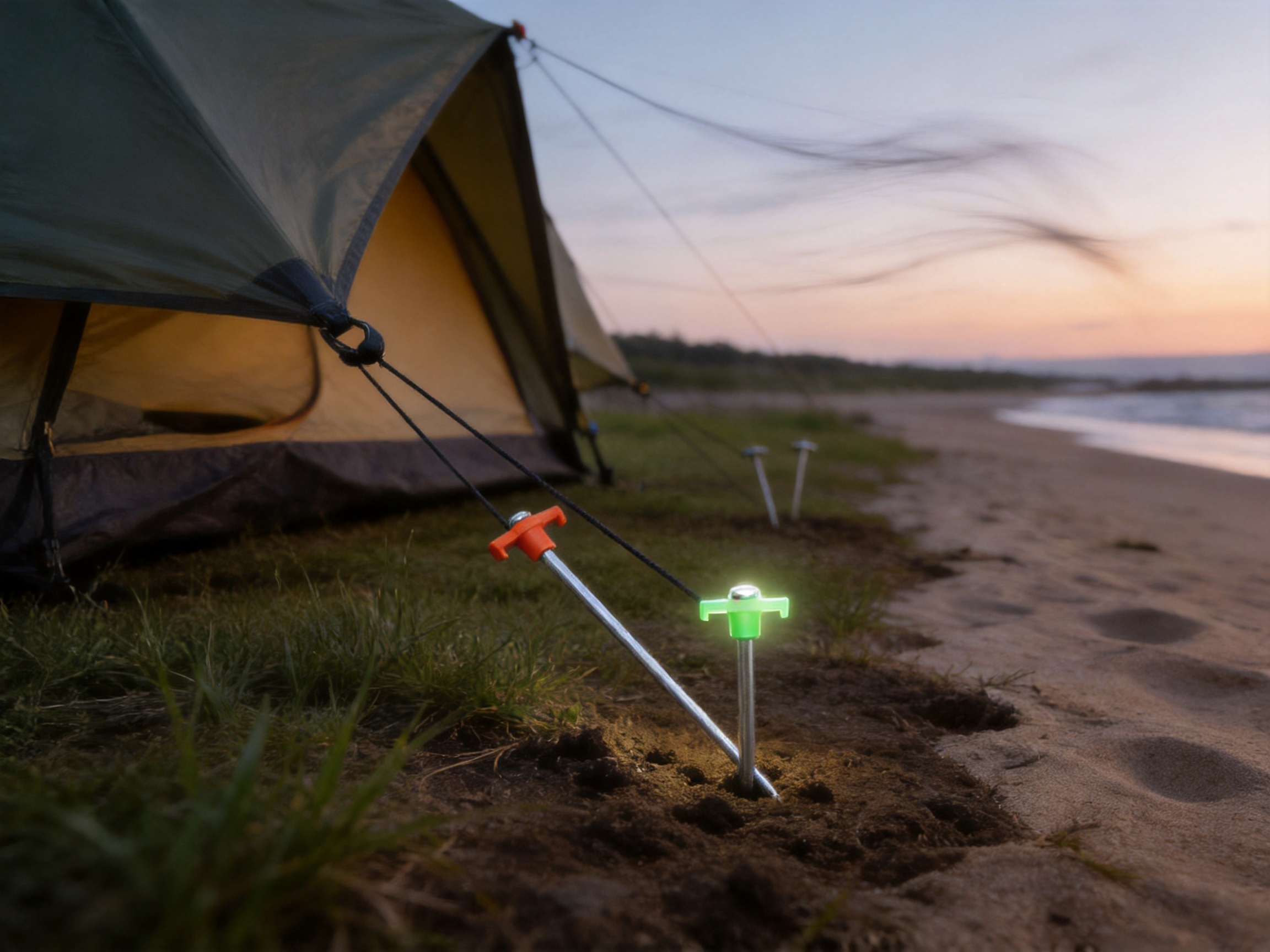
The glow-in-the-dark head is designed to improve visual recognition in low-light conditions. After receiving sufficient light, the head can provide a visible glow that helps users identify the stake position. This is especially useful around tent entrances, tarpaulin corners, walkways, and other high-traffic areas.
The feature also contributes to campsite organization. When multiple stakes are used, visible heads make it easier to confirm whether the tent has been fully anchored. During departure, users can more quickly locate the stakes before packing. For retailers and outdoor brands, this practical detail can differentiate the product from basic metal stakes that offer no visibility assistance.
Visibility features should not replace responsible campsite setup. Guy lines should still be arranged safely, walkways should remain clear, and users should use headlamps or other lighting when working at night. The glow-in-the-dark head is an additional convenience that supports safer and more efficient equipment handling.
Universal Hooks and Knot Compatibility
Different tents and tarpaulins use different attachment arrangements. Some rely on sewn loops, while others use guy lines, elastic cords, hooks, or adjustable knots. A stake that supports only one attachment method may be less useful to a broad customer base.
The universal hook and knot design allows the product to work with a range of common tie-down systems. Users can attach tent loops directly where appropriate, secure guy lines through the top section, or use knots and cords to create a stable connection. This flexibility helps the same accessory serve multiple outdoor products.
For camping brands and distributors, compatibility is commercially valuable. A general-purpose stake can be included in tent kits, replacement accessory packs, tarp bundles, and outdoor hardware assortments. It can also reduce the need to manage many different peg designs for different product lines.
Attachment should always be made in a way that keeps the pulling force aligned with the stake. Guy lines should be tightened enough to stabilize the tent but not so aggressively that they overload the fabric, loops, or stake. Correct use allows the universal top design to perform effectively without placing unnecessary stress on the shelter.
Performance on Grass and Ordinary Soil
Grass and ordinary soil are among the most common camping surfaces. They are generally easier to penetrate than compacted clay or rocky ground, but conditions can vary widely. Dry soil may be hard, while recently watered or rain-soaked soil may have reduced holding power. Roots, stones, and loose layers can also affect insertion.
A 25 cm stake provides a useful balance for these environments. The longer shaft can reach below the loose surface layer and establish a deeper connection than a short peg. The steel body is suitable for normal installation, and the hardened construction helps reduce bending when moderate force is required.
Stake angle is important. In many guy-line applications, the stake should be installed with the top angled away from the tent so that the pulling direction works against the embedded shaft. Users should follow the recommendations for their tent or tarp and adjust the layout according to wind direction and ground conditions.
On sloped ground, multiple anchor points may be needed to maintain shelter geometry. The product can be combined with additional guy lines and reinforcement points where a tent design provides them. Stable anchoring is not determined by stake strength alone; correct placement and adequate coverage are equally important.
Use in Sandy and Beach Environments
Beach camping presents a specific anchoring challenge. Sand is soft, loose, and easily disturbed. A short or narrow peg may pull out when a tarp or tent is exposed to wind. The 25 cm length helps users place the stake deeper into the sand, where undisturbed material can provide better resistance.
However, sandy ground requires realistic expectations. No single narrow stake can provide the same holding force in sand as it would in compact soil. Users should install stakes at suitable angles, place them in firmer areas where available, and use additional anchor points for larger shelters. A longer steel stake can improve performance, but correct configuration remains essential.
For beach tarpaulins and shade structures, wind load may be greater because the fabric surface can act like a sail. Users should lower the profile when conditions become stronger, reduce unnecessary fabric tension, and dismantle temporary structures if weather conditions exceed the equipment’s intended use.
The galvanized finish is also helpful in coastal environments because salt and moisture can accelerate corrosion. After beach use, the stakes should be rinsed with fresh water, dried thoroughly, and stored in a dry location. This simple care routine helps maintain both the appearance and function of the product.
Comparison with Common Alternative Stakes
Outdoor buyers often compare steel stakes with plastic pegs, untreated soft-metal pegs, lightweight aluminum stakes, and specialized sand anchors. Each option has a suitable application, but the 25 cm hardened high-carbon steel stake is intended to occupy the practical middle ground between everyday durability and manageable portability.
| Stake Type | Typical Strength | Portability | Corrosion Consideration | Best-Suited Use |
|---|---|---|---|---|
| Plastic peg | Low to moderate | Lightweight | Does not rust, but may become brittle | Light recreational camping and soft ground |
| Untreated soft steel peg | Moderate but may bend | Moderate | More vulnerable to rust | Occasional basic use |
| Lightweight aluminum peg | Moderate to high depending on design | Very lightweight | Generally good, but surface damage matters | Weight-sensitive hiking applications |
| 25 cm hardened high-carbon steel stake | High practical strength | Manageable for general camping | Galvanized for improved protection | Grass, soil, wind, sand, tarpaulins, and repeated use |
| Specialized sand anchor | High in loose sand | May be larger or heavier | Depends on material and finish | Dedicated beach and soft-sand systems |
The advantage of this product is versatility. It is stronger and more durable than many basic plastic alternatives, while remaining simpler and more compact than large specialized sand anchors. Compared with untreated steel, galvanization provides an additional layer of environmental protection. Compared with some ultralight alternatives, steel may weigh more, but it offers a useful durability advantage for users who prioritize repeated general-purpose use.
Product selection should always reflect the application. Ultralight backpackers may prefer specialized lightweight stakes for carefully selected terrain. Large expedition shelters may require a combination of stake types. For general camping, family tents, tarpaulins, and mixed outdoor use, a durable 25 cm steel stake can be a practical and cost-effective option.
Manufacturing Approach and Quality Control
The performance of a steel stake depends on more than raw material selection. Manufacturing consistency affects dimensions, hardness, hook formation, surface finish, head attachment, and packaging. A reliable supplier must manage each stage systematically so that the delivered batch performs consistently.
Material Selection and Incoming Inspection
Production begins with the selection of high-carbon steel suitable for the intended shape and treatment process. Incoming material can be checked for dimensions, surface condition, grade documentation, and visible defects. Consistent raw material helps reduce variation during forming and heat treatment.
Material inspection is especially important for products that must resist bending. If the steel composition or thickness varies excessively, the finished stakes may show inconsistent hardness and mechanical performance. A controlled supply chain enables the manufacturer to identify problems before the material enters production.
Forming and Dimensional Control
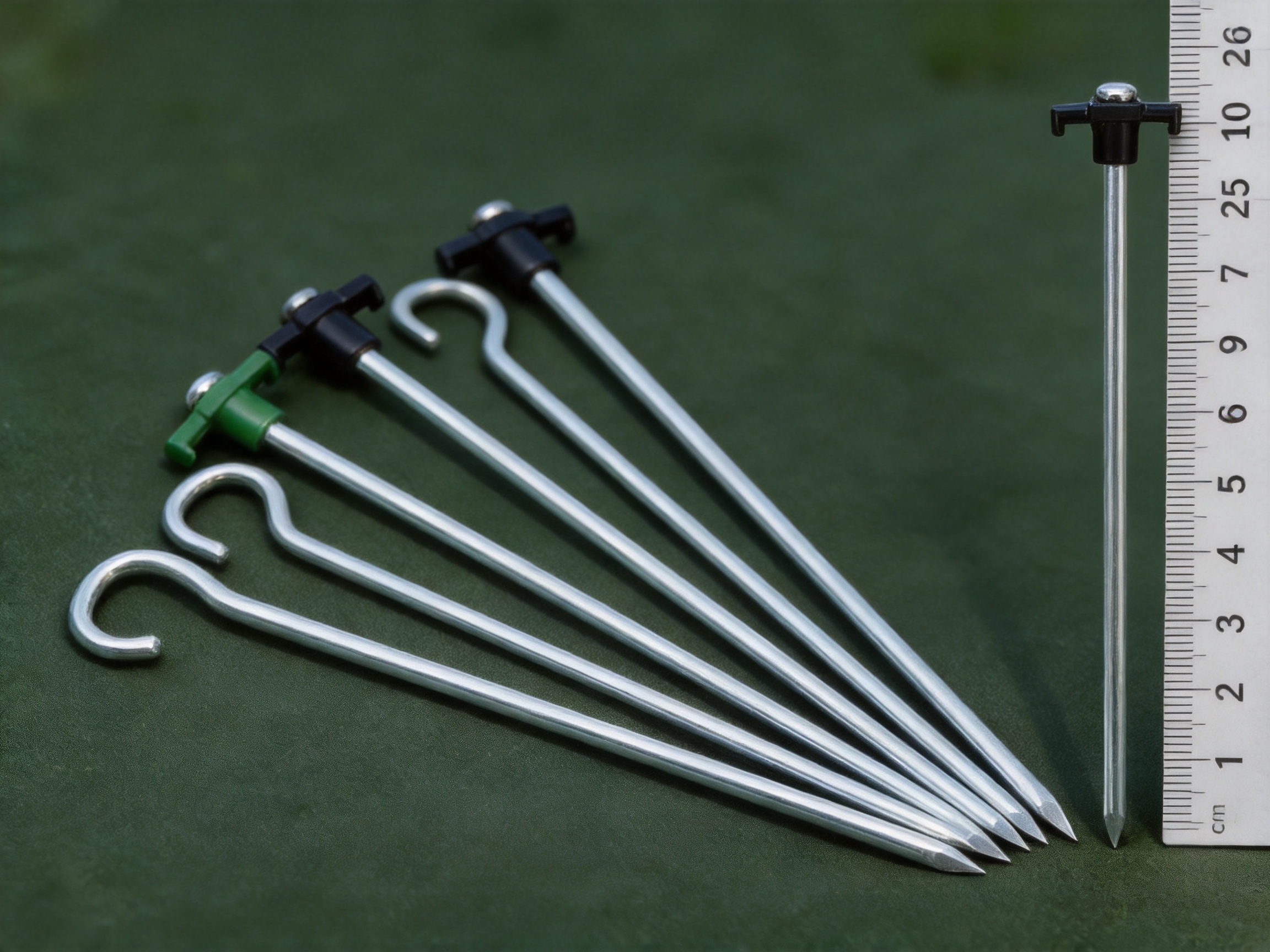
The steel body and top section must be formed accurately. The 25 cm specification should be controlled within an agreed tolerance, while the shaft shape, tip, hook, and head area should remain consistent across the batch. Forming equipment, dies, fixtures, and operator procedures all influence repeatability.
Dimensional control improves compatibility with tent loops, guy lines, packaging inserts, and accessory bags. It also supports efficient assembly when the stakes are included in larger camping kits. During production, samples can be checked for length, straightness, top geometry, and surface defects.
Heat Treatment and Hardness Management
After forming, the steel may undergo controlled hardening to improve resistance to bending and impact. Heat-treatment parameters must be selected according to the material and product geometry. Excessive or uneven heating can result in inconsistent properties, while inadequate treatment may not provide the desired hardness.
Quality management may include hardness checks, visual inspection, and practical bending or impact evaluations based on the customer’s specifications. The objective is not simply to achieve maximum hardness but to create a product that performs reliably under realistic installation and pulling conditions.
Surface Preparation and Galvanization
Before galvanization, the stake surface should be cleaned and prepared. Oil, scale, and contaminants can interfere with coating adhesion. After the protective treatment, the surface is inspected for coverage, consistency, rough areas, excessive buildup, and visible damage.
Galvanization must also be compatible with the functional parts of the product. The hook, tip, and head region should remain usable after finishing. Careful process control helps ensure that the stake is protected without compromising attachment or installation.
Head Assembly and Visibility Testing
The glow-in-the-dark head is a functional component rather than a purely decorative detail. Its attachment should be secure enough for normal handling, packing, and extraction. Production inspection can evaluate alignment, firmness, appearance, and visibility after light exposure.
Testing may be performed under controlled conditions to confirm that the head produces the expected visual effect. Although glow performance can vary according to charging light, duration, and surrounding darkness, consistent component selection and assembly help provide a dependable user experience.
Final Inspection and Packaging
Final inspection brings together the main quality requirements: correct length, straightness, hardness, galvanized coverage, head attachment, hook form, and packaging quantity. Products with sharp unintended edges, significant coating damage, distortion, or assembly defects should be removed before shipment.
Packaging must protect the stakes during transport while remaining practical for retail and bulk distribution. The product may be supplied as part of a tent kit, in a replacement pack, or under a customer’s private-label packaging. CragHaven Outdoor can coordinate product presentation and manufacturing requirements according to the customer’s market positioning.
CragHaven Outdoor as a Manufacturing and Product Development Partner
CragHaven Outdoor is based in Hangzhou, China, and serves the international outdoor equipment market. The company focuses on mountaineering, hiking, camping, and related outdoor applications. Its role extends beyond basic factory sourcing. It works with customers on product concepts, design optimization, sampling, production coordination, and delivery support.
This approach is valuable for buyers who need more than a standard catalog item. A retailer may require a particular package quantity, head color, labeling format, or accessory combination. An outdoor brand may need a private-label version that matches an existing tent system. A distributor may require stable repeat production and documented quality requirements. A corporate customer may need customized products for promotional or organizational use.
CragHaven Outdoor’s product philosophy is based on three principles: products should be designed for real weather and terrain, materials should be selected for reliability and long-term use, and sampling and testing should not be omitted. These principles are relevant to a small product such as a tent stake because minor inconsistencies can influence customer satisfaction and product returns.
The company also understands that outdoor products must support a broader gear system. A stake should fit the tent’s loops and guy lines, store effectively, survive shipping, and remain easy to use in the field. Considering these requirements during development helps produce an accessory that is commercially useful rather than technically isolated.
OEM and Customization Possibilities
The 25 cm steel stake can serve as a standard product or a foundation for a customized outdoor accessory program. Depending on the customer’s requirements, possible development discussions may include product dimensions, surface treatment, head appearance, packaging, logo presentation, set quantities, and compatibility with a specific tent or tarpaulin system.
Customization should begin with the intended application. A lightweight hiking brand may emphasize compact packaging and reduced set weight. A family camping brand may prioritize visible heads, easy installation, and multi-piece value packs. A beach equipment company may require a coordinated stake and tarp system. A distributor may prioritize stable lead times, barcode labeling, carton efficiency, and repeatable specifications.
CragHaven Outdoor can support the development process through sample review and manufacturing communication. Before mass production, customers can evaluate the product’s dimensions, finish, attachment method, package design, and practical use. Feedback from sample testing can then be incorporated into the final specification.
A clear specification is essential for repeat orders. It should define the steel material, length, acceptable tolerances, surface finish, head requirements, packaging quantity, inspection standards, and labeling information. Documented requirements reduce ambiguity and help maintain consistency as purchase volumes increase.
Advantages for Outdoor Retailers and Distributors
For retailers, tent stakes are a practical accessory with broad customer relevance. They can be sold as replacement parts, upgrades, add-on packs, or components of a complete camping bundle. Because many campers eventually lose, bend, or require additional stakes, the category can support repeat purchasing.
The product’s combination of strength, corrosion protection, visibility, and universal attachment makes it easier to position across several customer groups. It can be marketed to casual campers who want a more dependable alternative to basic pegs, experienced users who need durable replacements, and outdoor brands that want a consistent accessory for tent and tarp systems.
The 25 cm size also simplifies product communication. Customers can understand the basic use case without needing to compare a large number of specialized dimensions. Retail packaging can emphasize the key benefits: high-carbon steel, hardened construction, galvanized protection, nighttime visibility, and compatibility with common guy-line arrangements.
For distributors, production stability is as important as product performance. A supplier with experience in outdoor manufacturing can help coordinate specifications, samples, bulk orders, packaging, and delivery schedules. This can reduce the risk of receiving inconsistent batches or products that do not match the intended market positioning.
Advantages for Camping Brands
Camping brands increasingly compete through complete equipment systems rather than individual products. A tent, tarp, sleeping arrangement, cooking system, and accessory set should work together in a coherent way. A reliable stake can strengthen the perceived quality of the complete shelter package.
Including a durable steel stake in a tent kit may reduce complaints related to bending or breakage during ordinary use. It can also provide a better first-use experience, especially for customers who camp in windy grassland, damp soil, or mixed terrain. The glow-in-the-dark head adds a recognizable product detail that can support brand differentiation.
For brands that already sell tent hardware, the product can be used as a replacement or upgrade option. Packaging may explain suitable terrain, installation practices, maintenance, and compatibility. Clear guidance helps customers understand that stake performance depends on both product construction and correct use.
CragHaven Outdoor’s manufacturing support allows brands to discuss product modifications before committing to large production. This is useful when a brand wants to develop a coordinated outdoor gear line, because the stake can be considered alongside tent fabric, guy lines, storage bags, and retail packaging.
Installation and Field-Use Recommendations
Before installation, inspect the ground and identify the direction of expected pulling force. Avoid placing stakes directly over buried rocks, roots, utility lines, or fragile vegetation. Choose a location that provides sufficient depth and does not interfere with entrances, paths, or neighboring campsites.
Insert the stake according to the tent or tarp manufacturer’s instructions. In many applications, the top should be oriented away from the shelter so that the guy-line tension works against the embedded shaft. Ensure that the hook or knot is fully engaged and that the cord is not likely to slide off during movement.
Use enough stakes to secure all required corners, guy points, and tension areas. A large tarp exposed to strong wind may require additional anchoring compared with a small low-profile tent. Inspect the structure after setup and again if the weather changes.
Do not force a stake into extremely hard ground by striking it at an unsafe angle. If a rock prevents insertion, move to another suitable position or use an appropriate alternative anchoring method. When removing the stake, pull from the shaft or use a suitable extraction point rather than twisting the glow head excessively.
After use, remove soil, sand, and moisture. In coastal areas, rinse away salt residue with clean water. Dry the stakes before placing them in storage. Store them in a bag or container where the tips cannot damage tent fabric or other equipment.
Choosing the Correct Stake for Different Users
Recreational campers generally need a versatile product that is easy to understand and suitable for grass, soil, and occasional sand. The 25 cm hardened steel stake is appropriate for this user because it offers a practical combination of grip and durability without requiring a highly specialized setup.
Hikers and mountaineers should consider total carried weight, terrain, shelter size, and expected weather. Steel stakes provide strength, but users planning long-distance travel should compare the complete weight of the stake set with the demands of the route. In mixed conditions, a combination of stake types may be useful.
Family campers and users of larger tents may value durability and visibility more than minimum weight. Larger shelters create greater wind resistance and may use more guy points, making dependable stakes an important part of the complete system.
Beach campers should evaluate sand depth, wind exposure, shelter profile, and the number of anchor points. The 25 cm length is useful for many sandy settings, but larger structures or severe conditions may require specialized sand anchors or supplementary methods.
Retail buyers and brand managers should evaluate the manufacturer as well as the product. Material consistency, heat-treatment control, galvanization quality, packaging, delivery reliability, customization capacity, and communication are all relevant when planning a long-term product program.
Environmental and Service-Life Considerations
Durable products can support more responsible consumption because they are less likely to require frequent replacement. A stake that remains usable across multiple camping seasons can reduce the material and packaging demand associated with disposable alternatives. Its steel construction also makes it suitable for recovery and recycling at the end of its useful life through appropriate local systems.
Long service life depends on maintenance and correct application. Corrosion protection is improved by galvanization, but salt, mud, standing water, and mechanical abrasion can still affect the surface over time. Regular cleaning and dry storage are simple measures that help preserve the product.
Manufacturing efficiency also contributes to product value. Controlled forming, standardized inspection, and stable packaging reduce avoidable defects and help prevent waste. CragHaven Outdoor’s emphasis on sampling and optimization is intended to identify issues before they become large-scale production problems.
For customers developing private-label products, durable construction can also support a more credible sustainability message. Claims should remain accurate and based on verifiable product characteristics, but emphasizing repair, reuse, and long-term service can be more meaningful than focusing only on short-term marketing language.
Q&A
What is the primary purpose of a 25 cm steel tent stake?
Its primary purpose is to anchor tent loops, guy lines, tarpaulins, and related shelter components to the ground. The 25 cm length provides useful penetration for many grass, soil, and sandy camping environments, helping improve stability when used correctly.
Why is high-carbon steel used for this product?
High-carbon steel provides a suitable base for a strong, durable stake. When properly processed and hardened, it can offer improved resistance to bending and repeated handling compared with many low-strength plastic or soft-metal alternatives.
What does hardening do to the stake?
Hardening increases the steel’s resistance to deformation. The process must be controlled carefully so that the product achieves a useful balance of hardness and toughness for installation, pulling forces, and repeated outdoor use.
Does the galvanized finish make the stake rustproof?
No finish can guarantee complete immunity to corrosion in every environment. Galvanization helps protect the steel from moisture and outdoor exposure, but users should clean and dry the stakes after use, especially after contact with saltwater or wet sand.
Is the product suitable for beach camping?
Yes. The 25 cm length and steel construction make it suitable for many beach and sandy camping applications. Because sand provides less resistance than compact soil, users should install the stakes correctly, use sufficient anchor points, and consider specialized anchors for large shelters or severe wind.
Can the stakes be used with tarpaulins?
Yes. The universal hooks and knot-compatible top support use with tarpaulin loops, guy lines, cords, and other common tie-down arrangements. The connection should be aligned with the pulling direction and checked after setup.
What is the purpose of the glow-in-the-dark head?
The head improves visibility after dark. It helps users locate the stakes, check the anchoring system, and reduce the chance of losing equipment or tripping near the shelter. It should be considered a visibility aid rather than a replacement for safe lighting and campsite organization.
Are steel stakes heavier than aluminum or plastic stakes?
Steel is generally heavier than many aluminum and plastic alternatives. Its advantage is a practical combination of strength, durability, and resistance to deformation. Users should select a stake type according to their priorities, including total pack weight, terrain, shelter size, and expected weather.
Can these stakes be used in rocky ground?
They may be useful in firm or mixed ground, but users should not force them into solid rock or strike them excessively against immovable surfaces. In rocky terrain, select suitable gaps in the ground, use appropriate equipment, and follow the shelter manufacturer’s recommendations.
How should the stakes be maintained?
Remove soil and sand after use, rinse away salt residue when necessary, dry the stakes thoroughly, and store them in a protective bag or container. Avoid storing wet stakes against moisture-sensitive equipment.
Can CragHaven Outdoor provide customized versions?
CragHaven Outdoor can discuss product development and manufacturing support for global customers. Potential areas include dimensions, head appearance, packaging, set quantities, labeling, and private-label requirements. Final customization depends on technical specifications, order volume, and production evaluation.
What should bulk buyers evaluate before placing an order?
Bulk buyers should review material specifications, length tolerance, hardening requirements, galvanized coverage, head attachment, packaging, inspection standards, sample approval, production capacity, delivery arrangements, and after-sales communication. A clear specification helps protect consistency across repeat orders.
Conclusion
The 25 cm Outdoor Camping Tent Steel Stud is a compact but important component for reliable shelter anchoring. Its high-carbon steel body provides a strong foundation, hardening improves resistance to bending, and galvanization helps protect the product from moisture and outdoor exposure. The glow-in-the-dark head improves nighttime visibility, while the universal hooks and knot-compatible design support tents, guy lines, tarpaulins, and other camping structures.
Compared with basic plastic or untreated soft-metal stakes, this product is designed to provide greater durability and broader practical use. It is well suited to grass, ordinary soil, sandy camping areas, beach tarpaulins, recreational camping, hiking support, and many general outdoor applications. Users should still choose the correct anchoring method for the terrain and weather, because product performance depends on proper installation and complete shelter design.
For outdoor brands, retailers, distributors, and corporate buyers, the value of the product also depends on manufacturing reliability. CragHaven Outdoor combines outdoor application knowledge with material selection, sampling, process coordination, quality control, packaging support, and cross-border manufacturing experience. This makes the product suitable not only as a standard camping accessory but also as part of a customized outdoor equipment program.
When a tent stake is designed for real conditions and produced with consistent attention to material, treatment, finish, and usability, it can provide value far beyond its compact size. A dependable ground connection helps users protect their shelters, improve campsite stability, and spend more time enjoying the outdoors with greater confidence.
References
1. Outdoor Equipment Design Principles: Shelter Stability, Ground Anchoring, and Field Usability.
2. High-Carbon Steel Processing: Material Selection, Hardening, and Mechanical Performance.
3. Corrosion Protection for Outdoor Metal Products: Galvanization, Surface Preparation, and Maintenance.
4. Camping Shelter Setup Guidelines: Guy-Line Tension, Stake Placement, and Wind Management.
5. Beach and Sandy-Terrain Camping Practices: Ground Conditions, Anchor Selection, and Equipment Care.
6. Quality Management in Outdoor Gear Manufacturing: Sampling, Inspection, Process Control, and Packaging.
7. Product Development for Mountaineering, Hiking, and Camping Equipment: From Field Requirements to Scalable Production.
Product: Outdoor camping tent with 25cm ground stakes, beach tarpaulin, and windproof steel studs


- Phone: +86-15968800379
- E-mail: [email protected]
- Address: Room 1002, Huishang Building, Gongshu District, Hangzhou City, Zhejiang Province.
Copyright © CragHaven Outdoor All Rights Reserved. Outdoor Gear Manufacturers Wholesale Mountaineering Camping Gear Suppliers
