

 English
 Deutsch
 Español
 Français

How to Choose a Reliable Two-Person Camping Tent for Comfortable, Weather-Ready Adventures
Content
- 1 Product Overview: A Practical Shelter for Two Campers
- 2 Why Double-Layer Construction Matters
- 3 Waterproof Fabric and Seam Protection
- 4 Structural Stability and Manual Setup
- 5 Interior Space for Two Campers
- 6 Advantages Over Basic Competitor Designs
- 6.1 Advantage One: Better Moisture Management Than Single-Wall Designs
- 6.2 Advantage Two: More Complete Rain Protection Than Partially Taped Tents
- 6.3 Advantage Three: More Flexible Setup Than Fixed Pop-Up Structures
- 6.4 Advantage Four: A More Balanced Material Strategy
- 6.5 Advantage Five: Better Private-Label and Wholesale Adaptability
- 7 Manufacturing Strengths and Product Development Process
- 8 Quality Control Priorities for Wholesale Buyers
- 9 Suitable Applications and Target Markets
- 10 How Retailers Can Present the Product Clearly
- 11 Care, Storage, and Long-Term Use
- 12 Q&A: Two-Person Camping Outdoor Tent
- 12.1 Q1: Is this tent suitable for two adults?
- 12.2 Q2: What is the advantage of the double-layer design?
- 12.3 Q3: Does the double-layer structure eliminate condensation?
- 12.4 Q4: Why are fully taped seams important?
- 12.5 Q5: Why is polyester used for the outer tent?
- 12.6 Q6: Is manual setup difficult?
- 12.7 Q7: Are aluminum poles available for this product?
- 12.8 Q8: Can the tent be customized for a private-label brand?
- 12.9 Q9: What should buyers inspect before placing a bulk order?
- 12.10 Q10: How should the tent be stored?
- 12.11 Q11: Is this tent suitable for heavy mountain conditions?
- 12.12 Q12: Why work with a manufacturing partner instead of a trading supplier?
- 13 Why CragHaven Outdoor Is a Suitable Development Partner
- 14 Conclusion
- 15 References
- 16 Product: Two-person camping outdoor tent
A dependable two-person camping tent should do much more than provide a covered place to sleep. It should protect occupants from rain, wind, ground moisture, condensation, and changing overnight temperatures while remaining practical to carry, pitch, store, and maintain. For retailers, outdoor brands, and professional buyers, the tent must also offer repeatable quality, dependable materials, consistent production, and customization potential.
The Two-person camping outdoor tent identified as WFLY261001 is designed around these practical requirements. Its classic double-layer construction combines a breathable inner tent with a waterproof outer fly, creating a balanced shelter for camping, hiking, mountaineering, and general outdoor use. Polyester fabric, a waterproof coating, fully taped seams, manual setup, and multiple color options make the design suitable for a wide range of markets and customer preferences.
Unlike basic single-wall shelters that often force users to choose between low weight and condensation control, this tent separates ventilation from weather protection. Unlike improvised or low-cost tents with incomplete seam treatment, its fully taped construction addresses the needle holes created during sewing. Unlike unstable single-hoop designs, its manual pole structure can be tensioned and secured according to terrain and weather conditions.
This article examines the tent’s construction, performance advantages, manufacturing considerations, customization opportunities, and suitability for outdoor brands and wholesale buyers. It also explains the practical science behind double-layer tents so that buyers can evaluate quality according to real-world performance rather than appearance alone.
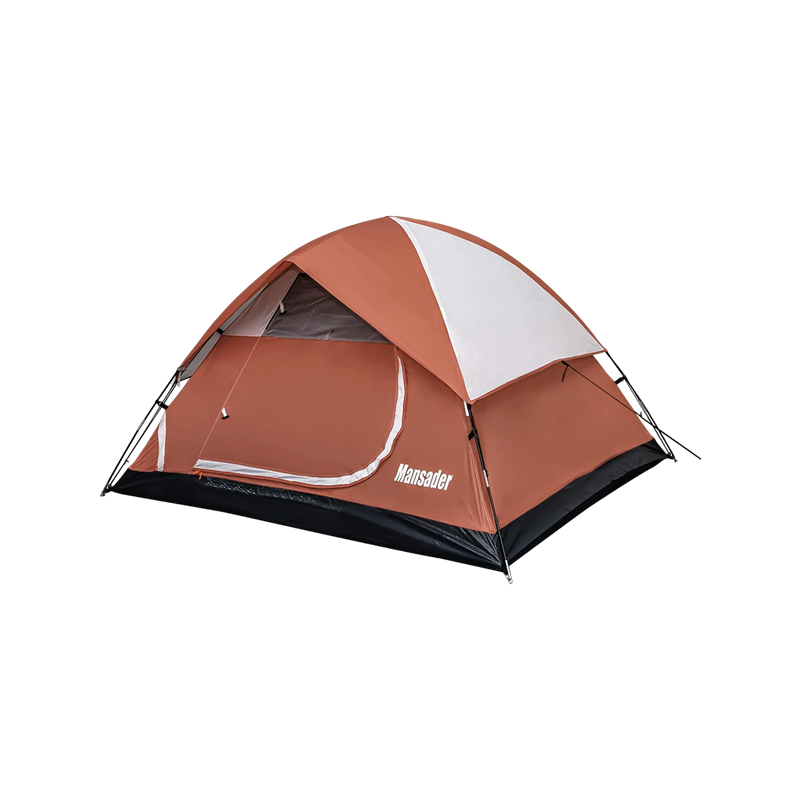
Two-person camping outdoor tent
Product Overview: A Practical Shelter for Two Campers
The Two-person camping outdoor tent is a double-layer tent developed for two-person camping use. The design consists of a breathable inner tent and a rainproof outer tent. This separation allows the inner layer to support airflow and occupant comfort while the outer fly provides a protective barrier against rain and wind.
The outer fabric uses polyester with a waterproof coating. Polyester is widely used in camping tents because it maintains its dimensions relatively well when exposed to changing humidity. Compared with fabrics that stretch more noticeably after absorbing moisture, polyester can help preserve the original pitch and tension of the tent during wet conditions.
Fully taped seams provide an additional layer of protection. A waterproof coating protects the surface of the fabric, but every stitched seam creates a line of small punctures. Seam tape covers these openings and reduces the risk of water entering through the sewn joints. This construction detail is especially important during sustained rain, when water remains on the fly for a long period rather than falling away immediately.
The tent is manually assembled using poles, stakes, and guy lines. Manual setup gives users more control over the final tension and positioning of the shelter. It also allows the tent to be adapted to different ground conditions, campsite layouts, and wind directions. For experienced campers, this flexibility is more valuable than the limited setup convenience offered by some fixed pop-up structures.
Multiple color options support different market strategies. Retailers can select colors according to seasonal collections, customer demographics, outdoor activity categories, or private-label brand requirements. A restrained color palette may suit mountaineering and technical outdoor collections, while brighter colors can appeal to family camping and recreational users.
Core Product Characteristics
| Product Element | Practical Function | Buyer Benefit |
|---|---|---|
| Double-layer construction | Separates the breathable inner tent from the weather-resistant outer fly | Improves condensation management and overall comfort |
| Waterproof polyester fabric | Helps resist rain penetration while maintaining dimensional stability | Supports reliable outdoor use across changing weather conditions |
| Fully taped seams | Covers needle holes along stitched panel joints | Reduces leakage risk during prolonged rainfall |
| Manual pole setup | Allows users to tension and secure the shelter according to conditions | Offers structural flexibility and dependable field adjustment |
| Two-person capacity | Provides sleeping space for two campers | Fits couples, friends, guided trips, and compact outdoor collections |
| Multiple color options | Supports different visual and market requirements | Helps retailers and brands develop differentiated product lines |
Why Double-Layer Construction Matters
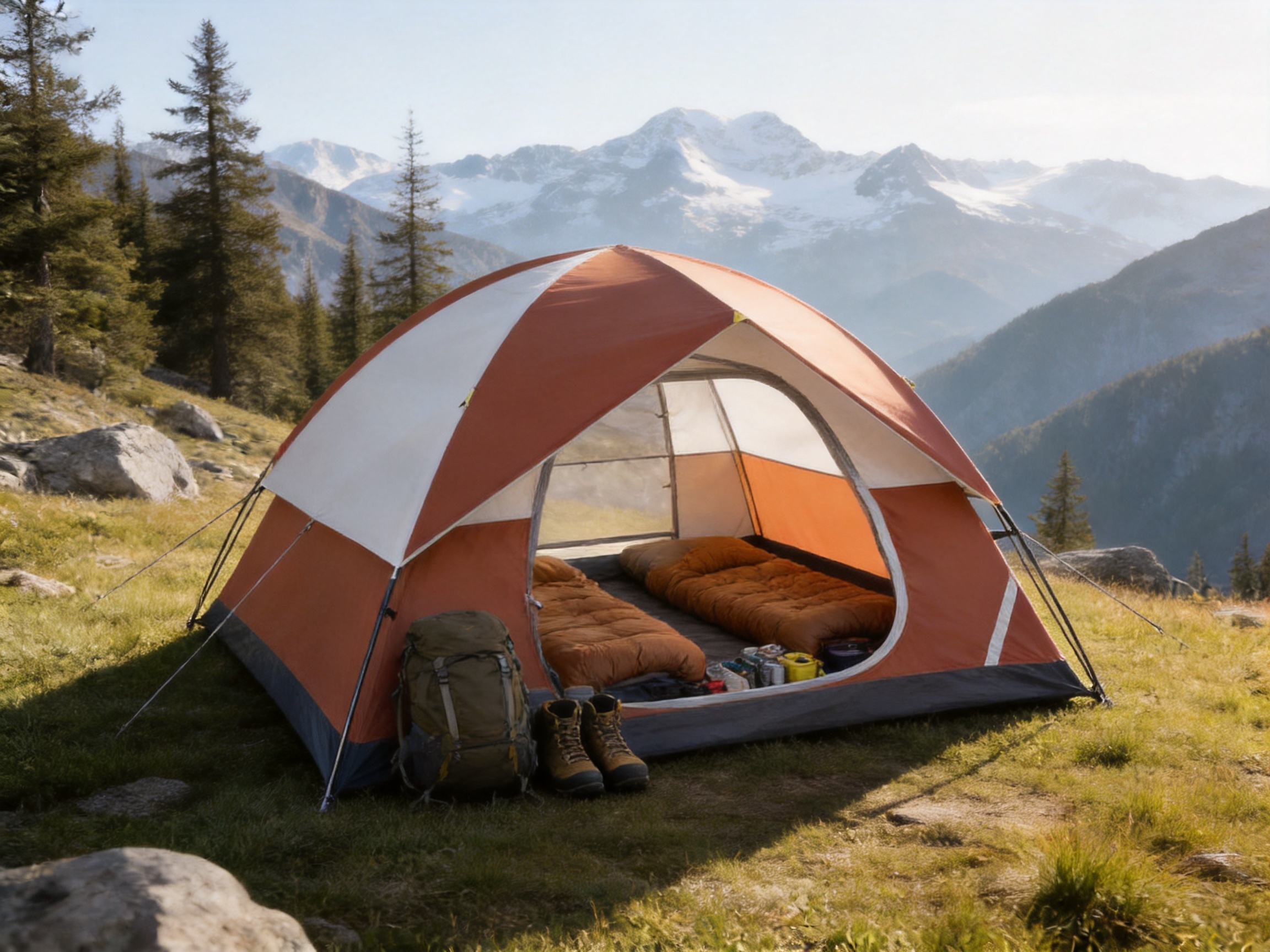
The most important performance feature of this tent is its double-layer architecture. The inner and outer shells perform different jobs, and the space between them is an active part of the shelter’s moisture-management system.
The inner tent is designed to be more breathable than the outer fly. When people sleep inside a tent, they release moisture through breathing and perspiration. Wet clothing, damp sleeping bags, and moisture carried into the tent on footwear can add to the humidity. If this warm, moisture-laden air meets a cold waterproof surface directly, droplets can form on the inside of the shelter.
The outer fly creates a weather-resistant barrier while leaving an air gap between the two layers. This gap gives moisture-bearing air more room to move and helps prevent the occupants from touching a wet outer surface directly. The outer fly can block rain and wind while the inner tent supports a more comfortable sleeping environment.
A single-wall tent places waterproofing and interior enclosure in the same fabric layer. This can reduce weight and simplify construction, but it also means that moisture generated inside the tent has fewer opportunities to escape before reaching the cold surface. In humid weather or during sharp overnight temperature drops, the difference can become immediately noticeable.
Double-layer construction is particularly useful for two-person camping because two occupants generate more moisture than one occupant. In a compact interior, the combined effect of breathing and body heat can raise humidity quickly. The separate fly and inner tent help manage this moisture without sacrificing protection from rain.
Condensation Control Through Airflow
Condensation occurs when warm air containing water vapor comes into contact with a colder surface and reaches its dew point. A tent cannot eliminate condensation under every condition, because weather, ground temperature, humidity, and occupant behavior all influence the result. However, a well-designed double-layer shelter can reduce the amount of moisture that settles inside the sleeping area.
Ventilation at the upper part of the tent allows warm air to rise and leave the interior. Mesh panels near the top of the inner tent can support this airflow while helping keep insects outside. Lower airflow is also important because air trapped near the floor can become humid, especially when the fly extends close to the ground to resist wind-driven rain.
The most effective approach balances weather protection and ventilation. Closing every opening may reduce drafts during heavy rain, but it can also trap humid air. Leaving ventilation points open where conditions permit allows the tent to release moisture before it condenses on the fly or inner walls.
This balanced approach is a meaningful advantage over tents designed around only one objective. A shelter that maximizes enclosure without considering airflow may feel damp. A shelter that maximizes ventilation without sufficient fly coverage may expose occupants to rain and wind. The double-layer concept allows both functions to be managed within one coordinated structure.
Waterproof Fabric and Seam Protection
Water resistance is not created by fabric coating alone. A reliable rainproof tent depends on the interaction of fabric construction, coating quality, panel design, seam treatment, zipper areas, attachment points, and final inspection.
The polyester fabric used in this product is treated with a waterproof coating. The coating helps prevent water from passing through the woven material. It also contributes to the outer fly’s ability to shed rainfall rather than absorb it rapidly. Polyester is a practical choice for commercial camping tents because it provides a useful balance between cost, durability, color availability, and dimensional stability.
One advantage of polyester over untreated or poorly stabilized alternatives is its relatively consistent behavior as environmental conditions change. Some fabrics can loosen when they absorb moisture, affecting the tension of the fly and creating areas where water may collect. Polyester is commonly selected for coated tent flies because it can maintain a more predictable shape during normal wet-weather use.
The Importance of Fully Taped Seams
Sewing two panels together creates small needle holes along the seam line. Even when the fabric itself has excellent water resistance, those holes can provide a path for water. Fully taped seams address this vulnerability by applying a waterproof strip over the stitched joint.
Seam tape is normally heat-bonded to the inside of the seam. The tape must be applied with suitable temperature, pressure, speed, and alignment. Excessive heat can damage the fabric or coating, while insufficient heat may result in weak bonding. Uneven pressure can create small gaps that may become leakage points during use.
For this reason, seam taping should be considered a production discipline rather than a decorative upgrade. A tent with a good fabric coating but incomplete seam treatment may perform poorly in persistent rain. By contrast, a carefully coated and fully taped fly offers a more complete defense against water entry.
Manufacturing teams must also pay attention to areas where several layers meet, including pole sleeves, webbing attachments, corner reinforcements, and guy-line points. These areas experience mechanical stress as well as water exposure. Proper construction requires the seam-treatment process to work with the overall panel design instead of being added without regard to load or drainage.
Maintaining Waterproof Performance
Waterproof coatings gradually experience wear from ultraviolet exposure, friction, folding, dirt, and repeated packing. This is normal for coated outdoor equipment. Users can extend the service life of the tent by drying it fully before storage, avoiding unnecessary abrasion, and storing it loosely rather than compressed while damp.
A wet tent should not remain tightly rolled for long periods. Trapped moisture can encourage mildew, create unpleasant odors, and weaken certain materials over time. Retailers and brands can improve customer satisfaction by including care instructions that explain drying, cleaning, packing, and long-term storage.
Proper maintenance does not replace manufacturing quality, but it helps preserve the quality built into the product. The combination of waterproof polyester, fully taped seams, correct usage, and responsible care supports longer service life than a tent that relies on coating alone.
Structural Stability and Manual Setup
A two-person tent must remain stable when exposed to wind, uneven ground, and repeated entry and exit. Manual setup gives the user direct control over pole placement, fly tension, stake positioning, and guy-line adjustment.
The tent’s pole structure is intended to distribute the forces acting on the shelter. Dome and tunnel configurations are commonly used because multiple contact points help spread wind loads across the fabric and frame. This is generally more stable than a single-hoop arrangement, where a larger portion of the load may be concentrated on fewer structural points.
A manual setup also allows users to select the most suitable orientation. In windy conditions, positioning the narrower end toward the prevailing wind can reduce the surface area exposed to gusts. On uneven terrain, the user can adjust the position of the tent and alter tension so that the floor and fly remain properly aligned.
Pole Material Considerations
Pole material affects weight, durability, repairability, and cost. Aluminum poles are valued for their ability to flex under load and return toward their original shape. They are commonly selected for more demanding outdoor products because they offer a useful combination of strength and relatively low weight.
Fiberglass poles are economical and can be suitable for occasional-use or entry-level products, but repeated stress can lead to fatigue, splintering, or breakage. For outdoor brands seeking a more durable product position, aluminum is often the stronger structural choice.
The manufacturer’s approach emphasizes selecting materials according to real use rather than simply chasing the lowest production cost. This is especially relevant for tents intended for hiking, mountaineering, and repeated camping trips, where the structure may be assembled and packed many times each season.
Guy Lines and Stake Positioning
Guy lines increase stability by transferring tension from the tent body and fly to the ground. Their effectiveness depends on correct angle, tension, and attachment. A stake placed straight down may pull out more easily under a direct line load. Angling the stake approximately 45 degrees away from the tent can improve resistance by placing the stake in a more favorable position relative to the guy line.
Campers should avoid overtightening because excessive tension may stress fabric, seams, pole sleeves, or attachment points. The goal is a smooth, balanced pitch rather than maximum force. When the fly is correctly positioned, water can run off without forming large pools, and airflow can continue through the designed ventilation areas.
These setup details show why a well-designed tent still benefits from user education. Performance is created through the combination of sound engineering and correct field practice. A supplier that understands both sides can provide better instructions, more useful packaging, and fewer avoidable complaints.
Interior Space for Two Campers
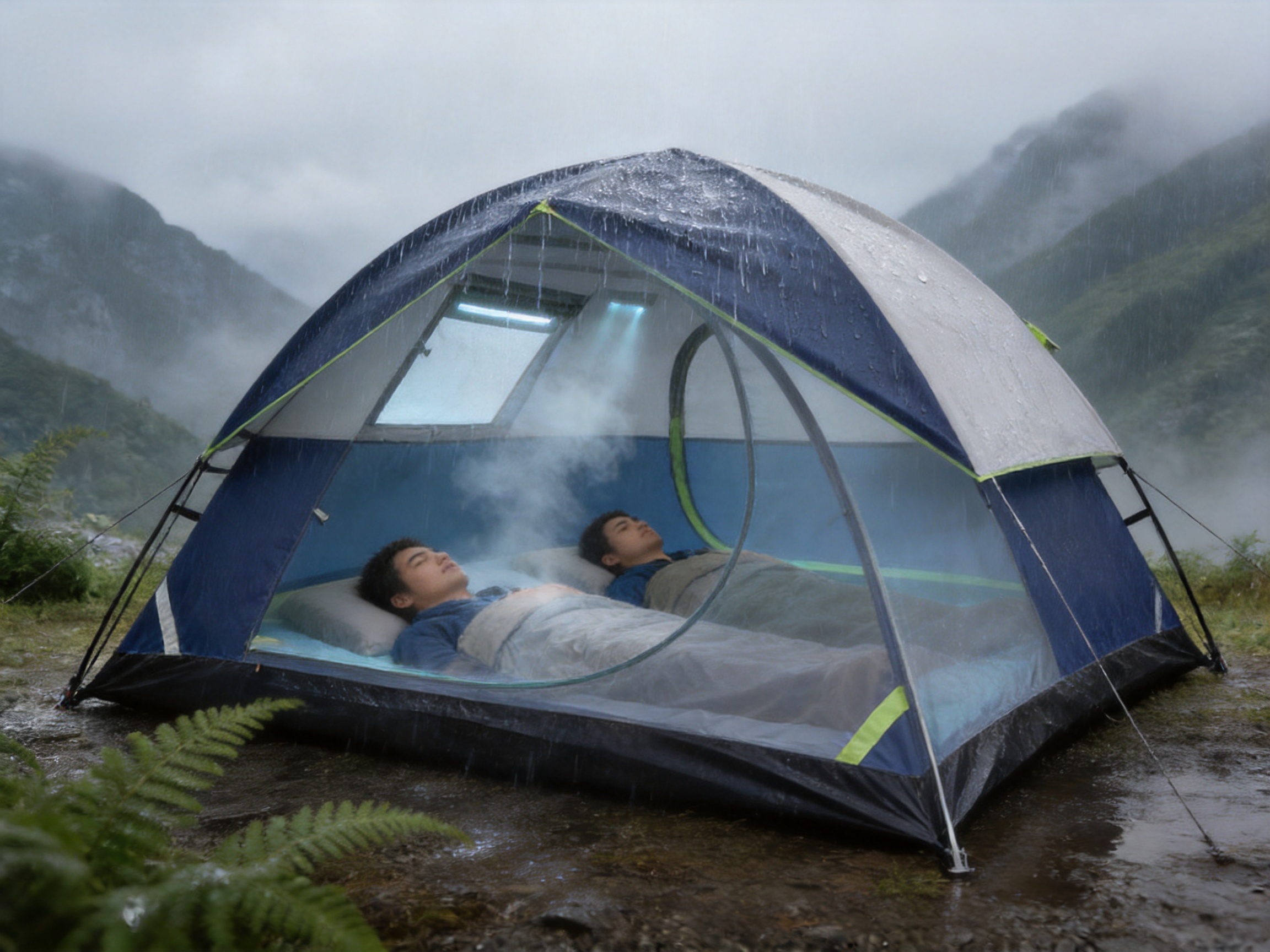
A tent marketed for two people should be evaluated by more than its nominal floor dimensions. The shape of the walls, peak height, entrance arrangement, storage space, and vestibule all affect how comfortable the shelter feels in actual use.
Two sleeping pads must fit side by side without forcing the occupants into an excessively narrow position. A sleeping width of approximately 130 centimeters is often a practical starting point for evaluating two-person comfort, although individual preferences and pad dimensions vary. Buyers should also consider the thickness of sleeping bags and whether occupants will store small personal items inside the inner tent.
Wall angle is another important factor. A sharply sloped wall may reduce usable space at shoulder height even when the listed floor area appears generous. A design with more efficient vertical volume can make it easier for two people to change clothes, organize equipment, or sit up without pressing against the fabric.
Peak height contributes significantly to livability. The ability to sit upright is useful when dressing, sorting gear, waiting out rain, or preparing for an early departure. It can also reduce the feeling of confinement during multi-day trips when occupants spend more time inside the tent.
Vestibule Storage and Daily Convenience
The vestibule is the covered area between the inner tent and the outer fly. It allows campers to keep wet boots, backpacks, rain jackets, and other equipment outside the sleeping compartment while still protecting them from rain.
For two people, vestibule space can make the difference between an organized shelter and a crowded one. Without covered storage, wet or dirty equipment may need to remain inside the sleeping area. This reduces usable floor space and can introduce moisture, mud, and unpleasant odors.
A practical two-person tent should therefore be judged by the combined value of its sleeping area and storage arrangement. A slightly more compact inner tent can remain comfortable if the vestibule is well planned and the occupants can keep bulky equipment outside but protected.
This focus on real use is consistent with the product development philosophy of CragHaven Outdoor. The company approaches outdoor products according to weather, terrain, usage patterns, and time rather than treating a catalog of specifications as the complete design process.
Advantages Over Basic Competitor Designs
The Two-person camping outdoor tent offers several advantages when compared with basic low-cost or simplified competitor products. These advantages are not based on one isolated feature. They come from the way the materials, construction methods, setup system, and product-development process work together.
Advantage One: Better Moisture Management Than Single-Wall Designs
Single-wall tents can be lighter and quicker to assemble, but their interior surface is also the primary weather barrier. Moisture from two occupants may condense directly on that surface. The double-layer structure of this tent creates an air gap and separates the breathable inner environment from the rainproof fly.
This does not make condensation impossible, but it gives the shelter a more effective method of managing it. For campers operating in humid regions, cool nights, or variable mountain weather, that distinction can significantly improve comfort.
Advantage Two: More Complete Rain Protection Than Partially Taped Tents
Some entry-level tents use coated fabric but leave selected seams untreated or only partially taped. Such construction may perform acceptably during brief showers but become vulnerable during prolonged rainfall. Fully taped seams offer a more comprehensive approach by addressing the openings created during sewing.
This feature also provides a clear quality message for retailers. Buyers can understand the value of a fully protected seam system more easily than they can assess coating chemistry or fabric density from a product photograph.
Advantage Three: More Flexible Setup Than Fixed Pop-Up Structures
Pop-up tents can be convenient, but they may provide less control over orientation, tension, and structural adjustment. Manual setup requires more participation from the user, yet it also allows the shelter to be pitched according to terrain and wind conditions.
For hikers, mountaineers, and experienced campers, this adaptability is an advantage. It supports better wind alignment, more accurate fly tension, and easier replacement or inspection of individual pole components.
Advantage Four: A More Balanced Material Strategy
The use of coated polyester reflects a balanced approach to durability, cost, color flexibility, and weather performance. The goal is not to use the most expensive material in every location, but to select materials that are appropriate for the intended usage scenario.
The same principle applies to the frame, seam treatment, reinforcements, and finishing. A tent is only as dependable as its weakest structural or waterproofing detail. Coordinated material selection helps prevent the common problem of combining a strong fabric with weak attachment points or excellent coating with insufficient seam protection.
Advantage Five: Better Private-Label and Wholesale Adaptability
Multiple color options and OEM support allow the product to serve different brand identities and sales channels. A retailer may require neutral colors for a technical collection, earth tones for a hiking range, or brighter colors for recreational camping. A supplier that can support these requirements gives buyers more control over market positioning.
Customization can also extend to packaging, labels, instruction materials, logos, color combinations, and selected product details, subject to technical review and production requirements. The important point is that customization should not compromise seam integrity, waterproof performance, or structural reliability.
Manufacturing Strengths and Product Development Process
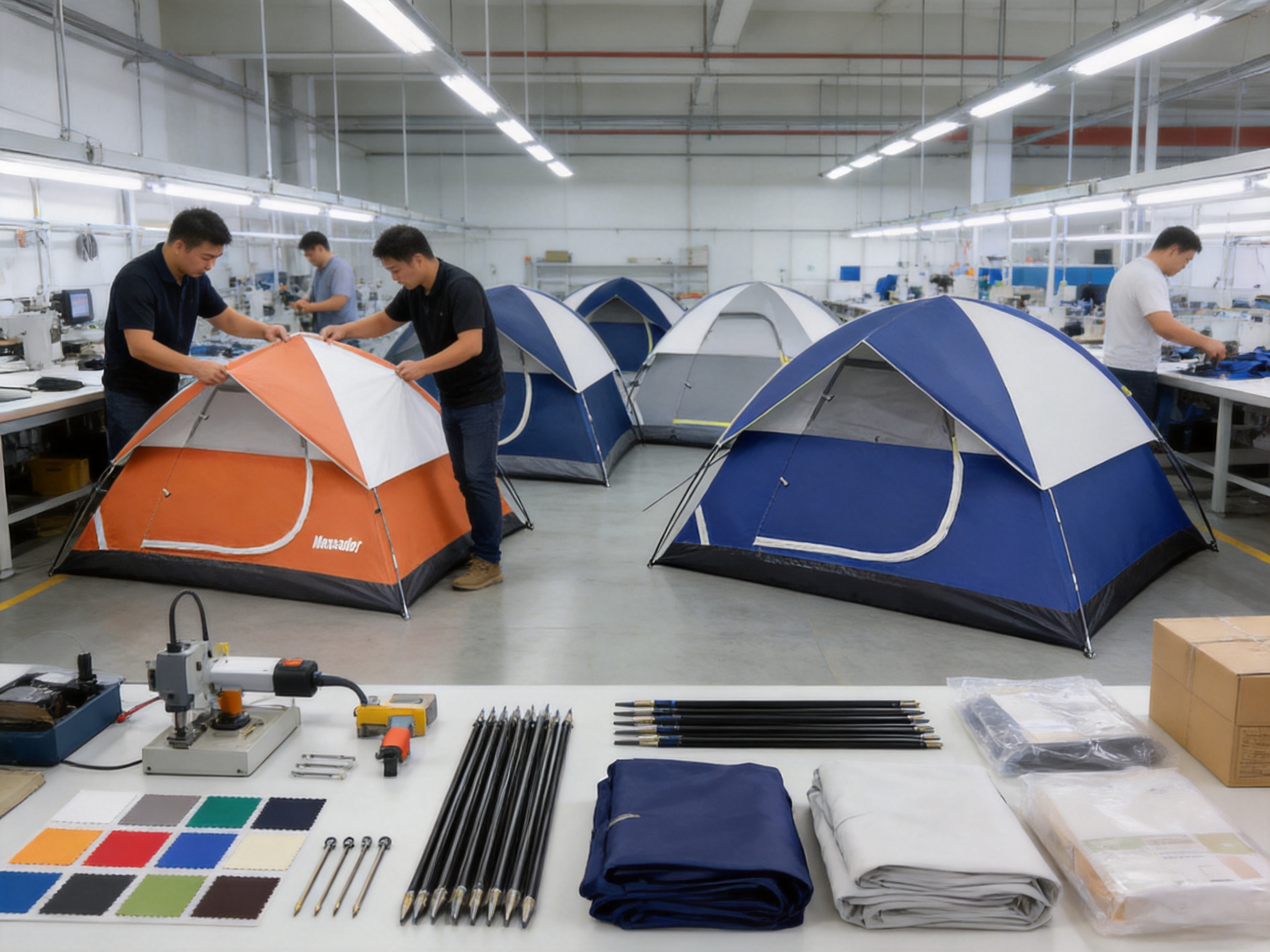
Advanced manufacturing is not limited to operating modern equipment. It involves translating a product idea into a stable, repeatable, and scalable production system. For an outdoor tent, this means coordinating design, material selection, pattern development, sewing, seam taping, frame compatibility, inspection, packaging, and shipment preparation.
CragHaven Outdoor is based in Hangzhou, China, and operates as both an outdoor brand and a cross-border manufacturing partner. Its stated focus includes mountaineering, hiking, and camping applications for global markets. This dual perspective is useful because the company participates in product development as well as production rather than functioning only as a basic sourcing intermediary.
Scenario-Based Design
The company’s product philosophy begins with actual outdoor use. Instead of designing products only for catalog presentation, the team considers weather, terrain, duration, user behavior, and the practical problems encountered in the field.
For this two-person tent, those considerations appear in the double-layer architecture, waterproof fly, breathable inner tent, taped seams, manual setup, and attention to living space. Each feature responds to a recognizable user requirement: reducing condensation, resisting rain, supporting setup stability, or making two-person occupancy more manageable.
Scenario-based design also helps buyers avoid unnecessary features. A product does not become better simply because it contains more components or more technical terminology. The most valuable features are those that remain useful after repeated packing, transport, setup, exposure, and cleaning.
Sampling, Testing, and Optimization
Sampling is an essential stage for identifying problems before mass production. A sample allows the team to examine panel alignment, fly fit, inner-tent geometry, pole compatibility, seam-tape placement, zipper movement, attachment strength, and packing size.
Testing and optimization should follow the sample rather than treating it as the final answer. If the fly pulls unevenly, if a seam tape wrinkles, if the vestibule does not provide enough practical storage, or if the assembled tent becomes difficult to tension, the design can be adjusted before production quantities increase.
This iterative approach reduces uncertainty for wholesale buyers. It can help prevent late-stage changes, inconsistent dimensions, packaging errors, and customer complaints caused by problems that were visible but not addressed during early development.
Coordinated Sewing and Seam-Taping Operations
Tent production requires accuracy across large fabric panels and curved seams. Cutting errors can affect the final pitch, while inconsistent sewing tension can create puckering, misalignment, or stress concentrations. Skilled operators and controlled production procedures are important for maintaining repeatability.
Seam taping adds another technical step. The tape must follow the seam line accurately and remain securely bonded through folding and packing. Production teams need to control the process so that waterproof protection is consistent rather than dependent on occasional manual correction.
Inspection should include visual checks for tape continuity, fabric damage, incomplete bonding, loose threads, seam distortion, and areas where reinforcement layers meet. For a product whose market position includes reliable weather protection, these checks are central to quality assurance.
Supply Chain and Communication Support
A capable manufacturing partner helps reduce uncertainty throughout the supply chain. Clear communication about materials, colors, target markets, packaging, order quantities, sampling schedules, and production changes makes it easier for brands to plan launches and maintain inventory.
CragHaven Outdoor presents itself as a Western-market-oriented partner that participates in design and manufacturing. This approach can be valuable for international buyers who need more than a factory quotation. They may need help interpreting user expectations, balancing technical performance with target pricing, and converting a product concept into a repeatable production specification.
Long-term cooperation also supports continuous improvement. Once a product has been used and reviewed in a particular market, feedback can inform future colorways, packaging revisions, material changes, or adjustments to the product range.
Quality Control Priorities for Wholesale Buyers
Wholesale buyers evaluating a two-person tent should create a quality checklist that covers the complete user experience. Looking only at fabric or color may miss issues that affect field performance.
Fabric and Coating Checks
The fabric should be inspected for weaving irregularities, stains, coating defects, inconsistent color, and visible damage. The waterproof coating should be applied evenly, without obvious peeling, pinholes, or areas of incomplete coverage.
Buyers should also confirm that the selected fabric matches the approved sample. Changes in fabric weight, coating, color, or finishing can affect product performance and should not be made without authorization.
Seam and Tape Checks
Fully taped seams should be continuous along the required seam lines. Tape should remain bonded without major wrinkles, lifting, gaps, or exposed sections. Particular attention should be given to corners, intersections, zipper ends, pole sleeves, and reinforced attachment points.
A visual inspection is important, but buyers may also request an agreed testing method appropriate to the product specification. The exact method should be defined during development so that the factory and buyer use the same acceptance criteria.
Frame and Hardware Checks
Pole sections should connect smoothly and maintain the intended shape. Shock cord tension should be sufficient to keep sections together without making assembly unnecessarily difficult. Stakes, guy lines, clips, buckles, and other hardware should be checked for correct quantity and compatibility.
Hardware should also be evaluated for packaging safety. Sharp or poorly protected components can damage fabric during transportation. A well-designed packing system protects both the tent and its accessories until the product reaches the customer.
Functional Assembly Checks
A complete tent should be assembled during inspection. This confirms that the inner tent, outer fly, poles, clips, stakes, and guy lines work together as intended. It can reveal issues that are difficult to identify when examining folded components separately.
The assembled shelter should have balanced tension, a correctly positioned fly, usable entrances, and stable attachment points. The sample should also be packed and unpacked to ensure that the stated packing method is practical for normal users.
Suitable Applications and Target Markets
The tent is suitable for couples, friends, solo campers who prefer extra space, guided outdoor programs, hiking collections, mountaineering-oriented retailers, and general camping brands. Its double-layer structure gives it broader application potential than a specialized ultralight shelter designed only for highly experienced users.
For hiking and mountaineering markets, the tent can be positioned as a practical weather-ready shelter with a manual setup system and durable construction approach. For recreational camping, the same product can be presented as a comfortable two-person tent with better moisture management than a basic single-wall alternative.
Outdoor retailers can use the product as part of a tiered collection. It may sit above entry-level tents that use simpler construction while remaining more accessible than highly specialized expedition shelters. Its combination of practical performance and customization options can also support private-label development.
For cross-border e-commerce, product communication should explain the difference between a waterproof outer fly and a breathable inner tent. Clear diagrams, setup instructions, care information, and realistic use recommendations can help reduce customer confusion and improve reviews.
How Retailers Can Present the Product Clearly
Effective product communication should focus on benefits that customers can understand. Instead of listing “double-layer structure” without explanation, retailers can explain that the two layers help separate rain protection from interior airflow and may reduce the discomfort associated with condensation.
Fully taped seams should be described as protection against water entering through stitched panel joints. The phrase “waterproof coating” is not enough on its own because customers may assume that coated fabric automatically means every seam is protected.
Manual setup should be presented honestly. It offers flexibility and stable adjustment, but it requires the user to connect poles, secure stakes, and tension the fly. Including clear instructions and setup illustrations can turn this requirement into a positive part of the product experience.
Two-person capacity should be communicated with realistic expectations. The tent is intended for two occupants, but comfort depends on sleeping-pad width, sleeping-bag size, personal gear, and the use of the vestibule. Customers who want extensive interior storage or extra personal space may prefer a larger category.
Care, Storage, and Long-Term Use
Users should dry the tent completely before packing it for long-term storage. If weather conditions make full drying impossible at the campsite, the tent should be unpacked and dried as soon as practical after returning home.
Dirt and organic debris should be removed using methods that do not damage the coating. Harsh chemicals, aggressive scrubbing, and unnecessary machine washing may shorten the life of the fabric and seam treatment.
The tent should be stored in a cool, dry place away from prolonged direct sunlight. Ultraviolet exposure can gradually weaken fabric and coatings, even when the tent is not being used. Folding patterns may be varied occasionally to avoid repeatedly stressing the same crease lines.
Poles should be inspected for bending, cracks, damaged shock cord, or loose connectors. Stakes and guy lines should be checked before each trip. Small repairs made early can prevent more serious damage during a later outing.
These care recommendations can be incorporated into packaging and after-sales materials. A brand that teaches customers how to maintain outdoor equipment can improve satisfaction and reinforce its reputation for responsible product support.
Q&A: Two-Person Camping Outdoor Tent
Q1: Is this tent suitable for two adults?
Yes. The product is designed as a two-person camping tent. Actual comfort depends on the users’ sleeping pads, sleeping bags, personal preferences, and how much equipment they keep inside the sleeping compartment. The vestibule should be used for bulky or wet gear where available.
Q2: What is the advantage of the double-layer design?
The double-layer design separates the breathable inner tent from the rainproof outer fly. This creates an air gap that supports moisture movement and helps prevent occupants from contacting a wet outer surface directly. It generally provides better condensation management than a basic single-wall tent.
Q3: Does the double-layer structure eliminate condensation?
No tent can eliminate condensation in every environment. Humidity, temperature changes, wet equipment, ground conditions, and ventilation all influence moisture. The double-layer structure, breathable inner tent, and appropriate ventilation can reduce condensation and improve comfort when used correctly.
Q4: Why are fully taped seams important?
Sewing creates small needle holes along each seam. Fully taped seams cover those holes with a bonded waterproof strip, reducing the chance of water entering through stitched joints during rain.
Q5: Why is polyester used for the outer tent?
Polyester offers a practical balance of weather resistance, dimensional stability, durability, color flexibility, and cost. When combined with a suitable waterproof coating and proper seam treatment, it is well suited to many double-layer camping tents.
Q6: Is manual setup difficult?
Manual setup requires the user to connect the poles, attach the tent body and fly, position stakes, and adjust tension. With clear instructions and practice, the process is straightforward. Its advantage is that users can control orientation and tension according to the campsite and weather.
Q7: Are aluminum poles available for this product?
The product development approach uses material selection according to the intended use. Aluminum is generally favored for more durable manual-setup outdoor tents because it handles repeated flexing well. Exact pole specifications should be confirmed during product development and quotation.
Q8: Can the tent be customized for a private-label brand?
Multiple color options and OEM support make the product suitable for private-label development. Customization may include colors, branding, labels, packaging, and selected product details, subject to technical review, minimum order quantities, and production requirements.
Q9: What should buyers inspect before placing a bulk order?
Buyers should confirm the approved fabric, coating, seam-tape coverage, pole structure, dimensions, hardware, color, packaging, labeling, testing requirements, and inspection standards. A complete assembled sample should be reviewed before mass production.
Q10: How should the tent be stored?
The tent should be completely dry before long-term storage. It should be kept in a cool, dry place away from direct sunlight and should not remain tightly packed while damp. Poles, stakes, guy lines, seams, and coating should be checked periodically.
Q11: Is this tent suitable for heavy mountain conditions?
The tent is designed for double-person camping and outdoor use, but buyers should match the product to the intended environment. Extreme alpine or expedition conditions may require a specialized shelter with different structural, fabric, and testing specifications. Product selection should always consider expected wind, snow, temperature, and exposure.
Q12: Why work with a manufacturing partner instead of a trading supplier?
A manufacturing partner involved in design, sampling, testing, and production can provide more direct control over materials, specifications, quality, and product improvements. This may reduce communication gaps and make it easier to develop a repeatable product for long-term retail supply.
Why CragHaven Outdoor Is a Suitable Development Partner
CragHaven Outdoor combines outdoor product knowledge with manufacturing coordination. Its business is focused on mountaineering, hiking, and camping scenarios, and its product philosophy emphasizes practical use rather than catalog appearance alone.
The company’s stated strengths include functional design, material selection based on durability and reliability, sampling, testing, optimization, and communication for global markets. These capabilities are relevant to buyers seeking a two-person tent that can be developed consistently rather than purchased as an unverified generic item.
Its location in Hangzhou, China, provides access to a mature and efficient manufacturing environment. More importantly, the company positions itself as a partner that participates in both design and manufacturing. That role can help brands manage the transition from an initial concept to a stable, scalable product specification.
The company’s name reflects a focus on balance and stability in nature. This idea is visible in the tent’s balanced combination of breathable and waterproof layers, weather protection and airflow, practical space and compact two-person capacity, and customization and production repeatability.
For global retailers, long-term value depends on more than an attractive first sample. It depends on whether the supplier can maintain specifications, respond to feedback, communicate changes, and support future product development. A partner with experience in outdoor usage and manufacturing processes is better positioned to provide that continuity.
Conclusion
The Two-person camping outdoor tent is built around the requirements that matter most in practical camping: protection from rain, control of interior moisture, stable manual setup, usable space for two people, and dependable construction.
Its double-layer structure provides a clear advantage over basic single-wall designs by separating the breathable inner environment from the waterproof outer fly. Polyester fabric offers a practical foundation for the rainproof layer, while fully taped seams address the leakage risks created during sewing. Manual setup gives users greater control over orientation and tension, and the product’s multiple color options support retail and private-label requirements.
The tent’s value also depends on the manufacturing process behind it. Consistent cutting, sewing, seam taping, sample review, testing, material control, and final inspection all contribute to the performance customers experience outdoors. CragHaven Outdoor’s approach combines outdoor scenario knowledge with product development and manufacturing support, helping buyers reduce uncertainty and develop equipment for long-term market use.
For brands and retailers seeking a capable two-person shelter, the product offers a balanced platform: comfortable enough for general camping, structured enough for more demanding outdoor use, and adaptable enough for OEM and wholesale development. Its strongest advantage is not one isolated specification, but the way its construction and manufacturing philosophy address the complete life of the product—from design and production to setup, weather exposure, maintenance, and repeat purchase.
References
1. International Organization for Standardization. ISO 5912, Camping Tents: Requirements and Test Methods.
2. International Organization for Standardization. ISO 811, Textiles: Determination of Resistance to Water Penetration—Hydrostatic Pressure Test.
3. International Organization for Standardization. ISO 4920, Textiles: Determination of Resistance to Surface Wetting.
4. American Society for Testing and Materials. Standard Practices for Outdoor Textile and Waterproof Product Evaluation.
5. Outdoor Industry Association. General Guidance on Outdoor Equipment Materials, Product Care, and Consumer Use.
6. CragHaven Outdoor. Product Development and Manufacturing Information for Two-Person Camping Outdoor Tent, Product Code WFLY261001.
Product: Two-person camping outdoor tent


- Phone: +86-15968800379
- E-mail: [email protected]
- Address: Room 1002, Huishang Building, Gongshu District, Hangzhou City, Zhejiang Province.
Copyright © CragHaven Outdoor All Rights Reserved. Outdoor Gear Manufacturers Wholesale Mountaineering Camping Gear Suppliers
