

 English
 Deutsch
 Español
 Français

Portable Extendable Folding Stool for Hiking, Camping, Fishing, and Outdoor Travel
Content
- 1 Why Portable Seating Matters in Outdoor Activities
- 2 Product Overview and Core Design Concept
- 3 Compact Folding Structure for Efficient Storage
- 4 Adjustable Height for Different Terrains and Users
- 5 Thickened PP Material and Structural Reliability
- 6 Advantages Compared with Conventional Outdoor Seating
- 7 Applications Across Camping, Hiking, and Travel
- 8 Manufacturing Approach and Product Development Strengths
- 9 OEM and Global Supply Advantages
- 10 Quality Considerations for a Folding Outdoor Stool
- 11 Maintenance, Storage, and Service Life
- 12 Why the Product Fits Current Outdoor Market Trends
- 13 Buyer Guidance for Selecting an Outdoor Gear Supplier
- 14 Role of CragHaven Outdoor in Product Development
- 15 Recommended Product Positioning
- 16 Q&A: Portable Extendable Folding Stool
- 16.1 What is a portable extendable folding stool?
- 16.2 How small is the stool when folded?
- 16.3 Can the stool be used on uneven terrain?
- 16.4 What material is used to make the stool?
- 16.5 Is the stool suitable for hiking?
- 16.6 Can it be used for fishing?
- 16.7 How does it compare with a traditional camping chair?
- 16.8 Is the product suitable for children?
- 16.9 What should buyers check before placing an OEM order?
- 16.10 How can the stool be maintained?
- 16.11 Can the stool be customized for private-label sales?
- 16.12 Why is manufacturing capability important for this product?
- 17 Conclusion
- 18 References
- 19 Product: Portable outdoor storage folding extendable stool, adjustable hiking stool
Outdoor recreation is becoming more mobile, flexible, and experience-oriented. Hikers, campers, anglers, travelers, event visitors, and outdoor workers increasingly want equipment that is easy to carry, quick to deploy, stable during use, and practical across changing environments. Seating is a basic need in many outdoor situations, yet traditional chairs and fixed stools can be bulky, heavy, difficult to store, or unsuitable for uneven ground.
The portable outdoor storage folding extendable stool addresses these challenges through a compact folding structure, adjustable height, durable polypropylene construction, and a design intended for rapid use. When folded, the stool occupies minimal space and can be carried in a backpack, vehicle, equipment box, or personal storage system. When opened, it provides convenient temporary seating for breaks, campsites, fishing locations, queues, outdoor events, and travel activities.
This product, identified as WFDS263001, belongs to the mountaineering accessories category and reflects a broader movement toward lightweight, multifunctional outdoor gear. It is not designed merely as a smaller version of a traditional chair. Its value comes from combining portability, adjustable positioning, storage efficiency, and practical manufacturing considerations in one product.
Why Portable Seating Matters in Outdoor Activities
Outdoor activities often require people to manage equipment over long distances and through unpredictable conditions. A backpack may already contain water, food, clothing, first-aid supplies, navigation equipment, lighting, and technical gear. Campers may need to transport tents, sleeping systems, cooking equipment, and personal belongings. Anglers and travelers may also carry specialized tools and storage containers.
In these situations, seating must provide useful support without becoming an unnecessary burden. A large folding chair can offer comfort, but it may consume significant storage space. A fixed-height stool can be convenient, but it may not adapt well to sloped or uneven terrain. A disposable or low-quality seat may be inexpensive, yet it may not deliver the durability required for repeated outdoor use.
An extendable folding stool occupies an important position between these options. It is more compact than many conventional outdoor chairs, more adaptable than a fixed stool, and more suitable for repeated use than temporary seating alternatives. The design emphasizes efficient storage and fast access, helping users rest whenever and wherever necessary.
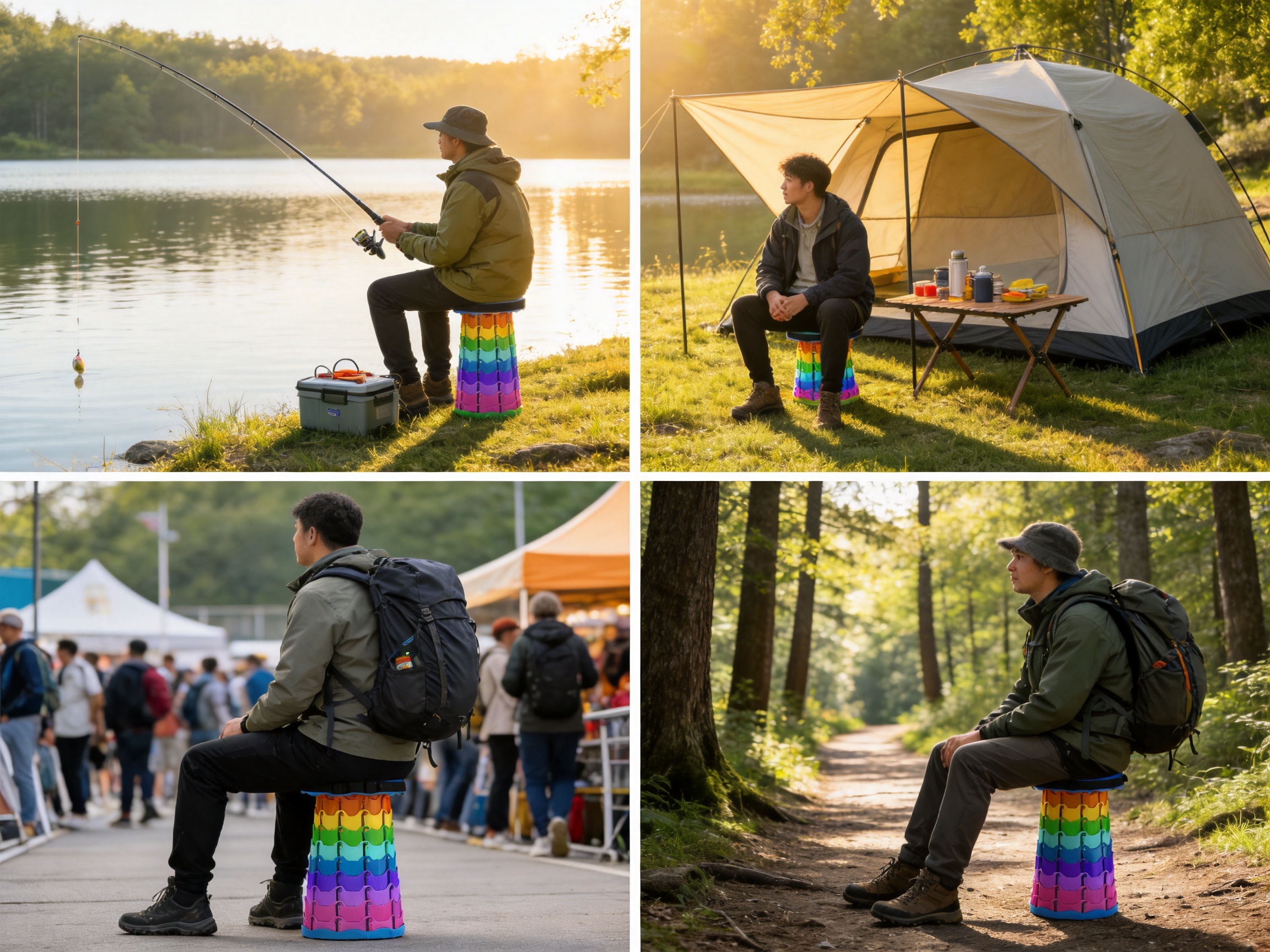
For hikers, the stool can provide a short resting point during a route. For campers, it can serve as a personal seat around a campsite. For anglers, it can support longer waiting periods beside a river, lake, or shoreline. For travelers, it can be used during transportation delays, outdoor events, or sightseeing stops. The same product can therefore support multiple activities without requiring a separate seating solution for each one.
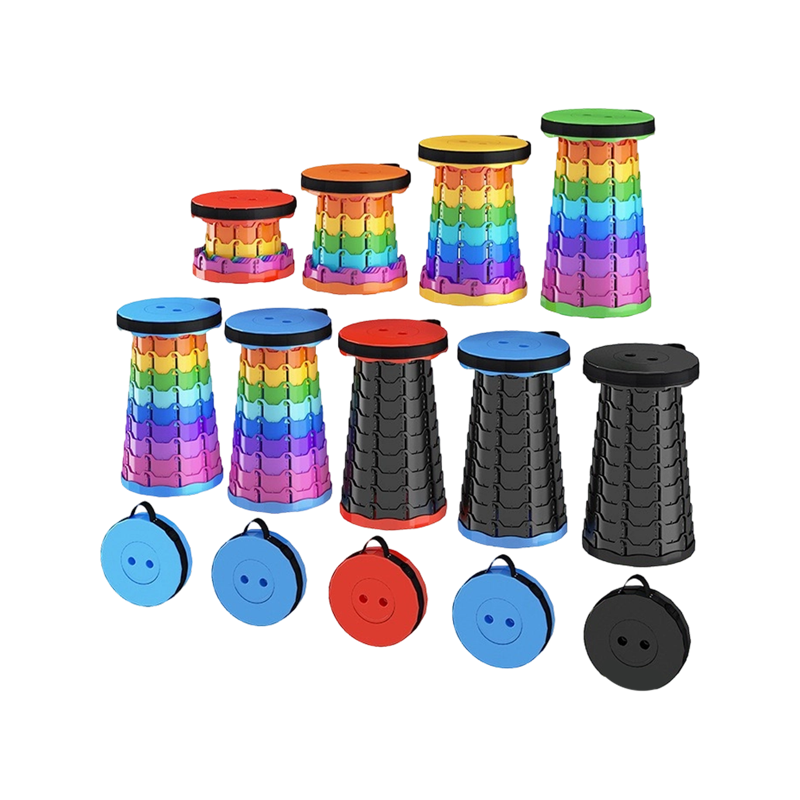
Portable outdoor storage folding extendable stool, adjustable hiking stool
Product Overview and Core Design Concept
The portable outdoor storage folding extendable stool is based on an innovative folding and telescoping structure. It can be unfolded when needed and folded again after use, allowing users to move quickly between sitting and carrying modes. This straightforward operating concept is especially valuable outdoors, where people may need to set up equipment quickly or pack away without spending time on complicated assembly.
The product description emphasizes four central design features:
- Folding construction for compact transportation and storage.
- Adjustable height for different users, terrain conditions, and activities.
- Thickened PP material for a strong and durable seating structure.
- Small folded dimensions intended to take up space similar to a water bottle.
These features work together rather than functioning as isolated benefits. Compact folding makes the stool easier to carry. Height adjustment makes it more adaptable. Durable material supports repeated use. Quick deployment improves convenience during real outdoor activities.
The result is a product designed around practical use rather than decorative complexity. Outdoor users generally value equipment that performs reliably, occupies little space, and does not require extensive maintenance. The stool’s structure reflects these expectations by focusing on portability and daily usability.
Compact Folding Structure for Efficient Storage
Storage efficiency is one of the most important advantages of a portable outdoor stool. When folded, the product can be placed inside a backpack, side pocket, vehicle compartment, camping storage box, or equipment cabinet. This is particularly useful for people who want to bring a seat but do not want to carry a full-size chair.
Traditional folding chairs usually require a larger carrying area because their legs, seat frame, and backrest remain relatively wide even after folding. A conventional fixed stool may be smaller, but it often cannot be adjusted and may still occupy inconvenient space. The extendable folding structure reduces the product’s overall storage footprint and allows it to be transported alongside other equipment.
The compact format also supports flexible organization. A hiker can place the folded stool vertically in a backpack. A camper can store it with cooking or rest equipment. A retailer can package and display it efficiently. A distributor can improve warehouse utilization by handling a product with a relatively small packed volume.
Compactness is not only a consumer convenience; it can also support supply-chain efficiency. Smaller products may be easier to arrange during packaging, palletizing, warehousing, and transportation. For outdoor gear suppliers and global retailers, efficient product dimensions can contribute to more practical inventory management and lower handling complexity.
| Design Feature | Practical Function | Value for Outdoor Users |
|---|---|---|
| Folding structure | Reduces the product’s storage volume | Easier backpack, vehicle, and equipment-box storage |
| Extendable body | Allows the sitting height to be adjusted | Supports different users and terrain conditions |
| Thickened PP construction | Provides a durable structural material | Suitable for repeated outdoor handling and use |
| Fast opening mechanism | Enables immediate deployment | Useful during rest breaks, queues, and changing activities |
| Compact folded profile | Minimizes carrying and storage demands | Leaves more room for other essential equipment |
For consumers comparing products, the storage format should be evaluated together with stability, adjustment, material quality, and operating simplicity. A product is not genuinely portable if it is difficult to carry, slow to open, or inconvenient to pack away. The folding design of this stool is intended to balance all of these requirements.
Adjustable Height for Different Terrains and Users
Outdoor ground conditions are rarely uniform. Campsites may contain grass, gravel, compacted soil, wooden platforms, or slightly sloped surfaces. Hiking routes may include rest points with irregular terrain. Fishing locations may be positioned beside water or on uneven banks. A fixed-height stool may not provide the same practical comfort in every location.
The adjustable structure allows users to modify the stool’s height according to personal preference and the surrounding conditions. A shorter setting may be useful when the user wants a lower center of gravity or when the ground arrangement requires a more compact sitting position. A higher setting may be convenient for users who prefer easier standing and sitting or for activities that require a more elevated position.
Height adjustment can also improve the product’s suitability for different members of a household or group. A stool used by an adult, teenager, or another family member does not have to remain permanently fixed at one position. This flexibility increases the product’s value without requiring additional accessories.
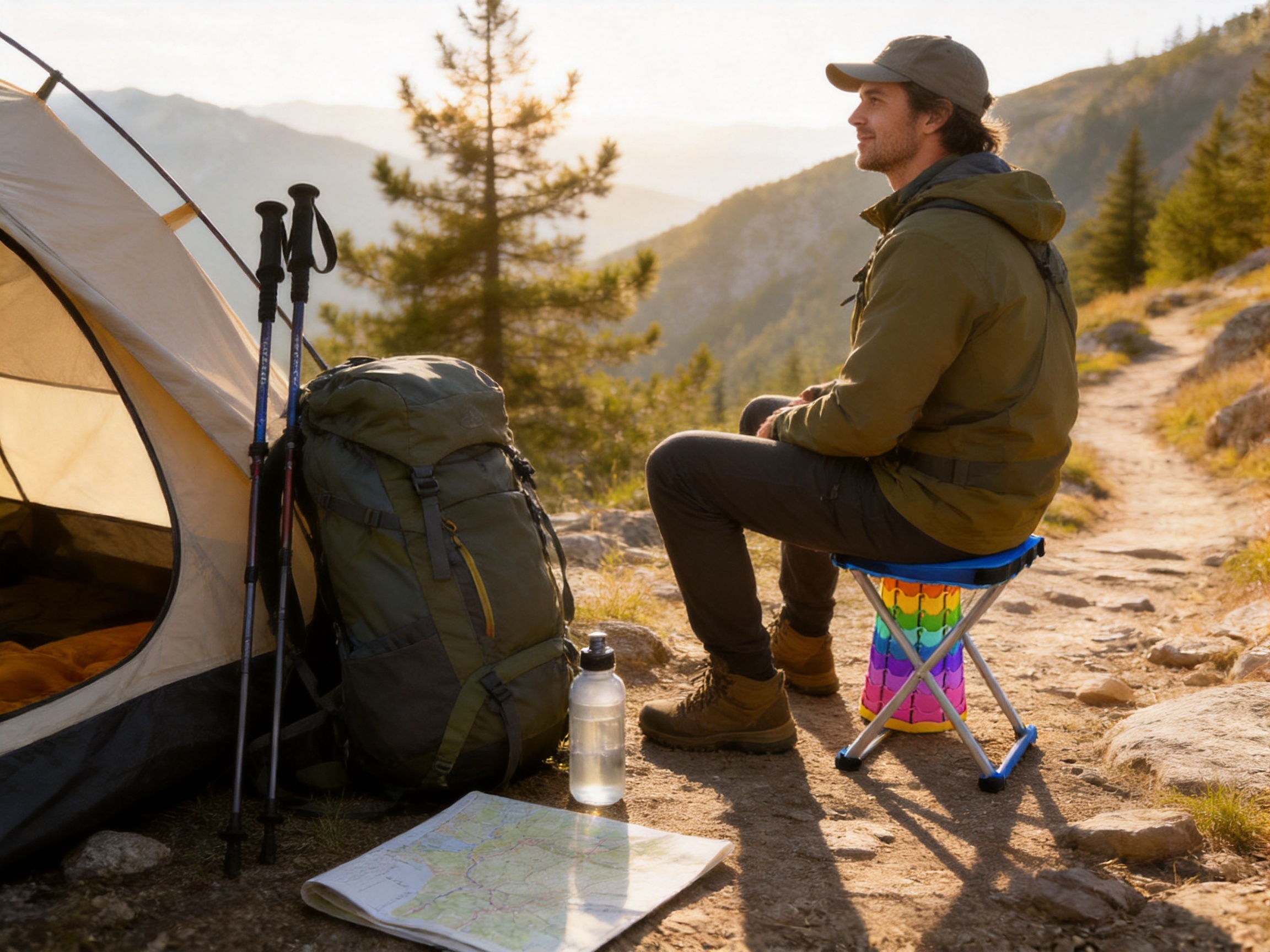
For hiking, adjustable height can create a quick resting solution during a route. During camping, it can be positioned around a tent, cooking area, or campsite table. For fishing, it can support long periods of waiting while adapting to the bank or platform. During travel and outdoor events, it provides personal seating that can be adjusted to the user’s preferred position.
Adjustment and User Comfort
Adjustability does not replace the need for correct use. Users should open the stool fully, confirm that the structure is properly engaged, and place it on a firm, reasonably level surface before sitting. The stool should be used within its intended operating conditions and should not be treated as a ladder, step, climbing aid, or unstable platform.
When used correctly, adjustable height can make a noticeable difference in comfort. It allows users to find a more suitable sitting position and reduces the need to tolerate an unsuitable fixed height. For outdoor products, this type of simple mechanical flexibility can be more valuable than adding complicated features that increase weight or maintenance requirements.
Thickened PP Material and Structural Reliability
Material selection is central to the performance of any folding outdoor product. The portable extendable stool uses thickened PP material as a key part of its construction. Polypropylene is widely used in practical products because it can offer a useful balance of weight, toughness, processability, and resistance to routine handling.
A thickened PP structure is intended to provide a substantial seating body while maintaining the portability expected from a compact outdoor accessory. The material must be formed with appropriate attention to thickness distribution, connection areas, folding interfaces, and load-bearing sections. These details influence how the product performs after repeated opening, closing, transportation, and storage.
Outdoor equipment is exposed to more demanding use than many indoor household products. It may be placed on the ground, carried through dust, moved between vehicles, exposed to moisture, and packed together with other gear. A practical material should therefore be easy to maintain and capable of handling ordinary outdoor contact.
However, material alone does not guarantee performance. Product reliability depends on the interaction between material selection, structural geometry, tooling accuracy, assembly quality, inspection procedures, and user operation. This is why manufacturing capability is an important part of the product story.
Balancing Weight, Strength, and Portability
An outdoor stool that is extremely heavy may be stable but inconvenient to carry. A stool that is made too light without adequate structural support may be easier to transport but less dependable in use. The development challenge is to achieve an appropriate balance between these competing priorities.
The product’s thickened PP construction supports this balance by providing a practical structural solution without turning the stool into a bulky piece of furniture. The folding design further improves mobility by reducing the space required during transportation.
Users should distinguish between portability and unrestricted use. A compact stool is intended to provide temporary seating, not to replace heavy-duty industrial equipment. Buyers should always review the supplier’s current product specifications, recommended load information, and operating instructions before placing the product into specialized applications.
Advantages Compared with Conventional Outdoor Seating
The portable extendable folding stool competes with several categories of outdoor seating, including fixed stools, traditional folding chairs, camping chairs with backrests, and low-cost temporary seats. Each alternative has its own advantages, but the extendable stool offers a distinct combination of portability and adaptability.
Compared with Fixed-Height Stools
A fixed-height stool may have a simple structure and low manufacturing complexity. However, its height cannot be changed when the user’s needs or the terrain changes. This can limit comfort and reduce usefulness across different activities.
The adjustable hiking stool provides more flexibility. It can support different sitting preferences and can be used in a wider range of outdoor environments. For retailers, this broader application range can make the product relevant to more customer groups than a single-purpose fixed stool.
Compared with Traditional Folding Chairs
Traditional folding chairs can provide a backrest, armrests, and a larger seating surface. They may be preferred for long periods of relaxed sitting at established campsites. However, these features also increase packed size, weight, and transportation demands.
The portable extendable stool is better suited to users who prioritize mobility, quick access, and minimal storage volume. Hikers, travelers, queue participants, and anglers who move frequently may value a compact stool more than a full chair with additional components.
Compared with Large Camping Seats
Large camping seats can be comfortable, but they often require dedicated carrying bags and considerable storage space. They may be practical for vehicle-based camping but less suitable for backpacking, short walking routes, or activities where every item must be carried by hand.
The compact folding stool provides an alternative for customers who want personal seating without transporting a large frame. Its smaller profile can also make it easier to include as an additional seat for guests or family members.
Compared with Low-Cost Temporary Products
Low-cost seating products may focus primarily on purchase price. They may use simpler materials, less precise structures, or limited quality-control procedures. Such products can create inconsistent user experiences and may not be appropriate for repeated outdoor use.
The WFDS263001 product is developed around durable material selection, a repeatable folding mechanism, and manufacturing attention to structural performance. This approach is intended to provide more consistent value for retailers and end users who expect an outdoor accessory to last beyond a single trip.
| Seating Type | Portability | Height Flexibility | Best-Suited Use |
|---|---|---|---|
| Portable extendable folding stool | High | Adjustable | Hiking, camping, fishing, travel, queues, and outdoor events |
| Fixed outdoor stool | Moderate to high | Fixed | Simple short-term seating on predictable surfaces |
| Traditional folding chair | Moderate | Usually fixed | Established campsites and longer stationary use |
| Large camping chair | Low to moderate | Usually fixed | Vehicle camping and comfort-focused recreation |
| Temporary low-cost seat | Varies | Usually fixed | Occasional light use where durability is less important |
The main competitive advantage is therefore not one isolated specification. It is the combination of compact storage, adjustable height, rapid deployment, and durable construction in a product that can serve multiple outdoor scenarios.
Applications Across Camping, Hiking, and Travel
Camping
At a campsite, users often need seating near a tent, cooking area, table, fire-safe gathering area, or equipment station. The stool can be unfolded whenever a quick seat is needed and folded when the space must be cleared. Its compact storage format is useful when a vehicle or tent has limited room.
The stool can also serve as an additional seat when the number of campers exceeds the available chairs. Because it is smaller than a conventional chair, several units may be easier to organize in a vehicle or storage container. Its adjustable height can help accommodate different campsite layouts.
Mountain Hiking
Hiking requires careful control of carried weight and volume. A portable seat is valuable during rest stops, but a bulky chair may discourage users from bringing one. The compact folded format makes the stool a practical accessory for hikers who want occasional seating without significantly reducing backpack capacity.
During a break, the user can open the stool, select an appropriate height, and sit while drinking water, eating a snack, checking a map, or recovering from a demanding section of trail. Afterward, the stool can be folded and returned to the backpack.
Fishing
Fishing often involves long periods of waiting. A portable stool can improve comfort at lakesides, riverbanks, piers, and other fishing locations. The adjustable structure is useful when the surface is not perfectly uniform, although the stool should always be positioned on firm ground and checked before use.
Because fishing equipment can already be extensive, compact seating has a practical advantage. The stool can be carried with tackle, bait, rods, and personal supplies without requiring the space of a larger chair.
Travel and Outdoor Events
Travelers may encounter long queues, delayed transportation, outdoor exhibitions, sightseeing stops, and crowded public events. A personal folding stool can provide temporary seating in situations where benches or chairs are unavailable.
The small folded size makes it suitable for car travel, recreational vehicles, luggage storage, and day-trip equipment. It can also be useful for photographers, market visitors, campers attending festivals, and people who spend extended periods outdoors.
Practical Everyday Uses
Although designed for outdoor recreation, the stool may also support household and practical tasks. It can be used during gardening, outdoor maintenance, roadside emergencies, sports events, and temporary work situations. Its value increases when users can apply it across several parts of daily life instead of reserving it for one annual camping trip.
Manufacturing Approach and Product Development Strengths
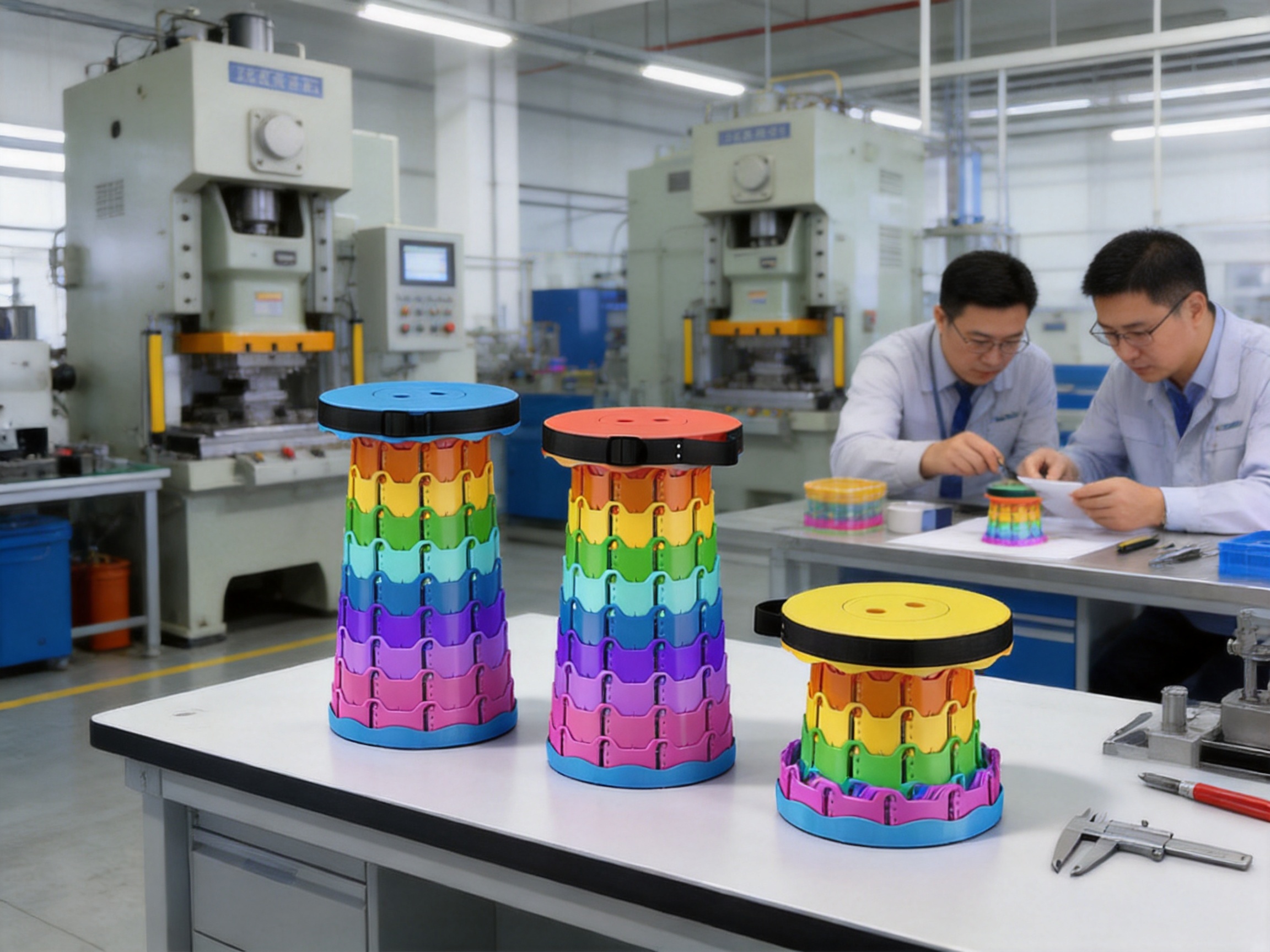
A reliable outdoor gear product depends on more than a successful concept. It requires a controlled development process that connects user scenarios, material selection, structural design, sampling, testing, production, and quality management. CragHaven Outdoor presents itself as both an outdoor brand and a cross-border manufacturing partner based in Hangzhou, China, with a focus on mountaineering, hiking, and camping applications.
The company’s product philosophy is based on designing for weather, terrain, and time. This means that product development begins with practical usage conditions rather than with appearance or catalog presentation alone. For a folding stool, this approach encourages attention to how users carry the product, open it, position it, sit on it, adjust it, and store it after use.
Scenario-Based Product Development
Scenario-based development helps manufacturers identify problems that may not be visible in a basic product drawing. A stool used on a campsite faces different requirements from one used during hiking. A product carried in a backpack must be compact and manageable. A product used during fishing must be convenient to open and maintain. A product sold through global retailers must also be consistent, packable, and suitable for repeat production.
By considering these scenarios before finalizing the product, a manufacturer can make better decisions about structural proportions, folding interfaces, material thickness, packaging, and user instructions. The aim is to ensure that product features have a practical purpose.
Sampling, Testing, and Optimization
Sampling is an essential stage in outdoor product development. Early samples allow designers and engineers to examine the folding action, height adjustment, seating stability, surface finish, and overall handling experience. Testing can reveal problems related to fit, movement, friction, connection strength, or repeated operation.
Optimization may involve refining the mold, modifying the thickness of selected sections, improving the geometry of the locking structure, adjusting assembly tolerances, or revising packaging protection. These improvements may appear small, but they can significantly influence product consistency and user satisfaction.
CragHaven’s stated development principles emphasize that sampling, testing, and optimization should not be omitted. This is particularly relevant to folding products because moving parts and repeated mechanical actions create more performance considerations than a simple fixed object.
Material and Tooling Coordination
For a thickened PP stool, material behavior and tooling design must be considered together. Plastic flow, cooling, shrinkage, wall thickness, surface appearance, and dimensional consistency can affect the final product. A suitable manufacturing process should aim to reduce deformation, maintain repeatable dimensions, and support reliable assembly.
Tooling precision is also important at folding and connection areas. If components do not fit properly, the product may be difficult to open, uneven during use, or less durable after repeated operation. A mature manufacturing process coordinates mold design, material selection, injection parameters, finishing, and inspection rather than treating each step separately.
Assembly and Functional Inspection
Even when a product is mainly made from molded components, assembly quality remains important. Folding parts, connection points, adjustment sections, and surface elements must be fitted correctly. Functional inspection can include opening and closing checks, adjustment operation, visual examination, component fit, and stability assessment.
Consistent inspection helps reduce variation between production batches. For global retailers, this consistency is essential because customer expectations apply to every unit, not only to the first sample. Reliable production also supports repeat orders and long-term product planning.
OEM and Global Supply Advantages
Outdoor gear buyers often need more than a finished product. They may require product development support, packaging coordination, specification confirmation, production scheduling, quality communication, and stable delivery. A manufacturing partner that understands these requirements can reduce uncertainty during the sourcing process.
CragHaven Outdoor combines brand development with manufacturing capability and offers an OEM-oriented approach for global retailers. This can be valuable for businesses that want to develop products under their own brand, adjust packaging, coordinate product details, or build a broader mountaineering and camping gear collection.
A practical OEM relationship should begin with clear communication. Buyers need to define target users, application scenarios, preferred materials, size expectations, packaging requirements, market positioning, and quality standards. The supplier should then help evaluate whether the desired concept is technically and commercially realistic.
Product sampling is particularly important for private-label projects. A sample allows the buyer to review appearance, operation, folded size, adjustment behavior, packaging, and overall suitability before mass production. It also creates a shared reference for subsequent production inspections.
Benefits for Retailers and Distributors
The stool’s multi-scenario application can make it suitable for outdoor specialty stores, camping retailers, travel product distributors, sporting-goods sellers, and online marketplaces. Its product story is easy to communicate because the main benefits are practical: it folds, adjusts, carries easily, and supports temporary seating.
Retailers may also benefit from merchandising flexibility. The stool can be presented as a hiking accessory, camping essential, fishing seat, travel item, queue solution, or compact outdoor gift. A single product can therefore be connected to several customer needs and seasonal campaigns.
For distributors, compact packaging can simplify warehouse organization and outbound shipping. Product dimensions, carton configuration, and packaging materials should be confirmed during the development process, but the inherently compact design creates a useful starting point for efficient logistics.
Quality Considerations for a Folding Outdoor Stool
When evaluating a portable folding stool, buyers should look beyond appearance and purchase price. The following factors are important:
- Whether the folding structure opens and closes smoothly.
- Whether the adjustable sections remain secure during normal use.
- Whether the seating surface and frame feel stable on suitable ground.
- Whether the material and finish are appropriate for outdoor handling.
- Whether the product remains consistent across production batches.
- Whether packaging protects the product during transportation.
- Whether instructions clearly explain operation, adjustment, and safety.
Product testing should reflect actual use conditions as closely as possible. Repeated folding and unfolding can help identify mechanical weaknesses. Stability checks can reveal problems with uneven contact or component fit. Visual inspections can identify molding defects, sharp edges, surface damage, or incomplete finishing.
For commercial buyers, quality assurance should also include communication about specifications, approved samples, production records, inspection methods, and corrective procedures. These processes support transparency and help establish a reliable working relationship between supplier and customer.
Safe and Correct Use
Users should place the stool on firm, stable ground and confirm that it is fully opened before sitting. The adjustment mechanism should be properly engaged, and the stool should not be used on unstable slopes, loose surfaces, or areas where one or more support points cannot make reliable contact.
The product should not be used as a step, ladder, platform for reaching elevated objects, or substitute for technical climbing equipment. Users should also avoid sudden impacts, excessive side loading, and misuse outside the intended seating application. The recommended load and operating instructions should always be reviewed before use.
Correct use protects both the user and the product. It also helps retailers reduce avoidable complaints and improves the long-term reputation of the product line.
Maintenance, Storage, and Service Life
Basic care can help preserve the appearance and operation of a portable outdoor stool. After use, users should remove visible dirt, sand, moisture, and plant material from the product. If the stool has been used near saltwater or muddy ground, it should be cleaned appropriately and dried before long-term storage.
Folding and adjustment areas should be kept free from excessive debris. Users should avoid forcing the mechanism if it does not move normally. Instead, the structure should be inspected for dirt, misalignment, or damage. Any component that appears cracked, loose, or deformed should be evaluated before the next use.
When storing the stool, users should keep it in a dry location away from unnecessary heat, sharp objects, and prolonged exposure to harsh environmental conditions. Although outdoor materials are selected for practical durability, proper storage remains important for maintaining performance.
For commercial customers, clear care instructions can be incorporated into packaging or product documentation. This helps end users understand how to operate the stool correctly and supports a more positive ownership experience.
Why the Product Fits Current Outdoor Market Trends
The outdoor market is increasingly shaped by several connected preferences: lightweight equipment, multifunctional design, efficient storage, durable materials, and products that can be used across several activities. Consumers are not always looking for the largest or most feature-heavy product. Many prefer equipment that solves a specific problem without creating new carrying or maintenance challenges.
The portable extendable folding stool fits this trend by offering a focused set of functions. It provides seating, folds for storage, adjusts for flexibility, and can be used in several outdoor environments. The design does not depend on excessive accessories or complicated electronic features. This simplicity can make the product easier to understand, operate, maintain, and sell.
Its compact profile also aligns with the growth of mobile outdoor recreation. Hiking, short camping trips, road travel, fishing excursions, outdoor festivals, and spontaneous nature visits all benefit from equipment that can be carried without extensive planning. A small stool can remain in a backpack or vehicle and become available whenever a rest opportunity appears.
For brands and retailers, products with broad but clearly defined applications can support more efficient product portfolios. The stool may be included in hiking collections, camping accessories, fishing equipment, travel products, or outdoor comfort ranges. This flexibility can help businesses serve different audiences while maintaining a coherent product offering.
Buyer Guidance for Selecting an Outdoor Gear Supplier
When selecting a manufacturer for an adjustable hiking stool or related camping gear, buyers should evaluate both the product and the supplier. A visually attractive sample is not enough to confirm long-term manufacturing capability. Buyers should ask how the product was developed, what materials are used, how samples are tested, and how production consistency is monitored.
Communication quality is another important factor. A supplier should be able to discuss product use scenarios, technical details, packaging, lead times, inspection requirements, and possible improvements in clear commercial language. This is especially important for overseas buyers who need reliable communication across different markets and time zones.
Buyers should also assess whether the supplier can support future product development. A long-term partner may be able to offer related mountaineering accessories, camping equipment, hiking products, or customized outdoor gear. Developing several products with one experienced supplier can simplify communication and create a more consistent product range.
CragHaven Outdoor positions itself as a cross-border manufacturing partner rather than only a catalog source. Its stated strengths include scenario-based design, material selection based on durability, repeated sampling and testing, manufacturing integration, and an emphasis on stable long-term partnerships.
Role of CragHaven Outdoor in Product Development
CragHaven Outdoor is based in Hangzhou, China, and focuses on mountaineering, hiking, and camping scenarios. The company’s brand philosophy centers on balance and stability in nature. This philosophy is reflected in its approach to product design, where functional requirements are connected to terrain, weather, repeated use, and real user behavior.
The company describes itself as an outdoor brand and cross-border manufacturing partner for global markets. Its development process is intended to connect design concepts with practical manufacturing. Instead of focusing only on technical parameters, the company emphasizes understanding how outdoor products are carried, handled, stored, and used over time.
This approach can be particularly useful for products such as the portable extendable stool. The product may appear simple, but its success depends on details such as folding convenience, adjustment reliability, material thickness, component fit, surface treatment, packaging, and repeatable production. An integrated design and manufacturing process allows these details to be considered together.
For OEM customers, this can provide a foundation for developing private-label products with a clearer connection between market requirements and factory execution. Buyers can discuss intended users, sales channels, packaging concepts, and product positioning while also receiving practical feedback about manufacturability and quality control.
Recommended Product Positioning
The stool can be positioned as a compact personal seat for people who value mobility and convenience. Its strongest selling points are easy to understand and relevant to multiple audiences:
- Folds quickly for transportation and storage.
- Adjusts to different sitting preferences and outdoor conditions.
- Uses thickened PP material for practical durability.
- Fits in backpacks, cars, camping storage, and travel equipment.
- Supports camping, hiking, fishing, travel, queues, and outdoor events.
- Offers an alternative to larger and less portable seating products.
Marketing communication should present these benefits accurately and avoid exaggerated claims. The product is most compelling when described as a practical temporary seating solution rather than as a replacement for every type of chair. Clear information about intended use, operating instructions, recommended load, and terrain suitability can build greater customer trust.
Retailers may also emphasize the stool’s role as a space-saving accessory. Customers who already own larger camping chairs may still appreciate a compact stool for short hikes, fishing trips, event attendance, or emergency seating. This makes the product suitable for both first-time buyers and experienced outdoor users who want to improve the flexibility of their equipment.
Q&A: Portable Extendable Folding Stool
What is a portable extendable folding stool?
A portable extendable folding stool is a compact outdoor seat that can be folded for carrying and extended to provide an adjustable sitting height. It is designed for temporary seating during camping, hiking, fishing, travel, queues, outdoor events, and other recreational activities.
How small is the stool when folded?
The product is designed to fold into a compact form intended to occupy minimal backpack or equipment-storage space. The supplied product description compares its folded size with that of a water bottle. Buyers should confirm the final folded dimensions for the specific production version and packaging configuration.
Can the stool be used on uneven terrain?
The adjustable structure helps the stool adapt to different outdoor conditions, including locations where the ground is not perfectly uniform. However, it should always be placed on firm, stable ground, and users should confirm that the stool is fully opened and secure before sitting.
What material is used to make the stool?
The product uses thickened PP material as a key construction material. Polypropylene is commonly selected for products that require a balance of practical durability, manageable weight, and efficient manufacturing. Final material specifications should be confirmed with the supplier for each order.
Is the stool suitable for hiking?
Yes. Its compact folded format is intended to make it convenient for carrying in a backpack or hiking equipment system. It can provide a quick rest seat during breaks without requiring the user to carry a full-size camping chair.
Can it be used for fishing?
Yes. The stool can provide temporary seating during fishing activities, where users may spend long periods waiting beside a lake, river, pier, or shoreline. It should be placed on a secure surface and protected from conditions that could cause slipping or instability.
How does it compare with a traditional camping chair?
The stool is generally more focused on compactness, portability, quick deployment, and adjustable height. A traditional camping chair may provide a backrest, armrests, and a larger seating area, but it often requires more storage space. The better choice depends on whether the user prioritizes mobility or extended seated comfort.
Is the product suitable for children?
Suitability depends on the product’s approved specifications, recommended load, supervision requirements, and the child’s ability to use the stool safely. Children should not use the stool without appropriate adult supervision, and the product should never be used as a climbing step or play structure.
What should buyers check before placing an OEM order?
Buyers should confirm material specifications, folded and unfolded dimensions, adjustment range, recommended load, packaging, logo and labeling requirements, sample approval procedures, inspection standards, production schedule, and shipping configuration.
How can the stool be maintained?
Users should remove dirt and moisture after outdoor use, keep folding areas reasonably clean, avoid forcing the adjustment mechanism, and store the stool in a dry location. Any cracked, loose, or deformed part should be inspected before continued use.
Can the stool be customized for private-label sales?
The product can be discussed as an OEM or private-label project with the manufacturer. Customization possibilities may include packaging, labeling, color, branding, product documentation, and selected specifications, subject to tooling, minimum-order, and production requirements.
Why is manufacturing capability important for this product?
A folding stool contains moving and connecting components that must work consistently. Manufacturing capability affects material quality, molding precision, dimensional accuracy, assembly, functional inspection, packaging, and batch-to-batch consistency. These factors influence user safety, satisfaction, and long-term commercial value.
Conclusion
The portable outdoor storage folding extendable stool is a practical response to the changing requirements of outdoor recreation. It combines a compact folding structure, adjustable height, thickened PP construction, and multi-scenario usability in a product intended for camping, hiking, fishing, travel, queues, and outdoor events.
Its main advantage over conventional outdoor seating is the balance it provides. It is more adaptable than a fixed stool, more compact than many traditional chairs, and more suitable for repeated use than low-cost temporary alternatives. It gives users a convenient personal seat without demanding excessive backpack or vehicle space.
For retailers and global outdoor brands, the product also offers flexible market positioning. It can be sold as a mountaineering accessory, camping essential, fishing seat, travel companion, or compact outdoor comfort product. Its simple value proposition makes it easy to understand, while its adjustable and foldable design provides meaningful functional differentiation.
Manufacturing quality remains essential to the product’s success. Material selection, tooling, sampling, testing, assembly, inspection, and packaging must work together to produce a reliable result. CragHaven Outdoor’s focus on scenario-based design, durable materials, repeated optimization, and integrated manufacturing provides a foundation for developing this stool and other mountaineering camping gear for global markets.
As outdoor consumers continue to seek equipment that is lightweight, multifunctional, space-efficient, and dependable, the extendable folding stool is positioned to remain a useful part of modern camping and outdoor gear collections.
References
1. Outdoor Recreation Product Development Principles. Guidance on designing equipment for portability, terrain adaptability, durability, and repeated field use.
2. Polymer Materials in Consumer and Outdoor Products. General reference concerning polypropylene characteristics, molding considerations, material selection, and maintenance.
3. Folding Furniture and Portable Seating Design Practices. General reference covering compact structures, folding mechanisms, user operation, stability, and storage efficiency.
4. Outdoor Gear Quality Management Guidelines. General reference concerning sampling, inspection, functional testing, batch consistency, packaging, and supplier communication.
5. Mountaineering and Camping Equipment Market Trends. General reference covering lightweight equipment, multifunctional products, mobile recreation, and space-saving outdoor solutions.
Product: Portable outdoor storage folding extendable stool, adjustable hiking stool



- Phone: +86-15968800379
- E-mail: [email protected]
- Address: Room 1002, Huishang Building, Gongshu District, Hangzhou City, Zhejiang Province.
Copyright © CragHaven Outdoor All Rights Reserved. Outdoor Gear Manufacturers Wholesale Mountaineering Camping Gear Suppliers
