

 English
 Deutsch
 Español
 Français

Large Capacity Double-Layer Insulated Lunch Bag for Picnics, Commuting, and Outdoor Use
Content
- 1 Product Overview and Core Positioning
- 2 Why a Double-Layer Lunch Bag Matters
- 3 Material System: Oxford Cloth, Pearl Cotton, and PEVA
- 4 Comparison with Ordinary Lunch Bags
- 5 Practical Scenarios for Daily and Outdoor Use
- 6 Large Capacity Without Losing Organization
- 7 Insulation Performance and Temperature Management
- 8 Waterproof and Easy-Clean Advantages
- 9 Carry Comfort and User Convenience
- 10 Design Advantages for Retailers and Buyers
- 11 Manufacturing Philosophy and Quality Orientation
- 12 Advanced Manufacturing Processes Behind the Product
- 13 Why the Product Has Competitive Strength
- 14 Quality Control Priorities
- 15 Sustainability Through Durability and Long-Term Use
- 16 Care and Usage Recommendations
- 17 Business Value for Cross-Border Buyers
- 18 Q&A Section
- 18.1 Q1: What makes this lunch bag different from a standard insulated lunch tote?
- 18.2 Q2: What materials are used in the bag?
- 18.3 Q3: Is the bag suitable for picnics?
- 18.4 Q4: Can it be used for office commuting?
- 18.5 Q5: Does the PEVA lining make the bag waterproof?
- 18.6 Q6: How should users improve cooling performance?
- 18.7 Q7: Is it suitable for camping?
- 18.8 Q8: Why is Oxford cloth used on the exterior?
- 18.9 Q9: What manufacturing factors are important for this product?
- 18.10 Q10: Why is this product attractive for retailers and distributors?
- 19 Conclusion
- 20 References
- 21 Product: Large capacity double-layer lunch bag, Oxford cloth insulated bag, picnic bag, handheld ice pack
Modern outdoor lifestyles require equipment that can move easily between city routines and open-air environments. A lunch bag is no longer just a small container for a sandwich or a bottle of water; it has become a practical piece of daily carry gear, a picnic organizer, a temperature-control solution, and a cleanliness management tool. The large capacity double-layer lunch bag made with Oxford cloth, pearl cotton insulation, and a PEVA waterproof inner membrane is designed for exactly this broader role. It provides a structured way to separate wet and dry items, keep food fresher for longer, reduce odor transfer, and carry meals with confidence during commuting, camping, hiking rest stops, family picnics, and short outdoor trips.
This article examines the product from a practical and manufacturing-oriented perspective. It explains why the double-layer, double-compartment structure offers meaningful advantages over ordinary single-space lunch totes; how the three-layer material system supports insulation, durability, and water resistance; and why the bag is suitable for both handheld and shoulder-carry use. It also discusses the manufacturing strengths behind the product, including material selection, cutting consistency, stitching control, sampling, testing, and scalable production. For buyers, distributors, outdoor retailers, and procurement teams, the goal is to show how this insulated picnic bag can deliver reliable value in real use rather than simply looking attractive in a catalog.
Large capacity double-layer lunch bag, Oxford cloth insulated bag, picnic bag, handheld ice pack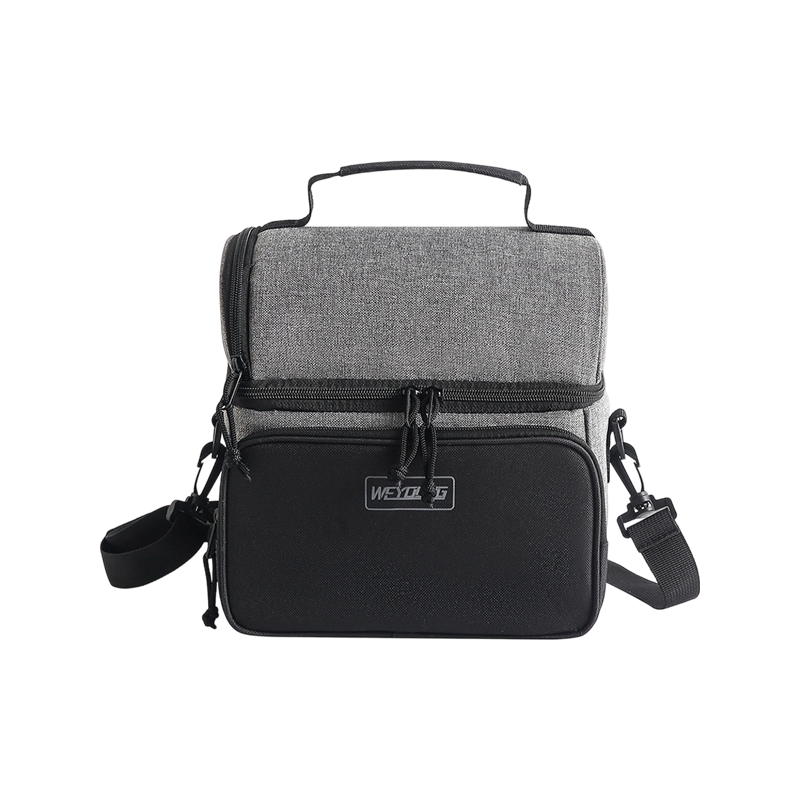
Product Overview and Core Positioning
The product is a large capacity double-layer lunch bag, also suitable as an insulated picnic bag and handheld ice pack bag. Its category is picnic bag, but its functions reach beyond a traditional picnic container. The bag is designed for users who need to carry meals, drinks, fruit, snacks, cooling packs, tableware, small containers, and personal food items in a more organized and hygienic way. It can serve commuters who bring meals to the office, parents preparing food for children, campers organizing ingredients at a campsite, hikers carrying lunch to a trailhead, or families taking chilled drinks and snacks to a park.
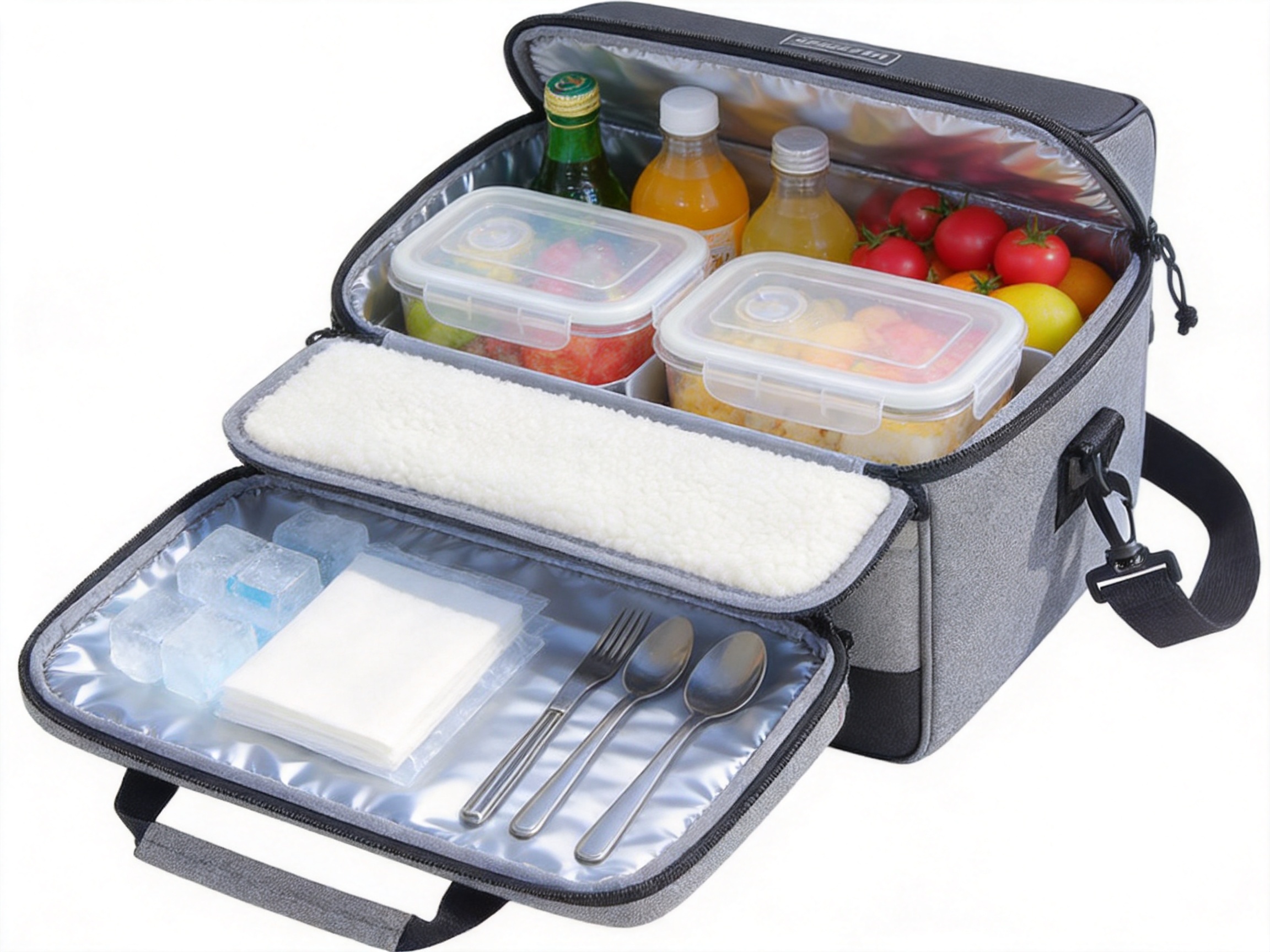
The key feature is the innovative double-layer and double-compartment layout. This structure allows users to separate wet and dry items, hot and cold items, or heavy and delicate food containers. In ordinary lunch bags, all items are usually stored in one cavity, which creates several common problems: condensation can wet bread or paper packaging, sauce leakage can contaminate fruit, odors can mix, and fragile foods can be crushed. By separating storage zones, this bag helps maintain food quality and improves the overall carrying experience.
The bag uses triple protection through an outer layer of Oxford cloth, a middle layer of pearl cotton, and an inner layer of PEVA waterproof membrane. This construction balances durability, cushioning, insulation, and ease of cleaning. Oxford cloth gives the exterior a strong, wear-resistant surface suitable for daily friction and outdoor handling. Pearl cotton provides thermal buffering and light structural support. PEVA offers a waterproof, food-contact-friendly inner surface that can resist spills and be wiped clean more easily than ordinary fabric linings.
The carry method is also flexible. It can be carried by hand or over the shoulder, which is important because food bags are often used in different settings throughout a single day. A commuter may carry it by hand from home to a car or metro station, then use shoulder carry when also holding a laptop bag or shopping bag. A picnic user may carry it over the shoulder while holding a blanket, camping chair, or child’s hand. This flexibility makes the product more adaptable than compact lunch boxes that only have a short handle.
Why a Double-Layer Lunch Bag Matters
The double-layer design is not simply a visual upgrade. It addresses real usage problems that appear repeatedly in meal carrying and outdoor food storage. When users carry multiple items in a single compartment, the contents compete for space and stability. Drinks roll against containers, cooling packs press against dry snacks, and warm food can sit directly next to chilled fruit. The result may be reduced freshness, damp packaging, flavor transfer, and inconvenient access.
With two layers, the bag creates a more organized interior system. Users can place sealed containers, drinks, ice packs, or wet items in one layer while keeping bread, napkins, utensils, packaged snacks, or dry ingredients in another. For office workers, this means lunch containers can be separated from documents, small personal items, or dry snacks. For picnics, it means fruit and drinks can be kept apart from cookies or sandwiches. For camping, it means ingredients can be arranged according to preparation order, reducing the need to dig through a mixed pile of food.
Compared with single-layer lunch bags, the double-layer design improves both hygiene and convenience. Wet and dry separation reduces the chance that condensation or leakage will spread across all contents. Odor separation is another important advantage. Foods such as cheese, marinated meat, onions, seafood, or strongly seasoned dishes can leave noticeable smells when stored together with fruit or bread. By dividing storage areas, the product helps prevent odor mixing and maintains a cleaner eating experience.
The double-compartment arrangement also improves space efficiency. Large capacity does not only mean more volume; it means usable volume. A large single cavity can become disorderly because items collapse into one another. A separated structure allows the user to assign zones, making the bag feel more spacious and more predictable. This is especially useful for consumers who meal prep, carry multiple containers, or prepare food for more than one person.
Material System: Oxford Cloth, Pearl Cotton, and PEVA
The performance of an insulated lunch bag depends heavily on material selection. A bag used for commuting and picnics must withstand abrasion, resist moisture, protect the food inside, and remain convenient to clean. The three-layer construction of this product is a practical response to these requirements. Each layer has a distinct job, and together they create a balanced system.
Oxford Cloth Exterior
Oxford cloth is commonly valued for its durability, woven texture, and resistance to daily wear. In the context of a lunch bag, the exterior material must tolerate being placed on car seats, office floors, picnic tables, grass, outdoor benches, and campsite surfaces. It may rub against other bags, door frames, storage shelves, or bicycle baskets. A weak exterior fabric can fray, tear, or lose shape quickly. Oxford cloth helps reduce these risks by providing a tough outer shell that supports longer service life.
Another advantage of Oxford cloth is its structured appearance. It can support a neat, functional look suitable for both office and outdoor environments. Some insulated bags look overly casual or fragile, which limits their appeal in professional settings. This product’s exterior material helps it maintain a practical but presentable style, making it suitable for commuting as well as weekend use.
Pearl Cotton Insulation Layer
The middle layer of pearl cotton contributes to insulation and cushioning. In insulated bag construction, the middle layer acts as a thermal buffer between the outside environment and the contents inside. While no soft lunch bag can replace a powered refrigerator, a well-designed insulation layer can help slow temperature change. This is useful when carrying chilled drinks, fresh fruit, yogurt, salads, or food that should remain cool for several hours with the help of ice packs.
Pearl cotton also provides light shock absorption. Food containers may move during walking, driving, cycling, or outdoor transport. Cushioning helps reduce impact and protects both the container and the food presentation. For users carrying glass containers or delicate fruit, this cushioning can be especially valuable.
PEVA Waterproof Inner Membrane
The inner layer uses PEVA waterproof membrane. PEVA is widely used in food storage accessories and insulated bags because it offers water resistance and is easier to wipe clean than ordinary fabric. In lunch bag use, spills are almost inevitable. Sauce may leak from a container, ice packs may produce condensation, or fruit may release juice. A waterproof inner membrane helps prevent liquid from soaking into the insulation layer or exterior fabric.
Ease of cleaning is one of the strongest practical advantages of PEVA lining. Users can wipe the inside after spills, reducing lingering odor and improving hygiene. This is a major improvement over cloth-lined lunch bags that absorb moisture and become difficult to refresh. For repeated daily use, a wipeable interior supports better long-term satisfaction.
Comparison with Ordinary Lunch Bags
Many competing lunch bags are built around a simple formula: one compartment, basic insulation, light fabric, and a short handle. Such bags may be acceptable for minimal use, but they often fail when users carry a more complete meal set or use the bag in varied environments. The large capacity double-layer insulated picnic bag offers several advantages that make it more suitable for demanding daily and outdoor use.
| Feature | Ordinary Single-Compartment Lunch Bag | Large Capacity Double-Layer Insulated Bag |
|---|---|---|
| Storage Layout | One open cavity where all items are mixed together | Double-layer, double-compartment structure for organized separation |
| Wet and Dry Separation | Limited or unavailable | Designed to keep wet and dry contents apart |
| Odor Control | Odors from different foods can mix easily | Separate compartments help reduce odor transfer |
| Insulation System | Often thin foam or minimal insulation | Oxford cloth, pearl cotton, and PEVA waterproof membrane provide layered protection |
| Cleaning | Fabric lining may absorb spills | PEVA inner layer is wipeable and water resistant |
| Carrying Options | Usually handheld only | Can be carried by hand or over the shoulder |
| Use Scenarios | Basic office lunch use | Commuting, picnics, family outings, camping preparation, and short outdoor trips |
| Capacity Efficiency | Large space may become messy | Layered organization makes capacity easier to use |
The table shows that the product’s value is not based on a single feature. It is the combination of capacity, compartmentalization, material layering, waterproof lining, and carry flexibility that creates a stronger user experience. This is important for outdoor and lifestyle products because consumers do not judge them only by specifications. They judge them by how smoothly they perform during repeated use.
Practical Scenarios for Daily and Outdoor Use
Commuting and Office Meals
For office workers, bringing meals from home can be healthier, more economical, and more predictable than buying food every day. However, commuting creates several challenges. The bag may be carried on public transportation, placed near laptops or documents, stored under a desk, or moved between meetings. A lunch bag for this environment must be clean, stable, and professional enough for daily use.
The double-layer design allows users to organize lunch containers separately from snacks, cutlery, napkins, or drinks. The insulated structure helps maintain temperature during morning travel, especially when used with a suitable ice pack. The wipeable interior reduces stress if a container leaks. The handheld and shoulder-carry options make it easier to manage alongside a backpack, briefcase, or tote bag.
Picnics and Family Outings
Picnics often involve mixed food types: chilled fruit, drinks, sandwiches, sauces, cookies, salads, and tableware. A single-compartment picnic bag can quickly become disorganized, especially when children are involved or when users need to access items frequently. The double-layer bag gives families a simple way to separate categories. Drinks and ice packs can go in one compartment, while dry snacks and utensils can remain protected in another.
Large capacity is particularly useful for family outings because one person may need to carry food for multiple people. Instead of using several small bags, users can consolidate items into one organized insulated bag. This reduces the chance of forgetting items and makes transport more efficient.
Camping Food Organization
In camping environments, food organization affects comfort and safety. Ingredients must be protected from dirt, moisture, and accidental crushing. While this bag is not intended to replace a hard cooler for long-term cold storage, it is highly useful for short-duration food transport, campsite meal organization, breakfast supplies, snacks, condiments, or day-use ingredients. It can help campers separate items that should remain dry from items that may generate condensation.
The Oxford cloth exterior is helpful in campsite conditions where the bag may contact rough surfaces. The PEVA inner lining helps handle spills from sauces, drink bottles, or wet produce. The shoulder-carry option is convenient when moving between a car, campsite, picnic table, or cooking area.
Short Hiking and Trailhead Use
For short hiking activities, many users do not want to carry a full cooler. They may need a practical insulated bag for lunch before or after a trail, or for carrying refreshments to a scenic rest area. The product’s double-layer design helps protect sandwiches and dry snacks from chilled drinks and ice packs. For trailhead meals, this organization can make the experience cleaner and more enjoyable.
Although the bag is best suited for commuting, picnics, and light outdoor carrying rather than technical mountaineering, it fits naturally into the broader outdoor lifestyle. It supports the preparation and recovery phases of outdoor trips, where food storage and easy access are important.
Large Capacity Without Losing Organization
Large capacity is often advertised in lunch bags, but capacity alone can be misleading. If a bag is large but lacks internal logic, users may still struggle to pack it efficiently. The advantage of this product lies in combining large capacity with a divided structure. It gives users more room while also guiding how that room can be used.
A user can pack a full lunch container, a drink bottle, fruit, a small dessert, napkins, utensils, and a cooling pack without forcing all items into one pile. For a picnic, the bag can carry shared snacks and beverages while preserving dry items. For family use, different people’s food can be divided by layer or category. This makes packing more intuitive and unpacking faster.
Efficient organization also protects food quality. Bread and crackers stay drier when isolated from condensation. Fruit is less likely to crush soft items. Strong-smelling foods are less likely to affect mild foods. Containers are easier to position upright. These details may seem small, but they strongly influence whether consumers continue using a bag every day.
Insulation Performance and Temperature Management
Insulated bags work by slowing heat transfer. The outer fabric protects the structure, the middle insulation layer reduces temperature exchange, and the inner lining helps create a cleaner, more controlled storage environment. In this product, Oxford cloth, pearl cotton, and PEVA work together to provide practical temperature management for meals and drinks.
For best performance, users should pre-chill food and beverages before packing them. Ice packs can be placed in the appropriate compartment, especially near items that need to remain cool. The bag should be kept closed as much as possible because frequent opening allows warm air to enter. When used in this way, the bag can help maintain food freshness during typical commuting windows, picnic travel, and short outdoor activities.
It is important to understand realistic expectations. A soft insulated lunch bag is not a powered refrigerator and should not be treated as long-term cold storage for highly perishable food in extreme heat. However, compared with non-insulated tote bags or thin single-layer lunch sacks, the triple-layer structure offers a meaningful improvement. It gives users more confidence when transporting prepared meals, chilled drinks, or fresh ingredients.
Waterproof and Easy-Clean Advantages
One of the most common reasons users stop using lunch bags is odor buildup caused by spills and moisture. A bag that absorbs liquid becomes unpleasant over time, even if its exterior remains intact. This product addresses that issue through the PEVA waterproof inner membrane. The lining helps prevent moisture from penetrating deeply into the bag and allows users to clean the interior more easily.
After use, the interior can typically be wiped with a damp cloth. If sauce or juice spills, users should clean it promptly and allow the bag to dry open before storage. This simple maintenance routine helps preserve hygiene and reduce odors. For families, office workers, and outdoor users, this is a major benefit because food bags are exposed to varied contents and frequent handling.
The waterproof inner surface also supports wet and dry separation. If one compartment contains chilled items or a cooling pack, the risk of condensation affecting dry food in the other area is reduced. This does not mean liquid should be poured directly into the bag, but it does mean the bag is better prepared for the realities of daily food transport.
Carry Comfort and User Convenience
A lunch bag may look functional when empty, but its true usability appears when it is full. Meals, drinks, ice packs, and containers can add significant weight. A product that only offers a short handle may become inconvenient if the user also needs to carry other items. The ability to carry this bag by hand or over the shoulder gives it an advantage in real-world movement.
Hand carry is useful for short distances, such as moving from the kitchen to the car, from the office lobby to a desk, or from a picnic blanket to a table. Shoulder carry is valuable when the user needs free hands. This can happen while commuting, carrying camping gear, holding a child’s hand, opening doors, or walking across a park.
Carry flexibility is often overlooked in lunch bag design, yet it strongly affects user satisfaction. A bag that becomes awkward when loaded will be used less often. By providing multiple carry options, this product adapts to different users and situations.

Design Advantages for Retailers and Buyers
For retailers and importers, a product’s success depends on more than its technical features. It must be easy to understand, easy to merchandise, and aligned with consumer needs. This double-layer insulated picnic bag has clear selling points that can be communicated quickly: large capacity, wet and dry separation, triple-layer insulation, waterproof lining, and dual carry methods. These features are practical rather than decorative, which makes them suitable for a wide range of market segments.
The bag can be positioned in several categories: lunch bag, picnic bag, insulated food bag, commuter meal bag, family outing bag, and light camping accessory. This category flexibility can help retailers place it in outdoor gear sections, kitchen storage sections, lifestyle accessories, or back-to-school collections. Its use cases are broad enough to support seasonal and year-round sales.
Another advantage is that the product appeals to both individual and family users. Office workers may buy it for daily meal prep. Parents may buy it for school or family outings. Campers may use it as a secondary food organizer. Picnic users may prefer it over unstructured totes. This broad appeal can reduce inventory risk compared with highly specialized outdoor equipment.
Manufacturing Philosophy and Quality Orientation
CragHaven Outdoor is based in Hangzhou, China, and operates as an outdoor brand and cross-border manufacturing partner. The company focuses on mountaineering, hiking, and camping scenarios, with the aim of delivering functional, reliable, and long-term value outdoor gear for global markets. This background is important because even a seemingly simple product like a lunch bag benefits from outdoor-oriented thinking. Outdoor use exposes products to weather, terrain, repeated packing, moisture, and rough handling. Manufacturing decisions must account for those realities.
The company’s development philosophy can be summarized by three principles: products should be designed for weather, terrain, and time; each feature should solve real usage problems; and materials should be selected for durability and reliability rather than short-term trends. In the case of this insulated picnic bag, those principles appear in the double-compartment layout, durable Oxford cloth exterior, insulating pearl cotton layer, waterproof PEVA lining, and practical carry options.
Instead of treating the bag as a simple promotional item, a manufacturing-focused approach treats it as gear that must perform repeatedly. The seams must hold under load. The lining must be properly fitted. The compartments must be usable. The insulation must be consistent. The handle and shoulder-carry components must be reliable. These details separate a practical product from a low-cost imitation.
Advanced Manufacturing Processes Behind the Product
Material Selection and Verification
The first step in producing a reliable insulated lunch bag is material selection. Oxford cloth must be evaluated for hand feel, thickness, abrasion resistance, color consistency, and suitability for cutting and stitching. Pearl cotton must be selected according to the desired balance of insulation, flexibility, and structural support. PEVA lining must provide water resistance and a clean interior surface while remaining compatible with the bag’s construction.
Material verification helps reduce batch-to-batch inconsistency. For cross-border buyers, consistency is essential because the same product may be sold across multiple markets and sales cycles. A strong manufacturing partner must control not only the first sample but also repeat production. This includes checking incoming materials, confirming color and texture, and ensuring that insulation and lining materials meet the intended performance requirements.
Pattern Development and Cutting Accuracy
The double-layer structure requires more precise pattern development than a simple single-compartment tote. Each panel must align correctly so that the bag maintains shape, compartments function properly, and the final product looks clean. Poor cutting accuracy can lead to twisted seams, uneven layers, reduced capacity, or stress points that shorten service life.
Advanced production control uses standardized patterns and cutting procedures to maintain consistency. When cutting Oxford cloth, pearl cotton, and PEVA components, the production team must consider material stretch, seam allowance, fold lines, and assembly sequence. This helps ensure that every bag in a production run matches the approved sample as closely as possible.
Layered Assembly and Stitching Control
The triple-layer structure requires careful assembly. The outer Oxford cloth, insulation layer, and PEVA lining must be combined without excessive wrinkles, gaps, or weak areas. Stitching must be strong enough to handle loaded carrying while maintaining a neat appearance. Stress points around handles, shoulder connection areas, zippers, and compartment divisions require particular attention.
Quality stitching is one of the most visible signs of manufacturing competence. Uneven stitches, loose threads, and weak seams can quickly damage consumer trust. In a lunch bag, seam failure is especially problematic because food contents may spill or the bag may lose its shape. A reliable manufacturing process includes stitch density control, reinforcement at stress points, thread trimming, and inspection during and after assembly.
Sample Testing and Optimization
Sampling, testing, and optimization are standard processes that should not be omitted. For an insulated picnic bag, sample evaluation may include loading tests, carry comfort checks, zipper operation review, lining wipe-clean assessment, compartment usability, and visual inspection. Feedback from sample testing can lead to changes in panel dimensions, handle reinforcement, lining fit, or compartment proportions.
This iterative process is especially valuable for products intended for global markets. Different consumers may use the same bag in different ways. Some may prioritize office commuting; others may use it for picnic drinks; others may carry meal-prep containers. Testing helps identify whether the design can satisfy these varied patterns.
Scalable and Replicable Production
A strong product must be scalable. It is not enough to create one good sample; the manufacturer must reproduce that quality across batches. CragHaven Outdoor emphasizes stable, replicable, and scalable production through China’s mature and efficient manufacturing system. This matters for buyers who need dependable delivery, consistent quality, and reduced supply chain uncertainty.
Scalability includes standardized material sourcing, production documentation, trained operators, in-line inspection, packaging control, and final quality checks. For cross-border buyers, reliable replication reduces after-sales problems and supports brand reputation in target markets.
Why the Product Has Competitive Strength
The insulated lunch bag market contains many low-cost alternatives, but not all offer lasting value. Some competitors focus mainly on appearance, using thin fabric, minimal insulation, or simple single-compartment layouts. Others offer large size but poor organization. Some may provide insulation but lack a wipeable waterproof lining. This product’s competitive strength is that it combines multiple practical advantages into one balanced design.
First, the wet and dry separation directly addresses a common user complaint. Second, the triple-layer material system supports durability, insulation, and cleanliness. Third, the large capacity suits real meal-carrying needs rather than only minimal lunches. Fourth, dual carry options improve mobility. Fifth, the product is supported by an outdoor-oriented manufacturing partner that understands reliability, material choice, and long-term use.
For end consumers, this means a better daily experience. For wholesalers and retailers, it means stronger product storytelling and fewer weak points. For private-label buyers, it offers a practical base product that can fit multiple market positions without needing excessive redesign.
Quality Control Priorities
Quality control for this type of bag should focus on both visible and functional details. Visible quality includes fabric appearance, seam neatness, shape consistency, color consistency, and clean finishing. Functional quality includes insulation layer placement, lining integrity, zipper or closure performance, handle strength, compartment usability, and overall load-bearing reliability.
Inspection should begin before production with incoming material checks. During production, operators and supervisors should monitor cutting accuracy, stitching quality, reinforcement placement, and lining assembly. Final inspection should confirm that the bag opens and closes properly, stands in the intended shape, contains no major loose threads, and meets the approved sample standard.
For buyers, these controls reduce the risk of returns, complaints, and inconsistent consumer reviews. A product that looks good on first arrival but fails after short use can damage a brand. A product built with controlled processes supports repeat orders and long-term cooperation.
Sustainability Through Durability and Long-Term Use
Sustainability in outdoor and lifestyle products is not only about materials; it is also about service life. A durable product that users keep and reuse can reduce waste compared with disposable packaging, single-use food bags, or low-quality products that quickly fail. This insulated lunch bag supports reusable meal carrying, which can help reduce reliance on disposable takeaway containers and plastic shopping bags.
The material choices support repeated use. Oxford cloth helps resist wear. PEVA lining supports cleaning. Pearl cotton insulation remains lightweight while contributing to performance. When users can clean and reuse a lunch bag comfortably, they are more likely to keep it in their daily routine.
From a manufacturing perspective, designing for long-term use also supports responsible procurement. Buyers increasingly want products that offer value beyond a low unit price. A well-built insulated picnic bag can meet that expectation by delivering practical performance over time.
Care and Usage Recommendations
To get the best performance from the bag, users should pack food according to temperature and moisture needs. Wet or chilled items should be placed in the compartment best suited for them, while dry snacks, utensils, and napkins should be kept separate. Ice packs can be used to improve cooling performance, especially for dairy, salads, fruit, or drinks.
Users should keep containers sealed tightly and avoid placing loose liquid directly inside the bag. After use, the interior should be wiped clean, especially if spills occur. The bag should be left open to air dry before storage. It should not be machine washed unless specifically approved by the care instructions, because machine washing may affect insulation, seams, or lining performance.
For outdoor use, the bag should be kept away from sharp rocks, open flames, and prolonged direct contact with muddy surfaces when possible. Although the Oxford cloth exterior is durable, proper care will extend the product’s life and maintain its appearance.
Business Value for Cross-Border Buyers
For cross-border buyers, supply chain reliability is as important as product design. A well-designed bag must be supported by clear communication, sampling discipline, manufacturing consistency, and export-oriented coordination. CragHaven Outdoor aims to reduce uncertainty in the supply chain by participating in both design and manufacturing rather than simply acting as a factory sourcing channel.
This approach benefits buyers who need a partner capable of understanding Western-market expectations. Product communication must be clear, feature claims must be realistic, and manufacturing decisions must support consumer satisfaction. The company’s outdoor background helps align products with real usage scenarios, while its location in Hangzhou connects it with China’s mature production ecosystem.
For private-label projects, the bag can potentially be adapted through color selection, packaging, logo placement, and assortment strategy, depending on project requirements. However, the fundamental value remains the same: organized capacity, practical insulation, water-resistant lining, and reliable construction.
Q&A Section
Q1: What makes this lunch bag different from a standard insulated lunch tote?
The main difference is the double-layer, double-compartment design. Instead of placing all food and drinks in one space, users can separate wet and dry items, chilled and room-temperature items, or heavy and delicate foods. This improves organization, reduces odor mixing, and helps keep food cleaner during transport.
Q2: What materials are used in the bag?
The bag uses a three-layer protection system. The exterior is Oxford cloth for durability and wear resistance. The middle layer is pearl cotton for insulation and cushioning. The inner layer is PEVA waterproof membrane for moisture resistance and easier cleaning.
Q3: Is the bag suitable for picnics?
Yes. The large capacity and separated compartments make it suitable for picnics, family outings, park meals, and short outdoor activities. It can hold drinks, snacks, fruit, meal containers, napkins, and small tableware in a more organized way than many ordinary lunch bags.
Q4: Can it be used for office commuting?
Yes. The bag is suitable for daily commuting because it can carry meal-prep containers, drinks, fruit, and snacks while maintaining a neat and practical appearance. The handheld and shoulder-carry options make it convenient for users who also carry work bags or personal items.
Q5: Does the PEVA lining make the bag waterproof?
The PEVA inner membrane provides water resistance and helps prevent spills or condensation from soaking into the bag. It also makes the interior easier to wipe clean. However, users should still avoid pouring liquid directly into the bag or leaving spills uncleaned for long periods.
Q6: How should users improve cooling performance?
Users should pre-chill food and drinks before packing, place ice packs near items that need cooling, and keep the bag closed as much as possible. The insulated structure slows temperature change, but it should be used with proper food safety habits, especially in hot weather.
Q7: Is it suitable for camping?
It is suitable for light camping food organization, short-term food transport, picnic-style meals, and campsite snacks. It is not a replacement for a hard cooler or powered refrigeration during long trips, but it is highly useful as an organized insulated food bag for short outdoor use.
Q8: Why is Oxford cloth used on the exterior?
Oxford cloth offers durability, abrasion resistance, and a structured look. It helps the bag withstand daily handling, outdoor surfaces, and repeated use better than many lightweight fabrics.
Q9: What manufacturing factors are important for this product?
Important factors include material consistency, accurate cutting, strong stitching, proper lining assembly, reinforced carry points, compartment alignment, and final inspection. These details ensure that the product performs reliably across repeated use and production batches.
Q10: Why is this product attractive for retailers and distributors?
It offers clear consumer benefits that are easy to communicate: large capacity, double-layer organization, wet and dry separation, insulated construction, waterproof lining, and flexible carrying. It can fit multiple sales categories, including lunch bags, picnic accessories, commuter gear, and camping lifestyle products.
Conclusion
The large capacity double-layer insulated lunch bag represents a practical evolution of the traditional lunch tote. It responds to real problems: mixed odors, wet and dry contamination, poor organization, weak insulation, difficult cleaning, and inconvenient carrying. By using a double-layer, double-compartment layout and a three-layer material system of Oxford cloth, pearl cotton, and PEVA waterproof membrane, the product delivers a balanced solution for commuting, picnics, family outings, and light outdoor use.
Its advantages over ordinary competitors are clear. It offers better organization than single-compartment bags, better cleanliness than fabric-lined totes, better usability than small lunch sacks, and better mobility than bags with only one carry method. It is not merely a container; it is a structured food-carrying system designed for repeated daily and outdoor use.
The manufacturing strength behind the product further increases its value. CragHaven Outdoor’s focus on real outdoor scenarios, material reliability, sampling, testing, and scalable production supports consistent quality and long-term buyer confidence. For consumers, the result is a bag that makes meals easier to carry and enjoy. For retailers and cross-border buyers, it is a product with strong practical selling points, broad market fit, and dependable manufacturing logic.
In an increasingly mobile lifestyle, people need food storage gear that can keep pace with workdays, road trips, campsites, and family leisure time. This double-layer insulated picnic bag meets that need with thoughtful design, durable materials, and user-centered functionality.
References
American Society for Testing and Materials. Standard Practices for Textile Performance Evaluation and Consumer Product Durability.
Food and Agriculture Organization. Food Storage, Hygiene, and Temperature Management Guidelines for Prepared Meals.
Outdoor Industry Association. Consumer Trends in Outdoor Recreation Equipment and Lifestyle Accessories.
Textile Institute. Technical Textile Applications in Bags, Luggage, and Insulated Consumer Products.
International Association for Food Protection. Practical Principles of Food Safety During Transport and Temporary Storage.
Materials Handbook for Product Designers. Polymer Films, Woven Fabrics, and Foam Insulation in Soft Goods Manufacturing.
Product: Large capacity double-layer lunch bag, Oxford cloth insulated bag, picnic bag, handheld ice pack


- Phone: +86-15968800379
- E-mail: [email protected]
- Address: Room 1002, Huishang Building, Gongshu District, Hangzhou City, Zhejiang Province.
Copyright © CragHaven Outdoor All Rights Reserved. Outdoor Gear Manufacturers Wholesale Mountaineering Camping Gear Suppliers
