

 English
 Deutsch
 Español
 Français

25cm Windproof Steel Tent Stakes for Secure Camping, Beach Tarps, and Outdoor Shelters
Content
- 1 Why Tent Stakes Matter More Than Many Campers Realize
- 2 Product Overview
- 3 Core Technical Features
- 4 High-Carbon Steel: The Foundation of Strength
- 5 Hardening for Bending Resistance
- 6 Galvanized Protection for Outdoor Environments
- 7 Glow-in-the-Dark Head for Night Visibility
- 8 Universal Hooks and Knots for Flexible Use
- 9 Why 25cm Is a Practical Length
- 10 Performance Compared with Common Competitor Products
- 11 Manufacturing Philosophy Behind the Product
- 12 Advanced Manufacturing Process
- 13 Quality Control for Consistent Outdoor Performance
- 14 Applications in Camping and Outdoor Use
- 15 Installation Tips for Best Holding Power
- 16 Buyer Value for Retailers, Importers, and Outdoor Brands
- 17 Design Advantages That Improve User Experience
- 18 Sustainability Through Durability
- 19 Q&A Section
- 19.1 What is this 25cm steel tent stake mainly used for?
- 19.2 Why is high-carbon steel better than ordinary plastic or soft metal stakes?
- 19.3 What is the advantage of the galvanized surface?
- 19.4 Why does the stake have a glow-in-the-dark head?
- 19.5 Is the 25cm length suitable for beach camping?
- 19.6 Can this stake be used with different brands of tents and tarps?
- 19.7 How should users maintain the stakes after camping?
- 19.8 What makes this product suitable for business buyers?
- 20 Conclusion
- 21 References
- 22 Product: Outdoor camping tent with 25cm ground stakes, beach tarpaulin, and windproof steel studs
Reliable anchoring is one of the quiet foundations of safe and comfortable outdoor living. A tent, tarp, canopy, windbreak, awning, or beach shelter may look stable when the air is calm, but the real test begins when wind direction changes, soil softens, sand shifts, or the campsite is used after dark. In those moments, a small accessory can determine whether a shelter stays secure or becomes a source of frustration. The 25cm windproof steel tent stake described here is designed for exactly that demanding role: holding outdoor shelters firmly in place across common camping environments, including grassland, compact soil, loose ground, and sandy beach areas.
This product is a camping accessory made from high-carbon steel, hardened for improved strength and bending resistance, and galvanized to help protect against corrosion during repeated outdoor use. Its 25cm length provides a practical balance between portability and holding power, while the glow-in-the-dark head improves visibility at night and reduces the risk of tripping, misplacing stakes, or losing anchor points during late camp adjustments. Universal hooks and knot-friendly attachment points make the stake compatible with a wide variety of tents, tarps, guy lines, wind ropes, beach tarpaulins, and outdoor shade systems.
Compared with ordinary plastic pegs, lightweight aluminum pins, short ground nails, or untreated steel stakes, this product focuses on durability, grip, and repeated field usability. It is not designed merely to be included as an inexpensive accessory in a tent bag. It is designed to solve real anchoring problems: wind pull, ground resistance, night visibility, corrosion exposure, repeated hammering, and compatibility with different shelter systems. For outdoor users, retailers, distributors, and brand owners, those details are what separate a disposable campsite accessory from a dependable piece of field equipment.
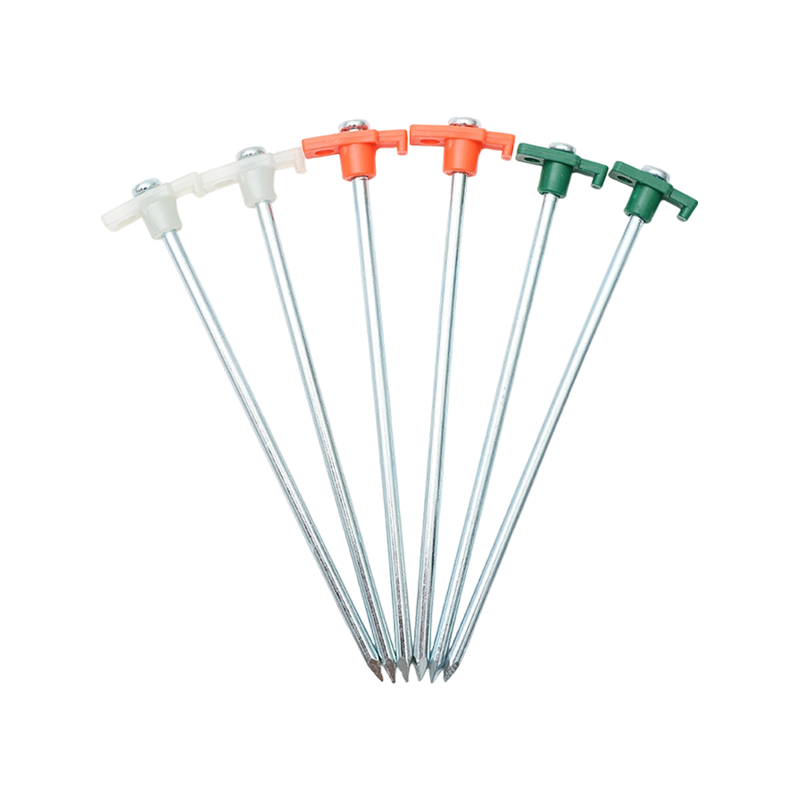
Outdoor camping tent with 25cm ground stakes, beach tarpaulin, and windproof steel studs
Why Tent Stakes Matter More Than Many Campers Realize
Many campers pay close attention to tent fabric, waterproof ratings, pole materials, sleeping bags, and backpacks, but tent stakes are often treated as secondary items. This is understandable because stakes are small, simple-looking, and usually packed at the bottom of a tent bag. However, in real outdoor conditions, the anchoring system is one of the most important parts of shelter performance. A premium tent with weak stakes can still fail in wind, while a basic tarp can perform impressively when anchored with strong, well-designed stakes.
The function of a stake is not only to “pin something down.” It must resist upward pull from guy lines, lateral force from wind, vibration from fabric movement, and soil displacement caused by moisture or repeated tension. A poorly designed stake may bend during installation, twist under load, loosen in sandy ground, corrode after several uses, or become invisible at night. Each of these failures may seem small individually, but in a campsite, they affect comfort, safety, and confidence.
For beach camping, the issue becomes even more obvious. Sand does not grip a narrow stake the same way compact soil does. Wind also tends to be stronger and more consistent in coastal environments. A beach tarpaulin or sun shelter has a large surface area, so wind can create heavy lifting force. If the stake is too short, too smooth, too soft, or poorly shaped, the shelter may become unstable. A 25cm steel stake gives deeper ground engagement than many short pegs and provides a more secure anchor when used correctly.
For grassy campsites, forests, and general outdoor terrain, the challenge is different. The ground may contain roots, stones, compacted soil, or uneven surfaces. A weak stake may deform when struck by a mallet. A thin aluminum hook may bend before it reaches the correct depth. A plastic peg may crack in cold weather or when it hits buried obstacles. High-carbon steel, properly hardened and shaped, offers a stronger solution for campers who expect their equipment to survive repeated setup and takedown cycles.
Product Overview
This 25cm outdoor camping tent stake is built as a heavy-duty ground anchor for tents, tarps, beach shades, camping shelters, awnings, picnic mats, wind ropes, and other outdoor tension systems. The core material is high-carbon steel, selected for strength and resistance to deformation. The stake is hardened to improve hardness and bending resistance, then galvanized to improve corrosion resistance when exposed to damp soil, rain, morning dew, coastal air, and repeated handling.
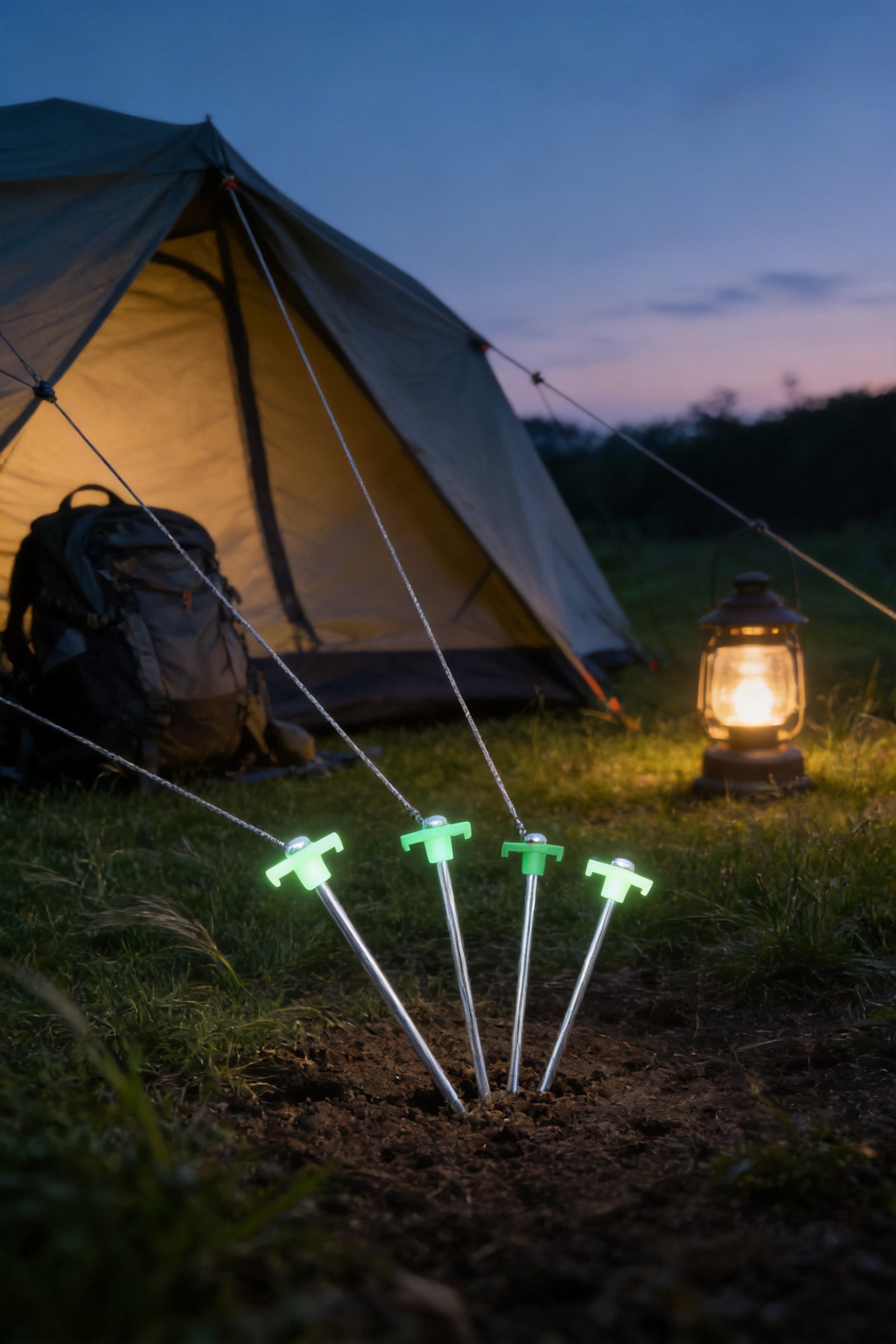
The product includes a glow-in-the-dark head. This feature may appear simple, but it directly addresses a common campsite problem: visibility after sunset. Campers often trip over guy lines and stakes when moving around the tent at night. Stakes can also be difficult to locate during late adjustments, especially when they are installed in grass, sand, or shadowed ground. A luminous head makes the anchor point easier to identify, helping users move more safely and retrieve equipment more efficiently.
The stake also features universal hook and knot compatibility. This makes it useful for different rope styles, tarp corners, tent loops, elastic cords, and guy line systems. Outdoor users often mix gear from different brands and product categories. A stake that works only with one loop type is less convenient in real use. A universal anchoring structure increases flexibility and helps the stake serve multiple roles in a camping kit.
At 25cm, the stake provides meaningful ground penetration without becoming too bulky for transport. Very short stakes are easy to carry but may lack grip in soft ground. Very long stakes can hold well but may be heavy, inconvenient, or unnecessary for routine camping. The 25cm dimension is a practical middle ground for many common outdoor applications, especially when strength and dependable grip are required.
Core Technical Features
The strength of this product lies in the combination of material, treatment, shape, and field usability. A stake is not improved by one feature alone. It performs well when all parts of the design support the same goal: stable, repeatable anchoring under outdoor stress.
| Feature | Product Design | Field Benefit |
|---|---|---|
| Material | High-carbon steel | Improved strength, impact resistance, and durability compared with common soft steel or plastic pegs |
| Length | 25cm | Deeper ground penetration for stronger grip in grass, soil, and sandy areas |
| Surface Treatment | Galvanized finish | Enhanced corrosion resistance for wet campsites, beach air, rain, and repeated outdoor use |
| Visibility | Glow-in-the-dark head | Easier nighttime location, reduced trip risk, and faster campsite adjustment after dark |
| Compatibility | Universal hooks and knot-friendly structure | Works with tents, tarps, wind ropes, canopies, beach tarpaulins, and various guy line systems |
| Application | Camping, beach sheltering, tarp anchoring, and general outdoor use | One accessory can support multiple shelter and camp organization tasks |
High-Carbon Steel: The Foundation of Strength
The use of high-carbon steel gives this stake a clear advantage over many low-cost alternatives. In outdoor accessories, material choice is often the difference between a product that looks strong and a product that remains strong after real use. High-carbon steel has a higher carbon content than mild steel, which allows it to achieve greater hardness and strength when properly processed. For a tent stake, this matters because the product must handle striking force during installation and pulling force during use.
When campers drive stakes into the ground, they rarely encounter perfect soil. The stake may hit small stones, hard clay, roots, or compacted surfaces. If the steel is too soft, the stake can bend near the head or along the shaft. Once bent, it becomes harder to drive straight, easier to loosen, and more difficult to pack. In contrast, a hardened high-carbon steel stake can better resist deformation, giving the user greater confidence during installation.
High-carbon steel also supports a longer service life. Outdoor gear is often exposed to cycles of stress: hammering, pulling, twisting, cleaning, packing, and storage. A weaker material may survive the first few trips but gradually deform over time. A stronger material allows the stake to maintain its functional shape across many uses, which is especially important for experienced campers, overland travelers, festival users, campsite operators, and outdoor brands selling to quality-conscious customers.
Hardening for Bending Resistance
The product is hardened to improve hardness and bending resistance. Hardening is a critical step because raw material strength alone is not enough. Steel performance depends on both composition and processing. Through controlled heat treatment, the steel structure can be adjusted to achieve better resistance against deformation. For a tent stake, that means improved ability to withstand impact and ground resistance.
Bending resistance is especially important for 25cm stakes because longer stakes encounter more leverage than very short ones. When driven into uneven ground, the upper portion may experience sideways force. When guy lines pull at an angle, the stake must resist both upward and lateral stress. If the stake bends, the holding angle changes and anchoring reliability decreases. A hardened steel body helps maintain the correct installed geometry.
Compared with ordinary low-cost stakes, this focus on hardening supports better real-world value. A cheaper peg may look acceptable in packaging, but if it bends during the first rocky campsite setup, the customer experience suffers immediately. A hardened stake communicates quality through use, not just appearance. It remains straighter, feels more solid, and provides more consistent performance under load.
Galvanized Protection for Outdoor Environments
Outdoor hardware must deal with moisture. Even when there is no rain, stakes are inserted into ground that may contain humidity, minerals, organic matter, and salts. Beach use adds another challenge: salt air and sand abrasion. Untreated steel can rust quickly under these conditions, and rust affects both appearance and long-term performance. Galvanizing helps protect the steel surface by adding a corrosion-resistant zinc layer.
A galvanized finish is practical for camping accessories because it provides protection without making the product fragile or overly decorative. Tent stakes are working tools. They will be struck, inserted, removed, and rubbed against soil. A suitable galvanized surface helps slow corrosion while maintaining the rugged character needed for outdoor use.
Corrosion resistance also matters for retailers and distributors. Products may be stored in warehouses, shipped across humid routes, or displayed in changing climates. A stake with better surface protection is less likely to show premature oxidation before reaching the end user. This supports better shelf appeal, lower complaint risk, and stronger confidence in repeat orders.
Glow-in-the-Dark Head for Night Visibility
The glow-in-the-dark head is a small feature with large practical value. Campsites are often used in low light. People move between tents, cooking areas, vehicles, fire pits, and wash stations after sunset. Guy lines and stakes create low obstacles that are easy to miss. Tripping over them can damage gear, loosen the shelter, or injure the camper. A luminous head makes the stake easier to locate visually.
This feature also helps during emergency adjustments. If wind rises at night, campers may need to tighten lines, reposition tarp corners, or check whether stakes are still secure. Searching for dark metal stakes in grass or sand wastes time and causes frustration. A visible head allows faster recognition of anchor points, improving convenience and safety.
For family camping, group camping, and campsite rental use, visibility becomes even more valuable because not every user is experienced. Children, first-time campers, and visitors may not know where the guy lines are placed. A glowing marker supports a more user-friendly campsite layout. It is a simple improvement that enhances the perceived quality of the whole shelter system.
Universal Hooks and Knots for Flexible Use
Outdoor equipment varies widely. Some tents use sewn loops, some tarps use metal eyelets, some canopies use elastic cords, and some shelters rely on adjustable guy lines. Campers may also improvise with paracord, webbing, bungee loops, or knots. A stake with universal hook and knot support adapts to these different systems.
This flexibility makes the product useful beyond standard tent setup. It can hold a beach tarpaulin, secure a picnic mat corner, tension a rain fly, anchor a windbreak, stabilize a portable canopy, support a hammock tarp line, or organize campsite ropes. For users who prefer multipurpose gear, a stake that works across different systems is more valuable than a specialized peg with limited compatibility.
Universal attachment also reduces inventory complexity for outdoor sellers. Instead of carrying many narrow stake types for different shelter products, a retailer or brand can offer one robust accessory that fits many customer needs. This improves product positioning and makes the item suitable for bundled kits, replacement packs, premium tent upgrades, beach shelter accessories, and camping hardware sets.
Why 25cm Is a Practical Length
The 25cm length is one of the most important design choices. Stake length directly influences holding power because deeper insertion creates more contact with the surrounding ground. In many outdoor conditions, a very short peg may not reach stable layers below loose surface material. A longer stake can engage more ground volume, improving resistance to pullout.
At the same time, length must remain practical. Campers carry stakes in bags, vehicles, backpacks, and storage boxes. Very long anchors may become inconvenient for casual use. The 25cm format is long enough to provide strong grip in common sandy and grassy environments while remaining manageable for packing and handling. It is suitable for users who want stronger anchoring without moving into oversized specialty anchors.
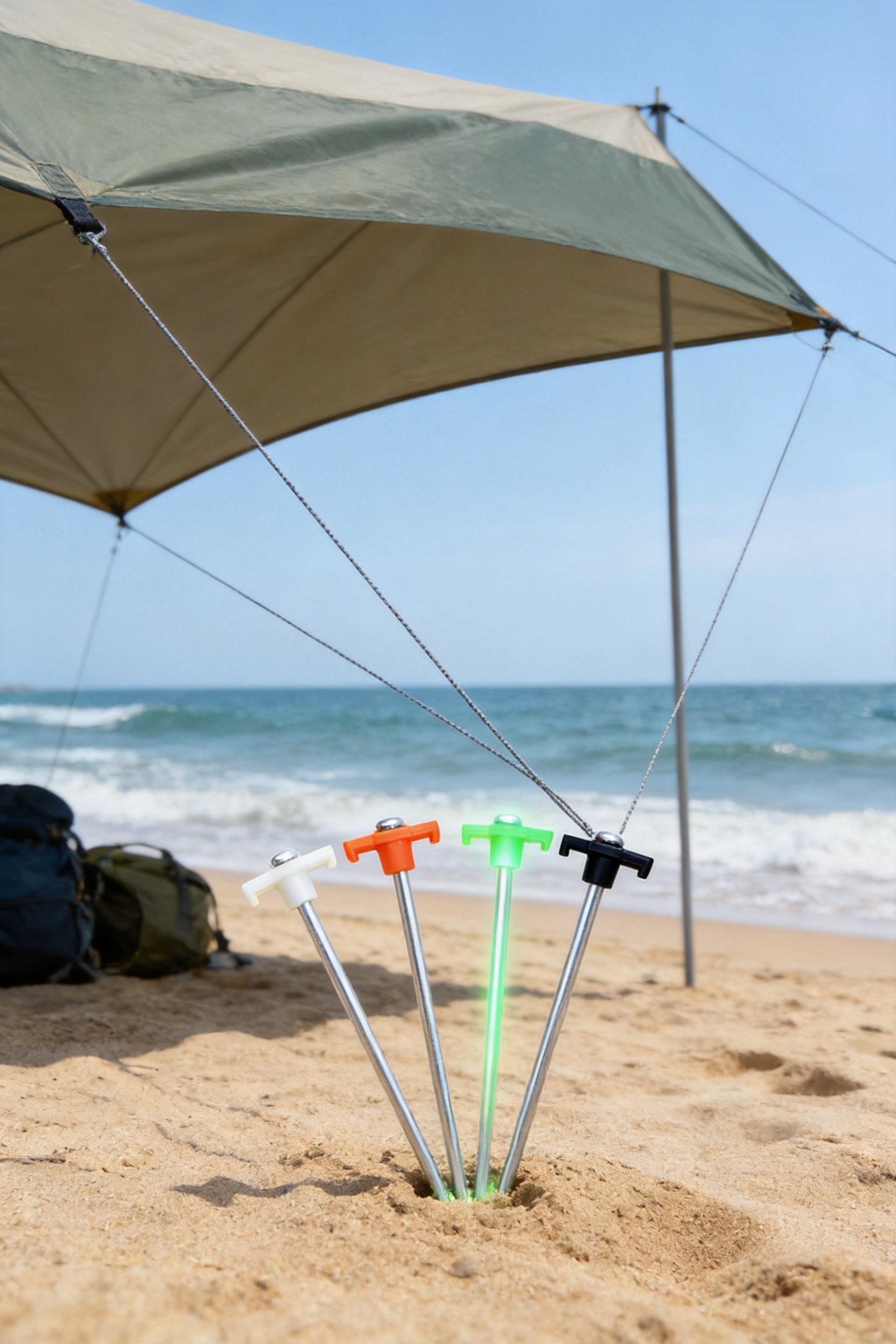
For beach tarpaulins, this length is especially useful. Sand shifts under wind load, and shallow stakes can loosen quickly. Driving a 25cm stake at the correct angle helps create better resistance. In grassy soil, the length helps reach beyond the root mat and improves stability under guy line tension. For general camping, it supports a dependable balance between security and portability.
Performance Compared with Common Competitor Products
Many standard tent stakes are designed around low cost rather than long-term performance. They may be included in entry-level tent kits, but they are often the first component campers replace. This 25cm high-carbon steel stake offers several advantages over common competitor types.
Plastic stakes are lightweight and inexpensive, but they can crack under impact, deform in heat, become brittle in cold weather, and struggle in hard ground. They may be acceptable for soft lawns or casual backyard use, but they are less reliable for rocky soil, strong wind, or frequent camping. High-carbon steel provides much better impact strength and durability.
Thin aluminum hook stakes are popular because they are light, but many versions bend easily when hammered into firm soil. Once bent, they lose alignment and become difficult to install properly. Aluminum stakes may still be useful for ultralight backpacking, but for campers prioritizing strength and wind resistance, hardened steel has a clear advantage.
Short metal pegs can be compact, but they often lack holding depth. In sand or soft ground, they may pull out under moderate tension. A 25cm length offers stronger engagement and better security for tarps and shelters exposed to wind.
Untreated steel stakes may initially seem strong, but corrosion can become a problem. Rust affects appearance, storage cleanliness, and long-term durability. Galvanization gives this product a more practical outdoor finish, especially for users who camp near water, in damp climates, or on coastal beaches.
Some stakes also lack nighttime visibility. Dark metal or dark plastic heads disappear in grass after sunset. The glow-in-the-dark head adds a practical safety advantage that many standard competitor products do not provide. This feature helps the stake stand out as a user-oriented accessory rather than a generic ground nail.
Manufacturing Philosophy Behind the Product
CragHaven Outdoor develops products with a practical outdoor philosophy: equipment should be designed for weather, terrain, and time rather than only for catalog presentation. This approach is especially relevant for a product like a tent stake because its value is proven through repeated use in real ground conditions. The stake must not merely look good in product photos; it must perform after being struck, pulled, exposed to moisture, packed, and reused.
The company’s manufacturing strength comes from combining outdoor usage understanding with China’s mature production ecosystem. Instead of acting only as a sourcing intermediary, the company participates in product design, material choice, sampling, testing, and manufacturing optimization. This allows product decisions to be based on field requirements rather than only on unit cost.
For this stake, the manufacturing logic begins with the usage scenario. The product must hold tents and tarps in grassy and sandy areas. It must resist bending during installation. It must maintain surface quality against corrosion. It must be visible at night. It must be compatible with different rope and hook systems. These requirements guide the selection of high-carbon steel, hardening, galvanizing, head design, and dimensional control.
Advanced Manufacturing Process
The production of a reliable steel tent stake involves more than cutting metal into a pointed shape. A consistent manufacturing process must control material quality, forming accuracy, heat treatment, surface protection, and final inspection. Each step affects how the stake performs in the field.
Material Selection and Incoming Inspection
The process begins with selecting suitable high-carbon steel. Material consistency is important because inconsistent steel can lead to unpredictable hardness, bending behavior, or surface finishing results. Incoming inspection may include checking material specifications, diameter or profile consistency, surface defects, and supplier documentation. Stable raw material is the foundation of stable finished products.
Cutting and Forming
The steel is cut to the required length and formed into the stake shape. Precision in this stage ensures that the final product meets the intended 25cm specification and achieves consistent installation behavior. Forming must create the correct body alignment, head structure, hook geometry, and tip shape. If the stake is not straight, it may be difficult to drive into the ground. If the hook shape is inconsistent, rope attachment may be less secure.
Hardening and Strength Optimization
Heat treatment is used to improve hardness and bending resistance. This stage requires process control because excessive hardness may cause brittleness, while insufficient hardness may leave the stake too soft. The goal is not to make the metal hard in a simple sense, but to achieve a practical balance between strength, toughness, and field durability. Properly managed heat treatment supports better impact performance and resistance to deformation.
Surface Preparation and Galvanizing
Before galvanizing, the metal surface must be prepared to support good coating adhesion. Galvanizing adds a protective zinc layer that helps resist corrosion. The coating must be suitable for outdoor hardware, where contact with soil and sand is expected. A good finish should protect the surface while allowing the stake to remain a working tool that can handle repeated campsite use.
Glow Head Assembly or Integration
The glow-in-the-dark head requires attention to material and fit. It must be visible in low light and secure enough for repeated handling. The head feature adds safety and usability, but it also creates an additional quality-control point. Manufacturing must ensure that the luminous component is properly positioned and consistent across batches.
Inspection and Packaging
Final inspection may include checking length, straightness, hook shape, tip quality, coating condition, head attachment, and overall appearance. For export-oriented production, packaging also matters. Stakes should be packed to reduce abrasion, protect the finish, and present the product clearly to buyers. Proper packaging supports both transport reliability and retail readiness.
Quality Control for Consistent Outdoor Performance
Quality control is essential because small variations in tent stakes can produce big differences in user experience. A stake that is slightly too soft may bend. A hook that is poorly formed may release a rope. A coating defect may rust prematurely. A tip that is not properly shaped may be harder to insert. The best manufacturing approach prevents these issues before the product reaches the market.
CragHaven Outdoor emphasizes sampling, testing, and optimization as standard steps. For a product like this, testing can include dimensional checks, visual inspection, bend resistance evaluation, coating review, and practical anchoring trials. Real-use feedback is valuable because laboratory measurements alone do not always reveal campsite problems. A stake must be evaluated in relation to soil, sand, wind pull, hammering, and repeated use.
Batch consistency is also important for business customers. Retailers, importers, and outdoor brands need products that remain stable from one order to the next. A single good sample is not enough. Manufacturing must be replicable and scalable. By focusing on process control and practical testing, the company reduces uncertainty for supply-chain partners.
Applications in Camping and Outdoor Use
This product is suitable for a broad range of outdoor scenarios. In standard tent camping, it can secure tent corners, vestibule points, rain fly lines, and guy ropes. Its strength makes it useful when the included stakes from a tent package are too weak or too short. Campers can use these stakes as an upgrade set for more confidence in variable weather.
For tarp camping, the stake is useful because tarps create large wind-catching surfaces. A tarp pitched as an A-frame, lean-to, dining shelter, or shade roof requires dependable guy line tension. Weak stakes can pull loose and collapse the pitch. The 25cm steel stake offers stronger ground engagement for more stable tarp geometry.
For beach use, it can help secure tarpaulins, sun shades, beach tents, and windbreaks. Sand requires deeper anchoring and careful installation angle. The stake’s length and steel strength help users create a more reliable hold compared with short plastic or thin metal pegs. The galvanized finish is also helpful in coastal environments, where salt and moisture are common.
For car camping and overlanding, durability is often more important than ultralight weight. Users traveling by vehicle can carry stronger stakes without worrying about every gram. A steel stake is a practical addition to awning kits, shower tent setups, kitchen tarps, ground mats, and campsite organization systems.
For festivals, outdoor events, and temporary shelters, visibility and reliability matter. Crowded nighttime environments increase the risk of tripping over stakes and lines. The glow-in-the-dark head helps identify anchor points, while the universal hook structure allows compatibility with various shelter types.
Installation Tips for Best Holding Power
Even a strong stake performs best when installed correctly. For most tent and tarp applications, the stake should be driven into the ground at an angle away from the direction of pull. This creates better resistance than a vertical placement in many conditions. The guy line should pull against the stake, not lift it straight out.
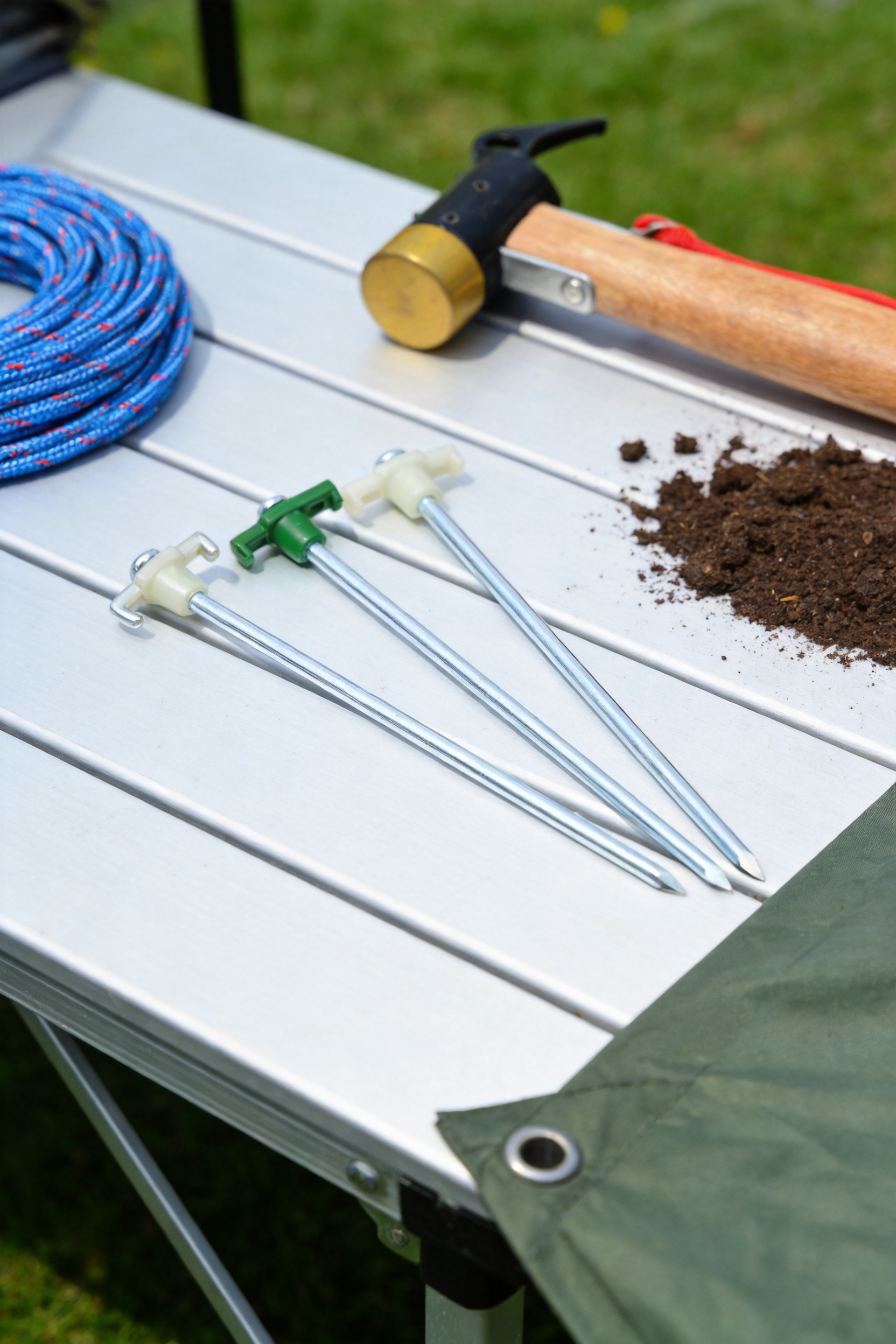
In grass or compact soil, the stake should be inserted deeply enough to engage stable ground. If the surface is very hard, users should avoid striking the head with excessive uncontrolled force. A camping mallet is preferable to a sharp rock because it distributes impact more evenly and reduces damage to the stake head.
In sand, users should drive the stake deeper and consider using a lower pull angle. If wind is strong, additional anchoring methods may be useful, such as crossing stakes, burying a deadman anchor, or using multiple guy points for large tarps. The 25cm steel stake provides a strong foundation, but good technique always improves security.
After removal, users should wipe off soil, sand, and moisture before storage. Galvanization improves corrosion resistance, but basic care still extends product life. Drying the stakes before long-term storage helps keep the finish clean and reduces unnecessary oxidation.
Buyer Value for Retailers, Importers, and Outdoor Brands
This product is attractive not only to individual campers but also to business buyers. Tent stakes are repeat-purchase accessories with broad market compatibility. They can be sold as replacement stakes, upgrade kits, beach shelter accessories, tarp hardware, camping essentials, or bundled components with tents and awnings.
The product’s selling points are easy to communicate: high-carbon steel strength, hardened bending resistance, galvanized corrosion protection, 25cm holding length, glow-in-the-dark visibility, and universal compatibility. These features address common customer complaints about weak stakes. Retailers can position the product as a practical upgrade rather than a low-value commodity.
For importers and private-label outdoor brands, manufacturing reliability is a major advantage. CragHaven Outdoor is based in Hangzhou, China, and works as an outdoor brand and cross-border manufacturing partner. The company focuses on mountaineering, hiking, and camping scenarios, using mature manufacturing systems to turn practical design intent into stable, scalable products. This supports long-term purchasing relationships and helps reduce uncertainty in supply planning.
The company’s Western-market-oriented communication is also important. Outdoor buyers often need clear specifications, realistic product positioning, packaging suggestions, and stable quality expectations. A manufacturing partner that understands both product use and market language can support smoother development, fewer misunderstandings, and better final products.
Design Advantages That Improve User Experience
A successful camping accessory should make outdoor life easier without requiring complicated explanation. This stake does that through several user-focused details. The 25cm length improves holding confidence. The steel construction resists damage. The galvanized finish reduces corrosion concerns. The glow head makes nighttime use easier. The universal hook structure supports multiple shelter systems.
These details combine into a product that feels dependable. When users drive the stake into the ground, they expect it to remain straight. When wind pulls on a tarp, they expect the anchor to hold. When they walk around camp at night, they expect to see where the guy lines are placed. When they pack up in the morning, they expect to retrieve the stake and use it again on the next trip. Meeting these expectations creates long-term customer satisfaction.
In contrast, cheaper alternatives often fail in ways that irritate users: bending, cracking, rusting, disappearing in grass, or pulling out in wind. A better stake may not be the most glamorous item in a camping kit, but it is one of the accessories users appreciate most when conditions become challenging.
Sustainability Through Durability
Durability is also an important part of sustainable product thinking. A disposable or easily damaged stake may be cheap at first, but it can lead to repeated replacement, material waste, and customer dissatisfaction. A stronger product with a longer service life reduces the need for frequent repurchasing and supports more responsible outdoor consumption.
High-carbon steel construction, corrosion-resistant galvanizing, and proper hardening all contribute to longer use. A stake that can survive repeated trips provides better lifetime value. For outdoor brands, offering durable accessories also strengthens brand reputation because customers associate reliability with responsible product design.
CragHaven Outdoor’s product philosophy emphasizes long-term value rather than short-term trends. This is especially suitable for camping hardware. The market does not need more weak accessories that look good only in packaging. It needs practical gear that performs season after season.
Q&A Section
What is this 25cm steel tent stake mainly used for?
It is mainly used to anchor tents, tarps, beach tarpaulins, canopies, wind ropes, rain flies, picnic mats, and outdoor shelters. Its 25cm length and steel construction make it suitable for grassy areas, sandy ground, and general camping terrain.
Why is high-carbon steel better than ordinary plastic or soft metal stakes?
High-carbon steel provides stronger resistance to bending, impact, and deformation. Plastic stakes may crack, and soft metal stakes may bend when hammered into firm ground. Hardened high-carbon steel is more suitable for repeated outdoor use and challenging ground conditions.
What is the advantage of the galvanized surface?
The galvanized surface helps protect the steel from corrosion caused by moisture, wet soil, rain, dew, and coastal air. This improves long-term durability and keeps the stake more reliable after repeated camping trips.
Why does the stake have a glow-in-the-dark head?
The glow-in-the-dark head makes the stake easier to see at night. This helps campers locate anchor points, adjust guy lines after dark, retrieve stakes more easily, and reduce the risk of tripping over tent lines.
Is the 25cm length suitable for beach camping?
Yes. The 25cm length gives deeper penetration than many short pegs, which helps improve grip in sand. For strong wind or very loose sand, users should still install the stake at the correct angle and may use additional anchoring techniques for large tarps.
Can this stake be used with different brands of tents and tarps?
Yes. The universal hook and knot-friendly design allows compatibility with many types of tent loops, tarp corners, guy lines, ropes, and shelter systems. It is useful as both a replacement stake and an upgrade accessory.
How should users maintain the stakes after camping?
Users should remove soil, sand, and moisture after use, then dry the stakes before storage. Although the galvanized surface improves corrosion resistance, basic cleaning and drying will help extend product life.
What makes this product suitable for business buyers?
It has clear selling points, broad compatibility, practical field value, and stable manufacturing potential. Retailers and outdoor brands can position it as a premium replacement or upgrade stake for camping, beach shelters, tarps, and outdoor hardware kits.
Conclusion
The 25cm windproof high-carbon steel tent stake is a small product with significant outdoor importance. It is designed to solve real anchoring problems by combining strong material, hardened bending resistance, galvanized corrosion protection, night visibility, and flexible attachment compatibility. These features make it a reliable choice for camping tents, beach tarpaulins, tarps, canopies, wind ropes, and general outdoor shelter systems.
Its advantages over common competitor products are practical and easy to understand. Compared with plastic stakes, it offers better strength. Compared with thin aluminum stakes, it resists bending more effectively. Compared with short pegs, it provides deeper ground engagement. Compared with untreated steel stakes, it offers better corrosion resistance. Compared with dark, hard-to-see stakes, the glow-in-the-dark head improves campsite safety and convenience.
Behind the product is a manufacturing approach focused on real outdoor use, material reliability, process control, and long-term value. CragHaven Outdoor combines product development, sampling, testing, and scalable manufacturing to support global outdoor markets. For campers, the result is a stronger and more dependable anchoring accessory. For business buyers, it is a marketable, practical, and durable product with clear consumer benefits.
In outdoor environments, confidence often comes from details. A secure shelter, a visible anchor point, a stake that does not bend, and a product that can be used again and again all contribute to a better camping experience. This 25cm steel tent stake is built for that purpose: stable anchoring when the weather changes, when the ground is difficult, and when reliable gear matters most.
References
Outdoor Industry Association. Outdoor Recreation Product Durability and Consumer Use Patterns.
American Society for Testing and Materials. General Principles of Metallic Coatings and Corrosion Resistance.
Smith, J. Field Guide to Tent Pitching, Guy Line Angles, and Shelter Stability.
Brown, L. Practical Materials for Outdoor Equipment: Steel, Aluminum, Plastics, and Coatings.
National Outdoor Leadership School. Camping Systems, Shelter Anchoring, and Low-Impact Field Practices.
Product: Outdoor camping tent with 25cm ground stakes, beach tarpaulin, and windproof steel studs


- Phone: +86-15968800379
- E-mail: [email protected]
- Address: Room 1002, Huishang Building, Gongshu District, Hangzhou City, Zhejiang Province.
Copyright © CragHaven Outdoor All Rights Reserved. Outdoor Gear Manufacturers Wholesale Mountaineering Camping Gear Suppliers
