

 English
 Deutsch
 Español
 Français


Outdoor Thickened Quick-Setup Tent for Beach Protection and Comfortable Camping
Content
- 1 Designed Around Real Outdoor Use
- 2 Hydraulic Spring Technology for Fast Deployment
- 3 Double-Layer Construction for Sun and Rain Protection
- 4 Breathable Mesh and Mosquito Protection
- 5 Comfortable Capacity for Two People
- 6 Advantages Over Conventional Beach Shelters
- 7 Manufacturing Approach and Product Development Strengths
- 8 OEM and Customization Opportunities
- 9 Use and Care Recommendations
- 10 Applications Across Retail and Commercial Markets
- 11 Why Work with a Specialized Outdoor Manufacturing Partner?
- 12 Q&A
- 12.1 What is the main advantage of this quick-setup tent?
- 12.2 How quickly can the tent be opened?
- 12.3 Is the tent suitable for overnight camping?
- 12.4 Does the double-layer design make the tent cooler?
- 12.5 Does the mesh prevent all insects from entering?
- 12.6 What should users know about folding?
- 12.7 What materials can be customized for OEM projects?
- 12.8 How does this product compare with a traditional pole tent?
- 12.9 Can the tent be used in strong wind?
- 12.10 What makes the manufacturing process suitable for overseas retailers?
- 13 Conclusion
- 14 References
- 15 Product: Outdoor thickened tent, quick-setup beach tent, camping sun protection tent.
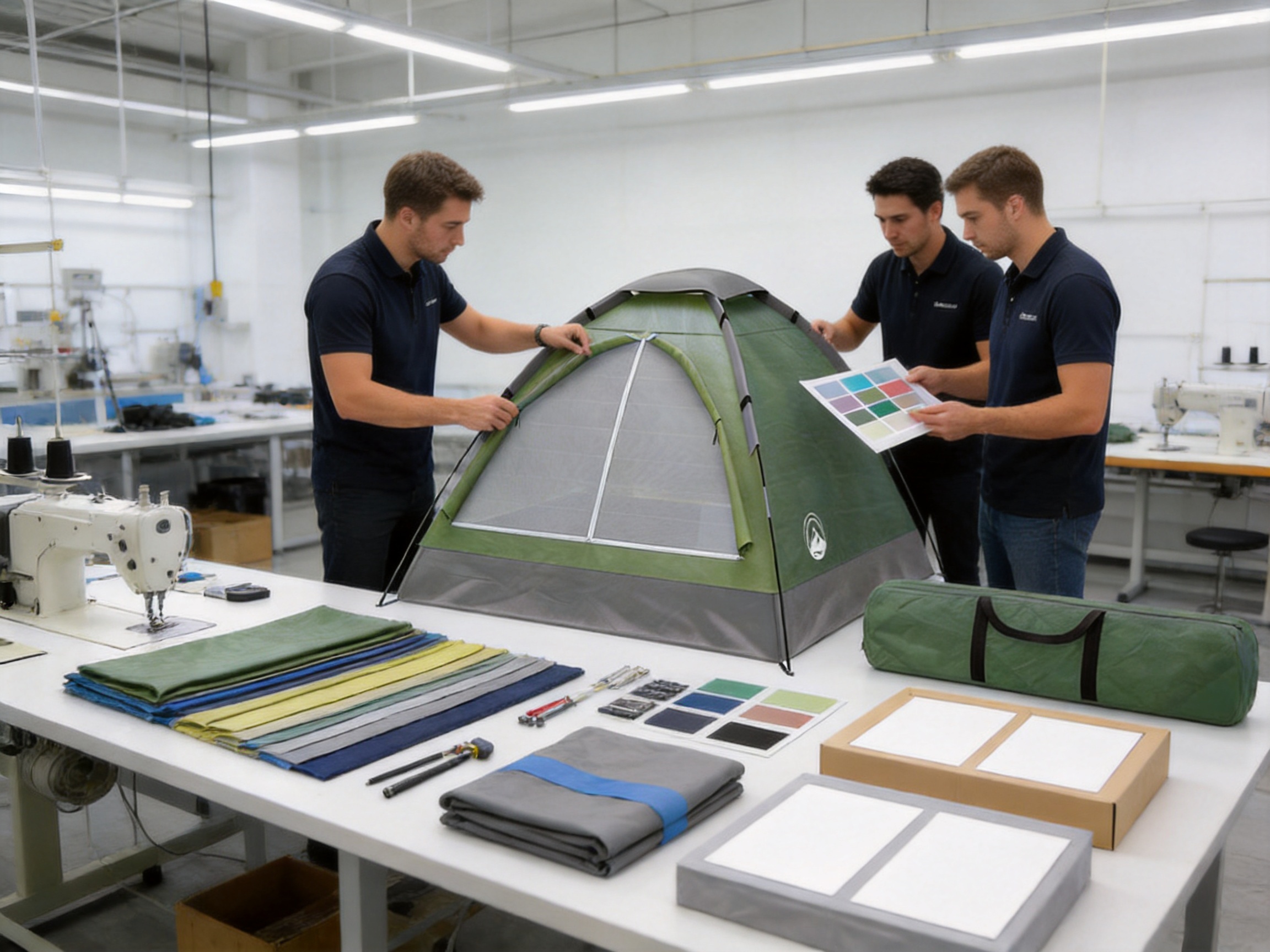
Choosing a practical outdoor shelter involves more than comparing colors, floor dimensions, or promotional phrases such as “instant setup.” A reliable tent must perform in changing weather, remain comfortable in warm conditions, resist the abrasion of sand and rough ground, and simplify the experience for people who may not have advanced camping skills. The outdoor thickened quick-setup tent described in this article is designed around these everyday requirements. It combines an automatic hydraulic spring frame, double-layer fabric construction, breathable mosquito-proof mesh, and a compact footprint suitable for beach leisure, short camping trips, family outings, and casual outdoor events.
Unlike many basic beach shelters that focus mainly on shade, this design brings together the functions of a sun shelter and a lightweight camping tent. The double-layer structure helps manage sunlight and rain, while the high-density mesh supports ventilation and insect protection. Its quick-opening frame reduces the time and effort normally required to assemble a tent, making it accessible to novice campers, families, retailers, hospitality operators, and outdoor rental businesses.
For buyers and distributors, product performance is only one part of the decision. Consistent manufacturing, reliable material selection, flexible customization, and professional communication are equally important. CragHaven Outdoor develops and supplies outdoor camping gear from Hangzhou, China, with a focus on mountaineering, hiking, beach, and camping applications. Its product development approach combines practical scenario research, material evaluation, repeated sampling, and scalable production. This enables the tent to be supplied for different market requirements while maintaining a stable balance between usability, durability, and cost.
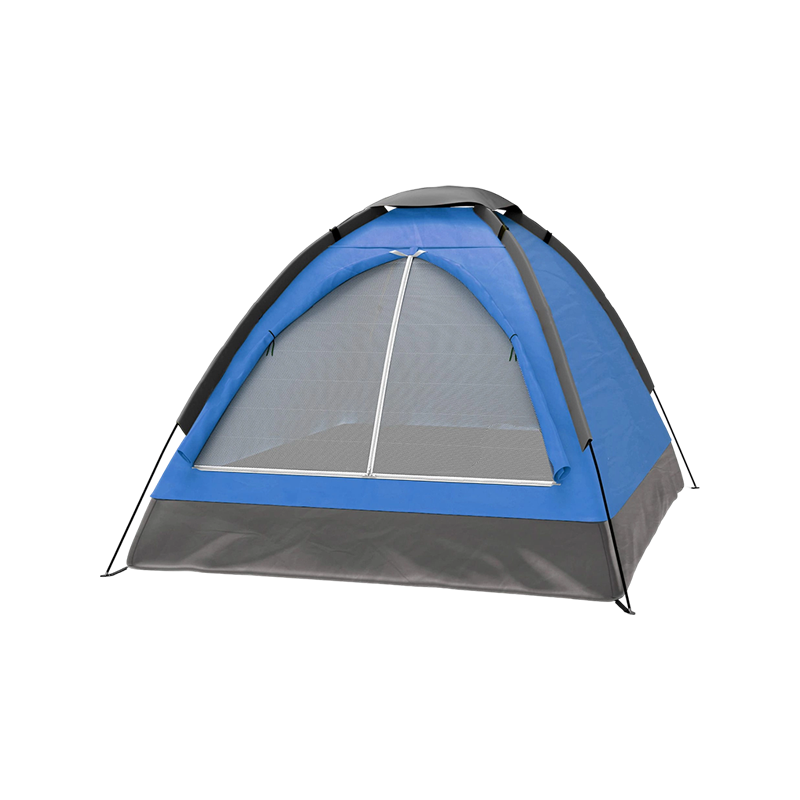
Outdoor thickened tent, quick-setup beach tent, camping sun protection tent.
Designed Around Real Outdoor Use
A tent can look attractive in a product photograph and still disappoint users in the field. Common problems include difficult setup, poor ventilation, weak frame tension, inadequate rain protection, uncomfortable interior heat, and fabric that wears quickly when placed on sand or rough ground. The quick-setup beach tent addresses these problems as a connected system rather than treating each feature as an isolated selling point.
The tent is intended for users who want a fast and uncomplicated shelter. On a beach, the shelter may be used for shade, changing clothes, storing personal belongings, or taking a break from direct sunlight. During a camping trip, it can provide sleeping space for two people when equipment is packed efficiently. In a family outing, it can serve as a protected rest area for children and adults. These different applications require a structure that is simple enough for casual users but sufficiently considered for repeated outdoor use.
The product category is particularly suitable for customers who do not want to assemble multiple poles, identify several sleeves, and connect a series of clips before enjoying the outdoors. Its hydraulic spring quick-opening system is designed to form the main structure automatically when released. This saves time at the campsite and reduces the frustration often associated with traditional pole-and-sleeve tents.
At the same time, convenience does not replace the need for correct operation. The frame should be opened on a clear area, away from people and obstacles. Users should follow the recommended folding motion rather than attempting to force the frame closed in reverse. Retaining straps should be secured before transport or storage. These simple procedures protect the mechanism and help preserve its performance over repeated use.
Hydraulic Spring Technology for Fast Deployment
The most distinctive feature of this tent is its hydraulic spring frame. In practical terms, the spring-loaded ribs are designed to remain in a compact folded position during transport. When the retaining system is released, stored mechanical energy helps the ribs move into the intended dome configuration. This creates an automatic opening action that can form the main tent structure in approximately two to three seconds under normal conditions.
This method differs from traditional tents that use separate fiberglass or aluminum poles. With a conventional pole-and-sleeve design, the user generally needs to connect or extend the poles, thread them through fabric channels, attach clips, and tension the corners. Depending on the model and the user’s experience, this process may take several minutes. The quick-opening spring frame reduces the number of manual steps and makes the product more approachable for first-time campers.
Fast deployment is especially useful in changing outdoor conditions. A sudden shower can make a conventional setup feel unnecessarily complicated. A family arriving at a crowded beach may have limited space and little patience for a lengthy assembly process. Outdoor event staff may need to repeat setup and packing several times in a single day. A spring-assisted frame helps reduce labor in each of these situations.
The frame design also offers a consistent opening sequence. Since the main structural elements are integrated into the tent system, there are fewer loose poles that can be lost, damaged, or incorrectly installed. This can improve the user experience and reduce the likelihood of setup errors. For retailers, a simpler structure may also make product demonstrations easier because customers can see the operating principle immediately.
Engineering Considerations for Repeated Opening and Closing
Quick deployment creates an important engineering responsibility: the frame must be designed to withstand repeated cycling. Spring steel is subject to fatigue when it is repeatedly bent and released. A low-quality frame may gradually lose tension, become difficult to open, or fail to hold the intended shape after many cycles. For this reason, spring gauge, material quality, bend radius, connection design, and manufacturing consistency all influence long-term reliability.
A thicker spring gauge can offer improved resistance to fatigue when it is correctly matched with the product’s geometry. A wider bend radius can reduce stress concentration at critical points. Careful forming helps prevent sharp kinks that may weaken the metal. The frame must also be integrated into the fabric structure without creating excessive localized tension around sleeves, joints, or attachment points.
CragHaven Outdoor approaches the mechanism as part of a complete product system. Frame development is considered together with fabric dimensions, seam positions, folding requirements, packaging size, and the intended user group. This is important because a frame that performs well in isolation may not operate smoothly after being enclosed by fabric or subjected to different environmental conditions.
- Spring gauge affects resistance to repeated bending.
- Bend radius influences stress concentration and fatigue behavior.
- Retaining straps help keep the folded frame secure during transport.
- Frame and fabric dimensions must be coordinated for smooth deployment.
- Correct folding technique is essential for preserving spring performance.
The result is not simply a tent that opens quickly once. The objective is to create a product that can be used, packed, transported, and opened repeatedly during a season of beach trips, camping weekends, retail demonstrations, or outdoor events.
Double-Layer Construction for Sun and Rain Protection
Many lightweight shade tents use a single coated polyester layer. Such a layer may block direct sunlight, but it does not always manage the heat that accumulates beneath the canopy. When the outer surface is exposed to intense sun, the fabric absorbs and transfers heat into the interior. Without sufficient ventilation or separation between layers, the shelter may feel warm even when it provides shade.
The double-layer structure of this tent is intended to improve both weather protection and thermal comfort. The outer layer helps resist sunlight and moisture, while the inner layer creates an additional barrier. The space between the layers acts as an air gap, slowing direct heat transfer. This principle is similar to the insulating effect of separated layers in other forms of protective construction, although actual performance depends on fabric color, coating, airflow, ambient temperature, and exposure conditions.
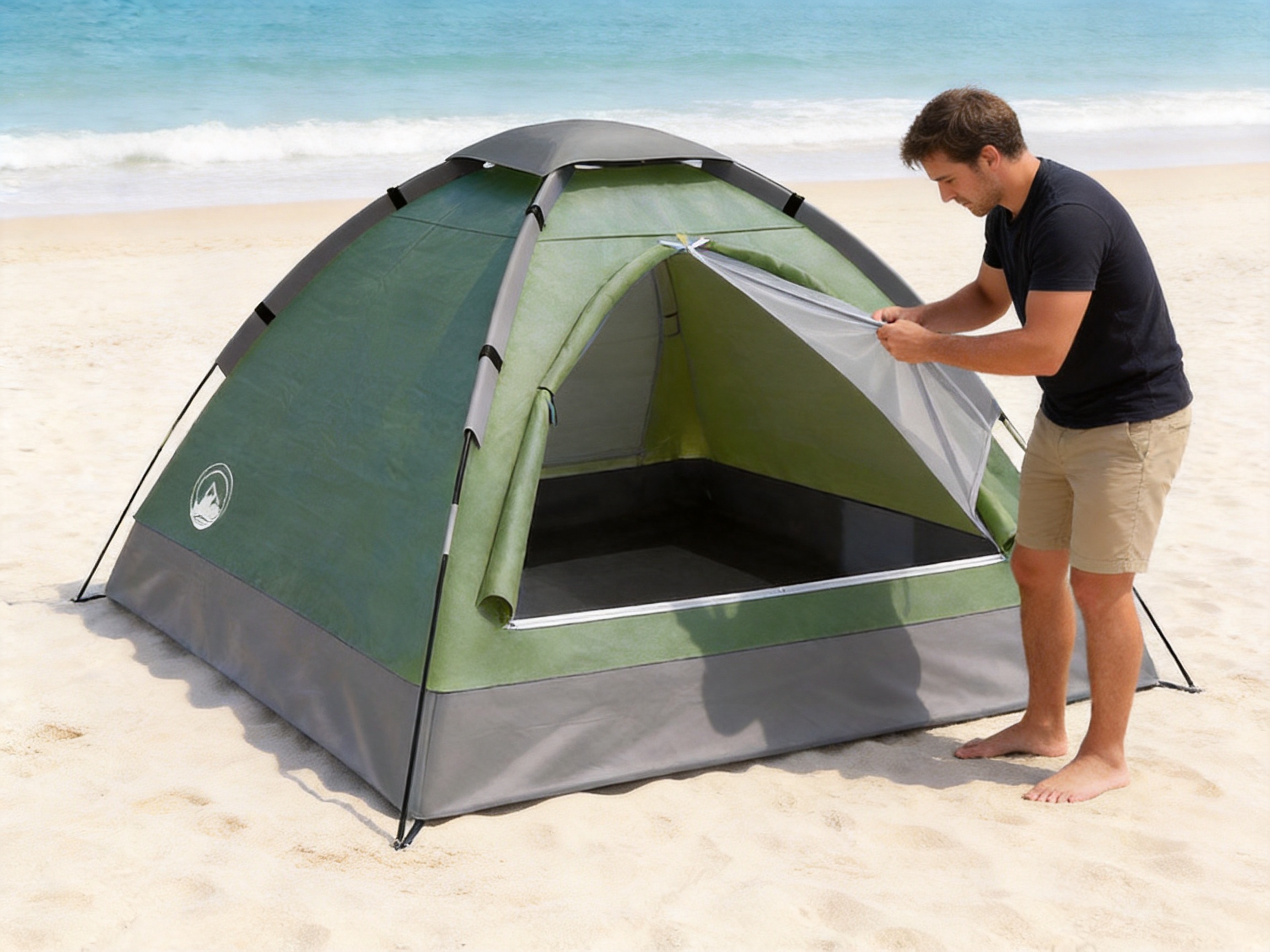
For beach users, the air gap can make a meaningful difference during periods of direct sunlight. The tent remains a shaded environment rather than simply a thin screen between the user and the sun. For campers, the second layer supports a more enclosed sleeping space and provides an additional line of defense against light rain and wind-driven moisture.
Double-layer construction also offers design flexibility. The outer shell can be selected for UV resistance, abrasion performance, and weather protection, while the inner layer can be optimized for comfort, appearance, and airflow. Separating these functions allows the product to achieve a more balanced performance than a single piece of fabric expected to perform every task at once.
Fabric Weight, Coating, and Seam Performance
“Thickened” should not be interpreted as fabric weight alone. A higher-denier textile generally has stronger resistance to abrasion and puncture, but the final performance also depends on the yarn structure, weave, coating, seam construction, and finishing process. A thick fabric with an inadequate coating may still allow water penetration. Conversely, a moderate-denier fabric with an effective polyurethane coating and carefully sealed seams can provide reliable wet-weather performance for its intended use.
CragHaven Outdoor evaluates denier and coating together when developing outdoor products. This approach helps avoid a common mistake in product selection: treating one visible specification as the complete measure of quality. Fabric must be appropriate for the expected environment. Beach sand can abrade a floor and lower panels, while damp ground can expose seams and floor edges to prolonged moisture. The material package therefore needs to reflect actual use rather than a catalog description alone.
| Construction Factor | Primary Contribution | Why It Matters in Use |
|---|---|---|
| Higher-denier outer fabric | Improved abrasion and puncture resistance | Helps protect against sand, rough ground, and repeated handling |
| Polyurethane coating | Water resistance and rain protection | Supports more dependable performance during light or moderate rain |
| Double-layer air gap | Reduced direct heat transfer | Helps limit heat buildup under strong sunlight |
| Reinforced seams | Improved structural integrity | Reduces stress around attachment points and fabric junctions |
| Raised floor edge | Additional separation from ground-level moisture and sand | Helps maintain a cleaner and more comfortable interior |
Coating selection must also be matched to the intended market. Some customers prioritize a lightweight package and occasional shade use, while others need a more protective camping shelter. During product development, the balance between denier, coating thickness, folding volume, weight, and price can be adjusted according to the buyer’s positioning requirements.
Breathable Mesh and Mosquito Protection
A tent that blocks insects but traps heat is not comfortable. A tent that maximizes airflow but allows mosquitoes and small flying insects inside is also unsuitable for many outdoor environments. Mesh design therefore involves a balance between protection and ventilation.
The high-density mesh used in this product is intended to keep common insects outside while allowing air to move through the interior. Mesh density is often discussed in relation to openings per square inch. A finer weave can stop smaller insects, including sand flies and no-see-ums, but a very dense material may restrict airflow if the panel area is too small. Designers must therefore consider both mesh fineness and total ventilation area.
This tent uses a ventilation approach based on multiple mesh areas rather than relying on one small opening. When mesh panels are positioned on different sides, air can pass through the shelter more effectively. Cross-ventilation can remain useful even when wind is limited because differences in temperature and pressure encourage air movement between openings.
Panel placement is equally important at ground level. Sand, insects, and moisture frequently enter through the lower edges of inexpensive shelters. A raised floor edge and carefully arranged fabric transitions can help reduce these problems. The result is a more comfortable interior for sleeping, resting, changing clothes, or storing personal items.
- Fine mesh helps block smaller insects.
- Larger mesh panels support better airflow.
- Opposing openings improve cross-ventilation.
- Raised floor edges reduce entry points for sand and insects.
- Correct panel tension helps prevent excessive gaps around closures.
Ventilation is also important for condensation management. When people sleep inside a closed shelter, their breathing and body heat add moisture to the air. Moisture can condense on cooler fabric surfaces when ventilation is insufficient. A breathable mesh arrangement helps release humid air and can make the interior feel less stuffy, especially during warm nights.
Comfortable Capacity for Two People
The tent is designed to accommodate two people in a compact outdoor shelter. Capacity ratings should always be interpreted in relation to the intended use. Two people sleeping with minimal equipment may use the floor area efficiently, while two people with large sleeping bags, backpacks, clothing, and personal items may require more organization.
For beach use, the same footprint may feel more spacious because chairs, coolers, and bags can remain outside under nearby shade. For overnight camping, sleeping pads and bags occupy most of the floor, leaving limited room for equipment. Users should therefore consider floor dimensions, peak height, entrance position, and storage habits rather than relying on the phrase “two-person” alone.
The dome form provides a stable and efficient structure, but curved walls naturally reduce usable headroom near the edges. Peak height is most useful near the center, while the perimeter is better suited to sleeping equipment or low-profile storage. Buyers comparing different tents should examine both floor size and peak height to understand how the interior will feel in practice.
For novice campers, a compact two-person design offers several advantages. It is easier to carry than a large family tent, simpler to place on a crowded beach, and faster to warm during cool evenings. A smaller footprint can also reduce the amount of ground preparation required before setup.
Advantages Over Conventional Beach Shelters
Basic beach shelters are often built for shade alone. They may have an open front, a single fabric layer, limited wind resistance, and little protection from insects. Such products can be useful for brief daytime visits, but their functionality is limited when users want to rest for longer periods or remain comfortable in changing conditions.
The outdoor thickened quick-setup tent offers several advantages over this basic category. First, its double-layer body provides a more enclosed environment and supports both sun and rain protection. Second, its mesh panels create a balance between privacy, airflow, and insect resistance. Third, its automatic spring frame reduces setup time. Fourth, its camping-oriented floor and dome structure make it more suitable for overnight use than an open canopy.
Compared with conventional pole-and-sleeve tents, the main advantage is ease of deployment. The user does not need to assemble a long set of separate poles before the shelter can stand. Compared with ultralight single-wall shelters, the principal advantages are increased separation between the user and the outer environment, improved heat management, and broader suitability for beach and casual camping applications.
Compared with low-cost pop-up products, the design emphasis is placed on frame reliability, material coordination, mesh layout, and repeated use. These details may not always be obvious in a product photograph, but they strongly influence customer satisfaction after purchase.
| Feature | Basic Shade Shelter | Conventional Camping Tent | Quick-Setup Double-Layer Tent |
|---|---|---|---|
| Setup process | Usually simple but may require manual unfolding and staking | Requires poles, sleeves, clips, and tensioning | Spring-assisted automatic opening with limited manual assembly |
| Sun protection | Usually provides basic shade | Depends on fabric and fly design | Double-layer structure supports stronger separation from direct sunlight |
| Rain protection | Often limited | Varies by coating and seam construction | Designed with coated fabric and layered protection for intended outdoor use |
| Insect control | May be partial or absent | Usually available through mesh doors or panels | High-density mesh supports mosquito and insect protection |
| Best application | Short daytime shade breaks | Planned overnight camping | Beach leisure, short camping, and fast-deployment outdoor use |
No shelter is ideal for every environment. Extreme storms, heavy snow, exposed alpine terrain, and severe wind require specialized equipment with different structural systems. The strength of this product lies in its intended range: beach recreation, casual camping, warm-weather trips, family outings, and other situations where fast setup and multi-function protection are priorities.
Manufacturing Approach and Product Development Strengths
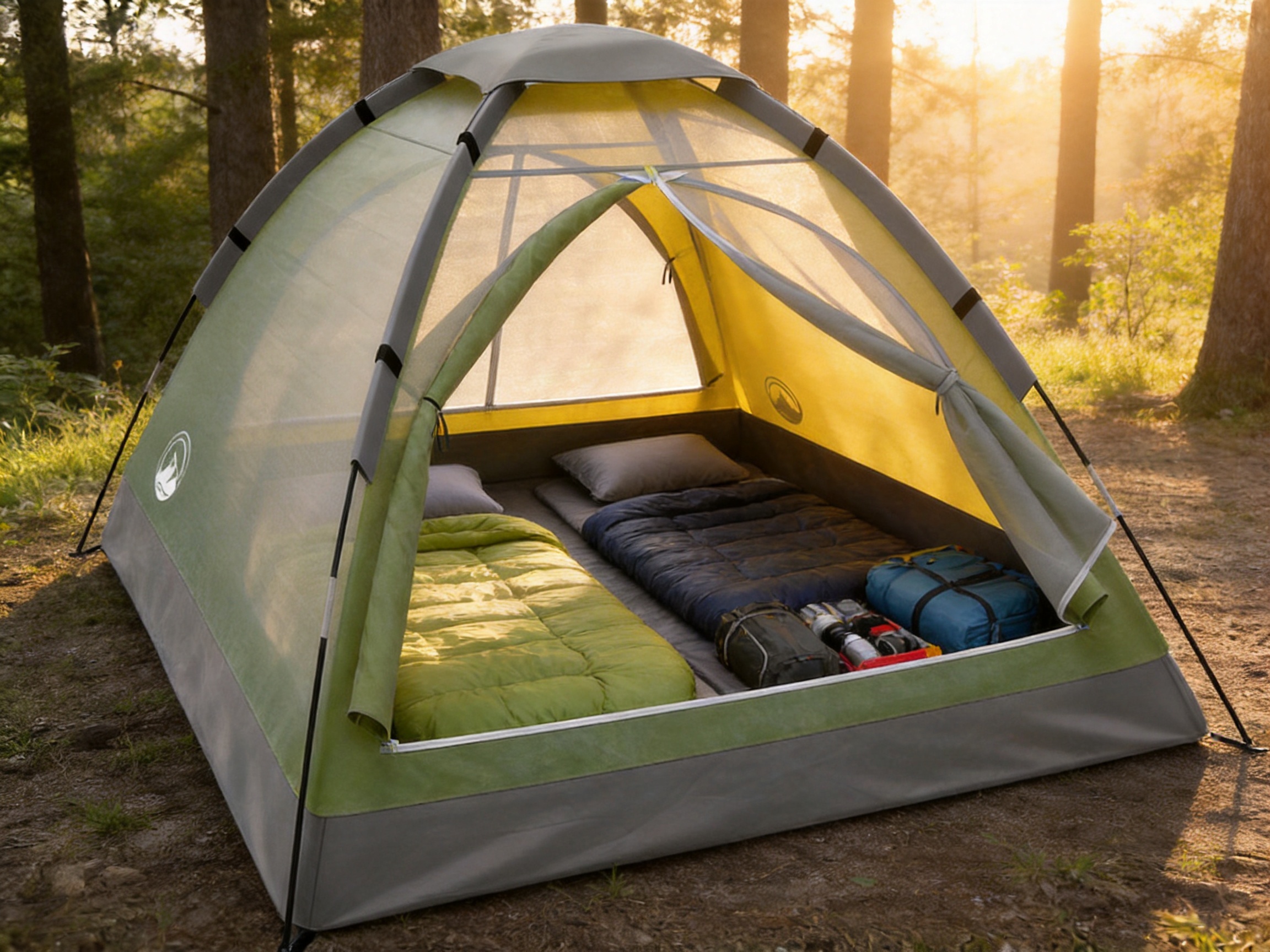
A reliable finished product begins long before final packing. Outdoor gear must be developed around real use conditions, including weather, terrain, transport, storage, repeated assembly, and user behavior. CragHaven Outdoor’s product development philosophy is based on the idea that outdoor products should not be designed only for a catalog image. Each feature should respond to a practical problem encountered in the field.
The development process starts with scenario analysis. Designers and product managers consider who will use the tent, where it will be installed, how frequently it will be folded, what equipment users may carry, and which environmental conditions are most likely. A beach shelter may require stronger abrasion resistance at the floor and lower panels, while a camping product may require better privacy and overnight ventilation. These requirements influence the structure, fabric, mesh, seams, packaging, and accessories.
Material selection follows the usage analysis. The outer textile must provide the desired balance of weight, thickness, coating, and appearance. Mesh must support both insect protection and airflow. The spring frame must deliver quick deployment without creating excessive fatigue risk. Floor materials must tolerate contact with sand, soil, and damp surfaces. Components are considered as a complete system instead of being selected independently according to the lowest initial cost.
Sampling, Testing, and Optimization
Sampling is an essential stage in outdoor product manufacturing. A first sample can reveal problems that are difficult to identify in drawings or specifications. The frame may open too aggressively, the fabric may pull unevenly, the mesh may restrict airflow, or the folded package may be larger than expected. By examining physical samples, the development team can adjust dimensions, seam positions, component relationships, and user instructions.
Repeated sampling helps create a more stable production process. Changes can be evaluated before large-scale manufacturing, reducing the likelihood of late modifications or inconsistent batches. The objective is not merely to produce one acceptable sample but to define a repeatable product that can be manufactured at the required volume.
Testing may include opening and closing assessments, fabric inspection, seam evaluation, coating checks, water resistance observation, dimensional review, packaging tests, and visual quality control. The exact testing program can be adapted to the buyer’s market, sales channel, and compliance requirements. Retailers may request packaging drop tests or barcode specifications, while professional buyers may need particular material documentation or inspection procedures.
For a quick-opening tent, functional testing is particularly important. The opening motion should be observed for smoothness and consistency. The frame must remain properly connected to the fabric. Folding instructions should be clear enough for the target user. Retaining straps and packed dimensions should be checked before shipment.
Production Consistency and Quality Control
Large-scale outdoor gear production involves many individual operations. Fabric must be cut accurately, panels must be aligned, mesh must be sewn without damaging the weave, coatings must remain intact around seams, and frame components must be installed consistently. A small variation in one area can influence the final opening action or the appearance of the finished tent.
Production control therefore benefits from standardized work instructions and inspection points. Fabric rolls can be reviewed before cutting for visible defects, color variation, and coating irregularities. Cut panels can be checked against approved patterns. Sewing operations can be monitored for stitch quality, seam allowance, skipped stitches, loose threads, and reinforcement placement. Finished tents can be inspected for dimensions, frame operation, folding behavior, and packaging condition.
CragHaven Outdoor’s manufacturing partnership model emphasizes communication between design, sampling, production, and customer teams. This helps ensure that product requirements are understood not only as written specifications but also as practical performance expectations. Professional communication is particularly valuable for overseas buyers who require clear updates, sample confirmation, packaging coordination, and production scheduling.
OEM and Customization Opportunities
The quick-setup tent can be adapted for different commercial markets. OEM buyers may require private labels, custom colors, logo printing, packaging changes, instruction manuals, or market-specific product positioning. A beach retailer may prefer bright seasonal colors and a compact retail box, while a camping distributor may prioritize neutral colors, technical packaging, and more detailed care instructions.
Customization should begin with the intended sales channel. Products sold through physical stores may need packaging that clearly communicates the quick-opening function. Products sold online require strong images, concise setup information, accurate dimensions, and clear expectations about capacity. Products supplied to rental companies may need reinforced high-use areas and replacement component planning.
Branding can be applied to selected fabric panels, carry bags, packaging, labels, or instruction materials, subject to the production method and order requirements. Color matching should be confirmed using physical samples where accurate appearance is important. Printed graphics should be reviewed for scale, placement, durability, and consistency with the brand’s visual identity.
Packaging development is also part of the manufacturing process. The folded tent must be protected without unnecessary volume. A well-designed package can reduce shipping inefficiency, improve shelf presentation, and make the product easier for customers to store after use. Product labels may include capacity, material information, care instructions, warnings, and folding guidance.
For global retailers, the ability to combine product development with manufacturing coordination can shorten communication chains. Rather than sourcing a concept from one party and managing production through another, buyers can work with a partner that understands design intent, factory realities, and the practical expectations of Western outdoor markets.
Use and Care Recommendations
Correct use can extend the service life of any tent. Before opening the structure, users should clear stones, branches, sharp objects, and other debris from the selected area. The tent should be positioned with consideration for wind direction and drainage. On a beach, users should use suitable anchoring methods when conditions require additional stability.
The automatic frame should be allowed to open naturally. Users should not place hands, faces, or objects in the path of the spring ribs during deployment. If the frame does not open correctly, it should be inspected rather than forced. The retaining strap should be secured before the folded tent is placed into its carry bag.
After use, sand and moisture should be removed as far as possible. A wet tent should be dried before long-term storage to reduce the risk of mildew, odor, and coating deterioration. Sand trapped in folds can increase abrasion during transport, so shaking or gently brushing the fabric is helpful. Strong solvents, abrasive brushes, and excessive heat should be avoided unless specifically approved for the material.
Folding requires attention because the spring frame is not simply reversed from its open position. The user should follow the supplied folding sequence and keep the ribs aligned during the twisting and folding motion. For commercial users, staff training can reduce improper handling and improve the number of successful use cycles.
- Clear the ground before opening the tent.
- Keep people and objects away from the spring frame during deployment.
- Use suitable anchors when wind or location requires them.
- Remove sand and allow wet fabric to dry before storage.
- Follow the intended twist-and-fold procedure.
- Keep retaining straps secured during transportation.
Applications Across Retail and Commercial Markets
The product is suitable for outdoor retailers seeking a functional entry-level or mid-range shelter with visible convenience benefits. The automatic opening action is easy to demonstrate in a store or video presentation. The double-layer construction and insect-resistant mesh provide clear customer benefits beyond simple shade, while the two-person capacity makes the product relevant to couples, solo campers seeking extra space, and small families using it as a daytime shelter.
Beach shops can position the tent as a protective relaxation shelter. Campgrounds and outdoor rental companies can use it for visitors who need quick accommodation without complicated setup. Event organizers may use the shelter as a temporary rest area, changing space, or staff station where rapid deployment and repeated packing are important. Travel and lifestyle retailers can present it as a practical product for road trips, picnics, festivals, and weekend recreation.
For online marketplaces, the product’s strongest communication points include automatic opening, double-layer sun and rain protection, mosquito-proof mesh, breathable ventilation, and two-person capacity. Product listings should also explain the difference between daytime beach use and overnight camping so that customers form realistic expectations. Accurate dimensions, packed size, fabric information, care instructions, and setup guidance help reduce returns and improve customer satisfaction.
International buyers may also use the product as a platform for a broader outdoor collection. Matching carry bags, ground sheets, compact chairs, beach accessories, or camping storage products can create a coordinated product range. Because the tent is connected to both beach and camping scenarios, it can support seasonal merchandising across spring, summer, and travel periods.
Why Work with a Specialized Outdoor Manufacturing Partner?
Outdoor equipment requires more than general textile production. A tent combines structural components, technical fabrics, mesh, coatings, sewing operations, folding systems, packaging, and user instructions. A manufacturing partner with experience in outdoor applications can identify interactions between these elements earlier in the development process.
CragHaven Outdoor is based in Hangzhou, China, and works as an outdoor brand and cross-border manufacturing partner. Its focus includes mountaineering, hiking, and camping scenarios. The company’s approach emphasizes durability, reliability, practical function, and long-term value rather than short-term catalog trends.
Its strengths include participation in product design, sample development, material coordination, manufacturing communication, and supply chain support. This is important for buyers who need more than a standard factory item. A professional partner can help refine the product for the target market, assess whether requested changes are technically reasonable, coordinate packaging requirements, and support a stable transition from sample to production.
CragHaven Outdoor also recognizes that supply chain uncertainty can arise from unclear specifications, inconsistent samples, delayed feedback, packaging errors, and differences between development expectations and mass-production results. A structured process with clear confirmation stages helps reduce these risks. Buyers can benefit from confirming the product structure, fabric, color, logo, dimensions, packaging, labeling, inspection requirements, and shipment details before production begins.
Q&A
What is the main advantage of this quick-setup tent?
The main advantage is the combination of automatic spring-assisted opening with double-layer weather protection and breathable insect-resistant mesh. It is faster to deploy than many conventional pole tents while offering more protection and comfort than a basic open beach shelter.
How quickly can the tent be opened?
The hydraulic spring mechanism is designed to form the main structure in approximately two to three seconds under normal conditions. Actual operation depends on the user’s handling, the condition of the frame, the surrounding space, and whether the fabric has been folded correctly.
Is the tent suitable for overnight camping?
It is designed to provide sleeping space for two people and can be used for casual or short camping trips. Users should consider the available floor area, personal equipment, weather conditions, and local camping requirements. It is not intended to replace specialized expedition shelters for severe alpine or extreme-weather environments.
Does the double-layer design make the tent cooler?
The air gap between layers helps slow direct heat transfer and can reduce heat buildup compared with a single-layer shelter. Interior comfort also depends on sunlight intensity, fabric color, ventilation, wind, ambient temperature, and how many people occupy the tent.
Does the mesh prevent all insects from entering?
The high-density mesh is designed to reduce entry by mosquitoes and common small insects. The tent should be fully closed when insect protection is needed, and users should check that zippers, seams, floor edges, and openings are properly secured.
What should users know about folding?
The frame should be folded using the recommended twist-and-fold sequence. It should not be forced into an incorrect position. The retaining strap should be fastened after folding so that the spring frame remains secure during transport and storage.
What materials can be customized for OEM projects?
Depending on the project, buyers may discuss fabric weight, coating, color, mesh specifications, logo application, carry-bag design, packaging, labels, and instruction materials. Any customization should be confirmed through samples and production specifications before mass manufacturing.
How does this product compare with a traditional pole tent?
It reduces manual assembly by integrating a spring-assisted opening system. A traditional pole tent may offer different advantages, such as greater shape flexibility or suitability for larger sizes, but it generally requires more setup steps. This product is focused on speed, simplicity, and convenient use.
Can the tent be used in strong wind?
All tents should be anchored appropriately and used within their intended conditions. Users should avoid exposed locations during severe weather and follow local safety guidance. A quick-opening structure is not a substitute for proper anchoring or an extreme-weather shelter design.
What makes the manufacturing process suitable for overseas retailers?
The product development approach combines scenario analysis, material selection, sampling, testing, production coordination, packaging support, and professional communication. This helps overseas retailers move from an initial concept to a repeatable product suitable for their market and sales channel.
Conclusion
The outdoor thickened quick-setup tent is designed for people who want more than a simple sun canopy but do not want the complexity of a traditional camping tent. Its hydraulic spring frame supports rapid deployment, while its double-layer construction provides a more protective environment against sunlight and light rain. High-density mesh promotes ventilation and helps keep mosquitoes and other insects outside. The two-person configuration makes it practical for beach leisure, short camping trips, family outings, and commercial outdoor applications.
Its competitive value comes from the way these features work together. Fast setup is supported by an integrated frame system. Weather protection is supported by layered fabric construction. Comfort is supported by mesh placement and cross-ventilation. Durability is addressed through attention to denier, coating, seam construction, spring gauge, bend radius, and repeated-use requirements.
For buyers, the product also offers a foundation for OEM and private-label development. Colors, logos, packaging, materials, and market positioning can be discussed according to project requirements. CragHaven Outdoor contributes outdoor product knowledge, manufacturing coordination, sample development, and supply chain communication from its base in Hangzhou, China.
By beginning with actual outdoor scenarios and continuing through material evaluation, physical sampling, testing, optimization, and controlled production, the manufacturing process aims to reduce uncertainty and deliver stable, scalable outdoor gear. The result is a practical shelter for modern users who value convenience, protection, comfort, and dependable long-term product support.
References
1. Outdoor Industry Association. Principles of Responsible Outdoor Product Design and Consumer Use.
2. International Organization for Standardization. Textiles: Fabric Performance, Coating, and Care Considerations.
3. American Society for Testing and Materials. General Practices for Testing Outdoor Fabrics, Seams, and Water Resistance.
4. International Organization for Standardization. Camping Tents: General Safety, Performance, and Consumer Information Principles.
5. Textile Institute. Technical Textiles for Outdoor Recreation and Protective Applications.
6. Outdoor Equipment Design Handbook. Frame Mechanics, Ventilation, Materials, and User-Centered Product Development.
Product: Outdoor thickened tent, quick-setup beach tent, camping sun protection tent.


- Phone: +86-15968800379
- E-mail: [email protected]
- Address: Room 1002, Huishang Building, Gongshu District, Hangzhou City, Zhejiang Province.
Copyright © CragHaven Outdoor All Rights Reserved. Outdoor Gear Manufacturers Wholesale Mountaineering Camping Gear Suppliers
