

 English
 Deutsch
 Español
 Français


Why an Envelope-Style Sleeping Bag Is a Practical Choice for Comfortable Autumn and Winter Camping
Content
- 1 Understanding the Needs of Autumn and Winter Camping
- 2 What Is an Envelope-Style Sleeping Bag?
- 3 Product Construction and Core Materials
- 4 Key Advantages Compared with Conventional Camping Sleeping Bags
- 5 Performance Comparison by Use Scenario
- 6 Warmth Depends on the Complete Sleep System
- 7 Manufacturing Approach and Quality Control
- 8 How Manufacturing Strength Supports Global Retailers
- 9 Why Product Development Should Include Sampling and Optimization
- 10 Recommended Applications
- 11 Care, Storage, and Long-Term Use
- 12 Q&A: Frequently Asked Questions
- 12.1 Q1: What temperature range is this sleeping bag designed for?
- 12.2 Q2: Can it be used in winter?
- 12.3 Q3: What is the main difference between this product and a mummy sleeping bag?
- 12.4 Q4: Can the sleeping bag be used as a blanket?
- 12.5 Q5: Is the outer fabric waterproof?
- 12.6 Q6: Is hollow cotton suitable for damp outdoor conditions?
- 12.7 Q7: Do I need a sleeping pad?
- 12.8 Q8: Can I wear clothing inside the sleeping bag?
- 12.9 Q9: Is the sleeping bag machine washable?
- 12.10 Q10: How should the sleeping bag be stored between trips?
- 12.11 Q11: Is this sleeping bag suitable for professional mountaineering?
- 12.12 Q12: What makes this product suitable for retailers and outdoor brands?
- 13 Conclusion
- 14 References
- 15 Product: Autumn and winter outdoor envelope-style sleeping bag, camping sleeping bag, hollow cotton sleeping bag, nap sleeping bag
Outdoor sleeping equipment must do more than provide a soft place to rest. In autumn and winter, a sleeping bag becomes part of a complete protection system against cold air, damp ground, wind, changing weather, and the physical demands of travel. The right model must balance warmth, comfort, durability, portability, maintenance, and dependable performance across different outdoor situations.
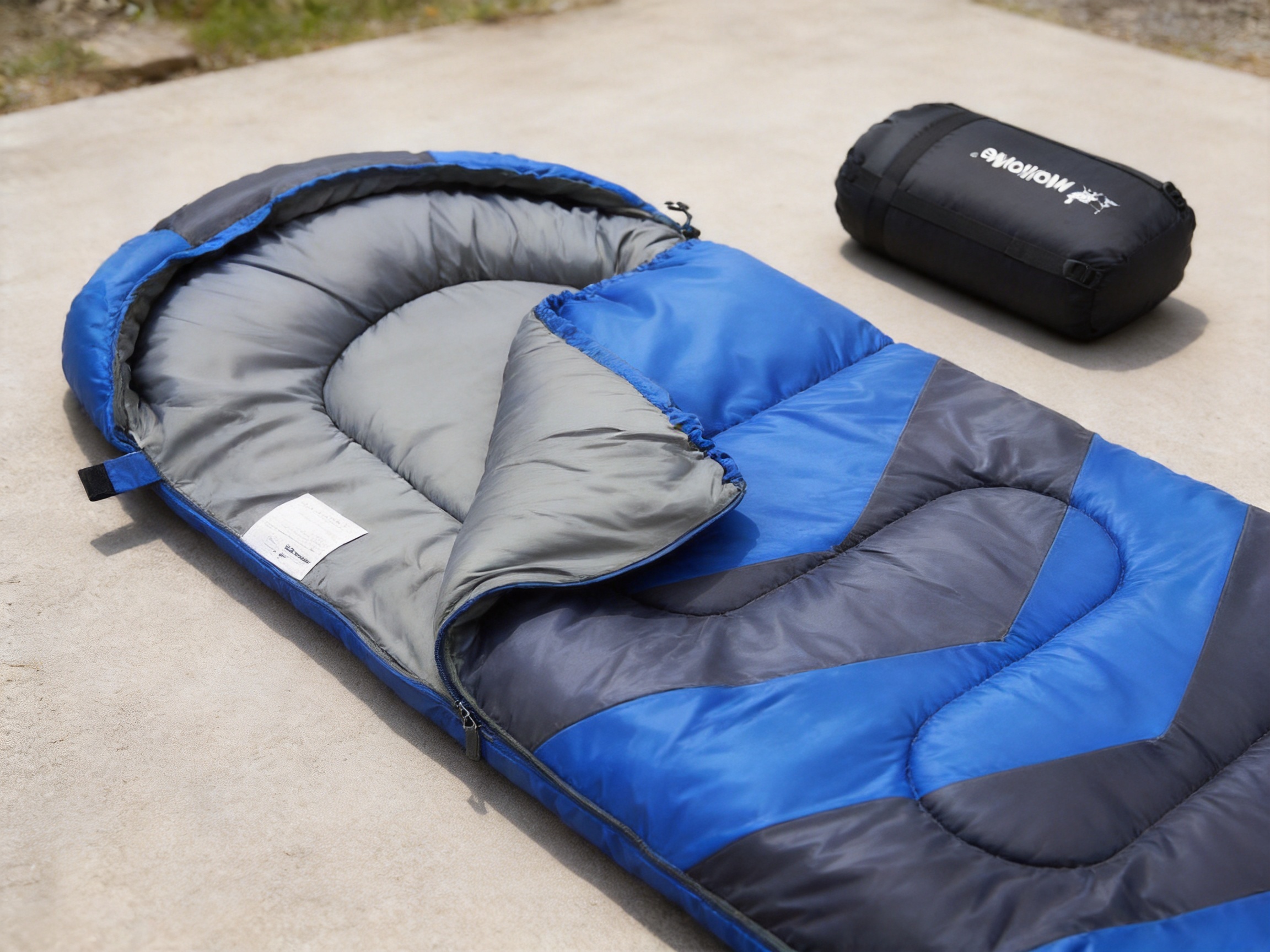
This autumn and winter outdoor envelope-style sleeping bag is designed for campers who want reliable insulation without the restrictive feel of a narrow mummy-shaped bag. Its rectangular envelope construction provides room to turn, change sleeping positions, and wear additional layers inside the bag. At the same time, its waterproof polyester shell, hollow cotton filling, durable zippers, and compact storage design make it suitable for camping, hiking trips, car-based travel, forest exploration, and leisure use in cool conditions.
With a recommended temperature range of approximately 5–15°C, the sleeping bag is intended for mild to cool autumn conditions, transitional seasons, and selected light winter applications where the surrounding temperature and shelter conditions are appropriate. It is not presented as an extreme-cold mountaineering bag. Instead, its value lies in delivering practical warmth and generous comfort for the broad range of outdoor users who need dependable equipment for ordinary camping rather than specialized high-altitude expeditions.
The product also reflects a broader approach to outdoor equipment manufacturing. Effective sleeping bag development is not simply a matter of choosing a thick filling or adding decorative details. It involves evaluating materials, construction, stitching, zipper performance, packing behavior, user comfort, cleaning requirements, and the environments in which the product will be used. A well-made sleeping bag should perform consistently from the first trip through repeated seasons of use.
Understanding the Needs of Autumn and Winter Camping
Autumn and winter camping can be more demanding than warm-weather camping even when temperatures do not reach freezing levels. The ground may be damp, evening temperatures can fall quickly, and wind can make the actual conditions feel colder than the thermometer suggests. Moisture can also reduce the effectiveness of poor-quality insulation, while inadequate protection from drafts can interrupt sleep throughout the night.
During rest, the body continuously loses heat. Movement decreases, metabolic activity slows, and the surrounding air may become considerably colder after sunset. These changes mean that a sleeping bag must create a stable microclimate around the user. The bag should limit unnecessary heat loss while remaining comfortable enough to encourage uninterrupted sleep.
Many consumers initially compare sleeping bags by filling weight alone. However, filling weight is only one part of actual performance. The outer fabric, internal construction, insulation distribution, zipper design, seam quality, bag dimensions, and compatibility with a sleeping pad all influence the experience. A large amount of filling cannot compensate for cold air entering through an exposed zipper or moisture penetrating the outer shell.
The needs of a weekend camper also differ from those of an alpine climber. A mountaineer may prioritize minimum weight and a close-fitting shape, while a family camper may prefer a larger interior, easier entry, and the ability to open the bag as a blanket. The envelope format addresses the second group particularly well. It is a practical choice for users who want warmth and protection without giving up everyday sleeping comfort.
What Is an Envelope-Style Sleeping Bag?
An envelope-style sleeping bag has a generally rectangular or gently contoured shape. Unlike a traditional mummy bag, it does not taper sharply around the feet and shoulders. This creates a more open interior and allows the user to move the legs, bend the knees, turn from side to side, and adjust position naturally.
The shape is especially useful for people who find close-fitting sleeping bags uncomfortable. It can also accommodate users who wear a base layer, fleece, or other warm clothing inside the bag. For car camping, family camping, recreational travel, and low- to medium-altitude outdoor activities, the additional space may contribute more to overall satisfaction than a highly technical shape designed for extreme weight reduction.
The rectangular construction also allows the sleeping bag to be fully or partially unzipped and used as a blanket. This flexibility is useful inside a tent, cabin, RV, or other sheltered environment. It can be opened during warmer periods, folded over a second person in selected situations, or used as an additional layer beneath or over another blanket.
Compared with a narrow mummy bag, an envelope design generally sacrifices some heat efficiency because the larger internal volume requires more air to warm. However, this trade-off is not necessarily a disadvantage for its intended use. In the 5–15°C range, the combination of hollow cotton insulation, a protective outer shell, and a comfortable fit can provide an effective balance between warmth and freedom of movement.
Product Construction and Core Materials
Water-Resistant Polyester Outer Fabric
The exterior is made from polyester fabric selected for outdoor practicality. Polyester is commonly used in camping equipment because it offers a useful combination of low maintenance, dimensional stability, abrasion resistance, and relatively light weight. A water-resistant outer surface helps the sleeping bag cope with condensation, light moisture, damp tent interiors, and occasional contact with wet surroundings.
Water resistance should not be confused with complete waterproofing. A sleeping bag should still be protected from heavy rain, standing water, and prolonged exposure to wet conditions. The best practice is to use the bag inside a suitable tent or shelter and store it in a dry place after every trip. Within those normal conditions, the outer polyester shell helps provide an important first barrier against moisture and cold air.
A smooth fabric surface also supports easier cleaning and maintenance. Outdoor products are exposed to dust, soil, body oils, and occasional food or drink spills. A practical fabric should be capable of regular care without becoming excessively fragile. The selected polyester construction is intended to support repeated use while maintaining a clean and orderly appearance.
Hollow Cotton Insulation
The sleeping bag is filled with warm, fluffy hollow cotton. Hollow synthetic fibers create air spaces within and between the fibers. Because still air is a relatively poor conductor of heat, these spaces help slow the movement of warmth away from the body. The loft of the filling also contributes to a soft, comfortable feel.
Hollow cotton insulation is particularly suitable for users who value easy care and dependable performance in changeable outdoor conditions. Compared with some natural insulation materials, synthetic filling is less sensitive to occasional humidity and is generally easier to clean. It is also an accessible option for family camping, hospitality use, outdoor rental programs, and retailers seeking a product that can be maintained without highly specialized treatment.
The filling is distributed within the sleeping bag to create an even insulation layer. Consistent distribution is important because thin areas can create uncomfortable cold spots. Manufacturing controls therefore need to address filling placement, panel construction, stitching, and the finished thickness of the bag. A sleeping bag should feel balanced rather than excessively thick in one area and compressed in another.
Durable Anti-Snag Zippers
The zipper is one of the most frequently used components of a sleeping bag. It must allow smooth entry and exit, remain functional after repeated opening and closing, and resist catching the surrounding fabric. Anti-snag zipper construction helps reduce the frustration and damage that can occur when shell material is pulled into the zipper path.
A well-positioned zipper also affects thermal comfort. When closed, it should create a continuous barrier along the side of the bag. When opened, it should allow the sleeping bag to function as a blanket without excessive effort. Zipper installation therefore requires accurate alignment, appropriate reinforcement, and careful inspection during production.
Compact Storage Volume
Outdoor users often need to carry several items at the same time, including a tent, sleeping pad, clothing, cooking equipment, lighting, and personal supplies. A sleeping bag that can be compressed into a compact storage volume is easier to place in a backpack, vehicle compartment, or equipment cabinet.
Compact storage supports more than convenience. It can reduce the space required for retail packaging, simplify warehouse handling, and make the product more attractive to distributors and outdoor channels. At the same time, the bag should not remain compressed for long periods when it is not being transported. Long-term compression can reduce the loft of many insulating materials. After a trip, the sleeping bag should be aired, dried, and stored in a loose condition whenever possible.
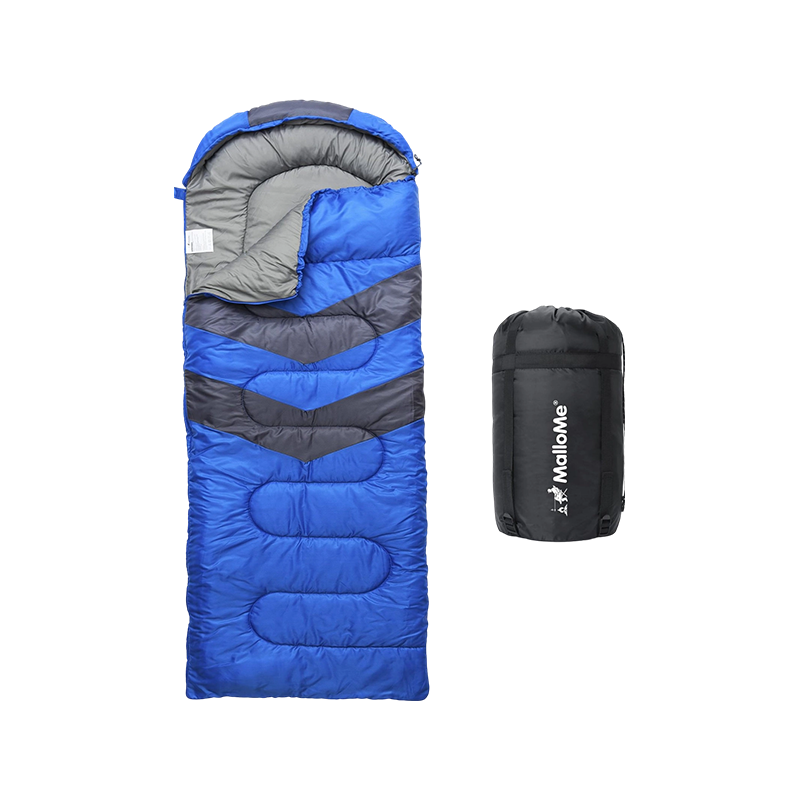
Autumn and winter outdoor envelope-style sleeping bag, camping sleeping bag, hollow cotton sleeping bag, nap sleeping bag
Key Advantages Compared with Conventional Camping Sleeping Bags
A More Comfortable Interior
The strongest advantage of this product is its spacious envelope shape. Many users do not sleep naturally when their legs and shoulders are tightly confined. A rectangular design provides room for movement and makes it easier to adjust the sleeping position during the night.
This benefit is especially valuable for side sleepers, restless sleepers, taller users who need additional room, and campers who prefer to wear warm clothing inside the bag. It can also make outdoor sleeping less intimidating for people who have never used a technical mummy bag before.
Comfort is not a superficial feature. Poor sleep can reduce energy, concentration, and enjoyment during the following day. On a hiking trip, insufficient rest may make a route feel more demanding. During family camping, discomfort can discourage children or first-time campers from enjoying the experience. By offering more internal space, the envelope format addresses a common problem that narrow sleeping bags do not always solve.
Flexible Blanket Function
Many conventional sleeping bags are designed primarily for use in a closed, individual configuration. This product can be unfolded into a blanket, expanding its usefulness beyond overnight sleeping. It may serve as a cover during a break, an additional layer inside a tent, or a flexible bedding solution in an RV or cabin.
The blanket function also helps users manage changing temperatures. A camper can start the evening with the bag fully closed, unzip it partially as the environment becomes warmer, and open it completely when additional ventilation is needed. This adaptability reduces the need to carry multiple separate blankets for different conditions.
Practical Synthetic Insulation
Hollow cotton insulation provides an appealing balance between warmth, softness, moisture tolerance, and maintenance. Users who camp in damp autumn weather often appreciate insulation that is less demanding to care for than delicate natural fills. The product can be selected by retailers for customers who prioritize dependable everyday use over specialized expedition performance.
Synthetic filling also offers consistency in manufacturing. When the fiber structure, fill amount, panel dimensions, and distribution process are controlled, production teams can work toward repeatable results across different production batches. This is important for wholesale customers who need stable product quality and predictable specifications.
Accessible Temperature Positioning
With a recommended operating range of approximately 5–15°C, the sleeping bag is positioned for a large group of real-world outdoor situations. It can be suitable for cool autumn nights, spring and fall camping, mild winter use in appropriate shelters, and indoor or semi-outdoor environments where additional bedding is needed.
This range also gives retailers a clear product position. The sleeping bag is not competing directly with highly specialized expedition bags intended for severe sub-zero environments. Instead, it serves customers who want a comfortable and functional bag for common recreational conditions. Clear positioning helps reduce inappropriate purchases and supports better customer expectations.
Simple Care and Maintenance
Easy maintenance is another important advantage. A sleeping bag used outdoors will eventually encounter dust, moisture, and ordinary stains. A washable construction can reduce the difficulty of keeping the product clean, provided that users follow the care instructions appropriate to the materials and filling.
After use, the bag should be opened and allowed to dry thoroughly before storage. If it has been exposed to significant moisture, it should not be placed directly into a sealed storage container. Regular airing helps protect the insulation, reduce odors, and maintain a more comfortable sleeping environment on the next trip.
Performance Comparison by Use Scenario
| Use scenario | Why the envelope design helps | Important user considerations |
|---|---|---|
| Autumn weekend camping | Provides warmth and room to move during cool nights. | Use with a sleeping pad and a suitable shelter. |
| Family camping | Offers an approachable shape and can open as a blanket. | Choose the correct size and supervise young children. |
| Car camping and RV travel | Compact when packed and comfortable when fully opened. | Useful where minimum pack weight is not the primary concern. |
| Forest exploration | Polyester shell supports practical protection from damp conditions. | Keep the bag away from sharp branches and standing water. |
| Light winter camping | Hollow cotton filling provides insulation in suitable temperatures. | Check actual weather conditions and use a thermal sleeping pad. |
| High-altitude mountaineering | Provides spacious comfort but is not intended to replace a specialized extreme-cold bag. | Select a technical low-temperature model for severe environments. |
The comparison shows why product selection should be based on the intended environment rather than a single general claim. A spacious envelope bag may be superior to a narrow technical bag for a family campsite, while a mummy bag may be more appropriate for a high-altitude expedition. The most suitable product is the one that matches the user’s actual activity, temperature range, pack requirements, and comfort priorities.
Warmth Depends on the Complete Sleep System
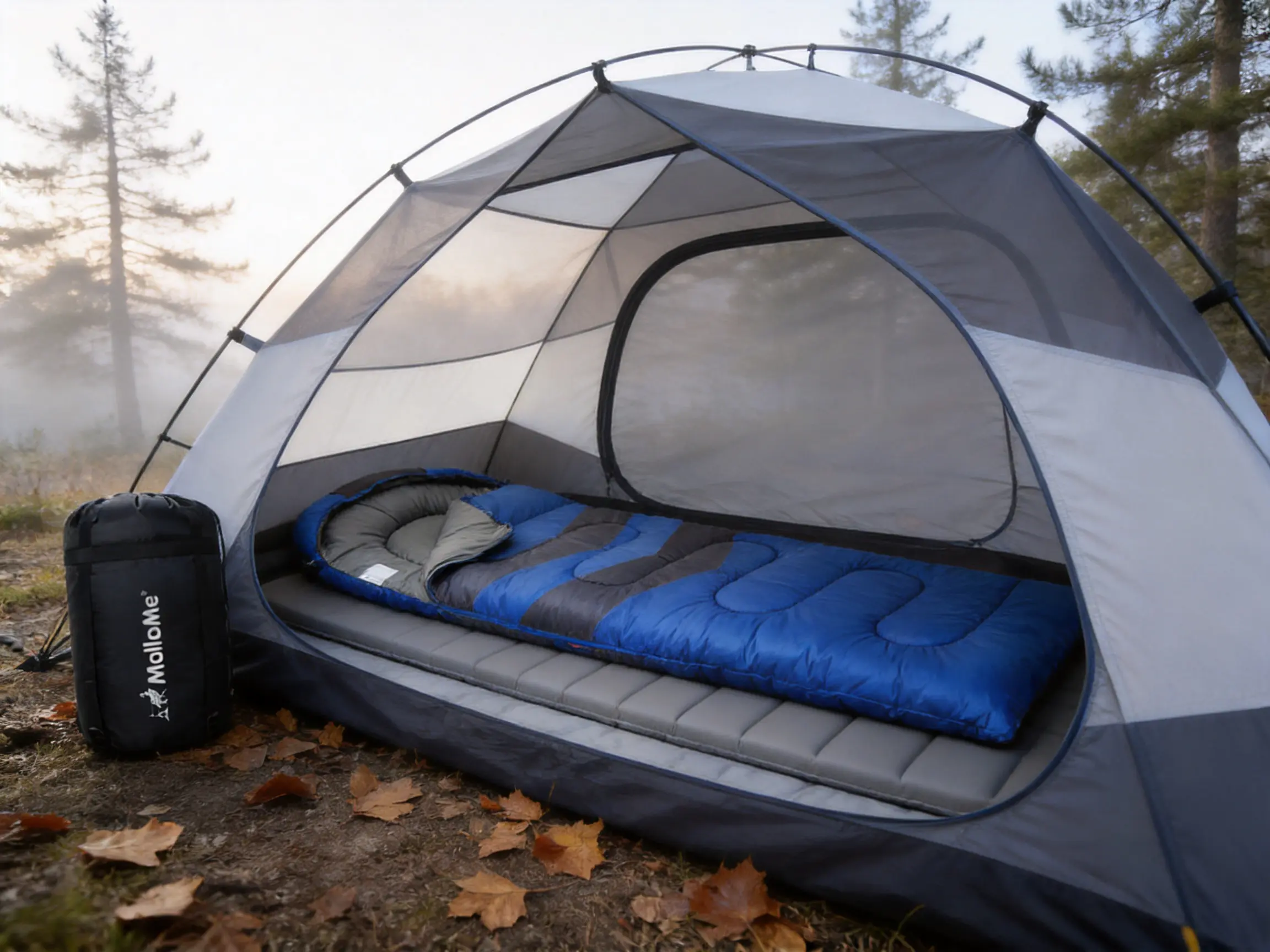
A sleeping bag cannot perform independently of the surface beneath it. When a user lies directly on cold ground, body heat is transferred downward through conduction. Even a well-insulated sleeping bag may feel inadequate if the sleeping pad has poor insulation or if the ground is wet.
A sleeping pad should therefore be considered an essential companion. It creates a barrier between the sleeper and the ground, improves comfort, and helps preserve the warmth generated inside the sleeping bag. In autumn and winter, the choice of pad may be nearly as important as the choice of bag.
The shelter also influences performance. A well-pitched tent can reduce wind exposure, prevent direct contact with moisture, and create a more stable sleeping environment. The sleeping bag should be used in a space with adequate ventilation, because condensation can accumulate when warm breath and body moisture meet cold surfaces.
Clothing choices matter as well. A dry base layer can improve comfort, while damp clothing can draw heat away from the body. Users should avoid entering the sleeping bag in wet clothes and should not rely on excessive layers that compress the insulation. The best results usually come from a dry sleeping system with sufficient room for the filling to retain its loft.
The following elements should be considered together:
1. Sleeping bag insulation and temperature suitability.
2. Sleeping pad thickness and insulating performance.
3. Tent or shelter protection from wind and moisture.
4. Dry, breathable clothing appropriate to the conditions.
5. Proper ventilation to control condensation.
6. Safe use of heat sources and careful campsite management.
Manufacturing Approach and Quality Control
Design Based on Real Use
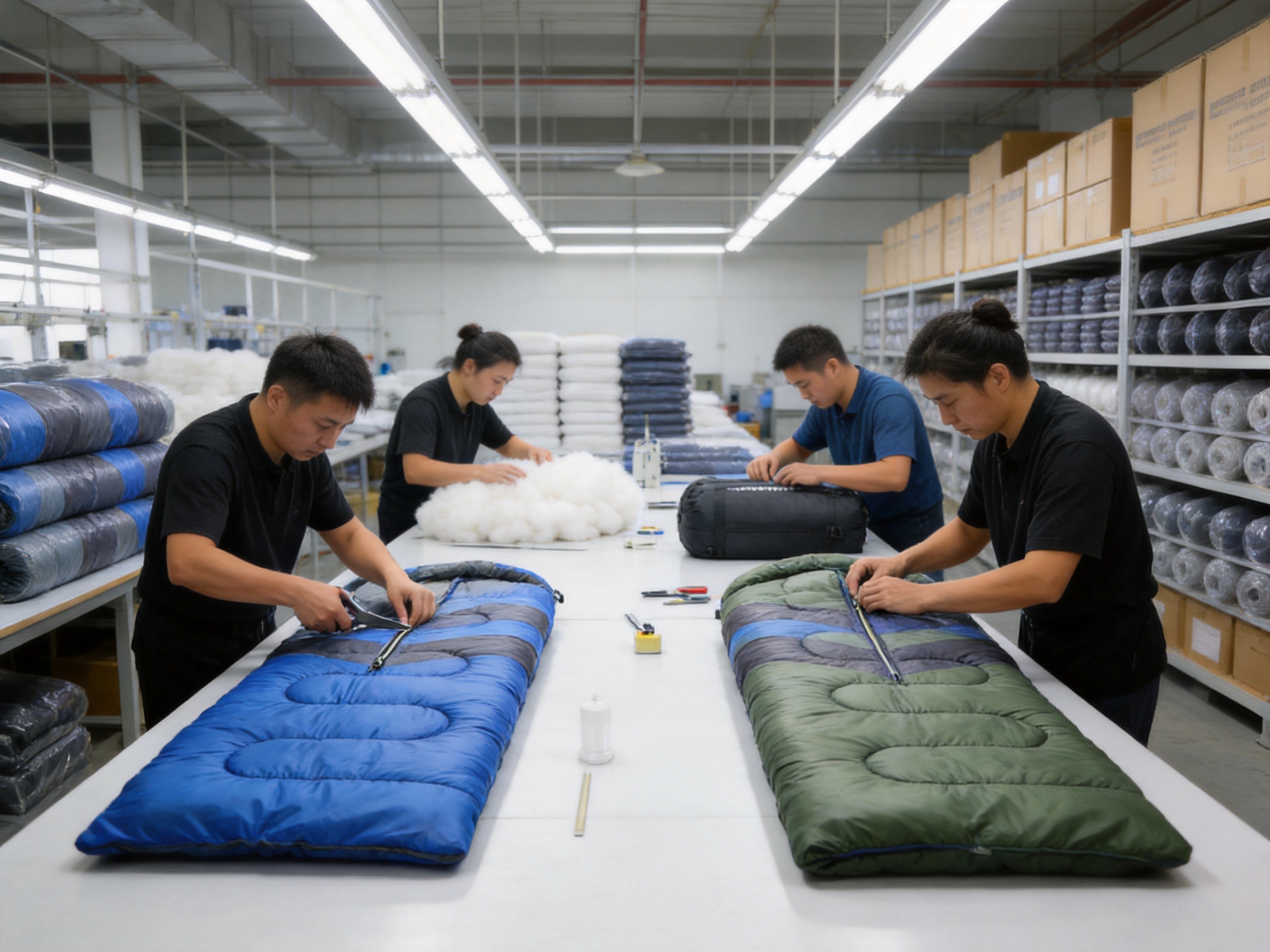
Reliable outdoor products begin with a clear understanding of how people use them. A sleeping bag designed only for appearance may look appealing in a product catalog but fail to address common field problems. Product development should begin with actual scenarios: entering the bag in bulky clothing, opening the zipper in low light, packing after a damp night, sleeping on uneven ground, and cleaning the product after repeated use.
The development approach behind this sleeping bag emphasizes the relationship between weather, terrain, time, and user behavior. These factors influence material selection and construction decisions. For example, a product intended for repeated autumn camping requires a different balance of moisture resistance and maintenance than a bag intended only for occasional indoor use.
Design reviews should consider the complete product rather than isolated features. A waterproof-looking shell is not enough if the seams are weak. A soft filling is not enough if it shifts easily. A smooth zipper is not enough if the surrounding fabric is poorly aligned. Quality is created when each component supports the others.
Material Selection
Material selection involves evaluating durability, hand feel, weight, cleaning behavior, moisture response, and cost. Polyester is chosen for the outer shell because it is practical for repeated outdoor use and supports efficient production. Hollow cotton is selected for its insulating structure and user-friendly care characteristics.
Material inspection should take place before cutting and assembly. Fabric rolls can be checked for color consistency, weaving defects, stains, dimensional stability, and surface irregularities. Filling materials can be evaluated for cleanliness, loft, uniformity, and compatibility with the intended panel structure.
Consistent incoming material inspection helps reduce variation between production batches. This matters to global retailers because customers expect products ordered at different times to maintain comparable appearance and performance. Stable materials also make production planning more efficient and reduce avoidable rework.
Pattern Development and Cutting Accuracy
The pattern determines the final dimensions, internal space, zipper alignment, and distribution of insulation. Accurate pattern development is particularly important for an envelope-style sleeping bag because the comfort advantage depends on preserving sufficient usable space without creating unnecessary excess material.
Cutting accuracy supports consistent panel matching and reduces stress during sewing. When pieces are cut unevenly, assembly teams may need to stretch or compress the fabric to make the parts fit. This can lead to distorted seams, uneven filling chambers, or zipper alignment problems.
Efficient cutting also contributes to responsible material use. Careful nesting of pattern pieces can reduce fabric waste while maintaining the required grain direction and appearance. For manufacturers serving international markets, improved cutting efficiency can support more competitive pricing without reducing the product’s functional specifications.
Filling Distribution and Panel Assembly
The insulation must be distributed evenly throughout the sleeping bag. Production teams need to control the amount of filling placed in each section and ensure that it does not collect in corners or leave thin zones around the shoulders, torso, or feet.
Panel assembly requires coordination between filling placement, quilting or stabilization methods, and seam construction. The objective is to retain the intended loft while preventing excessive movement of the filling during normal use. Finished products can be inspected for thickness, balance, hand feel, and visible irregularities.
Production staff should also examine whether the filling has been compressed by stitching. Excessively tight stitching can reduce the effective loft in particular areas. Conversely, insufficient stabilization may allow the insulation to shift. The appropriate construction depends on the selected materials, product dimensions, and intended temperature range.
Zipper Installation and Functional Testing
Zippers are installed with attention to alignment, reinforcement, puller operation, and fabric clearance. The zipper should open and close smoothly without excessive force. Testing should include repeated operation at different points along the zipper track, because problems may occur near corners or transitions between panels.
Anti-snag performance is checked by observing whether the shell fabric is likely to enter the zipper path during normal use. Reinforced ends can help prevent the zipper from separating from the fabric under ordinary tension. The final inspection should also verify that the zipper is positioned consistently across the production batch.
Stitching and Seam Inspection
Stitch quality affects durability and thermal performance. Loose threads, skipped stitches, uneven seam allowances, and weak reinforcement points can reduce the service life of the product. Areas around the zipper, corners, handles, and compression points deserve particular attention.
Inspection personnel can review seam straightness, stitch density, thread security, and the absence of open sections. The sleeping bag should also be checked for fabric damage created during sewing. Small defects that appear insignificant at the factory can become larger problems after repeated packing and washing.
Finished Product Testing
Finished product evaluation can include dimensional checks, zipper tests, visual inspection, filling distribution review, packing tests, and basic washing or care verification. Products may be sampled from different production stages to identify recurring issues rather than relying only on a final visual review.
Packaging tests are also useful. The sleeping bag should fit into its intended storage package without excessive force, and the packaging should protect the product during handling and shipment. Carton arrangement, labeling, and batch identification can be coordinated with the needs of international retailers and distributors.
How Manufacturing Strength Supports Global Retailers
For retailers, product quality is only one part of a successful supply relationship. They also need dependable communication, repeatable production, clear specifications, reasonable lead-time planning, and the ability to adjust products for different markets.
An experienced outdoor manufacturing partner can support the process from early concept development through sampling, testing, production, and shipment preparation. This is different from simply purchasing a finished item from an unknown factory. Collaborative development allows the buyer and manufacturer to discuss dimensions, filling levels, colors, labels, packaging, zipper preferences, and target customer groups before mass production begins.
CragHaven Outdoor operates from Hangzhou, China, and focuses on mountaineering, hiking, and camping applications. Its manufacturing approach is based on practical product development rather than catalog-only sourcing. The company’s role includes understanding outdoor use cases, coordinating materials, participating in design decisions, and supporting stable production for global markets.
For wholesale customers, this approach can reduce uncertainty in several ways. Clear specifications help prevent misunderstandings. Sampling allows the buyer to evaluate the actual product before committing to a larger order. Repeated testing and optimization can identify construction problems early. Batch-level process control supports a more consistent experience for customers who purchase the product through different retail channels.
The company’s location in Hangzhou also provides access to China’s mature manufacturing ecosystem. This can support coordinated sourcing of fabrics, synthetic insulation, zippers, labels, packaging materials, and related outdoor products. An integrated supply network can improve responsiveness when a product needs a material adjustment or when a buyer requires a new packaging configuration.
Long-term manufacturing relationships depend on more than production capacity. They require professional communication, transparent problem solving, and willingness to improve products based on field feedback. A supplier that understands the reason behind a design feature is better positioned to maintain that feature during production and recommend practical improvements when necessary.
Why Product Development Should Include Sampling and Optimization
Sleeping bag performance is difficult to judge from drawings or material lists alone. A physical sample reveals whether the interior feels spacious, whether the zipper is convenient, whether the insulation is evenly distributed, and whether the packed volume is practical.
Sampling also allows the manufacturer to examine the relationship between different components. A fabric that appears suitable by itself may feel too noisy when used in a sleeping environment. A zipper that performs well on a small test panel may require additional reinforcement when installed along the full length of the bag. A filling that looks sufficiently thick may compress more than expected after sewing.
Optimization should be based on measurable observations and intended use. Possible adjustments include changing the panel dimensions, refining the zipper position, increasing reinforcement, modifying the filling distribution, improving the storage bag, or revising the care label. Each adjustment should be evaluated for its effect on comfort, durability, cost, and production efficiency.
This process is particularly important for private-label and OEM customers. A retailer may need a specific color range, logo placement, packaging style, or size assortment. These details should be confirmed during sampling rather than assumed during mass production. Clear approval procedures help protect both the buyer and the manufacturer.
Recommended Applications
Autumn Weekend Camping
The sleeping bag is well suited to weekend trips when temperatures fall after sunset but remain within the recommended 5–15°C range. Its open shape makes it comfortable for users who want to relax inside the tent before sleeping. The polyester shell provides practical protection from minor dampness, while the hollow cotton filling adds warmth without requiring specialized care.
Family and Group Camping
Families often value ease of use and comfort more than minimum packed weight. The envelope shape is simple to understand, and the blanket function gives users more flexibility around the campsite. The product can be used by adults and older children when the dimensions are appropriate and the weather conditions are suitable.
Parents should select the correct size for each user and follow safe practices regarding children, ventilation, and nighttime temperatures. A sleeping bag should not be treated as a substitute for supervision or a complete cold-weather safety plan.
Car Camping and RV Travel
When camping equipment is transported by vehicle, the user may have more flexibility in terms of packed volume. The comfort of a spacious envelope design can therefore become a major advantage. The bag can be used on a mattress, cot, bunk, or sleeping platform and can be opened as a blanket when the interior environment becomes warmer.
Outdoor Leisure and Cabin Stays
The product can also be useful in cabins, temporary shelters, guest rooms, and outdoor leisure settings. Its compact storage form makes it convenient as an extra bedding option, while its blanket function allows it to serve different purposes during travel.
Light Forest and Mountain Travel
For short trips at low or medium altitude, the bag can provide a practical combination of warmth and movement. Users should evaluate the expected temperature, altitude, wind exposure, and shelter quality before selecting it. In severe mountain conditions, a sleeping bag designed specifically for lower temperatures should be used instead.
Care, Storage, and Long-Term Use
Proper care helps preserve the loft, cleanliness, and useful life of the sleeping bag. After every trip, open the bag fully and allow it to air in a dry, shaded, and well-ventilated place. Avoid placing it into long-term storage while damp, even if the moisture appears minor.
When washing is necessary, users should follow the care label and select a method appropriate for the polyester shell and hollow cotton filling. Harsh chemicals, excessive heat, and rough handling may damage the fabric or reduce the loft of the insulation. If machine washing is permitted, the bag should have sufficient room to move without being forced into a small drum.
After washing, the bag should be dried completely. Any remaining moisture can contribute to odor or mildew during storage. The bag may require gentle shaking or redistribution during drying so that the filling remains even. It should not be stored in a tightly compressed condition for extended periods.
For long-term storage, a loose breathable storage sack or a spacious closet is generally preferable to a small compression bag. The compression sack is intended for transport, not permanent storage. Keeping the bag away from sharp tools, open flames, pets, and direct sunlight can also help protect the shell.
Users should inspect the product before each trip. Check the zipper, seams, fabric, storage sack, and overall filling condition. Early repair of a loose thread or small seam problem may prevent more serious damage in the field.
Q&A: Frequently Asked Questions
Q1: What temperature range is this sleeping bag designed for?
The product is described for approximately 5–15°C. This range should be treated as practical guidance rather than a guarantee for every user. Personal comfort, clothing, wind, humidity, shelter quality, sleeping pad insulation, and physical condition all affect how warm a person feels.
Q2: Can it be used in winter?
It may be suitable for light winter camping when the actual conditions remain within an appropriate temperature range and the user has a good shelter and insulated sleeping pad. It is not intended to replace a specialized extreme-cold or high-altitude sleeping bag in freezing or severe mountain environments.
Q3: What is the main difference between this product and a mummy sleeping bag?
The envelope-style design is more spacious and allows greater freedom of movement. A mummy bag fits more closely around the body and can be more thermally efficient in severe conditions. The envelope model is generally better suited to comfort-focused camping, family use, car camping, RV travel, and low- to medium-altitude outdoor activities.
Q4: Can the sleeping bag be used as a blanket?
Yes. Its envelope construction allows it to be unzipped and fully unfolded as a blanket. This feature makes it useful for changing temperatures, indoor bedding, leisure activities, and situations where a conventional sleeping bag shape is not necessary.
Q5: Is the outer fabric waterproof?
The product uses waterproof or water-resistant polyester fabric for improved protection against damp conditions. It should still be used inside a suitable shelter and protected from heavy rain, standing water, and prolonged soaking. Water resistance does not mean that the entire sleeping bag can be used as a waterproof cover.
Q6: Is hollow cotton suitable for damp outdoor conditions?
Hollow synthetic insulation is generally practical in variable conditions because it is easier to maintain than many delicate natural fills and can retain useful insulating properties when exposed to limited humidity. The bag should nevertheless be dried thoroughly after use and protected from prolonged moisture.
Q7: Do I need a sleeping pad?
Yes, a sleeping pad is strongly recommended, especially in autumn and winter. The pad reduces heat loss to the ground and improves overall comfort. Without an insulating layer underneath, the sleeping bag may not provide its intended level of warmth.
Q8: Can I wear clothing inside the sleeping bag?
Yes, wearing dry and comfortable layers can be helpful in cool conditions. Avoid wearing wet clothing, and do not overfill the bag with bulky layers that compress the insulation. The envelope shape provides additional room for moderate clothing layers.
Q9: Is the sleeping bag machine washable?
The product is described as machine washable for convenient care, but users should follow the specific care instructions supplied with the item. The washing machine must be large enough, and the sleeping bag should be dried thoroughly before storage.
Q10: How should the sleeping bag be stored between trips?
Air it out completely, then store it in a dry place without prolonged compression. A loose storage sack or spacious breathable container is preferable to a tightly packed compression bag for long-term storage.
Q11: Is this sleeping bag suitable for professional mountaineering?
It can be suitable for selected low- or medium-altitude travel and recreational mountain use when temperatures remain within the recommended range. For technical mountaineering, high-altitude expeditions, or extreme cold, users should select a specialized sleeping bag with an appropriate low-temperature rating and more technical construction.
Q12: What makes this product suitable for retailers and outdoor brands?
Its broad recreational application, comfortable envelope shape, synthetic insulation, practical care requirements, compact storage, and blanket function make it accessible to a wide customer group. Manufacturing support can also include sampling, material coordination, product optimization, and stable production for global outdoor channels.
Conclusion
An autumn and winter sleeping bag should be selected according to actual outdoor conditions, not simply by appearance or filling thickness. The envelope-style model described here focuses on the needs of users who want warmth, freedom of movement, easy care, and flexible use in cool-weather camping environments.
Its waterproof polyester outer fabric supports practical protection from damp conditions. Hollow cotton insulation provides a soft and accessible source of warmth. Anti-snag zippers improve everyday usability, while the blanket-opening design gives the product more versatility than a sleeping bag that can only be used in a closed configuration. Compact storage helps with transportation, retail handling, and equipment organization.
The product’s principal advantage over more restrictive sleeping bags is its comfort-centered design. It is a strong option for autumn camping, family trips, car camping, RV travel, cabin stays, and light mountain activities within the recommended temperature range. It should be paired with an insulated sleeping pad and appropriate shelter, and it should not be represented as an extreme-cold mountaineering product.
Its value is also supported by a manufacturing philosophy centered on real use. Material inspection, accurate cutting, controlled filling distribution, careful zipper installation, seam inspection, finished-product testing, sampling, and optimization all contribute to a more reliable result. For retailers and outdoor brands, these processes can support consistent quality, clearer product positioning, and more dependable supply relationships.
When the product is matched with the right environment and maintained correctly, it can provide comfortable and practical outdoor sleep across many cool-weather scenarios. That balance of warmth, space, flexibility, and manufacturability is what makes the envelope-style sleeping bag a useful addition to modern camping equipment.
References
1. International Organization for Standardization. General principles for textile and outdoor product quality evaluation.
2. International Organization for Standardization. Guidance on care labeling for textile products.
3. American Society for Testing and Materials. Standard practices for evaluating the thermal performance of sleeping bags and related bedding systems.
4. Outdoor Industry Association. Consumer trends in camping, hiking, and recreational outdoor equipment.
5. Textile Research and Testing Methods. Synthetic fiber insulation, fabric durability, moisture management, and garment-care principles.
6. Outdoor Equipment Design Studies. Sleeping bag construction, zipper performance, insulation distribution, and user comfort in variable weather.
Product: Autumn and winter outdoor envelope-style sleeping bag, camping sleeping bag, hollow cotton sleeping bag, nap sleeping bag


- Phone: +86-15968800379
- E-mail: [email protected]
- Address: Room 1002, Huishang Building, Gongshu District, Hangzhou City, Zhejiang Province.
Copyright © CragHaven Outdoor All Rights Reserved. Outdoor Gear Manufacturers Wholesale Mountaineering Camping Gear Suppliers
