

 English
 Deutsch
 Español
 Français

Ultralight Shock-Absorbing Aluminum Trekking Pole for Stable Long-Distance Hiking
Content
- 1 Product Overview: A Practical Pole Built for Real Terrain
- 2 Core Advantages Over Conventional Trekking Poles
- 3 Shock Absorption That Supports Knees and Walking Comfort
- 4 Internal Locking Structure: Simple, Durable, and Field-Oriented
- 5 Aerospace-Grade Aluminum Alloy: Strength Without Excess Weight
- 6 Ergonomic Non-Slip Straight Handle for Long-Distance Control
- 7 Designed for Long-Distance Treks and Daily Hiking
- 8 Manufacturing Philosophy: Built for Weather, Terrain, and Time
- 9 Advanced Manufacturing Processes and Quality Control Strengths
- 10 Supply Chain Reliability for Global Outdoor Markets
- 11 Why This Trekking Pole Is a Strong Choice for Retailers and Brands
- 12 Field Performance in Common Outdoor Scenarios
- 13 User Guidance: How to Get the Best Performance
- 14 Maintenance and Long-Term Value
- 15 Comparison With Market Alternatives
- 16 Environmental and Practical Sustainability Through Durability
- 17 Q&A Section
- 17.1 Q1: What type of user is this trekking pole designed for?
- 17.2 Q2: How does the shock absorption system help during hiking?
- 17.3 Q3: Why choose aluminum alloy instead of carbon fiber?
- 17.4 Q4: What is the advantage of an internal locking structure?
- 17.5 Q5: Is the straight handle comfortable for long hikes?
- 17.6 Q6: Can the pole be used for camping as well as hiking?
- 17.7 Q7: How should users maintain the pole?
- 17.8 Q8: Why is this product suitable for international buyers and private-label brands?
- 18 Company Strength Behind the Product
- 19 Conclusion: A Balanced Trekking Pole for Real Outdoor Value
- 20 References
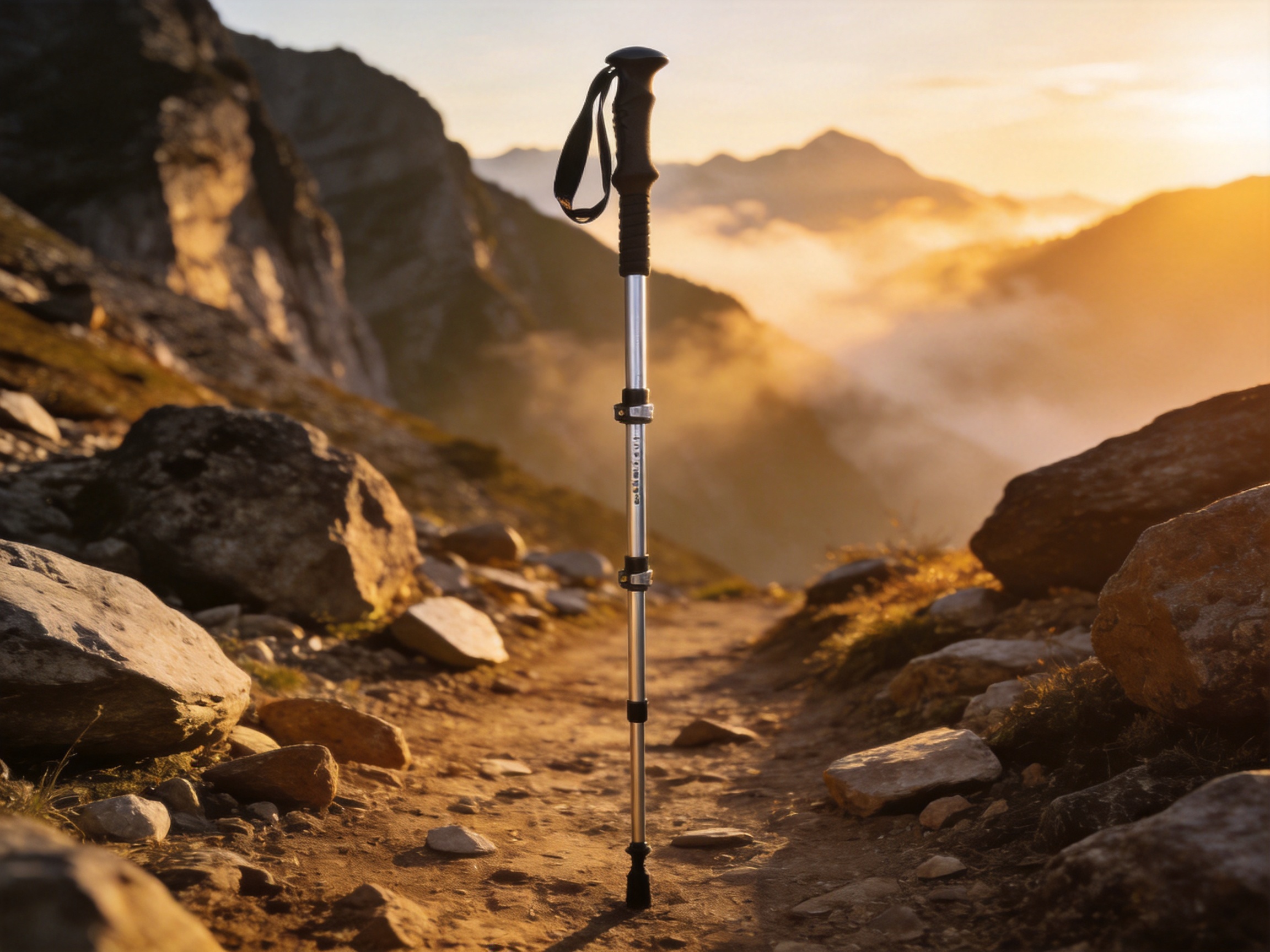
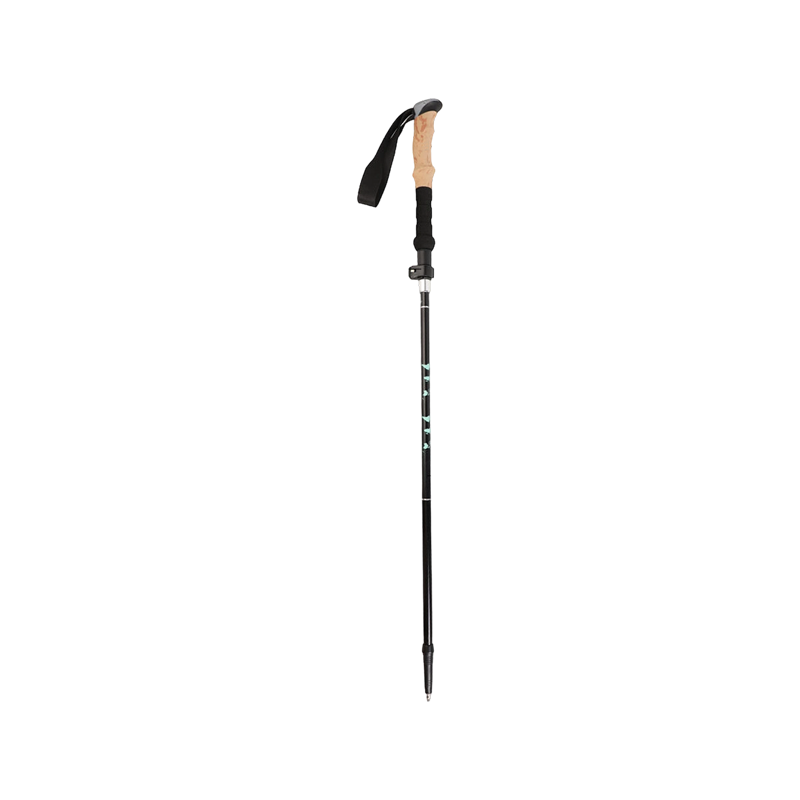
Modern hiking equipment is judged not only by how it looks in a product catalog, but by how consistently it performs when terrain becomes uneven, weather becomes uncertain, and fatigue begins to affect the body. A trekking pole may appear simple at first glance, yet it plays a major role in balance, joint protection, climbing efficiency, descending control, and long-distance comfort. The ultralight, internally locking aluminum alloy straight handle trekking pole with telescopic strap and shock absorption is designed for exactly these real outdoor conditions. It is made for hikers, mountaineers, campers, outdoor retailers, and professional buyers who need a dependable pole that combines lightweight handling with durable structure and practical comfort.
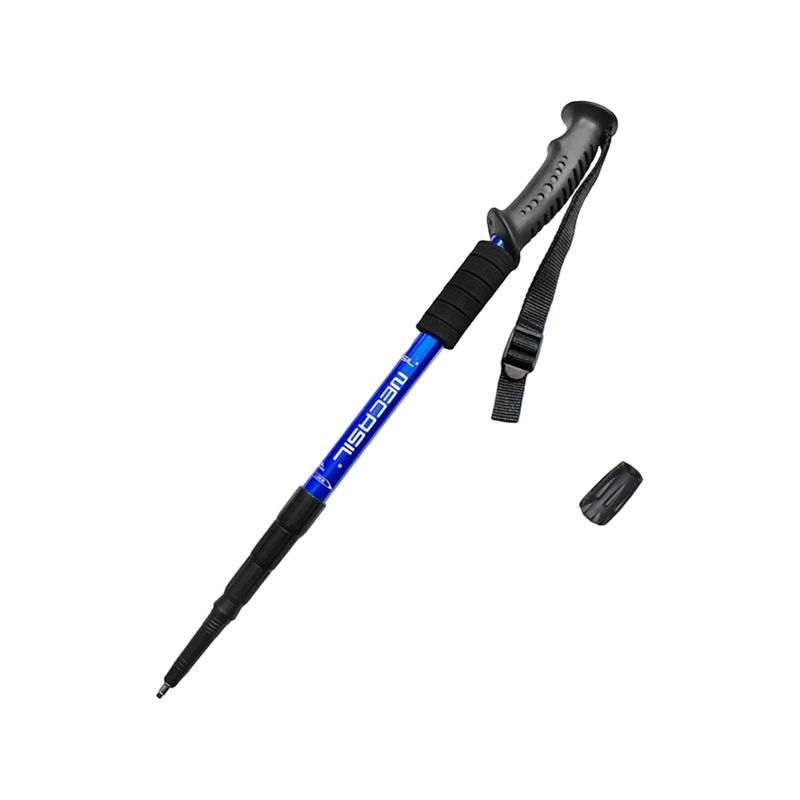
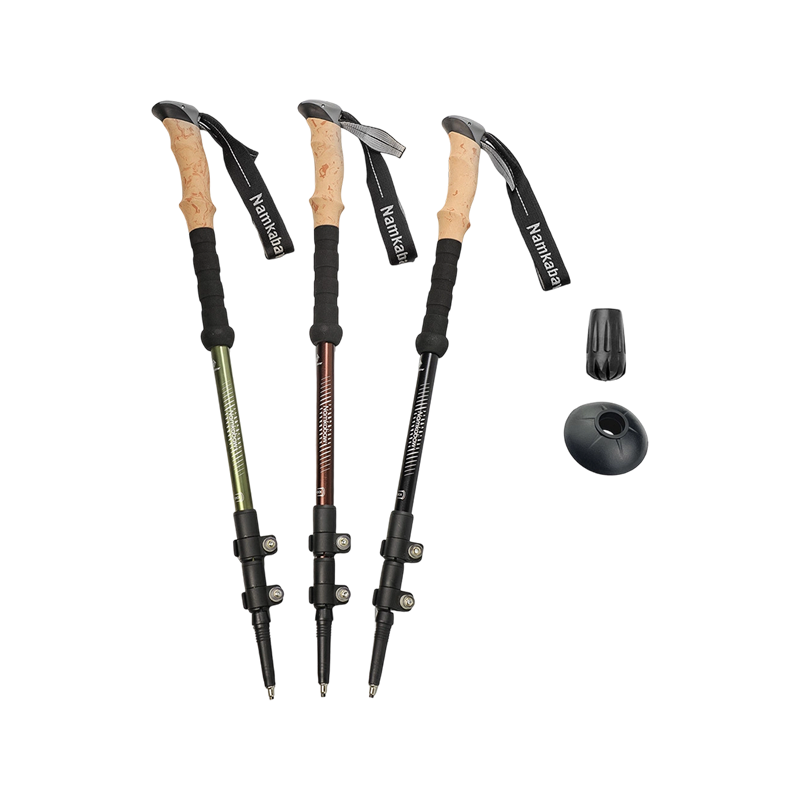
This trekking pole, identified by product reference WFDS262002, belongs to the trekking poles category and is intended for mountain-climbing, camping, hiking, and general outdoor travel scenarios. Its defining features include an aerospace-grade aluminum alloy body, an internal locking structure, a built-in spring shock absorption system, an ergonomic non-slip straight handle, and a telescopic strap for adaptable wrist support. These elements work together to reduce impact on the knees, improve walking rhythm, support smoother extension and adjustment, and provide long-term usability across varying terrain.
For many outdoor users, the best gear is not the most complicated gear. It is the gear that becomes trustworthy after repeated use. This pole follows that philosophy. It avoids unnecessary decorative features and focuses on structural strength, comfortable handling, field reliability, and manufacturing repeatability. It is suitable for long-distance treks, daily hiking, camping routes, trail walking, and mixed mountain paths where users need extra stability without carrying excessive weight.
Product Overview: A Practical Pole Built for Real Terrain
The central purpose of this trekking pole is to provide stable support while reducing stress on the body. During hiking, the knees and ankles absorb continuous impact, especially during downhill sections or when the user carries a heavy backpack. A well-designed pole distributes part of that force through the arms and shoulders, helping the hiker maintain balance and conserve energy. This model enhances that basic function with a built-in spring shock absorption system, which helps soften impact and improves comfort over repeated steps.
The pole body is made from aerospace-grade aluminum alloy, selected for its balance of weight, strength, resistance to deformation, and cost-effective durability. Compared with ordinary low-grade aluminum or plastic-heavy alternatives, this material choice supports longer product life and more confident use in demanding outdoor conditions. The structure is light enough for extended carrying and strong enough for regular field use, making it appropriate for both casual and experienced hikers.
The internal locking structure is another important element. External locking mechanisms can be convenient, but they may snag on straps, vegetation, pack loops, or clothing. They can also be more exposed to mud, dust, and impact. An internally locking system keeps the adjustment mechanism protected within the pole sections, creating a cleaner exterior profile and reducing the chance of accidental obstruction. For users who value simplicity and durability, this structure offers an efficient solution.
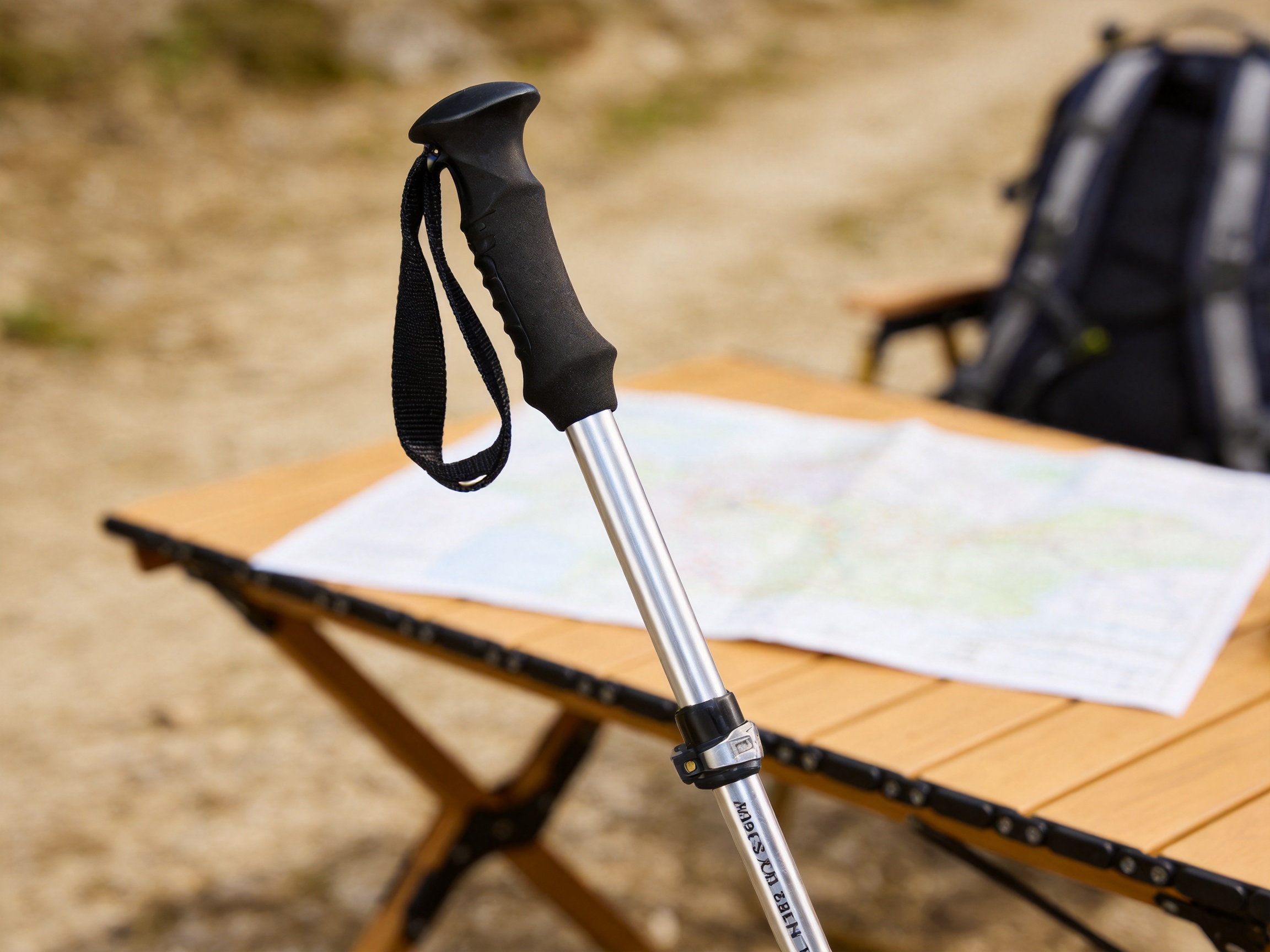
The straight handle is designed with ergonomic and non-slip characteristics. A trekking pole handle must remain comfortable over hours of use, not only during the first few minutes. The grip should support natural wrist alignment, reduce slipping caused by sweat or rain, and allow the user to shift pressure while ascending, descending, or walking on flat trails. Combined with the telescopic strap, the handle system gives users additional support and control without requiring them to over-grip the pole.
Core Advantages Over Conventional Trekking Poles
In a competitive outdoor equipment market, trekking poles can look similar at first glance. However, the real differences appear in details: the quality of the locking system, the smoothness of adjustment, the durability of the tubing, the effectiveness of shock absorption, the comfort of the handle, and the consistency of manufacturing. This product stands out by combining practical features rather than relying on one isolated selling point.
One major advantage is its shock absorption capability. Standard rigid poles transfer much of the ground impact directly to the hands, wrists, elbows, and shoulders. Over a long descent, this vibration and force can become tiring. The built-in spring shock absorption system helps reduce the harshness of repeated ground contact. It is especially useful for hikers with sensitive knees, users carrying loaded backpacks, and outdoor enthusiasts who frequently walk on hard-packed trails, stone steps, gravel roads, or uneven mountain surfaces.
Another advantage is the internal lock. Many entry-level poles use basic twist locks that may become unreliable if poorly manufactured, while some external lock poles have protruding parts that are more exposed. This model uses an internal locking structure that is simple, durable, and visually clean. For brands and buyers seeking a product with broad market appeal, this makes the pole easier to position as a reliable hiking tool rather than a delicate accessory.
The aluminum alloy construction gives the product another competitive edge. Carbon fiber poles are often marketed as premium because of their low weight, but they may be more brittle under certain side-impact conditions and can be more expensive. Basic steel or inferior aluminum poles may be heavier and less refined. Aerospace-grade aluminum alloy provides a balanced middle ground: lightweight, durable, impact-tolerant, and suitable for scalable manufacturing. This material profile is particularly attractive for outdoor buyers who need stable quality across large production volumes.
The ergonomic non-slip handle also improves the user experience. Low-cost trekking poles sometimes use hard, slippery, or poorly shaped handles that cause hand fatigue. A handle that feels acceptable in a store may become uncomfortable after several hours on the trail. This pole’s handle is designed for practical grip security and comfort, helping users maintain control in both dry and damp conditions.
The telescopic strap adds further adaptability. Wrist straps are not decorative; when used correctly, they help transfer load and reduce grip fatigue. A properly adjusted strap allows the user to push against the pole without constantly clenching the handle. The telescopic design supports different wrist sizes, glove use, and personal preferences, which is important for products sold across international markets.
| Feature | This Trekking Pole | Common Lower-End Alternatives | User Benefit |
|---|---|---|---|
| Body Material | Aerospace-grade aluminum alloy | Ordinary aluminum, thin tubing, or heavier materials | Better balance of strength, weight, and durability |
| Locking System | Internal locking structure | Exposed or inconsistent locking mechanisms | Cleaner profile, simple operation, reduced snag risk |
| Shock Absorption | Built-in spring shock absorption | Rigid structure with limited impact reduction | Improved comfort and reduced joint stress |
| Handle | Ergonomic non-slip straight handle | Hard, slippery, or poorly shaped handle | Comfortable grip during long-distance use |
| Strap | Telescopic adjustable strap | Basic fixed strap or limited adjustment | Better wrist support and adaptable fit |
| Application | Long-distance trekking, daily hiking, camping, mountain routes | Light recreational use only | Wider outdoor usability and stronger retail value |
Shock Absorption That Supports Knees and Walking Comfort
The built-in spring shock absorption system is one of the most important performance features of this pole. Hiking is repetitive movement. Every step generates a small amount of impact, and over thousands of steps that impact becomes meaningful. On flat ground, the body may absorb the force without major discomfort. On descents, however, the knees bear increased load. When walking downhill with a backpack, the pressure on the knee joint can rise significantly. A trekking pole with shock absorption helps reduce the sudden transfer of force from the ground to the body.
This does not mean that a pole eliminates strain entirely. Instead, it supports better force distribution. The shock-absorbing spring provides a cushioning effect when the tip contacts the ground. The user receives a more forgiving feel, especially on firm surfaces. This can improve confidence and reduce fatigue during long-distance routes. For older hikers, beginner hikers, or users returning to activity after discomfort, shock absorption can make the walking experience more approachable.
Competitor products without shock absorption may still provide balance, but they often feel harsher during repeated ground contact. Some users may prefer rigid poles for highly technical conditions, yet for general hiking, camping access routes, maintained trails, and long walking days, the comfort of shock absorption is a clear advantage. This feature makes the pole especially suitable for broad outdoor retail channels where customers include both experienced trekkers and recreational hikers.
The spring system also reflects practical design thinking. It is built into the pole rather than added as an external part. This protects the function while maintaining a clean appearance. A well-integrated shock absorption system helps avoid unnecessary complexity and supports easier use in field conditions.

Internal Locking Structure: Simple, Durable, and Field-Oriented
Adjustment reliability is critical in trekking poles. A pole that collapses unexpectedly can create safety risks, especially during descents, stream crossings, or rocky terrain. The internal locking structure of this model is designed to provide stable extension while keeping the exterior of the pole smooth and straightforward. It supports practical adjustment without exposed levers or bulky external parts.
For outdoor users, simplicity is valuable. When hands are cold, gloves are worn, rain is falling, or the trail is muddy, complex mechanisms can become frustrating. A simple internal locking structure reduces the number of external contact points and helps protect key locking components from direct impact. This contributes to longer service life and more dependable performance.
Compared with some external clamp systems, the internal lock also improves packability. Protruding levers can catch on backpack side pockets, compression straps, car trunks, or storage bags. A smoother exterior makes the pole easier to carry, store, and transport. For cross-border sellers, retailers, and distributors, this is a meaningful advantage because products often pass through warehouses, shipping cartons, retail displays, and end-user storage before reaching the trail.
The internal lock is also aligned with the product’s overall design philosophy. Rather than adding features that merely look technical, the pole focuses on features that solve real usage problems. Adjustment must be smooth. Locking must be secure. The system must be durable enough for repeated use. The construction must be suitable for scalable manufacturing so that performance does not vary widely between production batches.
Aerospace-Grade Aluminum Alloy: Strength Without Excess Weight
Material selection is one of the strongest indicators of product quality. The use of aerospace-grade aluminum alloy gives this trekking pole a reliable structural foundation. Aluminum alloy is widely used in outdoor products because it combines relatively low weight with good mechanical strength. It also handles impact better than materials that may crack under sudden lateral force. For trekking poles, this balance is essential.
Weight matters because hikers carry every gram for hours. A heavy pole can become tiring, especially when it is lifted and planted thousands of times in one day. At the same time, a pole that is too light but structurally weak may bend, vibrate, or fail prematurely. This model is positioned between these extremes. It is ultralight in practical handling while maintaining the toughness needed for real trails.
Compared with cheap aluminum alternatives, aerospace-grade alloy supports better consistency and durability. Thin-walled or poorly processed tubing may feel light at first but can deform under pressure. Weak joints may loosen over time. Inferior surface finishing may scratch, oxidize, or show wear quickly. A better alloy body, combined with controlled manufacturing processes, reduces these risks.
Compared with carbon fiber poles, this aluminum design offers impact tolerance and market accessibility. Carbon fiber can be excellent for specialized users focused on minimum weight, but it is often more expensive and may be less forgiving when struck from the side. Aluminum alloy is a smart solution for a wide range of outdoor customers who need dependable performance and reasonable cost. It is also better suited for brands and importers who want stable supply, predictable quality, and practical after-sales positioning.
Ergonomic Non-Slip Straight Handle for Long-Distance Control
The handle is the point where the user experiences the product most directly. Even if the shaft is strong and the lock is reliable, a poor handle can make a trekking pole uncomfortable. This product uses an ergonomic non-slip straight handle designed to provide a secure, natural grip. The straight handle form supports simple hand positioning and is easy for beginners to understand. It is also practical for long-distance walking because it allows the user to maintain a consistent rhythm.
Grip security is important in outdoor environments. Hands may sweat during climbs, become wet in rain, or be covered by gloves in cold weather. A non-slip handle helps reduce unwanted movement and allows the user to trust the pole during uneven steps. This is particularly valuable when crossing loose gravel, descending stone paths, or walking on forest trails with roots and mud.
Ergonomic shaping helps reduce hand fatigue. If a handle is too thin, too hard, or poorly contoured, the user may grip harder than necessary. Over time, this can lead to tension in the hands, wrists, and forearms. A better handle encourages relaxed control. The user can lean into the pole, adjust pressure, and move naturally. This supports endurance and makes the product more appealing for longer routes.
The telescopic strap works with the handle rather than acting as a separate accessory. When adjusted correctly, the strap helps the user push downward and backward through the wrist, reducing the need for constant squeezing. This improves efficiency during uphill walking and reduces fatigue on long flat sections. It also helps keep the pole connected to the user when momentary grip adjustment is needed.
Designed for Long-Distance Treks and Daily Hiking
A strong trekking pole must be versatile. Some customers buy poles for a single mountain trip, while others use them every week on local trails. This model is suitable for both long-distance treks and daily hiking because its feature set addresses common outdoor needs rather than niche demands. It is light enough for regular carrying, strong enough for repeated use, comfortable enough for long walks, and simple enough for users of different experience levels.
On long-distance treks, small design improvements become highly noticeable. A smoother extension system saves time during elevation changes. A comfortable handle prevents hand soreness. Shock absorption reduces the accumulated effect of repeated impacts. A reliable lock increases safety. Lightweight construction reduces energy expenditure. These advantages are not isolated; they combine to create a better overall walking experience.
For daily hiking, convenience is equally important. Users may not want complicated gear for a short morning trail or weekend walk. They need equipment that is easy to adjust, easy to carry, and easy to trust. The internal locking structure and straight handle make this pole approachable for casual users while still offering enough performance for more demanding outdoor conditions.
Camping users also benefit from a dependable trekking pole. Campsites are often reached by walking on uneven ground, carrying gear, and moving between slopes, riverbanks, and forest paths. A trekking pole can assist with balance when carrying a pack, walking at dusk, or moving over loose soil. Because this product belongs to mountain-climbing and camping gear scenarios, its value extends beyond pure trekking.
Manufacturing Philosophy: Built for Weather, Terrain, and Time
The product is supported by the manufacturing and product development philosophy of CragHaven Outdoor, an outdoor brand and cross-border manufacturing partner based in Hangzhou, China. The company focuses on mountaineering, hiking, and camping scenarios, delivering functional, reliable, and long-term value outdoor gear for global markets. Its design approach is not based on creating products only for catalogs. Instead, it emphasizes weather, terrain, and time as the true testing grounds of outdoor equipment.
This philosophy matters because outdoor products face conditions that cannot be fully represented by appearance or specifications alone. A trekking pole must work when the ground is muddy, when the user is tired, when temperatures change, when the product has already been adjusted hundreds of times, and when it is packed and unpacked repeatedly. Manufacturing must therefore consider long-term reliability from the beginning.
CragHaven Outdoor’s product development follows three basic principles. First, every feature must solve real-world usage problems. For this pole, shock absorption addresses joint impact, the internal lock addresses adjustment reliability and reduced snagging, the aluminum alloy body addresses strength-to-weight balance, and the ergonomic handle addresses long-term comfort. Second, materials are selected for durability, reliability, and long-term use rather than short-term trends. Third, sampling, testing, and optimization are standard processes that cannot be omitted.
This approach gives the product an advantage over competitors that may focus mainly on price or surface appearance. A low-cost trekking pole may look acceptable in online photos, but if the lock slips, the handle causes fatigue, or the tubing bends easily, the user experience will be poor. By emphasizing actual use conditions and repeated optimization, the manufacturing process supports greater reliability and stronger market positioning.
Advanced Manufacturing Processes and Quality Control Strengths
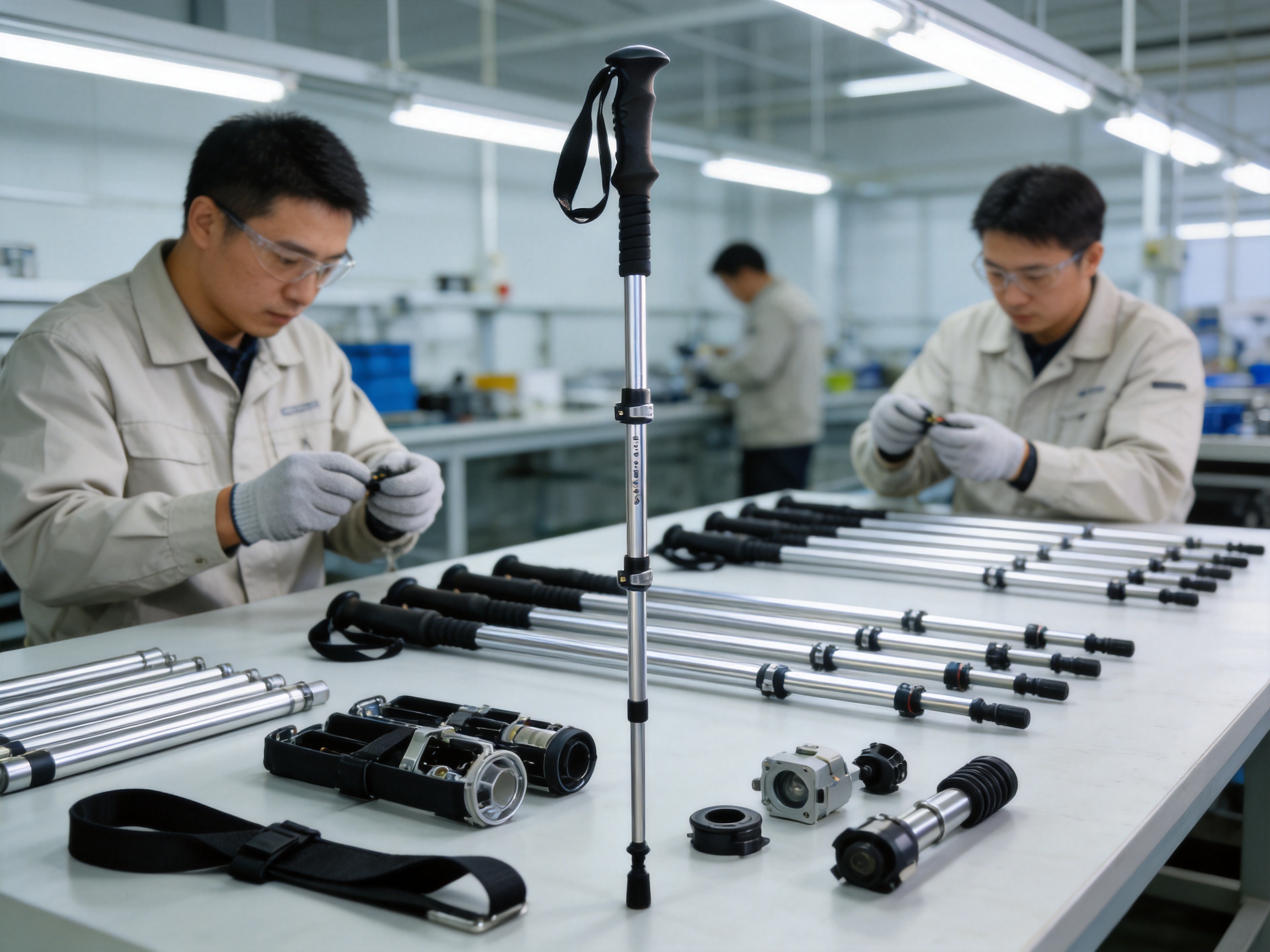
High-quality trekking poles depend on controlled manufacturing. The body sections must be formed accurately, the locking mechanism must fit consistently, the shock absorption system must function smoothly, and the handle and strap must be assembled securely. Even small variations can affect adjustment, stability, and user confidence. CragHaven Outdoor’s strength lies in combining design participation with manufacturing execution, rather than acting only as a sourcing intermediary.
The manufacturing process begins with product intent. Before production, the expected usage scenario must be clear: mountain paths, long-distance hiking, camping access, daily trails, and global retail use. This affects material selection, tube dimensions, locking design, surface treatment, handle structure, and packaging requirements. By starting from the actual environment, the product is less likely to suffer from mismatched features or unnecessary complexity.
Material inspection is a critical step. Aluminum alloy tubing must meet expectations for consistency, strength, and finish. The pole sections should extend smoothly without excessive looseness. Surface quality must support both appearance and resistance to regular handling wear. Inconsistent tubing can result in poor locking, vibration, or premature deformation, so stable material sourcing and inspection are essential.
Precision forming and section matching are also important. Telescopic poles require multiple sections to interact correctly. If tolerances are too loose, the pole may feel unstable. If tolerances are too tight, extension may become difficult. Proper manufacturing control allows the pole to extend smoothly while maintaining secure locking performance. This smooth extension is one of the user-facing benefits highlighted in the product description.
The internal locking system requires careful assembly. The mechanism must engage properly and remain reliable after repeated adjustments. During quality control, locking strength and adjustment feel should be checked to ensure the pole performs consistently. For international buyers, batch-to-batch consistency is especially important because customer satisfaction depends on every unit meeting the expected standard.
The spring shock absorption system must also be controlled. It should reduce impact without feeling loose or unstable. A poorly designed shock system may rattle, compress too easily, or fail to provide meaningful comfort. Proper engineering and testing help create a balanced cushioning effect. The goal is not exaggerated bounce but controlled impact reduction that supports natural walking.
Handle assembly is another area where manufacturing quality is visible. The ergonomic non-slip handle should be firmly attached and aligned. The strap should adjust smoothly and remain secure during use. Since users interact with the handle constantly, poor finishing or weak assembly would quickly damage product perception. A comfortable and reliable handle system contributes directly to repeat purchase potential and positive reviews.
Sampling and testing are treated as standard processes. This is a major advantage for brands and distributors because it reduces uncertainty before mass production. Samples can be evaluated for weight, locking performance, shock absorption, grip comfort, extension smoothness, visual finish, and packaging suitability. Feedback can then be used for optimization. This cycle helps transform design intent into stable, replicable, and scalable products.
Supply Chain Reliability for Global Outdoor Markets
Outdoor gear buyers often face a common challenge: many factories can make products, but not every partner understands outdoor usage. CragHaven Outdoor positions itself as a partner that understands how outdoor products are actually used in real environments. This creates value for cross-border sellers, retailers, distributors, and private-label brands that need more than basic production capacity.
Supply chain reliability is not only about delivery. It includes communication, understanding of market expectations, product consistency, documentation, packaging adaptation, and long-term cooperation. CragHaven Outdoor aims to reduce uncertainty in the supply chain by participating in both design and manufacturing. This is important because trekking poles must satisfy end users in Western and global markets where product reviews, return rates, and perceived quality strongly affect brand reputation.
The company’s location in Hangzhou, China, places it within one of the world’s mature manufacturing environments. China’s outdoor product supply chain offers advantages in material availability, component sourcing, process efficiency, production scaling, and export experience. When combined with product-focused development, this manufacturing ecosystem can transform concepts into repeatable products suitable for global sales.
Professional, Western-market-oriented communication is another strength. International buyers need clear product descriptions, realistic feature positioning, and an understanding of how customers evaluate outdoor equipment. A trekking pole should not be oversold with vague claims. Its value should be explained in terms of real benefits: less impact, stable adjustment, comfortable grip, lightweight carrying, and durable construction. This article itself reflects that approach by focusing on use scenarios rather than empty slogans.
Long-term, stable, and sustainable partnerships are also emphasized. For retailers and distributors, changing suppliers frequently creates risk. A stable manufacturing partner can support ongoing product refinement, consistent quality, packaging updates, and future line extensions. This trekking pole can serve as a reliable core product within a broader hiking and camping gear assortment.
Why This Trekking Pole Is a Strong Choice for Retailers and Brands
From a commercial perspective, this trekking pole has several advantages. It is easy to understand, easy to demonstrate, and relevant to a wide customer base. Its features are not obscure or overly technical. Most customers can immediately understand why shock absorption, lightweight aluminum construction, comfortable grip, and reliable adjustment matter. This makes it suitable for e-commerce listings, outdoor retail shelves, camping gear bundles, hiking starter kits, and private-label product lines.
The product also fits multiple price and positioning strategies. It can be presented as a practical upgrade from entry-level poles, a dependable everyday hiking tool, or a long-distance comfort pole. Because it uses aluminum alloy rather than ultra-premium exotic material, it can offer strong perceived value while remaining accessible. This balance is important for brands seeking products with solid margins and broad market demand.
The built-in shock absorption system gives retailers a clear selling point. Customers who worry about knee stress, downhill discomfort, or fatigue can easily understand this benefit. The internal locking mechanism provides another differentiator, especially when compared with bulky external clamps or low-cost unstable locks. The telescopic strap and ergonomic handle complete the comfort story, allowing sales teams and product pages to present a coherent benefit package.
For private-label buyers, the clean and functional design is useful. It avoids extreme styling that may limit market acceptance. The straight handle, aluminum body, and internal lock create a classic outdoor look suitable for different brand identities. With proper packaging and product education, the pole can appeal to beginners, regular hikers, travel campers, and experienced users who want a reliable backup or everyday pole.
Field Performance in Common Outdoor Scenarios
On uphill trails, trekking poles help shift some effort from the legs to the upper body. This can improve climbing rhythm and reduce fatigue. The telescopic strap allows the user to push efficiently through the wrist, while the non-slip handle supports secure control. The lightweight aluminum body makes repeated planting less tiring.
On downhill sections, the shock absorption system becomes especially valuable. Descending increases pressure on the knees and requires careful balance. By planting the poles slightly ahead, users can stabilize their movement and reduce sudden impact. The spring cushioning helps soften contact with hard ground, while the internal lock helps maintain pole length securely.
On flat trails, poles support rhythm and posture. Many long-distance hikers use poles to maintain consistent cadence and reduce swelling or fatigue in the hands by keeping the arms active. A comfortable handle is essential in this situation because the pole may be used continuously for hours. The ergonomic non-slip grip supports this kind of repeated movement.
On uneven ground, balance is the main advantage. Roots, rocks, wet soil, and loose gravel can create unstable footing. A trekking pole provides an additional point of contact, helping the user test ground stability before committing full body weight. The durable aluminum alloy structure provides confidence during these moments.
During camping trips, the pole assists with carrying loads from parking areas to campsites, walking around natural terrain, and navigating in low light. Campers often carry coolers, backpacks, tents, or cooking gear. A trekking pole adds stability and reduces the risk of slips when the user is tired or distracted.
User Guidance: How to Get the Best Performance
To maximize the benefits of this trekking pole, users should adjust the length according to terrain. On flat ground, the elbow should generally form a comfortable angle when the pole tip touches the ground near the foot. On uphill sections, a slightly shorter length can improve pushing efficiency. On downhill sections, a slightly longer length can provide better forward support and reduce knee impact.
The wrist strap should be used correctly. Many beginners place their hand through the strap from above, but the more effective method is often to bring the hand up through the strap from below and then grip the handle. This allows pressure to transfer through the wrist strap rather than relying only on finger strength. The telescopic strap makes adjustment easier for different users, gloves, and terrain needs.
Users should also check the internal lock before beginning a route. The pole should be securely tightened and should not collapse under downward pressure. Regular inspection is a simple habit that improves safety. After use in wet or muddy conditions, the pole should be cleaned and dried before storage. This helps preserve smooth extension and long-term performance.
Although the pole is durable, it should be used as intended. Trekking poles are designed for walking support, balance, and impact reduction, not for prying rocks, supporting excessive static loads, or replacing technical climbing equipment. Proper use extends service life and improves safety.
Maintenance and Long-Term Value
Long-term value is one of the key themes of this product. A trekking pole should remain useful after many hikes, not only during the first season. Maintenance is straightforward. Users should wipe dirt from the pole sections after outdoor use, especially if the pole has been exposed to sand, mud, salt, or heavy rain. Keeping the telescopic sections clean helps preserve smooth adjustment.
The internal locking structure should be checked periodically. If the pole becomes difficult to adjust, the user should inspect for dirt or moisture. Allowing the sections to dry before storage reduces the chance of internal corrosion or sticking. The shock absorption system should also be kept free from heavy contamination. While normal outdoor use is expected, basic care helps maintain function.
The handle and strap should be inspected for wear. Since these parts experience constant contact, they may show signs of use over time. Cleaning the handle with mild methods and avoiding harsh chemicals can help maintain grip quality. The strap should be adjusted without excessive force and stored without unnecessary tension.
For retailers and distributors, clear maintenance guidance can reduce returns and improve customer satisfaction. Many product complaints result from incorrect adjustment or poor care rather than manufacturing defects. Providing simple instructions helps users experience the pole as intended.
Comparison With Market Alternatives
The trekking pole market includes several common categories. Entry-level poles often focus on low price. They may be suitable for occasional light use, but they can suffer from heavier weight, less comfortable grips, weak locks, or limited durability. This product offers a more complete feature package, making it a stronger choice for customers who want reliability without moving into very high premium price ranges.
High-end ultralight carbon poles emphasize minimum weight. They can be excellent for specialized backpackers, but they are not always ideal for all users. They may cost more, and some carbon designs are less tolerant of side impacts or rough handling. The aluminum alloy pole provides a practical combination of weight savings and toughness, making it suitable for a broader customer base.
External clamp poles are popular because they are visually easy to adjust. However, exposed clamps may catch on gear and can add bulk. They may also require occasional tightening. The internal locking design of this pole provides a cleaner solution for users who prefer simplicity and protected mechanisms. It also gives the product a streamlined appearance.
Rigid poles without shock absorption may appeal to certain technical users, but many recreational and long-distance hikers appreciate cushioning. The built-in spring shock absorption system makes this model more comfortable for repeated impact scenarios. This is an important advantage for customers focused on knee comfort and fatigue reduction.
Environmental and Practical Sustainability Through Durability
Sustainability in outdoor gear is often discussed in terms of materials, packaging, and production methods, but durability is one of the most practical forms of sustainability. A product that lasts longer reduces the need for frequent replacement. This trekking pole is designed with long-term use in mind through durable aluminum alloy construction, simple internal locking, and functional components that solve real usage problems.
CragHaven Outdoor’s emphasis on long-term value supports this idea. Instead of chasing short-lived trends, the product focuses on features that remain relevant season after season: comfort, stability, impact reduction, and reliable adjustment. These are not fashion-driven qualities. They are fundamental to outdoor movement.
For brands and retailers, durable products can strengthen reputation. Customers who trust a product are more likely to recommend it, leave positive reviews, and buy related gear from the same source. In this sense, manufacturing quality is not only a technical matter; it is a commercial advantage.
Q&A Section
Q1: What type of user is this trekking pole designed for?
It is designed for hikers, campers, long-distance trekkers, daily trail walkers, and outdoor users who need stable support, comfort, and reliable adjustment. It is suitable for both recreational users and more experienced hikers who want a practical aluminum alloy pole with shock absorption.
Q2: How does the shock absorption system help during hiking?
The built-in spring shock absorption system helps soften the impact created when the pole contacts the ground. This can reduce harsh vibration and support greater comfort, especially on downhill sections, hard trails, stone paths, and long-distance routes where repeated impact can contribute to knee and joint fatigue.
Q3: Why choose aluminum alloy instead of carbon fiber?
Aerospace-grade aluminum alloy offers a strong balance of lightweight handling, durability, impact tolerance, and cost-effective production. Carbon fiber can be lighter, but it is often more expensive and may be less forgiving under certain side-impact conditions. Aluminum alloy is a practical choice for broad outdoor use and scalable retail markets.
Q4: What is the advantage of an internal locking structure?
An internal locking structure keeps the adjustment mechanism protected inside the pole sections. It creates a cleaner exterior profile, reduces the chance of snagging on gear or vegetation, and supports simple, durable operation. This is useful for both field performance and convenient storage.
Q5: Is the straight handle comfortable for long hikes?
Yes. The ergonomic non-slip straight handle is designed for secure and comfortable grip during extended use. It helps users maintain control in dry or damp conditions and reduces the need for excessive hand pressure when used together with the telescopic wrist strap.
Q6: Can the pole be used for camping as well as hiking?
Yes. The pole is suitable for camping access routes, walking around uneven campsite terrain, carrying loads, and general outdoor movement. Its stability and shock absorption make it useful beyond traditional trekking trails.
Q7: How should users maintain the pole?
Users should wipe dirt and moisture from the pole after use, especially after exposure to mud, sand, or rain. The telescopic sections should be dried before storage, and the locking function should be checked regularly. Basic maintenance helps preserve smooth extension and long-term reliability.
Q8: Why is this product suitable for international buyers and private-label brands?
The product combines clear consumer benefits with scalable manufacturing value. Its shock absorption, aluminum alloy body, internal lock, ergonomic handle, and adjustable strap are easy to explain in global retail markets. CragHaven Outdoor also supports design participation, sampling, testing, optimization, and professional communication for cross-border cooperation.
Company Strength Behind the Product
CragHaven Outdoor is based in Hangzhou, China, and focuses on mountaineering, hiking, and camping equipment. The company serves as both an outdoor brand and a cross-border manufacturing partner. Its strength lies in understanding real outdoor scenarios and translating that understanding into stable products suitable for global markets.
The company believes that excellent outdoor products are not built on a pile of parameters, but on a deep understanding of environment, usage patterns, and the test of time. This belief is directly reflected in the trekking pole. The product is not overloaded with unnecessary features. Instead, it prioritizes impact reduction, structural durability, comfortable grip, smooth extension, and reliable locking.
From initial concept to repeated sampling and testing, the company starts from actual usage scenarios. It then relies on China’s mature and efficient manufacturing system to transform design intent into products that can be produced consistently. This is especially important for trekking poles because consistency is central to safety and customer satisfaction.
For business partners, the company aims to reduce uncertainty in the supply chain. It understands that outdoor products are used in real environments, not only displayed online. It participates in product design and manufacturing rather than merely sourcing factories. It communicates in a professional, Western-market-oriented way and prioritizes long-term, stable, sustainable partnerships.
Contact information for business communication includes telephone number +86-15968800379 and email [email protected]. The company address is Room 1002, Huishang Building, Gongshu District, Hangzhou City, Zhejiang Province, China.
Conclusion: A Balanced Trekking Pole for Real Outdoor Value
The ultralight, internally locking aluminum alloy straight handle trekking pole with telescopic strap and shock absorption is a strong example of practical outdoor product design. It combines the features that matter most on the trail: lightweight carrying, durable aluminum alloy construction, reliable internal locking, built-in spring shock absorption, ergonomic non-slip grip, and adjustable wrist support. These features work together to improve stability, reduce impact, support walking efficiency, and enhance user comfort.
Its advantages over many competitors are clear. Compared with basic poles, it offers better comfort, stronger material value, and more complete functionality. Compared with exposed external locking designs, it provides a cleaner and more protected structure. Compared with rigid poles, it offers shock absorption for greater walking comfort. Compared with fragile or expensive alternatives, it offers a balanced solution for wide outdoor market use.
Behind the product is a manufacturing philosophy focused on weather, terrain, and time. CragHaven Outdoor’s emphasis on real-world use, material reliability, sampling, testing, optimization, and stable supply chain cooperation gives the pole additional value for buyers. It is not merely a piece of hiking equipment; it is a carefully developed product intended to perform consistently across long-distance treks, daily hikes, camping routes, and global retail channels.
For users, it provides comfort and confidence. For retailers, it offers clear selling points and broad customer relevance. For brands and distributors, it represents a dependable product platform supported by a manufacturer that understands outdoor gear beyond surface specifications. In a market filled with similar-looking trekking poles, this model stands out by focusing on the fundamentals that truly matter: stability, durability, comfort, and long-term reliability.
References
1. Mountaineering and trekking equipment design principles, outdoor product development notes.
2. Biomechanics of hiking, joint impact, and load distribution in walking with trekking poles.
3. Aluminum alloy applications in outdoor sporting goods and lightweight structural equipment.
4. Field maintenance practices for telescopic trekking poles and adjustable outdoor equipment.
5. Outdoor retail product evaluation standards for hiking, camping, and mountain-climbing gear.


- Phone: +86-15968800379
- E-mail: [email protected]
- Address: Room 1002, Huishang Building, Gongshu District, Hangzhou City, Zhejiang Province.
Copyright © CragHaven Outdoor All Rights Reserved. Outdoor Gear Manufacturers Wholesale Mountaineering Camping Gear Suppliers
