

 English
 Deutsch
 Español
 Français

Ultralight Shock-Absorbing Trekking Pole for Stable Hiking and Mountain Travel
Content
- 1 Product Overview
- 2 Why Trekking Pole Design Matters
- 3 Core Advantages Over Common Competitor Designs
- 4 Feature Comparison Table
- 5 Aerospace-Grade Aluminum Alloy: Practical Strength for Outdoor Use
- 6 Internal Locking System: Clean, Simple, and Durable
- 7 Shock Absorption: Reducing Impact During Repeated Movement
- 8 Ergonomic Straight Handle and Telescopic Strap
- 9 Manufacturing Strength Behind the Product
- 10 Material Selection and Tube Processing
- 11 Locking Mechanism Assembly and Quality Control
- 12 Shock Absorption System Integration
- 13 Handle and Strap Manufacturing Considerations
- 14 Designed for Long-Distance Treks
- 15 Suitable for Daily Hiking and Outdoor Fitness
- 16 Supply Chain Value for Global Buyers
- 17 Real-World Use Scenarios
- 18 Buyer-Focused Product Positioning
- 19 Practical Maintenance and User Guidance
- 20 Quality as Long-Term Value
- 21 Q&A Section
- 21.1 Q1: What type of user is this trekking pole designed for?
- 21.2 Q2: What makes the aluminum alloy shaft a strong choice?
- 21.3 Q3: How does the internal locking system compare with external locks?
- 21.4 Q4: Why is shock absorption important in a trekking pole?
- 21.5 Q5: Is the pole suitable for beginners?
- 21.6 Q6: Can this product be used for mountain climbing?
- 21.7 Q7: What role does the telescopic strap play?
- 21.8 Q8: Why is manufacturing process control important for trekking poles?
- 21.9 Q9: How does CragHaven Outdoor support global buyers?
- 21.10 Q10: What are the strongest selling points for retail or e-commerce?
- 22 Conclusion
- 23 References
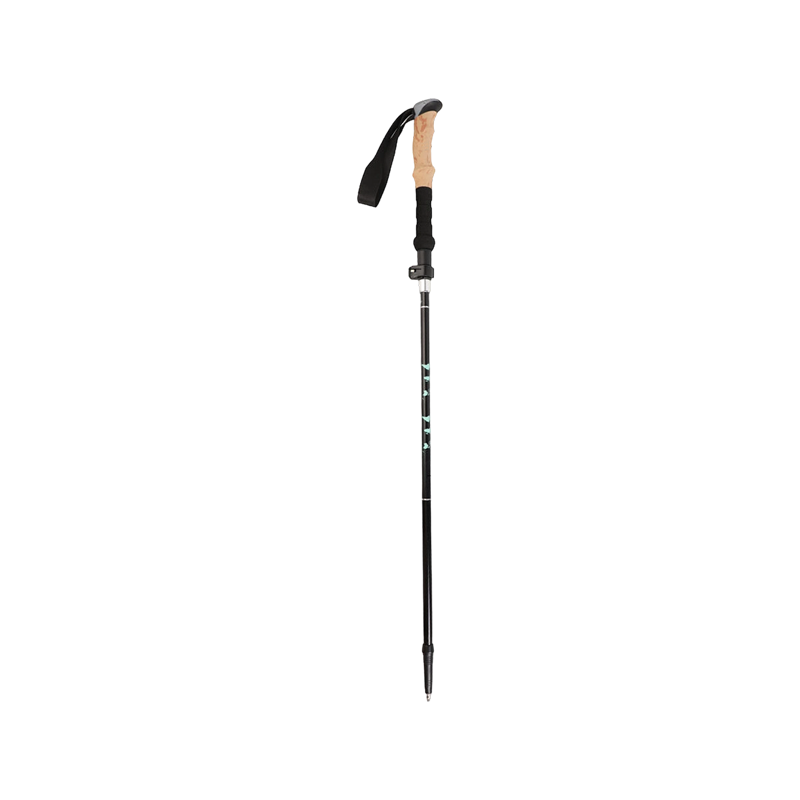
- 24 Product: Ultralight, internally locking aluminum alloy straight handle trekking pole with telescopic strap and shock absorption.
For hikers, trekkers, mountaineers, and outdoor retailers, a trekking pole is not a decorative accessory. It is a stability tool, an impact-management device, and an extension of the body during long approaches, uneven descents, loose gravel crossings, forest trails, and everyday outdoor walking. The ultralight internally locking aluminum alloy straight handle trekking pole with telescopic strap and shock absorption is designed for exactly these real conditions. Built around an aerospace-grade aluminum alloy body, an internal locking structure, a built-in spring shock absorption system, and an ergonomic non-slip straight handle, this trekking pole emphasizes durability, comfort, practical adjustability, and reliable long-distance use.
In the outdoor gear market, trekking poles often compete on appearance, listed weight, or aggressive marketing claims. However, experienced users and professional buyers know that trail performance depends on deeper factors: how stable the locking system feels after repeated adjustment, whether the pole absorbs impact without becoming unstable, whether the handle remains comfortable after hours of use, whether the shaft material resists deformation, and whether the product can be manufactured with consistent quality batch after batch. This product addresses those concerns with a balanced structure that combines lightweight handling with dependable support.
CragHaven Outdoor approaches this trekking pole not as a catalog item, but as a tool for weather, terrain, and time. The company focuses on mountaineering, hiking, and camping scenarios, and its manufacturing philosophy is built around practical outdoor use rather than short-term styling trends. From material selection to sampling, testing, optimization, and scalable production, the product reflects a professional understanding of how trekking poles are actually used by hikers and how outdoor gear must perform in real environments.
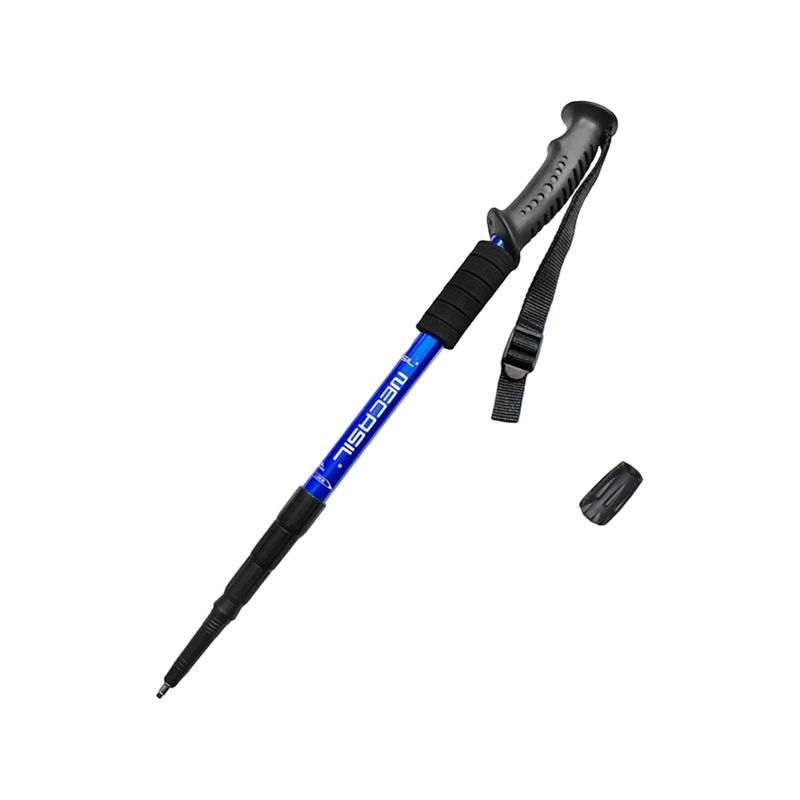
Ultralight, internally locking aluminum alloy straight handle trekking pole with telescopic strap and shock absorption.
Product Overview
This trekking pole, identified by product code WFDS262002, belongs to the trekking pole category and is intended for long-distance trekking, daily hiking, mountain walking, camping travel, outdoor training, and general trail support. Its core design combines an ultralight aluminum alloy shaft, an internal locking mechanism, a straight ergonomic handle, a telescopic strap, and a built-in spring shock absorption system.
The aluminum alloy body provides a strong balance between weight and durability. While carbon fiber trekking poles are often promoted as premium lightweight options, aluminum alloy remains highly valued by many outdoor users because of its resilience, practical impact tolerance, and predictable behavior under stress. A well-designed aluminum pole can resist the minor impacts, bumps, trail knocks, and everyday handling that are common during real outdoor activity.
The internal locking system is another key feature. Many trekking poles use external lever locks, which can be easy to adjust but may catch on vegetation, packs, or clothing. External mechanisms can also be more exposed to mud, snow, and impact. An internal locking structure offers a cleaner profile and a protected adjustment mechanism. For users who prefer a smooth pole surface and a simple, durable design, this internal structure provides a practical advantage.
The built-in spring shock absorption system helps reduce repetitive impact transferred to the wrist, elbow, shoulder, and knee joints, especially during descents or long-distance walking on hard surfaces. While a trekking pole cannot eliminate strain entirely, shock absorption can improve walking comfort and reduce the harshness of repeated pole plants. This is especially valuable for hikers carrying a backpack, older users, users with sensitive joints, and outdoor travelers covering long routes over mixed terrain.
The straight handle is ergonomic and non-slip, allowing users to maintain a secure grip during steady forward movement. The telescopic strap supports wrist positioning and helps distribute force more efficiently. Together, the handle and strap allow the user to push through the pole rather than simply grip it tightly, which can reduce hand fatigue over long periods.
Why Trekking Pole Design Matters
A trekking pole may appear simple, but every detail affects performance. The pole must be light enough to swing naturally, strong enough to support repeated pressure, adjustable enough to match different users and terrain, comfortable enough for hours of contact, and stable enough to inspire confidence when footing becomes uncertain. A weak locking system, slippery handle, poor shock absorption, or low-grade shaft material can quickly turn a useful tool into a source of frustration.
On uphill sections, trekking poles help engage the upper body and reduce pressure on the legs. On downhill sections, they help slow momentum and provide additional contact points with the ground. On uneven trails, they improve balance. On wet or loose surfaces, they help test ground firmness before full body weight is committed. For backpackers, trekking poles are even more important because load weight increases stress on knees and ankles.
This product is designed around these usage patterns. Its shock absorption system responds to repeated contact. Its internal lock supports length adjustment. Its aluminum alloy construction offers strength without excessive burden. Its handle and strap support sustained use. The result is a trekking pole built for practical outdoor reliability rather than showroom-only appeal.
Core Advantages Over Common Competitor Designs
In a crowded trekking pole market, many products appear similar at first glance. However, differences become clear after repeated use. This trekking pole provides several advantages when compared with common competitor designs in the same category.
Balanced Lightweight Strength
Some competitors focus on minimum weight by using ultra-thin materials that may feel fragile under rugged conditions. Others use heavy materials that create user fatigue over distance. This product uses aerospace-grade aluminum alloy to balance light handling with dependable support. The material selection is intended for long-term use, not only for attractive specification sheets.
Protected Internal Locking Structure
External lever locks are visible and easy to operate, but they are also exposed. They may collect dust, catch on objects, or be damaged by side impacts. The internal locking design used in this pole keeps the adjustment structure cleaner and more integrated. This gives the pole a smooth appearance and reduces unnecessary external complexity. For users who value simplicity and durability, this is a strong functional advantage.
Shock Absorption for Real Trail Comfort
Many entry-level trekking poles use rigid shafts without impact management. While rigid poles can be efficient, they can also transmit more vibration and impact to the user. The built-in spring shock absorption system in this product helps soften repeated contact, especially during downhill walking, road approaches, rocky tracks, and hard-packed trails. This design supports greater comfort across longer distances.
Ergonomic Non-Slip Straight Handle
Handle comfort is often underestimated. A trekking pole may be held for hours, and poor handle design can cause hot spots, slipping, wrist strain, or excessive gripping force. This product uses an ergonomic non-slip handle designed to remain stable in the hand. The straight handle shape supports natural wrist alignment and practical everyday use.
Telescopic Strap for Better Force Transfer
A good strap is not just a loop. It helps position the wrist, supports pushing force, and reduces grip fatigue. The telescopic strap on this pole allows users to adapt the fit more comfortably. When properly adjusted, the strap helps transfer energy through the wrist and arm, allowing the user to maintain rhythm with less hand strain.
Simple, Durable User Experience
Some trekking poles include complicated mechanisms that may look impressive but create more failure points. This product follows a more practical principle: every feature must solve a real-world problem. Shock absorption reduces impact, internal locking supports adjustment, aluminum alloy provides dependable structure, and ergonomic grip design supports comfort. The product is not overloaded with unnecessary decorative details.
Feature Comparison Table
| Feature | This Trekking Pole | Common Entry-Level Competitor | Practical Benefit |
|---|---|---|---|
| Shaft Material | Aerospace-grade aluminum alloy | Basic aluminum or low-cost alloy | Better balance of durability, strength, and trail reliability |
| Locking System | Internal locking structure | External lever lock or simple twist lock | Cleaner profile, protected mechanism, simple durable appearance |
| Shock Absorption | Built-in spring shock absorption system | No shock absorption or basic cushioning | Reduced impact during repeated pole plants and descents |
| Handle Design | Ergonomic non-slip straight handle | Basic plastic or low-comfort grip | More comfortable hold during long-distance walking |
| Strap | Telescopic adjustable strap | Simple fixed loop | Improved wrist fit and force transfer |
| Primary Use | Long-distance trekking, daily hiking, mountain walking | Casual walking only | Wider application across outdoor scenarios |
| Design Philosophy | Built for terrain, weather, and repeated use | Often designed mainly for price or appearance | More reliable value for serious users and buyers |
Aerospace-Grade Aluminum Alloy: Practical Strength for Outdoor Use
The shaft is the structural heart of a trekking pole. It must resist bending, support body weight, tolerate repeated ground contact, and remain stable across temperature and terrain changes. The use of aerospace-grade aluminum alloy gives this pole a strong foundation for real outdoor conditions.
Aluminum alloy has several practical advantages in trekking pole construction. It is strong relative to weight, resistant to general outdoor wear, and more forgiving than brittle materials when exposed to knocks or sudden loads. While some ultralight carbon products may feel extremely light, they can be more vulnerable to cracking after sharp impacts. Aluminum alloy, by contrast, often bends before catastrophic failure, giving users a more predictable safety margin during demanding use.
For many hikers, especially those who travel in remote areas, predictability is important. A trekking pole that can handle accidental impacts against rocks, roots, vehicle storage, luggage handling, or campsite use offers long-term value. The aluminum body of this pole supports that value by prioritizing durability and reliability over fragile minimalism.
The material also supports stable telescopic adjustment. A trekking pole shaft must maintain dimensional consistency so that the locking system can engage effectively. Poor-quality tubes may have inconsistent wall thickness or surface irregularities, which can weaken locking performance. A professionally manufactured aluminum alloy body contributes to smoother extension, better lock contact, and improved overall feel.
Internal Locking System: Clean, Simple, and Durable
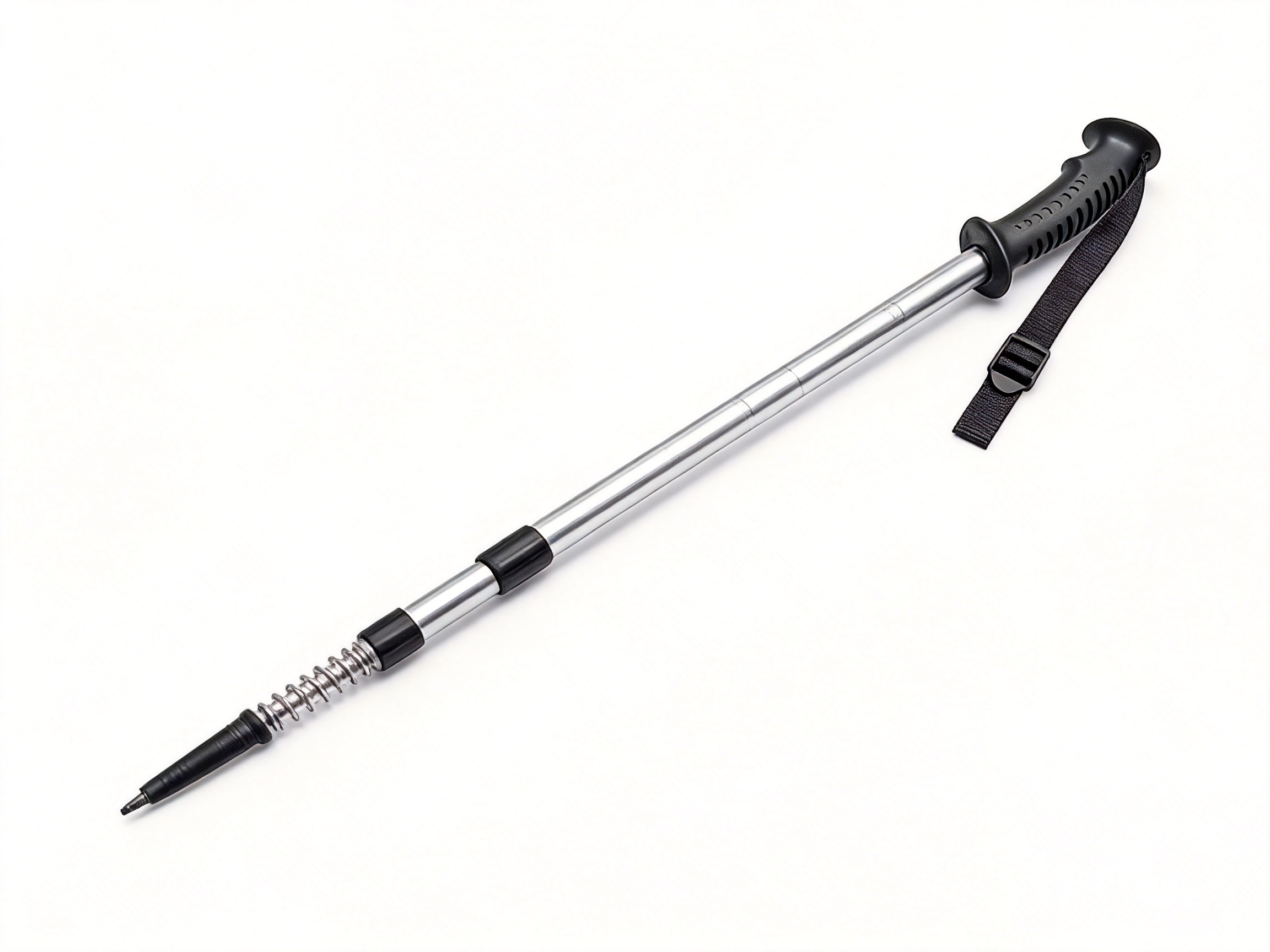
The internal locking structure is one of the product’s defining features. Instead of relying on protruding external clips, this design places the lock inside the pole structure. This creates a clean exterior and reduces exposure to accidental knocks, dirt buildup, and snagging.
For trekking and mountain walking, a clean pole profile is useful. Trails often include brush, branches, straps, pack cords, rocks, and narrow passages. An external locking lever can sometimes catch on these objects. Internal locking keeps the pole surface more streamlined, which can be especially helpful when poles are attached to a backpack or packed with other equipment.
Durability also benefits from simplicity. The fewer exposed parts a product has, the fewer opportunities there are for damage. A well-executed internal locking mechanism supports consistent adjustment without unnecessary external complexity. It also gives the product a refined appearance that appeals to both outdoor users and retail markets.
In manufacturing, internal locking requires careful control of tube dimensions, internal components, friction surfaces, and assembly tolerances. The lock must feel secure when engaged, yet allow smooth adjustment when released. This is where manufacturing discipline becomes important. A low-cost internal lock with poor tolerances can slip, seize, or wear prematurely. A professionally developed internal system, tested and optimized, provides a more dependable experience.
Shock Absorption: Reducing Impact During Repeated Movement
The built-in spring shock absorption system is designed to reduce impact on the knee joint and improve comfort during repeated pole planting. Outdoor walking is repetitive. On a long hike, a trekking pole may contact the ground thousands of times. Every contact generates a small impact force. Over distance, these forces can contribute to fatigue, especially on descents and hard surfaces.
Shock absorption helps moderate these forces. When the pole tip strikes the ground, the internal spring mechanism compresses slightly, reducing the sharpness of impact transmitted through the hand and arm. This creates a more forgiving feel and can help users maintain rhythm over long distances.
The advantage is especially noticeable on downhill sections. Descending places higher pressure on knees because the body must control gravity and forward momentum. Trekking poles already help by transferring some load to the upper body. Adding shock absorption further softens the repeated pressure of pole contact, supporting a more comfortable descent.
Shock absorption is also useful for daily hiking and urban-to-trail walking. Many outdoor users begin their routes on paved roads, park paths, stone steps, or hard-packed tracks. These surfaces transmit more vibration than soil or forest floor. A spring absorption system can make these sections feel less harsh.
Importantly, the shock absorption system should not make the pole feel unstable. Poor shock systems may feel loose, noisy, or overly soft. The goal is controlled cushioning, not excessive bounce. This product’s structure is intended to provide practical impact reduction while preserving stable support.
Ergonomic Straight Handle and Telescopic Strap
The handle is where the user connects with the pole. If the handle is uncomfortable, all other features become less meaningful. This trekking pole uses an ergonomic non-slip straight handle designed for secure and comfortable grip during long-distance walking.
A straight handle design provides a familiar and efficient hand position. It supports steady forward movement and allows the user to plant the pole naturally. The non-slip surface helps maintain control when hands are sweaty, when weather is damp, or when gloves are used. A secure grip reduces the need for excessive squeezing, which can reduce hand and forearm fatigue.
The telescopic strap improves usability by helping position the wrist correctly. Many beginners hold trekking poles too tightly, relying only on hand strength. Experienced users often use the strap to transfer force through the wrist and arm. When the strap is adjusted properly, the user can push down and back against it during the walking motion. This distributes effort more efficiently and allows a smoother rhythm.
The strap also adds security. If the user momentarily loosens grip, the pole remains connected to the wrist. This is useful on steep terrain, stream crossings, or when adjusting clothing and gear. A telescopic strap offers better fit flexibility for different hand sizes, glove thicknesses, and user preferences.
Manufacturing Strength Behind the Product
Product quality is not created by design alone. It is created by the combination of design intent, material control, production process, assembly discipline, inspection standards, and repeated optimization. CragHaven Outdoor is based in Hangzhou, China, and operates as an outdoor brand and cross-border manufacturing partner focused on mountaineering, hiking, and camping gear. Its strength lies in combining practical outdoor understanding with China’s mature and efficient manufacturing system.
The company’s product development philosophy is clear: outdoor products should not be designed only for catalogs, but for weather, terrain, and time. This principle is especially relevant to trekking poles. A pole must endure dust, moisture, repeated load, transport pressure, adjustment cycles, and user variation. A product that looks good in a photo but fails after field use does not meet professional outdoor standards.
CragHaven Outdoor emphasizes sampling, testing, and optimization as standard processes. This is important because small details can significantly affect trekking pole performance. The surface finish of the tube influences adjustment smoothness. The lock geometry affects holding power. The spring rate affects shock absorption feel. The handle shape affects long-term comfort. The strap material and stitching affect durability. Each element must be evaluated not only separately, but as part of the complete product.
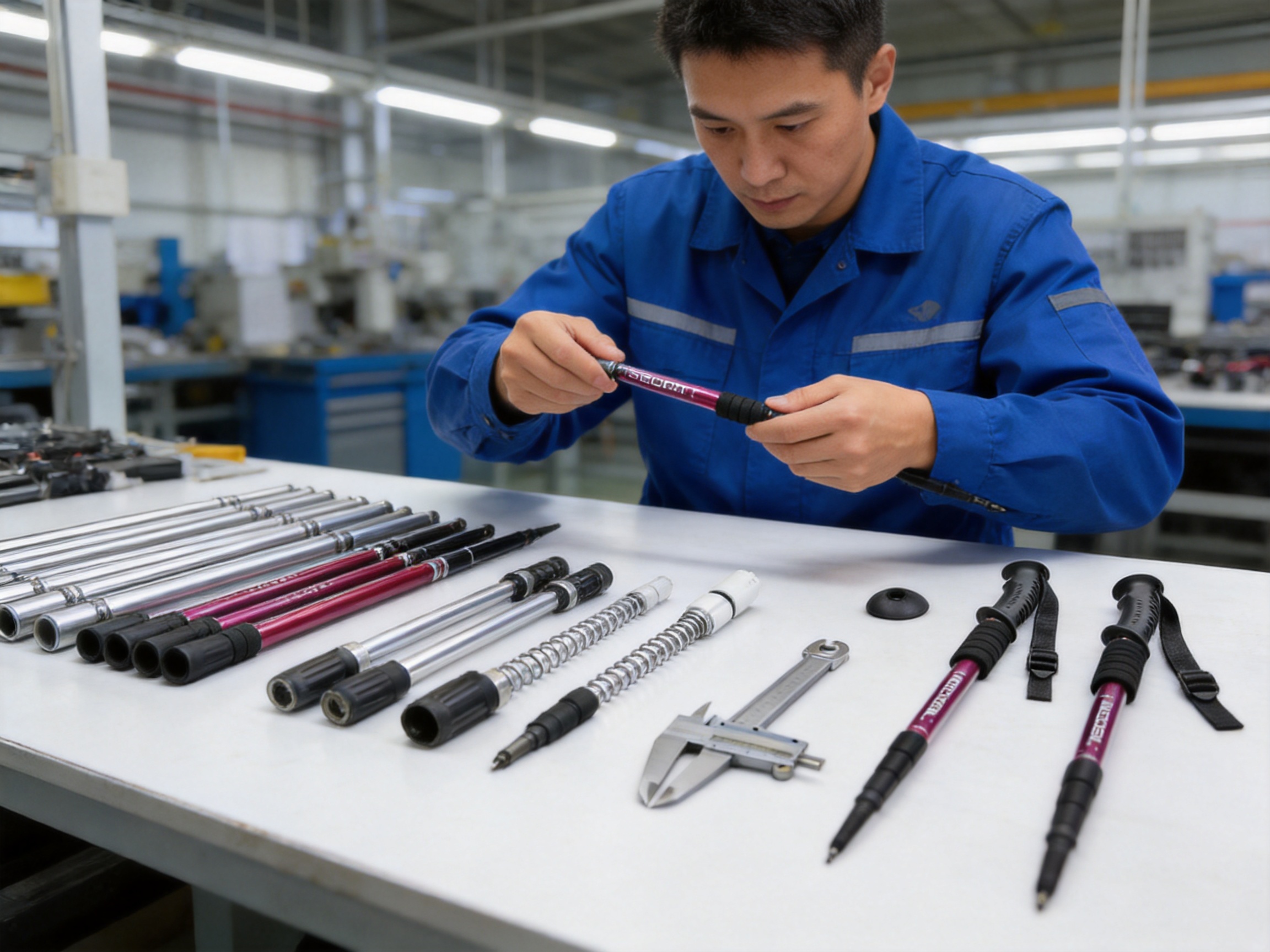
Advanced manufacturing is not only about machines. It is about process control. For this trekking pole, manufacturing strength may include careful aluminum tube selection, precision tube forming, surface treatment, component fitting, locking mechanism assembly, shock system integration, handle installation, strap attachment, and final quality inspection. Consistency across these steps determines whether every unit performs as intended.
For overseas buyers, manufacturing consistency is as important as product design. A supplier must be able to reproduce quality across production batches, communicate professionally, solve problems efficiently, and understand the expectations of Western outdoor markets. CragHaven Outdoor positions itself as a partner that reduces supply chain uncertainty by participating in both design and manufacturing rather than functioning only as a basic sourcing intermediary.
Material Selection and Tube Processing
The aluminum alloy body begins with material selection. A trekking pole tube must meet requirements for strength, wall consistency, surface quality, and process compatibility. The selected alloy must be suitable for forming and finishing while maintaining reliable mechanical performance.
Tube processing requires dimensional control. Telescopic trekking poles depend on tube sections that slide smoothly and lock securely. If the tube diameter varies too much, the pole may feel loose in one position and too tight in another. If wall thickness is inconsistent, strength and weight balance may suffer. Professional tube processing helps maintain stable performance.
Surface finishing also matters. Outdoor poles are frequently exposed to moisture, dirt, and abrasion. A quality finish improves appearance, supports corrosion resistance, and provides a more refined user experience. The finish must be durable enough to withstand handling, packing, and trail contact while maintaining a clean look for retail presentation.
The term “aerospace-grade aluminum alloy” indicates a focus on higher-performance alloy selection rather than low-grade metal substitution. For buyers, this supports product positioning in a practical mid-to-high value category: lightweight enough for real hiking, durable enough for repeated outdoor use, and cost-effective enough for scalable distribution.
Locking Mechanism Assembly and Quality Control
The internal locking system is a precision-dependent feature. The lock must expand or engage reliably inside the tube and hold position under load. It must release when the user needs adjustment and re-engage without requiring excessive force. This balance depends on component quality and assembly accuracy.
During production, internal locking components must be inspected for fit, friction performance, and durability. Assembly workers must ensure correct alignment and engagement. Final testing should confirm that the pole extends smoothly and locks securely. A trekking pole that slips under pressure can create safety concerns, so locking reliability is a critical quality point.
Compared with a simple external clamp, an internal lock can require more attention during assembly because the mechanism is hidden inside the shaft. This increases the importance of controlled production methods. The reward is a cleaner, simpler exterior and a refined user experience.
CragHaven Outdoor’s commitment to sampling and optimization supports this process. Before mass production, prototypes can be evaluated for lock feel, extension smoothness, holding strength, and ease of use. Feedback from testing can then be used to refine tolerances and components. This reduces the risk of inconsistent production and improves long-term customer satisfaction.
Shock Absorption System Integration
The shock absorption system is another feature that depends on proper integration. A spring mechanism must be strong enough to cushion impact but not so soft that the pole feels unstable. It must operate quietly, consistently, and repeatedly. It must also be compatible with the shaft and locking structure.
In production, the spring and related components must be selected and assembled carefully. If the spring is too weak, it may compress excessively. If it is too stiff, the user may not feel meaningful cushioning. If the system is poorly fitted, it may produce noise or looseness. A professional process ensures that the shock absorption system contributes to comfort without compromising support.
Testing should include repeated compression, walking simulation, and user handling evaluation. The goal is not only mechanical function but also perceived quality. Users judge trekking poles by how they feel in motion. A smooth, controlled shock response creates confidence and comfort.
Handle and Strap Manufacturing Considerations
The ergonomic handle and telescopic strap may appear secondary, but they strongly influence user satisfaction. Handle materials must be comfortable, non-slip, and durable. The grip shape must avoid sharp edges and uncomfortable pressure points. The handle must be securely attached to the shaft so it does not twist or loosen during use.
The strap must be strong enough for repeated pulling force and flexible enough for comfort. Stitching, adjustment hardware, and strap texture all matter. A strap that slips, frays, or irritates the wrist can reduce the product’s perceived quality. A well-made telescopic strap supports better adjustment and longer use.
Manufacturing quality in these components is visible to users. While internal parts may be hidden, the handle and strap are touched immediately. Good tactile quality helps the product feel dependable from the first use.
Designed for Long-Distance Treks
Long-distance trekking places unique demands on gear. A pole that feels acceptable during a short walk may become uncomfortable after several hours. Small issues become magnified over distance: a handle that rubs, a lock that loosens, a shaft that vibrates, or a strap that slips. This trekking pole is built with long-distance use in mind.
The lightweight aluminum body reduces swing fatigue. The shock absorption system softens repeated impact. The ergonomic handle supports grip comfort. The telescopic strap helps distribute effort. The internal lock enables adjustment for uphill, downhill, and flat terrain. Together, these elements support a more efficient walking rhythm.
For uphill travel, users may shorten the poles slightly to maintain natural arm movement and improve pushing power. For downhill travel, users may lengthen the poles to improve reach and support. For flat terrain, users may set the pole at a comfortable height that allows relaxed elbow bend. The telescopic structure supports these terrain-based adjustments.
Suitable for Daily Hiking and Outdoor Fitness
Not every user is a high-altitude mountaineer. Many customers use trekking poles for weekend hiking, park walking, outdoor fitness, travel, and light trail exploration. This product suits those users as well because it combines professional features with simple operation.
Daily hikers benefit from comfort and joint-friendly support. The shock absorption system reduces harsh contact on paved paths and hard trails. The non-slip handle supports secure use in varied weather. The internal lock gives the pole a clean appearance suitable for travel and everyday outdoor use.
For retailers, this wide usability improves market potential. The product can serve beginners who want more stability, experienced hikers who need dependable gear, travelers who want adjustable support, and outdoor fitness users who walk regularly. Its design is technical enough to be credible, but not so complicated that it intimidates casual users.
Supply Chain Value for Global Buyers
For importers, distributors, and outdoor brands, the value of a trekking pole is not limited to its physical features. Supply reliability, communication quality, production repeatability, and development support are equally important. CragHaven Outdoor aims to reduce uncertainty in the supply chain by offering outdoor-specific manufacturing knowledge and professional cross-border cooperation.
The company understands that Western markets often require clear product positioning, consistent quality, functional claims that match real performance, and stable delivery. Outdoor buyers need suppliers who can discuss product use, not only factory pricing. They need partners who understand terrain, weather, durability, packaging, retail expectations, and customer feedback.
Because CragHaven Outdoor participates in design and manufacturing, it can support product refinement rather than only executing existing specifications. This matters when buyers need private label programs, assortment development, feature adjustments, packaging adaptation, or market-specific improvements. A trekking pole may seem standardized, but small modifications can create meaningful market differentiation.
The company’s location in Hangzhou, Zhejiang Province, places it within one of China’s highly developed commercial and manufacturing regions. This supports access to supply networks, export experience, communication resources, and efficient production coordination. For global customers, this combination can improve responsiveness and reduce operational friction.
Real-World Use Scenarios
Mountain Trails
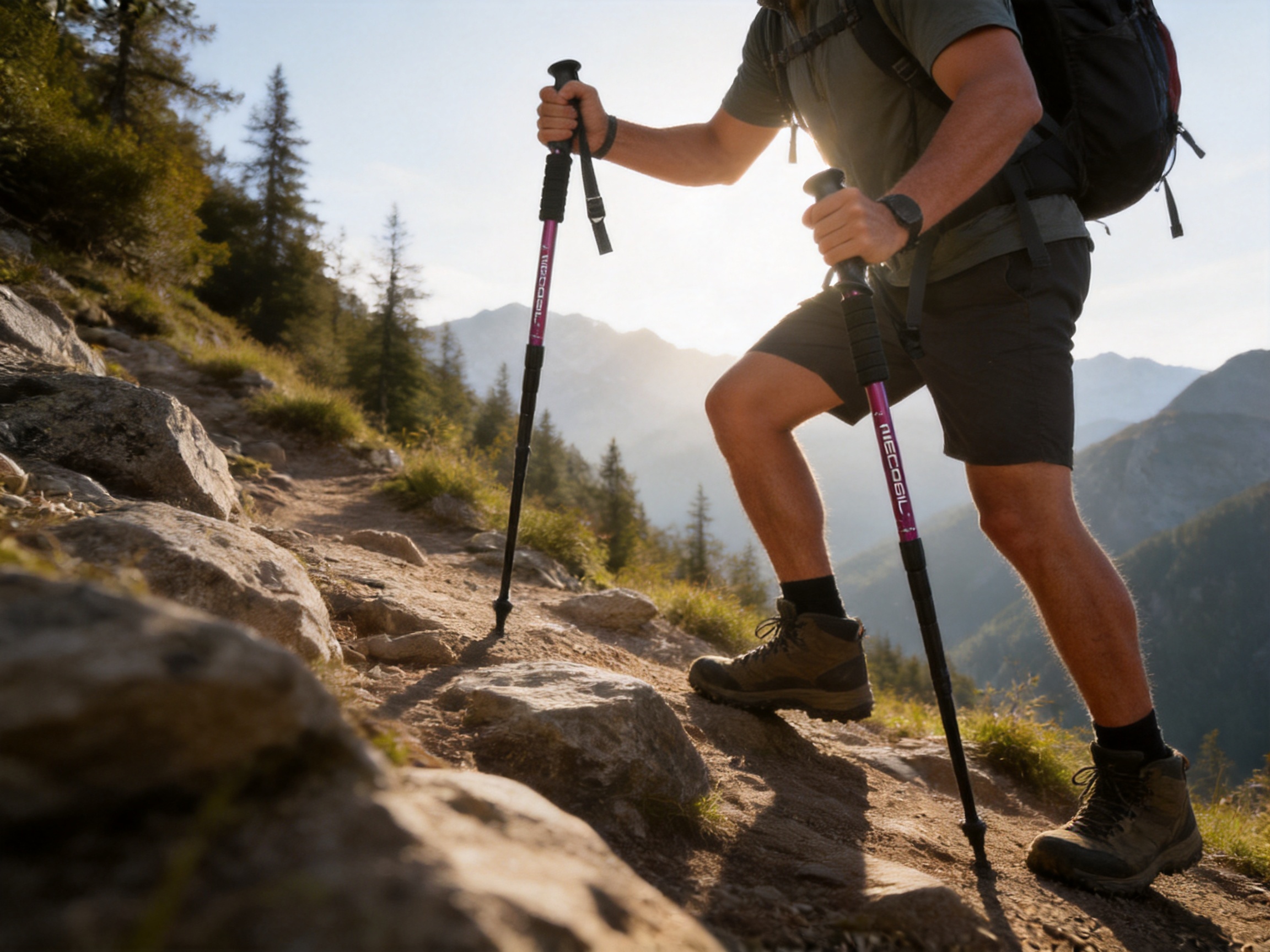
On mountain trails, terrain changes constantly. Rock steps, roots, loose gravel, wet soil, and steep gradients require balance and stability. The aluminum alloy shaft provides dependable support, while the shock absorption system reduces repeated impact during descents. The internal lock helps users adjust pole length according to terrain.
Long-Distance Hiking
During long-distance hiking, comfort becomes essential. A pole that is too heavy, harsh, or uncomfortable can increase fatigue. This product’s lightweight structure, ergonomic handle, and adjustable strap support steady use over many hours. The spring shock absorption system adds comfort during repetitive movement.
Camping Travel
Campers often walk from parking areas to campsites, carry equipment, and move over uneven ground. A trekking pole provides extra support when carrying loads or navigating after rain. The clean internal locking structure also makes the pole convenient to pack and transport with camping gear.
Daily Outdoor Walking
For users who walk regularly for exercise, the pole adds rhythm and upper-body involvement. It can help reduce pressure on the lower body and improve confidence on uneven paths. The non-slip handle and shock absorption system make daily use more comfortable.
Travel and Mixed Terrain
Travelers may encounter stairs, scenic paths, rural trails, and mountain viewpoints in one trip. An adjustable trekking pole is useful because it can adapt to different walking environments. The telescopic structure makes it more versatile than a fixed walking stick.
Buyer-Focused Product Positioning
This trekking pole is well suited for outdoor retailers, e-commerce sellers, private label brands, camping gear distributors, and trekking equipment assortments. It offers a balanced feature set that can be positioned above basic entry-level poles while remaining practical and accessible for a wide customer base.
The key selling points are easy to communicate: ultralight aluminum alloy construction, internal locking, spring shock absorption, ergonomic non-slip handle, telescopic strap, smooth extension, and suitability for long-distance treks and daily hiking. These features align with what consumers actually understand and value.
For product listings, the pole can be positioned around comfort, stability, durability, and trail confidence. For retail displays, the clean structure and practical handle design are visually clear. For wholesale programs, the manufacturing background and quality-control approach support confidence in repeat orders.
Practical Maintenance and User Guidance
Proper care improves the service life of any trekking pole. Users should wipe the pole after wet or muddy use, especially around telescopic sections. The locking mechanism should be kept clean and dry when possible. After hiking in rain, snow, or sandy conditions, users should extend the pole, clean visible dirt, and allow it to dry before storage.
Users should adjust the strap correctly rather than gripping too tightly. The hand should enter the strap from below, then rest against the strap while holding the handle. This allows force transfer through the wrist and reduces hand fatigue. Pole length should be adjusted according to terrain: shorter for uphill, longer for downhill, and neutral for flat sections.
Although the pole is designed for support, users should not treat it as a climbing anchor or life-safety device. Trekking poles improve balance and reduce impact, but they are not substitutes for technical mountaineering equipment. Proper use ensures better performance and safety.
Quality as Long-Term Value
Low-cost trekking poles may appear attractive at first, but poor durability can lead to customer complaints, returns, and brand damage. For outdoor gear, long-term value is often more important than the lowest purchase price. A trekking pole that performs reliably over repeated use creates better customer satisfaction and stronger brand reputation.
This product’s value comes from practical design choices: aluminum alloy strength, internal locking durability, shock absorption comfort, ergonomic handling, and manufacturing discipline. These features reduce the likelihood of common user frustrations such as slipping locks, uncomfortable grips, excessive vibration, and fragile construction.
For buyers, consistent quality also reduces operational risk. When a product is manufactured with controlled processes and tested through development, it is more likely to meet customer expectations across production batches. This supports stable reviews, repeat purchases, and long-term distribution.
Q&A Section
Q1: What type of user is this trekking pole designed for?
It is designed for hikers, trekkers, campers, outdoor fitness walkers, and travelers who need lightweight support, shock absorption, and adjustable length. It is suitable for long-distance treks as well as daily hiking.
Q2: What makes the aluminum alloy shaft a strong choice?
The aerospace-grade aluminum alloy body offers a practical balance of strength, weight, durability, and impact tolerance. It is suitable for rugged outdoor use and provides dependable support without excessive weight.
Q3: How does the internal locking system compare with external locks?
The internal locking structure creates a cleaner exterior and protects the adjustment mechanism from some external impacts and snagging. It supports a simple, durable design with smooth extension and adjustment.
Q4: Why is shock absorption important in a trekking pole?
Shock absorption helps reduce the sharp impact of repeated ground contact. This can improve comfort during long walks, descents, and use on hard surfaces, while helping reduce stress transferred through the arms and lower body.
Q5: Is the pole suitable for beginners?
Yes. The design is practical and easy to understand. Beginners can benefit from added stability, reduced impact, and better walking rhythm, while experienced users can appreciate the durability and clean internal locking structure.
Q6: Can this product be used for mountain climbing?
It is suitable for mountain walking, trekking, hiking approaches, and non-technical outdoor travel. It should not be used as a technical climbing anchor or safety-critical mountaineering device.
Q7: What role does the telescopic strap play?
The telescopic strap helps adjust wrist fit, improves force transfer, and reduces the need for excessive gripping. When used properly, it can reduce hand fatigue and improve walking efficiency.
Q8: Why is manufacturing process control important for trekking poles?
Process control ensures that tube dimensions, locking performance, shock absorption behavior, handle attachment, and strap durability remain consistent. This is essential for safety, comfort, and repeatable product quality.
Q9: How does CragHaven Outdoor support global buyers?
CragHaven Outdoor combines outdoor product understanding with manufacturing coordination, sampling, testing, optimization, and professional cross-border communication. This helps buyers reduce supply chain uncertainty and develop reliable outdoor gear programs.
Q10: What are the strongest selling points for retail or e-commerce?
The strongest selling points are ultralight aluminum alloy construction, internal locking design, built-in spring shock absorption, ergonomic non-slip handle, telescopic strap, smooth adjustment, and suitability for both long-distance trekking and daily hiking.
Conclusion
The ultralight internally locking aluminum alloy straight handle trekking pole with telescopic strap and shock absorption is a practical outdoor support tool built around real trail needs. Its aerospace-grade aluminum alloy body provides a reliable strength-to-weight balance. Its internal locking structure offers a clean and durable adjustment solution. Its built-in spring shock absorption system improves comfort during repeated movement. Its ergonomic non-slip handle and telescopic strap support stable, efficient, and comfortable use.
Compared with many competitor products that emphasize only price, appearance, or single specifications, this trekking pole delivers a balanced combination of usability, durability, comfort, and manufacturing reliability. It is appropriate for long-distance trekking, daily hiking, mountain walking, camping travel, and outdoor fitness. For global buyers, it also offers strong product positioning and supply chain value supported by CragHaven Outdoor’s practical development philosophy and manufacturing strengths.
In outdoor gear, true quality is proven over time, terrain, and repeated use. This trekking pole is designed with that standard in mind: not merely to look capable, but to perform consistently where stability, comfort, and reliability matter.
References
International Mountaineering and Climbing Federation. Mountain Walking and Trekking Safety Principles.
American Hiking Society. Hiking Equipment and Trail Preparedness Guidelines.
Outdoor Industry Association. Outdoor Recreation Product Design and Consumer Use Trends.
German Alpine Club. Trekking Pole Use in Mountain Hiking and Descent Support.
British Mountaineering Council. Hill Walking Equipment and Practical Outdoor Safety Notes.
Materials Science Handbook. Aluminum Alloys in Lightweight Structural Applications.
Ergonomics in Product Design. Hand Grip Comfort, Load Transfer, and Repetitive Motion Considerations.
Product: Ultralight, internally locking aluminum alloy straight handle trekking pole with telescopic strap and shock absorption.


- Phone: +86-15968800379
- E-mail: [email protected]
- Address: Room 1002, Huishang Building, Gongshu District, Hangzhou City, Zhejiang Province.
Copyright © CragHaven Outdoor All Rights Reserved. Outdoor Gear Manufacturers Wholesale Mountaineering Camping Gear Suppliers
