

 English
 Deutsch
 Español
 Français

Outdoor Aluminum Roll-Top Folding Table for Reliable Camp Cooking and Dining
Content
- 1 Product Overview: A Practical Roll-Top Table for Outdoor Living
- 2 Why a Table Matters in Real Camping Conditions
- 3 Key Features and User Benefits
- 4 Advantages Over Common Competing Camping Tables
- 5 Material Selection: Why Aluminum Alloy Is Well Suited for Camp Furniture
- 6 Roll-Up Tabletop Design: Compact, Fast, and Field-Friendly
- 7 Stability and Load-Bearing Performance
- 8 Tool-Free Assembly and Ease of Use
- 9 Portability and Storage Bag Value
- 10 Manufacturing Strengths Behind the Product
- 11 Advanced Manufacturing Process Considerations
- 12 Designing for Weather, Terrain, and Time
- 13 Use Scenarios: From Camp Kitchen to Outdoor Dining
- 14 User Experience: What Makes the Table Feel Reliable
- 15 Market Positioning for Global Buyers
- 16 Quality Control and Long-Term Reliability
- 17 Sustainability Through Durability
- 18 Care and Maintenance Recommendations
- 19 Q&A Section
- 19.1 What is the main advantage of this aluminum alloy folding table?
- 19.2 Why is a roll-up tabletop useful for camping?
- 19.3 Is aluminum alloy better than plastic or steel for a camping table?
- 19.4 Does the table require tools for assembly?
- 19.5 What outdoor activities is the table suitable for?
- 19.6 How does the storage bag improve the product?
- 19.7 What makes the product competitive for global buyers?
- 19.8 How should the table be maintained after outdoor use?
- 20 Conclusion: A Reliable Camp Table Built for Practical Outdoor Use
- 21 References
- 22 Product: Outdoor aluminum alloy folding table, camping table, egg roll table
In modern camping, a table is no longer a minor accessory. It is the working surface for meal preparation, the center of camp dining, the place where stoves, cookware, lanterns, maps, water bottles, tools, and personal items are organized, and often the point around which a campsite becomes comfortable and efficient. The outdoor aluminum alloy folding table described here is designed for exactly that role: a compact, portable, corrosion-resistant, roll-top camping table that can be deployed quickly and packed away with minimal effort.
This camping table belongs to the category of practical camping furniture, but its value extends beyond simple convenience. It is built around selected aerospace-grade aluminum alloy, a roll-up tabletop, a sturdy support structure, tool-free assembly, and a portable storage bag. These features directly answer the everyday problems campers face: unstable work surfaces, heavy furniture, complicated setup, rust-prone materials, bulky storage, and poor durability after repeated outdoor use.
For outdoor users, especially those involved in mountaineering, vehicle camping, hiking base camps, family camping, fishing trips, overland travel, and outdoor cooking, equipment must perform consistently under changing conditions. A good camp table should not only look compact in product photos; it must also remain stable when loaded, resist environmental exposure, and be easy to use when the ground is uneven, the weather changes, or daylight is fading. This product is designed with those real scenarios in mind.
CragHaven Outdoor, based in Hangzhou, China, positions its outdoor gear around function, reliability, and long-term value. The company’s development philosophy emphasizes real terrain, real weather, and real time in use rather than catalog styling alone. This approach is particularly relevant for a folding camping table, because the weaknesses of low-quality tables often become visible only after repeated assembly, packing, transport, and exposure to outdoor conditions.
Outdoor aluminum alloy folding table, camping table, egg roll table
Product Overview: A Practical Roll-Top Table for Outdoor Living
The product is an outdoor aluminum alloy folding table, also described as a camping table or egg roll table because of its roll-up tabletop structure. This style is popular among campers because it combines a relatively broad usable surface with compact packed volume. Unlike one-piece rigid tabletops that can be awkward to carry, the roll-up tabletop can be folded into a smaller form and stored conveniently in a carry bag.
The table is made with selected aerospace-grade aluminum alloy. In outdoor furniture, material selection matters because camping gear is repeatedly exposed to moisture, dust, cooking residue, temperature changes, and mechanical stress during transport. Aluminum alloy offers a strong balance between weight control and structural performance. It is naturally corrosion-resistant compared with many untreated steels, and it allows the product to remain suitable for repeated outdoor use.
The roll-up tabletop unfolds and folds quickly. This is one of the table’s central advantages. Many campers do not want to spend excessive time assembling furniture after arriving at camp, especially after a long drive, hike, or day of climbing. A fast-opening table helps users establish a cooking and dining area quickly. It also makes packing easier when weather changes or when camp must be cleared early in the morning.
The structure is designed to be sturdy and load-bearing. A camping table is frequently used to support kettles, cookware, food containers, small stoves, cutting boards, lanterns, and personal equipment. Stability is therefore not optional. A table that wobbles or flexes too much creates inconvenience and safety concerns, particularly around hot cookware or fuel-burning equipment. The structure of this product is intended to provide a reliable platform for ordinary camp tasks.
Tool-free assembly is another important advantage. Outdoor users often operate in low-light conditions, in cold weather, or with gloves on. Tool-dependent furniture increases the risk of lost parts and unnecessary frustration. By removing the need for tools, the table becomes more accessible to a wide range of users, from experienced campers to families and first-time outdoor travelers.
The included portable storage bag supports organized transport and storage. A storage bag protects the table from scratches during transport, keeps components together, and makes the product easier to load into vehicles, closets, garages, tents, or camp storage areas. For cross-border buyers and retailers, a good storage solution also improves the perceived completeness and usability of the product.
Why a Table Matters in Real Camping Conditions
At first glance, a camping table may appear less critical than a tent, backpack, sleeping bag, or stove. In practice, however, it has a major effect on camp efficiency. Without a stable surface, users often place cookware on the ground, balance items on boxes, or use cooler lids as improvised tables. These makeshift solutions are inconvenient, unhygienic, and sometimes unsafe.
A proper camping table creates order. Cooking ingredients can be separated from tools. Hot cookware can be placed away from tent fabric and dry grass. Water bottles, headlamps, knives, utensils, and maps can be located quickly. For families and groups, a central table prevents the campsite from becoming disorganized. For solo campers, it saves time and reduces repeated bending and searching.
The outdoor aluminum alloy folding table is particularly suitable for campsites where setup speed and storage efficiency matter. Its roll-up tabletop design provides a useful surface while remaining compact in transport. This is valuable for car campers with limited trunk space, overland travelers carrying multiple pieces of gear, and outdoor businesses that need furniture that can be stacked, moved, and deployed efficiently.
Compared with many low-cost folding tables, the aluminum alloy roll-top structure offers a better balance of portability and durability. Plastic tables may be light but can deform under heat or heavy loads. Steel tables may be strong but are often heavier and more prone to rust if coatings are damaged. Wooden tables may look attractive but require more maintenance and may be less practical in wet environments. Aluminum alloy provides a more outdoor-oriented solution.
This product also fits the changing expectations of outdoor consumers. Many campers now expect gear that is portable, cleanly designed, fast to operate, and suitable for both natural and social settings. A camp table may be used at a mountain base camp one weekend and at a beach picnic, backyard gathering, or outdoor market the next. The table’s lightweight structure and simple assembly make it adaptable across these situations.
Key Features and User Benefits
The main features of the table are not decorative; they are tied directly to practical user benefits. Each feature solves a problem that outdoor users commonly experience.
The selected aerospace-grade aluminum alloy construction gives the table a durable yet lightweight foundation. The phrase “aerospace-grade” indicates an emphasis on high-quality aluminum alloy selection, with the goal of providing strength, corrosion resistance, and reliable performance under repeated use. For users, this means easier carrying, better resistance to damp environments, and reduced concern about rust-related deterioration.
The roll-up tabletop allows quick opening and compact storage. A rigid tabletop of similar usable size would require more storage space. A roll-up format allows the table surface to be separated into slim sections that fold together efficiently. This design is especially useful for camping gear because packed volume is always a concern.
The sturdy support structure provides load-bearing confidence. Camp cooking and dining involve shifting loads, cookware, food containers, and sometimes accidental bumps. A table must remain steady while being used. Structural reliability can make the difference between a comfortable camp kitchen and a frustrating setup.
The tool-free assembly design reduces setup complexity. Users do not need to search for screws, wrenches, or special accessories. This is useful for consumers and also important for rental operators, event organizers, and outdoor clubs that need equipment to be used by many people with minimal instruction.
The portable storage bag improves the full product experience. It simplifies transport, protects the table during handling, and keeps components organized. From a buyer’s perspective, this makes the table more complete and marketable because customers receive not only a table but also a practical carrying solution.
| Feature | Practical Benefit | Advantage in Outdoor Use |
|---|---|---|
| Selected aerospace-grade aluminum alloy | Lightweight, corrosion-resistant, and durable | Suitable for repeated camping, cooking, and outdoor dining |
| Roll-up tabletop | Fast folding and compact packing | Saves vehicle, tent, garage, and storage space |
| Sturdy support structure | Strong load-bearing performance | Supports cookware, utensils, food, lamps, and daily camp items |
| Tool-free assembly | No extra tools required | Convenient for quick setup, low light, and group use |
| Portable storage bag | Easy transport and organized storage | Improves protection, handling, and customer experience |
Advantages Over Common Competing Camping Tables
The camping furniture market includes many table designs, from ultra-light backpacking tables to large folding picnic tables. Each has its place, but this aluminum alloy roll-top table occupies a highly practical middle ground. It is portable enough for transport and storage, yet sturdy enough for real camp cooking and dining.
Compared with plastic folding tables, the aluminum alloy table provides better resistance to heat, abrasion, and long-term deformation. Plastic surfaces can become unstable when exposed to high temperatures, heavy cookware, or repeated outdoor use. Plastic also scratches easily and may feel less premium. Aluminum alloy provides a cleaner, more durable, and more professional outdoor impression.
Compared with steel camping tables, this product offers a stronger portability advantage. Steel can provide strength, but it often increases product weight. For campers, every kilogram matters when loading gear, moving between parking and camp, or storing equipment at home. Steel also depends heavily on surface coatings to resist rust. Once coatings are damaged, corrosion can spread. Aluminum alloy is naturally more suitable for outdoor exposure.
Compared with wooden roll-top tables, the aluminum table requires less maintenance and handles moisture more confidently. Wooden tables can look warm and stylish, but they may swell, crack, stain, or require regular surface care. For buyers seeking dependable outdoor furniture at scale, aluminum alloy reduces maintenance concerns and improves consistency.
Compared with very small backpacking tables, this table provides a more useful camp surface. Ultra-compact tables are good for holding a mug or small stove, but they may not support full meal preparation or group dining. The roll-top camping table is better suited for practical campsite organization, where users need enough space for cooking and eating.
Compared with low-cost generic roll-up tables, the difference lies in material focus, structural reliability, and manufacturing discipline. A roll-up form alone does not guarantee quality. The details of aluminum selection, joint design, machining consistency, assembly fit, surface finish, and load-bearing structure all determine whether the product performs well after repeated use. CragHaven Outdoor’s manufacturing-oriented approach strengthens the product’s competitive position.
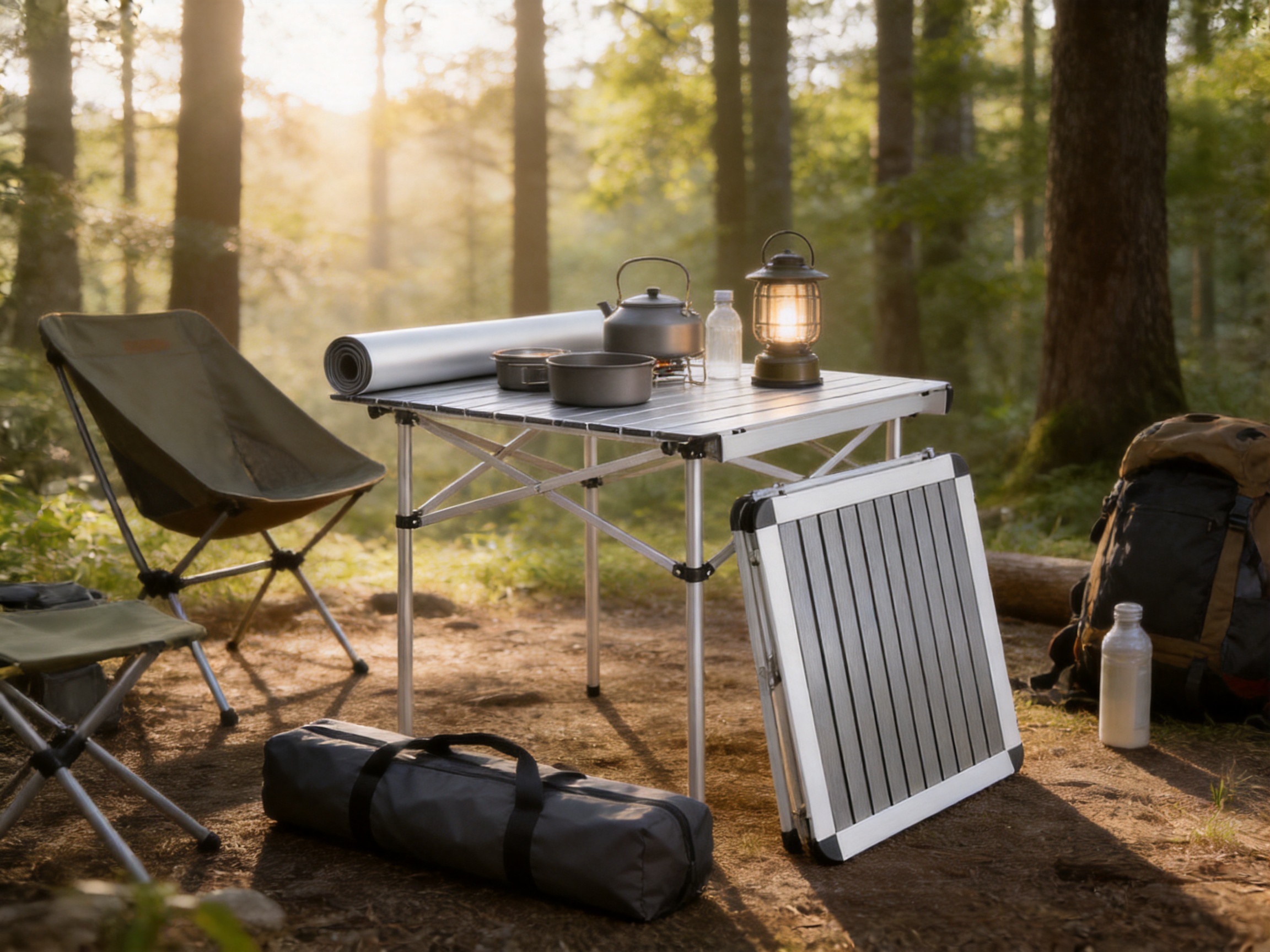
Material Selection: Why Aluminum Alloy Is Well Suited for Camp Furniture
Outdoor furniture must balance several requirements that are often in tension: strength, low weight, corrosion resistance, cost control, ease of manufacturing, surface quality, and long-term reliability. Aluminum alloy is one of the best materials for meeting these combined demands.
Weight is a major factor. Campers frequently carry tables from vehicles to campsites, lift them into roof boxes, move them around cooking areas, or pack them with other gear. A lighter table is simply used more often because it is less burdensome. If a table is too heavy, users may leave it at home, even if it is strong.
Corrosion resistance is equally important. Camping tables are exposed to rain, dew, spilled drinks, food residue, wet grass, humid storage areas, and sometimes salty coastal environments. Corrosion-prone furniture can deteriorate quickly, creating rough surfaces, weakened parts, and an unattractive appearance. Aluminum alloy helps address these risks.
Strength is another requirement. Aluminum alloy allows the table to remain lightweight while still offering solid support when engineered correctly. The structural design, including frame geometry and connection points, is as important as the material itself. A well-designed aluminum frame distributes load effectively and reduces unwanted flexing.
Surface feel and appearance also matter. Aluminum alloy can deliver a clean, modern, technical look that aligns well with outdoor gear aesthetics. It can be finished to resist wear and provide a more refined user experience. For retail display and online sales, the perceived quality of aluminum surfaces can support stronger product positioning.
From a manufacturing perspective, aluminum alloy is also highly workable. It can be cut, formed, machined, and assembled with high consistency when supported by mature production systems. This makes it suitable for scalable manufacturing, quality control, and repeatable product batches, which are essential for global buyers and long-term distribution partners.
Roll-Up Tabletop Design: Compact, Fast, and Field-Friendly
The roll-up tabletop is one of the most important functional elements of the product. A camping table must offer enough usable surface area while packing into a manageable size. The roll-up structure addresses this challenge by allowing the tabletop to fold into a narrow bundle rather than remaining as a bulky flat panel.
This design improves portability. Users can store the table in a vehicle trunk, camper van, garage shelf, or storage closet more easily. For outdoor retailers and distributors, compact packing can also reduce handling difficulties and improve storage efficiency.
The roll-up format also supports fast setup. When the tabletop unfolds quickly and aligns with the support structure, users can assemble the table without complex steps. This is particularly useful when arriving at camp late, cooking in windy weather, or setting up during group activities where time matters.
Another benefit is damage management during transport. Long rigid surfaces can be awkward and vulnerable to impact at corners. A roll-up tabletop divides the surface into manageable sections and stores more compactly in the bag, reducing the chance of large-panel bending or breakage during normal handling.
In practical use, the tabletop can serve as a cooking preparation station, dining platform, equipment sorting surface, coffee area, lantern stand, or general campsite organizer. The user gains a clean, elevated surface that keeps items away from dust, mud, insects, and uneven ground.
For families, the roll-top table helps create a recognizable dining and activity area. For serious campers, it supports camp kitchen workflow. For outdoor professionals, it provides a repeatable furniture solution that can be deployed quickly and packed consistently.
Stability and Load-Bearing Performance
Stability is one of the most important performance indicators for any camping table. A table used outdoors must handle uneven ground, shifting loads, and repeated contact. It may be used for hot kettles, cookware, food boxes, water containers, and tools. If it shakes too much, the user loses confidence.
This product emphasizes a sturdy structure with strong load-bearing capacity. While exact load limits depend on model specifications and testing standards, the design intent is clear: the table is not only for decorative use but for real outdoor tasks. The support frame is intended to provide dependable strength for camping, cooking, and dining.
A strong load-bearing table improves safety. Outdoor cooking often involves hot pans, boiling water, knives, and fuel. A stable platform helps reduce accidents. This is especially important when children, pets, or group members are moving around the campsite.
Stability also affects comfort. A table that moves every time someone cuts food or places a cup on it becomes irritating. Over a weekend or longer trip, small frustrations accumulate. A sturdier table improves the entire camp experience because it allows users to focus on cooking, conversation, and rest.
From a product development standpoint, stability is achieved not only by using stronger materials but also through thoughtful geometry and precise connections. The frame, tabletop interface, folding points, and support distribution must work together. Poorly fitted parts can create wobble even when materials appear strong. This is where manufacturing accuracy becomes a key advantage.
Tool-Free Assembly and Ease of Use
Tool-free assembly is a significant competitive advantage because it reduces friction between purchase and use. A product that looks good but is difficult to assemble may receive negative feedback, even if its materials are acceptable. Outdoor users value intuitive operation.
At camp, users may be tired, cold, or in a hurry. They may be setting up in fading light or light rain. They may not want to open a manual or search for a screwdriver. A tool-free table allows the setup process to be simple and direct.
This feature also reduces the risk of missing parts. Small screws, nuts, and tools can be lost easily in grass, sand, or gravel. Once a critical part is missing, the table may become unusable. Tool-free assembly lowers this risk and supports a more reliable long-term experience.
For commercial buyers, tool-free assembly improves customer satisfaction and reduces after-sales problems. Retail consumers are more likely to recommend a table that they can set up immediately. Rental companies and outdoor activity organizers benefit because many different users can operate the product without specialized knowledge.
Ease of use is also linked to inclusivity. A good camping table should not require advanced outdoor experience. Families, casual campers, and new users should be able to assemble it confidently. This broadens the product’s market appeal.
Portability and Storage Bag Value
The portable storage bag may appear to be a simple accessory, but it is an important part of the product system. Outdoor gear is rarely used in isolation. It must be stored, carried, loaded, unloaded, transported, and packed repeatedly. A storage bag improves every one of these stages.
When the table is packed into a dedicated bag, all parts stay together. This reduces the chance of leaving components behind at home or at camp. It also makes the table easier to stack with tents, chairs, cookware, and other equipment.
The bag helps protect the table from scratches and impact during transport. Camping gear often rubs against metal stoves, hard containers, cooler boxes, and vehicle interiors. A protective bag keeps the table cleaner and preserves the product’s appearance for longer.
For users living in apartments or smaller homes, compact storage is very valuable. The roll-up table can be stored vertically or horizontally in a closet, storage room, or vehicle. This makes it more convenient than bulky one-piece tables.
For distributors and retailers, the storage bag also improves product presentation. It communicates that the table is designed as complete outdoor equipment, not just a loose set of parts. A well-considered carry solution can influence customer purchasing decisions.
Manufacturing Strengths Behind the Product
CragHaven Outdoor is not positioned merely as a sourcing intermediary. The company describes itself as an outdoor brand and cross-border manufacturing partner with a focus on mountaineering, hiking, and camping scenarios. This distinction matters because outdoor products require more than low-cost procurement. They require understanding of use cases, materials, repeatability, testing, and long-term supply stability.
The company’s product development philosophy is based on three practical principles: products should be designed for weather, terrain, and time; each feature should solve a real-world problem; and materials should be selected for durability and long-term use rather than short-term trends. These principles are highly relevant to the aluminum roll-top table.
Designing for weather means considering moisture, heat, dust, wind, and temperature variation. For a camping table, this leads naturally to corrosion-resistant materials, easy cleaning, and fast packing. Designing for terrain means considering uneven ground, transport over rough surfaces, and outdoor handling. Designing for time means focusing on repeated folding, repeated loading, repeated storage, and consistent performance after many trips.
CragHaven Outdoor’s emphasis on sampling, testing, and optimization helps reduce uncertainty. In outdoor furniture production, small defects can have large effects. An imprecise connection may create wobble. A weak joint may fail after repeated folding. A poor surface finish may scratch easily. A storage bag with weak stitching may fail before the table itself. Iteration during sampling allows these issues to be identified and corrected before larger production runs.
The company benefits from China’s mature and efficient manufacturing system. Hangzhou and the surrounding Zhejiang region are connected to strong supply chains, experienced material processing, metal fabrication capability, packaging resources, and export logistics. This ecosystem supports scalable production and stable delivery for global markets.
For cross-border buyers, manufacturing strength includes communication as well as production. CragHaven Outdoor states that it communicates in a professional, Western-market-oriented way and prioritizes long-term partnerships. This matters because international buyers need clear product information, realistic quality expectations, consistent packaging, and responsiveness during sampling and production.
Advanced Manufacturing Process Considerations
Although the visible product is a simple camping table, the manufacturing process behind a reliable roll-top table involves multiple quality-sensitive steps. These include material selection, cutting, shaping, surface treatment, frame assembly, component fitting, stability checks, load-related evaluation, accessory matching, packaging, and final inspection.
Material selection begins with choosing aluminum alloy that meets the intended balance of strength, weight, corrosion resistance, and processing stability. Poor material selection can lead to bending, denting, inconsistent finish, or weak connection points. A company focused on long-term value must choose materials that remain reliable beyond initial appearance.
Cutting and forming require dimensional accuracy. Roll-up tabletop sections must align properly. Frame components must fit together without excessive looseness or difficult assembly. If tolerances are inconsistent, the user may experience rattling, wobble, or difficulty during setup. Precision at this stage directly affects field performance.
Surface treatment and finishing influence both durability and user perception. Outdoor tables are touched frequently and exposed to outdoor elements. Edges should be comfortable, surfaces should be appropriately finished, and visible parts should meet quality expectations. A refined surface is not only cosmetic; it contributes to safe handling and long-term satisfaction.
Assembly design must balance firmness and convenience. If parts are too tight, users struggle during setup. If they are too loose, the table lacks stability. Tool-free assembly requires especially careful design because the product must lock or support itself reliably without extra hardware. This is a manufacturing and engineering challenge, not merely a marketing feature.
Quality checks should evaluate the table as a system. The tabletop, frame, joints, storage bag, and packaging all interact. A strong frame is not enough if the bag fails quickly. A good tabletop is not enough if the support system is unstable. A responsible manufacturing partner evaluates the complete user experience.
Designing for Weather, Terrain, and Time
The table reflects a design philosophy that prioritizes real outdoor environments. Weather affects material durability and user behavior. Rain and dew can wet surfaces. Sun can heat materials. Wind can pressure lightweight objects. Dust and cooking residue can accumulate. A practical table must tolerate these conditions without becoming difficult to use.
Terrain affects stability and handling. Campsites are rarely perfectly flat. Users may place the table on packed dirt, gravel, grass, sand, wooden decks, or uneven campground surfaces. A sturdy frame and reliable structure help maintain usability in these environments. While no folding table can eliminate all effects of uneven terrain, stronger structural design improves confidence.
Time affects every folding product. The first setup is not the true test. The real test comes after many trips, many folds, and many loading cycles. Hinges, joints, tabletop sections, frame interfaces, and storage accessories must remain functional after repeated use. Designing for time means looking beyond first impressions and focusing on long-term consistency.
This long-term approach helps separate a serious outdoor product from a short-lived promotional item. Consumers increasingly recognize the value of durable products, especially in outdoor markets where equipment failure can disrupt trips. Retailers and distributors also benefit from fewer returns and stronger customer loyalty.
Use Scenarios: From Camp Kitchen to Outdoor Dining
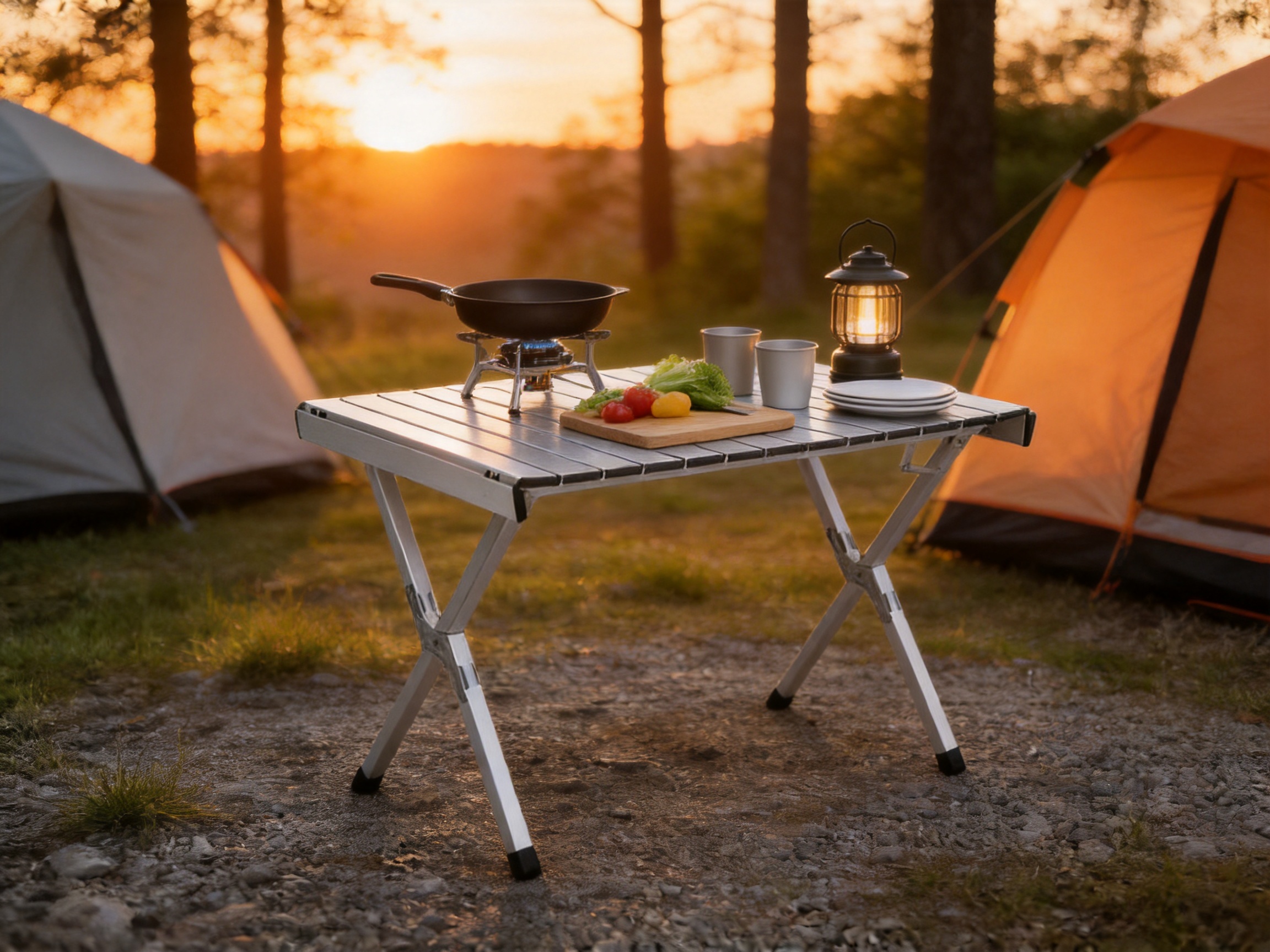
The table is especially useful as a camp kitchen workstation. Users can place a stove, cutting board, ingredients, cookware, utensils, and seasoning containers on a raised surface. This creates a cleaner and more efficient cooking process than working directly on the ground or on unstable boxes.
For outdoor dining, the table provides a central location for meals. Whether used by a couple, a family, or a small group, it helps organize plates, bowls, cups, and shared dishes. The elevated surface makes eating more comfortable and reduces the likelihood of food contamination from ground dust or insects.
For mountaineering base camps and hiking support camps, the table can serve as a gear organization platform. Maps, radios, first-aid kits, headlamps, gloves, and small tools can be placed where they are visible and accessible. Organization is important in outdoor environments because misplaced gear can waste time or create safety issues.
For fishing trips, the table can support bait containers, tackle boxes, drinks, snacks, or cleaning tools. For beach or lakeside use, the aluminum alloy construction offers advantages in damp conditions compared with more moisture-sensitive materials, although normal care and cleaning are still recommended after exposure to sand or salt air.
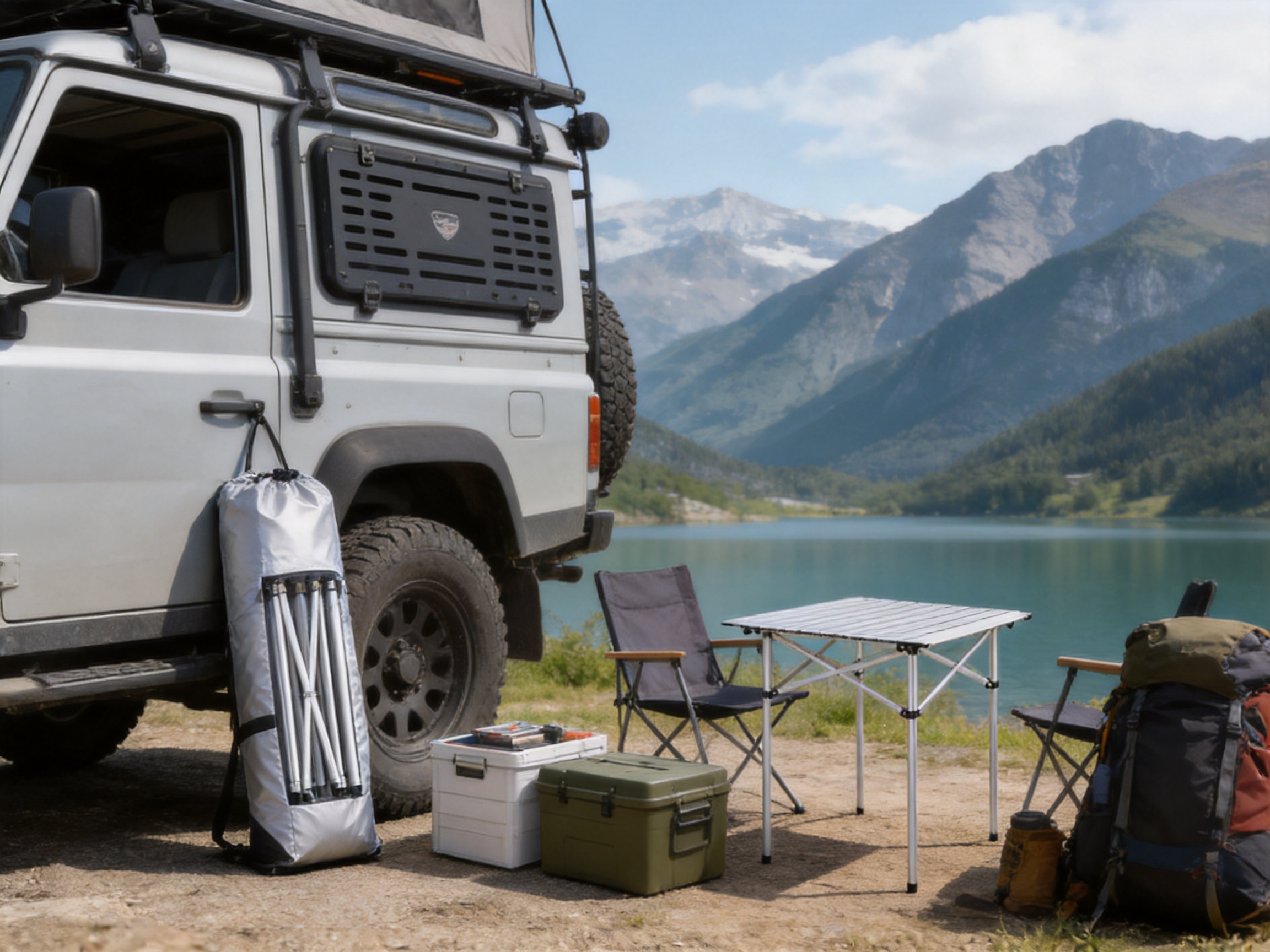
For overlanding and vehicle-based travel, the table’s compact storage is especially useful. Vehicle travelers often carry tents, awnings, recovery tools, water containers, cookware, chairs, and personal bags. A roll-up table that packs neatly into a storage bag fits well into this equipment ecosystem.
The table is also useful beyond traditional camping. It can be used for backyard barbecues, outdoor markets, emergency preparedness, field work, photography support, roadside meals, and temporary workstations. This versatility increases the product’s value and expands its potential market.
User Experience: What Makes the Table Feel Reliable
A reliable camping table is not judged only by specifications. Users evaluate it through repeated interactions: how it feels when carried, how fast it opens, how stable it is once assembled, how the tabletop sits on the frame, how it handles cleaning, and how easily it returns to the bag.
The lightweight aluminum alloy construction makes the first interaction easier. A product that is not burdensome to lift is more likely to be brought on trips. Portability increases real usage frequency, which is the ultimate measure of product value.
The quick unfolding tabletop reduces setup resistance. Users appreciate gear that works naturally. If a table requires excessive force, unclear steps, or repeated adjustment, it becomes a source of frustration. A smooth roll-up and fold-down process supports positive reviews and repeat purchases.
The sturdy frame contributes to trust. When a user places cookware or a full water bottle on the table, they expect the surface to remain stable. Stability creates confidence, and confidence creates satisfaction. In outdoor gear, trust is one of the strongest forms of product value.
The storage bag completes the experience. After a trip, users are often tired and want to pack efficiently. If the table fits back into its bag without difficulty, the final impression remains positive. Poor packing experiences can damage perception even if the table performs well during use.
Market Positioning for Global Buyers
This aluminum alloy folding table is well positioned for global outdoor markets because it combines recognizable consumer demand with practical manufacturing advantages. Camping furniture remains a strong category because it supports comfort, lifestyle, and functional outdoor use. A table is an easy-to-understand product with broad appeal across experience levels.
For retailers, the product offers clear selling points: aluminum alloy construction, roll-up tabletop, compact storage, tool-free assembly, strong load-bearing structure, and portable carry bag. These benefits can be communicated easily in online listings, retail displays, product videos, and sales conversations.
For distributors, the table fits into a broader camping furniture assortment. It can be paired with folding chairs, cookware, storage boxes, tents, tarps, and outdoor lighting. Its versatile use cases make it suitable for seasonal promotions, family camping collections, and outdoor cooking bundles.
For private-label buyers, the product offers opportunities for customization in packaging, branding, color direction, and accessory configuration, depending on production planning and order requirements. Because CragHaven Outdoor has a cross-border manufacturing orientation, it can support buyers who need not only a product but also communication, sampling, and supply chain coordination.
For outdoor brands seeking stable manufacturing partners, the company’s emphasis on durability, testing, and long-term cooperation is valuable. Many buyers are trying to reduce supply chain uncertainty, avoid inconsistent quality, and develop products that can remain in their catalogs for multiple seasons. A practical, well-made camping table is suitable for this strategy.
Quality Control and Long-Term Reliability
Quality control for camping furniture should focus on the actual conditions of use. Visual inspection is important, but it is not enough. A table must be checked for component fit, assembly smoothness, frame stability, tabletop alignment, surface finish, storage bag durability, and packaging protection.
Repeated assembly testing is especially important. A folding table may perform well once but develop looseness if the design or production quality is poor. Testing repeated setup and takedown cycles helps evaluate whether the product can maintain performance over time.
Load-related evaluation is also important. Since the table is intended for cooking and dining, it should support typical camping loads with confidence. The frame should distribute weight effectively, and the tabletop should remain stable under normal use. Responsible testing helps prevent unrealistic claims and improves customer trust.
Environmental considerations should also be part of quality thinking. Moisture exposure, dust, temperature changes, and transport vibration can all affect performance. Aluminum alloy helps address corrosion concerns, but proper finishing and component matching remain important.
Packaging inspection supports successful international delivery. A product may be well made but arrive damaged if packaging is weak. Cross-border shipments involve stacking, handling, vibration, and long transit times. A manufacturing partner that understands export requirements helps protect product quality from factory to customer.
Sustainability Through Durability
Sustainability in outdoor gear is often discussed in terms of materials, but durability is one of the most practical sustainability factors. Products that last longer reduce replacement frequency and waste. A camping table built with durable aluminum alloy and a reliable structure supports longer service life compared with disposable or short-lived alternatives.
Long-term value also benefits consumers financially. A slightly better-built table that can be used repeatedly over many seasons may be more economical than a cheaper table that fails after limited use. For serious outdoor users, reliability is worth paying for because gear failure affects trip quality.
CragHaven Outdoor’s stated focus on long-term use rather than short-term trends aligns with this approach. By emphasizing materials, testing, and optimization, the company supports products that are meant to perform beyond initial sale.
For retailers, durable products can strengthen brand reputation. Customers remember outdoor gear that works well. A reliable camping table can become a repeat-use item that reinforces trust in the seller and manufacturer.
Care and Maintenance Recommendations
Although aluminum alloy is corrosion-resistant and suitable for outdoor use, proper care will help extend the table’s life. After use, users should wipe away food residue, moisture, sand, and dirt before storage. Keeping the table clean helps preserve surface quality and prevents unnecessary wear.
If the table is used near saltwater or in sandy environments, it is advisable to clean and dry it more carefully before packing. Salt and sand can affect moving parts, surfaces, and storage bags over time. Simple maintenance after each trip can greatly improve long-term performance.
Users should avoid placing the table directly in fire or exposing it to extreme heat beyond normal outdoor cooking conditions. While aluminum alloy handles typical outdoor use well, direct flame or excessive heat can affect materials and finishes.
The table should be packed into its storage bag after drying. Storing wet gear for long periods can create odors, stains, or unnecessary wear on fabric accessories. A dry, clean storage condition helps keep the complete product ready for the next trip.
When setting up the table, users should choose the flattest available surface and distribute heavier items evenly. Like all portable folding furniture, performance is best when used within reasonable load expectations and on appropriate ground.
Q&A Section
What is the main advantage of this aluminum alloy folding table?
The main advantage is its balance of portability, strength, corrosion resistance, and ease of use. The selected aluminum alloy construction keeps it lightweight and durable, while the roll-up tabletop and tool-free assembly make it convenient for camping, cooking, and outdoor dining.
Why is a roll-up tabletop useful for camping?
A roll-up tabletop provides a practical surface while allowing the table to pack into a compact form. This saves storage space in vehicles, tents, garages, and closets. It also makes transport easier compared with many rigid tabletop designs.
Is aluminum alloy better than plastic or steel for a camping table?
For many outdoor scenarios, aluminum alloy offers a stronger balance. It is lighter than many steel structures, more corrosion-resistant when properly finished, and more durable and heat-tolerant than many plastic alternatives. It also gives the table a more professional outdoor appearance.
Does the table require tools for assembly?
No. The table is designed for tool-free assembly, which makes setup faster and reduces the risk of losing small hardware at camp. This is useful for families, casual campers, outdoor clubs, and commercial users.
What outdoor activities is the table suitable for?
It is suitable for camping, outdoor cooking, dining, fishing, overland travel, picnic use, backyard gatherings, field organization, and base camp support. Its compact storage and sturdy structure make it adaptable to many outdoor environments.
How does the storage bag improve the product?
The storage bag keeps components organized, makes the table easier to carry, protects it during transport, and improves storage at home or in a vehicle. It also contributes to a more complete and convenient user experience.
What makes the product competitive for global buyers?
The product has clear consumer benefits, practical material advantages, compact packaging potential, and strong market appeal in the camping furniture category. CragHaven Outdoor’s focus on manufacturing, sampling, testing, and cross-border communication further supports international buyer confidence.
How should the table be maintained after outdoor use?
Users should wipe off moisture, dust, food residue, and sand before storage. After use near saltwater or in wet environments, the table should be cleaned and dried carefully. It should be stored in its bag in a dry place.
Conclusion: A Reliable Camp Table Built for Practical Outdoor Use
The outdoor aluminum alloy folding table is a strong example of practical camping furniture designed around real user needs. It is lightweight, corrosion-resistant, quick to assemble, compact to store, and sturdy enough for common camp cooking and dining tasks. These qualities make it more than a simple accessory; it becomes a central piece of equipment for organized outdoor living.
Its advantages over many competing tables come from the combination of aluminum alloy material, roll-up tabletop design, tool-free assembly, load-bearing structure, and portable storage. Plastic, steel, and wooden alternatives each have limitations, while this product offers a balanced solution for modern campers who want durability without unnecessary weight or complexity.
Behind the product, CragHaven Outdoor brings manufacturing-oriented strengths, including practical design thinking, material discipline, sampling, testing, optimization, and cross-border supply chain understanding. The company’s philosophy of designing for weather, terrain, and time aligns well with the demands of outdoor furniture, where long-term reliability matters as much as appearance.
For consumers, the table improves the camping experience by creating a stable, clean, and organized surface. For retailers and distributors, it offers clear selling points and broad market application. For outdoor brands and private-label buyers, it represents a practical product category supported by manufacturing capability and long-term partnership potential.
In a market filled with camping furniture that often looks similar at first glance, true value is found in materials, structure, usability, manufacturing consistency, and long-term performance. This aluminum roll-top folding table is designed to deliver those values in a compact and field-friendly form.
References
1. Horrocks, A. R., and Anand, S. C. Handbook of Technical Textiles. Woodhead Publishing.
2. Ashby, M. F. Materials Selection in Mechanical Design. Butterworth-Heinemann.
3. Davis, J. R. Aluminum and Aluminum Alloys. ASM International.
4. International Organization for Standardization. General Principles for Product Quality Management and Manufacturing Inspection.
5. Outdoor Industry Association. Outdoor Participation and Consumer Equipment Trends Report.
6. Norman, D. A. The Design of Everyday Things. Basic Books.
7. Ulrich, K. T., and Eppinger, S. D. Product Design and Development. McGraw-Hill Education.
Product: Outdoor aluminum alloy folding table, camping table, egg roll table


- Phone: +86-15968800379
- E-mail: [email protected]
- Address: Room 1002, Huishang Building, Gongshu District, Hangzhou City, Zhejiang Province.
Copyright © CragHaven Outdoor All Rights Reserved. Outdoor Gear Manufacturers Wholesale Mountaineering Camping Gear Suppliers
