

 English
 Deutsch
 Español
 Français

Portable Outdoor Extendable Folding Stool: A Practical Guide to Adjustable Seating for Hiking, Camping, and Travel
Content
- 1 Introduction: Rethinking Portable Outdoor Seating
- 2 What Makes an Extendable Folding Stool Different?
- 3 Core Product Advantages
- 4 Advantages Compared with Conventional Outdoor Seating
- 5 Use in Hiking and Mountaineering
- 6 Use in Camping and Basecamp Activities
- 7 Use in Fishing, Travel, and Outdoor Events
- 8 Material Selection and Structural Reliability
- 9 Manufacturing Process and Quality Approach
- 10 Why Manufacturing Capability Matters to Global Buyers
- 11 Private-Label and OEM Potential
- 12 Practical Selection Guide for Buyers
- 13 Responsible Use and Maintenance
- 14 Environmental and Long-Term Value
- 15 Q&A
- 15.1 What is a portable outdoor extendable folding stool?
- 15.2 How small is the stool when folded?
- 15.3 What material is used for the stool?
- 15.4 Can the stool be used on uneven terrain?
- 15.5 Is the stool suitable for long periods of fishing?
- 15.6 Does the stool require assembly?
- 15.7 How does it compare with a full-size camping chair?
- 15.8 Can the stool be used as a step or ladder?
- 15.9 What should buyers evaluate before placing an order?
- 15.10 Why is supplier manufacturing capability important?
- 15.11 How should the stool be cleaned?
- 15.12 Who can benefit from this type of product?
- 16 Conclusion
- 17 References
- 18 Product: Portable outdoor storage folding extendable stool, adjustable hiking stool
Introduction: Rethinking Portable Outdoor Seating
Outdoor equipment is becoming lighter, more compact, and more adaptable to changing user needs. Hikers, campers, anglers, travelers, and visitors at outdoor events increasingly want products that provide practical support without adding unnecessary bulk to their equipment. Seating is a clear example of this change. Traditional outdoor chairs can be comfortable, but they may be too large for short hiking breaks, crowded campsites, public queues, or activities that require frequent movement. A portable extendable folding stool offers a different solution by combining compact storage, adjustable height, quick deployment, and convenient transportation in one product.
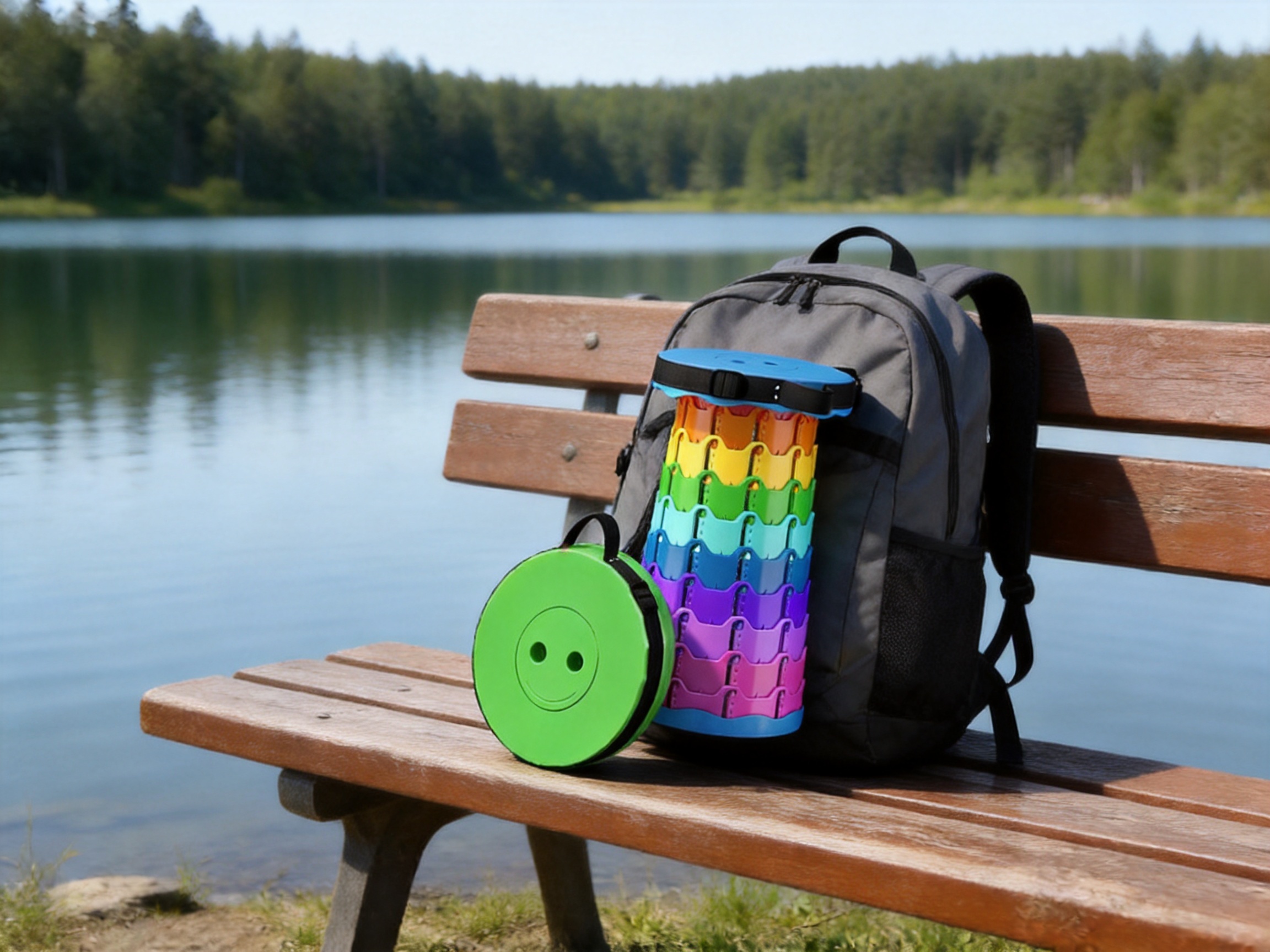
The portable outdoor storage folding extendable stool is designed for users who need a personal seat that can be carried almost anywhere. Its folding structure allows it to be stored in a small space, while its extendable design allows the seating height to be adjusted according to personal preference and ground conditions. When folded, the stool is approximately the size of a water bottle, making it suitable for backpacks, vehicle compartments, equipment boxes, and other limited storage areas.
This product is especially useful in outdoor situations where comfort and mobility must be balanced. A mountaineer may need a brief rest during a route. A camper may require a convenient seat near a tent or cooking area. An angler may remain in one location for several hours. A traveler may need a seat while waiting in a queue or at an outdoor event. In each case, the product provides a practical seating option without the storage requirements of a full-size chair.
Beyond its compact appearance, the stool represents a broader approach to outdoor product development. Its value comes from the interaction of material selection, structural engineering, manufacturing consistency, usability, and scenario-based design. CragHaven Outdoor develops this type of product with attention to actual outdoor conditions, including uneven terrain, repeated folding, transportation, changing weather, and long-term use.
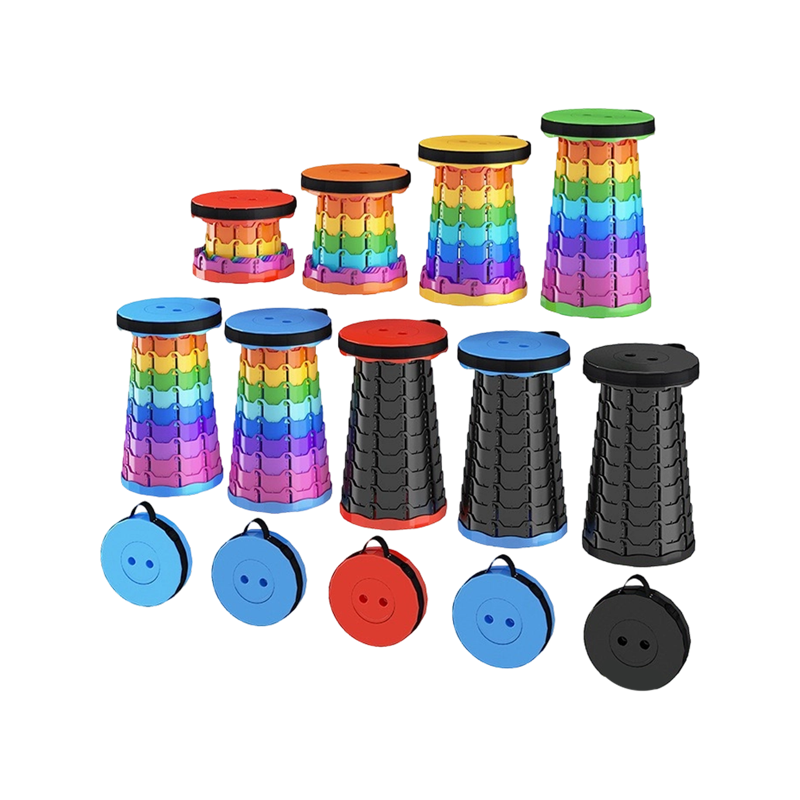
Portable outdoor storage folding extendable stool, adjustable hiking stool
What Makes an Extendable Folding Stool Different?
A conventional fixed-height stool offers a simple sitting function, but it may not adapt well to different users or environments. A conventional camping chair often provides more back support, yet it usually requires more room during transportation and setup. The extendable folding stool occupies a useful position between these two categories. It is more compact than a full chair and more adjustable than a fixed stool.
The product uses an innovative folding structure that allows users to unfold it and use it immediately. After use, it can be folded again for storage and transportation. This simple operating sequence is important in outdoor environments because users may be standing on uneven ground, carrying other equipment, or working under time pressure. Equipment that requires complicated assembly can become inconvenient, particularly during short breaks or frequent location changes.
The extendable mechanism provides another important distinction. Rather than limiting the user to one fixed seating height, the stool allows the height to be adjusted to suit different conditions. A lower setting may be useful during a short rest or when the user wants to maintain a compact profile. A higher setting may be more convenient for waiting, fishing, or sitting beside a camping table. Adjustable positioning also helps users respond to uneven ground, although the stool should always be placed on a firm and stable surface before use.
The product is made from thickened polypropylene, commonly known as PP. This material supports the product’s lightweight design while providing a practical level of strength for portable seating applications. Material selection is not based only on reducing weight. The material must also tolerate repeated folding, everyday transportation, contact with outdoor surfaces, and routine handling. The product’s structure and material work together to provide stable support while keeping the stool easy to carry.
Another difference is storage efficiency. Bulky chairs can occupy valuable space in a backpack or vehicle, especially when users are already carrying tents, sleeping bags, cooking equipment, clothing, food, and safety supplies. A compact folding stool can be placed in a side pocket, equipment case, or small storage compartment. This helps users organize their gear more efficiently and may allow them to carry a seat in situations where a larger chair would be impractical.
Core Product Advantages
Compact Folding Structure
The most visible advantage of the stool is its compact folding structure. When extended, it provides a stable sitting platform. When folded, it becomes much smaller and easier to store. This transformation allows one product to serve two very different needs: usable seating at the destination and minimal volume during transportation.
For backpackers, volume can be as important as weight. A product that is light but difficult to pack may still create problems when combined with other equipment. The bottle-sized folded format helps users place the stool in spaces that would not accommodate a conventional chair. It can be carried inside a hiking pack, secured to the exterior of a bag, or stored in a car without occupying the space required by a large frame.
Compact storage also improves household organization. Outdoor equipment is often used seasonally or intermittently, and products that are difficult to store may be left in garages, closets, or vehicle trunks. A folded stool can be placed with other small accessories, reducing clutter and making it easier to locate when needed.
Adjustable Height for Different Environments
Outdoor surfaces are rarely as predictable as indoor floors. Campsites may include compact soil, grass, gravel, or slightly uneven ground. Hiking routes may include rest areas with different elevations. Fishing locations may have banks, platforms, or other surfaces that require a different sitting position. Adjustable height provides users with greater flexibility than a fixed stool.
The height adjustment feature can also accommodate different users. People vary in body height, leg length, sitting preferences, and activity requirements. One user may prefer a lower position for a short break, while another may prefer a higher position for longer periods of sitting. A flexible design is therefore more versatile for families, groups, retail customers, and outdoor rental operators.
Adjustment is most valuable when it is straightforward. The user should be able to extend the stool, select a suitable height, and confirm that the structure is secure before sitting. The product’s practical appeal depends on this direct relationship between movement and function. It is not designed to be an elaborate piece of furniture; it is designed to provide a quick and adaptable rest point in outdoor environments.
Lightweight Transportation
Outdoor users often carry equipment over long distances. Every additional item must justify its space and weight. The stool’s lightweight PP construction and folding design address this concern by offering useful seating without the burden of a large metal or fabric chair.
Lightweight equipment can improve the overall experience of hiking and travel. Users can move more easily between campsites, viewpoints, fishing locations, event areas, and transportation points. A compact stool may also be helpful for older users or people who prefer to reduce the physical demands of carrying outdoor gear.
Lightweight does not mean that the product should be treated carelessly. Users should follow the product’s intended use instructions, place it on stable ground, avoid sudden lateral forces, and remain within the specified load capacity. Responsible use helps preserve the product and supports safe operation over time.
Immediate Setup and Pack-Up
Many outdoor situations require equipment that can be used without delay. A person waiting outdoors may not want to assemble a chair. A hiker stopping for a short rest may not want to unpack multiple components. A fisherman may need to move between locations and pack the seat repeatedly. The folding stool is designed around this need for immediate deployment.
The unfold-and-use format reduces preparation time and makes the product suitable for short activities as well as extended outdoor stays. When the activity ends, the stool can be folded and returned to storage. This simple process is one of the reasons compact folding seating has become increasingly popular in modern outdoor recreation.
| Product Feature | User Benefit | Typical Application |
|---|---|---|
| Folding structure | Reduces storage volume and simplifies transportation | Hiking, camping, travel, and outdoor events |
| Extendable design | Allows users to select a practical sitting height | Uneven terrain, fishing, and waiting |
| Thickened PP material | Balances lightweight handling with structural support | Frequent outdoor carrying and repeated use |
| Quick deployment | Reduces setup time | Short rest breaks and temporary seating |
| Compact folded size | Uses less backpack and vehicle space | Backpacking, road travel, and equipment storage |
Advantages Compared with Conventional Outdoor Seating
Compared with Fixed Stools
A fixed stool may be simple and reliable, but its single height can limit comfort and adaptability. If the ground is uneven or the user has different seating preferences, the fixed design may not provide the desired position. A fixed stool can also take up more space because its legs or frame cannot be reduced significantly during transportation.
The extendable folding stool offers greater flexibility in both use and storage. It can be adjusted during use and folded after use. This gives it an advantage in situations where portability and adaptability are more important than a permanently rigid structure.
Compared with Full-Size Camping Chairs
Full-size camping chairs often include backrests, armrests, wider seats, and larger supporting frames. These features may be useful for extended relaxation, but they also increase product size, weight, and setup requirements. A large chair may be suitable for a vehicle-based campsite but less convenient for a mountain trail, public queue, fishing trip, or crowded event.
The extendable stool is intended for a different use pattern. It prioritizes mobility, low storage volume, and rapid deployment. It may not replace a full chair in every situation, but it can be more practical when users need a personal rest seat that can be carried over distance and stored in a small space.
Compared with Disposable or Low-Durability Seating
Temporary seating made from weak materials may be inexpensive, but it can create waste and provide inconsistent performance. Outdoor equipment is exposed to repeated handling, transportation, and contact with different surfaces. A reusable stool made from a durable material offers a more responsible and practical alternative to disposable seating for regular users.
Durability should be evaluated together with design quality. Strong material alone cannot compensate for weak connections, poor alignment, or inconsistent manufacturing. The product’s folding elements, support structure, seat platform, and adjustment mechanism must work as an integrated system.
Compared with Improvised Outdoor Seating
Outdoor users sometimes sit on rocks, logs, backpacks, coolers, or equipment cases. These options may be available, but they are not always clean, stable, comfortable, or suitable for every environment. A dedicated portable stool provides a more predictable and organized seating solution.
Using a purpose-designed product can also reduce the need to place personal equipment on damp or dirty ground. The stool can be deployed when the user arrives and folded away when the activity resumes, supporting better equipment management and personal comfort.
Use in Hiking and Mountaineering
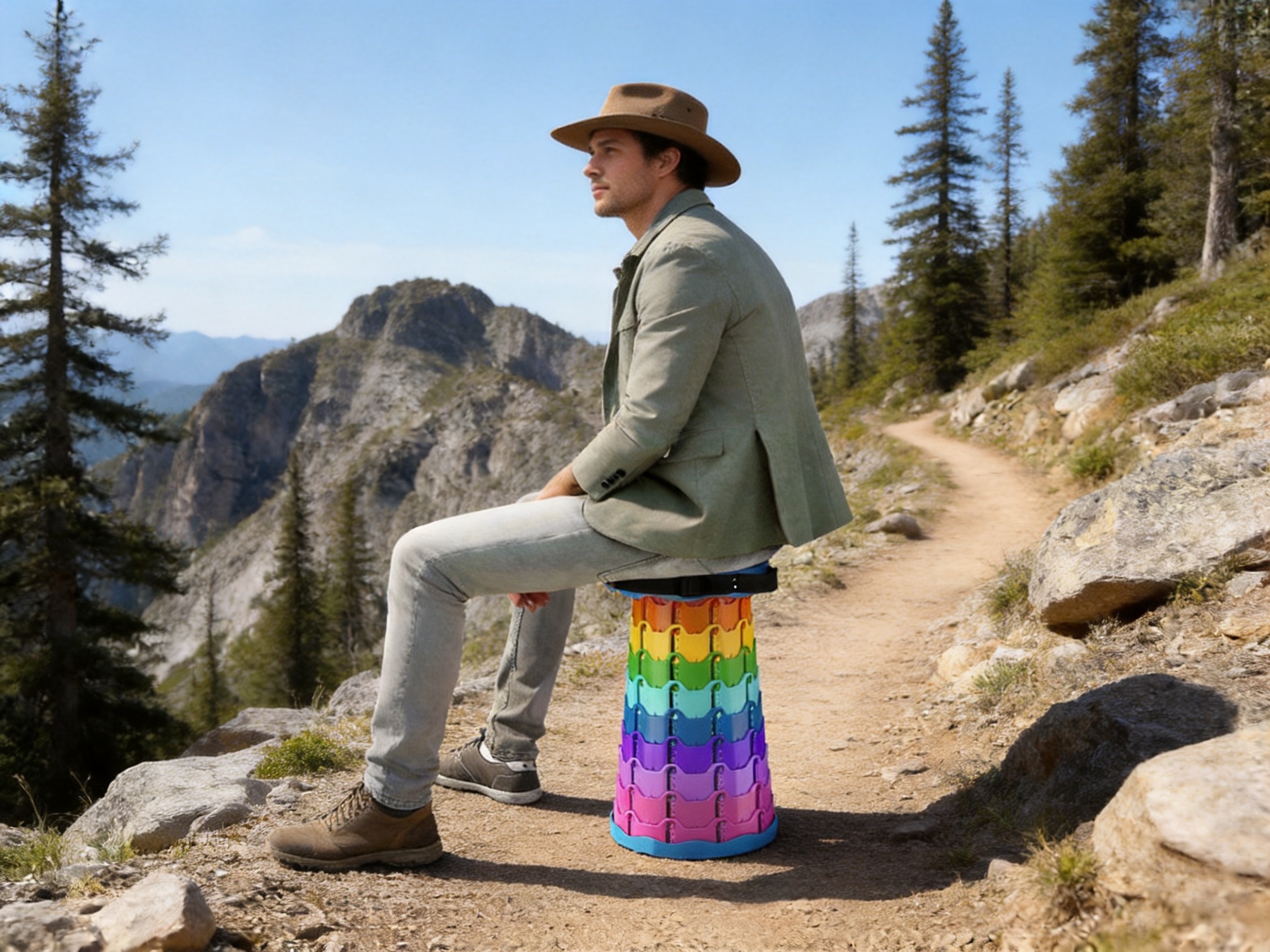
Hiking often involves periods of movement followed by short or moderate rest intervals. A compact stool can be useful at trail junctions, viewpoints, shelters, transportation stops, and designated rest areas. Because it folds into a small package, users can carry it without giving up significant backpack space.
During a hiking break, the stool provides a defined sitting surface rather than requiring the user to sit directly on the ground. This can be valuable in damp, cold, muddy, or rocky environments. It may also help users conserve energy during longer routes by providing a comfortable place to pause, organize equipment, drink water, or prepare a snack.
Mountaineering and high-altitude activities require careful attention to weight, terrain, weather, and safety. The stool should be viewed as a convenience accessory rather than a substitute for essential safety equipment. It should be used only on a stable surface and should not be placed near unstable edges, steep slopes, loose rocks, or other hazards. When conditions are severe, users should prioritize route safety, shelter, weather protection, and communication equipment.
The compact format can also be helpful for guides, outdoor instructors, photographers, and field workers who spend long periods at specific locations but still need to move equipment between sites. For professional users, repeated pack-up and deployment make structural reliability and manufacturing consistency especially important.
Use in Camping and Basecamp Activities
Camping involves many tasks that are easier when users have a convenient seat. Preparing food, sorting equipment, cleaning utensils, waiting for a cooking process, organizing clothing, and relaxing near a tent can all benefit from temporary seating. A stool can be placed near a camp kitchen, beside a storage box, or in an area where a large chair would be inconvenient.
Its adjustable height is useful around different camping surfaces. Users may set the stool lower when sitting on open ground or choose a higher position near a portable table. Since campsite conditions vary, the ability to change the seating height can improve practical comfort without requiring multiple pieces of furniture.
The stool is also suitable for minimalist camping. Some campers intentionally reduce the amount of equipment they carry and prefer products that perform more than one practical role. Although the stool is primarily designed for seating, its compact form and easy storage make it a useful part of a broader lightweight camping system.
Campers should protect the stool from misuse. It should not be used as a ladder, stepping platform, table for heavy loads, or support for climbing into a vehicle or tent. It should also be kept away from open flames and excessive heat. Following these precautions helps preserve the PP structure and reduces the risk of accidents.
Use in Fishing, Travel, and Outdoor Events
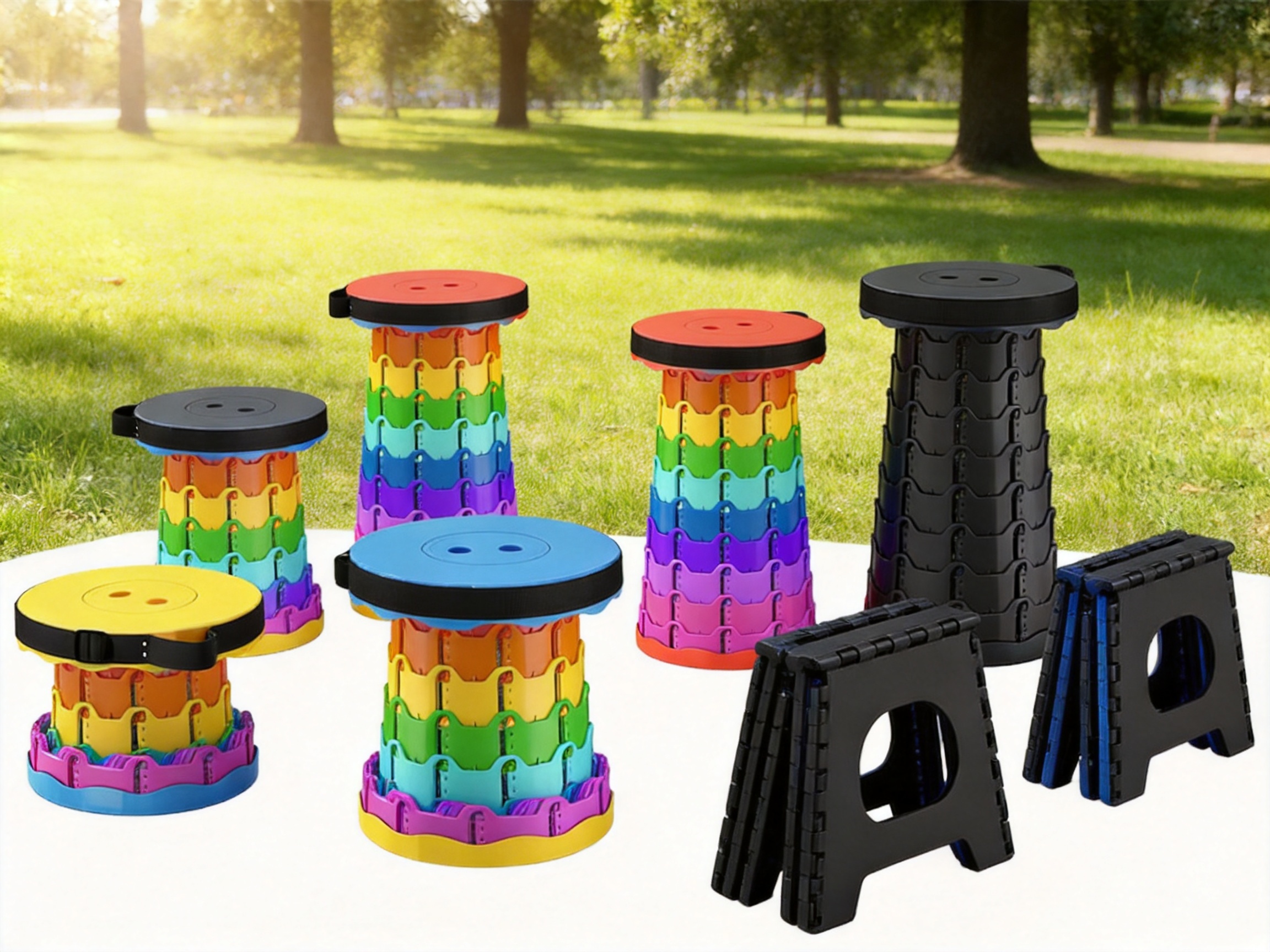
Fishing often requires users to remain in one location for extended periods. A portable stool can provide a convenient seat at a fishing spot while remaining easy to move when conditions change. Its compact folded size is especially valuable when the user must carry rods, tackle boxes, bait, food, water, and weather protection.
The adjustable design can be useful near different banks and platforms. However, fishing areas may include wet ground, mud, slippery surfaces, and unstable edges. The stool should be positioned carefully on a firm, level area, and users should check the surface before sitting. The product is not intended to provide support near water or to replace proper personal flotation equipment.
For travel, a compact stool can be useful at outdoor attractions, transport stops, campsites, markets, and recreational areas. It can be stored in a vehicle or travel bag and taken out when seating is limited. Travelers may appreciate the fact that the stool does not require a separate carrying case or complicated assembly process.
Outdoor events create another practical application. People may wait in lines, attend exhibitions, watch performances, participate in community activities, or work at temporary booths. A folding stool can provide personal seating while remaining compact enough for crowded environments. Event organizers, vendors, and service teams may also use it as a portable support item during setup and operation.
Material Selection and Structural Reliability
Material selection is one of the most important stages in the development of portable outdoor equipment. The chosen material must meet several competing requirements. It should be light enough for transportation, strong enough to support the intended user, resistant to ordinary wear, and suitable for efficient manufacturing.
Thickened PP is used in this stool to support a balance between weight and load-bearing performance. Polypropylene is widely used in practical products because it can be formed into precise components, offers useful impact resistance, and is relatively easy to maintain. The material is also suitable for products that need repeated movement and convenient cleaning.
The frame and support elements must distribute weight effectively. A well-designed support structure reduces concentrated stress and helps maintain stability when the user sits normally. Folding products require particular attention because moving parts can experience repeated mechanical loads. Hinges, connections, locking areas, and telescoping sections must be designed to operate consistently throughout regular use.
Seat comfort also depends on the relationship between the seating surface and the supporting structure. A seat that is too narrow may feel unstable, while a seat that is too large may increase folded volume. Product development therefore requires a balance between usable seating area, compactness, weight, and structural performance.
| Component Area | Primary Design Consideration | Quality Objective |
|---|---|---|
| Seat platform | Support, usable area, and user comfort | Stable seating under normal loading |
| Folding connections | Repeated opening and closing | Smooth and consistent movement |
| Extendable sections | Height control and alignment | Secure adjustment at selected positions |
| Supporting base | Contact with outdoor surfaces | Reliable balance on suitable ground |
| Material finish | Handling, cleaning, and outdoor exposure | Practical long-term usability |
Users should understand that no portable stool can eliminate every outdoor risk. Stability depends on the product, the user, the selected height, the ground surface, weather, and the way the stool is loaded. The best results come from using the stool as intended and checking the structure before every use.
Manufacturing Process and Quality Approach
Scenario-Based Product Development
CragHaven Outdoor approaches product development from actual outdoor usage scenarios rather than from specifications alone. The company focuses on mountaineering, hiking, and camping environments, where equipment must respond to weather, terrain, transportation, and time. This approach begins with identifying a practical problem and then evaluating how design, material, and production can solve it.
For a folding stool, scenario-based development includes examining how users carry the product, how quickly they need to deploy it, how they adjust the height, where they place it, and how often they fold it. These observations influence dimensions, surface treatment, component relationships, and packaging decisions. The goal is to ensure that the product performs as a complete solution rather than as a collection of isolated features.
Outdoor equipment may look simple, but simple products often require careful development. The smaller the product, the more important each component becomes. A small change in the folding mechanism can affect storage size, user operation, stability, and manufacturing cost. CragHaven’s development process emphasizes sampling, testing, and optimization before a product is prepared for broader production.
Material Evaluation
Material evaluation considers more than appearance. PP components must be examined for consistency, forming quality, surface condition, and compatibility with the intended structure. Material selection is reviewed in relation to impact, repeated folding, temperature changes, handling, and storage.
Different parts may require different specifications even when they are made from the same general material family. The seat surface may prioritize support and comfort, while connection areas may require precise dimensions and dependable fit. Manufacturing teams must control material processing so that finished components remain consistent from one production batch to another.
A stable material supply is also important for global product programs. Retailers and distributors need confidence that samples, initial orders, and repeat orders will maintain comparable performance and appearance. Consistent procurement and production planning help reduce uncertainty for customers who depend on long-term supply.
Sampling and Prototype Optimization
Sampling is a key stage in the company’s product development process. Early samples help reveal practical issues that may not be obvious in drawings or digital models. Engineers and product teams can evaluate folding movement, adjustment behavior, dimensions, surface feel, storage volume, and overall handling.
Prototype testing may lead to changes in the shape of a support component, the position of a connection, the tolerance of an extendable section, or the balance between material thickness and weight. This iterative process is valuable because outdoor users interact with products in ways that vary from indoor testing. A stool may be carried in a crowded backpack, opened on dusty ground, stored in a hot vehicle, or folded repeatedly during a single trip.
Optimization continues until the product meets functional expectations and can be manufactured efficiently. This combination of usability and production awareness is important for OEM and private-label customers. A design that works only as a prototype may not provide reliable value at commercial volumes. Product development must therefore consider repeatability from the beginning.
Manufacturing Precision and Process Control
Reliable manufacturing depends on controlled processes. For a folding stool, process control may include material preparation, component forming, dimensional inspection, assembly, functional checks, surface inspection, and packaging review. Each stage contributes to the final product experience.
Dimensional accuracy is particularly important for folding and telescoping parts. If components are too loose, the product may feel unstable. If they are too tight, adjustment may become difficult or inconsistent. Correct tolerances support smooth operation while preserving the intended structural relationship between parts.
Assembly workers and quality personnel must also check the interaction between components. A product may pass a visual inspection yet fail to provide a satisfactory user experience if the folding movement is rough, a locking area is difficult to operate, or the seat does not align correctly. Functional inspection therefore complements appearance inspection.
CragHaven integrates design and manufacturing capabilities to support closer communication between product development and production teams. This reduces the risk that design decisions will be disconnected from manufacturing realities. It also supports faster adjustments when a customer requests packaging changes, color options, structural refinements, or private-label requirements.
Testing for Repeated Use
Outdoor products should be assessed for the type of use they are expected to receive. A folding stool may be opened and closed many times, transported across different locations, exposed to dust, and placed on a variety of suitable surfaces. Repeated-use evaluation helps identify weaknesses before products reach customers.
Testing can include folding-cycle checks, adjustment checks, visual inspections, load-related evaluations, surface reviews, and packaging assessments. The specific test method should correspond to the product design, target market, and customer requirements. Testing does not remove the need for responsible use, but it provides a stronger foundation for consistent product performance.
Quality control is most effective when it is integrated into the entire development and manufacturing process. Final inspection alone cannot correct every issue. Quality should be considered during material selection, tooling, sampling, assembly, packaging, and shipment preparation.
Why Manufacturing Capability Matters to Global Buyers
Retailers and distributors selecting outdoor gear suppliers need more than attractive product images. They need dependable quality, clear communication, consistent delivery, and the ability to develop products for specific market requirements. A supplier’s manufacturing capability directly influences the reliability of the finished product and the stability of the customer’s supply chain.
CragHaven Outdoor is based in Hangzhou, China, and works as both an outdoor brand and a cross-border manufacturing partner. Its product focus includes mountaineering, hiking, camping, and related outdoor scenarios. This combination allows the company to approach products from both a user perspective and a production perspective.
For OEM customers, the ability to participate in design and manufacturing can be more valuable than simple factory sourcing. A supplier involved in the full product process can discuss functional requirements, materials, samples, packaging, and production feasibility in a coordinated manner. This can reduce communication gaps and help customers move from an early concept to a stable commercial product.
Supply chain consistency is another consideration. Outdoor brands often need products to remain available across seasons and markets. Stable production planning, repeatable specifications, and documented quality procedures can help reduce unexpected variations between orders. These factors are especially important for retailers that build product lines around dependable outdoor accessories.
Professional communication also supports international cooperation. Global buyers may require clear product information, accurate packaging details, market-specific documentation, private-label coordination, and practical responses to technical questions. A manufacturing partner that understands Western-market expectations can make the cooperation process more efficient.
Private-Label and OEM Potential
The extendable folding stool is suitable for outdoor retailers, camping brands, travel suppliers, fishing product distributors, promotional programs, and lifestyle companies seeking a compact seating product. Its simple, recognizable function makes it adaptable to different product ranges and customer groups.
OEM and private-label projects may involve adjustments to product color, logo presentation, packaging design, instruction materials, carton configuration, or product combinations. Any modification should be evaluated against the structure and manufacturing process. For example, a change in surface treatment or packaging may affect cost, production timing, or inspection requirements.
CragHaven’s participation in design and manufacturing supports a more integrated development process. Customers can discuss target users, expected sales channels, performance priorities, and packaging needs before confirming a production plan. The company’s stated emphasis on sampling, testing, and optimization helps ensure that commercial decisions are informed by actual product evaluation.
For wholesale buyers, the product also offers opportunities for category expansion. It can be sold as a standalone accessory or grouped with hiking packs, camping equipment, fishing gear, travel items, or outdoor event supplies. Its small folded format can simplify warehouse storage and reduce the space required for retail display.
Practical Selection Guide for Buyers
Define the Primary Use Case
Before purchasing or specifying an outdoor stool, buyers should identify the main user scenario. A hiking accessory may require the lowest practical weight and smallest folded size. A camping product may prioritize a more comfortable seat and a height suitable for tables. A fishing product may need packaging that communicates repeated outdoor use and easy transportation.
Understanding the primary scenario helps determine which features deserve the greatest attention. A product designed for every possible use may become unnecessarily complicated. A focused product developed around real user needs is often easier to operate, manufacture, explain, and market.
Review Folded Dimensions and Weight
Folded dimensions affect how customers carry and store the product. Buyers should consider backpack pockets, vehicle compartments, warehouse shelving, shipping cartons, and retail displays. A product that performs well but cannot fit common storage spaces may be less attractive to the target market.
Weight should be reviewed together with structural requirements. Excessive material reduction may affect durability, while excessive thickness may reduce portability. The best design achieves a practical balance for the intended users and application.
Evaluate Adjustment and Stability
The adjustment mechanism should be simple enough for ordinary users to understand. Customers should be able to extend the stool, choose the desired height, and recognize when it is properly positioned. The product should also provide a stable base when used on an appropriate surface.
Buyers should request product samples and evaluate the adjustment process directly. Testing the product in different appropriate environments can reveal whether the height range, operating force, seat size, and folded format match the target market.
Confirm Material and Quality Requirements
Material information helps buyers evaluate expected product performance, but it should be considered together with manufacturing quality. Buyers may ask about the PP specification, component construction, inspection procedures, load-related testing, folding-cycle evaluation, and packaging protection.
For private-label projects, it is useful to establish acceptance criteria before mass production. These criteria may include appearance, dimensions, color consistency, folding function, adjustment function, labeling, carton quality, and quantity accuracy. Clear requirements reduce misunderstandings between the buyer and supplier.
Consider Packaging and Logistics
The compact shape of the stool can provide advantages in shipping and storage, but packaging still requires careful planning. Packaging should protect the product from scratches, deformation, dust, and damage during transportation. Carton dimensions should be optimized for warehouse handling and shipping efficiency.
Retail packaging should also explain the main benefits in a clear manner. Customers generally want to understand what the product is, how it folds, how it adjusts, where it can be used, and what precautions apply. Accurate information supports better purchasing decisions and reduces product returns caused by incorrect expectations.
Responsible Use and Maintenance
Before each use, users should inspect the stool for visible damage, cracks, loose parts, deformation, or abnormal movement. The folding and extendable sections should operate as intended. If the structure does not lock, align, or support the user normally, the stool should not be used until the issue has been addressed.
The stool should be placed on a firm, stable, and reasonably level surface. Wet, loose, muddy, steep, or slippery ground may increase the risk of movement. Users should avoid placing only part of the base on a rock, edge, step, or unstable object.
The product should be used only for seated support within its stated capacity. It should not be used as a ladder, climbing aid, jumping platform, vehicle support, or substitute for safety equipment. Sudden twisting, rocking, or side-loading may create forces that differ from normal sitting and may affect stability.
Cleaning is generally straightforward. Users can remove ordinary dirt with a soft cloth, mild soap, and water, followed by thorough drying. Harsh solvents, abrasive tools, and excessive heat should be avoided unless specifically approved for the material. The stool should be stored dry and protected from prolonged high temperatures or direct exposure when not in use.
Regular care can extend product life. Folding mechanisms should be kept free from excessive dirt, and users should avoid forcing parts that do not move normally. Proper maintenance is particularly important for products used frequently by guides, event staff, fishing operators, and commercial outdoor programs.
Environmental and Long-Term Value
A reusable folding stool can support more responsible consumption by replacing repeated purchases of low-quality temporary seating. Its compact design may also help reduce the storage and transportation burden associated with larger products. These benefits depend on durable construction, appropriate use, and a product life long enough to offset the resources used in manufacturing.
Long-term value is not limited to environmental considerations. A product that remains useful across hiking, camping, fishing, travel, and events provides greater value than a product limited to one narrow situation. Multifunctionality can help users purchase fewer separate accessories and simplify their outdoor equipment systems.
Manufacturing responsibility also matters. Consistent processes, careful material selection, reduced production waste, effective packaging, and reliable quality control can improve the overall efficiency of a product program. Buyers increasingly evaluate suppliers according to both product performance and the stability of the partnership behind the product.
CragHaven Outdoor’s stated philosophy emphasizes durability, reliability, real-world use, and long-term cooperation. Its approach is based on the view that outdoor products should be developed for weather, terrain, and time rather than for catalog appearance alone. This principle is relevant to the stool because its success depends on repeated practical use rather than on visual novelty.
Q&A
What is a portable outdoor extendable folding stool?
It is a compact outdoor seat with a folding structure and adjustable height. The stool can be unfolded for immediate use and folded again for transportation and storage. It is intended for activities such as hiking, camping, fishing, travel, queuing, and outdoor events.
How small is the stool when folded?
The product is designed to fold to approximately the size of a water bottle. The exact dimensions should be confirmed from the current product specification, but its compact format is intended to minimize backpack, vehicle, and storage-space requirements.
What material is used for the stool?
The product uses thickened PP material. This material supports a lightweight structure while providing practical load-bearing performance for normal seated use. The final performance also depends on the design of the support structure, connections, adjustment sections, and manufacturing quality.
Can the stool be used on uneven terrain?
The adjustable design helps the stool adapt to different height requirements and some variations in terrain. However, it must always be placed on a firm and stable surface. It should not be used on steep, loose, slippery, unstable, or dangerous ground.
Is the stool suitable for long periods of fishing?
Yes, it can provide convenient temporary seating for fishing and other activities that require users to remain in one location. Users should select a stable position away from unsafe edges and follow the product’s load and use instructions.
Does the stool require assembly?
The product is designed for quick deployment. Its folding structure allows users to unfold it and use it immediately rather than assembling multiple separate parts. Users should still confirm that the stool is fully extended and properly positioned before sitting.
How does it compare with a full-size camping chair?
A full-size camping chair may provide a backrest, armrests, and a larger sitting area, but it usually occupies more space and may be heavier. The extendable folding stool focuses on portability, compact storage, adjustable height, and fast setup. It is most suitable when mobility and space efficiency are priorities.
Can the stool be used as a step or ladder?
No. It is designed for seated support only and should not be used as a step, ladder, climbing aid, or elevated work platform. Such use can create forces and balance conditions that the product was not designed to withstand.
What should buyers evaluate before placing an order?
Buyers should review folded dimensions, product weight, adjustment range, material, structural stability, packaging, inspection standards, sample performance, target application, and supply capability. OEM customers should also confirm logo, color, packaging, labeling, and quality requirements before mass production.
Why is supplier manufacturing capability important?
Manufacturing capability affects consistency, repeat orders, quality control, delivery planning, and the ability to make practical product adjustments. A supplier involved in design, sampling, testing, and production can help reduce communication gaps and supply-chain uncertainty.
How should the stool be cleaned?
Ordinary dirt can generally be removed with a soft cloth, mild soap, and water. The stool should be dried before storage. Abrasive tools, harsh chemicals, and excessive heat should be avoided unless the product instructions specifically allow them.
Who can benefit from this type of product?
Hikers, campers, anglers, travelers, outdoor event visitors, field workers, guides, retailers, distributors, and private-label outdoor brands may benefit from the product. Its usefulness is greatest for people who need compact, adjustable, and quickly deployable seating.
Conclusion
The portable outdoor storage folding extendable stool responds to a clear need in modern outdoor recreation: comfortable temporary seating that does not create a significant transportation or storage burden. Its folding structure, adjustable height, thickened PP construction, and quick deployment make it suitable for hiking, camping, fishing, travel, queuing, and outdoor events.
Compared with fixed stools, it offers greater adjustment and storage flexibility. Compared with full-size camping chairs, it provides a more compact and mobile alternative. Compared with improvised or disposable seating, it offers a dedicated reusable solution with a clearer performance purpose.
Its value also depends on the manufacturing process behind the product. Material evaluation, prototype sampling, functional testing, dimensional control, assembly inspection, packaging management, and supply-chain coordination all contribute to consistent performance. CragHaven Outdoor combines product development with manufacturing participation to support outdoor equipment designed for actual environments rather than catalog presentation alone.
For consumers, the stool provides a practical personal seat that can accompany a wide range of outdoor activities. For retailers and global buyers, it represents a versatile product category with strong portability, broad application potential, and opportunities for OEM or private-label development. When selected, manufactured, and used responsibly, an extendable folding stool can become a dependable part of a lightweight and organized outdoor equipment system.
References
1. CragHaven Outdoor. Product information for the portable outdoor storage folding extendable stool, adjustable hiking stool.
2. CragHaven Outdoor. Company information and product development principles for mountaineering, hiking, and camping equipment.
3. General principles of outdoor equipment design, including portability, stability, adjustability, material selection, and repeated-use evaluation.
4. General polypropylene material considerations for lightweight consumer products and outdoor equipment components.
5. General guidance for safe use, inspection, storage, and maintenance of portable folding seating products.
Product: Portable outdoor storage folding extendable stool, adjustable hiking stool


- Phone: +86-15968800379
- E-mail: [email protected]
- Address: Room 1002, Huishang Building, Gongshu District, Hangzhou City, Zhejiang Province.
Copyright © CragHaven Outdoor All Rights Reserved. Outdoor Gear Manufacturers Wholesale Mountaineering Camping Gear Suppliers
