

 English
 Deutsch
 Español
 Français
Why a Black Vinyl Butterfly Canopy Is a Practical Choice for Outdoor Picnics and Camping
Content
- 1 Understanding the Product’s Core Design
- 2 Black Vinyl Coating and Solar Protection
- 3 Why 210D Oxford Cloth Matters
- 4 Frame Height, Steel Thickness, and Stability
- 5 Butterfly Geometry for Broad Shade Coverage
- 6 Rain Protection and Everyday Weather Management
- 7 Advantages over Lightweight Standard Canopies
- 8 Designed for Practical Outdoor Scenarios
- 9 Manufacturing Strengths and Product Development Approach
- 10 OEM and Private-Label Potential
- 11 Installation Guidance for Better Performance
- 12 Care, Cleaning, and Storage
- 13 Purchasing Considerations for Retailers and End Users
- 14 Q&A: Common Questions About the Canopy
- 14.1 Q1: Is this product designed for backpacking?
- 14.2 Q2: What is the main advantage of the black vinyl coating?
- 14.3 Q3: Why use 210D Oxford cloth instead of a thinner fabric?
- 14.4 Q4: Does the butterfly shape help during rain?
- 14.5 Q5: Is the canopy suitable for windy beaches?
- 14.6 Q6: Does a taller frame make the canopy less stable?
- 14.7 Q7: Can the canopy remain outside for an entire season?
- 14.8 Q8: How should the product be stored after rain?
- 14.9 Q9: What should OEM buyers discuss with the manufacturer?
- 14.10 Q10: What makes the manufacturer suitable for global outdoor retailers?
- 15 Conclusion
- 16 References
- 17 Product: Outdoor picnic camping black vinyl tent, rainproof and sunshade canopy, picnic butterfly curtain canopy
Outdoor shelter has to do more than create a pleasant visual impression. It must provide dependable shade, manage rain, withstand repeated setup, and remain practical for the people who use it. At a family picnic, beach gathering, campsite, or outdoor event, a canopy is often exposed to changing sunlight, gusts of wind, damp ground, sand, accidental contact, and frequent folding. These conditions quickly reveal the difference between a lightweight shelter designed mainly for occasional convenience and a better-engineered canopy designed around real outdoor use.
The outdoor picnic camping black vinyl tent described in this article is built around that practical idea. It combines a black vinyl-coated canopy, 210D high-density Oxford cloth, a taller and thicker steel frame, and a butterfly-shaped roof profile. Together, these features create a shelter intended to deliver strong shade coverage, rain protection, usable headroom, and dependable structural support for family picnics, beach relaxation, camping areas, and other stationary outdoor applications.
Although it is described as a tent, its design is especially suitable for canopy-style use. It is not positioned as a lightweight backpacking shelter for long-distance mountain travel. Instead, it is a spacious outdoor shade and weather-protection solution for situations where users can transport the product by vehicle or carry it a short distance to a destination. This distinction is important because product quality should always be judged against the intended scenario. A stationary family canopy benefits from robust materials and a stronger frame, while an alpine backpacking shelter prioritizes minimum weight and compact packing.
Understanding the Product’s Core Design
The product combines four main design decisions. First, its black vinyl coating is selected to improve solar protection and support weather resistance. Second, the canopy uses 210D high-density Oxford cloth, a balanced fabric choice that aims to resist tearing and everyday wear without becoming unnecessarily heavy. Third, the taller and thicker steel frame provides more headroom and a stronger structural foundation than a very light frame. Finally, the butterfly-shaped geometry creates a broad, dual-slope roof that improves shade distribution and encourages rain runoff.
None of these features should be considered in isolation. A dark coating is more useful when it is applied to a durable base fabric. A strong fabric cannot perform properly if the frame twists or collapses under ordinary outdoor stress. A tall frame needs appropriate tube thickness and secure joints. A broad roof requires reliable anchoring because a large surface area can catch wind. The value of this canopy comes from the way its materials and geometry work together as a complete system.
This system-based approach also explains why the product can offer advantages over many low-cost standard fabric canopies. Basic canopies often focus on low purchase price and minimal packed weight. They may use thin polyester, light tubing, flat roof panels, or simple joints. Such products can be suitable for occasional use in calm weather, but they may provide less consistent shade, lower abrasion resistance, reduced headroom, and less confidence during repeated seasonal use.
| Design element | Primary purpose | Practical benefit |
|---|---|---|
| Black vinyl coating | Reduce solar transmission and support weather resistance | Deeper shade and better suitability for extended daytime use |
| 210D Oxford cloth | Balance fabric durability and manageable weight | Improved resistance to everyday wear, setup stress, and small tears |
| Taller steel frame | Increase interior headroom | More comfortable use for families and seated groups |
| Thicker steel tubing | Improve resistance to bending | Greater structural support when properly anchored |
| Butterfly-shaped roof | Create a broad, dual-slope canopy profile | Wide shade coverage and improved rain runoff |
| System-based anchoring | Transfer wind loads safely to the ground | Better stability than relying on frame strength alone |
Black Vinyl Coating and Solar Protection
Sun protection is one of the most important functions of a picnic canopy. Standard light-colored fabric may reflect a significant amount of visible light, but color alone does not determine how much ultraviolet radiation reaches the shaded space below. The weave, coating, thickness, and construction of the fabric all influence its solar performance. A black vinyl coating creates a dense surface layer that absorbs a substantial portion of incoming ultraviolet radiation before it can pass through the canopy material.
This helps explain why a black-coated canopy can feel noticeably darker and more protective than an uncoated fabric of similar apparent thickness. The underside receives less direct brightness, and the covered area becomes more comfortable during long periods of daytime use. This is particularly useful at beaches, parks, sporting areas, and family picnic sites where users may remain under the canopy for several hours rather than simply passing through it.
The coating also contributes to the visual character of the product. Black creates a clean, practical appearance that can suit commercial rental operations, event use, outdoor retail collections, and private family equipment. Unlike very light fabric, a dark surface may make ordinary dust or minor marks less visually prominent. Nevertheless, the canopy should still be cleaned and dried after use because appearance does not replace maintenance.
It is important to use accurate language when discussing sun protection. A canopy creates shade and can reduce exposure, but it should not be treated as a substitute for sunscreen, protective clothing, sunglasses, or other personal sun-safety measures. Actual protection depends on fabric construction, installation angle, gaps at the sides, reflected radiation, and the position of the sun. The product’s black vinyl coating is a meaningful design advantage, but responsible outdoor use still requires complete sun-protection habits.
Black Vinyl Compared with Standard Polyester
Many entry-level canopies rely on untreated or lightly treated polyester because it is economical, flexible, and easy to pack. Polyester remains a useful material, but a standard polyester canopy may allow more light and ultraviolet radiation through the fabric, especially when the material is thin or lightly colored. It may also provide a brighter and warmer environment beneath the roof during prolonged exposure.
Vinyl-coated fabric is generally heavier than an equivalent lightweight polyester canopy. That added weight is a tradeoff rather than a defect. For vehicle-based outings and stationary installations, the additional material can be worthwhile because it supports deeper shade, a more substantial hand feel, and improved resistance to repeated weather exposure. The product is therefore better matched to beaches, parks, family gathering areas, and campsites with vehicle access than to ultralight trekking routes.
Compared with a very thin fabric, a vinyl-coated canopy may also retain its weather-protection qualities more consistently across repeated seasonal use. Direct sunlight can accelerate the degradation of some coatings and textiles. A properly formulated vinyl surface is selected to resist this type of exposure and help maintain water resistance and structural integrity over time. Users should still avoid leaving any temporary canopy permanently erected in severe weather, because prolonged exposure to high wind, storms, and abrasive conditions can damage even a well-built shelter.
Why 210D Oxford Cloth Matters
The canopy uses 210D high-density Oxford cloth, a fabric choice that sits between ultralight material and very heavy-duty textile. The “210D” designation refers to denier, a measurement related to the mass and thickness of the yarn. Denier is useful for comparing fabrics, but it is not the only factor that determines performance. Weave density, coating quality, yarn strength, stitching, seam construction, and finishing all affect how a canopy behaves in outdoor conditions.
Fabric below approximately 150D can be very light and easy to pack, but it may be more vulnerable to punctures, abrasion, and tearing when exposed to rough ground or repeated setup. Fabrics above 300D can offer additional robustness, yet they may add substantial weight and reduce portability without delivering a proportional benefit for a recreational canopy. A 210D Oxford construction offers a practical middle ground for products that need to be transported, assembled, folded, and stored regularly.
Oxford cloth is associated with a basket-style weave in which yarns cross in a manner that distributes stress across more than one thread line. When a small nick or puncture occurs, this structure can help reduce the tendency of the damage to spread rapidly compared with a simpler and less dense plain weave of similar yarn size. This does not make the canopy impossible to tear. Sharp branches, exposed metal, improper folding, and excessive tension can still cause damage. It does, however, make the fabric more appropriate for repeated family and recreational use.
High-density construction also supports a more stable base for the vinyl coating. A coating performs best when it is applied to a fabric that maintains its shape and resists excessive stretching. During setup, wind, and folding, the base cloth experiences movement. A balanced Oxford material helps the finished canopy maintain a practical combination of strength, flexibility, and manageable weight.
Resistance to Wear in Real Outdoor Scenarios
A canopy is exposed to more than wind and rain. It may brush against tree branches during setup, touch sandy ground at a beach, be placed near gravel, or be folded while small particles remain on the surface. Children may accidentally lean against the side, and users may pull the fabric into position more forcefully than intended. These repeated minor stresses can shorten the life of a weak fabric even when no single incident appears serious.
The 210D Oxford cloth is selected with these conditions in mind. Its durability supports repeated setup and takedown, while its weight remains more manageable than a much heavier industrial textile. A coated and finished surface can also reduce friction against common outdoor contact points. However, users should avoid dragging the canopy across rough ground, placing it on sharp objects, or forcing the frame when the fabric is caught. Good handling is part of product performance.
Fabric durability is also influenced by seams and load distribution. A strong panel can still fail if stitching is weak or if tension is concentrated at a small attachment point. For that reason, manufacturing quality must include attention to cut accuracy, seam alignment, reinforcement zones, and the way fabric connects to the frame. These areas are central to a repeatable product rather than optional cosmetic details.
Frame Height, Steel Thickness, and Stability
The taller steel frame serves two functions. The most obvious is improved headroom. Users can stand, move around, organize picnic supplies, and enter or leave the covered area with less crouching. Greater height also makes the canopy more comfortable for family groups, especially when chairs, tables, coolers, and other equipment occupy the floor area.
The less visible function is the relationship between height and structural design. A tall frame experiences leverage during wind loading. If the tubing is too thin, the increased height can make the structure more vulnerable to bending or twisting. The product addresses this relationship by pairing a taller frame with thicker steel components. The objective is not simply to make the canopy higher; it is to create a more useful structure without sacrificing reasonable support.
Steel offers a useful combination of rigidity, strength, and cost efficiency for a stationary or vehicle-transported canopy. Compared with very light aluminum or thin composite components, steel can provide a more substantial feel and better resistance to deformation when appropriately designed. Its main tradeoffs are weight and the need for protective finishing against corrosion. Proper storage, drying, and care around damaged surface finishes help preserve the frame over time.
Joints Are as Important as Tubes
Frame tubes are only one part of a canopy structure. Joints, hinges, connectors, brackets, and attachment points transfer loads from one section to another. In many folding structures, the joint area experiences concentrated stress during opening, closing, and wind movement. A tube may remain straight while a weak connector loosens, bends, or fractures.
A serious manufacturing assessment therefore looks beyond tube diameter. It considers joint fit, connection geometry, weld quality where applicable, reinforcement, folding movement, and the consistency of assembly. Reinforced or securely constructed joints can distribute loads across a wider area than simple friction-fit connections. This reduces the likelihood that one small point will carry the entire force generated by the canopy.
Manufacturing consistency is especially important for folding products. If one joint is misaligned, the frame may require excessive force to open. If a connection is too loose, the structure may move unnecessarily in use. If a bracket has sharp edges, it may damage the canopy fabric. Repeatable assembly control helps prevent these small issues from becoming field failures.
Butterfly Geometry for Broad Shade Coverage
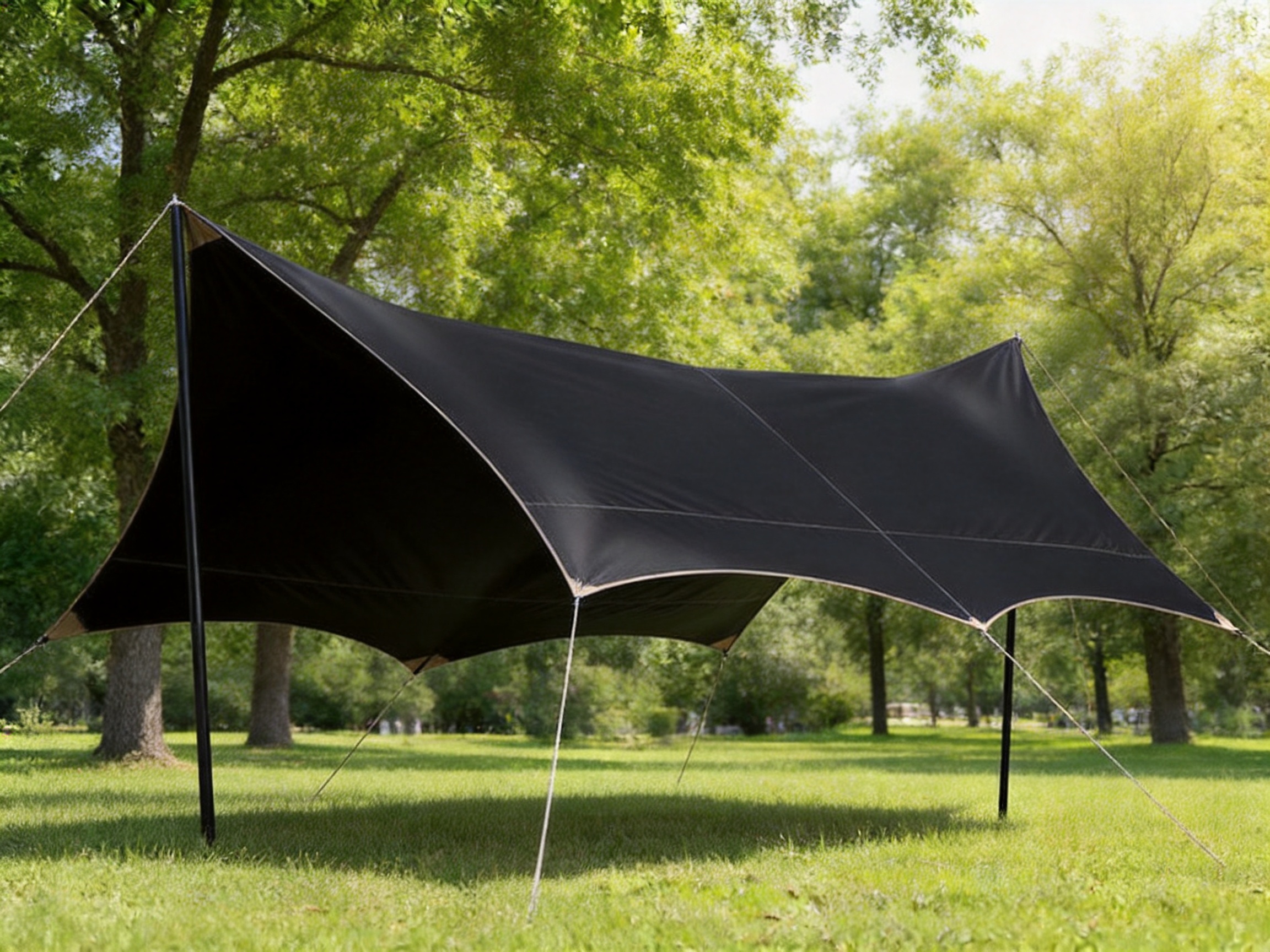
The butterfly profile gives the canopy a distinctive dual-slope roofline rather than a single flat plane. This geometry can create a broad shaded footprint and distribute the fabric across two sloping sections. The raised central area provides additional visual openness while helping the roof direct rainwater away from the peak and toward the sides.
Flat-top canopies can collect water when rain falls faster than it drains. Even a small amount of standing water adds weight to the roof and transfers additional stress to the fabric, seams, and frame. A sloped butterfly profile encourages runoff and reduces the likelihood of persistent pooling when the canopy is correctly tensioned and installed. It is not a replacement for proper setup, but it is a useful geometric advantage.
Shade coverage changes as the sun moves. A narrow shelter may provide excellent shade in one direction during one part of the day and much less protection later. A wider butterfly footprint can provide more consistent coverage across changing solar angles, particularly when users remain seated in a fixed arrangement. This is one reason the design suits family picnics and beach relaxation, where people may stay in the same area for several hours.
The sloped surfaces may also present a more favorable profile to mild or moderate wind than a completely flat roof. Air can move across the angled fabric instead of meeting a single broad horizontal surface. However, no canopy should be considered storm-proof. Wind conditions can change rapidly, and the shelter must be properly staked or weighted. In strong wind, thunderstorms, or severe weather, taking the canopy down is the safest choice.
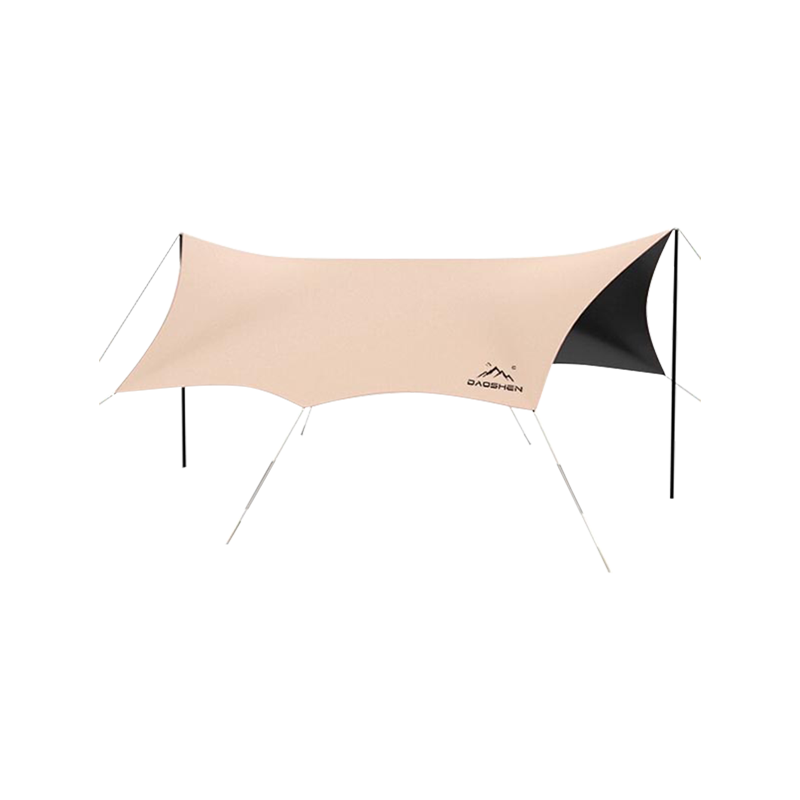
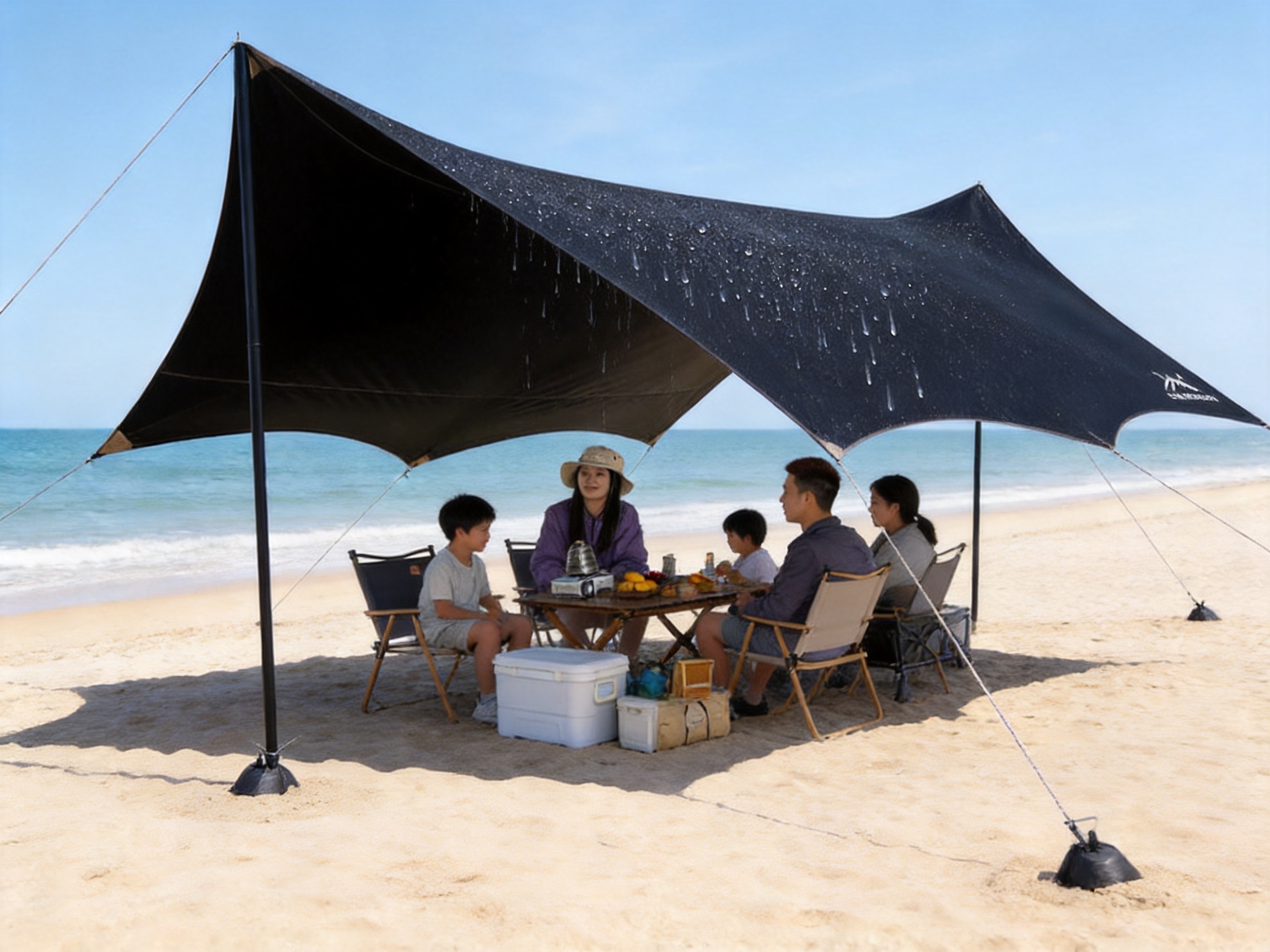
Outdoor picnic camping black vinyl tent, rainproof and sunshade canopy, picnic butterfly curtain canopy
Rain Protection and Everyday Weather Management
The product is designed to provide rain protection as well as shade. The vinyl-coated surface helps water move across the canopy rather than immediately penetrating the fabric. The butterfly roof encourages runoff, and the dual-slope form can reduce water accumulation compared with a flat roof. These features make the shelter more useful during short rain showers, changing weather at a picnic, or damp conditions at a campsite.
Rain performance depends on installation quality. The canopy should be fully opened, correctly tensioned, and positioned so that water can flow away from the central structure. Fabric that is loose, folded, or incorrectly attached may create pockets where water collects. Users should also inspect seams, connection points, and coating damage before use, particularly after long storage.
“Rainproof” should be understood as a product-use benefit rather than permission to ignore weather forecasts. Temporary canopies are not designed to replace permanent structures or shelters in extreme conditions. Heavy rain combined with strong wind can create significant loads, while lightning presents a separate safety risk. The correct approach is to use the canopy within appropriate weather limits and remove it when conditions become unsafe.
Wind Stability Requires Anchoring
A strong frame can improve stability, but it cannot eliminate the need for ground anchoring. A canopy acts as a large surface that interacts with moving air. Wind loads travel from the fabric to the frame and then into the feet, stakes, sandbags, or other anchors. If the base is not secured, the entire shelter may shift, lift, or overturn even when the steel tubes themselves remain undamaged.
Different surfaces require different anchoring methods. Soft soil may accept stakes designed for ground penetration. Sand often requires longer or specialized sand anchors, while hard surfaces may require weighted bases. A beach installation should account for changing wind direction and loose sand. A park installation should use secure stakes where permitted and should avoid damaging underground utilities or irrigation systems.
The canopy’s stability is therefore a system performance issue. Frame thickness, joint design, roof geometry, fabric tension, anchor selection, and setup technique all contribute. Users should distribute weights evenly, check every connection, and periodically inspect the structure during use. A few minutes of preparation can significantly reduce the risk of movement or damage.
Advantages over Lightweight Standard Canopies
The product’s competitive advantages are most apparent when it is compared with basic canopies designed primarily around low weight and low cost. A standard lightweight canopy may be convenient to carry, but its thin fabric may offer less effective shade, its frame may feel less substantial, and its roof may provide less consistent coverage. These limitations are not universal, but they are common considerations in entry-level products.
The black vinyl coating offers a darker and more protective shaded environment than many uncoated fabrics. The 210D Oxford cloth provides a more durable platform for repeated use than very thin textile. The taller and thicker steel frame adds usable space and structural substance. The butterfly roof provides a broader footprint and improved drainage geometry. Together, these features target the needs of users who value comfort, repeatability, and weather management more than the absolute lightest packed weight.
The product may also have advantages over some low-cost dark canopies that achieve color but not complete construction quality. A dark fabric by itself does not guarantee robust performance. If it is attached to a weak frame, poorly finished at the seams, or difficult to anchor, the visual benefit will not compensate for structural limitations. The value here lies in combining the black coating with a stronger fabric, a purpose-built steel structure, and an efficient roof profile.
| Comparison factor | Basic lightweight canopy | Black vinyl butterfly canopy | Best fit |
|---|---|---|---|
| Solar protection | May depend on thin or uncoated fabric | Black vinyl surface supports deeper shade | Long daytime picnics and beach use |
| Fabric durability | Often prioritizes minimum weight | 210D Oxford cloth balances weight and wear resistance | Repeated seasonal setup |
| Headroom | May be limited by a lower frame | Taller frame offers more usable interior space | Family groups and standing access |
| Roof drainage | Flat surfaces may collect water | Dual-slope butterfly profile encourages runoff | Variable daytime weather |
| Frame feel | Very light tubing may flex more | Thicker steel offers a more substantial structure | Stationary or vehicle-based use |
| Portability | Usually easier to carry long distances | Heavier but suitable for short transport | Cars, vans, parks, beaches, campsites |
Designed for Practical Outdoor Scenarios
Family Picnics
Family picnics often require more than a small patch of shade. Users may bring folding chairs, a picnic table, food containers, toys, coolers, and personal bags. A broad canopy provides a central place where people can eat, rest, and organize supplies. The taller frame makes movement more comfortable, while the dark roof helps reduce glare and heat from direct sunlight.
The product’s materials are also suitable for repeated family use. A canopy that is set up several times each season benefits from a fabric that can tolerate ordinary handling and a frame that does not feel fragile. Families should still teach children not to hang from the frame or pull on the fabric, and adults should check the anchoring system before allowing the group to gather underneath.
Beach Relaxation
Beach environments create a demanding combination of bright sunlight, wind, sand, and salt exposure. The black vinyl coating is valuable in this setting because strong solar radiation can make uncoated fabric feel less protective. The butterfly shape provides a wide area of shade for chairs and beach equipment, while the sloped roof can help manage short rain showers.
Beach users should pay particular attention to anchoring. Ordinary short stakes may not be sufficient in loose sand. Sandbags, sand anchors, or other appropriate weighting solutions should be used according to local conditions. After the outing, sand should be removed before folding because abrasive particles can wear coatings, scratch frame finishes, and interfere with joints.
Camping Areas
At a campsite, the canopy can function as a communal shelter for meals, preparation, and relaxation. It can complement rather than replace a sleeping tent. The product is especially appropriate when users arrive by vehicle and want a durable shared area beside the main campsite. The roof provides daytime shade, and the rain-resistant surface can help maintain a usable outdoor living area during light precipitation.
Campers should select a level site away from dead branches, steep drainage paths, and areas prone to flooding. The canopy should not be placed too close to an open flame, stove, or heat source because coated fabric can be damaged by high temperatures and sparks. Proper ventilation and sensible campsite organization remain essential.
Manufacturing Strengths and Product Development Approach
The company behind the product approaches outdoor equipment as a combination of design, material selection, sampling, testing, and manufacturing control. This is significant because a product can have attractive specifications on paper and still perform poorly if the production process is inconsistent. The stated development philosophy begins with real weather, terrain, and time rather than with catalog appearance alone.
That philosophy supports a practical product-development sequence. Designers first identify the intended use scenario: family picnics, beaches, campsites, and other stationary outdoor areas. They then select materials that match the expected stress level. For this canopy, that means choosing a vinyl-coated textile, 210D Oxford cloth, and a stronger steel frame rather than using the lightest possible materials. The geometry is then shaped around shade coverage, rain runoff, headroom, and wind behavior.
Sampling is another essential part of the process. A physical sample allows the development team to evaluate how the fabric fits the frame, whether the roof tension is balanced, how the butterfly peak is formed, and whether the folded product can be handled efficiently. Sample review can reveal problems that are difficult to identify from drawings alone, such as fabric bunching, awkward joint movement, insufficient reinforcement, or difficult assembly steps.
Repeated optimization helps transform an initial concept into a more reliable production model. Adjustments may involve panel dimensions, coating behavior, seam placement, tube thickness, connector alignment, or anchoring integration. The goal is not to add features without purpose. It is to ensure that each feature solves a real use problem and can be reproduced consistently in manufacturing.
Material Selection Based on Use
Material selection is one of the company’s stated strengths. Instead of treating every outdoor product as a variation of the same catalog item, the development approach considers how the product will actually be used. A canopy for beaches and family parks faces different priorities from a backpacking tent. It can accept more weight in exchange for deeper shade, a sturdier frame, and a more spacious covered area.
The use of 210D Oxford cloth reflects this balanced approach. The fabric is not selected merely because a denier number looks impressive. It is selected because it provides a reasonable relationship between tear resistance, wear resistance, coating support, and transport weight. Similarly, the steel frame is made taller for practical headroom but is paired with greater thickness to address the structural implications of added height.
Manufacturing and Quality Consistency
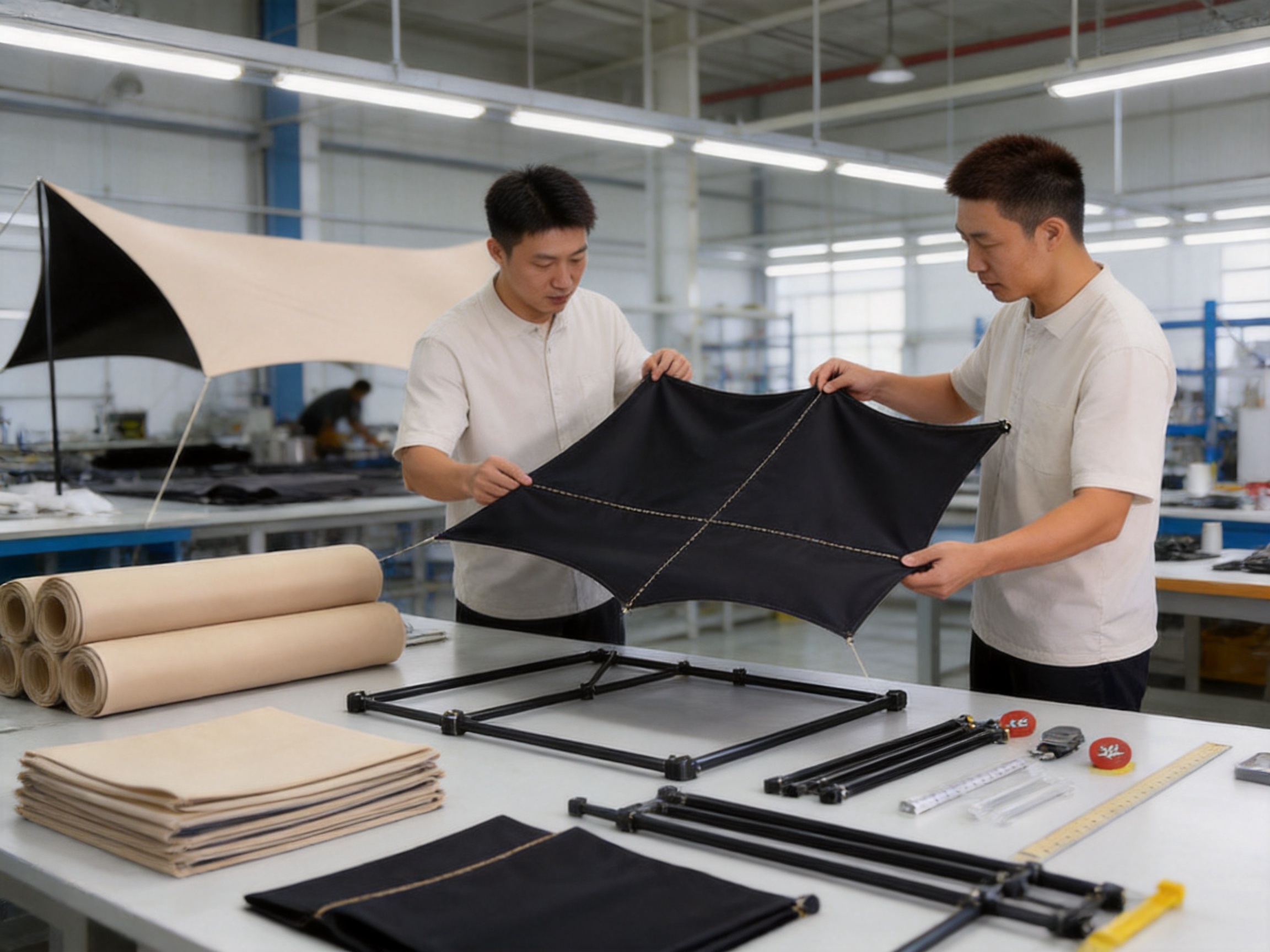
For a canopy to perform consistently, manufacturing must control more than the appearance of the finished fabric. Cutting accuracy affects panel fit. Sewing precision affects seam strength and tension. Coating uniformity affects the continuity of the weather-resistant surface. Frame assembly affects opening, folding, and load transfer. Packaging affects whether the product reaches the customer without deformation or missing components.
A professional manufacturing partner evaluates these stages as connected operations. Fabric panels must match the intended roof geometry. Reinforcement must be placed where forces are concentrated. Frame parts must align with the canopy attachment points. The completed product should be inspected for visible defects, incomplete stitching, coating damage, sharp edges, and incorrect components before shipment.
This process-oriented approach is useful for global retailers and private-label buyers. Retailers need products that are not only attractive in images but also repeatable across production batches. Consistency reduces customer complaints, simplifies inventory planning, and supports long-term product positioning. A manufacturing partner that participates in design and optimization can address issues earlier than a sourcing model based only on selecting an existing factory catalog item.
OEM and Private-Label Potential
For retailers seeking outdoor gear, the product offers a practical foundation for OEM or private-label development. The existing design already has a clear market position: a robust, shaded, vehicle-transported canopy for picnic, beach, and camping scenarios. Buyers can evaluate the base product according to their target market, packaging requirements, color strategy, accessory needs, and regional weather expectations.
OEM development should begin with a detailed product brief. Important questions include the preferred canopy dimensions, packed size, target retail price, frame finish, accessory set, logo placement, packaging language, and intended sales channel. A buyer serving beach retailers may emphasize UV protection and sand anchoring. A family lifestyle retailer may prioritize headroom, easy setup, and storage convenience. A camping distributor may focus on rain management and compatibility with existing campsite equipment.
Customization should preserve the product’s functional logic. Changing the fabric color may affect solar performance. Reducing tube thickness may reduce the structural margin. Altering the roof profile may change rain runoff and shade coverage. A responsible OEM process evaluates the effect of each change through samples and testing rather than treating customization as a purely visual exercise.
CragHaven Outdoor presents itself as more than a factory-sourcing contact. Its stated role includes design participation, manufacturing coordination, sampling, testing, and communication with Western-market-oriented customers. This can be valuable for buyers that need a partner capable of translating market requirements into stable production details. Long-term supply relationships benefit when both sides discuss actual usage conditions, not only price and delivery dates.
Installation Guidance for Better Performance
Correct installation helps the canopy deliver the benefits of its materials and structure. Begin by selecting a reasonably level surface with enough clearance around the entire frame. Avoid locations beneath dead branches, near sharp rocks, or in natural drainage channels. Place the frame and canopy so that doors, paths, cooking areas, and seating zones remain accessible.
Open the frame gradually and keep fingers clear of folding joints. Do not force a section that appears misaligned. Check that the fabric is attached according to the intended connection points and that the roof is evenly tensioned. Uneven tension can create wrinkles, shift the central peak, and increase the chance of water pooling.
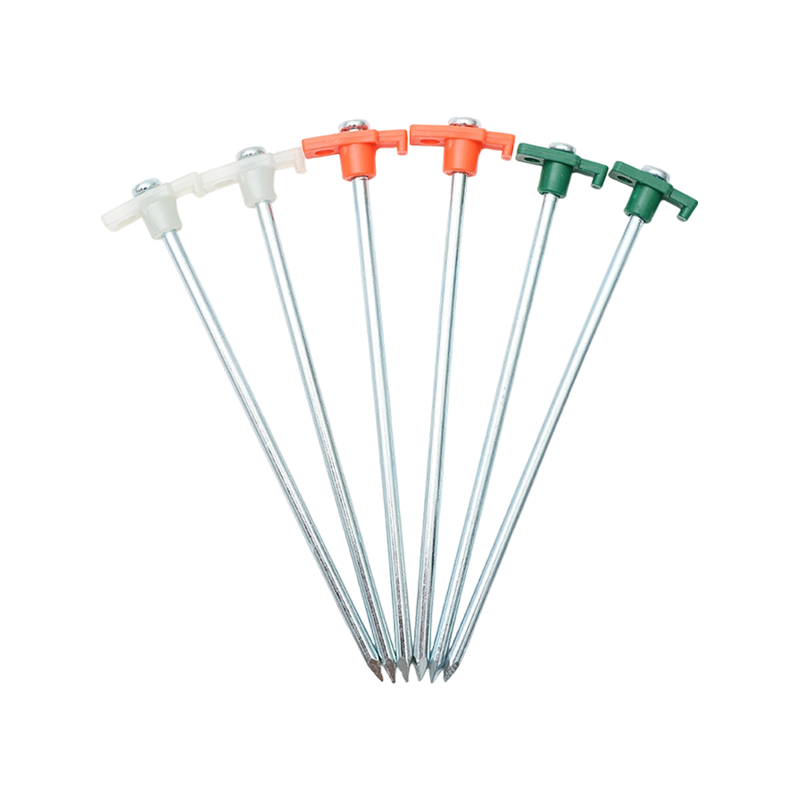
Anchor every available base point before placing heavy equipment or people under the canopy. On soft ground, use suitable stakes and confirm that they are fully engaged. On sand, use a weighting approach appropriate to the local conditions. On hard ground, use approved weighted bases rather than improvised objects that may create trip hazards.
Inspect the shelter after the first few minutes of use and again whenever the wind direction or intensity changes. Look for lifted corners, loose lines, shifting feet, unusual frame movement, and water accumulation. If conditions become severe, evacuate the area beneath the canopy and take the structure down. A canopy is a tool for improving outdoor comfort, not a reason to remain exposed to dangerous weather.
Care, Cleaning, and Storage
Routine care can extend the useful life of the fabric and frame. Before folding, remove leaves, sand, mud, and other debris from the canopy. Use a soft brush or gentle cleaning method that will not damage the vinyl surface. Harsh solvents, abrasive tools, and aggressive scrubbing may reduce coating performance. If soap is necessary, use a mild solution and rinse thoroughly.
Dry the canopy completely before storage. Folding damp fabric can encourage mildew, create unpleasant odors, and cause long-term coating or textile problems. Drying is especially important after beach or rainy use. The frame should also be dried so that moisture does not remain around joints or damaged finish areas.
Fold the canopy without sharp creases or unnecessary compression. Store it in a cool, dry place away from direct sunlight, chemicals, rodents, and high heat. Do not place heavy objects on top of the folded product. Periodically inspect the fabric, seams, frame tubes, joints, fasteners, and anchor accessories even when the canopy has not been used recently.
Small issues should be addressed before the next outing. A minor tear can expand when exposed to wind. A loose joint can become more difficult to repair after repeated movement. A missing anchor can turn a calm installation into an unstable one when conditions change. Preventive inspection is a simple part of responsible outdoor equipment ownership.
Purchasing Considerations for Retailers and End Users
Retailers should present the product according to its real strengths. The most persuasive benefits are not vague claims of universal superiority but clear explanations of where the canopy performs best. It is a strong candidate for buyers who need deep shade, a durable canopy textile, more headroom, broad coverage, and vehicle-based portability.
End users should consider transport and storage before purchase. The heavier vinyl-coated construction and steel frame are advantageous for stability and durability, but they will not be as convenient as an ultralight shelter carried over long distances. Customers should have enough vehicle space or short-distance carrying capacity to move the packed product from storage to the installation site.
Buyers should also evaluate the local environment. Coastal users need to plan for sand and salt. Park users need to follow local staking rules. Campers need to consider nearby fire sources, terrain, and weather forecasts. Event operators need a clear inspection and anchoring procedure for every installation. Matching the product to the use scenario produces better results than focusing on one specification alone.
For wholesale and OEM buyers, questions about sample approval, packaging, accessory configuration, inspection procedures, replacement parts, production lead time, and shipping protection should be discussed before an order is finalized. These details contribute directly to customer satisfaction and long-term supply performance.
Q&A: Common Questions About the Canopy
Q1: Is this product designed for backpacking?
No. Its black vinyl coating, 210D Oxford cloth, and thicker steel frame are intended to support shade, durability, and stability rather than minimum trail weight. It is better suited to vehicle-based camping, family picnics, beaches, parks, and other locations where the product does not need to be carried long distances.
Q2: What is the main advantage of the black vinyl coating?
The coating helps block and absorb a substantial portion of incoming solar radiation, creating deeper shade than many standard uncoated or lightly treated fabrics. It also supports weather resistance during normal outdoor use. Personal sun-protection measures are still recommended because no canopy eliminates all indirect or reflected exposure.
Q3: Why use 210D Oxford cloth instead of a thinner fabric?
210D Oxford cloth provides a practical balance of tear resistance, wear resistance, coating support, and manageable weight. It is more substantial than many ultralight fabrics while avoiding the unnecessary weight of very heavy textiles intended for harsher industrial applications.
Q4: Does the butterfly shape help during rain?
Yes. The dual-slope roof encourages rainwater to run toward the sides and can reduce pooling compared with a flat-top design. Correct setup and fabric tension remain essential, and the canopy should not be used as protection during severe storms.
Q5: Is the canopy suitable for windy beaches?
It can be suitable for mild-to-moderate wind when properly installed and anchored. Beaches require special attention because loose sand can make ordinary stakes ineffective. Use suitable sand anchors or distributed weights, monitor conditions continuously, and take the canopy down if strong wind or severe weather develops.
Q6: Does a taller frame make the canopy less stable?
Height can increase leverage forces, which is why frame thickness and joint construction matter. This product pairs a taller structure with thicker steel components. Even so, stability depends on the complete system, including anchoring, fabric tension, ground conditions, and weather.
Q7: Can the canopy remain outside for an entire season?
It is intended for outdoor use and can tolerate normal seasonal exposure when properly maintained, but it should not be treated as a permanent structure. Extended exposure to strong wind, storms, standing moisture, ultraviolet radiation, and abrasive debris can shorten the life of any temporary canopy.
Q8: How should the product be stored after rain?
Allow the canopy to dry completely before folding and storing it. Remove dirt and sand, inspect the coating and seams, and keep the product in a dry, shaded storage area. Folding it while wet can encourage mildew and unpleasant odors.
Q9: What should OEM buyers discuss with the manufacturer?
OEM buyers should discuss dimensions, colors, logo application, fabric and coating requirements, frame details, accessory packages, packaging, inspection standards, sample approval, replacement components, shipping protection, and target-market regulations. Any design change should be evaluated for its effect on performance and production consistency.
Q10: What makes the manufacturer suitable for global outdoor retailers?
The company combines outdoor product development with manufacturing coordination. Its stated approach includes scenario-based design, material selection, sampling, testing, optimization, and communication aimed at global markets. This can help retailers move from a basic product concept to a more stable and repeatable supply solution.
Conclusion
The outdoor picnic camping black vinyl tent is designed for users who want more than the minimum shelter offered by a lightweight standard canopy. Its black vinyl coating supports deeper shade and everyday weather protection. Its 210D Oxford cloth balances durability with manageable weight. Its taller and thicker steel frame provides useful headroom and a more substantial structural foundation. Its butterfly-shaped roof broadens shade coverage and helps manage rain runoff.
The product’s advantages are strongest in realistic use scenarios: family picnics, beach relaxation, vehicle-based camping, parks, and outdoor gatherings. It is not intended to compete with ultralight backpacking shelters on packed weight, and it should not be marketed as a substitute for a permanent building or severe-weather shelter. Its purpose is different: to provide a comfortable, durable, and practical outdoor living area where transport is available and repeated use matters.
The manufacturing approach adds value by connecting design decisions with real conditions. Through scenario-based development, appropriate material selection, physical sampling, testing, optimization, and production coordination, CragHaven Outdoor aims to reduce the uncertainty often associated with outdoor gear sourcing. For global retailers and OEM buyers, this combination of product function and manufacturing support creates a foundation for long-term cooperation.
When the canopy is correctly installed, anchored, cleaned, dried, and stored, it can become a dependable part of an outdoor equipment range. Its balanced design speaks to a market that values shade quality, structural confidence, durability, and practical comfort over the absolute lowest weight. For those requirements, the black vinyl butterfly canopy presents a considered alternative to ordinary fabric shelters.
References
1. International Organization for Standardization. Textile Fibres and Related Measurements: General Principles of Denier and Linear Density.
2. American Society for Testing and Materials. Standard Practices for Evaluating Fabric Tear Strength and Resistance to Abrasion.
3. American Society for Testing and Materials. Standard Guidance for Water Resistance and Weathering Performance of Outdoor Textiles.
4. World Health Organization. Ultraviolet Radiation, Shade, and Personal Sun-Protection Guidance.
5. Outdoor Industry Association. Practical Considerations for Canopy Selection, Outdoor Use, and Equipment Care.
6. Manufacturer product-development information supplied for the black vinyl butterfly canopy, including material, frame, geometry, and intended-use details.
For product inquiries, OEM discussions, and outdoor gear supply cooperation, CragHaven Outdoor can be contacted through its Hangzhou, China office, by telephone at +86-15968800379, or by email at [email protected].
Product: Outdoor picnic camping black vinyl tent, rainproof and sunshade canopy, picnic butterfly curtain canopy


- Phone: +86-15968800379
- E-mail: [email protected]
- Address: Room 1002, Huishang Building, Gongshu District, Hangzhou City, Zhejiang Province.
Copyright © CragHaven Outdoor All Rights Reserved. Outdoor Gear Manufacturers Wholesale Mountaineering Camping Gear Suppliers
