

 English
 Deutsch
 Español
 Français

Retractable External Locking Hiking Poles for Reliable Mountain and Trail Performance
Content
- 1 Product Overview and Core Outdoor Purpose
- 2 Why External Locking Matters in Real Terrain
- 3 Aluminum Alloy Shaft: Strength, Weight, and Outdoor Reliability
- 4 Ergonomic Comfort Through EVA Foam Handles
- 5 Three-Section Telescopic Design for Portability
- 6 Performance Benefits on Uphill, Downhill, and Uneven Trails
- 7 Competitive Advantages Over Common Trekking Pole Designs
- 8 Manufacturing Strength Behind Product Reliability
- 9 Advanced Production Process and Quality Control
- 10 Design Based on Real Outdoor Scenarios
- 11 Suitability for Retailers, Distributors, and OEM Buyers
- 12 Material Selection as a Long-Term Value Strategy
- 13 User Comfort, Safety, and Efficiency
- 14 Packaging, Storage, and Cross-Border Market Considerations
- 15 Care and Use Recommendations
- 16 Why This Product Fits Modern Mountain-Climbing and Camping Gear Needs
- 17 Q&A Section
- 17.1 What are retractable external locking hiking poles mainly used for?
- 17.2 Why is an external locking system better than a basic twist-lock system?
- 17.3 Are aluminum alloy hiking poles durable enough for mountain trails?
- 17.4 How does the EVA foam handle improve user experience?
- 17.5 Why is a three-section telescopic design useful?
- 17.6 How should the poles be adjusted for uphill and downhill hiking?
- 17.7 What makes this product competitive for retailers and OEM buyers?
- 17.8 How does CragHaven Outdoor support long-term product reliability?
- 18 Conclusion
- 19 References
- 20 Product: Retractable external locking hiking poles, trekking poles, aluminum alloy hiking sticks
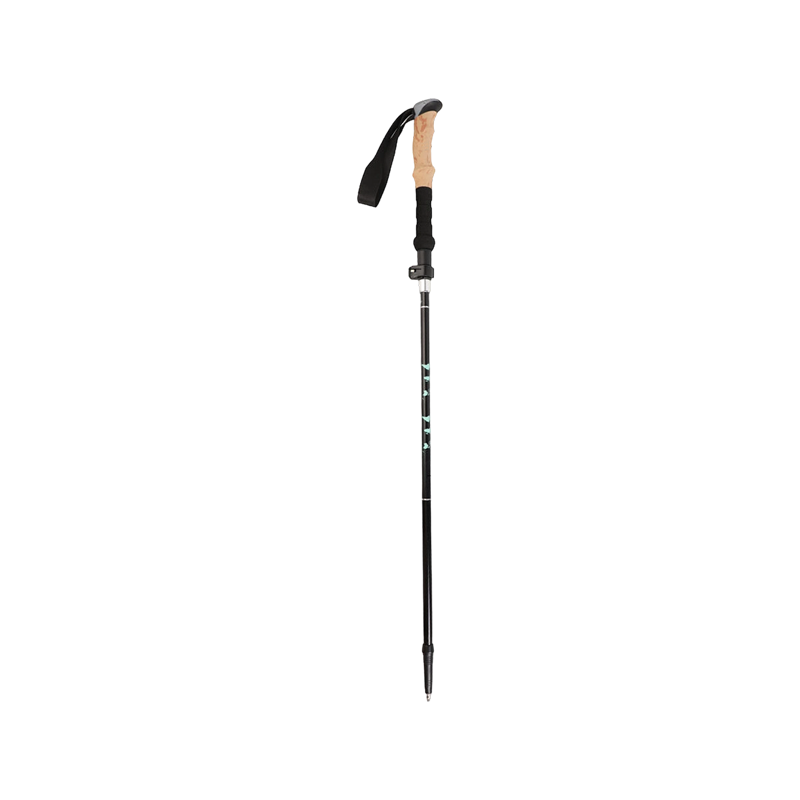
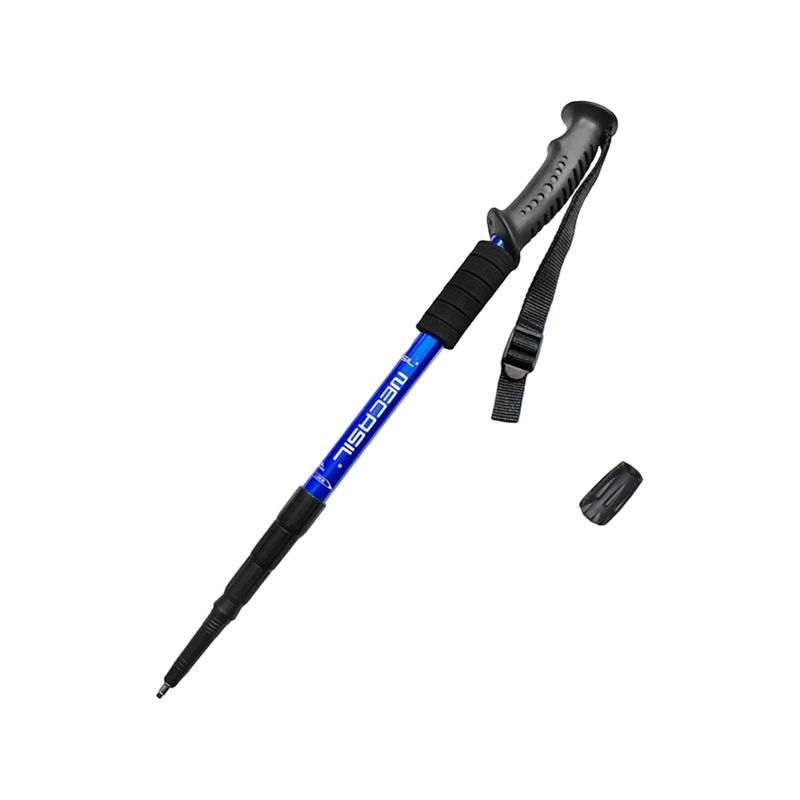
Retractable external locking hiking poles have become an essential part of modern mountain-climbing, hiking, and camping gear because they solve several practical problems at the same time: balance, support, portability, terrain adaptation, and walking efficiency. For hikers moving across steep slopes, rocky paths, forest trails, wet ground, loose gravel, or long-distance routes, the right pair of trekking poles can make movement more stable and less physically demanding. This product is designed around those real outdoor needs, combining a three-section telescopic structure, a professional external locking system, an aluminum alloy shaft, an EVA foam handle, and an adjustable wrist strap.
The core value of these retractable external locking hiking poles is not only that they are easy to carry, but that they provide reliable support when the trail becomes unpredictable. Unlike simple fixed-length walking sticks or low-cost poles with unstable adjustment systems, this design allows the user to change pole length quickly while maintaining a firm lock. The external lock is visible, accessible, and practical for outdoor use, especially when hikers need to adjust equipment while wearing gloves or moving through changing terrain.
In mountain-climbing and camping scenarios, equipment must be dependable. A pole that slips during descent, bends too easily under load, or causes hand fatigue during long walking sessions can affect safety and comfort. These aluminum alloy trekking poles are developed to balance weight, strength, and long-term usability. The shaft material offers a dependable structure for repeated outdoor use, while the ergonomic EVA foam grip helps reduce discomfort caused by sweat, vibration, and extended pressure on the palm.
The design philosophy behind this product focuses on functional performance rather than decorative complexity. Each component has a clear purpose: the aluminum alloy shaft supports strength and durability, the 3LS professional external lock provides stable adjustment, the three-section retractable construction improves storage convenience, the EVA foam handle supports grip comfort, and the wrist strap adapts to different hand shapes. Together, these details form a trekking pole system suitable for hikers, campers, mountaineering users, outdoor retailers, and OEM buyers seeking reliable mountain and camping gear.
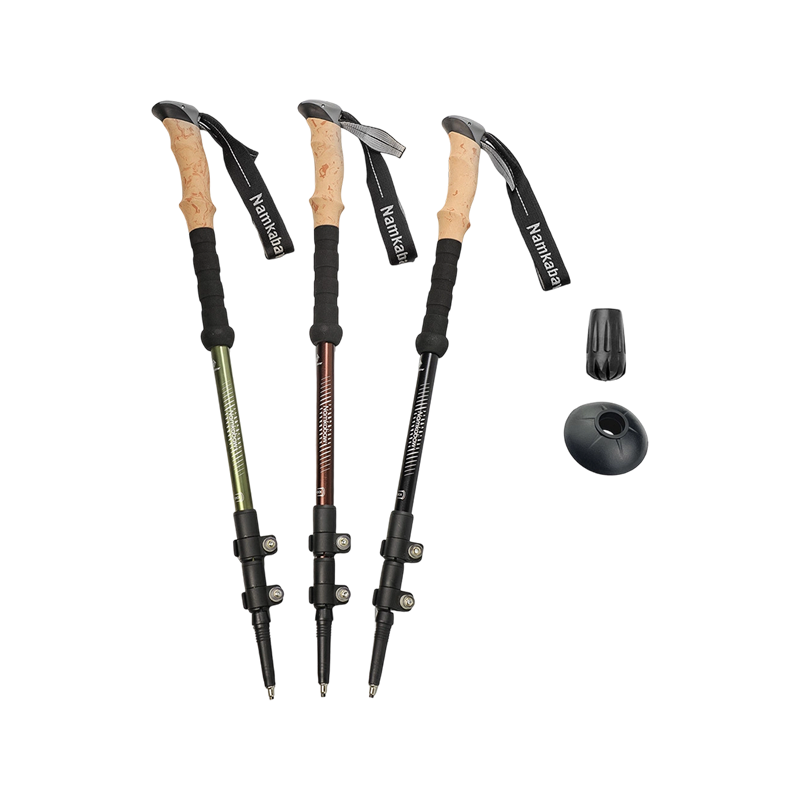
Retractable external locking hiking poles, trekking poles, aluminum alloy hiking sticks
Product Overview and Core Outdoor Purpose
This trekking pole is a retractable external locking hiking pole made with an aluminum alloy shaft and designed for mountain-climbing, hiking, camping, and trail walking applications. Its three-section telescopic construction allows users to reduce the pole length for storage and transportation, then extend it when support is needed on the trail. This structure is particularly useful for outdoor users who need compact equipment that can fit into backpacks, camping bags, vehicle storage compartments, or retail packaging.
The external locking system is one of the most important performance features. Many entry-level trekking poles use internal twist locks that may become difficult to operate after dust, moisture, or repeated use. By contrast, an external locking mechanism is easier to access, easier to inspect, and faster to adjust. The visible locking design helps users confirm whether the pole is secured before applying weight, which is especially important on steep or unstable terrain.
The product uses a professional 3LS external lock mechanism designed to create strong, slip-resistant fixation. When a hiker plants a pole on a descent, crosses a stream, or braces against a slope, the lock must resist sudden compression. A loose or unreliable lock can shorten unexpectedly and reduce user confidence. The external lock design directly addresses this problem by improving operational security and adjustment convenience.
The aluminum alloy shaft is another major advantage. Aluminum alloy is widely used in trekking poles because it provides an effective balance between impact resistance, cost efficiency, durability, and manageable weight. Carbon fiber poles can be lighter, but they may be more vulnerable to sudden side impact or cracking under certain conditions. Steel may be strong, but it is usually too heavy for long-distance hiking. Aluminum alloy therefore remains a practical choice for outdoor users who need reliable performance across many conditions.
The handle is made with EVA foam, a material often used in quality outdoor equipment because it is lightweight, soft to the touch, sweat-absorbent, and non-slip. During long hikes, hands may become wet from sweat, rain, or humidity. A hard plastic handle can become uncomfortable and slippery, while a poorly shaped grip may increase hand fatigue. EVA foam supports a more comfortable hold and improves usability over longer walking sessions.
The adjustable wrist strap is designed to fit different hand shapes and usage habits. A properly adjusted strap helps transfer some load from the hand grip to the wrist and forearm, reducing the need to squeeze the handle continuously. This can improve comfort during long-distance hiking and helps users maintain better pole control when moving over uneven ground.
Why External Locking Matters in Real Terrain
Terrain changes quickly in outdoor environments. A trail may begin as a flat forest path, turn into a rocky climb, drop into a steep descent, and then cross wet grass or loose soil. A fixed-length pole cannot easily adapt to these conditions. A retractable hiking pole can be shortened for uphill sections, lengthened for downhill sections, and adjusted for side-hill walking or backpack weight. The external locking mechanism allows those changes to be made quickly and securely.
On uphill climbs, shorter poles help keep the arms in a more efficient position. The hiker can push down and slightly backward, using the upper body to support forward movement. On downhill sections, longer poles allow the user to place support points ahead of the body, reducing pressure on the knees and improving balance. On flat ground, a neutral length helps maintain rhythm and natural posture. These adjustments are only useful if the locking system holds firmly once set.
Compared with many twist-lock trekking poles, external locking poles are easier to operate in difficult outdoor conditions. Twist locks may require repeated rotation, and users may not immediately know whether the internal mechanism is properly engaged. If the inside expands unevenly or becomes contaminated with dust, sand, or moisture, operation may become less predictable. External locks solve much of this inconvenience by placing the adjustment mechanism outside the shaft, where it can be opened, closed, tightened, and inspected more directly.
Another advantage is maintenance visibility. Outdoor products are exposed to mud, rain, grit, cold temperatures, and repeated vibration. When the locking mechanism is visible, users can check for debris, wear, or improper closure. This improves confidence and reduces the chance of hidden failure. For retailers and OEM buyers, this visible reliability can also improve customer satisfaction because the user can understand how the system works without complicated instructions.
The 3LS professional external lock mechanism used on this product is designed for strong, slip-resistant locking. A trekking pole must support downward pressure repeatedly, sometimes thousands of times in a single hike. Even minor slipping can become frustrating and unsafe. By focusing on lock strength and ease of use, this product offers a practical advantage over lower-grade poles that may prioritize appearance or low cost instead of functional stability.
Aluminum Alloy Shaft: Strength, Weight, and Outdoor Reliability
The shaft is the structural core of any trekking pole. It must be strong enough to support weight and impact, light enough to carry over long distances, and durable enough to withstand repeated extension, compression, and contact with outdoor surfaces. This product uses an aerospace-grade aluminum alloy shaft to balance lightweight strength with field reliability.
Aluminum alloy is especially well suited for mountain-climbing and camping gear because it tolerates rough use better than many fragile lightweight materials. When a pole strikes rock, is pressed into gravel, or is loaded at an angle, the shaft must absorb force without sudden failure. Aluminum alloy can often bend before breaking, giving it practical durability for demanding outdoor activities. This characteristic is valuable for hikers who prioritize dependable gear over extreme weight reduction.
Compared with basic low-grade metal poles, a quality aluminum alloy shaft offers better strength-to-weight performance and more consistent structural behavior. Cheaper materials may feel heavy, may deform easily, or may not maintain precise telescopic fit over time. In contrast, a well-manufactured aluminum alloy shaft can provide smoother adjustment and more stable support across repeated use.
Compared with some ultralight carbon fiber trekking poles, aluminum alloy poles may be slightly heavier, but they often offer greater impact tolerance in rugged environments. For many users, especially those carrying camping equipment, walking on rocky trails, or using the poles in mixed weather, this reliability is more important than saving a small amount of weight. The product is therefore positioned as a dependable, practical trekking pole rather than a fragile ultralight accessory.
The three-section telescopic design also depends on shaft precision. Each section must slide smoothly while maintaining proper fit. If tolerances are too loose, the pole may rattle or feel unstable. If tolerances are too tight, adjustment becomes difficult. Manufacturing consistency is therefore important. A mature production process ensures that tube dimensions, surface treatment, locking alignment, and assembly quality work together to create a stable final product.
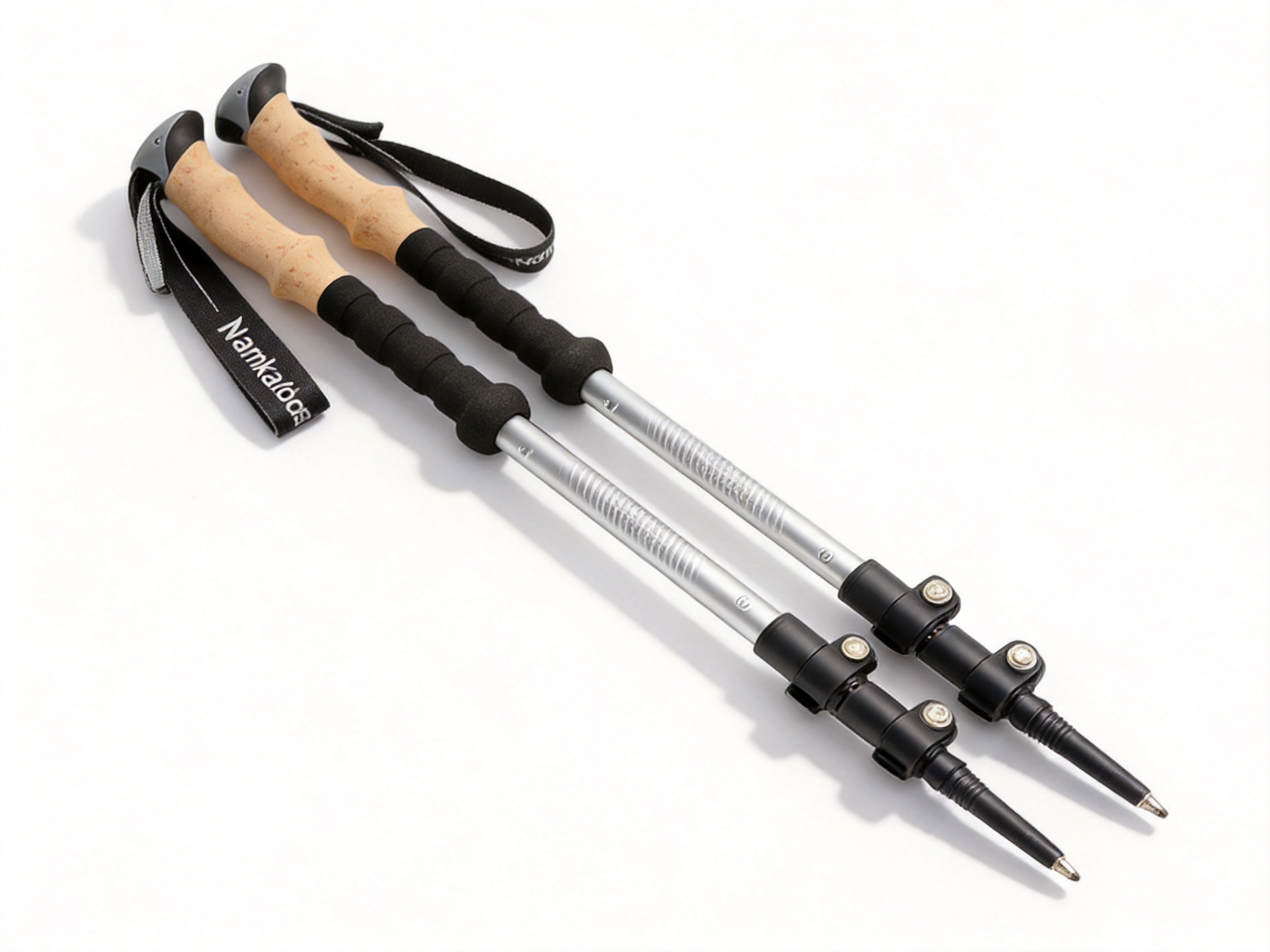
Ergonomic Comfort Through EVA Foam Handles
Grip comfort is often underestimated until a hike becomes long or difficult. A trekking pole handle is touched constantly, exposed to sweat, friction, rain, and temperature changes. The EVA foam handle on this product is designed to support a comfortable, non-slip grip during extended use. EVA foam is lightweight, slightly cushioned, and capable of absorbing sweat more comfortably than hard plastic.
During long-distance hiking, hand fatigue can reduce pole control. If users must grip too tightly to prevent slipping, the forearm becomes tired and the walking rhythm suffers. A comfortable foam handle helps users hold the pole with less tension. This improves efficiency and makes the poles more suitable for full-day hikes, multi-day camping routes, and mountain approaches.
EVA foam also performs well in changing temperatures. Metal or hard plastic grips may feel cold in low temperatures and uncomfortable in hot weather. Foam provides a more stable touch experience. It also supports a more secure grip when the hand is damp, which is important during summer hikes, rainy conditions, or high-effort climbs.
The handle design works together with the adjustable wrist strap. The strap should not be viewed as an accessory only; it is part of the support system. When adjusted properly, it helps distribute force and reduces the need for constant hand pressure. This is useful on climbs, descents, and long flat walking sections. Because different users have different hand sizes and grip preferences, adjustability improves comfort and market suitability.
Compared with poles using simple molded plastic handles, EVA foam handles provide a more premium outdoor experience. They reduce harsh contact points, improve sweat management, and feel more natural during long use. For outdoor retailers, this detail can improve perceived product value. For OEM buyers, it helps position the product in a practical, user-focused segment of the trekking pole market.
Three-Section Telescopic Design for Portability
Portability is essential for camping and mountain-climbing equipment. Outdoor users already carry backpacks, tents, sleeping systems, cooking gear, clothing layers, water, and safety equipment. Trekking poles must therefore be easy to store when they are not in use. The three-section telescopic design allows the poles to retract into a compact size, making them easier to pack, transport, and display.
A three-section structure provides a useful balance between compact storage and field stability. Two-section poles may be strong but often remain too long for convenient packing. More complex folding designs can be compact but may introduce additional joints and components that require careful manufacturing. The three-section telescopic format remains a widely accepted solution because it is simple, reliable, and easy for users to understand.
When hikers approach technical sections requiring hand use, such as scrambling over rocks or setting up camp, they may need to store the poles quickly. Retractable poles can be shortened and attached to a backpack. When the trail opens again, they can be extended and locked back into position. This flexibility makes them suitable for mixed outdoor routes where pole use changes throughout the day.
For travel and retail purposes, the compact design also improves logistics. Smaller packed size can reduce packaging inconvenience and make products easier to store in warehouses or display in stores. For cross-border outdoor gear supply, efficient packing and consistent product dimensions are important because they affect shipping, inventory management, and customer handling.
Compared with fixed-length hiking sticks, retractable poles offer broader user compatibility. A fixed pole must match the user’s height and terrain use. A retractable pole can serve a wider range of users and walking conditions. This makes the product more suitable for global outdoor markets, where customer height, trail type, and usage habits vary significantly.
Performance Benefits on Uphill, Downhill, and Uneven Trails
The most direct benefit of trekking poles is improved stability. By adding two additional contact points with the ground, hikers can create a more balanced walking pattern. This is especially helpful when crossing loose stones, wet roots, muddy sections, snow patches, shallow streams, or steep slopes. The poles help the user test ground stability before fully committing body weight.
On uphill terrain, the poles help engage the upper body. Instead of relying only on the legs, the hiker can use arms and shoulders to assist movement. This may help maintain rhythm and reduce fatigue during long climbs. Shortening the poles slightly can improve leverage and arm position, making each push more effective.
On downhill terrain, trekking poles are particularly valuable because they help reduce impact stress on knees and ankles. By placing the poles forward and slightly outward, the hiker can control descent speed and maintain balance. Extending the poles for downhill use improves reach and allows the user to support weight before stepping down. A secure external lock is critical here because downward compression is strongest during descents.
On uneven side slopes, pole length may need to differ between the uphill and downhill sides. Adjustable poles give the user more control in these situations. A fixed pole cannot respond as effectively. The ability to adjust quickly through an external locking system helps maintain comfort and reduces awkward body posture.
For campers carrying heavy backpacks, trekking poles can also improve load management. A heavier pack shifts the center of gravity and increases strain on the lower body. Poles help distribute some workload to the upper body and give the user additional stability when stepping over obstacles or changing direction. This is especially useful for overnight camping trips, mountain approaches, and long trail sections.
Competitive Advantages Over Common Trekking Pole Designs
The trekking pole market includes many different designs, from simple wooden walking sticks to ultralight carbon poles and low-cost telescopic models. This retractable external locking aluminum alloy pole stands out because it focuses on balanced, practical performance rather than a single extreme feature. It is not designed only to be the lightest, the cheapest, or the most decorative. It is designed to be dependable, adjustable, comfortable, and suitable for real outdoor use.
Compared with fixed-length poles, this product offers greater adaptability. Fixed poles can work well in limited conditions, but they do not adjust to hills, descents, different users, or compact storage needs. The retractable three-section design makes the product more versatile for mountain hiking, camping travel, and retail customers with different body heights.
Compared with internal twist-lock poles, the external locking system provides easier operation and better visual confirmation. Users can see whether the lock is open or closed. They can make quick adjustments without repeated twisting. This is especially useful in cold weather, when fingers are less flexible, or when the pole must be adjusted frequently during changing terrain.
Compared with low-cost poles made from inferior metal tubes, the aluminum alloy shaft provides better strength and long-term usability. Low-grade materials may bend, loosen, or wear faster. A stronger shaft improves confidence and makes the product more suitable for repeated outdoor use. For professional buyers, better material consistency can also reduce after-sales problems.
Compared with some ultralight carbon poles, this aluminum alloy model offers a more practical durability profile for rough terrain. Carbon fiber can be excellent for experienced users who prioritize minimal weight, but it can be less forgiving under sharp impacts or side loads. Aluminum alloy is often preferred by users who need ruggedness and value in one product.
Compared with poles using hard plastic handles, the EVA foam grip provides better sweat management and comfort. This matters in real use because a trekking pole is held for hours. Comfort details may not appear dramatic in product photos, but they strongly affect customer satisfaction after purchase.
| Feature | Advantage of This Product | Competitive Benefit |
|---|---|---|
| 3LS external locking mechanism | Strong, visible, slip-resistant adjustment | Easier and more reliable than many internal twist-lock systems |
| Aerospace-grade aluminum alloy shaft | Balanced strength, weight, and impact resistance | More practical for rugged use than fragile ultralight alternatives |
| Three-section telescopic structure | Adjustable and compact for transport | More versatile than fixed-length walking sticks |
| EVA foam handle | Sweat-absorbent, non-slip, and comfortable | Better long-use comfort than hard plastic handles |
| Adjustable wrist strap | Fits different hand shapes and improves control | Enhances user comfort across broad market groups |
Manufacturing Strength Behind Product Reliability
Reliable trekking poles are not created only through design drawings. They require controlled material selection, precise tube forming, stable component assembly, locking mechanism calibration, handle fitting, surface finishing, and repeated inspection. CragHaven Outdoor approaches product development through real outdoor usage requirements, connecting design decisions with manufacturing discipline.
The company is based in Hangzhou, China, and works as an outdoor brand and cross-border manufacturing partner focused on mountaineering, hiking, and camping scenarios. Its manufacturing philosophy emphasizes weather, terrain, and time rather than catalog appearance. This is important because outdoor equipment must perform under repeated stress, changing environments, and long-term use.
Material integrity is a central part of the company’s process. For a trekking pole, material choice affects every aspect of performance. The aluminum alloy shaft must meet strength and weight requirements. The external lock must resist repeated opening and closing. The EVA foam handle must maintain comfort and fit. The wrist strap must remain adjustable and secure. Each component must be selected not only for appearance but for actual field function.
Engineering discipline is also essential. Sampling, testing, and optimization are treated as necessary stages rather than optional steps. A pole may look acceptable during initial assembly, but testing reveals whether the lock holds under compression, whether the shaft sections slide smoothly, whether the grip remains secure, and whether the product feels balanced in use. Iterative optimization helps convert a design concept into a stable, repeatable product.
For OEM and global retail buyers, manufacturing consistency is just as important as product concept. A good sample is not enough if mass production cannot reproduce the same quality. CragHaven Outdoor’s strength lies in combining outdoor product understanding with China’s mature manufacturing system. This allows the company to support scalable production while maintaining attention to functional details.
Advanced Production Process and Quality Control
The manufacturing process for retractable external locking hiking poles involves multiple stages that must be controlled carefully. First, the shaft material is selected according to required performance characteristics. Aluminum alloy tubing must meet expectations for wall thickness, straightness, surface quality, and mechanical strength. Inconsistent tubing can cause poor telescopic movement, unstable locking, or uneven product weight.
Second, the tube sections must be cut, formed, and finished with precision. Each section of a three-part telescopic pole must fit with the others smoothly. If the outer and inner diameters are not controlled properly, the pole may wobble or bind. Precise production helps ensure that users can extend and retract the pole easily while maintaining secure support when locked.
Third, the external locking mechanism must be assembled and calibrated. The lock is one of the most critical safety-related components. It needs sufficient clamping force, practical lever operation, and long-term resistance to repeated use. During manufacturing, lock placement and tension must be checked so that the pole can be adjusted easily without sacrificing stability.
Fourth, the handle and wrist strap are installed. The EVA foam grip must fit securely on the shaft and maintain alignment. The wrist strap should be adjustable, comfortable, and strong enough for real use. Poor handle installation can lead to rotation or loosening, while poor strap quality can reduce user control. These details are important for both comfort and safety.
Fifth, the finished product should undergo inspection for appearance, function, locking performance, telescopic movement, grip fit, and overall assembly quality. For outdoor products, functional testing matters more than simple visual inspection. A trekking pole must not only look clean; it must support pressure, adjust smoothly, and remain stable during simulated use.
CragHaven Outdoor’s emphasis on sampling, testing, and optimization supports this process. By evaluating products according to real outdoor conditions, the company can identify details that may be missed in purely catalog-driven development. This approach helps create trekking poles that are suitable for global markets and long-term retail partnerships.
Design Based on Real Outdoor Scenarios
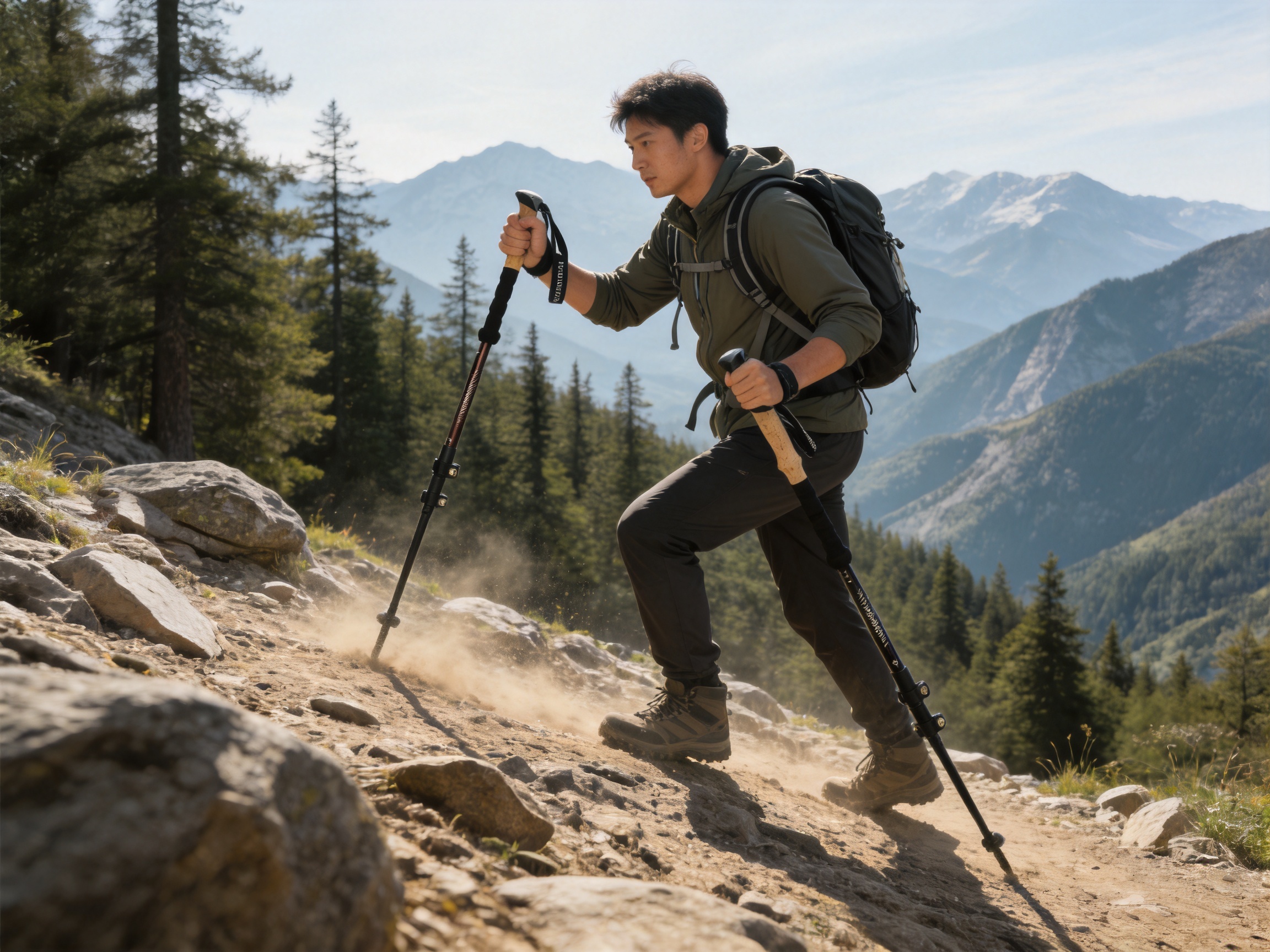
The value of this product becomes clearer when viewed through actual usage scenarios. Imagine a hiker beginning a mountain route in the early morning. The first section is a gradual trail through forest. The poles are set to a comfortable neutral length, helping maintain rhythm and reducing fatigue. As the route steepens, the hiker shortens the poles using the external locks, improving climbing leverage.
Later, the trail becomes rocky. The aluminum alloy shaft provides reliable support when the pole tip contacts uneven stones. The external lock remains stable under repeated compression. The EVA foam handle helps maintain grip even as the user begins to sweat. The wrist strap reduces hand strain and keeps the pole controlled when stepping over obstacles.
On the descent, the hiker lengthens the poles for better forward support. Each planted pole helps control speed and reduce pressure on the knees. Because the external lock is visible, the user can quickly confirm that the poles are properly secured before applying weight. This practical confidence is one of the product’s strongest advantages.
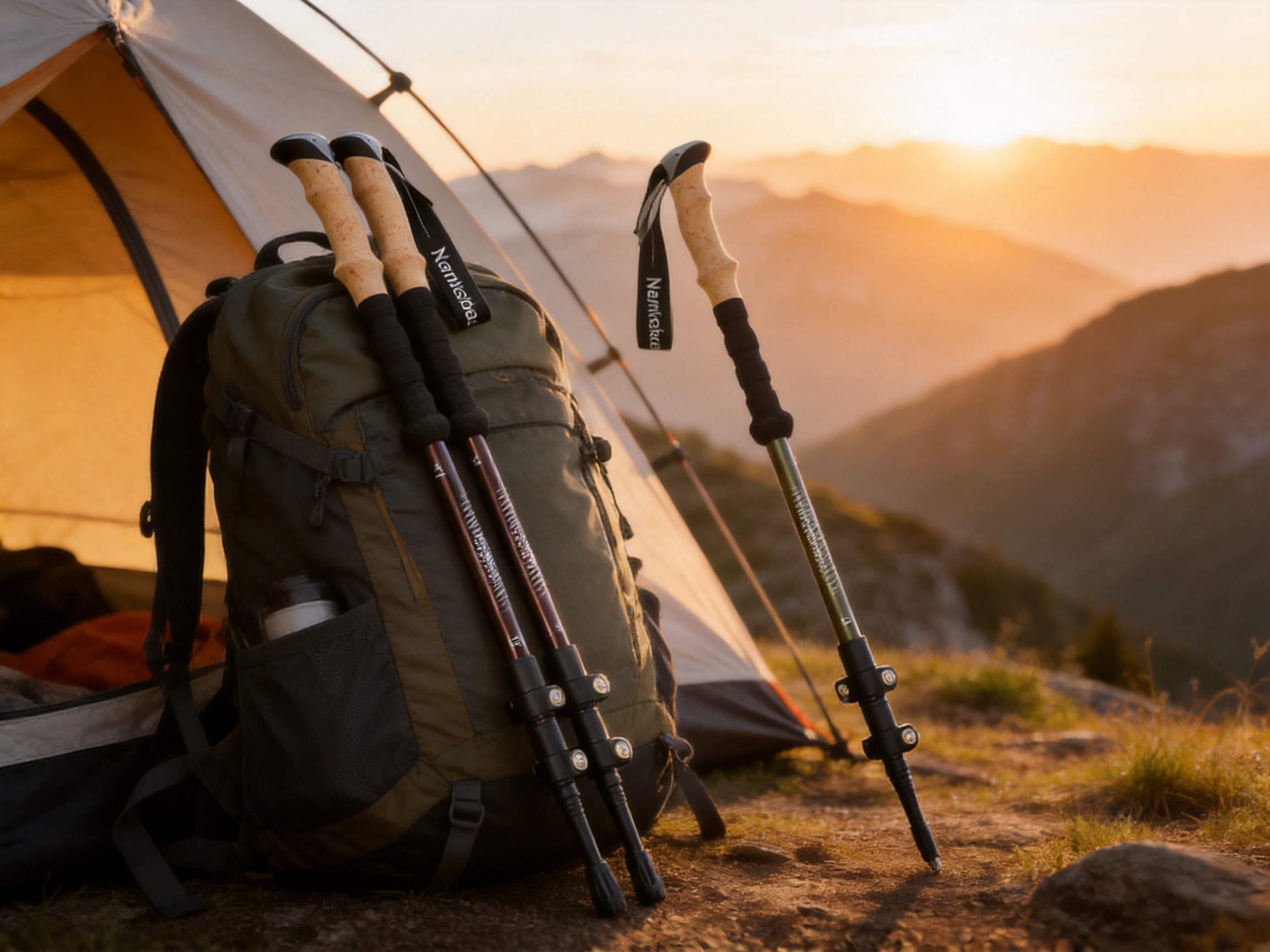
At camp, the poles retract for storage. They can be placed beside a tent, attached to a backpack, or packed with other gear. Their compact three-section structure reduces inconvenience. For multi-day camping routes, this combination of support during walking and compactness during rest is highly valuable.
These scenarios show why product development must start from real outdoor use. Features should not exist only for marketing language. They should solve actual problems: slipping locks, uncomfortable handles, inconvenient storage, unstable support, and poor adaptability. This product addresses those issues through a balanced design.
Suitability for Retailers, Distributors, and OEM Buyers
For outdoor retailers and distributors, trekking poles must satisfy a wide range of users. Some customers are beginners looking for affordable reliability. Others are experienced hikers seeking dependable support for mountain routes. Some want camping gear that packs easily. Others prioritize comfort over long distances. A retractable external locking aluminum alloy pole can serve all of these groups because it provides practical versatility.
The product’s feature set is also easy to communicate in retail environments. Sales teams can explain the visible external lock, the aluminum alloy shaft, the EVA foam handle, the adjustable wrist strap, and the three-section telescopic structure. These are understandable advantages that customers can feel and test immediately. A buyer can open the lock, adjust the pole, hold the grip, and see the compact structure in person.
For OEM buyers, the product offers a strong foundation for customization and market positioning. Depending on target market needs, options may include color variation, packaging design, branding support, accessory selection, and specification adjustment. Because the product is based on widely accepted trekking pole functionality, it can fit different retail channels, including outdoor specialty stores, camping gear suppliers, e-commerce platforms, and cross-border distribution.
CragHaven Outdoor’s role as a cross-border manufacturing partner is important for buyers who need more than factory sourcing. The company understands outdoor product applications and communicates in a professional, Western-market-oriented way. This helps reduce uncertainty in product development, sampling, quality expectations, and long-term supply planning.
Stable supply chain cooperation matters in outdoor gear because seasonal demand, packaging requirements, market regulations, and customer expectations can vary. A manufacturing partner that understands both product use and production execution can help buyers avoid common problems such as inconsistent samples, unclear specifications, weak packaging, delayed communication, or poor after-sales support.
Material Selection as a Long-Term Value Strategy
Material selection determines whether a trekking pole remains useful after repeated outdoor trips. Short-term cost reduction may produce a lower retail price, but it can also lead to bending shafts, weak locks, uncomfortable handles, and disappointed customers. This product’s material choices are made to support long-term value rather than temporary appearance.
The aluminum alloy shaft provides structural dependability. Its strength-to-weight balance makes it suitable for broad outdoor use, including mountain trails, camping routes, and recreational hiking. The material is durable enough for repeated contact with hard surfaces while still light enough for everyday carrying.
The EVA foam handle supports user comfort over time. Comfort materials are important because they directly affect the user’s physical experience. A pole with a strong shaft but uncomfortable grip is still incomplete. The handle must remain pleasant during sweat, pressure, and temperature changes.
The locking components must be strong enough to resist repeated operation. A lock that works well at first but loosens quickly can damage customer trust. A professional external lock mechanism helps maintain reliability and provides a clear functional advantage in the market.
The wrist strap material and adjustment structure also contribute to product life. It should hold securely, feel comfortable, and adapt to different users. Details like stitching, adjustment hardware, and strap softness can influence the overall impression of quality.
By treating each material as part of an integrated outdoor system, the product avoids the weakness of many low-end competitors that focus on one visible feature while neglecting hidden performance. Long-term value comes from balanced quality across all components.
User Comfort, Safety, and Efficiency
Comfort and safety are closely connected in hiking equipment. When users are comfortable, they can maintain better posture, grip, rhythm, and decision-making. When equipment causes discomfort or uncertainty, users may adjust their movement in inefficient or unsafe ways. These trekking poles support comfort through ergonomic grip design, adjustable length, stable locking, and lightweight strength.
The poles help improve walking efficiency by engaging the upper body. This distributes effort more evenly and can reduce strain on the legs during long routes. The additional ground contact points also help users move with more confidence, especially when balance is challenged by uneven terrain or a loaded backpack.
Joint comfort is another important benefit. Descending slopes can create high impact on knees and ankles. Proper pole use helps absorb and redistribute some of that force. While trekking poles do not eliminate physical strain, they provide useful support that can make descents more controlled and comfortable.
The adjustable length feature improves body alignment. A pole that is too long or too short can create awkward posture. With a telescopic design, users can set the poles according to height, terrain, and personal preference. This is particularly important for families, rental programs, guided hiking groups, and retail markets serving diverse users.
The external lock supports safety because it helps prevent unexpected shortening. When users can see and secure the lock easily, they are more likely to adjust the poles correctly. This reduces uncertainty and improves trust in the product.
Packaging, Storage, and Cross-Border Market Considerations
Outdoor gear must be practical not only in use but also in packaging, shipping, storage, and merchandising. The three-section retractable structure helps reduce packed length, making the poles easier to handle in cross-border logistics. Compact product dimensions can improve carton planning, warehouse storage, retail display, and customer delivery experience.
For e-commerce channels, compactness is especially valuable. Products that ship efficiently can reduce logistical complexity and improve customer satisfaction. A trekking pole that arrives in manageable packaging is easier for customers to receive, store, and carry to the trail.
For retail display, the product’s visible features create selling points. The external lock can be demonstrated quickly. The EVA foam handle can be felt directly. The telescopic function can be shown in seconds. These physical selling points help customers understand why the product is more reliable than simpler alternatives.
For distributors, stable manufacturing and consistent specifications reduce risk. If each production batch maintains reliable lock function, shaft quality, grip fit, and packaging standards, buyers can plan long-term supply with more confidence. CragHaven Outdoor aims to reduce uncertainty in the supply chain by combining product understanding with disciplined production management.
Care and Use Recommendations
To obtain the best performance from retractable external locking hiking poles, users should adjust the length before entering difficult terrain. On flat ground, the elbow should generally form a comfortable angle when the pole tip touches the ground. For uphill walking, shortening the poles may improve leverage. For downhill walking, lengthening the poles may provide better forward support.
Before applying heavy pressure, users should check that each external lock is fully closed and secure. Because the lock is visible, this check is quick and simple. If adjustment resistance changes over time, the lock should be inspected and tightened according to product guidance.
After hiking in wet, muddy, sandy, or dusty environments, users should wipe the poles clean and allow them to dry before storage. This helps maintain smooth telescopic movement and reduces buildup around locking parts. Proper care extends product life and improves long-term user satisfaction.
The EVA foam handle should also be allowed to dry after heavy sweat or rain exposure. While EVA foam is suitable for outdoor use, basic cleaning and drying help preserve comfort and appearance. The wrist strap should be checked periodically for wear, especially after heavy use.
Users should avoid using trekking poles as tools beyond their intended function, such as prying rocks or supporting excessive non-walking loads. Although aluminum alloy provides dependable strength, responsible use helps maintain performance and safety.
Why This Product Fits Modern Mountain-Climbing and Camping Gear Needs
Modern outdoor users expect gear to be multifunctional, reliable, and easy to operate. They want equipment that works across different routes without adding unnecessary complexity. These retractable external locking hiking poles meet that expectation by combining adjustable support, durable materials, ergonomic comfort, and compact storage.
The product is suitable for mountain trails, forest paths, camping trips, long-distance walks, rocky descents, and general outdoor travel. It supports beginners who want more balance and experienced hikers who need dependable adjustable poles. Its external lock design makes it user-friendly, while the aluminum alloy shaft makes it rugged enough for repeated use.
For the broader outdoor gear market, the product offers a practical balance between performance and value. It avoids the limitations of fixed sticks, the uncertainty of low-quality twist locks, and the fragility concerns of some ultralight alternatives. It focuses instead on dependable construction and real-world usability.
CragHaven Outdoor strengthens this product through its manufacturing approach. By designing for weather, terrain, and time, and by emphasizing sampling, testing, and optimization, the company provides buyers with more than a basic commodity. It provides a product developed with outdoor scenarios and long-term market value in mind.
Q&A Section
What are retractable external locking hiking poles mainly used for?
They are used to improve balance, stability, and walking efficiency during hiking, mountain-climbing, camping, and trail walking. Their adjustable design helps users adapt to uphill, downhill, and flat terrain.
Why is an external locking system better than a basic twist-lock system?
An external locking system is easier to see, open, close, and inspect. It allows faster adjustment and gives users clearer confirmation that the pole is locked securely. This is especially useful in changing outdoor conditions.
Are aluminum alloy hiking poles durable enough for mountain trails?
Yes. Aluminum alloy provides a strong balance of durability, impact resistance, and manageable weight. It is suitable for rugged outdoor environments and repeated use on mountain trails, rocky paths, and camping routes.
How does the EVA foam handle improve user experience?
The EVA foam handle is soft, lightweight, sweat-absorbent, and non-slip. It helps reduce hand fatigue and improves grip comfort during long hiking sessions, especially when hands are wet or sweaty.
Why is a three-section telescopic design useful?
A three-section telescopic design allows the poles to retract for easy storage and transportation. It also allows users to adjust pole length for different terrain types and personal height requirements.
How should the poles be adjusted for uphill and downhill hiking?
For uphill hiking, users generally shorten the poles to improve pushing efficiency. For downhill hiking, users usually lengthen the poles to provide better forward support and help reduce pressure on the knees.
What makes this product competitive for retailers and OEM buyers?
The product combines visible external locking, aluminum alloy construction, EVA foam comfort, adjustable wrist straps, and compact storage. These features are easy to demonstrate and suitable for broad outdoor markets. The manufacturing process also supports consistent quality and scalable supply.
How does CragHaven Outdoor support long-term product reliability?
CragHaven Outdoor focuses on real outdoor usage, material integrity, sampling, testing, and optimization. Its approach combines outdoor product understanding with manufacturing discipline to support stable, repeatable production.
Conclusion
Retractable external locking hiking poles are valuable because they directly improve the outdoor walking experience. They provide additional support, help maintain balance, reduce strain on descents, improve rhythm on climbs, and adapt to different users and terrain types. This product brings those benefits together through a practical combination of a 3LS professional external lock, aerospace-grade aluminum alloy shaft, EVA foam handle, adjustable wrist strap, and three-section telescopic construction.
Its advantages over many competing designs are clear. It is more adaptable than fixed-length poles, easier to operate than many twist-lock models, more rugged for mixed terrain than fragile ultralight options, and more comfortable than poles with hard plastic grips. It is built for users who need dependable outdoor gear rather than superficial features.
The company’s manufacturing strengths further support the product’s value. With a focus on mountaineering, hiking, and camping applications, CragHaven Outdoor develops equipment according to real usage scenarios. Its emphasis on material selection, engineering discipline, sampling, testing, and optimization helps ensure that products are not merely designed for catalogs but for actual weather, terrain, and time.
For hikers, these trekking poles offer stability and comfort. For retailers and distributors, they offer clear selling points and broad market suitability. For OEM buyers, they offer a reliable platform for long-term outdoor gear cooperation. In a market where product reliability directly affects user confidence, retractable external locking aluminum alloy hiking poles provide a strong, practical, and market-ready solution.
References
1. Mountaineering equipment design principles and field performance evaluation standards.
2. Outdoor Industry Association. Hiking and camping gear usage trends and consumer expectations.
3. Materials engineering references on aluminum alloy strength, impact resistance, and lightweight structural applications.
4. Ergonomic studies on trekking pole grip comfort, wrist strap function, and walking support mechanics.
5. Trail walking and mountaineering safety guidance related to balance, descent control, and load distribution.
Product: Retractable external locking hiking poles, trekking poles, aluminum alloy hiking sticks


- Phone: +86-15968800379
- E-mail: [email protected]
- Address: Room 1002, Huishang Building, Gongshu District, Hangzhou City, Zhejiang Province.
Copyright © CragHaven Outdoor All Rights Reserved. Outdoor Gear Manufacturers Wholesale Mountaineering Camping Gear Suppliers
