

 English
 Deutsch
 Español
 Français

How Retractable External-Locking Hiking Poles Improve Stability, Comfort, and Hiking Efficiency
Content
- 1 Why Trekking Poles Matter on Modern Hiking Routes
- 2 Key Product Architecture
- 3 Material Advantages of Aerospace-Grade Aluminum Alloy
- 4 Ergonomic Handle and Wrist Strap Design
- 5 Adjustment Recommendations for Different Terrain
- 6 Advantages Over Basic or Less Adaptable Alternatives
- 7 Manufacturing Strengths Behind the Product
- 8 OEM and Private-Label Potential
- 9 Recommended User Groups and Applications
- 10 Care, Adjustment, and Storage Guidance
- 11 How to Evaluate Trekking Poles Before Purchase
- 12 Positioning the Product Against Competitors
- 13 Company Capabilities in Outdoor Product Development
- 14 Q&A
- 14.1 What are retractable external-locking hiking poles used for?
- 14.2 What is the advantage of an external locking mechanism?
- 14.3 What does the 3LS locking system do?
- 14.4 Why is aluminum alloy suitable for hiking poles?
- 14.5 Are these poles suitable for uphill hiking?
- 14.6 Should the poles be extended for downhill hiking?
- 14.7 How does the EVA foam handle improve comfort?
- 14.8 What is the purpose of the adjustable wrist strap?
- 14.9 Are three-section poles easy to transport?
- 14.10 Can these poles replace technical climbing equipment?
- 14.11 What should users check before each hike?
- 14.12 How can retailers position this product?
- 14.13 Why is the manufacturer’s sampling process important?
- 15 Conclusion
- 16 References
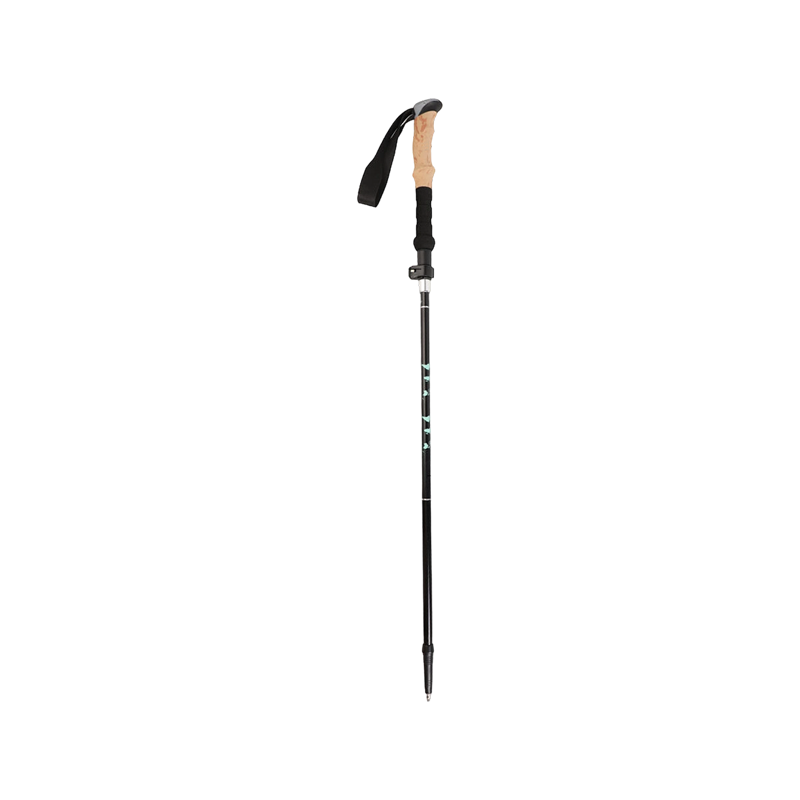
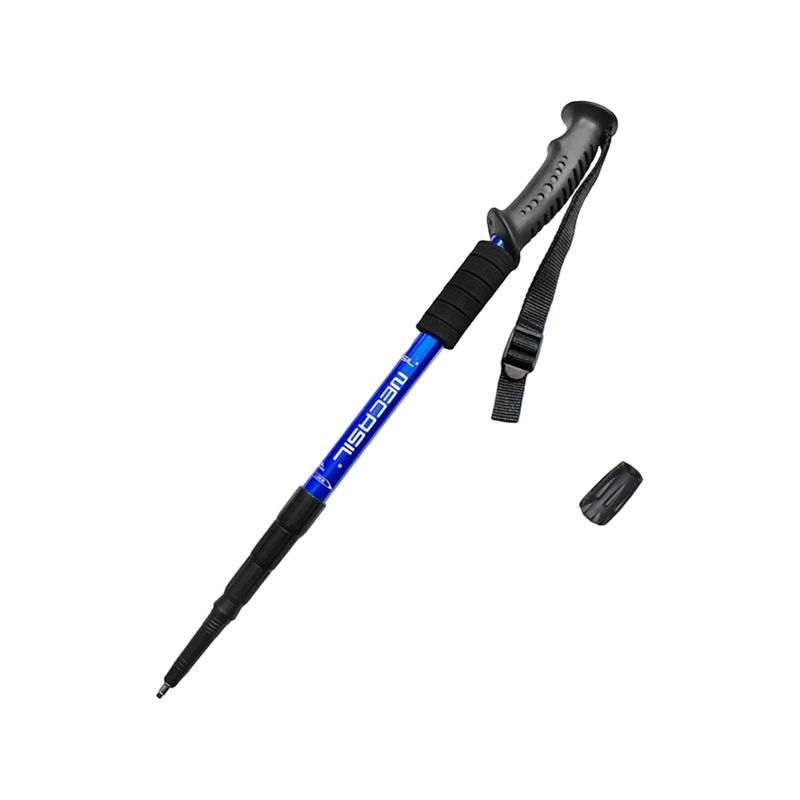
- 17 Product: Retractable external locking hiking poles, trekking poles, aluminum alloy hiking sticks
Hiking equipment must perform reliably when conditions are unpredictable. Mountain trails, forest paths, rocky slopes, wet ground, and long-distance routes all place different demands on the body and on outdoor gear. Among the most practical support tools available to hikers, retractable external-locking hiking poles provide a useful combination of balance, adjustability, portability, and structural reliability.
This type of trekking pole is designed for users who need more than a basic walking stick. Its three-section telescopic structure allows the pole length to be adapted to the hiker, the terrain, and the direction of travel. Its 3LS professional external locking mechanism provides a visible and accessible way to secure the shaft. The aerospace-grade aluminum alloy construction balances low weight with dependable strength, while the EVA foam handle and adjustable wrist strap improve comfort during extended use.
For outdoor retailers, distributors, and private-label buyers, these hiking poles also represent a commercially practical product category. They are suitable for mountaineering, camping, recreational hiking, trekking tours, trail walking, and general outdoor fitness. Their broad application range makes them easier to position across multiple consumer groups, from occasional hikers to experienced outdoor enthusiasts.
CragHaven Outdoor develops this product around practical outdoor use rather than catalog appearance alone. The company combines product design, material selection, sampling, testing, optimization, and manufacturing coordination to create equipment that can be reproduced consistently for global markets. This approach helps reduce uncertainty for buyers who require stable quality, reliable communication, and scalable OEM supply.
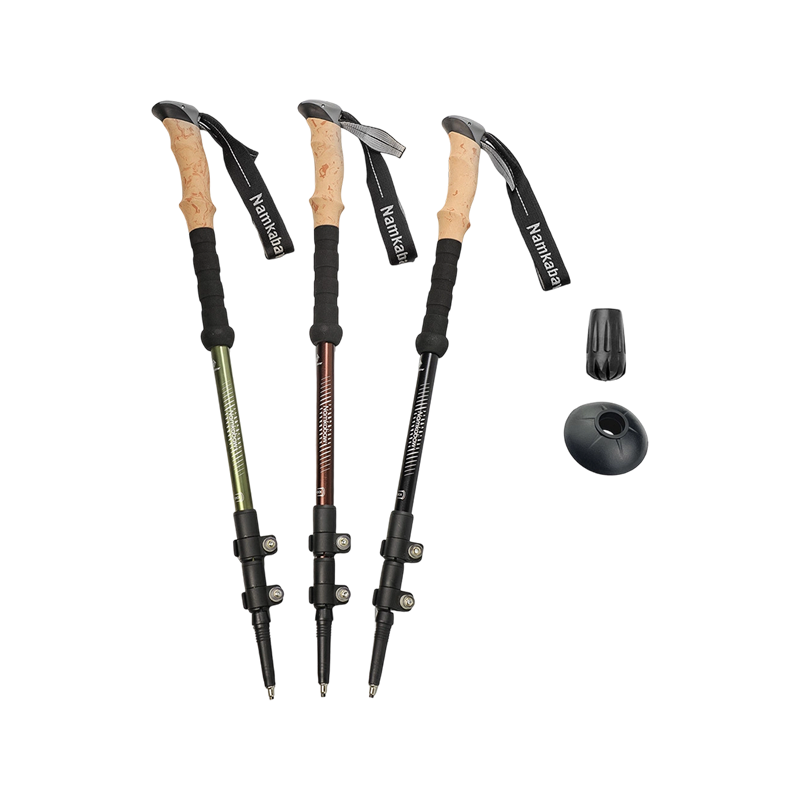
Retractable external locking hiking poles, trekking poles, aluminum alloy hiking sticks
Why Trekking Poles Matter on Modern Hiking Routes
Hiking is often described as a lower-body activity, but efficient movement over uneven ground depends on the coordination of the entire body. Every step may require a change in balance, stride length, posture, or foot placement. A pair of trekking poles creates additional contact points with the ground, allowing the user to distribute movement more evenly between the legs and upper body.
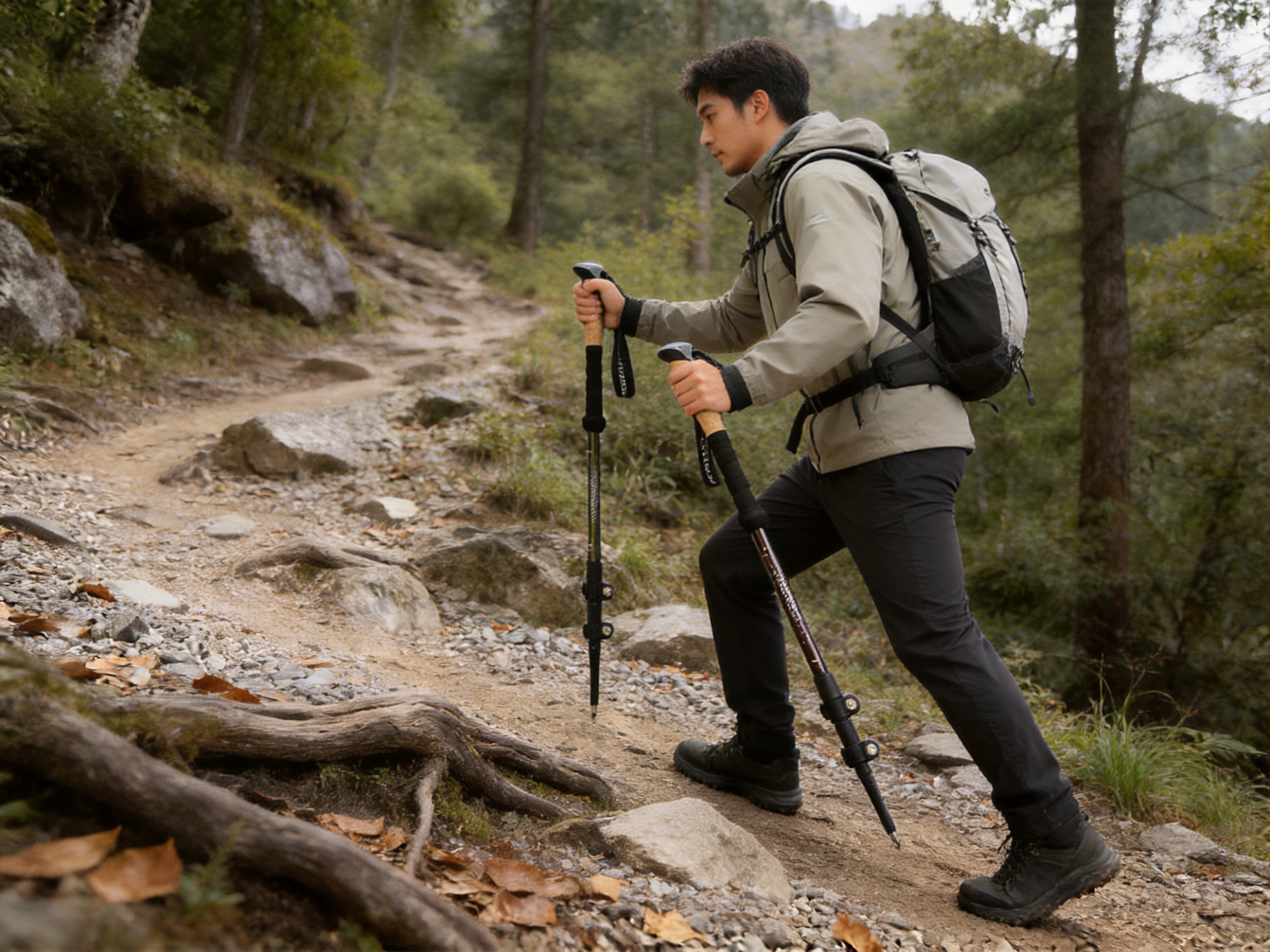
On an uphill section, poles can support a more coordinated rhythm. The hiker can place the poles slightly ahead, engage the arms, and maintain a stable forward motion. On a downhill section, the poles can provide additional points of support and help the user control each step. On flat trails, they can assist with pacing and posture during long periods of walking.
The value of trekking poles becomes even more noticeable when the route includes loose gravel, mud, wet leaves, exposed roots, or irregular rocks. These surfaces can make a single-point walking pattern less stable. A properly adjusted pair of poles can help the user react to changes in the ground and maintain a more balanced position.
Retractable poles offer another important benefit: they can be adjusted rather than used at one fixed length. This is important because the ideal pole length is not identical for every user or every situation. A shorter setting may be more comfortable during ascent, while a longer setting may provide better reach and support during descent. The ability to adapt the pole quickly makes it more versatile than a fixed-length walking stick.
Support for Balance and Posture
Balance depends on the relationship between the feet, hips, torso, and arms. When the ground becomes uneven, the body must constantly make small corrections. Trekking poles provide extra support points that can reduce the amount of sudden movement required from the ankles, knees, and hips.
A suitable pole height also encourages a more natural arm position. When the handles are positioned correctly, the elbows remain slightly bent and the shoulders can stay relaxed. This helps reduce the tendency to lean too far forward or overextend the arms. Over a long route, small improvements in posture can contribute to greater comfort and a more consistent walking rhythm.
Energy Management During Long Walks
Long-distance hiking requires careful energy management. Even when the pace is moderate, repeated steps over several hours can create fatigue in the legs and lower back. By involving the arms in the walking pattern, trekking poles can help distribute effort across more muscle groups.
Poles do not remove the physical challenge of hiking, and they should not be treated as a substitute for fitness or proper technique. Their benefit comes from improving movement coordination and providing additional support when the terrain or load makes walking more demanding. For hikers carrying backpacks, poles can be particularly useful because they help create a more stable movement pattern under additional weight.
Key Product Architecture
The performance of a trekking pole depends on the interaction of several components. A shaft may be strong, but the product can still perform poorly if the adjustment system slips. A lock may be secure, but the product may be uncomfortable if the handle causes excessive hand pressure. A compact design may be convenient, but it must remain stable when extended. The product therefore needs a balanced architecture rather than a single isolated feature.
| Component | Primary Function | Practical User Benefit |
|---|---|---|
| Three-section shaft | Provides adjustable length and compact storage | Supports different terrains and simplifies transportation |
| 3LS external lock | Secures each telescopic section | Allows visible, accessible adjustment and stable fixation |
| Aerospace-grade aluminum alloy shaft | Provides structural support with controlled weight | Balances portability, durability, and outdoor usability |
| EVA foam handle | Creates a soft, sweat-absorbent gripping surface | Improves comfort and reduces slipping during extended use |
| Adjustable wrist strap | Supports the hand and adapts to different hand sizes | Improves control and helps reduce grip tension |
The product described here uses a three-section telescopic structure. This format is widely suitable for hiking because it offers a useful balance between adjustability and packability. The user can extend the sections for use and collapse them for transport or storage. The structure is practical for vehicle travel, backpack organization, camping equipment storage, and retail packaging.
The Three-Section Telescopic Structure
A telescopic pole must satisfy two different requirements. It must be compact enough to carry when collapsed, but it must also become sufficiently stable when extended. A three-section configuration addresses these requirements by dividing the total length across multiple shaft segments.
For hikers, the main advantage is flexibility. The pole can be adjusted to suit the user’s height and the route. For distributors, the format is equally useful because it supports a broad customer range without requiring multiple fixed-length models for every user group.
The collapsible structure is also helpful when hiking equipment needs to be transported between locations. Users may carry the poles in a vehicle, attach them to the outside of a backpack, or store them with other camping equipment. When the poles are not needed on a particular section of a route, their reduced size makes them easier to manage.
The 3LS Professional External Locking Mechanism
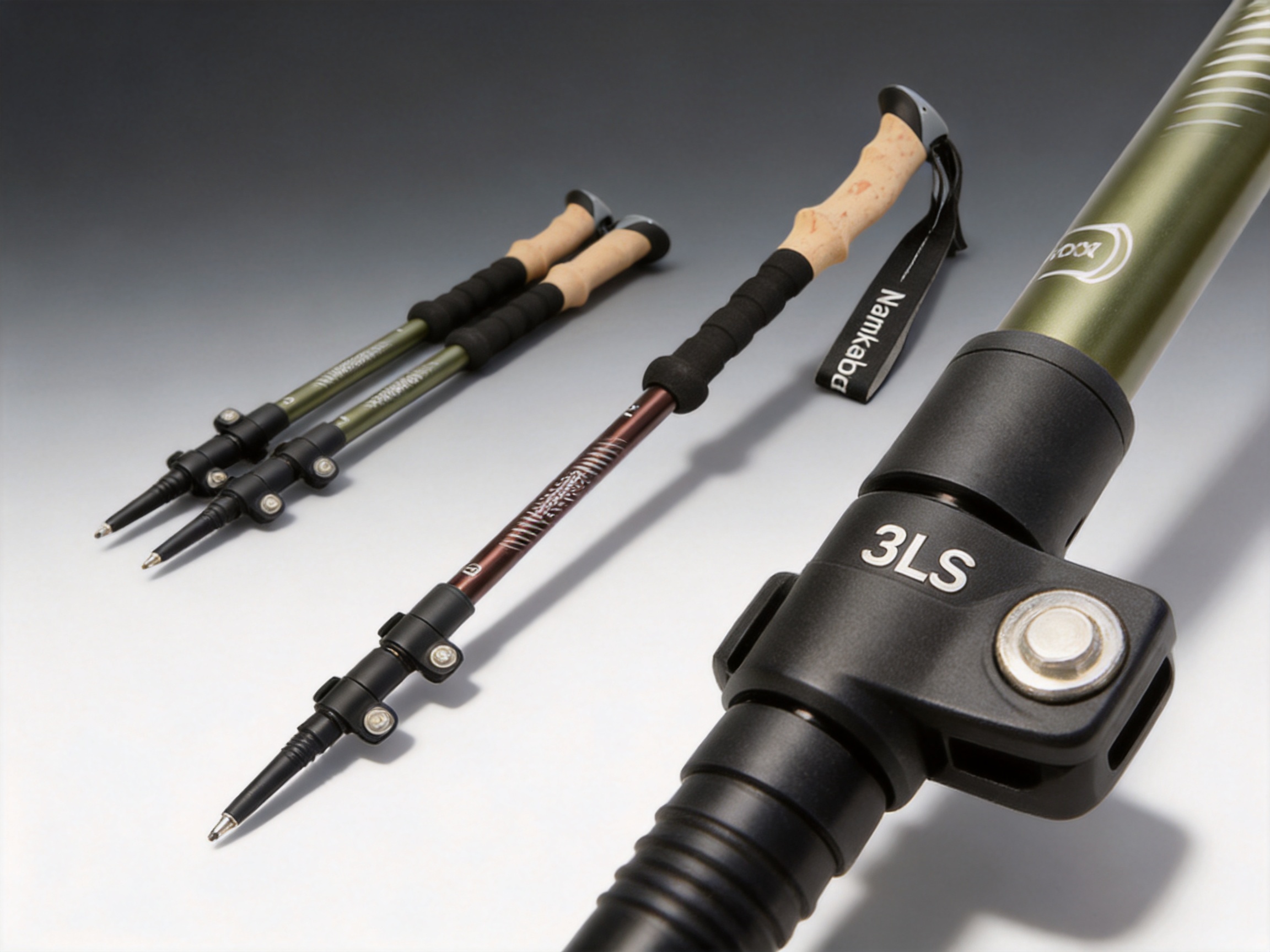
The external lock is one of the most important functional features of this product. Unlike an internal adjustment system that may be hidden inside the shaft, an external lock is positioned where the user can see and operate it. This improves the practicality of field adjustment because the user can inspect the locking component directly.
A visible lock also makes it easier to identify whether the shaft has been properly secured. Before placing weight on the pole, the user can check the lock position and tighten or adjust it if necessary. This direct interaction is especially useful when the hiker is changing pole length frequently between uphill, downhill, and level sections.
The 3LS mechanism is designed to provide strong, slip-resistant locking when correctly adjusted. A secure lock is essential because the pole must maintain its selected length when downward or forward pressure is applied. Unexpected movement in the shaft can affect balance and reduce user confidence.
External locking systems may offer a practical advantage over less accessible adjustment mechanisms because they are easy to understand and quick to operate. This is important for different consumer groups, including first-time hikers, older users, tour participants, and buyers who prioritize straightforward equipment operation.
Material Advantages of Aerospace-Grade Aluminum Alloy
Material selection determines much of a trekking pole’s usability. A pole that is too heavy may increase fatigue during long hikes. A pole that is too flexible or fragile may fail to provide confidence on demanding terrain. Aluminum alloy is widely used in trekking poles because it offers a practical balance between weight, strength, durability, and manufacturing efficiency.
The aerospace-grade aluminum alloy shaft in this product is intended to provide lightweight structural support without making the pole unnecessarily heavy. This is valuable for hikers who carry additional equipment such as water, clothing, food, navigation tools, first-aid supplies, or camping accessories.
Aluminum alloy also has a useful level of impact resistance for general outdoor applications. Hiking poles may be placed against rocks, exposed to repeated vibration, or subjected to occasional contact with branches and uneven surfaces. A well-designed alloy shaft can provide dependable service in these conditions when used within its intended purpose.
Compared with steel, aluminum alloy generally offers a lower-weight solution for portable outdoor equipment. Compared with some ultra-light composite materials, aluminum alloy can provide a more accessible cost structure and a familiar manufacturing route for large-scale production. It is therefore suitable for buyers seeking a reliable product that balances performance and commercial practicality.
| Material | Typical Characteristics | Positioning Consideration |
|---|---|---|
| Aluminum alloy | Balanced weight, strength, durability, and cost | Suitable for general hiking, trekking, and mountaineering use |
| Carbon fiber composite | Very low weight and vibration-reduction potential | Suitable for users who prioritize minimum carrying weight |
| Steel | High strength but comparatively heavy | Useful for specialized structural requirements rather than lightweight trekking |
For many outdoor product lines, aluminum alloy is a practical middle position. It allows brands to offer a credible performance product without making the price structure excessively complex. It can also support a wide range of finishes, colors, and private-label configurations, depending on the buyer’s requirements and production plan.
Balancing Weight and Durability
Lightweight design should not be understood as simply removing material. A successful lightweight product requires careful consideration of shaft dimensions, section geometry, lock integration, handle attachment, and load distribution. If these elements are not coordinated, reducing weight may compromise stability or service life.
CragHaven Outdoor approaches material selection through the intended use scenario. The goal is not to pursue the lowest possible weight regardless of other factors. Instead, the product is developed to offer a dependable balance for hiking, mountain trails, camping trips, and repeated outdoor use.
This balanced approach is valuable for retailers because consumers often want a product that feels light in the hand but does not appear delicate. A trekking pole should communicate reliability through its structure, locking action, handle comfort, and overall finish.
Ergonomic Handle and Wrist Strap Design
The handle is the user’s primary contact point with the product. During a short walk, almost any handle may appear acceptable. During a long hike, however, handle shape and surface material can strongly influence comfort, grip control, and hand fatigue.
This product uses an EVA foam handle. EVA foam is valued in outdoor equipment because it can provide a soft yet supportive gripping surface. It is also sweat-absorbent and non-slip in normal use, helping the user maintain control as the hands become warm or damp.
A comfortable handle encourages a relaxed grip. This is important because gripping too tightly over several hours can create unnecessary tension in the fingers, palm, wrist, and forearm. The hiker should be able to hold the pole securely without continuously squeezing it with maximum force.
The handle design should also work with the wrist strap rather than treating the strap as a separate accessory. The adjustable wrist strap adapts to different hand shapes and helps keep the pole connected to the user’s hand during movement. When used properly, the strap can support control while allowing the hand to remain more relaxed.
Reducing Grip Fatigue
Grip fatigue often develops gradually. It may begin as minor discomfort and become more noticeable after repeated pole planting. A sweat-absorbent foam surface can help maintain a more consistent grip, while an adjustable strap can reduce the need to hold the handle excessively tightly.
For consumers who hike in warm or humid climates, this combination can be especially useful. For cold-weather users, the foam surface may also be more comfortable than a hard material when worn with lightweight gloves. The handle is therefore suitable for a broad range of outdoor conditions.
Adjustment Recommendations for Different Terrain
Correct pole adjustment is essential. A high-quality locking mechanism cannot provide its full benefit if the pole is set at an unsuitable length or if the locks are not properly secured. Users should adjust both poles evenly for general walking and make controlled changes when the terrain changes.
Uphill Hiking
During uphill movement, a shorter pole setting can help the arms remain in a comfortable position. Shorter poles may make it easier to plant the tips slightly ahead while keeping the elbows bent. This can support a steady climbing rhythm and reduce the need to reach too far uphill.
The correct setting depends on the user’s height, the steepness of the slope, and personal technique. Rather than making a dramatic adjustment, hikers should make moderate changes and test the pole position before continuing.
Downhill Hiking
Downhill sections often require greater reach because the ground ahead is lower than the user’s current position. Extending the poles can provide additional support and help the hiker maintain control while lowering the body.
Poles should not be used to absorb the entire body weight during descent. They are intended to supplement balance and movement, not replace careful foot placement. Users should still step deliberately and inspect the terrain before transferring pressure to the poles.
Flat Trails
On level ground, many hikers prefer a neutral length that allows the elbows to remain slightly bent. The poles can then be planted in rhythm with the opposite foot, creating a natural alternating movement pattern.
For long-distance walking, comfort is more important than selecting a rigidly standardized measurement. Users should pay attention to shoulder position, wrist angle, and the amount of effort required to plant and recover each pole.
Uneven, Rocky, or Slippery Ground
When the surface is irregular, the poles should be adjusted for control rather than speed. The user may need to shorten or lengthen the poles slightly depending on the route. The external lock makes these changes practical because the adjustment components are visible and accessible.
On slippery ground, pole tips should be placed carefully on stable contact points. The poles can improve balance, but no trekking pole can guarantee traction on every surface. Safe hiking still requires suitable footwear, awareness of weather conditions, and controlled movement.
Advantages Over Basic or Less Adaptable Alternatives
Product comparisons should be based on actual use rather than exaggerated claims. Retractable external-locking hiking poles offer several practical advantages over basic fixed-length walking sticks and less accessible adjustment designs.
Fixed-length poles may be simple, but they cannot accommodate different terrain requirements or user heights. They may also be inconvenient when stored or transported. A three-section retractable design provides greater flexibility without requiring the user to carry several different pole sizes.
Some adjustment systems are difficult to inspect because the locking components are concealed. An external lock allows users to see the adjustment point directly. This can make field operation faster and may improve confidence when the pole is being prepared for use.
Low-quality poles may also use uncomfortable handles or non-adjustable straps. The EVA foam handle and adjustable wrist strap in this product address two common sources of user dissatisfaction: hand discomfort and insecure grip control.
Compared with overly specialized products, aluminum alloy trekking poles are accessible to a broader market. They can serve recreational hikers, camping users, organized outdoor groups, trail walkers, and consumers who want practical support without purchasing highly technical equipment for a single activity.
| Product Approach | Common Limitation | Benefit of the Retractable External-Locking Design |
|---|---|---|
| Fixed-length walking stick | Limited adaptability to users and terrain | Three-section adjustment supports multiple settings |
| Hidden adjustment system | Locking status may be difficult to inspect | External lock is visible and accessible |
| Hard, untreated handle | May increase pressure and discomfort | EVA foam provides a softer, sweat-absorbent grip |
| Non-adjustable wrist strap | May not suit different hand shapes | Adjustable strap improves fit and control |
| Heavy metal walking stick | May increase carrying fatigue | Aluminum alloy balances strength and portability |
These advantages do not mean that one pole design is ideal for every user. Some specialized athletes may select carbon fiber products for minimum weight, while some industrial applications may require different materials. However, for broad outdoor retail and OEM applications, the combination of adjustability, visible locking, comfort, and aluminum alloy construction is highly practical.
Manufacturing Strengths Behind the Product
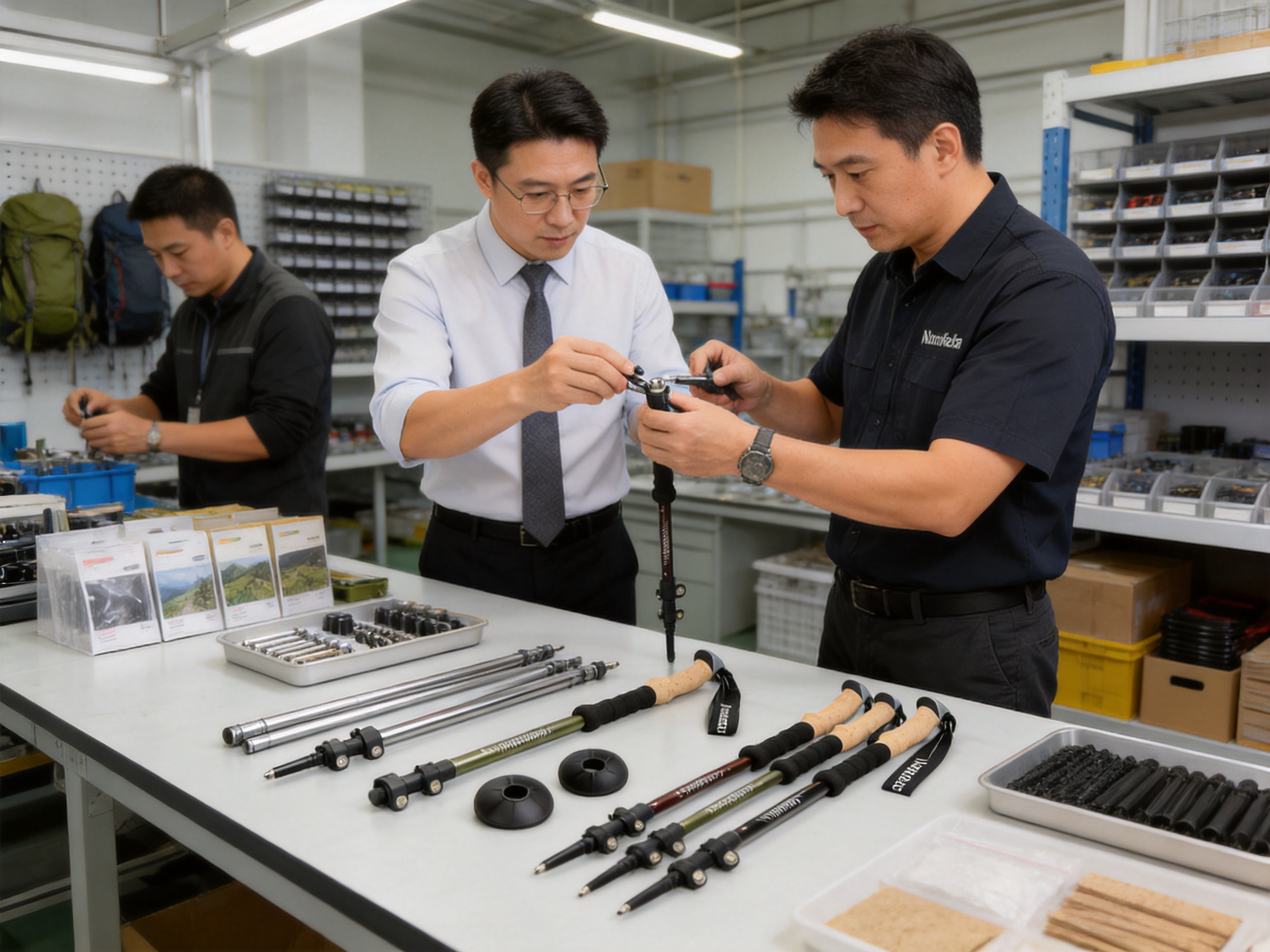
Outdoor equipment performance depends on more than the visible product features. A reliable trekking pole requires consistent materials, accurate component dimensions, stable assembly, and quality control throughout production. Manufacturing discipline is particularly important for telescopic products because small dimensional differences can affect locking performance and section movement.
CragHaven Outdoor positions itself as both an outdoor brand and a cross-border manufacturing partner. Its product development is based on mountaineering, hiking, and camping scenarios. This means the company evaluates features according to how the equipment may be handled in changing weather, on uneven terrain, and during repeated use.
Scenario-Based Product Development
The company’s development philosophy begins with actual usage conditions. Instead of designing solely around catalog specifications, the product team considers how users carry, adjust, grip, store, and operate the poles in the field.
For this product, that philosophy can be seen in the combination of the external locking system, telescopic format, alloy shaft, EVA handle, and adjustable strap. Each feature addresses a practical requirement: adjustment speed, portability, structural support, hand comfort, or user control.
Scenario-based development also helps prevent unnecessary complexity. Outdoor products must be easy to understand when the user is tired, wearing gloves, carrying a backpack, or standing on uneven ground. A feature that looks impressive but is difficult to operate may not improve the actual user experience. Practical design gives priority to functions that can be understood and used in real conditions.
Material Integrity
Material integrity means selecting components according to long-term performance requirements rather than short-term cost or appearance alone. For trekking poles, this includes evaluating the aluminum alloy shaft, lock components, grip material, strap, tips, and connection points as part of one system.
Material decisions should also consider the target market. A product intended for global outdoor retailers may need to withstand different climates, transport conditions, and patterns of use. Consistency in material specifications helps buyers maintain a stable product line across repeated orders.
CragHaven Outdoor emphasizes durability, reliability, and long-term use when choosing materials. This is especially relevant for OEM buyers that need products with repeatable characteristics rather than one-time samples that cannot be reproduced at scale.
Sampling, Testing, and Optimization
Sampling is a critical stage in outdoor product development. It allows the design team and buyer to examine the physical product before full production. For trekking poles, sample review may include checking the telescopic movement, external lock operation, handle attachment, strap adjustment, surface finish, and overall balance.
Testing and optimization follow sampling. If the locking action is too stiff, the handle does not feel comfortable, or the collapsed format is inconvenient, the design can be reviewed before larger production commitments are made. This process reduces the likelihood that avoidable problems will reach the final shipment.
Repeated evaluation is also important because product performance is often determined by details that are not obvious in a drawing or product description. The interaction between shaft sections and locking parts, for example, needs to be experienced and checked physically. Manufacturing experience helps identify these practical issues earlier in the development cycle.
Engineering Discipline and Process Control
Engineering discipline requires that product features be evaluated against defined requirements. These requirements may include adjustment range, locking reliability, material consistency, handle comfort, packaging dimensions, visual quality, and production repeatability.
For a telescopic pole, process control may include monitoring component dimensions, checking the fit between shaft sections, verifying the function of external locks, and inspecting assembly quality. Consistent procedures help ensure that the product performs similarly across different production batches.
This approach is important for international buyers because quality consistency affects customer reviews, return rates, warranty discussions, and brand reputation. A stable supplier should be able to communicate not only what the product looks like, but also how its quality is developed and maintained.
OEM and Private-Label Potential
Retractable external-locking hiking poles are suitable for OEM and private-label programs because the basic product has a wide application range and a clear functional identity. Outdoor retailers can position the poles under hiking, trekking, mountaineering, camping, travel, or fitness collections.
Depending on the project, buyers may evaluate color schemes, logo application, packaging, strap details, handle appearance, product labeling, and accessory configuration. Any customization should be reviewed through sampling so that branding does not interfere with the functionality of the lock, shaft, handle, or strap.
For private-label customers, product consistency is often as important as initial price. A brand needs confidence that later orders will maintain the same general dimensions, material feel, locking performance, and visual quality. A manufacturing partner that understands outdoor usage can provide more useful guidance during product development than a supplier focused only on basic factory sourcing.
CragHaven Outdoor aims to reduce supply chain uncertainty by participating in design and manufacturing rather than acting only as a product listing intermediary. Its Western-market-oriented communication approach is intended to support clearer discussions about specifications, use cases, sampling, testing, and production expectations.
Benefits for Outdoor Retailers
Retailers can use this product as a core trekking accessory because it addresses several common customer needs at once. The poles are adjustable, compact, relatively lightweight, comfortable to hold, and suitable for different terrain types. This broad functionality can make them appropriate for both entry-level and intermediate outdoor product collections.
The product can also be offered as part of a wider equipment system. It may complement backpacks, hiking footwear, rainwear, camping furniture, sleeping equipment, hydration products, and other mountaineering accessories. Because trekking poles are relatively easy for consumers to understand, they can serve as a practical addition to seasonal outdoor campaigns and travel-oriented promotions.
Recommended User Groups and Applications
These hiking poles are suitable for adults participating in general hiking and trekking activities. They can be used on mountain trails, forest paths, park routes, camping trips, long-distance walks, and uneven outdoor surfaces.
They may be particularly useful for:
• Recreational hikers who want additional balance and support.
• Long-distance walkers who need adjustable equipment for extended routes.
• Mountain travelers moving between uphill and downhill terrain.
• Campers who want compact outdoor accessories that are easy to transport.
• Outdoor retailers seeking a versatile aluminum alloy trekking pole.
• Private-label brands developing practical mountaineering and hiking collections.
Users should select equipment appropriate to their body size, route difficulty, and experience. Trekking poles are support equipment, not climbing protection devices. They should not be treated as substitutes for ropes, harnesses, crampons, technical ice tools, or other specialized safety equipment.
Care, Adjustment, and Storage Guidance
Proper care can help maintain the performance of telescopic hiking poles. Before each hike, users should inspect the shaft sections, external locks, handles, straps, and tips. Any visible damage, unusual looseness, or failure to lock should be addressed before the poles are used on demanding terrain.
The external locking mechanism should be operated according to the product’s adjustment requirements. Users should avoid forcing the lock beyond its intended range. After setting the pole length, the lock should be checked manually before weight or strong pressure is applied.
After hiking in wet or muddy conditions, the poles should be cleaned and dried before storage. Dirt or moisture around the shaft sections and locking components may affect smooth adjustment. Storing the poles in a dry location can help protect the materials and reduce unnecessary wear.
When collapsing the poles, users should avoid striking the sections together or pulling them apart with excessive force. The three-section construction is designed for convenient transport, but careful handling remains important for preserving the fit between components.
Long-term performance also depends on proper use. Trekking poles should be planted with controlled pressure and used as balance aids. They should not be used to support loads beyond their intended application or as levers for moving heavy rocks and other objects.
How to Evaluate Trekking Poles Before Purchase
Buyers comparing trekking poles should evaluate the complete product rather than focusing on one specification. Shaft material is important, but locking performance, handle comfort, adjustment range, strap design, collapsed size, and manufacturing consistency also affect the user experience.
The first consideration is the locking system. Buyers should determine whether the lock is easy to operate, visible during adjustment, and capable of maintaining the selected length. A lock that is difficult to inspect may create uncertainty in actual use.
The second consideration is the shaft material and construction. Aluminum alloy is a practical choice for users who want a balance of strength and portability. Buyers should also review the finish, section fit, and connection quality rather than judging material only by its name.
The third consideration is ergonomics. The handle should provide a comfortable surface for extended use, and the wrist strap should be adjustable enough to suit different users. These details are directly connected to comfort and control.
The fourth consideration is supply reliability. For retailers and brand owners, the supplier’s sampling process, communication standards, testing approach, and ability to repeat production are important parts of product value. A technically suitable item can still become commercially difficult if the supplier cannot maintain consistency.
| Evaluation Area | Questions for Buyers | Why It Matters |
|---|---|---|
| Locking system | Is the lock visible, easy to adjust, and stable after tightening? | Determines confidence and safety during movement |
| Shaft construction | Does the material balance weight and structural support? | Affects carrying comfort and durability |
| Handle | Is the grip comfortable and suitable for sweaty conditions? | Influences hand fatigue and control |
| Wrist strap | Can it accommodate different hand shapes? | Supports secure and relaxed use |
| Telescopic design | Is the collapsed form convenient for transport? | Improves portability and storage |
| Supplier process | Are sampling, testing, and production controls clearly managed? | Supports repeatable quality and supply continuity |
Positioning the Product Against Competitors
The competitive value of these hiking poles comes from the combination of features rather than from one isolated technical claim. Many products may offer aluminum shafts, adjustable lengths, or comfortable handles individually. The stronger proposition is the integration of a visible 3LS external lock, three-section portability, alloy construction, EVA comfort, and adjustable wrist support in one practical product.
Against entry-level fixed poles, the product offers more adaptability. Against poorly designed telescopic poles, it offers a more accessible locking approach and a more complete ergonomic package. Against highly specialized premium poles, it may provide a more commercially balanced option for consumers who value dependable everyday performance and reasonable portability.
This positioning can support several market messages: reliable outdoor support, quick field adjustment, lightweight aluminum construction, comfortable long-distance use, and compact transport. Retailers should present the product accurately and avoid promising performance beyond the product’s intended application.
For distributors, the product’s broad use range can simplify inventory planning. A single adjustable model may serve more customers than several fixed-length products. For outdoor brands, it can provide a functional base model that may be integrated into a larger trekking equipment range.
Company Capabilities in Outdoor Product Development
CragHaven Outdoor is based in Hangzhou, China, and focuses on mountaineering, hiking, and camping applications. The company describes itself as an outdoor brand and cross-border manufacturing partner serving global markets.
Its product philosophy is centered on purpose-driven design, material integrity, and engineering discipline. These principles are relevant to trekking poles because the product must perform across changing terrain, weather exposure, repeated adjustment, and long periods of carrying and use.
The company’s manufacturing strength is connected to its willingness to participate in product development. Rather than treating outdoor goods as simple catalog items, it evaluates how design decisions influence actual use. This may help international buyers move from an initial concept to a product that is more practical, reproducible, and suitable for their customer base.
CragHaven Outdoor also benefits from access to China’s mature outdoor manufacturing system. This environment can support efficient component sourcing, production coordination, sampling, packaging development, and scale-up. For global buyers, the value lies not only in manufacturing capacity but also in the ability to coordinate the full process professionally.
Reducing Supply Chain Uncertainty
Supply chain uncertainty can arise from inconsistent materials, unclear specifications, delayed feedback, weak sample control, and differences between approved samples and production goods. A structured development process helps reduce these risks by establishing expectations before production begins.
For this trekking pole, the key information to align includes shaft material, section dimensions, lock design, handle material, strap configuration, finish, packaging, labeling, and inspection requirements. Clear communication at each stage allows the buyer and manufacturer to identify potential problems earlier.
Long-term partnerships are strengthened when a supplier understands the buyer’s market positioning. A retailer may prioritize comfort and visual appeal, while a mountaineering specialist may focus more heavily on locking reliability and field durability. A manufacturing partner with outdoor product knowledge can help translate these priorities into practical specifications.
Q&A
What are retractable external-locking hiking poles used for?
They are used to provide additional balance and support during hiking, trekking, mountain walking, camping trips, and long-distance outdoor activities. Their adjustable structure allows users to change the length according to body height and terrain.
What is the advantage of an external locking mechanism?
An external lock is visible and accessible on the outside of the pole section. This allows the user to adjust the length quickly and check whether the locking component is properly secured before use.
What does the 3LS locking system do?
The 3LS professional external locking mechanism secures the telescopic shaft sections after adjustment. Its purpose is to provide a strong, slip-resistant connection when the pole is correctly set and tightened.
Why is aluminum alloy suitable for hiking poles?
Aluminum alloy offers a useful balance between structural strength, durability, impact resistance, and weight. It is suitable for general hiking and outdoor applications where users want reliable support without carrying a heavy steel pole.
Are these poles suitable for uphill hiking?
Yes. Users can generally select a somewhat shorter setting for uphill sections so that the arms remain in a comfortable position and the poles can be planted effectively ahead of the body. The exact setting should be adapted to the user and the slope.
Should the poles be extended for downhill hiking?
Many hikers prefer a longer setting during descents because it provides additional reach toward the lower section of the trail. Users should make controlled adjustments and continue to place their feet carefully rather than relying entirely on the poles.
How does the EVA foam handle improve comfort?
The EVA foam handle provides a softer gripping surface than many hard materials. It is designed to absorb sweat and help reduce slipping, which can improve comfort and control during longer hiking sessions.
What is the purpose of the adjustable wrist strap?
The wrist strap helps keep the pole connected to the hand and supports control during movement. Because it is adjustable, it can accommodate different hand shapes and user preferences.
Are three-section poles easy to transport?
Yes. The three-section telescopic design allows the poles to be collapsed into a more compact form for storage, vehicle transport, backpack organization, or camping equipment management.
Can these poles replace technical climbing equipment?
No. Trekking poles are designed for walking support and balance. They should not replace climbing ropes, harnesses, crampons, ice axes, or other specialized equipment required for technical mountaineering and climbing activities.
What should users check before each hike?
Users should inspect the shaft sections, external locks, handles, wrist straps, and tips. The pole should be adjusted to the correct length, and the locks should be checked before pressure is applied.
How can retailers position this product?
Retailers can position it as a practical adjustable trekking pole for hiking, camping, mountain trails, long-distance walking, and general outdoor use. Key selling points include the external locking system, aluminum alloy shaft, three-section portability, EVA foam handle, and adjustable wrist strap.
Why is the manufacturer’s sampling process important?
Sampling allows the buyer and manufacturer to evaluate the physical product before mass production. It provides an opportunity to check lock operation, shaft fit, handle comfort, strap adjustment, appearance, packaging, and other details that may not be fully understood from drawings or descriptions.
Conclusion
Retractable external-locking hiking poles provide a practical support solution for modern outdoor activities. Their adjustable three-section structure allows users to respond to changing terrain, while the 3LS external lock makes adjustment visible and convenient. The aerospace-grade aluminum alloy shaft supports a balance between portability and durability, and the EVA foam handle with adjustable wrist strap improves comfort and control during extended use.
The product’s strongest competitive advantage is the way these features work together. It is not limited to one type of trail or one group of users. It can serve recreational hikers, long-distance walkers, campers, mountain travelers, outdoor retailers, distributors, and private-label brands seeking a versatile trekking accessory.
Behind the product, CragHaven Outdoor emphasizes scenario-based development, material integrity, sampling, testing, optimization, and engineering discipline. This manufacturing approach supports more consistent product quality and helps international buyers reduce uncertainty during development and repeat ordering.
For buyers looking for a reliable and adaptable trekking pole, this product offers a balanced combination of function, comfort, portability, and OEM potential. When used correctly and maintained properly, it can become a dependable part of a broader hiking and camping equipment program.
References
1. International Organization for Standardization. Outdoor Equipment Product Development and General Quality Management Principles.
2. American Hiking Society. General Guidance on Hiking Safety, Balance, and Trekking Pole Use.
3. Outdoor Industry Association. Consumer Trends in Hiking, Trekking, and Camping Equipment.
4. Aluminum Association. General Characteristics and Applications of Aluminum Alloys in Portable Equipment.
5. Ergonomics and Human Factors Research. Principles of Grip Comfort, Wrist Support, and Repetitive Outdoor Movement.
6. CragHaven Outdoor. Product Development Information for Retractable External-Locking Hiking Poles.
7. CragHaven Outdoor. Company Information on Scenario-Based Design, Material Selection, Sampling, Testing, and Manufacturing Coordination.
Product: Retractable external locking hiking poles, trekking poles, aluminum alloy hiking sticks


- Phone: +86-15968800379
- E-mail: [email protected]
- Address: Room 1002, Huishang Building, Gongshu District, Hangzhou City, Zhejiang Province.
Copyright © CragHaven Outdoor All Rights Reserved. Outdoor Gear Manufacturers Wholesale Mountaineering Camping Gear Suppliers
