

 English
 Deutsch
 Español
 Français

Outdoor Thickened Quick-Setup Tent for Beach, Camping, and Sun Protection
Content
- 1 Product Overview and Intended Use
- 2 Why Quick Deployment Matters in Outdoor Situations
- 3 Hydraulic Spring Frame Engineering
- 4 Double-Layer Fabric for Sun and Rain Protection
- 5 Mesh Ventilation and Insect Protection
- 6 Practical Capacity and Footprint Planning
- 7 Advantages Over Generic Competitor Shelters
- 8 Manufacturing Approach and Product Development Strengths
- 9 OEM and Private-Label Opportunities
- 10 Use and Care Recommendations
- 11 How Retailers Can Present the Product Clearly
- 12 Environmental and Supply-Chain Considerations
- 13 Buyer Evaluation Checklist
- 14 Q&A: Quick-Setup Outdoor Thickened Tent
- 14.1 Q1: How quickly can the tent be opened?
- 14.2 Q2: Is this tent suitable for two adults?
- 14.3 Q3: What is the purpose of the double-layer structure?
- 14.4 Q4: Does the mesh completely stop mosquitoes and other insects?
- 14.5 Q5: Can the tent be used in heavy rain?
- 14.6 Q6: Is the spring frame durable enough for repeated use?
- 14.7 Q7: What should be done if the tent is difficult to fold?
- 14.8 Q8: Can the product be customized for a private-label brand?
- 14.9 Q9: What makes this product different from a basic pop-up sun shelter?
- 14.10 Q10: Why work with a specialized outdoor manufacturing partner?
- 15 Conclusion
- 16 References
- 17 Product: Outdoor thickened tent, quick-setup beach tent, camping sun protection tent.
Choosing a practical outdoor shelter involves more than comparing color, packed size, or a basic capacity label. A dependable tent must respond to the conditions in which it will actually be used: intense sunlight, sudden rain, blowing sand, insects, repeated setup and packing, limited preparation time, and the need for comfortable ventilation. The outdoor thickened quick-setup tent described in this article is designed around those real-world demands. It combines a hydraulic spring deployment system, a double-layer fabric structure, breathable insect-resistant mesh, and a compact footprint suitable for beach leisure, family camping, hiking breaks, and other outdoor activities.
For consumers, the product offers a fast way to create a shaded and protected space without the learning curve associated with conventional pole-and-sleeve tents. For retailers, distributors, and private-label buyers, it provides a product platform that can be adapted for different markets, packaging requirements, colors, materials, and order volumes. Its value is not based on one isolated feature. Instead, the tent brings together mechanical convenience, weather protection, ventilation, material selection, and manufacturing consistency.
This article examines the product in detail, explains the engineering principles behind its performance, and shows why a specialized outdoor manufacturing partner can offer advantages over generic low-cost shelters. It also discusses the design decisions that influence long-term reliability, user comfort, quality control, OEM development, and supply-chain stability.
Product Overview and Intended Use
The tent is an outdoor thickened, quick-opening shelter intended primarily for beach use, camping, sun protection, and short-duration outdoor recreation. Its hydraulic spring frame allows the structure to open automatically after the retaining system is released. Unlike a traditional tent that depends on multiple poles being assembled and inserted into fabric sleeves, this design is delivered with its main structural elements already integrated into the shelter body.
The deployment process is therefore straightforward. The user removes the tent from its carry case, releases the securing strap or retention mechanism, and allows the spring-loaded frame to expand. With correct handling, the frame forms the main dome structure within approximately two to three seconds. The user may then arrange the entrance, confirm the floor position, attach any included anchoring components, and adjust the ventilation openings.
The product is intended to provide comfortable shelter for approximately two people, depending on their sleeping equipment and the amount of gear stored inside. A beach user may use the tent as a shaded changing space, a place for children to rest, or a protected area for sitting. A camper may use it for sleeping, relaxing, or storing limited personal equipment. Capacity should always be understood in practical terms rather than as a simple numerical label. Two adults with sleeping pads require more usable floor space than two people sitting on towels, and a family using the shelter for daytime shade may prioritize open access and ventilation rather than maximum enclosed volume.
The structure is especially suitable for novice campers because it reduces the number of steps required during setup. It is also useful for users who frequently move between locations, including beach visitors, recreational travelers, event teams, outdoor instructors, and families who want a convenient temporary shelter. Its quick-opening concept does not eliminate the need for safe anchoring or proper folding, but it significantly reduces the time and effort required to create a functional outdoor space.
Why Quick Deployment Matters in Outdoor Situations
Traditional tents remain highly useful, particularly for extended expeditions and larger camping systems, but they often require several separate actions before they become usable. The user must identify the poles, connect pole sections, thread them through sleeves or clips, tension the fabric, position the corners, and sometimes attach a separate rainfly. In calm conditions, this process may be simple. On a windy beach, during a short rain shower, or when children are waiting for shade, the same process can become inconvenient.
A quick-setup shelter changes the experience by reducing the time between arrival and protection. Fast deployment is valuable when sunlight is strong, weather conditions are changing, or the user wants to secure personal belongings quickly. It can also reduce the likelihood of incorrect assembly. A conventional tent that is assembled with a missing clip, twisted pole, or poorly tensioned sleeve may perform below expectations. An integrated spring structure removes many of those assembly-related variables.
The hydraulic spring mechanism is based on stored mechanical energy. The frame is folded and held in a restrained position for transport. When the retaining system is released, the spring steel ribs move toward their pre-formed shape and expand the fabric body. The structure does not require the user to manually build the primary frame from separate sections. This is the main reason that the shelter can achieve near-instant deployment.
Quick setup is also a competitive advantage in the retail market. Many outdoor consumers want dependable equipment but do not consider themselves experienced campers. A product that communicates its use clearly and performs with minimal preparation can appeal to a wider audience than a technically complex shelter. Retailers may also benefit from simpler product demonstrations, lower customer hesitation, and fewer complaints related to difficult assembly.
However, quick opening should not be confused with careless opening. The frame contains stored energy, and users should keep their hands and face away from the moving ribs during deployment. The shelter should be opened on a clear surface, away from obstacles, and the retaining straps should be checked before transport and storage. Correct user instructions are therefore an important part of the overall product system.
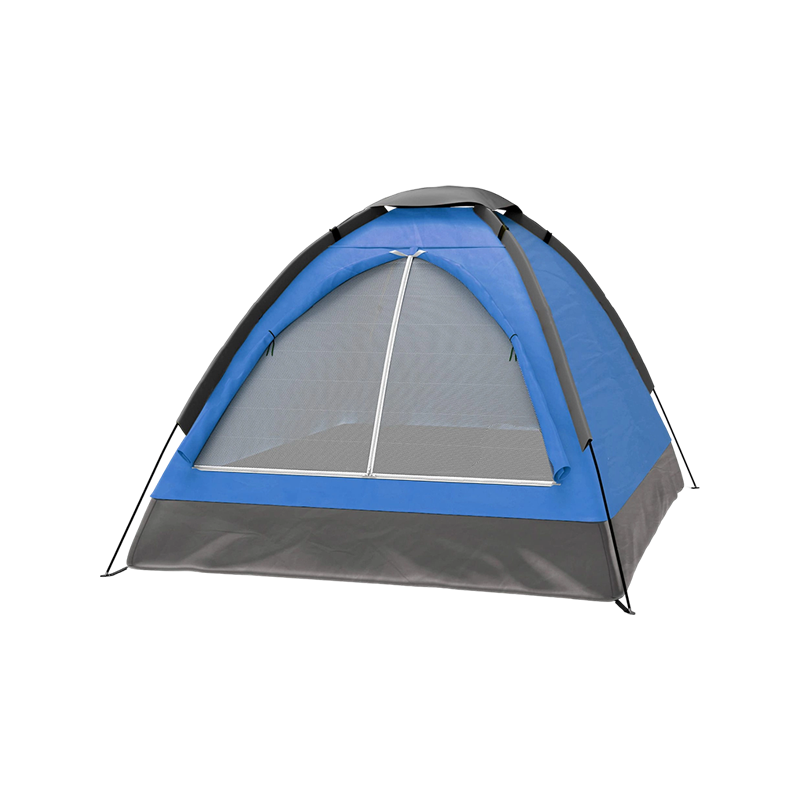
Outdoor thickened tent, quick-setup beach tent, camping sun protection tent.
Hydraulic Spring Frame Engineering
The frame is one of the most important differences between this product and a conventional entry-level beach shelter. The hydraulic spring design uses pre-tensioned ribs that can be folded for storage while retaining the ability to return to a stable dome shape. The frame must be flexible enough to fold repeatedly, yet strong enough to maintain its geometry when open. This balance depends on spring steel selection, rib thickness, bend radius, joint design, fabric attachment, and cycle testing.
Lower-quality spring frames often rely on thin material or sharply bent sections to reduce cost and packed volume. These choices may make the shelter appear attractive at the point of purchase, but they can increase metal fatigue after repeated opening and closing. A weakened rib may fail to maintain tension, causing the tent to sag, open unevenly, or become difficult to fold. For a product intended for seasonal family use, rental operations, beach vendors, or event staff, repeated-cycle reliability is a critical consideration.
A thicker spring gauge can improve resistance to deformation, while a wider bend radius helps distribute stress over a larger section of the rib. These design decisions must be evaluated together. Simply increasing material thickness may increase weight or make folding difficult. Conversely, a very light rib may provide an attractive packed size but lack the resilience needed for repeated use. Professional product development therefore involves testing the complete frame system rather than judging one component in isolation.
At the manufacturing stage, frame consistency is essential. Ribs should be formed according to controlled dimensions so that each unit opens to a similar geometry. Variations in curvature can create uneven fabric tension, misaligned doors, or inconsistent peak height. Assembly workers must also ensure that the spring elements are correctly positioned and that protective sleeves or fabric channels do not pinch the frame during deployment.
Quality checks can include visual inspection of rib surfaces, dimensional measurement of critical bends, deployment testing, folding verification, and repeated open-close cycling. A cycle test does not replicate every outdoor condition, but it helps identify premature fatigue, loose connections, and frame deformation before products reach customers. For private-label buyers, documented testing procedures can support more consistent product approvals across different production batches.
Safe Folding and Storage
The same spring energy that makes setup fast also means that folding must follow a specific motion. Users should not attempt to force the frame backward in an arbitrary direction. The tent normally needs to be rotated, twisted, and folded in a controlled sequence so that the ribs overlap naturally and fit into the carry case. The exact motion depends on the frame configuration, and the instruction manual should illustrate it clearly.
Before folding, users should remove sand, leaves, and moisture from the fabric as much as possible. Wet storage can encourage odor, mildew, or coating deterioration. Sand trapped in joints may increase abrasion during folding, while debris inside the fabric channels can interfere with the spring ribs. A simple cleaning and drying routine can therefore extend the useful life of the shelter.
The retaining strap should be secured before the folded tent is placed in a vehicle or storage area. This prevents accidental spring release during handling. A well-designed carry bag should provide enough room for the folded structure without requiring excessive compression. Overly tight packaging can place unnecessary stress on the frame and make repacking frustrating for inexperienced users.
Double-Layer Fabric for Sun and Rain Protection
The shelter uses a double-layer construction intended to improve protection and comfort compared with a single-layer shade tent. The outer layer can be selected and treated for resistance to sunlight, abrasion, and light rain, while the inner layer contributes to shading, privacy, and heat management. Between the layers, an air gap helps slow the movement of heat from the outer surface into the interior.
This air-gap principle is similar to the insulating effect used in double-pane windows. When sunlight strikes the outer fabric, some energy is reflected and some is absorbed by the material. The separation between layers reduces direct heat transfer and creates an additional buffer before warmth reaches the occupant area. The result is not an air-conditioned interior, and no fabric shelter can eliminate heat in direct summer sunlight, but a well-designed double layer can feel more comfortable than a thin single sheet.
Sun protection depends on several factors, including fabric color, weave density, ultraviolet-resistant treatment, coating formulation, seam construction, and the angle of the sun. A product should not be evaluated solely by fabric thickness. A heavier fabric without suitable UV treatment may fade or degrade over time, while a moderately weighted fabric with an effective coating and stable construction may provide better overall performance.
Rain protection also depends on the relationship between the fabric and the seams. A coated polyester shell may resist water penetration across the main panels, but needle holes and poorly finished seams can become leakage points. For this reason, seam design, seam allowance, thread quality, and optional seam taping or sealing should be considered during development. The intended level of water resistance should be communicated accurately so that the product is not positioned as a substitute for a heavy-duty four-season tent when it is primarily designed for beach and recreational use.
Denier, Coating, and Abrasion Resistance
Denier is commonly used to describe the weight or thickness of synthetic fibers. A higher denier fabric generally offers improved resistance to abrasion and puncture, which can be valuable when the tent is placed on sand, gravel, grass, or other imperfect surfaces. Nevertheless, higher denier alone does not guarantee superior performance. Fabric weave, yarn quality, lamination, coating adhesion, and finishing all influence durability.
Polyurethane coating is one common method for improving water resistance. The coating must be applied consistently and bonded securely to the textile. If the coating is too thin, sustained rain may gradually penetrate. If it is too heavy or poorly cured, the fabric may become stiff, tacky, or prone to cracking after folding. A manufacturing partner with material experience can help select a suitable combination of denier and coating rather than treating either specification as an isolated marketing number.
For beach applications, abrasion resistance is particularly important because sand can act as a fine abrasive during setup, folding, transport, and cleaning. Reinforced corners, protected frame contact points, and carefully finished floor edges can help reduce wear. The floor should also be designed to limit the entry of sand and insects at ground level, especially when users place the shelter directly on a beach.
| Fabric and Construction Factor | Primary Performance Contribution | Development Consideration |
|---|---|---|
| Higher denier textile | Improves resistance to abrasion and puncture | Balance durability against weight and packability |
| UV-resistant outer fabric | Helps reduce sunlight-related degradation | Evaluate color stability and long-term exposure |
| Polyurethane coating | Improves resistance to rain penetration | Control coating thickness and adhesion |
| Double-layer air gap | Helps reduce heat transfer into the shelter | Maintain separation without adding unnecessary bulk |
| Finished and raised floor edge | Reduces sand, splash, and insect entry | Coordinate floor geometry with mesh and doors |
| Reinforced stress points | Improves durability around corners and attachment areas | Use compatible stitching, webbing, and reinforcement patches |
Mesh Ventilation and Insect Protection
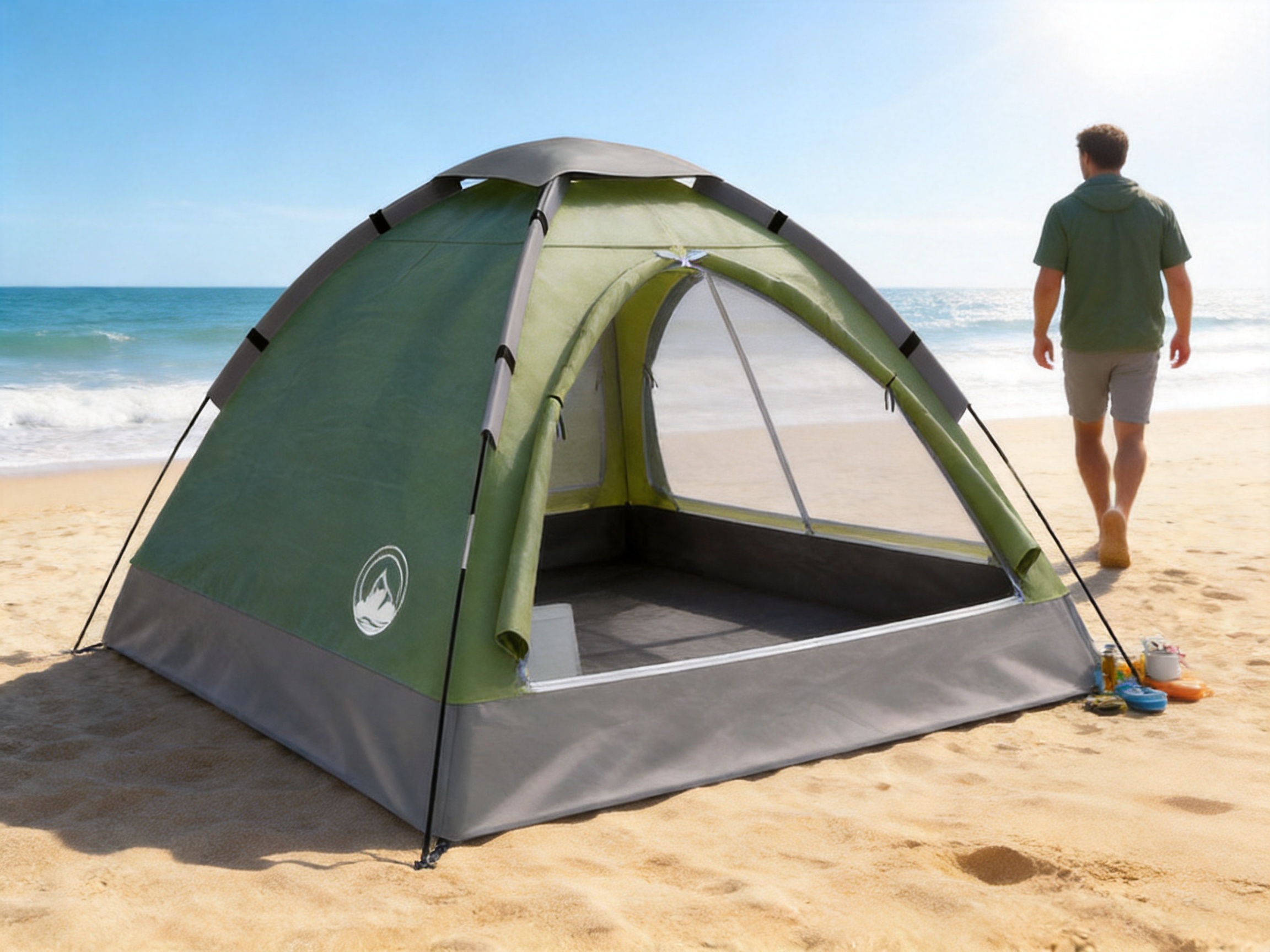
Breathability is essential in a compact shelter exposed to warm outdoor conditions. Without adequate ventilation, body heat, humidity, and condensation can accumulate quickly. The product uses high-density mesh panels to allow air movement while helping keep mosquitoes, sand flies, and other insects outside. The mesh must be fine enough to provide meaningful insect protection but open enough to avoid making the interior feel stagnant.
Mesh performance is influenced by hole size, yarn diameter, total panel area, panel location, and the pressure difference created by wind or temperature. A very fine mesh can block small insects effectively, but if it is used in a small panel, airflow may be insufficient. A larger mesh area can compensate for the restricted openings and provide a greater ventilation pathway.
Cross-ventilation is more effective than relying on one small vent. When mesh openings are positioned on opposite or adjacent sides, air can enter through one side and exit through another. Even a modest breeze can improve air exchange when the openings are arranged correctly. In still conditions, temperature differences between the inside and outside may also support natural air movement.
The placement of mesh should be coordinated with the double-layer shell. If the outer cover blocks every opening, the inner mesh cannot perform its ventilation role. Designers must determine which panels should remain open, which should have adjustable covers, and how the user can control privacy and airflow. Zippers, hook-and-loop closures, and fabric flaps should be positioned so that they are easy to operate while seated or lying inside the tent.
Ground-level construction is equally important. An elevated or raised floor edge helps reduce the entry of crawling insects, loose sand, and rain splash. This detail is easy to overlook because it is less visible in product photographs, but it can have a major effect on user satisfaction. A shelter that provides excellent upper-panel mesh but allows sand to enter freely through an unfinished lower edge will not deliver a complete beach experience.
Balancing Airflow, Privacy, and Weather Resistance
Ventilation design involves trade-offs. Opening more mesh improves airflow but may reduce privacy or allow wind-driven rain to enter. Closing all panels improves privacy and can provide greater protection during a shower, but the interior may become warmer. A practical shelter should give users several ways to adjust these conditions instead of forcing a single configuration.
For daytime beach use, users may prefer open entrances and extended mesh panels. During sleeping or changing, they may close the outer cover while leaving selected mesh sections available for airflow. The product’s value increases when the panels can be managed intuitively and the zippers operate smoothly without catching the mesh or fabric.
Manufacturing quality has a direct effect on this balance. Mesh must be cut accurately so that it does not pull against the zipper. Seams must be straight and securely stitched. The outer flap must overlap the opening sufficiently to reduce rain entry without creating excessive fabric movement in wind. These details are part of pattern engineering and assembly control, not merely final decoration.
Practical Capacity and Footprint Planning
The product is designed to accommodate two people, but capacity should be considered alongside the intended activity. A beach shelter used for shade may hold two adults, children, chairs, towels, and a small cooler nearby. A sleeping configuration requires floor space for sleeping pads, bags, clothing, and personal items. The same external dimensions can therefore feel spacious in one scenario and crowded in another.
Dome-shaped shelters offer useful structural benefits. Their curved frame can distribute wind loads more evenly than a flat canopy, and the absence of a complex pole assembly supports quick deployment. However, curved walls reduce usable headroom near the edges. When comparing models, consumers should examine floor dimensions, peak height, entrance width, and the shape of the sleeping area rather than relying only on the stated capacity.
Retail buyers should also consider how the tent will be presented in product listings. Clear diagrams showing floor dimensions, packed dimensions, peak height, and recommended usage can prevent mismatched expectations. Product descriptions should distinguish between daytime shade capacity and overnight sleeping capacity. Transparent communication tends to reduce returns and builds confidence in the product category.
For private-label development, the footprint can be evaluated according to regional market preferences. Some buyers may prioritize a smaller packed size for travel and vehicle storage. Others may prefer a wider entrance, more generous floor dimensions, or increased peak height. Since the spring frame, fabric panels, mesh layout, and packaging are interdependent, changes should be developed through samples rather than made only through isolated specification edits.
Advantages Over Generic Competitor Shelters
The first advantage is integrated convenience. Many low-cost beach shelters provide a simple pop-up action but use thin fabric, limited mesh, or weak attachment points. Others offer thicker material but still require several assembly steps. This product attempts to combine quick deployment with a more complete protection system: a spring-loaded frame, double-layer construction, high-density mesh, and a floor configuration suitable for sand and light outdoor exposure.
The second advantage is attention to repeated use. A product designed only for a single holiday may use minimal reinforcement and a basic spring gauge. A more carefully developed tent considers how the frame will be opened and closed throughout a season. Spring thickness, bend radius, connection points, storage straps, and folding instructions are all relevant to the product’s usable life.
The third advantage is balanced fabric engineering. Instead of treating “thickened” as a substitute for all other material decisions, the product concept considers denier, coating, air gap, seam construction, and reinforcement together. This creates a more realistic basis for sun and rain protection. In competitive markets, buyers increasingly look beyond superficial fabric claims and ask how the complete shelter performs in practical conditions.
The fourth advantage is ventilation planning. Generic shelters may include one small mesh window as a basic insect barrier. A better layout uses larger mesh panels and positions them to promote cross-ventilation. This can improve comfort in hot conditions while maintaining a useful level of insect protection. The raised floor edge further supports the product’s suitability for beach environments.
The fifth advantage is development flexibility. A manufacturing partner that understands outdoor use can support changes to color, logo placement, fabric selection, packaging, accessories, dimensions, and market-specific instructions. This is particularly valuable for retailers that want to build a recognizable product line rather than sell an undifferentiated shelter.
Finally, the product can serve more than one customer segment. It is accessible to novice campers, useful for families, practical for beach travelers, and adaptable for distributors seeking a branded outdoor leisure product. This broader use-case range may help retailers build a more resilient product portfolio.
Manufacturing Approach and Product Development Strengths
CragHaven Outdoor operates as an outdoor brand and cross-border manufacturing partner based in Hangzhou, China. Its focus includes mountaineering, hiking, and camping equipment for global markets. The company’s development philosophy is centered on actual outdoor conditions rather than catalog appearance alone. This approach is important for tents because many performance problems are not visible in a studio photograph. They appear when the product is exposed to sunlight, wind, wet ground, sand, repeated folding, or inexperienced handling.
A practical manufacturing process begins with usage analysis. The development team considers where the shelter will be used, how often it will be opened, what users will carry, how it will be transported, and which environmental problems are most likely. For this quick-setup tent, those questions include frame fatigue, accidental spring release, sand accumulation, mesh airflow, seam leakage, heat buildup, and the difficulty of folding the product back into its bag.
Material selection follows the usage analysis. Textile specifications, coating requirements, spring steel properties, mesh density, thread size, zipper type, webbing, reinforcement patches, and floor materials must be selected as a coordinated system. A heavier material may improve durability but affect packed weight. A finer mesh may improve insect resistance but reduce airflow. A stronger frame may be more reliable but require a larger carry case. Professional development seeks a workable balance rather than maximizing one specification without considering the others.
Sampling and Iterative Optimization
Sampling is essential because a design that appears correct in drawings may behave differently when constructed. During sample review, the team can observe how quickly the frame opens, whether the fabric pulls evenly, whether the entrance operates smoothly, and whether the folded structure fits the intended packaging. Samples also allow evaluation of peak height, floor tension, mesh placement, and the relationship between the outer and inner layers.
Repeated sampling supports incremental improvements. A first sample may reveal that a corner reinforcement is too small, a zipper is positioned too close to a frame rib, or the floor edge needs additional height. The next sample can address those issues before mass production. This process may require more time at the beginning, but it reduces the risk of expensive corrections after production has started.
CragHaven Outdoor emphasizes that sampling, testing, and optimization should not be omitted. This principle is especially relevant to OEM projects, where a retailer may have a target price and visual concept but require support with technical decisions. A manufacturing partner can translate the commercial brief into material combinations, pattern adjustments, prototypes, and production instructions.
Quality Control from Components to Finished Units
Quality control should begin before final assembly. Incoming materials can be checked for color, width, coating appearance, mesh integrity, and basic dimensional consistency. Spring elements should be inspected for surface damage, correct curvature, and compatibility with the intended frame structure. Zippers, webbing, buckles, thread, and reinforcement materials should also meet the agreed specifications.
During cutting and sewing, accurate patterns help maintain consistent panel dimensions. Misaligned panels can affect frame tension and create stress around the corners. Stitch density, seam allowance, bartack placement, and reinforcement alignment should be monitored. Mesh panels require special attention because a small cut or snag can become larger when the frame is opened repeatedly.
Finished-product inspection may include deployment checks, folding checks, seam appearance, zipper operation, logo placement, carry-bag fit, label verification, and packaging review. Where required by the market or buyer, additional testing may be used to evaluate water resistance, color fastness, UV performance, fabric strength, and frame cycling. The exact inspection plan should reflect the product’s intended use and the buyer’s quality requirements.
Consistency is one of the main strengths a professional manufacturing partner can provide. A product is not successful merely because one prototype performs well. Every production unit must maintain the same frame geometry, fabric construction, sewing quality, and packaging configuration. Stable processes reduce variation between batches and make it easier for distributors to manage inventory and customer expectations.
OEM and Private-Label Opportunities
The quick-setup tent can be developed as a standard product or adapted for OEM and private-label programs. Brand owners may request custom colors that align with their existing outdoor collection, while retailers may need specific packaging dimensions for warehouse systems or online fulfillment. Logo printing, woven labels, hangtags, instruction manuals, carton marks, and accessory combinations can be coordinated as part of the product program.
Customization should preserve the product’s functional logic. A decorative change should not obstruct a ventilation panel, interfere with a zipper, or add weight at a flexible frame location. A new fabric color may influence solar heat absorption and visual temperature, while a different coating may change hand feel and packability. These effects should be reviewed during sampling.
Market positioning can also be adjusted. One version may be presented as a family beach shelter, another as a lightweight recreational camping tent, and another as a branded promotional shelter for outdoor events. The core design can remain recognizable while capacity, fabric, accessories, and packaging are modified according to the target customer.
As a cross-border manufacturing partner, CragHaven Outdoor aims to communicate in a professional, Western-market-oriented manner. This includes clarifying specifications, identifying trade-offs, supporting sample approval, and coordinating repeat production. For overseas buyers, effective communication is as important as factory capability because small misunderstandings about capacity, fabric weight, packaging, or logo placement can create significant downstream problems.
Use and Care Recommendations
Users should select a relatively level surface and remove sharp stones, branches, shells, or other objects that could damage the floor. On beaches, the area should be checked for sharp debris even when it appears to be soft sand. The tent should be opened with sufficient clearance around the spring frame, and children should remain away from the moving structure during deployment.
Although the shelter offers sun and rain protection, it should be anchored appropriately in windy conditions. A lightweight pop-up shelter can be moved or lifted by strong gusts if it is not secured. Sand pockets, stakes, guy lines, or other anchoring methods may be used according to the environment and the product configuration. Anchoring should never be treated as optional simply because setup is automatic.
Ventilation openings should be adjusted according to temperature, wind, privacy, and rain. If condensation appears, increasing airflow can help. Users should avoid blocking all mesh panels for long periods in warm weather. The shelter should also be kept away from open flames, cooking equipment, heaters, and other ignition sources because synthetic fabrics can burn or melt.
After use, shake or brush away sand before folding. If the fabric becomes wet, dry the shelter fully before long-term storage. Zippers should be operated without forcing them through accumulated sand. The frame should be folded according to the supplied instructions, and the retaining strap should be secured before the tent is returned to its carry bag.
Regular inspection is recommended for users who open the tent frequently. They should check for damaged mesh, loose stitching, bent ribs, worn straps, broken zipper teeth, and coating deterioration. Early identification of small problems can prevent more serious failure during the next trip.
How Retailers Can Present the Product Clearly
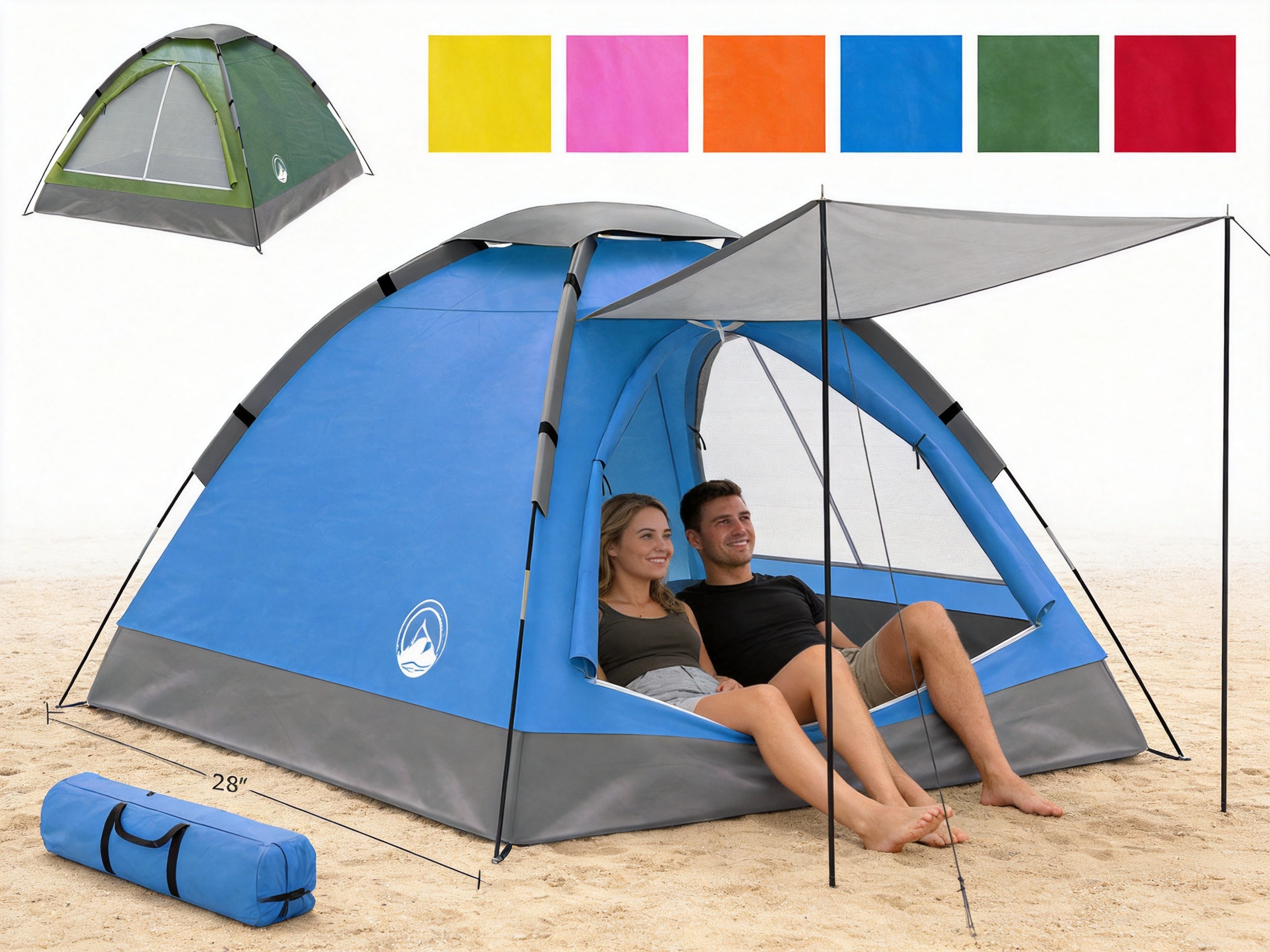
Retail communication should focus on practical benefits rather than exaggerated claims. “Quick setup” can be explained through the hydraulic spring frame and automatic opening action. “Double-layer protection” can be connected to the separation between the outer shell and inner layer. “Breathable and mosquito-resistant” can be supported by the high-density mesh and cross-ventilation layout. “Two-person capacity” should be described with an explanation of the difference between sitting, resting, and overnight sleeping use.
Images and diagrams should show the packed tent, the opened structure, the internal layout, the mesh panels, and the folding method. Product pages should include dimensions, packed size, approximate weight, fabric composition, water-resistance information where available, and anchoring recommendations. This level of detail helps buyers compare the shelter with conventional alternatives and makes the product’s value easier to understand.
Retailers can also emphasize the product’s suitability for several scenarios: beach shade, family recreation, short camping trips, outdoor rest areas, changing space, and temporary event use. At the same time, the product should not be presented as a replacement for specialized mountaineering tents in severe weather or high-altitude expeditions. Honest positioning protects both the brand and the customer relationship.
Environmental and Supply-Chain Considerations
Outdoor products are expected to remain functional over time, and durability is an important part of responsible manufacturing. A tent that fails after limited use may create more waste than one built for repeated seasonal deployment. Stronger stress points, suitable frame materials, reliable coatings, and repairable components can contribute to a longer service life.
Material efficiency should also be considered. Pattern layouts can be optimized to reduce cutting waste without compromising panel orientation or structural strength. Packaging can be reviewed to avoid unnecessary volume while still protecting the frame and fabric. For international shipments, efficient packing can improve container utilization and reduce avoidable logistics costs.
CragHaven Outdoor’s stated approach is to prioritize durability, reliability, and long-term use rather than short-term trends. This philosophy aligns with the needs of global retailers that want stable products and repeatable supply. A long-term partnership also allows design improvements to be carried forward from one production cycle to the next instead of restarting development from the beginning each season.
Buyer Evaluation Checklist
Before selecting a quick-setup tent for a retail or private-label program, buyers should evaluate more than the product photograph. The frame should be reviewed for opening consistency, folding behavior, material resilience, and the condition of the retaining system. The fabric should be assessed for weight, coating, color stability, seam quality, and compatibility with the intended weather conditions.
Mesh coverage should be examined from inside and outside the tent. Buyers should confirm whether the openings create meaningful cross-ventilation and whether the floor edge limits sand and insect entry. The entrance should be tested with the tent fully tensioned, since zippers that work well on a loose sample may bind when the frame is under load.
Packaging should be checked for ease of use. The carry bag must accommodate the folded structure without excessive force, and the instructions should be understandable to first-time users. If the product is being sold internationally, labels, warnings, care instructions, and carton information should be reviewed for the destination market.
Finally, buyers should discuss production capacity, lead times, minimum order quantities, sample procedures, inspection standards, replacement-part options, and communication processes. These factors influence the real cost and reliability of a product program just as much as the initial unit price.
Q&A: Quick-Setup Outdoor Thickened Tent
Q1: How quickly can the tent be opened?
The hydraulic spring frame is designed to form the main tent structure in approximately two to three seconds after the retaining system is released. Users still need to position the shelter, open or adjust the entrances, and secure it against wind. The quick-opening time refers to the automatic frame deployment, not the complete anchoring process.
Q2: Is this tent suitable for two adults?
It is designed for approximately two people, but comfort depends on the activity. Two adults may use it comfortably for resting or sleeping when they bring compact equipment. If users carry large bags, thick sleeping pads, chairs, or other gear inside, the available space will feel more limited. Buyers should review the floor dimensions and peak height rather than relying only on the capacity label.
Q3: What is the purpose of the double-layer structure?
The double-layer structure creates separation between the outer shell and inner layer. This air gap helps slow heat transfer under direct sunlight and provides additional shading and privacy. The outer layer can also support resistance to light rain, while the inner layer and mesh contribute to comfort. Performance depends on the specific fabric, coating, seams, and weather conditions.
Q4: Does the mesh completely stop mosquitoes and other insects?
High-density mesh is intended to reduce the entry of common insects, including mosquitoes and smaller flying insects. No portable shelter can guarantee complete insect exclusion under every condition. Users should keep zippers closed when appropriate, avoid leaving openings unattended, and inspect the mesh for damage. The combination of fine mesh, broad ventilation panels, and a raised floor edge improves practical protection.
Q5: Can the tent be used in heavy rain?
The shelter is designed primarily for beach leisure, sun protection, and recreational camping. Its double-layer fabric and coating can improve resistance to light rain, but buyers should confirm the tested water-resistance specifications for the selected version. In severe or prolonged weather, users should choose a shelter engineered specifically for those conditions and always follow safe anchoring practices.
Q6: Is the spring frame durable enough for repeated use?
Durability depends on spring material, gauge, bend radius, joint construction, and handling. A properly developed frame with suitable spring steel and controlled forming can provide better resistance to fatigue than a very thin, low-cost alternative. Users should follow the folding instructions, avoid forcing the ribs, and store the frame dry and secured. Buyers can request cycle-testing information during product evaluation.
Q7: What should be done if the tent is difficult to fold?
Folding should follow the supplied sequence rather than simply reversing the opening movement. The user should clear the surrounding area, remove loose items, control the frame with both hands, and guide the spring ribs through the intended twist-and-fold motion. If the frame appears bent or damaged, it should not be forced. A clear illustrated manual is an important part of the product package.
Q8: Can the product be customized for a private-label brand?
OEM options may include fabric color, logo placement, labels, packaging, instruction materials, selected dimensions, and accessory combinations. Any customization should be reviewed through samples because changes to fabric weight, coating, panel arrangement, or frame geometry can affect folding, ventilation, and performance.
Q9: What makes this product different from a basic pop-up sun shelter?
The product concept combines quick spring deployment with thickened fabric, double-layer construction, high-density mesh, cross-ventilation planning, and a raised floor edge. A basic shelter may provide only a single layer and minimal ventilation. The combination of features is intended to improve comfort, usability, and durability across beach and recreational camping scenarios.
Q10: Why work with a specialized outdoor manufacturing partner?
A specialized partner can connect design decisions with actual outdoor use. This includes evaluating fabric, coatings, frame cycling, mesh placement, sewing reinforcement, packaging, and user instructions as one system. CragHaven Outdoor’s stated strengths include product development, sampling, testing, optimization, and communication for global markets. These capabilities can help buyers reduce uncertainty when developing or scaling an outdoor product line.
Conclusion
The outdoor thickened quick-setup tent is designed to make outdoor shelter more accessible without reducing attention to material and structural performance. Its hydraulic spring mechanism provides rapid deployment, while its double-layer fabric supports shading, privacy, and improved heat management. High-density mesh helps balance insect resistance with ventilation, and the raised floor edge addresses common beach problems such as sand, splash, and ground-level insects.
Compared with generic pop-up shelters, the product offers a more complete combination of convenience, protection, airflow, and repeat-use considerations. Its performance depends on disciplined engineering: suitable spring gauge, controlled bend radius, reliable coatings, accurate sewing, reinforced stress points, carefully placed mesh, and clear folding instructions. These details are also where a professional manufacturing partner can create meaningful advantages.
For retailers and international buyers, the product provides a flexible platform for OEM and private-label development. Custom colors, branding, packaging, specifications, and accessory selections can be adjusted to suit different markets, provided that each change is tested as part of the complete shelter system. With a focus on realistic outdoor scenarios, stable production, and long-term product value, the tent can serve as a practical addition to beach, camping, hiking, and recreational outdoor equipment ranges.
References
1. Outdoor Industry Association. Principles of Outdoor Product Design and Consumer Use.
2. International Organization for Standardization. Textile Fabrics: Determination of Tensile and Tear Properties.
3. International Organization for Standardization. Camping Tents: Performance, Safety, and Test Considerations.
4. American Society for Testing and Materials. Standard Practices for Testing Water Resistance and Hydrostatic Pressure of Textile Materials.
5. American Society for Testing and Materials. Standard Methods for Evaluating Colorfastness and Ultraviolet Exposure of Textiles.
6. Textile Research Institute. Synthetic Outdoor Fabrics, Coatings, and Seam Construction.
7. Outdoor Equipment Design Review. Ventilation, Condensation, and Insect-Mesh Applications in Portable Shelters.
8. Product Development Records. Hydraulic Spring Frame Sampling, Folding Evaluation, and Repeated-Cycle Testing.
Product: Outdoor thickened tent, quick-setup beach tent, camping sun protection tent.



- Phone: +86-15968800379
- E-mail: [email protected]
- Address: Room 1002, Huishang Building, Gongshu District, Hangzhou City, Zhejiang Province.
Copyright © CragHaven Outdoor All Rights Reserved. Outdoor Gear Manufacturers Wholesale Mountaineering Camping Gear Suppliers
