

 English
 Deutsch
 Español
 Français

How to Choose and Manufacture a Reliable Two-Person Camping Tent
Content
- 1 Understanding the Product Concept
- 2 Why a Double-Layer Structure Performs Better
- 3 Waterproof Polyester Fabric and Coated Protection
- 4 Ventilation and Condensation Management
- 5 Stable Manual Setup for Real Campsites
- 6 Comfortable Interior Space for Two Campers
- 7 Manufacturing Process and Quality-Control Strengths
- 8 Advantages Over Basic Competitor Models
- 9 Customization and Wholesale Cooperation
- 10 Use Cases and Market Positioning
- 11 Care, Maintenance, and Long-Term Value
- 12 How Retail Buyers Should Evaluate a Supplier
- 13 Q&A: Two-Person Camping Outdoor Tent
- 13.1 What is the main benefit of a double-layer tent?
- 13.2 Is this tent suitable for two adults?
- 13.3 Why are fully taped seams important?
- 13.4 Does the waterproof coating make the tent completely condensation-free?
- 13.5 Why is polyester used for the outer tent?
- 13.6 Is manual setup difficult?
- 13.7 What type of camping is the tent intended for?
- 13.8 Can the tent be customized for wholesale orders?
- 13.9 Why should a buyer request a pre-production sample?
- 13.10 How should the tent be stored?
- 13.11 What makes this product different from a basic low-cost tent?
- 14 Conclusion
- 15 References
- 16 Product: Two-person camping outdoor tent
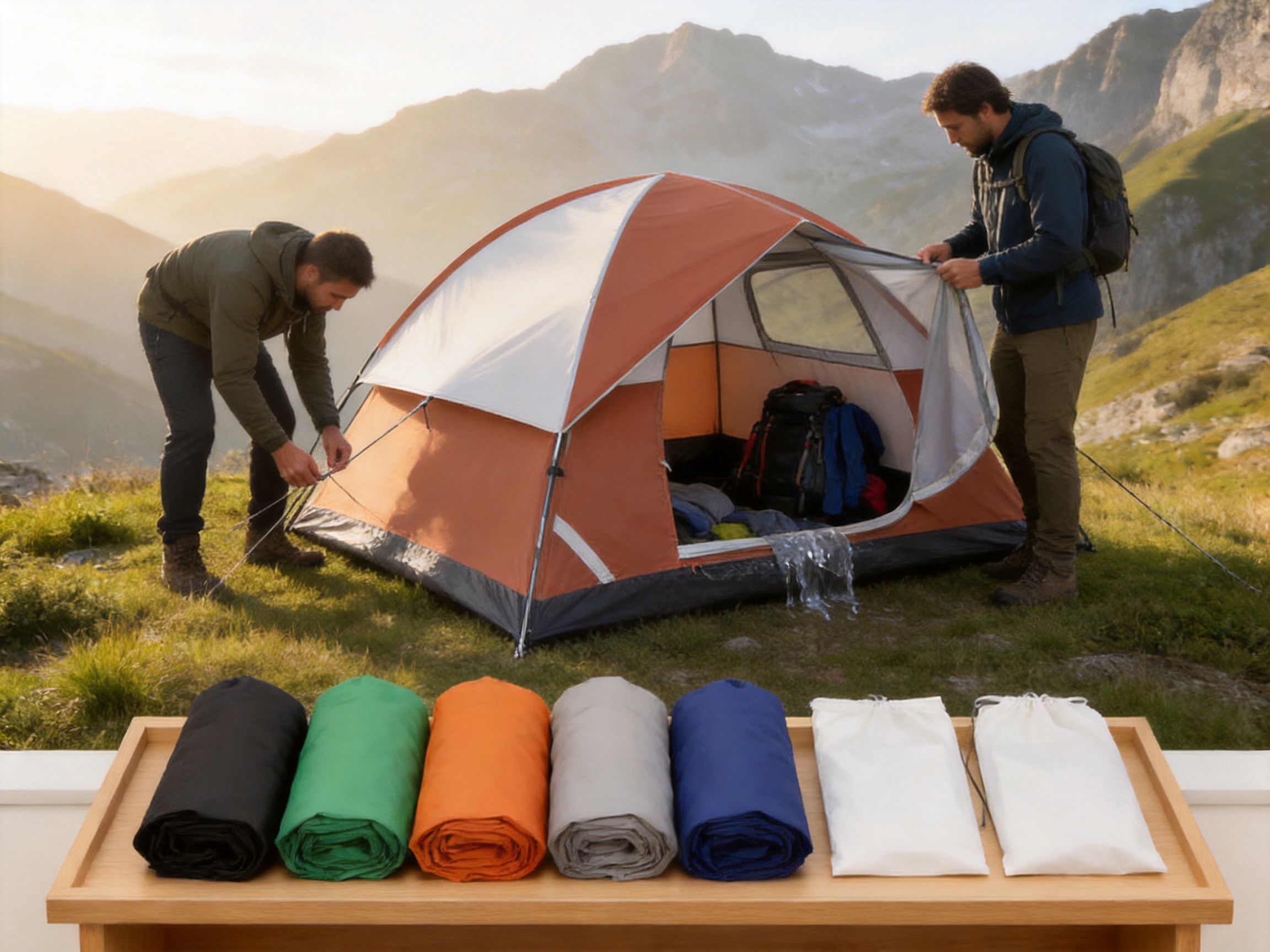
A two-person camping tent is more than a portable shelter. It is a compact outdoor living system that must balance weather protection, ventilation, sleeping comfort, structural stability, packing efficiency, and manufacturing consistency. For retailers, distributors, and outdoor brands, selecting the right tent also involves evaluating the supplier’s product-development process, material controls, quality standards, customization capabilities, and ability to deliver repeatable production at commercial scale.
The Two-person camping outdoor tent developed by CragHaven Outdoor is designed around these practical requirements. It uses a classic double-layer structure consisting of a waterproof outer tent and a breathable inner tent. This construction helps separate rain protection from internal ventilation, reducing condensation while maintaining a dependable barrier against changing weather. Polyester fabric with a waterproof coating, fully taped seams, manual setup, and a stable pole structure provide a balanced specification for recreational camping, weekend travel, family outdoor use, and general mountain and hiking scenarios.
From a product-sourcing perspective, the model is also suitable for buyers seeking a private-label or wholesale two-person tent. Its practical construction allows the product to serve multiple market positions, from entry-level outdoor retail to dependable mid-range camping equipment. Multiple color options support brand differentiation, while the established double-layer format is familiar to consumers and easy for sales teams to explain.
Understanding the Product Concept
The purpose of a two-person tent is to provide enough room for two occupants while remaining compact enough for transport and straightforward enough for manual installation. This requires careful compromise. A larger tent may offer more comfort but add weight, bulk, and cost. A very light or narrow tent may be easy to carry but uncomfortable during longer trips. The product concept must therefore be based on actual use rather than on a single specification such as floor area or packed size.
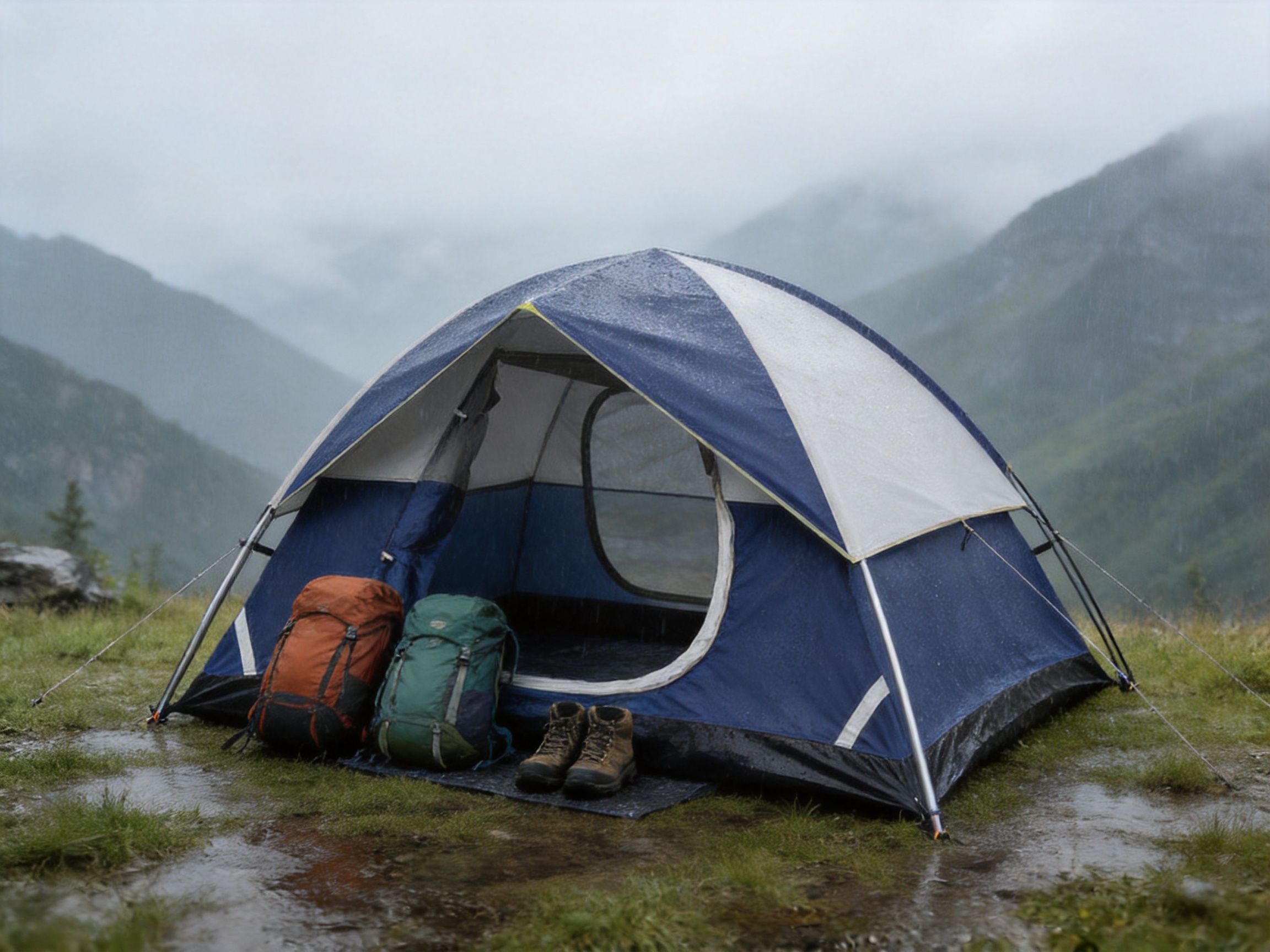
This model follows a conventional double-layer design. The inner tent forms the primary sleeping area and supports breathability, while the outer fly functions as the weather-resistant shell. The space between these layers creates an air gap that helps separate warm, humid interior air from the colder waterproof surface above. This arrangement is especially valuable during cool nights, humid weather, and shoulder-season camping, when condensation can otherwise become a major source of discomfort.
The tent is intended for two-person use and is suitable for camping trips in which users need a reliable shelter without the complexity of a large expedition system. The design supports manual setup, allowing campers to position the structure according to the terrain, wind direction, and preferred tension. Manual setup also gives users a better understanding of how the tent is supported, which can be useful when additional guy lines or stakes are required in exposed environments.
For commercial buyers, the product provides a strong foundation for customization. A familiar structure reduces consumer education requirements, while the available color variation allows retailers to coordinate the product with their existing outdoor collection. The tent may also be positioned as a general-purpose camping model for hiking, road trips, campsite holidays, scouting, outdoor events, and recreational mountain use.
Why a Double-Layer Structure Performs Better
Single-wall tents can be lightweight and quick to assemble, but their simplicity creates a direct relationship between the sleeping environment and the waterproof shell. Moisture produced by breathing, perspiration, wet clothing, and damp equipment can come into contact with the inside of the waterproof fabric. In cool or humid conditions, this moisture may condense and drip back into the sleeping area.
A double-layer tent addresses the problem through separation. The inner tent provides a breathable enclosure, and the outer fly blocks rain and wind. The air space between the layers helps warm vapor move away from the occupants before it reaches the colder outer surface. This does not eliminate condensation under every condition, because all tents require appropriate ventilation, but it gives the design a meaningful advantage over basic single-wall alternatives.
The inner tent can include breathable fabric and mesh sections to assist airflow. Warm air naturally rises, so upper ventilation zones are important for allowing moisture to escape. At the same time, lower airflow helps replace humid air near the floor. Effective ventilation is not simply a matter of opening the largest possible panel. It requires a balanced path for air to enter, rise, and exit while the outer fly continues to protect the occupants from rain.
The outer tent must maintain sufficient clearance from the inner tent. If the two layers touch repeatedly, water may transfer across the contact point, and airflow may be restricted. A properly tensioned fly maintains the intended air gap and helps the waterproof shell perform consistently. This is why pole alignment, attachment points, seam positioning, and final assembly inspection are all important parts of tent manufacturing.
Compared with many low-cost competitors that use a basic coated shell with limited attention to ventilation, this product concept treats moisture management as a complete system. The advantage does not come from one isolated feature. It comes from combining the breathable inner tent, waterproof fly, air gap, ventilation planning, seam protection, and stable setup structure into one coordinated design.
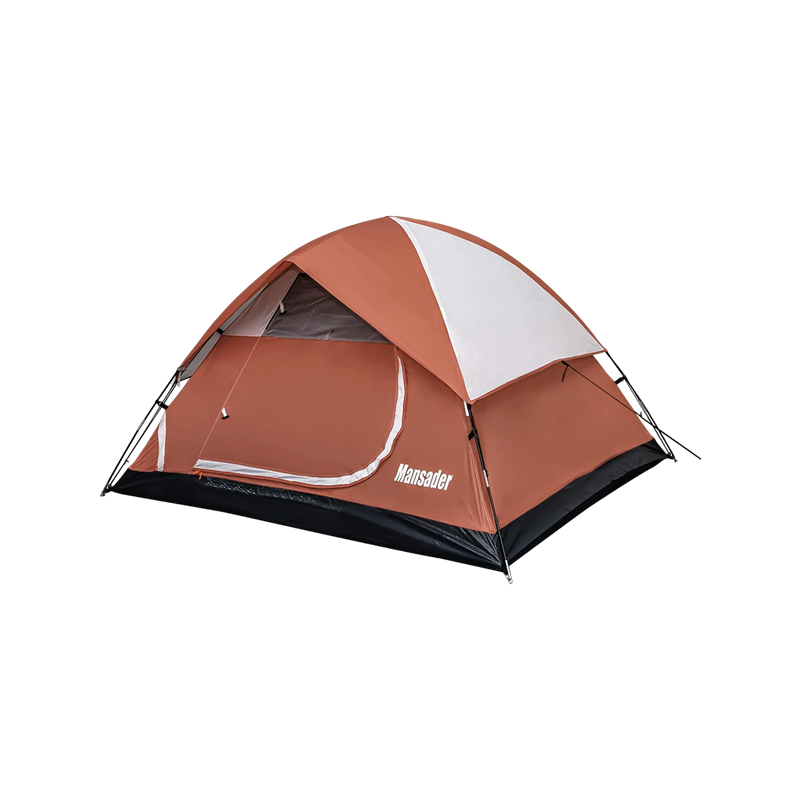
Two-person camping outdoor tent
Waterproof Polyester Fabric and Coated Protection
Fabric selection has a direct effect on a tent’s weather resistance, durability, appearance, handling, and production stability. The outer tent in this model uses polyester fabric with a waterproof coating. Polyester is widely used in camping tents because it maintains its shape relatively well when exposed to changing humidity and does not stretch as significantly as many untreated or lightly treated nylon fabrics.
When nylon absorbs moisture, it can relax and elongate, which may reduce fabric tension during overnight rain. A loose fly can create water-holding areas, increase contact with the inner tent, and reduce wind stability. Polyester generally shows lower moisture-related dimensional change, allowing the outer structure to retain a more consistent pitch when conditions change.
The waterproof coating creates a barrier that resists water penetration through the fabric surface. However, the coating is only one part of waterproof performance. The fabric must be correctly selected, coated evenly, cut accurately, sewn with suitable thread and seam allowance, and finished with appropriate seam-taping procedures. A high water-resistance fabric can still leak if the stitching and finishing processes are poorly controlled.
For buyers comparing suppliers, it is useful to distinguish between a tent that has simply been described as waterproof and one that has been designed as a complete weather-resistant assembly. Important evaluation points include the fabric specification, coating uniformity, seam construction, taped-seam coverage, zipper protection, attachment-point reinforcement, and inspection method. CragHaven’s product approach places these elements within the same development and production process rather than treating them as unrelated upgrades.
Fully Taped Seams
Every stitched seam creates needle holes. Even when the fabric itself resists water, these small openings can become leak paths during prolonged rainfall or pressure from water collecting on the fly. Fully taped seams address this weakness by applying a waterproof strip over the sewn seam. The tape is heat-bonded or otherwise securely applied so that it covers the line of needle penetration.
Full seam taping is particularly valuable on the outer fly, where seams are directly exposed to rain. It also contributes to a more professional product appearance because the inside of the fly has a consistent finished surface rather than visible, untreated stitch lines. For wholesale customers, this detail can reduce complaints related to leakage and provide a clear quality point for product descriptions and sales training.
CragHaven treats seam taping as a standard production requirement for this style of tent rather than an optional feature reserved for premium orders. The manufacturing sequence must allow the sewn panels to be inspected before taping, and the tape application must be controlled for position, heat, pressure, and adhesion. If the tape is misaligned, overheated, insufficiently bonded, or applied over contamination, its performance may be reduced.
Protection Beyond the Fabric Surface
Water can enter a tent through more than the main fabric. Zipper lines, pole sleeves, guy-line attachment points, corners, floor transitions, and reinforced load-bearing areas all require attention. A reliable production process therefore evaluates the complete shell, not only the fabric’s laboratory coating result.
Corner areas deserve special attention because several panels and tension forces often meet in a small zone. Reinforcement can help distribute stress and reduce the chance of tearing. Pole attachment points must be positioned accurately so that the fly is evenly tensioned. Guy-line loops should be securely sewn because they transfer wind loads from the fabric to the stakes and ground.
The product’s polyester outer fabric, waterproof coating, and taped seams provide a practical weather-resistance foundation. These features are especially appropriate for general camping buyers who want dependable rain protection without moving to a highly specialized expedition tent with substantially higher cost and complexity.
Ventilation and Condensation Management
Condensation is a natural result of temperature differences and moisture inside a tent. Two people sleeping in a small enclosed space release water vapor through breathing and perspiration. Wet shoes, damp clothing, humid ground, and rainfall can increase the moisture level further. When warm air touches a colder surface, vapor may turn into liquid water. The goal of tent design is not to promise impossible condensation-free performance, but to manage moisture intelligently.
The double-layer structure creates a first line of defense. The breathable inner tent helps moisture move away from the occupants, while the outer fly provides weather protection. The space between the two layers gives the vapor a path to disperse. However, the design must also provide ventilation points so that humid air can escape instead of remaining trapped inside the shelter.
Upper ventilation is important because warm air rises. Mesh panels, high vents, and carefully shaped openings can allow moisture-laden air to leave the tent. Lower vents are equally important because they bring in replacement air and prevent stagnant, humid conditions near the floor. A fly that reaches close to the ground may block wind-driven rain effectively, but without lower airflow it can also reduce circulation.
The product’s ventilation performance depends on both construction and user setup. Campers should pitch the tent with the fly correctly tensioned, avoid blocking vents with sleeping bags or equipment, and open available ventilation points when weather permits. Retailers can improve customer satisfaction by explaining these operating practices instead of presenting waterproofing and breathability as competing claims.
Compared with inexpensive tents that rely on a single waterproof layer and minimal ventilation planning, the double-layer model offers a more forgiving internal environment. It is better suited to buyers who camp in varied climates and need a tent that remains comfortable through changing overnight temperatures.
Stable Manual Setup for Real Campsites
Manual setup remains a valuable design choice for a two-person tent. It allows users to control the pitch, align the structure with the ground, adjust tension, and respond to local conditions. Pop-up systems may be faster, but they can limit the user’s ability to fine-tune the structure or replace individual components. Manual pole systems also provide a familiar format for outdoor consumers and are straightforward to package with clear instructions.
The pole structure supports the inner tent and outer fly while distributing tension across the shelter. A dome or similarly cross-supported arrangement can spread wind loads across several points instead of placing most of the force on a single hoop. This improves stability in ordinary exposed campsites and provides a stronger basis for the tent’s weather performance.
Setup stability depends on more than the poles. The tent must be correctly oriented, the floor must be positioned without excessive twisting, and the fly must be attached evenly. Stakes should be driven into suitable ground at an angle that resists the direction of pull. Guy lines should be tensioned enough to stabilize the shell but not so aggressively that they distort seams or place unnecessary stress on attachment points.
For a two-person tent, ease of setup is also connected to the clarity of the component system. Color-coded pole ends, logical sleeve placement, secure clips, and consistent attachment points can make the installation process more intuitive. These details may appear small, but they influence how often consumers use the product and how confidently they handle it in poor weather.
Pole Material Considerations
Aluminum and fiberglass are both used in tent structures, but they offer different performance and cost profiles. Aluminum poles are lightweight relative to their strength, resist corrosion when properly finished, and can flex under wind loads before returning toward their original shape. They are often preferred for products intended for frequent use or more demanding outdoor conditions.
Fiberglass poles can provide an economical option for occasional-use camping tents. They are accessible from a cost perspective but may become brittle or splinter after repeated stress cycles, impact, or prolonged exposure to harsh conditions. The selection should therefore reflect the intended market position and usage frequency.
CragHaven’s manufacturing approach favors aluminum poles for manual-setup tents intended to deliver a stronger long-term value proposition. This choice supports the product’s positioning as a reliable two-person shelter rather than a disposable seasonal item. For buyers who require a different price point, material alternatives can be evaluated during the sampling process, provided that the effect on strength, weight, durability, and safety is fully considered.
Comfortable Interior Space for Two Campers
A two-person rating does not automatically guarantee comfortable two-person occupancy. Some compact tents technically fit two sleeping bags but leave almost no room for movement, clothing, or personal equipment. A more useful evaluation considers interior width, floor shape, wall angle, peak height, door access, ventilation, and vestibule storage.
Interior width is especially important. A practical two-person sleeping area should accommodate two sleeping pads without forcing them to overlap or push hard against the sidewalls. A width of approximately 130 centimeters or more is often a useful starting point for evaluating comfort, although the ideal dimension depends on the users, sleeping systems, and intended market.
Peak height affects how livable the tent feels. A higher central point allows occupants to sit upright, change clothing, organize gear, and spend time inside during rain. Wall angle also matters. Near-vertical upper walls create more usable shoulder and head space than sharply sloped walls with the same floor area.
Vestibule space adds practical value without expanding the sleeping footprint. Wet boots, backpacks, cooking equipment, and outer layers can remain under the fly rather than inside the sleeping compartment. This helps keep the inner tent cleaner and more comfortable. For multi-day trips, vestibule design can influence satisfaction as much as the nominal floor area.
The model is designed as a balanced two-person shelter rather than an oversized family tent. This makes it more portable for hiking and compact vehicle travel while preserving the core comfort features that two occupants expect. Retailers can position it for couples, friends, individual campers seeking extra room, and outdoor users who prioritize a manageable packed size.
Manufacturing Process and Quality-Control Strengths
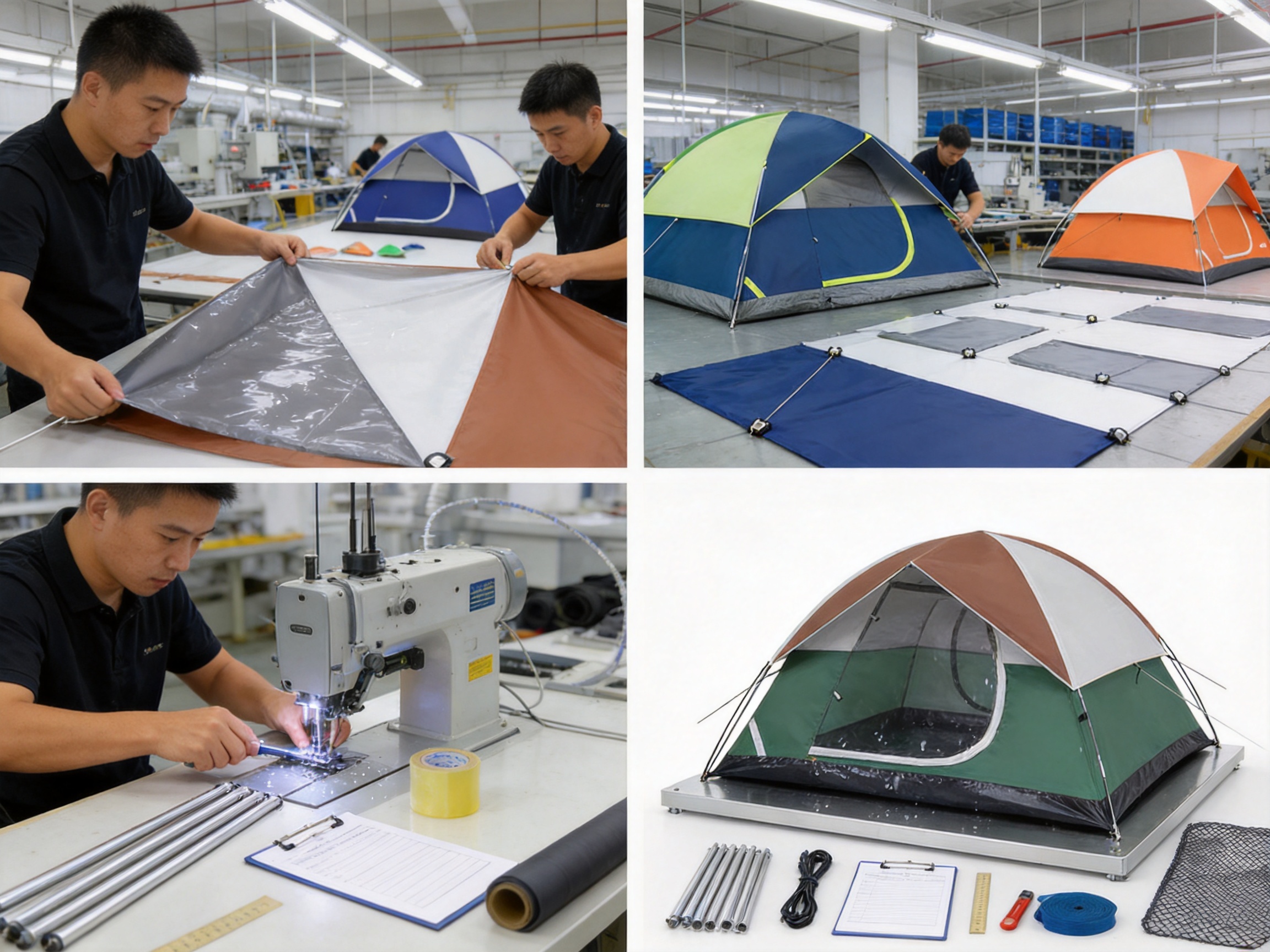
A reliable tent is the result of controlled production steps rather than a single material choice. CragHaven Outdoor’s manufacturing approach is based on product development, sampling, testing, optimization, and repeatable manufacturing. This process is important for buyers who need consistent quality across wholesale orders and future replenishment.
Product Requirement Definition
Production begins by defining the intended use scenario. A two-person camping tent for general outdoor retail has different priorities from an ultralight alpine shelter or a large festival tent. The target user, climate range, retail price, expected frequency of use, transport requirements, color direction, and packaging expectations all influence the product specification.
CragHaven’s development philosophy starts with actual weather, terrain, and usage patterns. This helps prevent the common mistake of designing a product around a list of isolated parameters. A tent may have an attractive fabric rating but still perform poorly if its ventilation, pole geometry, seam placement, or user instructions are not considered together.
Material Selection and Incoming Inspection
Fabric, coatings, thread, webbing, zippers, poles, buckles, stakes, guy lines, and packaging materials should be checked before entering production. Incoming inspection can include visual assessment, dimensional checks, color comparison, coating review, hardware verification, and sampling against approved specifications.
Fabric rolls should be reviewed for defects that could become visible or structurally significant after cutting. Coating inconsistencies, weaving faults, stains, color variation, and damage from handling can affect both appearance and performance. Pole components should be checked for correct length, connection quality, end fitting security, and smooth assembly.
For custom orders, material approval is especially important. A buyer may request a particular color, logo application, fabric weight, zipper type, or accessory package. These changes must be recorded in an approved sample or technical document so that production teams, quality inspectors, and purchasing staff work from the same reference.
Digital Pattern Development and Cutting
The shape of a tent is determined by the accuracy of its patterns. Small deviations in panel dimensions can cause uneven tension, misaligned seams, wrinkled surfaces, or difficulty attaching the fly to the inner tent. A controlled cutting process helps maintain consistency across units.
Pattern development should account for seam allowances, shrinkage, reinforcement panels, zipper placement, pole sleeves, ventilation openings, and attachment points. When a product is revised, the pattern version should be identified clearly to prevent outdated components from entering the production line.
Cut panels should be grouped and labeled according to size, color, and assembly location. This is particularly important when a model is offered in multiple colors or when several similar tent designs are produced in the same facility. Organized cutting reduces mix-ups and supports efficient assembly.
Sewing and Reinforcement
Sewing quality affects waterproofing, strength, appearance, and assembly accuracy. Operators must maintain consistent stitch length and seam allowance while avoiding skipped stitches, excessive tension, loose thread, and fabric puckering. Different areas may require different seam constructions depending on whether they are part of the main shell, a load-bearing point, a zipper line, or a ventilation panel.
High-stress areas such as pole attachment points, guy-line loops, corner connections, handles, and webbing anchors require reinforcement. The reinforcement must be positioned accurately and sewn securely without creating unnecessary bulk or sharp edges. A product may look acceptable at first glance but fail prematurely if stress is concentrated on a small untreated area.
CragHaven’s focus on long-term value means that manufacturing decisions are evaluated according to actual use. The aim is not simply to complete sewing quickly, but to create a stable product that can be assembled, packed, transported, and used repeatedly without avoidable failures.
Seam Taping and Waterproof Finishing
After the relevant panels are sewn, seam taping is performed on the designated waterproof seams. The tape must cover the stitched line and bond consistently to the coated fabric. Temperature, pressure, speed, and alignment influence the quality of the finished seam.
Inspection should look for lifted edges, wrinkles, gaps, burn marks, incomplete coverage, and poor adhesion. Taped seams may also be subjected to water testing or other validation methods appropriate to the product specification. This stage is critical because a problem that is difficult to see during visual inspection may become obvious after sustained rainfall.
Final Assembly and Functional Testing
Final assembly combines the inner tent, outer fly, poles, clips, guy lines, stakes, storage bag, and instructions. The complete tent should be erected during inspection rather than evaluated only as separate components. Full assembly reveals problems such as incorrect pole length, misaligned clips, insufficient fly clearance, uneven tension, zipper interference, or blocked ventilation.
Functional testing may include setup and takedown checks, zipper operation, pole insertion, seam review, water-resistance evaluation, dimension verification, accessory counting, and packaging inspection. Repeated setup checks are useful because they reflect the actions consumers perform and can expose weak components that a static inspection may miss.
Packaging also matters to commercial buyers. The tent must fit into its storage bag without excessive compression, and the packed product should be protected from abrasion and moisture during shipment. Instructions should correspond to the actual component layout. A clear packing process reduces missing accessories and makes the product easier for end customers to use.
| Product Element | Practical Function | Customer Benefit | Manufacturing Focus |
|---|---|---|---|
| Double-layer construction | Separates breathable sleeping space from the waterproof fly | Improves weather protection and condensation management | Accurate patterning, correct layer clearance, complete assembly inspection |
| Coated polyester fly | Resists rain and maintains shape through humidity changes | Reliable protection and consistent pitching | Fabric inspection, coating review, color and dimensional control |
| Fully taped seams | Closes potential leak paths created by stitching | Better protection during sustained rainfall | Controlled tape temperature, pressure, alignment, and adhesion |
| Manual pole system | Supports adjustable, stable campsite setup | Repairability, setup control, and familiar operation | Pole-length verification, fitting checks, assembly testing |
| Ventilation planning | Allows humid air to circulate and escape | More comfortable sleeping conditions | Mesh placement, vent construction, unobstructed openings |
| Two-person interior | Provides a compact sleeping area for two occupants | Useful balance of comfort, portability, and value | Floor dimension accuracy, wall geometry, zipper and clip alignment |
| Multiple color options | Supports visual differentiation | Improved retail presentation and private-label flexibility | Color approval, batch consistency, clean panel assembly |
Advantages Over Basic Competitor Models
The camping-tent market includes a wide range of products, and comparison should be based on the total ownership experience rather than the lowest initial price. Basic competitor models may reduce cost through a single-wall design, limited seam finishing, lower-grade poles, restricted ventilation, or minimal inspection. These approaches can produce an attractive purchase price, but they may also increase the likelihood of condensation, leakage, difficult setup, premature damage, and customer dissatisfaction.
The first advantage of this model is its coordinated double-layer structure. The outer fly and inner tent are designed to perform separate functions, offering a more balanced environment than a basic waterproof shell. This is meaningful for consumers who camp through changing temperatures or humid weather.
The second advantage is the use of coated polyester. Its dimensional stability supports a more consistent pitch during wet conditions. A tent that maintains its shape can preserve the intended air gap, reduce contact between layers, and improve the effectiveness of the rain fly.
The third advantage is full seam taping. Some low-cost tents advertise water-resistant fabric but leave many seams untreated. This can create a difference between laboratory fabric performance and real-world rain protection. Fully taped seams provide a more complete approach to waterproof finishing.
The fourth advantage is the emphasis on manual setup stability. Rather than prioritizing a quick-opening mechanism at the expense of structural adaptability, the design gives users control over pole placement, fly tension, stake position, and guy-line adjustment. This supports a wider range of campsites and makes individual components easier to understand and maintain.
The fifth advantage is manufacturing integration. CragHaven Outdoor participates in design and production rather than functioning only as a sourcing intermediary. This allows feedback from sampling, material selection, sewing, testing, and customer requirements to flow into later revisions. For wholesale customers, an integrated partner can reduce communication gaps and improve the repeatability of future orders.
These advantages do not mean that the tent is intended for every outdoor situation. Specialized high-altitude expeditions may require different fabrics, pole systems, snow-loading features, and extreme-weather testing. The strength of this model is its practical balance for general two-person camping, hiking, recreational mountain use, and outdoor retail.
Customization and Wholesale Cooperation
Outdoor retailers and distributors often need more than a standard product. They may require specific colors, logo placement, packaging language, accessory combinations, carton markings, or adjustments to meet the expectations of a particular market. A two-person tent is well suited to customization because its essential structure is established while visual and commercial elements can be adapted.
Color selection can help a retailer create a coordinated product range. Neutral colors may appeal to minimalist camping customers, while brighter colors can improve visibility at campsites and attract attention in stores. Color decisions should be confirmed against physical samples because screen displays do not always represent fabric color accurately.
Branding may be applied through labels, printed fabric areas, packaging, hangtags, or instruction materials, depending on the order requirements. The placement should be evaluated for visibility, durability, and compatibility with seam lines or coated surfaces. Logo applications must not compromise waterproofing or create unnecessary stress points.
Packaging can also be adapted to the sales channel. A retail-ready package may require a specific product image, multilingual instructions, barcode information, carton quantity, and storage dimensions. E-commerce customers may benefit from clear setup illustrations and concise explanations of the double-layer construction, while outdoor specialty retailers may prefer more technical specification cards.
Before mass production, a professional customization process should include requirement confirmation, technical review, sample development, sample approval, pre-production inspection, and production follow-up. Changes made after approval can affect cost, lead time, material availability, and assembly procedures, so they should be documented carefully.
Why Sampling Matters
Sampling is not merely a visual exercise. A sample allows buyers and manufacturers to evaluate dimensions, pitch, interior comfort, ventilation, zipper operation, pole fit, seam appearance, packaging, and overall usability. It can reveal a conflict between a requested feature and the physical structure before that conflict affects a large order.
CragHaven’s product-development philosophy treats repeated sampling and optimization as standard processes. This is particularly important for outdoor products because many performance issues only become clear when the tent is fully erected and handled under realistic conditions. A sample can be pitched on uneven ground, opened and closed repeatedly, exposed to simulated rain, and packed into its storage bag.
For wholesale customers, an approved reference sample also creates a basis for future production inspection. It helps clarify acceptable color, workmanship, dimensions, accessory configuration, and branding. This reduces ambiguity between the buyer’s expectations and the factory’s interpretation.
Use Cases and Market Positioning
The Two-person camping outdoor tent can serve several customer groups. Weekend campers may value its familiar setup and weather protection. Hiking customers may appreciate the manageable two-person format and the ability to carry a compact shelter. Couples and friends can use it for campsite holidays, road trips, and seasonal outdoor events. Individual users may select it when they want additional room for equipment or a more comfortable sleeping area.
The tent is also suitable for retailers building a broader camping collection. It can occupy the two-person category between very basic festival shelters and highly specialized lightweight or expedition products. This middle position is commercially useful because many customers want dependable features but do not need extreme technical performance.
For mountain and hiking stores, the product can be presented as a practical shelter for established campsites, recreational trails, and moderate outdoor conditions. For general sporting-goods retailers, it can be sold as an accessible introduction to double-layer camping. For online sellers, the product’s benefits can be communicated through clear visual explanations of the inner tent, rain fly, seam taping, pole system, and ventilation structure.
Market positioning should remain accurate. The tent should not be described as a guaranteed solution for hurricanes, extreme alpine storms, heavy snow loading, or highly technical expeditions unless it has been specifically engineered and tested for those conditions. Clear positioning builds trust and reduces product misuse.
Care, Maintenance, and Long-Term Value
Even a well-manufactured tent requires proper care. The waterproof coating is gradually affected by ultraviolet exposure, abrasion, dirt, repeated folding, and storage conditions. Users should dry the tent fully before packing it away. Storing a damp tent in a tightly compressed bag can encourage mildew, create unpleasant odors, and damage coatings or seam tape over time.
Loose or gently organized packing is generally preferable to forcing the same fold lines during every use. Repeatedly creasing exactly the same areas can place additional stress on the fabric and coating. The tent should be kept away from sharp objects, fuel, oils, and excessive heat.
After camping, users should remove soil, leaves, and sand from zippers and floor areas. Zippers should not be forced when fabric or debris is caught in the slider. Poles should be assembled and disassembled carefully, and shock cords should not be stretched unnecessarily. Stakes and guy lines should be stored separately when wet so that moisture does not remain against the fabric.
Retailers can add value by providing simple maintenance guidance with the product. Customers who understand how to dry, clean, transport, and store their tent are more likely to experience the expected service life. This also reduces avoidable warranty claims and reinforces the perception of quality.
When coatings eventually lose performance after extended use, restoration products may be appropriate depending on the fabric and coating type. Repairs should be completed with materials compatible with coated polyester. A small tear, damaged pole section, or loose guy point should be addressed early rather than ignored until the next severe weather event.
How Retail Buyers Should Evaluate a Supplier
Price is important, but it should be evaluated alongside consistency, communication, technical understanding, and production support. A supplier may offer a low quotation but provide limited control over materials, unclear sampling procedures, or inconsistent replenishment quality. For an outdoor product, these weaknesses can create higher costs after delivery.
Buyers should ask how the supplier manages product specifications and revisions. The approved sample, fabric details, color references, dimensions, packaging requirements, and accessory list should be documented. The buyer should also understand how deviations are handled and who approves changes.
Manufacturing capability should be considered in practical terms. Does the supplier understand double-layer tent construction? Can it complete seam taping consistently? Can it inspect a fully erected tent? Does it evaluate pole fit and fly tension? Can it support custom branding and color development? These questions reveal more than a general statement that the factory produces tents.
Communication is another key strength. CragHaven Outdoor is based in Hangzhou, China, and works as an outdoor brand and cross-border manufacturing partner. Its stated focus includes mountaineering, hiking, and camping scenarios, with an emphasis on translating real-world use requirements into stable, replicable products. For international customers, a supplier that communicates in a professional, market-oriented manner can reduce misunderstandings during development and production.
Buyers should also evaluate supply-chain reliability. Material availability, production scheduling, inspection timing, packaging readiness, and shipping coordination all influence delivery performance. A partner that understands the full process can help reduce uncertainty between initial design and final shipment.
Q&A: Two-Person Camping Outdoor Tent
What is the main benefit of a double-layer tent?
The main benefit is the separation of weather protection and breathability. The outer fly blocks rain and wind, while the inner tent supports airflow and helps keep occupants away from the cold, wet-resistant surface. The air gap between the layers also contributes to condensation management.
Is this tent suitable for two adults?
It is designed for two-person camping. Comfort depends on the users’ body size, sleeping pads, sleeping bags, and gear preferences. Buyers should review interior width, peak height, floor shape, and vestibule capacity rather than relying only on the stated occupancy rating.
Why are fully taped seams important?
Stitching creates needle holes that can allow water to enter. Fully taped seams cover these holes with a waterproof strip, improving protection during sustained rainfall. Fabric coating alone cannot compensate for untreated or poorly finished seams.
Does the waterproof coating make the tent completely condensation-free?
No. Condensation is influenced by humidity, temperature, ground moisture, ventilation, and the number of occupants. The double-layer structure and ventilation design help manage condensation, but users still need to keep vents open when weather permits and avoid blocking airflow.
Why is polyester used for the outer tent?
Polyester offers good dimensional stability when humidity changes. Compared with many nylon fabrics, it is less likely to stretch significantly when wet, helping the fly maintain a consistent pitch and air gap.
Is manual setup difficult?
The tent uses a conventional manual setup system familiar to most campers. Correctly following the setup sequence helps achieve stable pole placement, proper fly tension, and effective ventilation. Clear instructions and practice before the first trip can make installation straightforward.
What type of camping is the tent intended for?
It is intended for general two-person camping, hiking, recreational mountain use, road trips, campsite holidays, and similar outdoor activities. It should be positioned according to its tested specifications and not represented as an extreme-weather expedition shelter without additional validation.
Can the tent be customized for wholesale orders?
Customization may include colors, labels, logo applications, packaging, instructions, and accessory configurations. Final options depend on order quantities, technical feasibility, material availability, and sample approval.
Why should a buyer request a pre-production sample?
A pre-production sample allows the buyer to review dimensions, materials, colors, branding, pole fit, ventilation, workmanship, packaging, and usability before mass production. It also creates a reference for later inspections and repeat orders.
How should the tent be stored?
The tent should be completely dry before storage. It should be kept in a clean, dry environment away from direct sunlight, fuel, sharp objects, and excessive heat. Avoid storing it damp and tightly compressed, as this can damage coatings and encourage mildew.
What makes this product different from a basic low-cost tent?
Its key differences are the coordinated double-layer design, coated polyester outer fly, fully taped seams, ventilation focus, manual setup stability, and manufacturing process based on sampling, testing, and optimization. These features support a more reliable overall experience than a basic single-wall or minimally finished shelter.
Conclusion
A dependable two-person camping tent must perform as a complete system. Waterproof fabric, seam taping, ventilation, pole structure, floor geometry, and assembly quality all contribute to the final result. Focusing on one specification while ignoring the others can produce a tent that looks impressive on paper but performs poorly during real use.
The Two-person camping outdoor tent offers a balanced solution for general outdoor markets. Its double-layer construction helps manage the relationship between rain protection and internal moisture. Coated polyester supports consistent fly performance, while fully taped seams address one of the most common pathways for water entry. Manual setup gives campers control over pitching and tension, and the two-person format provides a practical combination of portability and livable space.
For wholesale customers, the product also benefits from an integrated development and manufacturing approach. CragHaven Outdoor combines outdoor-use understanding with material selection, sampling, production, testing, and customization support. This creates a stronger foundation for private-label programs, retail collections, and repeat purchasing than a purely transactional sourcing model.
The most valuable outdoor products are not defined by a long list of technical claims. They are defined by how consistently they solve real problems in weather, terrain, transport, setup, and long-term use. A thoughtfully manufactured double-layer tent can reduce uncertainty for both campers and commercial buyers, making it a practical addition to a modern mountain-climbing and camping gear portfolio.
References
1. International Organization for Standardization. ISO 5912, Camping Tents: Requirements and Test Methods.
2. International Organization for Standardization. ISO 811, Textiles: Determination of Resistance to Water Penetration—Hydrostatic Pressure Test.
3. ASTM International. Standard Methods for Evaluating Textile and Fabric Water Resistance.
4. Outdoor Industry Association. General Guidance on Responsible Outdoor Product Design and Consumer Use.
5. Textile Research and Testing Literature. Principles of Coated Polyester Performance, Seam Construction, and Waterproof Finishing.
6. Mountaineering and Camping Equipment Design References. Double-Layer Tent Ventilation, Condensation Control, and Structural Stability.
7. Manufacturer quality-control documentation for coated fabrics, taped seams, manual pole assemblies, and outdoor equipment inspection.
Product: Two-person camping outdoor tent


- Phone: +86-15968800379
- E-mail: [email protected]
- Address: Room 1002, Huishang Building, Gongshu District, Hangzhou City, Zhejiang Province.
Copyright © CragHaven Outdoor All Rights Reserved. Outdoor Gear Manufacturers Wholesale Mountaineering Camping Gear Suppliers
