

 English
 Deutsch
 Español
 Français

Two-Person Double-Layer Camping Tent for Reliable Outdoor Shelter
Content
- 1 Product Overview
- 2 Why a Double-Layer Tent Matters
- 3 Weather Protection Through Fabric, Coating, and Seam Control
- 4 Breathability and Interior Comfort for Two Campers
- 5 Manual Setup as a Practical Advantage
- 6 Product Feature Summary
- 7 Advantages Over Common Competitor Designs
- 8 Manufacturing Philosophy Behind the Tent
- 9 Material Selection and Production Control
- 10 Design for Real Outdoor Use
- 11 Supply Chain Value for Global Buyers
- 12 Positioning in the Camping and Mountain-Outdoor Market
- 13 User Experience from Setup to Overnight Stay
- 14 Quality Details That Influence Long-Term Value
- 15 Commercial Benefits for Retail and Distribution
- 16 Responsible Product Development and Long-Term Partnerships
- 17 Q&A Section
- 17.1 Q1: What type of camper is this two-person tent best suited for?
- 17.2 Q2: Why is the double-layer structure important?
- 17.3 Q3: Does waterproof fabric alone make a tent rainproof?
- 17.4 Q4: What is the advantage of fully taped seams?
- 17.5 Q5: Is manual setup a disadvantage compared with instant tents?
- 17.6 Q6: How does the breathable inner tent improve comfort?
- 17.7 Q7: Why use polyester fabric?
- 17.8 Q8: Can the tent be offered in different colors?
- 17.9 Q9: What makes this product different from many budget camping tents?
- 17.10 Q10: Why is the manufacturer’s process important for buyers?
- 18 Conclusion
- 19 References
- 20 Product: Two-person camping outdoor tent
In outdoor travel, the tent is more than a temporary place to sleep. It is the barrier between people and weather, the private space that restores energy after a demanding day, and the most important piece of equipment for maintaining comfort when the environment changes unexpectedly. A well-designed two-person camping tent must balance protection, breathability, usable space, stable structure, packability, and repeatable quality. The Two-person camping outdoor tent, model WFLY261001, is developed around these practical requirements, combining a classic double-layer shelter system with waterproof polyester fabric, fully taped seams, a breathable inner tent, and stable manual setup.
This product is positioned for camping, hiking, and general outdoor use where two users need dependable shelter without unnecessary complexity. Its design does not chase exaggerated specifications or decorative features. Instead, it focuses on the essential problems real campers face: rain penetration, condensation, unstable pitching, uncomfortable airflow, and inconsistent manufacturing quality. The result is a reliable two-person tent that is suitable for double camping and adaptable to different consumer preferences through multiple available color options.
For buyers, distributors, and outdoor product developers, the value of this tent is not limited to its individual features. Its greater strength comes from the manufacturing philosophy behind it. CragHaven Outdoor approaches outdoor gear from actual usage scenarios, not from catalog trends. Material selection, sampling, testing, seam treatment, and production control are treated as connected stages in a complete product-development system. This makes the tent not only a consumer shelter, but also a stable, scalable, and market-ready product for global outdoor supply chains.
Two-person camping outdoor tent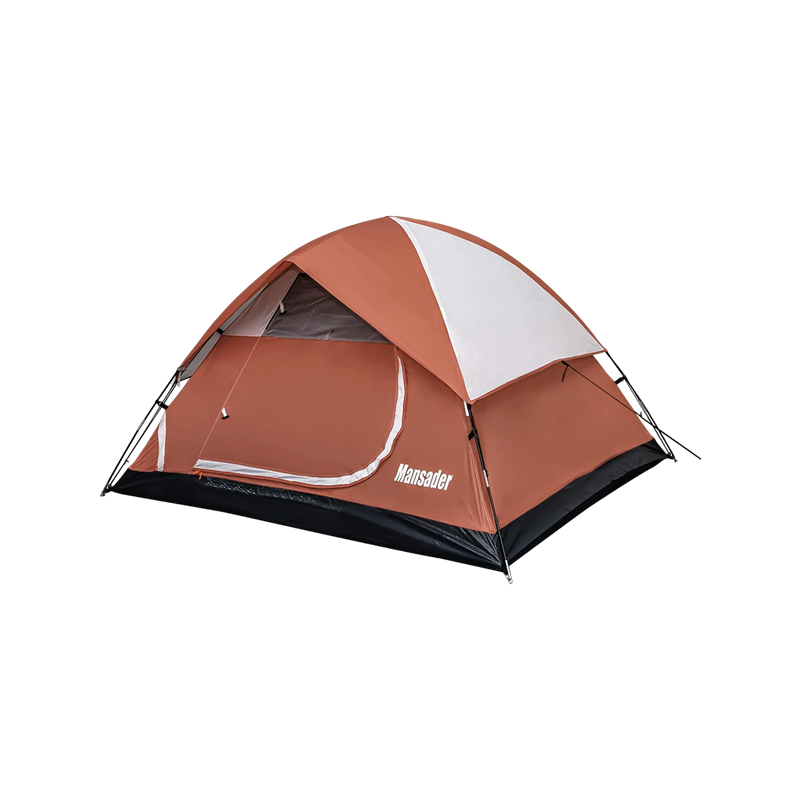
Product Overview
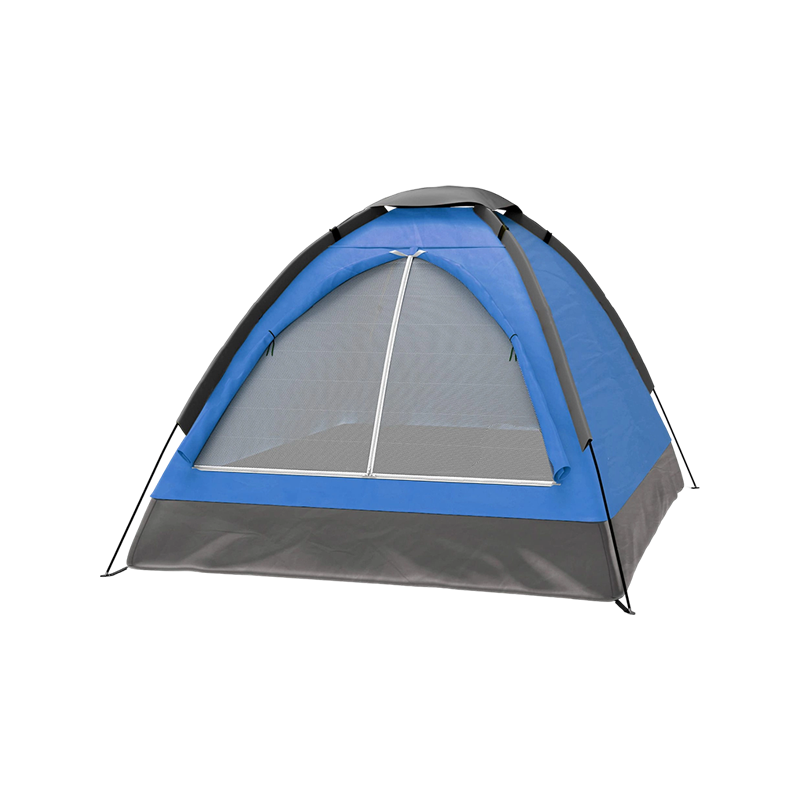
The Two-person camping outdoor tent is a double-layer outdoor shelter designed for two users. It includes a rainproof outer tent and a breathable inner tent, forming a functional structure that improves weather resistance while reducing moisture accumulation inside the sleeping area. The outer layer serves as the first defense against rain and wind-driven moisture, while the inner layer provides ventilation and separation from condensation that may form on the underside of the flysheet.
The tent uses polyester fabric with a waterproof coating. Polyester is widely valued in outdoor shelters because it offers dimensional stability, practical durability, and good resistance to stretching when wet. Compared with materials that sag noticeably after rain exposure, polyester helps preserve the tent’s shape more effectively, which is important for maintaining proper fly tension, water runoff, and living space. The waterproof coating improves resistance against rain, while fully taped seams address one of the most common weak points in tent construction.
Fully taped seams are a major advantage in real outdoor use. Many lower-grade tents may advertise waterproof fabric but leave stitching lines insufficiently protected. Since needle holes can create tiny pathways for water, seam sealing is essential. In this model, seam treatment is integrated as a standard part of the waterproofing concept, helping the tent perform more consistently under wet conditions.
The tent is manually set up, which supports stable and reliable pitching. Manual setup may sound simple, but simplicity is often an advantage in camping equipment. It allows the user to understand the structure, tension the fabric correctly, inspect the shelter during setup, and make adjustments according to terrain or wind direction. Unlike overly complicated systems, a well-designed manual tent can be easier to maintain, easier to repair, and more dependable over repeated outdoor trips.
Multiple colors are available to meet different market needs and individual preferences. For retail buyers, this supports product assortment planning. For brand owners and importers, it creates flexibility for regional markets, seasonal collections, and differentiated product lines. For end users, color choice can reflect practical needs, such as visibility, outdoor style, or campsite aesthetics.
Why a Double-Layer Tent Matters
A double-layer tent is one of the most proven structures in camping shelter design. Its core advantage is separation of functions. The outer tent focuses on rain protection and environmental shielding, while the inner tent focuses on breathability, comfort, and sleeping-area separation. This division allows the shelter to handle moisture more intelligently than many single-layer structures.
Condensation is one of the most misunderstood problems in camping. Even when there is no rain, moisture can collect inside a tent because users breathe, perspire, and bring damp gear into the sleeping area. Temperature differences between the inside and outside of the tent can cause water vapor to condense on cooler fabric surfaces. In a single-layer tent, that moisture may form directly on the interior surface near the occupants. In a double-layer tent, the breathable inner layer helps separate users from the flysheet, reducing direct contact with condensation and improving perceived comfort.
This tent’s classic double-layer structure is therefore not an outdated concept; it is a proven answer to a recurring outdoor challenge. It allows airflow to operate between layers while maintaining protection from external rain. When properly pitched, the outer fly sheds water, and the inner tent helps maintain a more breathable sleeping space. This is especially useful for two-person use, where two occupants produce more moisture than one and require greater attention to ventilation.
Compared with competitors that rely on a simplified single-wall structure for cost reduction, this double-layer model provides a more complete solution for weather and moisture management. Single-wall products can be compact and lightweight in certain specialized categories, but for general camping and broad consumer use, a double-layer structure often offers better comfort and reliability. It reduces the likelihood that campers will mistake normal condensation for fabric leakage, and it improves the user experience across varied climates.
For outdoor businesses, this matters because product satisfaction is closely linked to how a tent performs during the first rainy or humid night. Customers may forgive a tent for being slightly heavier or requiring a few more minutes to pitch, but they are much less forgiving when their sleeping bag becomes damp or the shelter feels wet from within. The WFLY261001 model is designed around this practical reality.
Weather Protection Through Fabric, Coating, and Seam Control
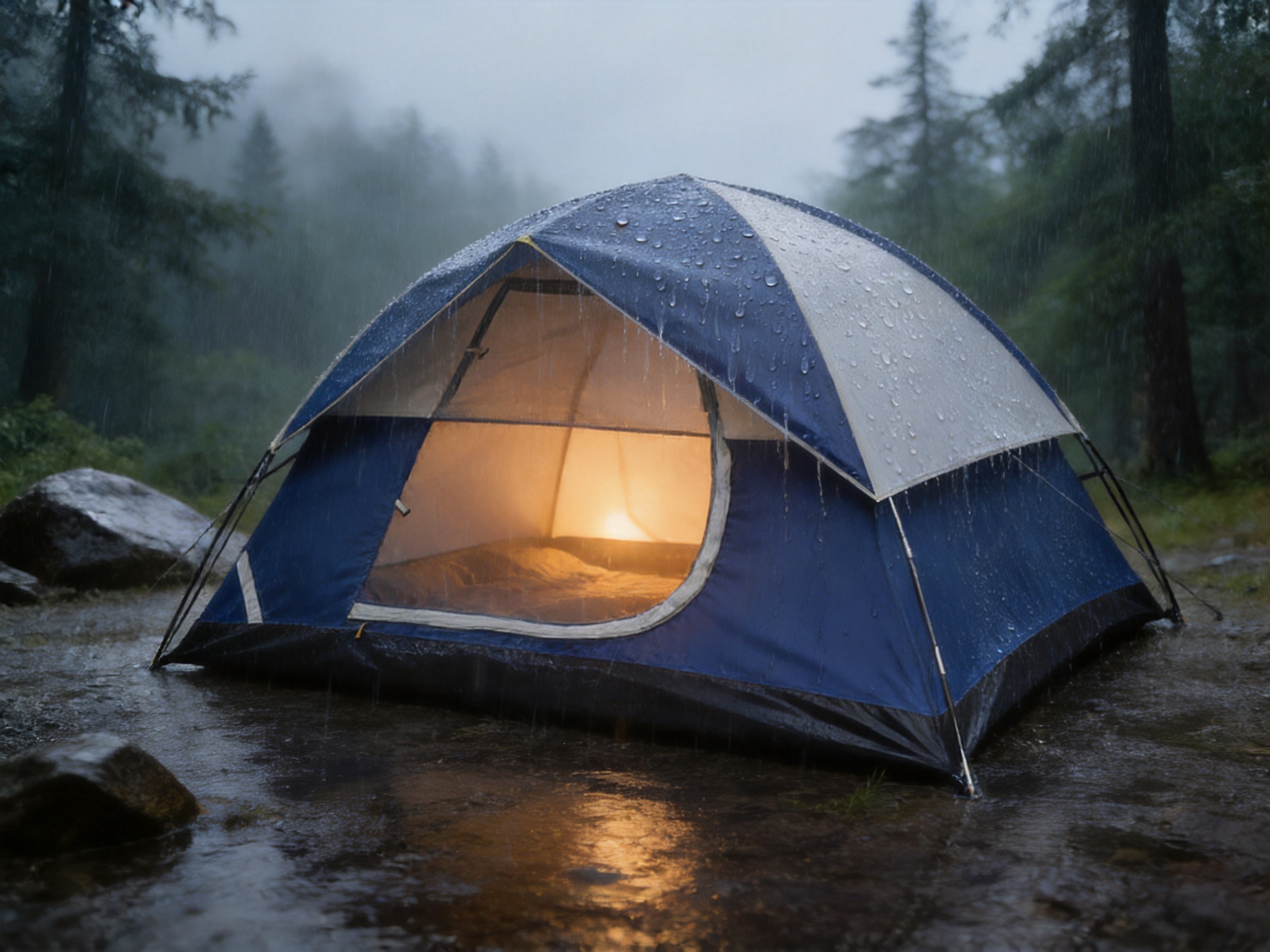
The waterproof performance of a tent does not depend on fabric alone. It depends on the interaction between fabric quality, coating consistency, seam construction, seam tape application, pattern design, and pitching geometry. A tent can be made from waterproof material yet still leak through poorly treated seams, stressed corners, or weak attachment points. This product addresses protection as a system rather than as a single claim.
The polyester fabric with waterproof coating gives the outer tent its main rain-resistant function. Polyester is a strong choice for general camping because it balances durability, cost efficiency, and shape retention. When coated properly, it can resist rain while remaining suitable for scalable manufacturing. The coating must be evenly applied and compatible with seam-taping processes, because inconsistent coating can create problems during heat sealing or long-term use.
Fully taped seams help improve waterproof reliability. During sewing, needles pass through the fabric and create holes along seam lines. Without proper sealing, water may travel through these holes, especially where rain accumulates or wind pressure pushes water against the surface. Seam tape covers these stitch lines and forms a protective barrier. For a tent intended for real camping rather than decorative display, this detail is essential.
CragHaven Outdoor’s manufacturing approach emphasizes sampling, testing, and optimization, which is particularly important for waterproof products. A seam-taped tent must be validated not only in design but in production. Tape width, heat level, pressure, alignment, and fabric compatibility all affect final performance. A stable factory process ensures that the first production unit and the thousandth production unit maintain similar quality.
Compared with low-cost competitors that may use waterproof fabric but skip comprehensive seam treatment, this tent offers a stronger protection package. The advantage becomes obvious in sustained rain, wet ground conditions, or repeated trips. Customers may not notice seam quality immediately in a showroom, but they notice it quickly when rain begins. This is why seam control is a key manufacturing and sales advantage.
Another important aspect is the outer tent’s ability to shed water efficiently. A well-pitched shelter should guide rain away from sleeping areas and reduce pooling. Manual setup allows the user to tension the tent correctly, which supports water runoff. The relationship between structure and waterproofing should not be underestimated. Even high-quality fabric can perform poorly if the tent shape collapses or sags. The manually pitched structure is intended to remain stable and reliable when assembled properly.
Breathability and Interior Comfort for Two Campers
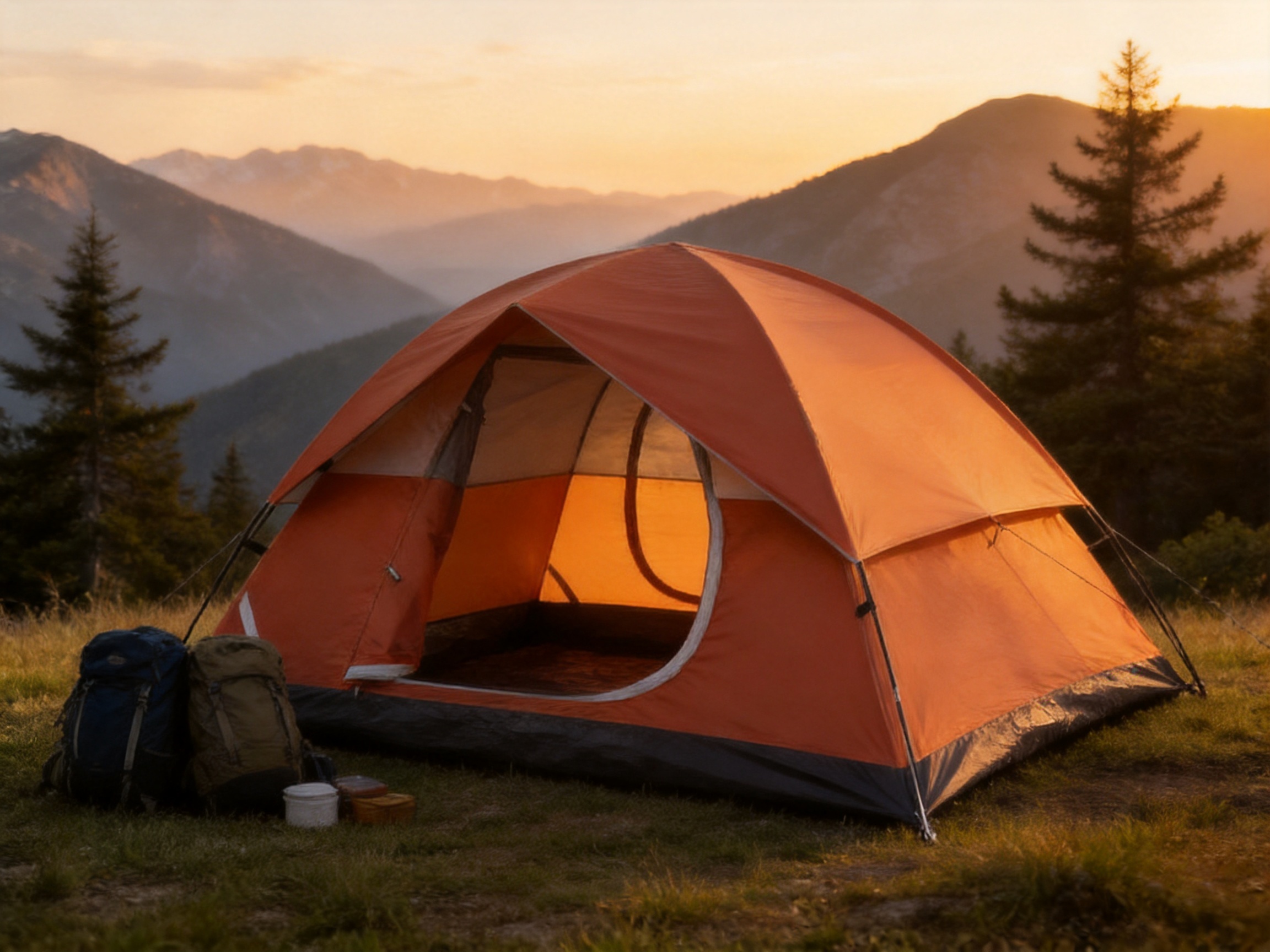
Two-person camping introduces a specific comfort challenge. Two occupants generate more heat and moisture than one, but they also need enough personal space to sleep, change clothing, and store small essentials. A tent must manage the microclimate inside the sleeping area without feeling sealed, damp, or overly restrictive. The breathable inner tent is central to this product’s comfort performance.
The inner tent is designed to support airflow and reduce direct exposure to condensation. It forms a softer and more livable interior environment, separating users from the outer rainfly. In humid or cool conditions, this separation can significantly improve the sleeping experience. Campers may still need to ventilate properly, but the double-layer system gives them a better foundation for moisture control.
In competing products, interior comfort is often reduced to basic floor area or visual appearance. However, comfort is not only about space; it is also about air, dryness, fabric contact, entry convenience, and psychological security during bad weather. A tent that looks spacious but becomes damp overnight will not satisfy experienced users. This model’s emphasis on a breathable inner layer reflects a more practical understanding of outdoor shelter needs.
The two-person size is especially suitable for couples, close friends, and individual users who want additional gear space. For solo campers, a two-person tent can provide a comfortable balance between portability and interior room. For two users, it offers a functional shelter designed for shared trips without turning setup into a complicated process. This flexibility improves market appeal because the product can serve both actual two-person use and spacious solo use.
The interior experience also benefits from the stability of a manually pitched structure. When a tent is properly tensioned, the inner and outer layers are less likely to touch each other. This separation is important because contact between layers can transfer moisture inward. A stable pitch helps preserve airflow channels and reduces fabric movement in wind. As a result, user comfort is linked directly to structural design and setup reliability.
Manual Setup as a Practical Advantage
In modern outdoor equipment, convenience is often presented as automation. Instant tents, pre-attached frames, and mechanical hub systems can be attractive for casual use, but they may introduce extra weight, bulk, mechanical failure points, and repair difficulty. For many campers, especially those who value reliability, a manually set up tent remains a preferred solution.
The manual setup of this two-person tent supports stability and control. Users can choose the best direction for pitching, adjust tension according to ground conditions, and inspect the fly and inner tent during assembly. This creates a more engaged and reliable setup process. It also makes the tent easier to understand, which is useful when camping in unfamiliar weather.
Manual structures are often easier to pack efficiently. They can also be more flexible for manufacturing because components can be inspected separately and replaced more easily if necessary. This supports long-term product value. A tent should not become unusable because a complex pre-assembled mechanism fails. Simpler structures, when engineered well, often produce better durability over multiple seasons.
Compared with competitors that emphasize fast setup at the expense of packed size or repairability, this product offers a balanced approach. It is simple enough for general campers but serious enough for repeated outdoor use. It avoids unnecessary mechanical complexity while retaining the essential function of a stable shelter. This is consistent with CragHaven Outdoor’s product philosophy: features should solve real usage problems rather than exist only for marketing.
Manual setup also supports training and customer education. Retailers and distributors can explain the structure clearly. Users can learn how to pitch the tent for better airflow, better rain shedding, and improved wind behavior. A product that users understand is often a product they maintain better, use longer, and recommend more confidently.
Product Feature Summary
| Feature | Practical Benefit | Competitive Advantage |
|---|---|---|
| Double-layer structure | Separates weather protection from sleeping-area comfort | Better condensation management than many single-layer budget tents |
| Rainproof outer tent | Protects occupants from rain and external moisture | Improves confidence in changing weather |
| Breathable inner tent | Supports airflow and reduces direct contact with condensation | More comfortable for two users overnight |
| Polyester fabric with waterproof coating | Provides durable, practical rain resistance | Balances performance, scalability, and cost efficiency |
| Fully taped seams | Reduces leakage through stitch lines | Stronger real-world waterproofing than untaped or partially taped designs |
| Manual setup | Allows controlled pitching and stable structure | Fewer complex mechanisms and better long-term reliability |
| Multiple color options | Supports personal preference and market differentiation | Useful for retailers, distributors, and regional product planning |
| Two-person capacity | Suitable for shared camping or spacious solo use | Broad appeal across camping, hiking, and recreational outdoor markets |
Advantages Over Common Competitor Designs
The camping tent market includes many products that appear similar at first glance. However, meaningful differences become visible when the product is examined from the perspective of weather, terrain, time, and repeat use. This two-person double-layer tent stands out because it addresses core performance areas in an integrated way.
First, it offers a better moisture-management concept than many basic single-layer tents. Budget single-wall shelters may reduce material cost, but they often make condensation more noticeable. In damp conditions, users may wake up to interior moisture and assume the tent has leaked. A double-layer design reduces that risk by separating the sleeper from the outer surface where condensation is most likely to form.
Second, fully taped seams provide a more complete waterproof solution. Some competitors rely heavily on waterproof fabric claims but leave stitching insufficiently sealed. In actual rain, the seam line is often the first failure point. By treating seams as part of the waterproof system, this tent improves reliability where it matters most.
Third, the polyester fabric with waterproof coating supports practical durability and shape control. Tents must maintain tension to shed water and preserve interior space. If fabric stretches too much when wet, the shelter may sag, reducing performance. Polyester offers a useful balance for outdoor shelters, especially for products intended for broad consumer use and repeatable manufacturing.
Fourth, manual setup creates a dependable relationship between user and structure. Some instant tents are convenient for short fair-weather trips, but their mechanisms can add weight and reduce flexibility. A manual setup tent remains understandable and serviceable. Users can adapt pitching to the campsite rather than relying entirely on a fixed frame behavior.
Fifth, the product supports multiple colors, which improves commercial versatility. Competitors may offer only one or two standard colors, limiting assortment planning. Multiple color options allow buyers to match product lines with target markets, seasonal campaigns, or consumer preferences. In cross-border trade, this flexibility can help a product perform better across different regions.
Finally, the tent benefits from a manufacturing partner that understands both design and production. Many supply chains separate product concept from factory execution, creating quality gaps. CragHaven Outdoor participates in design, material selection, sampling, testing, and manufacturing coordination. This integrated approach reduces uncertainty for buyers and helps maintain consistent product quality.
Manufacturing Philosophy Behind the Tent
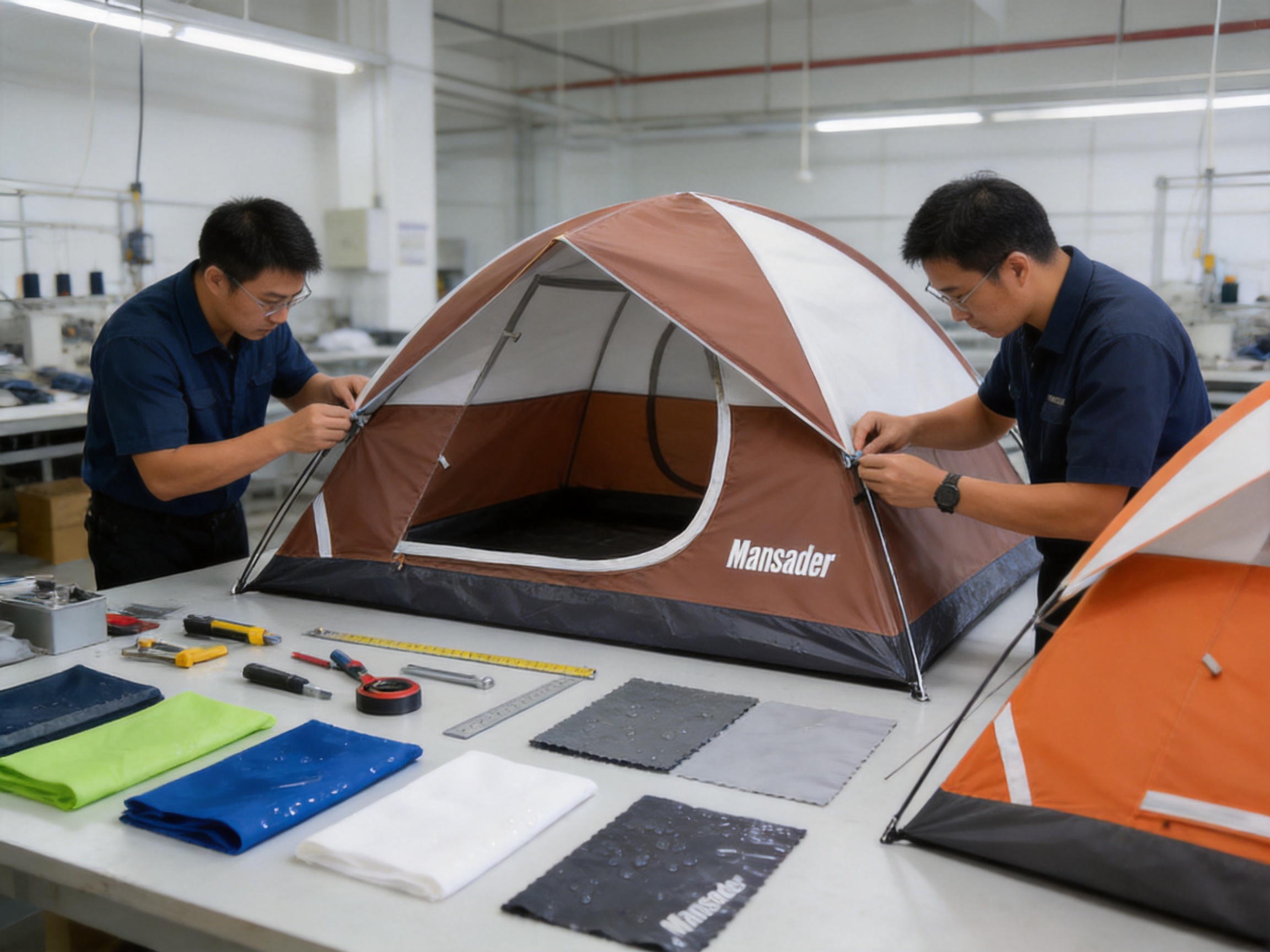
CragHaven Outdoor is based in Hangzhou, China, and operates as an outdoor brand and cross-border manufacturing partner focused on mountaineering, hiking, and camping scenarios. The company’s development philosophy is shaped by a clear principle: outdoor products should be designed for weather, terrain, and time, not merely for catalog presentation. This is especially relevant for tents, because shelter performance depends on many hidden details that customers may not see until they face difficult conditions.
The company emphasizes functional, reliable, and long-term value outdoor gear for global markets. In tent manufacturing, long-term value means more than fabric selection. It includes consistent pattern cutting, controlled stitching, stable seam taping, material compatibility, packaging discipline, and pre-shipment quality evaluation. Each stage can influence how the final product performs in the field.
CragHaven Outdoor does not treat sampling as a formality. Sampling is the stage where design intent meets physical reality. A tent may look correct in drawings but reveal issues when pitched, tensioned, folded, wetted, or packed. The company’s process includes repeated sampling and optimization, allowing problems to be identified before mass production. This reduces the risk of defects and improves product maturity.
Testing is another important part of the manufacturing process. For a waterproof tent, testing may involve checking coating consistency, evaluating seam-tape adhesion, inspecting stitch quality, and verifying setup behavior. While specific test values are not stated for this product, the process-oriented approach is important because outdoor reliability comes from disciplined control rather than isolated claims.
The company also benefits from China’s mature and efficient manufacturing system. Hangzhou and the surrounding regional supply chain provide access to textile expertise, sewing capacity, coating suppliers, packaging resources, and export experience. However, manufacturing capacity alone is not enough. CragHaven Outdoor’s strength lies in using that capacity with outdoor-specific judgment. The company understands how products are actually used and translates that understanding into stable, replicable production.
Material Selection and Production Control
Material selection is one of the most important decisions in tent development. A fabric must support waterproofing, durability, sewing stability, coating adhesion, packing performance, and acceptable cost. Polyester with waterproof coating is a practical choice for this two-person camping tent because it can be produced consistently and performs well in general outdoor conditions.
During production, fabric quality must be checked for defects, coating irregularities, color consistency, and handling characteristics. Even a strong design can be compromised by unstable fabric supply. For global buyers, this is a critical issue because inconsistent lots can create product complaints, returns, and brand damage. A professional manufacturing partner must manage material sourcing carefully and communicate clearly about production feasibility.
Cutting accuracy also affects tent performance. Tent panels must align properly to create the intended shape. If panels are cut inaccurately, the shelter may pitch unevenly, create stress points, or fail to maintain proper layer separation. Accurate cutting helps preserve the geometry that supports rain shedding, airflow, and interior space.
Sewing quality is equally important. Stitch density, thread selection, seam allowance, reinforcement placement, and operator skill all influence durability. Tents experience tension during setup, movement in wind, repeated packing, and stress at corners and attachment points. A neat seam is not only an aesthetic detail; it is a structural element.
Seam taping requires controlled equipment and trained operators. Heat, pressure, and speed must be matched to the fabric and coating. If tape is applied with insufficient heat, adhesion may be weak. If excessive heat is used, fabric or coating may be damaged. Proper seam-taping control is therefore a sign of manufacturing maturity. It transforms waterproofing from a material feature into a product-level performance system.
Color production also requires discipline. Multiple color options are commercially valuable, but they introduce complexity in fabric sourcing, inventory control, shade matching, and batch management. A capable manufacturing partner must manage these variables to maintain consistent appearance and delivery reliability. This is one area where CragHaven Outdoor’s cross-border manufacturing experience can support buyers who need both customization and stable execution.
Design for Real Outdoor Use
A camping tent must be judged in context. It is used on uneven ground, in changing weather, by tired people, often in low light, and sometimes by users with limited outdoor experience. A design that works only under ideal showroom conditions is not enough. This tent is developed around real usage patterns, where simplicity, protection, and comfort matter more than ornamental complexity.
The double-layer structure reflects the reality of overnight camping. Campers need rain protection, but they also need airflow. They need shelter from external moisture, but they also need internal humidity to escape. A breathable inner tent and rainproof outer tent create a balanced approach that is suitable for many recreational and light adventure scenarios.
The manual setup reflects the reality of varied campsites. Ground conditions differ. Wind direction changes. Users may need to reposition or retension the shelter. A manual system gives them control. It also encourages correct pitching habits, which are essential for maximizing waterproof performance and interior comfort.
Fully taped seams reflect the reality that rain finds weak points. Water does not care about marketing language. It moves through stitch holes, poorly sealed corners, and stressed fabric zones. Seam tape is a practical response to this reality. It is one of the clearest signs that the product is intended for actual wet conditions rather than only visual appeal.
The use of polyester fabric reflects the reality of repeatable outdoor gear production. Materials must be durable enough for use, stable enough for manufacturing, and suitable for the expected market price. This balance is important for buyers who need a product that can sell competitively while still supporting customer satisfaction.
CragHaven Outdoor’s product philosophy is well matched to this kind of tent. The company believes excellent outdoor products are built not on a pile of parameters, but on understanding environment, usage patterns, and the test of time. This is especially true for shelters. A tent is successful when it remains understandable, protective, and comfortable after repeated use.
Supply Chain Value for Global Buyers
For importers, distributors, retailers, and private-label outdoor brands, product quality is only one part of the decision. Supply chain reliability is equally important. A tent that performs well in a sample but cannot be produced consistently creates risk. CragHaven Outdoor aims to reduce uncertainty in the supply chain by combining outdoor product understanding with manufacturing coordination.
The company is not simply a factory sourcing contact. It participates in design and manufacturing decisions. This is valuable because many quality problems begin before production starts. If a material is poorly matched to a coating, if a seam design is difficult to tape, or if a color choice creates supply instability, problems may appear later as delays, defects, or customer complaints. A partner with both design and production awareness can identify risks earlier.
Professional communication is another strength. Cross-border outdoor markets require clear product explanations, realistic claims, and Western-market-oriented communication. Overstated specifications can damage trust. Under-explained features can reduce sales. CragHaven Outdoor’s approach supports buyers who need accurate product positioning and long-term cooperation.
Long-term partnership is particularly important in outdoor categories. Product lines evolve. Buyers may need color updates, packaging changes, seasonal adjustments, or improvements based on customer feedback. A stable manufacturing partner can support continuity while making controlled improvements. This helps brands build trust with their own customers.
Scalability also matters. A tent like WFLY261001 can serve as a core model in a camping collection. Its double-layer structure, waterproof coating, seam taping, and two-person size make it suitable for broad market use. With multiple colors available, buyers can adapt it for different sales channels without changing the core design. This reduces development risk and supports efficient product planning.
Positioning in the Camping and Mountain-Outdoor Market
The product category includes mountain-climbing and camping gear, but this tent is best understood as a practical camping shelter suitable for outdoor travel, hiking camps, weekend trips, and recreational use. It offers the type of weather protection and comfort that many campers need without entering into highly specialized expedition-tent territory. This positioning is commercially important because the largest outdoor market is often made up of users who need reliable, accessible equipment rather than extreme technical products.
For beginner campers, the tent provides a trustworthy structure that is easy to understand. The double-layer design helps them experience better comfort in humid or rainy conditions. The manual setup teaches fundamental pitching skills without overwhelming them with excessive complexity. Fully taped seams provide reassurance when weather changes.
For experienced recreational campers, the tent offers familiar and proven design logic. They will recognize the value of a rainfly, breathable inner, stable pitch, and seam sealing. They may also appreciate the practicality of polyester fabric and the absence of fragile mechanical gimmicks.
For retailers, the tent is easy to explain. Its selling points are clear: double-layer protection, waterproof coating, taped seams, breathable inner tent, manual stability, two-person capacity, and color options. These features correspond directly to customer concerns, making the product suitable for online listings, in-store sales training, and outdoor product assortments.
For private-label buyers, the product provides a strong base for customization. Multiple color options already support differentiation, and the manufacturing process can support consistent production. Because the product is built around proven construction principles, it can serve as a dependable core SKU rather than a risky novelty item.
User Experience from Setup to Overnight Stay
The value of a tent becomes visible through the full user journey. Before the trip, users want a product that is understandable and packable. At the campsite, they want setup to be logical. During the night, they want dryness, airflow, and security. After the trip, they want the tent to dry, fold, and be stored for future use. This product is designed to support that complete cycle.
During setup, the manual structure allows users to engage directly with the tent. They can position the shelter according to terrain and weather. They can ensure the outer tent is tensioned and separated from the inner tent. Correct setup helps maximize the advantages of the double-layer structure and waterproof construction.
During rain, the outer tent and coated polyester fabric work together to resist moisture. Fully taped seams help protect stitch lines, reducing the chance of leakage through vulnerable areas. Proper tension supports water runoff and prevents unnecessary sagging.
During humid conditions, the breathable inner tent contributes to comfort. By separating users from the outer layer, it reduces the likelihood of contact with condensation. Two campers can sleep with better confidence because the structure is designed to manage the moisture produced inside the tent.
After use, the practical materials and construction support repeated trips. As with any tent, users should dry it before long-term storage, avoid sharp ground surfaces where possible, and clean it appropriately. A well-maintained double-layer tent can provide lasting value, especially when built with stable seams and reliable fabric treatment.
Quality Details That Influence Long-Term Value
Outdoor gear quality is often hidden in details. A consumer may first notice color and shape, but long-term satisfaction depends on seam strength, coating consistency, fabric handling, reinforcement, and how the tent behaves after repeated folding. CragHaven Outdoor’s emphasis on durability and reliability supports these less visible but highly important aspects.
Fully taped seams are one such detail. They require additional process time and quality control, but they significantly improve real-world waterproof confidence. Breathable inner construction is another detail. It adds material and assembly complexity compared with single-layer shelters, but it improves comfort. Manual setup may appear simple, but it requires the structure to be designed logically so that users can pitch it correctly and consistently.
Color availability also requires careful quality management. Different dyes and fabric batches can behave differently under coating, sewing, and light exposure. Managing multiple colors responsibly is part of professional manufacturing. It allows buyers to offer variety without sacrificing consistency.
Packaging and pre-shipment inspection are also important. Tents include multiple components, and missing or inconsistent parts can create immediate customer dissatisfaction. A disciplined production system must ensure that every unit is complete, properly folded, and ready for retail or distribution. While packaging details are not specified here, the company’s broader manufacturing approach emphasizes stable and replicable production, which includes final product control.
Commercial Benefits for Retail and Distribution
From a commercial perspective, this tent offers several advantages. Its feature set is easy to communicate, its target user group is broad, and its construction is based on proven outdoor shelter principles. These qualities make it suitable for online marketplaces, outdoor specialty stores, camping equipment distributors, and private-label programs.
The product’s name and function are clear. Customers searching for a two-person camping tent can quickly understand its purpose. The double-layer structure provides a strong selling point, especially when compared with simpler budget tents. Waterproof coating and fully taped seams support confidence in rain protection. The breathable inner tent gives sales teams a meaningful comfort story. Manual setup can be positioned as stable, reliable, and practical rather than outdated.
Multiple colors support merchandising. Retailers can offer choice without confusing the technical positioning. A neutral outdoor color may appeal to traditional campers, while brighter or more distinctive colors may appeal to casual users, festival campers, or families. Color variation can also help distributors serve different regional preferences.
The tent also supports value-based selling. It does not need to compete only on the lowest price. Instead, it can be positioned around reliability, comfort, and manufacturing consistency. This is important in markets where consumers increasingly read reviews and compare product details. A tent that performs well during real trips can generate better satisfaction and repeat purchase behavior.
For wholesale buyers, the company’s role as a cross-border manufacturing partner adds value beyond the physical product. Professional communication, product understanding, and stable production processes reduce procurement friction. This can be especially important for buyers who need dependable seasonal delivery and consistent quality across batches.
Responsible Product Development and Long-Term Partnerships
CragHaven Outdoor prioritizes long-term, stable, and sustainable partnerships. In the outdoor industry, this approach is practical as well as ethical. Products that are designed for durability and long-term use reduce waste caused by premature failure. Stable partnerships also improve production planning, material consistency, and quality learning over time.
The company’s belief that features must solve real-world usage problems helps prevent unnecessary overdesign. A camping tent does not need meaningless decorations or exaggerated claims. It needs to keep users more comfortable, more protected, and more confident outdoors. The WFLY261001 model reflects this focus through its double-layer system, waterproof coating, taped seams, and practical setup method.
Long-term development also means listening to market feedback. Outdoor users are highly sensitive to real performance. Their experiences reveal whether a product is easy to pitch, comfortable overnight, and reliable in rain. A manufacturing partner that values testing and optimization can use this feedback to refine future production and product lines.
This approach benefits all parties. End users receive better gear. Retailers receive fewer complaints. Importers reduce supply chain uncertainty. The manufacturer builds stronger relationships and improves product maturity. In a category where trust is built over time, this is a meaningful competitive strength.
Q&A Section
Q1: What type of camper is this two-person tent best suited for?
This tent is suitable for two campers on recreational camping trips, hiking camps, weekend outdoor travel, and general campsite use. It is also a good option for solo campers who prefer extra interior room for gear and comfort.
Q2: Why is the double-layer structure important?
The double-layer structure separates the rainproof outer tent from the breathable inner tent. This improves moisture management, reduces direct contact with condensation, and creates a more comfortable sleeping environment compared with many basic single-layer shelters.
Q3: Does waterproof fabric alone make a tent rainproof?
No. Waterproof fabric is only one part of tent protection. Seams, stitching, fabric tension, coating consistency, and setup quality all affect rain performance. This tent uses waterproof-coated polyester fabric and fully taped seams to create a more complete waterproof system.
Q4: What is the advantage of fully taped seams?
Stitching creates small needle holes in fabric. Fully taped seams cover these stitch lines and help prevent water from entering through them. This is especially important during steady rain or when wind pushes moisture against the tent surface.
Q5: Is manual setup a disadvantage compared with instant tents?
Not necessarily. Manual setup gives users more control over positioning, tension, and stability. It also avoids some mechanical complexity found in instant systems. For repeated outdoor use, a well-designed manual tent can be practical, reliable, and easier to understand.
Q6: How does the breathable inner tent improve comfort?
The breathable inner tent supports airflow and separates occupants from the outer rainfly. This helps reduce the discomfort caused by condensation and improves the sleeping environment, especially when two people are inside the tent overnight.
Q7: Why use polyester fabric?
Polyester is a practical tent fabric because it offers good dimensional stability, useful durability, and compatibility with waterproof coatings. It helps the tent maintain shape and tension more effectively in wet conditions than some materials that stretch noticeably.
Q8: Can the tent be offered in different colors?
Yes. Multiple colors are available, allowing buyers and users to choose according to personal preference, retail strategy, regional market needs, or seasonal product planning.
Q9: What makes this product different from many budget camping tents?
Its key advantages include a double-layer structure, breathable inner tent, waterproof-coated polyester fabric, fully taped seams, stable manual setup, and manufacturing support from a company focused on real outdoor usage and consistent production quality.
Q10: Why is the manufacturer’s process important for buyers?
Consistent tent quality depends on controlled material selection, cutting, sewing, seam taping, sampling, testing, and production management. CragHaven Outdoor’s process-oriented approach helps reduce supply chain uncertainty and supports stable long-term cooperation.
Conclusion
The Two-person camping outdoor tent, model WFLY261001, is a practical and reliable shelter designed around the real needs of campers. Its classic double-layer structure combines a rainproof outer tent with a breathable inner tent, helping users manage both external weather and internal moisture. Polyester fabric with waterproof coating provides the foundation for rain resistance, while fully taped seams strengthen protection at one of the most vulnerable points in tent construction.
The product’s manual setup supports stability, user control, and long-term reliability. Multiple color options improve commercial flexibility and allow the tent to serve different markets and consumer preferences. As a two-person shelter, it fits a broad range of outdoor scenarios, from weekend camping to hiking-based travel and comfortable solo use.
Its competitive strength comes not only from visible features but also from the manufacturing philosophy behind it. CragHaven Outdoor designs and develops outdoor gear based on weather, terrain, time, and actual usage patterns. The company emphasizes durable materials, practical features, repeated sampling, testing, optimization, and stable manufacturing. For global buyers, this means a product that is easier to position, easier to explain, and more dependable across production batches.
In a market crowded with tents that look similar, meaningful value comes from details that protect comfort in real conditions: layer separation, seam sealing, fabric stability, controlled setup, and production consistency. This two-person camping tent brings those elements together in a balanced and commercially practical form. It is a shelter built not for empty specifications, but for nights outdoors when protection, breathability, and reliability matter most.
References
International Organization for Standardization. ISO 5912: Camping Tents — Requirements and Test Methods.
International Organization for Standardization. ISO 811: Textiles — Determination of Resistance to Water Penetration — Hydrostatic Pressure Test.
ASTM International. ASTM D751: Standard Test Methods for Coated Fabrics.
American Association of Textile Chemists and Colorists. AATCC TM127: Water Resistance — Hydrostatic Pressure Test.
International Organization for Standardization. ISO 13935: Textiles — Seam Tensile Properties of Fabrics and Made-Up Textile Articles.
Collier, B. J., and Epps, H. H. Textile Testing and Analysis. Pearson Education.
Horrocks, A. R., and Anand, S. C. Handbook of Technical Textiles. Woodhead Publishing.
Ryan, K. Outdoor Gear Design and Material Performance Principles. Outdoor Industry Technical Notes.
Product: Two-person camping outdoor tent


- Phone: +86-15968800379
- E-mail: [email protected]
- Address: Room 1002, Huishang Building, Gongshu District, Hangzhou City, Zhejiang Province.
Copyright © CragHaven Outdoor All Rights Reserved. Outdoor Gear Manufacturers Wholesale Mountaineering Camping Gear Suppliers
