

 English
 Deutsch
 Español
 Français
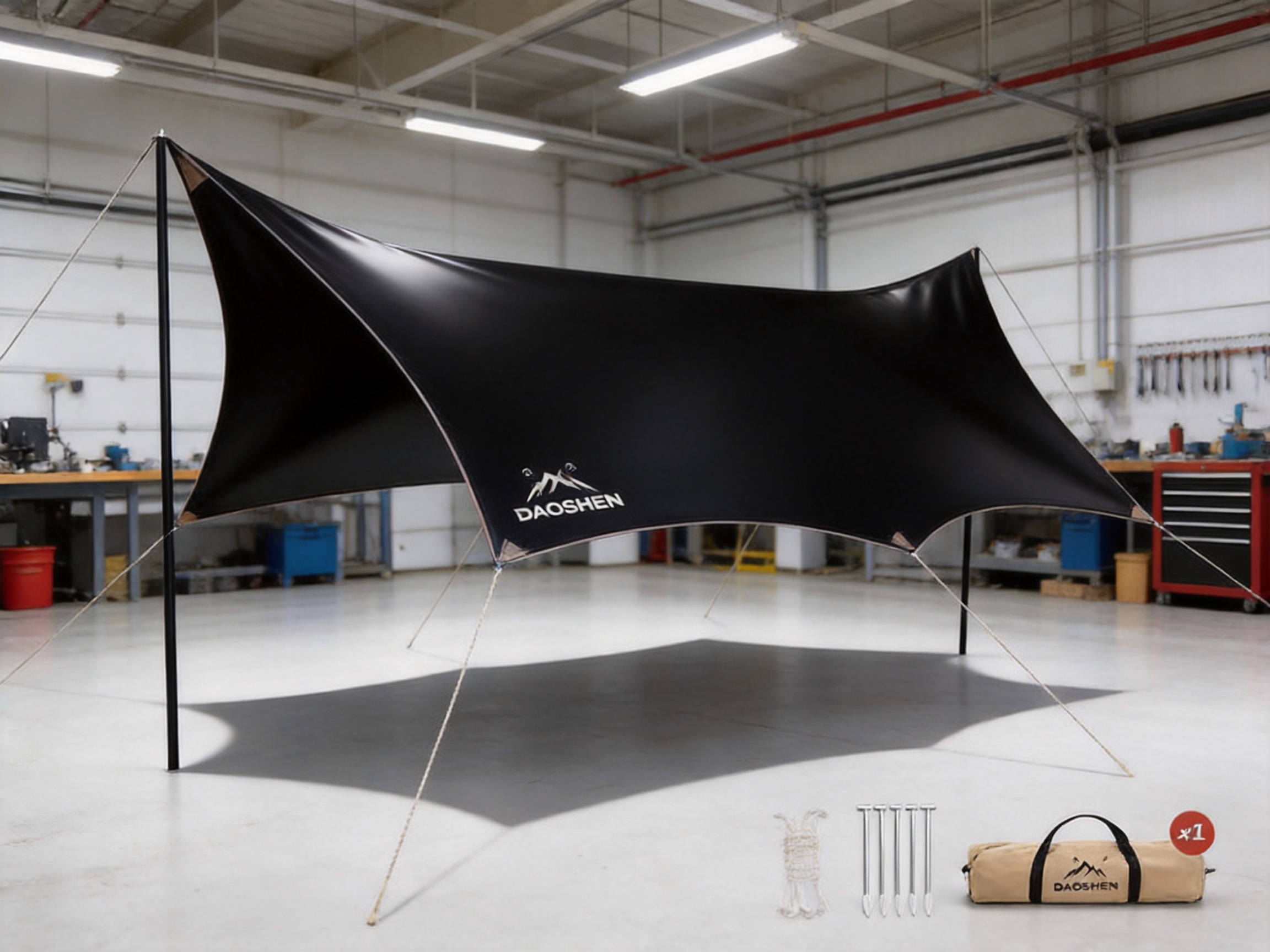
Black Vinyl Butterfly Canopy Tent for Rainproof Sunshade Picnics and Camping
Content
- 1 Product Overview: A Practical Shelter for Sun, Rain, and Outdoor Comfort
- 2 Core Product Specifications and Functional Positioning
- 3 Why Black Vinyl Coating Performs Better for Extended Sun Exposure
- 4 210D Oxford Cloth: Balanced Strength for Repeated Outdoor Use
- 5 Steel Frame Strength: Why Height and Thickness Must Work Together
- 6 Butterfly Canopy Geometry: More Than a Visual Design Choice
- 7 Rainproof Performance and Realistic Weather Protection
- 8 Advantages Over Common Competing Canopies
- 9 Advanced Manufacturing Processes Behind a Reliable Canopy
- 10 OEM and Supply Chain Strength for Global Outdoor Retailers
- 11 User Scenarios: Where This Canopy Delivers the Most Value
- 12 Comfort Benefits: Shade Quality, Headroom, and Usable Space
- 13 Care, Maintenance, and Long-Term Use
- 14 Q&A: Common Questions About the Black Vinyl Butterfly Canopy
- 14.1 Is this canopy suitable for backpacking?
- 14.2 How does black vinyl coating compare with PU coating?
- 14.3 Does the black color make the canopy hotter?
- 14.4 Can the canopy be used in rain?
- 14.5 Why use 210D Oxford cloth instead of lighter fabric?
- 14.6 What makes the butterfly shape better than a flat canopy?
- 14.7 Is the steel frame better than aluminum?
- 14.8 Can retailers customize this product for private-label sales?
- 14.9 What environments are best for this canopy?
- 14.10 How should the canopy be stored?
- 15 Conclusion: A Stronger Shade Solution for Real Outdoor Life
- 16 References
- 17 Product: Outdoor picnic camping black vinyl tent, rainproof and sunshade canopy, picnic butterfly curtain canopy
Outdoor shade equipment is often judged by how it looks at first glance, but real performance is decided by how well the fabric, coating, frame, geometry, stitching, and anchoring system work together in actual weather. The outdoor picnic camping black vinyl tent described here is designed for families, campers, beach users, park gatherings, and outdoor retailers who need a stable rainproof and sunshade canopy for repeated seasonal use. Built with black vinyl coating, 210D high-density Oxford cloth, and a taller, thicker steel frame, this butterfly curtain canopy focuses on practical comfort, long-term durability, and dependable shelter under sun, light rain, and mild-to-moderate wind conditions.
Unlike lightweight backpacking shelters that prioritize minimum packed weight above all else, this product is intended for stationary outdoor scenarios where shade coverage, structural stability, and comfort matter more than ultra-light portability. It is especially suitable for family picnics, beach relaxation, campground dining areas, vendor rest spaces, backyard gatherings, and other outdoor environments where people remain in one place for several hours. Its butterfly-shaped canopy design increases usable shade coverage, encourages rain runoff, and gives the shelter a distinctive profile that is both functional and visually recognizable.
For global retailers, outdoor distributors, and private-label buyers, the product also demonstrates the manufacturing strengths of CragHaven Outdoor, a Hangzhou-based outdoor gear manufacturer focused on mountaineering, hiking, and camping scenarios. The company’s product philosophy is not to design equipment merely for catalog presentation, but for weather, terrain, repeated handling, and long-term value. This canopy reflects that approach through careful material selection, reinforced frame thinking, controlled manufacturing procedures, and practical design choices that respond to real outdoor use rather than short-lived trends.
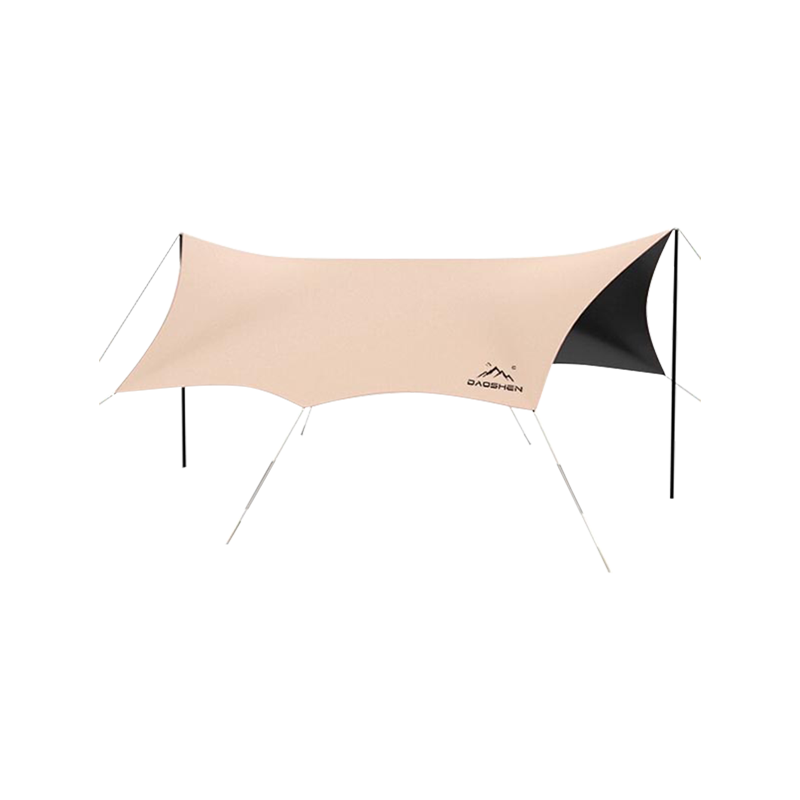
Outdoor picnic camping black vinyl tent, rainproof and sunshade canopy, picnic butterfly curtain canopy
Product Overview: A Practical Shelter for Sun, Rain, and Outdoor Comfort
The product belongs to the tent and canopy category, but it is best understood as an outdoor picnic camping sunshade canopy rather than a fully enclosed expedition tent. Its main function is to create a protected outdoor zone where people can sit, eat, rest, and gather with greater comfort. The black vinyl coated fabric helps block strong sunlight, while the rainproof canopy surface provides protection during light rain and unpredictable weather changes. The steel frame supports the fabric with improved height and thickness, providing headroom and structural confidence for everyday recreational use.
The canopy’s butterfly shape is one of its most important design features. Instead of relying on a simple flat roof panel, the butterfly-style roofline uses sloped planes and a raised central structure to improve both shade coverage and drainage. This matters because outdoor shade is not static. The sun moves during the day, rainwater gathers on poorly shaped surfaces, and wind interacts differently with flat and sloped structures. A canopy that looks wide but pools water or catches wind like a sail may fail in real use. The butterfly geometry helps reduce these problems by giving the shelter a more practical three-dimensional form.
The material system is equally important. The 210D Oxford cloth offers a balance between durability and manageable weight. Fabrics that are too light may tear more easily during repeated setup or when exposed to wind stress. Fabrics that are too heavy may become difficult to transport, fold, and handle. The 210D specification sits in a practical middle range for picnic and camping canopy applications, especially when combined with a black vinyl coating that improves sun protection, water resistance, and surface toughness.
The black vinyl coating is not merely a visual choice. Dark coated surfaces absorb and block a significant portion of solar radiation at the outer layer, reducing the amount of UV radiation that passes through the fabric. Compared with uncoated polyester or lighter standard fabric canopies, a black vinyl coated canopy can provide stronger sun-blocking performance and a more protective shaded area beneath. For beach users, families with children, or outdoor groups staying under the canopy for long periods, this kind of protection can be a decisive advantage.
At the same time, the product acknowledges a realistic tradeoff. Vinyl-coated fabric is heavier and less compact than some PU-coated or ultralight alternatives. However, this is not a weakness when the intended use is stationary outdoor leisure. For picnics, beaches, parks, and vehicle-supported camping, users generally value comfort, shade depth, and stability more than shaving every gram from the packed weight. In that context, the heavier coating becomes a performance advantage rather than a burden.
Core Product Specifications and Functional Positioning
The canopy is designed around several core features: black vinyl coating for sun protection, 210D high-density Oxford cloth for tear and wear resistance, a taller and thicker steel frame for stability, and butterfly-shaped geometry for broader shade and improved rain runoff. These features combine to create a product that is more robust than many simple pop-up shade covers while remaining more accessible and practical than large semi-permanent event tents.
Its product code, WFLY261002, identifies it within the manufacturing and supply system, making it suitable for wholesale, OEM, and retailer catalog management. As an outdoor gear item, it can be adapted for different market needs, including color variations, packaging requirements, brand labeling, and accessory configurations, depending on the buyer’s sourcing plan and order requirements.
| Feature | Product Design | User Benefit | Advantage Over Basic Competitors |
|---|---|---|---|
| Canopy Fabric | 210D high-density Oxford cloth | Improved resistance to tearing, wear, and repeated handling | More durable than many thin polyester shade fabrics |
| Surface Coating | Black vinyl coating | Stronger sun blocking, rain resistance, and coating durability | Better long-term UV resistance than many PU-coated alternatives |
| Frame | Taller and thicker steel frame | More headroom and improved stability | Stronger support than lightweight thin-pole canopy frames |
| Canopy Shape | Butterfly-style sloped roof profile | Wider shade footprint and better rain runoff | More practical than flat-top designs prone to pooling water |
| Application | Picnic, beach, camping, park, backyard leisure | Comfortable shelter for family and group use | More versatile than single-purpose beach umbrellas or small tarps |
Why Black Vinyl Coating Performs Better for Extended Sun Exposure
Sun protection is one of the most important reasons people buy outdoor canopies. A shelter that creates visual shade but allows significant ultraviolet radiation to pass through may provide less real protection than users expect. This is where black vinyl coating offers a clear advantage. By forming a dense coated layer over the fabric, it reduces light penetration through the weave and improves resistance to UV exposure over time.
Many standard canopy fabrics rely on basic polyester material with minimal coating. Such fabrics may appear bright, colorful, and lightweight, but their UV-blocking performance can vary widely depending on fabric density, coating quality, color, and aging. Lighter colors can reflect more visible light, which makes them look cooler at first glance, yet the fabric weave may still allow UV radiation to pass through. A black vinyl coated surface, by contrast, absorbs and blocks a larger portion of solar radiation at the outer surface, resulting in a more protective shaded zone beneath the canopy.
This advantage is especially relevant in beach environments, open parks, lakeside campsites, and exposed picnic areas where natural shade is limited. Users may spend several hours under the shelter during peak daylight. In such situations, fabric performance is not a minor detail. It directly influences comfort, perceived temperature, glare reduction, and confidence in sun protection. The black vinyl canopy is designed for these extended exposure scenarios rather than only short-term, casual use.
Another important advantage of vinyl coating is its ability to resist degradation during repeated sun exposure. PU coatings are common in outdoor products because they are lighter and flexible, but they can deteriorate faster under strong ultraviolet exposure, especially when the product is left pitched for long periods. Over time, PU-coated materials may become sticky, brittle, or less waterproof if the coating breaks down. Vinyl coating generally offers better resistance to this type of UV-driven aging, making it a strong choice for canopies that are regularly used under direct sunlight.
Competitors that focus only on low price often use thinner fabrics and simpler coatings. These canopies may perform acceptably during the first few uses, but their long-term value can decline quickly when coatings crack, seams weaken, or shade performance fades. The black vinyl coated canopy takes a more durable approach. It is not positioned as the lightest shelter, but as a reliable outdoor shade solution for people who want stronger sun protection and longer service life.
210D Oxford Cloth: Balanced Strength for Repeated Outdoor Use
The fabric foundation beneath the coating is 210D Oxford cloth. The “D” stands for denier, a measurement related to the thickness of individual yarns. In outdoor equipment, denier is often used as a quick reference for fabric strength, although it is not the only factor that matters. A higher denier generally means thicker yarns, while a lower denier generally means lighter fabric. For canopy applications, 210D is a practical specification because it balances durability, packability, and handling.
Very light fabrics below about 150D can be useful for compact travel gear, but they may become vulnerable when used in larger canopy surfaces. A canopy experiences different stress from a jacket or small tent fly. Wind presses against a broad surface, poles and seams create tension points, and the fabric may be dragged, folded, packed, or set down on abrasive ground. In these conditions, extremely thin fabric can tear more easily, particularly at corners and reinforced attachment areas.
On the other side, very heavy fabrics above 300D can provide extra toughness but may add more weight than most picnic or camping users need. Heavy fabric can also become harder to dry, fold, transport, and set up. For a recreational shade canopy, the goal is not maximum industrial-grade thickness but the best balance of strength and usability. This is why 210D Oxford cloth is a smart middle-ground choice.
Oxford weave also matters. Unlike a basic plain weave that may concentrate stress more directly along one line of yarn, Oxford fabric uses a basket-like interlacing structure that helps distribute stress across multiple fibers. This can slow the spread of small punctures and reduce the risk that minor damage becomes a large tear. When combined with coating and proper finishing, the fabric becomes suitable for repeated setup, outdoor exposure, and family use.
CragHaven Outdoor’s manufacturing approach emphasizes material selection based on real scenarios rather than only specification lists. A denier number alone does not guarantee quality. Yarn consistency, weaving density, coating adhesion, finishing treatment, cutting accuracy, seam construction, and inspection procedures all influence final performance. By combining 210D Oxford cloth with black vinyl coating and controlled manufacturing steps, the company creates a canopy fabric system that is more dependable than low-cost generic alternatives.
Steel Frame Strength: Why Height and Thickness Must Work Together
A canopy frame must do more than hold fabric overhead. It must resist bending, manage wind load, support tension, and remain stable during repeated assembly and disassembly. The product uses a taller and thicker steel frame to improve both headroom and structural support. This is important because many budget canopies increase height for comfort but fail to improve tube thickness or joint strength. A tall frame with thin poles can become unstable when wind pushes against the canopy surface.
Height creates leverage. When wind presses on a canopy roof, the force transfers down the frame to the ground. The taller the structure, the greater the leverage acting on the poles and joints. If the tubes are too thin, they may bend. If the joints are weak, they may loosen or fail. If the base is not properly anchored, the whole canopy may shift or lift. Therefore, a taller canopy must be engineered as a complete support system rather than simply extended upward.
The thicker steel frame used in this product helps address that issue. Steel is heavier than aluminum, but it offers strong resistance to bending and can be cost-effective for stable recreational canopies. For vehicle-supported camping, parks, and beach use, this weight is usually acceptable because the product is not intended to be carried over long mountain routes. The extra strength gives users greater confidence when the canopy is set up for a full day.
Frame joints deserve special attention. In many competing canopies, the first failure point is not the pole tube itself but the connection between tubes, brackets, or hubs. Repeated movement, uneven tension, and side loads can weaken basic friction-fit joints. A more durable canopy requires better joint alignment, stronger connection design, and consistent manufacturing tolerances. CragHaven Outdoor’s product development philosophy treats the frame and anchoring elements as part of one system, not as unrelated accessories.
Proper use is still essential. No recreational canopy should be treated as a permanent storm structure. Users should always stake, weight, or anchor the frame according to the ground conditions, especially in beach wind or open fields. However, a stronger frame gives the anchoring system a better foundation to work with. Compared with basic lightweight shade structures, this product offers a more stable platform for everyday outdoor use.
Butterfly Canopy Geometry: More Than a Visual Design Choice
The butterfly-shaped canopy is one of the product’s most distinctive features. At first glance, the design gives the shelter a stylish outdoor appearance. More importantly, it improves function. A butterfly canopy uses a peaked, dual-slope or wing-like roof profile instead of a single flat panel. This geometry helps increase the shaded footprint, improve drainage, and reduce the risk of water pooling.
Flat canopies can work well in calm weather, but they often struggle when rain begins. If the roof surface is too level, water collects in low areas. This standing water adds weight to the fabric and frame, creating downward stress that may stretch seams, deform poles, or cause sagging. Over repeated use, water pooling can shorten the life of a canopy. A sloped butterfly profile encourages water to run off more naturally, reducing accumulation and helping the structure maintain its shape.
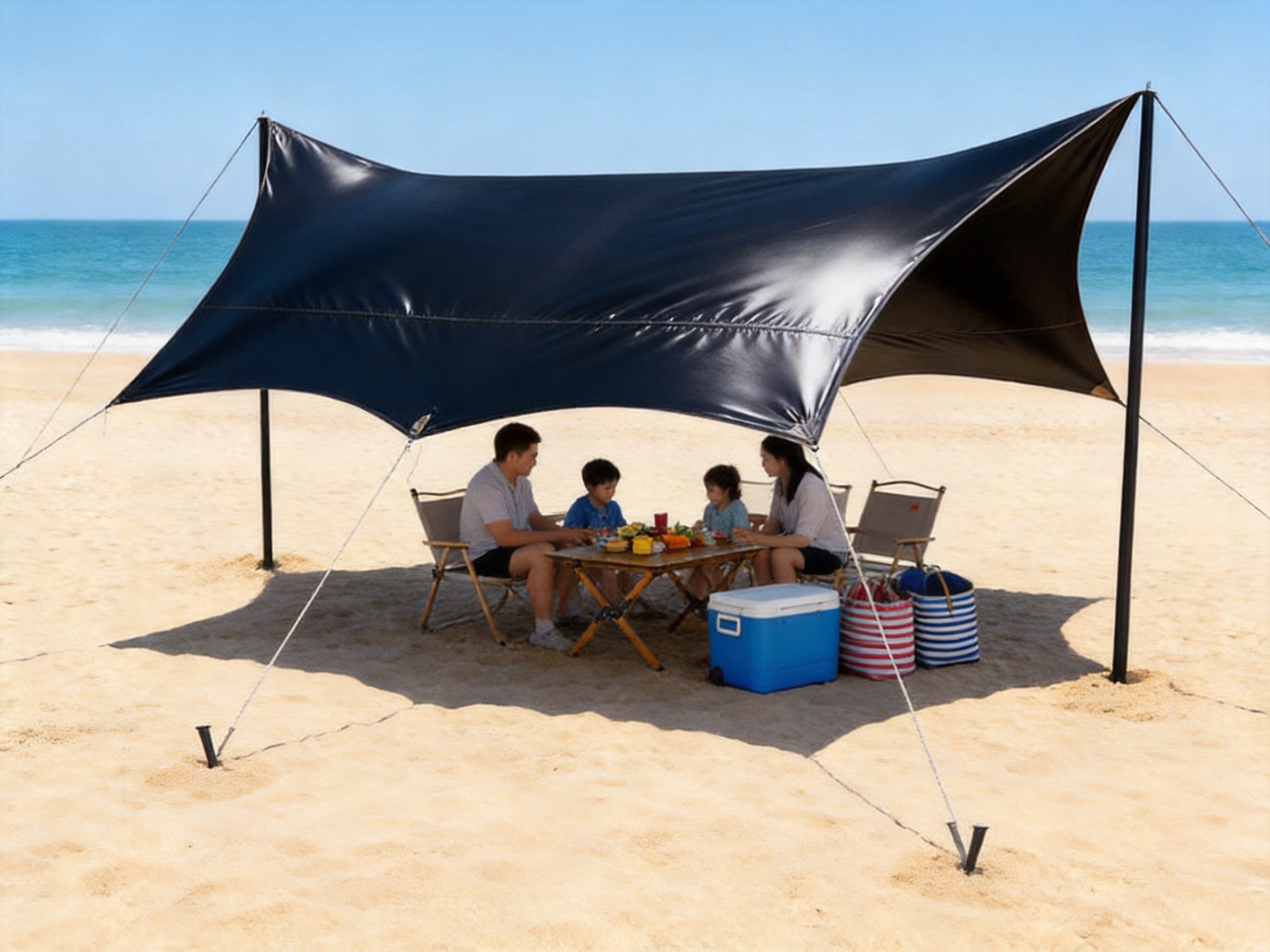
Shade coverage is also affected by geometry. The sun’s angle changes throughout the day. A narrow or flat canopy may provide good shade at noon but less coverage in the morning or late afternoon. A wider butterfly-style canopy footprint helps maintain more consistent usable shade as the sun moves. This is especially valuable for families who set up a picnic blanket, table, chairs, cooler, and bags and prefer not to constantly move everything to follow the shade.
Wind behavior is another advantage. A flat canopy can catch wind like a sail, especially when gusts strike from the side or underneath. A sloped roofline allows some wind to deflect across the surface rather than hitting a single broad plane. This does not make the canopy immune to wind, and safe anchoring remains necessary, but it can improve performance in mild-to-moderate wind conditions compared with simple flat-top designs.
For beach settings, this matters greatly. Beaches often have stronger and more changeable wind than backyards or sheltered parks. Sand also makes anchoring more challenging if the equipment is not designed thoughtfully. A butterfly canopy with a strong frame and suitable anchoring approach is better suited to these conditions than small umbrellas, thin tarps, or low-cost sun shelters that lack structural depth.
Rainproof Performance and Realistic Weather Protection
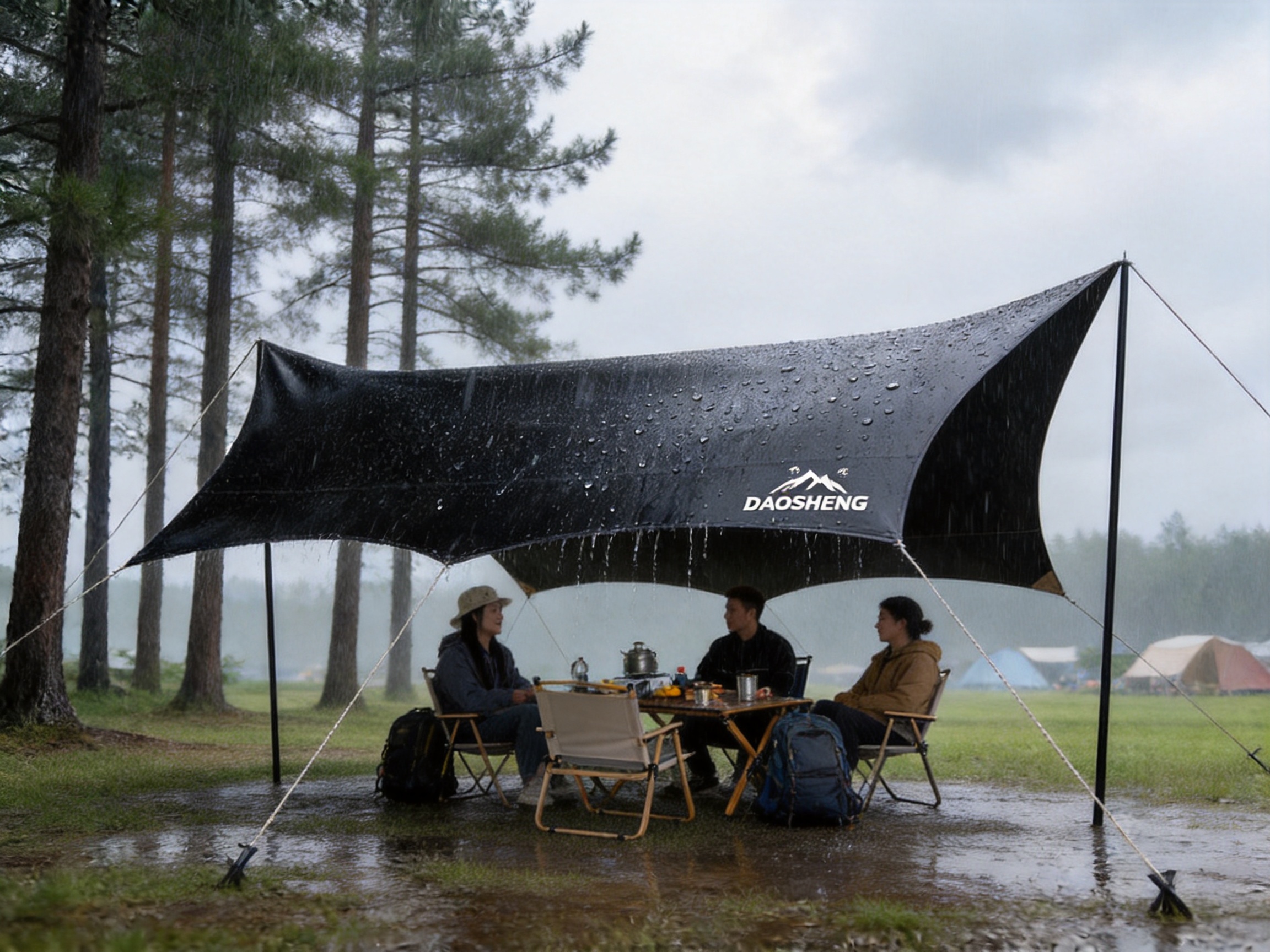
The product is described as rainproof, and its coated canopy fabric is designed to resist rain during outdoor leisure use. Vinyl coating helps prevent water penetration through the fabric surface, while the sloped butterfly profile supports runoff. Together, these features provide practical rain protection for picnics, camping rest areas, beach shelters, and outdoor gatherings when weather changes unexpectedly.
It is important to define rainproof performance realistically. A picnic canopy is not the same as a mountaineering expedition tent built for severe storms, sealed sleeping quarters, or high-altitude weather. Its purpose is to provide overhead protection, not to create a fully enclosed weatherproof room. In normal recreational use, the canopy can keep users, tables, chairs, and gear more protected from light to moderate rain, especially when properly pitched and tensioned.
Competitor products sometimes advertise waterproof performance without considering roof shape. Even if a fabric resists water penetration, poor geometry can cause pooling, sagging, and seam stress. This product’s butterfly profile gives rainwater a more efficient path off the canopy, supporting better real-world performance. The coating and shape work together instead of treating waterproofing as a fabric-only issue.
Seam construction and reinforcement are also important. The canopy surface must be cut accurately and stitched consistently so that tension is distributed evenly. Uneven panels can sag, twist, or create low spots where water gathers. In advanced manufacturing, pattern design, cutting accuracy, stitching control, and final inspection all contribute to rainproof performance. CragHaven Outdoor’s experience in outdoor gear manufacturing helps ensure that the product is evaluated as a complete shelter system.
For users, setup discipline remains important. The canopy should be fully opened, properly tensioned, and anchored. If rain is expected, users should check that fabric panels are not loose and that water can drain away freely. After use, the canopy should be dried before long-term storage when possible. These simple habits help preserve coating performance and extend product life.
Advantages Over Common Competing Canopies
The outdoor canopy market includes many products that look similar in online photos but differ significantly in real performance. Low-cost competitors often reduce material thickness, use simpler coatings, install thinner frames, or rely on flat roof structures. These decisions reduce production cost, but they can also reduce sun protection, durability, wind stability, and long-term customer satisfaction.
The first major advantage of this product is the black vinyl coating. Compared with standard uncoated or lightly coated polyester canopies, the black vinyl layer improves sun blocking and provides stronger resistance against UV-related degradation. This makes the canopy more suitable for full-day outdoor exposure. A cheaper canopy may feel lighter in the hand, but if it loses coating integrity quickly or provides weak shade, the user’s long-term value is lower.
The second advantage is the use of 210D Oxford fabric. Many basic canopies use thin fabric that may be adequate for occasional backyard shade but less reliable for beach wind, repeated camping trips, or rough ground contact. The 210D Oxford cloth gives the canopy a stronger textile foundation. It resists tearing better than many lightweight alternatives while avoiding the excessive weight of heavy industrial fabrics.
The third advantage is the steel frame. Thin-pole structures may be easy to carry but can feel unstable once the canopy is fully opened. A taller and thicker steel frame provides a stronger support system and more comfortable usable space. For families, headroom is not a luxury; it affects whether adults can stand, move, arrange chairs, and use the shelter naturally.
The fourth advantage is the butterfly geometry. Many competing canopies use simple flat roofs because they are easy to manufacture. However, flat roofs are more likely to pool water and can be less efficient in changing sun angles. The butterfly design adds functional value by improving shade coverage, drainage, and wind deflection. It also gives retailers a more differentiated product appearance in a crowded market.
The fifth advantage is manufacturing philosophy. CragHaven Outdoor is not merely sourcing generic products from anonymous suppliers. The company focuses on outdoor usage scenarios, material reliability, sampling, testing, and optimization. For international buyers, this means the product is supported by a manufacturer that understands outdoor performance, not only low-cost assembly.
Advanced Manufacturing Processes Behind a Reliable Canopy
A dependable canopy begins long before final assembly. It starts with material planning, supplier selection, coating decisions, frame engineering, and prototype testing. CragHaven Outdoor’s manufacturing strength lies in turning outdoor design intent into stable, repeatable, and scalable production. This is essential for global retailers and OEM partners because one good sample is not enough; every batch must maintain consistent quality.
Material inspection is the first step. Fabric rolls must be checked for density consistency, surface defects, coating uniformity, color stability, and hand feel. If the fabric coating is uneven, the canopy may show weak points in sun protection or water resistance. If the weave is inconsistent, tension performance can vary across panels. By controlling input materials, the manufacturer reduces downstream quality problems.
Coating quality is especially important for black vinyl canopies. The vinyl layer must adhere properly to the Oxford cloth and maintain consistent coverage. Poor adhesion can lead to peeling, cracking, or early performance loss. Controlled coating and finishing processes help create a durable surface that withstands repeated folding, sunlight, and rain exposure. Finishing treatments may also smooth the fabric surface, reducing friction against sand, branches, or rough ground during handling.
Pattern cutting is another key process. A butterfly canopy requires accurate panel shapes so the final roof geometry forms correctly. If panels are cut imprecisely, the canopy may twist, sag, or fail to tension evenly. Modern production relies on standardized patterns, controlled cutting methods, and consistent measurement checks to ensure that each panel fits the frame and adjoining fabric sections properly.
Stitching and reinforcement convert fabric panels into a durable shelter. Corners, attachment points, edge seams, and high-tension zones must receive particular attention because these areas experience concentrated stress during setup and wind loading. Reinforced stitching, proper seam alignment, and quality thread selection help prevent early failure. In outdoor gear manufacturing, a seam is not merely a connection; it is a structural component.
Frame manufacturing also requires precision. Steel tubes must be cut, shaped, treated, and assembled to meet dimensional requirements. Connection points should align smoothly so users can set up the canopy without forcing parts into place. If tolerances are poor, assembly becomes frustrating and joints may wear prematurely. Surface treatment can also help resist corrosion, especially when the canopy is used near beaches where salt and humidity accelerate rusting.
Final inspection brings all components together. A reliable manufacturer checks fabric appearance, frame fit, stitching, accessory completeness, packaging, and sample setup performance. For OEM buyers, consistent inspection reduces customer complaints and protects brand reputation. CragHaven Outdoor’s emphasis on sampling, testing, and optimization reflects a long-term partnership mindset rather than a short-term shipment mentality.
OEM and Supply Chain Strength for Global Outdoor Retailers
CragHaven Outdoor is based in Hangzhou, China, and serves as an outdoor brand and cross-border manufacturing partner. Its product focus includes mountaineering, hiking, camping, and related outdoor scenarios. For retailers and distributors, the company’s value is not limited to factory capacity. It also provides product understanding, design participation, material reasoning, and communication suited to Western market expectations.
Outdoor buyers often face uncertainty when sourcing from generic factories. Products may look attractive in photos but lack consistent quality control. Specifications may be copied from competitors without real testing. Communication may focus only on price, leaving practical performance questions unanswered. CragHaven Outdoor aims to reduce this uncertainty by combining manufacturing access with outdoor product logic.
The company’s design philosophy is based on weather, terrain, and time. Weather means the product must respond to sun, rain, wind, humidity, and changing outdoor conditions. Terrain means the product must tolerate rough ground, sand, parks, campsites, and repeated movement. Time means the product must continue performing after multiple uses, not only during the first demonstration. This philosophy is visible in the canopy’s fabric, coating, frame, and geometry.
For OEM buyers, customization can be an important advantage. A canopy like this can support private-label development, packaging customization, accessory selection, and market-specific positioning. Some markets may prioritize beach leisure. Others may emphasize family camping, garden shade, or outdoor event use. A manufacturer with product development capability can help adapt the product without weakening its core performance.
Supply chain reliability also depends on communication. International retailers need clear product descriptions, realistic performance claims, production schedules, sample confirmation, and quality expectations. CragHaven Outdoor positions itself as a long-term, stable, and sustainable partner. This matters because outdoor products carry safety, comfort, and reputation risks. A low-cost supplier that cannot maintain consistency may create hidden costs through returns, complaints, and brand damage.
User Scenarios: Where This Canopy Delivers the Most Value
The canopy is particularly useful for family picnics. Families often need a shaded space large enough for adults, children, food, drinks, bags, and chairs. A small umbrella may shade only part of the group, while a thin tarp may require trees or complicated rope setups. The butterfly canopy creates a dedicated shelter zone that can be placed in open parks, lawns, or campsites, giving the group a more comfortable base.
Beach relaxation is another strong application. Beaches expose users to intense sunlight, reflective glare from sand and water, and steady coastal wind. The black vinyl coating helps create stronger shade, while the steel frame and sloped canopy profile support more stable use than many lightweight beach shelters. Users should still anchor carefully in sand, but the canopy’s design is well matched to the beach environment.
For camping, the canopy can serve as a cooking, dining, or rest area outside the sleeping tent. Many campers discover that the most used space at a campsite is not the sleeping tent but the shaded communal area where people prepare meals, sit, organize gear, and relax. A rainproof sunshade canopy improves campsite comfort by keeping this area more usable when sunlight is harsh or rain begins.
Backyard and garden use is also practical. Not every customer needs a permanent gazebo. Some want a flexible canopy that can be set up for weekend gatherings, children’s play, barbecue meals, or temporary shade near a pool. The product’s stronger fabric and frame make it suitable for repeated home use while still allowing storage when not needed.
Outdoor vendors, event organizers, and leisure businesses may also find value in this canopy. While it is not an industrial event tent, its shade coverage, rain resistance, and distinctive shape can support temporary rest zones, product display areas, or customer waiting spaces in mild conditions. Retailers can position it as a premium recreational canopy for users who want more durability than entry-level shade products.
Comfort Benefits: Shade Quality, Headroom, and Usable Space
Comfort is one of the most important but sometimes overlooked aspects of canopy design. A shelter may technically provide shade, yet still feel cramped, hot, unstable, or inconvenient. This product addresses comfort through three main elements: shade density, frame height, and canopy footprint.
Shade density comes from the black vinyl coating. Under strong sunlight, users care not only about being out of direct sun but also about glare and heat sensation. A thin bright canopy may create pale shade that still feels harsh. A black vinyl coated canopy creates a deeper shade environment, which can improve comfort during long outdoor sessions.
Headroom comes from the taller frame. Adults need space to stand, move chairs, serve food, and enter or exit without constantly bending. A low shelter can feel restrictive even if the fabric area is large. By increasing usable height while reinforcing the frame thickness, the product improves the experience beneath the canopy.
Usable space comes from the butterfly shape. Because the shaded footprint is designed to remain practical as sun angles shift, users can arrange furniture and gear with less need to constantly reposition. This matters during picnics and camping meals, where moving everything repeatedly is inconvenient. The canopy functions as a stable outdoor room rather than a temporary patch of shade.
Care, Maintenance, and Long-Term Use
Good product design should be supported by good user habits. To extend the life of the black vinyl canopy, users should clean the fabric gently after use, especially after exposure to sand, salt, mud, or tree debris. A soft cloth, mild soap, and clean water are usually enough. Harsh chemicals should be avoided because they may affect coating performance.
The canopy should be dried before long-term storage whenever possible. Storing any coated fabric while wet can encourage odor, mildew, or surface degradation. If users must pack the canopy during rain, they should reopen it later in a dry place and allow it to air out completely. This simple step helps preserve the coating and fabric structure.
The steel frame should also be inspected after use. Sand and moisture should be removed from joints and tubes. If the canopy is used near the sea, users should pay extra attention to cleaning because salt can accelerate corrosion on metal components. Keeping the frame dry and clean helps maintain smooth assembly and long-term stability.
Anchoring accessories should not be ignored. Stakes, ropes, sandbags, or weights are essential for safe setup in wind-prone areas. Users should replace damaged anchoring parts and check tension during the day if wind changes. A strong frame performs best when the whole system is properly secured.
Q&A: Common Questions About the Black Vinyl Butterfly Canopy
Is this canopy suitable for backpacking?
No. This canopy is better suited for vehicle-supported camping, beach use, family picnics, parks, and backyard gatherings. The black vinyl coating and steel frame improve durability and shade performance, but they also add weight. Backpackers who prioritize minimal pack weight may prefer ultralight shelters, while users who want comfort and stable shade in a fixed location will benefit more from this design.
How does black vinyl coating compare with PU coating?
Black vinyl coating is generally stronger for long sun exposure and durable shade applications. PU coating is lighter and flexible, but it can degrade faster under prolonged ultraviolet exposure. Vinyl coating is heavier, yet it maintains water resistance and surface integrity better in many full-day outdoor shade scenarios.
Does the black color make the canopy hotter?
Black surfaces absorb more solar energy, but the purpose of the coating is to block sunlight and create deeper shade beneath the canopy. Comfort depends on airflow, canopy height, shade density, and setup location. In open outdoor environments, the strong UV-blocking and glare-reducing qualities of black vinyl can provide a more comfortable shaded experience than thin light-colored fabrics that allow more radiation through.
Can the canopy be used in rain?
Yes, it is designed as a rainproof sunshade canopy for recreational outdoor use. The vinyl coating resists water penetration, and the butterfly roofline helps rain run off. However, it should not be used as a permanent storm shelter or left unattended in severe weather. Proper setup and tensioning are important for rain performance.
Why use 210D Oxford cloth instead of lighter fabric?
210D Oxford cloth provides a practical balance of strength and usability. It is more durable than many thin shade fabrics and better suited for repeated setup, wind stress, and outdoor handling. At the same time, it avoids the excessive weight of much heavier fabrics that may be unnecessary for picnic and camping canopy applications.
What makes the butterfly shape better than a flat canopy?
The butterfly shape improves shade coverage, supports rain runoff, and helps reduce water pooling. Its sloped surfaces can also deflect mild-to-moderate wind better than a completely flat roof. This makes it more practical for beach, park, and camping use.
Is the steel frame better than aluminum?
Steel is generally stronger and more resistant to bending at a comparable cost, although it is heavier than aluminum. For stationary recreational canopies, the strength advantage is valuable. Aluminum may be preferred for lightweight travel products, but steel is a strong choice when stability and durability are priorities.
Can retailers customize this product for private-label sales?
Yes. As an outdoor gear manufacturing partner, CragHaven Outdoor can support OEM and private-label development depending on order requirements. Customization may include branding, packaging, accessory configurations, and market-specific presentation while maintaining the product’s core functional structure.
What environments are best for this canopy?
The canopy is best for family picnics, beaches, campsites, parks, gardens, and outdoor leisure spaces. It is designed for users who want stronger shade, rain protection, and a stable frame for several hours of outdoor use.
How should the canopy be stored?
It should be cleaned, dried, folded carefully, and stored in a cool, dry place. Users should avoid storing it wet for long periods. The frame should also be kept clean and dry, especially after beach use.
Conclusion: A Stronger Shade Solution for Real Outdoor Life
The outdoor picnic camping black vinyl butterfly canopy is designed for users who want more than a basic shade cover. Its black vinyl coating provides stronger sun protection and better long-term resistance to UV exposure than many standard fabrics. Its 210D Oxford cloth delivers a balanced combination of tear resistance, wear resistance, and practical handling. Its taller and thicker steel frame improves headroom and stability, while its butterfly-shaped canopy geometry increases usable shade and supports rain runoff.
Compared with many competing canopies, the product offers a more complete performance system. It does not rely on one feature alone. Fabric, coating, frame, shape, and manufacturing control all contribute to its value. This makes it suitable for family picnics, beach relaxation, camping rest areas, outdoor meals, backyard gatherings, and retailer product lines that require dependable outdoor gear.
CragHaven Outdoor’s strength as a manufacturer further enhances the product’s appeal. The company focuses on outdoor usage logic, long-term durability, material reliability, sampling, testing, and scalable production. For global retailers and OEM partners, this means the canopy is not only a product but also a supply-chain solution backed by practical outdoor understanding. In a market crowded with similar-looking shade products, this black vinyl butterfly canopy stands out through stronger material choices, more thoughtful geometry, and a manufacturing philosophy built around weather, terrain, and time.
References
American Society for Testing and Materials. Standard Practices for Textile Fabric Testing and Performance Evaluation.
Booth, J. E. Principles of Textile Testing: An Introduction to Physical Methods of Testing Textile Fibres, Yarns and Fabrics.
Horrocks, A. R., and Anand, S. C. Handbook of Technical Textiles.
Kadolph, S. J. Textiles: Basics.
McLellan, T. The Outdoor Gear Manual: Equipment Design, Materials, and Field Use.
Scott, R. A. Textiles for Protection.
Smith, W. C. Smart Textile Coatings and Laminates for Outdoor Applications.
Product: Outdoor picnic camping black vinyl tent, rainproof and sunshade canopy, picnic butterfly curtain canopy


- Phone: +86-15968800379
- E-mail: [email protected]
- Address: Room 1002, Huishang Building, Gongshu District, Hangzhou City, Zhejiang Province.
Copyright © CragHaven Outdoor All Rights Reserved. Outdoor Gear Manufacturers Wholesale Mountaineering Camping Gear Suppliers
