

 English
 Deutsch
 Español
 Français

Envelope-Style Sleeping Bag for Reliable Cool-Weather Camping Comfort
Content
- 1 Product Overview
- 2 Key Product Specifications
- 3 Why the Envelope Design Matters
- 4 Waterproof Polyester Fabric for Real Campsite Conditions
- 5 Hollow Cotton Insulation: Warmth, Loft, and Practical Value
- 6 Comfort in the 5-15°C Range
- 7 Smooth Anti-Snag Zippers: Small Detail, Major Difference
- 8 Machine Washable for Easy Outdoor Maintenance
- 9 Compact Storage and Transportation Efficiency
- 10 Advantages Over Common Competitor Products
- 11 Advanced Manufacturing Philosophy Behind the Product
- 12 Material Selection and Incoming Quality Control
- 13 Cutting, Filling, Stitching, and Assembly
- 14 Testing and Optimization for Real Use
- 15 Applications Across Outdoor and Everyday Scenarios
- 16 Design Balance: Warmth, Space, Weight, and Cost
- 17 Supply Chain Strength and Cross-Border Partnership Value
- 18 How Retailers Can Position This Sleeping Bag
- 19 Care and Use Recommendations
- 20 Q&A Section
- 20.1 What temperature range is this sleeping bag designed for?
- 20.2 Is this sleeping bag suitable for extreme winter mountaineering?
- 20.3 What are the main advantages of the envelope design?
- 20.4 Why is hollow cotton used as insulation?
- 20.5 How does the waterproof polyester fabric help?
- 20.6 Can the sleeping bag be washed?
- 20.7 What makes this product different from low-cost competitors?
- 20.8 Who is the ideal user?
- 20.9 Can it be used indoors?
- 20.10 Why is manufacturing control important for sleeping bags?
- 21 Conclusion
- 22 References
- 23 Product: Autumn and winter outdoor envelope-style sleeping bag, camping sleeping bag, hollow cotton sleeping bag, nap sleeping bag
Outdoor comfort is never accidental. A sleeping bag may look simple from the outside, yet its real value is proven after sunset, when temperatures drop, moisture gathers on tent walls, and tired campers need dependable warmth without complicated maintenance. The autumn and winter outdoor envelope-style sleeping bag described here is designed for exactly that moment: a practical camping sleeping bag filled with warm hollow cotton, built with waterproof polyester fabric, equipped with smooth anti-snag zippers, and shaped in a versatile envelope design that can open fully into a blanket.
This product is intended for camping, hiking, car camping, camp education, travel rest, temporary indoor sleeping, and short outdoor naps in cool weather. With a suitable temperature range of approximately 5-15°C, it serves users who need a balanced sleeping solution for autumn, early winter, spring, mountain campsites, and damp outdoor environments where ordinary blankets or thin sleeping bags often fail. It is not positioned as an extreme expedition mummy bag for high-altitude winter bivouacs; instead, its value lies in practical warmth, comfort, easy care, and flexible everyday outdoor use.
In a competitive camping gear market, buyers often face two extremes: low-cost sleeping bags that look attractive but collapse quickly after washing, and expensive technical bags that may be more specialized than many users actually need. This envelope-style hollow cotton sleeping bag offers a more balanced option. It combines dependable materials, straightforward construction, user-friendly cleaning, compact storage, and multipurpose design. For retailers, distributors, outdoor brands, and procurement teams, it also represents a product category with broad market appeal and stable repeat demand.
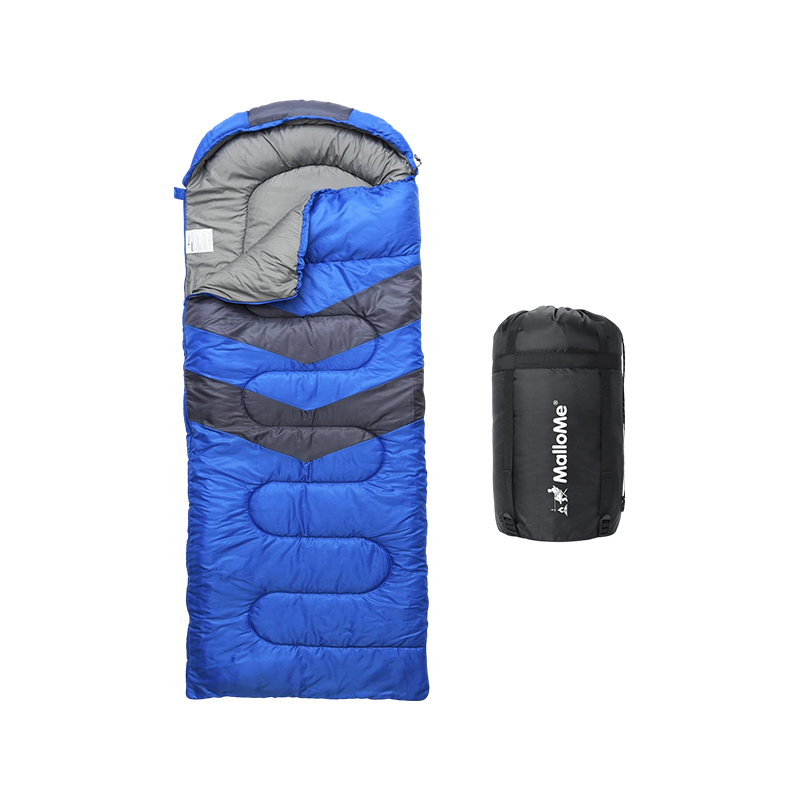
Autumn and winter outdoor envelope-style sleeping bag, camping sleeping bag, hollow cotton sleeping bag, nap sleeping bag
Product Overview
The sleeping bag is made with high-quality waterproof polyester fabric on the exterior and filled with warm, fluffy hollow cotton. The fabric helps resist moisture from damp ground, tent condensation, and light contact with wet outdoor surfaces. The hollow cotton filling provides loft and insulation by trapping air within its fiber structure, helping users remain comfortable during cool nights. The envelope design gives the user more room to move than many narrow sleeping bags, making it especially suitable for campers who dislike restrictive sleeping positions.
One of the most important design advantages is the ability to fully unfold the sleeping bag into a blanket. This gives the product more than one use case. At camp, it can be used as a traditional sleeping bag at night and a picnic blanket or extra quilt during the day. Indoors, it can function as a guest blanket, nap cover, emergency bedding, or travel comfort item. This flexibility increases the value of the product for consumers and helps retailers communicate its usefulness beyond a single camping scenario.
The zipper system is designed to be smooth and durable, with anti-snag performance that reduces the frustration often associated with low-quality sleeping bags. In real outdoor use, a stuck zipper is more than an inconvenience. It can allow cold air to enter, delay rest, or damage the fabric when users pull too hard. A reliable zipper is therefore a functional safety and comfort feature. Combined with machine washable care, the product becomes easier to own, easier to maintain, and more suitable for repeated use.
The compact storage volume is another practical advantage. Campers rarely evaluate gear only by its performance in use; they also consider how easily it can be packed, transported, stored at home, loaded into a car, or carried to a campsite. A sleeping bag that compresses into a manageable size is easier for families, students, group campers, and travel users. Compact storage also benefits distributors and e-commerce sellers because products that pack efficiently can improve warehousing and shipping convenience.
Key Product Specifications
| Feature | Product Detail | User Benefit |
|---|---|---|
| Product Type | Envelope-style camping sleeping bag | Roomier comfort and flexible sleeping positions |
| Exterior Fabric | Waterproof polyester fabric | Helps resist moisture and improves outdoor durability |
| Insulation | Warm and fluffy hollow cotton | Provides practical warmth for cool-weather camping |
| Temperature Range | Approximately 5-15°C | Suitable for autumn, spring, mild winter, and cool nights |
| Zipper | Smooth, durable, anti-snag zipper | Improves usability and reduces fabric damage risk |
| Care Method | Machine washable | Easy cleaning after outdoor trips |
| Design Function | Can fully unfold as a blanket | Useful for camping, travel, naps, and indoor backup bedding |
| Storage | Compact packed volume | Easier transport, storage, and distribution |
Why the Envelope Design Matters
The envelope-style structure is one of the most recognizable sleeping bag formats in recreational camping. Unlike a mummy sleeping bag, which tapers toward the feet and often includes a technical hood, the envelope style usually provides a rectangular shape. This creates more internal space around the shoulders, hips, and legs. For many users, especially new campers, families, casual hikers, and people who move frequently while sleeping, this shape feels more natural and less restrictive.
Competitor products sometimes emphasize technical appearance at the expense of actual comfort. A tight sleeping bag may be thermally efficient, but if users cannot sleep comfortably, the performance advantage becomes less meaningful. The envelope design solves this problem by prioritizing rest quality. It allows side sleeping, easier turning, and a familiar blanket-like feeling. For camping trips where comfort and recovery matter, this design can be more suitable than overly narrow alternatives.
The ability to open the sleeping bag completely is a major advantage over many closed or semi-closed products. When fully unfolded, it becomes a blanket for two people sitting around camp, a cover for children in a cabin, a ground layer for short rests, or an additional layer over another sleeping bag in colder conditions. This multi-use capability reduces the need to carry several separate fabric items. For consumers, it means more value from one purchase. For sellers, it creates more selling points and broader customer relevance.
Another practical benefit is ventilation control. In temperatures near the upper end of the recommended range, a fully closed sleeping bag may feel too warm. The envelope style lets users open the zipper partially, use it as a quilt, or adjust coverage easily. This makes it more adaptable across changing nighttime conditions. When the evening starts warm but becomes cooler after midnight, users can manage comfort without changing equipment.
Waterproof Polyester Fabric for Real Campsite Conditions
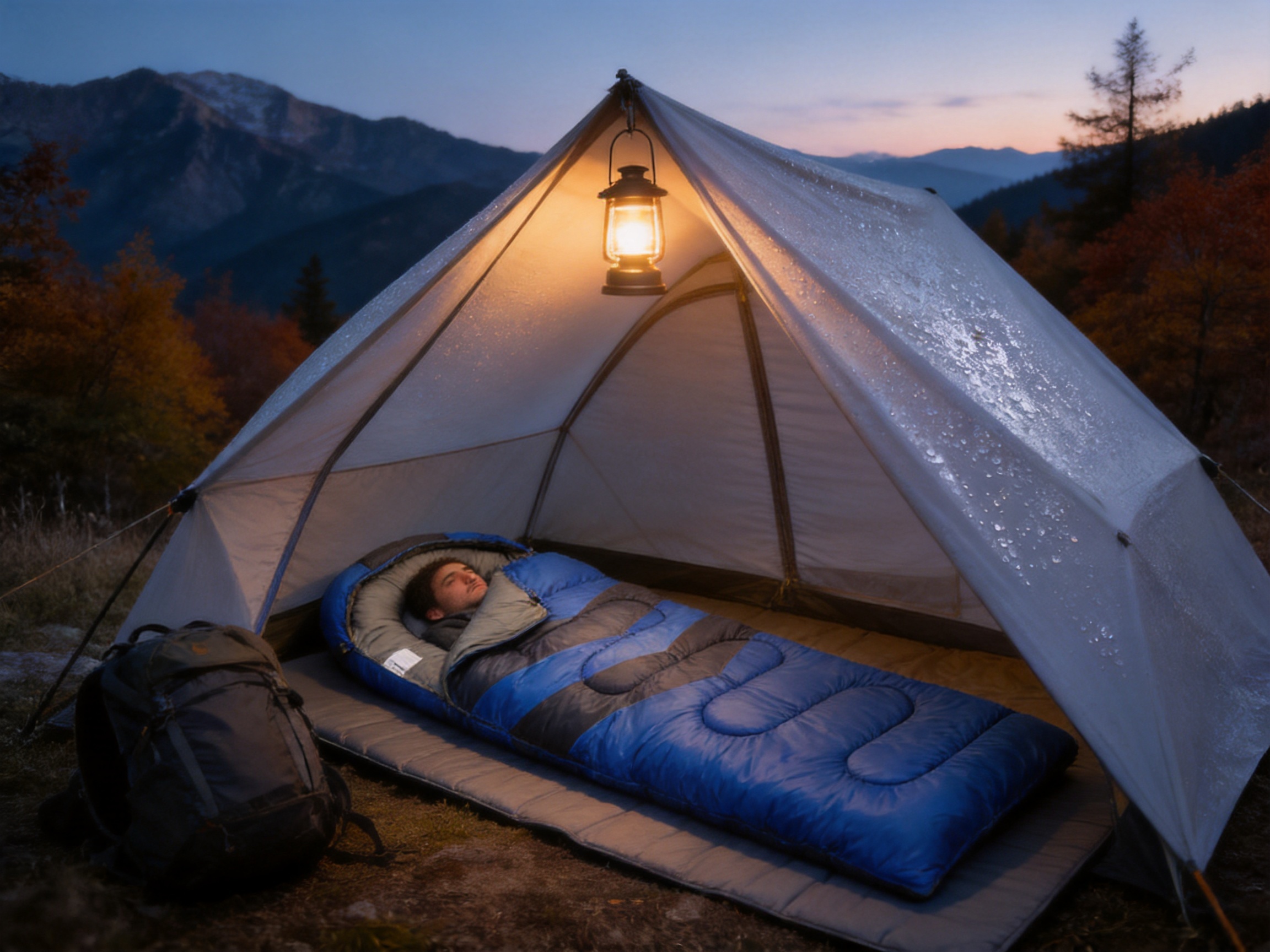
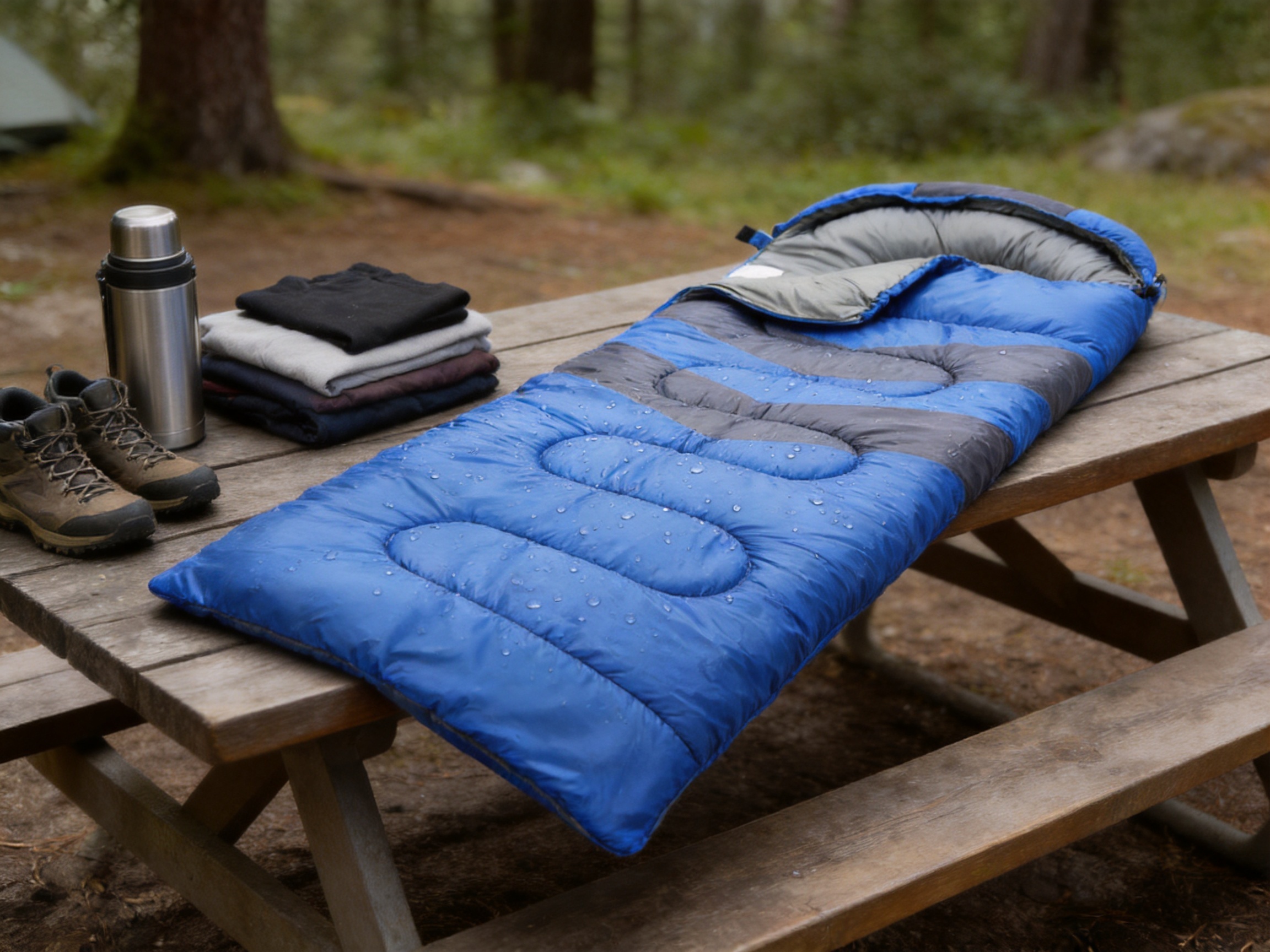
Outdoor equipment must face more than cold air. Ground moisture, dew, tent condensation, muddy campsites, wet grass, and accidental spills are common. Waterproof polyester fabric gives this sleeping bag an important protective layer. Polyester is widely used in outdoor gear because it offers a favorable balance of durability, weight, cost efficiency, color stability, and drying performance. When treated or selected for water resistance, it helps protect the insulation from light moisture exposure.
In many low-end competing sleeping bags, the outer fabric may feel thin, overly shiny, or weak at stress points. It may also absorb moisture too easily, which can reduce comfort and increase drying time. A higher-quality polyester shell improves the user experience by creating a cleaner, tougher, and more confidence-inspiring exterior. It is not a substitute for a waterproof bivy or tent, but it is a meaningful upgrade for ordinary campsite use.
Water resistance also supports hygiene and easy care. A fabric surface that does not immediately absorb every drop of moisture is easier to wipe and maintain. For families and group users, this is especially valuable. Children may drag sleeping bags across tent floors, use them during picnics, or spill drinks near them. A more resilient outer shell reduces the likelihood that small incidents become permanent damage.
From a manufacturing perspective, polyester also offers consistency. It can be cut, stitched, and finished with reliable dimensional stability. This helps factories maintain consistent product shape and reduces variation across production batches. For international buyers, consistency is not a minor detail. A product that performs well in a sample but changes in bulk production creates risk. Material stability helps reduce that risk and supports scalable supply.
Hollow Cotton Insulation: Warmth, Loft, and Practical Value
The sleeping bag uses hollow cotton filling, a synthetic insulation commonly selected for practical outdoor sleeping products. The term refers to fibers with hollow structures that help trap air. Since still air is a key part of insulation, this loft contributes to warmth while keeping the product soft and fluffy. Hollow cotton is valued because it provides comfort, reasonable thermal performance, easier maintenance, and cost effectiveness compared with many premium natural fills.
Down insulation is often praised for excellent warmth-to-weight ratio, but it has limitations for broad consumer markets. It is more expensive, more sensitive to moisture, and often requires careful laundering. Hollow cotton offers a more forgiving alternative. It can remain useful in everyday camping conditions, is easier to maintain, and fits the needs of users who prioritize reliability and affordability over ultralight expedition performance.
Compared with flat or low-grade synthetic padding, quality hollow cotton feels loftier and more comfortable. The sleeping bag’s warmth is not only about the total amount of filling; it is also about how evenly the filling is distributed and how well it maintains loft after compression and use. Good manufacturing practice must ensure that the insulation does not shift excessively, clump unevenly, or leave cold spots along seams. This is where material selection and production control become important competitive advantages.
The 5-15°C temperature range makes the insulation suitable for shoulder-season camping and moderate winter use. This range is practical for many markets because it covers the conditions most recreational campers actually experience. Extreme cold-weather sleeping bags may appeal to a smaller technical audience, while thin summer bags may fail during cool nights. A 5-15°C range gives the product a strong balance for mainstream outdoor retail.
Comfort in the 5-15°C Range
Temperature ratings in sleeping bags should always be understood carefully. Real comfort depends on many factors, including user metabolism, sleeping pad insulation, tent conditions, wind exposure, clothing, humidity, fatigue, and meal intake. However, a sleeping bag suitable for approximately 5-15°C provides a useful guideline. It is intended for cool but not extreme conditions, making it ideal for autumn camping, spring campsites, mountain foothills, campsite cabins, and travel rest.
The advantage of this range is versatility. A bag that is too warm may become uncomfortable in mild weather. A bag that is too thin can cause poor sleep when temperatures drop unexpectedly. This product sits in a practical middle zone. Users can unzip it for ventilation in warmer conditions or wear thermal layers when the temperature moves toward the lower end of the range. This adaptability supports more frequent use throughout the year.
Many competing products use vague claims such as “four-season” without clearly matching real-world comfort expectations. Such descriptions can mislead buyers. A more honest 5-15°C positioning builds trust because it communicates realistic use. It helps customers choose correctly and reduces dissatisfaction caused by unrealistic expectations. For wholesale buyers and retailers, accurate positioning can also reduce returns and complaints.
This sleeping bag is especially suitable for users who sleep in tents with sleeping pads. Ground insulation is essential because even a warm sleeping bag can lose heat through compression beneath the body. When paired with a proper mat, the hollow cotton fill and envelope construction provide a comfortable sleeping environment for typical cool-weather camping. This complete-system view reflects professional outdoor product thinking: no item works alone, and responsible product design recognizes how gear interacts in actual use.
Smooth Anti-Snag Zippers: Small Detail, Major Difference
Zippers are among the most frequently used and most failure-prone components in sleeping bags. A poor zipper can ruin the user experience even if the fabric and filling are acceptable. Snagging occurs when the zipper teeth catch the shell fabric or inner lining. This may lead to tearing, frustration, cold air leakage, or broken sliders. The inclusion of smooth and durable anti-snag zippers gives this sleeping bag a clear usability advantage.
In real camping situations, users often operate zippers in low light, with cold hands, while tired, or from inside the sleeping bag. A zipper must therefore be intuitive and forgiving. Anti-snag design reduces the chance of fabric catching during entry, exit, or ventilation adjustment. This is particularly important for families and first-time campers who may not handle gear gently.
Durability also matters over repeated cycles. A zipper may work in a showroom but fail after dust, moisture, compression, and repeated pulling. Strong zipper selection and proper stitching help extend product life. Reinforcement around zipper ends, controlled seam alignment, and careful attachment are all part of manufacturing quality. These details are often invisible in product photos but become obvious after weeks or months of actual use.
Compared with low-cost competitors that use weak zippers to reduce expenses, this product’s zipper quality supports long-term value. Customers may not always list zipper quality as their first purchase criterion, but they remember it when it fails. A reliable zipper reduces after-sales problems and strengthens the reputation of the seller or brand carrying the product.
Machine Washable for Easy Outdoor Maintenance
Camping gear gets dirty. Sleeping bags absorb sweat, collect dust, encounter damp tent floors, and may be used by different people over time. A machine washable sleeping bag significantly improves practicality. Users are more likely to continue using and recommending a product that is easy to clean. Machine washability also makes the product suitable for rental programs, camp schools, family use, dormitory backup bedding, and travel accommodations.
Some sleeping bags require careful hand washing or specialist cleaning. While this may be acceptable for premium down bags, it is inconvenient for mainstream users. Hollow cotton and polyester construction provide a more manageable care profile. After an outdoor trip, users can clean the sleeping bag according to care instructions, dry it properly, and store it for the next journey.
Easy maintenance is also an advantage in retail communication. Consumers often compare sleeping bags by warmth, size, and price, but care requirements influence long-term satisfaction. A product that remains usable after washing has greater lifetime value. Poorly constructed bags may suffer filling migration, seam damage, or fabric deformation after laundering. Therefore, machine washability must be supported by manufacturing processes that stabilize the filling and seams.
CragHaven Outdoor’s focus on practical product development supports this requirement. The company’s approach emphasizes real-world usage rather than catalog-only specifications. That philosophy is important because a washable sleeping bag must be designed not just to look soft when new, but to remain functional after cleaning, compression, packing, and repeated trips.
Compact Storage and Transportation Efficiency
A sleeping bag must travel well. Whether it is carried in a backpack, packed in a car trunk, stored in a closet, or shipped through an e-commerce channel, storage volume matters. This product is designed with compact packed volume, making it easier for users and sellers alike. For casual campers, compact storage reduces clutter and improves trip preparation. For distributors, it supports efficient warehousing and shipping.
Some thick sleeping bags feel warm but are difficult to compress or pack. Others compress well but sacrifice comfort. The hollow cotton envelope sleeping bag aims for a balanced result. It offers enough loft for cool-weather comfort while remaining manageable for storage. This balance is especially important for family camping, where multiple sleeping bags must be packed together.
Compact storage also influences perceived professionalism. A sleeping bag that packs neatly into its storage sack appears more organized and travel-ready. Customers appreciate products that are simple to roll, compress, and carry. This reduces barriers for beginners who may feel overwhelmed by complicated outdoor equipment.
For cross-border trade, packing efficiency can affect total landed cost. Sleeping bags are soft goods, and their packed dimensions influence carton utilization. A product that can be compressed consistently is easier to plan in bulk shipments. This is one reason manufacturing consistency matters not only for users but also for supply chain partners.
Advantages Over Common Competitor Products
The sleeping bag stands out in several important ways. First, it offers a realistic comfort positioning for 5-15°C rather than exaggerated all-season claims. This honesty improves customer satisfaction. Second, it uses waterproof polyester fabric that provides better outdoor practicality than ordinary non-resistant fabric shells. Third, the hollow cotton filling creates a soft and warm experience suitable for mainstream users. Fourth, the envelope structure gives more room and transforms into a blanket. Fifth, anti-snag zippers and machine washable care improve everyday usability.
Many competitor products focus on price alone. They may use thin fabric, uneven filling, weak zipper tape, poor stitching, and unclear temperature claims. Such products can win one-time purchases but often fail in long-term trust. This sleeping bag takes a more sustainable position: practical materials, useful features, and manufacturing control that support repeated use. It is designed to deliver dependable value rather than only attractive online images.
Another advantage is the combination of comfort and versatility. Technical mummy bags may be lighter and warmer for mountaineering, but they are not always the best choice for family camping, festivals, road trips, cabins, or indoor backup use. This envelope sleeping bag appeals to a wider audience because it feels familiar, open, and adaptable. It is less intimidating for beginners and more useful in daily life.
The product also has strong commercial flexibility. It can serve outdoor retailers, camping equipment brands, promotional channels, travel suppliers, and private-label projects. The design is understandable across markets, the materials are accepted globally, and the feature set is easy to explain. For buyers looking to develop a stable sleeping bag program, this makes the product a practical foundation.
Advanced Manufacturing Philosophy Behind the Product
CragHaven Outdoor is based in Hangzhou, China, and operates as an outdoor brand and cross-border manufacturing partner. Its manufacturing strength is not limited to factory sourcing. The company participates in design, material selection, sampling, testing, and optimization. This integrated approach is especially valuable in outdoor products, where small design decisions can strongly affect real-world performance.
The company’s product development philosophy can be summarized by three principles: products should be designed for weather, terrain, and time; every feature should solve real usage problems; and material selection should prioritize durability, reliability, and long-term use. This philosophy is directly reflected in the sleeping bag. Waterproof fabric addresses moisture. Hollow cotton addresses warmth and comfort. Anti-snag zippers address real campsite frustration. Machine washability addresses post-trip maintenance. Compact storage addresses transport and supply chain needs.
Many factories can produce a sleeping bag shape. Fewer can develop a product that remains consistent across material batches, sewing lines, filling distribution, and packaging. Advanced manufacturing is not only about machines; it is about process discipline. It requires clear specifications, controlled sampling, inspection standards, and feedback loops. CragHaven Outdoor’s emphasis on repeated sampling and testing helps reduce uncertainty for global buyers.
China’s mature manufacturing system provides additional support. Access to textile suppliers, zipper manufacturers, insulation materials, sewing capacity, packaging resources, and export logistics allows efficient production scaling. However, manufacturing capacity alone is not enough. The company’s advantage lies in connecting that capacity with outdoor product understanding and Western-market-oriented communication. This reduces misalignment between buyer expectations and factory execution.
Material Selection and Incoming Quality Control
The production of a reliable sleeping bag begins before sewing. Incoming materials must be checked for consistency, appearance, hand feel, weight, water resistance, color accuracy, and suitability for cutting. Polyester fabric should meet the expected performance standard. Hollow cotton should have proper loft, cleanliness, resilience, and uniformity. Zippers should move smoothly and align correctly. Thread, labels, storage sacks, and packaging materials should also match the product specification.
Material control is one of the key differences between professional manufacturing and low-cost assembly. If fabric thickness changes from batch to batch, the finished sleeping bag may feel different. If filling quality varies, warmth and loft may become inconsistent. If zippers are substituted without approval, user experience may decline. Strong incoming quality control helps prevent these issues before they enter production.
For international buyers, this process reduces risk. A good sample is not enough; the bulk product must match the approved standard. Clear material documentation and supplier management help ensure that every production run delivers the same intended value. This is especially important for e-commerce brands, where customer reviews quickly reveal inconsistencies.
CragHaven Outdoor’s long-term partnership orientation supports this discipline. Instead of chasing short-term material substitutions, the company emphasizes reliability and stable cooperation. This is important for products like sleeping bags, where hidden material differences may not be obvious until after real use.
Cutting, Filling, Stitching, and Assembly
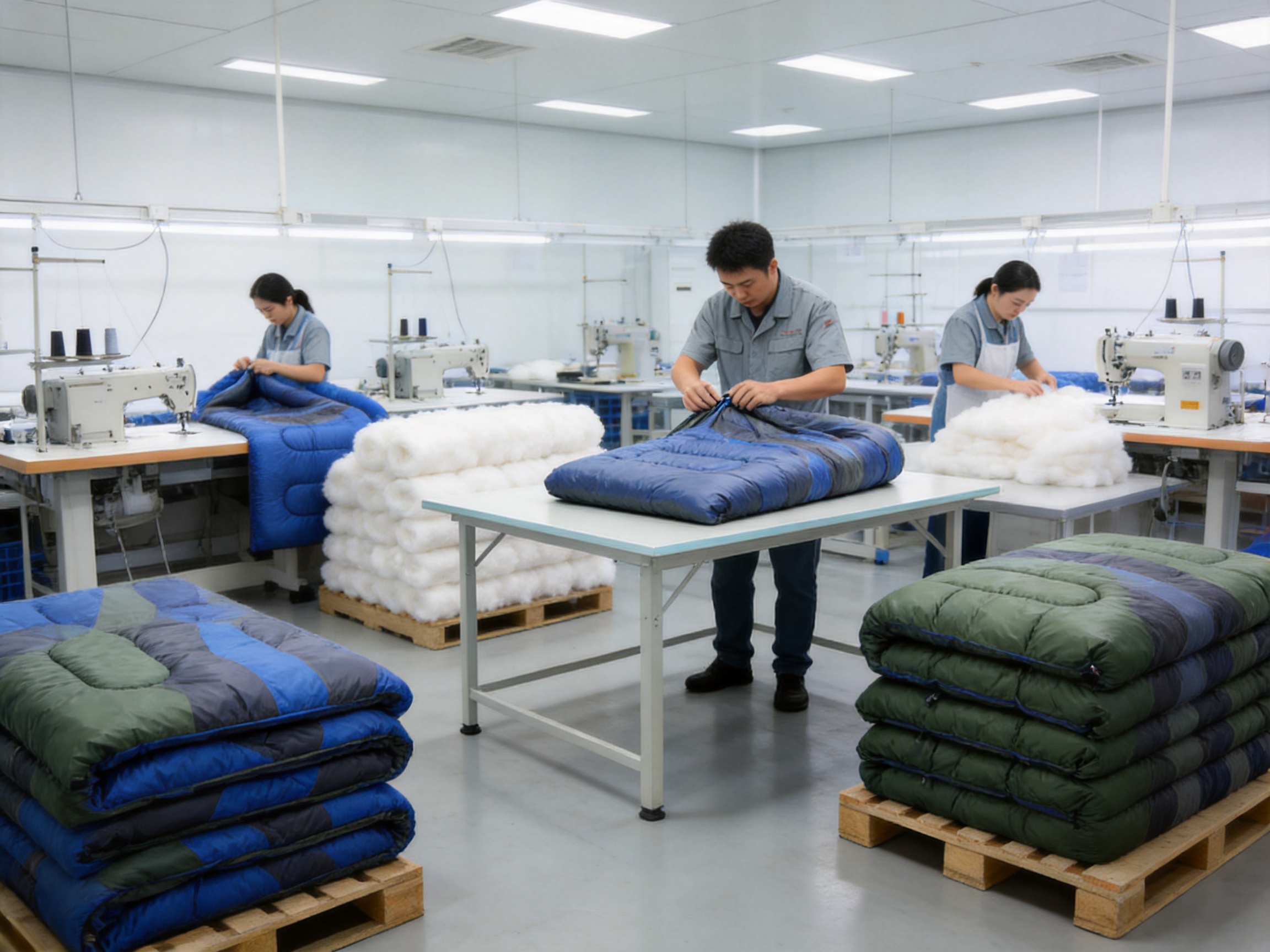
After materials are approved, cutting accuracy becomes the next critical step. The envelope-style sleeping bag must maintain correct dimensions so that the outer shell, lining, insulation, zipper, and seams align properly. Poor cutting can create twisting, uneven edges, tight spots, or filling gaps. Controlled cutting helps the product achieve a clean shape and consistent comfort.
Filling distribution is equally important. Hollow cotton must be placed evenly to prevent cold spots and uncomfortable lumps. Proper quilting or stitching patterns help stabilize the insulation. The goal is to keep the filling where it belongs while preserving enough loft for warmth. Overly dense stitching may compress insulation too much, while insufficient stitching may allow migration. The balance requires both design knowledge and sewing experience.
Zipper assembly demands precision. The zipper tape must be aligned with the fabric edge, secured with stable stitching, and tested for smooth operation. Anti-snag performance depends on component quality and assembly accuracy. If the fabric edge is too loose or poorly positioned, snagging can still occur even with a decent zipper. Manufacturing skill turns good components into a good finished product.
Final assembly includes edge finishing, seam inspection, thread trimming, functional testing, folding, compression, and packaging. Each step affects the customer’s first impression and long-term use. A sleeping bag that arrives clean, properly shaped, smoothly zipped, and neatly packed communicates quality before the first night outdoors.
Testing and Optimization for Real Use
Outdoor products should be tested beyond appearance. A sleeping bag may need checks for zipper cycling, seam strength, fabric condition, filling uniformity, packed volume, washing performance, and general usability. Testing does not always require dramatic laboratory claims; it requires practical evaluation that matches how customers use the product. Can it be zipped easily from inside? Does the fabric feel durable? Does it pack consistently? Does the filling remain comfortable after compression? Does washing affect shape?
CragHaven Outdoor’s development process includes sampling, testing, and optimization as standard steps. This is essential because the first sample is rarely perfect. Adjustments may be needed in fabric selection, filling weight, stitching pattern, zipper placement, storage sack size, or packaging method. By refining these details before bulk production, the company helps buyers avoid costly after-sales problems.
Optimization also supports market adaptation. Different regions may prefer different colors, packaging styles, label languages, or comfort expectations. A manufacturing partner with product understanding can help modify the sleeping bag while preserving its core performance. This is particularly useful for private-label outdoor brands looking to build a product line rather than purchase generic inventory.
The most important result of testing is confidence. Retailers and distributors need to know that the product they sell can withstand ordinary use. Customers need to feel that the sleeping bag will support rest after a long day outside. Testing and optimization create that confidence through controlled development rather than guesswork.
Applications Across Outdoor and Everyday Scenarios
This sleeping bag is suitable for a broad range of situations. In mountain-climbing support camps, it can serve as a rest bag for mild conditions, base lodging, or non-extreme overnight use. In camping environments, it is ideal for tent sleeping, car camping, campsite cabins, and group outdoor activities. For hiking trips where weight is not the only priority, it provides comfort and warmth at camp. For travel, it can be used in hostels, road trips, and temporary accommodations.
Its nap function should not be underestimated. Many outdoor users need short rest solutions during daytime activities, long drives, fishing trips, festivals, or emergency waiting periods. A sleeping bag that opens like a blanket is excellent for this purpose. It can be spread over a bench, used in a vehicle, or shared as a cover. This makes the product more useful than a single-purpose sleeping system.
Families benefit from the envelope design because it is easy for children and beginners to understand. There is no complicated hood adjustment or tight foot box. Users simply zip in, unzip, or open it as needed. Group organizers also appreciate equipment that is easy to distribute, clean, and store. Machine washability further supports repeated group use.
For indoor use, the sleeping bag can function as emergency bedding, a guest quilt, dormitory bedding, or an office nap cover. These secondary use cases increase purchase justification. A consumer may buy it for camping but continue using it at home. This strengthens perceived value and increases satisfaction.
Design Balance: Warmth, Space, Weight, and Cost
Every sleeping bag involves trade-offs. More insulation can increase warmth but also increases weight and packed size. A tighter shape can improve heat retention but reduce comfort. Premium materials can improve performance but raise cost. The strength of this product is its balanced design. It does not attempt to be the lightest or the most extreme; it aims to be dependable, comfortable, and accessible for common cool-weather scenarios.
This balance is a major advantage in mainstream markets. Many customers do not need specialized alpine gear, but they do need a sleeping bag that prevents cold, feels comfortable, and lasts through repeated use. By focusing on practical performance, the product avoids unnecessary complexity. It delivers features that users can immediately understand: waterproof fabric, warm filling, smooth zipper, washable care, blanket conversion, and compact storage.
Cost efficiency does not mean low quality. It means allocating resources to the features that matter most. In this sleeping bag, value is concentrated in material reliability, insulation comfort, zipper usability, and construction stability. These are the factors that most directly influence customer satisfaction. Decorative features or exaggerated technical claims are less important than sleeping well through the night.
For buyers building an outdoor product assortment, this balanced positioning is commercially useful. The sleeping bag can sit in a core range, appeal to broad demographics, and support repeat seasonal sales. It can be marketed as a dependable cool-weather camping essential rather than a niche item.
Supply Chain Strength and Cross-Border Partnership Value
CragHaven Outdoor aims to reduce uncertainty in the supply chain. This matters because global outdoor buyers face challenges such as inconsistent quality, unclear communication, unstable lead times, material substitutions, and products that look acceptable in photos but fail in use. A partner that understands both manufacturing and outdoor application can reduce these risks.
The company’s location in Hangzhou provides access to China’s efficient manufacturing ecosystem while maintaining professional communication for international markets. This combination helps translate buyer needs into practical production requirements. Instead of only matching a catalog item, the company can participate in design refinement, sampling, packaging planning, and long-term product development.
Stable partnerships are especially important for seasonal outdoor products. Sleeping bags often need to be developed, sampled, ordered, shipped, and stocked before peak camping seasons. Delays or inconsistencies can cause missed sales windows. A manufacturing partner with disciplined processes and supply chain awareness helps protect the buyer’s calendar.
CragHaven Outdoor’s philosophy also supports sustainable commercial relationships. Products are designed for long-term use rather than short-term trend cycles. This aligns with the needs of buyers who want reliable product programs, not one-off experiments. A sleeping bag that performs consistently can become a recurring item in a retailer’s assortment.
How Retailers Can Position This Sleeping Bag
Retailers can position this sleeping bag as a practical cool-weather camping solution for autumn, spring, and mild winter conditions. The strongest consumer-facing messages are comfort, warmth, easy cleaning, waterproof fabric, and blanket versatility. These points are easy to understand and relevant to many shoppers. The product can be sold to beginners and experienced casual campers alike.
For online listings, the envelope design should be emphasized because it visually and functionally differentiates the product from mummy bags. Customers should understand that it offers more room and can open fully. The 5-15°C range should be presented clearly and responsibly. It is better to build trust with accurate guidance than to overpromise extreme cold performance.
Retailers can also create bundled offers with sleeping pads, tents, camping pillows, or storage bags. Since sleeping comfort depends on the full sleep system, pairing this sleeping bag with a proper mat can improve user satisfaction. Educational content can explain how to layer clothing, ventilate the bag, and store it properly.
For offline retail, the tactile softness of the hollow cotton and the roomy shape are important selling points. Customers often respond positively when they can feel the fabric, test the zipper, and see the sleeping bag unfold into a blanket. Demonstrating the conversion function can quickly communicate value.
Care and Use Recommendations
To achieve the best performance, users should pair the sleeping bag with an insulated sleeping pad when sleeping on the ground. The sleeping bag provides top and side insulation, but the filling beneath the body compresses under weight. A sleeping pad helps prevent heat loss into the ground and improves comfort. This is especially important near the lower end of the 5-15°C range.
Users should keep the sleeping bag as dry as possible. The waterproof polyester fabric helps resist light moisture, but no sleeping bag should be treated as a substitute for a tent, tarp, or waterproof shelter. After use, the bag should be aired out to release moisture from breath and body heat. Proper drying helps maintain freshness and loft.
When washing, users should follow the care label. Gentle machine washing and thorough drying are generally important for synthetic sleeping bags. Overheating, harsh detergents, or improper drying can affect fabric and filling performance. Once clean and fully dry, the bag should be stored in a dry place. Long-term storage in a highly compressed state should be avoided when possible to preserve loft.
The zipper should be operated smoothly rather than forced. If fabric begins to catch, users should back the slider slightly and free the fabric gently. Although the anti-snag design reduces problems, careful use extends product life. These simple habits help the sleeping bag remain reliable over many trips.
Q&A Section
What temperature range is this sleeping bag designed for?
It is suitable for approximately 5-15°C conditions. This makes it appropriate for autumn, spring, mild winter, cool mountain campsites, and general camping use. Users should consider clothing, sleeping pad insulation, tent conditions, humidity, and personal cold sensitivity when planning trips.
Is this sleeping bag suitable for extreme winter mountaineering?
No. It is designed for practical cool-weather camping rather than extreme alpine or subzero expedition use. For severe cold, users should choose a specialized winter sleeping system with a lower temperature rating and appropriate ground insulation.
What are the main advantages of the envelope design?
The envelope design provides more room than narrow mummy bags and allows the sleeping bag to fully unfold as a blanket. This increases comfort, ventilation options, and versatility for camping, travel, naps, and indoor backup bedding.
Why is hollow cotton used as insulation?
Hollow cotton offers warmth, softness, loft, and practical maintenance. It is a cost-effective synthetic insulation suitable for mainstream camping products. It is easier to care for than many premium natural fills and works well for repeated casual outdoor use.
How does the waterproof polyester fabric help?
The waterproof polyester shell helps resist light moisture from damp campsites, tent condensation, wet grass, and accidental contact with water. It improves durability and makes the sleeping bag more practical in real outdoor environments.
Can the sleeping bag be washed?
Yes. It is machine washable, which makes cleaning easier after camping trips. Users should still follow the care label, use suitable washing settings, dry the bag thoroughly, and avoid improper heat or harsh treatment.
What makes this product different from low-cost competitors?
It combines waterproof polyester fabric, warm hollow cotton filling, a roomy envelope structure, anti-snag zippers, machine washable care, and compact storage. It also benefits from controlled manufacturing processes, material selection, sampling, testing, and optimization.
Who is the ideal user?
The ideal user includes campers, hikers, car campers, families, students, travel users, camp groups, and anyone needing a practical cool-weather sleeping or nap solution. It is especially suitable for people who value comfort and easy maintenance.
Can it be used indoors?
Yes. It can serve as a guest blanket, emergency bedding, dormitory bedding, office nap cover, or travel quilt. Its ability to open fully as a blanket makes it useful beyond outdoor camping.
Why is manufacturing control important for sleeping bags?
Manufacturing control ensures consistent fabric quality, filling distribution, stitching strength, zipper performance, packed size, and washing durability. Without strong process control, two sleeping bags with the same appearance may perform very differently in real use.
Conclusion
The autumn and winter envelope-style hollow cotton sleeping bag is a practical, versatile, and commercially strong product for cool-weather outdoor use. Its value comes from a balanced combination of waterproof polyester fabric, warm hollow cotton insulation, a roomy envelope structure, smooth anti-snag zippers, machine washable care, and compact storage. These features solve real problems faced by campers: moisture, cold, restricted movement, difficult cleaning, zipper frustration, and packing inconvenience.
Compared with competitors that rely on low price or exaggerated claims, this sleeping bag offers a more reliable and honest proposition. It is designed for the conditions many users actually encounter, especially 5-15°C camping environments. It provides comfort without unnecessary complexity and versatility without sacrificing core sleeping function. The ability to open fully as a blanket gives it additional value for travel, naps, cabins, and indoor use.
Behind the product, CragHaven Outdoor brings manufacturing strengths that matter to global buyers: material selection, sampling, testing, optimization, quality control, scalable production, and professional cross-border communication. The company’s philosophy of designing for weather, terrain, and time supports practical outdoor gear that can serve users repeatedly rather than simply look attractive in catalogs.
For retailers, distributors, outdoor brands, and private-label buyers, this sleeping bag is a strong candidate for a core camping product line. For end users, it is a dependable companion for cool nights, relaxed campsites, weekend travel, and everyday backup comfort. Its greatest strength is balance: warm enough for real cool-weather use, comfortable enough for restful sleep, simple enough for beginners, durable enough for repeated trips, and versatile enough to remain useful long after the camping season ends.
References
American Society for Testing and Materials. Standard Practices for Textile Testing and Performance Evaluation.
Collier, B. J., and Epps, H. H. Textile Testing and Analysis. Pearson Education.
Gibson, P. W. Factors Influencing Thermal Comfort in Outdoor Clothing and Sleep Systems. Textile Research Publications.
Holmér, I. Protective Clothing in Cold Environments: Thermal Insulation and Human Comfort Considerations. Ergonomics Research Literature.
Kadolph, S. J. Textiles. Pearson Education.
Morton, W. E., and Hearle, J. W. S. Physical Properties of Textile Fibres. Woodhead Publishing.
Outdoor Industry Association. Outdoor Recreation Participation and Consumer Gear Trends.
Scott, R. A. Textiles for Protection. Woodhead Publishing.
Product: Autumn and winter outdoor envelope-style sleeping bag, camping sleeping bag, hollow cotton sleeping bag, nap sleeping bag



- Phone: +86-15968800379
- E-mail: [email protected]
- Address: Room 1002, Huishang Building, Gongshu District, Hangzhou City, Zhejiang Province.
Copyright © CragHaven Outdoor All Rights Reserved. Outdoor Gear Manufacturers Wholesale Mountaineering Camping Gear Suppliers
