

 English
 Deutsch
 Español
 Français

Aluminum Alloy Three-Section External Lock Trekking Pole for Demanding Trails
Content
- 1 Product Overview and Core Design Concept
- 2 Why Aluminum Alloy Matters in Trekking Pole Performance
- 3 Three-Section Telescopic Design and Portability
- 4 External Locking System: Speed, Security, and User Confidence
- 5 Straight Handle Comfort and Control
- 6 Tungsten Steel Alloy Tip for Ground Contact Durability
- 7 Performance Advantages Over Competing Trekking Poles
- 8 How the Pole Supports Long-Distance Hiking Efficiency
- 9 Applications in Mountain Climbing, Camping, and Mixed Outdoor Environments
- 10 Manufacturing Quality and Process Control
- 11 Company Strengths in Outdoor Gear Development
- 12 Design Philosophy: Built for Weather, Terrain, and Time
- 13 Quality Inspection Priorities for Wholesale and OEM Buyers
- 14 Market Positioning and Buyer Value
- 15 Maintenance and Long-Term Use Recommendations
- 16 Why This Trekking Pole Is a Strong Choice for Global Outdoor Programs
- 17 Q&A Section
- 17.1 Q1: What type of user is this aluminum alloy trekking pole best suited for?
- 17.2 Q2: Why choose aluminum alloy instead of carbon fiber?
- 17.3 Q3: What is the benefit of the three-section telescopic structure?
- 17.4 Q4: How does the external locking system improve trail use?
- 17.5 Q5: Why is the tungsten steel alloy tip important?
- 17.6 Q6: Is this trekking pole suitable for long-distance hiking?
- 17.7 Q7: What makes this product competitive for wholesale and OEM buyers?
- 17.8 Q8: How should users maintain the trekking pole?
- 18 Conclusion
- 19 References
- 20 Product: Aluminum alloy three-section telescopic folding external locking trekking pole straight handle
Long-distance hiking, mountain trekking, camping approaches, and mixed-terrain travel all place heavy demands on personal support equipment. A trekking pole is not a decorative accessory; it is a load-transferring tool, a balance aid, a rhythm stabilizer, and a safety-related piece of outdoor gear. The aluminum alloy three-section telescopic folding external locking trekking pole with straight handle is designed for users who need dependable support across changing ground conditions, from rocky trails and forest paths to steep approaches and campsite terrain.
This trekking pole combines a high-strength aluminum alloy shaft, a three-section telescopic structure, an external locking speed adjustment system, and a wear-resistant tungsten steel alloy tip. The result is a practical and professional trekking pole that balances durability, portability, ease of adjustment, and reliable trail performance. For outdoor gear distributors, retailers, and private-label buyers, this product also represents a strong choice for scalable sourcing because it aligns with real hiking needs rather than short-term market trends.
CragHaven Outdoor focuses on mountaineering, hiking, and camping scenarios, and this product reflects that focus clearly. The pole is not built only around a specification sheet. It is developed around field usage: repeated adjustment, unstable terrain, pressure from backpacks, exposure to weather, and the need for equipment that remains functional over time. Its aluminum construction gives it a strong advantage in rugged environments, while its external lock system improves convenience for hikers who adjust pole length frequently during ascents, descents, and uneven trail sections.
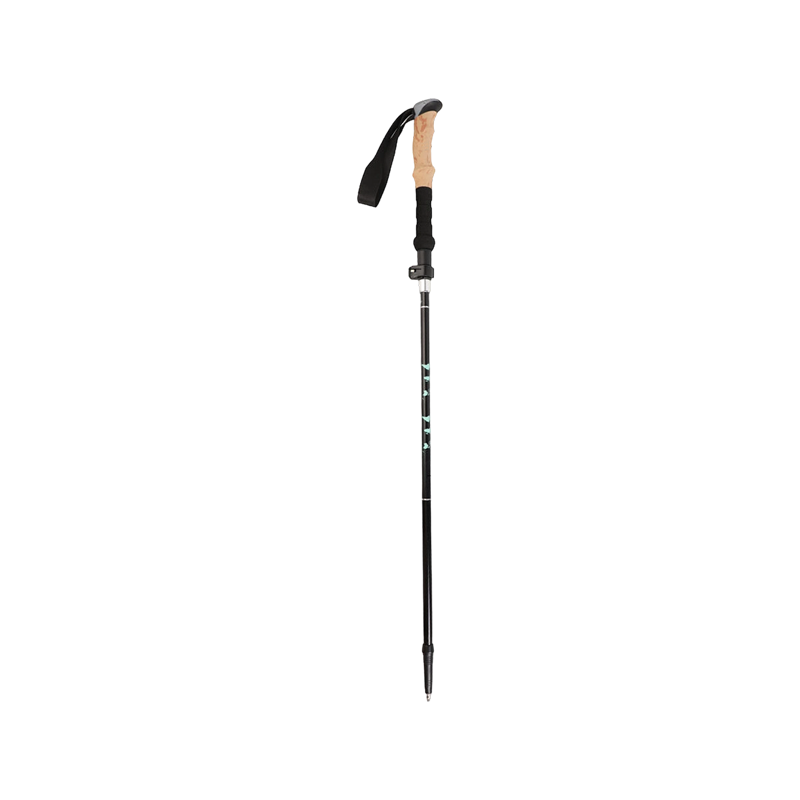
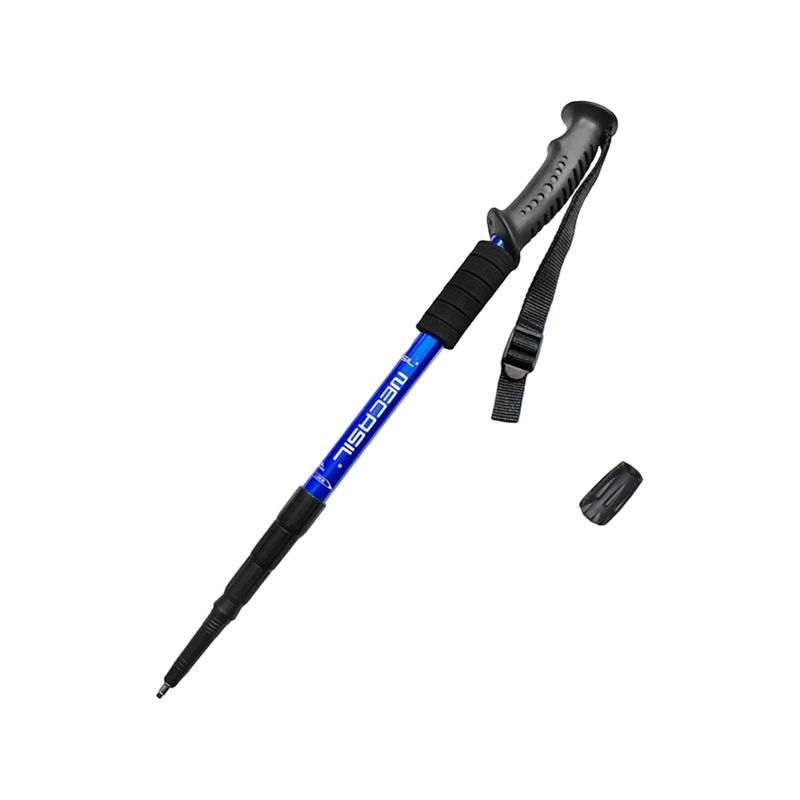
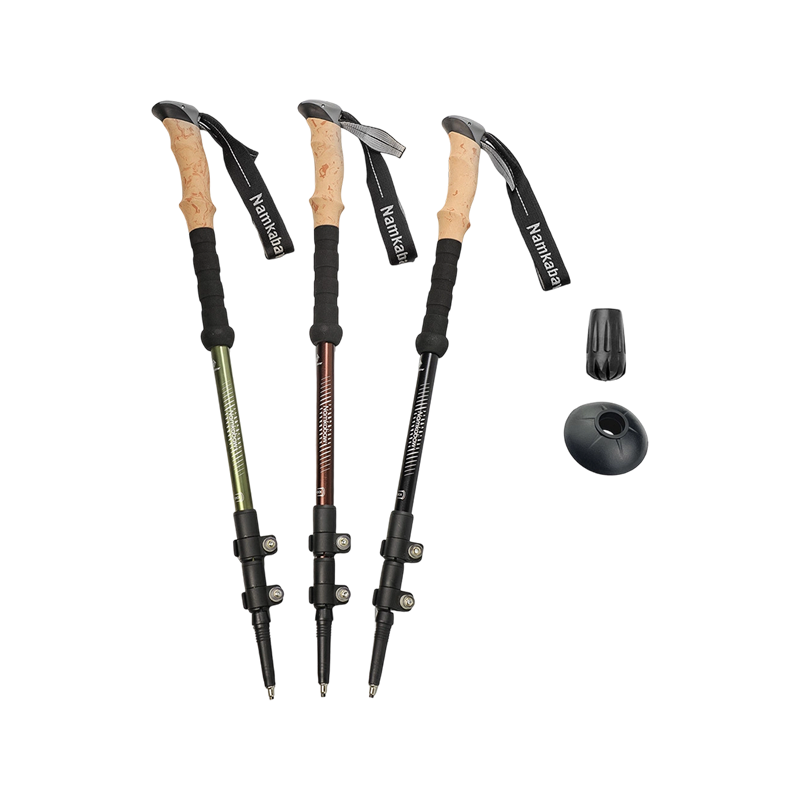
Aluminum alloy three-section telescopic folding external locking trekking pole straight handle
Product Overview and Core Design Concept
The aluminum alloy three-section telescopic trekking pole is categorized under trekking poles and is intended for mountain climbing, hiking, camping, and general outdoor walking support. Its core design is based on a three-section adjustable shaft system. This structure allows the pole to be shortened for storage and transport, then extended to a practical working length when needed. Compared with fixed-length poles, a telescopic trekking pole is more versatile because it can serve users of different heights and adapt to various slopes and trail conditions.
The straight handle provides a simple, efficient grip profile. For many hikers, especially those who prefer a direct hand-to-pole connection, a straight handle offers intuitive control. It allows the user to plant the pole naturally and maintain forward rhythm without complicated hand positioning. In demanding terrain, simplicity matters. A handle that is easy to hold, easy to reposition, and easy to use with gloves can make a noticeable difference over long distances.
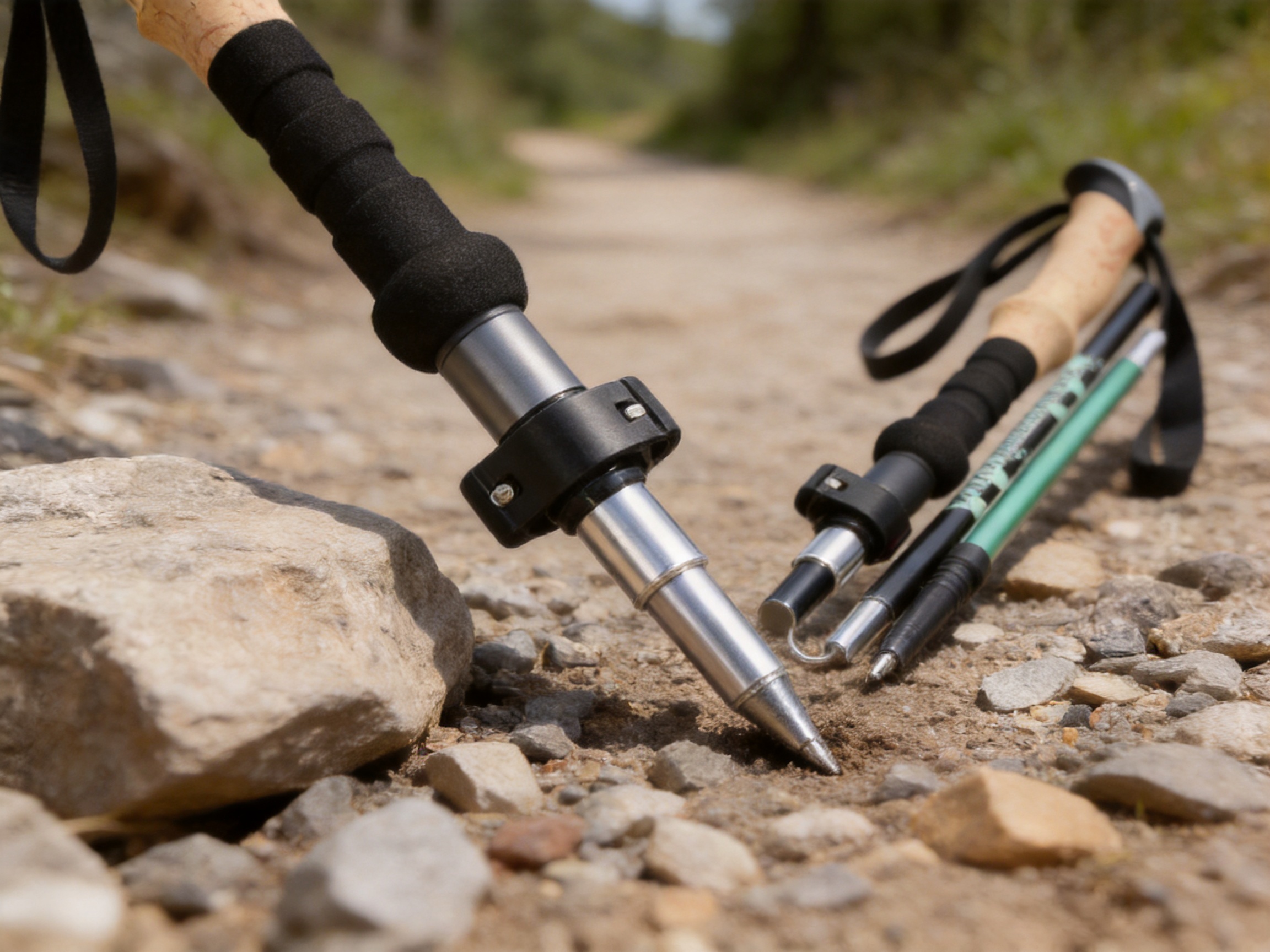
The 3LS external locking speed adjustment system is one of the product’s most important performance features. External locking systems are widely appreciated by hikers because they are visible, easy to operate, and quick to adjust. Unlike internal twist locks that may require more effort or may be harder to confirm visually, an external lever-style lock allows users to see whether the pole is fixed. This is especially valuable in cold, wet, or dusty environments where fast and certain adjustment is important.
The aluminum alloy shaft gives the trekking pole an excellent balance between strength and weight. While carbon fiber poles are often chosen for ultralight applications, aluminum alloy poles remain highly competitive for long-term outdoor use because they provide strong impact resistance and dependable structural behavior. On rocky terrain, a trekking pole may be hit against stones, wedged between roots, or loaded at unusual angles. Aluminum is well suited to these conditions because it can tolerate repeated stress and is generally less vulnerable to sudden brittle failure than some lightweight alternatives.
The pole also features a tungsten steel alloy tip, selected for wear resistance and traction. The tip is the direct contact point between the trekking pole and the ground. It experiences abrasion, impact, and constant pressure. A durable tip helps maintain grip on compact soil, gravel, rock, and mixed outdoor surfaces. For long-distance users, this contributes not only to performance but also to product life.
Why Aluminum Alloy Matters in Trekking Pole Performance
Material selection is one of the defining decisions in trekking pole design. Aluminum alloy has become a trusted choice because it delivers structural reliability, practical weight, and cost efficiency. In professional and consumer outdoor markets, a material must not only look attractive in a product description; it must perform under pressure, remain consistent during repeated use, and be suitable for scalable production.
Aluminum trekking poles offer excellent impact resistance. On mountain trails, hikers rarely plant poles on perfectly smooth ground. The shaft may absorb shocks from uneven rock, sudden slips, downhill braking, or side loads created when the user loses balance. Aluminum alloy can manage these repeated impacts effectively, making it suitable for users who carry heavier backpacks or move through rugged environments.
Another advantage of aluminum is its predictable behavior. When overloaded, aluminum generally tends to bend before complete structural failure. This can be an important practical advantage in outdoor use. Although no trekking pole should be intentionally overloaded, real hiking often involves unpredictable situations. A material that offers toughness and warning signs under stress can be more forgiving than materials that may fail suddenly after sharp impact.
Aluminum alloy also supports efficient manufacturing. It can be formed into consistent tube sections, finished with durable surface treatments, and assembled with locking components at scale. For buyers, this means reliable repeatability from batch to batch. A trekking pole is not only one product; for distributors and retailers, it is a supply program. Consistent materials, controlled tube dimensions, and reliable locking performance all matter when serving global markets.
Compared with low-cost, unreinforced, or poorly controlled materials, high-quality aluminum alloy provides better resistance to deformation and longer service life. This is especially important for wholesale buyers and outdoor brands because warranty claims, user dissatisfaction, and inconsistent field performance can damage market reputation. A trekking pole that remains stable after repeated use has direct commercial value.
Three-Section Telescopic Design and Portability
The three-section telescopic structure is central to the product’s usability. Outdoor users often travel with backpacks, camping equipment, climbing accessories, and layered clothing. Compact storage is therefore essential. A three-section pole can be shortened significantly, making it easier to attach to a backpack, pack into luggage, store in a vehicle, or carry during travel between trailheads.
Portability is not only about length. It is also about how quickly the user can deploy the pole. A well-designed telescopic pole allows the user to extend the sections, set the desired length, lock the adjustment, and begin walking without complicated steps. The external locking system supports this process because it offers quick adjustment and visible confirmation.
The three-section format also improves terrain adaptability. When hiking uphill, many users shorten their poles to maintain efficient arm movement and reduce shoulder strain. When descending, they often lengthen the poles to improve braking support and reduce stress on knees. On traverses across side slopes, users may adjust one pole shorter and one pole longer. For these reasons, adjustable poles are highly valuable for hikers who face varied elevation and ground conditions.
For camping and multi-day trekking, compact poles can also be useful around the campsite. They may support movement over uneven ground at night, assist when carrying water or supplies, and help maintain stability on wet grass or muddy ground. While trekking poles should be used according to their intended function, their general support value makes them useful beyond the main trail.
Competitor products with fixed-length construction may be lighter in certain cases, but they sacrifice adjustability and packing convenience. Other budget telescopic poles may collapse into a compact size but fail to provide reliable lock security. The aluminum alloy three-section external locking trekking pole addresses both needs: transport convenience and field stability.
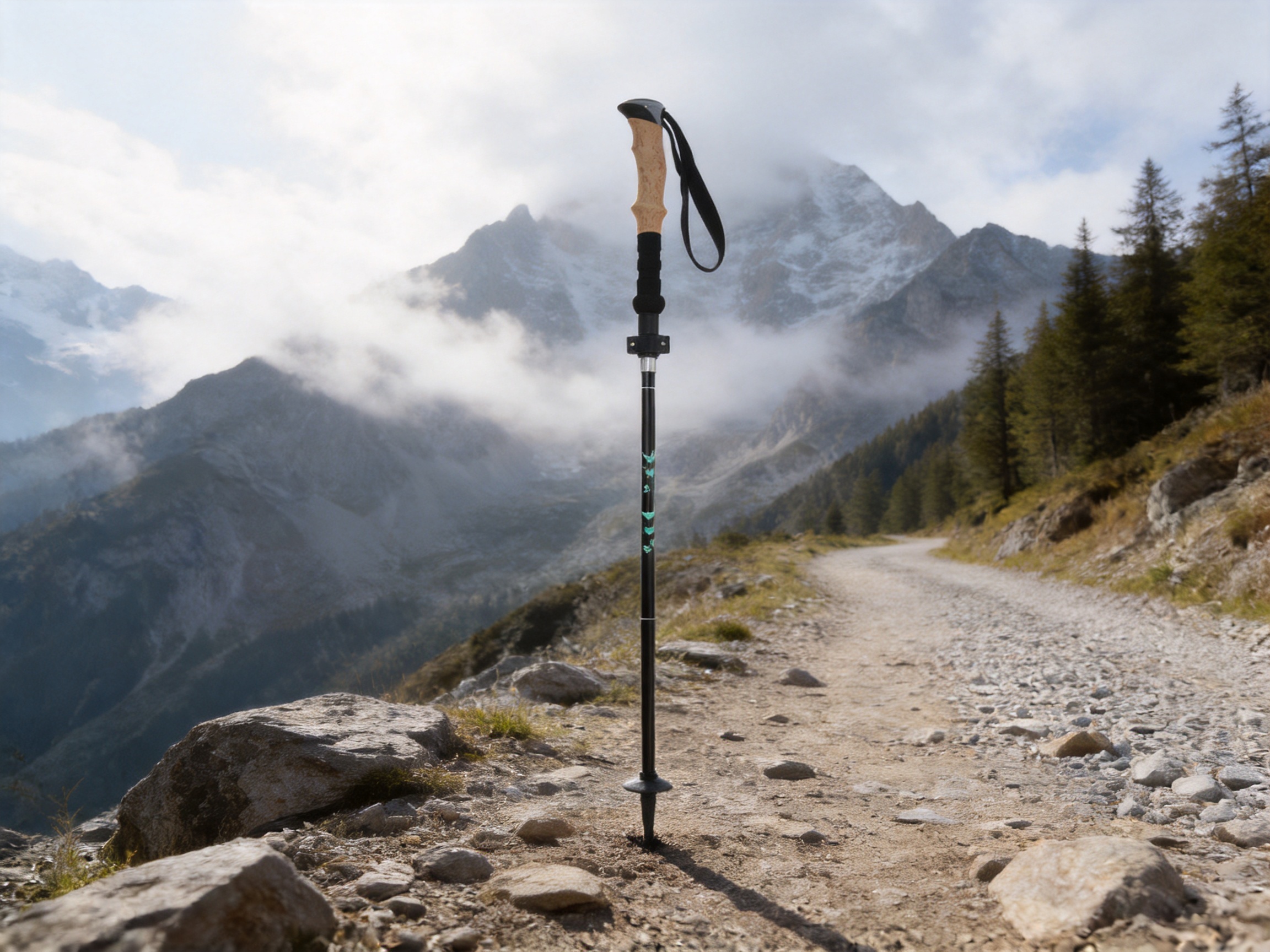
External Locking System: Speed, Security, and User Confidence
The 3LS external locking speed adjustment system is designed to provide secure fixation with convenient operation. A locking system is one of the most critical parts of a trekking pole because it determines whether the adjusted length will remain stable under repeated pressure. A weak or inconsistent lock can lead to sudden shortening, which may disrupt balance and create risk on steep or uneven terrain.
External locks offer several practical advantages over traditional internal twist locks. First, they are easier to inspect. The user can see whether the lever is closed and whether the section is properly secured. Second, they are faster to operate. This matters when weather changes, when a group is moving quickly, or when users need to adjust pole length at the transition between uphill and downhill sections. Third, they are generally easier to handle with gloves, cold fingers, or wet hands.
The product’s one-button lock concept emphasizes direct and reliable operation. Hikers do not want to spend time struggling with equipment during a climb or in rain. A simple lock system supports confidence because it reduces uncertainty. When a pole length is set, the user expects it to remain fixed. The external locking structure provides that practical assurance.
Compared with many low-cost competitor poles, the value of a refined external lock becomes clear over repeated use. Poor locks may slip after vibration, lose clamping strength, or become difficult to operate after dirt exposure. A better lock design considers clamping pressure, lever geometry, material fit, and repeated opening and closing. Manufacturing precision is therefore as important as the lock concept itself.
For outdoor gear buyers, lock quality is a key inspection point. It affects field safety, customer satisfaction, and long-term durability. CragHaven Outdoor’s manufacturing approach emphasizes sampling, testing, and optimization, which are especially important for components such as locking systems. The goal is not only to create a pole that works when new, but to create one that performs consistently across repeated outdoor use.
Straight Handle Comfort and Control
The straight handle design supports simple, direct handling. In trekking pole design, grip shape influences comfort, posture, and control. A straight handle is particularly suitable for users who prefer a clean, traditional profile and quick hand repositioning. It allows the user to maintain a natural wrist angle during forward movement and provides stable control during pole planting.
During long-distance hiking, small comfort factors become important. A grip that feels acceptable for ten minutes may feel very different after several hours. The straight handle helps reduce unnecessary complexity and gives the user a predictable contact surface. This is useful when changing pace, moving over obstacles, or shifting hand position during climbs and descents.
Grip performance should also be considered in relation to the pole’s shaft and lock system. A strong shaft and reliable lock are important, but the user interacts first with the handle. The handle must allow the hiker to transfer force efficiently into the pole. If the handle feels unstable, slippery, or awkward, even a strong shaft cannot deliver its full benefit. The straight handle design supports dependable force transfer and straightforward control.
Compared with overly complex ergonomic shapes, a straight handle can serve a wide range of users. This is valuable for wholesale and retail markets where products are sold to different customer groups with different hand sizes, hiking habits, and experience levels. A simple, functional handle design reduces the chance of mismatch between user and product.
Tungsten Steel Alloy Tip for Ground Contact Durability
The tip of a trekking pole is a small component, but it has a major influence on performance. Each step places pressure through the pole tip into the ground. On rock, gravel, compact soil, roots, and hard trail surfaces, the tip must resist abrasion while maintaining traction. The tungsten steel alloy tip improves durability and grip in demanding outdoor environments.
Tungsten carbide and tungsten steel alloy materials are widely used in outdoor pole tips because they are hard and wear resistant. A durable tip helps prevent rapid rounding or deformation, both of which can reduce traction. Strong ground contact allows the user to push, stabilize, and brake more confidently.
In mountain environments, the ground surface can change rapidly. A trail may move from packed earth to wet stone, then to loose gravel, then to wooden steps. A high-quality tip helps the pole remain useful across these transitions. While baskets and rubber covers may be used in some conditions, the core tip must still be durable enough for direct contact when required.
Competitor products that use lower-grade tips may appear similar when new but lose effectiveness more quickly. Once a tip wears down, the pole may slip more easily on hard surfaces. For long-distance hikers, this can become both inconvenient and unsafe. A wear-resistant tip extends useful life and supports better long-term value.
Performance Advantages Over Competing Trekking Poles
The aluminum alloy three-section external locking trekking pole stands out because it combines practical field features rather than focusing on only one selling point. Some competitor poles promote ultralight construction but may sacrifice impact resistance. Others are inexpensive but may use weaker locks, less consistent tube forming, or tips with limited wear resistance. This product is positioned between durability, portability, and professional usability.
Its aluminum alloy shaft provides strong impact resistance for rugged terrain. This makes it suitable for rocky trails, mountain routes, and mixed outdoor conditions. The external lock system improves adjustment speed and confidence compared with twist-lock designs that can be harder to inspect. The three-section telescopic structure improves packability compared with fixed-length poles. The tungsten steel alloy tip adds long-term contact durability. Together, these features create a well-rounded product for demanding users and reliable outdoor retail programs.
| Feature | Aluminum Alloy Three-Section External Lock Pole | Typical Low-Cost Competitor Pole | Ultralight Carbon-Focused Pole |
|---|---|---|---|
| Shaft Material | High-strength aluminum alloy for impact resistance and durability | Basic aluminum or inconsistent alloy quality | Carbon fiber focused on weight reduction |
| Locking System | External locking system for quick adjustment and visible security | Basic twist or weak lever lock with possible slippage | Often efficient, but may vary by design and price level |
| Terrain Suitability | Rocky trails, mountains, camping routes, mixed terrain | Light walking or occasional use | Best for users prioritizing low weight on established routes |
| Impact Behavior | Strong resistance to repeated trail stress | Variable performance under pressure | Light and stiff, but more sensitive to sharp impacts |
| Portability | Three-section telescopic design for compact storage | May be compact but less secure or less durable | Often compact, depending on model |
| Tip Durability | Wear-resistant tungsten steel alloy tip | Lower-grade tip may wear faster | Usually good on premium models, variable on economy models |
| Overall Value | Balanced durability, usability, and manufacturing scalability | Low entry cost but weaker long-term reliability | High weight-saving value but often higher cost and impact sensitivity |
The table shows why this trekking pole is a strong option for buyers who want a dependable product for real outdoor conditions. It is not designed only for casual walking, and it is not limited to ultralight enthusiasts. Instead, it provides a practical solution for a wide range of hikers, campers, and mountaineering users who need stable support and long product life.
How the Pole Supports Long-Distance Hiking Efficiency
Long-distance hiking is repetitive. A user may plant a trekking pole thousands of times in a single day. Over multiple days, the total number of impacts and load transfers becomes enormous. For that reason, trekking pole design must support efficiency and reduce fatigue. The aluminum alloy three-section external locking pole helps achieve this through stable shaft construction, fast adjustability, and reliable ground contact.
When used correctly, trekking poles can help distribute load between the legs and upper body. This may reduce stress on the knees during descents, improve balance while crossing uneven surfaces, and support better posture while carrying a backpack. A dependable pole can also help maintain hiking rhythm. On long trails, rhythm contributes to endurance because it reduces unnecessary movement and helps the user keep a steady pace.
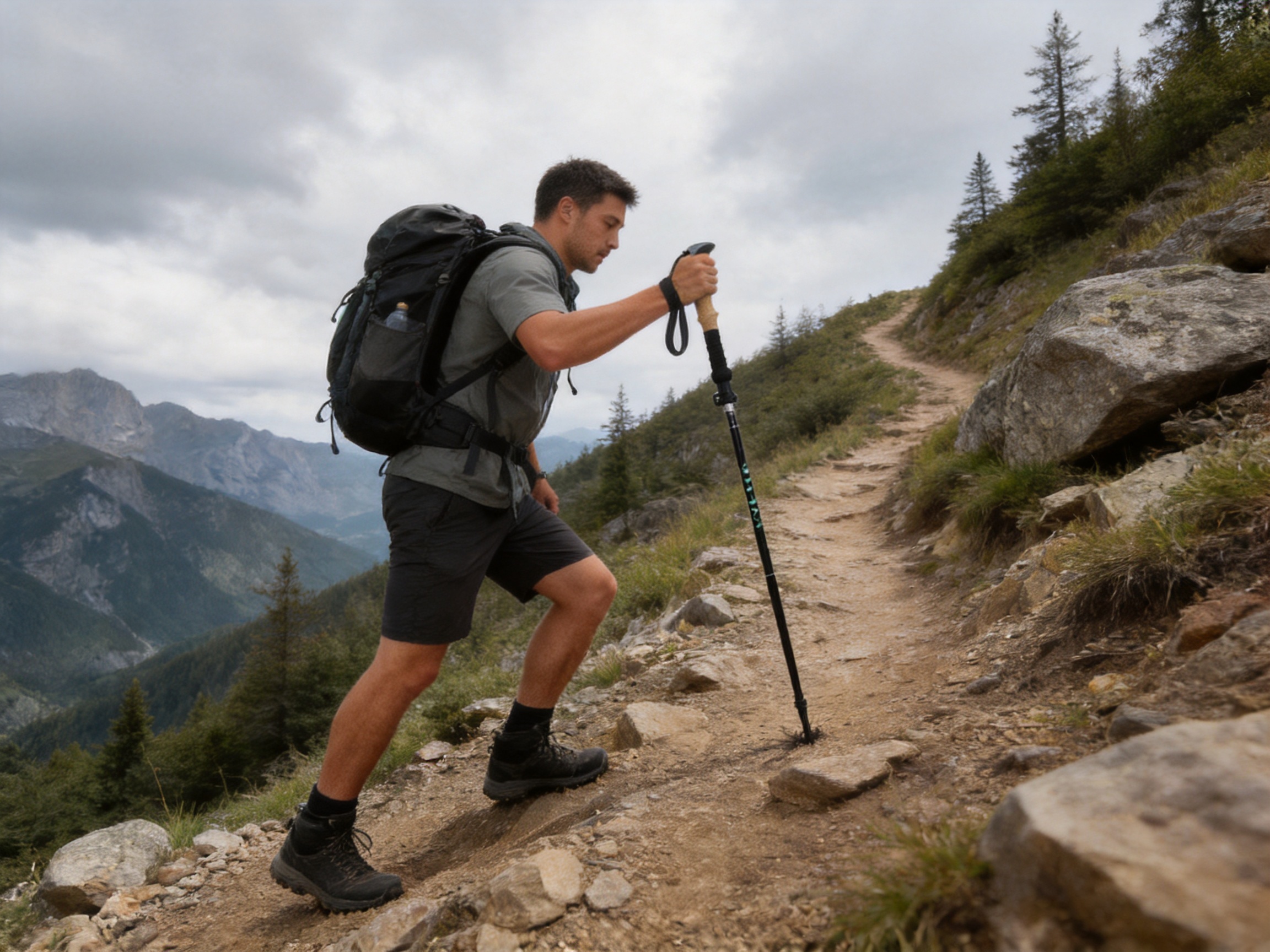
During uphill sections, shorter pole length can help the user push efficiently without overextending the arms. During downhill sections, longer pole length can provide additional forward support and reduce the feeling of falling into each step. Because this product uses an external locking system, these adjustments can be made quickly on the trail. Users do not need to stop for extended periods or struggle with hidden locking mechanisms.
Balance is especially important when fatigue increases. Many slips and missteps occur late in the day, when muscles are tired and attention is reduced. A strong trekking pole provides a third point of contact with the ground, helping the user recover from small mistakes before they become falls. The aluminum shaft and tungsten steel alloy tip contribute directly to this stability.
Applications in Mountain Climbing, Camping, and Mixed Outdoor Environments
Although categorized as a trekking pole, the product is suitable for a variety of outdoor scenarios. In mountain climbing approaches, users often move over steep and uneven ground before reaching technical sections. A stable trekking pole helps conserve energy and improve balance during these approach hikes. For hiking routes, the pole supports rhythm and reduces lower-body fatigue. For camping trips, it provides useful support when carrying heavier loads to and from a campsite.
Mountain trails often include rocks, roots, water crossings, and abrupt elevation changes. The pole’s aluminum alloy structure is well matched to these conditions because it can handle repeated impact. The external lock system is useful when the trail frequently changes slope. Users can adjust length quickly rather than tolerating an inefficient setting.
Camping environments may not always seem demanding, but they often involve uneven ground, wet grass, mud, loose soil, and low-light movement. A trekking pole can help users move more safely around camp, especially when carrying gear. The compact three-section design also makes it easy to store when not in use.
For distributors, this broad application range improves market flexibility. The same product can be positioned for hiking shops, camping gear retailers, outdoor clubs, travel outfitters, and general sporting goods channels. It can serve entry-level users who want reliable equipment and experienced hikers who value durability over fragile weight savings.
Manufacturing Quality and Process Control
The quality of a trekking pole depends not only on its visible design but also on the manufacturing processes behind it. A strong concept can fail if tube dimensions are inconsistent, locks are poorly fitted, tips are loosely installed, or surface treatment is inadequate. CragHaven Outdoor emphasizes product development, material selection, sampling, testing, and optimization as standard steps rather than optional extras.
Advanced manufacturing begins with material control. Aluminum alloy tubes must meet expectations for strength, wall thickness, straightness, and surface consistency. If tube sections are too thin, the pole may lack durability. If they are too heavy, the product becomes less portable. If tolerances are inconsistent, telescopic sections may wobble or become difficult to adjust. Careful tube forming and inspection help maintain a stable balance between strength and usability.
The telescopic structure requires accurate dimensional matching. Each section must slide smoothly while maintaining enough precision to prevent excessive play. Poorly matched tube sections can create rattling, instability, or uneven locking pressure. A well-manufactured trekking pole should extend and retract smoothly, then remain stable after the lock is closed.
The external locking mechanism also requires careful assembly and testing. Lock components must generate sufficient clamping force without damaging the tube. The lever action should feel secure but not excessively difficult. Repeated opening and closing should not quickly loosen the mechanism. This requires attention to component material, fit, torque, and final inspection.
Surface treatment contributes to corrosion resistance, appearance, and long-term product value. Outdoor equipment may be exposed to moisture, mud, sweat, temperature shifts, and abrasive contact. A consistent surface finish helps protect the shaft and supports a professional visual standard. For global retail markets, appearance consistency also matters because consumers judge quality partly through finishing details.
The tungsten steel alloy tip must be securely integrated. A durable tip is only useful if it remains stable under repeated impact. Manufacturing control should include fit inspection and pull or impact-related evaluation where applicable. Tip alignment also matters because a poorly aligned tip can reduce natural planting feel and increase uneven wear.
Company Strengths in Outdoor Gear Development
CragHaven Outdoor is based in Hangzhou, China, and operates as an outdoor brand and cross-border manufacturing partner. The company focuses on mountaineering, hiking, and camping gear for global markets. Its development philosophy emphasizes functional reliability and long-term value rather than catalog-only product creation. This is important because outdoor equipment must perform in weather, terrain, and time.
The company’s strength lies in combining outdoor product understanding with China’s mature and efficient manufacturing system. Many sourcing operations focus mainly on factory access, but outdoor product success requires more than locating production capacity. It requires understanding how products are used, what problems users face, and how design decisions affect field performance. CragHaven Outdoor participates in both design and manufacturing considerations, helping reduce the gap between product concept and stable production.
The company also emphasizes professional communication for Western-market-oriented business. For international buyers, clear communication can be as important as production capability. Outdoor gear projects often involve specifications, packaging requirements, compliance expectations, color options, sample revisions, lead times, and quality standards. A partner that understands these needs can reduce uncertainty and improve project efficiency.
Long-term stable partnerships are another stated priority. For buyers, this matters because outdoor gear programs are rarely one-time transactions. Retailers and brands need consistent supply, product updates, repeat orders, and reliable after-sales support. A manufacturing partner focused on sustainability and long-term cooperation can help build stronger product lines and reduce sourcing risk.
The aluminum alloy external locking trekking pole reflects these strengths. It is built around practical outdoor use, durable material selection, controlled manufacturing, and scalable value. Rather than chasing a single extreme specification, it offers a balanced design suitable for real markets and real trails.
Design Philosophy: Built for Weather, Terrain, and Time
A key principle behind the product is that outdoor equipment should not be designed only for catalogs. A catalog can display length, weight, material, and color, but the trail tests deeper qualities. Weather tests corrosion resistance and grip usability. Terrain tests impact resistance and tip traction. Time tests lock durability, shaft fatigue, and user satisfaction.
The aluminum alloy trekking pole is aligned with this philosophy because its main features solve actual usage problems. The aluminum shaft addresses impact and support requirements. The three-section telescopic design addresses portability and terrain adjustment. The external locking system addresses speed and confidence. The tungsten steel alloy tip addresses wear and traction. The straight handle addresses simple control and broad user compatibility.
Outdoor users do not always treat equipment gently. Poles are dropped, strapped to backpacks, used in mud, adjusted with gloves, and loaded suddenly during slips. A product intended for real use must accept these conditions as part of normal design consideration. This is where material selection and manufacturing discipline become critical.
For buyers, this philosophy reduces product risk. A trekking pole built for real-world conditions is more likely to satisfy customers, generate repeat purchases, and support a brand’s reputation. In contrast, products developed only around low cost or appearance may create higher long-term costs through returns, complaints, and inconsistent performance.
Quality Inspection Priorities for Wholesale and OEM Buyers
Wholesale buyers, outdoor brands, and OEM partners should evaluate trekking poles through a clear inspection framework. Important points include shaft material quality, section fit, lock holding strength, handle comfort, tip durability, surface finish, packaging protection, and consistency across production batches. These are not isolated factors; they work together to determine the final user experience.
Shaft inspection should confirm that tube sections are straight, smooth, and consistent. Any deformation or irregularity may affect telescopic movement and locking reliability. Lock inspection should include repeated adjustment and pressure testing. A lock that works once may not be sufficient; it must work consistently over repeated cycles.
Handle inspection should consider comfort, attachment security, and surface quality. A handle that rotates, shifts, or has rough finishing can reduce perceived quality. Tip inspection should confirm secure installation and proper alignment. Since the tip contacts the ground with every pole plant, even small defects can become noticeable during use.
Packaging also matters. Trekking poles are long, narrow products that may be scratched or damaged during transport if not properly protected. For international supply chains, packaging design should consider compression, vibration, moisture exposure, and efficient carton loading. A manufacturing partner with cross-border awareness can support better packaging decisions.
CragHaven Outdoor’s goal of reducing uncertainty in the supply chain is relevant here. By focusing on product development, manufacturing participation, and quality-oriented communication, the company can help buyers manage the practical risks associated with outdoor gear sourcing.
Market Positioning and Buyer Value
The aluminum alloy three-section external locking trekking pole occupies an attractive position in the outdoor gear market. It is practical enough for mainstream consumers, durable enough for demanding users, and manufacturable enough for wholesale and OEM programs. This combination is valuable because many outdoor product lines require dependable mid-to-high-value items rather than only extreme premium or budget models.
For retailers, the product can be presented as a durable aluminum trekking pole with quick external adjustment and compact storage. For distributors, it offers broad category compatibility across hiking, camping, mountaineering, and travel outdoor markets. For private-label brands, it provides a strong foundation for customization, packaging development, and product line expansion.
Its advantages over competitors can be communicated clearly: stronger impact resistance than many ultralight-focused options, more dependable adjustment than basic twist-lock models, better portability than fixed poles, and better long-term trail contact than poles with lower-grade tips. These are practical selling points that consumers can understand and experience directly.
The product also fits current outdoor consumer expectations. Many users want reliable gear that can handle repeated use without unnecessary complexity. They may not need the lightest possible pole, but they do need equipment that feels secure and lasts. Aluminum alloy trekking poles continue to perform well in this segment because they meet the practical needs of a wide user base.
Maintenance and Long-Term Use Recommendations
Proper maintenance helps extend trekking pole life and preserve performance. After hiking in mud, sand, or rain, users should wipe the pole sections clean and allow them to dry before storage. Dirt trapped between telescopic sections can affect smooth adjustment, while moisture left inside tubes may reduce long-term finish quality.
The external lock should be checked periodically. Users should confirm that the lock closes firmly and that the pole does not slip under pressure. If the lock design allows adjustment of clamping tension, it should be adjusted carefully according to user instructions. Excessive force is not recommended because it may stress components unnecessarily.
The tungsten steel alloy tip should also be inspected. Although durable, any tip will experience wear over time depending on terrain. Users should check whether the tip remains secure and whether traction remains adequate. If rubber protectors or baskets are used, they should be matched properly to the pole and terrain.
Storage is simple but important. The pole should be stored in a dry place, preferably shortened and cleaned. Avoid leaving it under heavy compression or in corrosive environments. For retailers and distributors, providing basic care guidance can improve customer satisfaction and reduce avoidable product issues.
Why This Trekking Pole Is a Strong Choice for Global Outdoor Programs
The aluminum alloy three-section telescopic folding external locking trekking pole with straight handle is a strong product because it addresses the central needs of outdoor users: support, stability, durability, adjustability, and portability. Each major component contributes to these needs. The aluminum alloy shaft provides strength. The three-section design provides compact storage. The external lock provides fast and secure adjustment. The straight handle provides simple control. The tungsten steel alloy tip provides durable ground contact.
Its advantages are especially clear when compared with products that focus too narrowly on low price or ultralight specifications. Low-cost poles may compromise lock security or material consistency. Ultralight carbon-focused poles may be excellent for certain users but less forgiving under sharp impacts and often more expensive. This aluminum trekking pole offers a balanced alternative for real-world outdoor use and broad market appeal.
From a manufacturing perspective, the product benefits from a development approach that values sampling, testing, optimization, material reliability, and long-term supply relationships. CragHaven Outdoor’s role as an outdoor brand and cross-border manufacturing partner strengthens its suitability for global buyers who need more than basic factory sourcing. The company’s understanding of terrain, weather, usage patterns, and production scalability supports a more reliable product program.
For hikers, the pole provides confidence on the trail. For retailers, it provides a clear and practical product story. For distributors, it offers category flexibility. For private-label buyers, it provides a dependable platform for customization and long-term cooperation. In a market full of similar-looking trekking poles, the combination of material strength, external lock convenience, durable tip construction, and manufacturing discipline creates meaningful differentiation.
Q&A Section
Q1: What type of user is this aluminum alloy trekking pole best suited for?
This trekking pole is suitable for hikers, campers, mountaineering approach users, and outdoor travelers who need reliable support on mixed terrain. It is especially appropriate for users who value durability, quick adjustment, and compact storage rather than choosing a pole based only on minimum weight.
Q2: Why choose aluminum alloy instead of carbon fiber?
Aluminum alloy offers excellent impact resistance, dependable support, and strong value for frequent outdoor use. Carbon fiber is usually lighter and has good vibration absorption, but it can be more sensitive to sharp impacts. For rocky trails, camping loads, and rugged routes, aluminum is often a practical and durable choice.
Q3: What is the benefit of the three-section telescopic structure?
The three-section telescopic structure allows the pole to be shortened for transport and storage, then extended for hiking. It also allows users to adjust length for uphill, downhill, and uneven terrain. This improves comfort, balance, and movement efficiency.
Q4: How does the external locking system improve trail use?
The external locking system enables fast adjustment and visible confirmation. Users can quickly see whether the lock is closed and the pole is secured. This is helpful in cold, wet, dusty, or fast-changing trail conditions where internal twist systems may be less convenient.
Q5: Why is the tungsten steel alloy tip important?
The tip is the part of the pole that contacts the ground with every step. A tungsten steel alloy tip improves wear resistance and traction on hard or abrasive surfaces such as rock, gravel, and compact soil. This supports longer service life and better stability.
Q6: Is this trekking pole suitable for long-distance hiking?
Yes. Its aluminum alloy shaft, external lock adjustment, compact three-section design, and durable tip make it suitable for long-distance hiking. It can help improve balance, reduce lower-body stress, and support steady hiking rhythm over extended routes.
Q7: What makes this product competitive for wholesale and OEM buyers?
The product offers a strong combination of marketable features: aluminum alloy durability, quick external locking, compact telescopic portability, and a wear-resistant tip. It also benefits from CragHaven Outdoor’s manufacturing-oriented development process, which emphasizes material selection, sampling, testing, optimization, and professional cross-border cooperation.
Q8: How should users maintain the trekking pole?
Users should clean and dry the pole after wet or dirty hikes, check the external lock regularly, inspect the tip for wear, and store the pole in a dry place. Simple maintenance helps preserve adjustment smoothness, lock reliability, and long-term performance.
Conclusion
The aluminum alloy three-section telescopic folding external locking trekking pole with straight handle is a practical, durable, and market-ready outdoor support tool. It is designed for real hiking and camping conditions, where impact resistance, fast adjustment, portability, and stable ground contact all matter. Its aluminum alloy construction provides dependable strength, while the external locking system improves convenience and user confidence. The tungsten steel alloy tip further enhances durability in demanding terrain.
For users, the pole supports balance, rhythm, and confidence across long-distance routes and mixed outdoor environments. For buyers, it offers a strong product platform with clear competitive advantages and broad market positioning. Supported by CragHaven Outdoor’s focus on functional design, material reliability, manufacturing control, and long-term partnership, this trekking pole represents a valuable choice for global outdoor gear programs.
References
1. Outdoor Industry Association. Outdoor Participation Trends and Equipment Use Reports.
2. Mountaineering and Hiking Equipment Design Guidelines, General Outdoor Product Development Literature.
3. Materials Engineering Handbook: Aluminum Alloys in Lightweight Structural Applications.
4. Trekking Pole Biomechanics Studies on Load Distribution, Knee Stress, and Walking Stability.
5. Outdoor Gear Manufacturing Quality Control Practices for Telescopic Poles and Portable Support Equipment.
Product: Aluminum alloy three-section telescopic folding external locking trekking pole straight handle



- Phone: +86-15968800379
- E-mail: [email protected]
- Address: Room 1002, Huishang Building, Gongshu District, Hangzhou City, Zhejiang Province.
Copyright © CragHaven Outdoor All Rights Reserved. Outdoor Gear Manufacturers Wholesale Mountaineering Camping Gear Suppliers
