

 English
 Deutsch
 Español
 Français

How Retractable External Locking Hiking Poles Improve Stability, Comfort, and Outdoor Performance
Content
- 1 Understanding Retractable External Locking Hiking Poles
- 2 Core Product Construction
- 3 How the Product Compares with Common Alternatives
- 4 Terrain Adaptability and Hiking Technique
- 5 Ergonomic Comfort for Long Outdoor Activities
- 6 Manufacturing Quality and Engineering Discipline
- 7 Benefits for Outdoor Brands and Retailers
- 8 Supply Chain Stability and Long-Term Product Value
- 9 Safe and Effective Use
- 10 Environmental and Practical Considerations
- 11 Why the Product Fits Modern Outdoor Markets
- 12 Product Development Philosophy
- 13 Frequently Asked Questions
- 13.1 What are retractable external locking hiking poles designed for?
- 13.2 What is the main benefit of an external locking mechanism?
- 13.3 Are aluminum alloy trekking poles suitable for mountain trails?
- 13.4 How should pole length be adjusted for uphill walking?
- 13.5 How should pole length be adjusted for downhill walking?
- 13.6 Why is an EVA foam handle useful?
- 13.7 What is the purpose of the adjustable wrist strap?
- 13.8 Why choose a three-section telescopic design?
- 13.9 How can users maintain trekking poles?
- 13.10 What should retailers consider when selecting a trekking pole supplier?
- 13.11 Can the poles be used by different members of a family or group?
- 13.12 Are these poles intended for technical climbing?
- 14 Conclusion
- 15 References
- 16 Product: Retractable external locking hiking poles, trekking poles, aluminum alloy hiking sticks
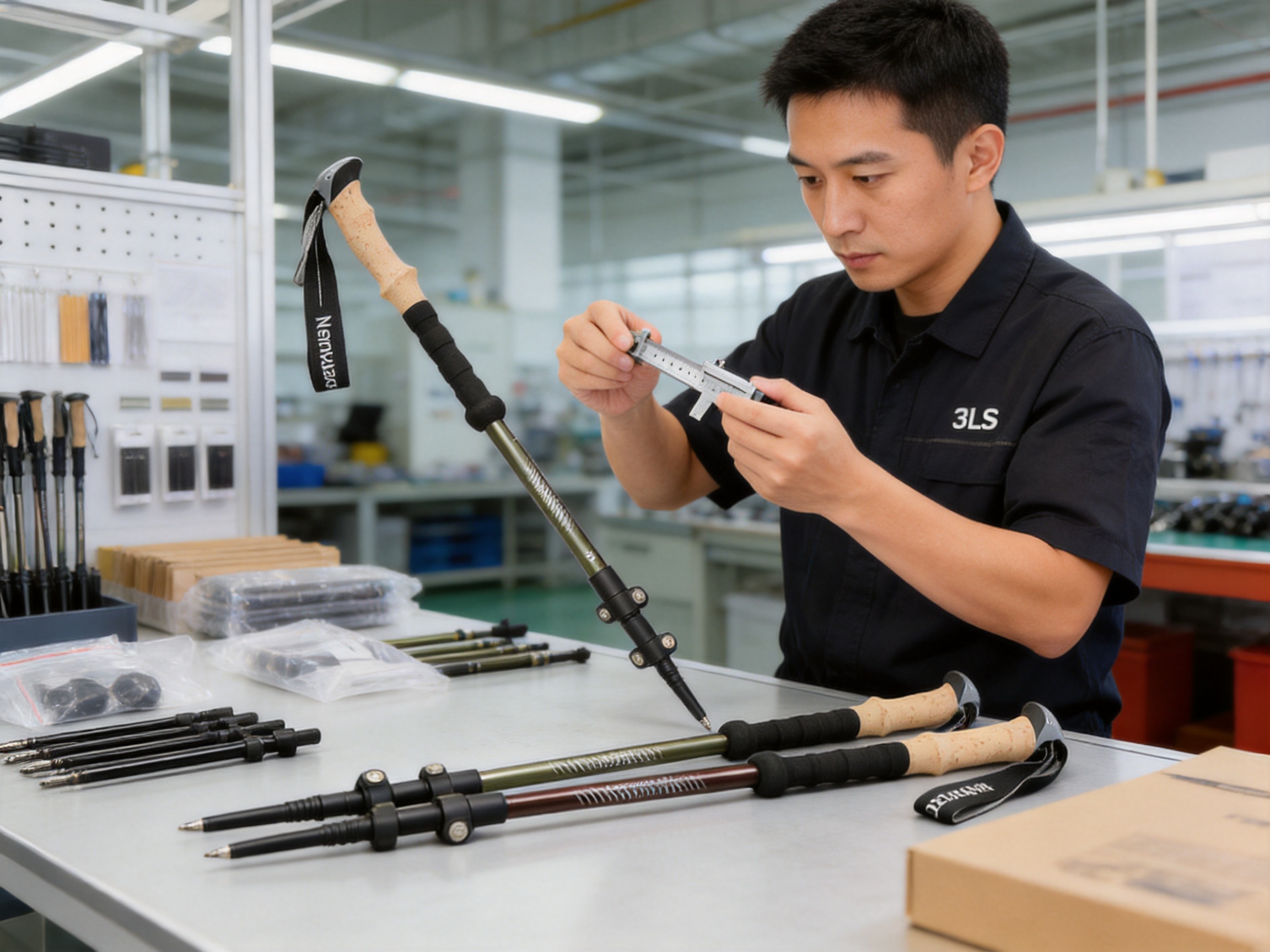
Reliable walking support can make a significant difference during mountain hikes, forest treks, camping trips, and long-distance trail journeys. Uneven ground, steep gradients, loose gravel, wet surfaces, and changing loads all require the body to adapt continuously. A well-designed pair of trekking poles provides additional contact points with the ground, supports a more balanced posture, and helps hikers maintain a steady rhythm over demanding terrain.
Retractable external locking hiking poles combine adjustable length, visible locking components, lightweight aluminum alloy shafts, comfortable handles, and a portable three-section structure. These features make them suitable for outdoor users who need practical support without carrying bulky equipment. Compared with fixed-length walking sticks or basic poles with less accessible adjustment systems, this type of trekking pole offers greater flexibility for different body heights, terrain conditions, and transport requirements.
This article examines the design, performance, manufacturing considerations, and practical advantages of retractable external locking hiking poles. It also explains how the product is developed for real outdoor use and why a purpose-driven manufacturing partner can provide value to retailers, distributors, and outdoor brands seeking dependable mountaineering and camping gear.
Understanding Retractable External Locking Hiking Poles
Retractable external locking hiking poles are adjustable support tools designed for walking, trekking, hiking, and general mountain activities. Their shafts are divided into three sections, allowing the poles to be extended for use and collapsed for storage or transportation. An external locking system holds the sections at the selected length, while the handle, wrist strap, shaft, and tip work together to create a stable support structure.
The product is built around a simple but important principle: the pole must be easy to adjust when conditions change and reliable once the desired length has been selected. On a mountain trail, a hiker may need a shorter setting for an uphill section, a longer setting for a descent, and a compact configuration when crossing a flat area or taking a break. The adjustment process should not require complicated tools or time-consuming disassembly.
The external lock is positioned outside the shaft section, making the adjustment point visible and accessible. This design allows users to inspect the lock, modify the length, and tighten the mechanism while wearing outdoor clothing or gloves. Visibility is especially valuable in changing weather, low-light conditions, or situations where users need to make quick adjustments during movement.
The three-section design also provides a useful balance between operating length and folded size. A pole that is sufficiently long for a tall user or a steep downhill route can still be reduced to a more manageable size for backpacks, vehicle storage, luggage, or warehouse packaging. This combination of adjustability and portability is one of the main reasons retractable trekking poles are popular among modern outdoor users.
Core Product Construction
Three-Section Telescopic Shaft
The three-section shaft is designed to provide a broad adjustment range while maintaining a practical folded length. Each section slides into the next, allowing the user to set the pole according to personal height and terrain requirements. The structure also supports efficient packing, an important advantage for travelers and hikers who combine trekking with camping, road trips, or air transportation.
A telescopic shaft must be manufactured with careful dimensional control. If the clearances between sections are too large, the pole may feel loose during use. If the clearances are too tight, adjustment may become difficult, particularly when the shaft is exposed to dust, moisture, or temperature changes. Consistent tubing dimensions and accurate surface finishing are therefore essential to smooth operation.
Aerospace-Grade Aluminum Alloy Shaft
The shaft uses aerospace-grade aluminum alloy to balance low weight, strength, durability, and impact resistance. Aluminum alloy is a practical material for trekking poles because it can withstand repeated outdoor use while remaining easier to carry than heavier metal alternatives. It also provides a dependable level of structural rigidity for general hiking, mountain trails, forest paths, and camping activities.
Material selection affects much more than the total product weight. The shaft must resist bending under normal loading, tolerate repeated extension and collapse, and remain stable when the pole contacts uneven surfaces. It must also be compatible with the external locking system and other components. Aluminum alloy provides a useful foundation for these requirements because it can be processed into lightweight tubes with consistent wall thickness and reliable mechanical performance.
Compared with inexpensive poles made from low-grade materials, a carefully selected aluminum alloy shaft can offer better resistance to everyday dents, deformation, and repeated handling. Compared with heavier steel construction, it can reduce carrying fatigue. While carbon fiber poles may appeal to users who prioritize the lowest possible weight, aluminum alloy remains a strong choice for users who want a practical balance of durability, cost efficiency, and impact tolerance.
3LS Professional External Lock Mechanism
The 3LS professional external lock mechanism is one of the defining features of the product. It is designed to provide a strong, slip-resistant connection between the telescopic sections. Because the locking components are located externally, users can see and reach them easily during adjustment.
A dependable lock must perform two functions. First, it must allow the pole length to be changed without unnecessary effort. Second, it must resist unwanted movement after the length has been selected. If a pole section slips under pressure, the user may lose balance or experience an uncomfortable change in support height. A secure external lock helps reduce this risk during normal hiking use.
The external structure also simplifies routine inspection. Users can check whether the lock is aligned, confirm that it has been closed correctly, and make minor tightening adjustments when necessary. This is more convenient than relying on an adjustment mechanism hidden inside the shaft, where users may have less visual confirmation of the locking condition.
| Product Feature | Functional Role | Practical User Benefit |
|---|---|---|
| Three-section telescopic shaft | Allows the pole to extend and collapse | Supports terrain adjustment and convenient storage |
| 3LS external lock | Secures the selected pole length | Provides accessible adjustment and stable support |
| Aluminum alloy construction | Combines structural strength with manageable weight | Improves portability and long-term usability |
| EVA foam handle | Provides a soft and sweat-absorbent grip surface | Improves comfort during extended hikes |
| Adjustable wrist strap | Supports different hand positions and sizes | Helps users maintain control with less grip tension |
How the Product Compares with Common Alternatives
Outdoor users have access to many types of walking support equipment, including fixed-length sticks, basic telescopic poles, internal locking poles, carbon fiber trekking poles, and heavy-duty metal poles. Each type has a suitable application, but retractable external locking hiking poles offer a combination of features that is especially practical for general-purpose outdoor use.
Advantages Over Fixed-Length Walking Sticks
Fixed-length walking sticks may be simple and stable, but they provide limited flexibility. A fixed pole cannot easily be shortened for uphill travel or lengthened for downhill support. It may also be difficult to share between users of different heights. Storage and transport can be inconvenient when the pole remains at full length.
Retractable poles address these limitations through adjustable sections. Hikers can customize the length according to their body height, terrain, footwear, backpack load, and personal technique. When the hike is complete, the poles can be collapsed for easier transport. This makes the retractable design more useful for multi-stage outdoor activities.
Advantages Over Basic Telescopic Poles
Not all telescopic poles provide the same adjustment experience. Basic products may use less accessible locking systems, less durable materials, or handles that become uncomfortable during long periods of use. A pole may appear functional in a product catalog but perform poorly when exposed to repeated adjustment, sweat, vibration, and uneven loading.
The product described here focuses on several connected details rather than a single selling point. The external locking mechanism supports quick operation, the aluminum alloy shaft balances strength and weight, and the EVA foam handle improves contact comfort. The wrist strap further supports control and reduces the need to grip the handle excessively tightly.
Advantages Over Internal Locking Systems
Internal locking structures can create a clean appearance, but they may be less visible during use. When a user needs to confirm whether a section is properly secured, an external lock can provide more immediate feedback. This is useful for beginners, rental operators, outdoor retailers demonstrating products, and experienced hikers who frequently change pole length on the trail.
External locks are also easier to access when the pole is wet or when the user is wearing gloves. The visible design makes routine maintenance and inspection more straightforward. For outdoor equipment intended for broad consumer markets, simple operation can be as important as technical performance.
Advantages Over Heavier Metal Poles
Steel can provide high strength, but its weight may become noticeable during long-distance hiking. Carrying heavier poles can increase arm fatigue, particularly when the user is already carrying water, food, clothing, shelter, and other camping equipment. Aluminum alloy offers a more balanced alternative for general mountain and trail use.
The aluminum alloy shaft is not designed to eliminate all limitations associated with outdoor equipment. Users should still select poles according to the terrain, their body weight, and the intended activity. However, for ordinary hiking and trekking applications, the material provides a useful combination of durability, portability, and cost control.
Advantages Over Ultralight-Only Designs
Some hikers focus primarily on reducing equipment weight and choose ultralight composite poles. These products may be appropriate for experienced users with specific performance priorities. However, the lowest possible weight is not the only factor affecting product value. Impact resistance, repair considerations, price, and general durability also matter.
Aluminum alloy poles can appeal to users who want dependable everyday equipment rather than specialized ultralight gear. They are suitable for a wider range of customers, including casual hikers, family campers, outdoor clubs, travel groups, and retailers seeking a practical product for broad market distribution.
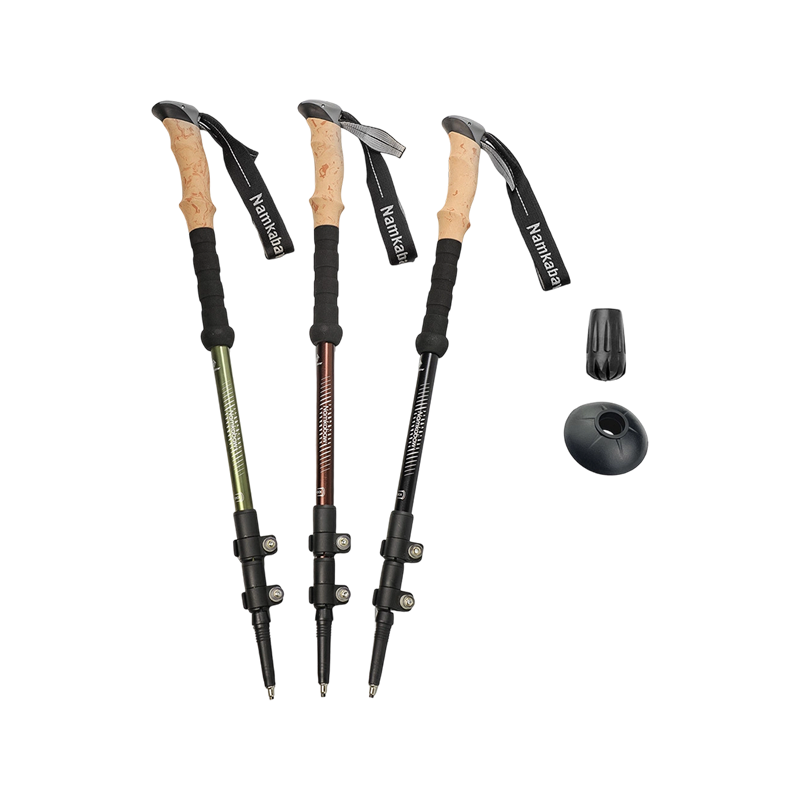
Retractable external locking hiking poles, trekking poles, aluminum alloy hiking sticks
Terrain Adaptability and Hiking Technique
Uphill Hiking
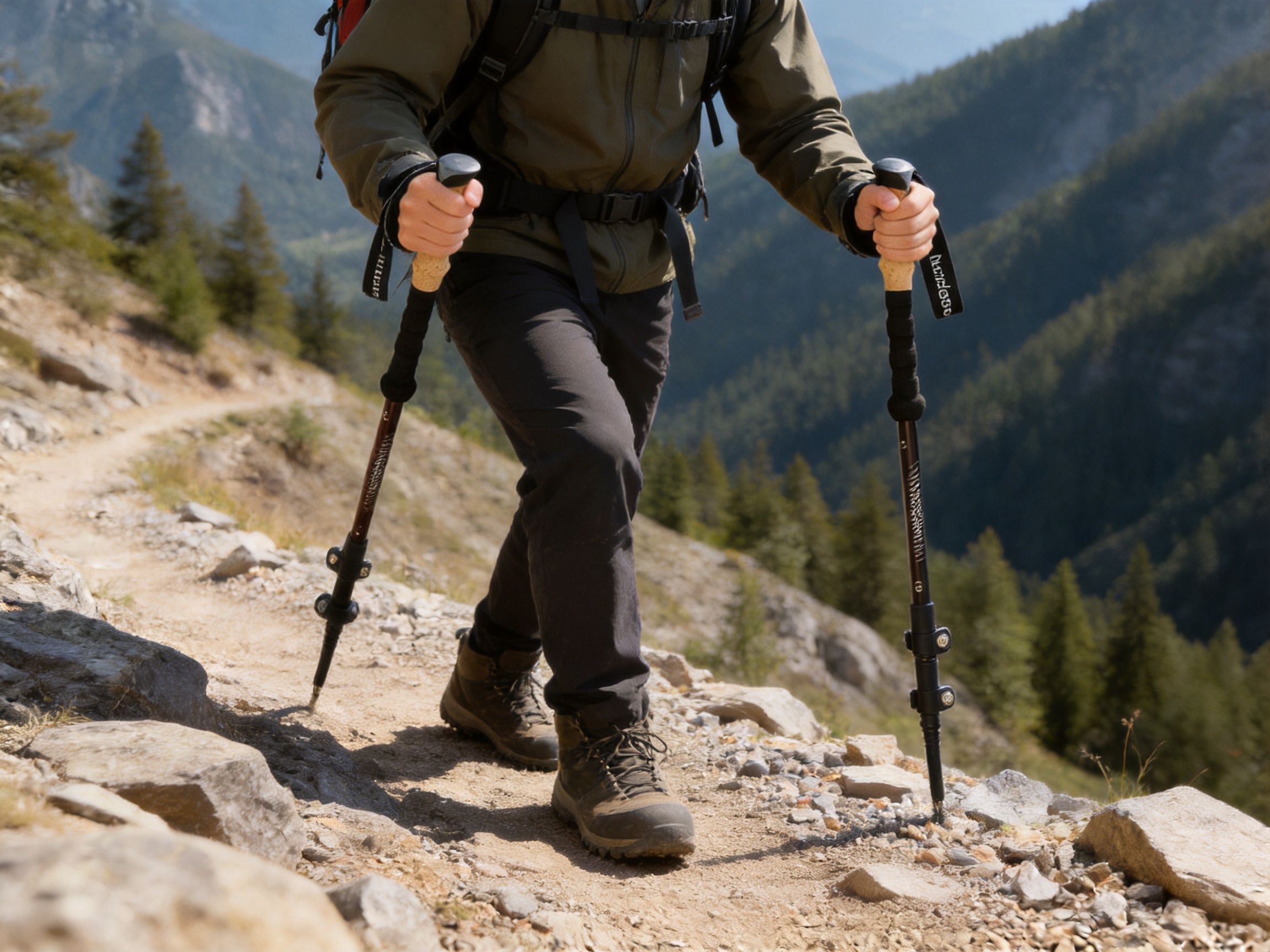
When moving uphill, many hikers benefit from shortening the poles slightly. A shorter setting can place the hands in a more natural position and allow the arms to assist the climbing motion without forcing the shoulders to rise excessively. The exact length depends on the user’s height, slope angle, body proportions, and personal technique.
Shorter poles can also help maintain a more efficient rhythm on steep terrain. By planting the tips slightly ahead and pushing through the handles, hikers may distribute part of the climbing effort between the legs and upper body. The poles do not replace proper foot placement or physical conditioning, but they can provide additional points of support.
Downhill Hiking
Downhill movement often places greater stress on the knees and lower-body muscles. Lengthening the poles can provide a more comfortable reach and allow the user to place the tips farther ahead. This can help create a stable support triangle during each step and encourage a controlled walking rhythm.
A secure external lock is particularly important during descent. Downward pressure can be substantial, especially when the user is carrying a full backpack. The pole must remain at the selected height so that the hiker can rely on consistent support. Before beginning a descent, users should check that each external lock is fully closed and properly adjusted.
Flat Trails and Forest Paths
On relatively level trails, the poles can be adjusted to a neutral length that allows the elbows to remain comfortably bent. Some users prefer a slightly shorter setting for faster walking, while others select a longer setting for relaxed support. The retractable design allows each person to find a suitable configuration.
Forest paths can include roots, mud, fallen leaves, and changing surface firmness. Even when the overall elevation is limited, the additional contact points provided by trekking poles can support balance. The wrist straps help users maintain contact with the poles while allowing the hands to relax between pole plants.
Loose Gravel and Rocky Ground
Loose gravel requires careful foot placement because the surface can shift under load. Trekking poles can provide early feedback about unstable ground and help the user maintain balance while crossing uneven sections. The poles should be planted securely without relying on them as substitutes for stable footing.
On rocky ground, the user should avoid placing excessive sideways force on the shaft or locking system. The product is designed for practical hiking support, but all trekking poles have operating limits. Proper technique, controlled movement, and regular inspection help extend product life and improve safety.
Ergonomic Comfort for Long Outdoor Activities
EVA Foam Handle
The EVA foam handle is designed to improve comfort during extended use. EVA is soft to the touch, lightweight, and capable of absorbing some moisture from perspiration. This is useful during warm-weather hikes, steep climbs, and activities that require continuous pole use.
Grip comfort affects more than the hands. When a handle is uncomfortable, users may squeeze it too tightly, increasing fatigue in the fingers, wrists, and forearms. A contoured and comfortable grip can encourage a more relaxed hold. This allows the wrist strap and handle to share the load instead of forcing the user to depend entirely on grip strength.
Adjustable Wrist Strap
The adjustable wrist strap adapts to different hand shapes and wearing preferences. A properly fitted strap can help the user maintain control when the hand is partially relaxed. It also supports more efficient pole technique because the user can place the hand through the strap and apply downward pressure without clenching the handle continuously.
Strap adjustment should be performed before a demanding section of trail. The strap should be secure but not restrictive. Users should be able to remove their hands quickly if necessary. A flexible strap design is especially useful for families, rental services, and shared equipment because different users can make quick adjustments.
Reducing Hand and Upper-Body Fatigue
During long hikes, comfort depends on the interaction of the handle, strap, pole weight, and adjustment height. A lightweight aluminum alloy shaft reduces the effort required to swing the pole forward. The EVA handle improves the contact surface, while the wrist strap supports control. Together, these features help create a more balanced experience than a rigid stick with a hard, poorly shaped grip.
Users should also alternate the way they plant the poles, avoid excessive force, and take regular breaks. Ergonomic equipment can support better movement, but it cannot replace proper pacing, hydration, physical preparation, or attention to changing weather conditions.
Manufacturing Quality and Engineering Discipline
The quality of a trekking pole depends on the complete production process rather than one isolated component. The shaft, lock, handle, strap, tip, surface finish, packaging, and assembly tolerances must work together. A weakness in any one area can reduce the overall user experience.
Purpose-Driven Product Development
CragHaven Outdoor develops mountaineering, hiking, and camping products around actual outdoor scenarios. Instead of designing only for catalog appearance, the company evaluates how products are handled in weather, on different terrain, and over extended periods. This approach helps connect product specifications with practical usage requirements.
For trekking poles, purpose-driven development includes examining how users adjust the lock, how the shaft responds to repeated extension, how the handle feels with sweaty hands, and how the product is transported between outdoor activities. These considerations can influence component selection, structural design, packaging, and quality inspection.
Material Selection
Material integrity is a central part of the manufacturing process. The aluminum alloy shaft must meet the intended balance between weight, strength, and durability. EVA foam must provide a consistent feel and secure attachment to the handle core. The strap must be flexible and sufficiently resistant to repeated adjustment.
Material selection should also consider supply stability and production consistency. A component that performs well in a single prototype but varies significantly between batches can create problems for retailers and end users. Reliable sourcing, incoming material inspection, and standardized specifications help reduce this risk.
Tube Processing and Dimensional Control
Aluminum alloy tubes require accurate cutting, forming, surface treatment, and inspection. The length of every section affects the final adjustment range and folded size. The diameter and roundness affect how smoothly the sections slide together. Surface condition affects the interaction between the shaft and the locking components.
Manufacturers should control production parameters throughout tube processing rather than inspecting only the final product. Consistent tooling, calibrated equipment, and documented operating procedures support repeatable results. Dimensional samples can be measured at different stages to identify deviations before they affect large quantities.
External Lock Assembly
The external lock must be assembled with consistent positioning and fastening force. If the component is misaligned, the user may experience difficult adjustment or incomplete closure. If the fastening force is inconsistent, the lock may not provide the same support across every production unit.
Assembly workers should follow standardized procedures, and quality teams should conduct functional tests on completed poles. These tests can include repeated opening and closing, adjustment through the operating range, and pressure checks under representative conditions. The goal is not simply to confirm that the lock moves, but to verify that it performs its intended function reliably.
Handle and Strap Integration
The handle should be securely connected to the upper shaft, with no excessive movement between the grip and the tube. The EVA foam should be evenly formed and free from sharp edges or surface defects that could affect comfort. The wrist strap should be attached through a secure connection point and adjusted to confirm that it moves smoothly.
These details are important because users interact with the handle and strap continuously. A small assembly defect can become noticeable after several hours of hiking. Consistent finishing and inspection therefore contribute directly to customer satisfaction and product reputation.
Sampling, Testing, and Optimization
CragHaven Outdoor follows sampling, testing, and optimization as standard development processes. Samples allow the team to evaluate proportions, materials, assembly methods, and usability before mass production. Testing helps identify weaknesses that may not be visible during a basic visual inspection.
Optimization may involve adjusting the lock structure, refining the handle shape, improving the surface finish, modifying the strap, or revising packaging protection. Each improvement should be connected to a real usage requirement or production objective. This disciplined process helps transform a product concept into a stable and replicable item for commercial distribution.
| Manufacturing Stage | Primary Focus | Quality Objective |
|---|---|---|
| Design review | Use scenarios, terrain, user needs, and component compatibility | Ensure the product solves practical outdoor problems |
| Material preparation | Aluminum alloy, EVA foam, straps, locks, and tips | Maintain consistent incoming material quality |
| Shaft processing | Cutting, forming, finishing, and dimensional control | Provide smooth adjustment and reliable structural performance |
| Component assembly | Lock, handle, strap, and tip integration | Achieve secure connections and consistent operation |
| Functional inspection | Extension, collapse, locking, grip, and visual checks | Identify defects before shipment |
| Optimization and production support | Feedback, sampling, process refinement, and documentation | Support stable, repeatable, scalable supply |
Benefits for Outdoor Brands and Retailers
For retailers, a trekking pole must be easy to explain, practical for a broad customer base, and reliable enough to support repeat sales. The combination of external adjustment, aluminum alloy construction, comfortable grip materials, and compact storage gives this product several clear selling points.
The product can be positioned for mountain hiking, forest trekking, camping access routes, travel, outdoor fitness, and general trail walking. Its use cases are broad enough for specialist outdoor stores while remaining accessible to customers who are purchasing their first pair of trekking poles.
For outdoor brands, product consistency is equally important. A supplier should be able to communicate clearly about materials, component functions, sampling procedures, production expectations, and quality requirements. Reliable communication helps reduce uncertainty during product development and makes it easier to prepare packaging, product pages, instruction manuals, and sales training.
CragHaven Outdoor operates as an outdoor brand and cross-border manufacturing partner based in Hangzhou, China. The company focuses on mountaineering, hiking, and camping scenarios and works with global markets. Its approach combines product development with manufacturing participation rather than relying only on simple factory sourcing.
This distinction can be valuable for buyers who need more than a standard catalog item. A manufacturing partner involved in design and testing can help identify practical improvements, coordinate samples, and support the transition from concept to repeatable production. Such cooperation may be especially useful for retailers seeking private-label products or outdoor brands building a long-term product range.
Supply Chain Stability and Long-Term Product Value
Outdoor equipment is used in demanding conditions, so product value should be evaluated over time. A low purchase price does not necessarily produce the best commercial result if the product has inconsistent quality, high return rates, weak packaging, or limited communication support. Long-term value depends on the complete supply relationship.
CragHaven Outdoor aims to reduce uncertainty in the supply chain through structured product development and professional communication. The company emphasizes stable partnerships, material reliability, and repeatable manufacturing. These priorities are relevant to global retailers that must maintain consistent product availability and customer expectations.
China’s mature manufacturing system provides access to established processing capabilities, component supply networks, and production resources. When combined with proper product supervision and engineering discipline, these capabilities can support scalable production for outdoor gear. The objective is not simply to manufacture large quantities, but to maintain product intent and quality as volume increases.
Documentation also contributes to supply stability. Clear specifications for the shaft, locking system, handle, strap, packaging, and inspection standards help ensure that different production batches remain aligned. Buyers can use this information to establish incoming inspection procedures and maintain consistent product descriptions across sales channels.
Safe and Effective Use
Adjusting the Poles
Before use, extend each pole to the desired length and confirm that every section is aligned. Close the external lock firmly according to the product’s operating instructions. Users should not force the lock beyond its intended range. If the lock does not close smoothly, the section should be inspected and adjusted rather than used under load.
The correct length depends on the user’s height and the terrain. A neutral setting generally allows the elbow to remain comfortably bent when the pole tip is placed near the foot. Shorter settings may be preferred for climbing, while longer settings may be useful for descending. Users should practice adjustment in a safe area before relying on the poles in steep terrain.
Inspecting the Equipment
Users should inspect the poles before every significant trip. Check the shaft for dents, cracks, severe scratches, or bending. Examine the external locks for damage or looseness. Confirm that the handle is secure and that the wrist strap is not frayed. The tips should also be checked for excessive wear.
After use in mud, sand, or wet conditions, the poles should be cleaned and dried before storage. Dirt trapped around the telescopic sections or locking components can affect adjustment. Storing the poles in a collapsed but dry condition helps protect the materials and maintain smooth operation.
Using the Wrist Straps Correctly
The wrist straps are intended to support control, not to replace a secure but relaxed grip. Users should insert the hand from below through the strap and then place the hand around the handle. The strap should support the wrist without causing pressure or restricting circulation.
When crossing difficult terrain, users should remain attentive to the surrounding environment. A trekking pole is a support accessory, not a substitute for proper footwear, route planning, weather awareness, or safe movement. The poles should be planted where the surface can provide reliable contact.
Environmental and Practical Considerations
Outdoor products are exposed to rain, dust, temperature changes, ultraviolet light, and repeated mechanical movement. Designing for these conditions requires more than selecting attractive materials. Components must be compatible with the expected environment, and manufacturing processes should produce a consistent level of finish.
Aluminum alloy is suitable for many outdoor conditions because it offers useful corrosion resistance and structural durability when appropriately processed and maintained. The EVA handle is lightweight and comfortable, while the external lock allows users to clean and inspect the adjustment point more easily than a fully concealed mechanism.
Portability can also reduce practical waste during travel. A three-section pole takes up less space in storage and can be packed with other equipment more efficiently. For retailers and distributors, the compact configuration may help optimize carton planning, warehouse handling, and shipping arrangements, subject to the final packaging specification.
Long-term use is another part of responsible product design. A product that remains functional over repeated trips can provide greater value than one that requires early replacement. CragHaven Outdoor’s focus on durability, testing, and optimization reflects the expectation that outdoor products should be designed for weather, terrain, and time rather than for short-term visual appeal.
Why the Product Fits Modern Outdoor Markets
Outdoor participation has expanded beyond specialized mountaineering. Many users now combine hiking with travel, camping, wellness activities, family recreation, and weekend exploration. They often need equipment that is versatile, easy to use, compact, and durable without being excessively technical.
Retractable external locking hiking poles meet these expectations through a straightforward product architecture. The user can adjust the length quickly, see the locking mechanism, carry the poles easily, and rely on a comfortable handle during extended activity. The aluminum alloy shaft gives the product a practical performance profile for a wide range of outdoor customers.
The product is also suitable for different distribution models. Outdoor retailers can present it as an entry-level or mid-range trekking accessory. Travel and camping brands can include it in broader outdoor equipment collections. Private-label buyers can use the core structure as a foundation for packaging, color, and market-specific product planning, subject to development requirements.
Its versatility does not mean that the product is intended for every possible activity. Technical climbing, extreme mountaineering, and specialized expedition use may require equipment with different materials, dimensions, or certifications. However, for ordinary hiking, trekking, mountain trails, forest paths, and camping-related walking, the product offers a balanced combination of support and convenience.
Product Development Philosophy
CragHaven Outdoor is guided by three principles: purpose-driven design, material integrity, and engineering discipline. These principles are reflected in the development of trekking poles as well as in the company’s broader mountaineering and camping product range.
Purpose-driven design means that each feature should respond to a practical problem. The external lock addresses the need for accessible adjustment and visible fixation. The telescopic structure addresses transport and terrain flexibility. The EVA foam handle addresses sweat and grip comfort. The adjustable strap addresses differences in hand size and movement habits.
Material integrity means that selected materials should be appropriate for the intended use rather than chosen only because they are inexpensive or fashionable. Aluminum alloy is used because it offers a useful balance of strength and weight. EVA foam is used because it provides a comfortable, lightweight grip surface. Each material must function as part of the complete product system.
Engineering discipline means that sampling, testing, and optimization are not optional steps. Outdoor gear should be evaluated through actual use requirements, assembly considerations, and quality control procedures. This process improves the likelihood that a product will perform consistently across production batches and customer environments.
Frequently Asked Questions
What are retractable external locking hiking poles designed for?
They are designed to provide additional support, improve balance, and assist movement during hiking, trekking, mountain walking, forest trails, and camping-related outdoor activities. Their adjustable structure allows users to change the pole length according to terrain and personal preference.
What is the main benefit of an external locking mechanism?
An external locking mechanism is accessible and visible. Users can adjust the pole length quickly and check whether the locking component is properly closed. This can be more convenient than a hidden adjustment system, particularly when conditions change during a hike.
Are aluminum alloy trekking poles suitable for mountain trails?
Aluminum alloy trekking poles are suitable for many general mountain hiking and trail applications because they balance strength, durability, impact resistance, and weight. Users should always select equipment according to the terrain, activity intensity, and manufacturer’s operating guidance.
How should pole length be adjusted for uphill walking?
Many hikers prefer a slightly shorter setting for uphill sections because it can improve arm positioning and climbing rhythm. The correct length depends on the user’s height, slope angle, body proportions, and technique. The poles should be adjusted before entering a steep section whenever possible.
How should pole length be adjusted for downhill walking?
A slightly longer setting can provide additional reach and support during downhill movement. It allows the user to place the tips farther ahead and may help reduce pressure on the knees. The external locks should be checked carefully before descending.
Why is an EVA foam handle useful?
An EVA foam handle provides a soft, lightweight grip surface that can absorb some perspiration and improve comfort. It may also help reduce hand fatigue during long activities compared with a hard or poorly shaped handle.
What is the purpose of the adjustable wrist strap?
The wrist strap helps users maintain control while reducing the need to squeeze the handle continuously. Because it can be adjusted, it can accommodate different hand shapes, clothing thicknesses, and user preferences.
Why choose a three-section telescopic design?
A three-section design provides a useful balance between adjustment range and folded size. The poles can be extended for different users and terrains, then collapsed for storage, transportation, warehouse handling, or travel.
How can users maintain trekking poles?
Users should remove dirt and moisture after outdoor activities, inspect the shaft and locks regularly, and store the poles in a dry place. The telescopic sections should be kept clean so that they can move smoothly. Damaged locks, bent shafts, or worn components should be checked before the next trip.
What should retailers consider when selecting a trekking pole supplier?
Retailers should review material consistency, locking performance, handle comfort, adjustment range, inspection procedures, packaging, communication quality, and production stability. A supplier with experience in outdoor product development can also help evaluate practical usage scenarios and optimize the product before mass production.
Can the poles be used by different members of a family or group?
Yes, the adjustable structure allows different users to set the poles to a suitable height. The wrist strap can also be adjusted for different hand sizes. Each user should confirm that the external locks are properly secured before walking.
Are these poles intended for technical climbing?
They are intended primarily for hiking, trekking, mountain trails, forest paths, and camping-related walking support. Technical climbing and extreme expedition activities may require specialized equipment designed for different loads and conditions. Users should match the product to the intended activity.
Conclusion
Retractable external locking hiking poles provide a practical combination of stability, adjustability, comfort, and portability. The 3LS external lock supports quick and visible length adjustment, while the three-section design makes the poles easier to carry and store. The aerospace-grade aluminum alloy shaft balances lightweight handling with dependable structural performance, and the EVA foam handle and adjustable wrist strap improve comfort during extended outdoor activities.
Compared with fixed-length sticks, the product offers greater terrain adaptability. Compared with basic telescopic poles, it provides a more considered combination of accessible locking, ergonomic grip design, and material selection. Compared with heavier metal alternatives, aluminum alloy can reduce carrying burden while maintaining suitable durability for general hiking and trekking applications.
The product’s commercial value is supported by the manufacturing philosophy behind it. CragHaven Outdoor focuses on real outdoor scenarios, material integrity, sampling, testing, optimization, and stable supply relationships. This approach helps connect product design with actual use and gives global retailers and outdoor brands a more dependable foundation for mountaineering, hiking, and camping gear programs.
For users, the result is a versatile pair of poles designed to support balance and comfort across changing terrain. For buyers, it is a product with clear features, broad market applicability, and a development process focused on repeatable quality and long-term value.
References
1. American Hiking Society. Principles of Trail Safety and Responsible Hiking.
2. International Organization for Standardization. General Guidance for Product Design, Quality Management, and Manufacturing Consistency.
3. Outdoor Industry Association. Consumer Trends in Hiking, Camping, and Outdoor Recreation.
4. Aluminum Association. Technical Information on Aluminum Alloy Properties and Applications.
5. International Association for the Study of Obesity and Physical Activity. General Guidance on Walking Biomechanics and Load Management.
6. CragHaven Outdoor. Product Development Materials for Retractable External Locking Hiking Poles.
Product: Retractable external locking hiking poles, trekking poles, aluminum alloy hiking sticks



- Phone: +86-15968800379
- E-mail: [email protected]
- Address: Room 1002, Huishang Building, Gongshu District, Hangzhou City, Zhejiang Province.
Copyright © CragHaven Outdoor All Rights Reserved. Outdoor Gear Manufacturers Wholesale Mountaineering Camping Gear Suppliers
