

 English
 Deutsch
 Español
 Français

Outdoor Picnic Camping Canopy: Materials, Design, Performance, and Manufacturing Value
Content
- 1 1. The Product Concept: A Shelter Built for Real Outdoor Use
- 2 2. Black Vinyl Coating and Solar Protection
- 3 3. 210D Oxford Cloth: A Balanced Fabric Choice
- 4 4. Butterfly Geometry and Shade Coverage
- 5 5. Steel Frame Construction and Structural Stability
- 6 6. Product Advantages Compared with Common Alternatives
- 7 7. Manufacturing Process and Product Development Strengths
- 8 8. Packaging, Logistics, and Commercial Practicality
- 9 9. Recommended Use Scenarios
- 10 10. Care, Maintenance, and Service Life
- 11 11. Value for Global Outdoor Retailers
- 12 12. Why Manufacturing Partnership Matters
- 13 13. Limitations and Appropriate Positioning
- 14 14. Product Specification Overview
- 15 15. Frequently Asked Questions
- 15.1 Q1: What is the main purpose of the black vinyl coating?
- 15.2 Q2: Is the canopy suitable for backpacking?
- 15.3 Q3: Why is 210D Oxford cloth used?
- 15.4 Q4: How does the butterfly shape improve the canopy?
- 15.5 Q5: Does the steel frame make the canopy stormproof?
- 15.6 Q6: What anchoring method should be used?
- 15.7 Q7: Can the canopy be used in rain?
- 15.8 Q8: How should the canopy be maintained?
- 15.9 Q9: What makes the product suitable for OEM programs?
- 15.10 Q10: What type of buyer is most likely to benefit from this product?
- 16 16. Conclusion
- 17 References
- 18 Product: Outdoor picnic camping black vinyl tent, rainproof and sunshade canopy, picnic butterfly curtain canopy
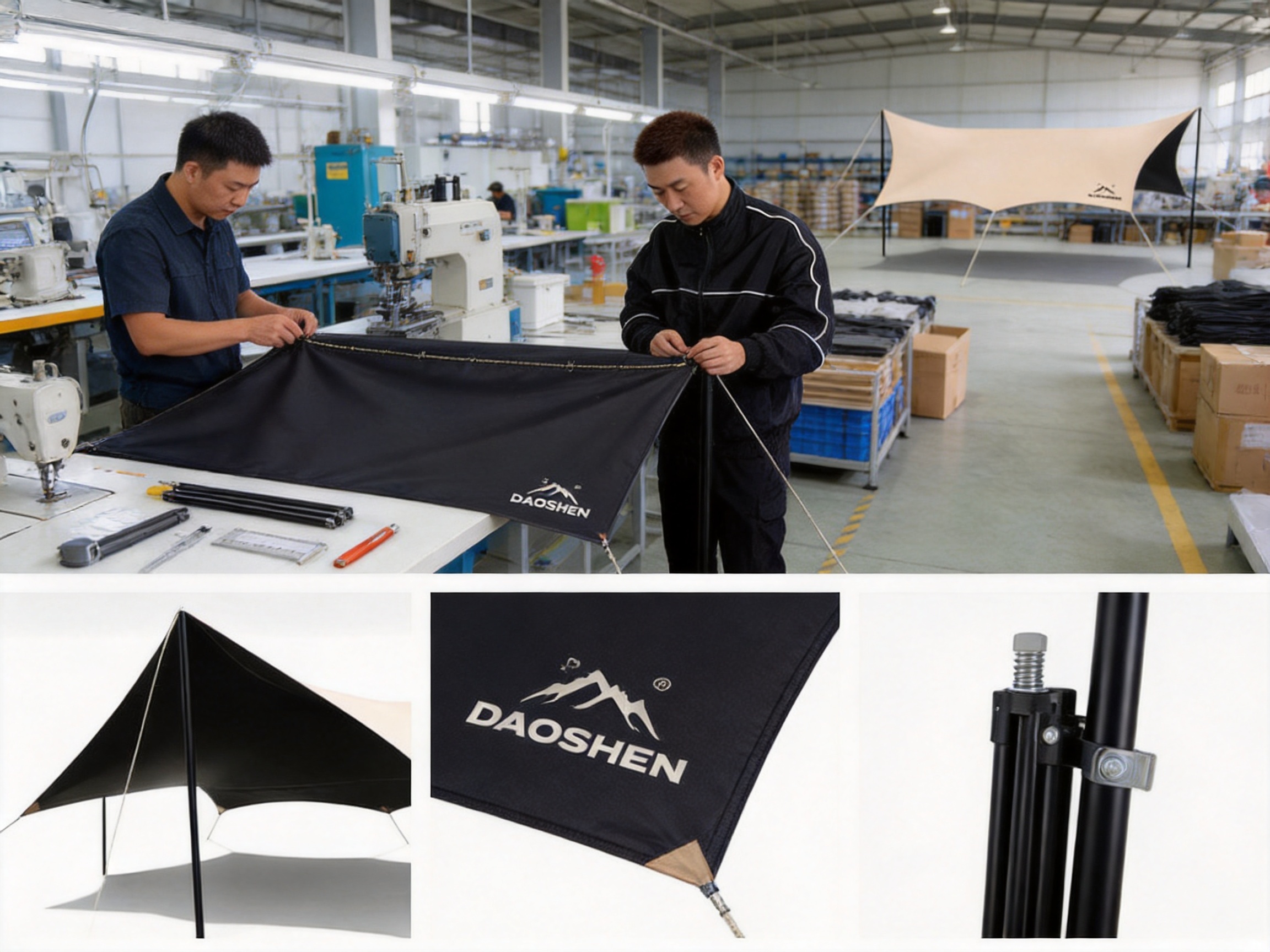
Outdoor shelters are expected to do more than provide a temporary roof. A dependable canopy must reduce heat and glare, resist rain, tolerate repeated setup and removal, remain stable in changing weather, and offer enough space for people to relax comfortably. For retailers and outdoor brands, it must also be practical to manufacture, consistent from one production batch to the next, and suitable for different customer environments.
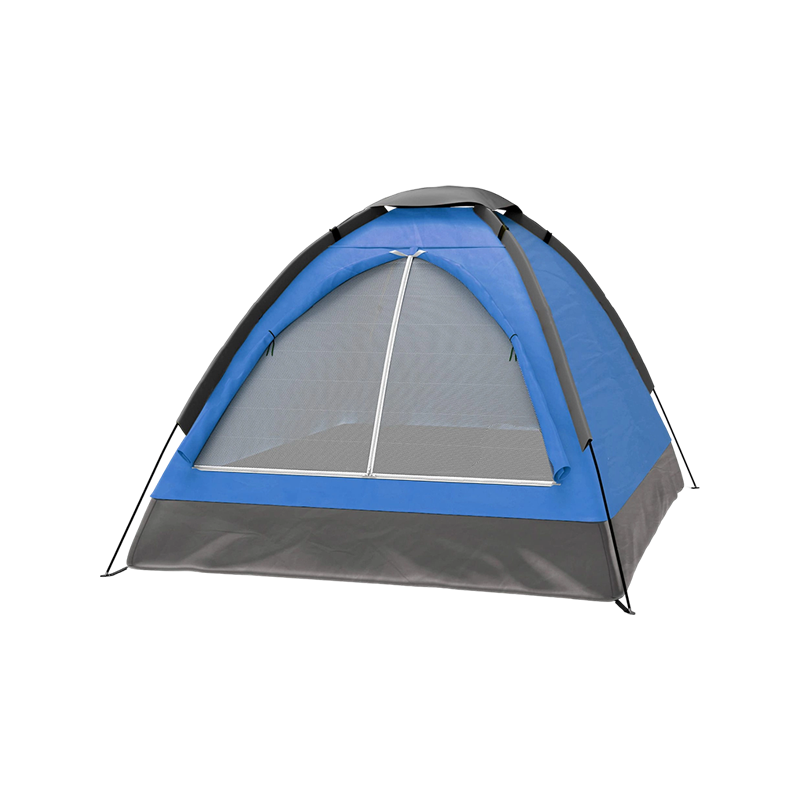
The outdoor picnic camping black vinyl tent is designed around these practical requirements. It combines a black vinyl-coated canopy, 210D high-density Oxford cloth, a taller and thicker steel frame, and a butterfly-shaped roof profile. Together, these features create a shelter intended for family picnics, beach relaxation, park gatherings, outdoor events, and other stationary or semi-stationary applications where shade, weather resistance, and usable interior space matter more than ultralight portability.
This product is not positioned as a backpacking shelter. Its vinyl coating and steel structure naturally make it more substantial than a lightweight hiking tarp or a PU-coated trekking canopy. Instead, it is designed for users who want reliable coverage at a fixed outdoor location and who value sun protection, fabric durability, headroom, and structural confidence.
For global retailers, the product also represents a manufacturing solution rather than a single isolated item. Its construction reflects a development process based on practical outdoor usage, material selection, repeated sampling, product optimization, and scalable production. The result is a canopy that can serve both consumer-facing retail programs and OEM or private-label outdoor product lines.
1. The Product Concept: A Shelter Built for Real Outdoor Use
Many temporary canopies appear similar when viewed in a product catalog. Their differences become clearer after several hours under direct sun, during a sudden shower, or after repeated assembly and storage. The fabric may become hot beneath sunlight, the roof may collect water, the joints may loosen, or the frame may feel unstable when exposed to wind. A product designed for real outdoor use must address these conditions at the design stage.
This canopy follows a scenario-driven approach. It is intended for families sitting beneath a shelter for several hours, beach users needing broad shade, campers seeking a comfortable gathering area, and retailers looking for a product with visible functional benefits. Its principal design decisions are connected to those scenarios:
• The black vinyl coating is selected for stronger solar protection and water resistance.
• The 210D Oxford cloth provides a practical balance between weight and resistance to everyday tearing and abrasion.
• The steel frame is taller and thicker to improve headroom and support structural stability.
• The butterfly geometry broadens the shaded footprint and encourages rainwater runoff.
• The product is developed for repeated setup, outdoor exposure, and long-term commercial usability rather than one-time seasonal use.
These features allow the canopy to compete with standard polyester gazebos and lighter PU-coated shelters in a specific market segment: buyers who prioritize shade performance, durability, and comfort over minimum packed weight.
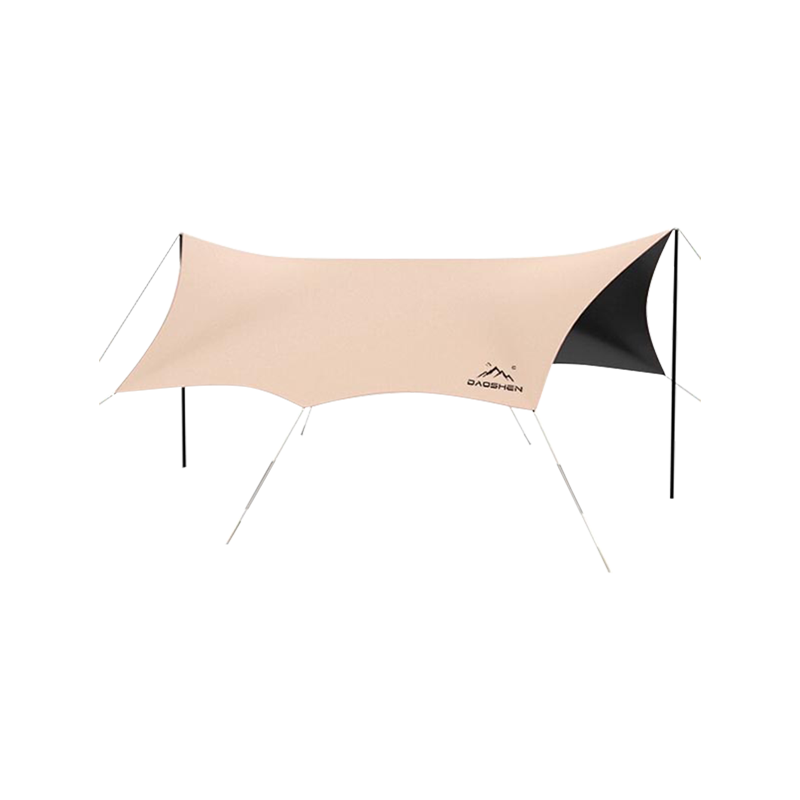
Outdoor picnic camping black vinyl tent, rainproof and sunshade canopy, picnic butterfly curtain canopy
2. Black Vinyl Coating and Solar Protection
2.1 Why the Coating Matters
Sun protection is one of the most important performance factors for a picnic canopy. A shelter can provide visual shade while still allowing significant ultraviolet radiation and heat to pass through the fabric. The fabric color, coating, density, and construction all influence how effectively the roof protects people underneath.
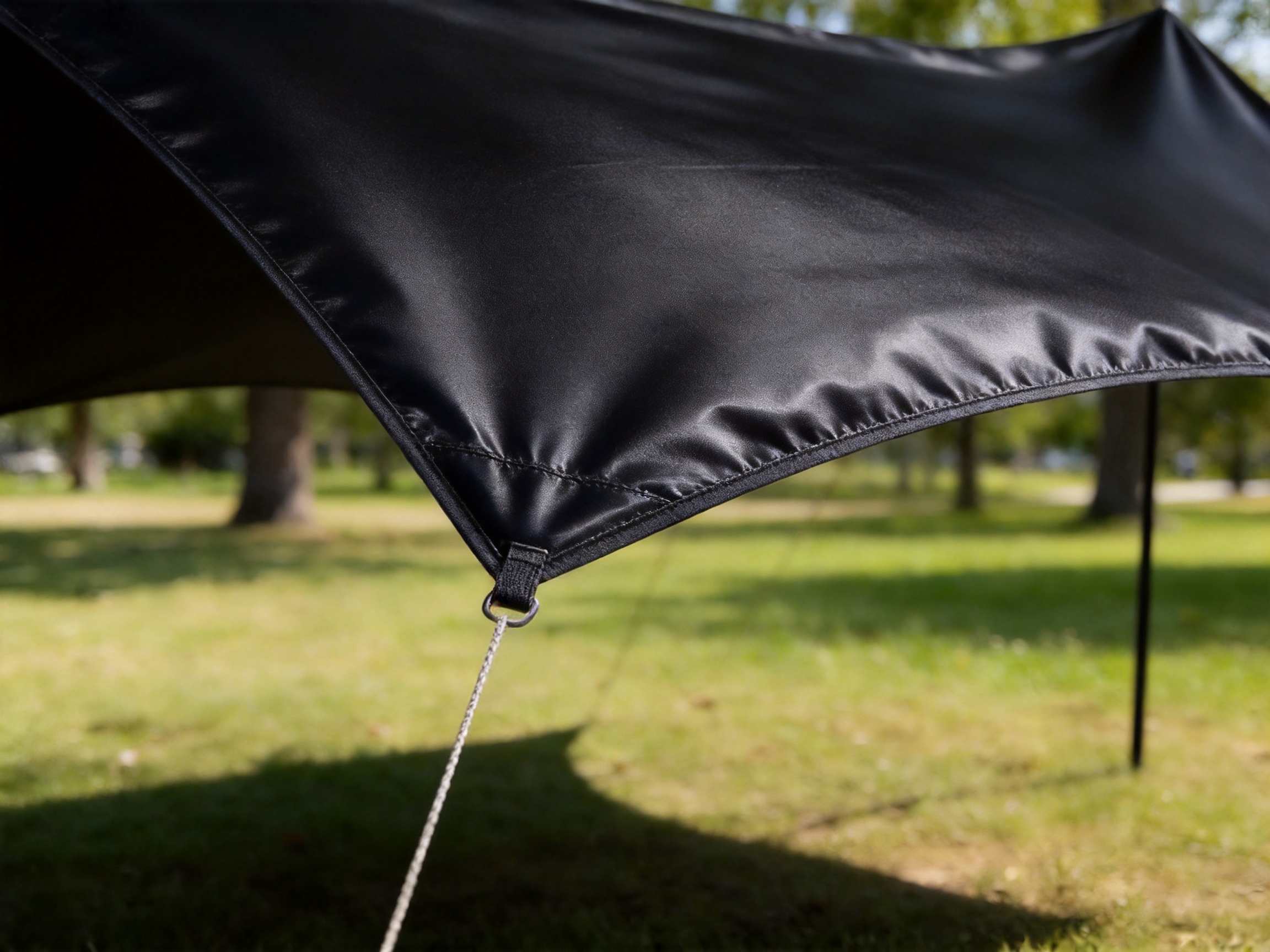
The black vinyl coating used in this canopy creates a dense surface layer that absorbs a substantial portion of incoming ultraviolet radiation before it reaches the underside. This gives the material an advantage over many uncoated or lightly coated fabrics of similar thickness. Standard polyester canopies may block some sunlight through fabric density, but the weave itself can leave pathways for UV transmission. A vinyl-coated surface adds another barrier.
Compared with lighter-colored fabrics, black-coated material handles solar radiation differently. Light colors reflect more visible light, while a dark coating absorbs a larger share of radiation at the outer surface. This does not mean that every black fabric automatically offers the same protection. Coating coverage, fabric construction, seam design, and manufacturing consistency remain important. However, a properly applied black vinyl coating is a strong foundation for a sunshade canopy designed for extended daytime use.
The benefit is especially noticeable in locations where users remain under the canopy for several hours. At a beach, in an open park, or at a family picnic, the shelter may be exposed to direct sunlight from late morning through the afternoon. In these conditions, the roof must provide more than a temporary visual barrier. It should help create a more comfortable shaded zone and reduce direct exposure to intense sunlight.
2.2 Vinyl Compared with PU-Coated Fabric
PU-coated fabric is common in lightweight tents, tarps, and backpacking shelters because it can deliver useful water resistance without adding as much weight as vinyl. It is a practical choice when packed size and carrying weight are the main priorities. However, lightweight materials are not always the best choice for a large picnic canopy that remains pitched in direct sunlight and is transported repeatedly.
Vinyl coating generally offers stronger resistance to prolonged outdoor exposure than many lightweight PU-coated alternatives. Repeated ultraviolet exposure can gradually affect a coating, especially when the product is left outdoors for extended periods. A degraded coating may lose flexibility, waterproofing performance, or surface integrity. Vinyl is selected for this product because it is better suited to the demands of a stationary shade shelter used through a full day of sunlight and repeated seasonal outings.
The tradeoff is clear. Vinyl is heavier and less flexible than many PU-coated fabrics. It may require more storage space and may not be the preferred material for long-distance backpacking. For the intended application, however, the added material weight supports a different value proposition: stronger shade performance, a more substantial feel, and better suitability for family and group use.
This distinction gives retailers an opportunity to present the product accurately. It should not be compared only by packed weight against ultralight hiking shelters. Its stronger comparison points are sun protection, coverage, fabric substance, water resistance, headroom, and stability. When evaluated against standard fabric picnic canopies, the vinyl construction provides a compelling performance advantage.
2.3 Waterproofing for Picnic and Camping Conditions
The product is described as rainproof and intended for outdoor picnic and camping scenarios. The coated roof helps prevent rainwater from passing through the canopy surface, while the butterfly profile encourages water to move away from the roof rather than remain in a flat pool.
No temporary canopy should be treated as a substitute for a storm-rated shelter or a permanent building. Proper anchoring, correct assembly, seam condition, and weather judgment remain essential. In mild to moderate rain, the coated fabric and sloped geometry can help keep people and equipment beneath the canopy more comfortable. In heavy rain or severe weather, users should lower, reinforce, or remove the structure according to the conditions and product instructions.
3. 210D Oxford Cloth: A Balanced Fabric Choice
3.1 Understanding the 210D Specification
The 210D designation refers to the denier classification of the fabric yarn. It indicates a middle-range material choice that balances durability and weight. A fabric below approximately 150D may be lighter, but it can be more vulnerable to tearing when exposed to wind loads, repeated handling, rough ground, or accidental contact with branches and equipment. Materials above 300D may provide additional substance, but they can also increase packed weight and cost without delivering proportional benefits for every canopy application.
For a family picnic shelter, 210D Oxford cloth is a practical middle ground. It is substantial enough for repeated outdoor handling while remaining more manageable than very heavy industrial fabrics. This balance is important for retailers because consumers often want a product that feels durable but can still be transported in a vehicle and assembled by ordinary users.
3.2 Oxford Weave and Tear Resistance
Denier alone does not determine fabric performance. The weave construction is also important. Oxford cloth uses a basket-style interlacing pattern that distributes stress across multiple yarns. When a small puncture or cut occurs, the woven structure can help resist the rapid spread of the damage compared with a weaker plain weave of similar yarn thickness.
This advantage is useful during repeated setup and storage. A canopy may be placed on grass, sand, gravel, or a hard campsite surface. It may rub against carry bags, poles, ground sheets, or outdoor furniture. The fabric may also be pulled into position around the frame. These routine actions create cumulative stress. A balanced Oxford fabric helps the canopy remain suitable for repeated use rather than treating every outing as a disposable event.
The material is also appropriate for commercial supply programs. A retailer needs consistent fabric weight, coating coverage, color appearance, and cut dimensions across production batches. A clearly defined 210D Oxford specification provides a useful foundation for material purchasing and quality control. It allows production teams to monitor whether the selected fabric is aligned with the approved sample.
3.3 Surface Finishing and Everyday Abrasion
Fabric performance depends on finishing as well as yarn and weave. A smooth or coated surface can reduce friction when the canopy is placed on the ground, folded, packed, or moved against outdoor surfaces. This does not make the fabric immune to puncture or abrasion, but it can help extend usable life under ordinary conditions.
The black vinyl coating also contributes to the finished surface. It creates a more substantial protective layer than untreated textile alone and supports the product's rainproof and sunshade functions. Production consistency is critical because uneven coating thickness may affect appearance, flexibility, water resistance, and long-term performance.
For users, practical care still matters. The canopy should be dried before long-term storage, kept away from sharp objects, and folded without forcing the frame or fabric into excessively tight bends. Proper maintenance protects the investment and helps preserve the advantages of the material selection.
4. Butterfly Geometry and Shade Coverage
4.1 A Roof Shape Designed for Broader Coverage
The butterfly-shaped canopy uses a raised center and dual-slope roofline rather than a simple flat roof. This geometry creates a broad shaded footprint and allows the fabric to cover a larger usable area without relying on a single horizontal surface.
Shade changes throughout the day as the sun moves across the sky. A narrow or flat canopy may provide excellent protection at one angle but less coverage later in the afternoon. The wider butterfly profile helps maintain a more consistent shaded area as the direction of sunlight changes. This is especially valuable when families sit in the same arrangement for several hours and do not want to continually reposition chairs, coolers, food, or personal belongings.
The elevated center can also improve the feeling of space beneath the canopy. Instead of creating a low, enclosed roof, the structure offers more visual openness and usable headroom. This makes it more comfortable for family gatherings, social meals, beach seating, and outdoor recreation.
4.2 Improved Rain Runoff
Flat-top canopies are vulnerable to water pooling when rain accumulates on the roof. Standing water adds weight to the fabric and transfers extra stress to the frame and attachment points. If the water is not removed, the structure may sag or become less stable.
The sloped butterfly roof encourages rainwater to run toward the edges. This reduces the likelihood of prolonged pooling and helps the canopy shed water more naturally. The geometry cannot eliminate all risk in severe rainfall, especially if the fabric is incorrectly tensioned or the frame is not fully opened. Nevertheless, it provides a sound structural advantage over a completely flat roofline.
4.3 Performance in Mild to Moderate Wind
A flat roof can catch wind like a sail. The sloped surfaces of a butterfly canopy allow air to deflect across the roof more effectively than a broad horizontal plane. This can improve behavior in mild to moderate wind conditions, particularly when the canopy is properly anchored.
Wind performance is always a system characteristic. Roof geometry, fabric tension, frame thickness, joint construction, anchoring hardware, ground conditions, and weather intensity all influence stability. The product's butterfly profile is therefore paired with a taller and thicker steel frame rather than treated as an independent design feature.
5. Steel Frame Construction and Structural Stability
5.1 The Value of a Taller Frame
A taller frame provides more headroom and improves the overall usability of the covered area. Users can sit, stand, move around, and organize picnic equipment with less interference from the roof. For a family-oriented canopy, this comfort advantage is important because the shelter functions as a social space rather than merely a low cover for equipment.
However, increasing height can also increase leverage during wind exposure. A taller structure may experience greater forces at its base, especially when the roof presents a large surface area to gusts. For that reason, height must be balanced with appropriate tube thickness, joint design, and anchoring.
5.2 Thicker Steel for Support
The product uses a taller, thicker steel frame to support stability and wind resistance. Steel provides a substantial structural foundation for a canopy that uses a heavier vinyl-coated roof. Compared with very light aluminum or thin-wall structures, a steel frame can deliver a more solid feel and resist ordinary bending forces when properly engineered.
The frame is not intended to make the canopy invulnerable to extreme weather. A large canopy remains exposed to wind, and the user must anchor it correctly. The purpose of the stronger steel construction is to provide better support under normal outdoor use and to reduce the sense of instability often associated with lightweight temporary shelters.
5.3 Joints and Load Distribution
Frame joints are often as important as the tubing itself. During wind exposure, loads travel through the roof, poles, connectors, and base points. A weak connection can become the first failure point even if the steel tubes are sufficiently strong.
For this reason, product assessment should consider the complete frame system. Reinforced or properly constructed joints can distribute stress over a wider area than simple friction-fit connections. Consistent joint assembly also helps ensure that each finished product performs similarly to the approved sample.
Manufacturing control is particularly important at this stage. Tube cutting, forming, welding, joint alignment, surface treatment, and final assembly must be coordinated. A minor dimensional variation may affect how smoothly the frame opens, how evenly the roof fabric is tensioned, or how securely the joints engage.
5.4 Anchoring as Part of the System
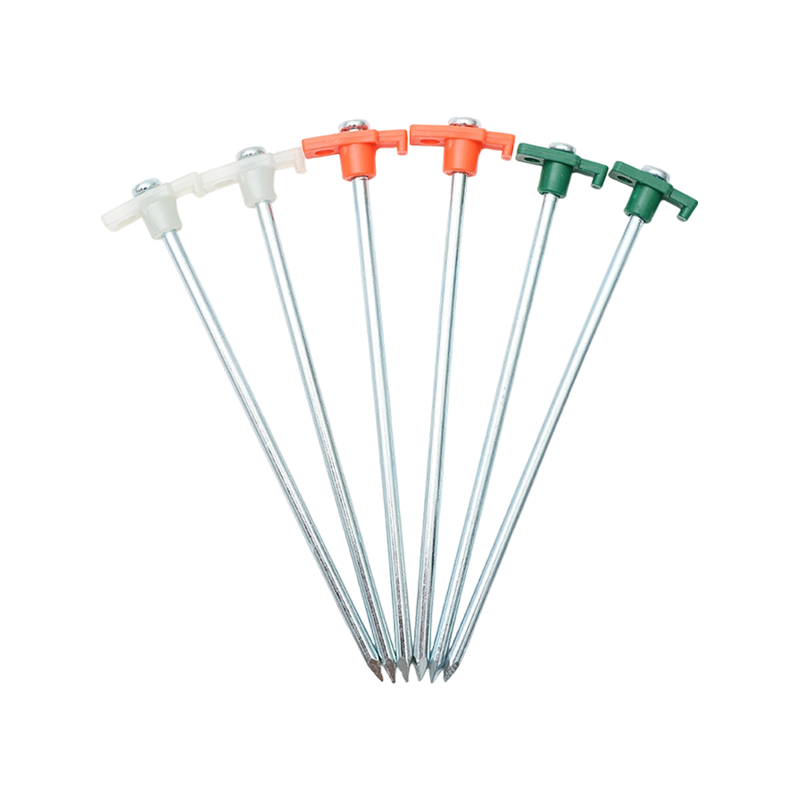
Anchoring does not replace frame strength, and frame strength does not replace anchoring. Wind pressure on a large canopy surface eventually transfers to the base. If the shelter is placed on grass or soil, stakes may be appropriate. On sand or hard ground, sandbags or other suitable weights may be needed.
Users should select anchoring methods according to the ground type and weather conditions. Beach environments can be more exposed to wind than sheltered parks, making correct weighting especially important. The canopy should not be left unattended during changing weather, and it should be removed if conditions become unsafe.
6. Product Advantages Compared with Common Alternatives
Competition in the outdoor shelter market includes lightweight polyester canopies, PU-coated tents, aluminum-frame gazebos, flat-top sun shelters, and basic low-cost event tents. The black vinyl butterfly canopy does not need to outperform every alternative in every category. Its strength lies in offering a well-defined combination of features for users who need strong daytime coverage and repeated outdoor usability.
| Comparison factor | Black vinyl butterfly canopy | Standard polyester canopy | Lightweight PU-coated shelter |
|---|---|---|---|
| Sun protection | Dense black vinyl surface supports strong solar and UV blocking | Depends heavily on fabric density, color, and coating | Often optimized for light weight rather than maximum daytime shade |
| Rain performance | Vinyl coating and sloped roof support water resistance and runoff | Varies by coating and seam construction | Usually effective when new but may require careful maintenance |
| Fabric durability | 210D Oxford cloth balances tear resistance and manageable weight | May range from lightweight to heavy, with variable tear resistance | Often uses lighter fabric to reduce packed weight |
| Frame presence | Taller and thicker steel frame provides a substantial structure | May use lighter steel or aluminum depending on price level | Frequently prioritizes low weight and compact transport |
| Shade footprint | Butterfly geometry offers broad and more consistent coverage | Usually depends on a square, rectangular, or flat roof design | Often designed around compact personal or small-group use |
| Best application | Picnics, beaches, parks, family gatherings, and vehicle-based camping | General recreational shade and occasional events | Backpacking, lightweight travel, and users prioritizing packability |
The table demonstrates why a direct price or weight comparison can be misleading. A lightweight shelter may be easier to carry, but it may not offer the same shade density, roof substance, or frame feel. A standard polyester canopy may be less expensive, but it may not provide the same level of solar protection or prolonged sun-exposure resistance. The product is strongest when sold to customers who understand the value of a more durable and comfortable shelter.
6.1 Advantages for Family Picnic Use
Family users generally need space, shade, rain protection, and a product that does not feel fragile. The taller frame supports movement beneath the canopy, while the butterfly roof provides a broad area for chairs, tables, food, coolers, and personal items. The black vinyl surface helps reduce direct sun exposure during extended daytime use.
Families may also use the product repeatedly through a season. A canopy that can be assembled for weekend picnics, beach trips, school events, and backyard gatherings provides more value than a product designed for occasional emergency use.
6.2 Advantages for Beach Relaxation
Beach users often face intense sunlight, reflective sand, and higher wind exposure. The vinyl coating addresses the first requirement by creating a dense shade surface. The butterfly shape helps maintain coverage as the sun changes angle, while the steel frame and suitable sand anchoring support stability in a more exposed environment.
Because the product is heavier than an ultralight beach shelter, it is best suited to users who transport gear by car or carry it short distances. This is a deliberate design position rather than a weakness. The product exchanges some portability for stronger structure and more substantial shade performance.
6.3 Advantages for Retail and OEM Programs
For retailers, the product has multiple visible selling points that can be explained clearly to consumers: black vinyl sun protection, 210D Oxford fabric, a taller steel frame, butterfly-shaped coverage, rain resistance, and family-oriented usability. These benefits are easier to communicate than vague claims based only on appearance.
For OEM customers, the same construction platform can support private-label programs and market-specific packaging. Product development can focus on approved material standards, color requirements, logo placement, packaging dimensions, instruction manuals, and regional compliance needs. A structured development process reduces the risk of relying on an unverified catalog item.
7. Manufacturing Process and Product Development Strengths
7.1 Scenario-Based Design
A strong outdoor product begins with the environment in which it will be used. The development approach behind this canopy considers weather, terrain, duration of use, setup frequency, transportation method, and the expectations of Western-market consumers.
Instead of selecting materials only because they are inexpensive or currently popular, the design connects each material to a specific problem. Vinyl addresses sun and rain exposure. Oxford cloth addresses repeated handling and tear resistance. Steel addresses frame stability and headroom. Butterfly geometry addresses shade distribution and water runoff.
This scenario-based method helps prevent a common manufacturing problem: combining unrelated specifications without considering how they interact. A heavier canopy requires an appropriate frame. A taller frame requires attention to leverage and anchoring. A broad roof requires suitable joint construction. Product design must therefore be treated as an integrated system.
7.2 Material Selection and Incoming Control
Material consistency is essential for a canopy product. Fabric rolls should be checked against approved specifications for weight, weave, coating appearance, color, surface condition, and usable width. Steel components should be evaluated for tube dimensions, wall thickness, straightness, finish, and corrosion protection.
Incoming inspection helps prevent inconsistent materials from entering production. It also creates a traceable basis for addressing quality issues. If a finished product shows variation in fabric appearance or frame fit, production teams can compare the issue with incoming material records and process information.
For OEM and private-label customers, documented material standards are particularly useful. They help align samples, purchase orders, production batches, and quality expectations. Clear specifications also reduce misunderstandings between the manufacturer and the customer during product approval.
7.3 Cutting, Coating, and Sewing Control
The canopy fabric must be cut accurately so that the roof fits the frame and maintains the intended butterfly shape. Inaccurate cutting can cause uneven tension, sagging, excessive stress at attachment points, or difficulty during assembly. Pattern control is therefore important to both appearance and performance.
The vinyl coating must remain consistent across the usable fabric surface. Coating defects, pinholes, weak edges, or uneven coverage may affect water resistance and visual quality. Production teams should monitor the material before cutting and inspect finished panels after sewing.
Sewing quality also matters. Reinforced stress points, properly finished edges, secure attachment areas, and consistent seam construction help the roof withstand repeated setup and weather exposure. The design should identify locations where forces concentrate, such as corners, pole sleeves, roof peaks, and tie-down points.
7.4 Steel Frame Fabrication
Frame production may include tube cutting, forming, welding, joint installation, surface finishing, and assembly verification. Each step influences the behavior of the final product. Tubes must be cut to the approved dimensions, joints must align correctly, and welded areas must be visually and structurally consistent.
Surface treatment helps protect steel components during storage and outdoor use. The specific finishing method may vary by production requirement, but the objective is to provide a consistent appearance and reasonable resistance to ordinary environmental exposure.
Assembly checks should confirm that the frame opens and closes correctly, that moving parts operate smoothly, and that the roof can be attached without excessive force. A frame that is structurally sound but difficult for consumers to assemble can still create high return rates and poor customer reviews.
7.5 Sampling, Testing, and Optimization
Sampling is not merely a presentation step. It is an opportunity to identify practical issues before mass production. A sample should be evaluated for dimensions, material appearance, assembly sequence, roof tension, frame alignment, packed condition, and user handling.
Repeated sampling allows the manufacturer and customer to refine the product. Possible adjustments may involve fabric patterns, reinforcement positions, joint details, packaging protection, instructions, or accessory selection. This process is especially valuable when the product is intended for a new market with different user expectations.
Testing should reflect the product's intended conditions. The canopy may be checked for water resistance, basic frame stability, fabric strength, opening and closing cycles, and packaging durability. Testing does not remove the need for responsible use, but it provides useful evidence that the product has been evaluated systematically.
Optimization continues when feedback is collected from production, quality teams, sales departments, and end users. A manufacturer with practical outdoor knowledge can interpret this feedback more effectively than a supplier focused only on factory output.
7.6 Quality Assurance and Batch Consistency
Quality assurance should cover the complete product rather than only the final visual inspection. Fabric, hardware, frame components, seams, labels, instructions, accessories, and packaging all contribute to customer satisfaction.
Final inspection may include verification of product dimensions, color, coating appearance, stitching, frame operation, accessory quantity, and carton markings. Packed products should be checked to ensure that the canopy and frame are protected during transportation.
Batch consistency is particularly important for global retailers. A buyer may place repeat orders months after the first shipment. Maintaining approved specifications helps ensure that the second shipment matches the first in appearance, function, and packaging. This supports brand reputation and reduces unnecessary product returns.
8. Packaging, Logistics, and Commercial Practicality
A canopy with a steel frame and vinyl-coated roof requires thoughtful packaging. The packed product must protect metal components from damaging the fabric, prevent excessive folding stress, and withstand handling during international transportation.
Packaging design should consider the product's actual shipping path. Cartons may be moved through factories, warehouses, ports, distribution centers, retail facilities, and customer vehicles. Internal protection, secure component placement, moisture management, and clear identification can reduce damage during these stages.
Retail packaging should communicate the product's main value points without overstating performance. Suitable messages may include black vinyl sunshade, 210D Oxford cloth, taller steel frame, butterfly canopy design, rainproof construction, and recommended applications such as picnics, beaches, and family camping.
Instruction materials should explain setup, anchoring, folding, cleaning, drying, storage, and weather precautions. Clear instructions improve the user experience and help protect the product from misuse. For international markets, manuals and warning labels should be prepared according to the target customer's language and regulatory expectations.
For OEM programs, packaging can be adapted to a retailer's visual identity. Options may include private-label cartons, barcode systems, color boxes, instruction inserts, hangtags, and coordinated accessory packaging. These details should be confirmed during sample approval rather than added after production begins.
9. Recommended Use Scenarios
9.1 Parks and Family Picnics
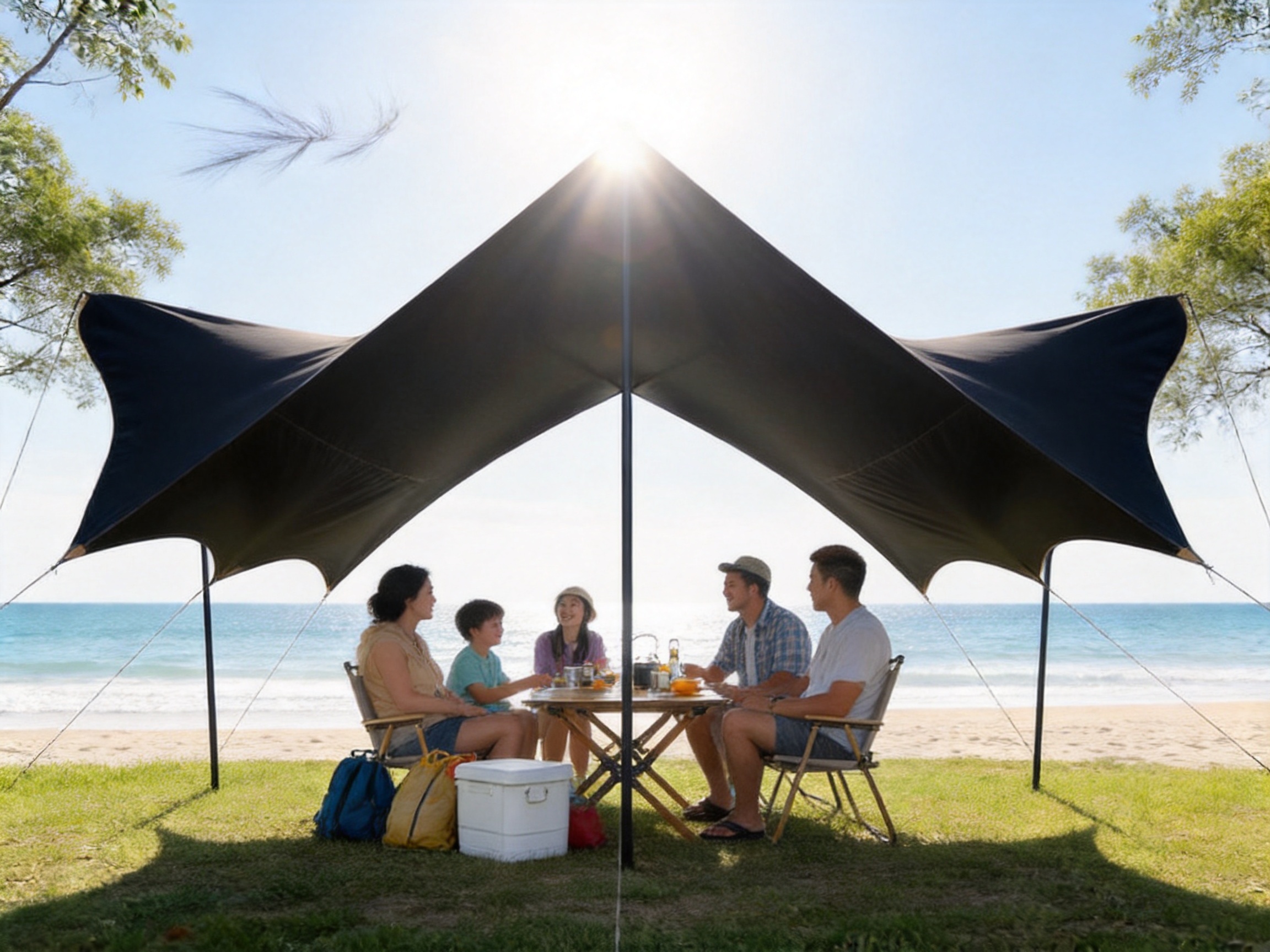
In a park setting, the canopy can create a central gathering area for meals, conversation, and rest. The broad roof helps protect users from direct sun, while the taller frame allows adults to move comfortably beneath the structure. The product is suitable for vehicle-based trips where packed weight is manageable.
9.2 Beaches and Open Coastal Areas
At the beach, the product's black vinyl roof is useful for reducing direct sunlight, and its broad butterfly footprint can provide shade as the sun changes position. Because coastal areas can experience sudden wind, users should pay careful attention to sand anchoring and should not leave the canopy unattended in worsening conditions.
9.3 Camping Base Areas
The canopy can serve as a communal shelter near a campsite, particularly when the group arrives by vehicle. It can cover a table, cooking preparation area, seating zone, or storage area. It is not intended to replace a sleeping tent, but it can complement sleeping shelters by creating a separate daytime living space.
9.4 Outdoor Events and Recreational Gatherings
Small outdoor events, sports days, school activities, and community gatherings may benefit from a reliable shade structure. The product's visual design and practical coverage make it suitable for temporary hospitality or rest areas. Event organizers should assess local weather, ground conditions, required anchoring, and any applicable venue regulations before use.
10. Care, Maintenance, and Service Life
Proper care begins with correct setup. The frame should be fully opened and locked into its intended position, and the fabric should be attached without forcing seams or pulling unevenly. Anchoring should be completed before the canopy is exposed to changing wind.
After use in rain, the canopy should be dried thoroughly before storage. Folding wet coated fabric can encourage mildew, unpleasant odor, and surface deterioration. Sand, dirt, and plant debris should be removed before packing so that abrasive particles do not remain trapped between folded layers.
Cleaning should use methods appropriate for coated fabric. Harsh solvents, abrasive brushes, and aggressive chemicals may damage the vinyl surface or affect its appearance. A mild cleaning solution, soft cloth, and clean water are generally more suitable, subject to the care instructions supplied with the product.
The frame should be inspected periodically. Users should look for bent tubes, loose joints, damaged fasteners, corrosion, or components that no longer operate smoothly. Small problems are easier to address before the next outing. Damaged fabric, attachment points, or structural parts should be repaired or replaced before use.
Long-term storage should take place in a dry, ventilated location away from sharp objects and excessive heat. The canopy should not be stored under compression that could permanently crease or distort the coated fabric. Good maintenance helps preserve the product's shade, weather-resistance, and structural characteristics.
11. Value for Global Outdoor Retailers
Retailers increasingly need products that offer a clear reason to buy. A shelter described only as a generic canopy may compete mainly on price. A shelter with differentiated materials and a coherent design story can compete on performance and customer value.
This product supports a stronger retail proposition because its features are easy to connect to consumer needs. Customers can understand why black vinyl is selected for sun exposure, why 210D Oxford cloth supports repeated use, why a thicker steel frame improves confidence, and why a butterfly roof can provide broader shade and better runoff.
The product also fits several retail categories. It can be presented as camping gear, picnic equipment, beach shelter equipment, family outdoor furniture support, or a vehicle-based recreation accessory. This flexibility can help retailers build seasonal campaigns around summer travel, camping holidays, beach recreation, park events, and outdoor family activities.
For distributors and importers, the manufacturing partner's broader capabilities are equally important. Product development, sampling, optimization, OEM communication, and production coordination reduce the need to manage multiple disconnected suppliers. A manufacturer that understands outdoor use can contribute to specifications and problem-solving instead of simply reproducing a basic drawing.
CragHaven Outdoor operates from Hangzhou, China, and focuses on mountaineering, hiking, and camping applications. Its manufacturing philosophy emphasizes real weather, terrain, usage patterns, and product lifespan. This orientation supports the development of products that are intended to be functional and repeatable rather than designed only for catalog appearance.
12. Why Manufacturing Partnership Matters
Outdoor product sourcing involves more than finding a factory with the required equipment. The supplier must understand how the product is used, how the materials interact, and which details influence customer satisfaction.
A manufacturing partner with outdoor product experience can assist with product positioning, material tradeoffs, sampling, testing, packaging, and production planning. For example, a customer may initially request the lightest possible canopy but later discover that the target market expects stronger shade and a more stable frame. A knowledgeable supplier can explain the consequences of changing fabric, coating, tube thickness, or roof geometry.
Communication is another important advantage. Global buyers often need Western-market-oriented product information, clear specifications, consistent documentation, and timely responses to design changes. Professional communication helps translate an idea into a repeatable product specification.
CragHaven Outdoor presents itself as both an outdoor brand and a cross-border manufacturing partner. Its stated principles emphasize selecting materials for durability and long-term value, participating in design and manufacturing, and using sampling, testing, and optimization as standard processes. These principles align with the needs of retailers that want stable quality and long-term supply relationships.
13. Limitations and Appropriate Positioning
A credible product description should acknowledge tradeoffs. The black vinyl coating is heavier and less packable than many PU-coated alternatives. The steel frame also adds weight compared with minimalist aluminum or carbon-style structures. The canopy is therefore better suited to car camping, family outings, beaches, parks, and fixed outdoor locations than to long-distance backpacking.
The structure is intended for normal outdoor use and mild to moderate wind when correctly anchored. It should not be promoted as a shelter for hurricanes, severe storms, extreme gusts, or unsafe weather. Large canopies experience significant wind loads, and responsible users must monitor conditions and dismantle the shelter when necessary.
These limitations do not reduce the product's value. They clarify its market position. The canopy is a performance-oriented recreational shelter for users who want strong daytime coverage, durable materials, and a stable gathering space. Clear positioning helps consumers choose the right product and reduces dissatisfaction caused by unrealistic expectations.
14. Product Specification Overview
| Item | Product information |
|---|---|
| Product category | Tent and outdoor canopy for picnic and camping applications |
| Primary use | Family picnics, beach relaxation, parks, camping base areas, and outdoor gatherings |
| Canopy material | Black vinyl-coated fabric with 210D high-density Oxford cloth |
| Frame material | Taller and thicker steel frame |
| Roof geometry | Butterfly-shaped, dual-slope canopy profile |
| Key functional benefits | Sun protection, rain resistance, tear and wear resistance, headroom, shade coverage, and structural support |
| Recommended transport | Vehicle-based outdoor travel and short-distance transport rather than ultralight backpacking |
| Product code | WFLY261002 |
| Supply model | Outdoor brand, OEM, and cross-border manufacturing support |
15. Frequently Asked Questions
Q1: What is the main purpose of the black vinyl coating?
The black vinyl coating creates a dense surface layer that helps block ultraviolet radiation and direct sunlight. It also contributes to water resistance. The coating is particularly suitable for canopies intended to remain in the sun for several hours at beaches, parks, and family picnic sites.
Q2: Is the canopy suitable for backpacking?
It is not primarily designed for backpacking. Vinyl and steel provide useful durability and stability but add weight compared with ultralight PU-coated shelters and aluminum-frame products. The canopy is better suited to vehicle-based camping, beach trips, parks, picnics, and other locations where transport weight is manageable.
Q3: Why is 210D Oxford cloth used?
210D Oxford cloth provides a practical balance between tear resistance, abrasion resistance, and weight. It is more substantial than many very lightweight fabrics while avoiding the unnecessary weight of much heavier materials that may not provide proportional benefits for a picnic canopy.
Q4: How does the butterfly shape improve the canopy?
The butterfly profile creates a broad shaded footprint and provides a peaked, sloped roof. The roof shape can help maintain shade coverage as the sun moves, encourage rainwater runoff, reduce water pooling, and deflect some wind compared with a flat-top design.
Q5: Does the steel frame make the canopy stormproof?
No. The thicker steel frame is designed to provide stronger support and better stability in normal outdoor use, particularly in mild to moderate wind when the canopy is correctly anchored. It should be dismantled or secured according to weather conditions, and it should not be used as a stormproof or extreme-weather shelter.
Q6: What anchoring method should be used?
The correct method depends on the ground. Stakes may be suitable for soil or grass, while sandbags or other appropriate weights may be required on beaches or hard surfaces. Anchoring should be treated as part of the complete shelter system, not as an optional accessory.
Q7: Can the canopy be used in rain?
The coated fabric and sloped roof are designed to support rain resistance and runoff. Users should still maintain correct fabric tension, check seams and attachment points, and avoid leaving the structure in severe weather. The canopy should be dried completely before storage.
Q8: How should the canopy be maintained?
Remove dirt and sand, clean the coated fabric with a suitable mild method, dry the canopy before folding, inspect the frame and joints, and store the product in a dry, ventilated location. Avoid sharp objects, abrasive cleaning tools, and harsh chemicals that may damage the coating.
Q9: What makes the product suitable for OEM programs?
The product has a clearly defined material and structural concept, including black vinyl coating, 210D Oxford cloth, a steel frame, and butterfly geometry. A manufacturing partner can support sampling, testing, packaging adaptation, private-label development, and production coordination for global retailers.
Q10: What type of buyer is most likely to benefit from this product?
The best match is a buyer who values shade performance, weather resistance, a substantial frame, broad coverage, and repeated outdoor use. Families, beach users, campers traveling by vehicle, event organizers, distributors, and outdoor retailers are all potential target customers.
16. Conclusion
The outdoor picnic camping black vinyl tent is designed as a practical shelter for users who want more than basic temporary shade. Its black vinyl coating supports stronger solar protection and water resistance, while the 210D Oxford cloth provides a balanced foundation for repeated outdoor handling. The taller and thicker steel frame improves headroom and structural confidence, and the butterfly-shaped roof broadens shade coverage while supporting rain runoff and mild-to-moderate wind performance.
Its most important advantage is the way these features work together. The coating, fabric, frame, roof geometry, and anchoring requirements form an integrated product system. This makes the canopy especially suitable for family picnics, beach relaxation, parks, vehicle-based camping, and outdoor gatherings.
For global retailers, the product offers a clear and differentiated selling proposition. It competes with standard canopies through material substance, shade performance, roof design, and frame stability rather than through minimum weight alone. For OEM customers, it provides a foundation for private-label development supported by scenario-based design, material control, sampling, testing, optimization, and scalable manufacturing.
With accurate positioning and responsible use, this canopy can serve as a durable, comfortable, and commercially practical addition to the outdoor gear market. It reflects a manufacturing approach that begins with real outdoor conditions and transforms those requirements into a product designed for repeated use, dependable performance, and long-term market value.
References
1. International Organization for Standardization. Textile Materials and Fabric Construction: General Principles of Fiber, Yarn, and Fabric Identification.
2. American Society for Testing and Materials. Standard Practices for Testing Textile Fabrics, Coated Fabrics, and Outdoor Performance Materials.
3. American Society for Testing and Materials. Standard Guidance for Evaluating Water Resistance and Hydrostatic Performance of Fabrics.
4. Outdoor Industry Association. Consumer Use Patterns and Product Considerations for Camping, Picnic, and Recreational Shelters.
5. Technical literature on ultraviolet radiation, textile coatings, and ultraviolet protection factors in outdoor fabrics.
6. Technical literature on Oxford weave construction, denier measurement, tear propagation, and abrasion resistance.
7. Engineering references on temporary canopy geometry, frame leverage, wind loading, anchoring, and structural stability.
Product: Outdoor picnic camping black vinyl tent, rainproof and sunshade canopy, picnic butterfly curtain canopy


- Phone: +86-15968800379
- E-mail: [email protected]
- Address: Room 1002, Huishang Building, Gongshu District, Hangzhou City, Zhejiang Province.
Copyright © CragHaven Outdoor All Rights Reserved. Outdoor Gear Manufacturers Wholesale Mountaineering Camping Gear Suppliers
