

 English
 Deutsch
 Español
 Français

Ultralight Internally Locking Aluminum Alloy Trekking Pole for Hiking and Mountaineering
Content
- 1 Why Trekking Pole Design Matters
- 2 Core Product Features
- 3 Advantages Compared with Conventional Trekking Poles
- 4 Manufacturing Approach and Product Development
- 5 Technical Design Considerations
- 6 Comparison with Alternative Trekking Pole Constructions
- 7 Benefits for Retailers, Wholesalers, and Outdoor Brands
- 8 Care and Maintenance Recommendations
- 9 How to Select the Right Model for Different Users
- 10 Quality, Reliability, and Long-Term Value
- 11 Using Trekking Poles Safely
- 12 Q&A
- 12.1 What is an internally locking trekking pole?
- 12.2 What are the main benefits of the aluminum alloy shaft?
- 12.3 Is an internal lock better than an external lock?
- 12.4 How does the spring shock absorption system work?
- 12.5 Is this trekking pole suitable for long-distance hiking?
- 12.6 Can the pole be used for mountaineering?
- 12.7 How should the internal lock be maintained?
- 12.8 What makes the straight handle comfortable?
- 12.9 Can CragHaven Outdoor support customized orders?
- 12.10 What should buyers evaluate before placing a wholesale order?
- 13 Conclusion
- 14 References
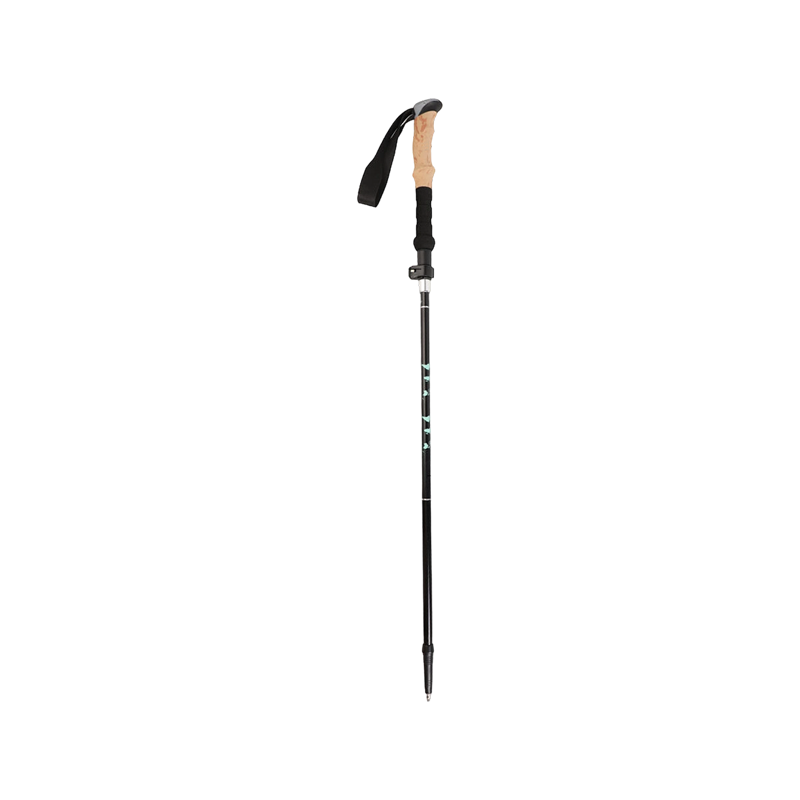
- 15 Product: Ultralight, internally locking aluminum alloy straight handle trekking pole with telescopic strap and shock absorption.
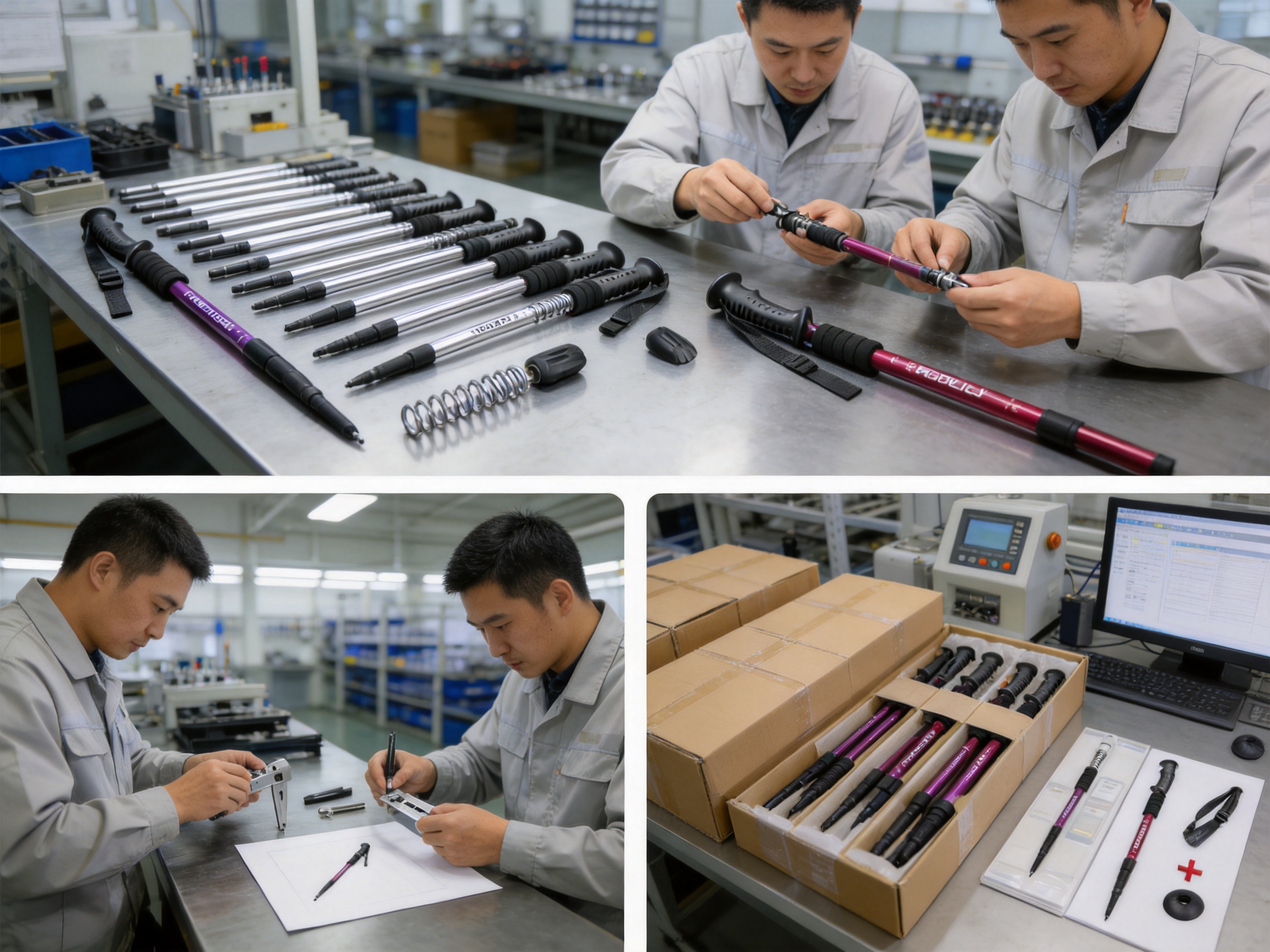
Reliable trekking poles are essential equipment for hikers, backpackers, mountaineers, and outdoor travelers who need improved balance, reduced joint stress, and dependable support across changing terrain. A well-designed pole is not simply a length-adjustable stick. It is a carefully engineered system that combines shaft material, locking performance, grip ergonomics, wrist support, impact control, portability, and manufacturing precision.
The ultralight internally locking aluminum alloy straight handle trekking pole described in this article is designed for long-distance treks, daily hiking, camping trips, and general mountaineering applications. It combines an aerospace-grade aluminum alloy shaft, an internal locking structure, a telescopic strap, an ergonomic non-slip handle, and a built-in spring shock absorption system. These features work together to create a balanced product for outdoor users who want stable performance without carrying unnecessary weight.
In addition to its functional design, this trekking pole represents a manufacturing approach centered on practical outdoor use. CragHaven Outdoor develops and supplies outdoor equipment from Hangzhou, China, with a focus on mountaineering, hiking, and camping applications. The company works with manufacturing resources, sampling procedures, testing processes, and supply-chain capabilities intended to support consistent production for global retailers and outdoor brands.
Why Trekking Pole Design Matters
Walking on uneven ground places repeated demands on the ankles, knees, hips, and lower back. During uphill movement, the legs must generate additional force to lift the body. During descents, the knees absorb increased impact as the body moves downward. Loose gravel, wet ground, roots, snow, and irregular rocks further increase the need for balance and controlled movement.
Trekking poles help distribute some of these forces through the arms and shoulders. They can provide additional contact points with the ground, support a more stable walking rhythm, and help users maintain posture when carrying a backpack. The benefits are most noticeable during extended outdoor activities, where small improvements in balance and impact management can reduce cumulative fatigue.
However, the performance of a trekking pole depends on more than its appearance. A pole that is difficult to adjust may interrupt movement. A weak locking system may create safety concerns. An uncomfortable handle may cause hand fatigue, while an overly heavy shaft can reduce the benefit of carrying poles in the first place. For this reason, product development must consider the complete use cycle, from adjustment and carrying to repeated loading on demanding terrain.
The internally locking aluminum alloy trekking pole addresses these requirements through a combination of structural simplicity and user-focused features. Its shaft is designed to remain light while offering the strength required for general hiking and trekking. The internal locking mechanism keeps the outside of the pole streamlined. The shock absorption system helps moderate impact, and the straight handle is shaped to provide a comfortable hand position during extended use.
Core Product Features
Ultralight Aluminum Alloy Shaft
The shaft is manufactured from aerospace-grade aluminum alloy. Aluminum alloy is widely used in outdoor equipment because it provides a practical balance between strength, weight, durability, and cost. Compared with heavier steel constructions, aluminum alloy is easier to carry during long-distance travel. Compared with many lightweight composite materials, aluminum alloy can offer a more familiar combination of impact tolerance, repairability, and manufacturing consistency.
A lightweight shaft is especially valuable for backpackers and travelers. Trekking poles are often carried in addition to other equipment such as tents, sleeping systems, cookware, clothing, water, and emergency supplies. Reducing the weight of each individual item can make a noticeable difference over a full day of movement. The shaft must nevertheless retain sufficient rigidity to avoid excessive bending during support and planting.
Material selection is therefore only the first step. Tube dimensions, wall consistency, section interfaces, surface treatment, and assembly accuracy also influence performance. A properly manufactured aluminum alloy shaft can provide dependable support while maintaining a smooth extension and a manageable packed form.
Internally Locking Structure
The pole uses an internal expansion locking mechanism. Unlike an external lever lock, the locking components are positioned inside the shaft. When the sections are rotated, the internal mechanism expands and presses against the inner wall of the tube, securing the selected length.
This configuration creates a clean external appearance and reduces the number of exposed components. The streamlined surface is less likely to catch on branches, clothing, straps, or backpack compartments. It also gives the pole a compact and integrated appearance that is suitable for users who prefer minimal external hardware.
The internal system is simple in principle, but its reliability depends on accurate component sizing and proper assembly. The expansion element must provide adequate contact with the shaft without damaging the tube. Threaded or rotational interfaces must operate smoothly. The assembled sections must maintain alignment during extension and retraction. These requirements make process control important in the manufacturing stage.
An internal lock is particularly suitable for users who value a clean structure, lightweight carrying, and a conventional twist-adjustment method. It may require more rotation than an external clamp when changing length, but it avoids the protruding lever found on many external-lock designs. For regular trekking and long-distance hiking, the balance between compactness and adjustment simplicity can be highly practical.
Built-In Spring Shock Absorption
The trekking pole includes a built-in spring shock absorption system intended to reduce the transmission of impact during pole planting. When the tip contacts firm or uneven ground, the spring mechanism allows controlled movement within the pole rather than transferring every shock directly through the shaft and handle.
Shock absorption can help improve comfort during repeated use. It may be particularly useful on hard trails, stone paths, compact soil, and downhill sections where users frequently place the poles in front of the body. By moderating sudden loading, the system can help reduce perceived stress around the wrists, elbows, shoulders, and knees.
The shock absorption feature is designed to complement, not replace, correct walking technique. Users should still adjust the pole to a suitable length, maintain a controlled rhythm, and place the tip securely before transferring weight. Proper footwear and route awareness remain important. The value of the spring system lies in providing an additional level of comfort and load management during ordinary outdoor movement.
Ergonomic Straight Handle
The straight handle is designed to offer a natural grip for extended hiking. Its ergonomic shape supports a comfortable hand position and helps users maintain control without excessive squeezing. The non-slip surface is intended to improve grip security when hands are damp or when the user is moving over uneven terrain.
Handle comfort is often underestimated in trekking pole design. During a multi-hour hike, the user may repeatedly adjust hand pressure, change grip position, and transfer force through the palm. A handle that is too hard, too narrow, or poorly shaped can create pressure points and fatigue. A well-designed handle should provide sufficient support while allowing the hand to remain relaxed.
The straight-handle configuration also offers flexibility for users who shift their hands during uphill and downhill movement. On a gradual ascent, the pole may be held higher for propulsion. On a descent, the user may move the hand lower or use the strap to control the pole. The handle and strap should work together rather than forcing one fixed grip position.
Telescopic Strap
The telescopic strap helps connect the user’s wrist to the handle and can improve control when the hand is relaxed. It may also reduce the need to grip the handle tightly during continuous movement. Correct strap adjustment is important: the strap should support the wrist without creating pressure or restricting circulation.
A practical strap is useful when users move through changing terrain. It can help keep the pole close to the hand during short grip changes and provide additional control when the pole is planted at an angle. The strap also contributes to the overall feeling of security, especially when the user is walking on slopes or carrying a loaded backpack.
Advantages Compared with Conventional Trekking Poles
Streamlined Structure Compared with External Clamp Designs
External locking poles use visible lever clamps positioned around the shaft. These clamps are convenient and fast to operate, but they increase the external profile of the pole. The lever can contact other equipment, and the clamp may require periodic tightening or inspection after extended use.
The internal locking structure of this model keeps the outer shaft cleaner. This can be advantageous when the poles are packed into a backpack, placed into a travel case, or transported with other outdoor equipment. The absence of a large external lever reduces the number of protruding parts that can be caught or damaged.
Internal locking poles are not automatically superior in every situation. External clamps can be faster when users frequently adjust pole length between steep climbs and descents. The advantage of the internal structure is instead its integrated form, reduced external complexity, and suitability for users who prioritize portability and a smooth shaft profile.
Balanced Weight and Strength
Some trekking poles focus heavily on minimum weight, using extremely thin shafts or highly specialized composite materials. While such products may appeal to experienced ultralight users, they can require more careful handling and may carry a higher purchase cost. Other poles use heavier materials that provide a feeling of solidity but add unnecessary weight during long hikes.
The aluminum alloy construction offers a balanced alternative. It is light enough for routine carrying while maintaining the structural familiarity expected from an aluminum trekking pole. This makes the product suitable for a broad customer base, including outdoor retailers that need a reliable model for everyday hiking, travel, camping, and recreational mountaineering.
For manufacturers and distributors, material balance also supports more predictable production. Aluminum alloy tubes can be processed through established forming, cutting, finishing, and assembly methods. This helps create repeatable product specifications and supports stable supply for OEM and wholesale programs.
Comfort-Oriented Shock Management
Basic trekking poles without a shock absorption system transfer more of the planting force directly through the tip, shaft, and handle. Some users prefer this direct feel, particularly when they need precise contact on technical terrain. However, many hikers value a more forgiving response during long periods of repetitive walking.
The built-in spring system gives this pole a comfort-oriented advantage for general trekking and daily hiking. It is designed to reduce the harshness of repeated contact and support smoother movement. For users who experience discomfort in the knees or wrists during extended walking, this feature may make the product more appealing than a basic rigid pole.
The spring should be engineered and assembled so that it functions consistently without creating excessive movement. A pole that feels unstable or overly soft can reduce confidence. Manufacturing inspection is therefore important to ensure that the spring, shaft sections, and locking components operate together as intended.
Suitable for Multiple Outdoor Scenarios
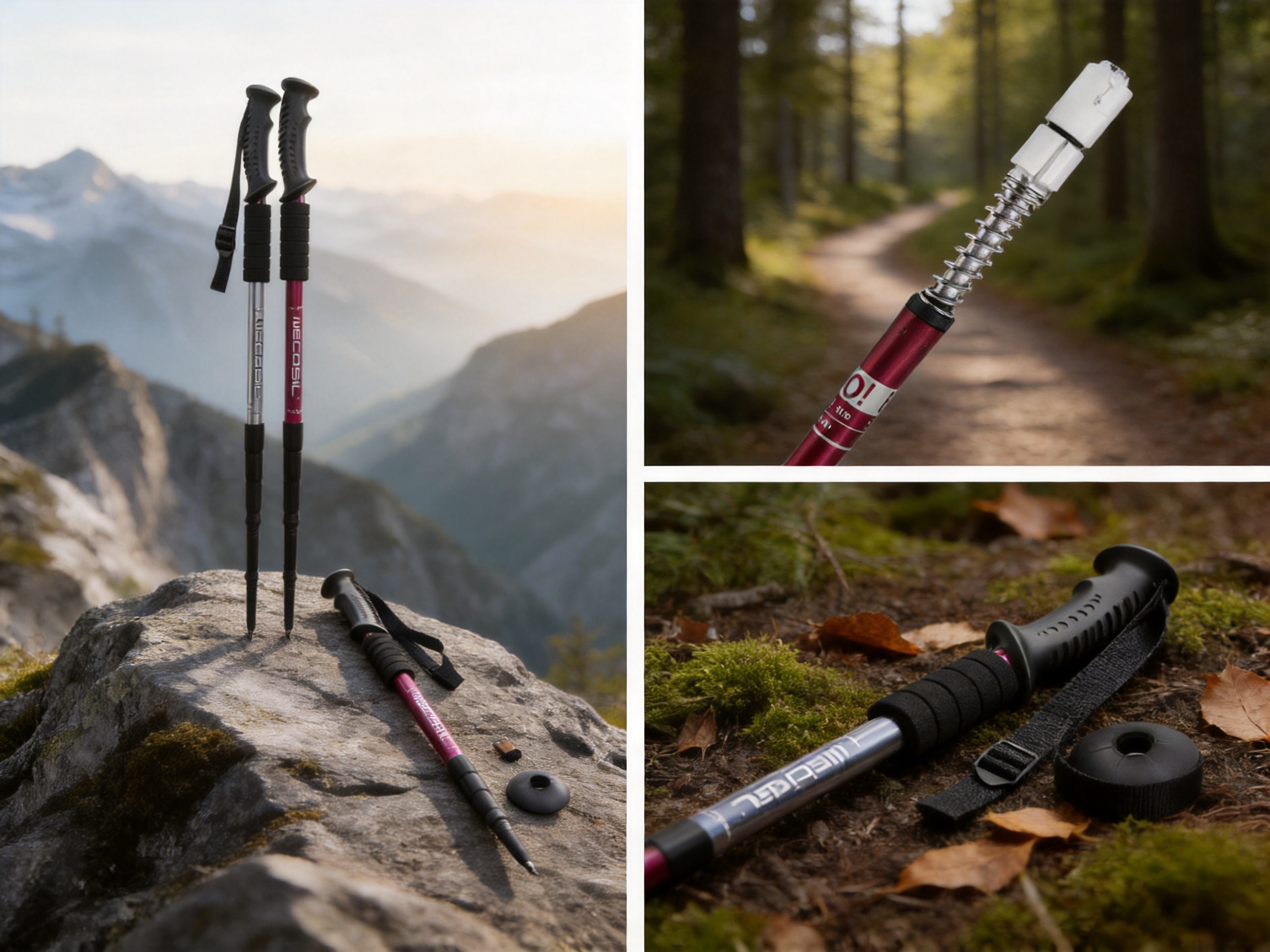
The product is suitable for long-distance treks, daily hiking, camping trips, backpacking, and general mountaineering activities. Its internal locking structure supports compact carrying, while the aluminum alloy shaft provides practical durability for regular outdoor use.
During long-distance trekking, the lightweight construction helps reduce carrying fatigue. During daily hiking, the telescopic adjustment allows the pole to be adapted to the user’s height and route conditions. On camping trips, the pole can be transported with other equipment without taking up excessive space. For recreational mountaineering, the shock absorption and non-slip handle provide additional comfort during repeated movement over uneven ground.
The pole should be selected according to the intended activity. It is not a substitute for specialized mountaineering equipment used in climbing protection, arrest systems, or technical ascent. Its primary role is walking support, balance assistance, and impact management during hiking and trekking.
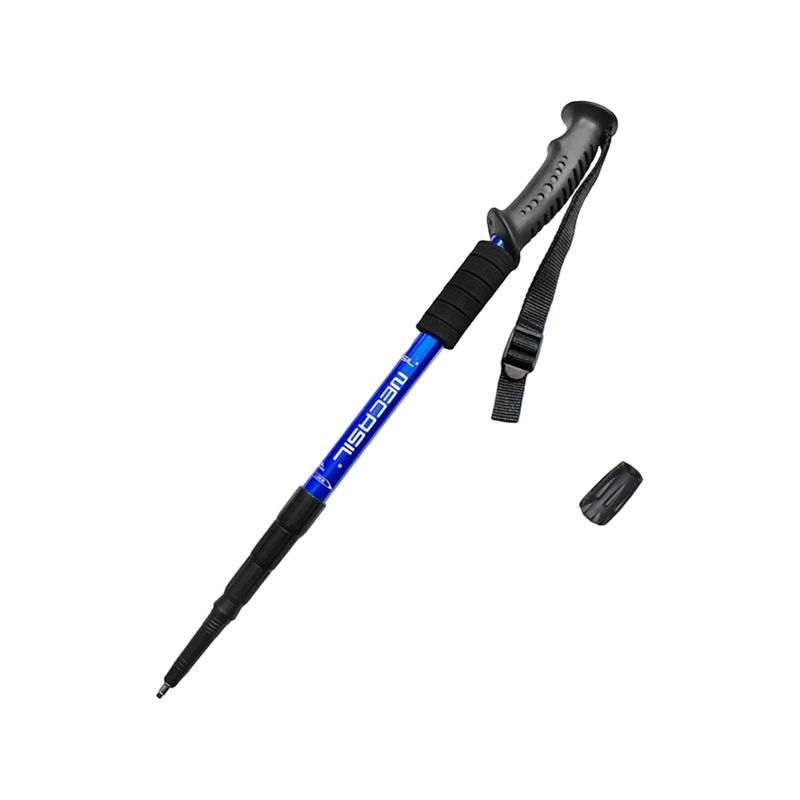
Ultralight, internally locking aluminum alloy straight handle trekking pole with telescopic strap and shock absorption.
Manufacturing Approach and Product Development
Design Based on Real Outdoor Conditions
CragHaven Outdoor develops products around actual outdoor use rather than relying only on catalog specifications. This approach begins by considering weather, terrain, walking duration, carrying habits, and the way outdoor users interact with equipment over time.
For a trekking pole, these considerations include how quickly the sections extend, how the user adjusts the lock with cold or tired hands, how the handle feels after several hours, and how the pole is stored between trips. They also include the effect of dirt, moisture, repeated loading, temperature changes, and ordinary transport on the product.
Designing from usage scenarios helps connect individual components to a practical purpose. The internal lock is selected for a clean and compact structure. The aluminum alloy shaft supports a balance between weight and strength. The spring mechanism addresses repetitive impact, while the handle and strap focus on comfort and control.
Manufacturing-Driven Design
A product may look effective in a prototype but still be difficult to manufacture consistently. CragHaven Outdoor emphasizes manufacturing-driven design, which means that product concepts are developed together with production capabilities, component availability, assembly requirements, and quality-control procedures.
This approach helps reduce unnecessary complexity. Components are reviewed for repeatable production, suitable tolerances, and practical assembly. The objective is not to add features simply to increase the specification list. Instead, each feature should contribute to outdoor performance, user comfort, durability, or supply-chain reliability.
For an internally locking trekking pole, manufacturing-driven design may involve checking the fit between shaft sections, the performance of the expansion mechanism, the alignment of the handle assembly, the travel of the spring, and the consistency of the strap attachment. These details affect the user experience even when they are not visible in product photography.
Material Selection and Compatibility
Material selection must consider how different parts function together. The aluminum alloy shaft requires compatible internal locking components that can hold securely without excessive wear. The handle material must provide comfort while remaining firmly attached to the shaft. The spring must maintain its intended response through repeated compression and release.
Material compatibility also affects environmental performance. Outdoor equipment may be exposed to humidity, dust, sweat, rain, mud, and temperature changes. A reliable design should consider surface protection, component fit, drainage, and storage conditions. While no trekking pole is maintenance-free, suitable materials and careful assembly can help extend useful service life.
The company’s product philosophy prioritizes durability, reliability, and long-term use rather than short-term trends. This principle is relevant for retailers and distributors who need products that generate customer confidence beyond the first purchase. A trekking pole that feels consistent, adjusts smoothly, and remains comfortable over repeated trips is more valuable than one that relies only on visual styling.
Sampling and Testing Procedures
Sampling is an important stage between design and mass production. Prototype and pre-production samples allow the product team to evaluate the physical interaction of the components. For this trekking pole, sampling can be used to check the locking force, extension smoothness, shock absorption response, handle comfort, strap adjustment, shaft alignment, and overall balance.
Repeated adjustment is particularly important for telescopic products. The sections should extend and retract without unnecessary friction, while the lock should hold the selected length during normal use. Testing can also identify whether the lock requires excessive twisting, whether the components become difficult to operate after contamination, and whether the shaft shows abnormal movement under load.
Functional testing should be combined with visual inspection. Surface finish, printing, color consistency, handle attachment, strap stitching, and tip installation all influence perceived quality. A structured inspection program helps identify defects before products reach customers.
CragHaven Outdoor treats sampling, testing, and optimization as standard processes rather than optional steps. This supports stable product development and gives OEM customers a clearer path from initial concept to repeatable production.
Assembly Quality and Process Control
The performance of an internally locking pole depends heavily on assembly accuracy. If the internal mechanism is not positioned correctly, the pole may fail to lock evenly. If the shaft sections are not aligned, extension may feel rough. If the handle or spring assembly is not secured properly, the user may experience movement or noise.
Process control helps ensure that each production stage follows defined requirements. Incoming materials can be checked for dimensional consistency. Components can be inspected before assembly. Finished poles can be reviewed for lock operation, structural alignment, handle security, and appearance.
Quality control is especially important for products supplied to international markets. Retailers need consistent specifications across production batches, and end users expect the product to perform in the same way as the sample shown in sales materials. Consistent inspection and documentation help reduce uncertainty for buyers and support long-term commercial relationships.
Technical Design Considerations
Adjustable Length
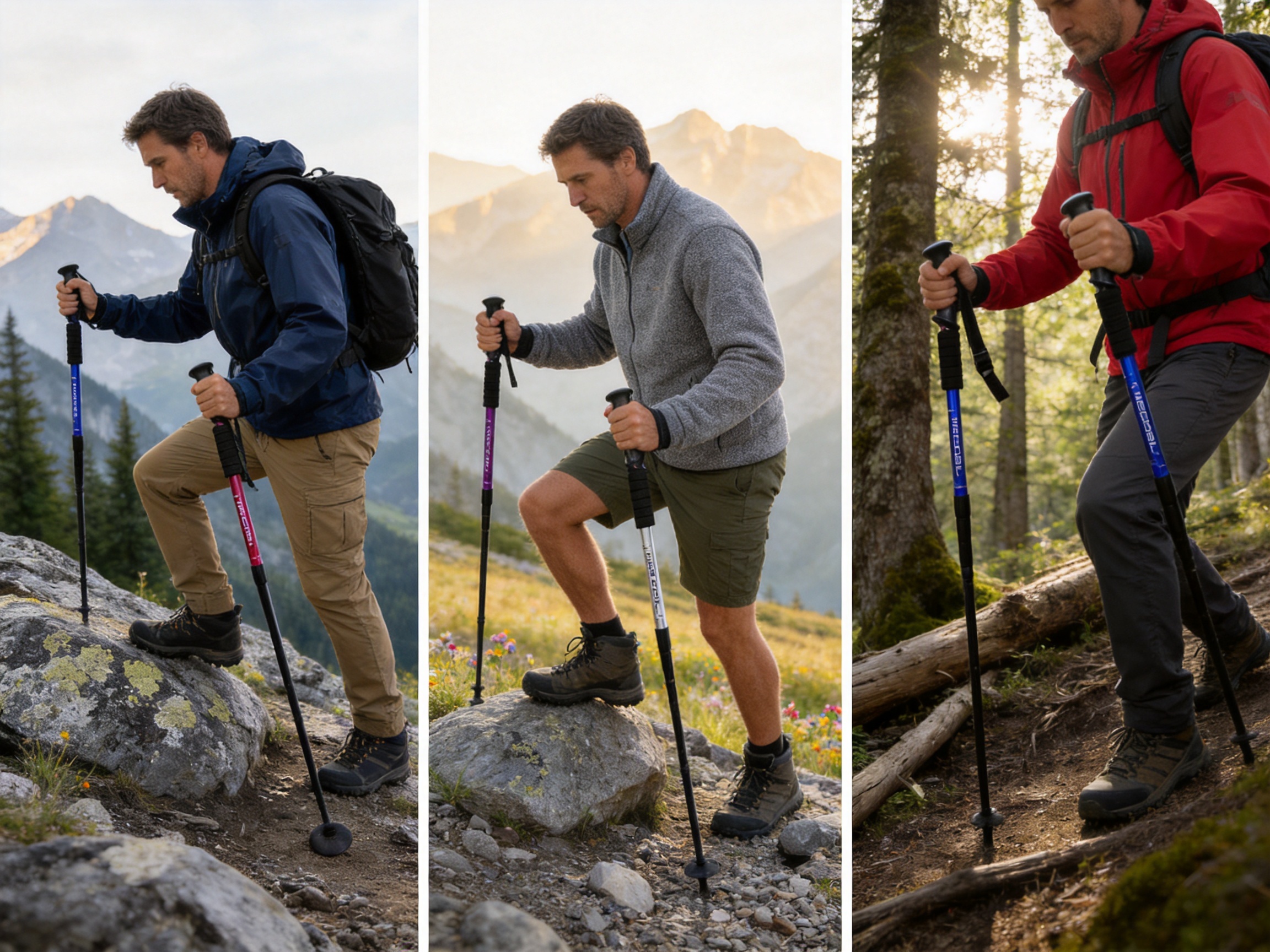
The telescopic structure allows the pole to be adjusted to suit the user’s height and the terrain. A generally shorter setting may be useful for uphill walking, while a longer setting can provide support during descents. On relatively flat ground, users can select a neutral length that keeps the elbows comfortably bent.
Users should adjust both poles to similar lengths when walking on ordinary trails. On traverses or steep side slopes, small differences may improve balance, but adjustments should be made carefully. The lock should always be fully engaged before the user places significant weight on the pole.
Internal Lock Operation
To adjust an internal lock trekking pole, the user typically loosens the sections by rotating them in the appropriate direction, extends or retracts the shaft, and then rotates the sections to secure the internal expansion mechanism. The exact operating direction should follow the product instructions.
Users should avoid forcing the mechanism beyond its normal range. Excessive tightening may make later adjustment difficult or place unnecessary stress on internal components. The shaft should also be kept reasonably clean and dry. Grit or moisture inside the tube can affect smooth operation over time.
Shock Absorption Response
The built-in spring is intended to provide controlled movement when the pole meets the ground. Users may notice a small amount of travel as the system responds to impact. This movement should not be confused with a loose or improperly locked shaft.
The shock absorption system is most useful when the pole is planted in a controlled manner. The tip should make stable contact rather than striking the ground at an extreme angle. A balanced walking rhythm helps the spring operate smoothly and reduces unnecessary stress on the pole.
Grip and Strap Adjustment
The handle should be held securely but not squeezed excessively. The strap can be adjusted so that the wrist is supported while the hand remains relaxed. Many users find it helpful to place the hand upward through the strap and then wrap the fingers around the handle, although personal preference and product instructions should guide final use.
When moving downhill, users may place more load through the poles. The strap should remain comfortable and should not be used as the only support point when the terrain is unstable. The handle provides the primary grip, while the strap assists control and reduces fatigue.
Comparison with Alternative Trekking Pole Constructions
| Feature | Internal Lock Aluminum Pole | External Clamp Pole | Basic Fixed Pole | Folding Pole |
|---|---|---|---|---|
| Adjustment | Twist adjustment through an internal expansion mechanism | Quick lever adjustment through an external clamp | Limited or no length adjustment | Section-based folding and adjustment |
| External Profile | Smooth and streamlined | Visible clamp components | Simple shaft profile | May include connectors and cords |
| Portability | Telescopic and suitable for compact carrying | Telescopic but may have a larger external lock | Often less convenient for transport | Very compact when folded |
| Adjustment Speed | Moderate | Fast | Limited | Moderate, depending on design |
| Impact Comfort | Built-in spring shock absorption | Depends on model | Usually direct and rigid | Depends on model |
| Typical Use | Long-distance hiking, trekking, daily outdoor use | Routes requiring frequent length changes | Specialized or simple walking applications | Travel and compact storage |
Compared with a basic fixed pole, the telescopic design offers greater flexibility for users of different heights and for terrain with changing gradients. Compared with an external clamp pole, the internal lock provides a cleaner profile and fewer exposed mechanical parts. Compared with a folding pole, the telescopic configuration may provide a familiar adjustment method and a straightforward shaft structure.
Each construction has a suitable market position. The product described here is intended for customers who want a balance of weight, adjustment, comfort, and dependable everyday support. It is not designed to claim that one locking method is universally superior. Instead, it combines the advantages most relevant to long-distance hiking and general outdoor use.
Benefits for Retailers, Wholesalers, and Outdoor Brands
Broad Market Positioning
The product can be positioned across several outdoor categories, including hiking equipment, trekking accessories, camping gear, travel equipment, and recreational mountaineering supplies. Its combination of practical features gives retailers flexibility when presenting the product to different customer groups.
For beginners, the shock absorption system and ergonomic grip offer an accessible introduction to trekking poles. For experienced hikers, the aluminum alloy shaft and internal locking structure provide a lightweight and functional option. For travelers, the telescopic form supports easier packing and transportation.
Clear Product Story
A product is easier to market when its main benefits are understandable. The core story of this pole is based on five practical points: lightweight aluminum alloy construction, internal locking adjustment, spring shock absorption, comfortable straight handle, and telescopic portability.
These features can be communicated through product packaging, online listings, demonstrations, and retailer training. The product does not need to rely only on complex technical terms. Customers can understand how the pole supports comfort, stability, and convenient carrying during real outdoor activities.
OEM and Custom Supply Potential
CragHaven Outdoor operates as both an outdoor brand and a cross-border manufacturing partner. Its capabilities are intended to support global retailers, distributors, and outdoor companies seeking dependable products and professional communication.
OEM customers may require adjustments to color, packaging, labeling, logo placement, strap design, surface finish, or product combinations. The feasibility of each customization depends on order volume, component availability, tooling requirements, and production planning. A manufacturing partner that participates in design and sampling can help customers evaluate these requirements before mass production.
The objective is to create a stable and repeatable supply program rather than treating each order as an isolated transaction. Clear specifications, approved samples, inspection standards, and production schedules can help reduce uncertainty and improve communication between the supplier and the buyer.
Supply-Chain Reliability
Hangzhou and the wider Zhejiang manufacturing region benefit from an established industrial ecosystem with access to materials, components, processing services, packaging suppliers, logistics providers, and export support. This environment can help outdoor equipment companies coordinate development and production more efficiently.
CragHaven Outdoor uses this manufacturing environment to connect product design with practical production resources. The company’s approach emphasizes stable quality, long-term partnerships, and scalable manufacturing rather than short-term sourcing alone.
Care and Maintenance Recommendations
Regular care can help maintain smooth operation and extend the service life of a trekking pole. After use in muddy or wet conditions, users should wipe the exterior and allow the pole to dry before storing it. If the sections contain visible dirt, they should be separated and cleaned according to the manufacturer’s care recommendations.
Users should inspect the internal lock periodically. The pole should be checked for unusual slipping, excessive movement, cracking, dents, or difficulty during adjustment. Any sign that the pole cannot hold its selected length should be treated seriously, and the pole should not be used for load-bearing support until the problem is resolved.
The handle and strap should also be inspected. The strap should remain securely attached, and stitching should not show significant damage. The handle should not rotate independently from the shaft. The spring system should operate with controlled movement rather than sudden looseness or abnormal noise.
Trekking poles should be stored in a dry location away from prolonged heat, direct sunlight, and corrosive chemicals. They should not be stored while wet inside a sealed bag. Proper storage is particularly important for products used near saltwater, muddy trails, or humid environments.
How to Select the Right Model for Different Users
Long-Distance Backpackers
Backpackers typically prioritize weight, compactness, durability, and comfort. The ultralight aluminum alloy shaft reduces the burden of carrying the equipment throughout the day. The internal locking structure creates a streamlined form, and the telescopic design allows the poles to be packed with other gear.
The shock absorption system can be useful for repetitive movement on hard trails and long descents. Backpackers should still consider packed dimensions, total weight, replacement tips, and compatibility with their existing equipment before purchase.
Daily Hikers
Daily hikers often need a versatile product that can be adjusted quickly enough for changing paths while remaining comfortable for regular use. The straight handle, non-slip surface, and wrist strap support a familiar walking experience. The internal lock provides a clean design for users who do not need to make constant length changes.
For city-edge trails, forest paths, and moderate mountain routes, the pole can provide extra stability and support without the complexity of specialized climbing equipment.
Camping and Travel Users
Camping and travel users often value equipment that is easy to transport between destinations. A telescopic pole can be reduced in size for storage in luggage, a vehicle, or a camping equipment bag. The aluminum alloy construction is appropriate for users who want a practical product that can withstand ordinary transport and outdoor use.
When used around a campsite, the pole should be treated as walking equipment. It should not automatically be used as a tent support, structural brace, or load-bearing component unless the specific design and instructions clearly allow that use.
Outdoor Retail Customers
Retail customers may be comparing products based on price, comfort, appearance, and perceived durability. The product’s feature combination gives retailers several points of differentiation: internal locking technology, aluminum alloy construction, integrated shock absorption, ergonomic handling, and adaptable outdoor use.
Retail staff can explain that the choice between internal and external locks depends on user preference. This transparent explanation helps customers select products based on their actual needs rather than suggesting that one mechanism is suitable for every activity.
Quality, Reliability, and Long-Term Value
Outdoor equipment is exposed to repeated use and unpredictable conditions. Long-term value depends on whether the product continues to function consistently after multiple trips, not only on how it appears when new. A reliable trekking pole should adjust smoothly, lock securely, remain comfortable in the hand, and maintain structural integrity during ordinary use.
CragHaven Outdoor’s development philosophy is based on reducing uncertainty for customers. The company participates in product design and manufacturing instead of focusing only on factory sourcing. This allows product requirements, sampling, testing, and production considerations to be discussed as part of one process.
China’s mature outdoor manufacturing ecosystem provides access to experienced production resources and supporting industries. When these resources are managed through clear specifications and controlled processes, they can support stable product quality and scalable supply.
For global retailers, this manufacturing model can simplify communication. Instead of purchasing a generic product without understanding its development background, buyers can work with a partner that considers application scenarios, material decisions, production feasibility, and repeat-order requirements.
Using Trekking Poles Safely
Users should inspect the pole before every major trip. The shaft should be free from severe dents or cracks, and the internal lock should hold the selected length. The handle, strap, spring, and tip should be properly attached. If any component appears damaged, the pole should be repaired or replaced before use.
The pole should be adjusted so that the elbow remains comfortably bent during normal walking. Length may be changed for uphill and downhill movement, but both poles should be locked securely after every adjustment. Users should avoid placing their full body weight on a pole that is not fully locked.
On snow, ice, loose rock, or wet surfaces, the pole tip may not provide sufficient traction by itself. Users should select appropriate tips or baskets when available and remain aware that trekking poles do not eliminate the risk of slipping. In technical climbing situations, trekking poles should not be confused with certified climbing protection equipment.
When crossing obstacles, users should avoid trapping the pole between rocks or roots. Sudden lateral forces can damage the shaft or locking mechanism. Careful placement and a controlled walking rhythm help protect both the equipment and the user.
Q&A
What is an internally locking trekking pole?
An internally locking trekking pole uses an expansion mechanism positioned inside the shaft. Rotating the pole sections activates the mechanism, which presses against the inner wall and secures the selected length. The design provides a smooth exterior and avoids a large external lever clamp.
What are the main benefits of the aluminum alloy shaft?
Aluminum alloy provides a practical combination of strength, manageable weight, durability, and manufacturing consistency. It is suitable for users who want a trekking pole that is light enough for long-distance carrying while remaining appropriate for regular hiking and outdoor use.
Is an internal lock better than an external lock?
Neither system is universally better. Internal locks provide a cleaner and more streamlined structure and are well suited to users who value compact carrying. External locks are generally faster to operate and easier to inspect visually. The right choice depends on adjustment frequency, terrain, portability requirements, and personal preference.
How does the spring shock absorption system work?
The spring allows controlled movement when the pole tip contacts the ground. This can moderate the transmission of sudden impact and improve comfort during repetitive walking. The system works best when the pole is adjusted correctly and planted in a controlled manner.
Is this trekking pole suitable for long-distance hiking?
Yes. The lightweight aluminum alloy shaft, telescopic construction, ergonomic handle, wrist strap, and shock absorption system are designed for long-distance trekking and general hiking. Users should select the correct length and inspect the locking mechanism regularly during extended trips.
Can the pole be used for mountaineering?
The pole is suitable for walking support during general mountaineering, hiking, and trekking activities. It should not be used as a substitute for technical climbing equipment, ice tools, fall-arrest systems, or certified load-bearing protection devices.
How should the internal lock be maintained?
The shaft should be kept reasonably clean and dry. After use in mud or wet conditions, the pole should be wiped and dried before storage. Users should avoid excessive tightening and should inspect the pole for slipping, unusual looseness, or damage.
What makes the straight handle comfortable?
The ergonomic straight handle is designed to provide a natural grip and reduce pressure during extended use. Its non-slip surface helps maintain control, while the telescopic strap supports the wrist and can reduce the need to grip the handle continuously with excessive force.
Can CragHaven Outdoor support customized orders?
CragHaven Outdoor operates as an outdoor brand and manufacturing partner and can discuss OEM requirements with global retailers, distributors, and outdoor brands. Potential customization may include packaging, colors, labels, logo applications, and selected component details, subject to product feasibility and order requirements.
What should buyers evaluate before placing a wholesale order?
Buyers should review the approved sample, shaft material, adjustment range, locking performance, handle design, strap construction, shock absorption behavior, packaging, inspection requirements, production schedule, and customization options. Clear specifications help ensure consistent production across repeat orders.
Conclusion
The ultralight internally locking aluminum alloy trekking pole is designed to provide dependable support, comfortable handling, and practical portability for hikers, backpackers, campers, and recreational mountaineers. Its aerospace-grade aluminum alloy shaft balances weight and strength, while the internal locking system creates a clean exterior and compact telescopic structure.
The built-in spring shock absorption system adds comfort during repetitive movement, and the ergonomic non-slip straight handle supports a stable grip over long periods. The telescopic strap further improves control and helps users maintain a relaxed hand position. Together, these features create a versatile trekking pole for everyday outdoor use and extended travel.
Its value also comes from the manufacturing process behind the product. CragHaven Outdoor combines scenario-based design, material selection, sampling, testing, manufacturing-driven development, and China’s mature supply-chain resources. This approach supports reliable product quality and gives global retailers and outdoor brands a practical foundation for OEM and wholesale cooperation.
For users, the most important choice is not simply between internal and external locks. The complete product must match the intended terrain, walking duration, carrying needs, comfort expectations, and maintenance habits. For customers seeking a streamlined, lightweight, shock-absorbing trekking pole with a durable aluminum alloy construction, this internally locking model offers a balanced and commercially practical solution.
References
1. International Organization for Standardization. Walking Poles and Outdoor Equipment: General Product Safety and Performance Considerations.
2. American College of Sports Medicine. Physical Activity, Walking Mechanics, and Musculoskeletal Load Management.
3. Outdoor Industry Association. Consumer Use Patterns for Hiking, Trekking, and Camping Equipment.
4. Aluminum Association. Properties and Applications of Aluminum Alloys in Lightweight Engineering Products.
5. International Organization for Standardization. Quality Management Principles for Consistent Manufacturing and Supplier Control.
6. Mountaineering and Outdoor Equipment Design. Materials, Ergonomics, Load Distribution, and Field-Use Evaluation.
Product: Ultralight, internally locking aluminum alloy straight handle trekking pole with telescopic strap and shock absorption.


- Phone: +86-15968800379
- E-mail: [email protected]
- Address: Room 1002, Huishang Building, Gongshu District, Hangzhou City, Zhejiang Province.
Copyright © CragHaven Outdoor All Rights Reserved. Outdoor Gear Manufacturers Wholesale Mountaineering Camping Gear Suppliers
