

 English
 Deutsch
 Español
 Français

Outdoor Picnic Camping Canopy: Sun Protection, Stability, and Practical Design for Global Markets
Content
- 1 Product Overview
- 2 Why the Black Vinyl Coating Matters
- 3 210D Oxford Cloth: A Balanced Fabric Choice
- 4 Reinforced Steel Frame for Headroom and Stability
- 5 Butterfly Canopy Geometry and Shade Coverage
- 6 Comparison with Common Canopy Alternatives
- 7 Manufacturing Strengths and Product Development
- 8 OEM and Private-Label Potential
- 9 Quality Control Considerations
- 10 Practical Setup and Use Guidance
- 11 Retail Positioning and Customer Benefits
- 12 Environmental and Long-Term Value Considerations
- 13 Frequently Asked Questions
- 13.1 What is the main purpose of the black vinyl coating?
- 13.2 Is this product suitable for backpacking?
- 13.3 Why use 210D Oxford cloth?
- 13.4 What does the butterfly shape add to the design?
- 13.5 Does the steel frame make the canopy windproof?
- 13.6 Can the product be customized for private-label sales?
- 13.7 How should the canopy be stored?
- 13.8 What type of customer is most likely to value this product?
- 14 Conclusion
- 15 References
- 16 Product: Outdoor picnic camping black vinyl tent, rainproof and sunshade canopy, picnic butterfly curtain canopy
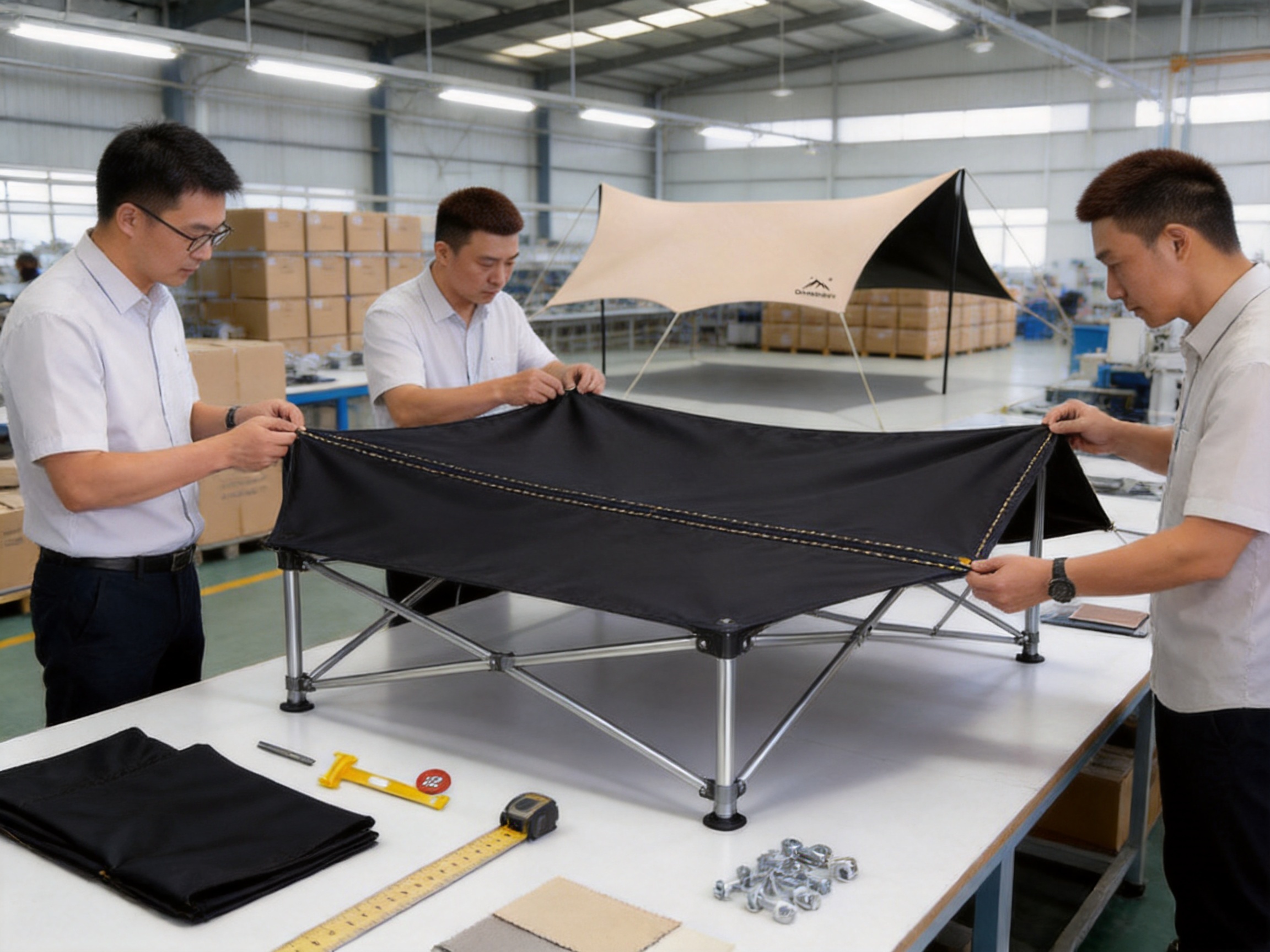
Outdoor shelters must do more than create a shaded area. They need to manage sunlight, rain, wind, repeated setup, transportation, and the everyday demands of family recreation. The outdoor picnic camping black vinyl tent described in this article is designed around those practical requirements. It combines a black vinyl-coated canopy, 210D high-density Oxford cloth, a reinforced steel frame, and a butterfly-shaped roof profile to provide a dependable shelter for picnics, beach days, camping areas, outdoor events, and other stationary or semi-stationary applications.
Unlike a lightweight backpacking tent, this product is intended to prioritize coverage, shade performance, structural stability, and comfort. It is particularly suitable for users who need a reliable outdoor canopy that can be transported by vehicle and assembled at a park, beach, campsite, garden, or family gathering. The design recognizes that outdoor comfort is affected by more than waterproofing alone. Temperature, ultraviolet exposure, headroom, airflow, water runoff, frame strength, and ease of repeated use all contribute to the quality of the shelter.
CragHaven Outdoor develops outdoor products for global retailers, distributors, and OEM customers. Its approach combines practical scenario research with material selection, sampling, testing, and production optimization. This allows the product to serve not only as a finished retail item but also as a dependable platform for private-label and customized outdoor gear programs.
Product Overview
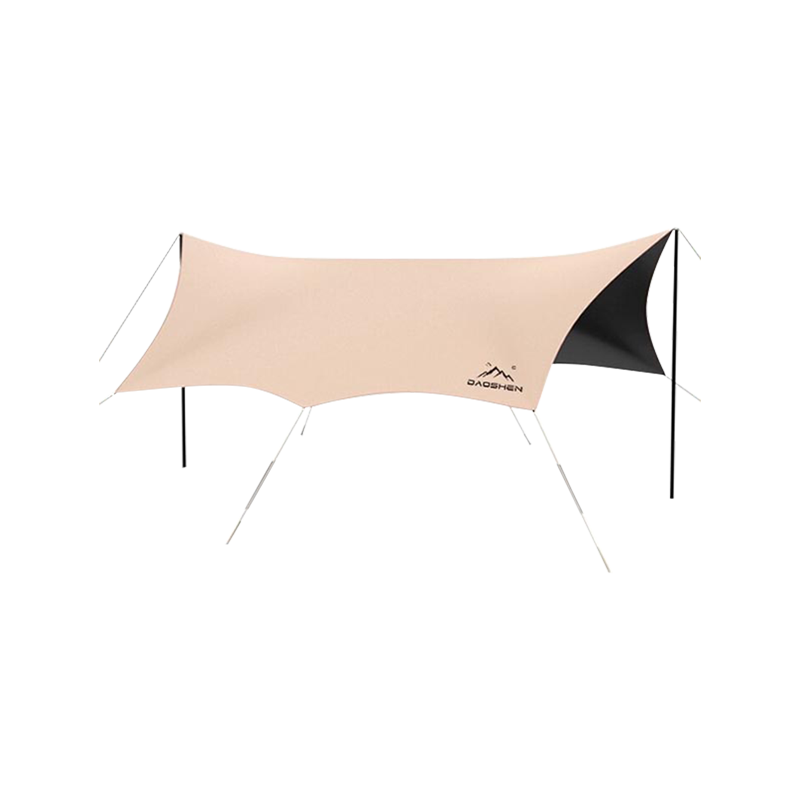
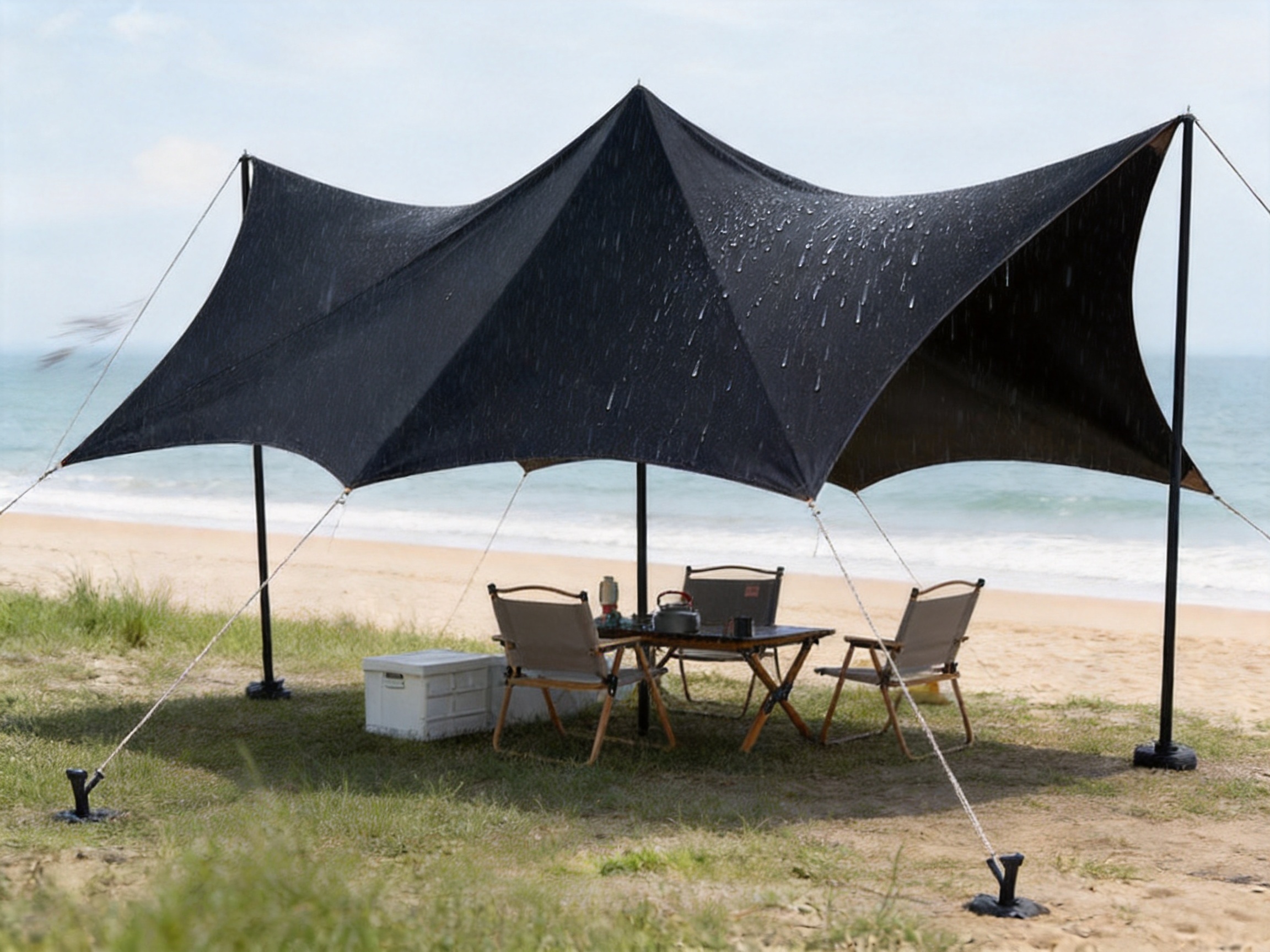
The outdoor picnic camping black vinyl tent is a rainproof and sunshade canopy with a distinctive butterfly curtain profile. Its black vinyl coating is designed to reduce solar transmission and improve protection beneath the canopy. The 210D Oxford cloth provides a balance of strength and manageable weight, while the steel frame supports the shelter and contributes to stability in outdoor conditions.
The butterfly-shaped roof creates a raised central profile and a broad shaded footprint. This geometry helps the canopy shed rain more effectively than a flat-top structure and offers a visually distinctive alternative to basic square or rectangular pop-up shelters. The taller frame also creates more usable headroom, making it easier for adults to sit, stand, move, and arrange furniture beneath the shelter.
The product is suitable for family picnics, beach relaxation, outdoor dining, campsite gatherings, weekend travel, garden activities, and other uses where shade and weather protection are important. It is not designed as a specialized mountaineering tent or an ultralight backpacking shelter. Instead, it occupies a useful middle ground between a temporary sunshade and a more substantial outdoor canopy.
| Product feature | Practical benefit | Primary user value |
| Black vinyl coating | Reduces sunlight and ultraviolet transmission | Cooler, more comfortable shaded space |
| 210D Oxford cloth | Balances tear resistance, wear resistance, and weight | Better suitability for repeated outdoor use |
| Taller reinforced steel frame | Improves headroom and structural support | More comfortable movement and greater stability |
| Butterfly-shaped canopy | Creates broad shade and encourages rain runoff | Improved coverage during changing sun angles |
| Canopy and anchoring system | Transfers wind loads toward the ground | More dependable setup when properly secured |
Why the Black Vinyl Coating Matters
Canopy fabrics are often judged by appearance, but the coating applied to the fabric can have a greater effect on outdoor performance than color alone. The black vinyl coating used in this product is intended to improve sun protection by forming a dense surface layer that limits the amount of solar radiation passing through the canopy.
Standard uncoated polyester fabrics may block some sunlight through their weave and color, but their performance depends heavily on fabric density, yarn construction, and the spacing between fibers. Light-colored fabrics can reflect a significant amount of visible light, yet visible brightness and ultraviolet protection are not the same thing. A fabric may appear bright and reflective while still allowing a portion of ultraviolet radiation through its structure.
The black vinyl layer provides an additional barrier. It absorbs and interrupts much of the incoming ultraviolet radiation at the coated surface rather than allowing it to pass directly through the fabric weave. This can help create a more protective shaded environment beneath the canopy. For families spending several hours outdoors, reducing direct solar exposure can make the difference between a comfortable shelter and a space that is used only briefly.
Vinyl coating also offers an advantage over some basic PU-coated fabrics when the canopy is used repeatedly in strong sunlight. Polyurethane coatings can gradually degrade under extended ultraviolet exposure. As the coating ages, it may become brittle, lose waterproofing performance, or begin to separate from the base fabric. Vinyl is not immune to aging, but it is generally selected for applications where stronger surface protection and repeated seasonal use are important.
This material choice does involve a tradeoff. Vinyl-coated fabric is typically heavier and less flexible than a very light PU-coated alternative. That makes it less suitable for users who carry every item over long distances. However, a family traveling by car, a beach user transporting equipment in a vehicle, or a campground operator seeking a sturdy shade product may prefer the increased protective performance over the lowest possible packed weight.
The product is therefore positioned for practical outdoor use rather than extreme weight reduction. Its coating supports a shelter concept based on comfort and durability: establish the canopy at the destination, create a broad shaded area, and enjoy the outdoor environment without being exposed continuously to direct sunlight.
Sun Protection for Extended Outdoor Activities
A short stop in the shade and a full day outdoors create different demands. For a brief visit, almost any canopy may provide acceptable relief. During a long picnic, beach gathering, or campsite stay, however, the quality of the shade becomes more important. The canopy must reduce glare, limit radiant heat, and continue to perform after hours of exposure.
The black coating is especially relevant in these longer-use scenarios. It helps limit the amount of light passing through the roof and can make the space beneath feel more sheltered than an open-weave or lightly colored canopy. Users should still follow responsible sun-safety practices, including using sunscreen, wearing protective clothing, and avoiding excessive exposure. A canopy improves protection, but it does not eliminate all reflected or indirect ultraviolet radiation.
For retailers, the coating also creates a clear product distinction. Many basic outdoor shelters compete primarily on price or portability. A black vinyl canopy can instead be presented around measurable user benefits: stronger shade performance, greater visual privacy from above, a more substantial feel, and suitability for repeated summer use.
210D Oxford Cloth: A Balanced Fabric Choice
The canopy uses 210D high-density Oxford cloth, a fabric specification selected to balance durability and weight. The “D” designation refers to denier, a measurement related to the mass and thickness of the yarn. Denier should not be treated as the only indicator of quality, because weave structure, coating, finishing, stitching, seam construction, and quality control also influence performance. Nevertheless, 210D is a practical middle-range choice for many outdoor canopy applications.
Very light fabrics can reduce packed weight, but they may be more vulnerable to punctures, abrasion, and tearing when repeatedly installed on hard ground or exposed to strong wind loads. Heavier fabrics may provide more ruggedness, but they also increase the weight, volume, and cost of the finished product. A 210D construction offers a practical compromise for a canopy that must be strong enough for recurring outdoor use without becoming unnecessarily difficult to transport.
Oxford cloth is commonly associated with a basket-style weave. This construction interlaces yarns in a way that can distribute stress across a broader area. When a small snag or puncture occurs, the weave may help reduce the tendency for the damage to spread rapidly along one straight thread line. The result is a fabric suited to the repeated handling, folding, unfolding, and ground contact associated with family and recreational canopies.
High-density construction is also useful for reducing unwanted air movement through the fabric. Combined with the vinyl coating, the dense base cloth supports the canopy’s resistance to water penetration and helps provide a more enclosed feeling beneath the roof. The final level of performance depends on the coating thickness, seams, stitching, seam treatment, and manufacturing consistency, which is why material selection must be paired with effective production control.
Wear Resistance in Real Outdoor Conditions
Outdoor products rarely fail because of one dramatic event. More often, wear accumulates through repeated setup, folding, storage, transportation, contact with rough surfaces, and exposure to changing weather. A fabric that performs well in a single laboratory test may still disappoint if it becomes damaged during ordinary handling.
The 210D Oxford cloth is intended to withstand common sources of wear, including contact with grass, sand, packed soil, picnic equipment, tent poles, storage bags, and occasional brush. Its coated surface can also reduce friction against some outdoor surfaces. Nevertheless, users should avoid dragging the canopy across sharp rocks, placing it directly on abrasive debris, or packing it while wet for extended periods.
For manufacturers and retailers, this balance between performance and usability is important. A canopy that is too delicate creates customer dissatisfaction and warranty pressure. A canopy that is unnecessarily heavy can be difficult to sell to mobile users. The 210D fabric offers a credible middle option for a broad range of recreational scenarios.
CragHaven Outdoor’s product development process considers the fabric as part of a larger system. The base cloth, vinyl coating, seams, frame contact points, storage method, and intended use are evaluated together. This system-based approach is more useful than selecting a fabric based only on a single denier number.
Outdoor picnic camping black vinyl tent, rainproof and sunshade canopy, picnic butterfly curtain canopy
Reinforced Steel Frame for Headroom and Stability
The frame is one of the most important elements in any canopy because it supports the fabric, transfers wind loads, and determines the shape of the usable interior space. This product uses a taller, thicker steel frame to improve stability while creating more headroom beneath the canopy.
A taller frame offers obvious comfort benefits. Adults can sit upright without brushing against the roof, move around more naturally, and arrange tables or chairs without feeling confined. Increased height can also improve the perceived value of the product because the shelter feels more like an outdoor room than a low temporary cover.
However, height must be matched with suitable tube strength. A taller structure can experience greater leverage during gusts because the wind force acts farther above the ground. If the frame is too thin, the additional height may increase bending stress rather than improve the overall experience. For this reason, the steel frame is designed with thickness and structural support in mind rather than treating height as an isolated selling point.
Steel is a logical material for a canopy intended to offer substantial support. Compared with some lightweight alternatives, steel can provide a strong and stable framework at an efficient cost. It also offers a familiar material platform for mass production, inspection, coating, and assembly. The resulting frame may weigh more than an ultralight aluminum structure, but it can provide the solid feel many family and event users expect.
Why Joints and Connections Matter
Frame tubing is only one part of structural performance. Joints, hinges, connection points, brackets, and welds can become critical areas under repeated loading. When wind pushes against the canopy, force travels through the fabric to the frame, then through the frame members and joints toward the legs and ground anchors.
A strong tube connected through a weak joint will not create a strong frame. Reinforced or carefully constructed joints can distribute stress across a larger area and reduce concentrated loading. Manufacturing inspection should therefore examine not only the visual appearance of the tubes but also the alignment, connection quality, weld consistency, moving parts, and fit between components.
CragHaven Outdoor emphasizes sampling and optimization before stable production. This allows frame issues to be identified during development rather than after large-scale production. Prototypes can be checked for opening and closing behavior, alignment, fabric tension, connection interference, and overall stability. Improvements made at this stage can contribute to more consistent products across an order.
Anchoring Is Part of the Structural System
No canopy should be considered windproof simply because it has a strong frame. Wind acts on the entire fabric surface, and the resulting force must eventually be transferred to the ground. Proper stakes, ropes, sandbags, or other anchoring methods are therefore essential, particularly at beaches, open fields, and exposed campsites.
The frame and anchoring method should be viewed as one system. A heavy canopy may remain stable in mild conditions but can still move or lift if placed on an exposed surface without sufficient anchoring. Sand requires different anchoring practices from hard soil, grass, or paved areas. Users should select appropriate weights or stakes and should not leave the canopy unattended in deteriorating weather.
The product’s structural design supports stability, but responsible use remains important. The canopy is most suitable for calm to moderate outdoor conditions when properly assembled and secured. Severe storms, lightning, extreme gusts, heavy snow, and other hazardous conditions require the shelter to be dismantled or protected according to safe operating practices.
Butterfly Canopy Geometry and Shade Coverage
The butterfly profile is a defining feature of the product. Instead of presenting a single flat plane, the roof uses a raised central area and sloping sides. This shape provides visual distinction, but its value is also functional.
A peaked or dual-slope roof can encourage rainwater to move away from the center of the canopy. Flat roofs are more likely to collect standing water if fabric tension is insufficient or if rainfall is heavy. Accumulated water adds weight to the roof and can place additional strain on fabric, seams, frame members, and joints. The butterfly profile helps reduce this risk by encouraging runoff along the sloped surfaces.
The raised center can also improve the interior sense of space. Rather than having a uniformly low ceiling, the canopy provides a higher central zone where users can sit, stand, and move more comfortably. This is valuable for family gatherings where several people share the same sheltered area.
Shade coverage changes as the sun moves across the sky. A canopy that creates excellent shade in the morning may provide less protection from a lower afternoon sun if its footprint is narrow or its side coverage is limited. The broader butterfly shape is designed to provide a more consistent shaded area across changing solar angles. It can be especially useful for groups that remain in one location for several hours.
The roofline may also help with mild-to-moderate airflow compared with a flat surface that catches wind directly. Sloped surfaces can redirect some airflow over the structure rather than presenting a single upright plane. This does not replace anchoring, but it is a useful part of the overall geometry.
Suitable Scenarios for the Butterfly Design
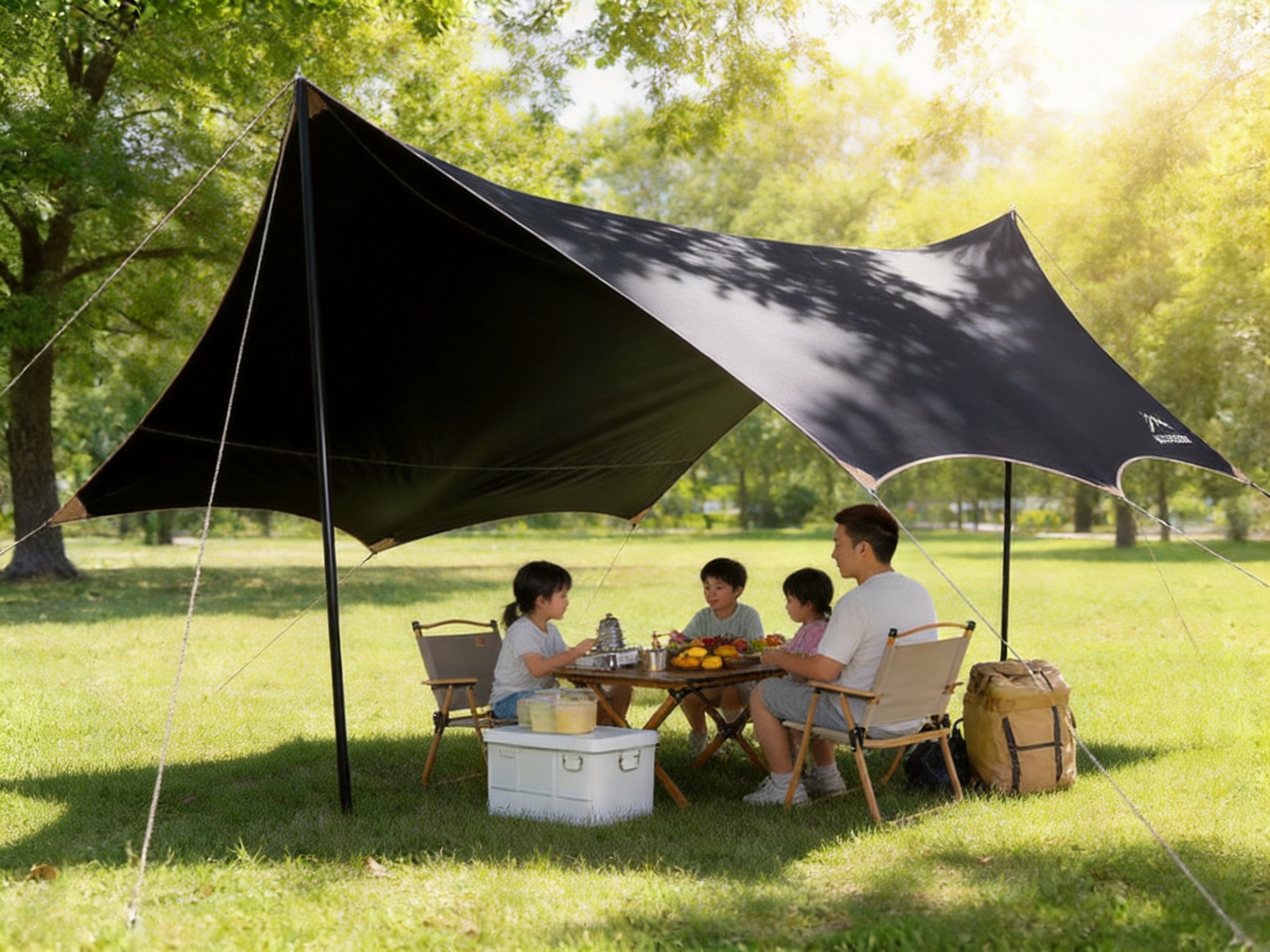
At a family picnic, the canopy can cover seating, food preparation, coolers, bags, and recreational equipment. At the beach, it can create a shaded base for towels and chairs while helping reduce direct exposure to strong sunlight. At a campground, it can serve as a communal dining or relaxation area separate from the sleeping tent.
For outdoor retailers, the butterfly geometry provides a strong visual identity. Many canopies look similar when displayed in a product catalog. A recognizable roof shape can help the item stand out while also giving sales teams practical features to discuss, including broad shade, central headroom, rain runoff, and a more comfortable interior layout.
The design may also suit garden gatherings, temporary hospitality areas, weekend markets, and family celebrations. Its exact application depends on dimensions, local regulations, anchoring conditions, and the user’s setup requirements. It should not be confused with a permanent structure, but it can provide a flexible sheltered area when a fixed roof is unavailable.
Comparison with Common Canopy Alternatives
The product competes with several categories of outdoor shelters, including basic polyester pop-up canopies, lightweight PU-coated shelters, low-cost sunshades, and heavier event tents. Each alternative has a place in the market, but the black vinyl butterfly canopy offers a distinct combination of shade performance, fabric durability, headroom, and structural presence.
| Alternative product type | Typical advantage | Potential limitation compared with this product |
| Lightweight polyester canopy | Lower packed weight and easy transport | May provide less dense sun protection and lower abrasion resistance |
| Light PU-coated shelter | Flexible fabric and compact packing | May age faster under prolonged direct ultraviolet exposure |
| Basic flat-top pop-up canopy | Simple setup and familiar shape | May offer less distinctive shade geometry and less effective rain runoff |
| Low-cost thin-frame canopy | Competitive purchase price | May have reduced rigidity, lower headroom, and weaker joint construction |
| Large permanent event structure | High capacity and long-term installation | Less portable and less suitable for personal recreational use |
| Black vinyl butterfly canopy | Dense shade, durable fabric, broad coverage, and reinforced structure | Heavier and less packable than ultralight alternatives |
The comparison demonstrates that the product should not be marketed only as a low-cost shade cover. Its strongest position is as a value-oriented, durable recreational canopy for users who care about sun protection and comfort but do not need a permanent event structure.
Compared with a standard light-colored polyester canopy, the black vinyl model can offer a more sheltered feeling beneath the roof. Compared with an ultralight PU-coated shelter, it may provide better suitability for repeated hot-weather exposure. Compared with a flat-top canopy, its butterfly profile can create a broader visual footprint and improved water movement.
The tradeoff is weight. Buyers who hike several kilometers to a remote campsite may prefer a lighter design. The product is better suited to vehicle-assisted travel, established campsites, beaches with nearby parking, parks, gardens, and other destinations where transport distance is moderate.
Manufacturing Strengths and Product Development
A reliable outdoor product depends on more than a good product description. The manufacturing process must translate design intentions into consistent materials, repeatable dimensions, reliable seams, functional frames, and dependable packaging. CragHaven Outdoor positions itself as both an outdoor brand and a cross-border manufacturing partner, combining product development with production capabilities.
The company is based in Hangzhou, China, and works with global retailers and OEM customers. Its development philosophy begins with actual outdoor scenarios rather than catalog specifications alone. This means asking how the product will be transported, opened, exposed to weather, stored, cleaned, folded, and used over time.
Scenario-Based Product Development
Scenario-based development helps prevent unnecessary features and focuses attention on issues that customers experience in real life. For a canopy, those issues may include glare beneath the roof, insufficient headroom, difficult frame movement, water pooling, fabric tearing, poor anchoring, and inconsistent fit between the canopy and frame.
By considering these factors during development, the manufacturer can select a fabric and structure that serve the intended market. The black vinyl coating is connected to long-duration sun exposure. The 210D Oxford cloth is connected to repeated handling and outdoor wear. The taller steel frame is connected to comfort and stability. The butterfly geometry is connected to shade coverage and runoff.
This relationship between feature and usage scenario makes the product easier for retailers to explain. Instead of presenting a list of disconnected specifications, sales materials can show how each design decision solves a customer problem.
Sampling, Testing, and Optimization
Sampling is an essential stage in outdoor product manufacturing because many problems are difficult to identify through drawings alone. A physical sample reveals whether the fabric tension is correct, whether the frame opens smoothly, whether the corners align, whether the seams experience excessive stress, and whether the packed product is manageable for the intended user.
Repeated sampling allows the manufacturer to refine dimensions, fabric handling, frame details, packaging, and accessory placement. This process is particularly important for products that combine coated fabric with a mechanical steel structure. The fabric and frame must work together without unnecessary stress or interference.
Testing may include checks related to fabric appearance, coating consistency, seam strength, water resistance, tear resistance, frame operation, corrosion protection, packaging integrity, and product assembly. Exact test programs can vary according to the target market, customer specifications, and applicable regulations. The underlying principle remains the same: performance should be evaluated before the product reaches large-scale production.
CragHaven Outdoor describes sampling, testing, and optimization as standard processes rather than optional additions. This is valuable for OEM buyers because it reduces the risk of treating an unverified prototype as a finished commercial product.
Material and Component Coordination
An outdoor canopy is a multi-component product. The base fabric, vinyl coating, webbing, seams, thread, frame tubes, joints, feet, stakes, ropes, storage bag, labels, and cartons all affect the customer experience. A weakness in one component can reduce the benefit of the others.
For example, a strong fabric cannot compensate for poor stitching. A robust frame cannot perform well if the canopy is cut inaccurately. A waterproof roof may still leak if seams are not handled properly. A durable shelter may generate complaints if the storage bag is too small or the instructions are unclear.
Coordinating these components is one of the strengths of an experienced manufacturing partner. Production planning can connect material purchasing, cutting, sewing, frame fabrication, assembly, inspection, and packing. This integrated approach supports more stable quality and makes it easier to modify the product for different retail programs.
OEM and Private-Label Potential
Global outdoor retailers often require more than a standard product. They may need a specific color, logo placement, packaging format, instruction language, carton marking, accessory combination, or product dimension. A canopy with a strong core design can serve as a platform for these adaptations.
The black vinyl butterfly canopy is suitable for OEM discussions because its main value is based on a clear structure and material concept. Customers can evaluate the product first and then discuss adjustments for their market. Possible project considerations may include fabric color combinations, branding, packaging design, carrying bag specifications, logo printing, accessory selection, and regional compliance requirements.
Customization should be controlled carefully. A change in fabric weight can affect frame loading. A change in canopy dimensions can alter wind forces and packed volume. A change in coating color can affect solar performance. A change in packaging can affect shipping efficiency. For this reason, modifications should be reviewed through sampling and testing rather than approved only from digital artwork.
CragHaven Outdoor’s Western-market-oriented communication style is intended to support this type of cooperation. Retailers need clear information about product positioning, limitations, materials, production timelines, packaging, and quality expectations. Transparent communication helps avoid misunderstandings between brand owners, manufacturers, distributors, and end customers.
Quality Control Considerations
Quality control for a canopy should cover both appearance and function. Visual inspection can identify uneven coating, fabric stains, skipped stitches, incorrect labels, frame scratches, and packaging errors. Functional inspection can identify difficulties with assembly, frame alignment, fabric tension, zipper or curtain operation where applicable, and connection quality.
Fabric inspection should pay attention to coating uniformity, color consistency, pinholes, contamination, weaving defects, edge quality, and dimensional stability. Because black vinyl surfaces can show marks or wrinkles, presentation quality is also relevant to retail acceptance.
Sewing inspection should review stitch density, seam alignment, thread tension, bartacks, reinforcement patches, webbing attachment, and stress points. Canopy corners and frame connection areas deserve particular attention because they may experience concentrated loads.
Frame inspection should include tube dimensions, weld quality, joint movement, corrosion-resistant finishing, sharp edges, locking mechanisms, and overall alignment. The frame should open and close according to the intended design without excessive force or unsafe pinch points.
Packaging inspection is equally important. A well-made canopy can still arrive damaged if the carton is weak or the components are packed without adequate protection. The packed product should be checked for missing accessories, incorrect quantities, crushed corners, moisture exposure, and labeling accuracy.
Practical Setup and Use Guidance
Users should select a level surface free of sharp stones, branches, glass, and other objects that may damage the fabric or create an unstable base. The canopy should be assembled according to the instructions, with the frame fully extended and all relevant connections secured before the fabric is placed under tension.
Anchoring should begin as soon as the canopy is erected, especially in open locations. Beach sand, loose soil, firm grass, and paved areas require different solutions. Sandbags or purpose-designed weights may be more suitable where ordinary stakes cannot achieve sufficient holding power.
The canopy should not be left unattended when weather conditions are changing. Strong gusts can develop quickly near beaches, open fields, and mountain-adjacent areas. If severe weather approaches, users should remove the canopy or follow an appropriate safety plan. No portable shelter should be treated as a substitute for weather judgment.
After use, the fabric should be allowed to dry completely before packing whenever possible. Storing coated fabric while wet can encourage odor, mildew, and coating deterioration. Dirt should be removed with suitable mild cleaning methods, and harsh chemicals or abrasive tools should be avoided unless specifically approved by the manufacturer.
During storage, the canopy should be kept in a dry, ventilated location away from extreme heat, sharp objects, and prolonged direct sunlight. The frame should be checked periodically for bent tubes, loose hardware, corrosion, or damaged joints. Early maintenance can help prevent small issues from becoming larger failures.
Retail Positioning and Customer Benefits
The product can be positioned for consumers who want a substantial outdoor shelter but do not need the complexity of a permanent structure. Its most compelling customer benefits are easy to understand: broad shade, dense sun protection, durable fabric, greater headroom, a distinctive roof shape, and suitability for repeated recreational use.
Retailers can target families, beach users, campsite visitors, garden hosts, outdoor dining enthusiasts, event organizers, and vehicle-based travelers. The product may also appeal to customers who have previously purchased thin or unstable canopies and now want a more durable alternative.
Product communication should be accurate and balanced. The canopy should be presented as a robust recreational shelter, not as an indestructible structure or an all-weather building. Highlighting the need for anchoring and responsible weather use can improve customer confidence because it demonstrates that performance claims are grounded in practical guidance.
The product’s weight should also be communicated honestly. Its vinyl coating and steel frame provide meaningful functional advantages, but they may result in a heavier packed unit than an ultralight polyester canopy. Clear positioning helps customers select the right product for their travel style and prevents disappointment.
Environmental and Long-Term Value Considerations
A durable product can offer environmental value by remaining useful for more seasons and reducing the need for frequent replacement. Fabric that resists tearing, a frame that remains functional, and components that can be maintained all contribute to longer service life.
Long-term value also depends on responsible care. Users who dry the canopy before storage, avoid unnecessary abrasion, protect the frame, and use suitable anchoring methods can help preserve performance. Retailers can support this process through clear care instructions and replacement component programs where practical.
Manufacturing efficiency is another part of long-term value. Stable production processes reduce material waste caused by defects, rework, and inconsistent components. Sampling before mass production can identify problems early, while coordinated material purchasing and inspection can support more efficient use of fabric, steel, packaging, and labor.
CragHaven Outdoor’s stated emphasis on durable materials, repeated testing, and long-term partnerships reflects this broader approach. The objective is not simply to produce a visually attractive item, but to create a stable, repeatable, scalable product for real outdoor use.
Frequently Asked Questions
What is the main purpose of the black vinyl coating?
The black vinyl coating is designed to reduce solar and ultraviolet transmission through the canopy. It helps create a denser, more protective shaded area than many standard uncoated or lightly coated fabrics. It also supports water resistance and surface durability when the product is used and maintained appropriately.
Is this product suitable for backpacking?
It is better suited to vehicle-assisted travel, family picnics, beaches, established campsites, gardens, and other locations where the canopy does not need to be carried long distances. The vinyl coating and steel frame provide practical advantages but make the product heavier than ultralight backpacking shelters.
Why use 210D Oxford cloth?
210D Oxford cloth provides a balance between tear resistance, wear resistance, and manageable weight. It is stronger and more substantial than many very light canopy fabrics while avoiding the unnecessary weight of much heavier materials for ordinary recreational use.
What does the butterfly shape add to the design?
The butterfly profile provides a raised center, broad shade coverage, and sloped roof surfaces that encourage rain runoff. It can also create a more comfortable interior and a distinctive appearance compared with a basic flat-top canopy.
Does the steel frame make the canopy windproof?
No portable canopy should be described as completely windproof. The reinforced steel frame contributes to stability, but correct anchoring and responsible weather decisions are essential. The canopy should be dismantled or secured appropriately when severe weather approaches.
Can the product be customized for private-label sales?
Potential customization may include branding, packaging, color combinations, labels, accessory configurations, and other project details. Custom changes should be reviewed through sampling and testing because modifications can affect weight, wind loading, fabric performance, and shipping dimensions.
How should the canopy be stored?
Dry the canopy thoroughly before packing it. Remove dirt using suitable mild cleaning methods, fold it without forcing sharp creases into coated areas, and store it in a dry, ventilated place away from prolonged sunlight, moisture, and sharp objects.
What type of customer is most likely to value this product?
The product is well suited to families, beach visitors, campers, outdoor dining users, garden hosts, and retailers seeking a durable shade canopy with stronger sun protection and a more substantial structure than a basic pop-up shelter.
Conclusion
The outdoor picnic camping black vinyl tent is designed around the realities of extended outdoor use. Its black vinyl coating addresses sunlight and ultraviolet exposure. Its 210D Oxford cloth balances durability with transport practicality. Its taller steel frame provides headroom and structural support, while the butterfly-shaped canopy creates broad shade and encourages rain runoff.
Compared with lighter or simpler alternatives, the product emphasizes comfort, protection, and repeated seasonal use. Its main tradeoff is additional weight, making it more appropriate for vehicle-based recreation and established outdoor locations than for long-distance backpacking.
For global retailers and OEM customers, the product also demonstrates the value of a manufacturing partner that understands outdoor usage scenarios. CragHaven Outdoor combines design development, material selection, sampling, testing, production coordination, and market-oriented communication. This integrated approach supports a product that is not merely attractive in a catalog but practical in the environments where customers will actually use it.
With appropriate anchoring, careful setup, responsible weather judgment, and proper storage, the canopy can serve as a dependable outdoor shelter for family recreation, beach relaxation, camping gatherings, and other shade-focused applications. Its combination of black vinyl protection, Oxford fabric construction, reinforced steel support, and butterfly geometry gives it a clear position in the competitive outdoor canopy market.
References
1. Outdoor Fabric Construction and Coating Performance, technical reference materials for coated polyester and Oxford cloth applications.
2. Textile Denier, Weave Density, and Tear Resistance, general textile engineering reference information.
3. Portable Canopy Structural Design, principles of frame loading, joint construction, anchoring, and wind stability.
4. Ultraviolet Radiation and Outdoor Fabric Durability, general guidance on solar exposure, coating degradation, and protective materials.
5. Outdoor Product Development and Quality Control, reference practices for sampling, testing, inspection, packaging, and OEM manufacturing.
Product: Outdoor picnic camping black vinyl tent, rainproof and sunshade canopy, picnic butterfly curtain canopy


- Phone: +86-15968800379
- E-mail: [email protected]
- Address: Room 1002, Huishang Building, Gongshu District, Hangzhou City, Zhejiang Province.
Copyright © CragHaven Outdoor All Rights Reserved. Outdoor Gear Manufacturers Wholesale Mountaineering Camping Gear Suppliers
