

 English
 Deutsch
 Español
 Français


Portable Outdoor Storage Folding Extendable Stool: A Practical Guide to Adjustable Seating for Hiking, Camping, Fishing, and Travel
Content
- 1 Why Compact Outdoor Seating Has Become Essential
- 2 Product Structure and Functional Design
- 3 Advantages Over Conventional Outdoor Seating
- 4 Applications Across Outdoor Activities
- 5 Manufacturing Quality and Product Reliability
- 6 Why Manufacturing Capability Matters to Global Buyers
- 7 User Experience, Safety, and Responsible Use
- 8 Storage and Transport Benefits
- 9 Product Positioning for Retailers and Distributors
- 10 Environmental and Long-Term Value Considerations
- 11 How to Select the Right Folding Extendable Stool
- 12 Q&A: Common Questions About the Adjustable Folding Stool
- 12.1 What is an extendable folding stool used for?
- 12.2 What makes this stool different from a standard folding stool?
- 12.3 Is the stool suitable for hiking?
- 12.4 Can it be used for camping?
- 12.5 Why is adjustable height useful outdoors?
- 12.6 What material is used in the stool?
- 12.7 Is the stool easy to carry?
- 12.8 Can the stool replace a full-size camping chair?
- 12.9 What should users check before sitting?
- 12.10 How should the stool be maintained?
- 12.11 Is this product suitable for OEM orders?
- 12.12 Why is the manufacturer important when buying outdoor gear?
- 13 Conclusion
- 14 References
- 15 Product: Portable outdoor storage folding extendable stool, adjustable hiking stool
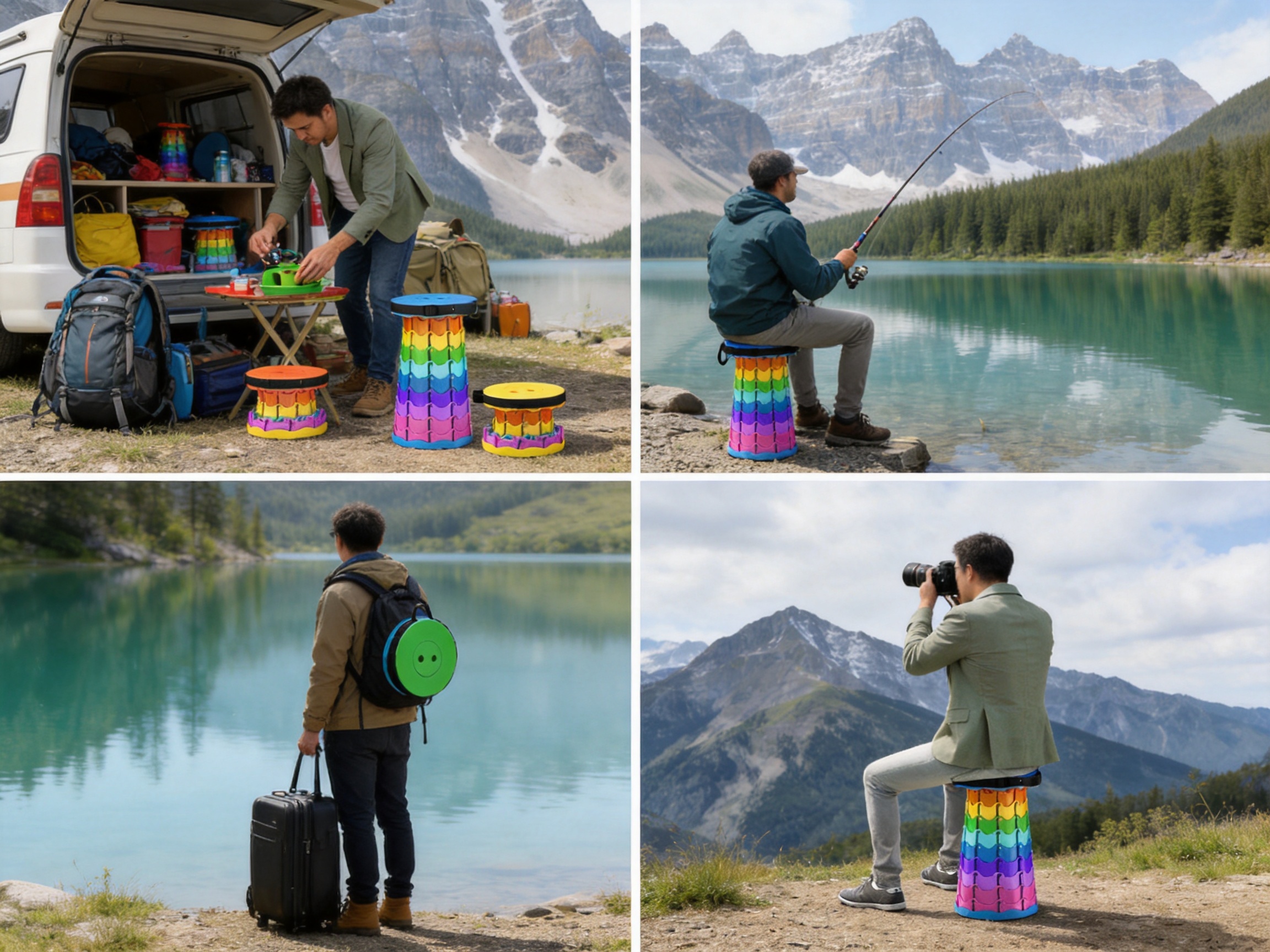
Portable Outdoor Storage Folding Extendable Stool: A Practical Guide to Adjustable Seating for Hiking, Camping, Fishing, and Travel
Outdoor recreation has changed significantly in recent years. Hikers, campers, anglers, travelers, and event attendees increasingly expect equipment to be compact, lightweight, adaptable, and dependable. A product no longer needs to perform only one basic function. It should also occupy little storage space, remain convenient to carry, adapt to different environments, and withstand repeated outdoor use. The portable outdoor storage folding extendable stool is designed around these practical expectations.
Unlike a traditional fixed-height stool or a bulky folding chair, this adjustable hiking stool combines a collapsible structure with flexible height adjustment. It can be opened quickly when a user needs a short rest and folded down again when the activity continues. Its compact form is intended to fit into backpacks, vehicles, storage boxes, and other outdoor equipment systems without creating unnecessary carrying difficulty.
The product is made from thickened polypropylene, commonly known as PP, to provide a balance between structural support, low weight, and convenient maintenance. Its folding and extendable structure supports a variety of outdoor applications, including mountain routes, campsites, fishing locations, queues, travel stops, festivals, photography sessions, and everyday temporary seating.
More importantly, the stool reflects a modern approach to outdoor product development. Instead of designing only for appearance or catalog presentation, a reliable outdoor seating product must respond to weather, terrain, transportation, storage, repeated operation, and user comfort. Its value is therefore determined by the relationship between material selection, structural design, manufacturing consistency, and real-world usability.
Why Compact Outdoor Seating Has Become Essential
Outdoor activities often require users to carry several categories of equipment at the same time. A hiker may need water, food, clothing layers, navigation tools, emergency supplies, and personal equipment. A camper may also carry tents, sleeping systems, cooking tools, lighting, and storage containers. In these circumstances, a large chair can become inconvenient even when it provides excellent comfort.
A compact folding stool addresses this problem by reducing the amount of space required for personal seating. When folded, the product is described as approximately the size of a water bottle. This makes it easier to place inside a backpack, side pocket, vehicle compartment, or camping storage box. The user does not need to choose between having a seat and preserving valuable storage capacity.
Portability is particularly important during activities involving frequent movement. On a mountain trail, a rest seat must be easy to carry from one point to another. During fishing, equipment may need to be moved between locations as conditions change. At an outdoor event or queue, the user may want personal seating without bringing a full-size chair. A folding stool offers a practical compromise between comfort and mobility.
The product also supports temporary seating rather than replacing every type of outdoor chair. Its purpose is to provide a quick, personal resting solution when users need to pause, wait, organize equipment, or remain in one place for a period of time. This focused function helps explain why compact stools continue to be popular among people who prefer efficient outdoor equipment.
| Outdoor Requirement | Challenge With Traditional Seating | Response Provided by the Folding Extendable Stool |
|---|---|---|
| Low carrying burden | Large chairs can add weight and bulk | Foldable construction reduces storage volume |
| Adaptability | Fixed-height products may be uncomfortable on uneven ground | Extendable height supports more flexible positioning |
| Fast deployment | Complex chairs can require several steps to assemble | Innovative folding structure allows quick opening and use |
| Easy storage | Rigid stools occupy permanent space | Compact folded form fits backpacks and vehicle compartments |
| Repeated outdoor use | Weak joints or thin materials may reduce service life | Thickened PP and controlled manufacturing support durability |
The most useful outdoor product is not necessarily the largest or most heavily equipped. It is often the item that solves a frequent problem without introducing another one. By combining seating, height adjustment, and space-saving storage, this stool is positioned as a practical accessory for people who value movement and organization.
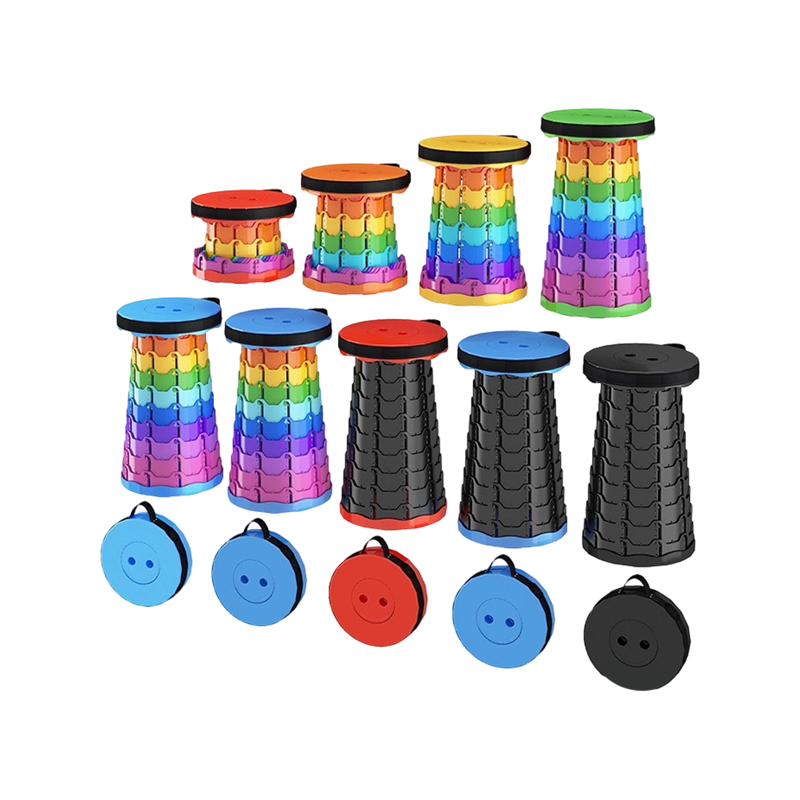
Portable outdoor storage folding extendable stool, adjustable hiking stool
Product Structure and Functional Design
The main design concept is based on three actions: fold, extend, and sit. The stool can be folded for transportation, extended to a suitable height, and used as a temporary seat. This straightforward operating sequence is important because outdoor users often need equipment that can be understood and deployed without complicated instructions.
The folding structure is intended to reduce the product’s overall dimensions during transportation. Compactness is not only a convenience feature. It can also influence whether users decide to carry a product at all. A seat that is too large may remain at home, while a compact stool is more likely to be included in a hiking pack, camping kit, fishing bag, or travel vehicle.
The extendable mechanism adds a second level of functionality. A fixed-height stool may work well on flat indoor flooring but become less suitable on sloped or irregular outdoor surfaces. Flexible height adjustment gives users more control over their sitting position. It also supports different body sizes, preferences, and activity conditions.
For example, a user taking a short break on a mountain trail may prefer a lower setting that supports quick resting. At a campsite, a different height may be more comfortable for organizing equipment or preparing food. A person waiting outdoors for an extended period may choose a setting that provides a more natural sitting posture. The product therefore has greater application flexibility than a basic non-adjustable stool.
Foldable Construction
A folding product must balance easy movement with structural reliability. The folding action should be convenient, but the opened product must also maintain a stable relationship between its seat, support components, and ground contact points. This balance depends on accurate part dimensions, consistent material performance, and dependable assembly.
The folding structure also has to tolerate repeated use. Outdoor equipment may be opened and closed many times during its service life. A product used for camping may be folded during every trip, while a fishing or travel user may operate it each time the location changes. Manufacturing quality is therefore essential to maintaining smooth operation and dependable support over time.
Adjustable Height
The height-adjustable design is one of the product’s most important differences from ordinary folding stools. It enables the user to modify the sitting level instead of accepting a single predetermined position. This makes the stool more versatile across different terrain and activity conditions.
Adjustability can also improve packing efficiency. Rather than carrying several seating products for different users or situations, one adjustable design can support a wider range of needs. This is especially useful for families, outdoor groups, retailers, and users who participate in several activities throughout the year.
Height adjustment should always be used according to the product’s intended operating method and load requirements. Users should ensure that the structure is fully extended and properly positioned before sitting. The stool should be placed on a reasonably stable surface, and it should not be used beyond its intended capacity or in conditions where the ground is dangerously unstable.
Thickened PP Material
Thickened PP is used to provide a combination of strength, relatively low weight, and ease of maintenance. Polypropylene is widely used in practical consumer products because it can be formed into functional shapes and cleaned without complicated care procedures. For an outdoor stool, material thickness and structural geometry work together to support the seat and distribute applied weight.
Material selection alone does not determine product performance. The quality of the final product also depends on the design of load-bearing areas, the accuracy of molded components, the quality of connections, and the consistency of production. A well-designed PP structure can be more practical than a heavier product that has poor folding performance or inefficient storage dimensions.
Advantages Over Conventional Outdoor Seating
The market includes many kinds of portable seating, including fixed-height stools, folding chairs, tripod seats, fabric camping chairs, and improvised seating solutions. Each type has a suitable application, but the folding extendable stool offers several advantages for users who prioritize compactness and quick deployment.
Compared With Fixed-Height Stools
A fixed-height stool is simple, but it offers limited adjustment. If the ground is uneven or the stool is used by people with different preferences, the single height may not be suitable for everyone. The extendable design provides a more flexible alternative by allowing users to select a sitting position that better matches the environment.
The adjustable structure can also make the product useful across multiple activities. One user may take it hiking, use it while fishing, and store it in a vehicle for outdoor events. A fixed-height product may perform adequately in one setting but be less versatile across different situations.
Compared With Full-Size Folding Chairs
Traditional folding chairs often provide back support and a larger sitting area, which can be beneficial for long periods of seating. However, these advantages are accompanied by greater folded dimensions and, in many cases, higher carrying weight. They may be unsuitable for users who need to move frequently or minimize their equipment load.
The compact stool is designed for a different purpose. It is intended to provide personal seating while preserving mobility and storage efficiency. For short breaks, queues, fishing sessions, campsite organization, and travel stops, the smaller format may be more convenient than a full-size chair.
Compared With Tripod or Fabric Seats
Some tripod seats are lightweight, but they may provide limited height adjustment or less flexibility in their sitting position. Fabric seats may be easy to fold, yet their support characteristics can depend heavily on the frame, fabric tension, and assembly configuration. The folding extendable stool focuses on an integrated structure made from thickened PP, with adjustment and storage functions included in the main design.
These comparisons do not mean that one product is suitable for every user. A large chair may remain preferable for extended relaxation, while a tripod seat may be useful for specific fishing or hunting applications. The strength of this product lies in its balance: it offers more adaptability than a basic stool and more portability than a conventional chair.
| Product Type | Main Strength | Common Limitation | Position of the Adjustable Folding Stool |
|---|---|---|---|
| Fixed-height stool | Simple operation | Limited adjustment and terrain adaptability | Provides flexible height control |
| Full-size folding chair | Large seat and possible back support | Greater weight and folded volume | Offers a more compact alternative for temporary seating |
| Tripod seat | Lightweight and easy to transport | May offer less adjustment or sitting flexibility | Combines portability with an extendable structure |
| Rigid camping stool | Stable on suitable flat surfaces | Consumes more storage space | Folds into a highly compact format |
| Improvised outdoor seating | No dedicated equipment required | Unreliable, uncomfortable, and potentially unsafe | Provides a purpose-designed seating solution |
For retailers and distributors, this balanced product positioning can be valuable. It gives customers an understandable reason to choose the stool: they receive a portable, adjustable seat for situations where a larger chair is excessive and a basic stool is insufficient.
Applications Across Outdoor Activities
The product’s compact design supports a broad range of practical uses. Its application value is not limited to one sport or one season. Wherever users need personal seating that can be carried and stored efficiently, the stool can become a useful accessory.
Mountain Hiking and Trekking
Hiking routes often include rest points, viewpoints, waiting areas, and uneven terrain. A hiker may not want to sit directly on wet ground, sharp rocks, or muddy surfaces. Carrying a large chair, however, would add unnecessary bulk to the pack.
The adjustable hiking stool offers a compact rest option. It can be folded while walking and opened during breaks. The height can be adjusted to suit the user’s position and the local terrain. Because it is intended for temporary seating, it can support a more organized and comfortable break without requiring a permanent campsite setup.
Hikers should choose a stable location before using the stool. On steep slopes, loose soil, wet rocks, or surfaces with a high risk of movement, no portable seat can eliminate the underlying terrain hazard. Proper placement and responsible use remain essential.
Camping
Camping involves constant decisions about space. Tents, sleeping bags, cooking equipment, food containers, lanterns, and personal bags must all be organized within a limited area. A compact stool can provide a personal seat without taking up the storage volume of a larger chair.
At a campsite, the stool may be used while preparing equipment, sorting clothing, organizing food, or taking a short rest. Its adjustable height can be useful on ground that is not perfectly level. When the campsite is packed, the stool can be folded and stored with the rest of the gear.
The product may also be useful for minimalist camping and short trips where users want to reduce the number of large items they carry. Its portability allows it to support comfort without changing the overall lightweight character of the equipment system.
Fishing
Fishing often includes long periods of waiting. A portable seat can reduce fatigue and make the experience more comfortable. At the same time, anglers frequently move between banks, piers, shorelines, or different water access points. A stool that is easy to carry and quick to deploy may be more practical than a large chair.
Height adjustment gives the user greater flexibility when the ground conditions change. Nevertheless, fishing locations can be wet, muddy, slippery, or uneven. The stool should be placed only where the support surface is sufficiently stable, and users should avoid positioning it too close to water edges or unstable banks.
Travel and Outdoor Events
Travelers may encounter long queues, transport delays, outdoor performances, exhibitions, markets, or sightseeing stops. A compact stool can provide personal seating when benches are unavailable or crowded. Its small folded form makes it easier to store in a vehicle or travel bag.
At outdoor events, portability is often more important than maximum seating comfort. Users may need to walk between areas, pass through crowded spaces, or carry other belongings. The folding stool allows them to bring a seat without the inconvenience associated with larger furniture.
Photography and Observation
Photographers, bird watchers, and outdoor observers may spend time waiting for a subject or monitoring a location. A compact seat can make these periods more manageable. Adjustable height may also help users position themselves comfortably according to the ground and the viewing angle.
Because the stool is compact, it can be included with camera bags, observation equipment, or field supplies. Its value in these scenarios comes from reducing fatigue while preserving the user’s ability to move when conditions change.
Manufacturing Quality and Product Reliability
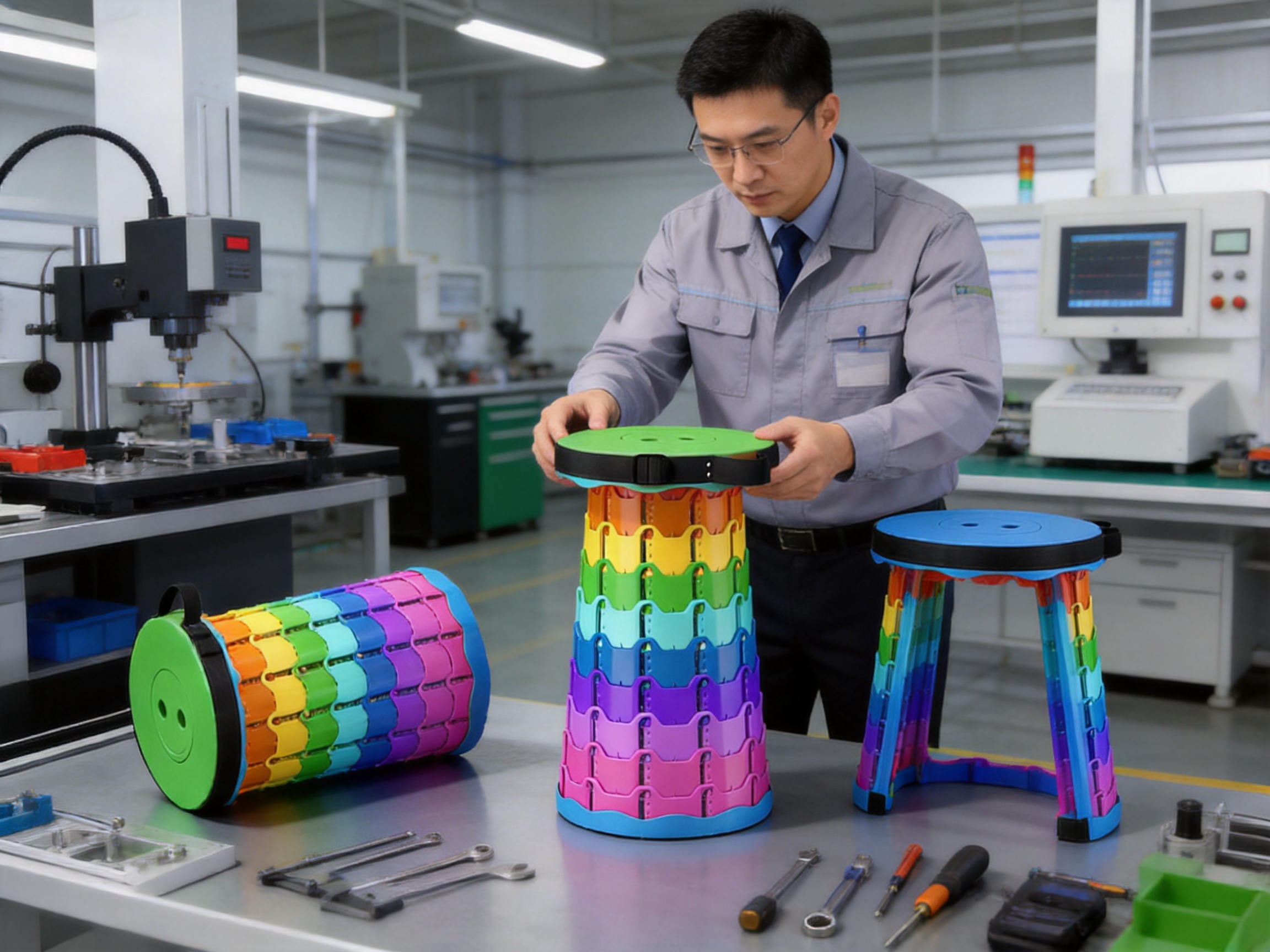
Outdoor equipment must be designed for more than attractive presentation. It must be manufactured consistently so that the product performs similarly from one production batch to another. For a folding extendable stool, quality depends on multiple stages, including concept development, material selection, mold and component preparation, assembly, inspection, sampling, testing, packaging, and supply-chain management.
CragHaven Outdoor focuses on mountaineering, hiking, and camping scenarios and works as both an outdoor brand and a cross-border manufacturing partner. This combined perspective supports a more practical development process. Product decisions can be connected to real usage requirements, manufacturing capability, and the expectations of global retailers.
Scenario-Based Product Development
A scenario-based approach begins with questions about how the product will actually be used. Will it be placed inside a backpack? Will users open and close it frequently? Will it be used on uneven ground? Will it be transported in a vehicle? Will customers need a product that is easy to clean and store?
These questions influence dimensions, material thickness, folding arrangements, support geometry, and packaging. They also help prevent unnecessary features that may increase cost or complexity without improving the user experience. The result is a product designed around practical outdoor situations rather than specifications considered in isolation.
Material Selection and Structural Balance
Material decisions require a balance between durability and portability. If a product is made excessively heavy, it may become difficult to carry. If it is made too thin or designed without sufficient support, it may not provide the required stability. Thickened PP is selected for this product to help maintain a practical relationship between weight, strength, shape, and maintenance.
Engineering attention is also required at folding points and connection areas. These components experience repeated movement and may be exposed to dust, moisture, temperature changes, and transportation impact. Reliable production requires dimensional consistency so that moving parts operate as intended and assembled components fit correctly.
Sampling, Testing, and Optimization
Sampling is an important part of responsible product development. A sample allows designers and manufacturers to evaluate the actual folding action, adjustment process, seat dimensions, storage form, and overall user experience. It can also reveal problems that are not obvious in drawings or early concepts.
Testing and optimization may involve reviewing repeated operation, load-bearing behavior, connection performance, opening and closing convenience, packaging protection, and visual quality. The exact testing program should correspond to the product design, market requirements, and intended usage. The goal is not merely to produce a sample but to refine the product into a stable and repeatable commercial item.
CragHaven’s stated development principles emphasize that sampling, testing, and optimization should not be omitted. This approach is particularly important for outdoor products because small structural weaknesses can become more noticeable when products are used on different terrain or transported frequently.
Manufacturing Consistency
Consistent manufacturing supports customer confidence. Retailers and distributors need products that maintain similar dimensions, colors, functions, packaging standards, and performance across repeated orders. Inconsistent production can create returns, negative reviews, inventory complications, and additional inspection costs.
A mature manufacturing system can help manage these issues through standardized procedures, production controls, inspection routines, process documentation, and communication between design and factory teams. When design and manufacturing are connected, problems can be identified earlier and solutions can be developed more efficiently.
| Manufacturing Stage | Key Objective | Importance to the Final Stool |
|---|---|---|
| Use-scenario analysis | Define actual customer and outdoor requirements | Ensures the design addresses practical needs |
| Material selection | Balance strength, weight, maintenance, and cost | Supports portability and structural performance |
| Prototype sampling | Evaluate form, operation, and user experience | Identifies design issues before mass production |
| Structural and functional testing | Review support, folding, adjustment, and repeated use | Improves reliability and reduces avoidable defects |
| Production control | Maintain consistent dimensions and assembly quality | Provides stable performance between batches |
| Final inspection and packaging | Protect the product and verify shipment condition | Reduces transport damage and delivery problems |
Why Manufacturing Capability Matters to Global Buyers
For global retailers, sourcing decisions involve more than selecting a visually appealing item. Buyers must consider product consistency, communication, order management, packaging, customization, lead times, quality control, and long-term availability. A factory or manufacturing partner that understands the product category can help reduce uncertainty in these areas.
CragHaven Outdoor is based in Hangzhou, China, and serves global markets through outdoor product development and manufacturing cooperation. Its focus on mountaineering, hiking, and camping gives it a category-specific understanding of outdoor usage. This specialization can support more relevant communication than a general supplier that treats outdoor gear as only one of many unrelated product categories.
Outdoor products are often sold through different channels, including specialty retailers, online stores, distributors, promotional programs, and private-label brands. Each channel may require different packaging, labeling, documentation, product photography, or order quantities. A manufacturing partner with cross-border experience can help buyers discuss these requirements more clearly.
The company’s philosophy emphasizes reducing supply-chain uncertainty. This involves more than producing goods at a competitive price. It includes understanding how the item is used, identifying potential risks during development, maintaining stable production, and communicating in a way suited to professional international buyers.
For a product such as an adjustable folding stool, this support may include discussions about material, color, packaging, branding, market positioning, inspection requirements, and order planning. The specific commercial terms should be confirmed for each project, but the underlying capability is important for businesses seeking repeatable supply rather than one-time sourcing.
OEM and Product Development Support
OEM cooperation can allow retailers and distributors to offer products under their own market identity. Successful OEM development requires the manufacturer to understand more than a logo placement request. It may involve adapting packaging, changing colors, preparing artwork, reviewing labels, adjusting product details, or coordinating samples.
For outdoor equipment, OEM discussions should preserve the product’s essential safety and functional characteristics. Changes should be evaluated through sampling and testing rather than made only for appearance. A reliable manufacturer can help distinguish between changes that improve market suitability and changes that might weaken performance or complicate production.
Supply-Chain Stability
A stable supply chain supports better inventory planning. Retailers need confidence that successful products can be reordered with similar quality and specifications. Manufacturers with established processes, experienced teams, and reliable component sourcing are better positioned to support continuing cooperation.
Long-term partnerships can also improve efficiency. As both sides gain a better understanding of product requirements, communication may become faster, packaging decisions may become clearer, and quality expectations may be documented more effectively. This is particularly valuable for growing outdoor brands that require dependable product availability over multiple selling seasons.
User Experience, Safety, and Responsible Use
A portable stool can improve comfort, but users should understand its intended purpose and limitations. The product is designed for temporary seating and should be used according to the manufacturer’s operating instructions. Before sitting, the user should confirm that the stool is fully opened, correctly extended, and positioned on a stable surface.
Uneven outdoor terrain requires additional care. Grass, soil, gravel, sand, wet surfaces, rocks, and slopes can affect stability. Users should avoid locations where the stool may slide, sink, tip, or shift unexpectedly. Near rivers, lakes, cliffs, roads, or other hazards, the surrounding environment should be evaluated before the product is deployed.
The stool should not be overloaded or used as a step, ladder, jumping platform, or substitute for specialized climbing equipment. Children should use it only under suitable adult supervision. If the stool shows cracks, deformation, damaged connections, or unusual movement, it should be removed from service until it has been properly evaluated.
Maintenance is generally straightforward. Dirt and moisture should be removed after use, particularly when the stool has been placed on muddy or sandy ground. The product should be allowed to dry before long-term storage. Users should avoid forcing the adjustment mechanism and should follow any specific cleaning and storage guidance supplied with the product.
Storage and Transport Benefits
Storage efficiency is one of the most visible benefits of the design. A large chair can dominate a vehicle compartment or occupy a significant part of a home storage area. The folding stool is intended to reduce that burden by becoming compact when not in use.
For individual users, this may mean leaving more room for food, clothing, sports equipment, or emergency supplies. For retailers, compact packaging can support more efficient warehouse organization and potentially improve shipment utilization. For distributors, smaller products may be easier to handle during receiving, storage, and fulfillment.
Folded dimensions can also influence online sales. Customers often compare products based on product size, shipping convenience, and storage requirements. Clear information about folded dimensions, operating height, material, weight, and intended use can help buyers understand the product’s value and reduce mismatched expectations.
Retail presentation can emphasize the stool’s “fold, carry, open, and adjust” experience. Demonstrating how the product fits into a backpack or vehicle storage space can communicate its advantage more effectively than presenting only a static product photograph. Practical demonstrations are especially useful for products whose main value is functional convenience.
Product Positioning for Retailers and Distributors
The portable outdoor storage folding extendable stool can be positioned as an entry-level or complementary outdoor accessory. It may be sold alongside tents, backpacks, sleeping equipment, fishing products, hiking accessories, travel goods, or outdoor cooking equipment. Its broad application range allows retailers to introduce it to several customer segments.
For hiking customers, the key message may be reduced carrying difficulty and quick rest support. For campers, the message may focus on compact storage and adaptable seating. For anglers, comfort during waiting periods may be more relevant. For travelers and event attendees, the strongest benefit may be personal seating that does not occupy much luggage space.
Retail descriptions should explain both the advantages and the appropriate use conditions. Claims should remain accurate and should not imply that a compact stool replaces every type of chair or provides unlimited performance on unstable terrain. Clear communication builds customer confidence and reduces the possibility of improper use.
| Target Customer | Primary Need | Suggested Product Benefit |
|---|---|---|
| Hikers and trekkers | Short rests with minimal pack volume | Compact folding form and adjustable height |
| Campers | Efficient seating at limited-space campsites | Quick deployment and easy storage |
| Anglers | Portable seating during extended waiting | Carry convenience and flexible sitting position |
| Travelers | Personal seating for queues and stops | Small folded format for luggage or vehicles |
| Event attendees | Lightweight seating in crowded outdoor areas | Easy transport and temporary support |
| Outdoor retailers | Versatile accessory with broad market relevance | Multi-scenario positioning and OEM potential |
Retailers may also consider seasonal merchandising. The product can be promoted before hiking and camping seasons, during travel periods, at fishing-related events, or as part of outdoor gift selections. Because its functions are easy to understand, it can be suitable for both specialist outdoor stores and general lifestyle channels.
Environmental and Long-Term Value Considerations
Long-term product value is connected to service life, maintenance, repairability, storage, and responsible purchasing. A product that can be used across several activities may reduce the need to purchase separate seating items for hiking, camping, fishing, and travel. Its compact design may also make it easier to keep and reuse rather than replace because of storage inconvenience.
Durability begins with appropriate design and material selection. It is supported by manufacturing accuracy, sensible use, and proper maintenance. Users who clean and store the stool correctly can help preserve its functional condition. Retailers can contribute by providing accurate care information and avoiding unrealistic claims that encourage misuse.
Manufacturers and buyers should also consider packaging efficiency, production waste, transport requirements, and the possibility of improving packaging materials over time. These issues should be evaluated as part of a broader product-development and supply-chain strategy. Responsible outdoor product development is not limited to one material or one manufacturing decision; it involves the entire life cycle of the product.
How to Select the Right Folding Extendable Stool
Consumers and commercial buyers should consider several factors before selecting an adjustable outdoor stool. The first is the intended activity. A person who needs occasional seating during hiking may prioritize minimum folded size, while a camper may place greater emphasis on sitting comfort and height range.
The second factor is structural design. Buyers should examine how the stool opens, how the height is adjusted, and whether the support components appear properly integrated. The operating process should be clear and manageable. A product that is difficult to deploy may not deliver its full value in real outdoor conditions.
The third factor is material and construction. Thickened PP can provide practical strength and low-maintenance use, but buyers should also consider the quality of joints, connection points, and load-bearing geometry. Product specifications should be reviewed together rather than focusing on a single material claim.
The fourth factor is storage. Folded dimensions should be compared with the user’s backpack, vehicle compartment, or storage system. A compact product is most useful when it can be stored where the user actually needs it.
The fifth factor is supplier reliability for commercial orders. Retailers should assess product consistency, sample quality, communication, inspection processes, packaging, production capability, and after-sales support. A good product concept can still create problems if the supply chain is not managed effectively.
| Selection Factor | Questions to Consider |
|---|---|
| Intended use | Will the stool be used for hiking, camping, fishing, travel, or events? |
| Folded size | Can it fit into the planned backpack, vehicle, or storage area? |
| Adjustment | Is the height mechanism easy to operate and suitable for the expected terrain? |
| Material | Does the construction balance low weight, support, durability, and maintenance? |
| Stability | Can the user position it securely on an appropriate surface? |
| Supplier capability | Can the manufacturer provide consistent production and professional communication? |
| Packaging | Is the product protected and presented appropriately for the target market? |
Q&A: Common Questions About the Adjustable Folding Stool
What is an extendable folding stool used for?
An extendable folding stool is used as portable temporary seating for outdoor activities and everyday situations. Common applications include hiking, mountain trekking, camping, fishing, travel, queues, outdoor events, photography, and observation. Its main purpose is to provide a personal seat that can be carried and stored more easily than a full-size chair.
What makes this stool different from a standard folding stool?
The main difference is the adjustable height structure. A standard folding stool generally provides one fixed sitting level, while an extendable model allows users to change the height according to personal preference, terrain, and activity. The folding design also reduces storage volume, creating a combination of portability and adaptability.
Is the stool suitable for hiking?
Yes. Its compact format is intended to make it suitable for hiking and other activities where carrying space is limited. It can be folded during movement and opened during rest breaks. Hikers should place it on a stable surface and avoid using it on steep, slippery, loose, or otherwise hazardous terrain.
Can it be used for camping?
Yes. The stool can serve as temporary seating at a campsite while users organize gear, prepare food, take breaks, or wait. Its compact folded form helps preserve space in camping bags and vehicles. It is particularly useful for users who want personal seating without carrying a large camping chair.
Why is adjustable height useful outdoors?
Outdoor ground is rarely as uniform as an indoor floor. Adjustable height allows users to select a more suitable sitting position when the terrain, activity, or personal preference changes. It can also make one product more useful for people of different sizes and for several kinds of outdoor recreation.
What material is used in the stool?
The product uses thickened PP, or polypropylene, as a key structural material. PP is commonly selected for practical products because it can provide a useful balance between low weight, formability, support, and easy maintenance. Final performance also depends on structural design, connection quality, and manufacturing consistency.
Is the stool easy to carry?
Its folding structure is designed to reduce its storage size, with the folded product described as approximately the size of a water bottle. This makes it easier to place in a backpack, vehicle, luggage compartment, or outdoor equipment storage system. Buyers should confirm the final product dimensions and weight for their specific use.
Can the stool replace a full-size camping chair?
It is designed as a compact temporary seating solution rather than a universal replacement for every chair. A full-size chair may be preferable for long periods of relaxation or for users who require back support. The folding extendable stool is more suitable when low storage volume, portability, and quick deployment are the main priorities.
What should users check before sitting?
Users should confirm that the stool is fully opened, properly extended, and positioned on a stable surface. They should inspect the product for visible damage and ensure that no part is obstructed. The stool should not be overloaded, used as a step, or placed on surfaces where it may slide, tip, sink, or move unexpectedly.
How should the stool be maintained?
After outdoor use, users should remove dirt, mud, sand, and moisture. The stool should be dried before long-term storage and kept away from conditions that may cause unnecessary damage. Users should not force the adjustment mechanism. If cracks, deformation, or unusual movement appear, the product should not be used until it has been checked.
Is this product suitable for OEM orders?
The product can be considered for OEM and private-label cooperation, subject to project requirements and manufacturer confirmation. OEM discussions may involve colors, packaging, labels, branding, product presentation, sampling, and order quantities. Any modification should be reviewed for functional and manufacturing effects before production.
Why is the manufacturer important when buying outdoor gear?
Outdoor products must perform consistently across repeated use and changing environments. A capable manufacturer can support scenario-based design, material selection, sampling, testing, production control, inspection, packaging, and supply-chain communication. These capabilities help retailers and distributors reduce quality and delivery uncertainty.
Conclusion
The portable outdoor storage folding extendable stool is designed to solve a clear and common outdoor problem: how to carry a useful seat without carrying unnecessary bulk. Its folding structure reduces storage volume, its extendable design provides flexible height adjustment, and its thickened PP construction supports a practical balance between portability and structural function.
Compared with fixed-height stools, it offers greater adaptability. Compared with full-size folding chairs, it requires less storage space. Compared with simple tripod or fabric seats, it combines compact transport with an integrated extendable structure. These advantages make it relevant to hiking, camping, fishing, travel, outdoor events, photography, and other temporary seating situations.
The product’s commercial value also depends on the manufacturing system behind it. Scenario-based development, material evaluation, sampling, testing, process control, and stable communication are essential to transforming a practical concept into a dependable product. CragHaven Outdoor combines outdoor product specialization with cross-border manufacturing experience to support retailers, distributors, and brands seeking reliable outdoor gear for global markets.
For end users, the stool provides a convenient way to rest while preserving mobility. For buyers, it offers a versatile product category with broad application potential. When designed, manufactured, marketed, and used responsibly, an adjustable folding stool can become a small but valuable part of a modern outdoor equipment system.
References
1. CragHaven Outdoor. Product Development and Manufacturing Information for Portable Outdoor Storage Folding Extendable Stool.
2. CragHaven Outdoor. Company Information and Outdoor Gear Manufacturing Principles.
3. Product Specification Summary. Portable Outdoor Storage Folding Extendable Stool, Adjustable Hiking Stool, Product Code WFDS263001.
4. General Outdoor Equipment Design Principles. Considerations for Portability, Terrain Adaptability, Structural Support, and Storage Efficiency.
5. General Polypropylene Material Information. Practical Applications of PP in Lightweight Consumer and Outdoor Products.
Product: Portable outdoor storage folding extendable stool, adjustable hiking stool


- Phone: +86-15968800379
- E-mail: [email protected]
- Address: Room 1002, Huishang Building, Gongshu District, Hangzhou City, Zhejiang Province.
Copyright © CragHaven Outdoor All Rights Reserved. Outdoor Gear Manufacturers Wholesale Mountaineering Camping Gear Suppliers
