

 English
 Deutsch
 Español
 Français


Advanced Aluminum Three-Section Trekking Poles for Reliable Mountain and Trail Support
Content
- 1 Product Overview and Intended Use
- 2 Why Aluminum Is a Practical Shaft Material
- 3 Three-Section Telescopic Design for Portability
- 4 External Locking System and Adjustment Efficiency
- 5 Handle Design and User Control
- 6 Tungsten Steel Alloy Tip for Trail Contact
- 7 Performance Comparison with Other Trekking Pole Designs
- 8 Advantages for Long-Distance Hiking
- 9 Applications Across Outdoor Environments
- 10 Manufacturing Quality and Process Control
- 11 Product Development Based on Real Outdoor Use
- 12 OEM and Wholesale Advantages
- 13 Inspection, Testing, and User Safety
- 14 Why This Model Offers a Competitive Market Position
- 15 Recommended Product Positioning
- 16 Care and Maintenance Recommendations
- 17 Frequently Asked Questions
- 17.1 1. Is an aluminum trekking pole suitable for long-distance hiking?
- 17.2 2. What is the advantage of the three-section design?
- 17.3 3. How does the external locking system work?
- 17.4 4. Is this pole suitable for mountain trails?
- 17.5 5. How does this product compare with a carbon fiber trekking pole?
- 17.6 6. Can the trekking pole be customized for private-label orders?
- 17.7 7. What quality factors should buyers inspect before placing a wholesale order?
- 17.8 8. How should the pole be cleaned after use?
- 17.9 9. Is the pole appropriate for camping as well as hiking?
- 17.10 10. What role does CragHaven Outdoor play in the supply process?
- 18 Conclusion
- 19 References
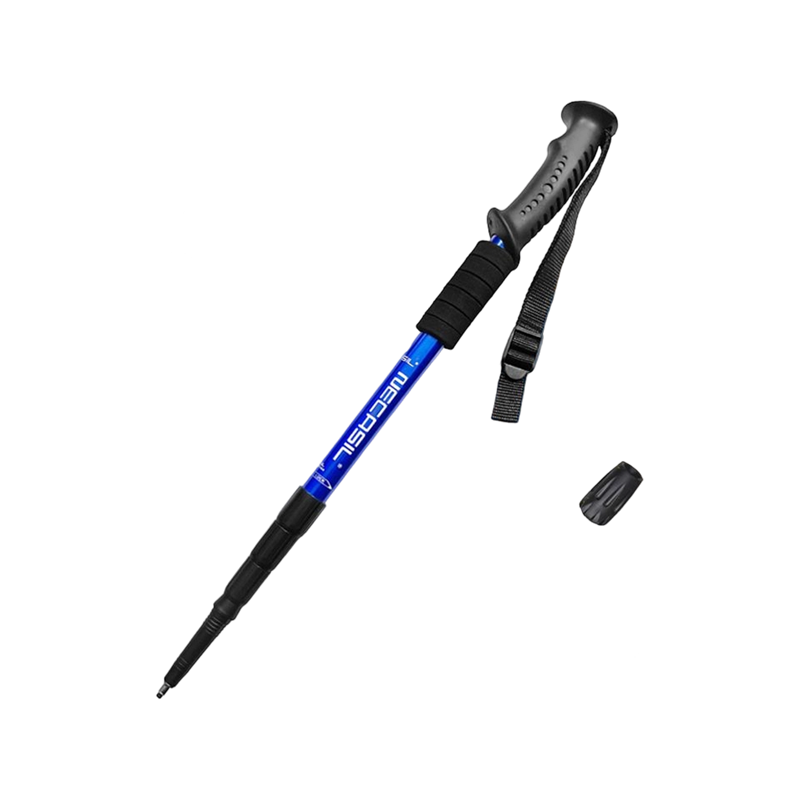
- 20 Product: Aluminum alloy three-section telescopic folding external locking trekking pole straight handle
Long-distance hiking, mountaineering, and multi-day camping place continuous demands on personal equipment. A trekking pole must support body weight, improve balance, absorb repeated contact with uneven ground, and remain dependable after exposure to dust, moisture, temperature changes, and mechanical stress. The aluminum alloy three-section telescopic folding trekking pole with an external locking system is designed to meet these requirements with a practical combination of strength, portability, adjustability, and value.
This trekking pole is developed for hikers, mountaineers, camping enthusiasts, outdoor retailers, distributors, and private-label brands that require dependable equipment for demanding environments. Its three-section construction makes it easy to adjust and transport, while the external locking mechanism allows rapid length changes without complicated handling. The aluminum alloy shaft delivers impact resistance and structural stability, and the wear-resistant tungsten steel alloy tip provides reliable contact with a wide range of trail surfaces.
Unlike trekking poles designed only around minimum weight, this model emphasizes balanced performance. It is engineered for real-world use across rocky paths, mountain trails, forest routes, camping areas, and mixed terrain. The design offers a practical alternative to poles that may be lighter but more sensitive to sharp impacts, or products that use complex adjustment systems requiring more maintenance.
For professional buyers, product performance is only one part of the purchasing decision. Consistent manufacturing, reliable materials, controllable quality, packaging flexibility, and responsive OEM support are equally important. CragHaven Outdoor combines outdoor product development with cross-border manufacturing capabilities to provide trekking poles that are suitable for global retailers and outdoor equipment brands.
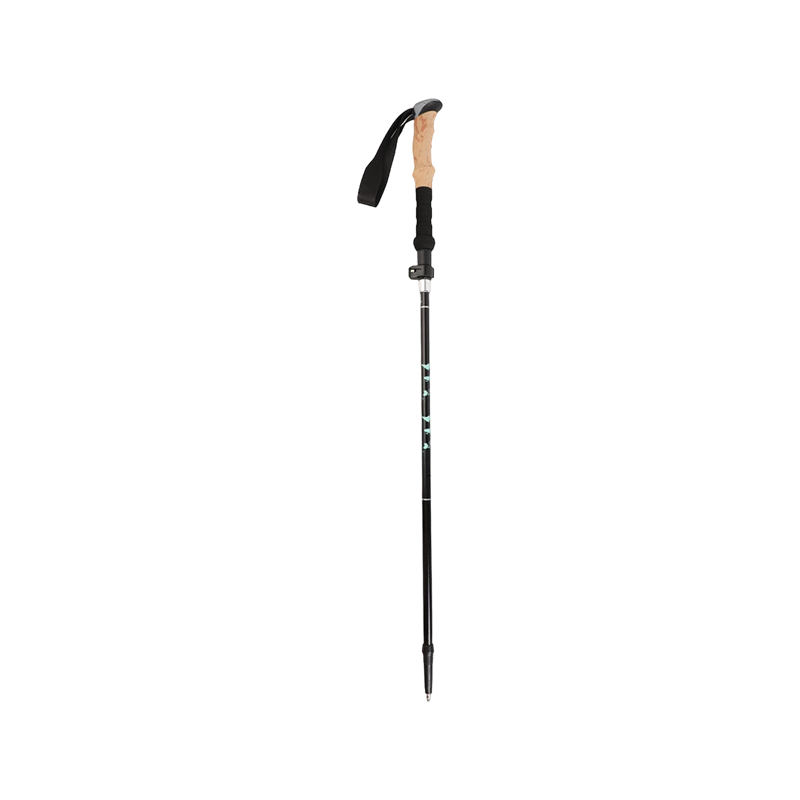
Aluminum alloy three-section telescopic folding external locking trekking pole straight handle
Product Overview and Intended Use
The product is an aluminum alloy three-section telescopic folding trekking pole with a straight handle and external locking system. It is categorized as a trekking pole for mountain-climbing, camping, hiking, and general outdoor use. The product reference is WFDS262001.
Its primary structure consists of three adjustable shaft sections. This arrangement allows the pole to be extended for walking and shortened for storage or transportation. A three-section configuration is especially useful for users who need a compact packed size without giving up the adjustment range required for different heights and terrain conditions.
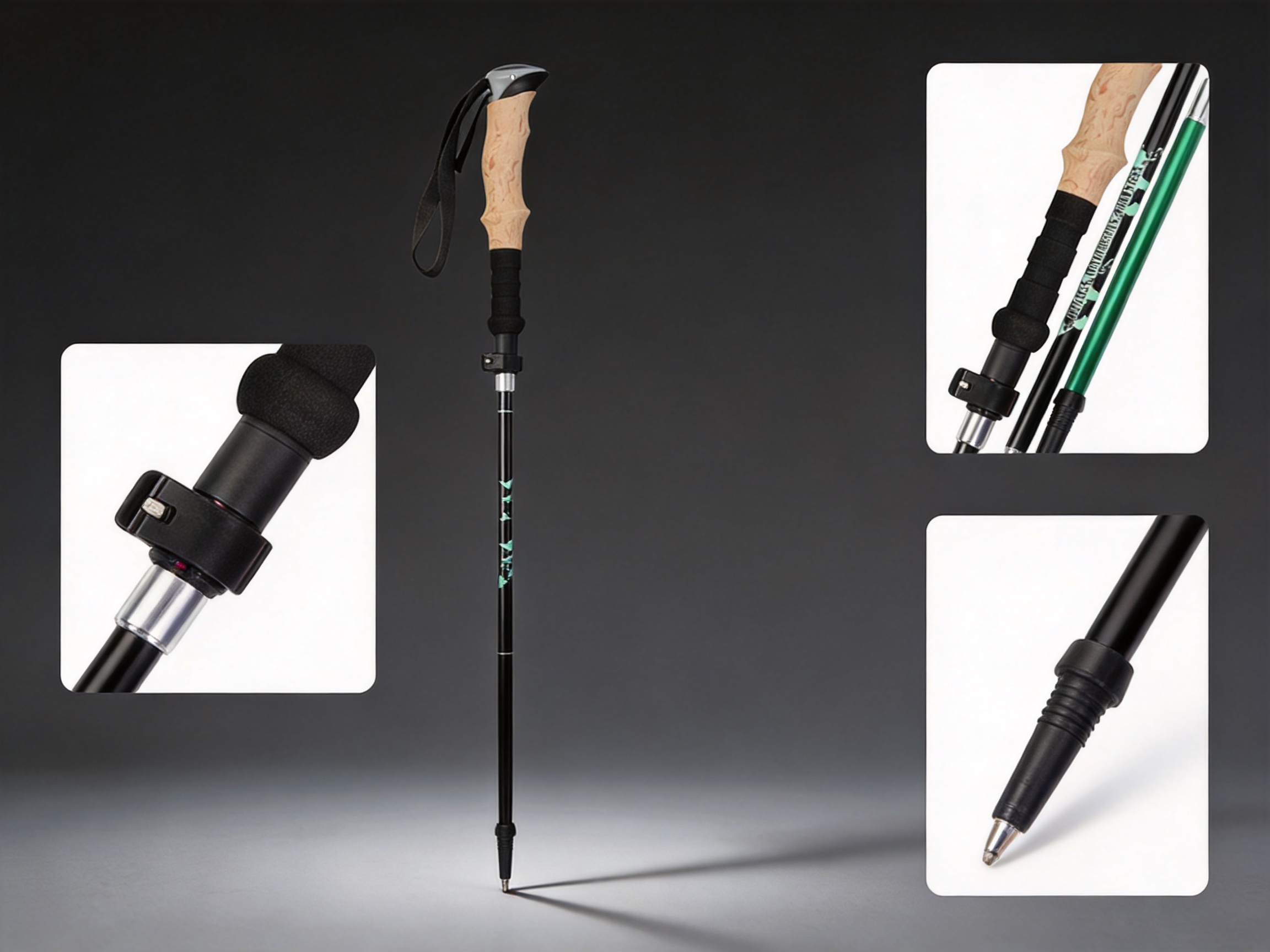
The pole uses a 3LS external locking speed adjustment system. The external lock is designed to secure the shaft sections quickly and visibly. Instead of relying entirely on an internal expansion mechanism, the user can operate the outside lever to adjust the pole and confirm that the section has been fixed. This direct operating method is valuable when wearing gloves, standing on a slope, or making adjustments during changing weather conditions.
The shaft is manufactured from aluminum alloy. This material is widely used in outdoor equipment because it combines structural strength, impact resistance, repairability, and reasonable production cost. Aluminum is also suitable for frequent use in environments where equipment may experience contact with rocks, packed soil, roots, and uneven surfaces.
A tungsten steel alloy tip is included at the lower end of the pole. The tip is designed to provide traction and resist wear when contacting hard or abrasive terrain. Depending on the application, the pole may also be used with compatible baskets or accessories for different ground conditions, subject to the final product configuration selected by the buyer.
The straight handle provides a simple and familiar grip profile. It is suitable for users who prefer direct control and a traditional trekking pole shape. The handle, wrist strap, shaft, external lock, and tip work together as a complete support system rather than as isolated components.
Why Aluminum Is a Practical Shaft Material
Material selection strongly influences trekking pole performance. Aluminum alloy remains a preferred material for many outdoor users because it offers a dependable balance between impact resistance and weight. While carbon fiber can provide excellent lightness and vibration absorption, aluminum is generally more forgiving when exposed to sudden lateral forces or sharp impacts.
On a rocky trail, a pole tip can become trapped between stones or strike an uneven surface at an angle. This creates a sudden load in the shaft. Aluminum alloy can tolerate this type of use with a degree of flexibility that helps reduce the risk of sudden brittle breakage. In demanding environments, this characteristic can provide confidence to hikers carrying heavy backpacks or navigating technical ground.
Aluminum is also practical for frequent-use equipment. A pole may be extended and collapsed many times during a single trip. It may be placed against a rock, packed beside other equipment, or transported in a vehicle with camping supplies. The material is suitable for these repeated handling conditions when the shaft dimensions, surface treatment, and connection tolerances are properly controlled.
Another advantage is cost efficiency. For retailers and brands, aluminum trekking poles can offer a strong performance-to-price ratio. This makes them suitable for a broad customer base, from occasional hikers to experienced outdoor users. A well-designed aluminum pole can provide professional functionality without reaching the premium price level associated with some advanced composite products.
Aluminum is also relatively straightforward to inspect and maintain. Users can check the shaft for dents, clean dirt from the joints, and examine the locking mechanism without specialized tools. This simple maintenance profile is helpful for outdoor rental operators, travel groups, retailers, and customers who expect equipment to remain serviceable over an extended period.
Key Benefits of the Aluminum Alloy Shaft
- High resistance to repeated impact on rocky and uneven trails.
- Stable support when users are carrying backpacks or equipment.
- Balanced weight for transport, hiking, and camping applications.
- Practical durability for frequent outdoor use.
- Simple visual inspection and routine maintenance.
- Competitive manufacturing cost for wholesale and private-label programs.
- Suitable performance across mountain, forest, campsite, and mixed-terrain environments.
The result is a shaft material that prioritizes dependable field performance. It may not be the lightest possible choice, but it is a strong choice for users who value durability, stability, and predictable behavior under impact.
Three-Section Telescopic Design for Portability
The three-section telescopic structure is one of the main functional advantages of this trekking pole. A fixed-length pole may offer structural simplicity, but it is less convenient for users of different heights and more difficult to transport. A two-section pole can provide adjustment, but its packed length may remain too long for some travel situations. The three-section configuration provides a useful compromise between adjustability and compact storage.
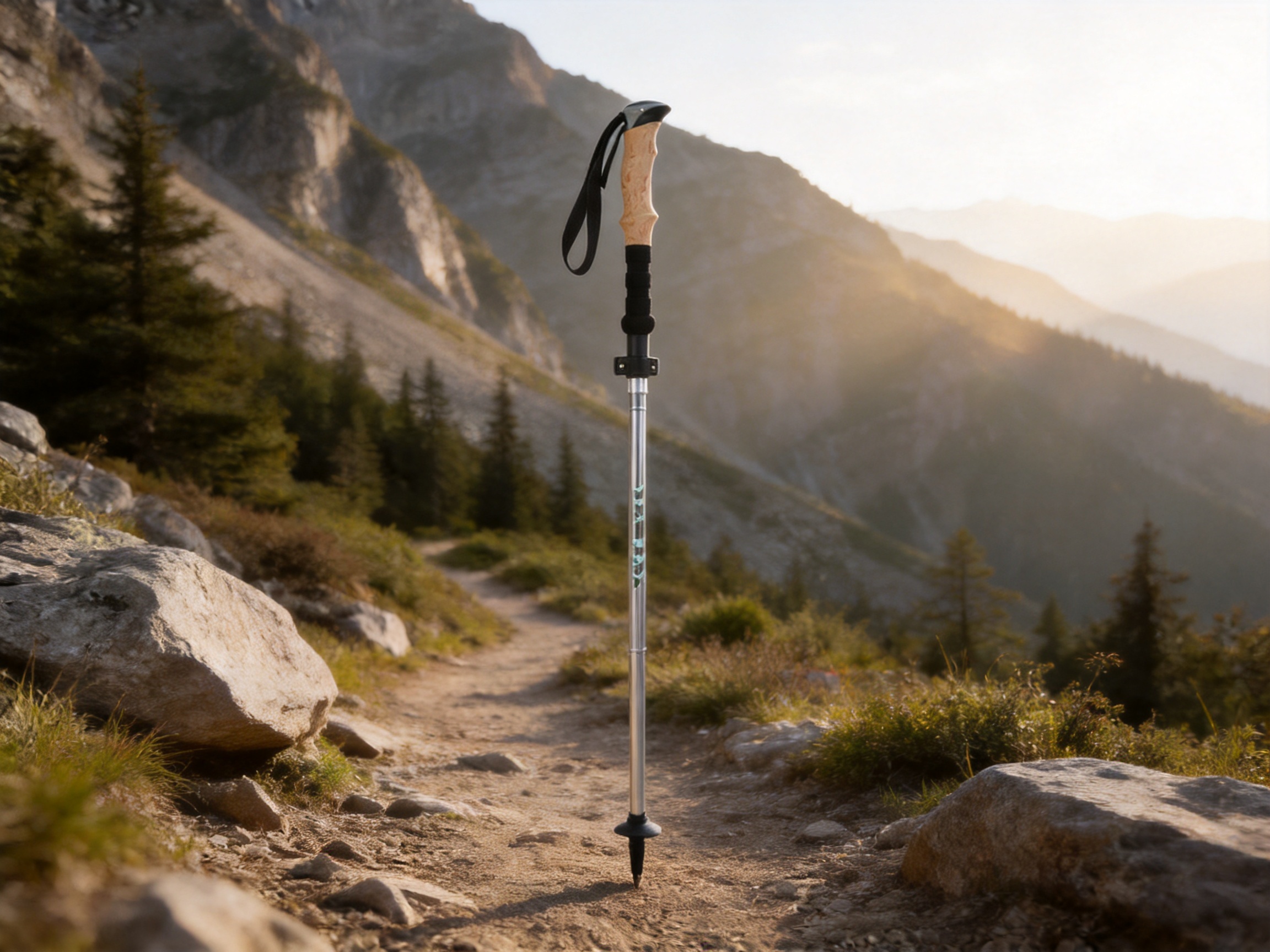
When extended, the pole can be adjusted to match the user's height, walking style, and terrain. A slightly shorter setting may be useful during uphill movement, while a longer setting can provide additional reach and support during downhill sections. Users can also adjust the poles to suit different activities, such as relaxed walking, rapid hiking, or standing support near a campsite.
When collapsed, the sections overlap to create a smaller package. This makes the pole easier to store in luggage, vehicle compartments, travel bags, or outdoor equipment closets. Retailers can also benefit from a more manageable product package, which may simplify warehouse organization and order fulfillment.
The telescopic design must be manufactured with controlled dimensional accuracy. If the shaft sections are too loose, the pole may feel unstable. If they are too tight, adjustment can become difficult, particularly in cold conditions or when dirt enters the joints. Reliable production therefore requires attention to tube diameter, wall thickness, surface finish, section alignment, and locking force.
CragHaven Outdoor approaches the product as a complete functional system. The objective is not simply to assemble three tubes and a lock. The relationship between the sections, external locking lever, handle, tip, and user load must be considered during sampling and optimization. This product development approach helps convert design intent into a repeatable product suitable for commercial supply.
External Locking System and Adjustment Efficiency
The 3LS external locking speed adjustment system is designed for fast and secure length adjustment. The external lever gives users a direct operating point on the outside of the pole. This is particularly helpful when the user needs to make a quick change before entering a steep section, crossing uneven ground, or adapting to a different walking rhythm.
A visible external lock also provides immediate feedback. When the lever is closed, the user can inspect its position and confirm that the shaft section has been secured. This is a practical advantage over adjustment systems that provide less visual indication. A clear locking action can reduce uncertainty and improve confidence during use.
The one-button locking concept is intended to simplify operation. Users can release the lock, slide the pole to the desired length, and close the lever. The system does not require complicated threading or repeated twisting of multiple components. This is useful for beginners, experienced hikers, and users wearing gloves.
For wholesale customers, the external locking system can also reduce the learning curve for end users. Products that are easy to understand are more suitable for broad retail distribution. Clear operation can reduce complaints related to adjustment difficulty and make the trekking pole easier to demonstrate in a store or product presentation.
Functional Advantages of an External Lock
- Quick adjustment during changing terrain conditions.
- Simple operation for users with different levels of outdoor experience.
- Visible locking position for easier confirmation.
- Useful handling characteristics when wearing gloves.
- Reduced dependence on complex internal adjustment procedures.
- Convenient demonstration for retail staff and product buyers.
The external lock is not a substitute for responsible use. Users should always make sure the lever is fully closed and the shaft is secure before applying significant weight. Product instructions, recommended adjustment ranges, and inspection guidance should be included in the final retail package.
Handle Design and User Control
The straight handle provides a stable contact point between the user and the pole. A handle should remain comfortable during long periods of use while allowing the user to guide the pole accurately. The straight profile is familiar to many hikers and can provide direct control when moving over mixed terrain.
The wrist strap contributes to control and reduces the need to grip the handle tightly. When correctly adjusted, the strap can help transfer some load through the wrist and hand while allowing the fingers to remain more relaxed. This is especially useful during long-distance hiking, where constant gripping can lead to hand fatigue.
Handle materials can be selected according to the requirements of the target market. Common options include EVA foam, cork, rubber, and composite grip materials. The final choice may depend on climate, price positioning, moisture exposure, branding requirements, and customer preference. CragHaven Outdoor can coordinate product development and manufacturing decisions according to the intended market and application.
A suitable grip should also provide enough surface friction when the user's hands are wet or when the pole is used in warm conditions. The handle shape, surface texture, strap attachment, and overall balance contribute to perceived quality. Small details in these areas can significantly influence customer satisfaction because they are experienced directly during every use.
Tungsten Steel Alloy Tip for Trail Contact
The lower tip is the primary contact point between the pole and the ground. It must transfer force effectively while resisting abrasion. The tungsten steel alloy tip used in this product is selected for its hardness and wear resistance.
On compact soil, gravel, roots, and rocky paths, the tip helps the user establish a stable point of contact. It can assist with balance while climbing, descending, traversing slopes, or moving with a loaded backpack. The tip also helps the pole respond to changes in terrain more predictably than a soft material that wears quickly.
Wear resistance is especially important for commercial outdoor products. A trekking pole may be used repeatedly by one customer or handled frequently in rental and group environments. A durable tip helps maintain product functionality across multiple trips. It can also reduce the frequency of replacement parts when the pole is used correctly.
Users should select suitable baskets or rubber accessories when walking on sensitive surfaces such as indoor floors, paved areas, or delicate terrain. The product is primarily intended for outdoor ground contact, and accessories may be appropriate for protecting surfaces and adapting the pole to specific conditions.
Performance Comparison with Other Trekking Pole Designs
Every trekking pole material and locking system involves trade-offs. The most suitable choice depends on the user's priorities, terrain, budget, and expected frequency of use. The aluminum external-lock model is designed to provide a dependable middle ground between lightweight specialty products and basic low-cost poles.
| Performance Factor | Aluminum External-Lock Trekking Pole | Carbon Fiber Trekking Pole | Basic Twist-Lock Pole |
|---|---|---|---|
| Impact resistance | High and suitable for rugged terrain | Good, but more sensitive to sharp impact | Moderate, depending on construction |
| Weight | Moderate and practical for extended use | Very light | Moderate |
| Adjustment speed | Fast external lever operation | Usually fast when using an external lock | Slower twisting adjustment |
| Lock visibility | Easy to inspect from the outside | Depends on the product design | Less obvious during operation |
| Maintenance | Simple inspection and cleaning | Requires care around impact damage | May require checking internal expansion parts |
| Cost efficiency | Strong balance of performance and cost | Usually higher cost | Often lower initial cost |
| Recommended terrain | Mountain, rocky, forest, and mixed trails | Long-distance routes where weight reduction is the priority | Light hiking and general recreational use |
The comparison shows why aluminum remains relevant in the trekking pole market. Carbon fiber is attractive for users who prioritize the lowest possible weight, but aluminum can be preferable where impact resistance and cost control are more important. Compared with basic twist-lock products, the external lever offers faster adjustment and more direct visual confirmation.
Advantages for Long-Distance Hiking
Long-distance hiking involves repetitive movement over many hours or days. The body must adapt to elevation changes, uneven surfaces, changing weather, and accumulated fatigue. Trekking poles can help distribute load between the legs and upper body while improving balance.
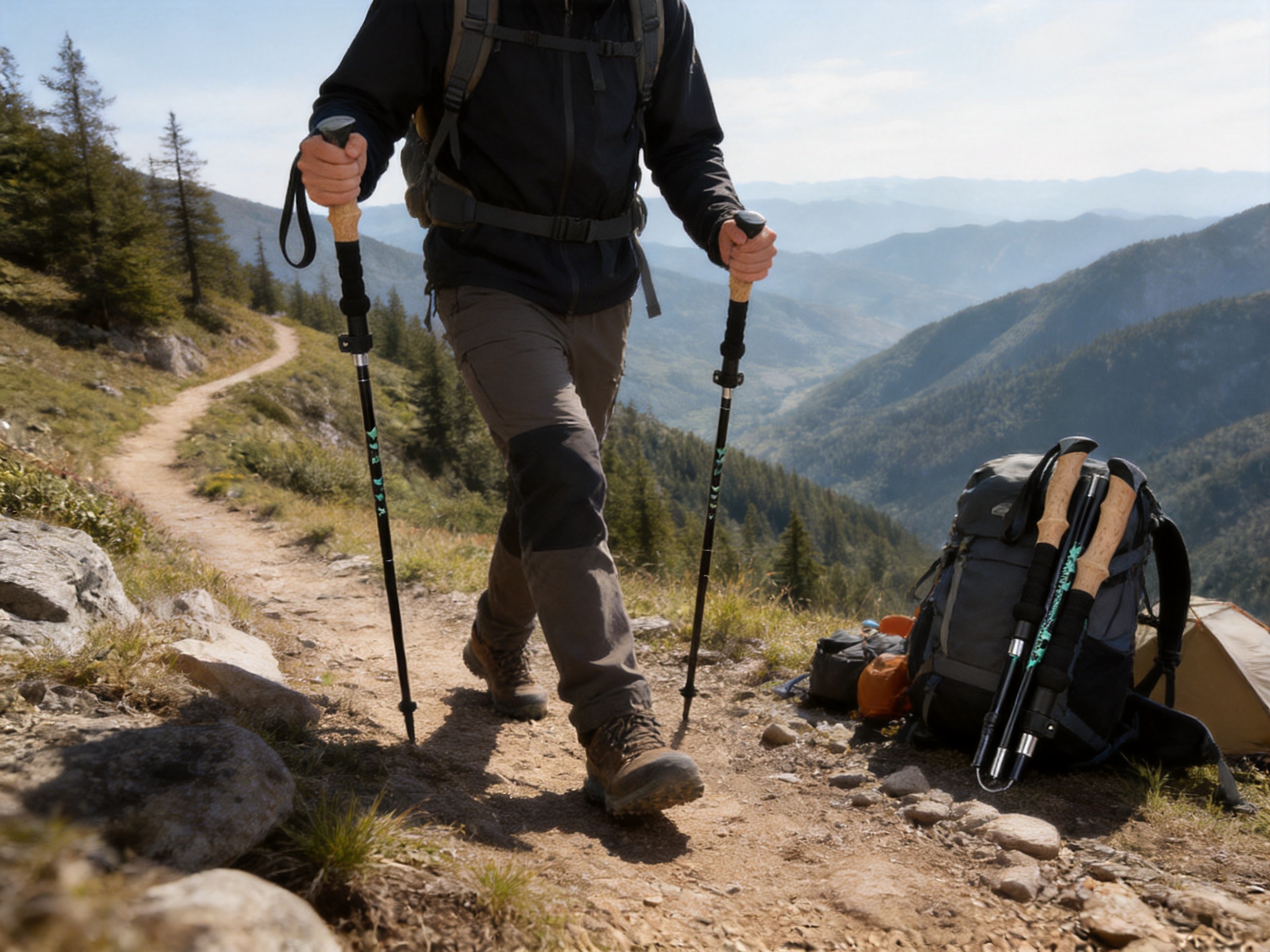
During descents, poles can help reduce the amount of force transferred directly to the knees. During climbs, they can provide an additional point of support and help establish a consistent rhythm. On side slopes, two poles can increase stability by widening the user's support base.
When carrying a heavy backpack, the value of dependable support becomes more noticeable. The aluminum shaft and stable external lock are designed to provide consistent assistance without requiring complicated adjustment. Users can adapt pole length to the terrain and maintain a comfortable walking posture.
The product is also practical for travel-based hiking. Its three-section construction allows users to collapse the pole when boarding transport, storing equipment, or moving through areas where poles are not needed. This combination of field performance and portability makes it suitable for hiking tours, mountain travel, camping weekends, and outdoor expeditions.
Common Long-Distance Hiking Benefits
- Improved balance on uneven and loose surfaces.
- Additional support during steep ascents and descents.
- Reduced perceived pressure on the knees during downhill movement.
- More stable posture when carrying a loaded backpack.
- Adjustable length for different slopes and walking styles.
- Compact storage between stages of a trip.
- Reliable support across mixed terrain and changing conditions.
Trekking poles do not replace careful foot placement, suitable footwear, or responsible route planning. Their role is to provide additional support and improve movement efficiency when used correctly.
Applications Across Outdoor Environments
The product is suitable for a wide range of outdoor scenarios. Mountain trails are one of the most demanding applications because they combine steep slopes, uneven ground, loose rock, and changing weather. The aluminum shaft and tungsten steel alloy tip provide a practical foundation for this type of use.
Forest trails may contain roots, mud, wet leaves, and irregular ground. In these conditions, a trekking pole can help the user test surface stability before transferring body weight. The external lock allows the length to be adjusted when the route changes from a narrow path to a more open section.
Camping applications may involve carrying equipment between a vehicle, campsite, and trailhead. A compact telescopic pole is easy to pack with tents, sleeping systems, backpacks, and cooking equipment. It can also provide support during short walks around a campsite or while exploring nearby routes.
For travel retailers, the broad application range is commercially valuable. One product can serve customers interested in hiking, trekking, camping, mountaineering, fitness walking, and general outdoor recreation. This versatility can simplify product assortment and support multiple market segments.
| Outdoor Scenario | Relevant Product Advantage | Typical User Requirement |
|---|---|---|
| Mountain trails | Stable aluminum shaft and reliable tip contact | Support on steep and uneven ground |
| Rocky routes | Impact resistance and wear-resistant tip | Confidence during repeated contact with hard surfaces |
| Forest paths | Adjustable length and direct handling | Balance around roots, mud, and irregular terrain |
| Long-distance hikes | Durability and ergonomic control | Comfort during repeated use over many hours |
| Camping trips | Three-section portability | Easy storage with other outdoor equipment |
| Outdoor travel | Compact transport and broad application | Convenient packing and flexible use |
Manufacturing Quality and Process Control
A trekking pole's final performance depends on more than its material specification. Tube forming, cutting, surface treatment, assembly, locking adjustment, component fit, and inspection all influence the finished product. A strong aluminum alloy shaft cannot compensate for a poorly fitted lock or inconsistent section dimensions.
CragHaven Outdoor treats manufacturing quality as part of product development rather than as a final inspection activity only. The company participates in design, sampling, testing, optimization, and production coordination. This approach helps identify potential problems before mass production and supports more stable results for international buyers.
During the sampling stage, the product structure can be reviewed for usability, portability, balance, locking action, grip comfort, and component compatibility. Samples are important because they convert drawings and specifications into physical products that can be handled and tested. Adjustments may be made to shaft tolerances, lever resistance, section overlap, handle shape, and tip fit before production approval.
Tube manufacturing requires accurate control of diameter and straightness. The three sections must slide smoothly while maintaining sufficient contact with the locking components. Surface treatment should also be consistent so that the pole has a clean appearance and appropriate resistance to normal outdoor handling.
External locking components must be assembled with correct alignment and force. If the lock is too loose, the section may slip. If it is too tight, users may find the lever difficult to operate. Production inspection should therefore evaluate both security and usability rather than focusing on only one characteristic.
Assembly workers and quality personnel should examine the connection between the handle, shaft, lock, wrist strap, and tip. The pole should be checked in both collapsed and extended positions. This helps identify issues that may not be visible when the product is inspected as separate components.
Important Manufacturing Control Points
- Aluminum alloy specification and incoming material verification.
- Tube diameter, wall thickness, straightness, and section length.
- Surface finish, coating consistency, and resistance to ordinary abrasion.
- External lever alignment and locking force.
- Section sliding performance and adjustment range.
- Handle attachment strength and grip finish.
- Wrist strap attachment and stitching quality.
- Tungsten steel alloy tip installation and fit.
- Extended-pole stability and collapsed-pole compactness.
- Packaging protection during storage and transportation.
These control points help reduce variation between production batches. For global buyers, batch consistency is essential because products may be distributed through multiple countries and sales channels. A customer purchasing the same model at different times should receive a product with consistent operating characteristics.
Product Development Based on Real Outdoor Use
CragHaven Outdoor is based in Hangzhou, China, and operates as an outdoor brand and cross-border manufacturing partner. Its product development philosophy begins with real use conditions rather than catalog specifications alone. Outdoor products are exposed to weather, terrain, repeated handling, and time. Each feature must therefore respond to a practical user need.
This approach is reflected in the design of the trekking pole. The three-section structure addresses portability. The external lock addresses adjustment speed and visible fixation. The aluminum alloy addresses impact resistance and durability. The tungsten steel alloy tip addresses contact wear. These features are connected to specific use problems rather than added only for visual appeal.
The company emphasizes material selection based on durability, reliability, and long-term value. Sampling, testing, and optimization are treated as standard stages of development. This is important for wholesale customers because a product must function consistently not only in a product photograph or initial sample but also across repeat manufacturing cycles.
CragHaven Outdoor also aims to reduce uncertainty in the supply chain. For buyers, uncertainty can arise from inconsistent materials, unclear specifications, unstable production schedules, poor communication, or insufficient packaging support. A manufacturing partner that understands both outdoor use and international distribution can help address these issues earlier in the process.
The company works with global retailers, distributors, and brands that may require OEM or customized outdoor gear. Customization may involve color, logo placement, packaging, handle materials, accessory selection, labeling, or product configuration. Any customization should be evaluated for its effect on usability, durability, production feasibility, and market positioning.
OEM and Wholesale Advantages
Wholesale buyers often need more than a standard product. They may require a specific color range, private-label branding, retail packaging, barcode placement, instruction manuals, carton markings, or coordinated product assortments. A manufacturing partner with experience in cross-border supply can support these requirements more efficiently.
The aluminum trekking pole is suitable for private-label programs because its core design is practical and adaptable. Buyers can position it as a hiking accessory, a mountaineering essential, a camping product, or part of a broader outdoor equipment collection. Its balanced price and performance profile can support entry-level professional ranges as well as mid-market product lines.
Packaging should protect the pole from scratches, lever damage, and impact during international transportation. The collapsed product can be arranged in individual retail packaging or grouped in export cartons according to the buyer's requirements. Packaging design should communicate adjustment instructions, safety guidance, material information, and intended use.
For retailers, product education is important. The external locking operation should be explained clearly, and the recommended adjustment procedure should be easy for customers to understand. Product images, packaging diagrams, or printed instructions can show how to open the lever, set the length, and close the lock securely.
For distributors, product consistency and replenishment capability are essential. A long-term manufacturing relationship can help coordinate repeat orders, seasonal demand, and product updates. CragHaven Outdoor's focus on stable, replicable, and scalable production supports this type of partnership.
Inspection, Testing, and User Safety
Before use, customers should inspect the pole for visible damage, loose components, or contamination in the telescopic sections. The external locking lever should be fully closed, and the shaft should not slide when moderate hand pressure is applied. Users should avoid placing their full body weight on a pole that has not been locked correctly.
During normal use, the pole should be adjusted within its recommended length range. Excessive extension may reduce the overlap between shaft sections and affect stability. The locking mechanism should not be forced beyond its intended operating position.
After use in wet, muddy, or dusty conditions, the pole should be cleaned and dried before storage. Dirt inside the telescopic sections can affect adjustment and locking performance. Regular inspection can help identify dents, cracks, worn tips, damaged straps, or loose handles at an early stage.
The tungsten steel alloy tip is designed for outdoor ground contact. Users should take care when carrying or storing the pole because the tip may be sharp. Protective caps should be used during transportation when appropriate. Rubber accessories or baskets may be recommended for paved surfaces and sensitive ground.
Why This Model Offers a Competitive Market Position
The product's competitive advantage comes from the interaction of several features rather than from a single specification. Aluminum alloy provides structural reliability. The three-section format improves portability. The external lock simplifies adjustment. The tungsten steel alloy tip supports long-term trail contact. The straight handle provides familiar control. Together, these elements create a practical product for a wide range of users.
Compared with ultra-light products, the model offers a stronger emphasis on impact resistance and cost efficiency. Compared with basic poles, it provides a more convenient external adjustment system and a more professional overall configuration. Compared with products that prioritize complex technology, it remains easy to understand, operate, inspect, and maintain.
Its broad application range is another advantage. The pole can be offered to customers who enjoy day hikes, multi-day treks, mountain travel, camping, and general outdoor recreation. This versatility can make it easier for retailers to build a coherent product category around one dependable model.
For brands and distributors, the manufacturing relationship adds further value. Product development, sampling, inspection, packaging, and customization can be coordinated through one cross-border partner. This can simplify communication and reduce the risk that design decisions, manufacturing limitations, and market requirements become disconnected.
| Buyer Priority | Product or Manufacturing Response | Commercial Benefit |
|---|---|---|
| Durable field performance | Aluminum alloy shaft and wear-resistant tip | Suitable for demanding outdoor use |
| Fast user adjustment | 3LS external locking system | Easier customer operation and product demonstration |
| Compact transport | Three-section telescopic construction | Convenient storage, shipping, and travel |
| Stable supply quality | Sampling, process control, and inspection | More consistent repeat orders |
| Brand differentiation | OEM color, logo, packaging, and configuration support | Flexible private-label positioning |
| Broad market coverage | Use across hiking, camping, trekking, and mountaineering | Access to multiple customer segments |
Recommended Product Positioning
This trekking pole can be positioned as a reliable aluminum support tool for users who want durability, practical portability, and fast adjustment. It is especially suitable for retailers that need an outdoor product with broad appeal and clear functional benefits.
For entry-level customers, the product offers an approachable operating system and straightforward maintenance. For experienced hikers, the aluminum construction and external lock provide useful support on demanding terrain. For professional outdoor brands, the product provides a stable platform for customization and private-label development.
Marketing communication should focus on real benefits rather than unsupported performance claims. Suitable themes include reliable support, quick adjustment, compact storage, impact resistance, and long-term outdoor value. Retail content can explain how the pole helps with balance and movement without suggesting that it eliminates all physical strain or replaces safe hiking practices.
Product photography and packaging should clearly show the three-section construction, external locking lever, straight handle, and tip. The buyer should be able to understand the basic product structure before purchase. Clear communication can improve customer confidence and reduce incorrect expectations.
Care and Maintenance Recommendations
Regular maintenance can extend the service life of the trekking pole. After each trip, users should wipe dirt and moisture from the shaft and allow the sections to dry completely. If mud or sand is present, the sections should be cleaned carefully before repeated telescopic adjustment.
The locking lever should be checked for movement and secure closure. Users should not apply excessive force or use unsuitable tools to alter the locking mechanism. If the lock does not hold the shaft securely, the pole should be removed from service until it has been inspected or adjusted according to the manufacturer's instructions.
The tip should be examined for excessive wear. A worn tip may provide less traction and should be replaced when appropriate. The handle and wrist strap should also be checked for looseness, tearing, or other damage.
For storage, the pole should be collapsed and placed in a dry location away from direct heat and prolonged moisture. It should not be stored under heavy objects that could bend the shaft or damage the external lever.
Frequently Asked Questions
1. Is an aluminum trekking pole suitable for long-distance hiking?
Yes. Aluminum trekking poles are suitable for long-distance hiking because they offer impact resistance, stable support, practical durability, and a balanced weight. They are particularly useful for hikers who travel across rocky trails, mixed terrain, and routes where the pole may experience repeated contact with hard surfaces.
2. What is the advantage of the three-section design?
The three-section design allows the pole to be adjusted for different users and terrain conditions while remaining compact when collapsed. This makes it easier to transport in luggage, vehicles, backpacks, and camping equipment storage.
3. How does the external locking system work?
The external locking system uses a lever on the outside of the shaft. The user opens the lever, adjusts the pole to the desired length, and closes the lever to secure the section. The visible mechanism makes the locking position easier to confirm than some internal adjustment systems.
4. Is this pole suitable for mountain trails?
Yes. The aluminum alloy shaft, external locking system, and tungsten steel alloy tip make the pole suitable for mountain trails, rocky routes, forest paths, and mixed terrain. Users should still inspect the pole before use and select a length appropriate for the terrain.
5. How does this product compare with a carbon fiber trekking pole?
Carbon fiber poles are generally lighter and may provide strong vibration absorption. Aluminum poles typically offer higher impact resistance and a more forgiving response to sudden loads. The best choice depends on whether the user prioritizes minimum weight or a stronger balance of durability, stability, and cost efficiency.
6. Can the trekking pole be customized for private-label orders?
Customization may be available for colors, logos, packaging, handle materials, accessories, labeling, and other product details. Requirements should be reviewed during the development stage to confirm technical feasibility, minimum order quantities, lead times, and packaging specifications.
7. What quality factors should buyers inspect before placing a wholesale order?
Buyers should evaluate shaft straightness, section fit, locking force, adjustment range, handle attachment, wrist strap quality, tip installation, surface finish, packaging protection, and batch consistency. Sample approval and defined inspection standards are recommended before mass production.
8. How should the pole be cleaned after use?
The pole should be wiped clean and dried after use. Dirt, sand, and mud should be removed from the telescopic sections and locking area. The pole should be stored in a dry location and inspected before the next trip.
9. Is the pole appropriate for camping as well as hiking?
Yes. Its compact three-section construction makes it convenient for camping trips, while the aluminum shaft and durable tip provide support for walks around campsites, trail approaches, and outdoor travel routes.
10. What role does CragHaven Outdoor play in the supply process?
CragHaven Outdoor operates as an outdoor brand and cross-border manufacturing partner. The company participates in product design, material selection, sampling, testing, manufacturing coordination, quality control, and OEM development for global retailers and outdoor brands.
Conclusion
The aluminum alloy three-section telescopic folding trekking pole is designed as a dependable and practical solution for hiking, mountaineering, camping, and outdoor travel. Its balanced construction combines a high-strength aluminum alloy shaft, a fast 3LS external locking system, compact three-section portability, a straight handle, and a wear-resistant tungsten steel alloy tip.
These features give the product a competitive position between lightweight specialty poles and basic recreational models. It offers the impact resistance and cost efficiency associated with aluminum, the adjustment convenience of an external lever, and the portability required by modern outdoor users.
For wholesale buyers and private-label brands, the product also benefits from a manufacturing process centered on sampling, testing, process control, and real-world use requirements. CragHaven Outdoor's experience in outdoor product development and cross-border manufacturing supports customization, stable supply, and long-term cooperation.
When properly adjusted, inspected, and maintained, this trekking pole can provide reliable support across demanding trails and everyday outdoor routes. Its combination of functional design and manufacturing discipline makes it a suitable addition to professional outdoor equipment ranges worldwide.
References
1. International Organization for Standardization. Outdoor Equipment Design and General Product Safety Principles.
2. International Organization for Standardization. Aluminum and Aluminum Alloy Product Specifications and Testing Practices.
3. American Hiking Society. Practical Principles for Safe and Responsible Hiking.
4. American Mountain Guides Association. Guidance on Trekking Pole Use in Mountain Environments.
5. European Committee for Standardization. General Requirements for Consumer Outdoor Equipment.
6. Outdoor Industry Association. Market and Consumer Trends in Hiking, Camping, and Mountaineering Equipment.
7. Materials Engineering Reference. Comparative Characteristics of Aluminum Alloys and Carbon Fiber Composites.
8. Product Development and Quality Management Reference. Sampling, Inspection, and Process Control for Outdoor Equipment Manufacturing.
Product: Aluminum alloy three-section telescopic folding external locking trekking pole straight handle


- Phone: +86-15968800379
- E-mail: [email protected]
- Address: Room 1002, Huishang Building, Gongshu District, Hangzhou City, Zhejiang Province.
Copyright © CragHaven Outdoor All Rights Reserved. Outdoor Gear Manufacturers Wholesale Mountaineering Camping Gear Suppliers
