

 English
 Deutsch
 Español
 Français


Portable Multi-Functional Folding Camping Chair for Coastal and Outdoor Use
Content
- 1 1. Why Portable Seating Requires More Than a Folding Mechanism
- 2 2. Product Construction and Functional Advantages
- 3 3. Material Selection for Different Outdoor Environments
- 4 4. Corrosion Protection and Marine-Use Considerations
- 5 5. Strength-to-Weight Performance and Stability
- 6 6. Comfort for Extended Outdoor Sitting
- 7 7. Manufacturing Process and Quality Control
- 8 8. Internal Testing and Real-World Validation
- 9 9. Advantages Over Conventional Competitor Products
- 10 10. OEM and ODM Development Opportunities
- 11 11. Recommended Use and Care
- 12 12. Buyer Selection Guide
- 13 13. Questions and Answers
- 13.1 Q1: Is this chair suitable for beach and coastal camping?
- 13.2 Q2: Why choose aluminum instead of steel?
- 13.3 Q3: Is 7075 aluminum always better than 6061 aluminum?
- 13.4 Q4: Can the chair be customized for a private-label brand?
- 13.5 Q5: How do the storage pockets improve the user experience?
- 13.6 Q6: Does the mesh back make the chair less supportive?
- 13.7 Q7: What testing should buyers request before placing a large order?
- 13.8 Q8: Can the chair be used for mountaineering or hiking?
- 13.9 Q9: What should users do if the frame is scratched?
- 13.10 Q10: How does manufacturing consistency affect the final product?
- 13.11 Q11: Is the chair appropriate for rental or institutional use?
- 13.12 Q12: What makes this product different from an ordinary folding chair?
- 14 14. Conclusion
- 15 References
- 16 Product: Outdoor folding chair, portable multi-functional camping chair
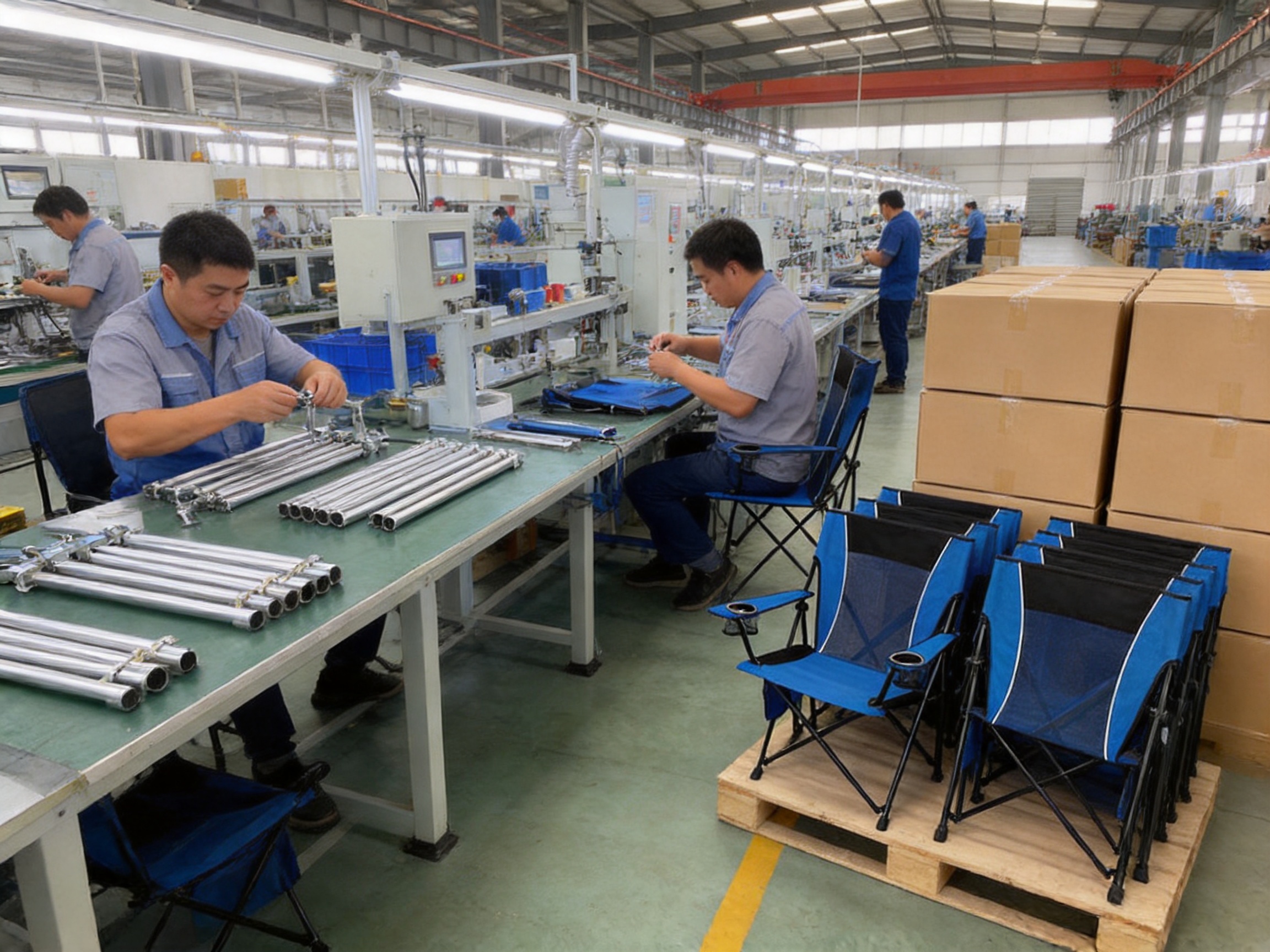
Outdoor seating is often treated as a simple accessory, but a reliable camping chair must solve several problems at the same time. It must be light enough to carry on a trail, strong enough to support repeated use, compact enough for transport and storage, comfortable enough for long periods of sitting, and durable enough to withstand changing weather conditions. For beach camping, fishing trips, mountain basecamps, festivals, sporting events, and family travel, the difference between an ordinary folding chair and a well-engineered portable chair becomes clear after only a few hours of use.
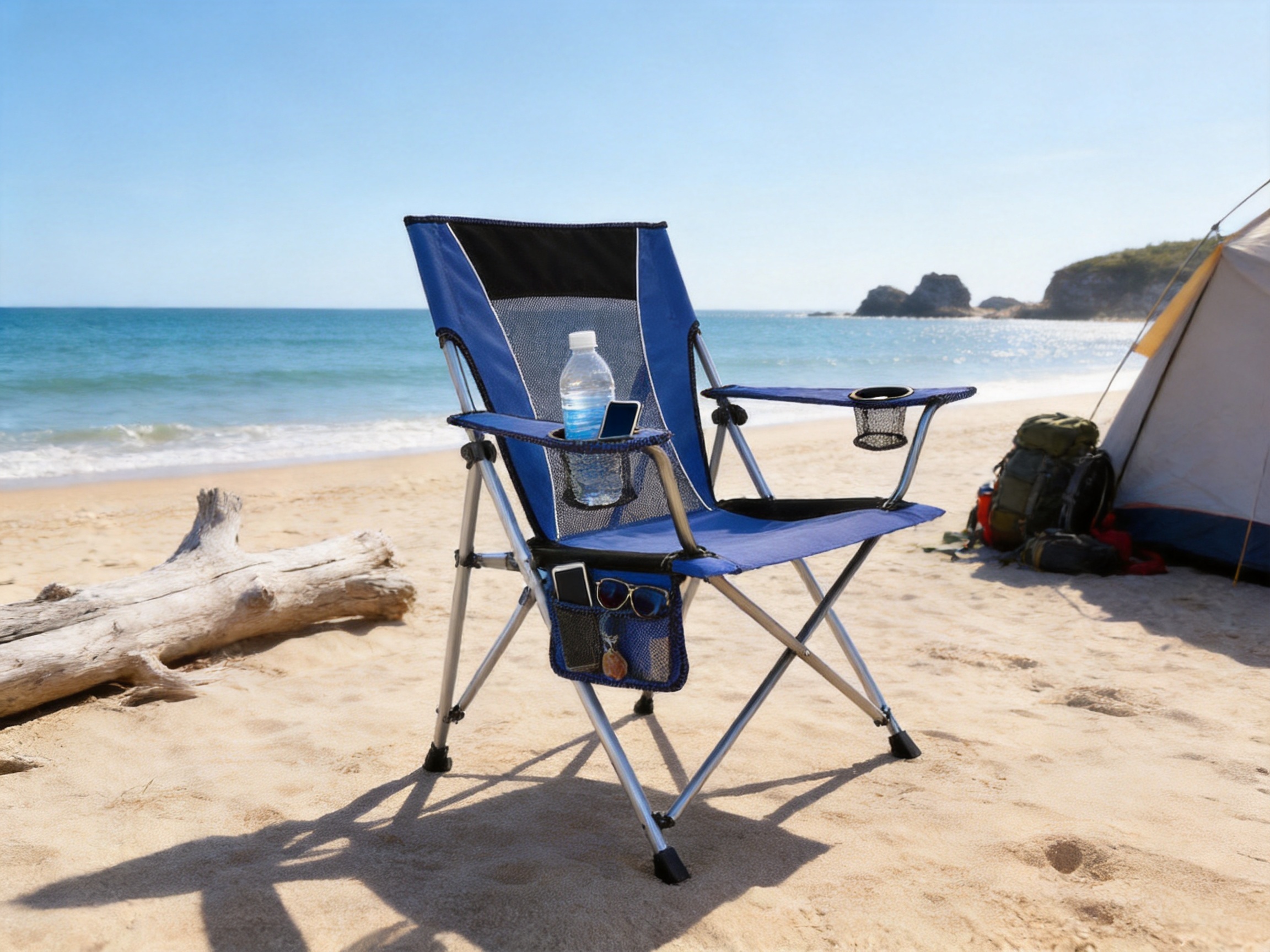
The portable multi-functional camping chair identified as WFLY262002 is designed around these practical requirements. It combines an aviation-grade aluminum alloy frame with an Oxford cloth seat, a breathable mesh back panel, side storage pockets, integrated cup holders, and a quick-folding structure. Instead of adding features merely for appearance, the chair is organized around common outdoor-use scenarios: carrying equipment from a vehicle to a campsite, keeping personal items within reach, reducing heat accumulation during extended sitting, and minimizing storage space after use.
For retailers, distributors, hospitality operators, and outdoor brands, the product also represents a flexible platform for private-label development. Its construction allows customization of materials, colors, finishing, packaging, branding, and functional details while maintaining a stable production foundation. The result is a portable outdoor chair that can serve both the mass camping market and more specialized applications such as coastal recreation, mountaineering support camps, fishing areas, and event seating.
1. Why Portable Seating Requires More Than a Folding Mechanism
A folding chair is exposed to a complex combination of forces and environmental conditions. When a user sits down, the frame receives a vertical load. When the user shifts position, leans backward, reaches sideways, or stands up, the structure experiences changing loads and torsional forces. On uneven ground, one leg may carry more weight than another. During transport, the chair may be dropped, dragged, or compressed among other equipment. At the seaside, salt deposits can collect around joints, tube ends, hinges, and fasteners.
These conditions mean that the product must be designed as a complete system rather than as a seat attached to a collapsible frame. The frame material, tube dimensions, joint geometry, fabric tension, hinge design, protective finishing, and folding sequence all influence the final user experience. A chair may have a strong material but still perform poorly if its connections are weak. It may be lightweight but uncomfortable if the seat tension is not properly distributed. It may resist corrosion on exposed tubes but fail prematurely because saltwater remains trapped inside unsealed joints.
The WFLY262002 addresses these requirements through a balanced configuration. The aluminum frame keeps carrying weight manageable, while the Oxford cloth seat provides practical support and abrasion resistance. The mesh back panel improves ventilation, particularly in warm and humid environments. Side pockets and cup holders reduce the need for a separate accessory organizer. The quick-folding mechanism shortens setup and packing time, which is valuable when users are moving between locations or preparing a campsite in poor weather.
This integrated approach gives the chair advantages over basic low-cost folding models. Many competing chairs concentrate on minimum purchase price and use heavier steel tubing, thin fabric, or limited finishing. Such products may be acceptable for occasional indoor use but can become inconvenient outdoors because they are bulky, hot to sit in, vulnerable to rust, or lacking in practical storage. The WFLY262002 is positioned as a more functional alternative for users who expect portability, comfort, and repeat outdoor use.
2. Product Construction and Functional Advantages
2.1 Aviation-Grade Aluminum Alloy Frame
The frame is the primary load-bearing component of a portable chair. Aluminum alloy is particularly suitable for this application because it offers a useful combination of low density, adequate structural strength, corrosion resistance, and manufacturability. Compared with steel, aluminum allows a lighter frame without requiring users to sacrifice basic stability when the tube profile and joint design are correctly engineered.
For a portable product, every gram affects the total experience. A chair that is used beside a car may be carried only a short distance, while a chair used for hiking, fishing, climbing support, or remote camping may be transported for several kilometers. Lower frame weight also makes it easier for older users, children, and travelers to handle the chair. When several chairs are packed together, the weight reduction becomes even more noticeable.
The aviation-grade aluminum frame used for this product is intended to provide a dependable balance between strength and portability. It supports a rigid seating structure while keeping the folded chair manageable for transport. The frame also offers better resistance to ordinary outdoor humidity than unprotected steel. In coastal environments, however, aluminum alloy selection and surface treatment remain important. Saltwater exposure can affect different aluminum alloys in different ways, especially around scratches, fasteners, and stressed joints.
2.2 Oxford Cloth Seat
The Oxford cloth seat is selected for practical outdoor performance. It provides a firm but flexible seating surface, folds with the frame, and can be produced in a variety of colors and branding configurations. The woven structure offers better resistance to routine abrasion than many lightweight fashion fabrics, which is important when the chair is repeatedly packed, unpacked, placed on rough ground, or transported with other equipment.
Fabric tension is an important part of the chair's comfort. A properly tensioned seat distributes body weight across several frame members instead of concentrating pressure at a small area. This helps the chair feel stable while allowing the user to change posture. The fabric also contributes to the folded volume because it can collapse along with the frame rather than requiring a rigid seat panel.
For wholesale and OEM projects, the Oxford cloth can support different product positioning strategies. A retailer may choose a neutral outdoor color for general camping use, a high-visibility color for rental fleets, or a coordinated color palette for a private-label collection. Branding can be applied through labels, woven marks, printed panels, packaging, or accessory bags, subject to the selected production specification.
2.3 Breathable Mesh Back Panel
Long periods of sitting can create heat and moisture between the user's back and the chair. This is especially noticeable during summer camping, beach recreation, fishing, festivals, and humid-weather travel. The breathable mesh back panel allows air to move through the upper seating area, reducing the stuffy sensation associated with fully enclosed fabric backs.
Ventilation is not only a comfort feature. By reducing moisture retention, a mesh panel can also improve the perceived freshness of the product during repeated use. In an outdoor setting, users may sit in the chair after walking, cooking, fishing, or participating in physical activities. A ventilated back makes the chair more suitable for these changing conditions.
The mesh section is integrated into the overall back-support structure rather than treated as a separate decorative insert. The frame must maintain sufficient tension and support around the mesh to prevent excessive sagging. Production inspection therefore includes checks for stitching consistency, panel alignment, attachment strength, and visual uniformity.
2.4 Side Storage Pockets and Cup Holders
Small accessories are easy to lose at a campsite. Phones, keys, sunglasses, maps, snacks, flashlights, fishing tools, and personal items often end up on the ground or inside a larger bag. The side storage pockets create a convenient location for frequently used items, allowing the user to remain seated without repeatedly reaching toward a backpack or vehicle.
The integrated cup holders address another common outdoor need. Users can keep water bottles, coffee cups, or other suitable containers close at hand while relaxing, reading, watching a sporting event, or working at a campsite. The cup holder position should be accessible without interfering with the user's elbow or reducing the usable seating width.
These features provide a meaningful advantage over minimalist folding chairs. A basic chair may have a lower initial cost, but an integrated storage system improves the overall experience without requiring additional organizers or side tables. For retailers, practical accessories also make the product easier to communicate in marketing because the benefits are immediately visible and easy for consumers to understand.
2.5 Quick-Folding Structure
The quick-folding design is intended to simplify the transition between use, transport, and storage. A user can open the chair at a campsite or event area without assembling separate parts, then fold it down when the activity is finished. This is particularly useful when rain begins, when a vehicle must be loaded quickly, or when the chair is moved between several locations during a trip.
Folded products must be evaluated for more than compactness. The mechanism should move in a controlled manner, minimize pinch risks through appropriate clearances, and remain aligned after repeated opening and closing cycles. The folded chair should also be easy to grip and stable enough to pack with other gear. These details distinguish a durable folding platform from a product that becomes loose or difficult to operate after limited use.
During manufacturing, the folding action is checked for smoothness, frame alignment, hardware security, and fabric interference. Sample testing can include repeated folding cycles, static loading, transport simulation, and inspection of joints after use. For OEM customers, the folding sequence can also be reviewed during product development to ensure that any requested changes do not compromise the original operating logic.
3. Material Selection for Different Outdoor Environments
Frame material has a direct influence on chair weight, strength, corrosion resistance, appearance, manufacturing cost, and expected service life. Three common choices for portable outdoor furniture are 7075 aluminum, 6061 aluminum, and high-tensile steel. Each has a suitable application, but none is universally ideal for every environment.
| Property | 7075 Aluminum | 6061 Aluminum | High-Tensile Steel |
|---|---|---|---|
| Typical yield strength | Approximately 503 MPa | Approximately 276 MPa | Approximately 350–700 MPa depending on grade and treatment |
| Density | Approximately 2.81 g/cm³ | Approximately 2.70 g/cm³ | Approximately 7.85 g/cm³ |
| Strength-to-weight performance | Very high | Balanced | Lower because of high density |
| Corrosion resistance | Moderate; requires careful protection in marine conditions | Good, especially with anodizing or powder coating | Low without comprehensive coating protection |
| Weldability and forming | More demanding | Good and versatile | Good, with greater weight |
| Best application | Ultra-lightweight premium equipment | General outdoor and coastal use | Heavy-duty or cost-focused basecamp products |
3.1 7075 Aluminum
7075 aluminum is known for high strength and a favorable strength-to-weight ratio. A properly designed frame made from this alloy can deliver excellent load performance with very low weight. This makes it attractive for premium ultralight chairs intended for backcountry travel, expedition support, or users who prioritize carrying efficiency above all other considerations.
Its main limitation is corrosion sensitivity compared with 6061 aluminum. In saltwater environments, unprotected 7075 can develop pitting more quickly, and chloride exposure under tensile stress may increase the risk of stress-corrosion cracking. Scratches that penetrate the protective finish require particular attention. For this reason, 7075 is better suited to controlled applications where weight savings are critical and users are willing to follow appropriate maintenance practices.
Advanced finishing can improve the performance of 7075. Type III hard anodizing, conversion coating, and an additional protective topcoat may be used depending on the product specification. Production inspection may include surface checks and, for selected premium models, non-destructive crack detection. However, the higher material and processing cost should be justified by a clear ultralight positioning strategy.
3.2 6061 Aluminum
6061 aluminum is widely used for outdoor products because it provides a well-balanced combination of corrosion resistance, strength, formability, and cost. It is especially suitable for coastal and general-purpose camping chairs. The alloy can be formed into practical tube geometries and supports stable production across larger volumes.
In marine or humid environments, 6061 generally offers a lower corrosion risk than 7075. Properly finished 6061 frames can withstand the moisture, salt deposits, and temperature changes commonly associated with seaside camping. Sealed anodizing and powder coating can further improve surface protection, while attention to tube ends and joints helps prevent crevice corrosion.
For a product such as the WFLY262002, 6061 aluminum is an effective choice when the target market includes a wide range of outdoor users. It keeps the chair light enough for transport while offering a more forgiving maintenance profile than high-strength alloys that require specialized protection. This balance also supports competitive wholesale pricing and reliable repeat production.
3.3 High-Tensile Steel
High-tensile steel remains relevant for heavy-duty chairs because it offers impact toughness, rigidity, and comparatively low raw material cost. Steel can tolerate rough handling and localized impacts that may permanently deform a thinner aluminum tube. Institutional buyers, rental operations, event organizers, and basecamp users may therefore select steel when extreme portability is less important than ruggedness and purchase price.
The primary disadvantages are weight and corrosion. Steel is nearly three times as dense as aluminum, so a steel chair generally requires more effort to carry. Bare steel also begins to rust rapidly in salt-spray conditions. Comprehensive protection requires pretreatment, primer, topcoat coverage, and regular inspection. If the coating is chipped, corrosion may develop beneath the film and spread out of sight.
For these reasons, a steel frame is usually less appropriate for a lightweight coastal camping chair. It remains a useful option for selected heavy-duty models, but an aluminum frame provides a more natural fit for products where portability and outdoor convenience are major selling points.
4. Corrosion Protection and Marine-Use Considerations
Coastal environments are demanding because saltwater and airborne chloride deposits accelerate electrochemical corrosion. The risk increases when moisture remains trapped at folding joints, inside open tube ends, under hardware, or between dissimilar metals. A chair used near the sea should therefore be designed with both material selection and drainage or sealing considerations in mind.
Surface treatment is one part of this protection strategy. For aluminum, anodizing creates a protective oxide layer that improves surface durability and appearance. Sealed Type II anodizing is suitable for many general-purpose 6061 frames. Type III hard anodizing can provide a thicker and harder layer for premium applications, although the selected process must be compatible with the alloy and intended flexing behavior.
Powder coating can be applied to aluminum or steel to create a colored protective layer. On steel, pretreatment and primer selection are particularly important because the coating must protect the substrate even when the chair is exposed to humidity and handling. A multi-layer system may include phosphate pretreatment, an epoxy primer, and a weather-resistant polyester topcoat.
Corrosion control also involves assembly design. Sealed tube ends can reduce the amount of water and salt entering the frame. Silicone joint gaskets or appropriately designed washers can limit moisture accumulation around moving connections. Fasteners should be selected with attention to galvanic compatibility, and production teams should inspect coating coverage around edges, bends, holes, and contact points.
Users also influence service life. After beach use, rinsing the chair with fresh water and allowing it to dry before storage can remove salt deposits. The chair should not remain folded while wet for long periods. Periodic inspection of scratches, rivets, hinges, and tube ends helps identify problems before they affect structural performance. These simple maintenance practices are particularly valuable for any chair used frequently near seawater.
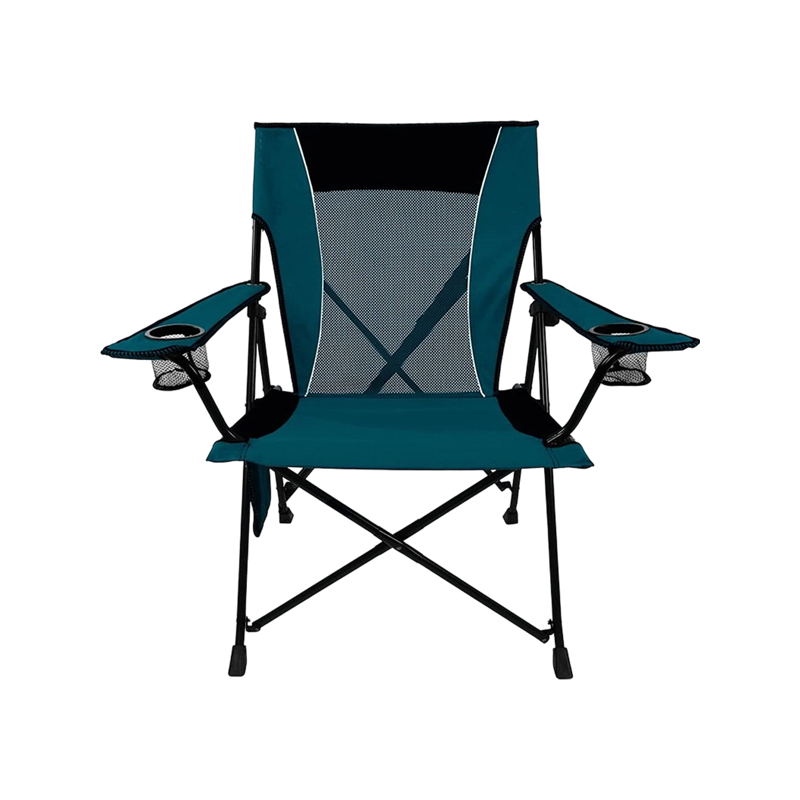
Outdoor folding chair, portable multi-functional camping chair
5. Strength-to-Weight Performance and Stability
A portable chair must be light, but low weight alone does not guarantee a good product. The frame must remain stable when the user enters the chair, shifts position, or sits on uneven terrain. Stability depends on the relationship between the base width, center of gravity, tube stiffness, fabric tension, foot geometry, and joint alignment.
Aluminum provides an efficient foundation because its low density allows designers to allocate weight where it matters most. Material can be concentrated in load-bearing areas, while tube dimensions and frame geometry are adjusted to control bending and twisting. The result is a chair that can feel secure without becoming unnecessarily heavy.
The practical benefit is most apparent when the chair is carried alongside other equipment. A user may already be transporting a tent, sleeping bag, stove, cooking equipment, climbing accessories, and personal supplies. Reducing the chair's weight and folded volume helps preserve carrying capacity for items that cannot be eliminated from the trip.
Compared with many low-cost steel chairs, an aluminum model can reduce the burden of repeated transport. Compared with ultralight specialty chairs, the WFLY262002 adds useful comfort and organization features that make it more suitable for ordinary camping and extended sitting. This balance is important because many customers do not want the absolute lightest chair; they want a chair that is light enough, comfortable enough, durable enough, and practical enough for multiple situations.
Load performance is evaluated through a combination of material data, structural calculations, sample testing, and quality inspection. A static load test alone is not sufficient because folding furniture experiences repeated movement and impact. Development testing may include vertical loading, lateral loading, opening and closing cycles, uneven-floor testing, fabric seam checks, and examination of the frame after repeated use.
6. Comfort for Extended Outdoor Sitting
Camping chairs are often used for longer periods than customers initially expect. A user may sit while preparing food, waiting beside a fire, watching children, fishing, reading, talking with friends, or resting after a hike. Comfort therefore affects product satisfaction as strongly as portability.
The Oxford cloth seat provides a supportive surface without the bulk of a padded chair. Its flexible construction adapts to the user's body and folds efficiently. The seat should maintain enough tension to prevent excessive sagging while still allowing natural posture changes. Edge binding, seam construction, and attachment points are important because these areas receive concentrated stress during repeated use.
The mesh back panel improves air circulation and helps reduce heat buildup. This is especially useful in warm regions, where a solid fabric back can become uncomfortable after only a short time. Breathability also supports a cleaner feeling during humid weather and repeated outdoor use.
Storage features contribute to comfort indirectly. When phones, bottles, and small objects have designated locations, the surrounding ground can remain less cluttered. Users do not need to twist repeatedly to retrieve items from a backpack. By keeping frequently used objects within reach, the chair becomes a more complete personal base for relaxation rather than simply a temporary seat.
For private-label customers, comfort can be further developed through fabric weight, seat depth, back height, color, logo placement, and accessory configuration. Any modification should be assessed as part of the whole product because changes in fabric tension or panel dimensions may affect folding behavior and frame loading.
7. Manufacturing Process and Quality Control
A strong product concept becomes commercially valuable only when it can be produced consistently. Outdoor furniture is sensitive to variation because small differences in tube alignment, hole position, fabric tension, or hardware torque may affect folding action and stability. A capable manufacturing partner must therefore control the process from material entry through final packing.
7.1 Product Development and Engineering Review
Development begins with the intended use scenario. Engineers consider whether the chair is intended for coastal camping, general recreation, backpacking, rental use, basecamp seating, or retail multipacks. They review the expected user profile, load requirements, transport conditions, climate exposure, and price target before finalizing the material and structure.
Three-dimensional modeling and sample production help identify interference between the frame and fabric, check the folded dimensions, and verify the position of pockets and cup holders. Early samples are opened and folded repeatedly to identify friction, misalignment, or excessive force. The development team can then adjust tube geometry, hinge clearances, seam locations, and attachment points before mass production.
7.2 Aluminum Tube Processing
Aluminum tubes must be cut to controlled lengths and prepared for bending, drilling, swaging, or connection. Dimensional accuracy is important because frame symmetry affects both stability and folding. If left and right components differ, the chair may sit unevenly or place excessive force on one joint.
During bending, the process must control deformation and surface damage. Excessive flattening can weaken the tube or interfere with hardware installation. After forming, holes and connection points are checked for position and edge quality. Burr removal protects both the user and the fabric, while controlled finishing improves the consistency of anodizing or coating.
For selected products, incoming material certificates and hardness checks may be used to verify the alloy and temper. Production records help connect material batches with finished goods, supporting traceability and corrective action when necessary.
7.3 Surface Treatment
Surface treatment begins with preparation. Oil, dust, oxidation, and handling residue must be removed before anodizing or powder coating. Inadequate preparation can result in uneven color, poor adhesion, or localized corrosion.
For anodized aluminum, process control includes bath chemistry, temperature, treatment time, sealing, and visual inspection. For powder coating, pretreatment, film thickness, curing temperature, and coverage around edges and joints require attention. The selected finish should match the product's expected environment and price positioning.
Coating inspection may include visual examination, thickness measurement, adhesion checks, and, for relevant product programs, salt-spray or cyclic corrosion testing. Laboratory results do not replace real-world design review, but they help identify weaknesses in the finish before the chair reaches customers.
7.4 Fabric Cutting and Sewing
The Oxford cloth seat and mesh back panel are produced through controlled cutting and sewing operations. Pattern accuracy affects the final tension of the chair. If panels are cut inconsistently, the seat may be too loose on one sample and too tight on another.
Critical seams receive appropriate reinforcement because they transfer load from the fabric into the frame. Stitch density, thread quality, bartack placement, binding, and attachment loops are inspected during production. Random samples may be subjected to pull tests or extended-use simulations to confirm that seams remain secure.
Color consistency is also important for branded programs. Fabric lots are checked against approved standards, and production teams control the combination of fabric, mesh, labels, webbing, and coating colors so that the finished chair presents a coordinated appearance.
7.5 Assembly and Functional Inspection
During assembly, frame components, rivets, screws, washers, fabric sections, pockets, and cup holders are combined according to defined work instructions. Torque and fastening conditions must be controlled because loose hardware can create noise and instability, while excessive tightening can restrict movement or damage components.
Each chair should be opened and folded during inspection. The operation should be smooth, the frame should sit evenly, and the fabric should remain properly attached. Inspectors also check for sharp edges, incomplete coating, stitching defects, loose threads, stains, damaged mesh, misaligned pockets, and packaging errors.
Finished products can be sampled for static load performance, dimensional consistency, folded size, weight, and repeated folding cycles. The inspection criteria are documented so that the same standard can be maintained across repeat orders and customized versions.
7.6 Packaging and Shipment Preparation
Packaging must protect the finish and frame during domestic handling, export transport, warehouse storage, and retail distribution. Protective sleeves, separators, polybags, cartons, and pallet configurations are selected according to the shipment method and customer requirements.
Because the chair is designed to fold quickly and occupy limited space, packaging efficiency can help reduce transportation volume. Better packing density may lower logistics costs and support more efficient container utilization. Retail-ready packaging can include product dimensions, material information, care instructions, barcode labels, and brand graphics when required.
8. Internal Testing and Real-World Validation
Outdoor furniture should be evaluated through multiple test methods because no single test captures every use condition. Mechanical testing examines structural behavior, while environmental testing evaluates corrosion and finish durability. Functional testing confirms whether the product remains convenient after repeated operation.
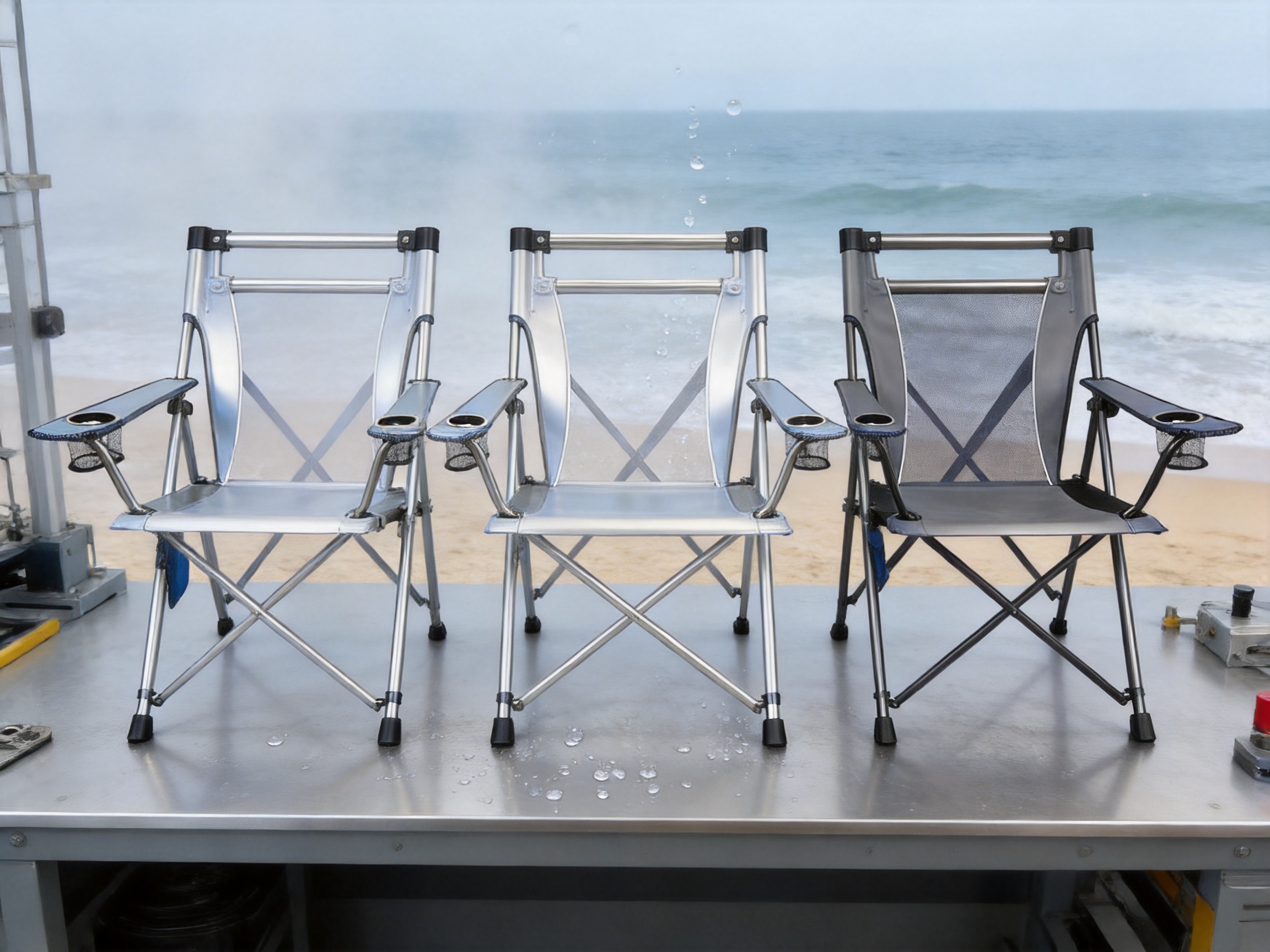
Salt-spray testing based on ASTM B117 can reveal differences between bare metals and protected surfaces. In comparative testing, unprotected 7075 aluminum may show pitting earlier than 6061 aluminum, while bare steel can develop visible red rust within a short period. Coated or anodized materials perform better, but the result depends on preparation, coverage, alloy, and the presence of scratches or exposed edges.
Cyclic corrosion testing can provide additional information by alternating salt exposure, drying, and humidity. This pattern more closely resembles outdoor use than continuous spray alone because real chairs are repeatedly wetted, dried by the sun, and exposed to new salt deposits. Testing should pay special attention to joints and crevices because water may remain in these locations even when visible surfaces appear intact.
Field exposure provides another layer of evidence. Prototype chairs can be placed in coastal locations and inspected over time for coating adhesion, frame discoloration, corrosion at joints, fabric deterioration, and changes in mechanical performance. Real-world observations often identify details that laboratory tests do not fully reveal, such as salt accumulation inside tube ends or wear caused by sand entering moving joints.
For product programs intended for different regions, testing can be adjusted to reflect local conditions. Humid tropical climates, cold mountain environments, high-UV areas, and dry desert locations place different demands on fabrics, coatings, and moving parts. A manufacturing partner with scenario-based development can help customers select a specification that matches the target market instead of overengineering or underprotecting the product.
9. Advantages Over Conventional Competitor Products
The portable multi-functional camping chair competes in a crowded market that includes basic steel stools, oversized padded chairs, ultralight backpacking seats, and inexpensive folding furniture. Its advantage is not that it attempts to be the cheapest or the most specialized product. Its advantage is the balance of features that address a broader range of outdoor situations.
Lower carrying burden than many steel chairs: The aluminum frame reduces transport weight while maintaining a practical level of structural support.
Better ventilation than fully enclosed chairs: The mesh back panel improves airflow during warm-weather use and extended sitting.
More useful than minimalist models: Side storage pockets and cup holders keep frequently used items close without requiring separate accessories.
More convenient than assembled furniture: The quick-folding design allows fast setup, packing, and storage.
More adaptable for private-label programs: Materials, colors, branding, packaging, and selected details can be developed for different retail channels.
More suitable for coastal applications than unprotected steel: Aluminum and appropriate finishing reduce the risk of rapid rust formation.
More comfortable for general camping than extremely minimalist seats: The Oxford cloth seat and supportive back provide a practical balance between portability and relaxation.
These advantages can be communicated differently depending on the customer segment. A hiking retailer may emphasize carrying efficiency and folded size. A beach or fishing retailer may emphasize ventilation, corrosion-conscious construction, and cup holders. A family camping brand may highlight comfort, storage, and quick setup. A rental or event operator may focus on repeatability, packaging, replaceable components, and production consistency.
The product can also occupy a useful middle position between entry-level and premium equipment. It offers more practical functionality than a basic low-cost chair without requiring the extreme price associated with specialized ultralight frames or complex reclining systems. This makes it appropriate for retailers that want a product with broad consumer appeal and a clear feature story.
10. OEM and ODM Development Opportunities
Outdoor brands increasingly require products that can be differentiated without creating unnecessary development risk. A stable folding chair platform provides a starting point for customization while retaining proven construction principles. Customers may request changes to color, logo, fabric, packaging, storage configuration, frame finish, carry accessories, or regional compliance documentation.
OEM development usually begins with an approved base specification. The customer then selects visual and functional changes within the available engineering range. This approach shortens development time because the basic frame and folding concept have already been evaluated. Samples can be reviewed for appearance, comfort, folding operation, and packaging before a production order is finalized.
ODM development allows deeper cooperation. A customer may bring a target price, market gap, user complaint, or concept sketch, while the manufacturing team contributes material recommendations, structural suggestions, sample production, and testing. For example, a retailer serving humid coastal areas may need a chair with enhanced finish protection and drainage details. A mountaineering brand may need reduced weight and a compact carry format. A festival supplier may need vivid colors, fast cleaning, and efficient bulk packaging.
Documentation is essential for repeatability. Approved drawings, material specifications, color standards, packaging layouts, inspection requirements, and sample records reduce uncertainty between development and mass production. They also help ensure that future orders maintain the same quality even when production quantities increase.
11. Recommended Use and Care
Before use, the chair should be placed on a stable surface and fully opened. Users should confirm that the frame is locked into its intended position and that no fabric or accessory is caught in the folding joints. The chair should be used within its specified load capacity and should not be placed on unstable edges, steep slopes, or surfaces that may cause a leg to sink.
After beach or saltwater exposure, the frame should be rinsed with fresh water and dried thoroughly. Sand should be removed from hinges and moving joints because abrasive particles can increase wear. If the chair becomes wet, it should be opened and allowed to dry before long-term storage. Folding wet fabric into a closed bag may encourage odor, mildew, or material deterioration.
Users should inspect the chair periodically for bent tubes, loose fasteners, damaged stitching, cracked coatings, or corrosion marks. Small coating scratches can be addressed according to the product's maintenance instructions. A chair showing significant structural damage should be removed from service rather than repaired through improvised drilling or welding.
Proper care helps the product deliver its intended service life. It also protects the appearance of private-label products, which is important for retailers and rental operators that want consistent presentation over multiple seasons.
12. Buyer Selection Guide
When selecting a portable outdoor chair for wholesale or private-label distribution, buyers should evaluate more than the product photograph. The most important questions concern use environment, target customer, material specification, testing, customization, packaging, and supply reliability.
Use Environment
Determine whether the chair will be used mainly indoors, in general camping environments, in humid climates, or near seawater. Coastal applications require stronger attention to alloy selection, surface treatment, joint protection, and care instructions.
Portability Requirements
Consider how far the typical user will carry the chair and how many chairs will be transported together. Weight, folded dimensions, carry handles, and packing density affect both consumer satisfaction and distribution costs.
Comfort Expectations
For extended sitting, review the seat width, back height, fabric tension, ventilation, and accessory placement. A chair intended for short event seating may use a different specification from one intended for evening camping or fishing.
Quality Documentation
Ask for material specifications, sample inspection records, load test information, finishing details, and packaging standards. Clear documentation helps buyers compare suppliers on actual performance rather than on photographs or general descriptions.
Customization Scope
Confirm which components can be customized, including fabric colors, logos, labels, packaging, mesh, frame finish, pockets, cup holders, and carry bags. Changes should be reviewed for their influence on weight, folding, strength, and production lead time.
Supply Chain Capability
A reliable partner should be able to support sampling, production planning, inspection, communication, and repeat orders. Consistency is particularly important for retailers building a long-term outdoor product range.
13. Questions and Answers
Q1: Is this chair suitable for beach and coastal camping?
Yes, the aluminum-frame configuration is suitable for coastal use when the specified surface treatment and maintenance practices are followed. Users should rinse off salt and sand after beach exposure, dry the chair before storage, and inspect joints and scratches regularly. For frequent marine use, 6061 aluminum with sealed anodizing or a suitable powder-coated finish is generally a balanced choice.
Q2: Why choose aluminum instead of steel?
Aluminum offers a substantially lower density, which reduces carrying weight and makes the chair easier to transport. It also avoids the rapid red-rust problems associated with bare steel. Steel can provide greater impact toughness and lower raw material cost, but it is heavier and requires more comprehensive coating protection in humid or marine environments.
Q3: Is 7075 aluminum always better than 6061 aluminum?
No. 7075 aluminum provides higher strength and excellent strength-to-weight performance, but 6061 generally offers better corrosion resistance, easier forming, and more forgiving performance in coastal applications. The best alloy depends on whether the priority is ultralight weight, marine durability, cost, or manufacturing flexibility.
Q4: Can the chair be customized for a private-label brand?
Yes. OEM and ODM development can include colors, labels, logos, fabric details, packaging, frame finishing, and selected accessory configurations. The exact customization scope depends on the order quantity, technical requirements, and approval of production samples.
Q5: How do the storage pockets improve the user experience?
The pockets keep small personal items close to the user, reducing the need to place phones, keys, snacks, or tools on the ground. This improves convenience and helps users stay organized while sitting at a campsite, fishing location, event area, or outdoor gathering.
Q6: Does the mesh back make the chair less supportive?
A properly tensioned mesh back can provide support while improving airflow. Support depends on the frame geometry, panel dimensions, attachment method, and fabric tension rather than on whether the back is solid or ventilated. Production inspection is used to confirm that the mesh is securely attached and evenly tensioned.
Q7: What testing should buyers request before placing a large order?
Buyers should request information about static load testing, folding-cycle testing, fabric seam inspection, dimensional checks, surface-treatment verification, and relevant corrosion testing. For coastal markets, cyclic corrosion evaluation and inspection of joints or tube ends can provide useful additional information.
Q8: Can the chair be used for mountaineering or hiking?
It is suitable for camping, basecamps, rest areas, and outdoor travel where users value a balance of portability and comfort. For long-distance backpacking, buyers should compare the chair's weight and folded volume with specialized ultralight seating products. The WFLY262002 is designed as a practical multi-functional chair rather than an absolute-minimum-weight expedition stool.
Q9: What should users do if the frame is scratched?
The scratch should be cleaned and inspected. If bare metal is exposed, the user should follow the recommended touch-up or maintenance procedure for the selected finish. Chairs with cracks, severe corrosion, bent load-bearing tubes, or loose structural connections should not be used until professionally assessed.
Q10: How does manufacturing consistency affect the final product?
Consistency influences stability, folding smoothness, comfort, appearance, and service life. Controlled tube dimensions, fabric patterns, sewing operations, coating thickness, hardware installation, and final inspection help ensure that every production unit performs like the approved sample.
Q11: Is the chair appropriate for rental or institutional use?
It can be considered for selected rental, event, hospitality, and institutional applications when the expected loading, handling frequency, and maintenance program are compatible with the specification. For extremely heavy-duty use, a reinforced steel model may be more appropriate. Buyers should define the operating conditions before selecting the final version.
Q12: What makes this product different from an ordinary folding chair?
It combines lightweight aluminum construction, breathable seating, integrated storage, cup holders, and quick folding in one portable platform. The product is designed around repeated outdoor use rather than only occasional seating, giving it broader practical value for camping, travel, fishing, festivals, and coastal recreation.
14. Conclusion
The portable multi-functional camping chair is a practical solution for users who want more from outdoor seating than a basic foldable frame. Its aluminum construction reduces the carrying burden, while the Oxford cloth seat provides a flexible and durable seating surface. The breathable mesh back improves comfort in warm conditions, and the side pockets and cup holders address everyday organization problems. The quick-folding structure supports efficient setup, transport, and storage.
Its strongest competitive advantage is balance. The chair is light without being excessively specialized, comfortable without becoming bulky, and functional without relying on unnecessary complexity. Compared with many steel chairs, it offers easier transport and better resistance to ordinary outdoor moisture. Compared with minimalist ultralight seats, it provides more support, storage, and comfort for general camping and extended use.
Behind the product, controlled engineering and manufacturing processes are essential. Material selection, tube forming, surface treatment, fabric sewing, assembly, testing, packaging, and documentation must work together to create a reliable result. Scenario-based development also ensures that a chair intended for coastal camping is not evaluated in the same way as a chair intended for dry indoor events or heavy-duty basecamp use.
For outdoor brands, wholesalers, and retailers, the product offers a stable foundation for OEM and ODM development. Its functional design can be adapted through colors, fabrics, finishes, branding, packaging, and selected structural details. With appropriate testing and quality control, it can serve as a dependable addition to a broader mountaineering, hiking, camping, fishing, or travel product range.
References
ASTM International. ASTM B117, Standard Practice for Operating Salt Spray Apparatus.
ASTM International. ASTM G85, Standard Practice for Modified Salt Spray Testing.
Aluminum Association. Aluminum Standards and Alloy Designation Guidance.
ASM International. ASM Handbook: Properties and Selection of Nonferrous Alloys and Special-Purpose Materials.
ASM International. ASM Handbook: Corrosion and Corrosion Protection.
International Organization for Standardization. ISO 9227, Corrosion Tests in Artificial Atmospheres—Salt Spray Tests.
Relevant internal product-development records, material comparisons, prototype inspections, corrosion evaluations, and field-use observations supplied for the portable outdoor chair program.
Product: Outdoor folding chair, portable multi-functional camping chair


- Phone: +86-15968800379
- E-mail: [email protected]
- Address: Room 1002, Huishang Building, Gongshu District, Hangzhou City, Zhejiang Province.
Copyright © CragHaven Outdoor All Rights Reserved. Outdoor Gear Manufacturers Wholesale Mountaineering Camping Gear Suppliers
