

 English
 Deutsch
 Español
 Français


Large-Capacity Nylon Mountaineering Backpack for Demanding Outdoor Expeditions
Content
- 1 Designed Around Real Outdoor Conditions
- 2 Material Construction and Durability
- 3 Large Capacity for Multi-Day Activities
- 4 Professional Trekking Pole Securing System
- 5 Ergonomic Carrying System
- 6 Weather Protection for Unpredictable Conditions
- 7 Advantages Over Basic and Competing Backpack Designs
- 8 Manufacturing Approach and Quality Priorities
- 9 OEM and ODM Opportunities for Outdoor Brands
- 10 Recommended Applications
- 11 Care and Maintenance Recommendations
- 12 How Buyers Can Evaluate Product Quality
- 13 Technical Positioning for Retail Markets
- 14 Role of CragHaven Outdoor in Product Development
- 15 Frequently Asked Questions
- 15.1 1. What makes this backpack suitable for multi-day hiking?
- 15.2 2. Is the backpack completely waterproof?
- 15.3 3. What is the benefit of the Oxford cloth lining?
- 15.4 4. Can the backpack carry heavy equipment?
- 15.5 5. Why is a trekking pole securing system useful?
- 15.6 6. How does this product compare with a basic travel backpack?
- 15.7 7. Is the backpack suitable for camping?
- 15.8 8. Can outdoor brands customize the backpack?
- 15.9 9. What quality-control factors are important during production?
- 15.10 10. How should the backpack be maintained after use?
- 15.11 11. What outdoor conditions can the backpack support?
- 15.12 12. Why should buyers request a sample before placing a large order?
- 16 Conclusion
- 17 References
- 18 Product: Large-capacity nylon professional mountaineering backpack, multi-functional sports double-shoulder mountaineering backpack
Outdoor journeys become more demanding as distance, elevation, weather exposure, and equipment requirements increase. A daypack that performs well on a short trail may be unsuitable for a multi-day mountain route, a winter camping trip, or an expedition that requires technical clothing, food, shelter, and safety equipment. For these applications, a backpack must provide more than storage volume. It must combine durable materials, reliable weather protection, effective load distribution, convenient organization, and stable performance over repeated use.
This large-capacity nylon professional mountaineering backpack is designed for hikers, climbers, campers, outdoor retailers, and brands seeking a dependable multi-functional carrying solution. Its construction combines a high-strength water-repellent nylon outer layer with a durable Oxford cloth lining, creating a practical dual-layer structure for demanding outdoor environments. A separate rain cover provides additional protection during heavy weather, while the large main compartment accommodates equipment required for multi-day activities.
The backpack also includes a professional trekking pole securing system, multiple external attachment points, and an ergonomic carrying system. These details distinguish it from basic large-volume backpacks that offer capacity without sufficient organization or load support. The product is suitable for mountaineering, trekking, camping, hiking, travel, outdoor training, rescue support, and other activities where equipment must remain accessible and protected.
Designed Around Real Outdoor Conditions
Outdoor equipment is exposed to conditions that are difficult to reproduce in ordinary indoor use. A backpack may be placed on wet ground, dragged against rock, pressed beneath other equipment, exposed to sunlight, loaded beyond its empty weight, or carried through rain and snow. It may also be opened and closed hundreds of times during a season. These conditions place pressure on the fabric, seams, zippers, buckles, straps, bottom panel, and suspension structure.
The design of this professional mountaineering backpack begins with those real-world demands. Instead of treating the backpack as a simple container, the product integrates storage capacity, carrying comfort, weather preparation, and external equipment management. The result is a practical platform for carrying large quantities of gear while keeping frequently used items organized and reachable.
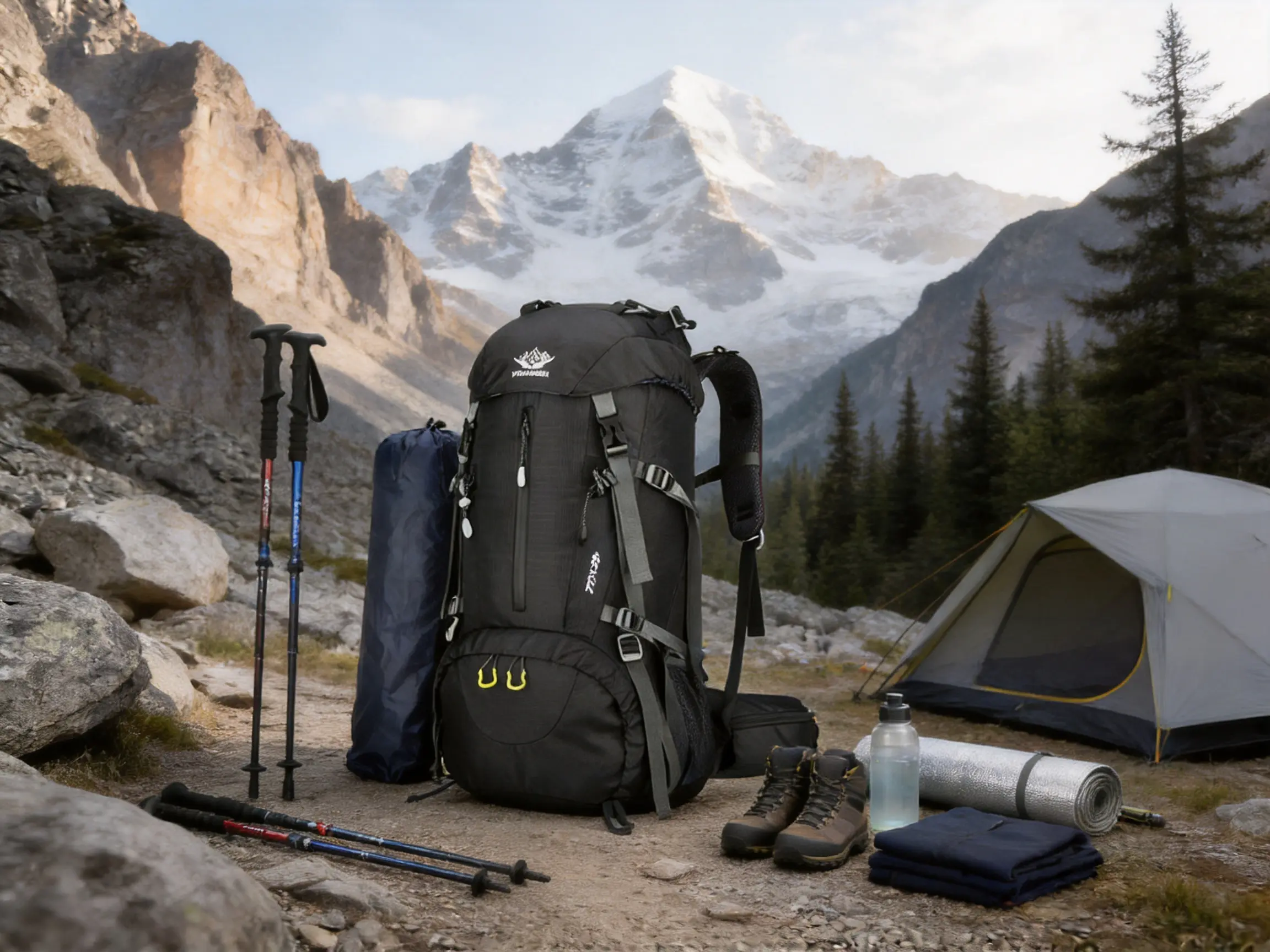
Its large main compartment is intended for multi-day hiking and camping requirements. Users can carry clothing layers, sleeping equipment, food, cooking tools, personal supplies, and emergency items in one primary load space. External attachment points expand the usable carrying area, allowing selected equipment to be secured outside the main compartment rather than consuming internal space.
The design is also suitable for buyers who need a versatile product rather than a narrowly specialized climbing pack. Mountaineers can secure trekking poles and outdoor accessories, campers can separate bulky equipment from personal items, and travelers can use the same structure for extended trips. This functional flexibility makes the backpack suitable for wholesale programs and private-label outdoor collections.
Material Construction and Durability
The outer layer is made from high-strength, water-repellent nylon. Nylon is widely used in outdoor products because it offers a strong balance between weight, flexibility, tensile strength, and abrasion resistance. A properly selected nylon fabric can withstand repeated movement and contact with rough surfaces without becoming excessively heavy.
Water repellency helps moisture remain on the exterior for a longer period, giving users more time to respond to changing weather. It also helps reduce the amount of water absorbed by the fabric during light rain, splashes, or contact with damp vegetation. Water repellency should not be confused with complete waterproofing, but it is an important first layer of protection for a backpack intended for variable outdoor conditions.
The inner lining uses durable Oxford cloth. This lining contributes to the backpack’s internal structure while providing a smoother and more stable surface for stored equipment. It also creates an additional layer between the contents and the exterior shell. The combination of nylon and Oxford cloth provides a practical dual-material construction that supports durability, organization, and daily usability.
For outdoor buyers, material selection is only one part of durability. Fabric density, yarn quality, coating treatment, seam construction, reinforcement, zipper selection, and hardware all influence the service life of the finished product. A strong fabric can still fail if stress points are poorly stitched. Likewise, excellent stitching cannot compensate for a fabric that is too light for the expected load.
| Construction Element | Functional Contribution | Value for Outdoor Users |
|---|---|---|
| High-strength nylon outer layer | Supports abrasion and tear resistance | Suitable for trails, forests, and rugged terrain |
| Water-repellent treatment | Helps limit surface moisture absorption | Provides protection during light rain and splashes |
| Durable Oxford cloth lining | Creates a stable internal surface | Helps protect stored equipment and improve product life |
| Reinforced load-bearing areas | Reduces stress on critical seams | Supports repeated use with heavier equipment |
| Durable buckles and hardware | Maintains fastening reliability | Improves confidence during travel and outdoor activities |
| Reinforced lower section | Helps resist ground contact and abrasion | Useful when the backpack is placed on rocky or wet surfaces |
Large Capacity for Multi-Day Activities
A backpack intended for multi-day use must provide enough room for essential equipment without becoming difficult to manage. Capacity is important, but usable capacity is more valuable than a large measurement alone. A well-designed large backpack should allow users to place heavier items close to the body, separate frequently accessed equipment, and use external attachment areas for bulky or specialized gear.
This product’s large main compartment is designed to accommodate the equipment required for extended outdoor activities. Depending on the route and season, users may need multiple clothing layers, rainwear, sleeping accessories, food, water-related equipment, navigation tools, first-aid supplies, and personal items. The large central storage area provides a practical base for organizing these necessities.
External attachment points add flexibility. Equipment that is wet, oversized, or frequently removed can be secured outside the primary compartment. This may include trekking poles, compact mats, lightweight tools, or other accessories. External attachment systems also reduce the need to open the main compartment repeatedly, which is useful when weather conditions are changing.
Compared with ordinary school-style or travel backpacks, this structure is better suited to uneven terrain and long carrying periods. General-purpose backpacks often provide a single compartment and limited attachment options. They may be convenient for urban use but can become inefficient when users need to carry technical equipment or maintain a stable load over a full day.
Compared with lightweight minimalist packs, the large-capacity model prioritizes versatility and protection. Minimalist designs may reduce total weight by removing structure, lining, or attachment points. That approach can benefit fast-moving users carrying very little equipment, but it may be less suitable for families, campers, professional hikers, and expedition users who need greater organization and protection.
Professional Trekking Pole Securing System
Trekking poles can improve balance, reduce pressure on the knees, and assist users on steep or uneven ground. However, carrying poles when they are not in use can be inconvenient if the backpack has no dedicated solution. Placing them inside the main compartment consumes valuable storage space, while holding them in the hand is impractical during rest stops, scrambling, photography, or equipment adjustment.
The side-mounted trekking pole securing system addresses this practical problem. Users can attach poles externally when moving through terrain where poles are not needed, freeing both hands and keeping the internal compartment available for other equipment. The system also helps users maintain a more organized load by assigning a clear position to a common piece of outdoor equipment.
This feature is one of the details that separates a professional mountaineering backpack from a basic high-volume bag. The difference is not simply the number of pockets or the visual appearance of the product. It is the way the design anticipates actual outdoor behavior. A useful attachment point reduces repeated repacking and helps users transition efficiently between different sections of a route.
External attachment points may also support additional accessories, depending on the user’s configuration and the specific load. Buyers should evaluate the expected accessory weight and fastening method before using any attachment point for specialized equipment. Proper load management remains important even when the backpack offers multiple external carrying options.
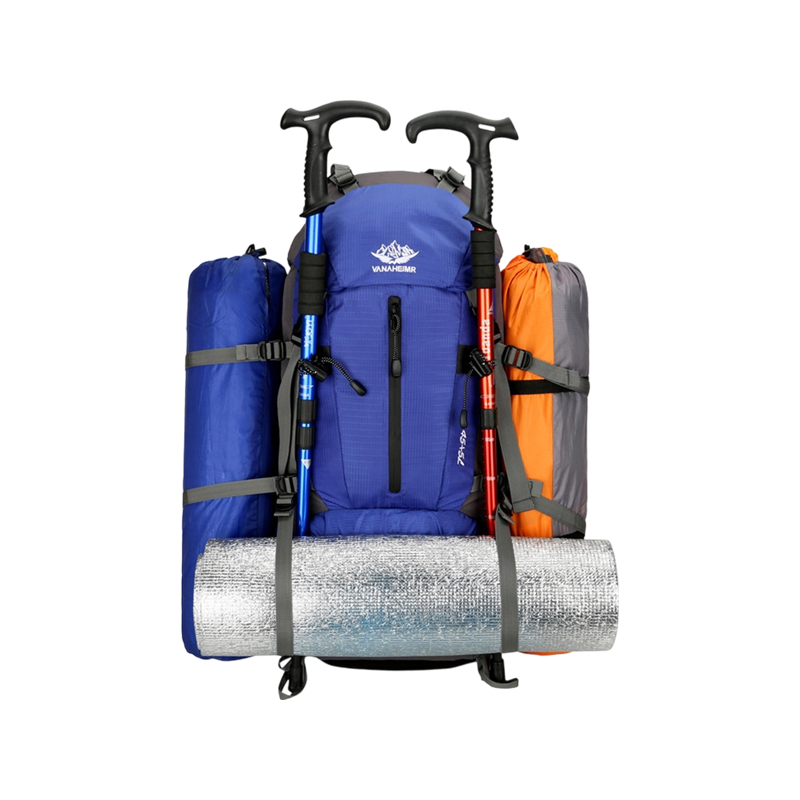
Large-capacity nylon professional mountaineering backpack, multi-functional sports double-shoulder mountaineering backpack
Ergonomic Carrying System
A large backpack must distribute weight instead of allowing the full load to hang from the shoulders. When a pack is carried for several hours, poor weight distribution can cause shoulder pressure, back fatigue, uncomfortable movement, and reduced balance. These problems become more serious on steep terrain, where the user must constantly adjust posture and foot placement.
The ergonomic carrying system is designed to improve the relationship between the backpack and the user’s body. Adjustable shoulder straps help position the pack according to the wearer’s torso and load. A chest strap can help stabilize the shoulder straps and reduce side-to-side movement. A waist belt transfers part of the load toward the hips, where the body can generally support weight more efficiently.
Correct adjustment is essential. Users should first place heavier items close to the back and toward the center of the pack. The shoulder straps should sit securely without creating excessive pressure. The chest strap should stabilize the upper section without restricting breathing. The waist belt should be positioned comfortably around the hips and tightened enough to support the load without causing discomfort.
An ergonomic design does not eliminate the effect of heavy equipment. Instead, it helps manage the load in a more balanced way. This is particularly valuable for multi-day hikes, where small discomforts can become significant after repeated hours of walking. A well-adjusted carrying system can also help users maintain better posture and more controlled movement on uneven ground.
Many competing backpacks focus heavily on capacity while providing only basic shoulder straps. Such products may be acceptable for occasional transport but can be less comfortable during long-distance use. This backpack’s carrying system is intended to support a more professional outdoor experience by combining storage volume with load-management features.
Weather Protection for Unpredictable Conditions
Weather can change quickly in mountain and forest environments. A clear morning may be followed by strong wind, heavy rain, or wet snow. Even when the backpack fabric is water-repellent, prolonged exposure can eventually allow moisture to reach zippers, seams, or stored equipment. For this reason, the product includes an independent rain cover.
The rain cover provides an additional protective layer during wet conditions. It is especially useful when users are traveling for long periods and cannot immediately find shelter. The cover helps shield the main body of the backpack, reduce direct water exposure, and protect the exterior from becoming saturated.
An independent cover also allows users to respond to weather changes without changing their equipment or transferring contents to another bag. When the rain stops, the cover can be removed and stored for later use. This makes it a practical feature for hiking, camping, trekking, and travel programs where weather conditions are uncertain.
Users should understand that a rain cover is one part of an overall moisture-management strategy. Sensitive equipment should still be placed in suitable inner bags or waterproof pouches when necessary. Wet clothing should be separated from dry items, and the backpack should be allowed to dry naturally after use. These practices help preserve both the bag and the equipment inside it.
Advantages Over Basic and Competing Backpack Designs
Outdoor backpacks compete in a broad market that includes casual daypacks, school-style bags, travel packs, tactical bags, lightweight trekking packs, and professional expedition models. Each category has different priorities. The advantage of this product is its balanced approach: it offers substantial storage, technical outdoor functions, weather preparation, and durable construction without limiting use to one narrow scenario.
Advantage One: More Complete Outdoor Functionality
Basic large backpacks often provide storage volume but lack specialized equipment-management features. This product includes a trekking pole securing system, external attachment points, and a rain cover. These functions make it more suitable for outdoor activities than a simple large travel bag.
Advantage Two: Dual-Layer Material Construction
The nylon outer layer and Oxford cloth lining provide a more considered construction than an unlined or lightly finished bag. The outer layer addresses external abrasion and moisture exposure, while the lining contributes to internal durability and usability. This combination supports a more stable product experience in demanding conditions.
Advantage Three: Better Suitability for Multi-Day Loads
The large main compartment and ergonomic carrying system are intended for extended activities rather than short journeys. Users can carry more equipment while relying on adjustable support features to improve balance. This makes the product relevant to expedition retailers and outdoor brands that need a pack for serious recreational use.
Advantage Four: Flexible Product Positioning
The backpack can be positioned for mountaineering, hiking, camping, trekking, outdoor travel, and adventure equipment programs. This flexibility benefits wholesalers and brands because one product platform can serve multiple customer segments. It may be marketed as a professional hiking backpack, large-capacity camping pack, trekking backpack, or multi-functional mountaineering pack depending on the target market.
Advantage Five: Practicality Over Decorative Complexity
Outdoor users generally value features that solve real problems. A dedicated place for trekking poles, a rain cover, secure attachment areas, and a supportive carrying system are more useful in the field than decorative details that add cost without improving performance. The product emphasizes functional design and practical durability.
| Evaluation Area | Basic Travel Backpack | Minimalist Hiking Pack | Large-Capacity Mountaineering Backpack |
|---|---|---|---|
| Main use | Urban travel and short trips | Lightweight day hikes | Multi-day hiking, camping, and mountaineering |
| Storage approach | General-purpose compartments | Reduced storage for lower weight | Large central compartment with external attachment options |
| Trekking pole support | Usually unavailable | May be limited | Dedicated side securing system |
| Weather preparation | May rely on fabric only | Varies by model | Water-repellent shell with independent rain cover |
| Load management | Basic shoulder straps | Designed for lighter loads | Ergonomic support with adjustable carrying components |
| Outdoor durability | Suitable for moderate use | Focused on low-weight use | Designed for repeated use in demanding environments |
Manufacturing Approach and Quality Priorities
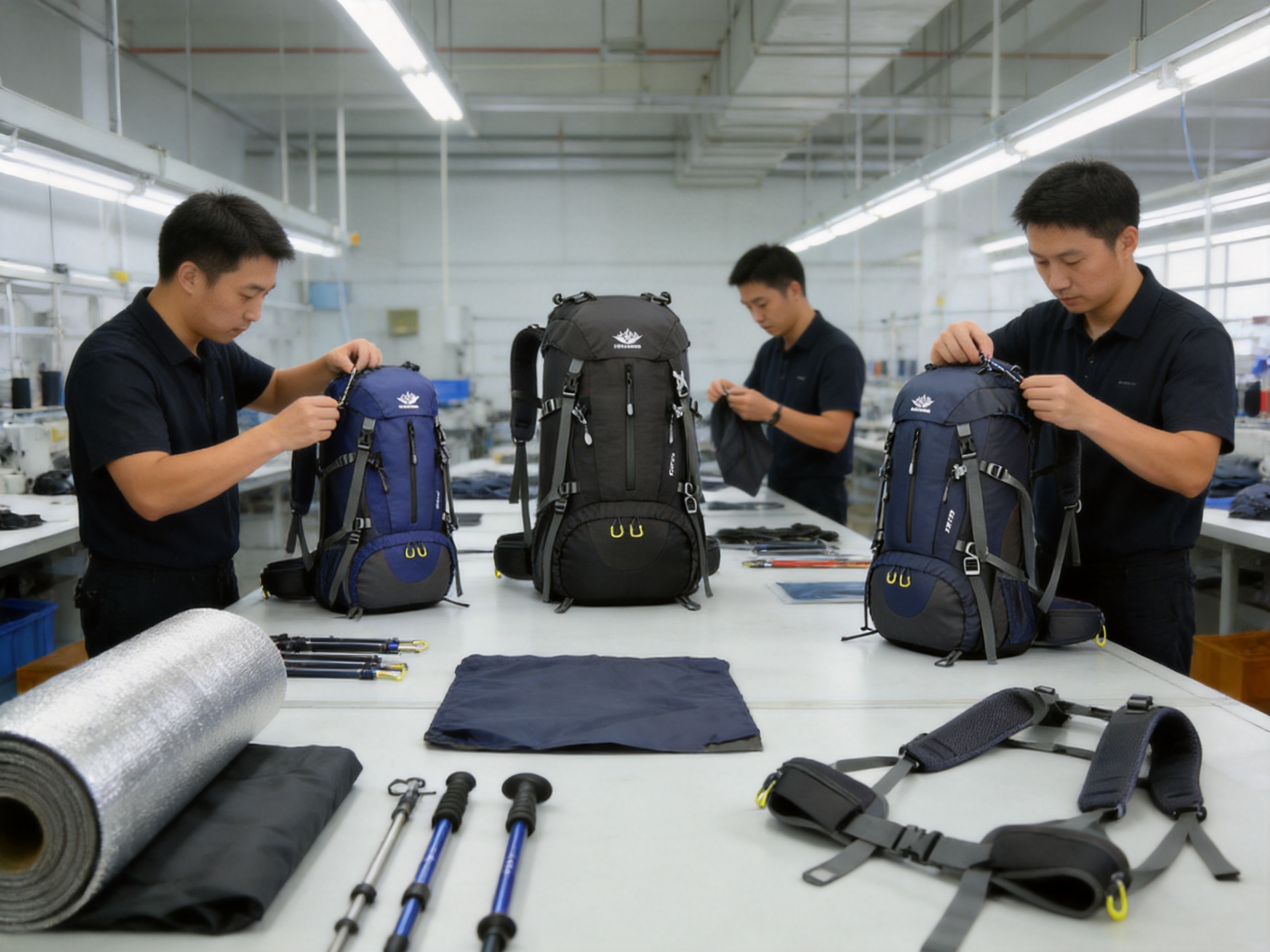
A technically designed backpack can only perform consistently when manufacturing processes are carefully controlled. Material selection, pattern cutting, sewing, reinforcement, assembly, hardware installation, inspection, and packaging must work together. Small inconsistencies in any one stage can influence the final product’s durability, appearance, and user experience.
CragHaven Outdoor operates as an outdoor brand and cross-border manufacturing partner based in Hangzhou, China. The company focuses on mountaineering, hiking, and camping applications and works with the principle that outdoor products should be developed for weather, terrain, and time rather than created only for catalog presentation.
This approach begins with the intended use scenario. Before finalizing a design, manufacturers and product buyers should consider where the backpack will be used, what equipment it will carry, how frequently it will be exposed to moisture, and how users will access the contents. These questions influence the selection of fabric, lining, straps, attachment points, stitching methods, and reinforcement locations.
Material Selection
Material selection is based on the required balance between durability, weight, cost, appearance, and end use. Nylon is available in different denier levels and constructions, including standard woven fabrics and ripstop formats. Oxford cloth can be selected for its stable weave and resistance to repeated handling. Coatings and treatments may be considered when improved water resistance is required.
For outdoor product development, the right material is not necessarily the heaviest or most expensive option. Excessively heavy fabric can increase user fatigue and shipping cost, while fabric that is too light may not meet the expectations of professional users. The goal is to choose a material structure that matches the product’s intended environment and market positioning.
Pattern Development and Precision Cutting
Pattern accuracy affects both the appearance and performance of a backpack. Panels must align correctly so that the finished body maintains the intended shape. Precise cutting helps control seam allowances, reduce material waste, and support repeatable production across different batches.
Consistent panel dimensions are particularly important for products with multiple attachment points and reinforced areas. If components are misaligned, the load may not be distributed evenly, and the final product may appear irregular. Precision cutting therefore contributes to structural reliability as well as visual quality.
Reinforced Stitching and Stress Management
Load-bearing areas require special attention because they experience repeated pulling forces. Shoulder strap connections, waist belt attachments, top handles, side securing systems, external loops, and bottom panels should be constructed with suitable reinforcement. Double stitching, bar tacks, layered fabric, and carefully controlled seam allowances can help strengthen these areas.
Stitching quality includes more than the number of stitches. Thread selection, stitch length, tension, backstitching, and seam placement all influence performance. A manufacturing process that combines suitable sewing specifications with inspection procedures can reduce the risk of loose threads, skipped stitches, uneven seams, and premature failure.
Hardware and Component Integration
Buckles, webbing, zippers, adjusters, cord locks, and other components must be compatible with the intended product load. Hardware should operate smoothly and remain secure during movement. Webbing should be attached in a way that avoids excessive twisting or edge fraying.
Component integration is especially important for a backpack with multiple external attachment points. Each connection must be positioned to remain useful without interfering with the user’s movement or access to the main compartment. The manufacturing team must also ensure that the appearance and operation of hardware remain consistent from one unit to another.
Inspection and Quality Control
Quality control should occur throughout production rather than only at the final packing stage. Incoming materials can be checked for color, texture, dimensions, coating consistency, and visible defects. During assembly, operators and inspectors can verify panel alignment, stitching, hardware attachment, and the correct placement of straps and accessories.
Final inspection may include checking the overall shape, zipper operation, buckle function, strap adjustment, rain cover storage, attachment-point security, and surface appearance. Packaging inspection is also important because the product must reach retailers or customers without unnecessary creasing, contamination, or damage.
CragHaven Outdoor emphasizes sampling, testing, and optimization as standard parts of product development. This process is valuable for buyers seeking OEM or ODM cooperation because it creates opportunities to review the product before full production, identify potential improvements, and align specifications with the target market.
OEM and ODM Opportunities for Outdoor Brands
Outdoor brands often require more than a standard stock product. They may need specific colors, logo applications, packaging formats, capacity options, fabric specifications, labels, or retail presentations. A manufacturing partner with experience in outdoor scenarios can help transform a general concept into a repeatable product specification.
This backpack provides a practical foundation for OEM and ODM development. The core functions already address important outdoor needs, including large capacity, weather preparation, trekking pole storage, external attachment points, and ergonomic carrying support. Brand customers can then evaluate which elements should remain standard and which should be adjusted for their customer base.
Potential customization areas may include exterior color, lining color, logo placement, woven labels, zipper pull design, packaging, hangtags, and retail instructions. Depending on development requirements, buyers may also discuss fabric denier, coating treatment, strap configuration, pocket arrangement, or accessory combinations.
Successful customization requires clear communication. Buyers should provide target capacity, user profile, intended environment, color references, branding files, packaging requirements, compliance expectations, and estimated order quantities. The manufacturer can then assess feasibility, prepare samples, and establish a production specification for approval.
For cross-border customers, manufacturing support is also important after the design stage. Consistent communication, accurate sampling, production updates, inspection procedures, and export coordination help reduce supply-chain uncertainty. CragHaven Outdoor positions itself as a partner involved in both product development and manufacturing rather than simply a sourcing intermediary.
Recommended Applications
Mountaineering and Alpine Trekking
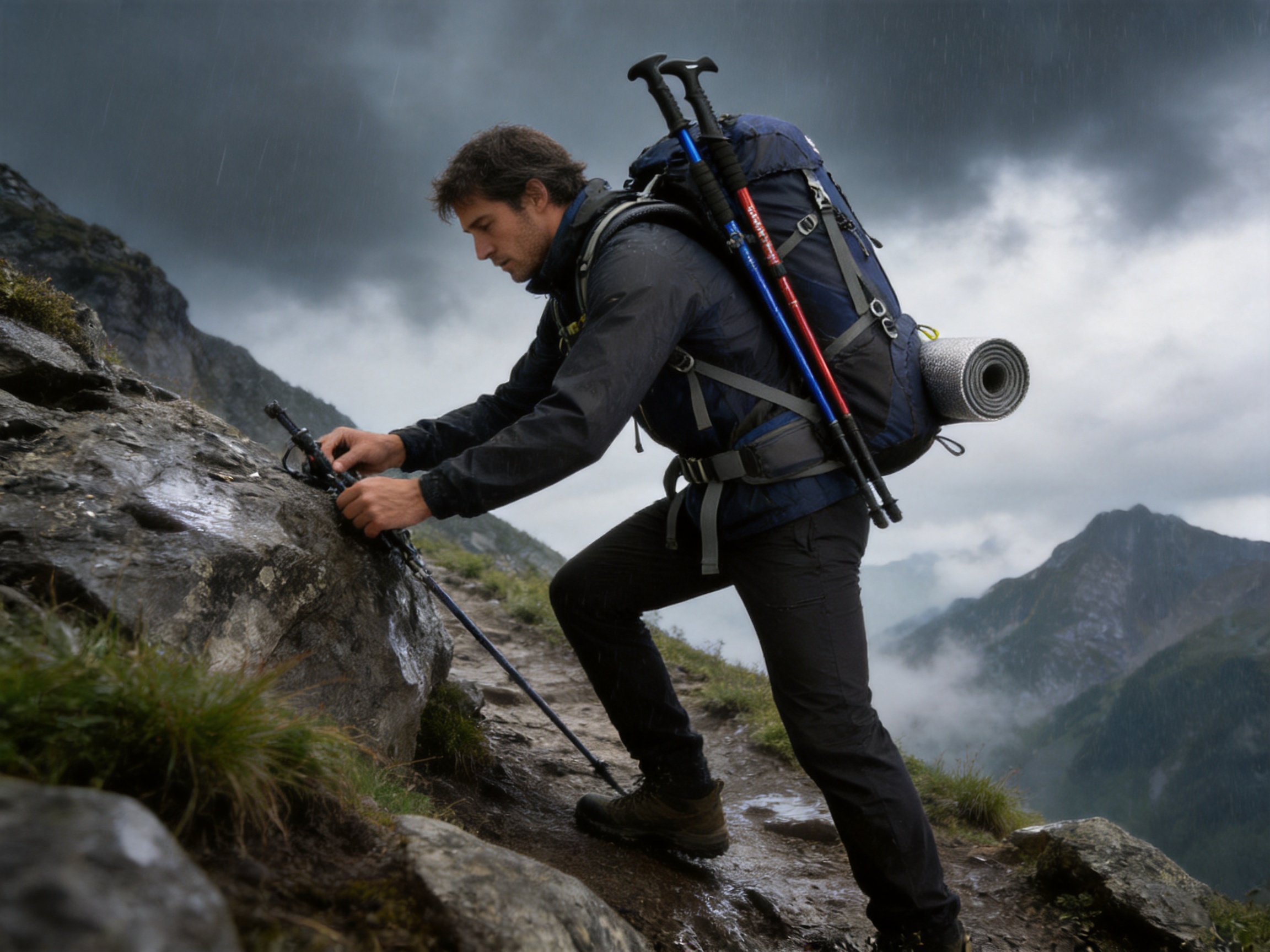
Mountain routes require users to carry clothing layers, food, protective equipment, navigation tools, and emergency supplies. The large compartment supports these requirements, while the rain cover and water-repellent shell provide additional preparation for changing weather. External attachment points help users carry trekking poles and other accessories.
Multi-Day Hiking
For long-distance trails, comfort and organization become increasingly important. Users need to carry equipment for several days while maintaining access to frequently used items. The ergonomic carrying system and large storage area make the backpack suitable for extended hiking programs, guided trips, and outdoor education activities.
Camping and Outdoor Travel
Campers often need to transport clothing, cooking equipment, sleeping accessories, and personal supplies. The backpack’s capacity and external attachment options can help separate bulky gear from smaller items. Its appearance and multi-functional design also make it suitable for outdoor travel collections sold through retailers.
Rescue and Support Activities
Large backpacks can be useful for carrying first-aid materials, communication equipment, protective clothing, and emergency supplies. Organizations should assess their specific load requirements and confirm that the product configuration is appropriate for operational use. The durable construction and organized attachment system provide a practical starting point for support-oriented applications.
Outdoor Retail and Private-Label Collections
Retailers and private-label brands can position the product across multiple outdoor categories. It can serve as a core item in a hiking collection, a large-capacity camping series, or a professional mountaineering range. Its broad application potential helps reduce the need to source separate bags for every outdoor activity.
Care and Maintenance Recommendations
Proper care helps preserve the appearance and functional performance of an outdoor backpack. After each trip, users should remove dirt, leaves, sand, and mud from the exterior. Fine particles can work into zippers and seams if they are left in place for extended periods.
The backpack should be allowed to dry naturally before storage. Users should avoid placing a wet backpack in a closed container or storing it while moisture remains inside. Prolonged dampness can produce unpleasant odors and may affect fabric, coatings, webbing, or metal components.
Harsh bleach, aggressive solvents, and excessive heat should generally be avoided unless specifically approved for the material. Gentle cleaning with suitable products is preferable. The rain cover should also be cleaned and dried before it is folded and stored.
Users should inspect the shoulder straps, waist belt, chest strap, buckles, zippers, seams, and attachment points regularly. Early identification of loose stitching or damaged hardware allows repairs before a minor problem becomes a major failure. When the backpack is not in use, it should be stored in a cool, dry location away from prolonged direct sunlight.
Good packing habits also extend product life. Sharp objects should be protected so that they cannot puncture the lining or outer fabric. Heavy items should be positioned near the center and close to the back. The backpack should not be overloaded beyond its intended use, and external attachment points should not be used for loads that could destabilize the wearer.
How Buyers Can Evaluate Product Quality
Wholesale buyers and outdoor brands should evaluate more than photographs when selecting a large-capacity backpack. A sample review should include fabric feel, seam consistency, lining quality, zipper operation, buckle strength, strap adjustment, attachment-point placement, and rain-cover fit.
The sample should also be loaded with representative equipment. This allows the buyer to assess whether the pack maintains its shape, whether the straps distribute weight effectively, and whether the main compartment remains accessible when external accessories are attached. Testing should reflect the intended market rather than relying only on empty-product inspection.
Buyers should request clear specifications for fabric composition, dimensions, capacity, approximate product weight, available colors, packaging, customization, and production lead time. They should also clarify quality-control procedures and the process for handling production variations.
| Buyer Review Item | Questions to Consider |
|---|---|
| Fabric | Is the nylon suitable for the intended abrasion and moisture conditions? |
| Capacity | Can the product carry the target equipment without becoming difficult to organize? |
| Carrying system | Are the shoulder straps, chest strap, and waist belt adjustable and comfortable? |
| Attachment points | Can trekking poles and accessories be secured without interfering with movement? |
| Rain cover | Does the cover fit securely and remain easy to deploy? |
| Hardware | Do zippers, buckles, and adjusters operate smoothly and consistently? |
| Manufacturing consistency | Can the supplier reproduce the approved sample across production batches? |
| Customization | Can branding, colors, labels, and packaging be adapted to the target market? |
Technical Positioning for Retail Markets
The product can be positioned as a professional large-capacity nylon hiking backpack for consumers who need more capability than a daypack. Retail descriptions should emphasize the practical benefits: durable water-repellent nylon, Oxford cloth lining, independent rain cover, multi-day storage, trekking pole securing, external attachment points, and ergonomic support.
Retailers may also explain the difference between a water-repellent outer fabric and full waterproof construction. Clear product education helps customers select suitable storage methods for sensitive equipment and creates realistic expectations. Honest communication is especially important in outdoor markets, where product performance is closely related to weather, load, user behavior, and maintenance.
For professional and enthusiast customers, the backpack’s strongest selling point is its balanced configuration. It is not merely a large bag, and it is not limited to a minimalist trekking philosophy. It combines protective materials, practical capacity, equipment attachment, and carrying support in a single product designed for repeated outdoor use.
For retailers, another advantage is market versatility. The same base model can appeal to hikers, campers, climbers, travelers, outdoor students, and adventure customers. With appropriate branding and packaging, it can support different retail channels while preserving a consistent product identity.
Role of CragHaven Outdoor in Product Development
CragHaven Outdoor is based in Hangzhou, China, and focuses on mountaineering, hiking, and camping applications. The company operates as both an outdoor brand and a cross-border manufacturing partner. Its product philosophy is based on balance and stability, reflected in the name CragHaven and applied to design, material selection, sampling, testing, and production decisions.
The company’s approach is centered on real usage scenarios. Instead of designing products only around catalog specifications, the development process considers weather, terrain, load requirements, movement, access, and time. This helps ensure that features are connected to genuine outdoor needs rather than added only for visual complexity.
CragHaven Outdoor also emphasizes the importance of repeated sampling and optimization. This is particularly valuable for backpacks because small changes in strap position, fabric weight, attachment-point placement, zipper selection, or reinforcement can influence comfort and durability. A product that is acceptable in an initial sample may still benefit from refinement before mass production.
For international customers, the company’s cross-border manufacturing role supports communication between product concept and production execution. The objective is to create functional, reliable, and long-term value outdoor gear that can be supplied consistently to global retailers and outdoor brands.
Frequently Asked Questions
1. What makes this backpack suitable for multi-day hiking?
The backpack combines a large main compartment with external attachment points, a professional trekking pole securing system, and an ergonomic carrying system. These features allow users to carry clothing, food, shelter-related equipment, and personal supplies while keeping selected accessories outside the main compartment.
2. Is the backpack completely waterproof?
The outer nylon layer is water-repellent and the product includes an independent rain cover for additional protection. These features help manage rain and moisture, but the backpack should not automatically be treated as fully waterproof. Sensitive equipment should be placed in suitable waterproof pouches when necessary, especially during prolonged heavy rain or water exposure.
3. What is the benefit of the Oxford cloth lining?
The Oxford cloth lining provides a durable internal surface and creates an additional layer between stored equipment and the external shell. It supports internal organization, improves handling, and contributes to the backpack’s overall construction quality.
4. Can the backpack carry heavy equipment?
The backpack is designed for large-capacity outdoor use and includes an ergonomic carrying system with adjustable support components. Its ability to carry a specific load depends on packing method, user adjustment, equipment distribution, and the intended product specification. Heavy items should be packed close to the back and the product should not be overloaded.
5. Why is a trekking pole securing system useful?
The system allows users to store trekking poles externally when the poles are not needed. This keeps both hands free, preserves internal storage space, and reduces the need to place long equipment inside the main compartment.
6. How does this product compare with a basic travel backpack?
A basic travel backpack may provide general storage but often lacks outdoor-specific features. This model adds a rain cover, trekking pole securing, external attachment points, durable outdoor materials, and a carrying system intended for longer periods of use on uneven terrain.
7. Is the backpack suitable for camping?
Yes. The large compartment can accommodate camping-related clothing, personal equipment, food, and selected accessories. Users should organize heavy and bulky items carefully and use external attachment points only for suitable loads that do not compromise balance.
8. Can outdoor brands customize the backpack?
OEM and ODM discussions may include colors, logo applications, labels, packaging, fabric options, hardware details, and other product specifications. Customization depends on order quantity, technical feasibility, sampling requirements, and production planning.
9. What quality-control factors are important during production?
Important factors include fabric consistency, accurate cutting, reinforced stitching, seam quality, zipper performance, buckle attachment, strap alignment, rain-cover fit, external attachment security, and final appearance. Inspection throughout production helps reduce variation between the approved sample and finished goods.
10. How should the backpack be maintained after use?
Remove dirt and mud, allow the backpack to dry naturally, inspect zippers and seams, and store it in a cool, dry place. Avoid prolonged direct sunlight and aggressive cleaning chemicals. Wet equipment should be removed before storage so the internal lining and fabric can dry properly.
11. What outdoor conditions can the backpack support?
The backpack is intended for applications including mountain trails, forests, camping areas, trekking routes, outdoor travel, and multi-day expeditions. The appropriate configuration depends on the severity of the environment, load, weather, and duration of use.
12. Why should buyers request a sample before placing a large order?
A sample allows buyers to evaluate materials, capacity, comfort, attachment points, rain-cover fit, branding, and construction details before production. It also provides an opportunity to confirm whether the product matches the intended market and customer expectations.
Conclusion
A large-capacity mountaineering backpack must do more than hold equipment. It must protect contents, support the user, manage accessories, respond to changing weather, and remain dependable through repeated outdoor use. This professional nylon backpack addresses those requirements with a water-repellent high-strength outer layer, durable Oxford cloth lining, independent rain cover, large main compartment, trekking pole securing system, external attachment points, and ergonomic carrying structure.
Its main advantage over basic travel bags is the integration of outdoor-specific functions. Its advantage over minimalist packs is the greater emphasis on capacity, organization, and multi-day versatility. Its value for retailers and outdoor brands also comes from its broad application range and suitability for OEM and ODM development.
Supported by CragHaven Outdoor’s product-development and manufacturing approach, the backpack is positioned as a practical solution for mountaineering, hiking, camping, trekking, and outdoor travel markets. Careful material selection, precision manufacturing, reinforced construction, sampling, testing, and quality inspection help create a product capable of delivering dependable long-term value in demanding environments.
References
1. Outdoor Backpack Material Selection Principles. Internal product-development reference for nylon, Oxford cloth, ripstop construction, and protective coatings.
2. Technical Textile Performance Guidelines. Reference information concerning denier, abrasion resistance, tear resistance, water repellency, and fabric durability.
3. Backpack Load Distribution and Ergonomic Carrying Practices. General reference for shoulder straps, chest straps, waist belts, and load positioning.
4. Outdoor Equipment Quality-Control Procedures. Manufacturing reference covering material inspection, sewing quality, hardware integration, reinforcement, sampling, and final inspection.
5. Mountaineering and Hiking Equipment Maintenance Recommendations. General reference for cleaning, drying, storage, zipper care, and protection from prolonged sunlight.
6. CragHaven Outdoor Product Development Information. Company-provided materials concerning mountaineering, hiking, camping, OEM, ODM, sampling, testing, and manufacturing cooperation.
Product: Large-capacity nylon professional mountaineering backpack, multi-functional sports double-shoulder mountaineering backpack


- Phone: +86-15968800379
- E-mail: [email protected]
- Address: Room 1002, Huishang Building, Gongshu District, Hangzhou City, Zhejiang Province.
Copyright © CragHaven Outdoor All Rights Reserved. Outdoor Gear Manufacturers Wholesale Mountaineering Camping Gear Suppliers
