

 English
 Deutsch
 Español
 Français


Portable Outdoor Storage Folding Extendable Stool: A Practical Adjustable Seating Solution for Hiking, Camping, and Travel
Content
- 1 Understanding the Portable Outdoor Storage Folding Extendable Stool
- 2 Why Portability Matters in Outdoor Equipment
- 3 Adjustable Height for Uneven Ground and Different Users
- 4 Thickened PP Construction and Product Reliability
- 5 Advantages Over Conventional Outdoor Seating
- 6 Designed for Multiple Outdoor Scenarios
- 7 Manufacturing Strengths Behind Consistent Performance
- 8 Quality Control Considerations for an Adjustable Folding Stool
- 9 Brand and Supply-Chain Value for Global Buyers
- 10 Merchandising and Market Positioning
- 11 Responsible Use and Maintenance
- 12 Environmental and Lifecycle Considerations
- 13 Frequently Asked Questions
- 13.1 What is an extendable folding stool used for?
- 13.2 How small is the stool when folded?
- 13.3 Can the stool be used on uneven ground?
- 13.4 What material is used to make the stool?
- 13.5 Is the stool suitable for long-distance hiking?
- 13.6 How does it compare with a traditional camping chair?
- 13.7 Can the product be used for fishing?
- 13.8 What should retailers check before placing an order?
- 13.9 What manufacturing support can CragHaven Outdoor provide?
- 13.10 How should the stool be maintained?
- 14 Conclusion
- 15 References
- 16 Product: Portable outdoor storage folding extendable stool, adjustable hiking stool
Outdoor recreation is becoming more mobile, flexible, and experience-oriented. People are hiking farther, camping with lighter equipment, waiting at outdoor events, fishing for longer periods, and traveling with increasingly compact gear. These activities create a simple but important need: a reliable place to sit that does not take up the space or add the weight of a traditional chair.
The portable outdoor storage folding extendable stool is designed to answer that need. Combining a folding structure, adjustable height, compact storage, and a durable polypropylene construction, this stool provides practical personal seating for a broad range of outdoor situations. It can be unfolded when needed, adjusted for different users and surfaces, and folded again for efficient transportation.
Unlike fixed-height camping stools, large folding chairs, or improvised seating solutions, an extendable hiking stool focuses on portability and adaptability at the same time. When folded, its compact form is comparable in size to a water bottle, helping users preserve valuable space in a backpack, vehicle, equipment case, or storage cabinet. When opened, it provides a stable seat for rest, waiting, fishing, campsite preparation, and other outdoor activities.
This article examines the product’s design, advantages, applications, material selection, manufacturing strengths, quality considerations, and suitability for retailers and outdoor equipment distributors. It also explains why a compact adjustable stool can be a valuable addition to modern mountaineering and camping gear collections.
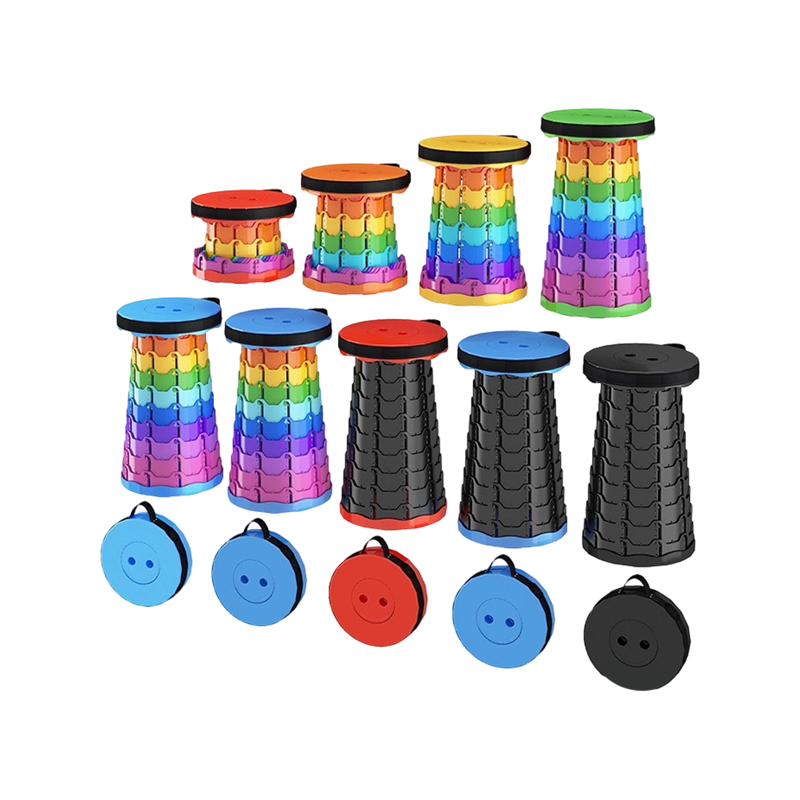
Portable outdoor storage folding extendable stool, adjustable hiking stool
Understanding the Portable Outdoor Storage Folding Extendable Stool
The product is a compact outdoor seating accessory developed for users who need mobility without giving up basic comfort and support. Its folding structure allows immediate deployment, while its extendable mechanism allows the seat height to be adjusted according to the user’s preference and the surrounding terrain.
The basic operating principle is straightforward. The stool is carried in its folded position. When a user needs a place to sit, the structure is opened and extended to a suitable height. After use, the stool can be collapsed and stored again. This simple process makes it suitable for short rest stops, long waiting periods, fishing sessions, campsite activities, and outdoor events.
Its design is especially relevant to hiking and camping because outdoor users are often required to make careful decisions about every item they carry. A large chair may provide a comfortable seat but occupy too much room. A small fixed stool may be easy to carry but fail to adapt to uneven terrain or different sitting preferences. The extendable folding format addresses both issues by combining compact storage with height flexibility.
The product description identifies several central characteristics:
- Innovative folding construction for quick opening and closing.
- Thickened PP material intended to provide dependable seat support.
- Freely adjustable height for different environments and users.
- Compact folded dimensions that minimize backpack and vehicle storage requirements.
- Suitability for camping, hiking, fishing, queuing, traveling, and outdoor recreation.
These characteristics make the product more than a basic temporary seat. It is a practical mobility accessory designed around the realities of outdoor use, where equipment must be easy to transport, simple to operate, resistant to repeated handling, and useful in more than one scenario.
Why Portability Matters in Outdoor Equipment
Outdoor equipment is rarely used in a perfectly controlled environment. A hiker may carry a seat over a long route before reaching a rest area. A camper may need to place equipment inside a crowded vehicle. A traveler may have to fit personal belongings into a small bag. A fishing enthusiast may move repeatedly between different positions. In each case, storage efficiency becomes an important part of product value.
Traditional outdoor chairs often contain large frames, fabric panels, armrests, and multiple support components. These features can be useful, but they also increase folded volume. A fixed stool may reduce the storage problem, yet it usually offers limited adaptability and may not provide the desired sitting height.
The portable extendable stool takes a different approach. Instead of prioritizing a large seating surface and permanent frame, it concentrates on the essential functions required for short-term outdoor seating. The folding mechanism reduces the transportation footprint, while the adjustable structure allows the user to create a more suitable seating position after deployment.
Compact storage is particularly valuable for backpackers and hikers. Backpack space is limited, and every item competes with clothing, food, water, first-aid supplies, navigation tools, and weather protection. A stool that occupies approximately the space of a water bottle can be placed alongside other essentials without requiring a separate carrying system.
Vehicle-based campers also benefit from a compact format. Even when a car or recreational vehicle provides more storage capacity than a backpack, outdoor equipment can quickly fill available space. A foldable stool can be stored in a door compartment, side pocket, equipment box, or other narrow area, helping users keep larger storage zones available for tents, cooking equipment, and sleeping systems.
Portability also affects purchasing decisions for retailers. Products that solve a clear space-management problem are easier to position within a camping or hiking assortment. The stool can be marketed as a complementary accessory rather than a replacement for every type of outdoor chair. It serves customers who want personal seating without carrying a conventional chair.
Adjustable Height for Uneven Ground and Different Users
Outdoor terrain is rarely level. Campsites may contain compacted soil, gravel, grass, sand, or slightly sloped ground. Hiking rest areas may be located beside a trail rather than on a prepared platform. Fishing spots may have irregular surfaces. A fixed-height stool can work well in one place and feel less suitable in another.
The extendable structure allows users to adjust the seating height according to terrain conditions and personal preference. This flexibility is one of the product’s most important differences compared with ordinary folding stools.
For hiking, adjustable height can help users create a comfortable position during a short break. A lower setting may be appropriate for a quick rest close to the ground, while a higher setting may make it easier for some users to sit down and stand up. The most suitable position depends on the individual, the activity, and the surface beneath the stool.
At a campsite, height adjustment can help the stool accommodate changing ground conditions. A campsite may include both firm and soft areas, and users may move the seat between the tent entrance, cooking area, fire-preparation area, and storage zone. The ability to modify the height adds flexibility without requiring several different seating products.
For fishing, adjustable seating can be helpful during long periods of waiting. Fishing often involves remaining in one location for an extended time, and a compact personal seat can make the experience more comfortable than standing continuously. Its small storage footprint also makes it practical for anglers who carry rods, tackle, bait, and other equipment.
At outdoor events or queues, the stool provides personal seating that can be carried into places where a larger chair would be inconvenient. It can also be useful for photography, market visits, travel delays, and other situations where users need temporary support but do not want to carry bulky furniture.
| Use Environment | Value of Height Adjustment | Portability Benefit |
|---|---|---|
| Mountain hiking | Allows users to select a suitable resting height during route breaks. | Compact form supports long-distance carrying. |
| Camping | Helps adapt to campsite surfaces and different activities. | Stores efficiently with tents and other equipment. |
| Fishing | Provides a flexible position for extended waiting periods. | Leaves more room for fishing equipment. |
| Travel | Offers personal seating during transport or sightseeing stops. | Fits into backpacks, vehicles, and travel storage areas. |
| Outdoor events | Supports temporary sitting while waiting or watching activities. | Easy to carry through crowded environments. |
The combination of adjustment and compactness gives the stool a broader application range than many fixed-height alternatives. It is not limited to one user profile or one type of terrain.
Thickened PP Construction and Product Reliability
Material selection is central to the performance of a folding outdoor stool. The material must support the user while remaining light enough for carrying. It must tolerate repeated opening and closing, transportation, storage, and exposure to normal outdoor conditions. It should also be practical to clean and maintain.
This product uses thickened polypropylene, commonly referred to as PP, as a key material. PP is widely used in functional consumer products because it can combine relatively low weight with useful strength, impact resistance, and manufacturing flexibility. In this application, the thickened construction is intended to support a stable seating platform and improve confidence during use.
A material choice alone does not determine product quality. The thickness distribution, structural geometry, connection points, molding accuracy, surface finish, and assembly process all contribute to final performance. A properly designed PP component can be lightweight and dependable, while an improperly designed component may experience deformation or instability regardless of its nominal material.
For an adjustable folding stool, particular attention should be paid to load transfer. The seat needs to distribute force across the supporting structure. The folding and extending components need to remain properly aligned. Contact points with the ground should provide a stable base. Moving parts should operate consistently without excessive looseness or resistance.
Repeated-use reliability is also important. Outdoor customers may open and close the stool many times over its service life. Retailers and distributors therefore need products that are designed for regular handling rather than one-time use. Manufacturing consistency becomes especially important when the product is produced in large quantities for different markets.
Although exact load ratings and technical limits should be confirmed through product testing and the final specification sheet, the product concept emphasizes high seat load-bearing capacity and durable construction. Responsible use should always follow the manufacturer’s instructions, including guidance concerning maximum user weight, appropriate ground conditions, inspection, and safe adjustment.
Advantages Over Conventional Outdoor Seating
The market includes many types of outdoor seating, including traditional folding chairs, tripod stools, fixed-height camping stools, inflatable seats, and improvised sitting pads. Each category has useful characteristics, but the extendable folding stool offers a distinct balance between portability, adjustment, and everyday utility.
Compared with Traditional Folding Chairs
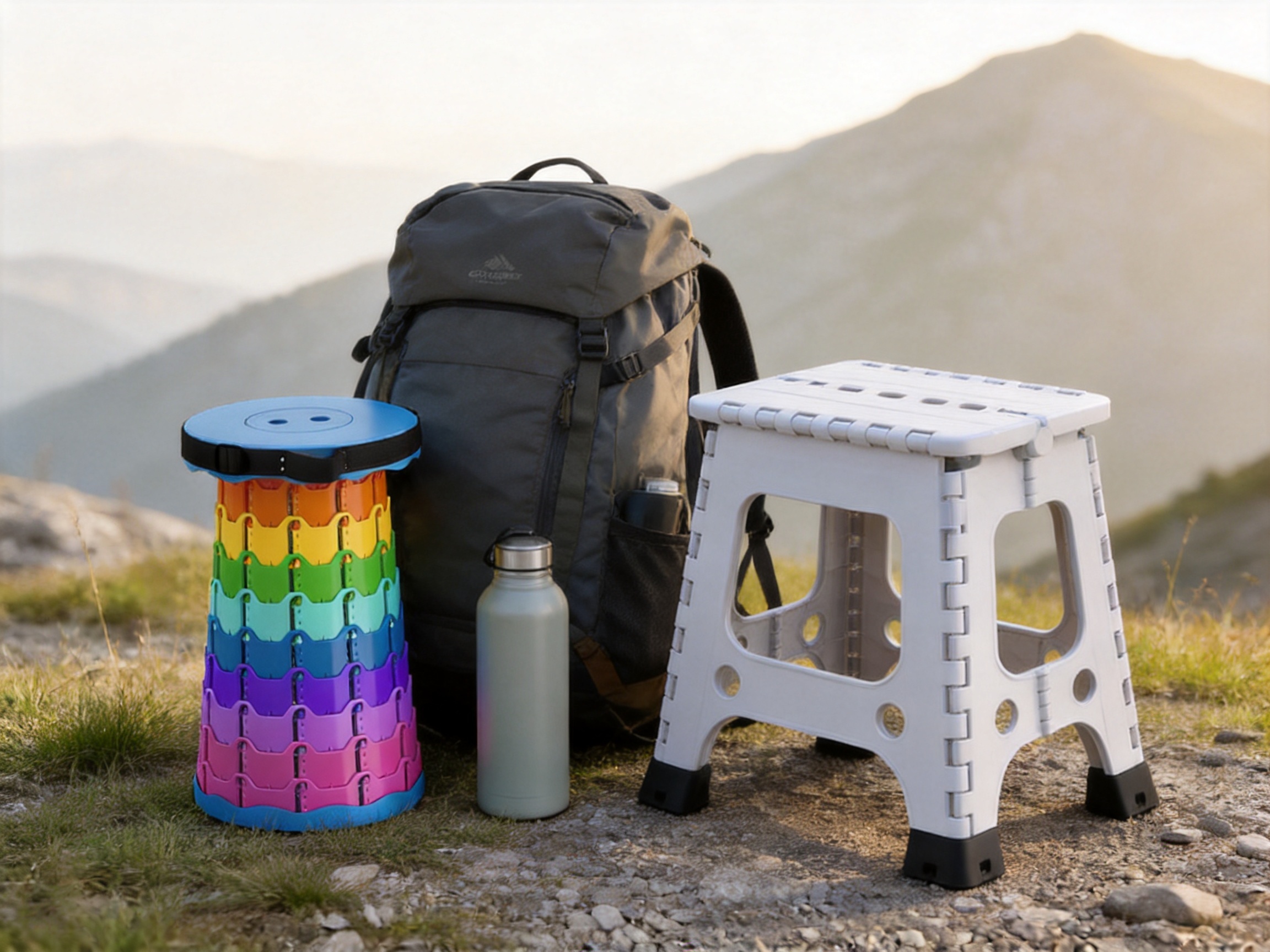
Traditional folding chairs often provide a larger seat, a backrest, and a more relaxed sitting position. However, they generally require more storage room and can be more difficult to carry over long distances. Their frames may also be inconvenient in crowded locations or during short stops.
The extendable stool does not attempt to replace every function of a full-size chair. Instead, it serves users who prioritize compactness and quick deployment. It is easier to integrate into a hiking pack and better suited to situations where a user needs personal seating for a limited period.
Compared with Fixed-Height Stools
A fixed-height stool is usually simple, but its seating position cannot be modified. This may be acceptable on flat ground, yet it provides less flexibility on uneven surfaces or for users with different preferences. The extendable design offers a wider operating range and can be adjusted for a more suitable position.
Compared with Seating Pads
Seating pads are lightweight and easy to pack, but they provide limited elevation and may not offer the same level of separation from damp, cold, or uneven ground. A folding stool creates a raised seating position and may be more convenient for users who want to sit and stand repeatedly.
Compared with Improvised Outdoor Seating
Logs, rocks, containers, and equipment cases are sometimes used as temporary seats. These options are unpredictable and may be wet, unstable, dirty, or uncomfortable. A dedicated stool provides a purpose-built seating surface and a more consistent user experience.
| Product Type | Primary Strength | Common Limitation | Position of the Extendable Stool |
|---|---|---|---|
| Traditional folding chair | Larger seating area and back support | Higher weight and folded volume | More compact option for mobile users |
| Fixed-height stool | Simple structure and operation | Limited terrain and user adaptability | Adjustable alternative |
| Seating pad | Very low weight and storage volume | Minimal elevation and structural support | Raised seating with compact storage |
| Improvised seat | No dedicated equipment required | Uncertain stability and comfort | Purpose-designed seating solution |
The principal competitive advantage is not a single feature in isolation. It is the way several features work together: folding storage, adjustable height, thickened PP construction, immediate deployment, and suitability for several outdoor activities.
Designed for Multiple Outdoor Scenarios
A product becomes more commercially valuable when it can serve different user groups without losing a clear identity. The extendable folding stool is connected to mountaineering and camping, but its use extends beyond those categories.
Hiking and Mountaineering
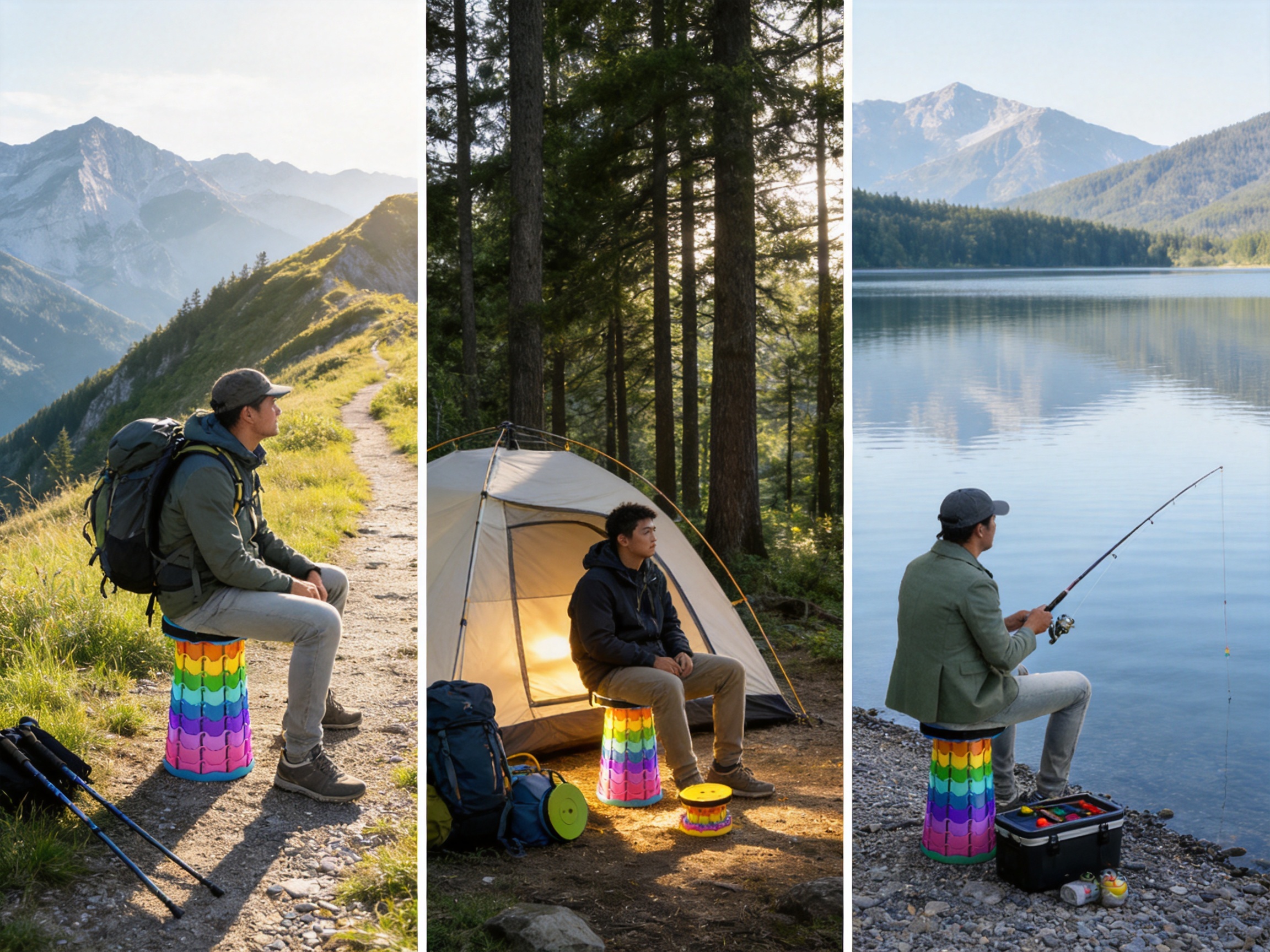
During a mountain route, rest opportunities may be limited. Hikers may sit beside a trail, at a viewpoint, near a shelter, or during a scheduled break. A compact stool can provide a dedicated place to rest while keeping the carried load under control.
For mountaineering retailers, the stool can complement backpacks, trekking poles, hydration products, rain protection, and other accessories. It is especially relevant for customers who value comfort during breaks but do not want to carry a full chair.
Camping and Campsite Organization
Camping involves repeated transitions between standing, sitting, cooking, organizing supplies, and relaxing. A stool can be moved around the campsite as activities change. Its small folded size makes it practical for both minimalist camping and vehicle-supported trips.
It may be used near a tent, beside a cooking area, at a campsite entrance, or near a storage container. Because the height can be adjusted, it can support different users and surface conditions within the same campsite.
Fishing
Fishing often requires patience. Anglers may remain in one position for long periods while monitoring equipment and waiting for activity. A portable seat can improve convenience without taking up the storage volume of a larger chair.
The stool can be carried with other fishing equipment and deployed when the user reaches a suitable location. As with all outdoor products, it should be positioned on stable ground and inspected before use, especially when placed near water or on soft soil.
Travel and Outdoor Events
Travelers may encounter long queues, transportation delays, sightseeing stops, or crowded venues where seating is limited. A compact folding stool can provide an independent seating option without requiring a large bag.
Outdoor markets, festivals, sports events, and recreational activities can also create demand for portable seating. The compact shape allows users to carry it through locations where a larger chair might be inconvenient.
Work and Temporary Outdoor Tasks
Although the product is primarily positioned for outdoor recreation, it may also support temporary tasks such as garden work, equipment organization, event preparation, and field service. Users who need to alternate between standing and sitting may value its quick deployment and adjustable height.
Manufacturing Strengths Behind Consistent Performance
Good product design must be supported by stable manufacturing. A folding stool contains more than a simple seat. Its performance depends on the relationship between molded components, moving parts, structural dimensions, surface quality, and final assembly.
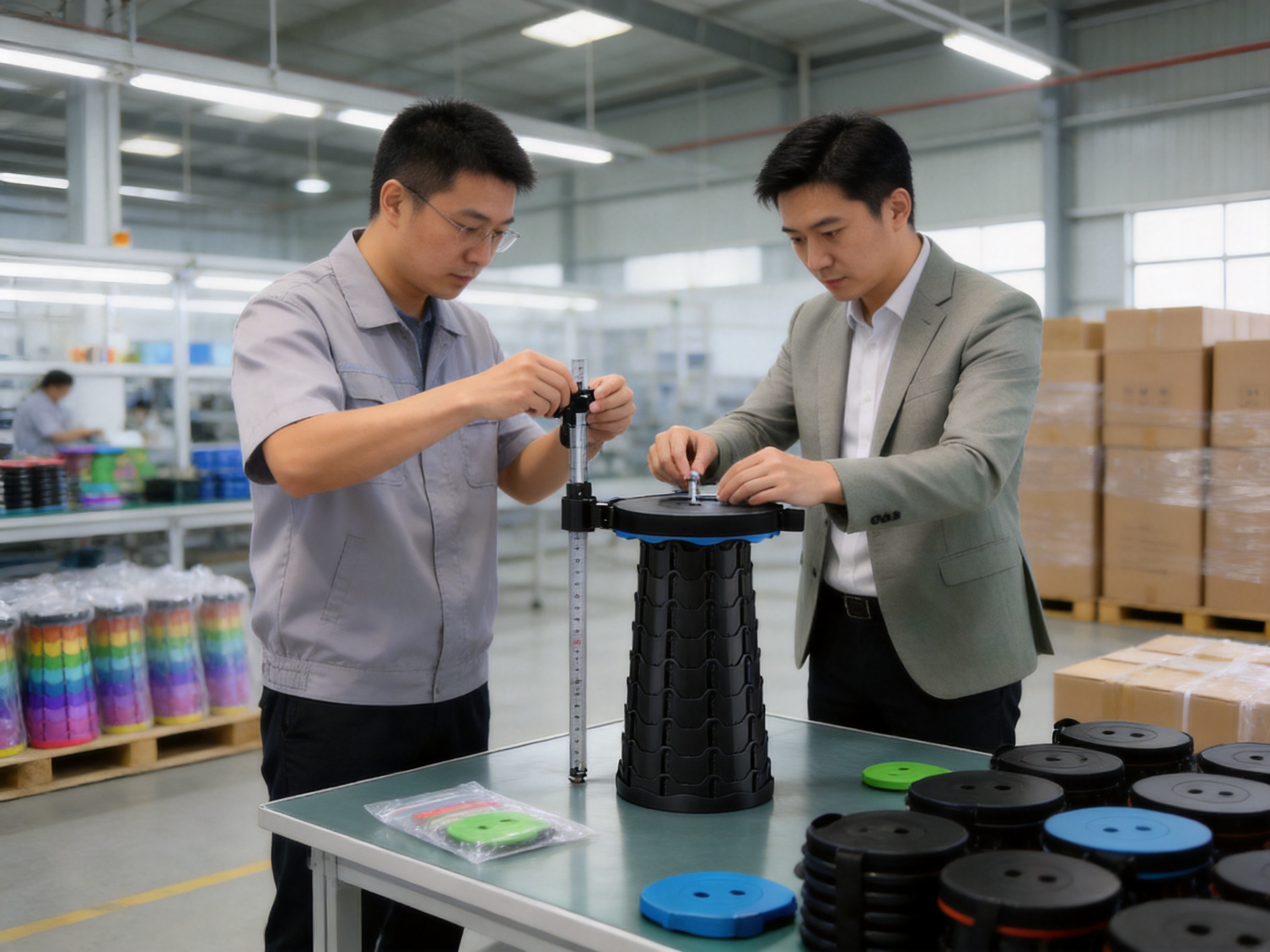
CragHaven Outdoor operates as an outdoor brand and cross-border manufacturing partner based in Hangzhou, China. Its product development focus covers mountaineering, hiking, and camping scenarios, with an emphasis on functional and reliable equipment for global markets.
The company’s approach is based on scenario-driven development. Rather than designing only for catalog appearance, the development process considers weather, terrain, carrying requirements, usage patterns, and repeated handling. This approach is important for a stool because its value is determined by real-world operation rather than visual styling alone.
A manufacturing-oriented development process may include the following stages:
- Identifying the outdoor problem that the product needs to solve.
- Defining the desired storage, deployment, adjustment, and support functions.
- Selecting materials according to strength, weight, durability, and production requirements.
- Developing samples for structural and user evaluation.
- Testing folding, extension, alignment, stability, and repeated operation.
- Optimizing components and processes based on observed performance.
- Establishing repeatable production and inspection procedures.
- Preparing products for scalable supply and international distribution.
The information provided about CragHaven emphasizes sampling, testing, and optimization as standard processes rather than optional steps. This is a meaningful strength for buyers seeking a long-term manufacturing partner. Outdoor products can be affected by small production variations, so repeatability is as important as the initial design.
Scenario-Based Product Development
Scenario-based development means the product is considered in the environments where it will actually be used. For this stool, relevant questions include how easily it can be carried, whether it can be opened without complicated preparation, how users adjust the height, how it behaves on common outdoor surfaces, and how it fits into different equipment systems.
This approach helps prevent unnecessary features that add weight or complexity without improving the user experience. It also encourages attention to practical details such as storage footprint, ease of cleaning, grip, stability, and transport.
Material Selection and Structural Balance
The company’s stated philosophy emphasizes selecting materials for durability, reliability, and long-term use rather than short-term trends. For an extendable stool, structural balance is essential. Excess material can make the product unnecessarily heavy, while insufficient material or poor geometry can reduce confidence and service life.
Thickened PP is used to support the seating structure, while the design of the folding and connection components determines how forces move through the product. Manufacturing expertise is needed to maintain the intended dimensions and ensure that parts fit correctly during assembly.
Sampling and Optimization
Sampling allows a product team to identify issues before large-scale production. A sample may reveal that a component needs reinforcement, that an adjustment mechanism requires smoother operation, or that a folded configuration can be made more compact. Repeated evaluation helps convert a general concept into a more stable commercial product.
Optimization can also involve packaging, assembly efficiency, surface treatment, inspection points, and production yield. These factors influence not only the user’s experience but also the buyer’s total supply-chain performance.
Scalable Manufacturing and Supply Support
Retailers and distributors require more than an attractive sample. They need consistent quality, dependable communication, predictable lead times, and the ability to replenish products as demand changes. A manufacturing partner with integrated design and production capabilities can reduce communication gaps between product development and factory execution.
CragHaven positions itself as a partner involved in both design and manufacturing rather than a company focused only on factory sourcing. This distinction can be valuable for international buyers who need product adaptation, sampling support, and communication aligned with Western-market expectations.
Quality Control Considerations for an Adjustable Folding Stool
Quality control should address the complete product rather than focusing on a single material or visual inspection. Because the stool includes folding and adjustable functions, inspection needs to consider both static and repeated-use behavior.
Important evaluation areas may include:
- Visual consistency of molded PP components.
- Absence of cracks, sharp edges, excessive flash, or visible deformation.
- Correct fit between structural and connection components.
- Smooth opening and closing of the folding system.
- Reliable height adjustment and secure positioning.
- Stable contact with the ground when correctly deployed.
- Consistent dimensions between production batches.
- Appropriate packaging protection during transportation.
- Clear user instructions and safety information.
Load and durability testing should be performed according to the product’s technical requirements and intended market standards. Testing should confirm that the seat and supporting structure perform as designed under appropriate conditions. Repeated-cycle testing can also help evaluate the long-term behavior of moving parts.
For international distribution, buyers may require additional documentation, packaging standards, labeling requirements, or market-specific compliance procedures. These requirements should be confirmed during product development and before production approval.
Quality assurance is especially important for products sold under a retailer’s or distributor’s brand. A dependable manufacturing process helps protect customer satisfaction, reduce returns, and support long-term market reputation.
Brand and Supply-Chain Value for Global Buyers
CragHaven Outdoor presents itself as a company focused on reducing uncertainty in the outdoor equipment supply chain. This objective is relevant because buyers often face challenges when product design, factory communication, quality control, and market expectations are handled by separate parties.
A partner involved in design and manufacturing can help coordinate these areas more effectively. Product decisions can be discussed in relation to actual use, materials can be evaluated for both performance and cost, and samples can be refined before production commitments are finalized.
The company’s location in Hangzhou, Zhejiang Province, places it within China’s mature manufacturing environment. This ecosystem can support access to established material suppliers, component production, packaging services, logistics networks, and experienced outdoor product personnel.
For global retailers, a supplier’s communication style is also important. Outdoor products are often sold in markets where customers expect clear descriptions, practical instructions, consistent specifications, and reliable after-sales support. A manufacturing partner that understands these expectations can help reduce misunderstandings during product development and commercialization.
CragHaven’s stated principles include long-term cooperation, stable partnerships, practical design, material durability, and repeated testing. These principles align with the needs of buyers who are developing a long-term outdoor product assortment rather than purchasing isolated, short-term items.
Merchandising and Market Positioning
The stool can be positioned within several product categories, including mountaineering accessories, camping furniture, travel accessories, fishing equipment, outdoor waiting gear, and compact lifestyle products. Its product title should clearly communicate the main benefits without suggesting functions that are not supported by the specification.
Useful merchandising themes include compact storage, adjustable seating, quick deployment, portable comfort, and multipurpose outdoor use. Retailers may present it alongside backpacks, tents, sleeping equipment, trekking products, coolers, fishing accessories, and travel organizers.
The product’s strongest selling message is its balance of size and function. A customer does not have to choose between a large chair that is comfortable but difficult to carry and a small pad that offers little elevation. The extendable stool provides a middle solution for users who want a practical seat with limited storage impact.
Visual merchandising can emphasize the folded and unfolded forms, the adjustment mechanism, and the range of use scenarios. Product education should explain how to open, adjust, and close the stool, as well as the importance of placing it on stable ground and respecting the recommended load limit.
For business buyers, the product may also be suitable for OEM or private-label development. Potential customization areas may include packaging, color selection, branding, instruction materials, assortment planning, and market-specific presentation. All customizations should be reviewed for their effects on tooling, production efficiency, testing, and delivery schedules.
Responsible Use and Maintenance
Proper use helps preserve the product’s performance and service life. Users should open the stool completely, confirm that the adjustment mechanism is properly engaged, and place it on a firm and reasonably level surface before sitting.
The stool should not be used as a step ladder, climbing aid, jumping platform, or substitute for equipment that has a different structural purpose. Users should avoid placing it on unstable rocks, steep slopes, loose debris, or surfaces where the feet cannot make secure contact with the ground.
After use, dirt, sand, moisture, and other debris should be removed where appropriate. The stool should be dried before extended storage, particularly after use in damp conditions. Folding components should be checked periodically for damage, excessive looseness, or obstruction.
Retailers should provide product instructions that explain deployment, adjustment, safe positioning, cleaning, storage, and maximum load information. Clear instructions improve customer confidence and help reduce misuse.
Environmental and Lifecycle Considerations
Outdoor customers increasingly consider how long products will remain useful and how efficiently they can be transported. A compact stool can reduce storage requirements throughout its lifecycle, including warehousing, retail display, shipping, and home storage.
Durability also has environmental value because products that remain functional for longer do not need to be replaced as frequently. Selecting materials and structures that support repeated use can contribute to a more responsible product lifecycle.
Manufacturing efficiency is another consideration. Stable molding processes, optimized component design, controlled material usage, and appropriate packaging can help reduce unnecessary production waste. These factors should be evaluated together with performance requirements rather than treated as separate issues.
Material recycling and end-of-life handling depend on local systems and the final product construction. Buyers may wish to request additional material information, packaging details, and compliance documentation when developing products for markets with specific environmental requirements.
Frequently Asked Questions
What is an extendable folding stool used for?
An extendable folding stool provides portable seating for camping, hiking, mountaineering, fishing, travel, outdoor events, queues, and other temporary activities. Its folding design supports transportation, while its adjustable structure allows users to select a suitable sitting height.
How small is the stool when folded?
The product is designed to fold to approximately the size of a water bottle, helping it occupy minimal space in a backpack, vehicle, equipment case, or storage area. The exact folded dimensions should be confirmed in the final technical specification.
Can the stool be used on uneven ground?
The adjustable height is intended to help the stool adapt to different terrain conditions. However, it should always be placed on a stable surface with secure ground contact. It should not be used on steep, loose, slippery, or unstable ground.
What material is used to make the stool?
The product uses thickened polypropylene, or PP, as a principal structural material. The final product also includes folding and connection components whose materials and construction should be confirmed through the technical specification and production documentation.
Is the stool suitable for long-distance hiking?
Its compact folded form makes it suitable for users who want to carry personal seating during hiking and other long-distance outdoor activities. Customers should evaluate the product’s weight, folded dimensions, and recommended load rating in relation to their individual requirements.
How does it compare with a traditional camping chair?
The stool generally offers greater storage efficiency and easier carrying than a full-size camping chair. A traditional chair may provide a backrest and a larger seating area, while the extendable stool focuses on compactness, adjustable height, and quick deployment.
Can the product be used for fishing?
Yes. Its portable format and adjustable height make it suitable for fishing locations where users may need temporary seating during extended waiting periods. It should be positioned on firm ground and kept away from situations where water or unstable surfaces could affect safety.
What should retailers check before placing an order?
Retailers should confirm dimensions, product weight, load rating, available colors, packaging details, inspection standards, labeling requirements, sample approval procedures, production capacity, lead time, and any OEM or private-label options.
What manufacturing support can CragHaven Outdoor provide?
CragHaven Outdoor combines outdoor product development with manufacturing cooperation. Its stated capabilities include scenario-based design, material selection, sampling, testing, optimization, and support for global outdoor product supply. Specific services and production terms should be confirmed for each project.
How should the stool be maintained?
Users should remove dirt and moisture after use, allow the product to dry before storage, and inspect the folding and adjustment components regularly. Any stool showing cracks, deformation, damaged connections, or unreliable locking behavior should be removed from service.
Conclusion
The portable outdoor storage folding extendable stool is designed for a clear and growing need in outdoor recreation: dependable personal seating that remains easy to carry and store. Its folding structure, adjustable height, compact dimensions, and thickened PP construction create a practical balance between portability and function.
Compared with conventional folding chairs, it requires less storage space and is easier to carry during mobile activities. Compared with fixed-height stools, it offers greater flexibility for different users and terrains. Compared with seating pads or improvised seats, it provides a raised, purpose-designed seating solution.
Its value extends across hiking, mountaineering, camping, fishing, travel, outdoor events, and temporary field activities. This multi-scenario suitability can make it a useful addition to a retailer’s mountaineering and camping assortment.
The product’s commercial potential is also connected to the manufacturing capabilities behind it. CragHaven Outdoor emphasizes practical scenario-based design, durable material selection, sampling, testing, optimization, integrated manufacturing cooperation, and long-term supply-chain relationships. These strengths are important for buyers seeking consistent outdoor products rather than one-time sourcing opportunities.
For consumers, the stool offers a compact way to improve comfort during outdoor activities. For retailers, it provides a versatile accessory with clear functional benefits. For global product buyers, it represents an opportunity to work with a manufacturing partner focused on reliable design, repeatable production, and real-world outdoor use.
References
1. Product information supplied for the portable outdoor storage folding extendable stool, product code WFDS263001.
2. CragHaven Outdoor company information concerning mountaineering, hiking, camping product development, and manufacturing cooperation.
3. General principles of outdoor product design, including portability, terrain adaptability, structural stability, and material durability.
4. General quality-control considerations for folding products, molded polypropylene components, adjustable mechanisms, and outdoor seating equipment.
5. General retail and supply-chain considerations for camping gear, mountaineering accessories, OEM development, and global outdoor product distribution.
Product: Portable outdoor storage folding extendable stool, adjustable hiking stool


- Phone: +86-15968800379
- E-mail: [email protected]
- Address: Room 1002, Huishang Building, Gongshu District, Hangzhou City, Zhejiang Province.
Copyright © CragHaven Outdoor All Rights Reserved. Outdoor Gear Manufacturers Wholesale Mountaineering Camping Gear Suppliers
