

 English
 Deutsch
 Español
 Français
Large-Capacity Nylon Professional Mountaineering Backpack for Multi-Day Outdoor Expeditions
Content
- 1 1. Product Overview
- 2 2. Why Large Capacity Matters in Mountaineering
- 3 3. High-Strength Nylon Outer Construction
- 4 4. Double-Layer Protection with Oxford-Cloth Lining
- 5 5. Independent Rain Cover for Variable Weather
- 6 6. Professional Trekking Pole Securing System
- 7 7. External Attachment Points and Equipment Organization
- 8 8. Ergonomic Carrying System
- 9 9. Durability in Harsh Environments
- 10 10. Construction Components That Influence Service Life
- 11 11. Advantages Compared with Basic Outdoor Backpacks
- 12 12. Product Development for OEM and ODM Buyers
- 13 13. Advanced Manufacturing Approach
- 14 14. Quality Control and Testing Priorities
- 15 15. Recommended Technical Parameters
- 16 16. Applications Across Outdoor Markets
- 17 17. Maintenance for Longer Product Life
- 18 18. Why Manufacturing Partnership Matters
- 19 19. Commercial Benefits for Outdoor Brands
- 20 20. Product Selection Guide for Buyers
- 21 21. Frequently Asked Questions
- 21.1 What is the primary use of this large-capacity nylon backpack?
- 21.2 Is the backpack completely waterproof?
- 21.3 Why does the backpack use both nylon and Oxford cloth?
- 21.4 Can the backpack carry heavy equipment?
- 21.5 What is the purpose of the trekking pole securing system?
- 21.6 What can be attached to the external attachment points?
- 21.7 Can the product be customized for an outdoor brand?
- 21.8 How does CragHaven Outdoor support product development?
- 21.9 Which nylon fabric is suitable for demanding outdoor conditions?
- 21.10 How should the backpack be stored after an outdoor trip?
- 21.11 What should buyers check before confirming a wholesale order?
- 22 22. Conclusion
- 23 References
- 24 Product: Large-capacity nylon professional mountaineering backpack, multi-functional sports double-shoulder mountaineering backpack
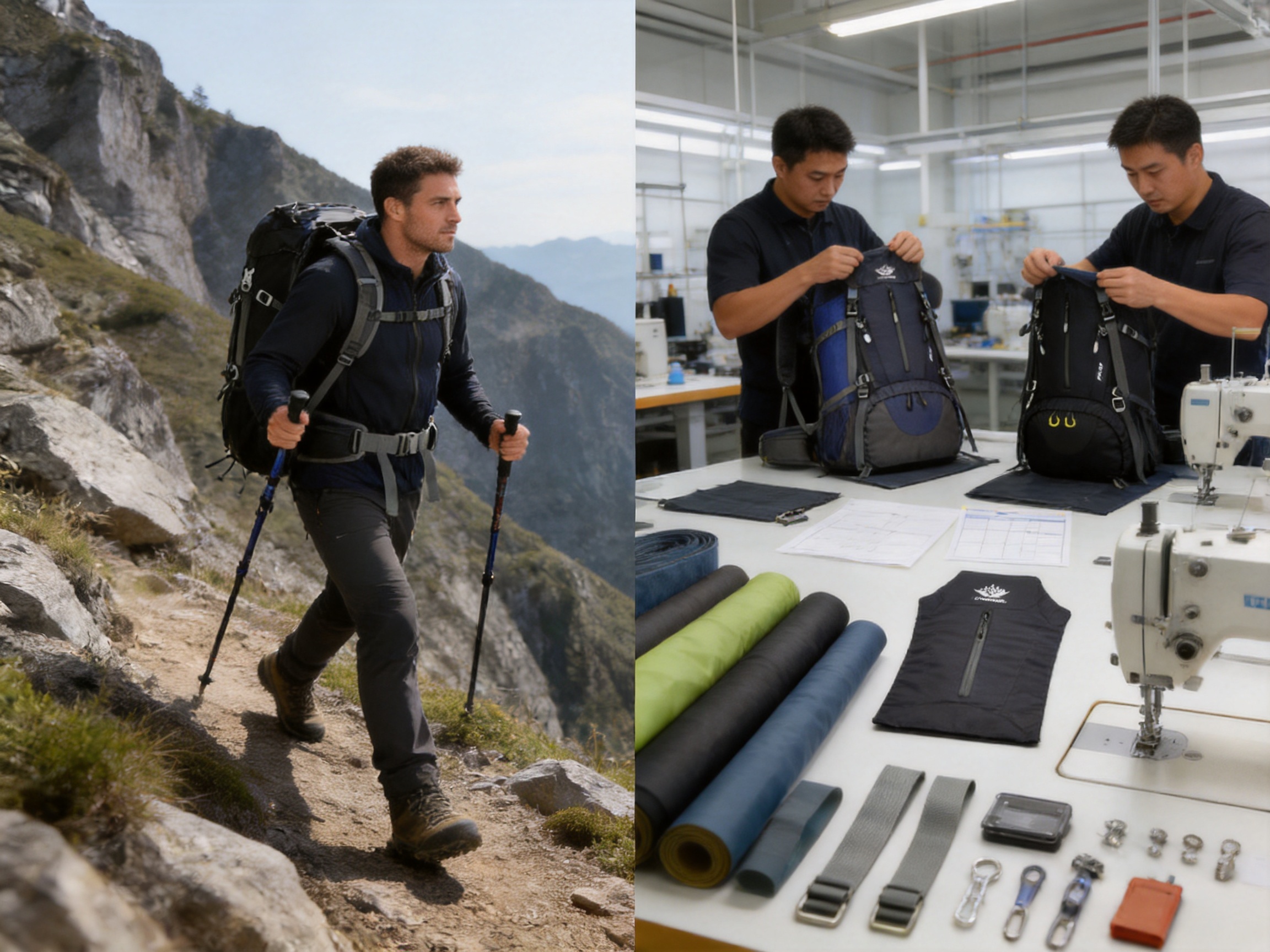
Modern mountaineering and camping require equipment that can perform reliably across changing terrain, unpredictable weather, and long periods of continuous use. A backpack is not simply a container for clothing and equipment. It is a load-carrying system, weather-management tool, organizational platform, and essential part of a user’s safety and comfort. The large-capacity nylon professional mountaineering backpack described in this article is designed to address these requirements through durable materials, practical storage, weather protection, external attachment options, and an ergonomic carrying structure.
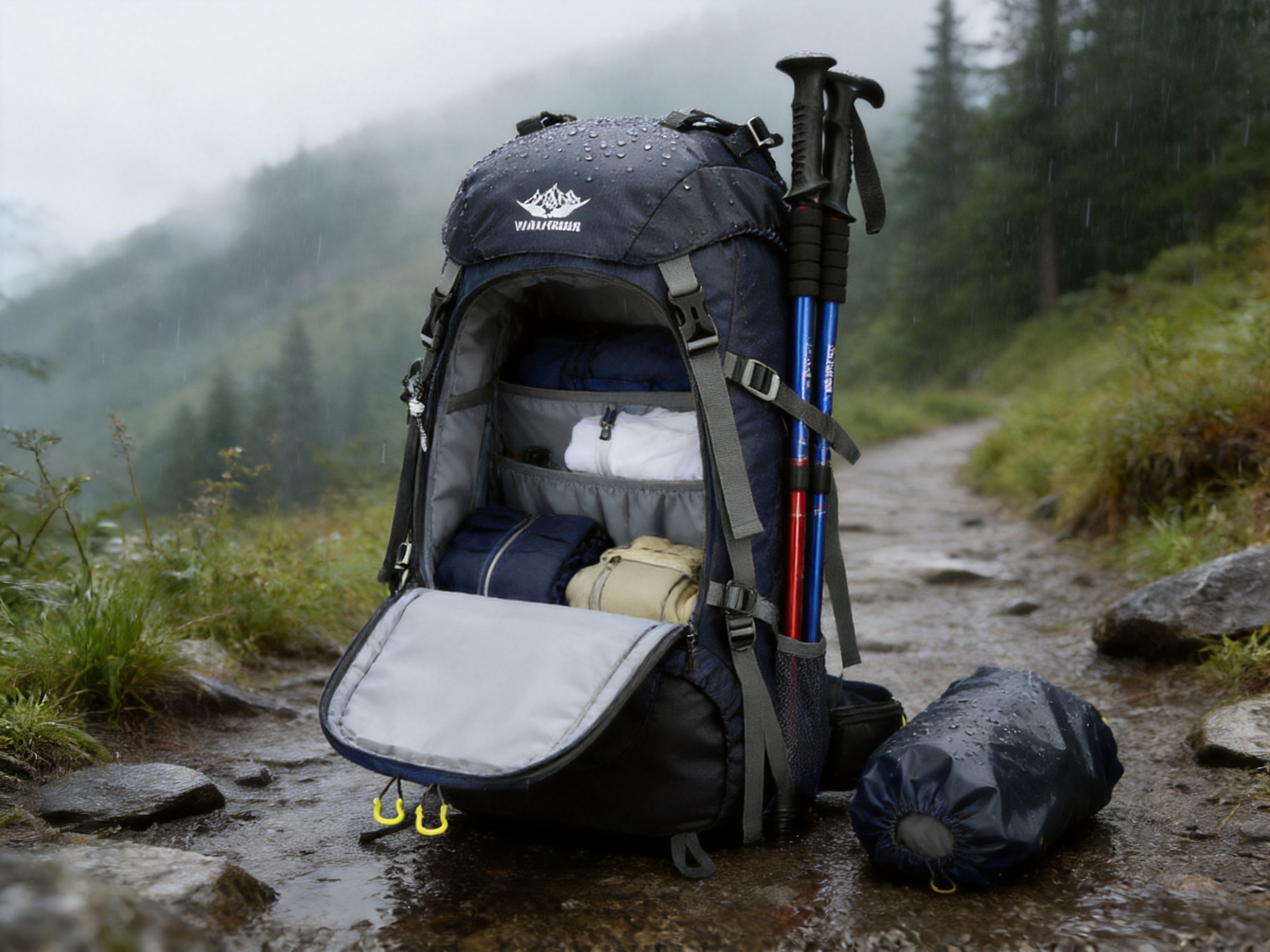
Developed for mountaineering, trekking, camping, hiking, and other demanding outdoor activities, this multifunctional double-shoulder backpack combines a high-strength water-repellent nylon exterior with a durable Oxford-cloth lining. The construction provides an additional layer of protection for clothing, food, climbing accessories, camping equipment, and personal supplies. An independent rain cover offers further protection during sudden showers and wet-weather travel, while the large main compartment supports the equipment needs of multi-day trips.
For outdoor brands, retailers, distributors, and professional buyers, the product also represents a flexible OEM and ODM opportunity. Its material structure, carrying system, capacity, color, trim, branding, packaging, and accessory configuration can be evaluated and adapted according to market requirements. CragHaven Outdoor combines product development, outdoor-use knowledge, sampling, manufacturing coordination, and quality control to help customers create dependable outdoor equipment for global markets.
1. Product Overview
The backpack is designed as a large-capacity mountaineering model for users who need more storage than a standard daypack can provide. Its structure is suitable for carrying clothing layers, sleeping equipment, cooking supplies, food, hydration products, navigation tools, emergency items, and other equipment used during extended outdoor activities.
The main product features include:
- High-strength, water-repellent nylon outer fabric.
- Durable Oxford-cloth inner lining.
- Large main compartment for multi-day travel.
- Independent rain cover for additional weather protection.
- Side-mounted trekking pole securing system.
- Multiple external attachment points.
- Ergonomically designed shoulder and carrying system.
- Double-shoulder configuration for balanced load distribution.
- Adaptability for mountaineering, hiking, trekking, camping, and outdoor travel.
- Suitability for OEM, ODM, wholesale, and private-label programs.
The product reference is WFDS261002. It is positioned as a professional outdoor backpack rather than a casual urban bag. The design priorities are load capacity, durability, weather resistance, equipment organization, carrying stability, and long-term usefulness in challenging environments.
2. Why Large Capacity Matters in Mountaineering
Outdoor users often need to carry equipment for much longer periods than urban travelers. A day hike may require only water, food, a shell jacket, first-aid supplies, and a few personal items. A multi-day expedition may also require a sleeping bag, tent components, cooking equipment, spare clothing, fuel, technical accessories, lighting, repair tools, and emergency equipment.
A large-capacity backpack helps users consolidate these items into one integrated carrying system. This can reduce the need for separate loose bags and make it easier to protect equipment from rain, dust, abrasion, and accidental impact. A well-organized large backpack also allows the user to separate frequently accessed articles from equipment that is needed only at camp.
Capacity must be considered together with structure. A backpack that is large but poorly organized can become difficult to carry and inefficient to use. The design therefore needs to balance internal volume with opening access, external attachment points, load distribution, strap adjustability, and stability during movement. The product’s large main compartment is supported by a professional carrying system and external attachment features intended to improve practical usability.
| Outdoor Activity | Typical Storage Requirements | Relevant Backpack Advantage |
|---|---|---|
| Day hiking | Water, food, light clothing, navigation tools, and personal items | Flexible capacity for additional equipment and changing weather |
| Multi-day trekking | Clothing, sleeping equipment, food, cooking supplies, and repair tools | Large main compartment and balanced double-shoulder carrying system |
| Camping | Tent accessories, sleeping bag, stove, cookware, and outdoor essentials | High-capacity storage with external attachment points |
| Mountaineering | Technical accessories, protective clothing, climbing equipment, and emergency gear | Side trekking pole securing system and durable exterior construction |
| Long-distance travel | Personal supplies, clothing layers, documents, and compact outdoor equipment | Organized storage and weather protection for extended use |
3. High-Strength Nylon Outer Construction
The outer layer uses high-strength, water-repellent nylon. Nylon is widely used in technical outdoor equipment because it offers a practical balance between strength, weight, flexibility, abrasion resistance, and drying performance. During outdoor travel, the backpack may rub against rock, vegetation, vehicle surfaces, campsite equipment, and other rough materials. The fabric must withstand these repeated contacts without excessive deformation or premature tearing.
Water repellency helps reduce the speed at which moisture spreads across the fabric surface. This is valuable when users encounter light rain, wet vegetation, snow, or damp ground. Water-repellent fabric does not make a backpack completely waterproof under every condition, but it can reduce surface wetting and provide additional time for the rain cover or other protective measures to work effectively.
Nylon also maintains useful flexibility when the backpack is packed, folded, compressed, or moved through narrow spaces. This flexibility is important in mountaineering because rigid materials may restrict movement or create uncomfortable pressure points. The selected fabric can support a balance between structural durability and practical handling.
Material Selection for Different Outdoor Conditions
Fabric performance depends on yarn construction, denier, weave, coating, finishing, seam construction, and the intended use of the finished product. Common outdoor backpack materials include 420D nylon, 600D nylon, 1000D nylon, and ripstop nylon. Each option can be selected according to the expected load, abrasion level, weight target, price position, and market application.
| Fabric Type | Abrasion Performance | Water Resistance | Typical Application |
|---|---|---|---|
| 420D Nylon | Good for lightweight outdoor use | Good when coated and properly finished | Day hiking, travel, and general outdoor recreation |
| 600D Nylon | Very good for regular camping and trekking | Good with PU or similar coating | Camping, outdoor recreation, and extended travel |
| 1000D Nylon | Excellent for heavy-duty applications | Excellent when combined with suitable coating | Professional mountaineering, tactical applications, and high-abrasion environments |
| Ripstop Nylon | Excellent resistance to the spread of small tears | Dependent on coating and finishing | Long-distance trekking, expedition use, and lightweight technical products |
The appropriate fabric specification can be discussed during product development. Buyers who prioritize lower weight may select a lighter fabric in less abrasion-sensitive areas, while buyers targeting professional or heavy-duty markets may prefer higher-density nylon or reinforced panels. A combination of materials can also be considered where the design requires both weight control and additional protection in high-wear zones.
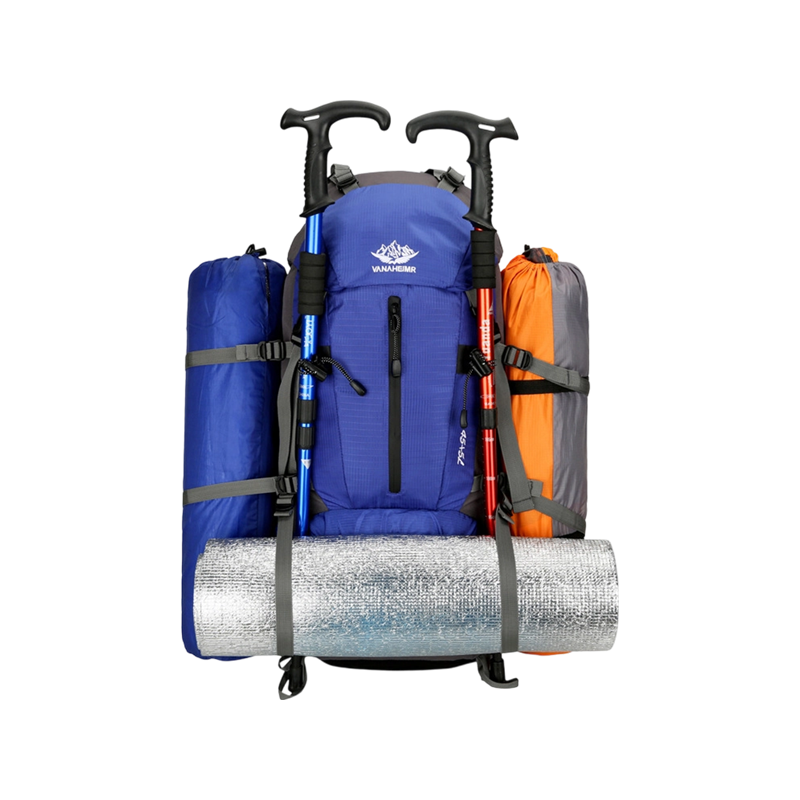
Large-capacity nylon professional mountaineering backpack, multi-functional sports double-shoulder mountaineering backpack
4. Double-Layer Protection with Oxford-Cloth Lining
The inner lining is made of durable Oxford cloth, creating a second material layer inside the backpack. A lining can improve the overall user experience by helping protect stored items, supporting a cleaner interior, and making the backpack easier to organize and maintain. It also adds another barrier between the contents and the external fabric.
Double-layer construction is particularly helpful when the backpack is used in damp, dusty, or abrasive environments. The outer nylon layer manages external exposure, while the inner lining helps protect the contents and supports the structure of internal compartments. When combined with careful seam construction and a rain cover, this design provides a practical approach to moisture management.
The lining also helps reduce direct contact between personal equipment and the outer fabric. This can be useful when the backpack contains clothing, sleeping accessories, food packaging, electronic devices, or other items that should be kept separated from external dirt. For outdoor brands, a high-quality lining contributes to the perceived value of the product because it demonstrates attention to internal finishing rather than focusing only on the exterior appearance.
5. Independent Rain Cover for Variable Weather
Weather can change rapidly in mountain and forest environments. A clear morning may be followed by heavy rain, wet snow, or prolonged mist. Even a water-repellent backpack fabric can eventually absorb moisture when exposed to continuous rainfall. The independent rain cover provides an additional protective layer that can be deployed when conditions become wetter.
A separate rain cover has several practical benefits. It can cover the main body of the backpack and help reduce water entry through exterior panels, zippers, seams, and attachment areas. It may also help limit the accumulation of mud and dust on the outer surface. Once the weather improves, the cover can be removed or stored so that the backpack can be used normally.
Rain-cover performance depends on correct coverage, secure attachment, material quality, and appropriate use. The cover is intended to improve weather resistance, but users should still protect highly sensitive equipment with internal waterproof bags when traveling in severe conditions or when equipment must remain completely dry.
Moisture Protection in Real Outdoor Use
| Weather Condition | Recommended Protection Approach | Role of the Backpack Design |
|---|---|---|
| Light rain | Use the water-repellent exterior and monitor exposure time | Helps reduce rapid surface wetting |
| Continuous rain | Deploy the independent rain cover | Provides an additional external moisture barrier |
| Wet vegetation | Use the rain cover when brushing through dense plants | Reduces contact between wet surfaces and the backpack body |
| Snow or damp conditions | Keep sensitive equipment inside internal protective bags | Combines layered fabric construction with external cover protection |
| Camp storage | Dry the backpack naturally before long-term storage | Helps preserve the fabric, coating, lining, and hardware |
6. Professional Trekking Pole Securing System
Trekking poles are valuable for balance, rhythm, and joint support on uneven terrain. However, poles are not always needed. Users may need both hands for climbing, photography, map reading, cooking, or handling other equipment. A side-mounted trekking pole securing system enables users to attach poles to the outside of the backpack when they are temporarily not in use.
This feature improves equipment management because it prevents trekking poles from being carried loosely in the hands or placed inside the main compartment. External securing also keeps long equipment separate from clothing and other stored items. A professional attachment system should be convenient to use while remaining stable during walking and movement.
The precise configuration can be adapted during sampling according to the buyer’s target market. Different versions may be considered for pole length, cord adjustment, attachment position, user preference, and compatibility with other external equipment. The important design objective is to provide a secure and accessible location without interfering with the wearer’s arms, legs, or balance.
7. External Attachment Points and Equipment Organization
Outdoor equipment is rarely limited to what fits inside the main compartment. Users may carry water bottles, compact tools, gloves, rainwear, carabiners, sleeping accessories, first-aid supplies, or other items that need to be reached quickly. External attachment points create additional organization options and allow certain equipment to remain accessible.
External attachment points can also help users separate wet or dirty items from clean clothing and sleeping equipment. For example, a damp shell layer or compact ground sheet may be attached externally while the inner compartment remains organized. This flexibility is valuable during multi-day trips, when the user repeatedly packs and unpacks the same equipment in changing conditions.
Attachment points must be integrated carefully into the pattern and reinforcement structure. A small loop may appear simple, but it can experience repeated pulling, twisting, and impact. Strong webbing, appropriate stitching, reinforcement patches, and accurate placement are important for long-term performance. Manufacturing quality is therefore directly connected to the usefulness of the external organization system.
| External Feature | Potential Use | Design Consideration |
|---|---|---|
| Side attachment system | Securing trekking poles or other long equipment | Stable positioning without interfering with movement |
| Webbing loops | Attaching lightweight accessories | Reinforced stitching and suitable load expectations |
| Side pockets or attachment zones | Carrying bottles or frequently accessed items | Easy access while maintaining balance |
| Front attachment points | Connecting compact gear or outer layers | Secure placement and resistance to repeated use |
| Bottom reinforcement area | Protecting the backpack when placed on rough surfaces | Durable material and strong seam construction |
8. Ergonomic Carrying System
Carrying comfort becomes increasingly important as capacity and load increase. An ergonomic carrying system helps distribute weight across the shoulders, chest, back, and waist rather than concentrating pressure in one area. This can improve stability and reduce fatigue during long periods of walking.
The double-shoulder design supports balanced carrying and allows the user to adjust the position of the backpack according to body shape and load. Adjustable shoulder straps can help position the backpack closer to the body, while chest and waist support can assist with stability during uneven movement. The appropriate adjustment depends on the wearer’s size, clothing, terrain, and total load.
A carrying system should not be assessed only when the backpack is empty. Product sampling and evaluation should include realistic load conditions. A pack may feel comfortable in a showroom but create pressure points after several hours on a trail. CragHaven Outdoor emphasizes sampling, testing, and optimization so that the design can be reviewed under practical usage conditions rather than judged only by appearance.
Load Distribution Principles
Heavy items are generally best positioned close to the wearer’s back and near the center of the pack. Lightweight or compressible items can occupy outer or lower areas, while frequently accessed articles can be placed in convenient pockets or attachment zones. The backpack’s internal arrangement, external features, and carrying system work together to support this approach.
Correct adjustment is also important. Shoulder straps that are too loose can allow the pack to move excessively. Straps that are too tight may create pressure and restrict comfortable movement. A chest strap can help stabilize the shoulder straps, while a waist belt can transfer part of the load toward the hips when the product is configured with that feature.
| Carrying Element | Primary Function | Benefit During Extended Use |
|---|---|---|
| Shoulder straps | Support the upper portion of the load | Improved adjustability and reduced localized pressure |
| Chest strap | Helps stabilize shoulder straps | Reduces side-to-side movement |
| Waist belt | Transfers part of the load toward the hips | Useful for heavier loads and long-distance travel |
| Back panel | Creates contact and structural support | Improves carrying stability when correctly fitted |
| Adjustment webbing | Fine-tunes the fit for different users and loads | Supports practical customization and comfort |
9. Durability in Harsh Environments
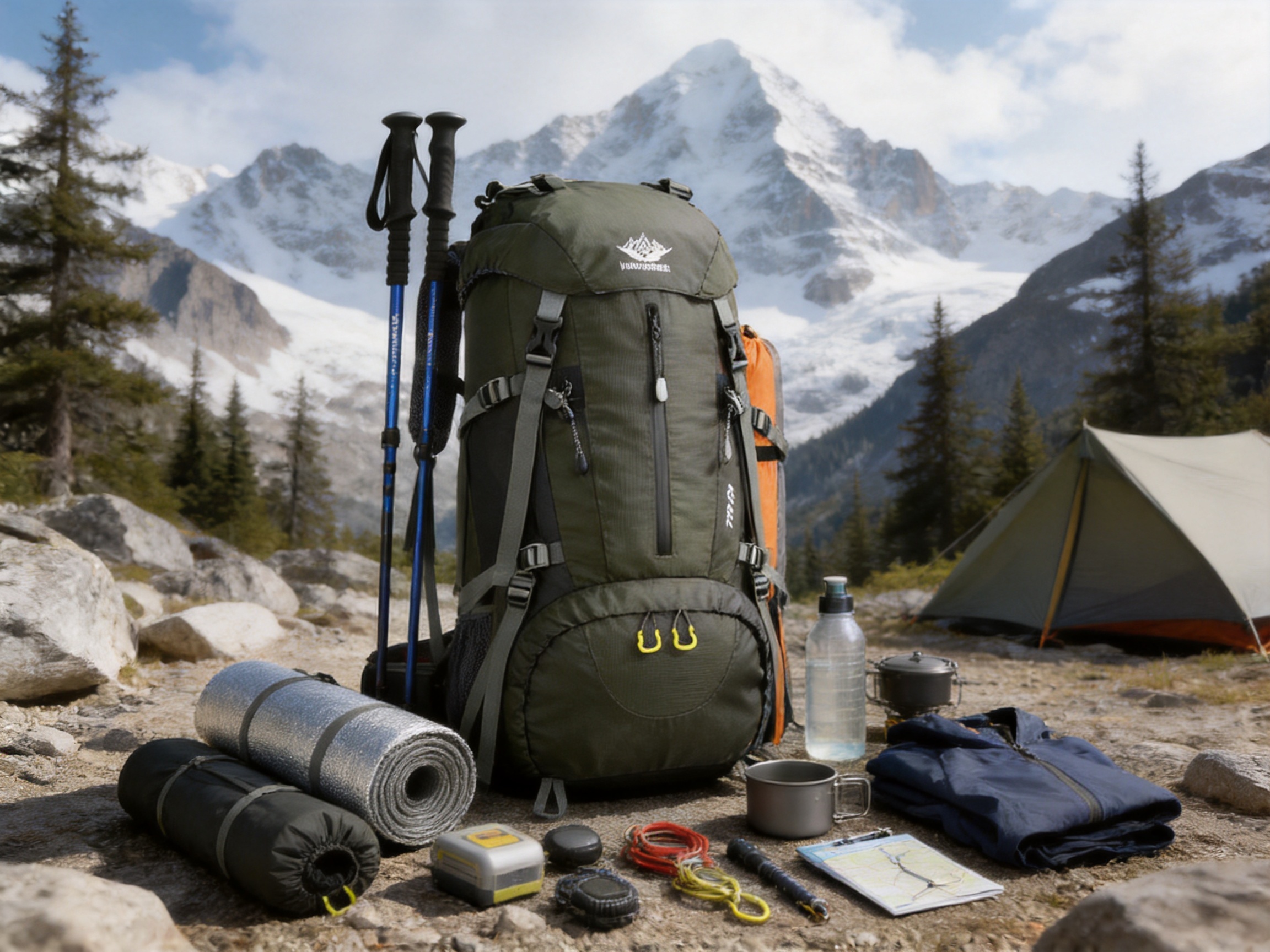
A professional mountaineering backpack may encounter abrasion, moisture, heavy loads, temperature changes, mud, dust, snow, and repeated handling. Its durability depends on the combined performance of materials, construction, hardware, and manufacturing precision.
Fabric denier is one important factor, but it is not the only factor. A high-denier material can still perform poorly if seams are weak, reinforcement is insufficient, or the pattern creates excessive stress. Conversely, a carefully designed product can achieve a useful balance of weight and durability through strategic reinforcement and appropriate material placement.
Fabric Density and Abrasion Resistance
Higher-density fabrics generally offer stronger resistance to surface wear. This is especially relevant at the bottom of the backpack, around side panels, and near areas that contact rocks, floors, vehicle compartments, or campsite surfaces. Product developers may use heavier fabric in high-wear sections while selecting lighter materials elsewhere to control total weight.
Reinforced Stitching
Stitching connects the panels, webbing, loops, straps, pockets, and carrying components. Load-bearing zones require particular attention because they experience repeated tension. Reinforced stitching at shoulder strap anchors, waist-belt connections, trekking pole holders, external loops, and bottom panels can improve reliability.
Coating Technology
PU or TPU coating may improve resistance to water penetration and help support the intended weather performance of the fabric. Coating selection can influence flexibility, hand feel, weight, durability, and cost. It should be matched to the fabric, end-use requirements, and target market rather than selected solely for a specification sheet.
Zippers, Buckles, and Hardware
Hardware components are frequently opened, closed, pulled, adjusted, and exposed to dust or moisture. Zippers should operate smoothly and remain compatible with the structure of the bag. Buckles and adjustment components should be selected according to expected loading and environmental conditions. Small hardware details can strongly affect the user’s perception of product quality.
Bottom Protection
The bottom of a backpack is often placed on rough or wet surfaces. Additional reinforcement in this area can reduce abrasion and extend service life. A durable bottom also helps protect the inner contents when the bag is placed at a campsite, on a trail, or inside a vehicle.
10. Construction Components That Influence Service Life
| Component | Why It Matters | Manufacturing Focus |
|---|---|---|
| Outer fabric | Resists abrasion, tearing, and environmental exposure | Material inspection, color consistency, and coating verification |
| Inner lining | Protects contents and improves internal finishing | Accurate cutting, clean joining, and secure seam allowance |
| Shoulder strap anchors | Carry repeated load and movement forces | Reinforcement patches and controlled stitching |
| Trekking pole holder | Supports external equipment during movement | Secure attachment and practical positioning |
| Rain cover | Adds protection during wet weather | Correct sizing, edge finishing, and reliable storage solution |
| Zippers | Provide access to internal and external storage | Functional testing and alignment inspection |
| Buckles and webbing | Control fit and external attachment | Pull testing, adjustment checks, and visual inspection |
| Bottom panel | Receives frequent contact with hard or dirty surfaces | Material reinforcement and seam-strength inspection |
11. Advantages Compared with Basic Outdoor Backpacks
Many low-cost backpacks are designed primarily for appearance, short-distance use, or light personal loads. They may lack sufficient reinforcement, weather protection, attachment options, and carrying support. The large-capacity nylon professional mountaineering backpack offers a more complete configuration for users who expect their equipment to perform across multiple outdoor scenarios.
One advantage is the layered material structure. The water-repellent nylon exterior and Oxford-cloth lining provide more comprehensive protection than a single thin fabric layer. Another advantage is the independent rain cover, which gives the user a dedicated response to changing weather rather than relying only on the base fabric finish.
The trekking pole securing system and external attachment points provide functionality that is often absent from general-purpose bags. These features can improve equipment organization, reduce the need to carry loose items, and make the backpack more adaptable to different activities.
The ergonomic carrying design is another important distinction. A large pack should be designed around the user’s body and movement rather than simply enlarged from a small daypack. Adjustable carrying components and balanced weight distribution can make a significant difference on long trails or during multi-day travel.
| Evaluation Area | Basic Casual Backpack | Professional Large-Capacity Nylon Backpack |
|---|---|---|
| Primary use | Urban travel or light recreation | Mountaineering, trekking, camping, and extended outdoor travel |
| Weather protection | May rely on basic fabric treatment | Water-repellent outer layer plus independent rain cover |
| Internal construction | Often uses a simple single-layer structure | Durable outer nylon combined with Oxford-cloth lining |
| Equipment attachment | Limited external organization | Trekking pole securing system and multiple attachment points |
| Load management | Designed for light personal loads | Ergonomic double-shoulder carrying system for larger loads |
| Outdoor durability | Suitable for moderate everyday handling | Designed with abrasion, moisture, and repeated outdoor use in mind |
12. Product Development for OEM and ODM Buyers
Outdoor brands often need products that align with their own target customers, price levels, visual identity, and distribution channels. A standard product can provide a reliable starting point, while OEM and ODM development can adapt selected details for different markets.
Potential customization areas may include exterior color, contrast panels, logo application, woven labels, zipper pulls, webbing color, lining color, packaging, hangtags, instruction labels, rain-cover color, and accessory combinations. Buyers may also discuss capacity variations, compartment arrangements, material upgrades, and regional compliance requirements.
Product customization should begin with a clear understanding of the intended usage scenario. A backpack for weekend camping may have different priorities from a technical expedition model. A retailer focused on travel may prefer lighter construction and broad versatility, while a professional outdoor brand may prioritize heavier fabric, stronger reinforcement, and specialized attachment systems.
CragHaven Outdoor participates in both product design and manufacturing coordination. This approach can help reduce the communication gap that sometimes occurs when a buyer works with a supplier that only reproduces a basic sample. By examining the relationship between terrain, weather, load, movement, and storage requirements, the development process can focus on practical product performance.
Typical Development Process
- Define the target market, end user, capacity, and application.
- Review the base product and identify required modifications.
- Select fabric, lining, coating, webbing, hardware, and reinforcement details.
- Prepare technical specifications, artwork, measurements, and branding requirements.
- Develop an initial sample for visual and functional review.
- Test the sample under representative loading and handling conditions.
- Optimize fit, structure, storage, attachment points, and finishing.
- Confirm the production sample and packaging configuration.
- Begin controlled mass production with quality inspections.
- Review production feedback for future improvements.
13. Advanced Manufacturing Approach
A dependable backpack is the result of a controlled manufacturing process rather than a single material choice. CragHaven Outdoor is based in Hangzhou, China, and works as both an outdoor brand and a cross-border manufacturing partner. Its development philosophy is based on designing for weather, terrain, and time rather than producing products only for catalog presentation.
The manufacturing process begins with material selection. Fabrics, lining, webbing, hardware, coatings, and thread should be reviewed according to the performance requirements of the final product. Material inspection helps identify issues such as uneven color, coating defects, weaving irregularities, contamination, or dimensional inconsistency before cutting begins.
Pattern development is another important stage. Accurate patterns help control panel alignment, compartment dimensions, seam allowances, symmetry, and final appearance. In a backpack with multiple attachment points and load-bearing components, even small inaccuracies may affect function. Computer-assisted pattern preparation and experienced technical review can improve repeatability.
Precision Cutting
Precision cutting helps ensure that fabric panels are consistent from one unit to another. Accurate cutting supports proper assembly, reduces distortion, and helps maintain the intended capacity and silhouette. It also contributes to material efficiency, which can reduce waste during larger production runs.
Panel Preparation
Before final assembly, individual panels may be prepared with pockets, reinforcement pieces, lining sections, webbing, labels, and attachment components. Preparing these elements in a controlled sequence helps reduce production variation. High-stress areas can receive reinforcement before they are joined to the main body.
Controlled Sewing
Sewing quality influences both appearance and service life. Operators must maintain appropriate stitch density, seam alignment, thread tension, and backstitching. Areas supporting shoulder straps, handles, webbing loops, and trekking pole holders require particular attention because they receive repeated force.
Reinforcement and Stress Management
Reinforcement should be applied according to actual load paths. Adding material without considering stress distribution may increase weight without providing the desired performance. A more effective approach is to identify where tension, pulling, abrasion, and compression occur, then reinforce those locations with suitable fabric patches, webbing, stitching patterns, and seam construction.
Hardware Installation
Zippers, buckles, adjusters, cord locks, and other components must be installed accurately and checked for smooth operation. Misaligned hardware may make the backpack difficult to use or create unnecessary stress on fabric and seams. Functional inspection during production helps identify these problems before final packing.
Final Finishing
Final finishing may include thread trimming, cleaning, logo inspection, measurement checks, rain-cover verification, folding, labeling, and packaging. A professional finishing process ensures that the backpack reaches the customer in a consistent and presentable condition.
14. Quality Control and Testing Priorities
Quality control should cover both visible appearance and functional performance. Outdoor backpacks are used repeatedly, often under conditions that are more demanding than ordinary consumer products. Inspection procedures should therefore be connected to realistic usage risks.
| Quality-Control Stage | Inspection Focus | Purpose |
|---|---|---|
| Incoming material inspection | Fabric, lining, webbing, thread, hardware, and coating condition | Prevents unsuitable materials from entering production |
| Cutting inspection | Panel dimensions, symmetry, and pattern accuracy | Supports consistent assembly and final capacity |
| In-process sewing inspection | Stitching, seams, reinforcement, and component alignment | Identifies structural problems early |
| Hardware inspection | Zipper movement, buckle operation, and adjuster function | Ensures practical usability |
| Finished-product inspection | Appearance, measurements, cleanliness, and branding | Maintains order consistency and presentation quality |
| Functional review | Load handling, strap adjustment, attachment security, and rain-cover fit | Confirms suitability for the intended usage scenario |
Testing requirements may differ according to the buyer’s market and product positioning. A buyer may request internal standards for seam strength, fabric performance, colorfastness, hardware durability, dimensional tolerance, or packaging. The testing plan should be confirmed during the development stage so that the product, production line, and inspection documents are aligned.
15. Recommended Technical Parameters
For extended outdoor trips, a capacity range of approximately 40 to 70 liters is commonly considered practical, depending on the equipment list, season, and user preference. The final capacity should be determined through pattern development and physical sampling rather than estimated only from external measurements.
| Parameter | Recommended Range or Direction | Development Note |
|---|---|---|
| Outer fabric | 420D to 1000D nylon or ripstop nylon | Select according to weight, abrasion, and price requirements |
| Capacity | Approximately 40 to 70 liters for extended trips | Confirm through physical sample measurement |
| Water protection | Water-repellent or PU/TPU-coated fabric with rain cover | Use internal waterproof protection for sensitive contents |
| Approximate product weight | About 1.2 to 2.2 kilograms depending on capacity and structure | Actual weight changes with materials, frame elements, and reinforcements |
| Load support | Adjustable shoulder straps, chest strap, and waist-belt configuration | Fit should be evaluated with realistic loads |
| Reinforcement | Double stitching at major stress points | Review strap anchors, loops, bottom, and high-tension seams |
These parameters are development references rather than universal requirements. A buyer may request a lighter version, a heavier professional version, a different capacity, or a different material combination. The final specification should reflect the intended market, user profile, and certification or testing requirements.
16. Applications Across Outdoor Markets
The backpack can serve several related product categories. In mountaineering, it can carry protective layers, technical accessories, food, and equipment required for changing elevations and terrain. In trekking, it can support clothing, sleeping supplies, water, and personal essentials over several days. In camping, the main compartment and external attachment points can help organize compact shelter and cooking equipment.
It can also be positioned for outdoor travel, adventure tourism, expedition support, rescue-related supply transport, and other applications where durability and capacity are more important than minimalist design. For retailers, the broad use range may make the product suitable for multiple sales channels, including outdoor specialty stores, e-commerce platforms, travel equipment catalogs, and private-label collections.
| Market Segment | Customer Need | Product Positioning |
|---|---|---|
| Mountaineering | Durable storage and stable carrying across technical terrain | Professional large-capacity backpack with external equipment support |
| Trekking | Comfortable carrying for long-distance movement | Ergonomic backpack for multi-day routes |
| Camping | Space for shelter, cooking, clothing, and personal supplies | Functional high-capacity outdoor storage solution |
| Adventure travel | Versatile equipment management and weather protection | Multifunctional outdoor travel backpack |
| Outdoor retail | Reliable, adaptable product for a broad customer base | OEM and ODM-ready product for private-label programs |
17. Maintenance for Longer Product Life
Even a durable backpack requires proper care. Dirt, salt, mud, moisture, ultraviolet exposure, and improper storage can gradually affect fabric, coatings, thread, lining, zippers, and hardware. Regular maintenance helps preserve performance and allows small issues to be identified before they become larger failures.
- Remove dirt and mud after each outdoor trip.
- Use appropriate cleaning methods recommended for the fabric and coating.
- Allow the backpack to dry naturally before storage.
- Do not store the product while it is wet or damp.
- Avoid prolonged direct sunlight when the backpack is not in use.
- Inspect shoulder-strap anchors, seams, buckles, and attachment points regularly.
- Check zippers for dirt and operate them without excessive force.
- Store the backpack in a cool, dry, and ventilated environment.
- Keep sharp equipment protected so that it cannot cut the lining or outer fabric.
- Do not exceed the intended load or use external attachment points beyond their design purpose.
Cleaning should be gentle. Harsh chemicals, aggressive brushing, high heat, or unsuitable detergents may affect coatings and fabric finishes. After washing or wiping, the backpack should be completely dry before it is folded or placed in long-term storage.
18. Why Manufacturing Partnership Matters
For outdoor brands, selecting a manufacturing partner is not only a matter of comparing unit prices. Product consistency, communication, sampling quality, material knowledge, production planning, inspection discipline, and after-sales responsiveness all influence the total supply-chain result.
CragHaven Outdoor aims to reduce uncertainty for customers by combining outdoor product knowledge with manufacturing coordination. The company understands that outdoor products are evaluated in real environments, where weather, terrain, usage patterns, and time expose weaknesses that may not be visible in product photographs.
The company’s development principles include designing for actual weather and terrain, selecting materials for durability and reliability, and treating sampling, testing, and optimization as standard steps. This approach can help buyers move beyond catalog sourcing toward a more controlled and repeatable product-development process.
As an outdoor brand and cross-border manufacturing partner in Hangzhou, China, CragHaven Outdoor focuses on mountaineering, hiking, and camping scenarios. Its product philosophy emphasizes balance and stability, reflected in the relationship between material selection, structural design, carrying comfort, manufacturing precision, and long-term value.
For global retailers and outdoor brands, this approach may support more dependable product lines. The goal is not to add specifications without purpose, but to ensure that each feature addresses a practical requirement. A rain cover should help manage wet weather. A trekking pole holder should improve equipment handling. Reinforcement should protect a load-bearing area. A carrying system should support stable movement. Manufacturing decisions should remain connected to these real-world objectives.
19. Commercial Benefits for Outdoor Brands
A large-capacity nylon backpack can serve as a core product in an outdoor equipment collection because it addresses several customer needs at once. Its technical appearance, practical features, and broad activity range can make it suitable for entry-level outdoor users as well as more experienced hikers seeking a versatile multi-day pack.
The product can also be adapted into different commercial tiers. A lightweight version may appeal to travel and weekend hiking customers. A higher-denier version may target professional mountaineering or tactical-inspired outdoor markets. Different colors and branding treatments can support seasonal collections, regional preferences, or retailer-specific product lines.
OEM and ODM development can help brands create differentiation without redesigning every product from the beginning. A buyer may retain the basic structure while changing colors, labels, trims, capacity, or accessory details. Alternatively, the buyer may use the product as a starting point for a more substantial design program.
Consistent manufacturing is especially important for wholesale customers. Retailers need repeatable color, dimensions, stitching, hardware, and packaging across production batches. Clear technical documentation and inspection requirements can help improve consistency and simplify incoming quality checks.
20. Product Selection Guide for Buyers
Before placing an order, buyers should define the intended end use and evaluate the product against practical criteria. The following questions can support a more effective sourcing decision.
Capacity and Load
What equipment is the end user expected to carry? Will the product be used for one day, several days, or extended expeditions? Is a lightweight configuration more important than maximum abrasion resistance? The answers will influence fabric, reinforcement, dimensions, and carrying-system requirements.
Weather Exposure
Will the backpack be sold in regions with frequent rain, snow, humidity, or dry dust? Buyers should confirm the fabric finish, rain-cover configuration, seam construction, and recommended care instructions. Highly sensitive equipment should still be protected with internal waterproof organizers.
Target Price and Market Position
Material selection and hardware specifications influence cost. A clear target price helps the manufacturer recommend a suitable balance between fabric weight, reinforcement, feature quantity, packaging, and production complexity.
Branding and Packaging
Private-label customers should prepare logo artwork, label requirements, packaging preferences, barcode information, care instructions, and language requirements early in the development process. These details can affect sample approval and production scheduling.
Testing and Compliance
Buyers should identify any market-specific product safety, chemical, labeling, packaging, or testing requirements before production. The manufacturer can then review the relevant specifications and incorporate them into the development and inspection plan.
21. Frequently Asked Questions
What is the primary use of this large-capacity nylon backpack?
The backpack is designed for mountaineering, trekking, camping, hiking, outdoor travel, and other activities requiring substantial equipment storage. Its large main compartment and external attachment features support multi-day use, while the ergonomic double-shoulder carrying system is intended to improve stability and comfort.
Is the backpack completely waterproof?
The backpack uses a water-repellent nylon outer layer and includes an independent rain cover for additional protection. These features help reduce water exposure, but the product should not be treated as completely waterproof in every situation. During severe or prolonged rain, sensitive equipment should be placed in internal waterproof bags or dry sacks.
Why does the backpack use both nylon and Oxford cloth?
The nylon exterior provides strength, flexibility, abrasion resistance, and water-repellent performance. The Oxford-cloth lining provides a durable inner surface and an additional layer of protection for stored equipment. The combination supports more comprehensive construction than a basic single-layer bag.
Can the backpack carry heavy equipment?
It is designed for larger outdoor loads when packed and adjusted correctly. Reinforced load-bearing areas, a supportive carrying system, durable hardware, and an adjustable fit help distribute weight more effectively. Users should follow the intended load guidance and avoid exceeding the design capacity.
What is the purpose of the trekking pole securing system?
The side-mounted securing system allows users to attach trekking poles externally when the poles are not being used. This keeps the poles accessible without requiring the user to carry them continuously or place them inside the main compartment.
What can be attached to the external attachment points?
Depending on the specific attachment location and design, users may connect lightweight outdoor accessories, compact equipment, outer layers, or other suitable items. The load and use of each attachment point should remain within its intended purpose.
Can the product be customized for an outdoor brand?
Yes. The backpack can be considered for OEM and ODM development. Potential customization areas include fabric, color, lining, logo, labels, zipper pulls, webbing, capacity, packaging, and selected structural features. Final options depend on technical feasibility, order quantity, sample approval, and production requirements.
How does CragHaven Outdoor support product development?
CragHaven Outdoor combines outdoor product experience with cross-border manufacturing coordination. The company participates in design discussion, material selection, sampling, testing, optimization, production management, and quality control. Its approach focuses on actual weather, terrain, user behavior, and long-term product value.
Which nylon fabric is suitable for demanding outdoor conditions?
Depending on the application, 600D, 1000D, and ripstop nylon are commonly considered for demanding outdoor use. The best selection depends on the required balance between abrasion resistance, weight, flexibility, coating, cost, and expected load.
How should the backpack be stored after an outdoor trip?
Remove dirt, allow the product to dry naturally, inspect the seams and hardware, and store it in a cool, dry, ventilated place. Avoid long-term storage in direct sunlight, damp conditions, or compressed positions that may deform the structure.
What should buyers check before confirming a wholesale order?
Buyers should confirm capacity, material, lining, coating, hardware, attachment points, rain-cover configuration, dimensions, product weight, branding, packaging, testing requirements, order quantity, lead time, and inspection standards. Approving a production sample is recommended before mass manufacturing.
22. Conclusion
The large-capacity nylon professional mountaineering backpack is designed to provide a dependable storage and carrying solution for demanding outdoor activities. Its high-strength water-repellent nylon exterior helps manage abrasion and moisture, while the Oxford-cloth lining adds internal durability and protection. The independent rain cover supports use in changing weather, and the large main compartment accommodates the equipment needs of multi-day hikes and camping trips.
The professional trekking pole securing system, external attachment points, and ergonomic double-shoulder carrying structure distinguish the product from basic casual backpacks. These features are connected to practical outdoor requirements: equipment accessibility, load organization, carrying stability, weather response, and long-term use.
For outdoor brands, distributors, and retailers, the product provides a flexible basis for OEM, ODM, and wholesale development. CragHaven Outdoor supports the process through material selection, technical sampling, testing, manufacturing coordination, and quality control. By focusing on real usage environments rather than appearance alone, the company aims to deliver functional, reliable, and repeatable outdoor gear for global markets.
References
1. Textile Exchange. Preferred Fiber and Materials Market Reports. General reference for technical textile properties and responsible material selection.
2. International Organization for Standardization. ISO 5912, Camping Tents: Requirements and Test Methods. Reference for outdoor product performance considerations and testing practices.
3. International Organization for Standardization. ISO 13934, Textiles: Tensile Properties of Fabrics. Reference for evaluating textile strength.
4. International Organization for Standardization. ISO 12947, Textiles: Determination of the Abrasion Resistance of Fabrics. Reference for abrasion evaluation.
5. American Society for Testing and Materials. Standard Test Methods for Water Resistance and Fabric Performance. General reference for textile water-resistance assessment.
6. European Outdoor Conservation Association. Outdoor Equipment Sustainability and Product-Life Guidance. Reference for durability, maintenance, and extended product use.
7. Outdoor Industry Association. Outdoor Consumer and Equipment Market Reports. Reference for outdoor activity trends and equipment applications.
8. Technical Textile Engineering Principles. Reference material covering denier, weave construction, coating systems, seam strength, and fabric performance.
Product: Large-capacity nylon professional mountaineering backpack, multi-functional sports double-shoulder mountaineering backpack



- Phone: +86-15968800379
- E-mail: [email protected]
- Address: Room 1002, Huishang Building, Gongshu District, Hangzhou City, Zhejiang Province.
Copyright © CragHaven Outdoor All Rights Reserved. Outdoor Gear Manufacturers Wholesale Mountaineering Camping Gear Suppliers
