

 English
 Deutsch
 Español
 Français

Retractable External Locking Hiking Poles for Stable, Efficient Outdoor Movement
Content
- 1 Why Adjustable Trekking Poles Matter on Modern Trails
- 2 Product Structure and Core Functional Advantages
- 3 How the Poles Improve Hiking Performance
- 4 Material Selection: Why Aluminum Alloy Is a Practical Choice
- 5 Ergonomic Handle and Wrist Strap Design
- 6 Advantages Over Basic and Competing Trekking Pole Designs
- 7 Manufacturing Process and Product Development Strengths
- 8 Quality Considerations for Outdoor Retailers and OEM Buyers
- 9 Recommended Applications and User Scenarios
- 10 Practical Adjustment and Use Guidance
- 11 Why CragHaven Outdoor Is a Suitable Manufacturing Partner
- 12 Conclusion
- 13 Questions and Answers
- 13.0.1 1. What are these retractable external locking hiking poles designed for?
- 13.0.2 2. What is the benefit of the 3LS external locking mechanism?
- 13.0.3 3. Why is aluminum alloy used for the pole shaft?
- 13.0.4 4. Can the pole length be changed for uphill and downhill hiking?
- 13.0.5 5. Are the poles suitable for beginners?
- 13.0.6 6. What is the purpose of the EVA foam handle?
- 13.0.7 7. How does the wrist strap improve handling?
- 13.0.8 8. How compact are the poles when retracted?
- 13.0.9 9. What should users inspect before hiking?
- 13.0.10 10. Can the poles be used in wet weather?
- 13.0.11 11. Are these poles appropriate for OEM and private-label programs?
- 13.0.12 12. What makes the manufacturer different from a basic sourcing supplier?
- 13.0.13 13. Can one product serve different customer groups?
- 13.0.14 14. Should hikers place their full body weight on the poles?
- 14 References
- 15 Product: Retractable external locking hiking poles, trekking poles, aluminum alloy hiking sticks
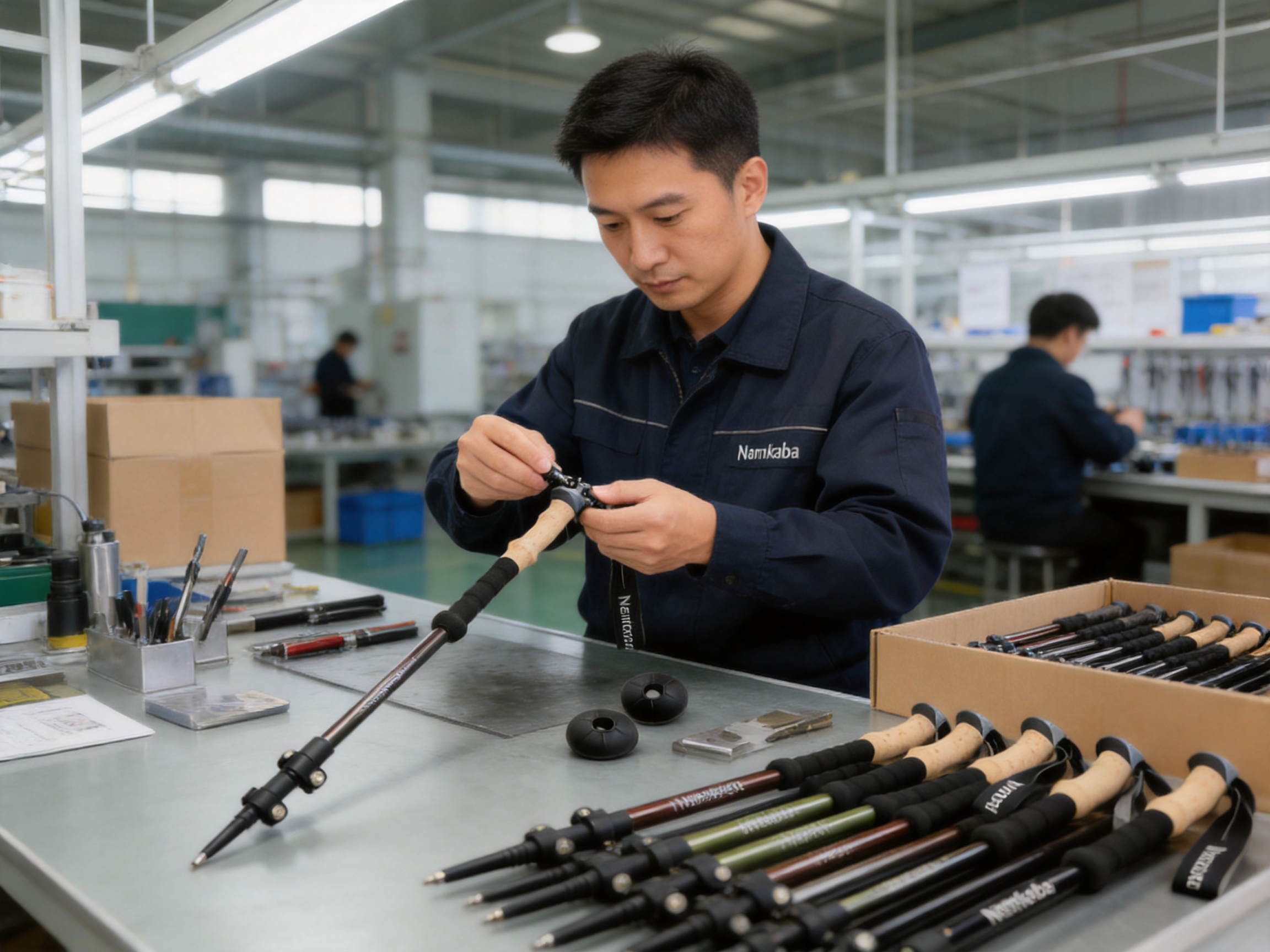
Reliable support can make a significant difference when a walking route moves from a smooth trail to loose gravel, steep slopes, wet ground, or uneven mountain terrain. A well-designed pair of trekking poles gives hikers additional contact points with the ground, supports a more balanced posture, and helps create a steady rhythm during long outdoor activities. Retractable external locking hiking poles combine these practical benefits with adjustable length, compact storage, lightweight construction, and quick operation.
This product is designed for hikers, trekkers, campers, mountaineers, outdoor retailers, and private-label brands looking for dependable walking equipment with broad application potential. Its three-section telescopic structure allows the poles to be adjusted for different users and terrain conditions. The 3LS professional external lock mechanism is positioned for convenient access, while the aluminum alloy shaft provides a practical balance between strength and carrying weight. An EVA foam handle and adjustable wrist strap further improve comfort during extended use.
Unlike basic fixed-length walking sticks, these poles can be modified according to the direction of travel, body height, pack load, and surface conditions. Shorter settings can support uphill movement, while longer settings can provide greater reach and support when descending. When the poles are not needed, the three sections can be retracted for easier transportation in a vehicle, backpack, storage room, or retail package.
The product is also supported by a manufacturing approach centered on real outdoor use. Instead of treating trekking poles as simple catalog items, CragHaven Outdoor develops outdoor equipment around weather, terrain, handling requirements, and long-term use. Its process combines material selection, product sampling, testing, optimization, and scalable manufacturing. This approach enables the poles to serve both direct outdoor users and business customers seeking consistent OEM mountaineering and camping gear.
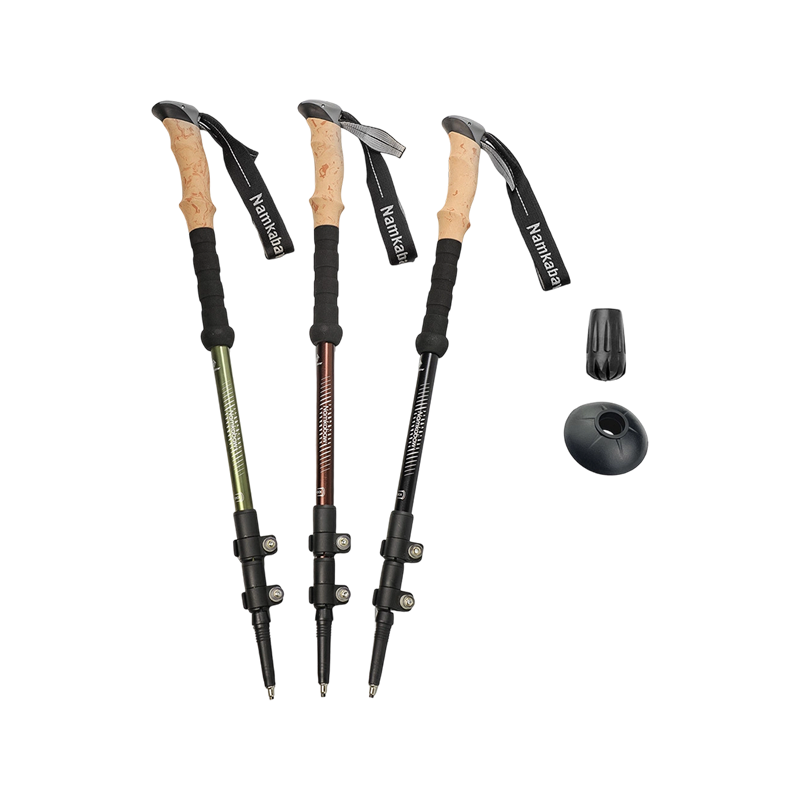
Retractable external locking hiking poles, trekking poles, aluminum alloy hiking sticks
Why Adjustable Trekking Poles Matter on Modern Trails
Hiking routes rarely remain uniform for an entire journey. A single trip may include paved access roads, forest paths, exposed ridgelines, muddy sections, steep climbs, loose stones, and downhill descents. Each surface changes the way a hiker distributes weight and maintains balance. Trekking poles provide two additional points of contact, allowing the upper body to contribute to movement and helping the user respond to changes in the ground.
Fixed-length poles may be suitable for a narrow range of users and conditions, but they offer limited flexibility. A pole that feels appropriate on level ground may be too long on a climb or too short during a descent. Retractable poles solve this issue by allowing the user to make adjustments when conditions change. The ability to change length is particularly valuable for hikers carrying different loads, sharing equipment with family members, or participating in activities that involve multiple types of terrain.
Adjustment also affects posture. When the pole length is suitable, the user can maintain a more natural arm angle and avoid excessive shoulder elevation or awkward wrist positioning. Proper adjustment does not replace good hiking technique, but it can make movement more coordinated and comfortable. During long-distance activity, small improvements in posture and rhythm may contribute to a more efficient overall experience.
The three-section design provides a useful balance between operating range and portability. Each section works as part of a telescopic shaft, allowing the pole to extend for use and retract for storage. This design is suitable for hikers who want equipment that can be carried externally on a backpack, placed inside luggage, or stored with camping equipment without taking up unnecessary space.
Product Structure and Core Functional Advantages
The performance of a trekking pole depends on the cooperation of several components. The shaft must offer structural support without becoming unnecessarily heavy. The lock must hold the selected length securely. The handle must remain comfortable when the user applies pressure for a prolonged period. The wrist strap should provide control without restricting natural hand movement. The lower contact section must remain dependable across common trail surfaces.
This product combines these elements in a practical outdoor configuration. The aluminum alloy shaft is intended to withstand repeated outdoor handling while remaining easier to carry than heavier metal alternatives. The 3LS external locking system provides visible adjustment points, allowing users to open, extend, position, and secure the pole sections with a straightforward operating process. The EVA foam handle is designed to absorb perspiration and provide a non-slip contact surface. The adjustable strap adapts to different hand sizes and carrying preferences.
| Product Element | Primary Function | User or Buyer Benefit |
|---|---|---|
| Three-section telescopic shaft | Allows length adjustment and compact storage | Suitable for changing terrain, transport, and different users |
| 3LS external lock | Secures the selected pole length through an accessible mechanism | Fast operation and visible adjustment status |
| Aluminum alloy construction | Combines structural strength with manageable weight | Practical for repeated hiking and outdoor use |
| EVA foam handle | Provides a comfortable, sweat-absorbent grip | Improves handling comfort during longer walks |
| Adjustable wrist strap | Supports hand control and adapts to different users | Helps reduce the need to grip the handle continuously |
Three-Section Telescopic Design
A three-section telescopic structure is a practical choice for general hiking and trekking equipment. It allows the pole to reach a useful operating length while reducing its packed size. This is important for users who travel by air, car, public transportation, or foot before reaching the trailhead. Retailers also benefit because a more compact product can simplify packaging, warehouse organization, and shipment planning.
During use, the sections can be extended to match the hiker’s height and the demands of the terrain. When the route becomes steeper, the user can make a quick adjustment rather than continuing with an unsuitable setting. When the poles are no longer needed, they can be retracted and placed in a pack or stored with other equipment.
The telescopic format also supports broader market coverage. A single product design can serve a variety of adult users rather than being limited to one fixed height. This can make the product easier for outdoor brands and retailers to position as a versatile item for hiking, camping, trekking, travel, and general trail use.
3LS Professional External Locking Mechanism
The external locking mechanism is one of the product’s main differentiating features. Because the locking components are located outside the shaft sections, users can access them directly during adjustment. The operating process is visible and easy to understand: release the lock, set the desired length, and secure the mechanism before placing pressure on the pole.
Visibility is valuable in changing outdoor conditions. A user can inspect the lock without disassembling the pole or guessing whether an internal mechanism has engaged correctly. If a length change is required during a climb, the pole can be adjusted with fewer interruptions. The external structure also gives retailers an easy product feature to demonstrate in sales materials, packaging, and showroom presentations.
A dependable lock is essential because the pole must remain at the selected length when the user applies downward or lateral pressure. The 3LS system is designed to provide a strong, slip-resistant connection between sections. As with any trekking equipment, users should confirm that each lock is properly closed before applying significant weight and should inspect the mechanism periodically for dirt, damage, or looseness.
How the Poles Improve Hiking Performance
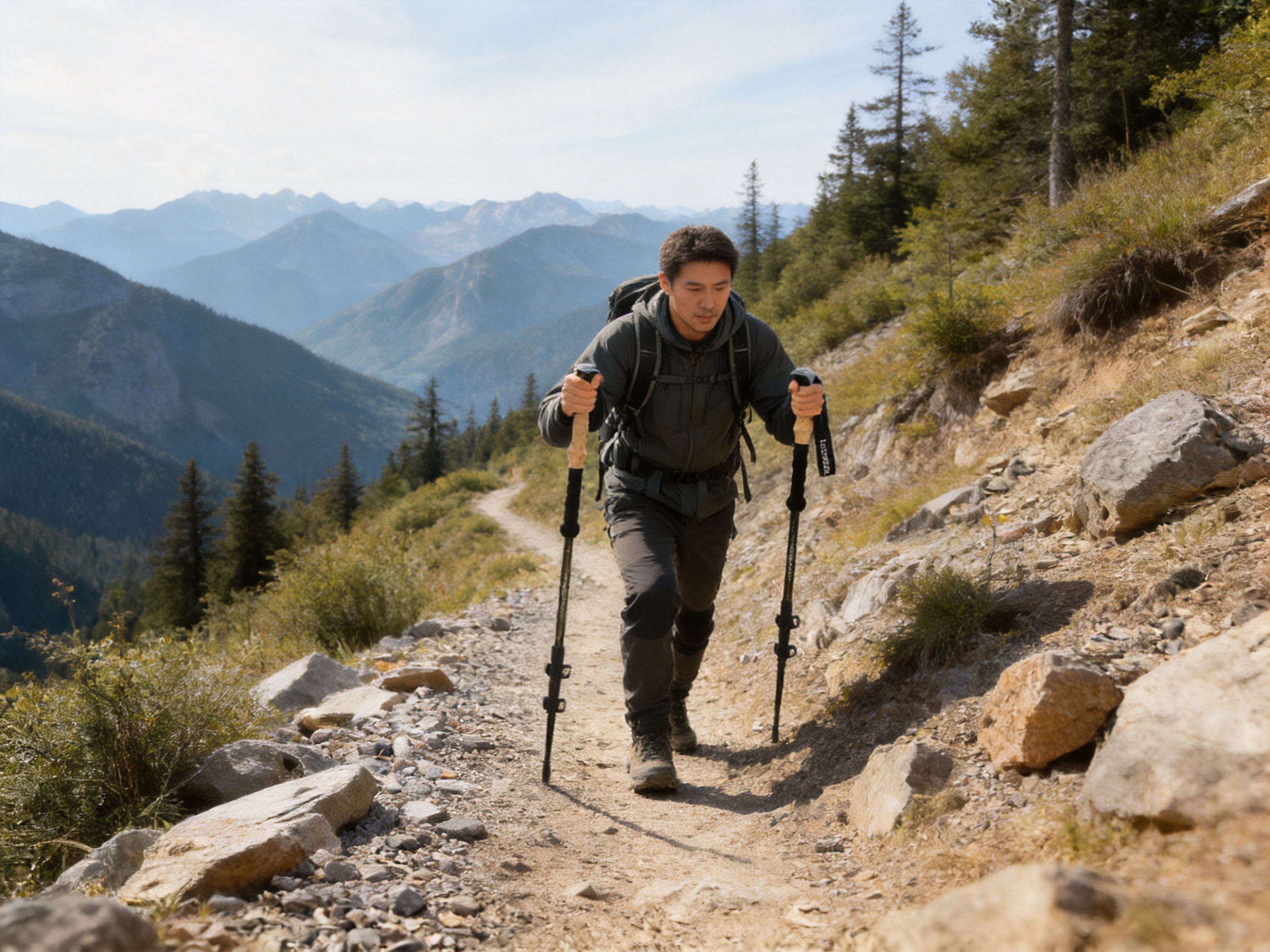
Trekking poles do not eliminate the physical demands of hiking, but they can help distribute movement across more than the lower body. By engaging the arms and shoulders in a coordinated manner, hikers may develop a steadier rhythm over extended distances. The poles can also provide immediate support when the ground is uneven or when a step requires additional balance.
Balance on Uneven Ground
Uneven terrain requires continuous adjustments. Roots, loose stones, mud, narrow paths, and irregular rock surfaces can make it difficult to maintain a stable stride. Additional pole contact points help the user test the ground, widen the base of support, and react to small changes in balance.
When crossing a slope, one pole can be placed on the higher side while the other supports the lower side. On loose gravel, poles can help the user establish a more controlled pace. Near stream crossings or damp trail sections, they may provide confidence while the user evaluates each step. These benefits are especially relevant for hikers carrying a pack, because a heavier load can make sudden balance corrections more difficult.
Support During Uphill Movement
Uphill travel changes the relationship between the user’s body and the ground. The stride becomes shorter, the torso may lean forward, and the legs work harder to raise the body. A shorter pole setting can place the handles in a more comfortable position and allow the arms to contribute to forward movement.
With an appropriate length, the user can plant the poles slightly ahead of the body and coordinate arm movement with each step. This can help maintain a consistent rhythm rather than relying solely on the legs. The poles are particularly useful on long ascents where repeated changes in elevation may increase fatigue.
Support During Downhill Movement
Downhill travel often places additional stress on the knees and requires careful control of forward momentum. Extending the poles can increase reach and provide support ahead of the body. The user can place the tips before stepping down, assess the surface, and move with a more deliberate pattern.
Longer settings may also help maintain a more upright posture on moderate descents. Users should still avoid placing excessive body weight onto the poles or using them as a substitute for careful foot placement. The purpose of the poles is to support movement and balance, not to replace stable walking technique.
Energy Management on Long Routes
Long-distance hiking is influenced by pacing, posture, equipment weight, and terrain. Even small sources of discomfort can become noticeable after several hours. A lightweight aluminum alloy shaft helps reduce the burden of carrying the poles when they are not in use. The adjustable length allows the user to select a position that supports a consistent walking pattern.
The EVA foam handle is also relevant to energy management. A comfortable grip can reduce the tendency to squeeze the handle too tightly. The adjustable wrist strap helps maintain contact with the pole and may allow the hand to relax between planting movements. Together, these details support a more natural relationship between the hand, wrist, forearm, and pole.
Material Selection: Why Aluminum Alloy Is a Practical Choice
Material selection affects the weight, durability, cost, appearance, and application range of trekking poles. Aluminum alloy is widely used in outdoor equipment because it offers a useful balance between strength and portability. It is lighter than many traditional steel structures while providing dependable resistance to common handling demands.
For general mountaineering, hiking, and camping markets, aluminum alloy can be a practical alternative to more specialized materials. It is appropriate for consumers who want reliable equipment without focusing exclusively on minimum weight. It is also suitable for retailers and OEM buyers who need a product that can serve a broad audience at a competitive market position.
| Material Category | General Characteristics | Market Positioning |
|---|---|---|
| Aluminum alloy | Balanced strength, impact resistance, durability, and weight | Versatile choice for general hiking and outdoor use |
| Carbon fiber composite | Very low weight and vibration-reduction potential | Often positioned for weight-focused or premium users |
| Steel | High structural strength but greater weight | Useful where weight is less important than heavy-duty construction |
The selection of aluminum alloy demonstrates a product-development philosophy based on actual usage rather than a single headline specification. Many users need poles that are light enough for long walks, strong enough for variable terrain, and economical enough for frequent use or family purchase. Aluminum alloy can satisfy this combination without making the product unnecessarily specialized.
For business buyers, aluminum alloy also supports stable product positioning. It allows an outdoor brand to present a durable and accessible trekking pole for hiking, camping, travel, and general trail activities. The material can be incorporated into different color, packaging, and private-label programs while maintaining the core functional identity of the product.
Ergonomic Handle and Wrist Strap Design
The contact between the user and the pole is concentrated at the handle and wrist strap. A well-designed shaft cannot deliver a comfortable experience if the grip is hard to control or causes excessive hand fatigue. This product uses an EVA foam handle designed to provide a soft, sweat-absorbent, and non-slip surface.
EVA foam is suitable for repeated contact because it offers cushioning without adding unnecessary bulk. During warm-weather hikes or physically demanding climbs, perspiration can reduce grip confidence. A sweat-absorbent handle helps the user maintain a more secure hold. Its surface also provides a less rigid contact point than bare metal or hard plastic.
The shape and material of the handle influence how the pole is held during different movements. On level terrain, the user may hold the handle lightly and swing the arm naturally. During a steep section, a firmer hold may be required. A comfortable surface supports both patterns without forcing the user to maintain excessive pressure throughout the entire trip.
The adjustable wrist strap is designed to accommodate different hand shapes and preferences. A properly adjusted strap can help the user keep contact with the pole while relaxing the fingers between planting movements. It can also provide additional control when the user is moving over uneven ground. Strap adjustment should be performed before the hike so that the wrist remains comfortable and the hand can move naturally.
These ergonomic features may appear simple, but they demonstrate the importance of designing for real use. Outdoor equipment is handled repeatedly, often in changing temperatures and weather conditions. Comfort, grip, and ease of adjustment should therefore be considered alongside structural performance.
Advantages Over Basic and Competing Trekking Pole Designs
Outdoor products compete not only through raw specifications but also through usability, reliability, portability, and suitability for different customers. This product offers several advantages compared with basic fixed-length sticks, poorly integrated telescopic poles, and heavier conventional designs.
Compared with Fixed-Length Walking Sticks
Fixed-length sticks are simple and may be effective for a specific user and route. However, they cannot adapt to changes in terrain or shared use. A retractable pole gives the user more control over length, which is valuable on climbs, descents, flat trails, and routes where the pole must be stored temporarily.
The adjustable format also increases the range of potential customers. A retailer can offer the product to users with different heights, while a family can share the poles more easily than fixed-length equipment. For travel, the retractable design provides a clear advantage because the poles can be made more compact before storage.
Compared with Internal Locking Systems
Internal locking systems can create a clean exterior appearance, but their operating condition may be less visible to the user. An external lock provides a direct visual and tactile interface. This can make adjustment more intuitive, especially for beginners or users wearing gloves.
External components are also easier to demonstrate during product education. A salesperson, distributor, or online retailer can explain the locking process clearly through images and product copy. Buyers can understand where the lock is located and how the sections are secured. This transparency can support customer confidence and reduce confusion during first use.
Compared with Heavier Metal Poles
Heavy poles may offer a sense of solidity, but additional weight can become inconvenient during long hikes or when the poles are attached to a backpack. Aluminum alloy provides a more balanced solution for users who want durability without carrying unnecessary mass.
The practical value of weight reduction is not limited to active use. Lighter equipment is easier to pack, transport, display, and ship. For outdoor brands, this can improve the product’s suitability for travel-oriented consumers and reduce the perception that the poles are specialized only for demanding mountaineering.
Compared with Basic Low-Cost Telescopic Products
Some low-cost telescopic products focus primarily on price and may provide limited attention to lock visibility, handle comfort, material consistency, or long-term product optimization. A more complete design considers how the shaft, external lock, handle, strap, and contact point work together.
The product described here is developed around a professional external lock, aerospace-grade aluminum alloy shaft, EVA foam handle, adjustable strap, and three-section structure. These elements create a more coherent product proposition. The result is not simply a pole that extends and retracts, but a coordinated piece of outdoor equipment intended for repeated use.
Manufacturing Process and Product Development Strengths
Manufacturing quality begins before mass production. It starts with understanding how the product will be used, identifying the forces and environmental conditions involved, selecting appropriate materials, and validating the design through repeated samples and tests. CragHaven Outdoor follows this process for mountaineering, hiking, and camping equipment.
Purpose-Driven Product Development
The company’s product development approach begins with use scenarios rather than catalog appearance. Trekking poles are expected to function on slopes, forest paths, rocky trails, changing weather, and long-distance routes. These situations influence the choice of shaft material, locking structure, grip material, strap design, and telescopic configuration.
A purpose-driven process helps prevent features from being added only for visual appeal. Each component should contribute to portability, stability, comfort, or operational reliability. For this product, the external lock is not merely a decorative detail; it addresses the need for accessible adjustment. The aluminum alloy shaft is not selected only for appearance; it supports the balance between durability and weight. The EVA handle is connected directly to comfort and control.
Material Integrity and Supplier Coordination
Material integrity means that product performance is considered from the raw material stage through assembly and final inspection. Aluminum alloy shafts must be formed and finished consistently. EVA foam components need stable dimensions and suitable surface quality. Locking components must fit correctly with the corresponding shaft sections. Wrist straps and other accessories must meet the intended size and handling requirements.
Coordinating these elements requires communication among product designers, material suppliers, production teams, and quality personnel. A company that participates in both design and manufacturing can respond more effectively when adjustments are needed. Instead of treating the factory as a separate step after design, CragHaven Outdoor integrates product understanding with manufacturing execution.
Sampling, Testing, and Optimization
Sampling is an essential stage for discovering issues before larger production runs. A sample can reveal whether the lock is easy to operate, whether the sections move smoothly, whether the handle is comfortable, and whether the packed size matches the intended packaging. Feedback from samples can then guide structural or material adjustments.
Testing and optimization continue beyond the first sample. Outdoor products may be handled repeatedly, exposed to changing temperatures, packed under pressure, and adjusted many times. The product-development team therefore evaluates practical concerns such as lock engagement, section alignment, component fit, surface finish, handle grip, strap adjustment, and overall portability.
This approach reduces uncertainty for buyers. Retailers and private-label customers need products that are not only attractive in a quotation but also consistent when received, displayed, sold, and used. A repeatable development process improves the possibility of stable production and predictable product performance.
Engineering Discipline in Production
Engineering discipline involves clear specifications, controlled processes, careful assembly, and attention to small details. Trekking poles contain multiple interacting components. If one section is misaligned, if a locking part is not fitted correctly, or if an accessory is assembled inconsistently, the user experience may be affected.
For this reason, production should include checks on shaft dimensions, telescopic movement, lock operation, handle installation, strap attachment, surface condition, and packaging completeness. Consistent assembly is particularly important for OEM programs, where a brand expects repeated orders to maintain the same product identity.
CragHaven Outdoor’s manufacturing philosophy emphasizes stable, replicable, and scalable products. This is valuable for global outdoor markets, where buyers may require different order quantities, packaging formats, color options, or branding treatments while maintaining the same fundamental product structure.
Quality Considerations for Outdoor Retailers and OEM Buyers
Retailers and outdoor brands evaluate trekking poles differently from individual consumers. A consumer may focus on grip comfort and adjustment. A retailer must also consider packaging, product education, return risk, market positioning, and repeat availability. An OEM buyer may additionally require branding, documentation, color coordination, and production consistency.
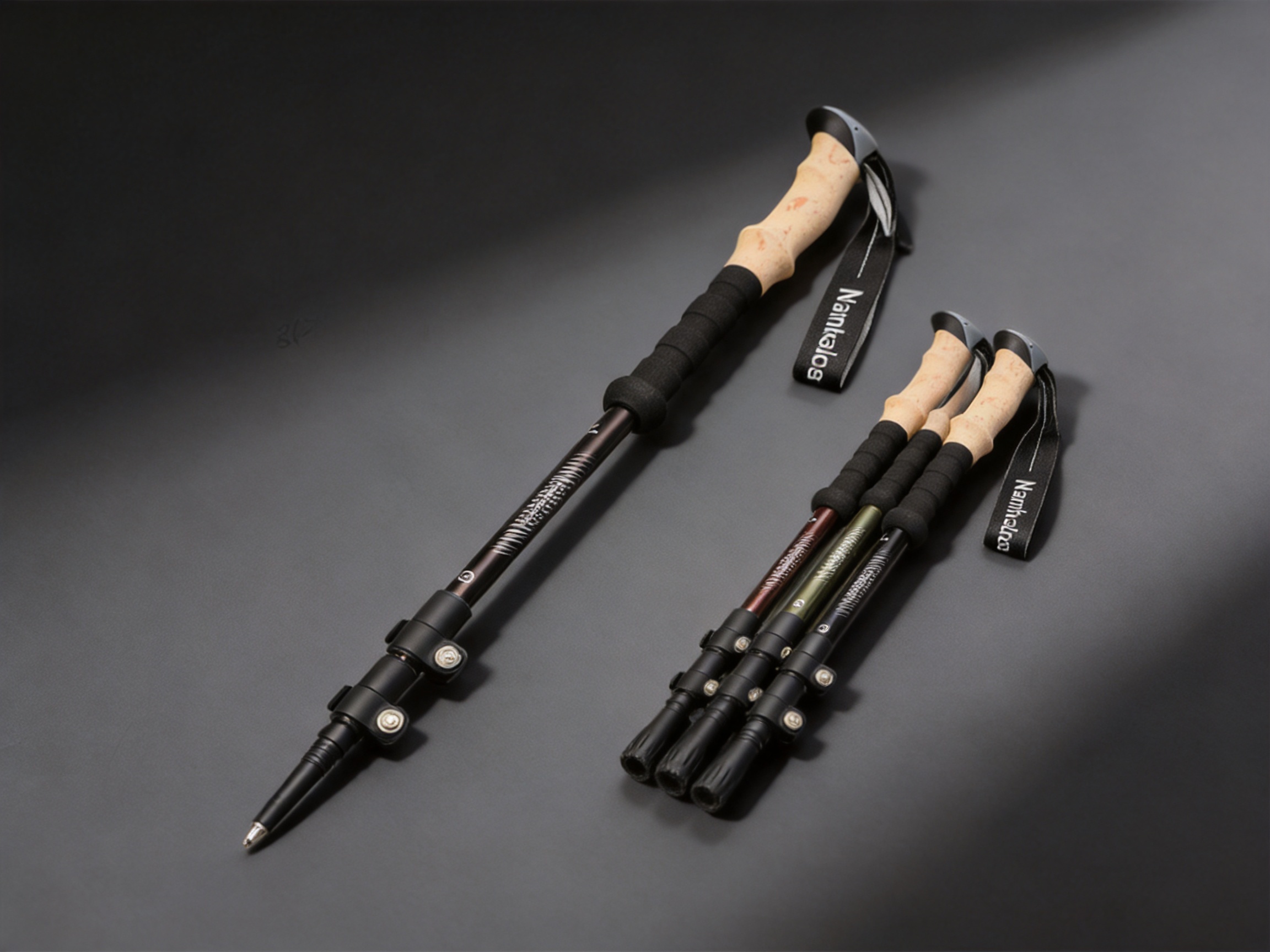
The product’s clear functional structure helps support these requirements. Its key selling points are easy to explain: a three-section retractable design, a visible 3LS external lock, an aluminum alloy shaft, an EVA foam handle, and an adjustable wrist strap. These features can be communicated through packaging, product pages, instruction materials, and sales training.
| Buyer Concern | Relevant Product Response | Commercial Value |
|---|---|---|
| Ease of product explanation | Visible external lock and straightforward telescopic structure | Supports clear retail demonstrations and product education |
| Broad customer suitability | Adjustable length and comfortable grip | Applicable to different heights, routes, and experience levels |
| Transportation and storage | Three-section retractable design | Convenient for travel, packaging, warehousing, and display |
| Product durability positioning | Aluminum alloy shaft and integrated component design | Supports repeated-use outdoor equipment categories |
| Private-label development | OEM-oriented manufacturing and product optimization | Allows brands to build a consistent product line |
Packaging should explain correct adjustment and lock use in clear language. It should also remind users to inspect the pole before every trip and avoid exceeding the intended application. Clear instructions can improve customer satisfaction and help reduce misuse. For wholesale buyers, instruction cards, labels, and packaging artwork can be coordinated as part of the broader OEM process.
Product consistency is another important commercial factor. A trekking pole that performs well in one shipment but varies in the next can create customer complaints and damage brand trust. Controlled sampling, testing, and production communication help support more reliable repeat orders.
Recommended Applications and User Scenarios
These retractable external locking hiking poles are suitable for a wide range of outdoor activities. They can be used on day hikes, multi-day treks, mountain trails, forest paths, camping trips, travel routes, and general recreational walks. Their adjustable design makes them especially useful when the route contains both level and steep sections.
Mountain Hiking
Mountain routes often combine steep climbs, uneven descents, exposed surfaces, and rapidly changing weather. The external lock allows users to modify pole length as the gradient changes. The aluminum alloy structure helps keep the equipment manageable when the hiker is already carrying food, water, clothing, and other supplies.
Long-Distance Trekking
On extended routes, comfort and equipment efficiency become increasingly important. The EVA handle and adjustable strap support repeated use, while the retractable design allows the poles to be stored during breaks or on sections where hand-free movement is preferred. The poles can then be extended again when the terrain becomes more demanding.
Camping and Travel
Campers often carry equipment between parking areas, campsites, trailheads, and nearby viewpoints. Compact telescopic poles are easier to include with other camping supplies. They can also be useful during travel because they occupy less space than fixed-length walking sticks when packed appropriately.
Recreational and Beginner Hiking
New hikers may appreciate the stability and confidence provided by additional contact points. The visible external lock can be easier to understand than a concealed mechanism, while the adjustable length allows the poles to be configured gradually as the user becomes more familiar with trekking technique.
Beginners should learn to use the poles as balance and rhythm aids rather than placing their full weight on them. The correct technique includes maintaining a relaxed grip, using the wrist strap appropriately, planting the poles in stable locations, and adapting the length to the terrain.
Practical Adjustment and Use Guidance
Before beginning a hike, users should open the external locks, extend the sections to the desired length, and close each lock securely. The pole should be checked by applying moderate hand pressure before walking. If a section moves unexpectedly, the lock should be inspected and adjusted before use.
On relatively level ground, many users prefer a setting that allows the elbow to remain comfortably bent. On an uphill section, shortening the poles can improve arm positioning. On a downhill section, extending them may provide greater reach. These are general guidelines, and individual preferences may vary according to height, footwear, pack weight, and trail conditions.
The wrist strap should be adjusted so that the hand can enter and exit naturally without feeling restricted. Users should avoid tightening the strap excessively. A comfortable strap supports control while allowing normal circulation and movement.
After use, dirt and moisture should be removed from the shaft and locking areas. The poles should be allowed to dry before being stored for a long period. Users should avoid forcing sections that are obstructed by mud or debris. Regular inspection of the shaft, locks, handle, strap, and lower contact area can help identify wear before the next trip.
Why CragHaven Outdoor Is a Suitable Manufacturing Partner
CragHaven Outdoor is based in Hangzhou, China, and serves as both an outdoor brand and a cross-border manufacturing partner. Its focus includes mountaineering, hiking, and camping scenarios. The company aims to supply functional and dependable products for global markets rather than treating outdoor gear as a collection of disconnected catalog items.
The company’s philosophy is built around three principles: purpose-driven design, material integrity, and engineering discipline. These principles are directly relevant to trekking poles. A product intended for mountain trails must be designed around real terrain. The selected materials must support repeated outdoor use. The production process must be controlled well enough to deliver stable performance across samples and larger orders.
CragHaven Outdoor also emphasizes long-term cooperation. For importers, retailers, and private-label companies, a manufacturing partnership is not limited to a single shipment. Buyers may need future product revisions, packaging updates, new colorways, coordinated accessory lines, or expanded camping and mountaineering categories. A partner involved in both design and manufacturing can provide more useful communication than a sourcing channel focused only on factory quotations.
The company’s location in China provides access to a mature manufacturing system and an established outdoor equipment supply chain. Combined with repeated sampling and testing, this can support product development that is efficient, scalable, and suitable for international business requirements.
For buyers evaluating this trekking pole model, the main value is the combination of product functionality and manufacturing support. The poles offer adjustable length, external locking, aluminum alloy construction, ergonomic handling, and compact storage. The manufacturer adds experience in outdoor product development, OEM coordination, material selection, testing, and production optimization.
Conclusion
Retractable external locking hiking poles provide a practical solution for hikers who need adaptable support across changing terrain. The three-section telescopic design makes the poles easier to carry and store, while the 3LS external locking mechanism enables visible and convenient adjustment. The aluminum alloy shaft offers a balanced combination of weight and structural reliability. An EVA foam handle and adjustable wrist strap improve contact comfort during extended outdoor activity.
Compared with fixed-length walking sticks, these poles provide greater flexibility. Compared with less visible internal systems, the external lock is easier to operate and explain. Compared with heavier metal designs, the aluminum alloy construction is more suitable for users who value portability. Together, these features create a versatile product for hiking, trekking, mountaineering, camping, travel, and general outdoor recreation.
The product’s advantages are strengthened by the manufacturer’s development process. CragHaven Outdoor connects real usage scenarios with material selection, sampling, testing, optimization, and scalable manufacturing. This purpose-driven approach helps create outdoor equipment that is designed for weather, terrain, repeated handling, and long-term value.
For outdoor brands, wholesalers, retailers, and OEM buyers, the product offers a clear market proposition: reliable adjustable support in a compact and comfortable format, backed by a manufacturing partner focused on practical engineering and stable cooperation.
Questions and Answers
1. What are these retractable external locking hiking poles designed for?
They are designed to provide additional balance, support, and movement control during hiking, trekking, mountain walking, camping trips, and other outdoor activities. Their adjustable length allows users to adapt the poles to different terrain conditions and personal preferences.
2. What is the benefit of the 3LS external locking mechanism?
The external lock provides a visible and accessible way to adjust and secure the pole sections. Users can see the locking components, operate them directly, and check whether the sections are secured before use.
3. Why is aluminum alloy used for the pole shaft?
Aluminum alloy offers a practical balance between strength, durability, impact resistance, and weight. It is suitable for general hiking and mountain applications where users want dependable equipment without carrying unnecessarily heavy poles.
4. Can the pole length be changed for uphill and downhill hiking?
Yes. Users can generally select shorter settings for uphill movement and longer settings for downhill sections. The correct setting depends on the user’s height, posture, terrain, footwear, and personal comfort.
5. Are the poles suitable for beginners?
Yes. The adjustable structure and visible external lock are relatively easy to understand. Beginners should learn how to adjust the length, close each lock securely, use the wrist strap correctly, and plant the poles on stable surfaces.
6. What is the purpose of the EVA foam handle?
The EVA foam handle provides a comfortable contact surface that is designed to absorb perspiration and improve grip control. It can help reduce discomfort during long walks and repeated pole use.
7. How does the wrist strap improve handling?
The adjustable wrist strap helps maintain contact with the pole and can reduce the need to grip the handle tightly at all times. It should be adjusted comfortably so that the hand can move naturally.
8. How compact are the poles when retracted?
The three-section telescopic structure allows the poles to be shortened for storage and transportation. The exact packed dimensions depend on the product configuration and adjustment setting, so buyers should confirm the final specification for a particular order.
9. What should users inspect before hiking?
Users should check that the shaft sections move correctly, the external locks close securely, the handle is firmly attached, the wrist strap is in good condition, and the lower contact area is not damaged or obstructed.
10. Can the poles be used in wet weather?
They are intended for outdoor hiking and changing trail conditions, but users should remove dirt and moisture after use and allow the poles to dry before long-term storage. They should also follow the care instructions supplied with the product.
11. Are these poles appropriate for OEM and private-label programs?
The product is suitable for discussion as part of an OEM or private-label outdoor equipment program. Buyers can communicate their requirements for branding, packaging, color coordination, order quantity, and documentation during product development.
12. What makes the manufacturer different from a basic sourcing supplier?
CragHaven Outdoor participates in product design, material selection, sampling, testing, optimization, and manufacturing coordination. Its approach is based on real outdoor usage scenarios and long-term product performance rather than only catalog sourcing.
13. Can one product serve different customer groups?
Yes. The adjustable length and three-section design make the poles suitable for a broad range of adult users and activities. They can be positioned for day hikers, campers, travelers, recreational trekkers, and outdoor retailers seeking a versatile product.
14. Should hikers place their full body weight on the poles?
No. Trekking poles are intended to provide balance, rhythm, and additional support. Users should maintain careful foot placement and avoid treating the poles as a substitute for stable ground or specialized climbing equipment.
References
1. Outdoor Equipment Design Principles: Material Selection, Ergonomics, and Field Use.
2. Trekking Pole Adjustment and Walking Technique Guidelines.
3. Aluminum Alloy Applications in Portable Outdoor Equipment.
4. Ergonomic Handle and Wrist Strap Considerations for Hiking Accessories.
5. Product Development Methods for Mountaineering, Hiking, and Camping Gear.
6. Quality Control and Sampling Practices for Telescopic Outdoor Products.
7. International Outdoor Retail Product Positioning and OEM Manufacturing Practices.
8. Practical Field Considerations for Hiking on Inclines, Descents, and Uneven Terrain.
Product: Retractable external locking hiking poles, trekking poles, aluminum alloy hiking sticks



- Phone: +86-15968800379
- E-mail: [email protected]
- Address: Room 1002, Huishang Building, Gongshu District, Hangzhou City, Zhejiang Province.
Copyright © CragHaven Outdoor All Rights Reserved. Outdoor Gear Manufacturers Wholesale Mountaineering Camping Gear Suppliers
