

 English
 Deutsch
 Español
 Français


Outdoor Camping Tent Steel Stakes: A Durable 25 cm Anchoring Solution for Sand, Grass, and Wind
Content
- 1 Introduction
- 2 1. The Role of Tent Stakes in a Complete Outdoor Shelter System
- 3 2. Product Construction and Functional Design
- 4 3. Performance Compared with Common Alternatives
- 5 4. Terrain-Specific Applications
- 6 5. Manufacturing Process and Quality Strengths
- 7 6. Advantages for Outdoor Brands, Distributors, and Retailers
- 8 7. Correct Use, Setup, and Maintenance
- 9 8. Selecting the Right Quantity and Configuration
- 10 9. Safety and Environmental Considerations
- 11 10. Why Manufacturing Experience Matters in Small Outdoor Accessories
- 12 11. Recommended Product Positioning
- 13 12. Frequently Asked Questions
- 13.1 What outdoor activities are these steel stakes suitable for?
- 13.2 Why choose a 25 cm stake instead of a shorter peg?
- 13.3 Are the stakes suitable for beach camping?
- 13.4 Are these stakes better than plastic pegs?
- 13.5 Can the stakes be used with tarpaulins?
- 13.6 Does the galvanized coating prevent all rust?
- 13.7 What is the purpose of the glow-in-the-dark head?
- 13.8 Can the stakes be used in rocky ground?
- 13.9 How should the stakes be removed?
- 13.10 Does CragHaven Outdoor support OEM or customized orders?
- 13.11 What should wholesale buyers evaluate before placing an order?
- 14 Conclusion
- 15 References
- 16 Product: Outdoor camping tent with 25cm ground stakes, beach tarpaulin, and windproof steel studs
Introduction
A tent is only as stable as its connection with the ground. Even when a shelter uses waterproof fabric, reinforced seams, and a well-designed frame, weak anchoring points can reduce its performance in changing weather. Wind can pull at the flysheet, moisture can soften the ground, and repeated movement can loosen ordinary pegs. For campers, hikers, mountaineers, outdoor retailers, and equipment brands, the tent stake is therefore far more than a small accessory. It is an essential part of the complete shelter system.
This outdoor camping tent steel stake is designed to provide dependable anchoring for tents, tarpaulins, guy lines, beach shelters, and other temporary outdoor structures. With a 25 cm length, high-carbon steel construction, hardening treatment, galvanized surface protection, a glow-in-the-dark head, and universal hooks and knots, it combines strength with practical handling. Its design is intended for use across common outdoor environments, including grassy campsites, sandy beaches, recreational camping areas, hiking routes, and selected hard-ground applications.
Compared with many short plastic pegs or lightweight stakes made from less durable materials, this product offers a stronger and more reusable anchoring option. The steel body is engineered to resist bending during insertion and removal, while the galvanized surface helps protect against corrosion caused by moisture and outdoor exposure. The 25 cm length provides deeper penetration than many compact pegs, improving contact with the ground and helping distribute pulling forces from tent lines.
The product is also supported by CragHaven Outdoor, a Hangzhou-based outdoor brand and cross-border manufacturing partner focused on mountaineering, hiking, camping, and related equipment. The company combines outdoor-use knowledge with product development, sampling, manufacturing coordination, and quality management. Its approach is based on designing for real weather, terrain, and repeated use rather than producing accessories solely for catalogue appearance.
This article examines the product’s structure, material benefits, terrain performance, manufacturing strengths, practical applications, maintenance requirements, purchasing considerations, and advantages over ordinary alternatives. It also explains why a reliable steel stake can contribute to better camping safety, more efficient setup, and improved long-term value for both individual users and professional buyers.
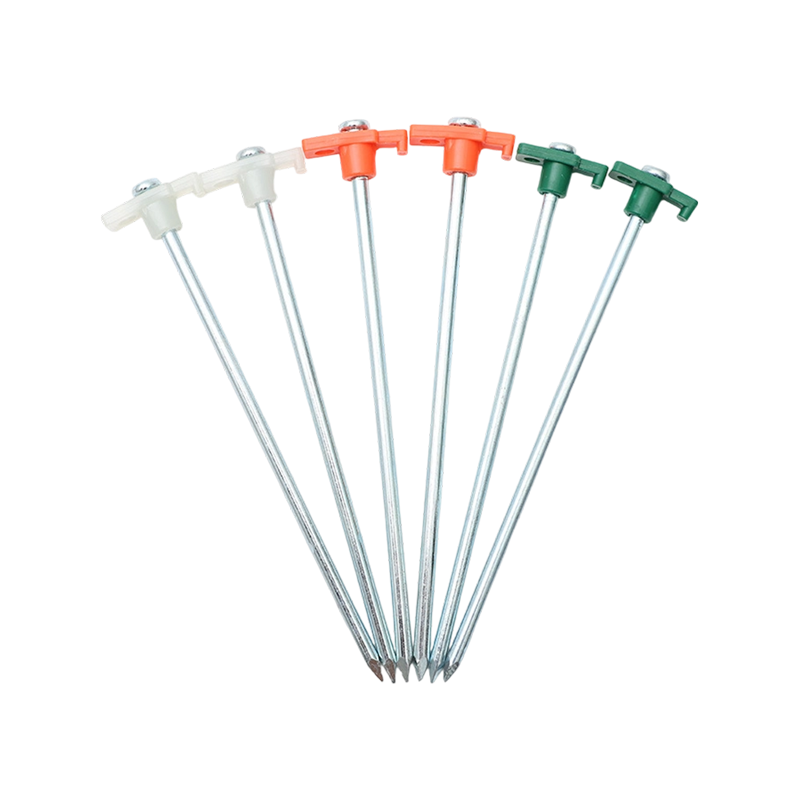
Outdoor camping tent with 25cm ground stakes, beach tarpaulin, and windproof steel studs
1. The Role of Tent Stakes in a Complete Outdoor Shelter System
Tent stakes establish the physical connection between a shelter and the ground. They hold down corners, stabilize guy lines, reduce movement in the fabric, and help maintain the intended shape of the tent. When wind pressure increases, the stake transfers the pulling force from the tent line into the soil. If the stake is too short, too weak, or poorly suited to the terrain, the line can loosen or the stake can rotate and pull out.
This connection is especially important because wind does not apply a constant, gentle force. Gusts create sudden changes in tension. A tent may also move as campers enter, exit, adjust doors, or handle equipment. Rain can soften soil, while dry weather may make the ground hard and difficult to penetrate. At the beach, the loose structure of sand can allow ordinary pegs to shift easily. A properly selected stake must therefore combine sufficient length, material strength, and a functional head or hook design.
Many users focus on tent fabric, waterproof ratings, pole construction, and ventilation. These features are important, but they cannot perform as intended if the anchoring system is unreliable. A high-quality flysheet still needs to remain tensioned. A frame still needs to be supported by a stable base. Guy lines still need secure connection points. The stake is a small component, yet its failure can affect the performance of the entire shelter.
The 25 cm steel stake addresses this issue by offering a deeper anchoring profile than many short general-purpose pegs. Its length provides more surface contact with soil and can help maintain grip when the line is pulled at a suitable angle. The product is not intended to eliminate the need for correct installation. Users must still select appropriate locations, avoid unstable ground, and adjust the guy-line angle according to wind direction. However, the stake provides a stronger foundation for proper setup.
Why length matters
Stake length affects how much material is embedded in the ground. A very short peg may be convenient to pack, but it can have limited holding power in loose soil or under changing loads. A 25 cm shaft offers a practical middle ground for many camping applications. It is long enough to provide meaningful penetration while remaining compact enough for transport in a tent accessory bag, vehicle kit, or hiking equipment pack.
In grass and ordinary soil, the longer shaft can pass through the surface layer and reach more stable material beneath. In sand, the extra length increases the amount of stake surrounded by sand, although installation technique and stake placement remain important. On harder ground, users should avoid excessive hammering force and choose a suitable insertion point rather than forcing the stake into rock or highly compacted surfaces.
Why material matters
Material determines how a stake responds to impact, pulling force, twisting, and repeated use. Plastic pegs may be light and economical, but some can become brittle in cold weather, deform under strong force, or break when driven into firm ground. Softer metal stakes may also bend if struck at an angle or pulled from compacted soil.
High-carbon steel provides a stronger base for a durable tent accessory. When combined with hardening treatment and appropriate forming processes, it can provide improved resistance to bending and deformation. This makes the product suitable for users who expect to set up tents regularly and want stakes that can be used across multiple trips instead of being treated as disposable components.
2. Product Construction and Functional Design
The outdoor camping tent steel stake is designed around several practical features: a 25 cm length, high-carbon steel material, hardened construction, galvanized protection, a visible glow-in-the-dark head, and universal hooks and knots. Each feature contributes to the product’s usefulness in a different way.
| Feature | Practical benefit | Typical value in outdoor use |
|---|---|---|
| 25 cm length | Provides deeper ground penetration | Supports more stable anchoring in grass, soil, and selected sandy conditions |
| High-carbon steel | Offers a strong and durable material base | Helps resist bending during repeated installation and removal |
| Hardening treatment | Improves hardness and structural resistance | Supports more reliable performance when the ground is firm |
| Galvanized surface | Helps protect the steel against corrosion | Improves suitability for damp campsites and repeated outdoor use |
| Glow-in-the-dark head | Improves visibility after dark | Helps users locate stakes and reduce the risk of tripping around the tent |
| Universal hooks and knots | Supports connection with different lines and tarp systems | Allows flexible use with tents, guy ropes, tarpaulins, and beach shelters |
High-carbon steel body
The core body is made from high-carbon steel selected for strength and durability. The material is appropriate for a product that may be pushed, hammered, loaded, removed, packed, and reused many times. Its strength allows the stake to maintain its shape under normal outdoor forces and helps reduce the risk of deformation when compared with less robust alternatives.
High-carbon steel is not selected simply because it sounds stronger. Its performance depends on material consistency, forming accuracy, heat treatment, surface finishing, and inspection. A stake with a strong material but poor geometry may still bend or fail. For that reason, manufacturing control is as important as the raw material specification.
Hardening treatment
The hardening process is intended to improve the hardness and bending resistance of the steel. During production, the material can be shaped and treated according to the required product geometry. Proper process control helps ensure that the finished stake is hard enough for demanding use while avoiding unnecessary brittleness.
A balanced treatment is important. Excessive hardness without sufficient toughness can make a metal component more vulnerable to cracking or impact damage. Insufficient hardness can allow it to deform during insertion. The manufacturing objective is to achieve a practical balance between strength, toughness, and repeatable performance. Sampling, testing, and process adjustment form an important part of this balance.
Galvanized corrosion protection
Outdoor equipment is often exposed to rain, wet grass, damp soil, condensation, salt-containing beach environments, and storage moisture. Bare steel can develop surface rust when exposed to these conditions. Galvanization provides a protective surface layer that helps slow corrosion and supports a longer usable life.
The galvanized finish also contributes to easier product maintenance. After use, the stakes can be cleaned and dried before storage. Galvanization does not make the product immune to corrosion, particularly if the surface is deeply scratched or exposed to saltwater for long periods. Nevertheless, it provides a valuable layer of protection for normal camping conditions and repeated outdoor handling.
Glow-in-the-dark head
Camping equipment is frequently used in low-light conditions. Users may arrive at a campsite after sunset, adjust guy lines during the night, or leave the shelter early in the morning. A stake head that is easier to identify in the dark can improve convenience and help reduce accidental contact.
The glow-in-the-dark head is a practical detail rather than a decorative feature. It helps users identify the general position of the stake and the nearby guy line after the material has absorbed sufficient light. Visibility can be affected by weather, exposure time, and surrounding conditions, so users should still arrange lines carefully and use additional lighting when necessary. Even so, the feature adds value to an otherwise easy-to-overlook component.
Universal connection design
The hooks and knots are designed to accommodate common tent lines, tarp loops, guy ropes, and related accessories. A universal connection approach allows the same stake to support more than one type of shelter. This is useful for campers who use different tents during different seasons, retailers offering multipurpose accessories, and families who need stakes for tarpaulins or outdoor shade structures.
Compatibility is especially valuable for replacement products. A user does not always want a stake that works only with one proprietary tent system. A broadly useful design can be added to an existing kit without requiring a complete change of ropes or shelter hardware.
3. Performance Compared with Common Alternatives
Outdoor buyers often compare steel stakes with plastic pegs, thin wire pins, short aluminum pegs, and large specialized sand anchors. Each type has a place in outdoor equipment, but the best option depends on the terrain, expected wind, shelter size, and frequency of use. The 25 cm hardened steel stake is positioned as a durable general-purpose solution for users who want stronger performance than basic plastic or short pegs.
Compared with ordinary plastic pegs
Plastic pegs are popular because they are inexpensive, lightweight, and easy to manufacture. They may be adequate for calm-weather use on soft grass. However, some plastic designs can bend, split, or become brittle when exposed to impact, cold conditions, or repeated stress. Their holding performance can also vary widely according to shape and ground type.
The steel stake offers higher resistance to impact and bending than many basic plastic options. It can be used repeatedly and is less likely to be damaged when the ground is firmer, provided the user selects an appropriate insertion point and avoids striking it recklessly against rock. For frequent campers and outdoor brands seeking a more durable accessory, steel provides a stronger value proposition.
Compared with short pegs
Short pegs are convenient for compact kits, but they may have limited penetration and reduced holding power in loose or changing ground. When wind pulls on a guy line, a short peg can tilt more easily or work its way out. The 25 cm length increases the embedded portion of the product and can improve stability in suitable soil.
Longer does not automatically mean better in every condition. A stake must still match the terrain, and a long steel peg is not a substitute for a specialized anchor in extremely loose sand or a rock anchor in solid stone. Nevertheless, 25 cm is a practical length for a broad range of recreational camping and outdoor shelter applications.
Compared with thin wire stakes
Wire stakes are light and may be useful for ultralight applications. Their lower material volume, however, can make them more vulnerable to bending during installation or removal. They may also be difficult to see in low light and less comfortable to handle. The steel stake’s more substantial body and visible head offer advantages for users who prioritize repeated use, strength, and handling convenience over minimum weight.
Compared with lightweight aluminum stakes
Aluminum stakes can provide a good balance of low weight and performance, especially for backpacking. However, some lightweight aluminum profiles may deform when driven into hard soil or twisted during removal. A high-carbon steel stake is generally more focused on strength and durability than extreme weight reduction.
This product is therefore suitable for users who want a robust accessory for family camping, beach tarpaulins, vehicle-based travel, regular hiking camps, and general outdoor use. Long-distance backpackers may still compare total pack weight carefully, but many users will consider the increased durability worthwhile.
4. Terrain-Specific Applications
Different ground conditions create different anchoring challenges. A good stake is not used identically everywhere. Installation angle, insertion depth, guy-line tension, and placement should be adjusted according to the surface. The following applications explain where the product can provide practical value.
Grass and ordinary soil
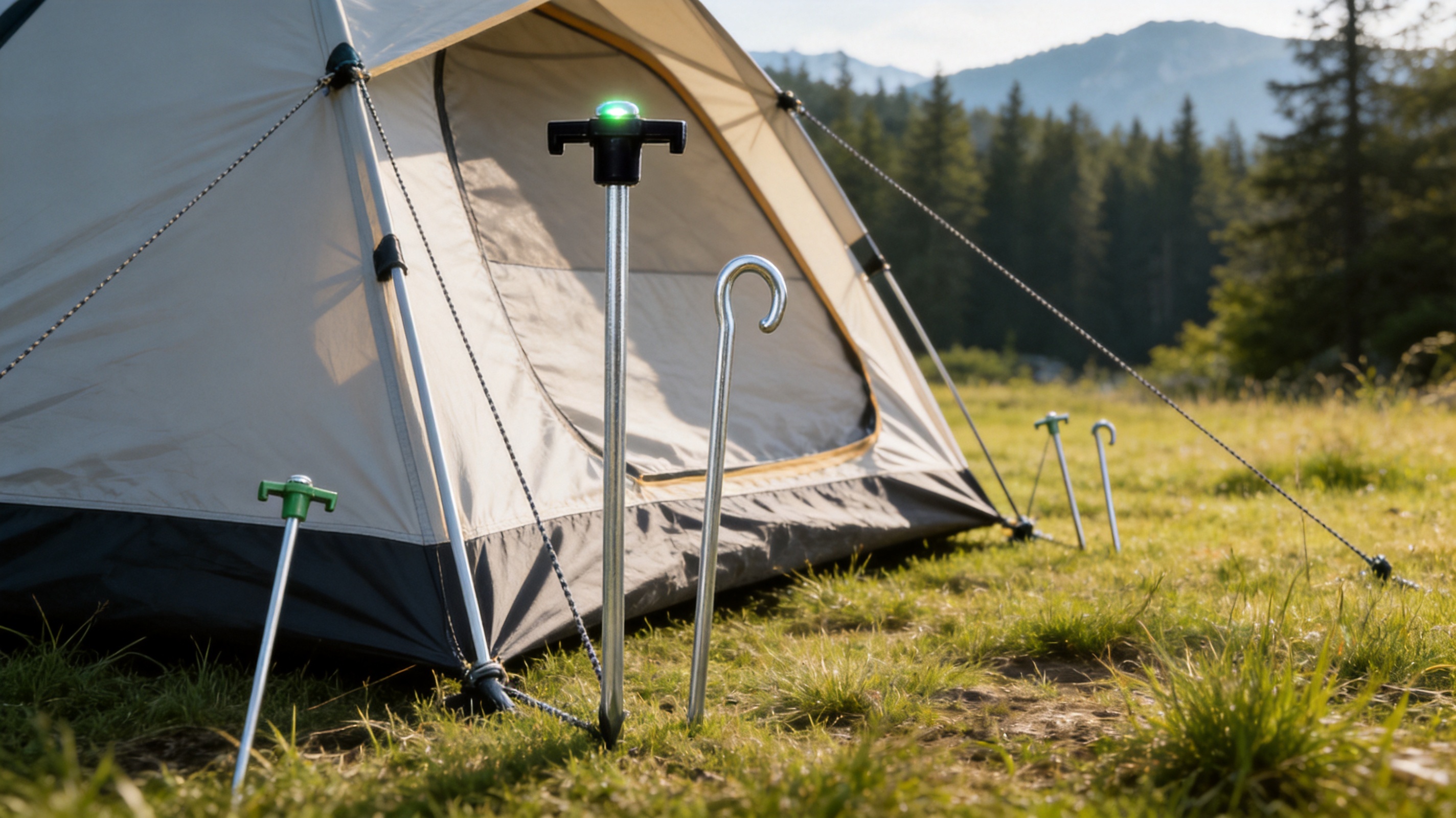
Grassy campsites are among the most common locations for tents. The soil may be soft and easy to penetrate, but the surface can also be shallow, dry, root-filled, or loosened by previous use. The 25 cm shaft can pass through the turf layer and reach deeper soil, improving the stake’s contact with the ground.
For best results, users should insert the stake at an angle away from the tent, with the head positioned in the direction of the expected pull. The guy line should be tensioned gradually rather than pulled sharply. If the soil is very loose, the stake may need to be placed farther from the tent or supported by a secondary anchoring method.
Beach and sandy environments
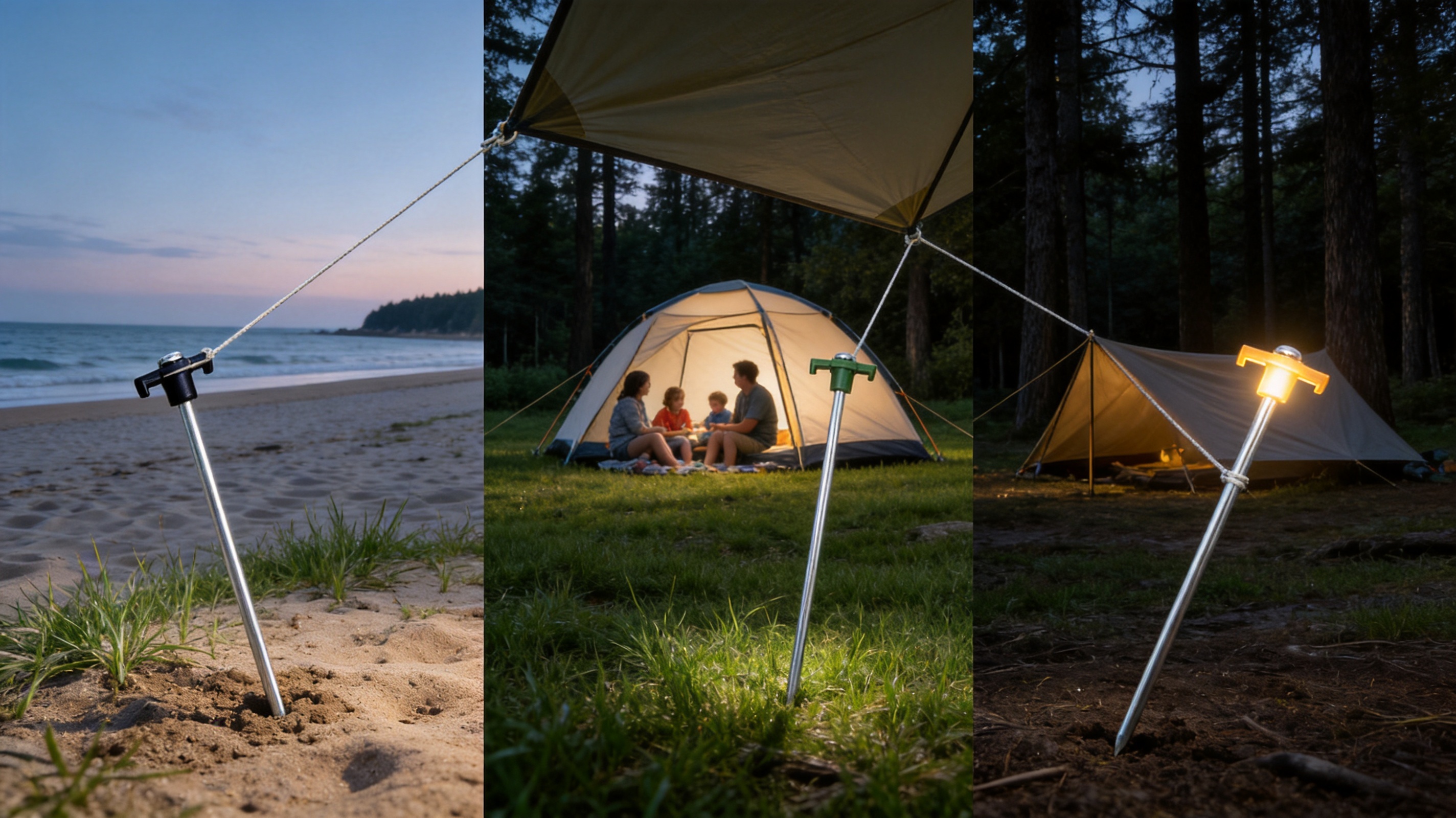
Beach camping presents a special challenge because sand has low resistance to pulling compared with compact soil. Ordinary narrow pegs can rotate or slide out when exposed to wind. A 25 cm stake increases the embedded length, which can help improve holding power when installed correctly.
Users should select firmer sand where possible, avoid areas affected by incoming water, and place stakes at a suitable angle. Guy lines should not be left excessively loose because sudden movement can increase the load on the anchor. In particularly soft or windy conditions, specialized sand anchors, buried deadman anchors, or additional lines may be appropriate.
The galvanized surface is also valuable in beach environments because sand and moisture can accelerate wear. After beach use, users should rinse away salt and sand, dry the stakes thoroughly, and store them in a ventilated location. This care helps preserve the protective finish and reduces the likelihood of corrosion.
Forest campsites
Forest soil can vary from soft organic material to dense clay, gravel, or areas filled with roots. The product’s steel construction provides a practical advantage when the ground is more resistant than a typical lawn. Users should avoid striking the stake against visible roots or stones and should reposition it if normal installation is not possible.
In wooded environments, visibility is important because roots, shadows, and low light can make guy lines difficult to see. The glow-in-the-dark head can assist with locating the stake after dusk, although reflective line markers and a headlamp remain recommended for complete nighttime visibility.
Mountain and hard-ground applications
Mountain campsites may include compacted soil, gravel, or mixed ground. The hardened steel body offers greater resistance to bending than many basic pegs, making it useful where normal ground conditions are demanding. However, no general-purpose stake should be forced into solid rock. Users should identify a suitable soil pocket, use natural anchor points where appropriate, or select specialized rock hardware for genuinely rocky terrain.
In high-wind mountain conditions, the stake is only one part of the system. Tent orientation, guy-line layout, shelter profile, pole structure, weather judgment, and site selection are equally important. The stake can contribute to a reliable setup, but correct outdoor practice remains essential.
Tarpaulins and temporary shelters
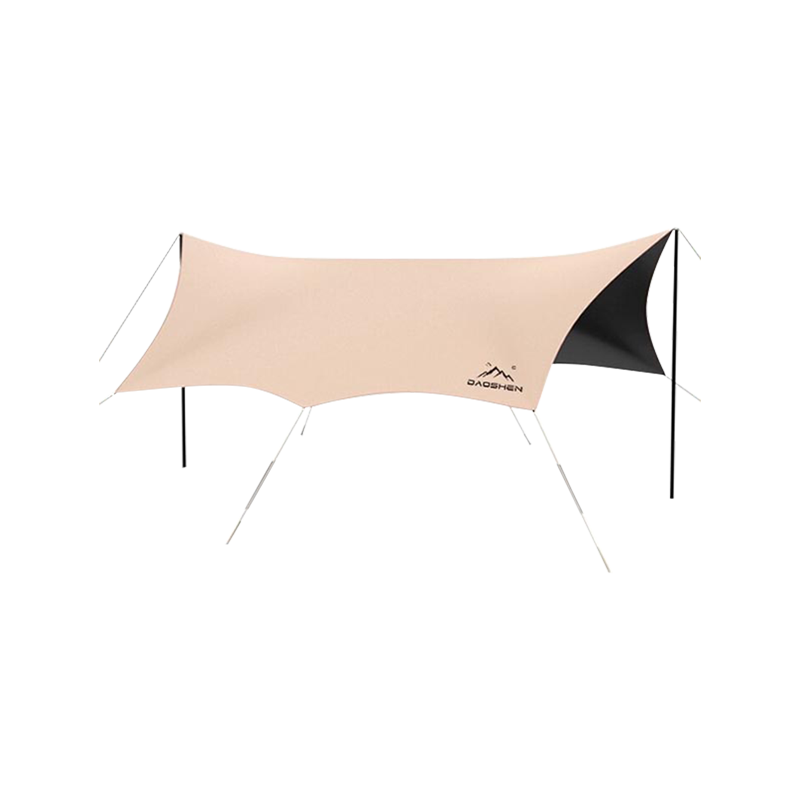
The universal hook and knot design makes the product suitable for tarpaulins, sun shelters, windbreaks, and temporary covers in addition to tents. Tarpaulins can present a large surface area to wind, which may create substantial pulling force. Users should distribute tension across multiple anchor points and avoid relying on a single stake for a large sheet.
When used with a tarp, the stake should be aligned with the direction of the rope pull. Excessive side loading can increase the chance of bending or loosening. A balanced configuration with moderate tension is usually more secure than a setup in which one line is pulled extremely tight.
5. Manufacturing Process and Quality Strengths
The performance of a steel stake depends not only on its material but also on the consistency of its manufacturing process. CragHaven Outdoor approaches product development as a combination of design evaluation, material selection, sampling, testing, production control, and delivery management. This process is intended to reduce variation and provide outdoor buyers with a repeatable product suitable for long-term market use.
Scenario-based product development
The development process begins with the way the product will actually be used. Instead of designing an accessory only around appearance or catalogue dimensions, the company considers weather, terrain, transport, installation, removal, storage, and repeated use. This scenario-based approach helps identify practical details such as stake length, head visibility, line compatibility, and corrosion protection.
For this product, the intended scenarios include grass camping, sandy beaches, tarpaulin anchoring, hiking camps, mountaineering applications, and general outdoor shelter use. These scenarios require a product that is stronger than a disposable peg but still compact enough for practical transport.
Material selection and incoming control
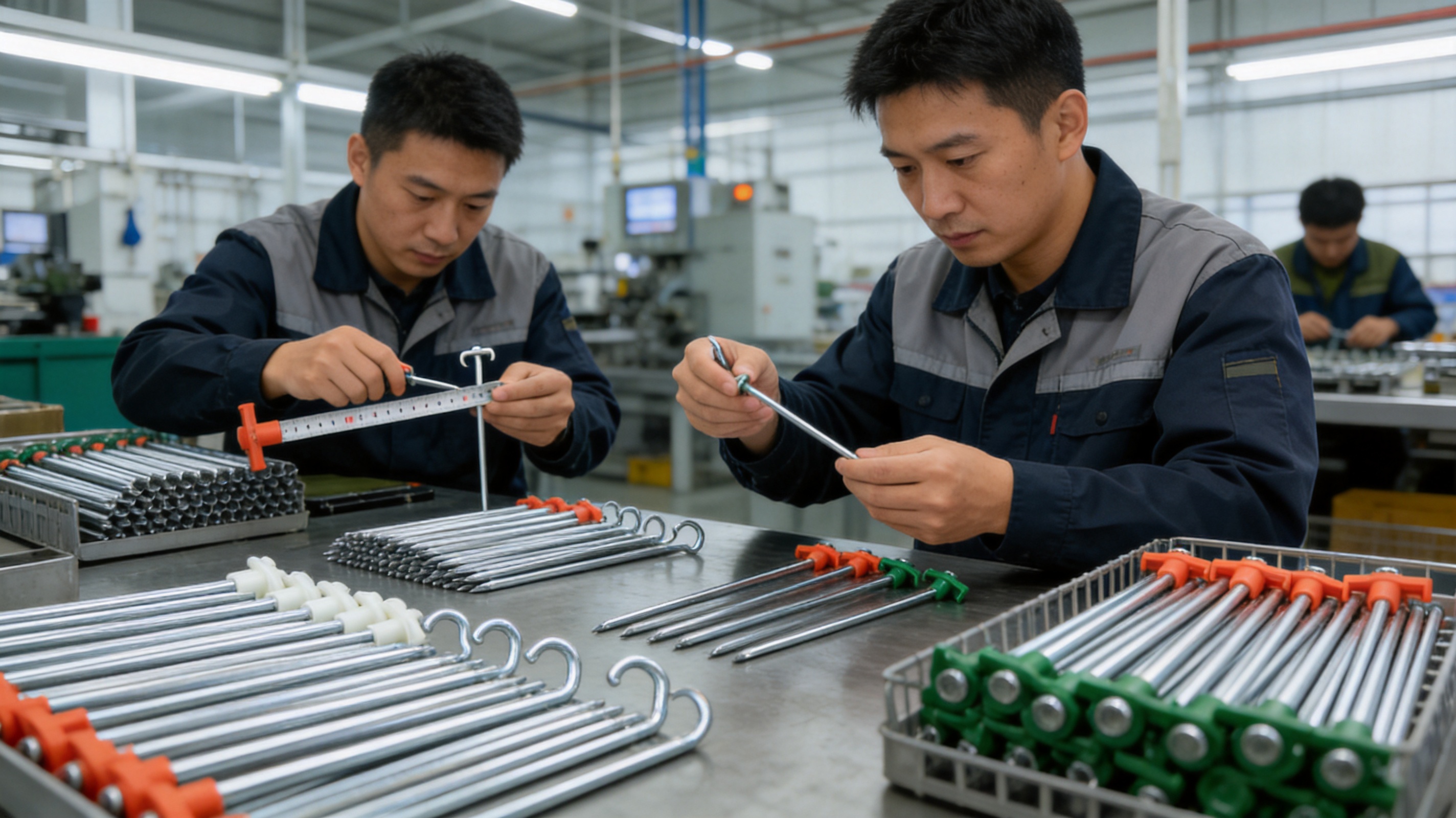
High-carbon steel is selected as the principal material because it provides a suitable foundation for strength and durability. Material control is important at the beginning of the process. Consistent steel composition and appropriate raw-material dimensions help create more predictable results during forming and heat treatment.
Incoming materials should be checked for visible defects, dimensional consistency, and suitability for the planned process. A stable supply chain allows production teams to maintain more consistent specifications across batches. For brands and distributors, this consistency can reduce the risk of receiving products with noticeable differences in appearance or performance.
Forming and dimensional accuracy
The steel must be formed into a stake profile that supports penetration, grip, handling, and connection with tent lines. Dimensional accuracy affects how the stake behaves in the ground and how it fits into packaging. The head, shaft, point, hooks, and related features must be produced with attention to alignment and finish.
Accurate forming also contributes to user safety. Sharp or irregular edges can damage ropes, injure hands, or make removal uncomfortable. A controlled manufacturing process should therefore include checks for shape, surface condition, connection features, and overall finish.
Hardening and process optimization
Heat treatment is a central step in achieving the desired hardness and bending resistance. The treatment must be managed carefully to avoid uneven results between batches. Sampling and testing allow manufacturing teams to evaluate whether the stake maintains its intended shape under representative loads.
CragHaven Outdoor emphasizes repeated sampling and optimization rather than treating the first production version as final. Feedback from testing and practical use can lead to adjustments in geometry, treatment parameters, finishing, or packaging. This iterative approach is valuable for outdoor components because small design details can affect installation and long-term reliability.
Galvanization and surface finishing
After the steel body is prepared, the galvanized finish helps protect it from outdoor moisture. Surface preparation and coating consistency are important because incomplete coverage can create weak points. Finished products should be checked for coating uniformity, visible defects, and damage caused by subsequent handling.
Protective finishing also supports the product’s presentation in retail packaging. Buyers generally expect outdoor accessories to look clean, consistent, and ready for use. A stable finish communicates manufacturing discipline while providing a practical barrier against corrosion.
Inspection and quality management
Quality management may include dimensional checks, visual inspection, hardness evaluation, surface review, and functional testing. The specific inspection plan can be adapted according to customer requirements, order volume, market expectations, and product configuration.
For wholesale and OEM customers, quality consistency is especially important. A distributor needs products that perform similarly across repeated shipments. A camping brand needs stable dimensions and appearance for packaging, product photography, customer instructions, and replacement orders. Manufacturing support that includes communication, documentation, sampling, and delivery coordination can help reduce supply-chain uncertainty.
Flexible manufacturing support
CragHaven Outdoor works with global outdoor customers that may have different product positioning and packaging requirements. A retailer may need a standard accessory for general camping. An equipment brand may require a specific finish, logo treatment, pack quantity, or instruction insert. A corporate buyer may need a customized outdoor kit for an event or promotional program.
Flexible support allows the product to be adapted without losing sight of its essential performance requirements. Design optimization, sample confirmation, production planning, and delivery coordination are treated as connected parts of the process rather than isolated services.
6. Advantages for Outdoor Brands, Distributors, and Retailers
For commercial buyers, product performance is only one purchasing consideration. Supply stability, communication quality, customization capability, packaging, and long-term cooperation also influence the total value of a manufacturing partner.
Reliable product positioning
This steel stake can be positioned as a durable upgrade from basic plastic pegs. Its combination of high-carbon steel, hardening, galvanization, 25 cm length, and visibility features gives retailers several clear benefits to communicate. It is suitable for customers who camp frequently, use larger shelters, visit windy areas, or want reusable equipment.
The product can also complement existing tent ranges. A brand may include it with selected tents, offer it as an accessory kit, or sell it as a replacement and upgrade item. Because the connection design is broadly compatible, it can serve a wider customer base than a highly specialized proprietary component.
Reduced replacement concerns
A stronger reusable stake may reduce the frequency with which customers need to replace broken or bent pegs. While no stake is indestructible and correct use remains important, durability can improve customer satisfaction and reduce complaints associated with premature failure.
For retailers, products with clear practical advantages are easier to explain through packaging and sales content. The product’s material, length, corrosion protection, glow-in-the-dark head, and multipurpose use create straightforward communication points without relying on exaggerated claims.
OEM and private-label potential
Outdoor brands often require products that fit their own packaging systems, product families, and customer positioning. A manufacturing partner with experience in design optimization and production delivery can support private-label programs more effectively than a supplier focused only on one-time factory sourcing.
Customization may include packaging format, set quantity, printed instructions, product marking, color details, or accessory combinations, subject to technical and order requirements. Any customization should be confirmed through samples and production specifications before mass manufacturing.
Cross-border manufacturing experience
International buyers need clear communication about specifications, samples, production timing, quality expectations, and shipment preparation. CragHaven Outdoor is based in Hangzhou, China, within a mature manufacturing environment with access to established supply-chain resources. Its role as a cross-border manufacturing partner is intended to connect product understanding with practical production execution.
The company’s stated focus is not limited to factory sourcing. It participates in product development, material decisions, sampling, testing, and optimization. This approach can be valuable for customers who need help translating an outdoor product idea into a stable, repeatable item.
7. Correct Use, Setup, and Maintenance
Even a strong stake must be installed correctly. Before setup, users should inspect the ground, consider wind direction, position the tent appropriately, and make sure each guy line has a clear path. Stakes should be driven into stable soil at an angle that opposes the expected pull rather than standing vertically in every situation.
Users should avoid placing stakes where people walk frequently. The glow-in-the-dark head can improve visibility, but guy lines may still create a tripping hazard. Reflective rope, line markers, and adequate lighting are recommended for busy campsites or night use.
When removing a stake, pull it through the head or use an appropriate extraction method. Do not bend the shaft sideways unnecessarily or use another stake as a lever in a way that damages the product. If the ground is hard, loosening the surrounding soil first can reduce stress on the stake.
After use, remove soil, sand, grass, and moisture. Beach users should rinse the stakes with fresh water to remove salt. Dry the products before placing them in a storage bag. Store them away from standing water and corrosive chemicals. Periodically inspect the shaft, head, hooks, and galvanized surface. A stake that is severely bent, cracked, or damaged should be replaced.
8. Selecting the Right Quantity and Configuration
The number of stakes required depends on the tent design, the number of guy lines, weather conditions, and whether the product will also be used for tarpaulins or auxiliary shelters. A small recreational tent may use a basic set, while a family tent or large tarp may require additional anchors.
Buyers should count all corner points, vestibule lines, roof guy lines, and optional reinforcement points. It is also practical to carry a few spare stakes because accessories can be misplaced, damaged, or left behind at previous campsites. For commercial kits, the selected quantity should match the intended tent size and the instructions supplied with the product.
For beach and windy applications, users may need more anchor points rather than relying on a few heavily loaded stakes. Distributing force across multiple lines can reduce stress on each individual connection. Product bundles can therefore be configured according to shelter size, intended market, and use scenario.
9. Safety and Environmental Considerations
Responsible use of tent stakes includes attention to people, property, and the campsite environment. Stakes should be installed where they are unlikely to damage underground utilities, irrigation systems, or protected vegetation. Campers should follow local rules and avoid anchoring into sensitive areas.
When leaving a campsite, all stakes and lines must be removed. A forgotten metal stake can injure people, animals, vehicles, or maintenance workers. Users should inspect the ground before departure and pack every component. Reusable steel stakes can support a lower-waste camping routine because they are designed for repeated trips rather than immediate disposal.
Although the product is strong, it should not be used as climbing hardware, rescue equipment, or a structural anchor for loads beyond its intended purpose. It is designed for tent, tarp, and related outdoor shelter applications. Users should follow safe camping practices and discontinue use if a product shows serious damage.
10. Why Manufacturing Experience Matters in Small Outdoor Accessories
Small accessories can appear simple, but they still require careful engineering and production control. A difference in steel composition, heat treatment, shaft geometry, head design, or coating quality can affect real-world performance. A supplier that understands only the visual appearance of a product may overlook the conditions in which it will be installed and loaded.
CragHaven Outdoor’s product philosophy begins with the environment and usage pattern. The company emphasizes that outdoor products should be developed for weather, terrain, and time. This means evaluating how a component will behave during setup, transport, repeated use, storage, and exposure to changing conditions.
The company also places importance on sampling and testing. A sample allows buyers to assess dimensions, finish, packaging, and handling before committing to larger production. Testing and optimization can identify opportunities to improve the balance between strength, portability, usability, and cost.
For global customers, this approach can provide more than a finished product. It can provide a development process that supports better decisions before mass production. Clear specifications, sample confirmation, quality expectations, and production communication help create a more dependable supply relationship.
11. Recommended Product Positioning
The product can be positioned for several customer groups. Recreational campers may value its strength and easy visibility. Families may appreciate its compatibility with tents and tarpaulins. Beach users may prefer the longer body and corrosion-resistant finish. Hikers and mountaineers may select it when durability is more important than achieving the lowest possible pack weight. Retailers may offer it as an upgraded replacement for basic pegs.
For professional outdoor brands, the product can support a broader equipment strategy. It can be included in shelter packages, sold in multipacks, integrated into seasonal camping collections, or customized for private-label distribution. Its neutral, multipurpose design makes it easier to connect with multiple tent styles and outdoor activities.
Marketing communication should remain accurate and practical. The product should be described as a durable steel anchoring accessory for suitable outdoor terrain, not as a universal solution for every ground condition. Clear instructions about installation, terrain selection, maintenance, and safe loading will help customers achieve better results.
12. Frequently Asked Questions
What outdoor activities are these steel stakes suitable for?
They are suitable for camping, hiking, mountaineering, wilderness travel, beach shelters, RV travel, tarpaulin use, and other temporary outdoor shelter applications. The correct configuration should be selected according to the tent or tarp size, ground condition, and expected weather.
Why choose a 25 cm stake instead of a shorter peg?
The 25 cm length provides deeper penetration and more embedded surface area in suitable soil. This can improve stability in grass, ordinary soil, and some sandy conditions. It remains compact enough for normal camping transport while offering more anchoring depth than many short pegs.
Are the stakes suitable for beach camping?
They can be used for beach camping, particularly when installed in firmer sand and positioned correctly against the direction of pull. Very loose sand or severe wind may require specialized sand anchors, additional stakes, or buried anchoring methods. After beach use, rinse and dry the stakes to remove salt and sand.
Are these stakes better than plastic pegs?
They offer advantages in strength, impact resistance, and repeated use compared with many ordinary plastic pegs. Plastic products can still be suitable for lightweight or calm-weather applications. The best choice depends on the shelter, terrain, expected wind, weight requirements, and frequency of use.
Can the stakes be used with tarpaulins?
Yes. The universal hooks and knots are intended to support common tent lines, guy ropes, tarpaulin loops, and related shelter systems. Large tarpaulins should use multiple anchor points so that wind loads are distributed rather than concentrated on one stake.
Does the galvanized coating prevent all rust?
No coating can guarantee complete immunity to corrosion in every environment. Galvanization helps protect the steel against normal outdoor moisture and extends service life when the product is maintained properly. Users should clean, dry, and store the stakes after use, especially following beach or saltwater exposure.
What is the purpose of the glow-in-the-dark head?
The glow-in-the-dark head helps users locate the stake in low-light conditions after it has received sufficient light exposure. It can improve visibility around the tent and reduce the chance of accidental contact. Additional lighting and reflective line markers are still recommended at night.
Can the stakes be used in rocky ground?
They may be used in suitable soil pockets within mixed mountain terrain, but they should not be forced into solid rock. Users should choose a stable location, avoid striking visible stones, and use specialized rock anchors or alternative attachment methods when necessary.
How should the stakes be removed?
Use the head or a suitable extraction tool to pull the stake out. Avoid twisting or bending the shaft excessively. If the ground is compacted, loosen the surrounding soil first. Clean the stake before storage and inspect it for damage.
Does CragHaven Outdoor support OEM or customized orders?
CragHaven Outdoor provides product development, manufacturing support, and outdoor equipment solutions for global customers. Depending on the project, support may include design optimization, sample development, packaging coordination, product marking, and production delivery. Custom requirements should be confirmed before manufacturing.
What should wholesale buyers evaluate before placing an order?
Wholesale buyers should review material, length, surface finish, hardness expectations, hook and knot compatibility, packaging, order quantity, inspection requirements, production timing, and delivery terms. A sample evaluation is recommended before larger production whenever the product will be sold under a private label or integrated into a tent system.
Conclusion
The outdoor camping tent steel stake is a compact but important component for building a more dependable shelter system. Its 25 cm length provides useful anchoring depth, while high-carbon steel and hardening treatment support strength and bending resistance. Galvanization helps protect the surface against outdoor moisture, and the glow-in-the-dark head improves nighttime identification. Universal hooks and knots expand compatibility with tents, guy lines, tarpaulins, and beach shelters.
Compared with basic plastic pegs, short stakes, and thin wire alternatives, the product offers a practical combination of durability, stability, and repeated-use value. It is suitable for grass, ordinary soil, beach camping, recreational outdoor use, selected mountain conditions, and temporary tarp systems when installed correctly.
Its commercial value is strengthened by the manufacturing capabilities of CragHaven Outdoor. Based in Hangzhou, China, the company combines outdoor product knowledge with material selection, sampling, testing, process optimization, quality management, and cross-border manufacturing support. This approach helps brands and distributors obtain products designed for actual outdoor use rather than merely attractive catalogue items.
For campers, a reliable stake can improve setup confidence and reduce avoidable equipment problems. For outdoor brands and retailers, it can provide a durable accessory with clear product benefits and flexible market applications. When correctly matched to the terrain and used as part of a complete anchoring system, this steel stake offers long-term value for camping, hiking, mountaineering, beach recreation, and outdoor shelter markets.
References
1. Outdoor shelter setup and guy-line anchoring principles, general field practice for camping equipment.
2. High-carbon steel material selection and heat-treatment considerations for outdoor hardware.
3. Galvanized steel corrosion protection practices for damp and outdoor environments.
4. General guidance on tent stability, ground conditions, and wind-load distribution.
5. Product development and quality-control principles for mountaineering, hiking, and camping equipment.
6. CragHaven Outdoor product information and manufacturing profile supplied for this article.
Product: Outdoor camping tent with 25cm ground stakes, beach tarpaulin, and windproof steel studs


- Phone: +86-15968800379
- E-mail: [email protected]
- Address: Room 1002, Huishang Building, Gongshu District, Hangzhou City, Zhejiang Province.
Copyright © CragHaven Outdoor All Rights Reserved. Outdoor Gear Manufacturers Wholesale Mountaineering Camping Gear Suppliers
