

 English
 Deutsch
 Español
 Français

Hiking Poles for B2B Procurement: Technical Specifications, Material Selection, and Global Market Insights
Content
- 1 Functional Benefits and Performance Factors
- 2 Technical Specifications and Material Selection
- 3 Product Configurations
- 4 Application Scenarios
- 5 Market Overview and Industry Trends
- 6 Selection Criteria for Business Buyers
- 7 Usage and Maintenance Recommendations
- 8 Frequently Asked Questions
- 8.1 What are the primary benefits of using hiking poles on trails?
- 8.2 How do you determine the correct length for hiking poles?
- 8.3 What is the difference between aluminum and carbon fiber hiking poles?
- 8.4 Can hiking poles be used as support for tent shelters?
- 8.5 How do locking mechanisms on hiking poles work and which is most reliable?
- 8.6 What grip material is most suitable for different weather conditions?
- 8.7 Are shock absorbing hiking poles worth the additional weight and cost?
- 8.8 How should hiking poles be maintained for optimal lifespan?
- 9 Conclusion
Hiking poles, also referred to as trekking poles or walking poles, are essential equipment for outdoor activities ranging from casual trail walking to technical mountaineering. These tools serve to enhance stability, distribute weight more evenly across the body, and reduce impact forces on lower joints during movement across varied terrain. For the outdoor equipment industry, understanding the technical specifications, material properties, and performance characteristics of hiking poles is fundamental to product development, quality assurance, and supply chain management.
Functional Benefits and Performance Factors
The adoption of hiking poles among outdoor enthusiasts has grown considerably, with usage rates on long-distance trails estimated at 90% among thru-hikers. This widespread acceptance stems from several measurable performance benefits that make hiking poles valuable equipment for diverse user groups.
Stability and Balance Enhancement
Hiking poles provide lateral stability on uneven terrain, loose surfaces, and steep slopes. By creating additional points of ground contact, poles reduce the risk of slips and falls, particularly when navigating scree, river crossings, or snowy conditions. For hikers carrying heavy backpack loads, poles help maintain center of gravity and improve overall balance on challenging trails.
Joint Impact Reduction
One of the primary functions of hiking poles is reducing strain on knee and ankle joints during descents. Research indicates that poles offload pressure from the lower extremities, particularly during downhill sections where impact forces are most pronounced. This joint protection benefit makes hiking poles particularly valuable for aging populations and individuals with previous joint injuries.
Upper Body Engagement
When properly used, hiking poles engage upper body muscles including arms, shoulders, and back. This translates to increased cardiovascular effort and calorie expenditure without requiring the user to perceive higher exertion levels. Nordic walking applications further emphasize this upper body engagement through specialized strap systems that facilitate forward propulsion.
Technical Specifications and Material Selection
The performance and durability of hiking poles depend significantly on material selection across several critical components. Business buyers evaluating hiking poles for procurement must understand the technical characteristics of each material option.
Shaft Materials
The pole shaft determines overall weight, strength, rigidity, and durability characteristics. Two primary material categories dominate the hiking poles market.
Aluminum Alloys
Aluminum remains the most common shaft material for hiking poles due to its proven durability and cost-effectiveness. Most aluminum hiking poles use 6061 or 7075-T6 aircraft-grade alloys, with 7075-T6 offering superior strength-to-weight ratios. Aluminum poles typically weigh between 18 and 22 ounces per pair and demonstrate good impact resistance. Under extreme stress, aluminum bends rather than breaks, allowing continued functionality in remote settings.
Carbon Fiber
Carbon fiber shafts offer significant weight advantages, with premium models weighing 12 to 18 ounces per pair. These poles provide excellent vibration dampening and stiffness characteristics, reducing arm fatigue over long distances. However, carbon fiber is more expensive and more vulnerable to sudden breakage under high-impact loads. Carbon fiber poles are typically constructed from 3K carbon fabric and require careful manufacturing processes to achieve optimal strength-to-weight ratios.

Comparison: Aluminum vs. Carbon Fiber Hiking Poles
| Characteristic | Aluminum | Carbon Fiber |
|---|---|---|
| Weight per pair | 18-22 ounces | 12-18 ounces |
| Cost | Lower | Higher |
| Durability | Bends under extreme stress | May break or splinter under impact |
| Vibration dampening | Moderate | Superior |
| Repair in field | May be straightenable | Typically not repairable |
| Primary application | Recreational hiking, rugged terrain | Ultralight backpacking, long-distance trekking |
Grip Materials
Grip material significantly affects user comfort, control, and performance across different weather conditions and activity durations.
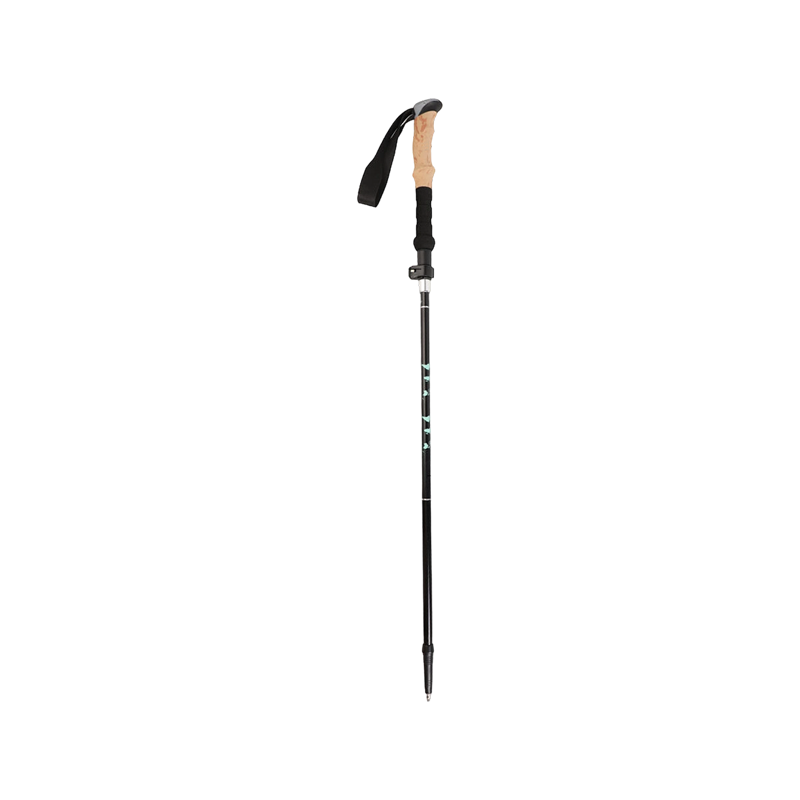
Cork
Cork grips resist moisture absorption from sweaty hands, conform to hand shape over time, and provide effective vibration reduction. These characteristics make cork particularly suitable for warm-weather hiking and long-distance applications. Cork grips are generally positioned at premium price points.
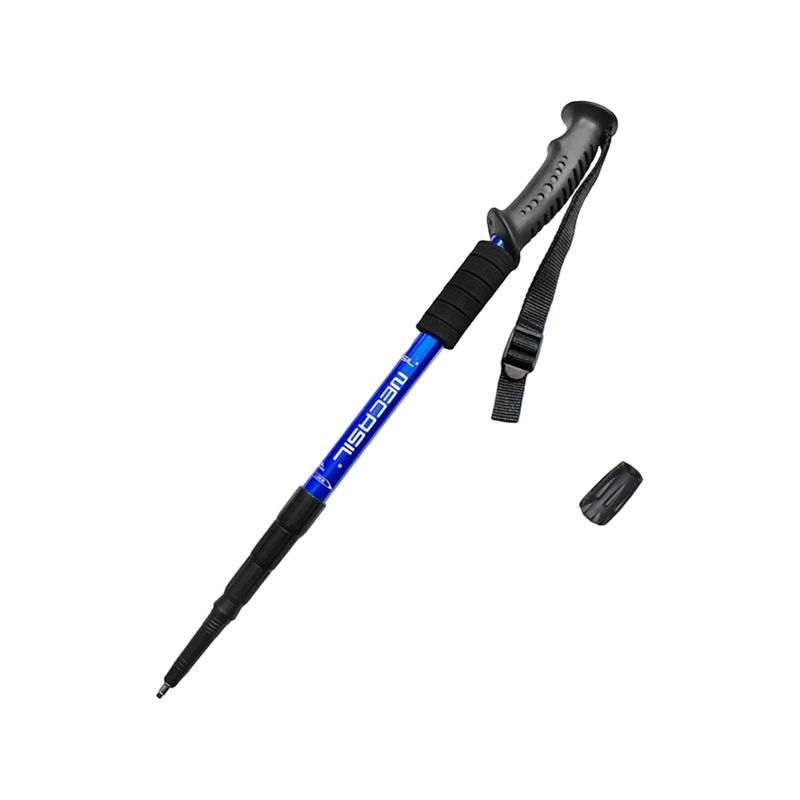
EVA Foam
EVA foam grips are lightweight, soft, and absorb sweat effectively. However, foam grips are less durable than cork or rubber options and compress over time with heavy use. They are commonly found on entry-level to mid-range hiking poles.
Rubber and TPE
Rubber grips provide excellent durability and secure hold even in wet conditions, making them preferred for wet or cold weather applications. They are heavier than cork or foam, but offer superior longevity in demanding environments. Thermoplastic elastomer (TPE) compounds represent a newer grip material category, combining rubber's durability with lighter weight characteristics.
Locking Mechanisms
The locking mechanism determines the ease and security of length adjustment. Three primary configurations exist in the hiking poles market, each with distinct operational characteristics.
External Lever Locks
External lever locks utilize a cam mechanism that clamps the upper shaft section against the lower section. These mechanisms are widely preferred for their ease of adjustment and reliable holding power. Lever locks allow rapid length changes even when wearing gloves and maintain consistent clamping force throughout the day. High-quality external lever locks incorporate ergonomic levers and corrosion-resistant hardware.
Twist Locks
Twist locks function through an expanding internal mechanism activated by rotating the shaft sections. While twist locks offer clean aesthetics and lower weight, they are more prone to slipping under load and require periodic adjustment. They are increasingly uncommon on premium hiking poles due to these reliability considerations.
Push-Button and Combination Systems
Push-button locks use spring-loaded pins that engage with pre-drilled holes in the shaft sections. These mechanisms provide positive length selection and intuitive operation but offer limited adjustability between discrete positions. Combination systems incorporate multiple locking technologies for enhanced security.
Hiking Poles Component Specifications Summary
| Component | Material/Type | Key Characteristics | Typical Weight Impact |
|---|---|---|---|
| Shaft | 7075-T6 Aluminum | High strength-to-weight ratio, ductile, durable | Medium |
| Shaft | 3K Carbon Fiber | Low weight, stiff, vibration-dampening | Low |
| Grip | Cork | Moisture-absorbing, conforms to hand | Medium |
| Grip | EVA Foam | Lightweight, soft, absorbs sweat | Low |
| Grip | Rubber/TPE | Durable, wet-weather performance | Medium-High |
| Lock | External lever | Easy adjustment, reliable hold | Medium |
| Lock | Twist | Clean design, lower weight | Low |
Product Configurations
Hiking poles are available in several structural configurations that determine portability, weight, and deployment convenience.
Telescopic Poles
Telescopic poles feature two or three nested shaft sections that slide within one another for length adjustment. Three-section telescopic poles are the most common configuration, offering a balance between collapsed length and extended range. Collapsed lengths typically range from 24 to 28 inches, while maximum extension reaches 53 to 57 inches depending on model. Telescopic poles are compatible with all locking mechanism types.
Foldable Poles
Foldable hiking poles utilize a cord-and-z-fold construction similar to tent poles, with sections connected by an internal elastic cord. These poles collapse to shorter lengths than telescopic designs, typically 14 to 18 inches, making them particularly suitable for backpacking where pack space is at a premium. Foldable poles are typically constructed from carbon fiber or premium aluminum to maintain acceptable weight given the multiple joint connections. Deployment is rapid and intuitive.
Fixed-Length Poles
Fixed-length poles offer the lightest weight option and maximum structural integrity, as they eliminate adjustment mechanisms entirely. These poles are typically selected for specialized applications such as Nordic walking or ski mountaineering where optimal length is precisely known. Fixed-length designs require accurate length determination before ordering and offer no adaptability for different users or terrain conditions.
Application Scenarios
Different outdoor activities place varying demands on hiking poles, influencing material selection and design priorities.
Mountain and Alpine Terrain
Technical mountain terrain requires hiking poles with robust durability, reliable locking mechanisms, and secure grip materials that perform in changing conditions. Aluminum shafts are often preferred for their impact resistance on rocky surfaces. Extended grips that allow hand placement on the shaft itself provide additional control during steep traverses. Carbide tips with wear-resistant construction are essential for rock and ice traction.
Trail Hiking and Long-Distance Trekking
Established trails with moderate terrain place emphasis on weight reduction and comfort over extended periods. Carbon fiber shafts and cork grips are common selections for thru-hikers covering 10 to 30 miles daily. External lever locks with tool-free adjustment facilitate quick length changes between ascents and descents. Wrist straps with ergonomic geometry reduce grip fatigue over long distances.
Backpacking and Ultralight Applications
Backpackers prioritizing pack weight often select carbon fiber or 7075-aluminum foldable poles that minimize both carried weight and packed volume. These poles prioritize portability over ultimate durability, with acceptable tradeoffs for users who primarily hike on established trails. Some foldable designs function as tent support structures through integrated components.
Snowshoeing and Winter Activities
Winter applications require hiking poles with larger basket assemblies to prevent sinking into snow. Corrosion-resistant materials and lubricant-free locking mechanisms prevent freezing in cold conditions. Rubber or TPE grips maintain performance in wet, cold environments. Longer shaft extensions may be necessary to accommodate snowpack elevation changes.
Nordic Walking and Daily Fitness
Nordic walking uses specialized walking poles with distinct strap designs that facilitate forward propulsion. These hiking poles typically feature fixed-length configurations and ergonomic grip angles that optimize upper body engagement during cardiovascular exercise. Applications in rehabilitation and fitness have expanded the walking poles market beyond traditional outdoor recreation.
Market Overview and Industry Trends
The global hiking poles market continues to evolve, driven by increasing outdoor participation and product innovation. Understanding market dynamics supports informed procurement decisions.
Market Size and Growth Projections
The global hiking poles market has experienced consistent growth, with estimates suggesting a compound annual growth rate of approximately 6-8% through the coming years. Growth is supported by increasing participation in outdoor recreation, aging populations seeking joint-friendly exercise, and rising disposable incomes in developing regions. North America and Europe continue to represent the largest markets, while Asia-Pacific shows the fastest growth rates.
Regional Market Characteristics
North American markets prioritize lightweight designs and ultralight concepts, driving demand for carbon fiber shafts and folding configurations. European markets show strong Nordic walking adoption and demand for fixed-length walking poles. Asian markets demonstrate preference for multi-function designs and value-oriented offerings.
Industry Trends and Product Innovations
Several trends are shaping hiking poles development. Anti-shock systems employing elastomer or spring mechanisms continue to evolve, with adjustable damping that allows users to lock out suspension when not needed. Integrated features such as compasses, camera mounts, and quick-release snow baskets provide add-on functionality. Sustainability considerations are influencing materials and packaging choices as manufacturers respond to environmental regulations. Carbon fiber manufacturing processes are being optimized for structural performance.
Selection Criteria for Business Buyers
Procurement professionals evaluating hiking poles for distribution, OEM manufacturing, or project supply require systematic assessment across multiple criteria. These considerations ensure product performance aligns with target market expectations.
Material Performance Evaluation
Shaft material selection should be guided by the intended application and price positioning. Aluminum alloys offer proven durability and ductility that appeals to traditional outdoor users. Carbon fiber provides weight advantages that command premium pricing. Understanding manufacturing standards for both materials ensures procurement specifications meet quality requirements.
Component Quality Assessment
Locking mechanism quality is perhaps the most critical reliability factor in hiking poles. Business buyers should evaluate lever clamp design, materials, and assembly tolerance as primary indicators of product durability. Grip material specifications should specify density, Shore hardness, and UV resistance characteristics. Tip components should meet wear resistance standards for intended applications.
Manufacturing Standards and Compliance
Hiking poles manufacturing should meet applicable standards including load testing, fatigue testing, and impact resistance validation. Business buyers should request documentation of quality assurance processes and third-party testing. Understanding production capabilities and quality control protocols supports risk assessment and supplier qualification.
Supplier Evaluation Factors
When assessing hiking poles suppliers, business buyers consider production capacity, lead time consistency, quality management systems, and communication responsiveness. Capability to handle custom branding, packaging specifications, and regional market requirements is valuable. Establishing clear specifications and acceptance criteria prevents procurement disputes and ensures consistent product quality.
Usage and Maintenance Recommendations
Proper adjustment and maintenance extend hiking poles service life and ensure reliable performance. These practices are particularly relevant for rental operations, guide services, and institutional users.
Proper Adjustment Techniques
Correct hiking poles length is determined by standing with arm at side and adjusting the pole so the grip is at wrist level. Elbow angle should be approximately 90 degrees when the tip is placed on the ground. For ascents, shortening poles by 5 to 10 centimeters improves biomechanics. For descents, extending poles by the same amount shifts load distribution. Length should be verified with the user in typical footwear and with expected backpack load.
Component Care Guidelines
Locking mechanisms should be periodically checked for proper tension. External lever locks may require occasional adjustment of the adjustment screw to maintain clamping force. Twist locks should be disassembled, cleaned, and lubricated periodically. Shaft sections require cleaning of debris that may cause wear between sections. Grip materials benefit from periodic cleaning with mild soap and water.
Storage Practices
Hiking poles should be stored collapsed to their shortest length with locking mechanisms released to prevent spring fatigue. Drying poles after wet weather use prevents corrosion and extends component life. Storage in cool, dry environments minimizes material degradation. For long-term storage, applying a corrosion-preventive oil to metallic components extends service life.
Frequently Asked Questions
What are the primary benefits of using hiking poles on trails?
Hiking poles improve balance on uneven terrain, reduce joint impact during descents, and engage upper body muscles, providing a full-body workout and reduced lower-body fatigue during extended excursions.
How do you determine the correct length for hiking poles?
Stand with arms relaxed at the sides, then adjust the pole until the grip is at wrist level. With the tip on the ground, the elbow should form approximately a 90-degree angle. Shorten poles by 5-10 cm for ascents and lengthen by the same amount for descents.
What is the difference between aluminum and carbon fiber hiking poles?
Aluminum poles are more durable, cost-effective, and bend under extreme stress, making them ideal for rugged terrain. Carbon fiber poles are lighter, stiffer, and dampen vibration but are more expensive and may break under impact, better suited for ultralight backpacking and long-distance trekking.
Can hiking poles be used as support for tent shelters?
Many trekking poles are designed to support lightweight tent shelters, tarps, and bivy setups. This dual-purpose functionality is valuable for backpackers aiming to reduce overall carried weight. Not all hiking poles have appropriate tip configurations for tent use.
How do locking mechanisms on hiking poles work and which is most reliable?
External lever locks provide the most reliable holding power and ease of adjustment. They use a cam mechanism to clamp shaft sections together. Twist locks are lighter but more prone to slipping over time. Push-button locks offer positive locking but limited adjustability.
What grip material is most suitable for different weather conditions?
Cork grips perform well in warm weather and humid conditions, absorbing sweat and conforming to the user's hand shape. Rubber grips are preferred for wet, cold conditions due to their superior traction and durability. EVA foam offers lightweight comfort but less durability.
Are shock absorbing hiking poles worth the additional weight and cost?
Shock absorbing poles reduce joint impact and arm fatigue on descents and hard-packed trails. The added weight and mechanical complexity may be worthwhile for users with joint conditions or for extended downhill sections. However, many experienced users prefer lightweight non-absorbing poles.
How should hiking poles be maintained for optimal lifespan?
Clean shafts after each use to prevent debris buildup, check and adjust locking mechanisms periodically, lubricate moving parts with appropriate compounds, and store collapsed with locks released. Thorough cleaning and drying after wet weather use prevents corrosion and component degradation.
Conclusion
Hiking poles represent a technologically refined product category that continues to evolve with material science advances and changing user expectations. For procurement professionals and outdoor industry participants, understanding the technical specifications, material properties, and application-specific design considerations enables informed product selection and supply chain decisions. As outdoor participation grows globally, hiking poles remain a fundamental equipment category with established market demand and continued innovation potential.
The selection of appropriate hiking poles requires careful consideration of material choices, locking mechanisms, grip configurations, and structural designs relative to target applications. Business buyers who develop systematic evaluation processes for these criteria are better positioned to source products that meet quality standards and market expectations. As the industry advances, monitoring developments in materials, manufacturing processes, and product designs ensures procurement strategies remain aligned with market requirements.

- Phone: +86-15968800379
- E-mail: [email protected]
- Address: Room 1002, Huishang Building, Gongshu District, Hangzhou City, Zhejiang Province.
Copyright © CragHaven Outdoor All Rights Reserved. Outdoor Gear Manufacturers Wholesale Mountaineering Camping Gear Suppliers
