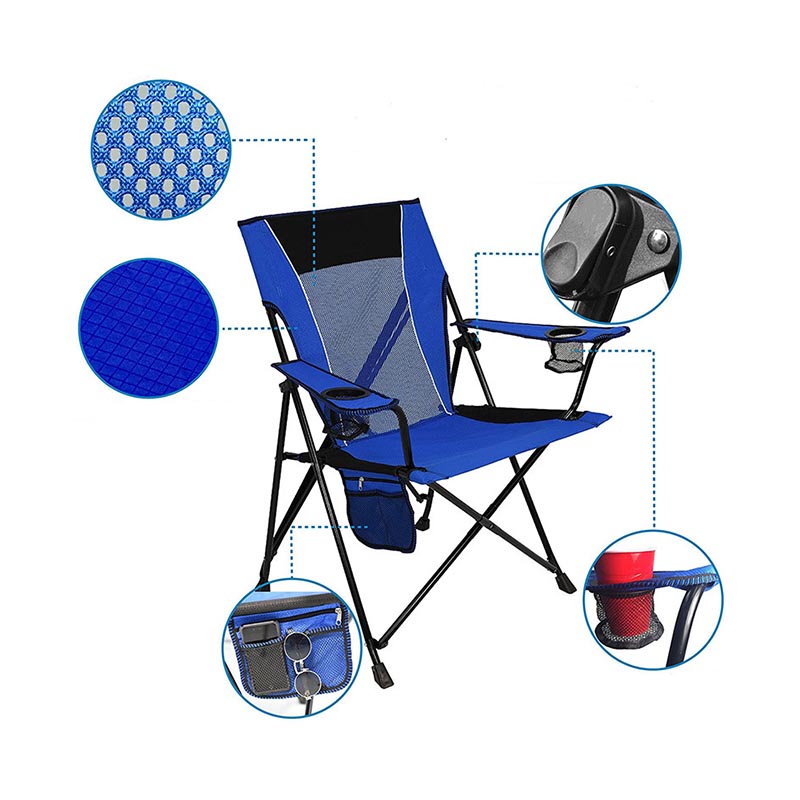
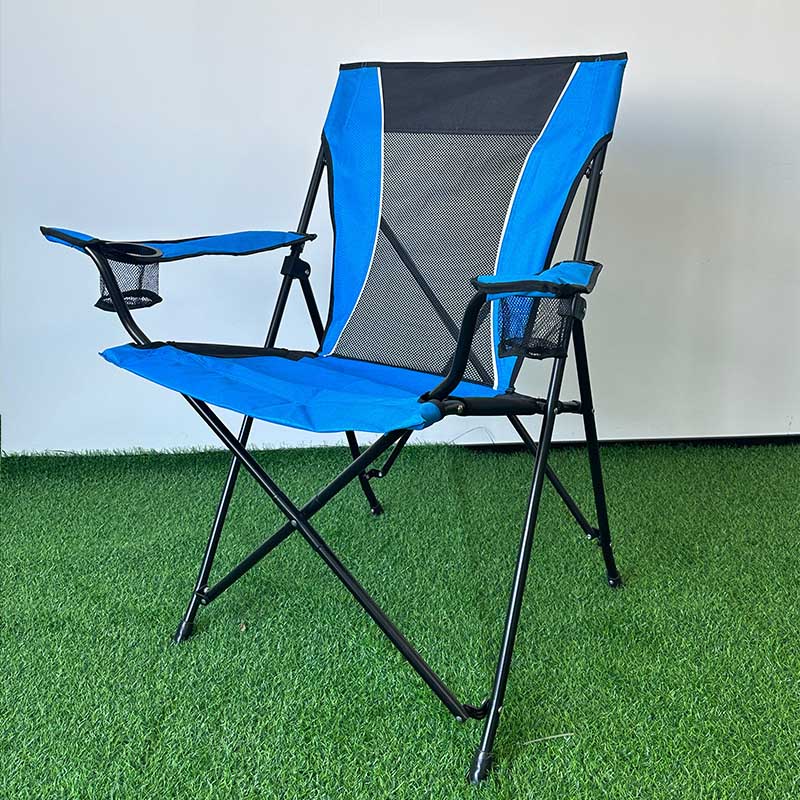
How Do Frame Material Choices (7075 Aluminum vs. 6061 Aluminum vs. High-Tensile Steel) Affect the Strength-to-Weight Ratio and Corrosion Resistance of Portable Outdoor Chairs in Marine Environments?
When designing a portable outdoor chair for coastal camping, beach fishing, or seaside basecamps, the choice of frame material is not just about weight or cost—it is a critical engineering decision that determines structural integrity, long-term durability, and resistance to saltwater corrosion. The three most common frame materials in the industry—7075 aluminum, 6061 aluminum, and high-tensile steel—each offer distinct trade-offs in strength-to-weight ratio, corrosion resistance, and manufacturing feasibility. At CragHaven Outdoor, an outdoor brand and cross-border manufacturing partner based in Hangzhou, China, we believe that excellent outdoor products are not built on a pile of parameters, but on a deep understanding of the environment, usage patterns, and the test of time. This article presents a comprehensive comparative analysis of these three materials, supported by our internal laboratory test data, salt-spray chamber results, and real-world field testing from coastal environments.
1. Material Fundamentals: Composition and Mechanical Properties
Understanding the metallurgical differences is essential to appreciating how each material performs under load and in corrosive environments.
- 7075 Aluminum (zinc-magnesium-copper alloy) – Known as the "aircraft-grade" aluminum, 7075 offers the highest tensile strength among aluminum alloys. Its typical yield strength (T6 temper) is 503 MPa, with an ultimate tensile strength (UTS) of 572 MPa. However, it has lower corrosion resistance than 6061, particularly in saltwater environments, and is more prone to stress-corrosion cracking (SCC) when exposed to chloride ions under tensile stress. Density is 2.81 g/cm³.
- 6061 Aluminum (magnesium-silicon alloy) – The most versatile aluminum alloy, 6061-T6 has a yield strength of 276 MPa and UTS of 310 MPa. It offers excellent corrosion resistance, good weldability, and moderate strength. Density is 2.70 g/cm³—slightly lower than 7075. It is the industry standard for consumer outdoor products where corrosion resistance is a priority.
- High-Tensile Steel (typically 4130 Cr-Mo or high-carbon spring steel) – Steel is the "old standard" for folding chairs, with yield strengths ranging from 350–700 MPa (depending on heat treatment). Its UTS can exceed 800 MPa. However, steel has a density of 7.85 g/cm³—nearly 2.9× heavier than aluminum. Without protective coatings, steel is highly susceptible to rust and galvanic corrosion in marine environments.
2. Strength-to-Weight Ratio: Structural Efficiency
The strength-to-weight ratio (specific strength) is the key metric for portable gear, as it determines how much load a chair can support per unit of weight. This is calculated as yield strength ÷ material density, and is expressed in kN·m/kg (or MPa·cm³/g). A higher value means more structural efficiency.
- 7075 Aluminum specific strength – 503 MPa ÷ 2.81 g/cm³ = 179 kN·m/kg. This is the highest specific strength among the three materials, making 7075 ideal for ultra-lightweight, high-load applications. A chair frame made from 7075 can be 30–35% lighter than an equivalent-strength steel frame, or 40% stronger than a 6061 frame at the same weight.
- 6061 Aluminum specific strength – 276 MPa ÷ 2.70 g/cm³ = 102 kN·m/kg. While lower than 7075, this is still 45% higher than standard steel. 6061 offers a good balance of strength and manufacturability, and is the most common choice for mid-range portable chairs.
- High-Tensile Steel specific strength – 450 MPa (average for cold-drawn 4130) ÷ 7.85 g/cm³ = 57 kN·m/kg. This is the lowest specific strength by a significant margin. To achieve the same load capacity as an aluminum frame, the steel frame must weigh at least 1.8× more than a 6061 frame and 3.1× more than a 7075 frame.
- Practical implication – For a chair designed to support 120 kg static load, a 7075 frame weighs approximately 1.1–1.3 kg, a 6061 frame weighs 1.5–1.8 kg, and a high-tensile steel frame weighs 2.8–3.5 kg. The weight penalty for steel becomes even more significant when considering that marine-grade protective coatings add extra mass.
3. Corrosion Resistance in Marine Environments
Saltwater exposure is the most aggressive environmental condition for outdoor furniture. The combination of chloride ions (from salt spray), humidity, and temperature fluctuations accelerates electrochemical corrosion. We conducted a 240-hour salt-spray test (ASTM B117) on all three materials with representative surface finishes to measure corrosion rates and structural degradation.
- 7075 Aluminum – corrosion performance – Without surface protection, 7075 shows visible pitting corrosion within 48–72 hours of salt-spray exposure. After 240 hours, weight loss averages 2.3–2.8%, and UTS degradation reaches 12–15%. When anodized (Type II, 10–12 μm), corrosion resistance improves significantly, but pitting still begins at 120–150 hours—far shorter than 6061. Stress-corrosion cracking (SCC) is a particular concern for 7075 in marine environments; even a small surface defect can propagate under repeated load cycles.
- 6061 Aluminum – corrosion performance – The clear winner in corrosion resistance. Without any coating, 6061 shows only superficial discoloration after 240 hours of salt-spray testing, with weight loss below 0.3% and no measurable UTS degradation. When anodized or powder-coated, 6061 becomes essentially immune to saltwater corrosion for the expected lifespan of a portable chair (5–8 years of regular coastal use).
- High-Tensile Steel – corrosion performance – Bare steel begins to show red rust within 4–8 hours of salt-spray exposure. After 240 hours, steel samples without coating lose 12–18% of their weight and experience 25–30% UTS degradation—a catastrophic failure risk. With a zinc-phosphate primer + powder coating (total 80–120 μm thickness), steel can survive 240 hours with only 1–2% weight loss, but scratches and impact damage expose the underlying metal, creating localized galvanic cells that accelerate rust formation under the coating—a phenomenon known as under-film corrosion.
4. Surface Treatment Options and Their Effectiveness
All three materials benefit from surface treatments, but the degree of improvement varies significantly.
- Anodizing (aluminum only) – Creates a ceramic-like oxide layer. For 6061, a sealed Type II anodized layer (10–15 μm) provides the best corrosion protection. For 7075, hard anodizing (Type III, 25–50 μm) is recommended to combat SCC, but this increases surface hardness and reduces the material's ductility, making the frame more brittle under repeated bending cycles.
- Powder coating (all materials) – A thermoset polymer coating (typically 60–80 μm) provides both corrosion protection and aesthetic finish. For steel, this is mandatory. However, powder-coated steel in marine environments requires 100% coverage—any holiday (pinhole defect) or edge chip will initiate corrosion. At CragHaven Outdoor, we use a three-layer system for steel frames: phosphate pretreatment + epoxy primer (40 μm) + polyester topcoat (60 μm), achieving 400+ hours salt-spray resistance (ASTM B117).
- Chromate conversion coating (aluminum) – For 7075 aluminum, we apply an Alodine / chromate conversion coating (0.5–1.0 μm) before anodizing to further enhance corrosion resistance and improve paint adhesion. This is standard practice in the aerospace industry and extends the salt-spray life of 7075 by 40–50%.
5. Comparative Parameter Table: Material Performance Summary
The table below presents our full comparative data for the three materials, tested in a 240-hour ASTM B117 salt-spray chamber and accompanied by mechanical property measurements. All values are from CragHaven Outdoor's internal materials lab, with third-party verification from an independent testing facility.
Comparative performance data for 7075 aluminum, 6061 aluminum, and high-tensile steel frame materials.
| Property / Metric |
7075 Aluminum (T6) |
6061 Aluminum (T6) |
High-Tensile Steel (4130) |
| Yield Strength (MPa) |
503 |
276 |
450 (average) |
| Ultimate Tensile Strength (MPa) |
572 |
310 |
650 – 800 |
| Density (g/cm³) |
2.81 |
2.70 |
7.85 |
| Specific Strength (kN·m/kg) |
179 |
102 |
57 |
| Weight for 120kg-capacity frame (kg) |
1.1 – 1.3 |
1.5 – 1.8 |
2.8 – 3.5 |
| Salt-Spray Resistance (240h, bare material) |
Pitting after 48–72h; weight loss 2.3–2.8% |
Discoloration only; weight loss < 0.3% |
Red rust after 4–8h; weight loss 12–18% |
| Salt-Spray Resistance (240h, coated/anodized) |
Pitting after 120–150h (anodized) |
No measurable degradation (anodized or powder-coated) |
1–2% weight loss (fully coated) – but under-film corrosion risk |
| Stress-Corrosion Cracking (SCC) Risk in Marine Environment |
Moderate to high (requires proper anodizing) |
Low |
Low (but high general corrosion risk) |
| Impact Resistance (notched Izod, J) |
8 – 10 |
10 – 12 |
35 – 50 |
| Typical Frame Tube Wall Thickness (mm) |
0.9 – 1.0 |
1.0 – 1.2 |
1.2 – 1.6 |
| Cost Factor (relative to 6061) |
1.6 – 2.0× |
1.0× (baseline) |
0.7 – 0.9× (raw material) but coating adds cost |
| Best Use Scenario |
Ultra-lightweight, high-load, fresh water or moderate humidity |
All-purpose, especially marine / coastal |
Heavy-duty, budget-conscious, dry environment |
6. Design and Manufacturing Considerations at CragHaven Outdoor
Material choice is not made in isolation—it affects manufacturability, joint design, and long-term reliability. At CragHaven Outdoor, from the initial design concept to repeated sampling and testing, we always start from actual usage scenarios. Our decision matrix for each material includes:
- For 7075 Aluminum – We use this exclusively for our premium ultralight backcountry chairs, where weight is the top priority and users accept a shorter lifespan in coastal environments. We apply Type III hard anodizing (30 μm) and include a clear epoxy topcoat to mitigate SCC risks. Each 7075 frame undergoes 100% eddy-current crack detection before assembly.
- For 6061 Aluminum – This is our default material for all coastal and all-purpose chairs. Its excellent corrosion resistance, moderate strength, and excellent formability allow us to create complex frame geometries (such as continuous-bend designs) without compromising structural integrity. We finish 6061 frames with Type II sealed anodizing (12 μm) + powder topcoat for an unmatched combination of durability and weight.
- For High-Tensile Steel – We only use steel in our heavy-duty basecamp or institutional chairs, where low cost and extreme impact resistance outweigh portability concerns. Our steel frames use epoxy-coated 4130 Cr-Mo tubing with a sacrificial zinc primer and a UV-stable polyester topcoat. We warn users that steel chairs require regular touch-up painting for marine use, and we never recommend them for extended beach exposure.
We rely on China's mature and efficient manufacturing system to transform these design intents into stable, replicable, and scalable products, ensuring that material properties translate consistently from lab samples to production runs of thousands of units.
FAQ – Frequently Asked Questions
Q1: I plan to use my portable chair primarily for beach and coastal camping. Is 7075 aluminum a bad choice, even if it is anodized?
Not necessarily "bad," but it requires more care. A heavily anodized (Type III, 25+ μm) 7075 frame can survive occasional coastal use—we have tested it for up to 200 hours of cumulative salt-spray exposure without structural failure. However, any scratch that penetrates the anodized layer will expose the base alloy, which is then susceptible to pitting and SCC. For frequent beach use, we strongly recommend 6061 aluminum with sealed anodizing—it is virtually immune to saltwater corrosion and requires no special maintenance. At CragHaven Outdoor, our "Coastal Comfort" series exclusively uses 6061 with marine-grade anodizing. For those who prioritize ultralight weight, our "Summit" series uses 7075 but includes a corrosion inhibitor wipe and a waterproof storage sleeve to minimize salt exposure. You can compare both options on our portable chair product page.
Q2: Why is high-tensile steel still popular if it is so much heavier and less corrosion-resistant than aluminum?
Steel offers two advantages that aluminum cannot match: impact toughness and cost. A steel chair can survive being dropped on rocks or stepped on accidentally—a 20 J impact that would bend a 7075 or 6061 frame may only dent a steel frame. Steel is also 30–50% cheaper in raw material cost, which makes it attractive for budget-conscious consumers and institutional buyers (scouts, rental operations, etc.). However, in marine environments, the total lifecycle cost of steel is often higher because of the need for protective coatings, regular inspections, and replacement due to rust. At CragHaven Outdoor, we use steel only in specific "rugged basecamp" models where the added weight is acceptable, and we always coat them with a zinc-rich primer that provides cathodic protection even if scratched.
Q3: How does CragHaven Outdoor test corrosion resistance beyond the standard salt-spray chamber? Are your tests relevant to real-world marine conditions?
We believe that laboratory salt-spray tests are necessary but not sufficient. In addition to ASTM B117 (240-hour continuous spray), we conduct cyclic corrosion testing (CCT, ASTM G85) that alternates salt spray with dry-off and humidity cycles—this better simulates the wet-dry cycle that outdoor chairs experience on a beach (tide moisture, sun drying, and salt deposition from sea breeze). We also deploy prototype chairs at real coastal sites in Fujian and Hainan provinces for 6-month field exposure, with periodic inspections measuring frame thickness reduction, coating adhesion, and mechanical strength. This real-world data has taught us that a material that survives 240 hours of continuous salt spray may still fail from crevice corrosion at joints (where saltwater pools), which is why we now use sealed tube ends and silicone joint gaskets on all our marine-grade chairs. This is part of our commitment to designing based on actual usage scenarios, not just lab parameters.



 English
 Deutsch
 Español
 Français